Category: Writing

No limit to the goodness of dogs!

Have a look at this!

We are no strangers to dogs. But we still do hear of accounts of dogs that just leave one speechless.

Now I wouldn’t have said that dogs and birds are great buddies but this account on The Dodo is precious.

You have a read.

ooOOoo

Dog Brings Mom An Injured Bird And Then Waits To Make Sure She’s OK

August 7th, 2020

Photo Credit: Elizabeth Houston

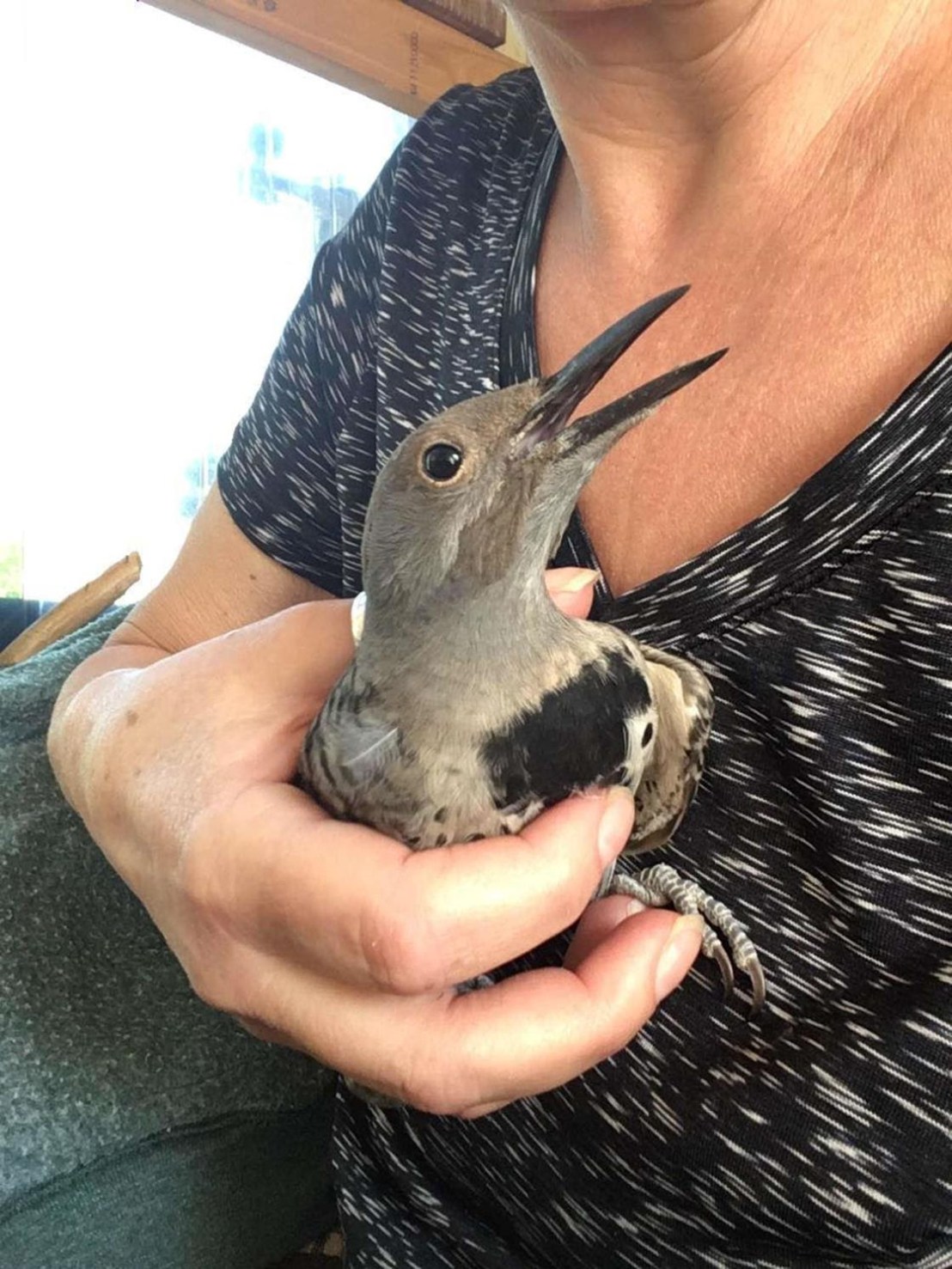
Charlie’s family rescued him two years ago, and they’ve come to know him as one of the sweetest dogs around. He’s a very gentle soul who cares a lot about the people around him — so when Charlie saw a bird fly into a window and fall to the ground, he immediately sprang into action.

“He found the bird right after she flew into my living room window,” Elizabeth Houston, Charlie’s mom, told The Dodo.

Photo Credit: Elizabeth Houston

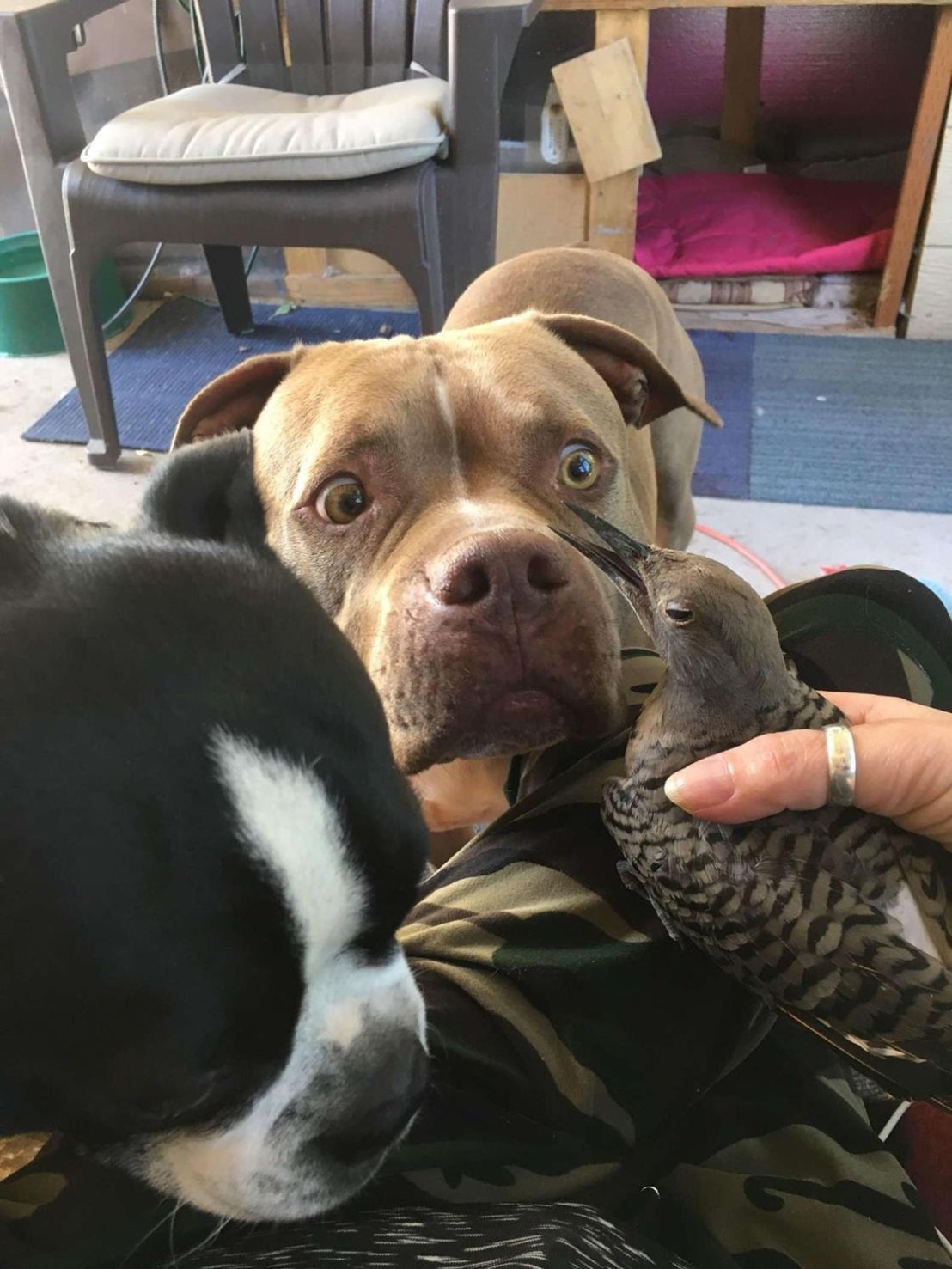
Charlie could see that the bird wasn’t moving and needed help, so he gently picked her up in his mouth, brought her over to his mom and dropped the bird in her lap. Then, he waited. He refused to leave his mom’s side as she held the bird, and he watched her intently, waiting for the bird to wake up.

“He and my Bostons kept a close eye on me and the bird the whole time,” Houston said.

Finally, the bird woke up and started chirping — and Charlie was so excited, he couldn’t believe it.

“The look on Charlie’s face was priceless,” Houston said.

Photo Credit: Elizabeth Houston

Charlie was so happy to see that his bird friend was all right, thanks to his quick thinking. Once Houston was sure that the bird was completely OK, she released her back into the yard, and Charlie was by her side as he watched his new friend fly away.

Charlie was so concerned after he saw the bird fall that he had to make sure she got the help she needed, and his family hopes that his story will help people see how sweet pit bulls really are.

ooOOoo

It is so true that Pit Bulls have a very special and caring side to them. Indeed, half the reported problems with Pit Bulls comes from the way certain people ‘train’ them.

I must point you towards BAPBR, that stands for Born Again Pit Bull Rescue.

As BAPBR state on their home page:

We are the longest standing registered 501(c)(3) nonprofit in the Portland Metro area dedicated to improving the lives of pit bulls and their communities. As an all-volunteer run organization, we advocate for pit-bull-type dogs through community awareness and education and strive to combat misinformation, over-population, shelter crowding, low adoption and high euthanasia rates for these family dogs.

I will reach out to them and see if I can write a post about BAPBR.

Vegetables for dogs

Did you know your dog can eat vegetables.

Our latest dog, Sheena, is one such example of a dog that, in her case, needs vegetables for the sake of her digestion.

There’s a fuller report on what dogs can eat by way of vegetables that came out on the website Pet Releaf a while ago.

ooOOoo

8 Vegetables You Can Add To Your Dog’s Diet

Did you know your dog could eat vegetables? We researched 8 vegetables you can safely give to your pup!

This is not medical advice. Before pursuing feeding your dog a new food or supplement, it’s advised to consult with your veterinarian.

Vegetables aren’t just good for you—they’re also good for your pup! Giving your dog vegetables can be a great way to reward them for good behavior while avoiding unhealthy components such as unnatural fillers and empty calories, commonly found in treats. To avoid giving your pup too many heavy calorie treats a day, try adding vegetables to their daily regimen whether as treats or cooked vegetables in their food bowls. Consider choosing one of the vegetables listed below for their amazing pet health benefits.

8 Nutritious Vegetables for Dogs

 1. Carrots

Although carrots are a healthy vegetable for dogs, they can be a potential choking hazard if not prepared correctly. Offer your furry companion smaller pieces to start and watch for large undigested pieces in your pet’s stool. Carrots can be cooked, puréed, or chewed raw to help clean your dog’s teeth and reduce anxiety. They also help with eye health and boost the immune system.

2. Sweet potato

Packed with vitamins, minerals, and fiber, sweet potatoes can be cooked, puréed, or mashed as a great addition to your furry friend’s diet. Although they can be useful for supporting your dog’s digestive system, it’s important to give sparingly to your pup. One tablespoon in your pup’s breakfast or dinner should do the trick as we want to avoid any diarrheal issues. Plus, we even use sweet potato in our Sweet Potato Pie Edibites!

3. Celery

Celery can be a great, crunchy snack for your pup! Within that crunchy bite, celery is filled with vitamins such as Vitamin A, B, and C and can help support a healthy heart!

 4. Broccoli

Broccoli is another nutritional powerhouse for your pup, especially the stalks. Known to reduce arthritic inflammation, boost the immune system, and even keep cancer at bay, broccoli stalks are an ideal vegetable for dogs. Broccoli can be cooked or eaten raw to help clean teeth. However, too much broccoli (especially broccoli heads) can cause gas and upset the digestive tract, so be sure to offer this healthy dog treat in moderation. It’s also important to be cautious if your pup suffers from a low thyroid or is on thyroid medication as it can potentially drive the thyroid even lower.

 5. Kale

Like broccoli, kale is loaded with health benefits for your fur friend, but it too can cause major gas if too much is eaten. Be sure to add only a very small amount (1–2 ounces, depending on your dog’s size) of dried, steamed, or raw chopped kale to your dog’s food. Kale helps fight allergies, heart disease, urinary tract problems, and even arthritis. Similar to broccoli, it’s important to take caution when giving your dog kale as it won’t be as beneficial for dogs with a low thyroid that are on thyroid medication, since it has the potential of driving the thyroid lower.

 6. Cucumber

If your pup is on a diet, give your pup a taste of cucumber! Cucumbers are very low in carbohydrates as well as fats and oils. Plus, they’re loaded with vitamins and minerals, such as Vitamin K and potassium. Make sure to cut them up into bite size pieces to avoid any choking.

7. Zucchini

A small amount of frozen or raw shredded zucchini is excellent for adding extra water and fiber to your furry companion’s diet to keep them full.

8. Parsley

Rich in beta carotene for eye health and potassium for joint and muscle health, parsley also helps reduce “dog breath,” so you can accept your pup’s kisses and breathe easy again. Add just a little fresh chopped parsley to your dog’s meal or favorite Kong recipe.

Adding more dog-friendly vegetables to your pup’s diet at home is a great way to offer variety. When you’re too busy to prepare a veggie snack or need something while away from home, grab our Crunchy Edibites or Soft Chew Edibites filled with natural vegetable ingredients for a healthy pet snack on-the-go!

Shop Edibites on our website. We’re committed to providing a healthy alternative for pets while remaining committed to sustainability.

ooOOoo

If you are at all unsure as to whether your dog is good to go regarding vegetables, then let me repeat the caution that came at the start of the article: This is not medical advice. Before pursuing feeding your dog a new food or supplement, it’s advised to consult with your veterinarian.

But, in general, this is very interesting and, hopefully, will be noted by some of you for your dogs.

And I should say in closing that I have no association with this firm or with Pet Releaf at all.

Dog love

One can never turn off one’s heart to love

There was a story on the Daily Dodo yesterday that just says it all when it comes to us humans and our love for dogs. Now we don’t know the name of the Dad but so what! It’s a wonderful story nonetheless!

ooOOoo

Dad And The Dog He Didn’t Want Now Have The Sweetest Bedtime Routine

“He fell in love” ❤️

By Stephen Messenger,   Published on 7/27/2020

Believe it or not, there was once a time when Alice Garrido Gallardo’s dad didn’t want another dog at all — but now he pretty much epitomizes what it means to be a proud pet parent.

He and his pup, named Jean Grey, have the sweetest bedtime routine to prove it.

Alice Garrido Gallardo

Jean Grey started out life as a stray and was rescued by Gallardo’s friend. When Gallardo suggested to her dad that they adopt her, he was opposed to the idea at first.

“We had lost our old dog and he didn’t want to have another one anytime soon,” Gallardo told The Dodo. “He was still grieving.”

Gallardo, however, wasn’t deterred. She decided to arrange an introduction between Jean Grey and her dad. And sure enough:

“He fell in love the day I brought her home,” Gallardo said.

Alice Garrido Gallardo

As time went on, his love for the dog he didn’t want only grew stronger — and he found the most wonderful way to show it.

“He began to put her to bed every night,” Gallardo said.

Photo Credit: TikTok/alicegrgl

Each and every night now, Gallardo’s dad tucks Jean Grey into bed, placing a pillow under her head and toy close by.

“I love to see them, my dad being super loving and affectionate,” Gallardo said. “I love to see them and know that they love each other very much.”

ooOOoo

I used the sub-heading: “One can never turn off one’s heart to love.

To give that statement slightly more detail I should have said: “One can never turn off one’s heart to the love of a dog!

The theft of dogs.

A guest post from Gabby!

Not that long ago I was contacted by Gabriella Coppolecchia, or Gabby for short, about writing a guest post. Of course that was alright especially as Gabby comes from the U.K.. In fact, as her bio explains:

Gabriella Coppolecchia is a young dog trainer and dog walker in Chelmsford, Essex. During her studies she realised that there is a lot of misinformation around the world of dogs and she vowed to help people overcome the confusion. Her fiancé suggested she would write a blog since she can’t stop talking about dogs anyway. So along with her day business, she created Cinofilo.

Indeed, the blog site is now available and the address is https://cinofilo.wordpress.com/

This is a photograph of Gabby:

So let’s welcome her to this world of blogging and her first guest post on Learning from Dogs. (And, hopefully, not her last!)

ooOOoo

HOW TO AVOID DOG THEFT

All-focus

Dog theft is a phenomenon always on the rise. Here in the UK, I’m seeing missing dog posts on Facebook everyday. Most people believe it’s confined to a bad neighbourhood but it’s not. It can happen anywhere and almost to anyone. There are a few dogs that are the perfect target for dog theft and these despicable people will steal your dog to make an easy buck.

Why Dogs get stolen

1. Purebred dogs

With the cost of purebred dogs on the rise and the creation of always new breeds (such as labradoodle and cockapoo), more and more people are attracted to this huge market. If not neutered or spayed, stolen dogs could end up in the hands of other dog breeders that will use them as the studs or the bitches that will produce the new generations. These people might also steal puppies and disguise themselves (or have someone else doing so) as hobby breeders with one last puppy left and sell these dogs again for half of their original value. Or they might claim to be someone that wants to sell their own pet because they can no longer take care of him. They will justify the dog’s price by saying that they don’t want to lose the money they have spent when they bought “their” dog. To unsuspecting and uninformed first time buyers these could all look like legitimate trades. These people might look like regular neighbours, with regular jobs and regular families.

2. Weak, young and small dogs

The illegal world of dog-fighting always requires some new dogs to sacrifice for training. This training needs to be pretty safe and easy for the dogs that will be enlisted in the matches. Weak, young and small dogs are considered the best choice because they have slim to none chances of survival against their opponent and because they will not be able to injure him. Bigger and strong dogs will sometimes be used but only with their mouth taped shut. This training is effective because winning all the fights during training will boost the winner’s confidence. In turn, when the real match happens, the dog will think that winning will be easy and he will not recognise the danger. Not even when it’s charging right at him, jaws open. The dogs for the training are often acquired by online ads of dogs that need re-homing and that are given away for free. But when this source starts to become scarce, these people will start stealing.

3. Fila Brasileiro, Dogo Argentino, Tosa Inu, Presa Canario and Pitt Bulls

These dogs might also be stolen for the dog-fighting world. If not neutered or spayed these dogs could become breeders that will supply new champions. Or they end up being the ones that will be trained to fight for the entertainment of horrible people.

In general

There are also dogs that are not targeted for a specific feature. These dogs might be stolen because these thieves will wait for a large ransom to be put out and then will return the dog claiming to have found him. Another reason is to sell dogs to research, veterinary and medical facilities that need them for testing and experiments. These facilities will not do a thorough research on the animal’s past, especially because they often use a third party to get the dogs.This makes it easy for the thieves to sell stolen pets to them.

Once your dog is stolen, he will likely be quickly moved many miles away and it will become very difficult to trace the bad guy’s steps. So the best course of action is to try and prevent this from happening.

How targets get chosen

To steal your pet, there are a number of tactics that they can use. Simply put, anytime your dog is out of your sight, he can become a target. But there are a few everyday situations that often occur that might make things easier for these thieves.

1. shops

We have all done it. We need to pop in a shop for a second and we think it’s easier to leave our dog tied outside. We think it’s going to be fine. We’ll only take a minute and that moment it’s enough for a thief. Especially if we end up taking longer than expected or if we can’t really keep an eye on our dog from inside the shop.

2. back gardens 

We might think that the fence of our back garden is high enough and we think that if we are home we will be able to keep an eye on our dog. But we are often wrong. These thieves will usually study their targets for a while. They will monitor the times your dogs spends outside and find the right time to strike.

3. car

A dog should never be left in a car unattended but this is not just for the risk of heatstroke. A car is not a secure place. The only thing in the way of those thieves is your car window and that’s pretty easy to break. Another problem is that when we leave our dog in a car, we feel like he is more safe than tied outside. Overestimating his safety means that we feel comfortable going farther and leaving him alone for longer.

4. off-leash walks

When on walks, your dog might be used to spend some time off leash. This often happens when you are in a park and you want to give your dog more freedom to explore in a car free space. While exploring it could be easy for a dog to go too far and out of sight for a while. This is often enough for a thief to snatch your dog right under your supervision.

How to keep them safe

There are a few things that you can do to help your pet be safer and keep your mind more at ease.

1. less information

It’s always nice, when people that we meet on a walk, stop us to compliment our dog. This can happen at every walk and often several times during the same walk. Although most people will only ask a couple of questions out of curiosity, you never know when you have a thief right in front of you. These people will often ask more information and you might start suddenly seeing them often, even when you never used to see them before. They will ask questions like your dog’s name, if he is friendly, if you can let him off, if you walk around the area around the same times, if you live close by. These are all informations that can help the bad guy see a pattern in your routine and that can uncover an opportunity for him to act. So if faced with all these questions try to remain very vague or lie about some details. You could say that you don’t always walk at the same times. Or maybe you can say that you like the area for walks but you live quite far and you actually have to drive there.

2. vary your routes

I’m sure you and your dog have a favourite route. Maybe you like the pond he can swim in or maybe you like the dogs you meet. But going to the same routes everyday might give the bad guys the opportunity to study you and gain information that they can use to put their plan into motion. Instead choose 3-4 different routes and try to alternate them in an unpredictable way.

3. keep a close eye

As I said, basically, every time you keep your eyes off your dog he could get stolen. So if you are out and you need to pop in a shop, try asking someone that works there if they can wait outside with your dog as you are shopping. This might not always be possible but it’s worth a shot. Moreover most people will happily take a break from work to pet your dog as they wait. If your dog, when off leash, tends to go so far he is often out of sight, you could try a different spot, such as a big clearing, where your dog will hardly ever be out of sight. If, instead, you are worried your dog might get stolen from your garden, try a higher fence and don’t take the habit of leaving your back door open at all times. Only let your dog out when he asks.

4. security system

Installing cameras and an alarm system around your house and your garden might be a real weapon against burglars and bad guys in general. As well as protecting your dog, they are optimal for keeping your family safe. These can be a powerful deterrent for anyone looking for an easy target, and can be an even more powerful source of information in case someone should still decide to break in.There are all sorts of pet friendly security systems that will not be accidentally activated from your dog.

5. identification

By law a dog should be microchipped and should be wearing a collar with name tag at all times. Thieves can easily remove the collar and it’s even possible for them to go to a vet and change the ownership to them, no questions asked. This is becoming more rare but it still can happen. If the vet checks the owner the dog is registered to and contacts the registered number, you could be contacted by the vets that will have your dog at that time. Something what could also happen is that your dog might be abandoned once the bad guys no longer need him. Someone could then find him and take him to a vet where he would be identified.

6. GPS tracking collars

This kind of technology is more useful for a lost pet than a stolen one, mostly because a thief can easily remove the collar and dump it somewhere. There are however collars that have an hidden GPS tracker. This can make it look like a regular collar and a thief might not feel the need to remove the collar until later. This can give an idea of where your pet is or has been and give an indication of who might be responsible. It might not be much but it can mean a higher chance of finding your beloved pet.

What to do if your dog gets stolen

If you believe your dog has been stolen there are a few things that you can do:

1. report

Report your dog missing to the microchip databases (petlog, PETtrack and Identibase). They can contact you if your dog’s microchip gets scanned and the guardianship details checked. Report to the police, making sure to give all the informations that come to mind. Even the ones that you don’t redeem relevant can help. Be sure to tell them when you last saw your pet and when and how you think he has been stolen. Tell them if you met someone suspicious during your walk or if you saw someone suspicious walking around your house. Tell them the routes you use during your walks and be sure to describe any special feature that your dog might have.

2. tell everyone

Put up posters in your local area. If your dog is still in town someone might see him. Post about your missing dog on social media and ask for help from the community. Register your pet on social media groups or on dedicated websites that help people reunite with missing dogs. Start locally but then widen your range.

Now that you have more information I hope you’ll start feeling safer. But if you are here because your pet has been stolen, here some links to websites that can help. There are a lot more but these are a start:

-https://www.petfinder.com/dogs/lost-and-found-dogs/find-lost-dog/

-https://www.doglost.co.uk/

-https://www.facebook.com/FindMissingDogsUK/

-https://www.pawmaw.com/

-https://www.rspca.org.uk/adviceandwelfare/pets/dogs/straydogs

-https://www.petsreunited.com/

ooOOoo

I think this is a terrific post and I’m delighted that Gabby contacted me and went on to post this. All over the world readers will be aware of the issue and Gabby has done a fine job in describing what one can do.

More please!

Origins of the Dog, a repeat!

Dogs and humans go back a very long way.

I wrote in my post of the 23rd: “In fact tomorrow I shall republish a post I wrote in 2015 about the origins of the dog!

Well tomorrow wasn’t possible with the sad news of the loss of our cat.

But it is today! It was originally published on the 13th July, 2015 – my how 5 years have sped by!

So here it is again. I suspect many of you have not read it!

ooOOoo

The Origins of the Dog.

Dogs and humans go back even further than previously thought.

Humans and dogs were constant companions well before our ancestors settled in villages and started growing crops 10,000 years ago

I have no doubt that thousands of dog owners all around the world must be enthralled by the way that dogs relate to us and, in turn, how we humans relate to dogs. More than once a day, one of our dogs will do something that has me and Jean marvelling at their way of living so close to us.

Then when one starts to reflect on how long dogs and humans have been together, perhaps it could be seen as the direct result of that length of relationship.

Now there’s nothing new in me writing this, after all the home page of Learning from Dogs states:

Yet they have been part of man’s world for an unimaginable time, at least 30,000 years. That makes the domesticated dog the longest animal companion to man, by far!

Back in May the website Livescience published an article that revealed more about the length of our relationship with dogs. This is how it opened:

Ancient Wolf DNA Could Solve Dog Origin Mystery

by Becky Oskin, Senior Writer

Humans and dogs were constant companions well before our ancestors settled in villages and started growing crops 10,000 years ago, a new study suggests.

Genetic evidence from an ancient wolf bone discovered lying on the tundra in Siberia’s Taimyr Peninsula reveals that wolves and dogs split from their common ancestor at least 27,000 years ago. “Although separation isn’t the same as domestication, this opens up the possibility that domestication occurred much earlier than we thought before,” said lead study author Pontus Skoglund, who studies ancient DNA at Harvard Medical School and the Broad Institute in Massachusetts. Previously, scientists had pegged the wolf-dog split at no earlier than 16,000 years ago.

The Livescience article referred to results that were published in the journal Current Biology on May 21st this year. One needs a subscription to read the full report but here is their summary:

The origin of domestic dogs is poorly understood [ 1–15 ], with suggested evidence of dog-like features in fossils that predate the Last Glacial Maximum [ 6, 9, 10, 14, 16 ] conflicting with genetic estimates of a more recent divergence between dogs and worldwide wolf populations [ 13, 15, 17–19 ]. Here, we present a draft genome sequence from a 35,000-year-old wolf from the Taimyr Peninsula in northern Siberia. We find that this individual belonged to a population that diverged from the common ancestor of present-day wolves and dogs very close in time to the appearance of the domestic dog lineage. We use the directly dated ancient wolf genome to recalibrate the molecular timescale of wolves and dogs and find that the mutation rate is substantially slower than assumed by most previous studies, suggesting that the ancestors of dogs were separated from present-day wolves before the Last Glacial Maximum. We also find evidence of introgression from the archaic Taimyr wolf lineage into present-day dog breeds from northeast Siberia and Greenland, contributing between 1.4% and 27.3% of their ancestry. This demonstrates that the ancestry of present-day dogs is derived from multiple regional wolf populations.

That summary page also includes the following Graphical Abstract:

fx1

I don’t have permission to republish the Livescience article in full but would like to offer the closing paragraphs of this fascinating report.

“It is a very well-done paper,” Perry [George Perry, an expert in ancient DNA at Pennsylvania State University] told Live Science. “This topic is a critical one for our understanding of human evolution and human-environment interactions in the Paleolithic. Partnership with early dogs may have facilitated more efficient hunting strategies.”

If dogs first befriended hunter-gatherers, rather than farmers, then perhaps the animals helped with hunting or keeping other carnivores away. For instance, an author of a new book claims humans and dogs teamed up to drive Neanderthals to extinction. Skoglund also suggested the Siberian husky followed nomads across the Bering Land Bridge, picking up wolf DNA along the way.

“It might have been beneficial for them to absorb genes that were adapted to this high Arctic environment,” Skoglund said.

This is the first wolf genome from the Pleistocene, and more ancient DNA from prehistoric fossils could provide further insights into the relationship between wolves, dogs and humans, the researchers said.

Yes, our dogs have been part of man’s world for an unimaginable time – and Jean and I, as with tens of thousands of others, can’t imagine a world without dogs.

ooOOoo

They are our supreme companions. They don’t judge. They don’t lie. They are …. well let me repeat what I wrote right at the beginning of the blog.

Dogs are part of the Canidae, a family including wolves, coyotes and foxes, thought to have evolved 60 million years ago.  There is no hard evidence about when dogs and man came together but dogs were certainly around when man developed speech and set out from Africa, about 50,000 years ago.  See an interesting article by Dr. George Johnson.

Because of this closeness between dogs and man, we (as in man!) have the ability to observe the way they live.  Now I’m sure that scientists would cringe with the idea that the way that a dog lives his life sets an example for us humans, well cringe in the scientific sense.  But man seems to be at one of those defining stages in mankind’s evolution where the forces bearing down on the species homo sapiens have the potential to cause very great harm.  If the example of dogs can provide a beacon of hope, an incentive to change at a deep cultural level, then the quicker we ‘get the message’, the better it will be.

Dogs:

  • are integrous ( a score of 210) according to Dr David Hawkins
  • don’t cheat or lie
  • don’t have hidden agendas
  • are loyal and faithful
  • forgive
  • love unconditionally
  • value and cherish the ‘present’ in a way that humans can only dream of achieving
  • are, by eons of time, a more successful species than man.

There! Nothing more to say!

From Wolf to Dog.

A very interesting article in Scientific American magazine!

A single page article in this month’s Scientific American magazine is fascinating. The sub-heading is: “An amicable disposition also governed the course of evolution for an animal that turned into a favorite pet.

A little later on in the article one reads:

When our research group began its work almost 20 years ago, we discovered that dogs also have extraordinary intelligence: they can read our gestures better that any other species, even bonobos and chimpanzees. Wolves, in contrast, are mysterious and unpredictable. Their home is the wilderness, and that wilderness is shrinking.

The article was written by Prof. Brian Hare and Vanessa Woods and is part of a much longer piece on Homo sapiens.

In fact tomorrow I shall republish a post I wrote in 2015 about the origins of the dog!

Sheena getting to know Oliver.

This is just beautiful!

In a world that is becoming madder by the day it’s good to read such stories!

The news from many quarters is increasingly alarming.

For example, I was reading in a recent issue of Science magazine about the Antarctic. From page 1331:

The Antarctic Ice Sheet is losing mass at an accelerating pace, and ice loss will likely continue over the coming decades and centuries. Some regions of the ice sheet may reach a tipping point, potentially leading to rates of sea level rise at least an order of magnitude larger than those observed now, owing to strong, positive feedbacks in the ice-climate system.


Melting ice on the coast of Adélie Land in East Antarctica. REUTERS/Pauline Askin

One can easily read many other stories of doom and gloom.

So what about this for a change? From The Dodo.

ooOOoo

Little Girl Joins Her Dogs Every Day To Get A Treat From The Neighbor.

“She just trots on over to the fence to line up with the dogs.”

Photo Credit: Mike Whalley

Sometimes you just want to be part of the pack. And the fact that Ramona is a toddler and her brothers Zeus and Blue are dogs makes no difference.

The pups are happy to include her and are always gentle and relaxed around her.

Ramona loves hanging out with them, though she hasn’t learned how to be gentle yet: “She loves her big puppies and is always trying to give them kisses,” Mike Whalley, Ramona’s dad, told The Dodo. “She also often finds them hilarious, frequently having giggle fits about something they’re doing like chasing their tail or jumping around for toys or snacks.”

Photo Credit: Mike Whalley

So when Ramona realized that her brothers were getting treats each day from their neighbor — she had to be involved.

“[Our] neighbor, Gary, originally shared a bologna sandwich with Zeus one afternoon. He asked us if it was all right and then he started buying boxes of dog treats to offer,” Whalley said. “At first, it was just Zeus, then we got Blue and he joined in.”

As soon as Ramona was able to eat solid foods, the neighbor offered her a freshly baked oatmeal cookie and Ramona quickly realized how good her dog brothers had it. “Now that she’s walking and mobile she just trots on over to the fence to line up with the dogs so she can get her ‘treats’ too,” Whalley said.

Photo Credit: Mike Whalley

Of course, their generous neighbor gives the dogs a few more treats each day than Ramona. “They get their breakfast treat, lunchtime, coffee break and their bedtime snack,” Whalley said. “For bedtime, they get their bigger bone to ‘brush their teeth.’”

“Ramona usually joins in for the afternoon treats and it’s usually a cookie or some Ritz crackers,” he added.

Zeus and Blue have Gary on a strict schedule, and if he misses their treat time they make sure to let him know. Now that Ramona is part of the pack, Gary never lets them down.

ooOOoo

It takes such stories as this one to keep us all on the straight and narrow, so to speak, and not to worry too much about the future.

Now this is a great birthday!

Perhaps a world record.

We all who love dogs find that their lives are too short; by far! So it was incredible to read the other day of a Labrador who on April 24th, 2020 turned 20! The story was on the Golden Hearts website and thank goodness there is permission to share this with you.

Here it is:

ooOOoo

Augie and her three golden retriever “siblings” celebrate her 20th birthday in April (Steve and Jen Hetterscheidt, via Golden Hearts)

Meet The Oldest Golden Retriever: 20-Year-Old Augie

At 20 years old, Augie is the oldest golden retriever in history!

There are many accounts of 17 or 18-year-old goldens, and even a few stories about 19-year-old goldens, but Augie is the first golden retriever to ever reach the big two-oh.

In this article, we’ll dive into Augie’s story a little bit more, cover how old golden retrievers normally live to be, and talk about how you can help your golden live a long happy life.

Let’s go!

Meet Augie

On April 24, 2000, August (affectionately known as Augie) was born.

After being rehomed twice (due to no fault of her own), she eventually landed with Jennifer and Steve Hetterscheidt of Oakland, Tennessee, and it’s still unclear who the lucky ones are here.

Jennifer and Steve, who were active in their local golden retriever rescue organization when they got Augie, adopted her when she was 14 years old.

They figured that most people wouldn’t want such an elderly golden, but they had no idea of the upcoming journey they would be on with Augie.

They’ve taken her on RV trips all around the country, she’s got several canine and feline siblings, and she gets to play fetch in the pool.

On the other hand, Jennifer and Steve have been rewarded with over six years of love and loyalty from this wonderful (and now record-holding) golden.

The 20-Year-Old Golden Retriever

So how does a 20-year-old golden retriever celebrate her record-setting birthday?

With a dog-friendly carrot cake and some quality time with her golden retriever siblings, Sherman, Belle, and Bruce!

Her owner, Jennifer, says she’s surprisingly healthy.

She can still move around well (although she’s a bit shaky when she first gets up) and enjoys daily walks around the yard.

Since she was diagnosed with some kidney issues when she was 14, she now eats a mixture of wet and dry Hill’s Prescription Diet k/d, and takes some supplements for her kidneys and joints.

She also gets SQ fluids twice a week, which has helped her perk up quite a bit.

How Long Do Golden Retrievers Normally Live?

Augie is a very special girl, and she’s definitely not the norm.

Most golden retrievers live to about 10-12 years old.

Of course, many goldens live to 13, 14, or 15 years old, and, unfortunately, many live shorter than the average.

Now let’s talk about how to help your golden retriever live to that upper part of the spectrum.

5 Tips For Helping Your Golden Retriever Live A Long Life

Here are some tips to help your golden retriever live a long life like Augie.

1. Listen to your veterinarian.

This is probably the most important tip.

Your vet will know your dog, and have the best recommendations and action plan to keep them healthy.

This includes flea, tick, and heartworm medicines, food and exercise advice, and much more.

2. Listen to your dog.

When Oliver was a puppy, we spent countless hours researching what the best food for golden retriever puppies was.

Well, guess what?

After a few weeks of us feeding him the “best food for golden retriever puppies”, he stopped eating and became more lethargic.

We listened to what he was trying to tell us, we talked with our vet about it, and we decided to switch foods.

Right away he loved the new food, started eating more, and started getting his normal, crazy energy back.

Just because something is popular for many dogs, doesn’t necessarily mean that it’ll be good for your dog, so pay attention to them and how they’re feeling so you can work with your vet to keep them happy and healthy.

3. Feed your dog a quality dog food.

Yes, Walmart brand food may be cheaper at first, but you’ll probably end up paying more in vet bills down the road.

Not to mention, with a quality dog food, your dog will probably be happier and healthier for it.

Talk to your veterinarian, do your research, and feed your pup a quality food.

4. Groom your golden retriever regularly.

Keeping their nails, paws, coat, teeth, and ears clean will keep them looking their best, while also keeping them healthy.

Grooming them regularly can prevent ear infections, gum or teeth issues, or skin issues, which could all snowball into something worse if not taken care of.

5. Exercise your golden retriever regularly.

Most goldens are inclined to become obese, so regular exercise can prevent that, as well as keep their heart and muscles strong.

Even Augie gets regular exercise, and as Jennifer says, “Motion is lotion!” for those old bones.

How You Can Help Senior Golden Retrievers

One thing that amazes me is that Jennifer adopted Augie when she was 14 years old!

Most people don’t want to adopt an older golden retriever, fearing that their time here is limited, but that doesn’t mean these dogs can’t be wonderful companions for you.

Golden retriever puppies are tough, and there are many sweet senior goldens out there like Augie that need good, loving homes, so consider stepping up to the plate and adopting a golden, fostering goldens, or volunteering or donating to your local golden retriever rescue.

Below is a list of golden retriever rescues in every state, but also don’t forget to look at rescues in states nearby if you’re looking to rescue a golden.

Here’s a list of golden retriever rescues in every State.

Conclusion

Huge congratulations to Augie for being the world’s oldest golden retriever!

At 20 years old, she’s just about doubled the expected lifespan for golden retrievers and she’s still kicking.

She’s lived so long largely because she’s got great genetics, but also her owner, Jennifer, has done a great job of taking care of her and ensuring that they have a good relationship with Augie’s vet.

As Jennifer says, “We care for them as long as we have them, and love them forever.”

Do you have any questions about Augie, or about golden retriever lifespans?

Let us know in the comments below! (Ed: Please go here.)

And please share this with your fellow golden retriever lovers!

P.S. If you liked this article, you’ll love our complete guide to golden retrievers.

ooOOoo

I can do no more than to repeat the congratulations mentioned above: “Huge congratulations to Augie for being the world’s oldest golden retriever!”

It is a wonderful achievement!

Unbridled love!

The great thing about going away is the home-coming!

I’m speaking of coming back to one’s dogs. This theme of coming home to your dogs was prompted by something I read the other day on The Dodo newsletter. It was an article … well you read it rather than me explain it.

ooOOoo

Dogs Are So Excited When Mom Finally Comes Home From 8-Month Deployment

Photo Credit: Taryn Dennison

Bauer first met his mom when he was just a puppy, and ever since then they’ve been basically attached at the hip. Bauer follows his mom everywhere she goes and loves hanging out with her no matter what they’re doing.

“Bauer isn’t your typical husky, he doesn’t bark and he rarely howls,” Taryn Dennison, Bauer’s mom, told The Dodo. “He loves sleeping and when he’s awake he’s right next to you trying to get all the cuddles and pets he can or to get you to throw his toys.”

When Dennison found out she was going to be deployed, she knew it was going to be hard to leave Bauer behind. He stayed with her roommate and her roommate’s dog, Macie, and was cared for and loved so well, but everyone could tell that he missed his mom so much.

Photo Credit: Taryn Dennison

“Bauer didn’t understand why I was gone,” Dennison said. “I FaceTimed him a few times and he would run around my house trying to find me and then later he would end up laying down and falling asleep in front of my door.”

Finally, after eight long months apart, Dennison arrived home…and as soon as she walked in the door, Bauer completely lost it.

He was overwhelmed with joy and so thrilled that his mom was finally home, and couldn’t stop licking her and jumping all over her.

“I honestly thought he was going to pee on me because he was so excited,” Dennison said.

Photo Credit: Taryn Dennison

Even Macie was excited, especially when she saw how happy Bauer was, and both dogs jumped around Dennison as she sat on the floor with them. After so much time apart, she was so happy to finally be home with Bauer and the rest of her loved ones.

“Since I got home he’s been attached to my hip,” Dennison said. “I can’t even get up to go to the kitchen or the bathroom without him being right next to me. I wouldn’t change it for the world!”

Bauer missed his mom so much, but now that she’s home, he’s making sure he doesn’t take a single minute of being with her for granted.

ooOOoo

To keep up the theme for a little longer, here is a YouTube video of dogs and their returning owners.

I hope you enjoyed it.


Finally, Jean and I just need to go the shops in Grants Pass, about 20 minutes away, and when we return home, perhaps 1 or 2 hours later, we are greeted by all our dogs in a similar fashion. The vast majority of dogs offer unconditional, unbridled love! 😍

Dogs’ vision.

Do dogs see in black and white?

There was a recent post on The Conversation that was published for the kids among us. But I thought it would have an appeal far wider than just for our children, and it is republished here.

ooOOoo

Do dogs really see in just black and white?

By
Nancy Dreschel
Associate Teaching Professor of Small Animal Science, Pennsylvania State University.


Do dogs really see in just black and white? – Oscar V., age 9, Somerville, Massachusetts


Dogs definitely see the world differently than people do, but it’s a myth that their view is just black, white and grim shades of gray.

While most people see a full spectrum of colors from red to violet, dogs lack some of the light receptors in their eyes that allow human beings to see certain colors, particularly in the red and green range. But canines can still see yellow and blue.

Different wavelengths of light register as different colors in an animal’s visual system. Top is the human view; bottom is a dog’s eye view.

What you see as red or orange, to a dog may just be another shade of tan. To my dog, Sparky, a bright orange ball lying in the green grass may look like a tan ball in another shade of tan grass. But his bright blue ball will look similar to both of us. An online image processing tool lets you see for yourself what a particular picture looks like to your pet.

Animals can’t use spoken language to describe what they see, but researchers easily trained dogs to touch a lit-up color disc with their nose to get a treat. Then they trained the dogs to touch a disc that was a different color than some others. When the well-trained dogs couldn’t figure out which disc to press, the scientists knew that they couldn’t see the differences in color. These experiments showed that dogs could see only yellow and blue.

Light travels to the back of the eyeball, where it registers with rod and cone cells that send visual signals on to the brain.

Not only can dogs see fewer colors than we do, they probably don’t see as clearly as we do either. Tests show that both the structure and function of the dog eye leads them to see things at a distance as more blurry. While we think of perfect vision in humans as being 20/20, typical vision in dogs is probably closer to 20/75. This means that what a person with normal vision could see from 75 feet away, a dog would need to be just 20 feet away to see as clearly. Since dogs don’t read the newspaper, their visual acuity probably doesn’t interfere with their way of life.

There’s likely a lot of difference in visual ability between breeds. Over the years, breeders have selected sight-hunting dogs like greyhounds to have better vision than dogs like bulldogs.

But that’s not the end of the story. While people have a tough time seeing clearly in dim light, scientists believe dogs can probably see as well at dusk or dawn as they can in the bright middle of the day. This is because compared to humans’, dog retinas have a higher percentage and type of another kind of visual receptor. Called rod cells because of their shape, they function better in low light than cone cells do.

Dogs also have a reflective tissue layer at the back of their eyes that helps them see in less light. This mirror-like tapetum lucidum collects and concentrates the available light to help them see when it’s dark. The tapetum lucidum is what gives dogs and other mammals that glowing eye reflection when caught in your headlights at night or when you try to take a flash photo.

Dogs share their type of vision with many other animals, including cats and foxes. Scientists think it’s important for these hunters to be able to detect the motion of their nocturnal prey, and that’s why their vision evolved in this way. As many mammals developed the ability to forage and hunt in twilight or dark conditions, they gave up the ability to see the variety of colors that most birds, reptiles and primates have. People didn’t evolve to be active all night, so we kept the color vision and better visual acuity.

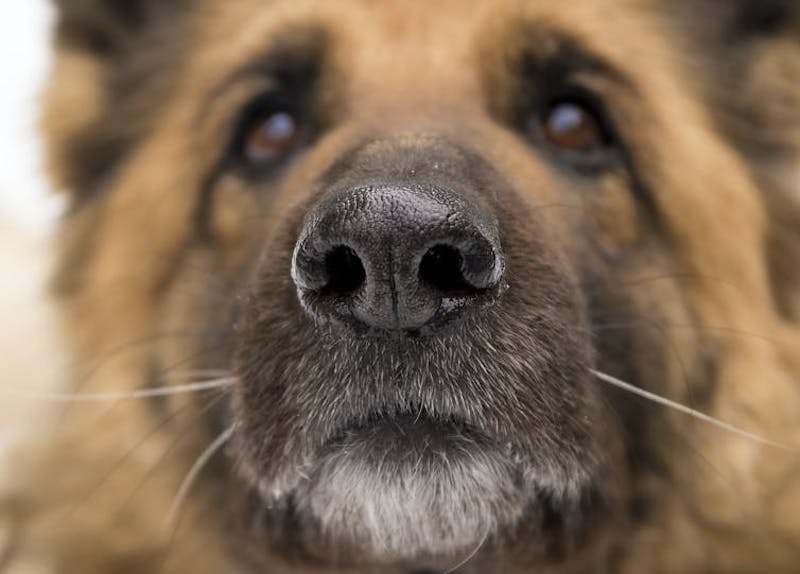
Before you feel sorry that dogs aren’t able to see all the colors of the rainbow, keep in mind that some of their other senses are much more developed than yours. They can hear higher-pitched sounds from farther away, and their noses are much more powerful.

Even though Sparky might not be able to easily see that orange toy in the grass, he can certainly smell it and find it easily when he wants to.

ooOOoo

Trust me, the dog’s nose is “much more powerful”. Upwards of fifty million times more so, as I wrote about here.

Plus, living with so many dogs as we do, there are instances when all the dogs start barking, frequently when they are all in our bedroom getting ready for the night. Jean and I cannot hear a thing but the dogs can, and Jean and I don’t have a clue!

They are incredible creatures and humans are so lucky to have them around us.

Thank you, Nancy!