Two days ago, just 3 miles down the road, someone reported seeing two dogs dumped in a yard and the culprit driving off at high speed. It was on the corner of Hugo Rd and Barker Rd, and Barker I know well because when I ride my bike I do an extra mile along Barker. (And we live on Hugo Rd.)
Then there’s the attitude adopted by the person who took puppies to a shelter. “… the breeder told her the coyotes can always use a meal.” As seen on the website Treehugger. Have a read.
ooOOoo
Rescued Blind and Deaf Puppies Are Incredibly Joyful
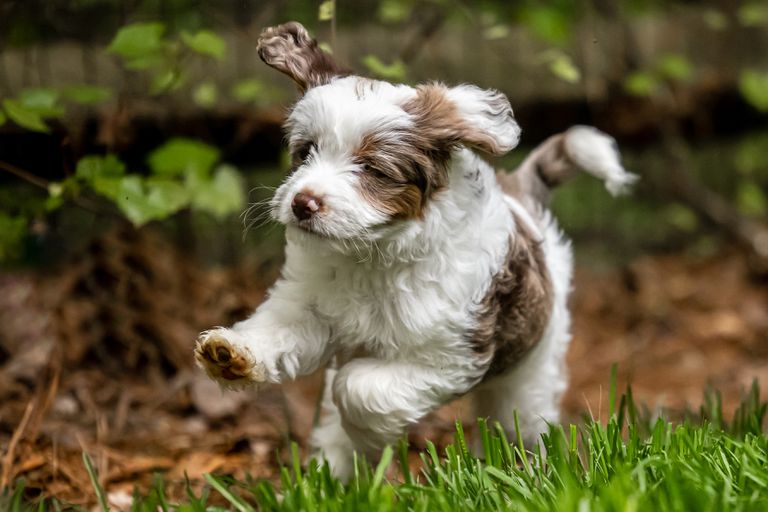
Trudy is fearless when she runs. Fred Strobel Photography
As I write this, it sounds like there are hyenas battling it out in my basement. Yelps and screams and torturous cries are storming up the stairs along with a few barks and high-pitched squeals.
It’s just another day in fostering some rambunctious blind and deaf puppies who happen to play very, very loudly.
Trudy and Zane are 9-week-old Australian shepherd mixes, maybe Aussiedoodles. They were dropped off at a rural shelter somewhere in Illinois by a breeder. When the beleaguered shelter worker asked what would happen to the puppies if she couldn’t take them, the breeder told her the coyotes can always use a meal. She couldn’t believe it.
The shelter, of course, took them. And Speak! St. Louis, the rescue I volunteer with, of course, stepped up. And somehow the puppies ended up here in Atlanta, playing “WWF Smackdown” in my basement.
Trudy and Zane are double merles like the Treehugger puppies. Merle is a swirly pattern in a dog’s coat that is very lovely and highly prized by breeders and people who want a pretty dog. When two dogs with the merle gene are bred together, there’s a 25% chance that their puppies will be blind, deaf, or both.
Sometimes this happens by accident, but it seems that it happens too often on purpose. In any case, there sure are plenty of puppies that end up needing homes. At least those are the ones that rescue groups hear about. Others just quietly disappear.
I’m pretty sure that Zane and Trudy weren’t handled much by their owner when they got here. They were awfully squirmy and bitey and didn’t want to be held or touched. They wouldn’t eat unless they were touching each other.
So I’ve been working on it. Hold one for a few seconds and put them down before they fidget. Pet them all over a little at a time. Feed them just a little farther apart at each meal.
In just a couple of weeks, they’ve learned that people are pretty cool.
Navigating the World
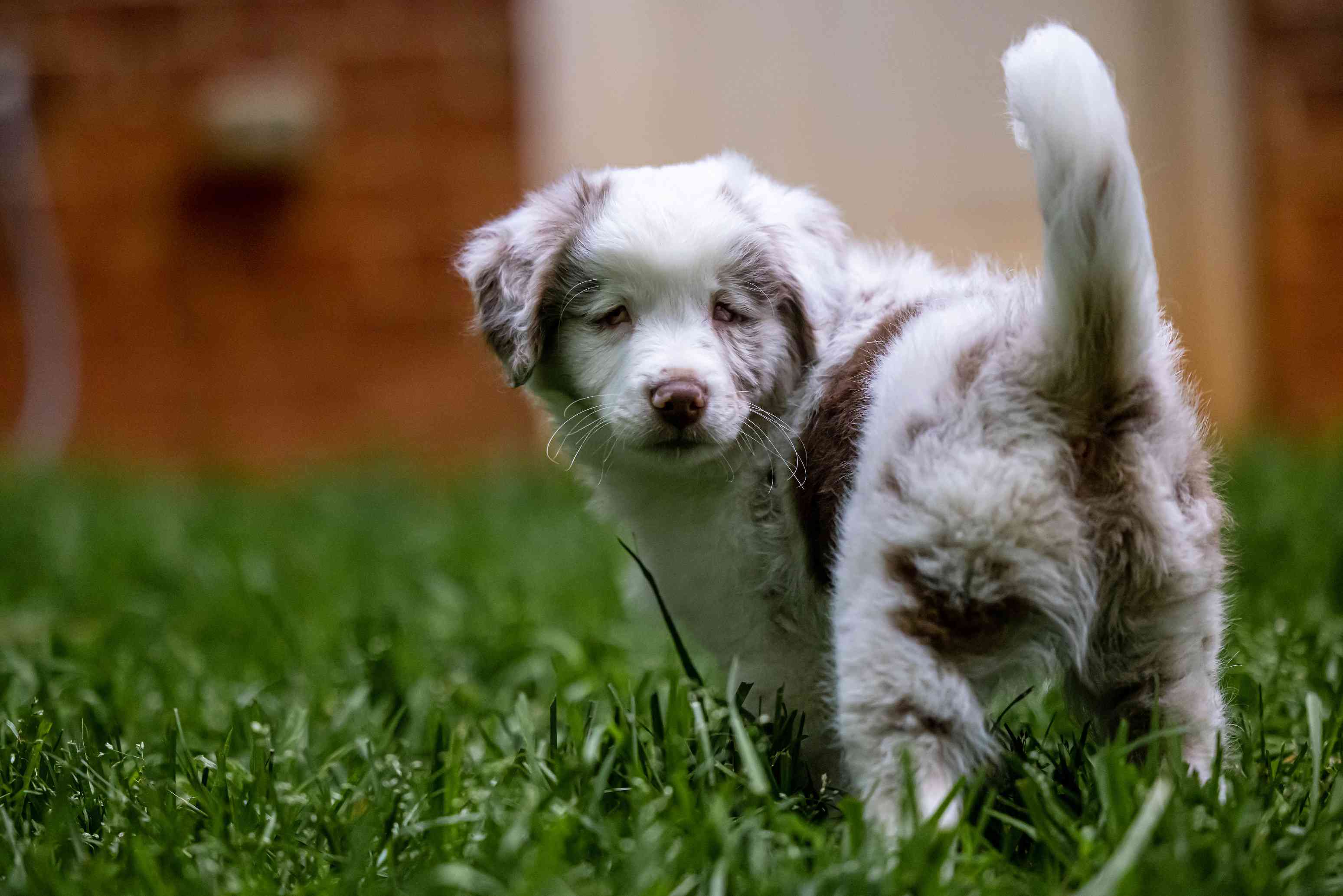
Zane in a quiet moment.Fred Strobel Photography
I’ve fostered a blind puppy, several deaf puppies, and two blind and deaf puppies including the famous Whibble Magoo, who is now competing in agility contests and is smarter than most people I know.
It’s just amazing to watch how they navigate the world. They quickly map out their area, learning where the walls, bushes, and furniture are. Sure, they bounce off a few things at first but puppy heads are pretty hard. They do a little bit of a cartoon-like head shake where the world, no doubt, spins a little bit inside their heads. Then they jump up and go back to exploring and running and being happy.
And, boy, are they happy.
People often say they feel sorry when they see blind or deaf puppies. They talk about how awful it must be for them.
But this is the only life they know and they are so joyful! When they go outside, they bounce in the grass like it is the best, most wonderful place in the world. When they play with a toy, it’s the coolest toy ever. When they find my dog, their tails wag so hard because they are ecstatic to be around him.
And when they find a person, they are elated because people are amazing, fun, and they give snuggles and treats.
They’ve come a long way from being just a step away from coyote dinner. Now they’ve learned to sit with two taps on their bottom and they are learning “down” is a tap on the front foot.
They are getting ready to look for their forever homes where their new people will appreciate that they aren’t just deaf and blind puppies. Instead, they are brilliant, silly, playful, gorgeous puppies with wonderful loving, sweet personalities.
They just happen to play and live with the volume turned up loud.
ooOOoo
Regarding that dog dump in Barker Road, I managed to find out which house it was and later on in the day went for a bike ride that took me that way. There was no sign of anything unusual.
But to get to the matter of today’s post that is all about puppies that are blind or deaf. As I am sure you are aware, dogs are very different to us humans when it comes to their senses. I have written before about the great power of their sense of smell. This is many ways is their leading sense and I have no doubt that in the case of dogs that are blind or deaf their smell allows them to function pretty well.
There are many, many good people in the world. Some are outstanding. But I regret that there are quite a few low lights. Shame but there it is.
Alfie has had his operation and all is well! I don’t know more than that at the moment but I do want to share the journey from New York to Minneapolis with you. Because it is such a story of love and devotion.
(And I have just heard that Prince Phillip, Duke of Edinburgh, has died – oh, dear.)
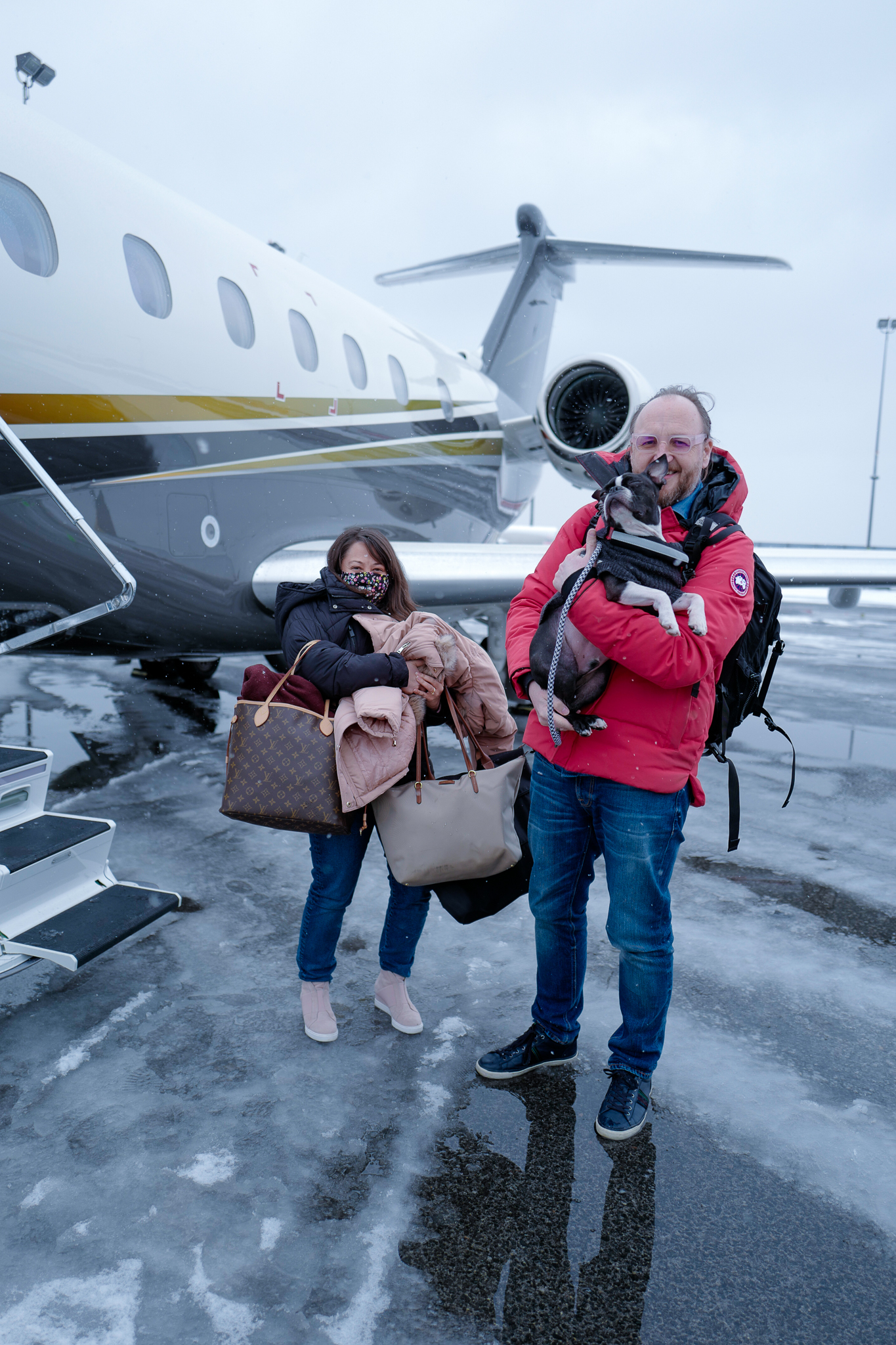
The week we travelled to the US, the East Coast was experiencing one of its winter storms. Snow threatening our progress overland to our destination. With this in mind, we worked with James Gallagher at Enterprise close to Westhampton Private Airport near Maine just outside NY, we arranged for a Jeep Gladiator to be waiting on the tarmac for us. The plan was to land, walk down the steps and into the Jeep, then drive around 20 hours across 9 States (New York, New Jersey, Pennsylvania, Ohio, Michigan, Indiana, Illinois, Wisconsin, and Minnesota) taking it in turns, and stopping only when tiredness took hold to sleep. When I say drive around 20 hours, that’s just driving, not stopping to fuel, use a bathroom, eat, rest. Over 1,300 miles. A mammoth task.
At this point I’d already not slept in almost 24 hours
The plan hit the rocks as the jet approached Westhampton and were told the runway closed due to snow. We were diverted to JFK, and then Ubëred two hours back to our original airport. We could have tried to get a four wheel drive from JFK but we already knew getting something in the middle of a bad storm would be near impossible. Trying to fly internally from JFK to Minneapolis was off the table too as we had bought a lot of luggage with us, which we intended to leave in the US. Trying to get this through JFK, with all of this and a dog, a dog that potentially could have been turned away at the gate for being too big, was not worth trying to modify our plan.
Somehow our route through the Bronx is the Mayor of London’s fault
Snow on the ground we got our Jeep, and just had James had said when he sourced it for us – it looked unstoppable. He’d kindly shovelled out most of the snow from the pick-up bed. We headed out through rush hour NYC traffic towards Minnesota following the quickest route on Google Maps. Surprisingly through the Bronx. We made it through the other side and eventually stopped somewhere on the outskirts in search of a toilet and food. A Gladiator sits high off the ground, and we were already tired. As we pulled up outside a potential watering hole Renée opened the door and fell out, hitting the ground audibly so. Alfie was in her arms but had the foresight to recognise trouble and jump to safety. We went inside, one of us limping, to check ourselves over and eat. Luckily just bruising; limbs and pride. We were there a couple of hours, much longer than we intended, but the food and rest needed. It was a big, clean hotel and would have been a good place to stop, at the expense of making the next day even harder. We pushed on. Before doing so I looked at Google maps and realised I’d made a schoolboy error. Living in London and owning old cars is a constant maze avoiding paying the Congestion Charge and ULEZ (Ultra Low Emission Zone). My phone was still set to avoid these tolls, hence our route through the the centre on New York. Worse, the fastest route would now see us backtrack some of the way we’d just driven.
Enjoying a meal after avoiding disaster falling from the truck
The Gladiator proved its worth as the elevation climbed and snowfall increased. We kept going until tiredness eventually became too dangerous to ignore and we stopped somewhere, somewhere being my best guess at where as I was so tired. A room at a Holiday Inn. Alfie making friends with the front desk saw the $80 dog fee waved. We didn’t sleep long, maybe three hours and returned to the Jeep early around sunrise. Throughout the entire trip Alfie had sat up front on Renée’s lap as the rear seats of our crew cab style truck full of luggage (the pick up bed empty so our stuff remained dry and safe). I’d read that these Jeeps were not great over long distances, and my previous longest time in one, a Rubicon, was between Fargo and Minneapolis on roads closed due to snow. It was cold and as a passenger I got leg ache. From the driver’s seat it wasn’t too bad. I’m sure most people buy slab sided trucks like this, original Land Rover Defenders and G Wagons simply because they look good, but there is no denying when the conditions get tough they are incredibly capable. Well, maybe not the G Wagon as that’s simply a fashion accessory.
Moments before a face plant. Ouch
“Watching a sleeping poorly dog, all of us crammed up front with the heater blowing full pelt to keep warm, hour after hour, made me question my original judgement of travelling this way
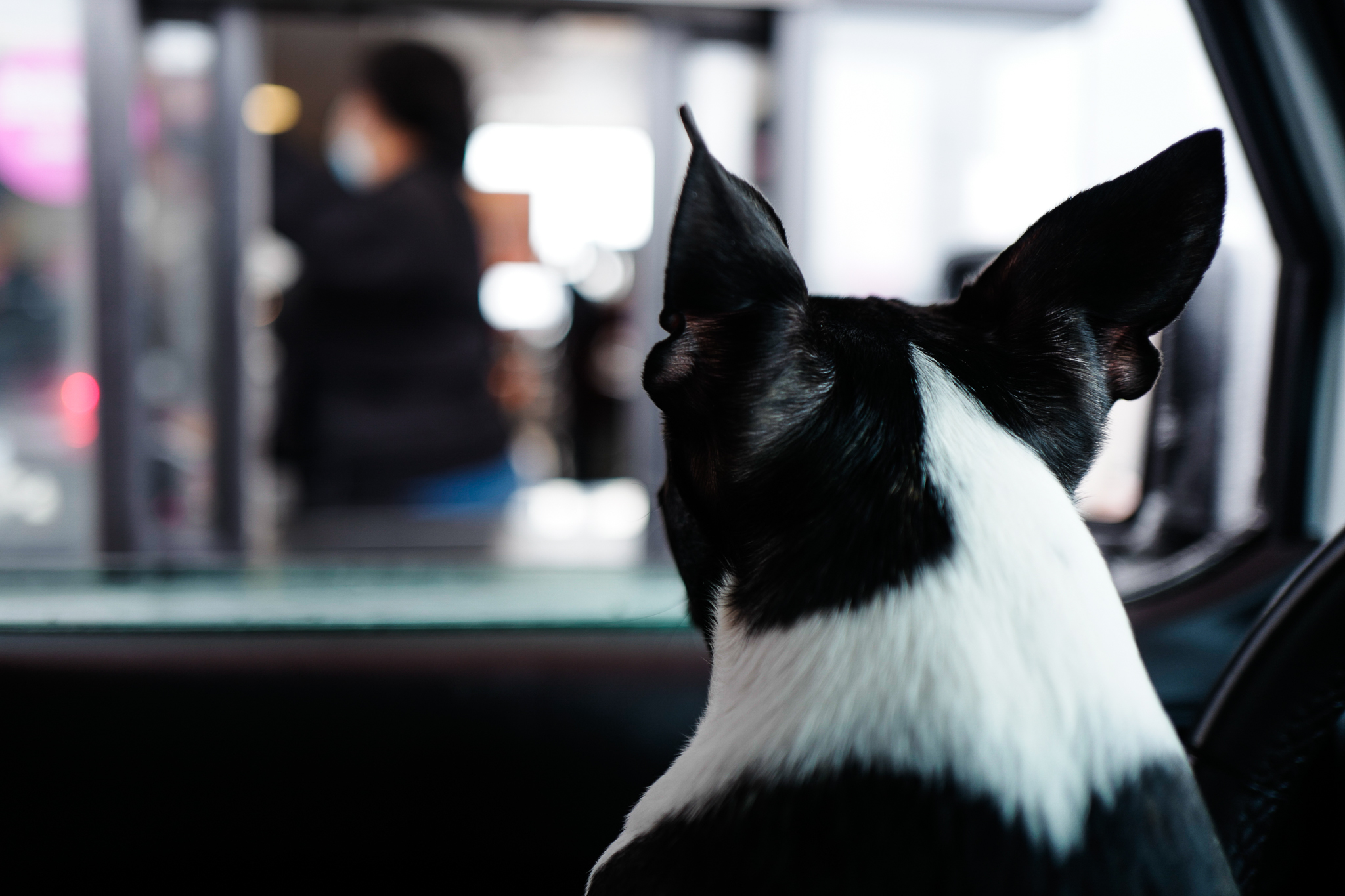
Watching Alfred, a poorly dog, asleep on Renée’s lap, all of us crammed up front with the heater blowing full pelt to keep warm, hour after hour, made me question my original judgement of travelling this way. My thinking was to have Alfred in the air for the minimum time and then get him the rest of the way by road where he would not be squashed in a bag, could go pee whenever he needed, and I could deal easily with any seizures. The whole private jet decision happened very fast and I hadn’t really adjusted to the revised plan. Also the plan had been to land at Westhampton, not JFK where we could have easily boarded a domestic flight to Minneapolis. Hindsight always great, and beating yourself up over something already done when tired completely pointless. The important think was we were in the USA, and on our way to get Alfred the help he needed. Given the obstacles in our way just two days ago we really should be patting ourselves n the back.
Give us all ya got. Nothing could stop the Gladiator
Eventually, around three hours out from our destination, I could drive no more and we stopped in one of the fantastic US rest areas. These places are free from gas stations, usually have vending machines, and clean toilet facilities. They feel safe and good places to stop for a snooze. It was cold though, with a lot of snow and ice on the ground. We slept a while with the engine running and heater keeping us warm. When it is this cold, global warming is the last thing on your agenda.
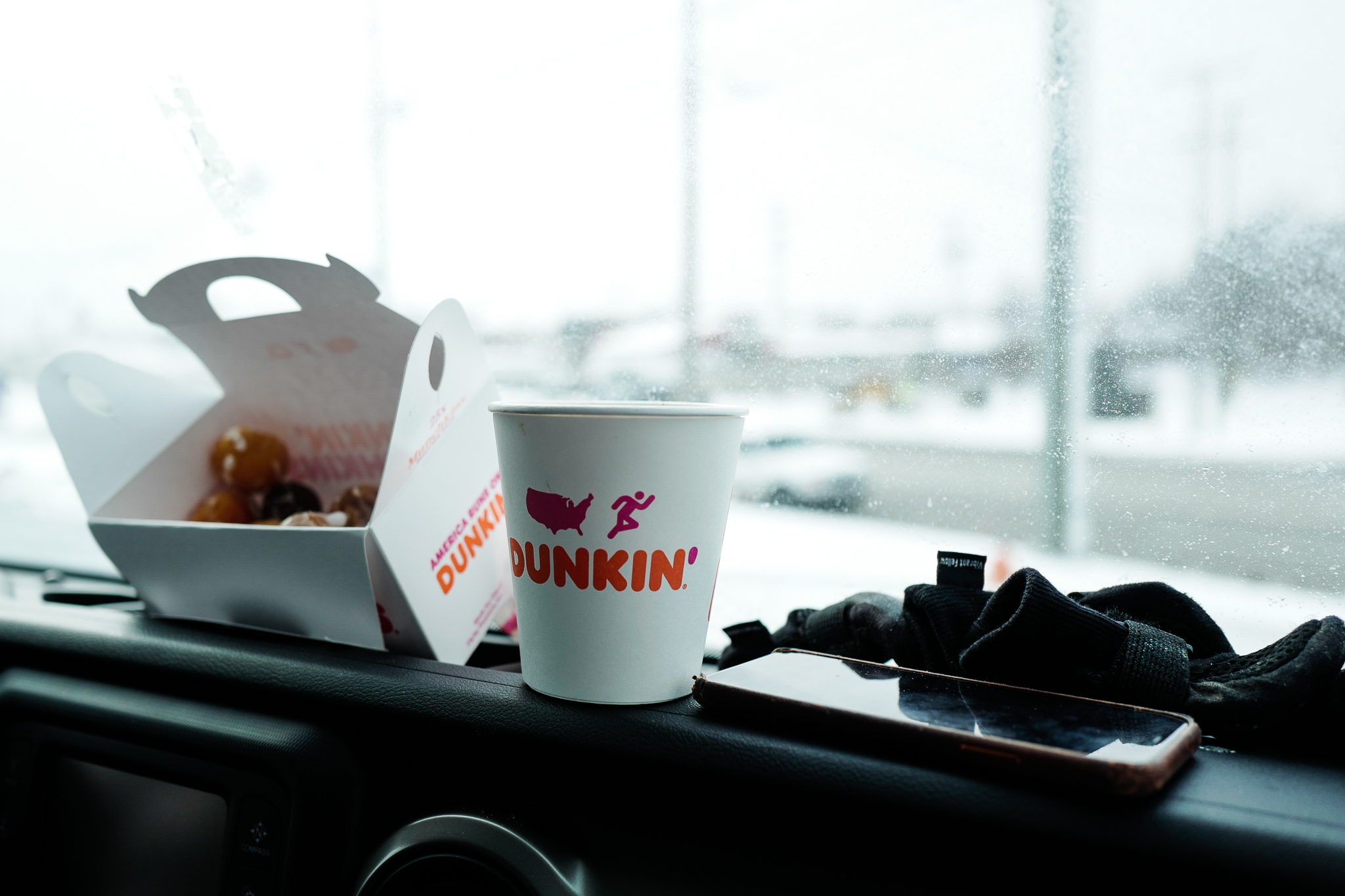
Errrr, drive through donuts? I LOVE America guysWhy is there a sportsman on this packaging? Is it a race to get diabetes?
“We slept a while with the engine running and heater keeping us warm. When it is this cold, global warming is the last thing on your agenda.
I’ve been in this situation before. Driving while tired is super dangerous. I suspect more so than alcohol (within reason) and up there with texting. As a pilot once said over the tannoy of a flight to Bahrain years ago: better to get there late than not at all. But before long, Renée woke me and wanted to carry on. I managed the next hour before handing over the driving to her to get us the rest of the way. The two of us had dug really deep to make it.
Not the most economical, but fuel is cheap so we don’t care
Arriving at the Canopy in Minneapolis was a welcome sight. Alfred’s surgery was scheduled 10 days from now but we had an option to bring it forward should he deteriorate rapidly. We were where we needed to be. A huge victory and I could literally feel the stress lifting from me.
Of course, we were only actually part way there, the real challenge was to come.
ooOOoo
And of course, as I mentioned at the beginning of this post, little Alfie has arrived in Minneapolis and has had his operation. In due coarse I will bring you the latest.
My son, Alex, recently sent me a link to a blog he had come across. It was to a website called https://aircooledbug.co.uk
It was about Andrew Coyne who with his wife, Renée, had come across to America in order to have an operation on his dog, Alfred. It was very moving. I then made contact with Andrew and asked him if I could have permission to republish. It was granted. Furthermore, Andrew went on to say:
Hi Paul,
The only place we could find to perform surgery and give him immunotherapy was the US. Getting to the US a massive challenge as the lock down restrictions and freedom of movement issues implemented by governments here and in the EU stopped us being able to travel. Hence chartering a private jet direct to New York.
Alfred is currently doing well with us here in the US and will not return to the UK. We will move here with him permanently and make our home in the one place that gave him a chance.
Kind regards, Anthony
So I am going to devote my next two posts to republishing two posts from Andrew’s blog. The first today is Coming to America.
The relief that knowing we would travel brought was unmeasurable. Private jets don’t come cheap, even discounted empty legs, but in this instance it didn’t matter. It was a welcome solution.
Up until the world was introduced to Covid-19, I had been a regular traveller to the US both with Renée who’s American, and on business as thinkerdoer work with a lot of US companies. I had an ESTA in place and checked it was still valid on Monday after we decided to take the flight to NYC. On Tuesday morning it was pulled! I’m still not sure why but it would seem to be a response from the Biden Administration to control the recently announced ‘UK variant’. Mark at Charter-A and his team scrambled to get clearance for me from the US using our marriage certificate from Cornwall to prove I was a spouse of a US citizen and this initially appeared to satisfy them and clearance given.
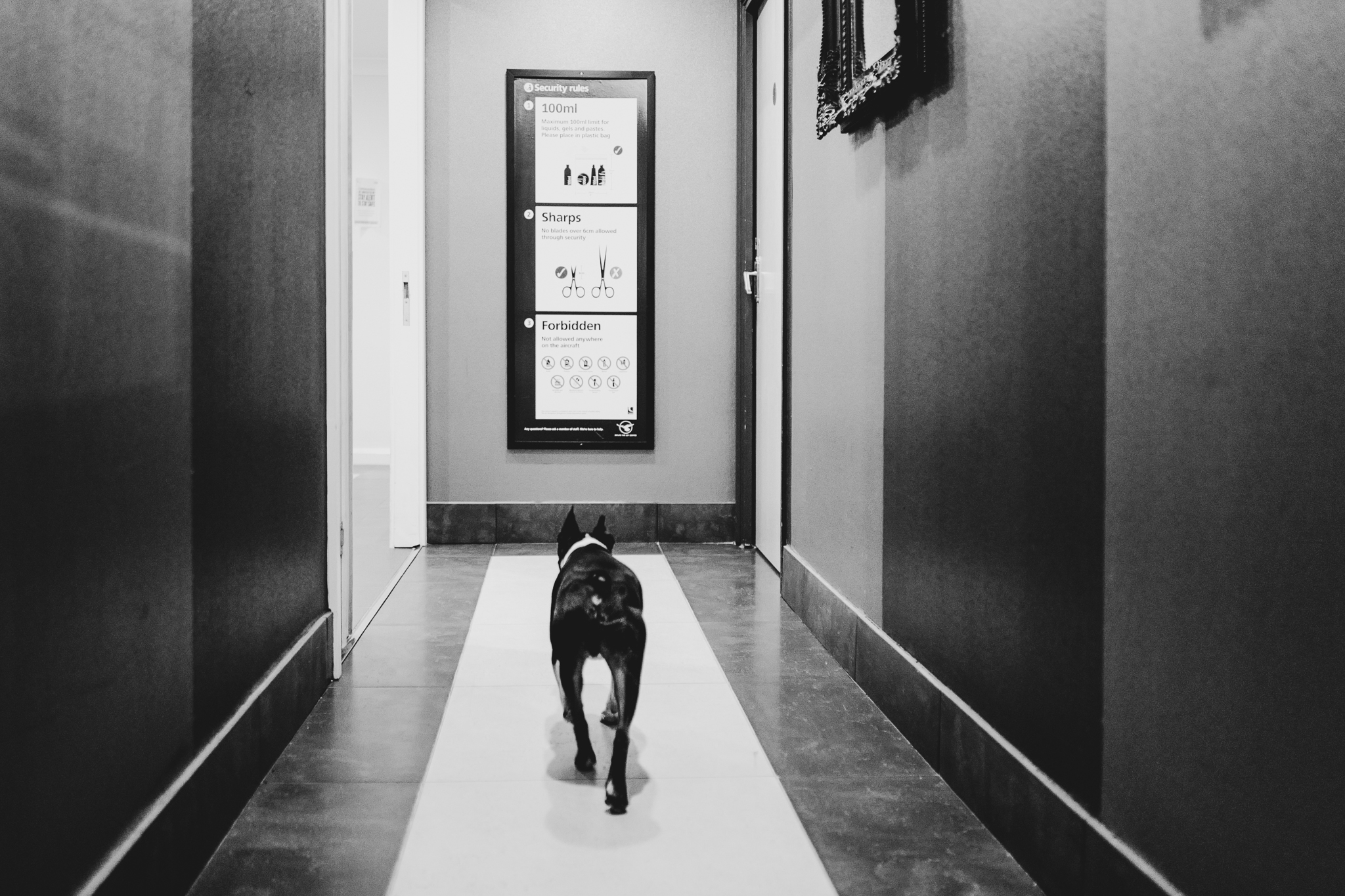
The most unusual thing I have ever seen at airport security
On Wednesday morning we set off to Stansted. Somewhere on the M11 the phone rang, it was Mark saying the US had pulled my clearance again due to me visiting ‘red list’ countries in the last few months. Utter nonsense, and I explained the last place I had travelled was the US just prior to the lockdown when I visited North Dakota and Arizona. I even volunteered my bank statements to prove my case. We waited at the Inflite Executive Jet Centre at Stansted with our luggage already loaded for clearance. Eventually the US backed down and removed their marker, but this now meant reapplying for entry. The decision was made to leave the jet on the tarmac overnight and return the following day to give us time to organise it. Partly this was because the crew had already started logging hours and by the time a clear to fly issued we’d need a new crew. Not that it would have mattered, but I thought I would not be flying and the one time in my life I have paid for a private jet it would be the dog flying on it, not me. And Renée of course.
America, we are coming in hot!
“The best part was we were truly on our way to get Alfred some help, a chance to save him
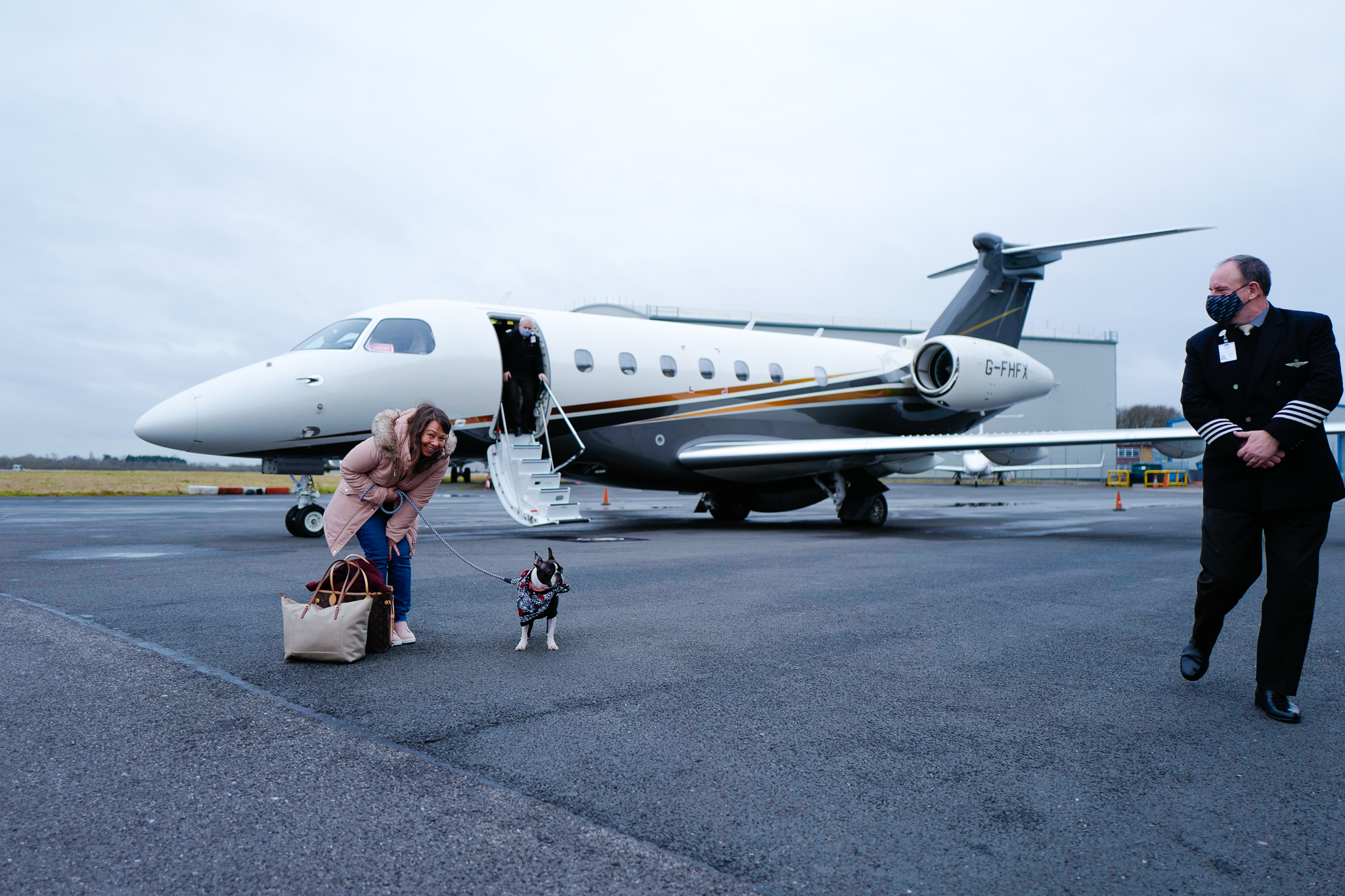
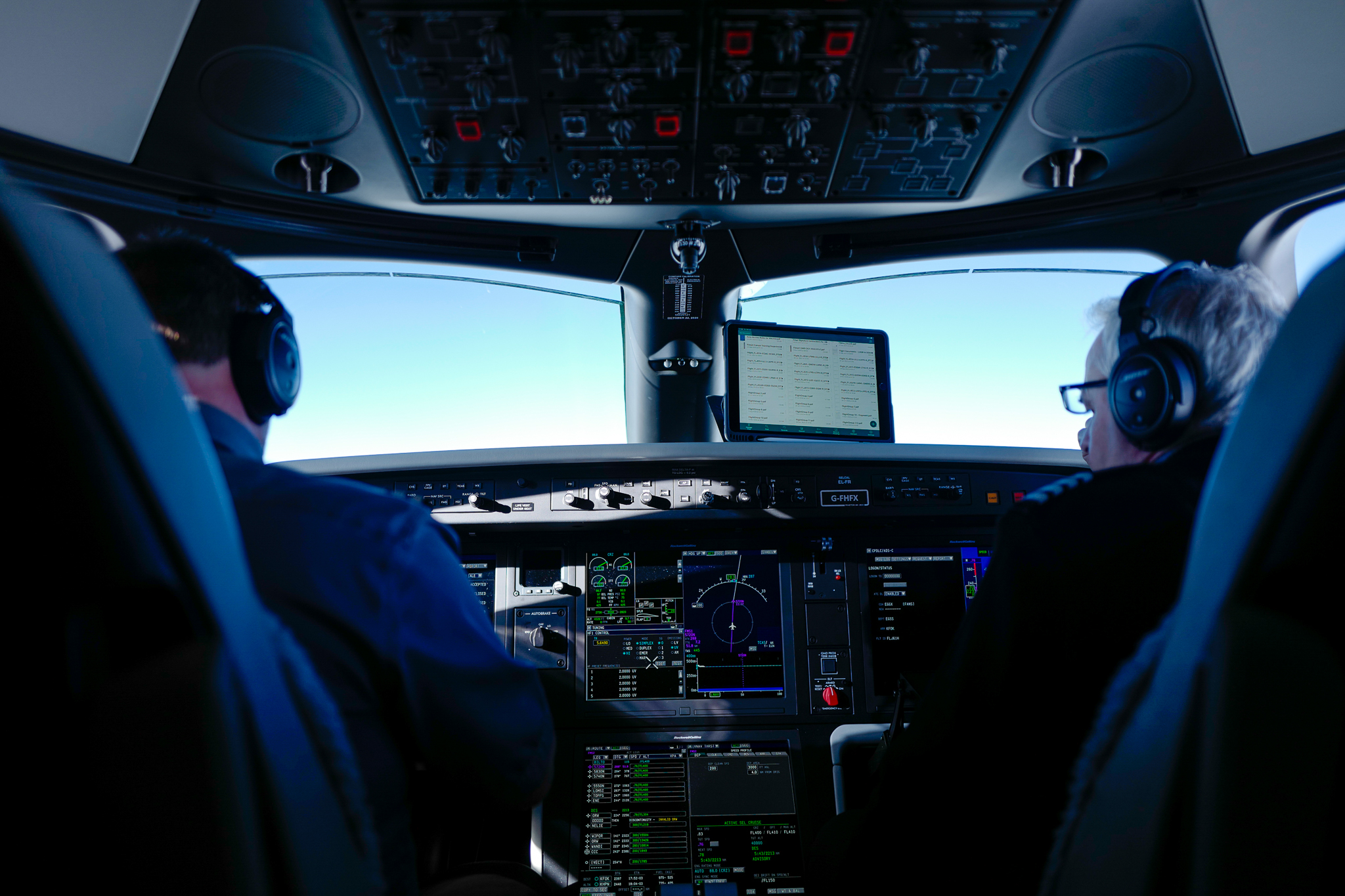
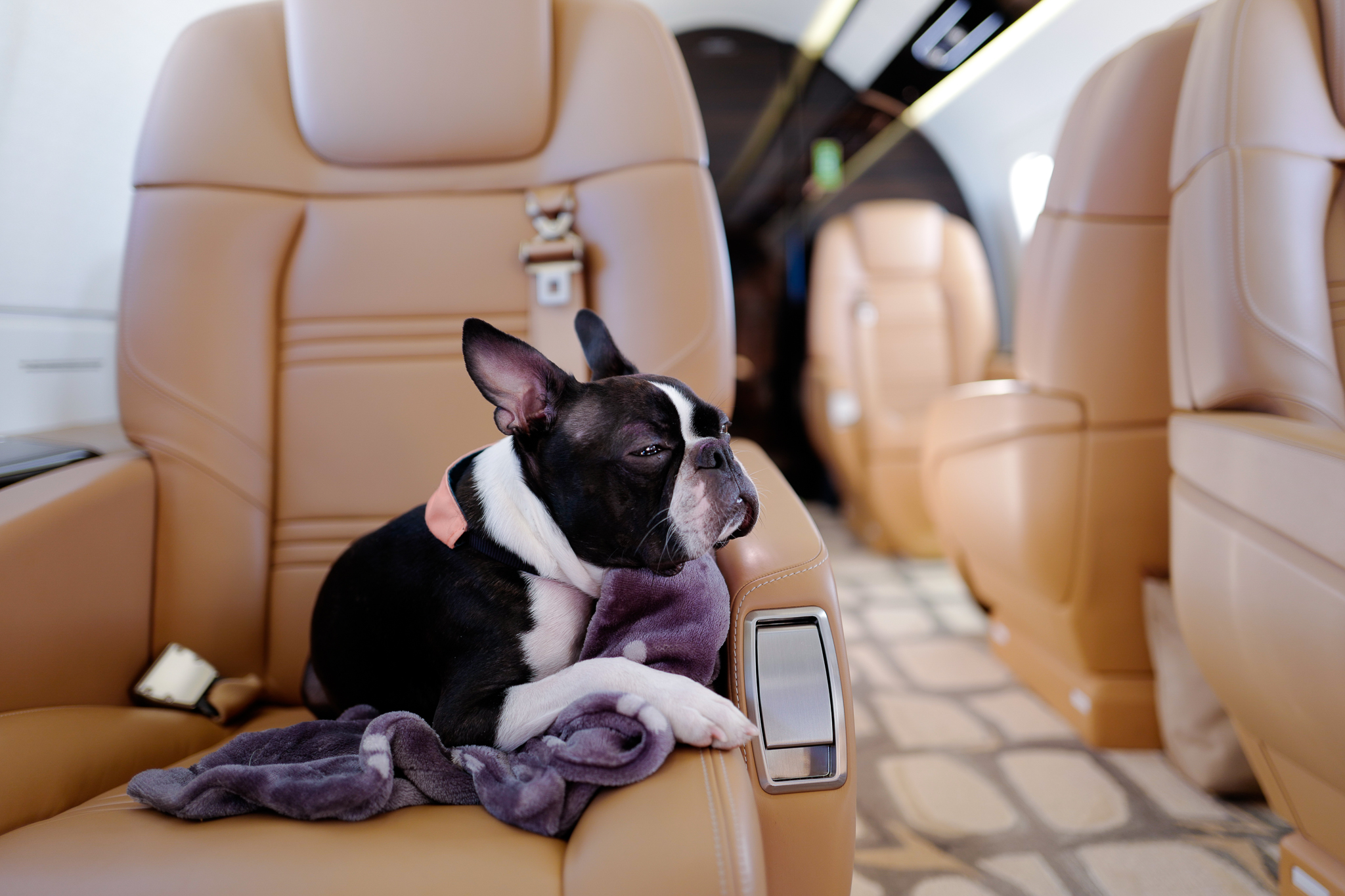
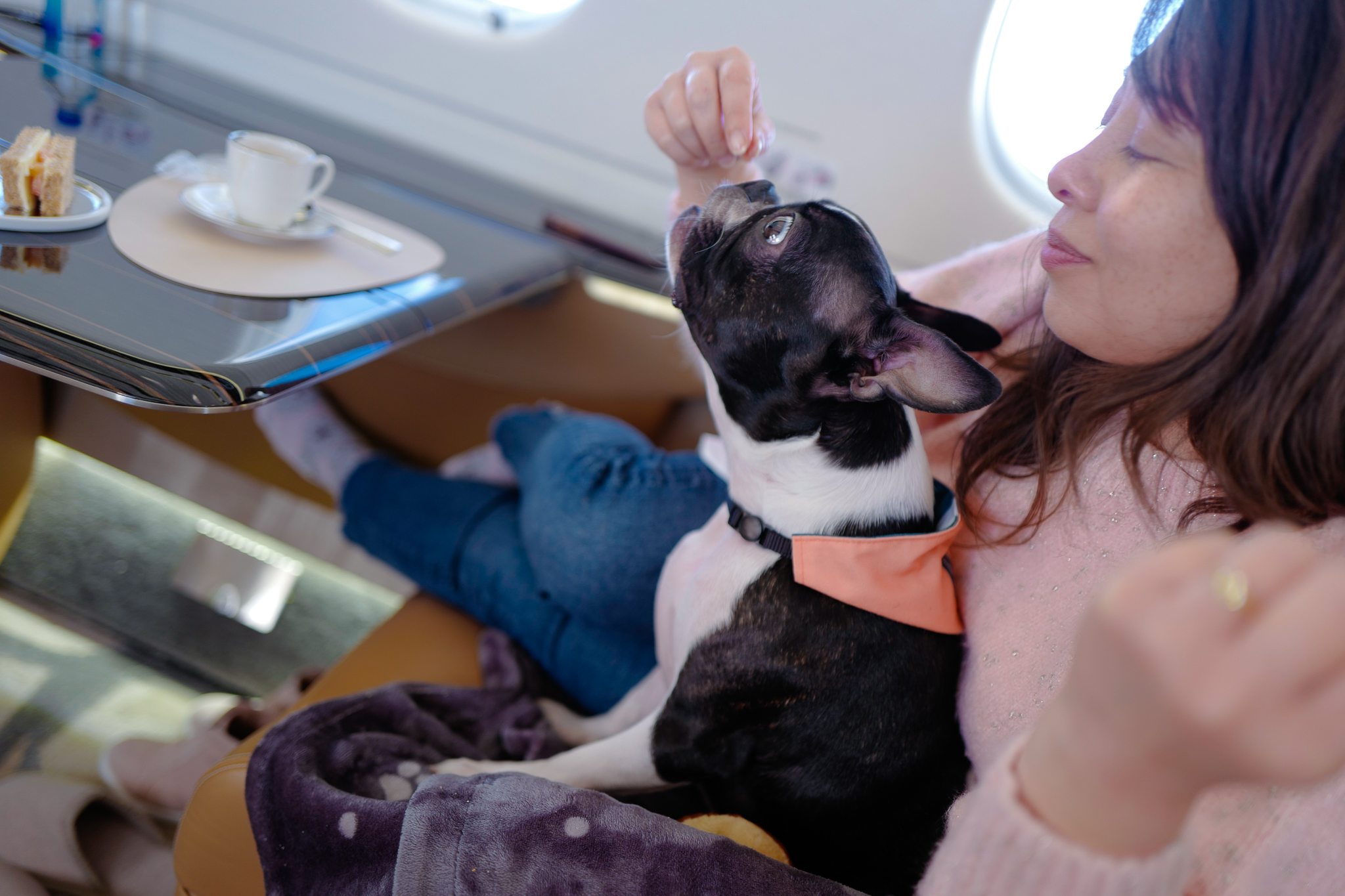
Thursday went smoothly. We turned up, parked the car, got on the jet, flew to NYC. On a commercial flight there are little increments of comfort between Economy, Premium Economy, Business and First. Compared to flying private those classes of travel are all the same. No difference. It’s all cattle class. The whole aircraft to ourselves, big luxurious seats, a sofa, your own bathroom with Diptyque toiletries. Want a lay flat bed? Just tell your own crew and they make you one up. And Alfred was free to sit where he wanted, roam around, was fed a chicken dinner off a china plate, and was even able to chase a ball along the aisle. The best part was we were truly on our way to get Alfred some help, a chance to save him.
We were arriving just in time
We didn’t need reminding of the difficulties ahead. The novelty of traveling like rock stars soon faded when mid flight he suffered a seizure. By now I am well versed in how to deal with this, and Renée is able to spot the warning signs with incredible accuracy. I got him to the bathroom with a soft towel and comforted him just as his little body went into a full grand mal seizure. Since his diagnosis Alfie had been on strong barbiturate and steroid medication which had suppressed the seizures. Something that would only last so long. We were 10 days without a seizure and this a clear indication the efficacy of the medication was reducing, and the tumour growing. We were arriving just in time.
I LOVE this!
Carry on allowance an improvement over commercial.
ooOOoo
I am going to reproduce the contents of an email that I sent Anthony yesterday morning. It sums up how we feel about what Anthony and Renée are doing.
Dear Anthony,
I have now read very carefully your blog especially your posts of the last few weeks.
They are beautiful. In the sense of describing what you feel towards Alfred. Dogs bond to humans unconditionally. You love Alfred unconditionally.
It’s a little after 5am here in Southern Oregon. Jean and I are sitting back on top of our bed having had recently our first morning coffees. On the bed is also Oliver, an ex-rescue Labrador crossed with a Border Collie. Oliver’s bond with me is so precious. Beyond words but not beyond feelings!
I am going to write a couple of posts that essentially republish your posts about you getting Alfred to Minneapolis. But beyond that Jean and I want to wish you every success in Alfred’s treatment. Is there anything more practical that we can do to help? We are in our 70s. We are both English. We met in Mexico in December, 2007. Jean was rescuing dogs, spay or neutering them, then finding homes for them mainly in Arizona. I flew with my GSD, Pharaoh, to LAX from London, in 2008. Then down to Mexico. We came to the USA in 2010 to be married and to live with our then 16 dogs. Subsequently we came to Oregon in 2012.
I am so grateful for my son highlighting your blog.
This is a delightful story about a dog in the country of Columbia. It just goes to show that dogs are, in the main, universally admired and loved. The story was originally published on The Dodo.
ooOOoo
Clever Dog Sneaks Into Pet Store And Makes Off With A Giant Bone
This is Agroveterinaria Los Paisas, a pet store and animal clinic in the town of Andalucia, Colombia.
It’s also the scene of a rather adorable crime.
VICTORIA ANDREA VIVIANA
The other day, Victoria Andrea Viviana was working in the shop, helping customers, when a certain someone evidently saw her distraction as a golden opportunity.
It was a dog. A dog with a plan.
While no one was looking, the dog quietly snuck into the store and slipped behind the counter. Then the object of his little mission became clear. He’d come to slyly steal a giant bone — but his getaway didn’t go unnoticed.
Here’s that scene on video:
“I was surprised by the cunning with which the dog took the bone,” Viviana told The Dodo. “One of our clients wanted to stop him, but he was very agile.”
The store had been robbed. But the culprit behind the crime was soon found out.
It was the dog’s own mom who turned him in.
VICTORIA ANDREA VIVIANA
“[The woman who owns the dog] came in to pay for the bone he stole, but we obviously didn’t take her money,” Vivian said. “It is something that happened unexpectedly, and the dog was able to amuse many people who watched the video.”
In the end, there were no hard feelings.
“The dog will always be welcome here,” Vivian said, “as well as any other animal who wants to visit.”
ooOOoo
Not much more to say except that our dogs everywhere are extraordinary in their similarity.
In fact, I am composing a post about the evolution of dogs and humans to show how far back we all go. I am not sure when it will see the light of day!
The unconditional love of dogs put to a very beneficial human use!
Yesterday while we were waiting to pay for a few food items in Winco we stopped behind a woman with a small service dog. The dog was a Dachshund and had a jacket on which were sewn badges saying that this was a service dog and not to make contact.
The woman suffered from panic attacks and strongly recommended an organisation that was called ADA. In fact it is a government organisation and ADA stands for Americans with Disabilities Act.
All of which makes a nice introduction to this next item that was published on The Conversation blog site.
ooOOoo
Service dogs can help veterans with PTSD – growing evidence shows they may reduce anxiety in practical ways
PTSD, a mental health problem that some people develop after experiencing or witnessing a life-threatening traumatic event, is a complex condition and can be hard to treat. Our lab is studying whether service dogs can help these military veterans, who may also have depression and anxiety – and run an elevated risk of death by suicide – in addition to having PTSD.
The traditional treatments for PTSD, such as talk therapy and medication, do work for many veterans. But these approaches do not alleviate the symptoms for all veterans, so a growing number of them are seeking additional help from PTSD service dogs.
The nation’s estimated 500,000 service dogs aid people experiencing a wide array of conditions that include visual or hearing impairments, psychological challenges, epilepsy and multiple sclerosis.
Service dogs can help vets with PTSD in many ways. The most common tasks include helping veterans remain calm and interrupting their anxiety. The veterans said they are asking their dogs to calm or comfort them from anxiety five times per day and that their dogs independently interrupted their anxiety three times per day on average.
For example, a dog may “cover” a veteran at a supermarket, allowing its owner to calmly turn to take something off the shelf, because veterans with PTSD can get startled if they don’t know if someone is approaching and benefit if their dogs signal that this is happening. If a veteran starts to have a panic attack, a service dog can nudge its owner to “alert” and interrupt the anxiety. At that point, the veteran can focus on petting the dog to re-center on the present – ideally preventing or minimizing the panic attack.
Service dogs can help veterans with PTSD relax when they’re shopping for groceries, a common trigger for their symptoms of this condition. Barcroft Media via Getty Images
Aside from the tasks that their dogs are trained to do, veterans also shared that the love and companionship they get from simply being with their dogs is helping make their PTSD easier to manage.
Once veterans got service dogs, they described themselves in surveys as more satisfied with their lives, said they felt a greater sense of well-being and deemed themselves as having better relationships with friends and loved ones.
We have also measured levels of cortisol, commonly called the “stress hormone,” in veterans with service dogs. We found they had patterns closer to adults without PTSD.
Challenges and extra responsibilities
Not all veterans are willing or able to benefit from having their own service dogs.
Being accompanied by dogs in public can draw attention to the veterans. Some veterans appreciate this attention and the way it encourages them to get out of their shell, while others dread having to avoid well-meaning, dog-loving strangers. We’ve found that veterans do not expect this challenge, but often experience it.
Service dogs can also make it harder to travel, since bringing a dog along can require more planning and effort, especially because many people don’t understand the legal rights of people with service dogs and may ask inappropriate questions or create barriers that they aren’t legally allowed to do. Many experts believe educating the public about service dogs could alleviate these challenges.
What’s more, feeding, walking, grooming and otherwise taking care of a dog also entails additional responsibilities, including making sure they see a veterinarian from time to time.
There can also be a new sense of stigma that goes along with making a disability that might otherwise be hidden readily apparent. Someone who has PTSD might not stick out until they get a service dog that is always present.
Most veterans say it’s worth it because the benefits tend to outweigh the challenges, especially when appropriate expectations are set. Clinicians can play a role in helping veterans realize in advance what caring for the animal entails, to make the intervention positive for both the veterans and the dogs.
We are now completing the first registered clinical trial comparing what happens when these veterans get the usual PTSD interventions with what happens when they get that same treatment in addition to a trained service dog.
As our research proceeds, we are trying to see how the effects of a service dog last over time, how the service dogs affect veterans’ families and how we can support the partnership between veterans and their service dogs.
ooOOoo
I am still struggling with WordPress. For example I haven’t yet worked out how to place the credit for the photograph underneath the picture. (It did it all on its own!) And there doesn’t seem to be a ‘blockquote’ command.
But coming back to the article it was a perfect description of the way that dogs are so, so good to us humans whether we have a medical need for a service dog or not.
On the 21st January I received the following email:
Hi, I’m Evan;
I’m a pet lover and blogger at https://petsroof.com. I’ve been following the excellent work you guys are doing at Learning From Dogs. I’m writing to inquire whether you accept guest posts or link insertions on your site? If so, how much is the price?
Looking forward to your reply.
Regards,Evan
Of course I was interested and after telling Evan that I didn’t charge for guest posts he then sent me the following:
ooOOoo
Evan Yap
Make Dog Treats Yourself: 3 Easy and Quick Recipes
Oh, is the dog biscuit jar empty again? Then it’s time to replenish them. But who says that you always have to buy more dog treats? You can also easily make them yourself! We’ll show you how it’s done and present you with 3 super easy dog treats recipes.
Baking dog biscuits yourself: the advantages of DIY treats
Making dog treats yourself has one major advantage above all: you always know what’s in the dog biscuits. Unfortunately, many industrially produced dog treats contain dyes and preservatives. Flavor enhancers, sugar, and artificial flavors are also not uncommon. With your homemade dog treats, you know 100% what is inside – and you can take into account the individual needs, demands, preferences, and, if applicable, allergies of your four-legged friend.
Since your DIY dog treats are mostly based on a few natural ingredients, they are particularly healthy, natural, and easy to digest. In addition, making dog treats yourself is often much cheaper than buying ready-made dog treats, because the ingredients do not cost much.
What ingredients are allowed in dog biscuits?
When it comes to baking your own dog treats, there are almost no limits to your imagination. As in all other areas of dog nutrition, you should avoid prohibited, unhealthy and poisonous foods for dogs in your DIY biscuits. These include chocolate, alcohol, cocoa, grapes and sugar. Otherwise, you can use just about any food that your dog likes and benefits his health. The diverse selection of foods gives you unlimited recipe options. It is important that you can puree the food into a dough and bake it.
The most popular ingredients that keep appearing in many recipes are:
fish, e.g. tuna
beef
poultry
ground beef
oatmeal
cream cheese
carrots
bananas
eggs
spinach
whole wheat flour
What’s the best way to store homemade dog biscuits?
A big advantage of homemade dog treats is that they do not contain any preservatives. However, this also means that they do not last as long as industrially manufactured products. As a rule, the dog treats are plastered off relatively quickly – that’s how it should be!
Nevertheless, you can turn a few adjusting screws to ensure the longest possible durability.
In general, the drier the homemade dog biscuits are, the longer they last. Moist dog treats can unfortunately mold quickly – you should definitely avoid that! To dry out your homemade dog treats as well as possible, you can do the following:
After baking, let the biscuits dry out in the oven (with the oven door open and 50–100° C).
Do not pack the DIY dog biscuits in a can immediately after cooling, but leave them in the air for half a day to a full day before you store them.
Pack the dog treats in classic tin cookie jars or in fabric bags so that no moisture can develop inside. Airtight plastic is unsuitable.
Choose ingredients that have a long shelf life. Whole grains and oats, for example, last longer than meat and fish.
As a rule of thumb, homemade dog treats can be kept for around 3 to 4 weeks on average. The shelf life is extended by several weeks in the refrigerator as long as no moisture penetrates. They can be stored frozen for several months.
DIY dog treats: 3 simple and tasty recipes
The good thing about our delicious DIY dog biscuits is that you don’t need a lot of ingredients or fancy kitchen utensils for them. The easiest way to implement the recipes is with a food processor or a strong one. Alternatively, you can use a hand blender or even a simple whisk to prepare the dough for your DIY dog treats. In addition, cookie cutters and a rolling pin will make your work easier. If you don’t have them at hand, the cookies can also be shaped easily by hand.
Which recipe is “right” for you? Below we present our 3 favorite recipes for homemade dog biscuits. If one or the other recipe doesn’t quite suit you and your dog, we want to motivate you to try it out. There are many recipe ideas on the internet, but only you know your dog’s preferences and needs.
Therefore: Just get started, try out our recipes, and vary them from time to time. Look what supplies you still have at home and then simply test your baking skills!
Recipe # 1: Tuna treats
Preparation time (including baking time): approx. 35 min
Ingredients:
1 egg
1 can of tuna (in its own juice)
130g oat flakes (alternatively: whole grain or potato flour)
Parsley or rosemary
How to make it:
Mix all ingredients together with a mixer or whisk. Add enough oat flakes or flour to make a firm but malleable dough. Now shape the biscuits as large as you want and bake them at 150°C for about 30 minutes. The baking time can vary depending on the size and thickness of the biscuits. Let your DIY tuna biscuits dry in the switched-off oven.
Store tuna dog biscuits in the refrigerator depending on the quantity.
Large portions of the fish biscuits that you will not use up within a short time should be stored in a dry, protected place in the refrigerator. This extends the shelf life of the protein-rich snacks. Depending on your needs, you can also freeze the biscuits and store them for several months.
Recipe No. 2: Cheese crunchy pearls
Preparation time (including baking time): approx. 35 min
Ingredients:
100g of grated cheese
100g of cottage cheese
1 egg
50g crumbled crispbread (or crunchy oat flakes)
1 tbsp sunflower oil
some water if the batter is too firm
How to make it:
Mix all the ingredients together (ideally with a hand blender) and shape the dough into small balls. Place the cheese balls on a baking sheet lined with baking paper and press them into small thalers with a tablespoon. Bake the DIY dog biscuits at 180°C top and bottom heat for about 25 minutes and then let them air dry for one night.
Recipe No. 3: Liver sausage cookies
Preparation time (including baking time): approx. 40 min
Ingredients:
125g liver sausage
250g of oatmeal
1 egg
150g of cottage cheese
5 tbsp sunflower oil
flour for rolling
How to make it:
Mix all the ingredients together to create a creamy mass. Let the dough rest in the refrigerator for about 1 hour and then roll it out on a floured work surface (about 1 cm thick). If the dough is too wet to roll out, add more oatmeal. You can read more in the article “Can dogs eat oatmeal cookies?”
Pierce or cut out your DIY dog biscuits as you wish and bake them for about 30 minutes at 150°C (180°C top and bottom heat). Allow the liver sausage biscuits to air dry overnight before stowing them in a cookie jar.
Homemade dog treats for in between or as a healthy gift idea
Baking dog treats yourself is fun, healthy, does not cost a lot, and is easier than you think! Over time, you will learn which ingredients work best for you and your four-legged friend, and you can make them happy with tasty DIY biscuits.
Since you alone determine the size, ingredients and taste of your homemade dog biscuits, you can bake delicious chews as well as small training bites that your dog can tolerate well. The DIY dog biscuits are also suitable as a great gift idea for other dog owners – ideal for Christmas, for a birthday or just for in between. Great fun for all dog lovers!
ooOOoo
I think these are great.
What would be lovely is to hear from someone who has made the treats (and I haven’t yet shown the menus to Jeannie). Even better for that person to write up a guest post for this place.
This was a story that appeared in my ‘in box’ yesterday afternoon but I didn’t want all the clutter that came with it. No problem because there were a number of videos on YouTube and I selected one that seemed to capture the essence of the story.
Video captures moment hero dog stopped traffic during owner’s seizure
By Tim Fitzsimons
March 25, 2021
A dog named Clover is being hailed by Canadian media as a hero for helping her human, Haley Moore, survive a seizure that struck her suddenly during a walk.
Moore was strolling through the Stittsville neighborhood of Ottawa on Tuesday when she seized and fell to the curb, CTV News reported.
The incident was captured by a neighbor’s home security camera.
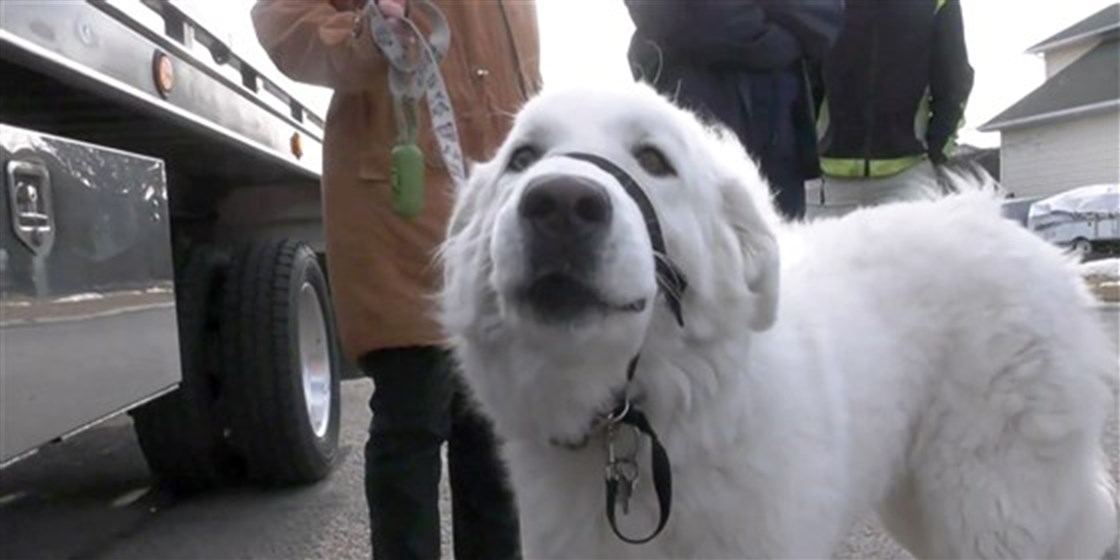
Clover, a year-and-a-half-old Maremma mix, sprung into action, attending first to Moore before bounding into the street and stopping traffic.
Dryden Oatway, a driver who stopped thanks to Clover’s heroics, said, “It was really impressive, the dog actually blocked my way. She kind of backed into the road to block my truck.”
Clover stopped another driver and then returned home.
“All I remember is waking up in the ambulance and being really confused, just like, ‘What is going on?'” Moore recalled in an interview with CTV. The cause of the seizure remains unknown.
Moore’s father, Randall Moore, told CTV that Clover was fed delicious steaks as a reward for her faithful service.
Psychology Today reported in March that new research suggests that seizure-predicting dogs are aided by the scent of volatile organic compounds that are excreted around seizures.
ooOOoo
Here is the YouTube video.
I’m still having some difficulty with the new WordPress but it is easier than yesterday.
I wasn’t going to publish a post for today because I had to go to the dentist yesterday for an 11 am appointment. In the afternoon the aesthetic was still making my jaw a little ‘sleepy’. But then I saw this article about a particular dog loving blueberries and figured is was too good to overlook. The article was published in The Dodo.
You will undoubtedly agree with me!
ooOOoo
Dog Has Cared For Every Blueberry Her Mom Has Ever Given Her
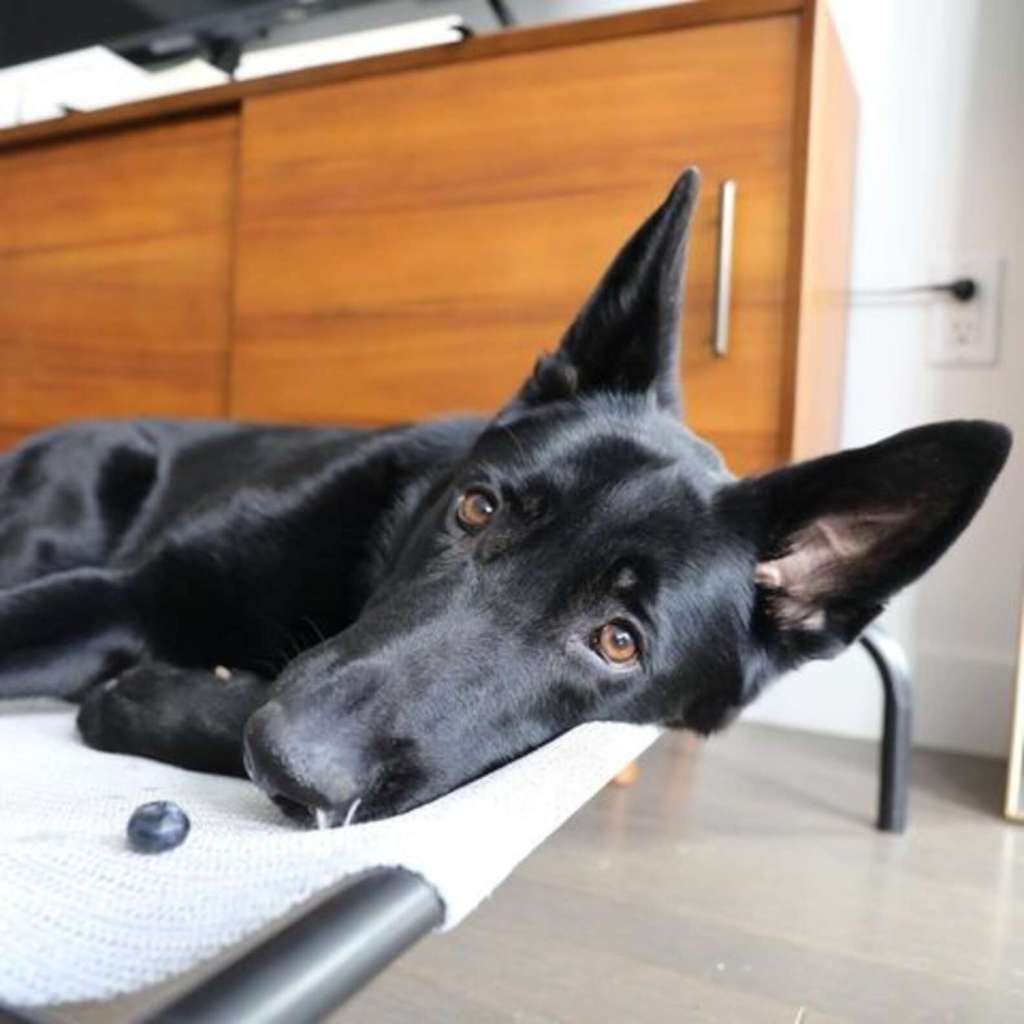
Ava is an incredibly sweet and caring dog, and one of her favorite things in life has always been toys.
“Any time anything happens, her answer is to bring over a toy,” Talia Henze, Ava’s mom, told The Dodo. “And I mean any time. If anyone laughs, if she sees anyone sad, she gets up and brings over a toy.”
TALIA HENZE
One day, Ava was watching her mom snack on some blueberries. She looked so curious that Henze decided to give her one. She thought Ava would enjoy having a little treat, but instead, for some reason, she decided to treat the blueberry exactly like one of her toys.
“She’s been trained to only eat her treats and long-lasting chew stuff on her elevated bed or in her crate, so she naturally just brings new toys, treats, etc. to those places,” Henze said. “So it didn’t surprise me that she brought the berry to it. But she just never ate it.”
Instead, Ava gently carried the blueberry around, caring for it tenderly. She showed absolutely no interest in having it as a snack. Her mom thought maybe she just didn’t understand what it was and tried to show her, but it was no use. The blueberry had become Ava’s friend, and that was that.
“She kind of just carried it around to her different places for a while and snuggled it,” Henze said. “When she eventually got bored and left it in her crate, I tried showing her [how] to eat it by breaking it open … She wanted nothing to do with it when it was broken.”
TALIA HENZE
Now, every time Henze gives Ava a blueberry, the same exact thing happens. They’ve become one of her favorite toys, and it’s the cutest quirky habit ever.
“So I know she doesn’t really like eating them, but every time I eat blueberries she seems to want one,” Henze said. “So I just give her one every time … She tried to eat one once when I really encouraged it, but she just spat it out.”
TALIA HENZE
To Ava, blueberries are friends, not food. They’re her little buddies, and that’s never going to change.
No one has any idea why Ava loves playing with blueberries so much, or why she’s so opposed to actually eating them. Her mom doesn’t question it anymore, though. It’s just a part of who Ava is, and that’s perfectly OK with her.
ooOOoo
Dogs are as much a mystery at times as they are pure companions. This is an example of a dog, Ava, who has set her mind on something and that is it! All of us dog carers know this about the animal. I guess there’s a logic to the way that a dog thinks even though that logic is beyond reach to us humans.
But that is one of the many characteristics that makes the dog so precious and so adorable.
Nothing to do with dogs but everything to do with the future!
An item in The Conversation recently was not only interesting from a scientific point-of-view but also it had real lessons for the way that we humans are interfering with the planet.
As The Conversation introduced the article:
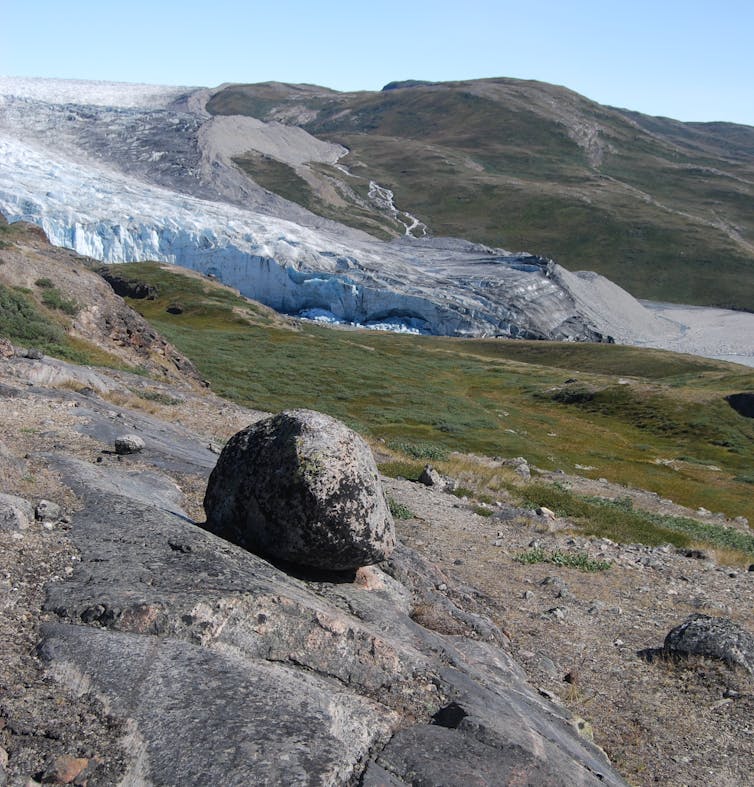
A mile below the surface of the Greenland ice sheet, an ancient Arctic ecosystem is preserved in the frozen soil. How scientists discovered its leaves, twigs and mosses is a story in itself. It starts with a secret military base built into the northern Greenland ice.
In 1963, inside a covert U.S. military base in northern Greenland, a team of scientists began drilling down through the Greenland ice sheet. Piece by piece, they extracted an ice core 4 inches across and nearly a mile long. At the very end, they pulled up something else – 12 feet of frozen soil.
The ice told a story of Earth’s climate history. The frozen soil was examined, set aside and then forgotten.
Half a century later, scientists rediscovered that soil in a Danish freezer. It is now revealing its secrets.
Using lab techniques unimaginable in the 1960s when the core was drilled, we and an international team of fellow scientists were able to show that Greenland’s massive ice sheet had melted to the ground there within the past million years. Radiocarbon dating shows that it would have happened more than 50,000 years ago. It most likely happened during times when the climate was warm and sea level was high, possibly 400,000 years ago.
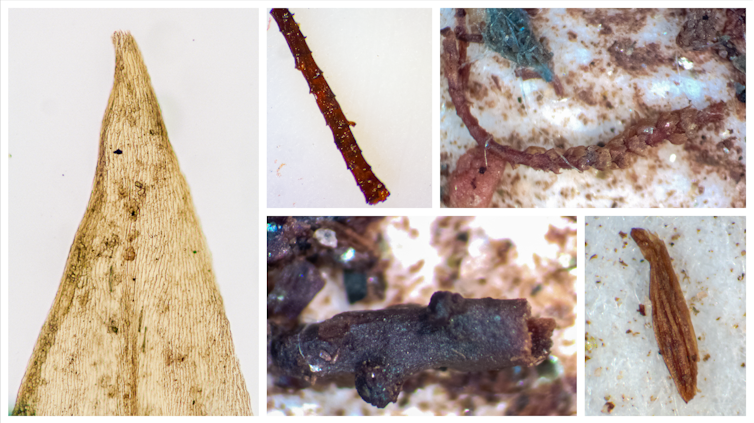
And there was more. As we explored the soil under a microscope, we were stunned to discover the remnants of a tundra ecosystem – twigs, leaves and moss. We were looking at northern Greenland as it existed the last time the region was ice-free. Our peer-reviewed study was published on March 15 in Proceedings of the National Academy of Sciences.
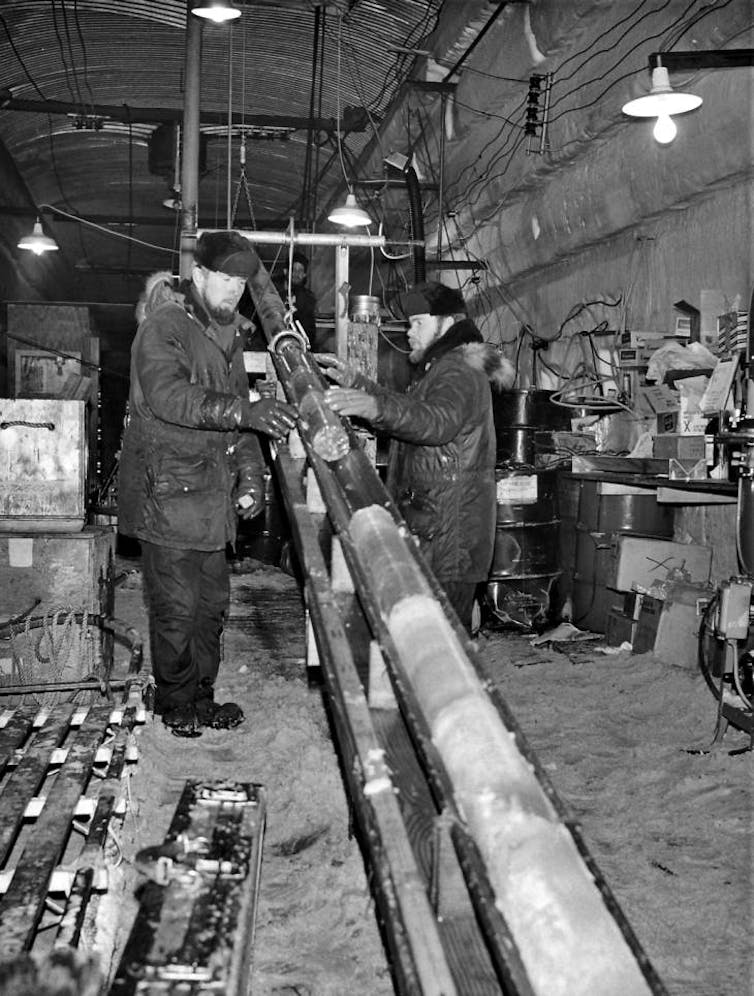
Engineers pull up a section of the 4,560-foot-long ice core at Camp Century in the 1960s. U.S. Army Corps of Engineers
Paul Bierman, a geomorphologist and geochemist, describes what he and his colleagues found in the soil.
With no ice sheet, sunlight would have warmed the soil enough for tundra vegetation to cover the landscape. The oceans around the globe would have been more than 10 feet higher, and maybe even 20 feet. The land on which Boston, London and Shanghai sit today would have been under the ocean waves.
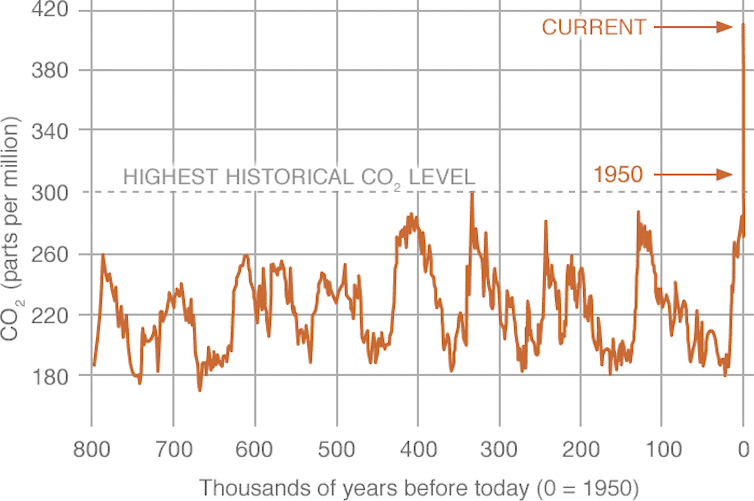
All of this happened before humans began warming the Earth’s climate. The atmosphere at that time contained far less carbon dioxide than it does today, and it wasn’t rising as quickly. The ice core and the soil below are something of a Rosetta Stone for understanding how durable the Greenland ice sheet has been during past warm periods – and how quickly it might melt again as the climate heats up.
Secret military bases and Danish freezers
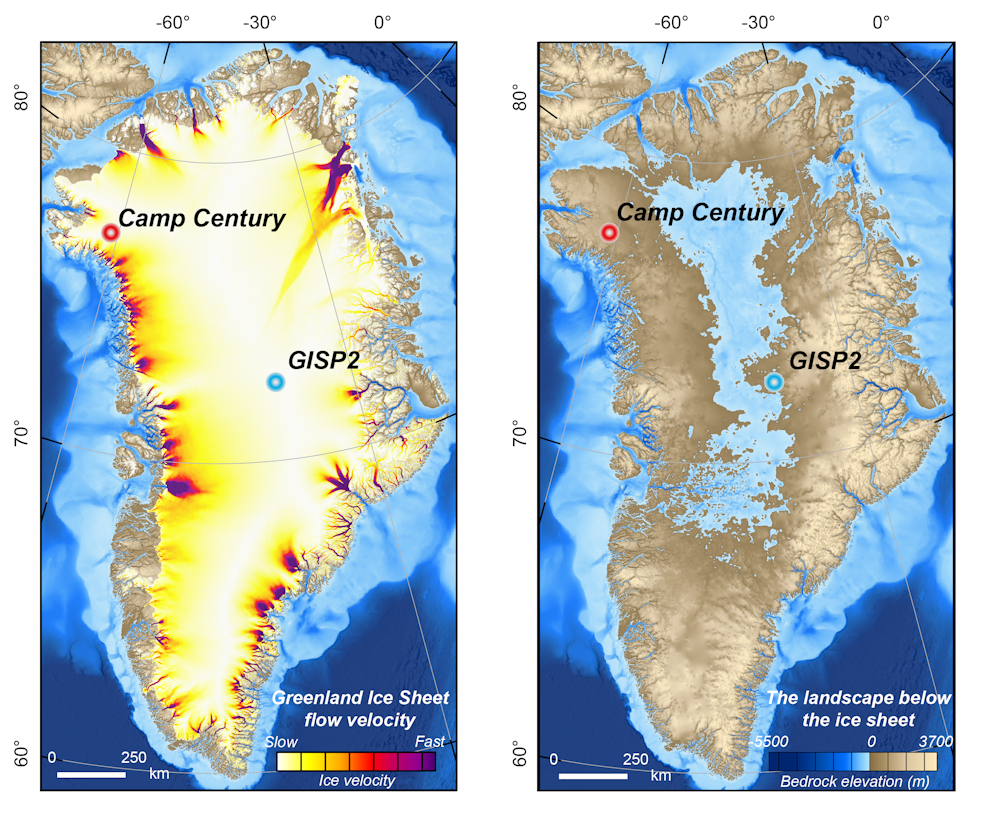
The story of the ice core begins during the Cold War with a military mission dubbed Project Iceworm. Starting around 1959, the U.S. Army hauled hundreds of soldiers, heavy equipment and even a nuclear reactor across the ice sheet in northwest Greenland and dug a base of tunnels inside the ice. They called it Camp Century.
It was part of a secret plan to hide nuclear weapons from the Soviets. The public knew it as an Arctic research laboratory. Walter Cronkite even paid a visit and filed a report.
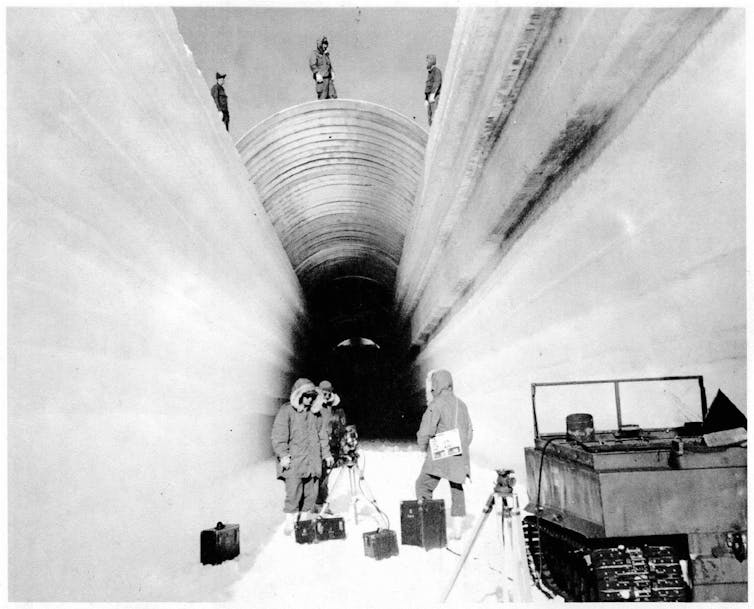
Workers build the snow tunnels at the Camp Century research base in 1960. U.S. Army Corps of Engineers
Camp Century didn’t last long. The snow and ice began slowly crushing the buildings inside the tunnels below, forcing the military to abandon it in 1966. During its short life, however, scientists were able to extract the ice core and begin analyzing Greenland’s climate history. As ice builds up year by year, it captures layers of volcanic ash and changes in precipitation over time, and it traps air bubbles that reveal the past composition of the atmosphere.
One of the original scientists, glaciologist Chester Langway, kept the core and soil samples frozen at the University at Buffalo for years, then he shipped them to a Danish archive in the 1990s, where the soil was soon forgotten.
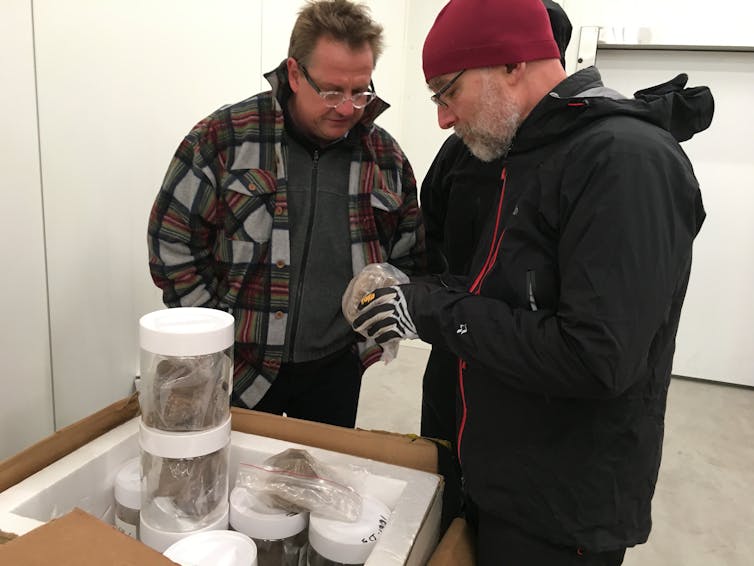
A few years ago, our Danish colleagues found the soil samples in a box of glass cookie jars with faded labels: “Camp Century Sub-Ice.”
Geomorphologist Paul Bierman (right) and geochemist Joerg Schaefer of Columbia University examine the jars holding Camp Century sediment for the first time. They were in a Danish freezer set at -17 F. Paul Bierman, CC BY-ND
A surprise under the microscope
On a hot July day in 2019, two samples of soil arrived at our lab at the University of Vermont frozen solid. We began the painstaking process of splitting the precious few ounces of frozen mud and sand for different analyses.
First, we photographed the layering in the soil before it was lost forever. Then we chiseled off small bits to examine under the microscope. We melted the rest and saved the ancient water.
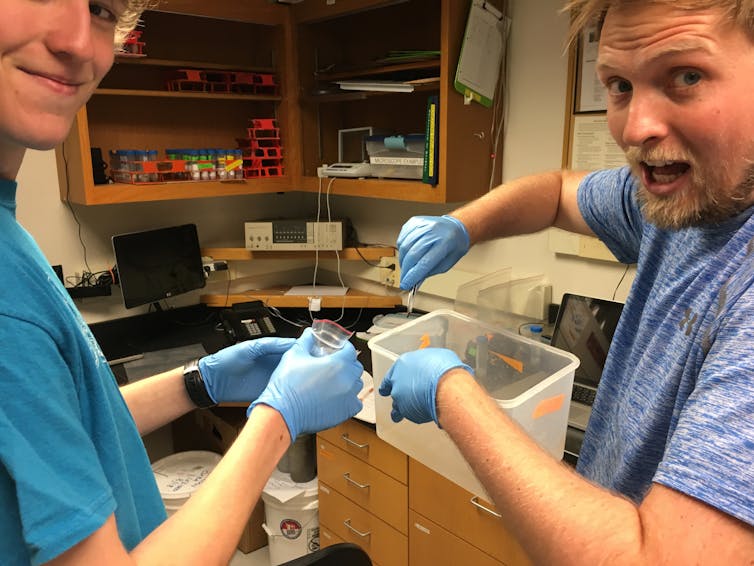
Then came the biggest surprise. While we were washing the soil, we spotted something floating in the rinse water. Paul grabbed a pipette and some filter paper, Drew grabbed tweezers and turned on the microscope. We were absolutely stunned as we looked down the eyepiece.
Staring back at us were leaves, twigs and mosses. This wasn’t just soil. This was an ancient ecosystem perfectly preserved in Greenland’s natural deep freeze.
Glacial geomorphologist Andrew Christ (right), with geology student Landon Williamson, holds up the first twig spotted as they washed a sediment sample from Camp Century. Paul Bierman, CC BY-ND
Dating million-year-old moss
How old were these plants?
Over the last million years, Earth’s climate was punctuated by relatively short warm periods, typically lasting about 10,000 years, called interglacials, when there was less ice at the poles and sea level was higher. The Greenland ice sheet survived through all of human history during the Holocene, the present interglacial period of the last 12,000 years, and most of the interglacials in the last million years.
But our research shows that at least one of these interglacial periods was warm enough for a long enough period of time to melt large portions of the Greenland ice sheet, allowing a tundra ecosystem to emerge in northwestern Greenland.
We used two techniques to determine the age of the soil and the plants. First, we used clean room chemistry and a particle accelerator to count atoms that form in rocks and sediment when exposed to natural radiation that bombards Earth. Then, a colleague used an ultra-sensitive method for measuring light emitted from grains of sand to determine the last time they were exposed to sunlight.
Maps of Greenland show the speed of the ice sheet as it flows (left) and the landscape hidden beneath it (right). BedMachine v3; Copernicus Climate Change Service (C3S), CC BY-ND
The concentration of carbon dioxide in the atmosphere today is well beyond past levels determined from ice cores. On March 14, 2021, the CO2 level was about 417 ppm. NASA Jet Propulsion Laboratory, CC BY-ND
Losing the Greenland ice sheet would be catastrophic to humanity today. The melted ice would raise sea level by more than 20 feet. That would redraw coastlines worldwide.
About 40% of the global population lives within 60 miles of a coast, and 600 million people live within 30 feet of sea level. If warming continues, ice melt from Greenland and Antarctica will pour more water into the oceans. Communities will be forced to relocate, climate refugees will become more common, and costly infrastructure will be abandoned. Already, sea level rise has amplified flooding from coastal storms, causing hundreds of billions of dollars of damage every year.
Tundra near the Greenland ice sheet today. Is this what Camp Century looked like before the ice came back sometime in the last million years? Paul Bierman, CC BY-ND
The story of Camp Century spans two critical moments in modern history. An Arctic military base built in response to the existential threat of nuclear war inadvertently led us to discover another threat from ice cores – the threat of sea level rise from human-caused climate change. Now, its legacy is helping scientists understand how the Earth responds to a changing climate.
The article is republished with the full permission of The Conversation.
I hope you read it because the way the climate is changing is affecting all of us now and sooner rather than later we have all got to amend our ways. Indeed, when I look at anyone who has potentially thirty or more years of life in them I ponder what their future is going to be like. And, of course, it won’t be a drastic change in thirty years it is already happening now albeit at times difficult to see.
But there is not one scintilla of doubt that we humans are the cause and we humans have to be the solution!
A man in California who took up wildlife photography a decade ago had never seen anything quite like what he saw this fall — and he was lucky he had his camera with him.
Every morning, Russell Greaves, of Huntington Beach, California, goes out to the Bolsa Chica Ecological Reserve behind his house to immerse himself in that slice of the natural world. He often sees coyotes, enough that he’s begun to recognize individuals in the area.
“A lot of people here just love the coyotes,” Greaves told The Dodo over the phone, during his morning walk on Tuesday.
Russell Greaves
One morning in October, he saw a familiar wild coyote. It was a mom who had given birth to a litter of pups six months before.
“She had had four pups,” Greaves said. “The pups would come out and play around, while dad went out to hunt. But they’re out on their own now.”
Russell Greaves
It was nice to see the mom again — but there was something different about her. And as she got closer, Greaves couldn’t help but laugh.
Russell Greaves
Somehow, the mother coyote had found a pizza — and she decided to go ahead and take it with her.
“It was nearly half a pizza,” Greaves said. It’s not certain where the coyote managed to find this enormous meal. Greaves said that there are some homeless people who camp out in the woods and perhaps she swiped it from them.
Since her pups had already gone out on their own, she probably wasn’t planning on sharing, Greaves speculated. “I thought, ‘This has got to be for herself.’”
Russell Greaves
More important than this meme-worthy sight is the balance the residents of the area have struck with the natural world — something sorely lacking in other communities across the country, where coyotes are often brutally hunted in killing contests.
Admittedly, not everyone loves the coyotes quite as much as Greaves does, but many people are fascinated by the wild family living nearby, and people take precautions to ensure a peaceful coexistence. “We tell people to not feed the coyotes. They’re not here to eat human food,” Greaves said. “We tell people who are walking their little dogs to be careful because the coyotes are around.”
Russell Greaves
“The coyotes come back to the same habitat because they like it here,” Greaves added.
And the coyotes are lucky to have people like Greaves, who love having them there.
:max_bytes(150000):strip_icc()/mary-jo-dilionardo-bw-22fe0236b1764918a4a0fa2cd2cd0108.jpg)










 Learning from Dogs