Category: Writing

Back again, and with a guest post!

It has been a great time and yet too short!

Last Sunday week, the 22nd May, seems both a long time ago and yet seems as though it was yesterday. Having my son here was fabulous and he was able to take plenty of mountain bike rides and photographs of birds, in particular hummingbirds at our hummingbird feeder.

But that picture does not make a post. What does is an article written by Cara Achterberg about very special mothers and their work in rescuing dogs. It was published on the website Who Will Let the Dogs Out.

ooOOoo

Moms Who Rescue

BY CARA SUE ACHTERBERG

Polk County, Florida is ranked first in Florida and fourth in the nation for the number of dogs ‘euthanized’ each year. The Polk County shelter killed 5000 dogs in 2020. Which is even more remarkable considering 2020 was the year so many shelters were emptied (momentarily).

The only way a dog labeled a bully breed can leave the Polk County Shelter alive is if a rescue pulls it. They are not allowed to adopt out any bully breeds. In 2020, the county took in 16,000 dogs; they killed nearly a third of them.

This is the harsh reality that Shannon and Angie, of the Polk County Bully Project stepped into. Like so many others, they never set out to create a rescue. They met through their children, and their relationship should have revolved around play dates and pool parties, but when they learned the plight of bully breeds in Polk County, they instead bonded over saving lives.

Initially, they volunteered with the Polk County SPCA to secure rescues and transport dogs out of Polk County a handful at a time. That simply wasn’t enough for these smart, driven, passionate women and they realized that with their own rescue they could save more than a handful of dogs. The Polk County Bully Project was born. PCBP saves about 600 dogs a year – almost all bully breeds, but also dogs with medical needs and lots of heartworm positive dogs—the dogs that would otherwise be killed at the shelter.

I asked how they were able to save so many of the breed of dog that others struggle to rescue or find placement for and Shannon shrugged, “We hustle,” she said.

But it’s also that they don’t know any different. They’ve never tried to rescue any other kind of dog. They don’t know there are easier dogs to rescue. To my mind, they jumped right in the deep end of rescue with very little swimming experience. And the remarkable thing is they are succeeding in every measure.

When we visited the rescue a few months ago, the dogs we met were sweet and happy and obviously well-cared for. The shelter is small, a remodeled brick rancher in a nondescript neighborhood. The dogs are divided into separate rooms with maybe four dogs in a room. We arrived at naptime when everyone was contentedly in their kennels, listening to soft music or watching TV. The staff had already had everyone out for walks and playtime, something that happens several times a day.

PCBP is big on enrichment—something critical to these smart, active dogs who need to be challenged. At Christmas they had 25 days of enrichment and every day brought the dogs special treats (anchovies, cheeseburgers, special individual cakes baked by a volunteer) and special activities (like a bubble machine and dog art, which they’ll be auctioning off).

On rainy days, the staff keeps the dogs busy with puzzles and their doggy treadmill. In their play area, where they also have regular play groups (all the staff has been trained to run playgroups), there is AstroTurf, lots of toys, even an agility teeter.

PCBP is a 501c3 run on 100% donations. Many of their adopters become their supporters, but they work hard with fundraising and events to pay for not just the staff (although Angie and Shannon do not take a salary and both work the rescue fulltime and more), but for their medical bills. Last year their bill was 115K! (If you’d like to donate directly towards their vet bills, give Lakeland Vet a call 863-648-4886.)

Beyond treating so many heartworm positive dogs, the rescue takes on lots of medical cases who would otherwise not make it out of the shelter. We met Aspen, a sweet little pitmix whose scarred face, protruding teeth, and wiggly butt combine to make him adorable. He was removed from a home where he’d had a leash wrapped so tightly and permanently around his nose that it was embedded in his skin. He’s had eight reconstruction surgeries to repair his face. But now he’s ready for an adopter.

Other dogs have had amputations, orthopedic surgeries, and Agatha, a sweet senior bulldog mix, has had vaginal reconstruction and eye surgery. We watched as Pippi, one of the staff brought her out to meet us off-leash. She’s 102 pounds of sweetness. When it was time to go back inside, Pippi pointed the way and Agatha ran/ambled back inside to her kennel on her own. Agatha is 11-12 years old, but the rescue would love to find an adopter, or even a foster for her because every dog deserves to live out their lives in a home not a shelter, even one as nice as this.

oooo
oooo

Polk County is a tough county for dogs, but even tougher for pit bulls. There are no animal laws, no spay/neuter vouchers available for community animals, and backyard breeders abound. At the time of our visit (January), the rescue had 64 puppies.

Beyond that, it’s simple prejudice (my words, not theirs). The leadership in Polk County judges these dogs not adoptable and condemns them based on their appearance. The rescue hopes that with education and advocacy, they can influence the commissioners in the county to enact anti-tethering laws, require dog licenses and breeder permits, and prioritize spay/neuter resources. Any of those would help to turn the tide.

To reach the next generation (these are two moms after all), they created an Ambassador program to get kids ages 8 and up involved at the rescue. They make toys, treats, and paint rocks in honor of the dogs at the shelter, but more than that they learn about the situation and how important it is we do better for our animals.

Rescues that focus on pit bulls are few and far between, but rescues who do it so well in such numbers are even harder to find. The Polk County Bully Project is saving the dogs who are the hardest to save. As their van says, “We fight for them, so they don’t have to.”

Shannon and Angie are positive people who operate on a currency of hope—that they can change the narrative here in Polk County.

They save the dogs that need them the most through sheer determination with the resourcefulness and creativity of moms, counting on their dog-loving community to come through for them. And they have.

Spending just an hour or so with them, it was clear that these two women are game-changers, rescue warriors, and then some. I believe they will do it, but they will need even more support to fight this battle.

If you’d like to help, you can donate through the secure link on their website, or by calling Lakeland Vet and donating to their vet bills directly (863-648-4886).

We are getting ready to head out on another shelter tour in two weeks. If you’d like to support our tour or sponsor one of the shelters, find out more here.

Until each one has a home,

Cara

Please help us raise awareness by subscribing and sharing this blog. You can also keep track of us on FacebookInstagramYouTube, and now Tik Tok!

The mission of Who Will Let the Dogs Out (we call it Waldo for short) is to raise awareness and resources for homeless dogs and the heroes who fight for them.

You can learn more about what is happening in our southern shelters and rescues in the book, One Hundred Dogs & Counting: One Woman, Ten Thousand Miles, and a Journey Into the Heart of Shelters and Rescues (Pegasus Books, 2020). It’s the story of a challenging foster dog who inspired me to travel south to find out where all the dogs were coming from. It tells the story of how Who Will Let the Dogs Out began. Find it anywhere books are sold. A portion of the proceeds of every book sold go to help unwanted animals in the south.

Amber’s Halfway Home  is our short documentary film produced in partnership with Farnival Films. It follows the work of a remarkable woman and one day of rescue in western Tennessee. Selected for sixteen film festivals (to date), it’s won eight awards (including Best Short Doc, Best Soundtrack, Best of Fest, and Audience Choice), and was nominated for an Emmy! It is a beautiful, heartbreaking, inspiring story we hope will compel viewers to work for change. Please watch it and share it far and wide.

For more information on any of our projects, to talk about rescue in your neck of the woods, or become a Waldo volunteer, please email whowillletthedogsout@gmail.com or carasueachterberg@gmail.com.

ooOOoo

I am privileged to be allowed to share this post with you.

Please help!
What’s that noise?

A rather funny reason about what freaks out dogs!

I was searching my files for something light-hearted to post for today and came across this article.

For some reason I hadn’t really noticed that our dogs are bothered by their farts and, thanks to a broken nose years and years ago, I have a very poor sense of smell.

Anyway, I wanted to share the article with you.

ooOOoo

Why Do Dogs Get Scared Of Their Own Farts? 3 Reasons Passing Gas Spooks Them

Farts can be sooo scary for dogs sometimes 🤣

By Sam Howell

Published on the 13th April, 2022

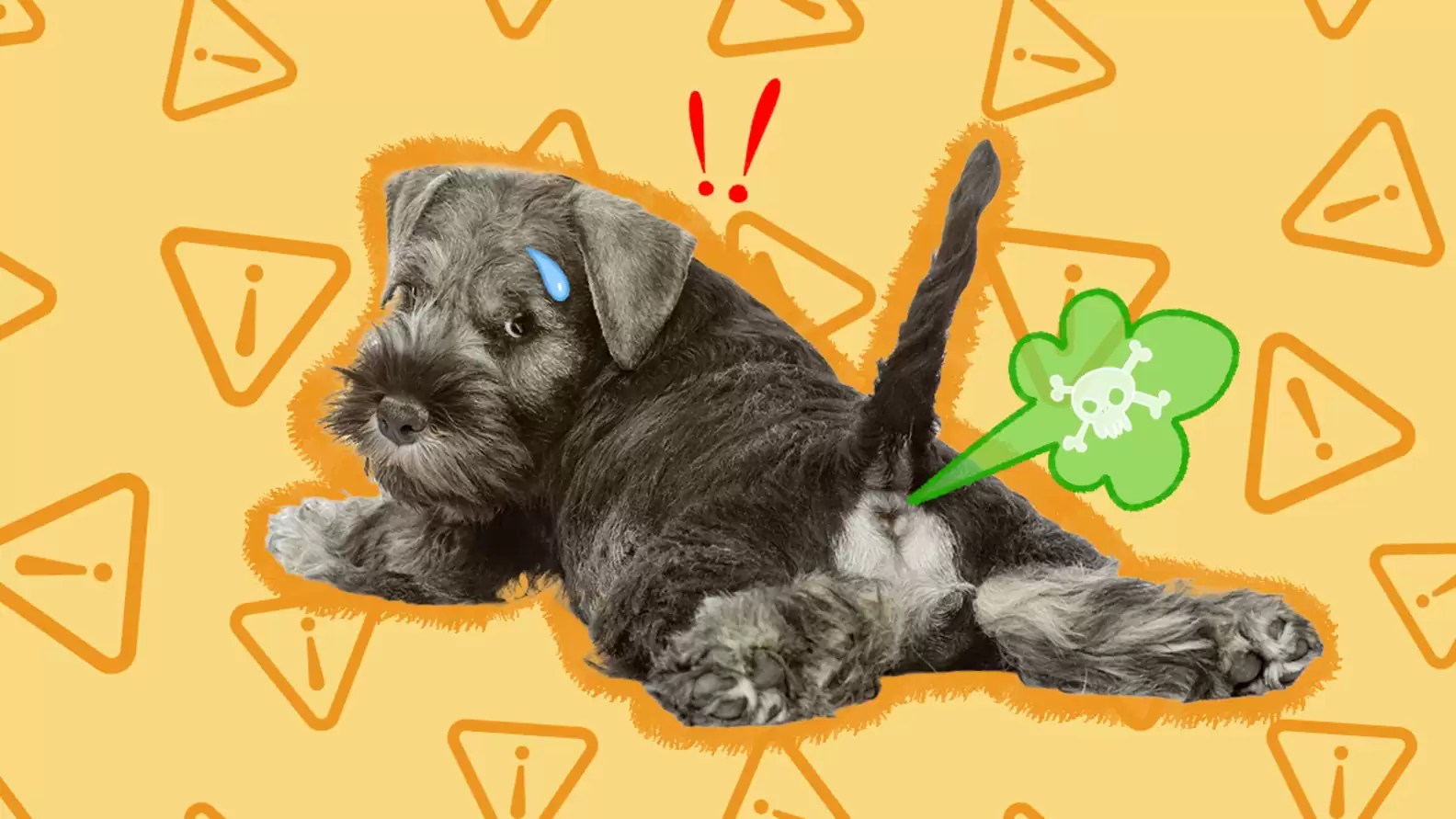
Have you ever noticed that when your dog farts, he’ll jump up and just stare at his butt totally confused — and even a little spooked — by the gas that just came out?

It seems hard to believe that your pup can actually be caught off-guard by a totally normal bodily function that happens to him on the regular, but here we are. Another day, another fart that’s totally bamboozled your dog.

We spoke with Dr. Sara Ochoa, a small- and exotic-animal veterinarian in Texas and a veterinary consultant for doglab.com, to find out why dogs get scared of their own farts.

And there are a few reasons why your pup’s own flatulence might spook him.

Your dog didn’t know he farted

This might be hard for you to imagine, but there’s a decent chance that your dog just has no idea what a fart even is.

“Most dogs do not know what their farts are,” Dr. Ochoa told The Dodo. “They do not have the mental capacity to process that they just farted.”

Not only does your dog not understand the scientific concept of passing gas, but he also doesn’t expect this gas to be expelled from his body, even if it happens often.

“I think some dogs are surprised to know that some air just came out of them,” Dr. Ochoa said. “The air leaving them is a surprise to them and sometimes a smelly surprise for us.”

Your dog’s farts are loud

An unexpected loud noise can startle anyone, so if your dog rips a particularly noisy fart, he’s probably going to be a little confused and scared.

“Just like with people, some farts are louder and some farts are smellier,” Dr. Ochoa said.

And if you’re wondering why sometimes your dog’s farts are super loud, while others are the silent-but-deadly type, that simply has to do with how much air is coming out of him and how intensely it’s being expelled.

“The sound intensity of the fart is due to the amount of air and force behind the farts,” Dr. Ochoa said.

It happened at the same time as another bodily function

Have you ever sneezed and happened to fart at exactly the same time? (This is a safe space, no one’s judging you.) Well, it probably surprised you when you realized you broke a little wind while you sneezed, because you were only expecting one bodily function.

The same can happen to your dog, too.

“My little dog will commonly cough and fart at the same time, which scares her,” Dr. Ochoa said. “I don’t think she is expecting the fart. When she is coughing, everything just lets loose and she farts, scaring herself.”

Why does my dog fart so much?

It’s actually pretty natural for dogs to fart a bunch.

“Some dogs will fart every day, [and] other dogs will never fart,” Dr. Ochoa said. “I find dogs who snore also fart a lot.”

But if you noticed your pup’s farting a little too frequently, it’s probably related to what he ate. If he’s eaten something nasty or you recently changed his diet, his gastrointestinal (GI) system may need to adjust by releasing a bunch of gas.

Why do my dog’s farts smell so bad?

According to Dr. Ochoa, the reason your dog’s farts smell so bad is because he’s not exactly eating great-smelling food.

“Dog food does not smell like flowers, so the farts are also not going to smell good,” Dr. Ochoa said.

However, that doesn’t mean it’s a great sign if he’s regularly passing some putrid gas. In fact, if your dog’s farts are particularly rancid all the time, you should call your vet just to make sure everything’s OK with his GI system.

So even though passing gas is a common occurrence for your pup, dogs still get scared of their farts because they don’t quite realize what’s going on. But at least you’ll always know exactly when it’s accurate to blame it on the dog.

We independently pick all the products we recommend because we love them and think you will too. If you buy a product from a link on our site, we may earn a commission.

ooOOoo

I hope you learnt something from this post; I certainly did.

See you on Sunday.

Starting your own pet business.

Another guest post from Penny Martin.

Well I am preparing this post on Saturday, the 14th. The operation for the hernia on the 10th went smoothly enough but I did not reckon on the discomfort that would follow. Indeed, I was talking to a good friend on Thursday and he said that the pain would more or less last for two weeks. My son gave me the good advice to take regular doses of an over-the-shelf painkiller rather than the stronger tablets the hospital gave me because those prohibited driving! I returned to a small amount of driving last Friday.

Now on with the show!

Penny Martin first wrote a guest post for me in February, Fostering or adopting a dog, and I am delighted to present her second post. Over to her!

ooOOoo

Why Now Is a Great Time for a Pet Business and How to Start Your Own

By Penny Martin.

If you are an animal lover who wants to spend your days scrolling through cute dog pictures and surrounded by furry clients, now is a great time to consider starting your own pet business. Here, you can learn more about which relevant business areas experiencing growth and tips to get started on the right foot. 

Reasons Why It’s a Great Time for Pet Businesses

A growing number of families include animals. According to the American Veterinary Medical Association data, more than half of American households have a pet. That number appears to be growing, too, representing an increased need for care services. 

Pets are not just more abundant; they are also becoming full-fledged family members. As a result, spending on them is also increasing. Despite rapid growth in many care service areas, there are not enough providers to meet this increased demand. 

Animal-Related Businesses That Are Thriving

If you are curious about what type of business to start, look no further than pet care providers. There are several types of jobs you can get involved in:

  • Training and behavioral services: Training isn’t just for puppies. Dogs of all ages can benefit from learning household rules and appropriate behaviors when they are out and about. 
  • Dog walking and pet sitting: This is usually based out of the client’s home, where you pick them up for a walk or provide companionship for short periods.
  • Boarding: This is an excellent option for individuals who would rather welcome dogs and cats to their own home or care facility. Many boarding companies also provide daycare services. 
  • Grooming: You will need to learn how to groom different types of pets to master the skills for a successful grooming career. However, if you enjoy helping dogs look their best, this is an excellent high-demand field. 

Business Strategies to Help You Succeed

Economic conditions are excellent for small pet-focused companies to thrive. However, as an entrepreneur, you need to follow some basic business principles to succeed.

Start by choosing an appropriate legal structure. Research the most popular setup for businesses like yours to find one that fits your needs. Then, file with the appropriate offices to make it official. Next, take time to develop a comprehensive business plan. This document will do more than get you up and running; it will also serve as a reference as you continue to grow. Be sure to conduct market research to identify your target customers.  

Implement a structured invoicing process to set clear payment terms for clients and ensure you get paid on time, especially if you send invoices immediately after performing a service. Accepting several forms of payment is also helpful for clients. Use an invoice maker, free online usually, to streamline the process. Simply add your logo and business information, and you are ready to go. 

Use bookkeeping software to track your income and expenses and gain insight into your cash flow. This is a great way to organize and store receipts, ensuring compliance with regulatory agencies. It also makes tax filing easier at the end of the year and helps you find the most deductions.

A growing number of households with pets and increased spending make now a great time to start an animal-related business. Care and service providers are excellent fields to consider, with high demand for groomers, trainers, and dog walkers. However, no matter what type of company you start, sound business strategies can keep it running smoothly.

Image via Pixels

oOOoo

Excellent!

As an ex-entrepreneur, who fundamentally was a salesman, I can also add the following to that post.

It starts and ends with the customer. A business plan is vital and so too is market research. But unless you have a clear vision of how you are to sell your services and what’s the difference that makes the difference you must not proceed. Selling is all about: Need; Feature; Benefit.

  • Open-ended questions to establish the need. (Those are questions that cannot be answered with a yes or a no.)
  • Keep on asking, and establishing a relationship, until you and the potential customer are clear that there is a need.
  • Then speak about the features of what you are selling that matches the need/s. Do not progress until the prospective customer understands and agrees.
  • For every agreed feature be clear what the benefit is for the customer; of that particular feature.
  • Try closing the deal. If there is hesitation then understand why. Resolve it. Try closing the deal again.

The very best of luck to those that want to run with this.

Getting on in life!

A beautiful story about a senior dog.

Getting old is a fact of life. It applies to all living things. But the life expectancy is increasing, I’m pleased to say. There are some interesting facts on the Our World in Data website. But that is for humans. I don’t know if it applies also to dogs but I suspect that it does.

Bully is such a dog and his story was recently written up on The Dodo site. I have pleasure in sharing that with you.

ooOOoo

Oldest Dog At Rescue Is So Surprised To Get A 23rd Birthday Party

“That’s the best gift to give him” ❤️

By Lily Feinn

Published on the 15th April, 2022

Since his birth in 1999, Bully has lived through five presidencies, the launch of the first iPhone, the rise of social media and many more historical events — but the Chihuahua probably can’t tell you about any of them.

But when the little dog recently turned 23 years old, his owners celebrated the milestone by throwing a party he’ll remember for years to come.

Bully spent the first 21 years of his life with a loving family, enjoying the companionship of his humans, playing outside and going for runs in the local park. When his elderly owner could no longer care for him, the super senior found his way to The Mr. Mo Project, a senior dog rescue run by Chris Hughes and his wife.

His former owner described Bully as a “big dog in a little dog’s body,” and Hughes quickly found that despite Bully’s advanced age, he hadn’t changed one bit.

“Bully is feisty, naughty, sweet, independent, gentle, calm and he has an old man bark,” Hughes told The Dodo. “Even at his age, he likes to try to push around another one of our Chihuahuas.”

Now that Bully is older, he needs more rest than the average pup. “Bully loves to sleep and he has earned that right,” Hughes said. “He will fall asleep absolutely anywhere, sometimes on the middle of the floor in the kitchen, on a potty pad or on the biggest, most comfortable bed in the corner.”

For Bully’s birthday party, the Hughes family decorated their house in honor of the little dog and gave him the two things he loves most in the world — treats and a nap. “He doesn’t have too many teeth, so we got a soft biscuit and crumbled it up for him to enjoy,” Hughes said. “He really enjoys sleeping, so that’s the best gift to give him.”

Hughes makes sure all the senior dogs in their care feel special by throwing parties to commemorate every possible event with them.

“We try to celebrate all the great things that happen in our home because so often there are not-so-great things that happen,” Hughes said. “We celebrate when dogs finish chemo treatments, birthdays, adoptions and have been known to have Christmas in July if we think someone won’t make it until Christmas.”

Thanks to the Hughes family, Bully will have many more celebrations to look forward to. And at the age of 23, he’s earned it.

ooOOoo

All pictures courtesy of the Mr Mo Project.

Twenty-three years old! This is quite a remarkable age for a dog even taking into account that Bully is a Chihuahua.

The never-ending sensitivity of dogs!

How about this for a story from Peru.

Not only do dogs come in a myriad of sizes and shapes, witness our own Brandy and Pedi, but they are also conscious creatures, as in they remember and grieve; albeit in a dog fashion.

The Dodo presented this story back on the 4th March about just a dog. Read it and be swept away in the world of dogs.

ooOOoo

Woman At The Beach Meets A Dog Who Won’t Stop Staring Out To Sea

The reason why touched her heart ❤️️

By Stephen Messenger

Published on the 4th March, 2022

The other day, Jolie Mejía and her family decided to visit Punta Negra, a small seaside community near their home in Peru.

It was there, along a rocky shore overlooking the sea, that they came to learn a story of love in its purest form.

After Mejía and her family settled down along the shore, they were approached by a random dog who appeared to be all by himself.

“He didn’t seem abandoned. He wore a ribbon around his neck and his fur was clean,” Mejía told The Dodo. “I pet him, waiting for his owner, but minutes passed and no one came.”

The dog enjoyed Mejía’s pets, but all the while his gaze remained fixed upon the ocean.

And Mejía soon came to learn the touching reason why.

Mejía and her family considered adopting the dog themselves, assuming he had indeed been abandoned. So, when a man local to the area walked by, Mejía asked him if he knew the dog’s status.

“He explained that practically everyone in the area knows the dog and is very fond of him,” Mejía said. “He told us that the dog’s owner was a fisherman who passed away some time ago, and that the dog comes to the beach every day and stares out to sea.”

The dog, it seems, has been holding vigil — awaiting the return of his friend who will never come home.

“We were very moved,” said Mejía.

Mejía believes the dog’s owner died at sea about a year ago, and that the dog has been watching out for him daily ever since.

But though the dog’s owner may never return, the dog isn’t without friends who care for him.

The dog’s sad story is evidently well-known by people in the community, who feed him, shelter him and provide him with health care when he needs it.

A local veterinarian in Punta Negra confirmed to The Dodo that the dog’s name is Vaguito, and that he’s currently in the care of a woman who lives nearby.

By day’s end, Mejía and her family eventually parted ways with Vaguito, his eyes still cast out to sea. But his bittersweet story — one of loyalty to a love he lost, and the loyalty and love he found in the community — is one she won’t soon forget.

“I have a dog at home,” Mejía said. “I love dogs in general. His story really touched my heart.”

(Photos by Jolie Mejía)

ooOOoo

This is the perfect story. But it is more! It is the perfect story of how special a dog is. For this particular dog, Vaguito, clearly was loved by his fisherman and even after a year Vaguito still holds a vigil for him. It is a very lovely article, but that is the unconditional love shown by dogs to humans who care and love them back.

Yet another amazing story about a dog’s skills

Who knows whether it was a smell, or a sound, or what…

This is a story from England. From a town called Tow Law, a few miles to the south-west of Newcastle. As wikipedia explains: Tow Law is a town and civil parish in County Durham, England. It is situated a few miles to the south of Consett and 5 miles to the north west of Crook. 

Anyway, the story was published by The Dodo and is reproduced below.

ooOOoo

Dog Out On A Walk Finds Someone Very Stuck In A Stone Wall

He wouldn’t leave until his dad agreed to help 💞

By Caitlin Jill Anders

Published on the 25th February, 2022

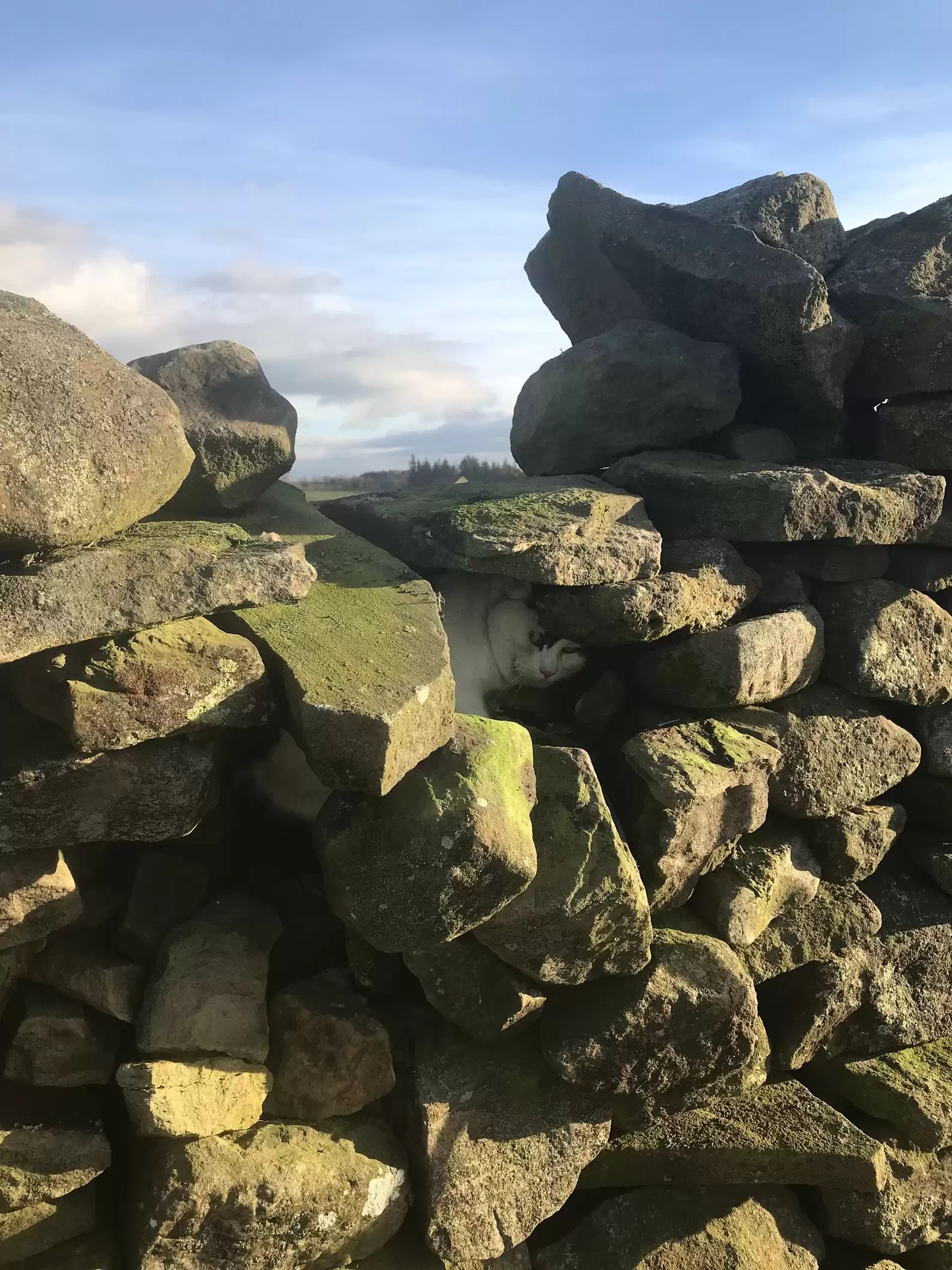
A guy and his dog were out on a walk one day through a field in Tow Law, England, when the dog suddenly became very interested in a nearby stone wall. After looking a little closer, the pair found a cat — who had somehow gotten himself completely stuck in the wall.

The RSPCA was called and Inspector Ruth Thomas-Coxon drove over to try and help. She was hoping that it would be as easy as just gently pulling the cat, later named Freddy, out of the wall, but she quickly discovered that he was much more stuck than that.

“Initially it looked as though he’d chosen to tuck himself inside the gap, but he didn’t try to run away when we got closer,” Thomas-Coxon said in a press release.

Thomas-Coxon weighed all her options and decided the best way to free Freddy would be to take apart the stone wall.

“The owner of the paddocks and wall came out and, between us, we removed some of the stones to dismantle the top part of the wall and free the cat,” Thomas-Coxon said. “He made a dash for it and jumped into another part of the wall, where we were able to catch him.”

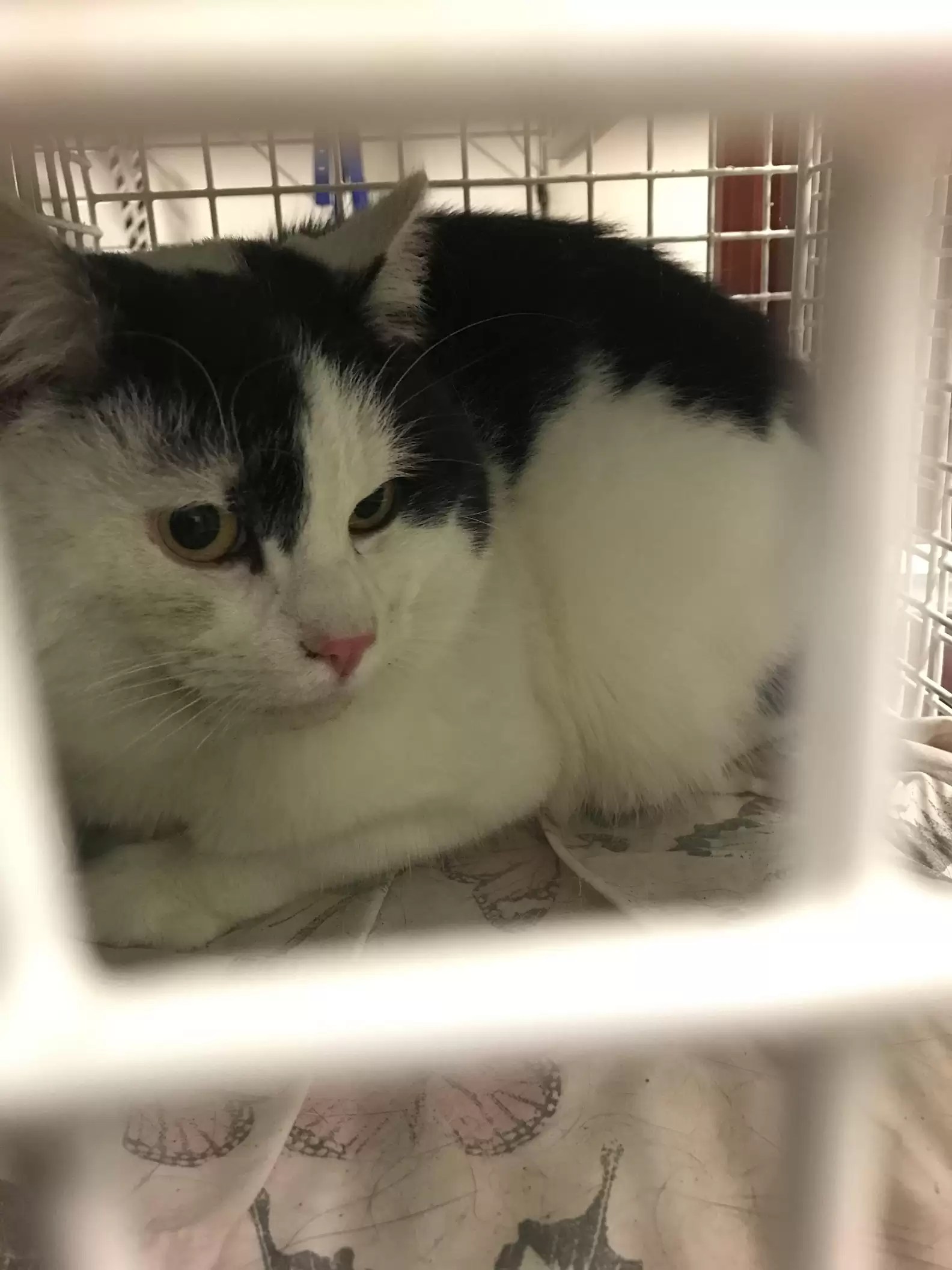
Even though Freddy was definitely stuck and needed help, he was also not super pleased about being rescued by strangers. Once he realized he was safe, though, he calmed down, and Thomas-Coxon took him to the vet to get him checked out.

“Vets found he was in fairly good health, although he had some mats in his coat, which they removed,” Thomas-Coxon said. “He was a sweet, friendly cat, so I wondered if he was a missing pet, but he was not microchipped. I made some inquiries nearby, put up a poster where we rescued him and also put his profile on PetsLocated, but, unfortunately, he’s not yet been claimed.”

Freddy is settling into the shelter well, and if no one comes forward to claim him, he’ll be put up for adoption. From being stuck in a stone wall to a potential forever home — Freddy’s come a long way.

ooOOoo

It’s a strange story in the sense that the cat was not claimed so who knows where he had come from. But his future is much better, thanks to the RSPCA, and if he is adopted it will be to a good, caring home.

Transformation

A more positive view as to how the future will pan out.

I tend to be rather pessimistic about the future. Maybe it is my age, I don’t know. But a week ago I posted an article by Ophelia Benson called Cruising over the Edge.

For this week I am republishing another climate change article but one that has a positive outlook on where we are going.

Have a read and let me know your thoughts.

ooOOoo

Climate change will transform how we live, but these tech and policy experts see reason for optimism

Authors

  1. Robert Lempert Professor of Policy Analysis, Pardee RAND Graduate School
  2. Elisabeth Gilmore Associate Professor of Climate Change, Technology and Policy, Carleton University

Published April 18th, 2022

It’s easy to feel pessimistic when scientists around the world are warning that climate change has advanced so far, it’s now inevitable that societies will either transform themselves or be transformed. But as two of the authors of a recent international climate report, we also see reason for optimism.

The latest reports from the Intergovernmental Panel on Climate Change discuss changes ahead, but they also describe how existing solutions can reduce greenhouse gas emissions and help people adjust to impacts of climate change that can’t be avoided.

The problem is that these solutions aren’t being deployed fast enough. In addition to push-back from industries, people’s fear of change has helped maintain the status quo. 

To slow climate change and adapt to the damage already underway, the world will have to shift how it generates and uses energy, transports people and goods, designs buildings and grows food. That starts with embracing innovation and change.

Fear of change can lead to worsening change

From the industrial revolution to the rise of social media, societies have undergone fundamental changes in how people live and understand their place in the world.

Some transformations are widely regarded as bad, including many of those connected to climate change. For example, about half the world’s coral reef ecosystems have died because of increasing heat and acidity in the oceans. Island nations like Kiribati and coastal communities, including in Louisiana and Alaska, are losing land into rising seas.

Other transformations have had both good and bad effects. The industrial revolution vastly raised standards of living for many people, but it spawned inequality, social disruption and environmental destruction.

People often resist transformation because their fear of losing what they have is more powerful than knowing they might gain something better. Wanting to retain things as they are – known as status quo bias – explains all sorts of individual decisions, from sticking with incumbent politicians to not enrolling in retirement or health plans even when the alternatives may be rationally better. 

This effect may be even more pronounced for larger changes. In the past, delaying inevitable change has led to transformations that are unnecessarily harsh, such as the collapse of some 13th-century civilizations in what is now the U.S. Southwest. As more people experience the harms of climate change firsthand, they may begin to realize that transformation is inevitable and embrace new solutions. 

A mix of good and bad

The IPCC reports make clear that the future inevitably involves more and larger climate-related transformations. The question is what the mix of good and bad will be in those transformations.

If countries allow greenhouse gas emissions to continue at a high rate and communities adapt only incrementally to the resulting climate change, the transformations will be mostly forced and mostly bad

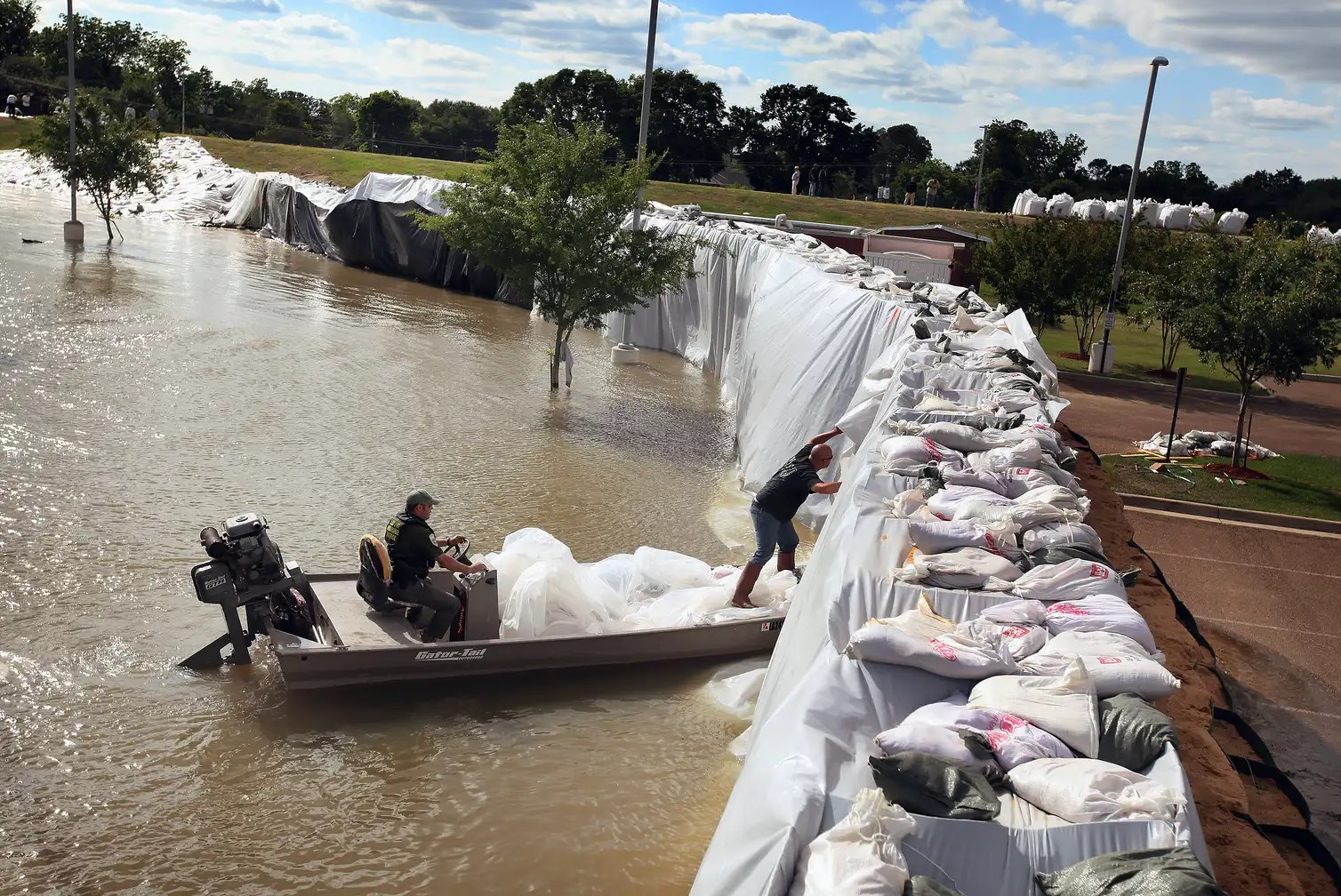
For example, a riverside town might raise its levees as spring flooding worsens. At some point, as the scale of flooding increases, such adaptation hits its limits. The levees necessary to hold back the water may become too expensive or so intrusive that they undermine any benefit of living near the river. The community may wither away.

Riverside communities often scramble to raise levees during floods, like this one in Louisiana. Scott Olson/Getty Images

The riverside community could also take a more deliberate and anticipatory approach to transformation. It might shift to higher ground, turn its riverfront into parkland while developing affordable housing for people who are displaced by the project, and collaborate with upstream communities to expand landscapes that capture floodwaters. Simultaneously, the community can shift to renewable energy and electrified transportation to help slow global warming.

Optimism resides in deliberate action

The IPCC reports include numerous examples that can help steer such positive transformation.

For example, renewable energy is now generally less expensive than fossil fuels, so a shift to clean energy can often save money. Communities can also be redesigned to better survive natural hazards through steps such as maintaining natural wildfire breaks and building homes to be less susceptible to burning.

Costs are falling for key forms of renewable energy and electric vehicle batteries. IPCC Sixth Assessment Report

Land use and the design of infrastructure, such as roads and bridges, can be based on forward-looking climate information. Insurance pricing and corporate climate risk disclosures can help the public recognize hazards in the products they buy and companies they support as investors.

No one group can enact these changes alone. Everyone must be involved, including governments that can mandate and incentivize changes, businesses that often control decisions about greenhouse gas emissions, and citizens who can turn up the pressure on both.

Transformation is inevitable

Efforts to both adapt to and mitigate climate change have advanced substantially in the last five years, but not fast enough to prevent the transformations already underway.

Doing more to disrupt the status quo with proven solutions can help smooth these transformations and create a better future in the process.

Disclosure statement

Robert Lempert receives funding from the National Science Foundation, U.S. Department of Transportation and Culver City Forward. He was coordinating lead author of the IPCC WGII Sixth Assessment Report, Chapter 1, and is affiliated with RAND Corp.; Harvard; SCoPEx (Stratospheric Controlled Perturbation Experiment) Independent Advisory Committee; National Renewable Energy Laboratory; Decision Science and Analysis Technical Advisory Committee (TAC); Council on Foreign Relations; Evolving Logic; and the City of Santa Monica Commission on Environmental, Sustainability, and Environmental Justice.

Elisabeth Gilmore receives funding from Minerva Research Initiative administered by the Office of Basic Research and the Office of Policy at the U.S. Department of Defense and the National Science Foundation. She is affiliated with Carleton University, Rutgers University, the Peace Research Institute Oslo (PRIO), and was a lead author on the IPCC WGII Sixth Assessment Report.

ooOOoo

The article makes the proposition that fear gets in the way of change. I think this is true because I tend to be a person that goes around saying ‘what can be done’ or ‘it is down to governments to set the changes required’ but not taking action personally.

So this is wakeup call for me and many others to be more positive and to support those changes that are beneficial, and to undertake them ourselves if at all possible.

Cruising over the Edge

I am very grateful to the Free Inquiry for permission to republish this article!

I am a subscriber to the print edition of Free Inquiry. Have been for quite a while. In the last issue, the April/May magazine, there was an article by Ophelia Benson that just seemed to ‘speak’ to me. I was sure that I was not alone. It was an OP-ED.

I emailed Julia Lavarnway, the Permissions Editor, to enquire what the chances were of me being granted permission to share the story. Frankly, I was not hopeful!

So imagine my surprise when Julia wrote back to say that she had contacted the author, Ophelia, and she had said ‘Yes’.

ooOOoo

Cruising over the Edge

By Ophelia Benson

The trouble with humans is that we never know when to stop. We know how to invent things, but we seem to be completely unable to figure out how to uninvent them—or even just stop using them once we’ve invented them. We can commission like crazy but we can’t decommission.

Like, for instance, cruise ships the size of condo towers. They’re feats of engineering and ship building no doubt, but as examples of sustainable tourism, a small carbon footprint, a sensible approach to global warning, not so much. How many gallons of fuel do you suppose they burn while cruising? Eighty thousand a day, for one ship.

We can’t uninvent, we can’t let go, we can’t stop. We can as individuals, but that’s useless when most people are doing the opposite. It’s useless when cruise ships keep cruising, SUVs keep getting bigger, container ships are so massive they get stuck in canals, more people move to Phoenix as the Colorado River dries up, more people build houses in the Sierras just in time for more wildfires, air travel is almost back to “normal,” and Christmas lights stay up until spring.

So heads of state go to meetings on climate change and sign agreements and pretend they’ve achieved something, but how can they have? Have any of them promised to shut down nonessential enterprises such as the cruise industry? Will they ever? The CEOs and lobbyists and legislatures would eat their lunch if they did. They can’t mess with profitable industries like that unless they’re autocrats like Putin or Xi … and of course Putin and Xi and other autocrats have zero inclination to act in the interests of the planet.

Janos Pasztor wrote in Foreign Policy after COP26, the UN climate change conference in Glasgow this past November:

Even if all Glasgow pledges are fulfilled, we are still facing a temperature overshoot of approximately 2 degrees Celsius. In the more likely scenario of not all pledges being fulfilled, warming will be more: perhaps 3 degrees Celsius. This would be catastrophic in nearly every sense for large parts of humanity, especially the poorest and most vulnerable who are suffering first and worst from escalating climate impacts.

Ironically, the technologies we can’t uninvent aren’t just the material luxuries such as huge cars, they’re also intangibles like democracy and freedom and individual rights. It may be our very best inventions along these lines that are the biggest obstacles to doing anything about the destruction we’ve wrought. We believe in democracy, and a downside of democracy is that governments that do unpopular things, no matter how necessary, are seldom governments for long. Biden and Macron and Trudeau and Johnson probably can’t do anything really serious about global warming and still stay in office to carry the work through.

Pasztor went on to ask a pressing question:

So how do we avoid temperature overshoot? The most urgent and important task is to slash emissions, including in the hard-to-abate sectors (such as air transport, agriculture, and industry), which will require substantial lifestyle changes.

Yes, those substantial lifestyle changes—the ones we show absolutely no sign of making. Maybe the biggest luxury we have, and the one we can least afford to sustain, is democracy.

Democracy at this point is thoroughly entangled with consumerism or, to put it less harshly, with standards of living. We’re used to what we’re used to, and anybody who tries to take it away from us would be stripped of power before the signature dried.

This is why beach condos in Florida aren’t the only kind of luxury we have to give up; we also have to give up the “consent” part of the “consent of the governed” idea when it comes to this issue. Not that I have the faintest idea how that would happen, but it seems all too obvious that democratic governance as we know it can’t do what needs to be done to avoid catastrophe.

We don’t usually think of democracy as a luxury alongside skiing in Gstaad or quick trips into space, but it is. It relies on enough peace and prosperity to be able to afford a few mistakes.

We take it for granted because we’ve always had it, at least notionally (some of us were excluded from it until recently), but it’s not universal in either time or place. To some it’s far more intuitive and natural to have “the best” people in charge, because they are the best. It’s a luxury of time and location to have grown up in a moment when non-aristocrats got a say.

The British experience in the Second World War is an interesting exception to the “take people’s pleasures away and lose the next election” pattern. Hitler’s blockade on shipping created a very real threat of starvation, and the Churchill government had to take almost all remaining pleasures away in pursuit of defeating the Nazis. Rationing, the blackouts, conscription, censorship, evacuation, commandeering of houses and extra bedrooms were all commonplace. Much of the dismal impoverished atmosphere of George Orwell’s 1984 is a picture not of Stalin’s Russia but of Churchill’s Britain. Life was grim and difficult, but Hitler was worse, so people drank their weak tea without sugar and planted root vegetables where the roses had been.

It’s disastrous but not surprising that it doesn’t work that way with a threat that’s unfolding swiftly but not so swiftly that everyone can see how bad it’s going to get. We can see what’s in front of us but not what’s too far down the road, especially if our contemporary pleasures depend on our failure to see. We’re default optimists until we’re forced to be otherwise, Micawbers assuring ourselves that “something will turn up”—until the wildfires or crop failures or mass migrations appear over our horizons.

ooOOoo

I do not know what the answer is? But I do know that we have to change our ways and change in the relatively near future; say, ten years maximum.

Because as Janos wrote, quoted in part above: “This would be catastrophic in nearly every sense for large parts of humanity…”

We are in a war. Not a military one but a war with the reality of where we are, all of us, heading. We have to stop ducking and weaving and come out fighting. Fighting for the very survival of our species. Do I think it will happen? I am afraid I do not. Not soon enough anyway: not without the backing of every government in the free world.

I really wonder what will become of us all!

Never sleeping alone!

A story about an amazing gentleman.

There are so many stories about humans going beyond the call of duty in giving dogs love and attention. In my own case, complete chance meant that I met Jean down in San Carlos, Mexico, rescuing street dogs and giving them love and support before finding homes for as many as she could in America, mainly Arizona. Jean had upwards of 20 dogs around her beach-front home and all the dogs were incredible, as in attentive and friendly and well-behaved.

The following article was seen in The Dodo and I wanted to share it because it says so much about the relationship that can be achieved between a human and dogs.

ooOOoo

Woman Walks In On Her Dad Napping With All The Neighbor Dogs

“They come running when they see his car and follow him inside.”

By Lily Feinn

Published on the 18th March, 2022

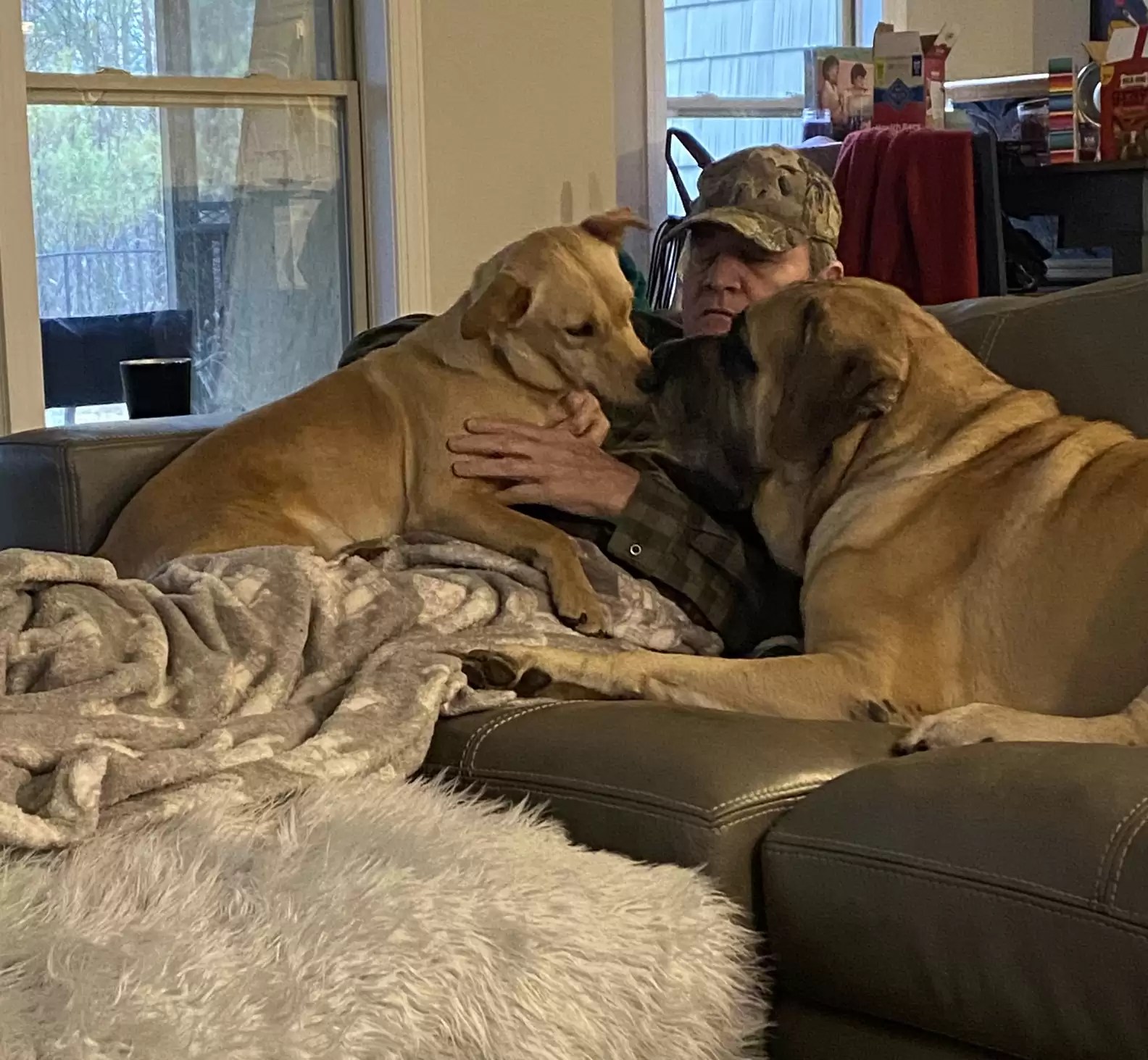
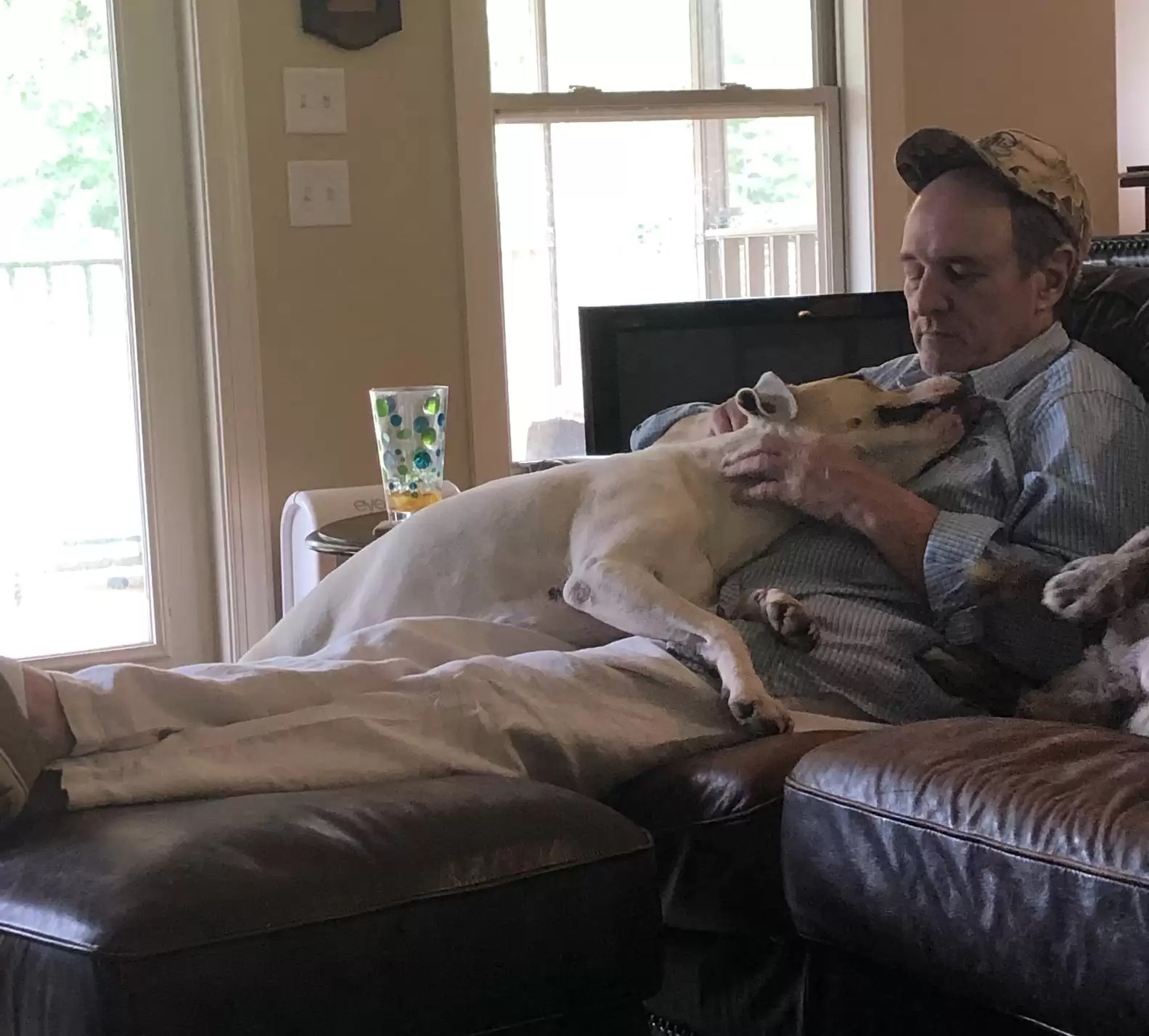
When Catey Hall checks in on her dad, it’s not unusual to find him napping on the couch. But Hall’s dad never sleeps alone — dogs from around the neighborhood join him to make one big comfy pile.

“Dad sees, plays with and naps with one or more of these dogs on a daily basis,” Hall told The Dodo. “They come running when they see his car and follow him inside.”

Catey Hall

Hall’s dad, Lon Watson, has always loved dogs and works with the local rescue Pound on the Hill to make sure every animal gets the help they need.

“For as long as I can remember, my dad has rescued stray dogs,” Hall said. “Growing up, we always had a dog. But there was always room for a stray in need. Now that he lives alone with his wife, there’s room for several. They work with rescues in the area to find homes for the dogs in need; however, not all of them are re-homed, and they stay with dad forever.”

Catey Hall

Watson has four resident dogs at home, all of whom he and his wife have rescued and rehabilitated.

But he receives daily visits from Hooch, Fluffer-Nutter and Rosie — all of whom live nearby and have a special connection with Watson.

Catey Hall

The neighborhood dogs are happy to wait all day just for some brief one-on-one time with Watson.

Catey Hall

“The neighborhood is an unincorporated section of semi-rural Alabama. The houses are set far back from the street, so the dogs can bounce from house to house safely,” Hall said. “The dogs can usually hear my dad’s truck coming, and they will meet him in the driveway.”

Catey Hall

Luckily, Watson’s human neighbors don’t seem to mind that their dogs spend most of their time with Watson — and would never get in the way of their special naptime.

Watson just seems to have a way with every dog he meets. Even Hall’s two dogs try to get in on the action. “As a matter of fact, they try to leave with Dad when he’s here visiting,” Hall said.

ooOOoo

Hall’s dad is a very fine person, in my book. If one clicks the link to go to the Pound on the Hill Animal Rescue, almost the first thing that one sees is a piece written by Dana Derby. I am taking the liberty of finishing off today’s post by quoting Dana’s words.

oooo

I am a wiggly butt, adorable puppy. Who wouldn’t want ME? I am cuddly and warm. I look at you as my hero… and you are my hero… you saved me! I want to be with you; I feel safe in your arms. And you know I love you unconditionally. It matters not what you wear, your age, your weight or if your roots are showing… I love you just for you! 

What I need to know is will you still love me? I will make mistakes. I may piddle on your best rug. If I am lonesome, I may chew on your favorite shoe… because it smells like you.

Will you still love me? I will grow into a dog. Though I will be cute, I won’t be the tiny baby you held in your arms. I may be rowdy until I learn my manners. It could be trying, at times. My tail might knock things over when I am so happy to see you it won’t stop wagging! I may run in circles, jump and bark simply because I am happy to love you so very much. 

Will you still love me? As years pass, I will slow down. We age just like humans… only at a faster rate. This is because I cannot live without you. My face may become white with age, my legs not work so well, and my eyesight could deteriorate.

Will you still love me? And when my time comes to go to the Rainbow Bridge… I will want you by my side as I say goodbye. Not so much for me, but for you. I will want to be with you during this difficult time, just as we have shared the joy and sorrow of life together for years. I am your companion and will be with you forever… and I will still love you as I live patiently in your heart.. until we meet again.

oooo

We have made a donation. Would you help?

The power of a connection

This story shows how we are connected to our dogs!

Jesse Lee, the dog, shows how one elderly man somehow connected with her. More later but first the story from The Dodo.

ooOOoo

Man Sees Tiny Speck On Cliff In The Distance And Immediately Knows It’s A Dog In Need

“He was funny because I couldn’t see her without my binoculars, and he said he knew the ‘dot’ was an animal because he’s never seen that dot there before.”

By Caitlin Jill Anders

Published on the 16th December, 2021

An elderly man was having his morning coffee outside his motorcycle shop one day when he noticed something unusual on a cliff in the distance. He quickly concluded that the tiny speck he was seeing was actually a stuck animal in need of help, so he contacted the Humane Society of the Pikes Peak Region (HSPPR), and they sent two animal law enforcement officers to check it out.

The officers couldn’t see the dog without a little extra help, but the man never had any doubt that she was there and desperately needed help.

“He was funny because I couldn’t see her without my binoculars, and he said he knew the ‘dot’ was an animal because he’s never seen that dot there before,” Officer Kailie Barker told The Dodo.

The dog was stuck on a small ledge about 150 feet above a creek. They weren’t sure how long she’d been there and immediately started coming up with a plan to rescue her.

“It took two and a half hours total to be able to find out exactly where she was, how we were going to get to her, obtaining the equipment and formulating an exact plan,” Barker said.

The officers were able to obtain some climbing gear, and once they were ready, Barker rappelled down to the stuck dog — who was so excited that someone had finally come to help her.

“She was obviously very scared. She had her body pressed into the dirt, she was wagging her tail quickly and was trying to crawl towards us when she very first saw us,” Barker said. “The dirt kept sliding out from under her, but she kept trying. When I was down on the cliffside with her, she tried crawling towards me again. When I finally got to her, she kept licking my hands and face.”

Once the dog had been brought to safety, they read her collar and discovered that her name was Jessie Lee. They took her back to HSPPR, where the staff was able to find her family’s contact information. It turns out she had been missing for two weeks and was found only a few blocks away from her home. Her family had searched for her every single day and was absolutely overjoyed that someone had found her.

Luckily, Jessie Lee wasn’t injured after her ordeal and was able to head home to her family shortly after being rescued. It was the perfect happy ending, all thanks to the officers who rescued her — and the man who knew that tiny speck in the distance was actually a dog.

ooOOoo

(All photographs courtesy of the HUMANE SOCIETY OF THE PIKES PEAK REGION)

Time and time again men and women spot something that they know is a dog. Even though it is a tiny speck or a creature in the darkness.

It is this fundamental relationship that binds us humans to our dogs, whether we know them or not!

Jessie Lee was alright and, to repeat the closing sentence above: ‘It was the perfect happy ending, all thanks to the officers who rescued her — and the man who knew that tiny speck in the distance was actually a dog.

p.s. I was reading the draft article out to Jeannie yesterday evening and she said that I had previously published it, and not so long ago! Whoops!