Category: Writing

What a Moon!

This is a night to be outside! (And that includes you, Susan L.)

It has been receiving quite a lot of publicity in recent days. I’m speaking of the “Supermoon”.

Or in the opening words of a recent Smithsonian Magazine article:

The Biggest Supermoon in 68 Years Will Leave You “Moonstruck”

It hasn’t been this close since 1948 and won’t be again for the next 18 years

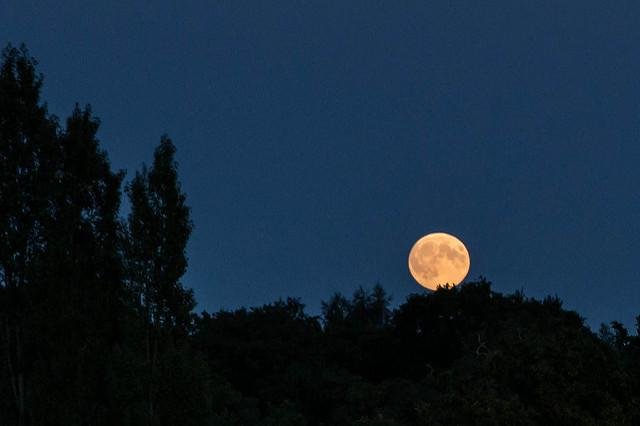
(Adrian Scottow via Flickr)

In terms of when this is happening then I will draw on Mother Nature Network:

According to NASA, the full moon that rises on Nov. 13 will be the closest one to Earth since 1948. If viewing conditions are clear, the moon will not only appear 30 percent brighter, but also 14 percent larger. While the nighttime viewing is supposed to be spectacular, the true closest approach of the supermoon will take place on the morning of Nov. 14 at 8:52 a.m. EST.

Just how special is this super supermoon? Humanity won’t get another show like this one until Nov. 25, 2034.

Or as the EarthSky blogsite puts it:

The moon turns precisely full on November 14, 2016 at 1352 UTC. This full moon instant will happen in the morning hours before sunrise November 14 in western North America and on many Pacific islands, east of the International Date Line.

For those of us on Pacific time that equates to 0852 PST.

So the balance of today’s post will comprise the republication, with permission, of a recent essay on The Conversation blogsite.

ooOOoo

Supermoons are big and bright, but not as rare as the hype would suggest.

November 8, 2016

By

Senior Lecturer and Associate Department Head for Undergraduate Programs in Astronomy & Astrophysics, Pennsylvania State University.

As an observational astronomer who teaches students about the behavior of the moon, I’m thankful for anything that inspires people to go out and look at the sky. For me it’s second nature to pay attention to the moon; when my son was born, I would take him out at night to observe with me, and one of his very first words was “moon.”

But I have mixed feelings about what’s being billed as the upcoming “super-supermoon.” Many astronomers do not like using the term because reports overhype the factors that make certain full moons unusual. Most of what you’ve likely read has probably misled you about what you can expect to see on Nov. 14 and just how rare this event is. Beautiful, yes. Worth looking up for, definitely. Once in a lifetime… that’s a bit overblown.

he moon’s phases as it revolves around the Earth. Orion 8, CC BY-SA
The moon’s phases as it revolves around the Earth. Orion 8, CC BY-SA

The moon’s cyclical phases

Just about everyone is familiar with the moon’s changing appearance as it goes through its phases from crescent, to half-illuminated (first quarter), to gibbous, to full, and then back through gibbous, to half-illuminated (third quarter), to crescent, to new.

This pattern occurs because the moon orbits the Earth. When the moon is between the Earth and sun, it’s a new moon, and you don’t see it that day. When the moon is on the opposite side of the Earth from the sun we get a full moon as the sun’s light illuminates almost its entire face. The complete sequence of phases takes about the same amount of time as it does for the moon to orbit the Earth once – just about a month.

As the moon makes its monthly trip around our planet, it travels on an elliptical, not circular, path. Every object in the solar system orbits like this, including the Earth around the sun; over the course of the year, the Earth is sometimes closer to the sun and sometimes more distant. Same for the moon – sometimes it’s closer to us and sometimes farther away.

The changes are proportionally not large; at “perigee” (the closest it gets to the Earth) the moon’s approximately 10 percent closer to the Earth than at “apogee” (most distant point on its orbit). Over the year, the moon’s distance from Earth varies from around 222,000 to 253,000 miles.

 The moon’s orbit is elliptical and changes over time. Rfassbind
The moon’s orbit is elliptical and changes over time. Rfassbind

The time it takes the moon to go from perigee to perigee (about 27.3 days) is shorter than the time it takes to go through a complete set of phases (about 29.5 days). Because these timescales are different, the phase at which perigee occurs varies. Sometimes perigee occurs when the moon is full, but it is just as likely for perigee to occur when the moon is in the first quarter phase, or any other. Whichever phase the moon is in when it’s at perigee will be the one that looks largest to us here on Earth for that month.

At perigee, the moon can appear 14 percent larger and 30 percent brighter than an apogee full moon. But this is complicated by the fact that our eyes play tricks on us and convince us the moon looks larger when it is near the horizon than when it is higher in the sky. Every full moon will look big and bright whether it happens at perigee or apogee.

So what’s a supermoon?

The first time I heard the phrase “supermoon” was in 2011, and someone had to explain the suddenly in vogue term to me. People were using it to describe the full moon that happened to occur within an hour of perigee in March of that year. The moon’s perigee distance also varies a bit, and March 2011 was the moon’s closest perigee of that year.

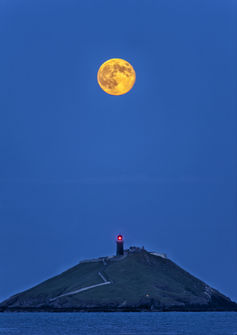
 A 2013 supermoon as seen from Ireland. John Finn, CC BY-NC-ND
A 2013 supermoon as seen from Ireland. John Finn, CC BY-NC-ND

This was a somewhat rare event – a full moon occurring not just at perigee, but at the closest perigee of the year. But many people got the impression that this was an exceedingly unusual event, and rushed to see and capture images of this supposedly ultra-rare moon. Depending on how closely you require the full moon to occur to perigee in order to call it a supermoon, though, these events happen at least roughly once a year, and often more frequently.

Which brings us to this month’s much ballyhooed “super-supermoon.” News stories are hyping the upcoming full moon as a once-in-a-lifetime viewing opportunity. It’s true that the Nov. 14 full moon is the closest since 1948, and the next time the full moon will be closer is in 2034.

But this month’s full moon is only 0.02 percent closer – a mere 41 miles! – than the March 2011 supermoon. These tiny distances make no noticeable difference in the moon’s appearance.

 Get out there and enjoy this supermoon! AP Photo/Charlie Riedel
Get out there and enjoy this supermoon! AP Photo/Charlie Riedel

Please do go out and observe the November full moon. If you are good with photography, try to document that the moon does appear larger than the other months this year. Just be aware you’ll have other virtually equivalent opportunities to do so pretty much every year for the rest of your life. So don’t worry if you miss it. You can catch the supermoon next time around.

ooOOoo

Fingers crossed our local weather will enable Jean and me to view this moon and I will try and photograph it.

If any readers also get to see this moon do let us know your thoughts and feelings.

Dogs and holidays

What are the options for taking a vacation with your pet dog.

Regular visitors to this place will recall that exactly one month ago I published a guest post from Paige Johnson. It was called Divorcing One’s Vet and was well-received. I am delighted, therefore, to present the second guest post from Paige.

ooOOoo

Rover-Friendly Vacations: What are Your Options?

The love Westerners have for their pets is known across the globe. We dress them, take them everywhere, feed them special foods, and refer to them as our kids. When considering a vacation, it can be difficult to contemplate leaving your fur baby at home or, even worse, trapped in a boarding kennel. The stress of worrying about your pet easily can cut into the relaxation a vacation will offer. Fortunately, there are several options for the doting pet parent. Here are a few ways you can handle vacationing and being a good parent to your pets.

Take Them Along

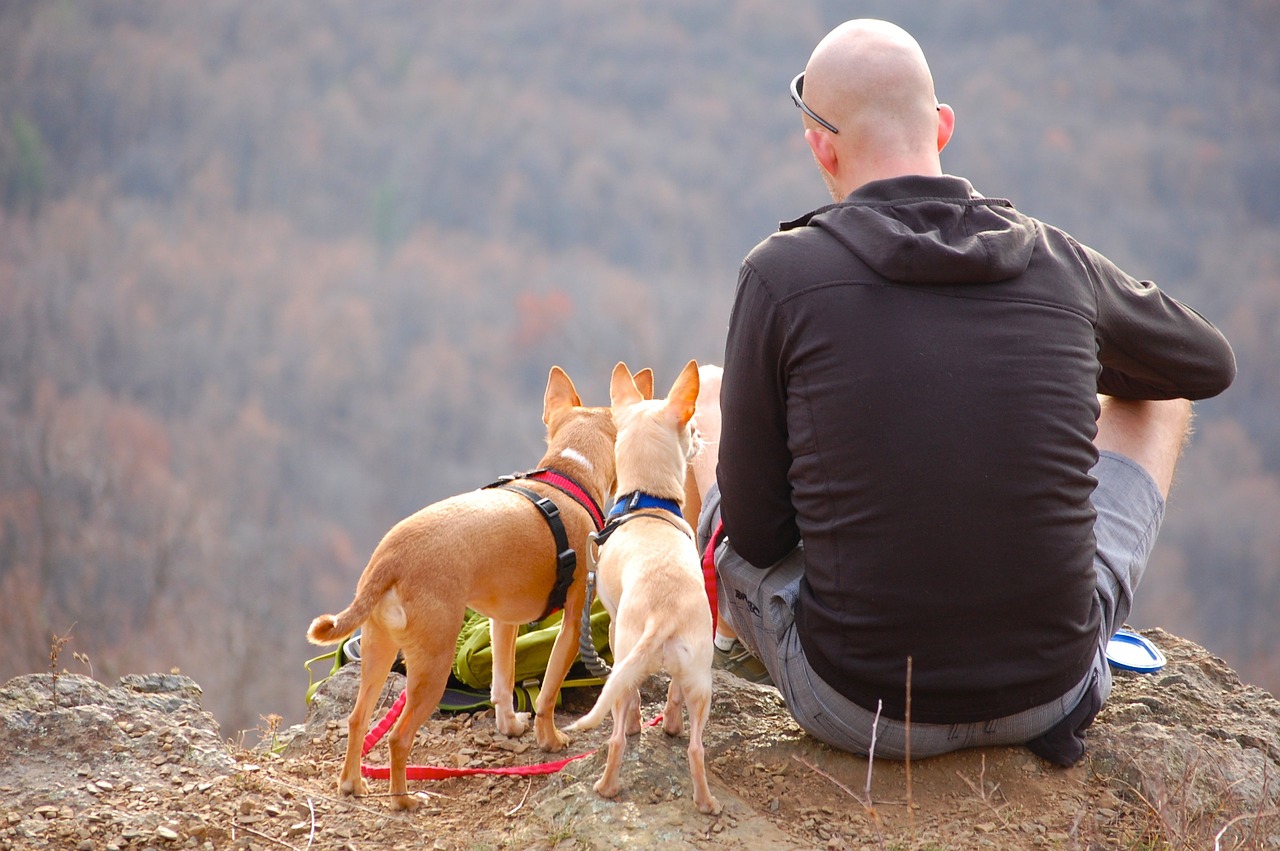
man-1181873_1280Pet-friendly vacations may be a little more restrictive than vacationing without your furry family member. However, if you are a pet owner who cannot bear the thought of being separated from your pet while on vacation, it may be worth the extra effort to plan a trip to a pet-friendly city like Austin. Traveling within the U.S. is easiest and cheapest for pet parents, particularly if the destination is within driving distance. Although, if you want to travel abroad, it is possible to take your pets with you.

To travel internationally with a pet, you must thoroughly check the country’s guidelines for bringing domesticated animals across the borders. Typically, you will need recent proof of vaccinations along with a pet passport. While certifiably healthy animals can sometimes pass borders unimpeded, many countries will require a quarantine period of 24 hours to several months. It is important to plan well and far in advance for international pet travel. Keep in mind that this option is bound to be more expensive than leaving your pet behind while you vacation.

Find a Pet Boarder or Sitter

A freelance pet walker, sitter, or boarder is far more preferable than boarding your pet in a kennel. Dog sitters give you the option of leaving your pet in the comfort of your own home with personalized attention, or dog boarders give you the option of leaving your pet in their home and ensuring they receive 24-hour care.

Research a Quality Kennel

Basic kennels will sequester your pet in their own small space with little interaction from caretakers or other pets. On the other hand, a quality kennel will be well-staffed, friendly, and ensure that your pet spends more time playing with other dogs than alone in a kennel. While a sitter is preferable, a good kennel certainly is an option, especially if they are centered around social interaction and quality care. Online reviews can be a helpful way to research a suitable boarding facility. It’s important to note that good boarders often will charge a little more than a sitter.

When your child is a dog or a cat, vacationing can become a more difficult and stressful activity than you originally thought. The guilt of leaving a pet at home can impede your ability to enjoy your vacation, particularly if you have to leave him in a kennel. Fortunately, there are better options to put your mind at ease. Whether you decide to plan a pet-friendly vacation or get a freelance pet sitter, you can rest assured that a relaxing, guilt-free vacation is in your future.

Image via Pixabay by msandersmusic

ooOOoo

An informative guest post from Paige. Mind you, when one has nine dogs at home I’m not sure realistically just what the options are!

Marbles, Part Three

Concluding the wonderful story written by Anne Schroeder.

Part One of MY SEASON FOR MARBLES was posted last Monday.

Part Two was yesterday and finished, thus:

Buck’s tendency to work the neighborhood was his ultimate undoing. Eventually the druggie roommate of a neighbor poisoned him for repeated raids on his dog’s feeding dish. By then he was scarred, limping from a difference of opinion with a moving car, had his ear chewed from a fight. He was a seasoned scrapper with a heart of gold. Of all the dogs we owned, he lived life on his own terms.

ooOOoo

MY SEASON FOR MARBLES

Part Three

One day my son and his dad brought home a new pup–a nine-week old, female Boxer that we named Marbles for her brindle coloring.  She had a perfect circle of white around one eye and an ear that perked up when she was surprised.  Steve wanted to name her Stymie.

Something I never expected happened. I experienced a resurgence of mother love. I found myself sitting in the sunshine, playing toss-the-stick. I held Marbles while I watched TV.  I loved the feel of her sleek hair, the way she formed a question in her eyes. I was patient with her, like I am with a child. I gave her credit for her embarrassment when she piddled on the kitchen tile when we were gone too many hours. I watched her dig in the creek bank and was sure she would never try digging in the yard.  She never did. She was surprisingly mellow for a Boxer. She never barked, never whined, never jumped on furniture or tore up pillows when we were gone.

Marbles accompanied us to the mailbox, to the creek, to the canyons. The flurry of a quail made her stop and listen, one ear cocked. Everything was a first for her, and our walks took the meandering pace of a walk with an eighteen-month-old. She was curious about dandelions. On our walks I rejoiced for the way she refocused my appreciation of life.

Marbles was only with us for six years before she died of a malignant tumor that Boxers are infamous for having. I helped Steve bury her on a ridge above our house, in the canyon she loved to walk.

*****

I ask myself what changed with Marbles? Was it me, or something broader? I think it’s a question of timing. For some reason, men bring home puppies while women are busy with babies. Maybe it’s an attempt to capture the bond that mother and baby share. Maybe the man feels left out.  Whatever the reason, a puppy has to be raised, trained, groomed and cleaned up after.  So does a child.  For most women, a puppy is like having twins, or another pregnancy too soon after the first.

Getting labeled as a dog hater is a double-edged sword. Life becomes an “oops, don’t let Mom find out” thing that undermines everyone. When something happens, warnings about pet responsibility come out sounding like a “gottcha.” I grew up with unquestioned values that a dog was a farm animal with responsibilities. A dog earned its keep in the same way a child did. No one questioned that a child could gather eggs, but, suddenly I’m a meany for suggesting that a dog be useful? I’m too old and too stubborn to make the change, and I find myself filled with resentment that society requires it of me.

But I learned to keep my head low and duck the bullets. I don’t offer my opinion around friends, every one of whom seems to have at least one dog. One friend has fourteen dogs and cats. We meet at cafes or on the porch. They try to forgive me my stance on buying a purebred puppy as opposed to adopting from the shelter. We have agreed to disagree, like conflicting religious views.  But I know I’m in the minority. In my defense I should mention that cats crawl onto my lap. I like to pet them. They like me. But that doesn’t get me any dog points.

So now it’s time to look for a new puppy. Steve’s getting antsy, I can read the signs. He’s happier with a dog at his side and I like him to be happy. I try not to think about the stress I feel every time we check out a new puppy litter—three in the past two months. I try not to feel relief when we leave without making a selection. He’s not in a hurry; he wants a love connection, and he’ll know her when he sees her.

At long last I am trying to discard my self-image of a dog meany. I even question the term “pet owner.” Who can own another creature’s heart? This time around I am going to earn a dog’s devotion. Like a first-time mother, self-conscious and unskilled, I secretly practiced with Marbles, and she seemed to think I did all right. This time we will all share in the job of puppy parenthood. It’s not fair for me to have to clean dog snot off the French doors while someone else is tossing the Frisbee. But I’ll still take my walks alone. I tried it both ways, and I realized that my quiet time was not negotiable—mornings belonged to me. In the evenings, I share my walk with the family—and that includes the dog.

ooOOoo

What a fabulous ending to a really charming story!

unnamedI have no doubt that many of you would like more information about Anne.

So do drop into Anne Schroeder’s Author Blog or visit her website here.

Marbles, Part Two

Continuing the wonderful story written by Anne Schroeder.

Part One of MY SEASON FOR MARBLES was posted last Monday.

It ended, “Eventually, dogs and fear became synonymous.”

ooOOoo

MY SEASON FOR MARBLES

Part Two

My husband’s experiences were quite the opposite. He sees dogs as best friends, deserving of carpet privileges and store-bought dog food. He communicates on a level that I can’t begin to fathom. He is a petter of strays while I hunker behind him, phobic and repelled.

The first time he introduced me to his beloved Pug, Rastus, it greeted me with a doleful glare, lifted its leg and sent a yellow stream down my bare leg and into my new penny loafers. I was holding Steve’s hand that day and Rastus knew he was about to be replaced. I’m afraid I took it personally. Rastus was never my best friend—although I barely had a chance to know him. He died of a heart attack three months after we married—victim of an innocuous medical term that I am convinced meant a broken heart. For years I carried a secret suspicion that I had killed Rastus by diverting his master’s attention. For every morning and evening of Rastus’s life, Steve had walked him, tossed balls, showered him with attention and love.

Then we married and moved into a student duplex that didn’t allow pets, and Rastus stayed behind. Newlywed bliss was too great a temptation; like Puff the Magic Dragon, Jackie Paper came no more.

Steve’s inconsolable grief didn’t ease my conscience. We lived dog-less for the next five years. Coincidentally or not, this period was filled with more travel, adventure and spontaneity than the sum of the years that followed. Finally, we bought our first home and Steve began planning for another dog. Soon after I became pregnant we drove to a kennel to pick out a light-colored, female Golden Retriever puppy.

Saree arrived at the onset of my morning sickness. Through the winter she slept in a little wooden kennel box in the kitchen. Because Steve was working a nighttime shift that put him in bed at 3:00 a.m., it became my job to clean the dog mess, to feed and water and exercise her in the mornings before I got myself and my daughter off to school and work. The memory of those months remains: bracing myself for assorted puppy odors in the closed kitchen while munching on a saltine cracker. Some mornings the cracker wasn’t enough.

I will forever associate the smell of dog with nausea; aversion therapy gone haywire. Some women never eat bananas again after morning sickness. Some never touch liver or bacon—but I could live without these. For some reason, with me it’s not puppy smell, it’s grownup doggie body odor. Go figure!

It’s not like I’m a Dog Nazi. I babysit my kids’ dogs when they take vacations. I’m not an ogre—I try not to make dogs my “issue.” I even smile and buy dog toys to have on hand for visitors.

Saree was Steve’s dog, a replacement for Rastus, a buddy to keep him company during a hectic period of our lives when we worked crossover schedules and didn’t see much of each other. I raised our daughters, Steve raised Saree. Sometimes I wanted to scream at him for his priorities. If memory serves, sometimes I did.

Saree lived for fourteen years and accompanied us on three moves. As she became older she became prone to diabetic seizures. In the era before serious pet pharmaceuticals, doggie chiropractic and plastic surgery, the vet’s best advice was to add a bit of sugar in her drinking water. Our four-year-old son used to follow his daddy around and try to copy everything Daddy did. One evening, while his dad was at work he noticed Saree trembling. Half an hour later I found the empty sugar bag and Saree limp and trembling on the patio.

An emergency call to the vet, a bottle of Ipecac, frantic calls to Steve at work—all in vain. In the end, Saree waited for Steve to return from work to die with her head in his lap.

Steve mourned while I carried Saree’s body to the SPCA for cremation, provided comfort, assuaged our son’s guilt, cleaned remnants of an aging, house-bound dog from my home—and felt a secret elation at Steve’s decision not to replace Saree right away.

Buck came to us three months later, the victim of a friend’s divorce. The friend was moving from a ranch into an apartment and Buck would be miserable. Steve and he had become great friends because Steve drove by the ranch everyday and would stop and pet him. He claimed he was invested in Buck, but the truth was, he was head over heels in love—enough even to excuse Buck for being a male, after he had vowed never to have anything that peed on a tire. But fate had chosen them for each other.

Buck was a ten-month-old, a chewer of Olympic talent with a rare eye for beauty. My prized, white-wool throw rug was his first trophy. What he didn’t manage to chew up he destroyed with his thick, wagging tail. (To say he was a happy dog was to underestimate his enthusiasm.) My personality was not as playful. He was thrust on me while our house was listed for sale and I found myself picking up after a four-year-old and his canine equivalent. Every time the phone rang and a realtor wanted to bring clients by, I would go into meltdown.

I remember going to the movies about this time and glaring at the screen while my husband screamed with laughter. I sat through “Turner and Hootch” with arms folded, while my blood pressure threatened to blow out my eardrums. I didn’t know it was a comedy until I saw it on TV last year. Bad period in my life.

In Buck’s defense, either his chewing subsided as he matured or he had already destroyed everything I loved. But it was hard not to view him as a spoiler. I argued that he needed to be neutered, but Steve valued his spirit. He reminded me that it was his dog. He lived with us for ten years, uncomplaining, unfailingly happy to see us, matured by an unrequited love for the Golden Retriever who came into heat every six months in an unassailable enclosure up the road.

Buck’s tendency to work the neighborhood was his ultimate undoing. Eventually the druggie roommate of a neighbor poisoned him for repeated raids on his dog’s feeding dish. By then he was scarred, limping from a difference of opinion with a moving car, had his ear chewed from a fight. He was a seasoned scrapper with a heart of gold. Of all the dogs we owned, he lived life on his own terms.

ooOOoo

The third and final installment will be tomorrow.

I vote for peace!

My contribution to this day.

(I saw this posted over on Val Boyko’s blogsite the other day and thought how apt it was. It is republished with Val’s kind permission.)

ooOOoo

World Peace is Within You

Marbles, by Anne Schroeder

Introducing Anne Schroeder – a local Oregon author.

This week presents a number of interesting challenges.

The first is that while I am getting along reasonably well with the draft of my second book, Four Dogs On My Bed, I am still about 3,000 words (as of yesterday) behind where I wanted to be on November 7th. (There’s NaNoWriMo pressing in against me!)

The second challenge is that tomorrow is a special day. No, I’m not referring to the circus that has come to town, to everybody’s towns, but to my birthday. It is my birthday on the 8th and I’m trying hard to stay away from my computer.

The third and final challenge is that there are too many things going on for the balance of the week, even without me needing to keep my writing nose to the grindstone, for me to properly put together the blog posts otherwise required.

anne-croppedBut then along comes Anne Schroeder. I met Anne when I joined our local authors group, AIM, and, like all the other members of AIM, Anne was supportive and helpful towards me.

A week ago, Anne emailed me a short story that was perfect for all you dear readers.

That story is in three parts and I shall be continuing with Part Two and Part Three on Wednesday and Thursday. (I have something else for the 8th!)

Before the story, here is an introduction to Anne.

mariainesfrontAnne Schroeder writes memoir and historical fiction set in the West. She has won awards for her short stories published in print and on-line markets. She was 2015 President of Women Writing the West and lives with her husband and new Lab puppy in Southern Oregon where they explore old ruins and out-of-the-way places. Her new release, Maria Ines, is a novel about an Indian girl who grows up under Padre Junipero’s cross and endures life under the Spanish, Mexican and Yanqui conquest of California. http://www.anneschroederauthor.com

Here, then, is Part One of Anne’s tale.

ooOOoo

MY SEASON FOR MARBLES

I have a confession: Dogs and I have never gotten along. Well, okay, there was Happy, our black, floppy-eared Cocker Spaniel who died in front of me, under the wheel of my father’s truck when I was seven. After that, it seemed easier not to get attached.

On our sheep farm, dogs ate table scraps and slept under the tank house. We had a pair of Australian Shepherds, trained by Basque herders in their native language that guarded the flock at night against coyotes and neighbors pets. We weren’t allowed to distract the Aussies from their work.

My attitude regarding dogs could be described as cautious regard. I carry memories of being chased onto a John Deere tractor by a snarling stray. I have vivid memories of my uncle’s Doberman sinking its fangs into my calf because I was swinging hands with my cousin, a six-year-old like myself, as we walked up her driveway after school. I can still see that dog, loping toward us in slow-motion, slobber spraying off his jowls, his eyes keenly fixed on the enemy—which was me. All I could do was drop my little cousin’s hand, stand still, and hope that the dog would be merciful. No such luck.

I learned later that he was a watchdog, trained to protect his family. My aunt and uncle worked at a mental hospital and had received death threats from patients who escaped on a fairly regular basis.

Even when it was not my fault, I managed to annoy dogs. When I was seven my grandmother’s hound nipped me in the fleshy part of my palm as I dumped dinner into his bowl. My scream of pain was mostly indignant fury, but the memory scarred my soul. Another time a cousin’s cattle dog crawled out from under the porch where her new litter was sleeping. No bite this time; she just snarled with bared teeth until I hopped back on my bicycle and rode home. It was probably a bluff on her part, but I didn’t wait around to find out.

Eventually, dogs and fear became synonymous.

ooOOoo

Whoa! Where does it go from here? I do hope that you will return on Wednesday to find out! (That’s assuming that we all survive tomorrow’s circus!)

Selective hearing!

Dogs very quickly learn the system!

We have two dogs that are delightfully obedient, but with an over-rider; they choose whether to be responsive to the ‘requests’ from Jean and me.

Those two dogs are Oliver and Brandy.

Oliver sleeping in front of the wood-stove yesterday morning. (February 18th, 2015.)
Jean and Brandy at our local yard sale last weekend. (June 29th, 2016)

It’s so easy to see each of them listening to a request from us and deciding whether or not to oblige us at that moment.

So when I came across a recent article over on the Care2 website about dogs deciding what are or are not valuable instructions from their human carers it really struck a chord with me. Read it below and I bet many of you will know exactly what I mean.

ooOOoo

Dogs Are Smart Enough to Know When to Ignore Useless Directions

1392529-largeBy: Elise Morea October 29, 2016

About Elise Follow Elise at @elisem0reau

Dogs are pretty smart, but they’re still pretty clueless enough that we’re able have a good laugh at their reactions to certain things every so often. Whether it’s confusion over a ball that was never thrown or fear of a strange looking photograph sitting on the fireplace mantel, dog brains definitely see and understand the world in a way that can be pretty amusing to us.

According to recent research from Yale University’s Canine Cognition Center, it turns out that dogs can learn to pick up on the uselessness of their owners’ orders or directions so that they can disregard them altogether. In fact, they’re even less likely to follow them than children.

Researchers gathered 40 dogs of different breeds and examined their behavior in some problem solving experiments to see whether they could differentiate between helpful and useless directions. A treat was placed inside of a clear puzzle box with a red lid that the dogs had to open to get their reward.

The dogs were shown how to solve the puzzle box, which had a lever attached to it that could be pushed. Although the lever step was shown in the demonstration, it was actually completely unnecessary and didn’t serve any purpose at all to help open the box. The dogs really only needed to lift the lid to get to their treat.

 The researchers left the room while the dogs worked on the puzzle to make sure they would actually try to solve it on their own rather than just follow orders from people. All of the dogs spent several rounds trying to figure out the puzzle to get to their treat, eventually figuring out that they didn’t need to do anything with the lever after all and that all they needed to do was lift the lid. By the end, the dogs were completely ignoring the lever.

The results suggest that dogs learn on an individual level as opposed to humans who imitate each other when trying to learn. The study was inspired by a previous study that involved observing children as they solved puzzles.

Unlike the dogs, the children didn’t stop to think about how the puzzle might be solved differently and more effectively from what was demonstrated, instead repeating what they were shown to do again and again. Even when the children raced to finish solving the puzzle, they still repeated all the unnecessary steps.

Researchers described the children’s problem solving as ”overimitation,” which may be a unique aspect of how humans learn. Dogs and humans are both very social, but dogs are clearly independent problem solvers while children are natural copycats. Children seem to find it instinctive to limit problem solving because they have so much to learn.

Regardless of whether you have a dog, children, or both, these findings give us the opportunity to notice and appreciate their unique learning styles. From a very young age, children will often start mimicking their parents behaviors whether it serves them as an independent human being or not, offering parents all the more reason to be extra conscious of their own behaviors.

Your dog, of course, might just figure out your trickery after falling for a few fake throws of his favorite toy or ball. Now you know that he’s his own kind of canine problem-solving genius!

ooOOoo

I think I need to be a bit more careful what I discuss in front of our dogs!

Behavioral issues in dogs

The most frequent strange and unwanted behavior in dogs

Delighted to offer all you good people a guest post for today. It came about as a result of an email sent to me by Alex. This is what that email said; in part:

I am writing to you on behalf of Premier Pups, one of the main partners of Doctorpup.com. We have read your materials and we found them very interesting for dog lovers.
We have made a complex and detailed article based on Dr. Gary Rybka’s knowledge and experience (from Doctorpup.com – one of the most reputable veterinarians from Ohio) and we consider that our article will bring new information for your audience. The topic of the article is related to the most frequent strange or undesirable behaviors of dogs and their main causes. In addition, Doctor Rybka offers solutions for a great part of these behaviors.
Alex
Now there’s always a balance in my mind between expert information that should be shared with you good people and any guest article not coming over as a ‘soft sell’. Clearly, Doctorpup.com is a commercial operation but their website does clearly state their Vision:
At doctorpup we welcome your questions. Our articles and videos provide a foundation for your questions and each question gives us the opportunity to provide answers specific to your pet and situation. You can present your questions through the doctorpup Forum Q & A, the live interactive chat or through our personal and emergency phone consultation options. You can upgrade your membership at anytime to allow more opportunity to benefit you and your puppy.
So this was accepted by me because of the useful information it offers but at the same time I must tell you that a) I receive no benefit, financial or otherwise, from the publication of this guest post, and b) I can offer no warranties about the accuracy or validity of the information the guest article contains. Hope that doesn’t come across as too negative; it’s not intended to so do.
ooOOoo

The most frequent strange and unwanted behavior in dogs

3ce60861-5e2d-4815-b33e-4fd721f3ffe8

Undesirable or strange behaviors exhibited by dogs during puppyhood and adolescence are known as pediatric behavior problems and it is important to address them as early as possible with behavioral modification methods. There are also adult dogs that display strange behavior, but their acceptance depend on the effects.

According to DoctorPup.com, one of the most important cause of behavioral problems is the living in urban areas where the level of exercise and play is limited.

We have made a list of the most frequent behavioral problems of dogs and potential solutions for them:

  1. How to stop destructive chewing?

Dog destructive chewing consisting in chewing and damaging the furniture or household stuff can be caused by a poor nutrition or inadequate food provisions, presence of mice or other small animals in the walls or flooring, spilled food on carpet or furniture or uninteresting toys. It is recommended to give your dog various toys and look for his interests, to hide forbidden objects or to close the doors and interrupt this unwanted behavior with a loud “no”.

  1. Dogs playing or fighting?

Play biting or play fighting can become unpleasant due to your dog’s teeth that are sharp and can cause you injuries. The behavior can be generated by teasing and rough play, long confinement periods or excited greetings. It is recommended to exercise your pup, use appropriate toys to distract him, avoid games that encourage the behavior, socialize it properly and ignore the unwanted behavior such as barking, whining or pawing for attention.

  1. Training dogs not to bite

Biting everything in his way can also become a serious problem. There has to be a consequence to be remembered by your dog, for example, talk loud and say “no” and then pretend your dog doesn’t exist, look at him with a menacing stare and use a few words with the same tone. Your dog has to know you don’t like him anymore. You can also put him in another room or use a leash to restrain him where he can see you but cannot interact with you.

  1. Dog jumping on people

Jumping on people and placing paws on visitors or family members is caused by excitement or by an acute need for attention. It is helpful to teach your pup to sit on command, avoid games and play that encourage it to jump, and use a loud and sharp voice when it jumps.

  1. Why do dogs chase their tails

Dogs that are chasing their tails are likely to have a discomfort in that area. It may seem a funny behavior and it can be caused by an excess of energy. But, if you notice that the behavior is displayed constantly, check the tail to see if you find any crusts, scaly or sensitive areas. The tail contains many nerve endings. If you find any suspicious areas, you should scrub them gently with antibacterial shampoo or soap, dry it and use an antibiotic. Tail chasing and biting can also be caused by flea allergy dermatitis or overfilled anal glands or it can be a sign of obsessive-compulsive disorder.

  1. Why does my dog lick me?

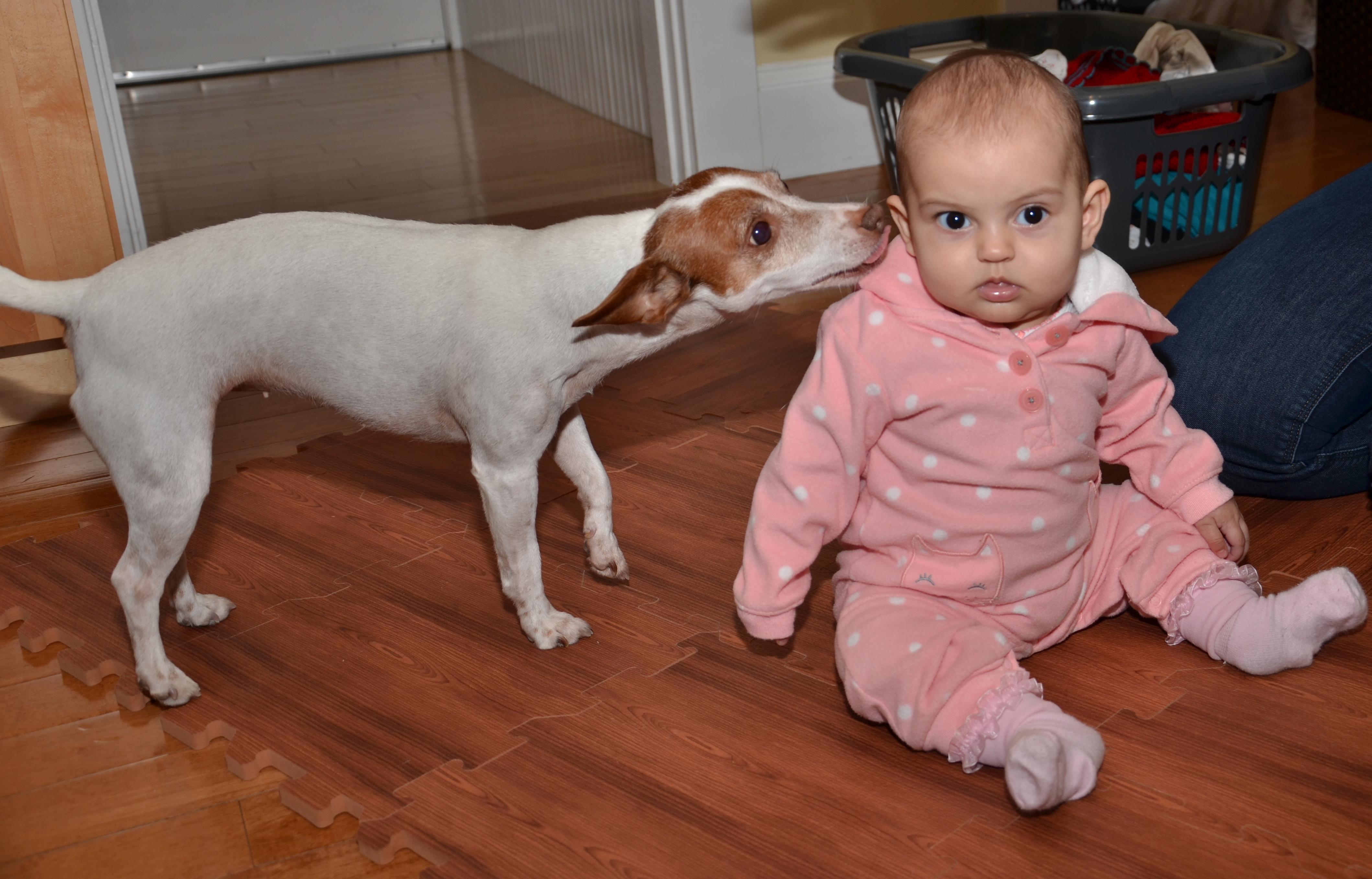
If you notice your dog licks you, it may be due to his affection or his need to getting your attention. Licking is also a sensory tool for dogs, similar to reaching out and touching something. Another explanation consists in the fact the canine mothers lick their puppies for grooming and social reasons and this behavior continues into adulthood.

  1. How to get a dog stop barking when I leave the room/house

If your dog begins to bark immediately after you leave the room, he may suffer from separation anxiety. It is recommended to tell it to sit and give him praise before leaving the house. If he stays, give him a treat or a favorite toy with praise. Try this method until you can leave the house and your dog remains there without making a sound. It is possible to take a few weeks, but it is worth. Your dog will be better at emotional self-control. It is also possible that your dog become overexcited and pee when he meets or greets you or someone else or to begin barking excessively when you arrive home. This is because he is very happy to see you or the person he greets and it is his way to show his love.

  1. Dogs love to chase their food and roll on

This behavior is caused by the fact that your dog considers the food is a prey and he wants to ensure it is dead before eating. You can give him a command to take his food to his bowl in order to understand you do not tolerate this behavior.

  1. Why do dogs tilt their heads

If your pup tilts his head, it is possible that he wants to make sense of what he hears, to identify the location of a sound or to find if he’ll get something fun or rewarding.

  1. Coprophagy in dogs

An unpleasant habit of some puppies consists in eating poop also called coprophagy and the phenomenon can appear because your dog is hungry, likes the smell and taste, is missing certain nutrients from his diet or simply thinks it is fun.

  1. Why Do Dogs Howl?

Another pups get used to howl as an instinctive or rewarding behavior while others hump on other dogs, on people’ legs in their search for seeking attention or excitement, without sexual reasons.

  1. Why does my dog stare at me?

If you notice that your dog is staring at you he probably expects to receive a treat or to show him praise and affection. Dogs generally consider direct eye contact threatening, so ensure it is not a sign of fear or aggression.

  1. Why do dogs walk in circles before lying down?

There are moments when your dog walks in circles before lying down as an inherited ritual from the wolf-like dogs that used to spot to pat down the leaves or grass to make a nesting spot.

  1. Why do dogs sniff each other’s butts?

Another unusual habit of your pup consists in sniffing other dogs’ butts as a sign to greet them or in trashing his toys that they consider as a killing action due to his primal instincts.

  1. Did you notice that your dog hate other dogs?

It is probably because he wasn’t well socialized in puppyhood or he didn’t have positive experiences with other dogs during this period.

  1. Got an aggressive puppy?

If your pup shows signs of aggression it is possible to notice that the aggression disappear when you take it out of his comfort zone. That’s why, exposing him to a wide range of experiences could help teach him to adapt to the rules you want. It is also important to not tolerate his aggression.

Some behavioral issues are due to inadequate supervision, control, training, exercise and or general environment. Your response has to be immediate, consistent and result in some sacrifice for your puppy if you want to repair his behavior.

Short Bio:

Alex is the Director of Communications for Premier Pups, a purebred & designer dog breeder that offers the best selection in Texas of certified pure bred and mixed breed designer puppies. Alex has a Master degree in Communication from Michigan State University and loves so much his dog he rescued from a shelter a few years ago.

ooOOoo

Hope you found this of interest. As for me, it was just another reminder that we are never too old to learn something new. As in the word “coprophagy” that I hadn’t come across before.

To which I would close by saying that your feedback as to the value of such guest articles would be most welcome.

For Dollar and all the other lost dogs.

A beautiful amendment to this blog!

Last Thursday, I published a post under the name of Affairs Of The Heart.

There was a reply from Asha:

My mom still cries for my pet GSD we lost 15 years ago to illness. There are no words to describe that loss.

I asked Asha what was the name of that dearly loved German Shepherd. She replied that it had been called Dollar. That then gave me an idea.

Thanks. Indeed, it just crossed my mind that there could be a page on this blog where readers leave the names and a few words of past loved dogs. Would that work for you?

Asha replied, “Oh wow! That so melted my heart.”

So I have just finished setting up a page Keep Their Memories Alive. You will see it listed on the sidebar next under the link for Try The Book For Free.

When you click on the link under the heading Keep Their Memories Alive you will go here:

We Shall Not Forget Them.

For millions, the relationship between a person and their dog is precious beyond words. Do you still grieve the loss of your wonderful dog? Let us all know what your dog meant to you. Write whatever you want. Leave it as a thought to this page.

I am hoping that Asha will be first to leave a message for Dollar. I am hoping that many of you will leave a message so that all of us will not forget the love we have received from our departed furry friends.

Thank you Dollar!

NB: I may have overlooked whether or not comments can be attached to a page under WordPress. If not, I will come up with a fix very soon. In the meantime, leave your thoughts as a response to this post.

Being saved by a dog!

A serendipitous find!

Yesterday, I published a post under the title of Forecasting Wonderful ‘Blu’ Days!

There was an exchange of thoughts between me and Susan Leighton, who is the author of the blog Woman On the Ledge:

(In part:)

Susan: Dogs can be such a comfort when life becomes overwhelming.

Me: For nobody can escape those moments when life becomes overwhelming. A loving partner is precious beyond words at those times, but there’s still something comforting beyond that love when it comes to our dogs.

Susan: Very true, Paul. A dog has saved me many times!

Later on yesterday, when I was looking for something for today’s post, I came across this video:

 Published on Jan 5, 2015

Hantu the White German Shepherd Plays Surrogate Mum to Poncho the Opossum at the Rare Species Fund, South Carolina, USA.
Poncho the opossum was found clinging to his mother’s back after she had been hit by an oncoming vehicle, a common hazard for nocturnal animals. Under veterinary supervision, Poncho was brought to the Rare Species Fund in South Carolina where he has nursed to health. Opossums are the only New World marsupials and, in the wild, spend the first several months of their lives clinging to their mother’s backs. Having had no puppies of her own, Hantu seems a more than willing foster mum and mode of transportation for Poncho. Robert Johnson of the Rare Species Fund says, “They are both playing important roles in each other’s lives. When Hantu goes for her daily walks through the woods, she won’t leave the house until Poncho is securely mounted on her back.”
http://www.RareSpeciesFund.com
http://www.MyrtleBeachSafari.com

Just thought that was a lovely reminder of the unconditional love offered by our dogs; for humans and for other creatures!