There can never be too much trust and love in the world!
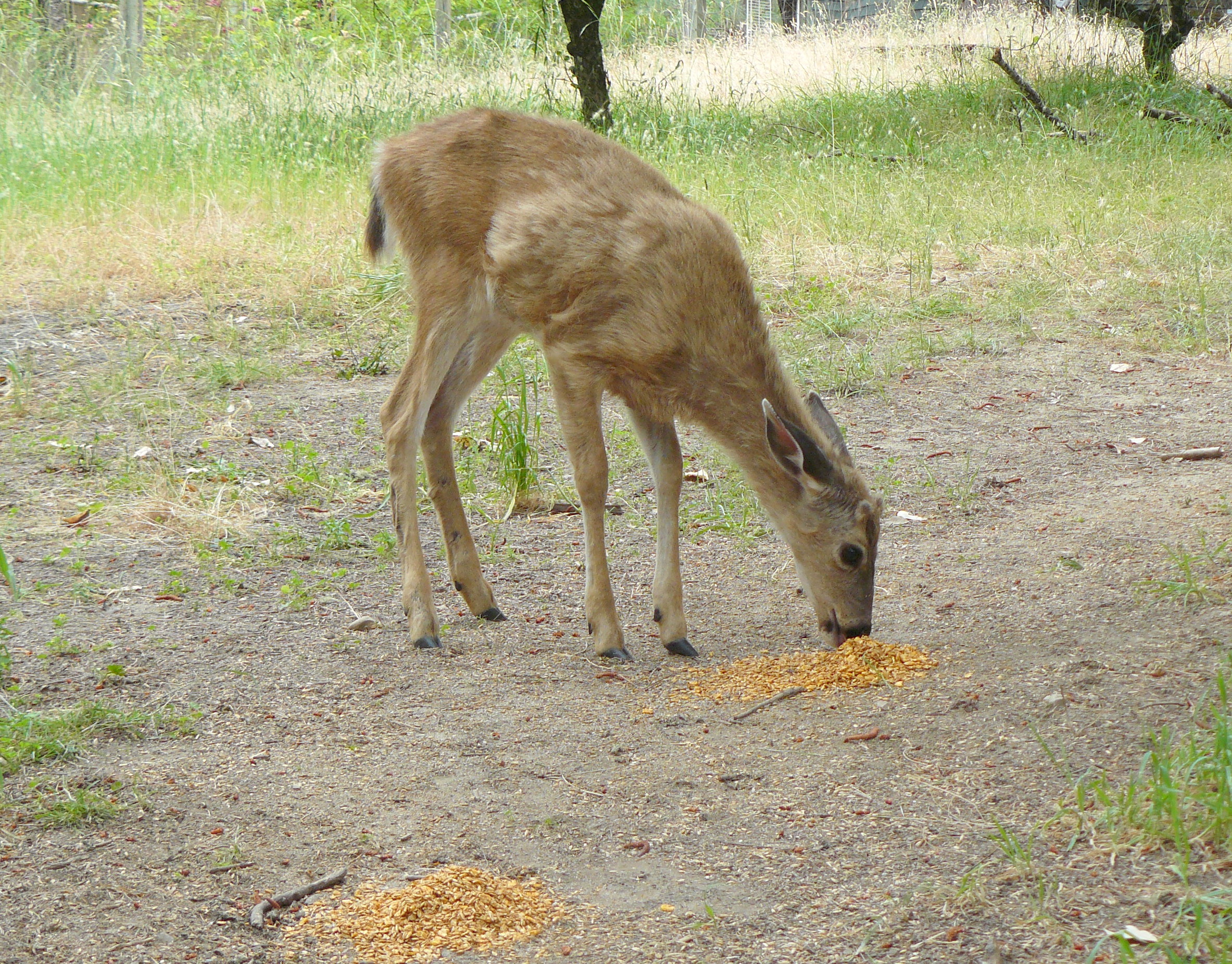
As many of you know we feed the wild deer as indeed do many of our neighbours.
So with that in mind just read the following incredible and wonderful story that recently came my way thanks to Dordie from next door.
ooOOoo
Quite a Catch
Awesome act of trust and love!
A once in the history of mankind kind of thing. The Best Day Of Fishing Ever! Some fishing stories are a little hard to believe but this guy has pictures to prove his story… I’ve heard of salmon jumping into boats, but never anything quite like this. Tom Satre told the Sitka Gazette that he was out with a charter group on his 62-foot fishing vessel when four juvenile black-tailed deer swam directly toward his boat. “Once the deer reached the boat, the four began to circle the boat, looking directly at us. We could tell right away that the young bucks were distressed.
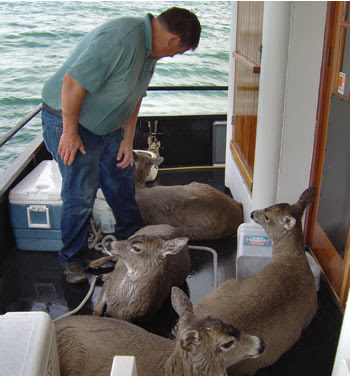
I opened up my back gate and we helped the typically skittish and absolutely wild animals onto the boat. In all my years fishing, I’ve never seen anything quite like it! Once on board, they collapsed with exhaustion, shivering.”
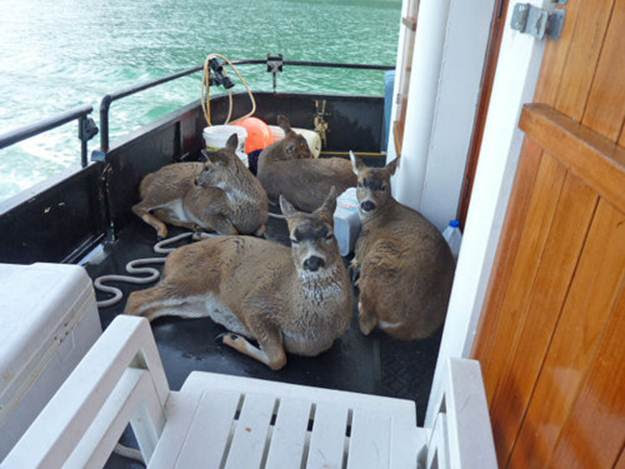
“This is a picture I took of the rescued bucks on the back of my boat, the Alaska Quest. We headed for Taku Harbour .
oooo
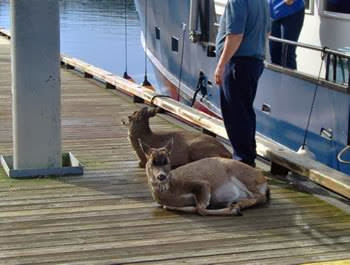
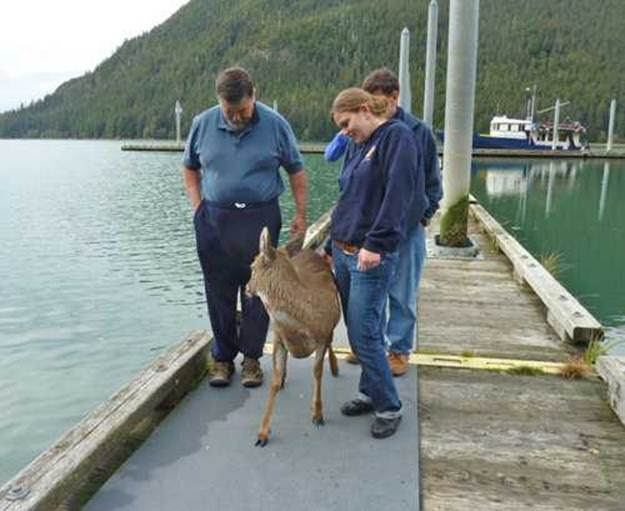
Once we reached the dock, the first buck that we had pulled from the water hopped onto the dock, looked back as if to say ‘thank you’ and disappeared into the forest. After a bit of prodding and assistance, two more followed, but the smallest deer needed a little more help. This is me carrying the little guy. My daughter, Anna, and son, Tim, helped the last buck to its feet. We didn’t know how long they had been in the icy waters or if there had been others who did not survive.
My daughter later told me that the experience was something that she would never forget, and I suspect the deer felt the same way as well!”
I told you! Awesome!
ooOOoo
Kindness is the language the blind can see and the deaf can hear. – Mark Twain
A traumatic accident to Casey is very professionally dealt with.
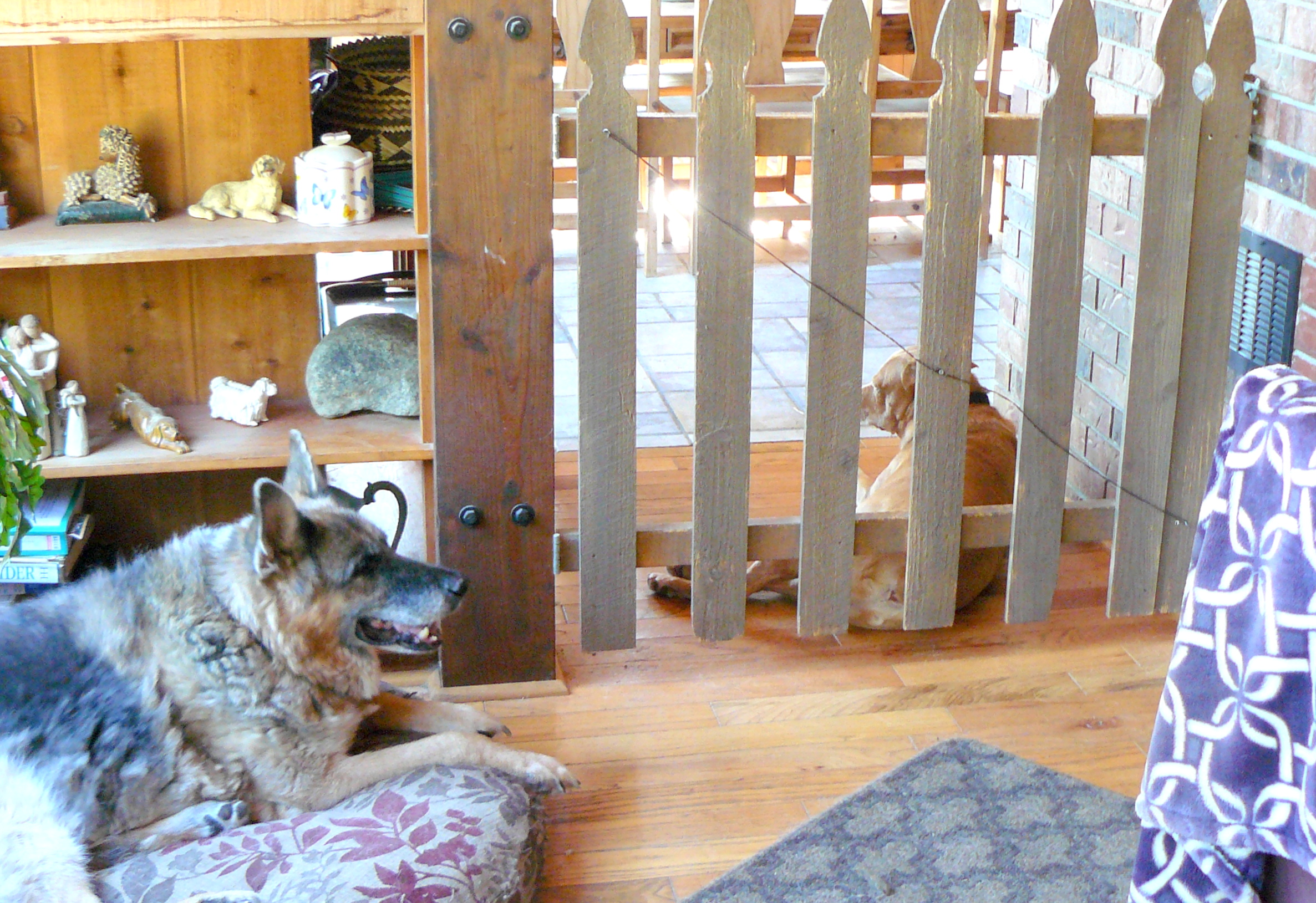
Our nine dogs are divided into two groups. One group lives in the kitchen/dining-room area (Casey, Paloma and Ruby) and the other dogs in the living-room/bedroom area (Pharaoh, Sweeny, Pedy, Oliver, Cleo and Brandy).
These two groups are separated by a gate, as seen here with Pharaoh resting on his bed and Casey at ease just on the other ‘kitchen’ side.
Both Jean and I go between the two areas via the gate many times daily.
Last Sunday evening, as Jean was going to the kitchen, Casey stuck his head through one of the vertical spaces in the gate and must have become stuck albeit what then happened was upon us in a flash. For Brandy grabbed the left-hand side of Casey’s face with his own jaw and the two dogs were locked together. It was a bit of a struggle to separate Brandy from Casey and when we took a look at Casey’s face it was clear that there was a laceration along his lower, left-hand lip. However, he did not appear to be in pain and we all proceeded to bed.
On the Monday morning after I had returned from my bike ride with a local group of neighbours I queried with Jean whether or not we should just check that Casey wasn’t too badly injured despite the fact that Casey was showing no signs of discomfort. Nevertheless, his wound was not a pretty sight and a quick call to our neighbour Jim Goodbrod, who is also a Doctor of Veterinary Medicine (DVM), resulted in Jim saying to bring Casey round to his place then and there.
We are glad that we did for Jim quickly discovered that the laceration was not only to Casey’s lower lip but that much of his gum below the gum line along Casey’s teeth had been torn away exposing the jaw bone. Jim said that this required specialist attention and had no hesitation in recommending Southern Oregon Veterinary Speciality Center (SOVSC) in Medford, about 40 miles to the South. Jim went inside his house and made an appointment for us to take Casey to SOVSC for 2pm that afternoon.
We had previously been to SOVSC with Hazel and were impressed with their level of expertise and experience and the fact that they were open twenty-four hours every day of the week!
By the time we arrived Casey had been allocated to be seen by Dr. Adam Reiss, DVM, and very soon after arrival we were shown into a side room awaiting Dr. Reiss’s medical assistant.
Dr. Reiss then arrived and explained that Casey’s lip and gum would require suturing under a general anesthetic but that they could fit it in that afternoon albeit Casey would not be ‘back on his feet’ until 6pm at the earliest. Of course, we agreed and shortly thereafter Casey quietly and calmly was led away by Dr. Reiss’s assistant.
Jean and I then went the short distance to the centre of Medford, did a bit of shopping, had an early dinner and returned to SOVSC shortly before 6pm.
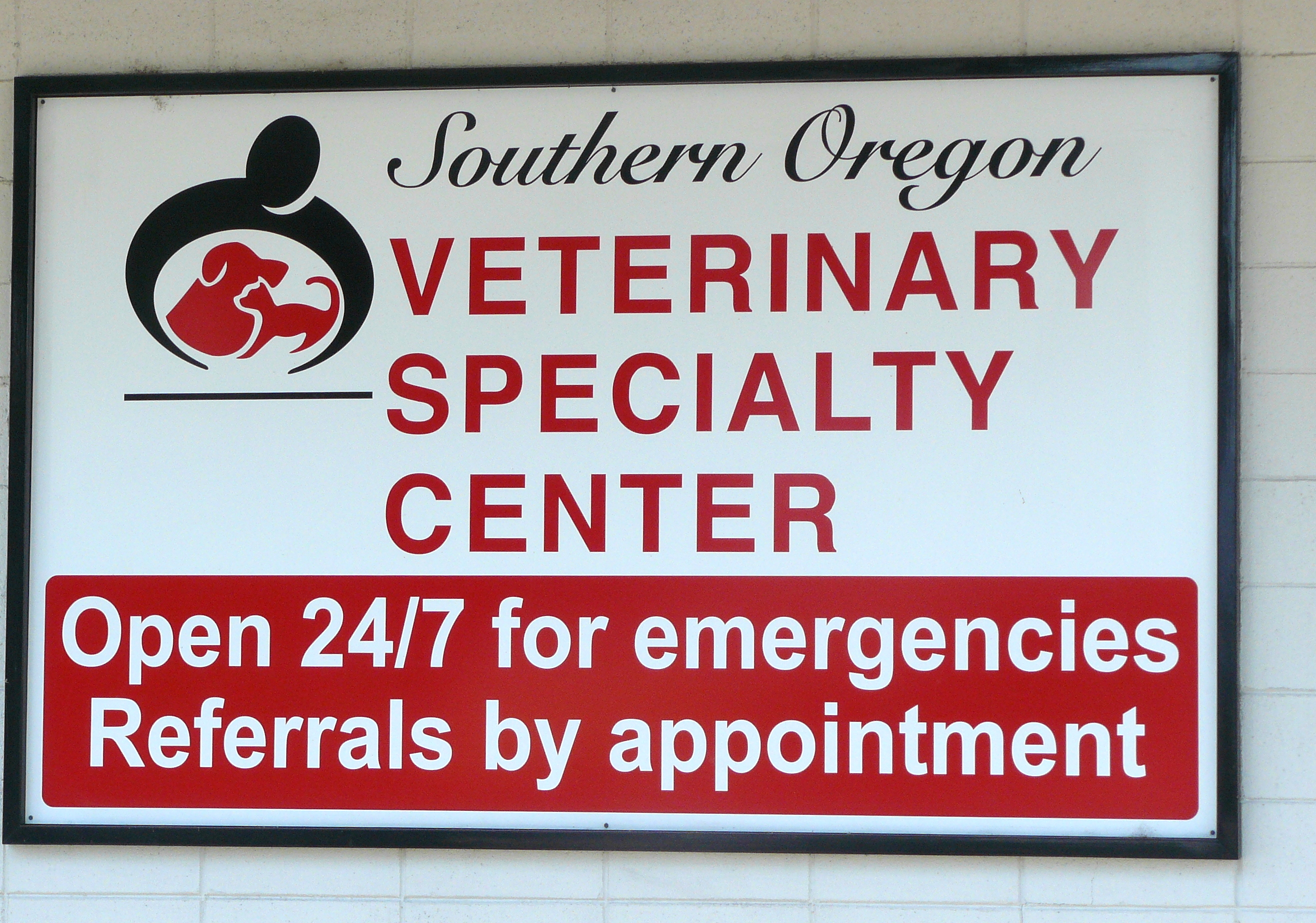
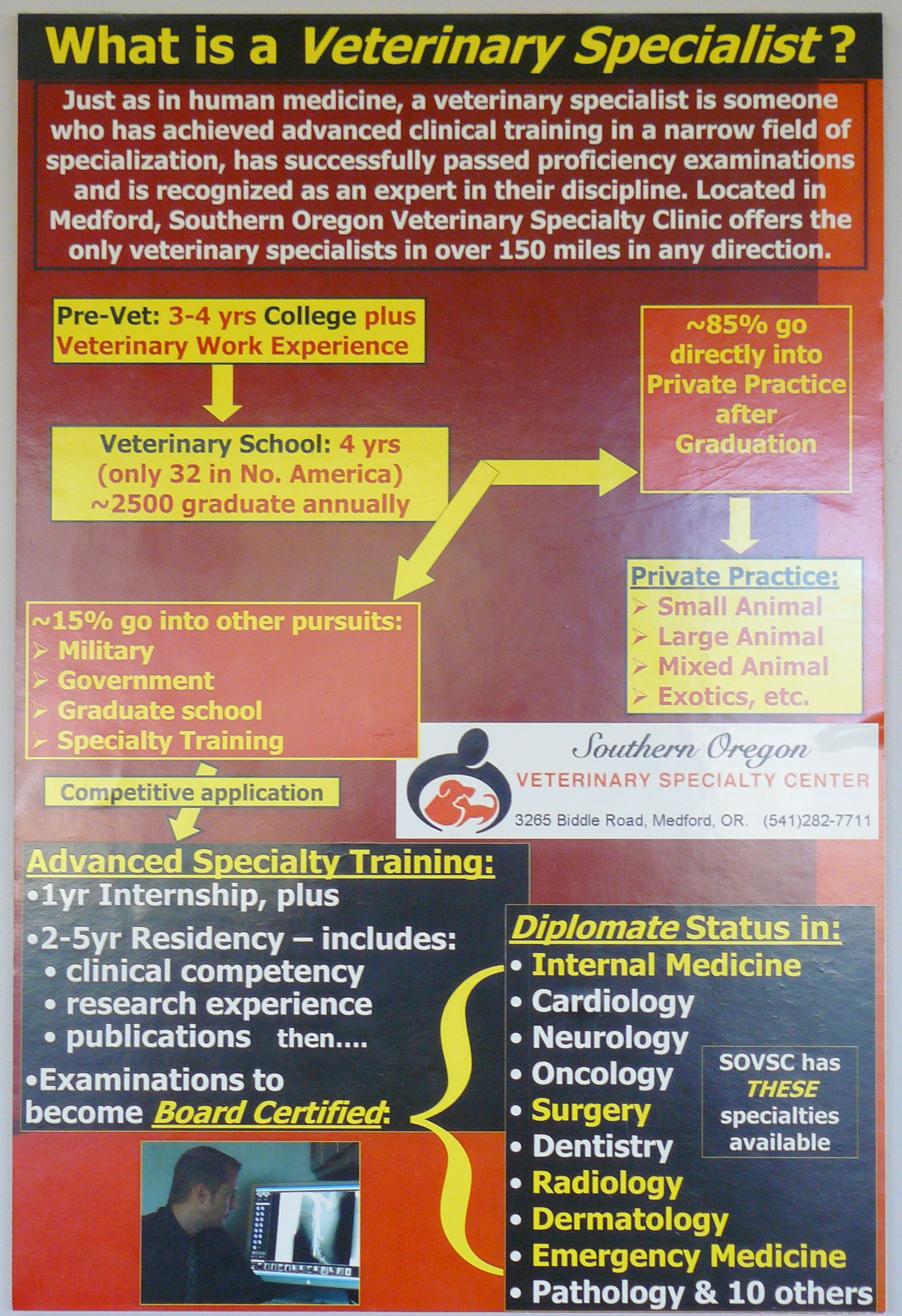
While we were waiting for news I was interested to read a prominently displayed sign setting out what constituted a veterinary specialist. (I’ve included the image at a larger size to make it easier for you to read it.)
Clearly there is more to caring for one’s pet than meets the eye.
At Southern Oregon Veterinary Specialty Center, we understand the special bond between a pet and their human family. Our team of highly trained doctors, certified technicians and support staff partner with your family veterinarian to provide specialized diagnostics, surgery and emergency care for your pet upon a referral or emergency basis. Our clinic is staffed 24 hours-a-day, 7 days a week, to receive emergency cases and to monitor our critical care patients. The clinic’s board-certified veterinary specialists and staff are committed to providing exceptional compassionate care utilizing state-of-the-art technology and treatments.
The relationships we have with partner veterinarians are vital to the success of treating your pet. We will keep them apprised of the patient’s status to provide a smooth and cohesive experience.
Jim Goodbrod speaks highly of the Center.
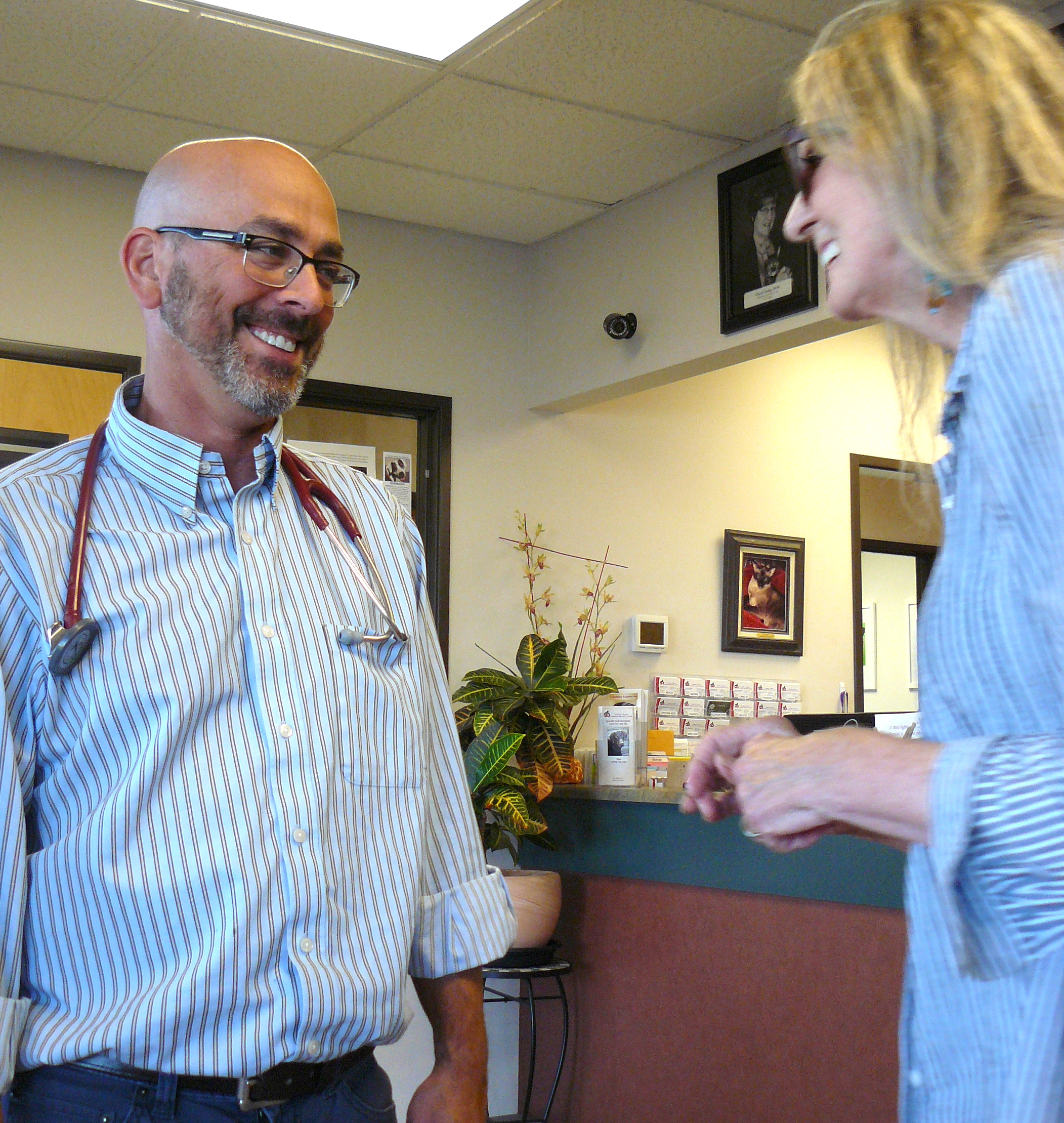
Dr. Reiss duly came out to speak with us and explained that all had gone well although Casey was still groggy but back on his feet. Despite the smiling face Dr. Reiss looked pretty tired. Not surprising when one reflects that the time was well past 6pm.
In an earlier conversation with some of the staff it was reported that, on average, some thirty animals were seen every day!
That’s commitment to the cause in any language!
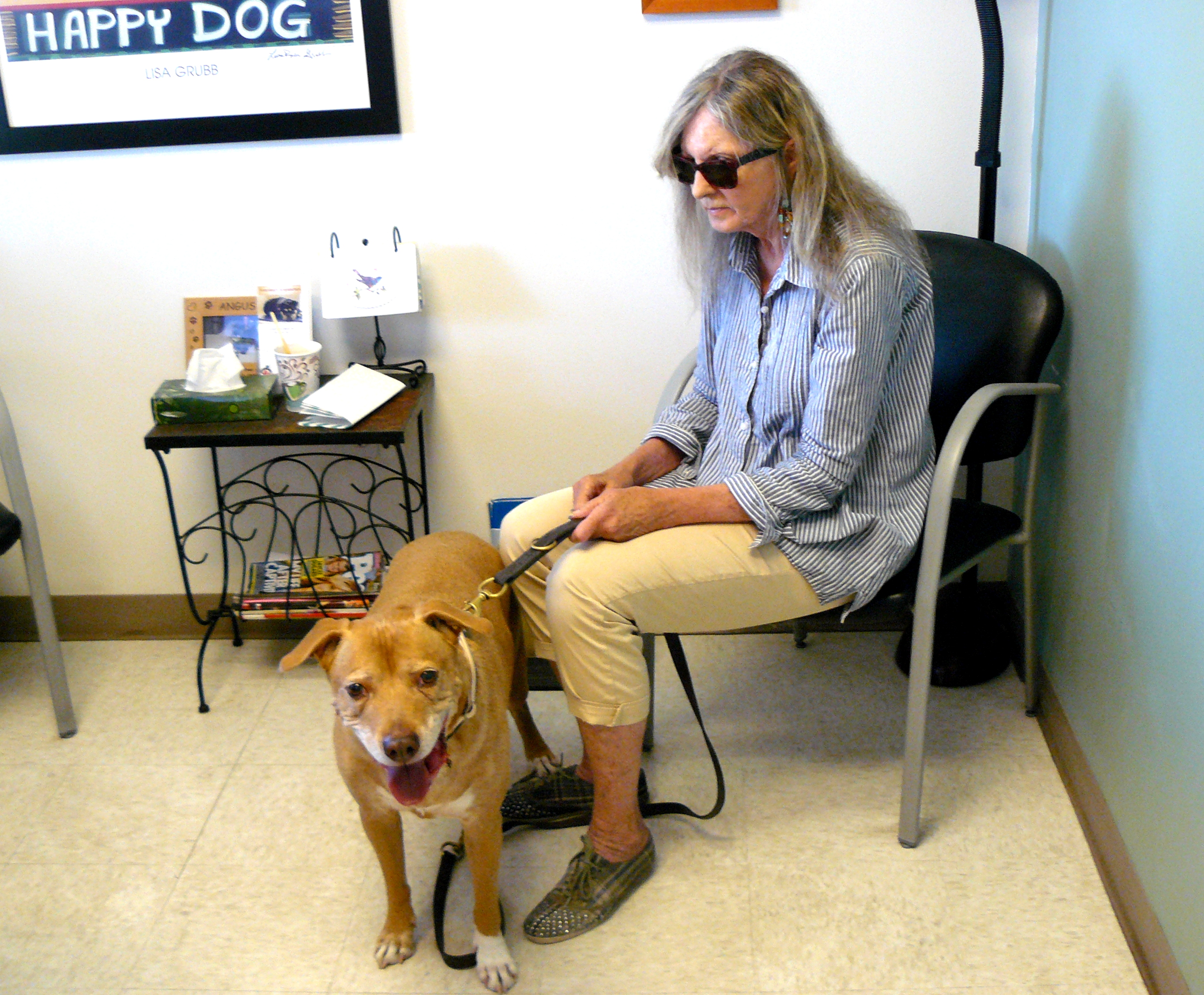
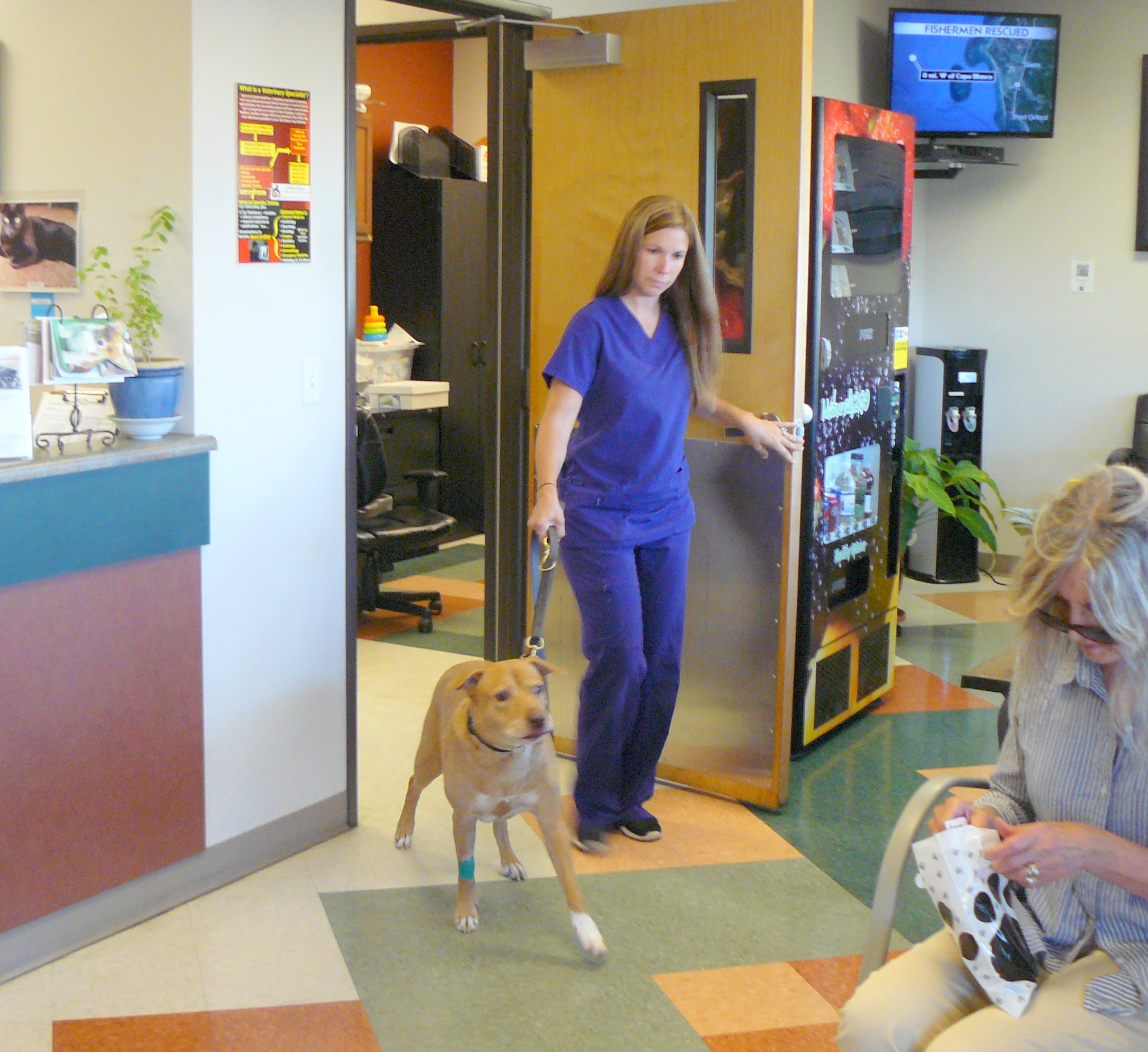
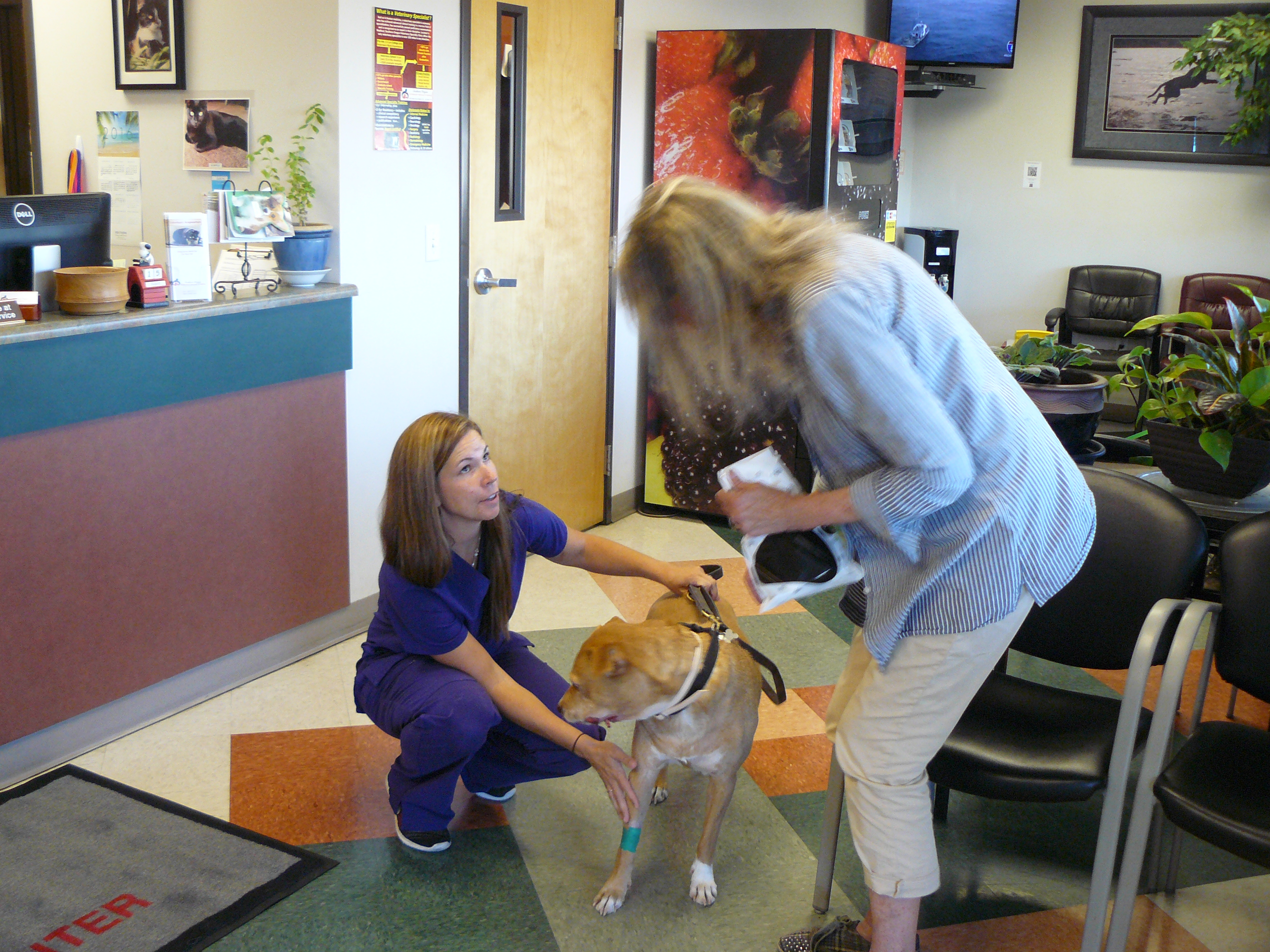
Then it wasn’t long before our dear Casey was being led back into the front waiting area.
To be followed moments later by the assistant (apologies for not making a note of her name) setting out the details of how Casey had to be cared for over the coming hours and days.
The verbal guidance was supported by extensive notes.
Then it was a case of yours truly paying for all the services that had been provided for Casey and time to go home.
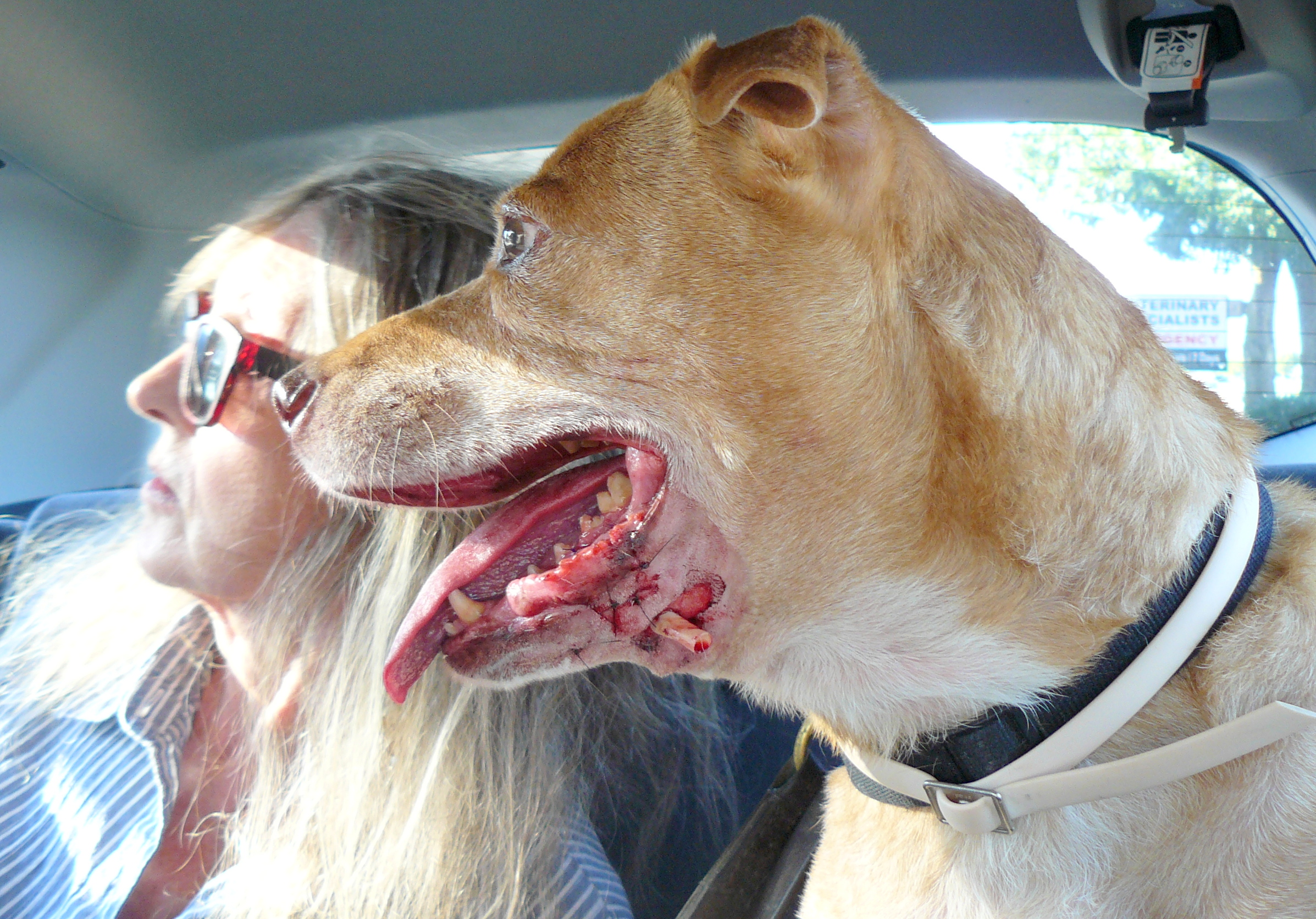
The car was rearranged to give room for Casey to sit on the rear seats with Jean next to him. I took the opportunity to take a photograph of the two of them that showed clearly the extent of the suture and the drain that had been inserted into Casey’s mouth.
It was beyond me to comprehend how Casey was so nonchalent to what in any human’s experience would have been hurting big time.
An hour later we were all home and getting dogs, cats and horses fed a lot later than normal.
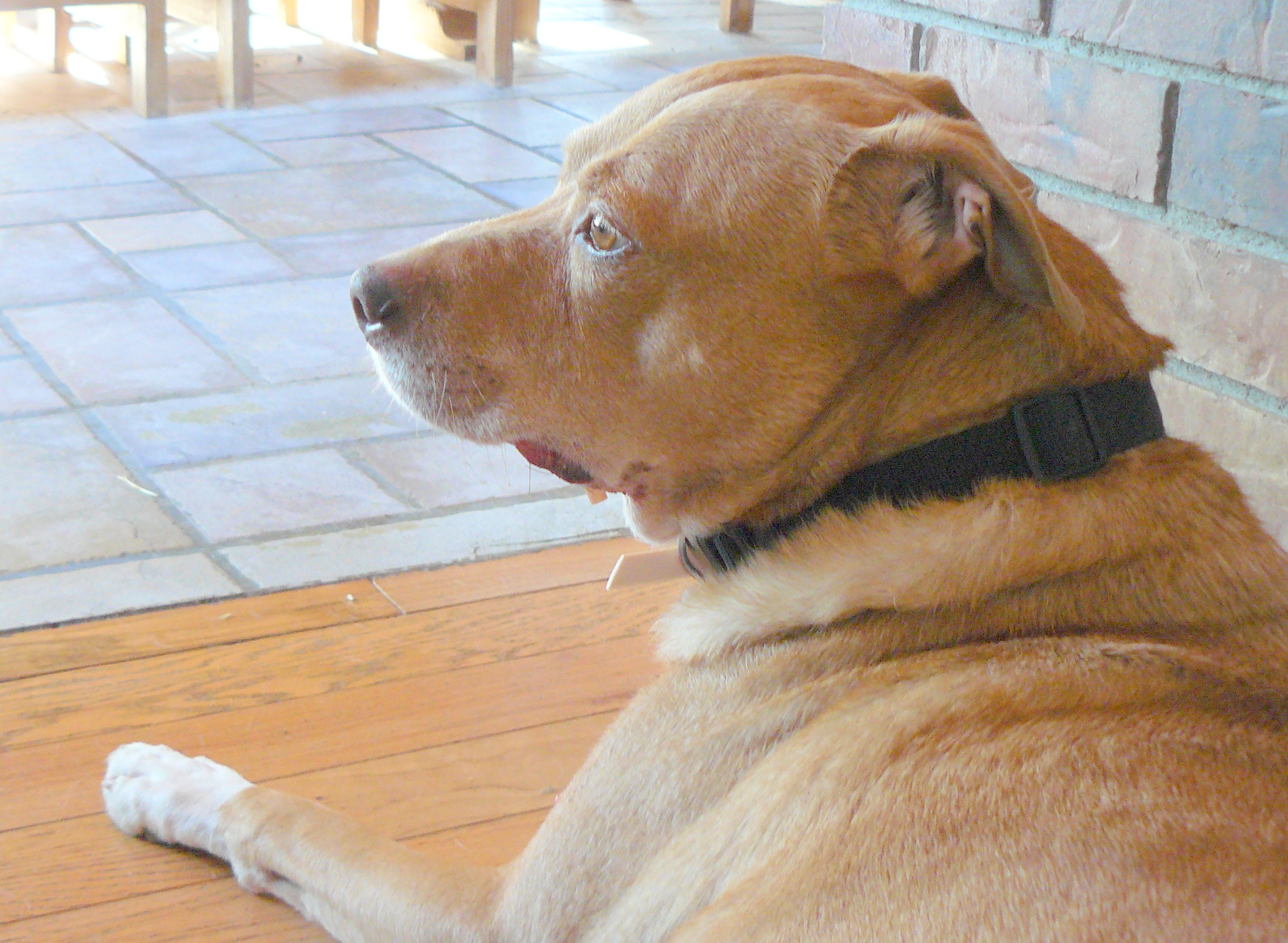
Miracle of miracles Casey made it comfortably through the night and the following photograph was taken a little after 9:30 am yesterday morning.Well done all involved!
Thank you to Jim and all the doctors and staff at SOVSC but the biggest thank you of them all must go to Casey!!
This essay from George Monbiot just has to be read as widely as possible.
Dear followers of this blog know that from time to time I dip into politics. I do so because something I read strikes me with such force that I want others to read the article or essay. Not infrequently, my ‘dip’ is in the form of republishing an essay from George Monbiot who, long ago, gave me blanket permission to republish his essays. That is the case today.
I was inspired to write my book, subsequently self-published last December, because I truly believe that the values that we see in our longest animal companions are values that we, as in our societies, from top to bottom, have to embrace if we are to stand any chance of surviving as a species.
Reflect on the fact that dogs do not lie, they do not set out to deceive or influence others for their own personal gain and they are utterly creatures of integrity.
OK, I can hear some of you thinking that dogs are dogs and humans are humans and it’s just plain daft to link the two in this fashion. My only answer to that is to read the book or, at the very least, download and read the first twenty-five pages (for free). Better still purchase the book and have 50% of my net income donated to the Rogue Valley Humane Society.
On the 28th July, George Monbiot published an essay entitled So Much For Sovereignty. I read the essay and, frankly, was apalled at what George was describing: the background of the UK’s new international trade secretary, Liam Fox, recently appointed by Theresa May.
Read it for yourself and see if you react the same way that I did!
ooOOoo
So Much For Sovereignty
28th July 2016
To this government, “taking back control” means handing Britain to a different set of foreign powers
By George Monbiot, published in the Guardian 27th July 2016
What does it mean to love your country? What does it mean to defend its sovereignty? For some of the leaders of the Brexit campaign, it means reducing the United Kingdom to a franchise of corporate capital, governed from head offices overseas. They will take us out of Europe to deliver us into the arms of other powers.
No one embodies this contradiction as much of the man now charged with determining the scope of our sovereignty: the new international trade secretary, Liam Fox. He explained his enthusiasm for leaving Europe thus: “We’ll be able to make our own laws unhindered by anyone else, and our democratic parliament will not be overruled by a European Court.” But of all the people Theresa May could have appointed to this post, he seems to me the most likely to ensure that our parliament and laws are overruled by foreign bodies.
Dr Fox looks to me like a corporate sleeper cell implanted in government. In 2011, he resigned his post as defence secretary in disgrace, after his extracurricular interests were exposed. He had set up an organisation called Atlantic Bridge, financed in large part by a hedge fund owner. Atlantic Bridge formed a partnership with a corporate lobbying group called the American Legislative Exchange Council, which is funded by tobacco, pharmaceutical and oil companies. Before it was struck off by the Charity Commission, it began assembling a transatlantic conclave of people who wished to see public services privatised and corporations released from regulation.
He allowed a lobbyist to attend his official meetings, without government clearance. He made misleading statements about these meetings, which were later disproved. It seems extraordinary to me that a man with such a past could have been brought back into government, let alone given such a crucial and sensitive role. Most newspapers have brushed his inconvenient history under the political carpet. He is, after all, their man.
This is the man who has been put in charge of making new trade agreements. What he wants to do with them is pretty clear. “We need to see a reinvigoration of our transatlantic relationship,” he argues. “We have a low regulation and low taxation environment which is only likely to improve outside the EU.” Improve, in this context, means becoming yet more hostile to human welfare, social mobility and the defence of the living world.
They threaten to reduce to the lowest common denominator the laws protecting us from predatory finance, the exploitation of workers, food adulteration, climate change and environmental destruction. They threaten to force the privatisation of public services. They would allow corporations to sue governments for compensation in offshore tribunals that – unlike the European Court Dr Fox professes to hate – are unaccountable, opaque and wildly imbalanced. The EU has no mandate to strike such agreements: a consultation on the offshore tribunals TTIP proposes attracted 150,000 responses, 97% of which were negative.
Leaving Europe should enable us to leave behind biased, destructive treaties of this kind; we will, after all, have to renegotiate most of our trade agreements. But by putting the Fox in charge of the chicken coop, Theresa May seems determined to replace them with something even worse.
The corporate army is already at the gates. The Republican senator Tom Cotton proposes that Britain should join the North American Free Trade Agreement (NAFTA). Using the kind of international tribunals that TTIP threatens to impose, NAFTA has undermined labour rights and environmental protection. It has blocked attempts to produce more progressive laws and greatly restricted legislative sovereignty. Whether we formally join NAFTA, or connect to that trading area through TTIP or another such agreement, the results will gravely threaten our sovereignty – unless negotiations are run on an entirely different basis.
In response to the Philip Green scandal, Theresa May says she wants to “tackle corporate irresponsibility” and “reform capitalism so that it works for everyone not just the privileged few.” We have no idea what she means, but here’s where it should begin. Before her government starts negotiating any new trade treaties, it should open a public consultation about their purpose and scope. The UK’s trading relationships should be debated in parliament and the people of this nation should be allowed to determine how much control over national life our representatives should retain, and how much should be ceded to international agreements and international bodies.
Does this mean a referendum? If we can be trusted to decide whether or not to share our sovereignty with Europe, should we not also be trusted to decide whether or not to share it with transnational capital?
But the Conservative vision of sovereignty is highly selective. People like Dr Fox appear to hate much of what others love about this country: the NHS, our public broadcasters, our social safety net, the protection of the countryside, the notion that power resides in the people, rather than in corporations and their shadowy lobbyists. There are traitors in our midst, who would rip down our most treasured institutions on behalf of the transnational elite and its offshore holdings. This, it seems, is what they mean by taking back control.
The concluding photographs from the 10th annual Dog Photographer of the Year competition.
The first set were published a week ago, together with this introduction:
Incredible, prize-winning, images of dogs.
The following was read over on Mother Nature News on June 30th. They just have to be shared with you.
However, to ensure the integrity of republication and the identity of the photographers, I’m going to include the photographs and the words of the original MNN piece, and split it across today and next Sunday.
Trust me you will adore these photographs.
Here are the concluding photographs.
ooOOoo
These prize-winning images of dogs will steal your heart.
10th annual Dog Photographer of the Year competition drew entries from photographers in 90 countries.
Winner of the ‘I Love Dogs Because…’ category (Photo: Jade Hudson/Dog Photographer of the Year Competition)
Hugo the puppy is the subject of this winning image by 16-year-old Jade Hudson.
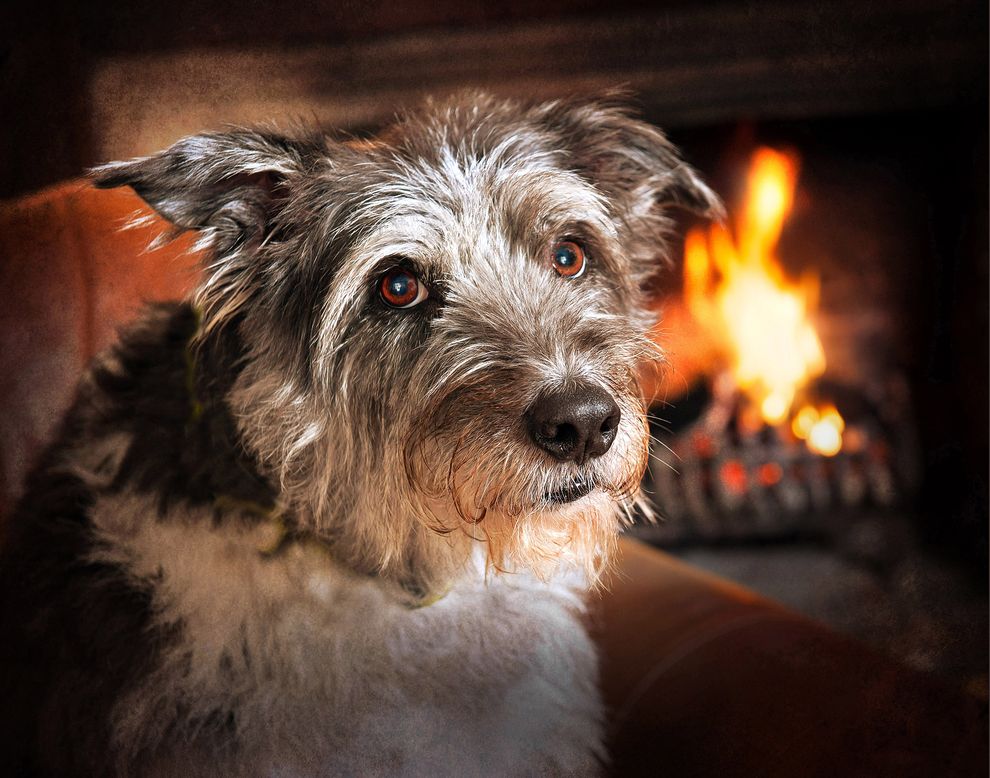
Winner of the Oldies category (Photo: Kevin Smith/Dog Photographer of the Year Competition)
The gray faces of old dogs speak to all the love and friendship they’ve provided over the years as Lizzie, a 12-year-old mixed breed dog, shows us. Curling up with a cracking fire and your four-legged BFF is one of life’s great joys.
Winner of the Dog Portrait category (Photo: Jamie Morgan/Dog Photographer of the Year Competition)
This portrait of two Afghan hounds named Ozzie and Elvis took first place for the Dog Portrait category. The setting is the idyllic Ashdown Forest in Sussex.
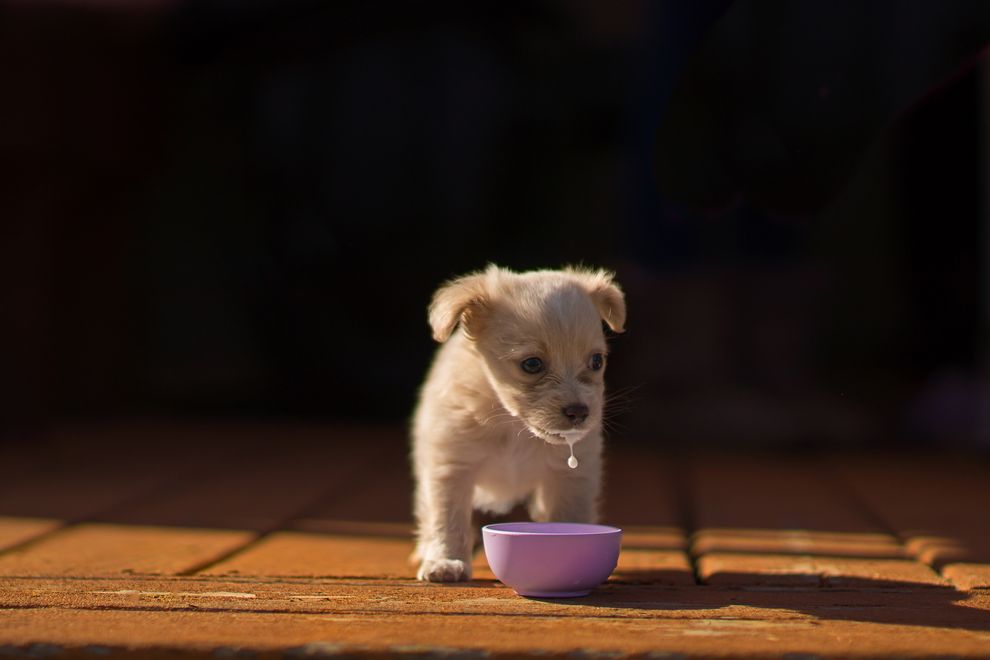
Winner of the Puppy category (Photo: Linda Storm/Dog Photographer of the Year Competition)
And finally, the winner of the Puppy category is little rescue puppy Buddy enjoying a bowl of milk. The photo was taken by Colorado-based photographer Linda Storm.
“The entries for this year’s Dog Photographer of the Year competition were some of the best we have ever seen,” says Rosemary Smart, Kennel Club chief executive. “Choosing the winners was an incredibly challenging task and we commend every photographer who entered. Each of the winning photographers beautifully captured the essence of their canine subjects on camera, demonstrating how important dogs are to us in every walk of life.”
If you’re a photographer who loves dogs as your subject, keep an eye on the opening date for next year’s competition!
ooOOoo
Going to repeat the words of Rosemary Smart as I can’t even come close to the power of what she said:
The entries for this year’s Dog Photographer of the Year competition were some of the best we have ever seen.
Choosing the winners was an incredibly challenging task and we commend every photographer who entered. Each of the winning photographers beautifully captured the essence of their canine subjects on camera, demonstrating how important dogs are to us in every walk of life.
Just to demonstrate that Learning from Dogs isn’t wall-to-wall about dogs!
Over the years that I have been writing in this place it has been mentioned before that as well as us having our dogs we also have cats. When Jeannie and I moved up from Mexico to the USA in 2010 we came with six cats, all of them cats that Jean had rescued off local streets down in San Carlos, Mexico.
Four years ago, when we moved up from Arizona to this present home here in Merlin, Southern Oregon, we built a cat run that was attached to the garage. Then about a year ago we brought what was now four cats into the house. The cats are in their own rooms during the day but mingle with the ‘living room’ group of dogs in the evening. The cats are not let outside for we fear that they would be grabbed by a passing coyote or similar before they learnt to return home in the evening.
All of which is my preamble to an article that was published a month ago over on the Care2 Causes site, and is republished here within Care2’s terms.
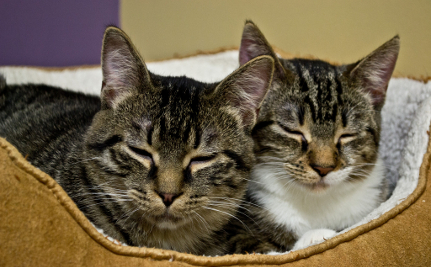
Once every eight seconds, an unwanted cat or dog is euthanized somewhere in the United States thanks to pet overpopulation and limited shelter capacity. No one likes to think about that reality, but you can do your small part to help. In addition to supporting organizations that promote an aggressive national spay and neuter policy, facilitate no-kill shelter transitions and work with communities to address specific issues like feral cat colonies, you can adopt a shelter cat (or dog!).
If you’re thinking of adding a cat to your life (and really, why stop with one?), here are ten compelling reasons to consider a shelter cat over one from a breeder or a pet store.
10. Shelter cats come in all shapes, sizes and colors.
If you want a kitten, shelters are usually overflowing with them, especially during spring kitten season. If you’re interested in an adolescent feline or even a more mature companion, shelters have those too. In fact, many are really excited by potential adopters who want to take on an older kitty, because mature cats tend to linger in shelters longer because many people prefer kittens. If you’re looking for a cat to accompany an older adult or someone who’s not as mobile, a mellow older cat might be a great fit.
9. Shelter cats are ready to go!
They’re spayed or neutered, immunized, dewormed, microchipped and assessed for behavioral issues by the skilled staff at the shelter. They’ve also been trained to use the litterbox in most cases, so you don’t have to worry about an awkward and potentially smelly transition to living at your house. Many also come with a certificate for a free first visit to the vet, and some shelters have a take-home package with food, toys and other goodies. You’re all set up for your first year of pet ownership, and your pet will be healthy, because the shelter has a vested interest in keeping its animals happy and healthy, while pet stores and unscrupulous breeders do not.
8. Shelter staff can help you pick the perfect companion.
Adopting an animal is a big commitment, and not all cats are the same. If you come in with your family, the shelter staff can get to know you, introduce you to some prospects, and help with the matchmaking process. They’re motivated to make sure cats find their forever homes, and they won’t lead you astray when it comes to, well, rescuing a stray. Shelter staff can also provide you with information about the adjustment period if you’ve never had a cat before.
7. Turns out you can teach an old cat new tricks.
(Note that when she’s tired of it, she’s not afraid to make her opinion known!)
6. Set an example!
There are a lot of myths about cats living in animal shelters, like claims that they’re damaged, feral or broken in some way. In fact, the vast majority of unwanted animals are happy, healthy and well-adjusted, they just need loving homes to get comfortable and let their personalities come up. By adopting a shelter cat, you can encourage other people to do the same; talking about your positive experiences and introducing people to your cat will help reduce the stigma about adopting from a rescue group.
If you want to adopt a special-needs animal, you’re certainly welcome to. Shelters are particularly choosy when it comes to homing out cats with medical problems, but they are always happy to hear people are interested, committed and ready to give a cat with some extra needs a home to share.
5. Adult cats are low maintenance.
If you want a cat in your life but you don’t have a lot of time for teaching a kitten how to use the litterbox, stay away from the toilet paper roll, and stop wreaking havoc on your shoes, an adult cat is definitely for you. Adult cats already know the lay of the land and they tend to settle into routines quickly, making them great housemates. And if you travel a lot, consider adopting cats as a pair so they can keep each other company. A shelter often has a pair of cats whom they’d love to see go out together because they’re relatives or they’ve developed a close bond.
4. You’ll feel better.
Companion animals offer a number of mental health benefits. Having a pet of any species around can make people feel happier and more balanced, and the routine of caring for and interacting with a pet like a cat can improve mood and reduce the sense of isolation. Cats are especially great companion animals for people who don’t have the energy or ability to care for a dog, but still want someone around the house to keep them company.
3. Shelter cats have varied personalities.
Cats are incredibly diverse, personality-wise. They can be shy and outgoing, playful or more reserved, fascinated by sinks or horrified by water. If you haven’t had the pleasure of having a cat in your life yet, a shelter cat might totally change the way you view these delightful animals.
Check out some of the personalities on display at the Los Alamos Animal Shelter:
2. Don’t support animal cruelty.
Pet stores source their animals from a variety of places, and those cute kittens in the window might come from an abusive kitten mill where cats endure horrible conditions to produce animals for the pet trade. The sale of companion animals in general promotes the continued existence of exploitative breeders that view cats as cash drawers, not living beings. By turning away from companion animals offered for sale and choosing to adopt, you’ll be voting with your wallet. And that adoption fee? Will be a lot lower than buying an animal from a petstore or breeder.
1. You’ll save a life.
Even if your local shelter is no-kill (which is great! consider an extra donation to help them with operational costs), adopting shelter cats to get them out of the shelter system and into living homes reduces the strain on shelters and frees up space for more homeless animals. No-kill shelters often rescue from facilities that euthanize, so by adopting from them, you’re opening up another slot for a kitty who’d otherwise be on death row. If you live in an area where there is a kill shelter or where animal care and control adopts out animals, please consider looking there first for a new cat. Some organizations maintain “kill lists” published by shelters, listing animals slated for euthanasia within the next few days, and you might find your new companion on just such a list.
ooOOoo
Even if just one person who reads this makes a commitment to take on a shelter cat it will be one less cat on a ‘kill list’.
So many who devote so much time and energy, and money no doubt!
Let me state quite clearly my position with regard to hunting wild animals – I abhor it! Technically speaking if someone’s only means of feeding themselves, as in staying alive, is through hunting then I guess that is acceptable. But hunting for any other purposes is beyond the pale. I know that many people, including friends, who live in this part of America would heartedly disagree with my position on hunting. So be it.
Thus when Jean and I look at those who work so hard to protect, sustain and support wild animals we are almost speachless with our admiration for them.
So what’s brought all this on today?
For a long time I have been a follower of the blogsite Canis Lupus 101. On the home page of Canis Lupus 101, on the left-hand sidebar, one can read a plea from Maggie Caldwell, Press Secretary for @Earthjustice, that, in part, says:
For centuries, wolves have been viewed with suspicion and hostility, based in humankind’s deep-rooted fear of the unknown and need to control the natural world.
The film offers an abbreviated history of the relationship between wolves and people—told from the wolf’s perspective—from a time when they coexisted to an era in which people began to fear and exterminate the wolves.
The return of wolves to the northern Rocky Mountains has been called one of America’s greatest conservation stories. But wolves are facing new attacks by members of Congress who are gunning to remove Endangered Species Act protections before the species has recovered.
Our millions of magnificient and adorable dogs owe their place in today’s world to the wolf. The fact that those who care are still fighting hard to save the wild wolf shows how disgraceful it is for those that see no harm in hunting wolves. Hunting a wolf in my book is hardly any different than going out and hunting a dog!
So with all that out of me, now read about the following glorious efforts to save the wild Mexican wolf. Originally published over on Canis Lupus 101.
ooOOoo
Thursday, January 28, 2016
Poaching slows Mexican wolf population recovery (video)
Brandon Loomis, The Republic | January 27, 2016
The annual Mexican gray wolf population survey in Alpine, Ariz., shows that poaching is slowing the species’ recovery.
After the wild Mexican wolf population tops 100 for the first time, 15 illegal shootings may slow recovery.
(Photo: Mark Henle, Mark Henle/The Republic)
ALPINE — Biologists hauled a 60-pound Mexican gray wolf from the chopper on Monday, limp but healthy with a lush winter mane. They called it the wolf’s worst day in months — dazed from having been darted from above, still rapidly licking his nose through a blindfold muzzle — but the male wolf was one of the fortunate among a divisive and still-embattled breed that has weathered an especially perilousyear of poachings.
Unknown shooters have illegally killed at least 15 Mexican wolves since officials reported a year ago that a record 110 were roaming wild in eastern Arizona and western New Mexico, according to a lead state biologist on the recovery program.
The poaching losses tripled from 2014, and were likely unprecedented in the 18 years since the first captive-bred lobos brought their once-exiled howls back to the Blue Range spanning the Apache and Gila national forests.
Wolf-recovery specialists, like those in Alpine this week, are working to make sure the survivors flourish instead of backsliding to a more critically endangered status.
The team of federal and state biologists carried Wolf No. M1342 on a mesh sling. They brought the wolf inside their pine-ringed Alpine field station and slid him onto a slab wooden table for a checkup and shots to keep him robust for an important breeding season this spring. They injected a second sedative that would put the wolf out cold for about an hour.
The scientists gathered round the Elk Horn pack’s would-be alpha male, prodding veins for intravenous fluids and pushing an oxygen tube up his black nostrils.They were counting on the wolf to return healthy to his young mate on snowy Escudilla Mountain, and produce their first successful litter to help extend recent annual gains in a slow-recovering population.
AZCENTRAL
As recently as five years ago, there were an estimated 50 Mexican wolves in the wild, less than half of last year’s count. Whether this year’s survey finds the population continuing to grow will depend on the 40 or so pups observed since last spring. Historically, about half of pups have survived their first year.
Besides the wolves that were shot, about a dozen more adults are missing, “fate unknown.”
M1342 was lucky to have a dart dangling from his paw, and not a trail of lead fragments through his chest. Shootings have always been a key threat since the 1998 reintroduction.
The anti-wolf mentality commonly known as “shoot, shovel and shut up” is hard to combat. Bullets typically pass through a wolf’s body and leave little useful evidence, said Jeff Dolphin, Mexican wolf field supervisor for the Arizona Game and Fish Department. “You just can’t be everywhere at once,” Dolphin said.
Only a handful of what may be dozens of shooters have faced charges related to killing one of the protected wolves since 1998. Federal, state and non-governmental organizations offer a combined reward of up to $58,000 for information leading to the arrest and conviction of a wolf poacher.
A controversial task
Susan Dicks, a U.S. Fish and Wildlife veterinarian examines Wolf No. M1342. (Photo: Mark Henle/The Republic)
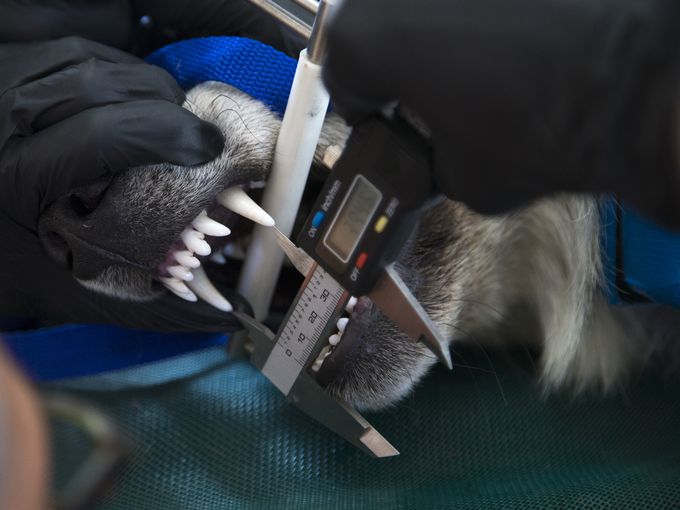
U.S. Fish and Wildlife Service veterinarian Susan Dicks coached the team of biologists and field technicians tending to M1342: how to draw blood for DNA and other tests; where to inject a rabies vaccine; how to determine age by measuring teeth; how to increase fluids or pour cooling alcohol on the paws if his temperature rises past 103 or so.
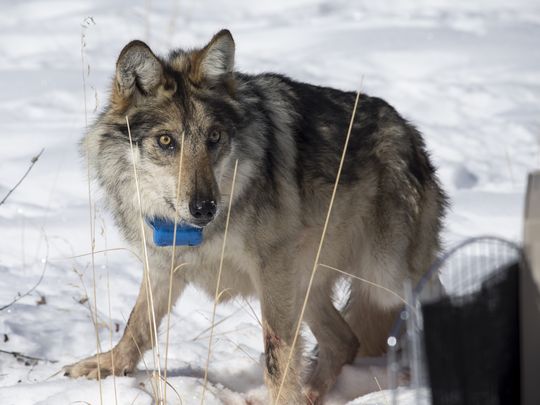
Besides the preventive medicine and data collection, the prime objective for M1342’s capture during a yearly aerial wolf survey was to fit it with a new transmitter collar. The collar he had received in a similar operation last year hadn’t functioned, so biologists only knew the wolf’s whereabouts by occasional observation. Uncollared wolves are difficult to track to ensure they’re not getting into trouble, such as by attacking livestock.
Not every wild Mexican wolf is collared, but scientists like to have them on a wolf of every generation in a pack. Last year’s survey counted 19 packs, including eight known to have a breeding pair.
AZCENTRAL
Studies show that these free-ranging wolves eat elk upward of 80 percent of the time, but cows are also occasionally on the menu. A government and non-profit fund pays for the losses. So far, the wolf program has paid out $68,000 for 50 confirmed livestock losses in 2015, and another $25,000 in claims is awaiting action by a compensation council. “It’s such a controversial program, and (people) want us to manage these animals,” Dicks explained. “The way we manage is with that collar. It communicates and tells us what they’re doing.”
The latest in a string of political struggles over the lightweight cousin of more plentiful northern gray wolves involves where they should be allowed.
Wolf advocates say they need unoccupied territory such as the forests around the Grand Canyon to sustain a population large and dispersed enough to withstand sudden die-offs. The governors of Arizona, New Mexico, Colorado and Utah recentlyco-signed a letter to the federal program opposing such a northern expansion into previously undocumented wolf territory and instead backing a push south into Mexico.
The number of wolves needed to ensure long-term survival also is in dispute. Some want to hold the line around today’s numbers, but others say at least a sevenfold increase is needed.
Mexican wolf biologist Julia Smith carries Wolf No. M1342 from the helicopter to the Alpine field station. He was darted from a helicopter to have his radio collar replaced.
Federal recovery effort
Mark Henle/The Republic Arizona is a partner in the federal recovery effort within a recovery zone that stretches from New Mexico and onto the Mogollon Rim. Officials say the state has spent $3 million since the recovery program began with captive animals in the 1980s.
This week, the team said one wolf had roamed west to within 35 miles of Payson, though it was unclear whether it was wandering alone. Others were prowling below the Rim, south of Alpine.
M1342’s gray-brown fur was thick, with no signs of mange or fleas, but Dicks squeezed an anti-parasite lotion onto the skin between the shoulders as an extra precaution. The team slid the wolf into a large dog crate and set the wolf outside to recover his senses for a truck ride back up the mountain to freedom. “We’re trying to help them out before breeding season,” Dicks said. “The population is so small.”
The subspecies had dropped to seven holdouts in Mexico during the late 20th century, survivors of private and government hunters who cleared the region of what had commonly been considered a menace. They were removed from the wild and stocked a captive breeding program that at last count fostered more than 250 wolves at 55 sites in the U.S. and Mexico.
AZCENTRAL
A few years ago, the population struggled to stay atop 50 from one year to the next, hindered not just by illegal shootings or natural causes, but by government agents shooting or removing to captivity wolves that attacked livestock. Since then, the program has focused its efforts on conflict-avoidance, said John Oakleaf, field coordinator for the U.S. Fish and Wildlife Service.
With help from partners such as Defenders of Wildlife, the government has enlisted ranchers who accept payment for the wolves’ presence but also get help from range riders protecting cattle. It may have kept the number of illegal shootings from climbing even higher. “In the end,” Oakleaf said, “the tolerance of humans for wolves is what allows them to persist or not persist in the wild. It’s what drove them to extinction, or near extinction, and it’s what’s driving them toward recovery now.”
Final numbers next month
The Fish and Wildlife Service will release the final numbers from this year’s count next month. Until then, total deaths aren’t officially tallied, but Oakleaf acknowledged the illegal shootings will be “as high as we’ve ever documented.”
Dolphin put the number at 15, and said he doubts the population estimate will remain above 100 this year. Still, he’s optimistic after years of bigger struggles to stabilize the population.
All of the wolves now in the wild were born out there, which may make them better adapted than their parents were to hunting and surviving on game. A recent experiment showed that it’s possible to drop a captive-bred pup or two in with newborn wild litters, and the wild packs will raise them as their own. “The urgent thing is to get more wolves with genetically diverse backgrounds on the ground as quickly as possible.”
Wolf advocates are also cautiously optimistic, though they believe the packs need more territory, and more of a boost from now-rare releases of captive pairs in new haunts. “If you put (captive-bred) pups in the dens of existing packs, you may be increasing the number of animals,” Center for Biological Diversity wolf specialist Michael Robinson said, “but you’re not increasing their distribution.”
A common complaint of wolf proponents is that Mexican wolves, coming from such a limited breeding stock, lack genetic diversity and pay for it with smaller litters than other wolves have. “The urgent thing is to get more wolves with genetically diverse backgrounds on the ground as quickly as possible,” Robinson said.
Returning groggily to the wild
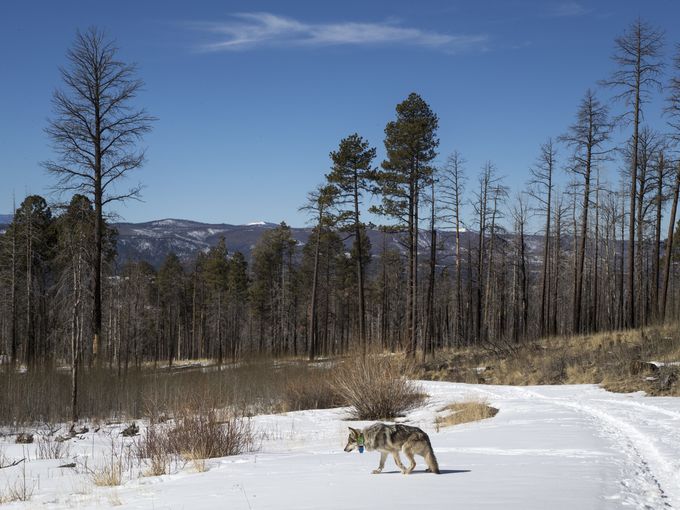
Wolf No. M1342 is released at Escudilla Mountain. (Photo: Mark Henle/The Republic)
After M1342 had regained enough of his senses to lift his head and sit up in the crate, Arizona Game and Fish biologist Brent Wolf and two colleagues loaded the crate onto a four-wheel-drive pickup and drove him back up Escudilla Mountain.
They drove as far as the truck would take them without getting stuck in the snow, getting as near as possible to the spot where the helicopter crew had darted M1342 and then set down to take the male from his mate.The return crew set the crate down at the edge of a snowy alpine meadow surrounded by scraggly willows and fat ponderosa pines, many of them torched and left bare by the massive 2011 Wallow Fire.
The groggy wolf took a few minutes to crawl out, then sat in the snow for several more. His golden-brown eyes stared toward the crew inside the pickup, and he licked the dart wound while waiting for the sedation to free his hind legs. The wolf walked slowly across the meadow, likely to be reunited with his mate once he heard a howl.
The two are believed to have mated last year, but did not produce any surviving pups, Wolf said. That’s common among first-timers, he said, and their experience should help them when they try again. “I’d be shocked if they didn’t have pups this spring,” Wolf said while reversing and turning the truck to head back down the mountain.
GALLERY
Mexican wolf biologist Julia Smith carries Wolf No. M1342 from the helicopter to the Alpine field station. He was darted from a helicopter to have his radio collar replaced. Mark Henle/The RepublicJulia Smith holds Wolf No. M1342 on his way to the Alpine field station. Mark Henle/The RepublicMexican wolf biologist Brent Wolf weighs Wolf No. M1342 in the Alpine field office. Mark Henle/The RepublicWolf No. M1342’s teeth are measured. Mark Henle/The RepublicMeasurements are taken of Wolf No. M1342’s paws. Mark Henle/The RepublicWolf No. M1342 is 3 years old and a member of the Elk Horn Pack. Mark Henle/The RepublicWolf No. M1342 got a checkup and shots to keep him robust for the important breeding season this spring. Mark Henle/The RepublicFrom left, Dr. Susan Dicks and intern Rowan Converse carry Wolf No. M1342’s kennel. Mark Henle/The RepublicFrom left, interns Hannah Manninen and Becca Thomas-Kuzilik release Wolf No. M1342 at Escudilla Mountain. Mark Henle/The RepublicWolf No. M1342 walked slowly across the meadow, likely to be reunited with his mate once he heard a howl. Mark Henle/The RepublicWolf No. M1342 and his mate are believed to have mated last year, but did not produce any surviving pups. Researchers say their experience should help the wolves when they try again. Mark Henle/The Republic
ooOOoo
Golly, I so do admire the good people who undertake this caring work on behalf of the wolves. And great photographs Mark Henle of The Republic.












 Learning from Dogs