Category: tourism

A humour break!

My son’s last day with us is today.

I was in Bend with him on Friday and got an insight into the amazing world of skiing.

Skiing that was on the slopes of Mt. Bachelor, about 20 miles from Bend.

The timing was perfect as a major snow storm hit the region Thursday night, continuing on Friday, as the following photograph shows.

View of the Pine Marten Express ski lift from the balcony of the West Village Lodge at 6,300 ft altitude.
Friday 27th. View of the Pine Marten Express ski lift from the balcony of the West Village Lodge at 6,300 ft altitude.

I returned on Saturday on roads that made the journey ‘interesting’.

Heading South on OR-97. Picture taken around 9am some 10 miles south of Bend.

But Alex stayed on for a further day to benefit from brilliant weather behind the storm and able to share such scenes as this one!

Breath-taking view.
Breath-taking view from 7,200 feet.

All of which is a preamble to a very funny item that Alex sent to me.

A woman brought a very limp parrot into a veterinary hospital. As she lay her pet on the table, the vet pulled out his stethoscope and listened to the bird’s chest. After a moment or two, the Vet shook his head sadly and said, “I’m so sorry, Polly has passed
away.

The distressed owner wailed, “Are you sure? I mean, you haven’t done any testing on him or anything. He might just be in a coma or something.

The vet rolled his eyes, shrugged, turned and left the room returning a few moments later with beautiful black Labrador. As the bird’s owner looked on in amazement, the dog stood on his hind legs, put his front paws on the examination table and sniffed the dead parrot from top to bottom. He then looked at the vet with sad eyes and shook his head.

The vet led the dog out but returned a few moments later with a cat. The cat jumped up and also sniffed delicately at the ex-bird. The cat sat back, shook its head, meowed and ran out of the room. The vet looked at the woman and said, “I’m sorry; but like I said, your parrot is most definitely, 100% certifiably …dead.”

He then turned to his computer terminal, hit a few keys and produced a bill which he handed to the woman. The parrot’s owner, still in shock, took the bill. “$150!” she cried. “$150 just to tell me my bird is dead?!

The vet shrugged. “If you’d taken my word for it, the bill would only have been $20, but with the Lab Report and the Cat Scan, what did you expect?

Best wishes.
Please help.

Reblogged from Exposing the Big Game

I follow the blogsite Exposing the Big Game. The bye-line on the home page explains, “Forget Hunter’s Feeble Rationalizations and Trust Your Gut Feelings: Making Sport of Killing Is Not Healthy Human Behavior“. Some of the posts that are published are incredibly difficult to read.

But this post does at least allow those that hate hunting for sport to register their feelings.

ooOOoo

Who the F**k Hunts Giraffes for Sport and How You Can Stop Them

giraffes

Please sign and share these petitions.

Stop trophy hunting giraffes
http://www.thepetitionsite.com/929/929/857/stop-trophy-hunting-giraffes/

Stop hunting giraffes for sport
http://forcechange.com/12033/stop-hunting-giraffes-for-sport/

Stop any kind of safari hunting in South Africa
https://www.causes.com/actions/1742571-stop-any-kind-of-safari-hunting-in-south-africa

Stop the savage and sickening trophy and sport hunting
http://www.thepetitionsite.com/1/stop-the-savage-and-sickening-trophy-and-sport-hunting/

Complete ban on trophy hunting in South Africa and a full census
http://www.gopetition.com/petitions/complete-ban-on-trophy-hunting-full-census-carried-ou.html?

Stop the legal killing of wildlife in trophy hunting
http://www.gopetition.com/petitions/stop-the-legal-killing-of-wildlife-stop-hunting/sign.html

End WWF partnership with pro-hunting lobby
https://secure.avaaz.org/en/petition/Yolanda_Kakabadse_is_WWFs_International_President_and_USAID_WWF_End_your_partnership_with_the_USA_ProHunting_Lobby_Group/

Ban lion farming and trophy hunting
http://www.thepetitionsite.com/147/069/549/ban-lion-farming-and-trophy-hunting/?cid=FB_TAF

Stop the canned hunting of large cats in South Africa
https://www.change.org/p/ms-lakela-kaunda-stop-the-canned-hunting-of-large-cats-in-south-africa

USF&WService save the lions from mass extinction
https://secure.avaaz.org/en/petition/US_Fish_and_Wildlife_Service_Save_African_Lions/?sfmqQib

Zambian tourist board: to reinstate ban on hunting lions and leopards
https://secure.avaaz.org/en/petition/

ooOOoo

If you have any issues with any of the links, just move on. Please sign just as many as you can.

Picture parade seventy-six

A few memories of Christmas Day 2014

(Apologies if these are not widely appreciated but with all our families living thousands of miles away, this seemed like a convenient way of sharing a few pictures from our Christmas day.)

P1150298
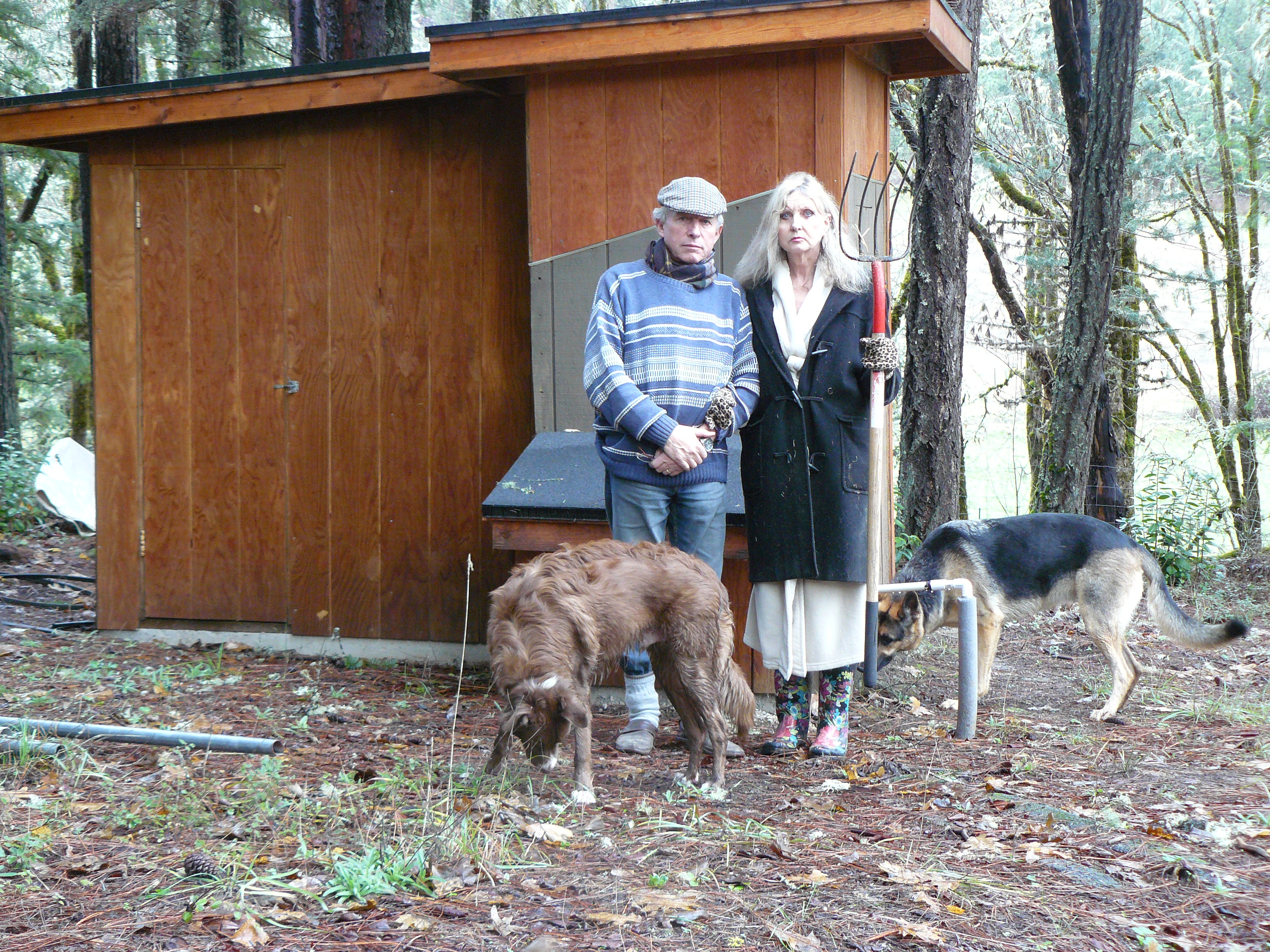
There was no point in getting all dressed up before we had completed our ‘house’ duties, that included mucking out the stables.
Our ‘country’ look seemed to warrant a photograph!  Taken in front of the well-house.

P1150304

The morning forecast had rain and declining temperatures with the snow-line expected to be around 2,500 feet.  This picture was taken on Highway I5 as it heads South for the Siskiyou Mountain pass; where we pulled over being about 3,000 feet.

Together with our neighbours, Dordie and Bill, we had all decided to have a Christmas Lunch at Callahan’s Mountain Lodge on Old Highway 99 just off I5 Exit 6.

Callahan's Mountain Lodge
Callahan’s Mountain Lodge

oooo

P1150308

Looking out from the deck of Callahan’s Lodge showing clearly that we were above the snow-line.

P1150311

From L-R: Jean, yours truly, Dordie & Bill.

P1150321

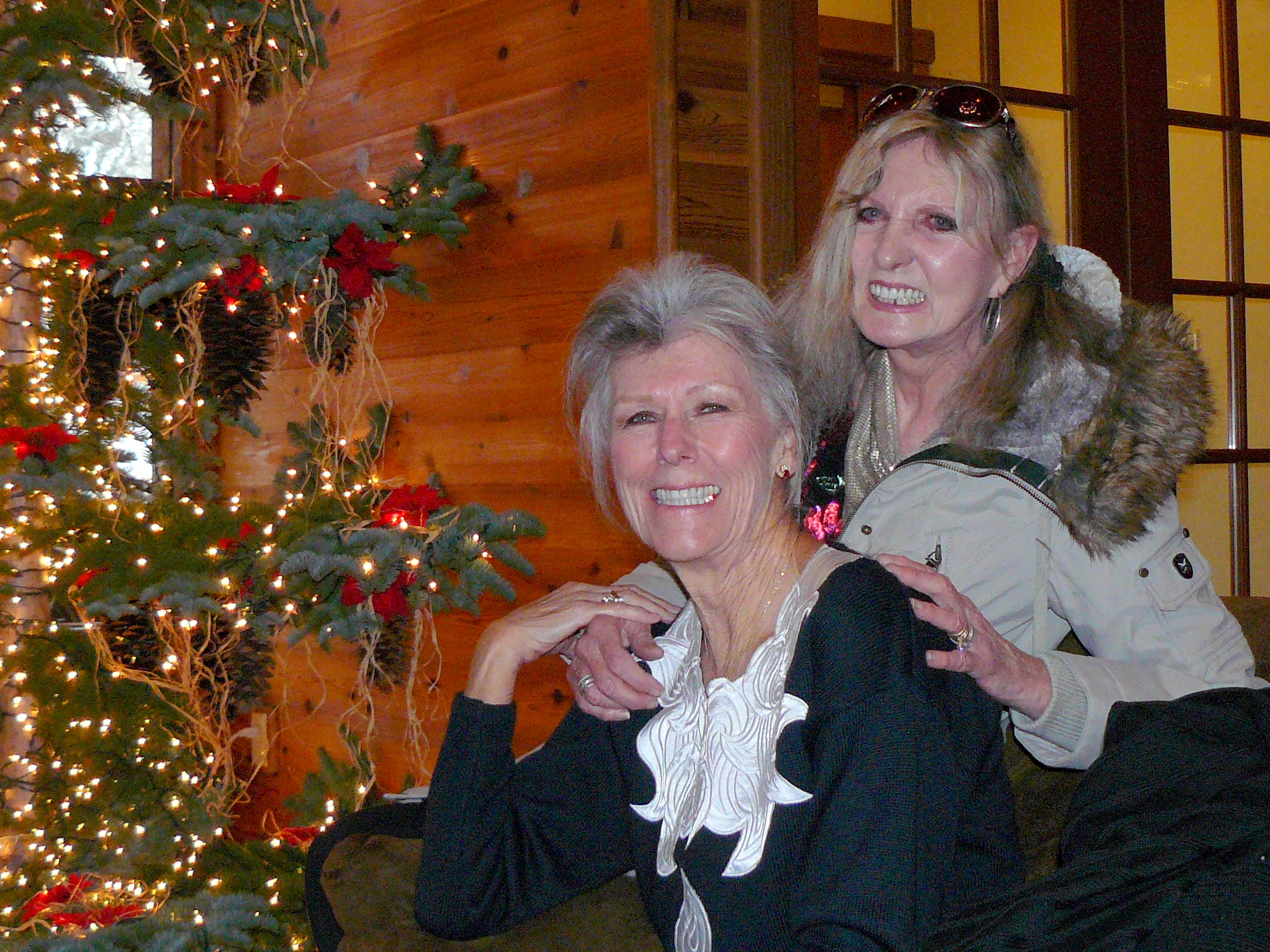
Two lovely ladies!

P1150323

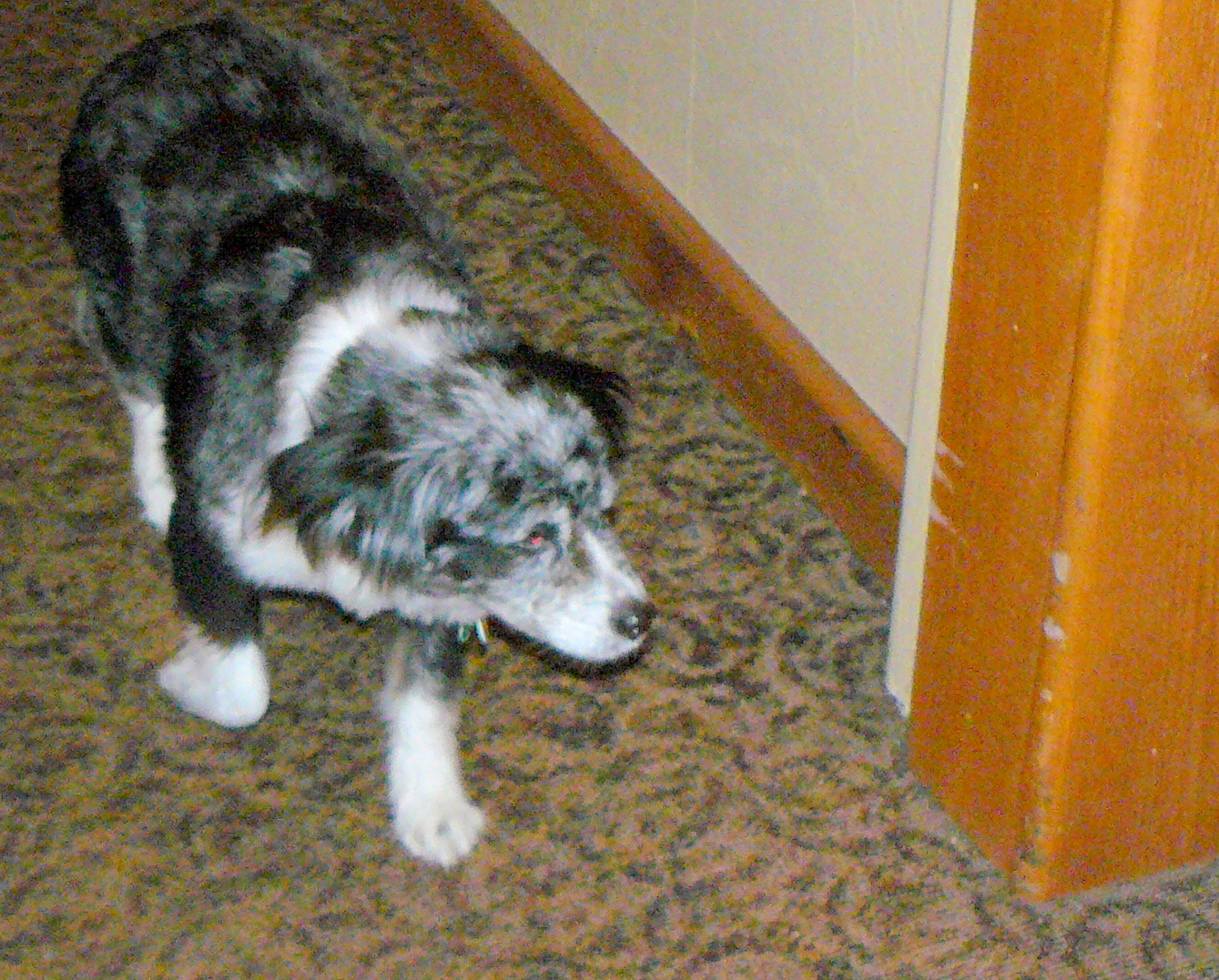
The Lodge’s dog, Blue, that happily wandered all about the place including among the diners!

P1150329

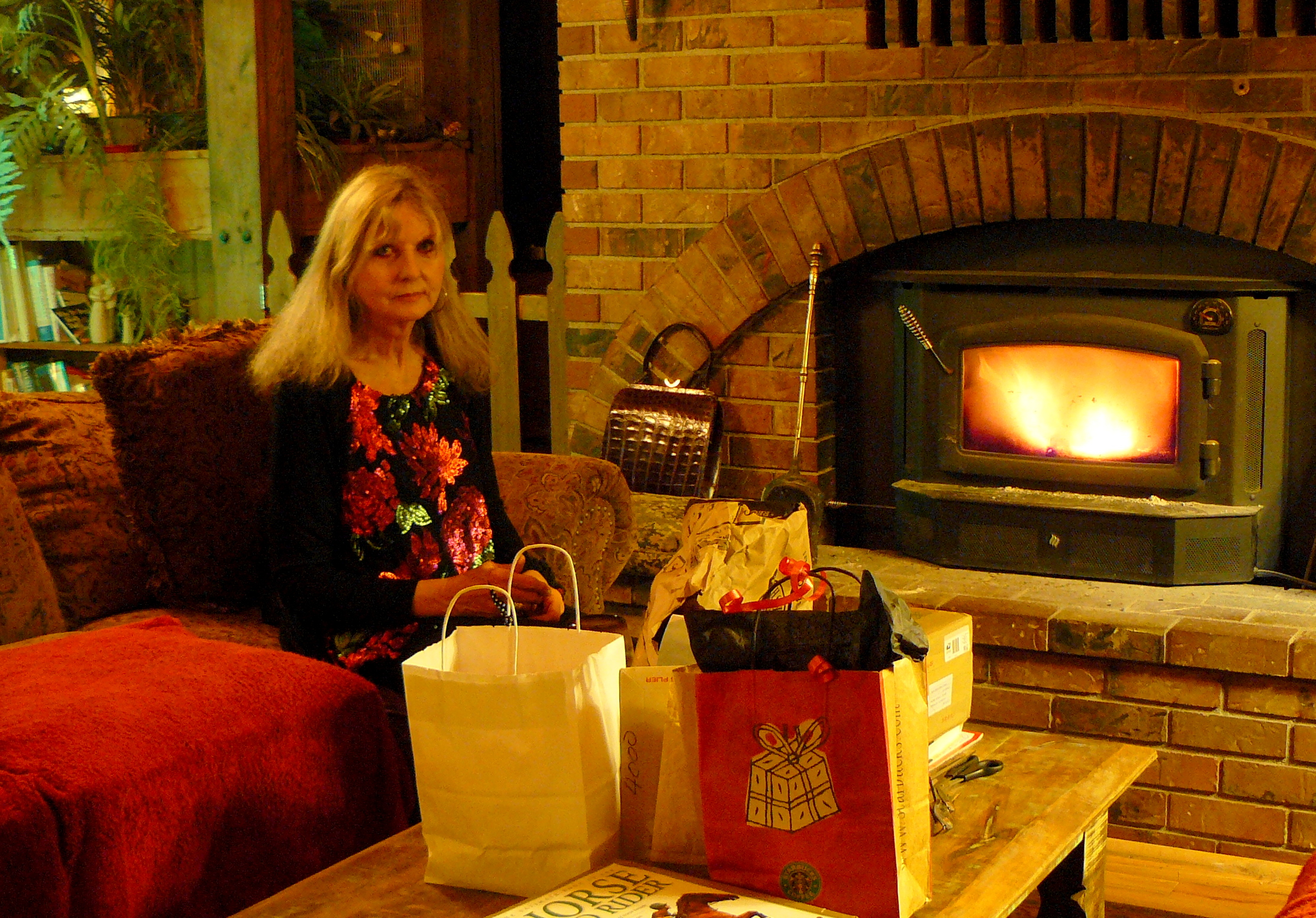
Later on in the afternoon, when Jean and I had returned home, it was time to open a few Christmas presents.
I trust that every one of you dear readers had as happy and pleasant a day as did Jean and me.  Because, for us, it was wall-to-wall smiles from the moment we awoke …..
P1150297

Ancient rhythms.

The Winter Solstice.

I’m breaking the pattern of publishing a new post at midnight, Pacific Time, (08:00 UTC) because it seemed like fun to publish Monday’s post at the moment of the Winter Solstice; namely Sunday, December 21 at 23:03 UTC (15:03 PST).

There is no doubt in my mind that everyone is familiar with the Winter Solstice being the moment when the planet has perfect opposites, in terms of light and darkness, as the following image shows so clearly.

Day and night sides of Earth at the instant of the December 2014 solstice (2014 December 21 at 23:03 Universal Time). Note that the north polar region of Earth must endure 24 hours of night, while the south polar region gets to bask in 24 hours of daylight. Image credit: Earth and Moon Viewer

What may not be so well-known is that it occurs within about two-and-a-half hours of the new moon.

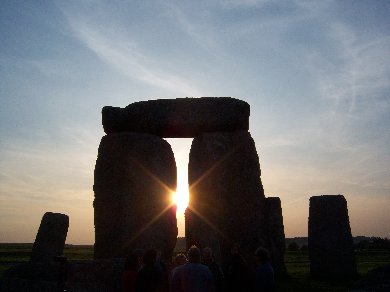
From times immemorial, early peoples on Earth knew much about the sun and the seasons, the length of daylight, and how the direction of the sunrise and sunset all shifted in a regular way throughout the year. As an Englishman, who in past times frequently drove the A303 road between London and Exeter, going past the ancient site of Stonehenge was always wonderful. Many are familiar with the sun rising during the Summer Solstice over the Heel Stone but far fewer realise that Stonehenge also marks the sun’s dawning the morning after the Winter Solstice.

winter-solstice-stonehenge
The shortest day is behind us.


The English Heritage website Discover Stonehenge is brim full of facts and information so won’t ‘copy and paste’ from one to the other! Suffice to say that what we see today was completed about 3500 years ago.

However, it seems as though the ancient site is still delivering new surprises.  I write this simply because just a few days ago, on the 19th December, 2014, the BBC reported:

Stonehenge dig finds 6,000-year-old encampment

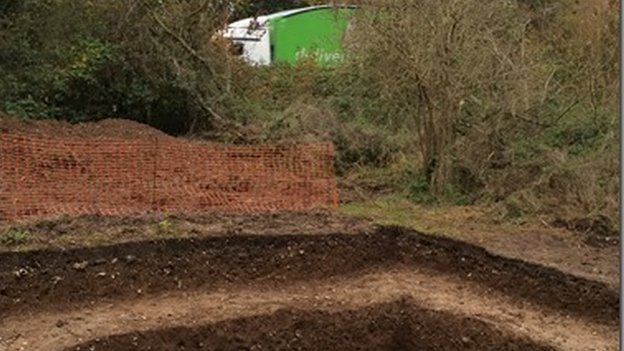
Archaeologists found the encampment during a dig at Blick Mead near Stonehenge

Archaeologists working on a site near Stonehenge say they have found an untouched 6,000-year-old encampment which “could rewrite British history”.

David Jacques, from the University of Buckingham, made the discovery at Blick Mead in October, and said the carbon dating results had just been confirmed.

But he also raised concerns about possible damage to the site over plans to build a road tunnel past Stonehenge.

The Department of Transport said it would “consult before any building”.

The Blick Mead site is about 1.5 miles (2.4km) from Stonehenge and archaeologists said “scientifically tested charcoal” dug up from the site had “revealed that it dated from around 4000 BC”.

The archaeologists found burnt flints, remains of animals and tools

David Jacques said the dig had also found “evidence of feasting” including burnt flints, tools and remains of giant cattle, known as aurochs, which were eaten by early hunter gatherers.

Mr Jacques said: “British pre-history may have to be rewritten. This is the latest dated Mesolithic encampment ever found in the UK.

“Blick Mead site connects the early hunter gatherer groups returning to Britain after the Ice Age to the Stonehenge area, all the way through to the Neolithic in the late 5th Millennium BC.

“But our only chance to find out about the earliest chapter of Britain’s history could be wrecked if the tunnel goes ahead.”

Archaeologists said the latest carbon date suggested it was continuously occupied between 7500-4000 BC

Andy Rhind-Tutt, a former mayor and current chairman of Amesbury Museum, which part-funded the dig, said the discovery could “provide what archaeologists have been searching for centuries – the answer to the story of the pre-history of Stonehenge.”

Earlier this month, the government announced funding for a 1.8-mile (2.9km) tunnel to remove congestion from the main road past Stonehenge.

A Department for Transport spokesman said: “As with any road scheme, we will consult with interested parties before any building begins on the A303.

“English Heritage and National Trust are supportive of our plans, and we will ensure sites of cultural or historical significance are safeguarded as we progress with the upgrade.”

The A303 past Stonehenge is a highly congested route.

So as the planet and the sun continue their dance to a rhythm, ancient beyond comprehension, let us reflect on the scale of the universe and our fortune to be alive this Winter Solstice, 2014.

Picture parade fifty-four.

Delighted to introduce a guest picture parade for this week.

As you are aware, a great aspect of this world of blogging are the connections we make. Thus it was that as a result of Kristin signing up to follow Learning from Dogs I was made aware that she is the author of an Australian blog Fluidicthought and describes herself:

I became interested in Photography whilst creating a business site blog for Point Plaza Apartments.

I simply enjoy capturing a scene that moves me.

Photographs capture that moment in time. Here we have pieces of time that I have captured and can share with others.

Copyright – Please ask permission before
reproducing my photography.
You are most welcome to use
information posted here. I
appreciate the link back or
acknowledgement.
© Kristin Jones

Her photographs were delightful and Kristin readily agreed for me to use them for today’s picture parade.  A picture parade with a story.

ooOOoo

My PLACE

WOODY POINT is a suburb on the western side of the Redcliffe Peninsula.

The first recorded English explorer to set foot on the Peninsula was Lt. Matthew Flinders, who landed near Woody Point on the 17th July 1799 while exploring Moreton Bay.

On 14th September 1824 the brig ‘Amity‘ brought a party of officials, soldiers, their wives and children, and 29 convicts. They landed on the beach near the mouth of Humpybong Creek to form a convict settlement.

Much of the peninsula was subdivided into farm lots in the early 1870s. The construction of the peninsula’s first significant jetty at Woody Point (1882) brought about some development. Visitors and holiday-makers came via a weekly ferry.

Woody Point Jetty.
Woody Point Jetty.

The post office directory of 1901 recorded the Great Western Hotel (1883), three boarding houses, a school, a butcher and a store at Woody Point. In 1925 there were also the Belvedere and Woody Point Hotels.

The Hornibrook Bridge was opened by Queensland Premier Arthur Edward Moore on 14 October 1935, connecting the Redcliffe district at Clontarf and Brisbane City at Brighton. The bridge had a length of 2.684 kilometres. The toll for cars was one shilling per vehicle.

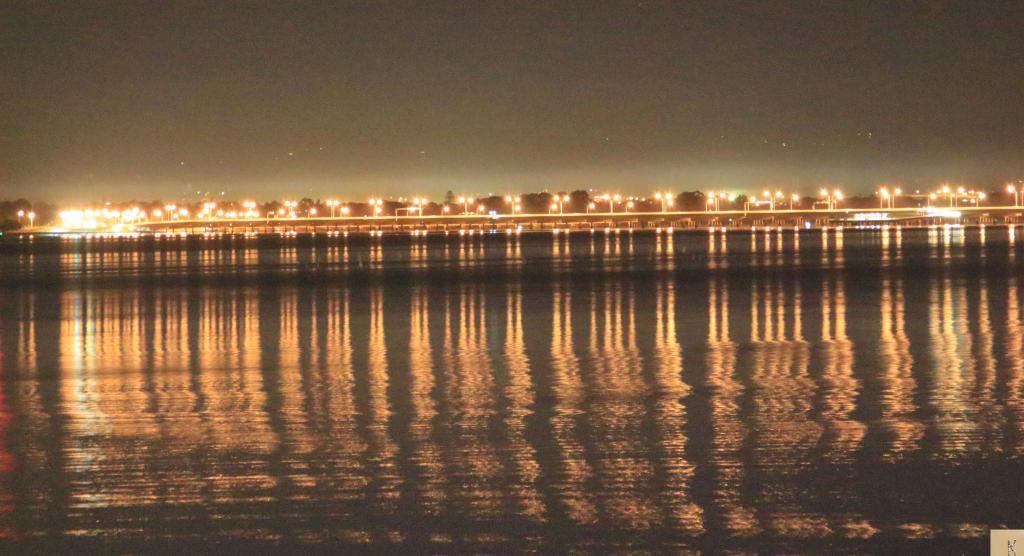
The Hornibrook Bridge was one of three bridges that crossed Bramble Bay. The second is the Houghton Highway, which was built to accommodate rising traffic levels in the 1970s. The third is the Ted Smout Memorial Bridge, which opened to traffic in July 2010.

The Ted Smout Memorial Bridge and its twin, the Houghton Highway, were Australia’s longest bridges, (as of 27 March 2013.) It is the first bridge in Australia designed to withstand Hurricane Katrina-type storm events. Ted Smout was born in 1898, joining the Royal Australian Army Medical Corps aged 17 (lied about his age to get in). He was awarded France’s highest honour, being made a Chevalier (Knight) of the Legion d’Honneur in 1998 and also received the Medal of the Order of Australia for service to the community. He died 106 years old.

The Ted Smout Memorial Bridge.

Woody Point’s Apex Park & Bicentennial Park were constructed by reclaiming land along the foreshore in the 1970s. A $9.5 million Woody Point Jetty and foreshore upgrade was completed in January 2009.

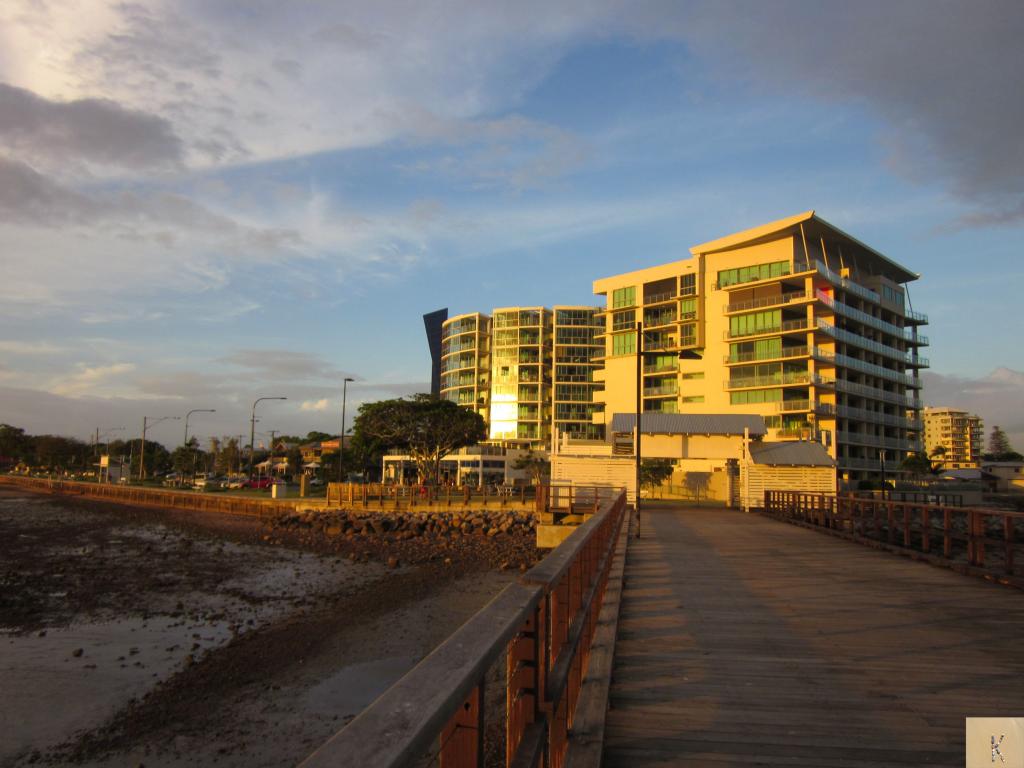
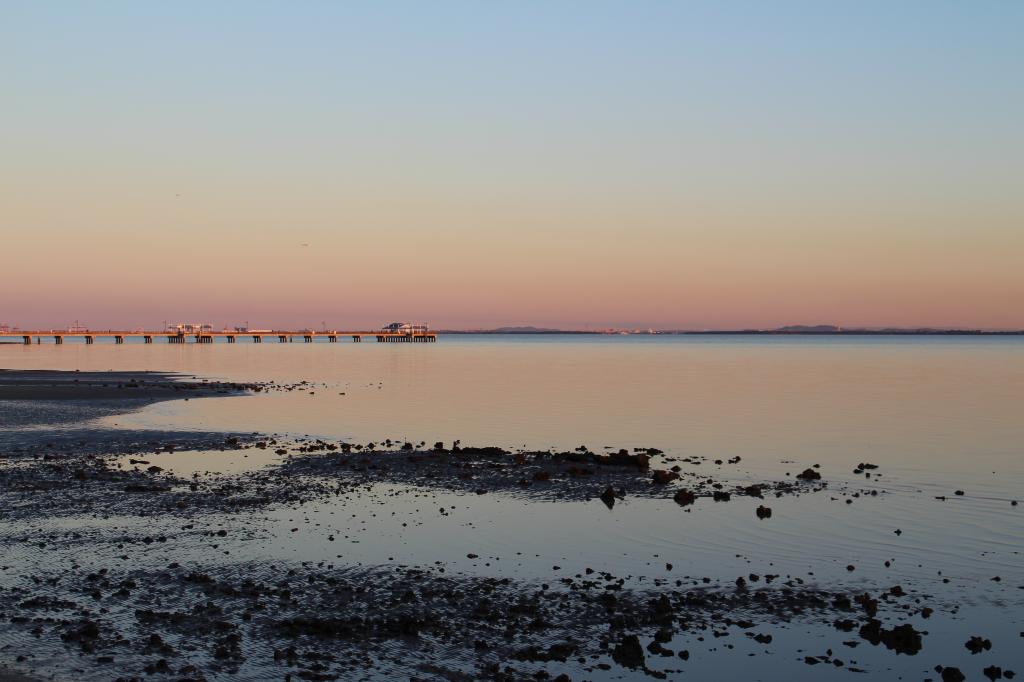
View of the jetty from Point Plaza.
View of Woody Point Jetty from Point Plaza.

Woody Point’s current renovations include the construction of high-rise apartment buildings overlooking Bramble Bay, Moreton Bay, The Port of Brisbane and the Ted Smout Highway.

Point Plaza Apartments.
Bramble Bay.
Bramble Bay.
Brisbane City from Woody Point.

(Reference – Redcliffe Historical Society, Wikipedia and Queensland Places website)

Author – Kristin Jones

ooOOoo

Hope you all enjoyed Kristin’s guest Picture Parade as I did.

Another guest post from her in a couple of week’s time.

Where water runs through rock!

A delightful coincidence to last Saturday’s post.

Last Saturday, I published a post under the title of Slotting right in!  It was an introduction to ten of the most beautiful slot canyons featured on Mother Nature Network.

Then less than a day later, Rob from Transition Town Payson, sent me a link to the following essay.  Regulars will recall that Jean and I lived in Payson for a while before moving to Oregon; indeed were married in Payson.

ooOOoo

The Place Where Water Runs Through Rock

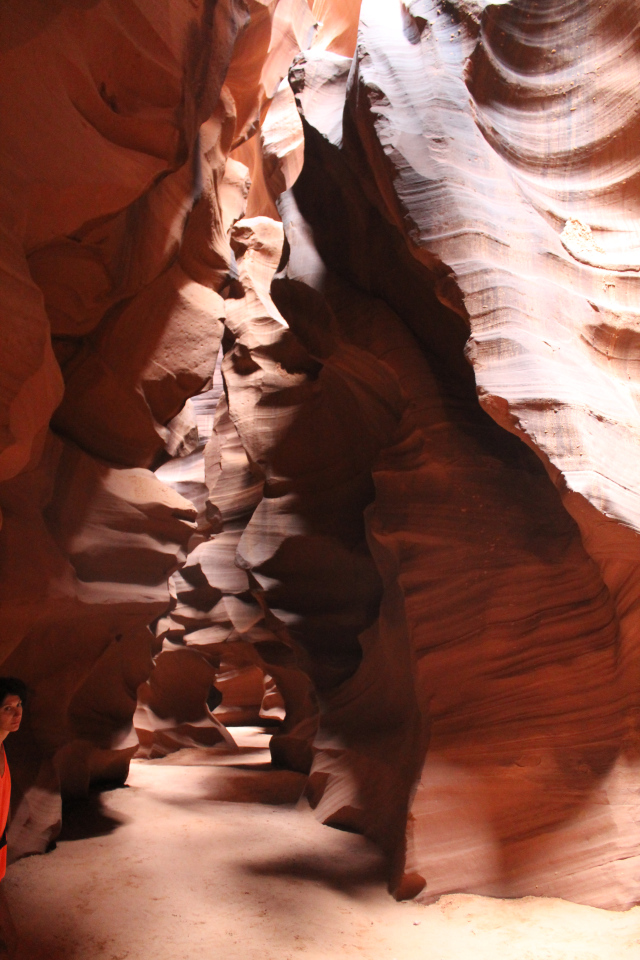
Antelope Canyon located in Northern Arizona is well known around the world!

Antelope Canyon lies just outside of Page, Arizona.

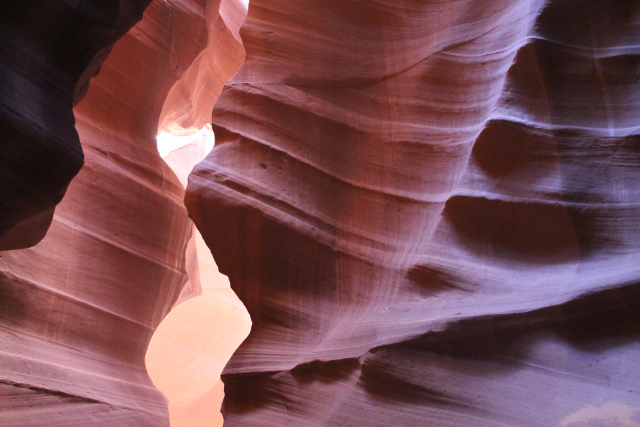
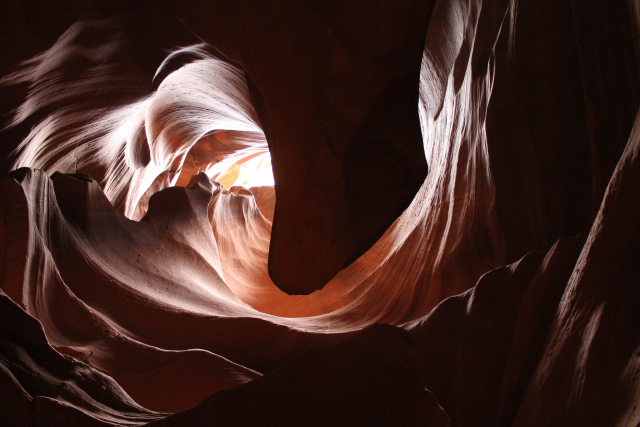
Just outside of Page, Arizona lies Antelope Canyon. Located on the Navajo Indian Reservation. The Dine (The People as the Navajos call themselves), manage the use of the canyon as a Navajo Nation National Park. Antelope Canyon is broken into two sections, Upper Antelope is known as Tse bighanilini which means “The place where water runs through rocks” (aka The Crack), and lower Antelope Canyon is Hasdestwazi or “spiral rock arches” (aka The Corkscrew). Both of these canyons are an awesome display of natural forces at work. Carved by flash floods that are common to the area, this Navajo National Park has been accessible only by Navajo Permits since 1997. The permit system came after 11 tourists from around the world were killed by a flash flood in Lower Antelope Canyon!

For more information on these Canyons go to the following links;

http://navajonationparks.org/

http://en.wikipedia.org/wiki/Antelope_Canyon

Navajo is a Descriptive Language

The Navajo language is very descriptive and their words often describe things that they see in the natural world. Hence the name for Upper Antelope Canyon “The Place Where Water Runs Through Rocks”. The language was one that was used by a few heroic Navajo veterans to help win World War II. For example, a Battleship was translated into the Navajo word Lo-Tso which means “Whale”, while a Cruiser was Lo-Tso-Yazzie which meant “Small Whale”.

See the following link for the dictionary they used;

http://www.history.navy.mil/faqs/faq61-4.htm

The use of Code Talkers was kept secret for many years!

The Code Talkers were kept secret for 23 years after the end of WWII. President Ronald Reagan gave them a Certificate of Recognition and made August 14, 1982, National Code Talkers Day. On December 21, 2000, President Bill Clinton awarded the surviving Code Talkers Congressional Gold Medals and Silver Medals to the approximate 329 surviving heroes.

http://www.navajocodetalkers.org/

Where Water Enters Upper Antelope Canyon.

oooo

The Canyon is 140 feet deep at it’s deepest point!

oooo

The Sandstone Walls are Cut into Mysterious Shapes.

oooo

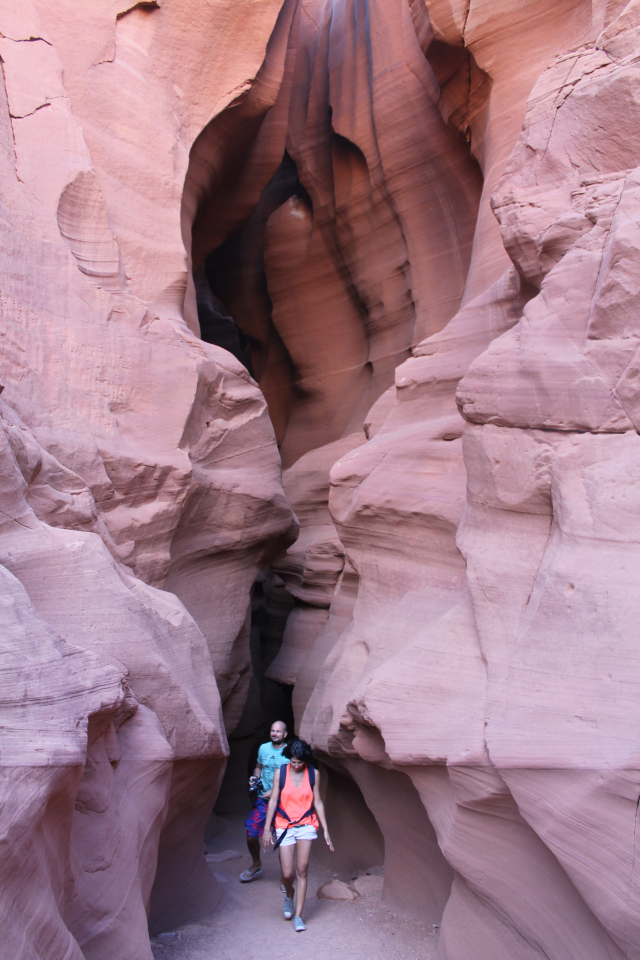
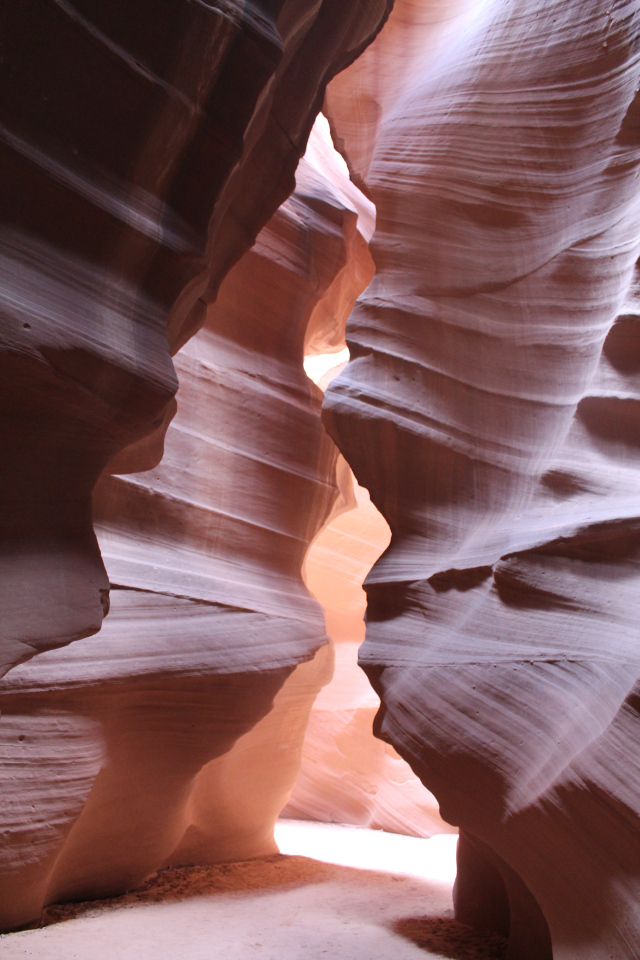
The Canyon is so Narrow in places only two people can walk side by side.

oooo

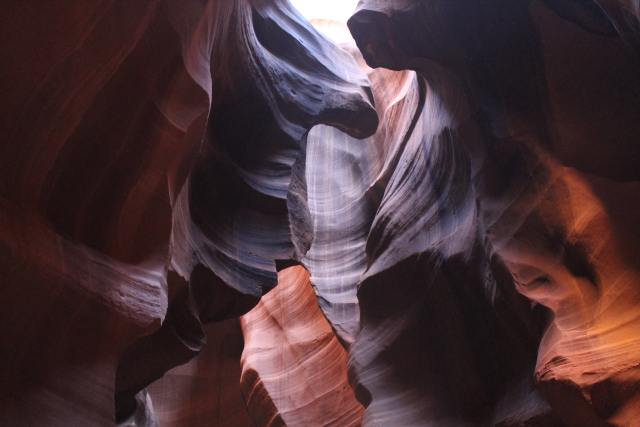
The Heart of the Canyon.

oooo

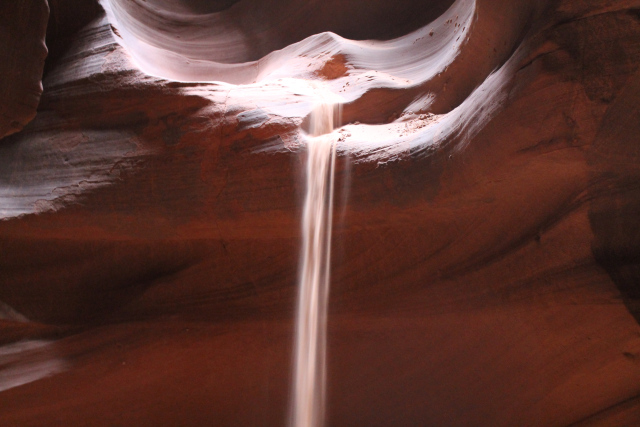
The Sands of Time.
The Sands of Time.

oooo

Sunlight lights the exit.

ooOOoo

Just a magnificent set of pictures.  If you ever find yourself in Northern Arizona then don’t hesitate to visit the canyon.  The address is: Antelope Canyon, 5975 Hwy 98, Page, AZ 86040.

Thanks Rob!

Slotting right in!

(Excuse the pun!)

I saw this on Mother Nature Network not too long ago and made a note to share it with you.  “It” being some stunning photographs of slot canyons around the world. The article opens:

Geological wonders

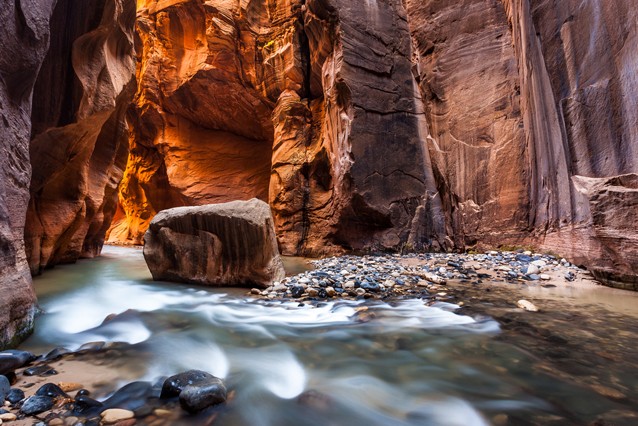
Slot canyons are narrow, naturally formed canyons with towering walls and a width no wider than your arm span, if that. If they weren’t so mesmerizingly beautiful, they would make you feel claustrophobic. Found around the world, these geological formations usually occur in places with low rainfall, and many of the most well-known are in the American Southwest, including Wall Street (pictured here), which lies in a section of The Narrows in Zion National Park. Check out the beauty of the world’s most stunning slot canyons — it will make you want to pack some hiking gear and get traveling. (Text: Jaymi Heimbuch)

Photo:kan_khampanya/Shutterstock
Wall Street Canyon Photo: kan_khampanya/Shutterstock

Now I don’t have permission to reproduce this article but hopefully the one above and this one below will entice you to look through them all starting here.

Photo: holbox/ Shutterstock
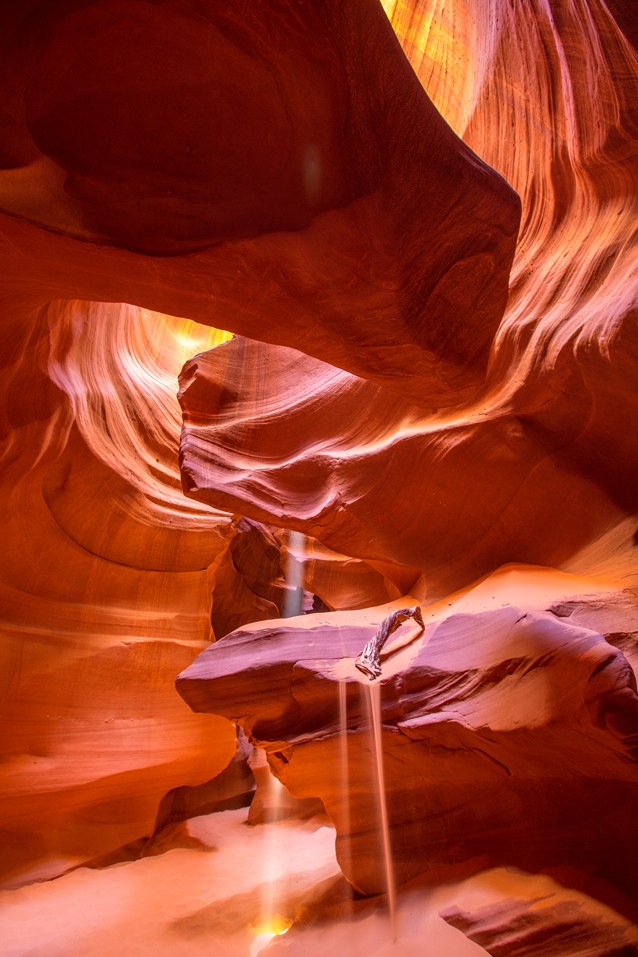
Antelope Canyon Photo: holbox/ Shutterstock

Antelope Canyon, Arizona

Perhaps the most famous of all slot canyons, Antelope Canyon is found near Page, Arizona. There are two separate sections, known as Upper Antelope Canyon and Lower Antelope Canyon, or more affectionately, The Crack and The Corkscrew. Formed by the erosion of sandstone from flash flooding and other processes, the slot canyons have curvaceous, strangely angled walls. The beautiful colors, textures, curves and spectacular lighting — particularly during the summer months — are a major draw for photographers and sightseers. They are located within the LeChee Chapter of the Navajo Nation and have become a significant source of tourism for the Navajo tribe.

Fabulous!  Don’t miss out – see the full set of twelve pictures here.

Secesh Reservoir, Oregon.

A gem in the crown of stunning countryside.

Funny how things happen!

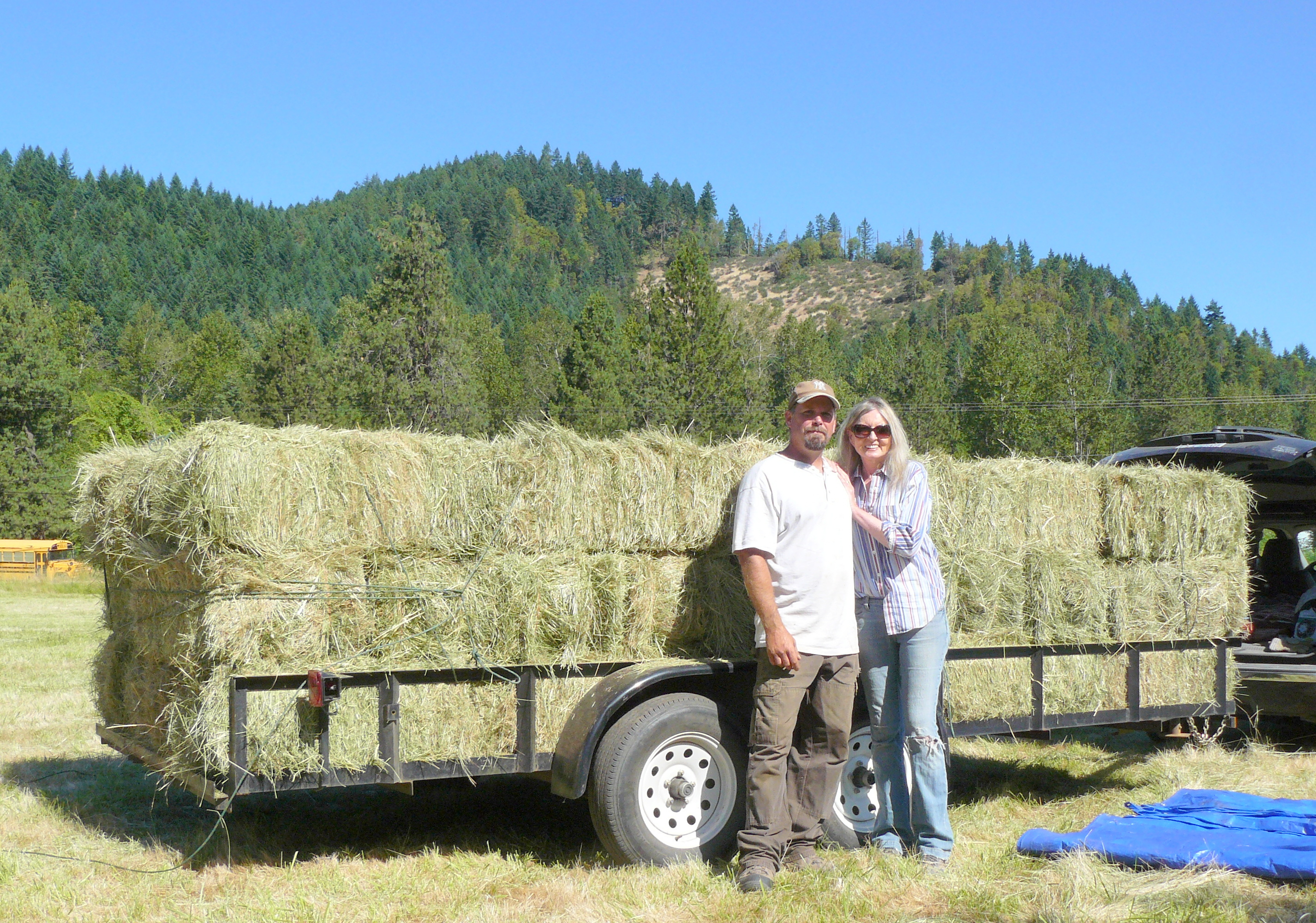
In last Wednesday’s post I included a picture of Jean with Robert who helped us load 60 bales of hay onto our trailer.  This photo:

Jean thanking Robert for his great help in loading 60 bales!

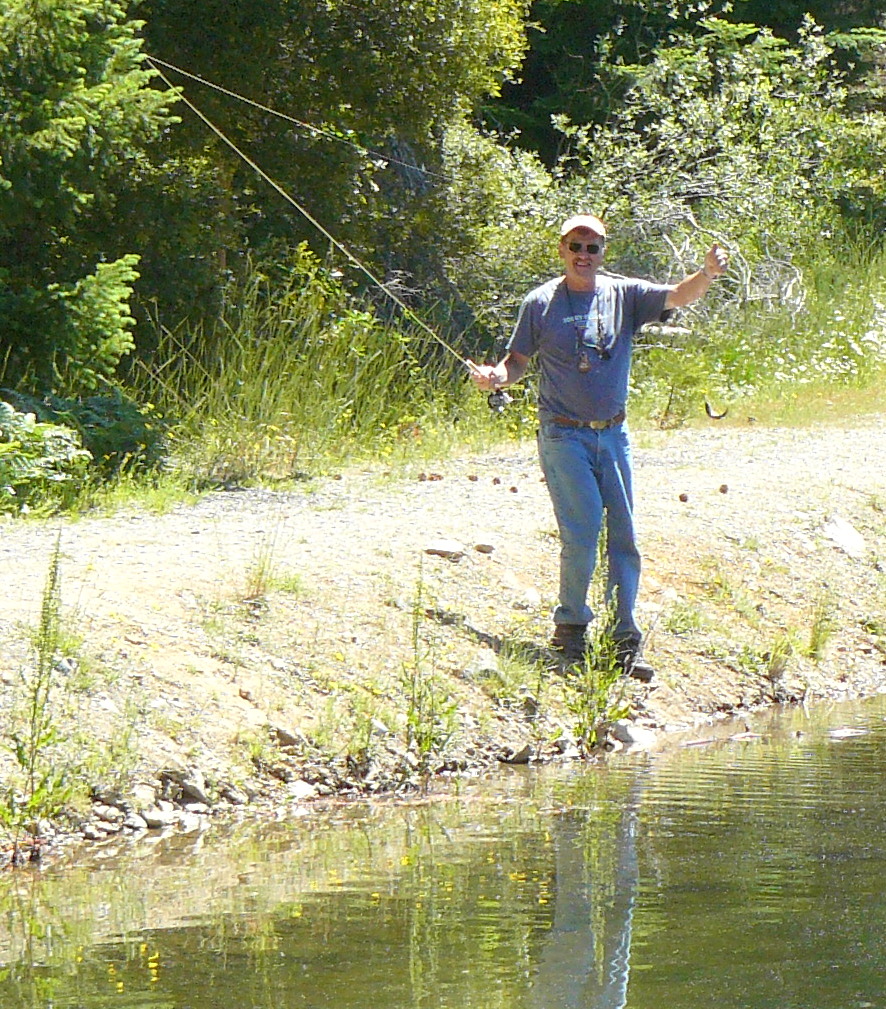
Anyway, Tad, who farms the land, mentioned a wonderful place to fish not far from his farm at Wolf Creek.

I’m not a fisherman but Andy, who is staying with us with his wife, Trish, is a keen fisherman.

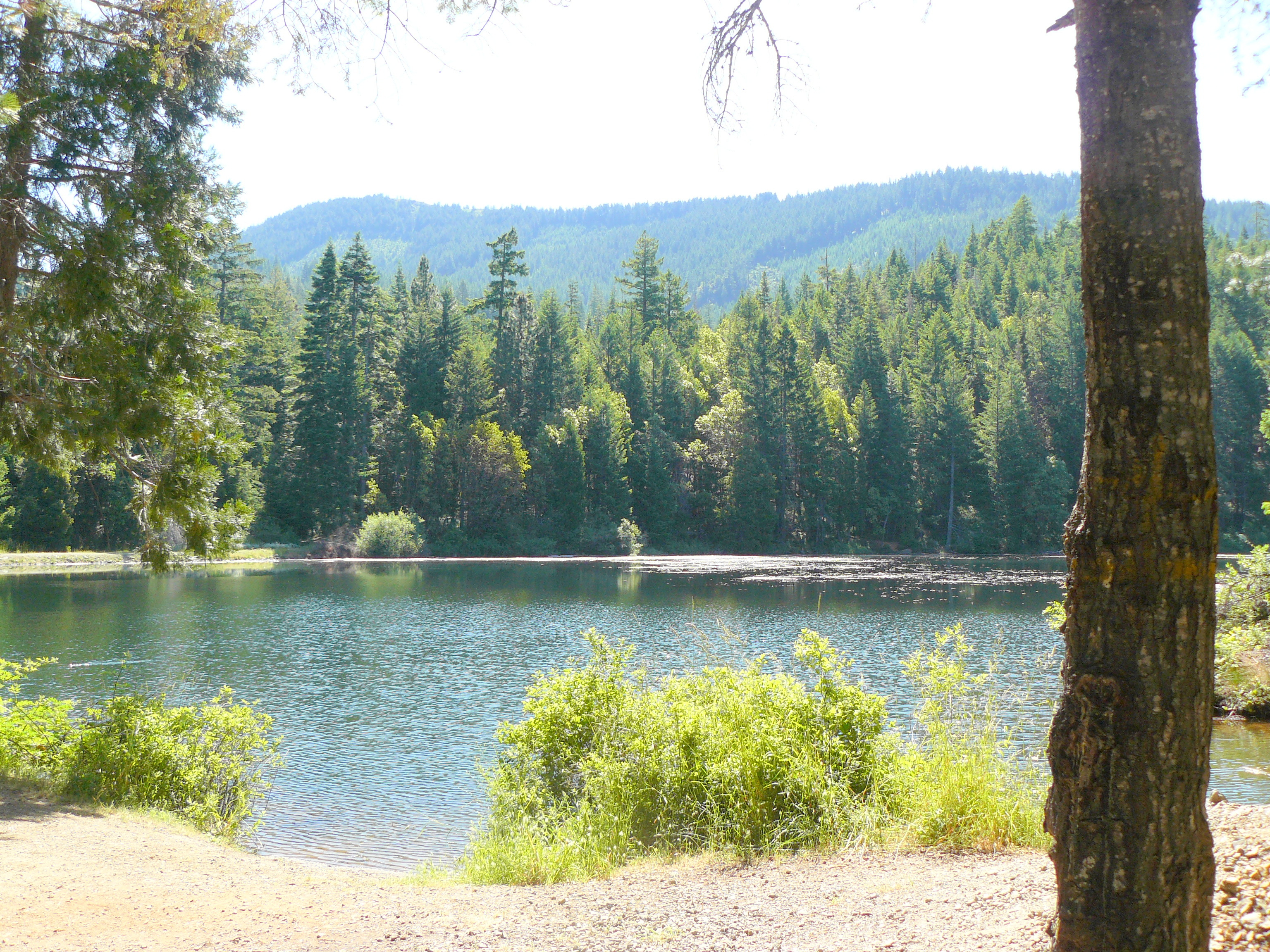
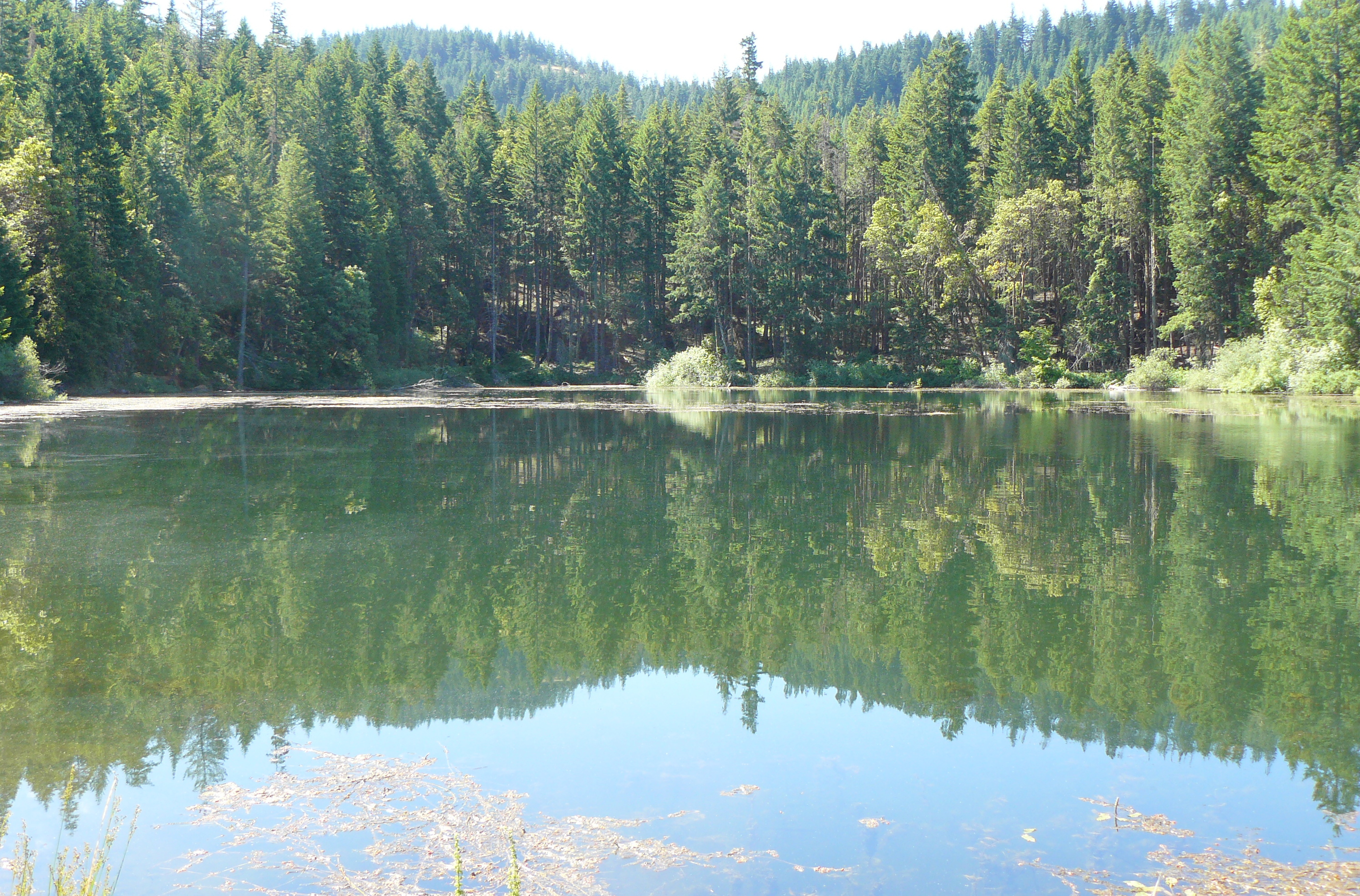
So last Wednesday we all set off into the high forest lands up above Wolf Creek and after some pretty tough driving up some steep dirt roads found the lake.  Here’s a record of our morning at Secesh.

Wow!
Wow! First sighting!

As you can see, it was a breath-taking oasis in a sea of tall trees and towering peaks.

asa
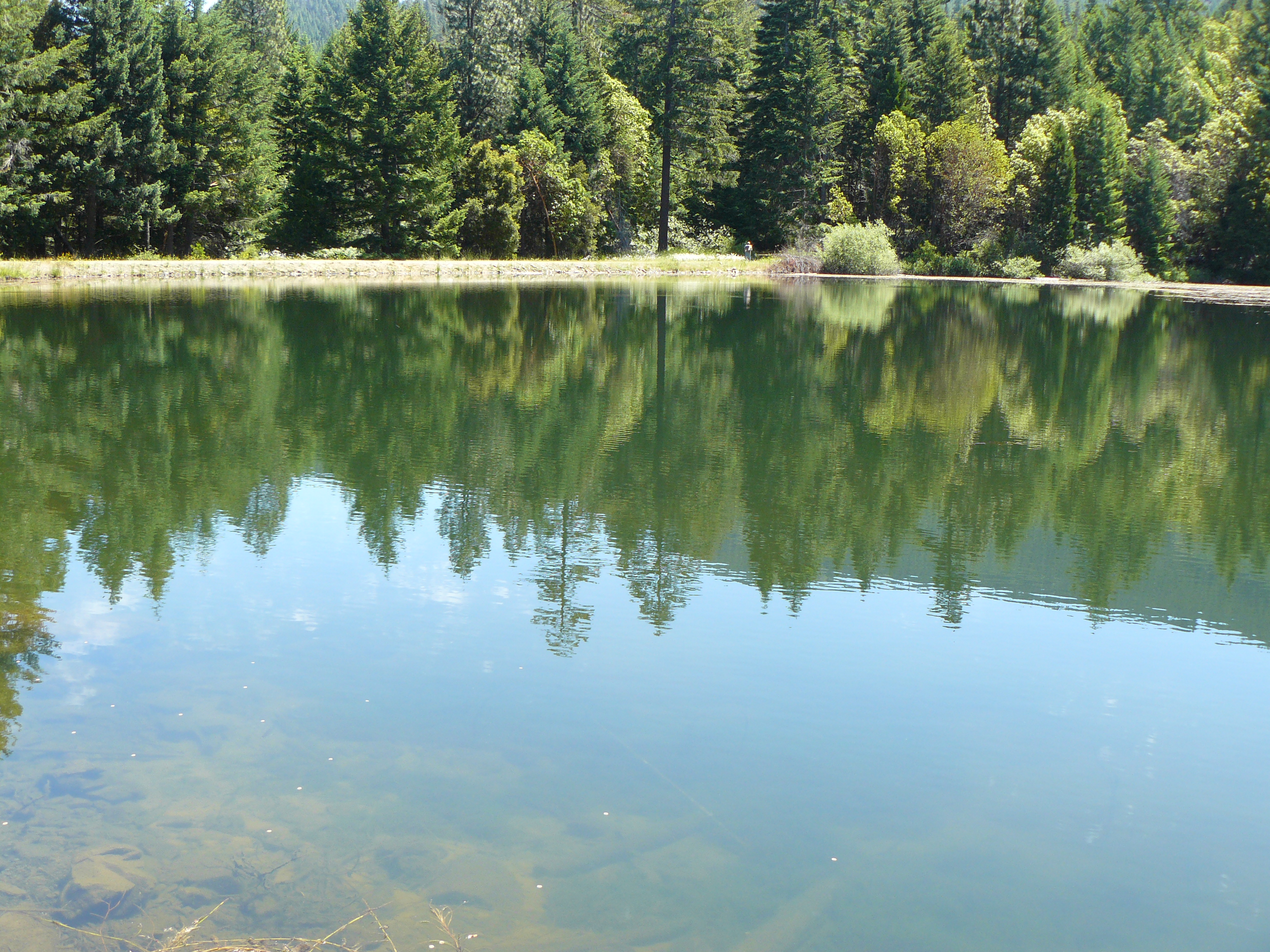
Still waters!

With crystal-clear waters that just seemed to be calling out to those that enjoy fly-fishing!

Doesn't get much better than this!
Doesn’t get much better than this!

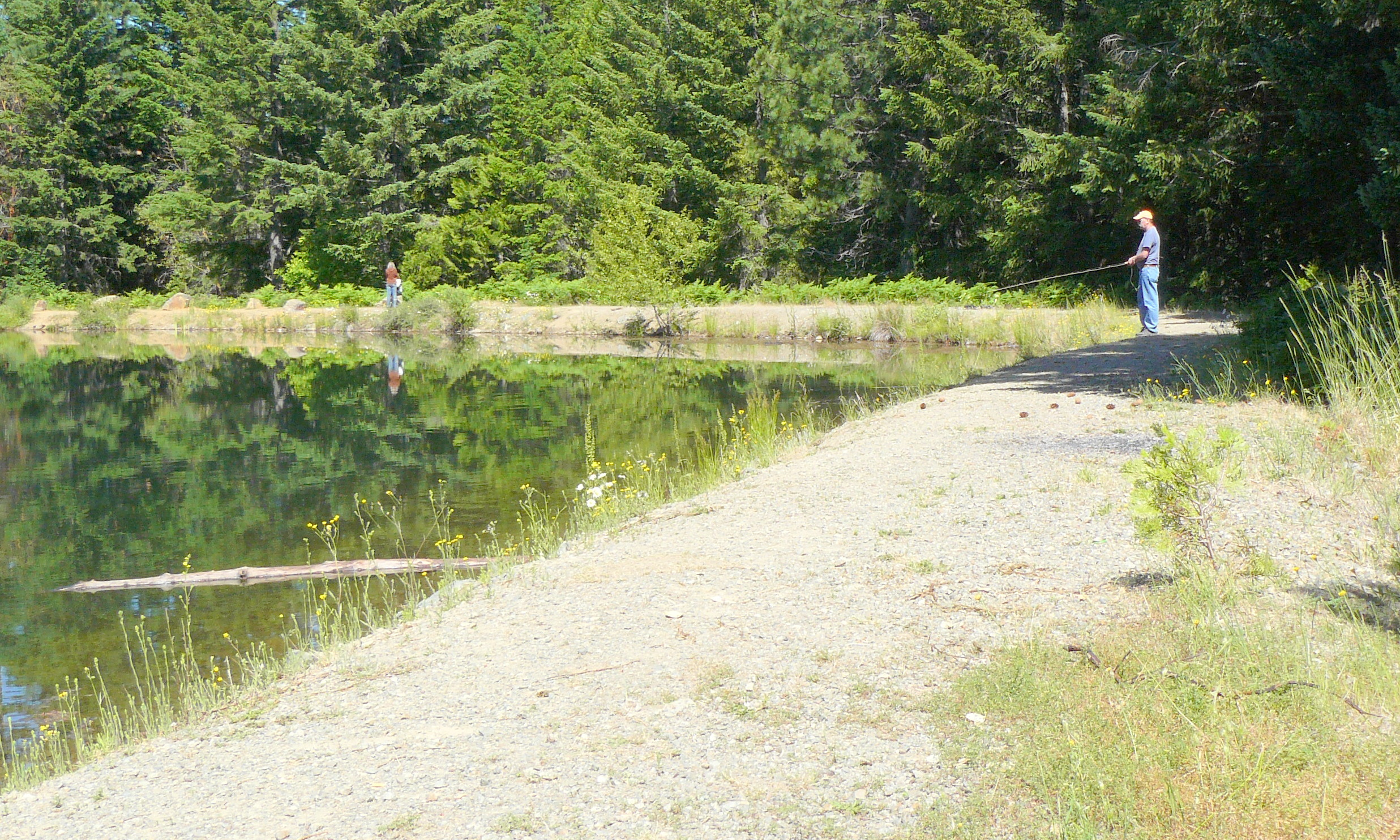
Meanwhile, yours truly decided to walk the perimeter of the lake that is, apparently, some 3.7 acres of water area.

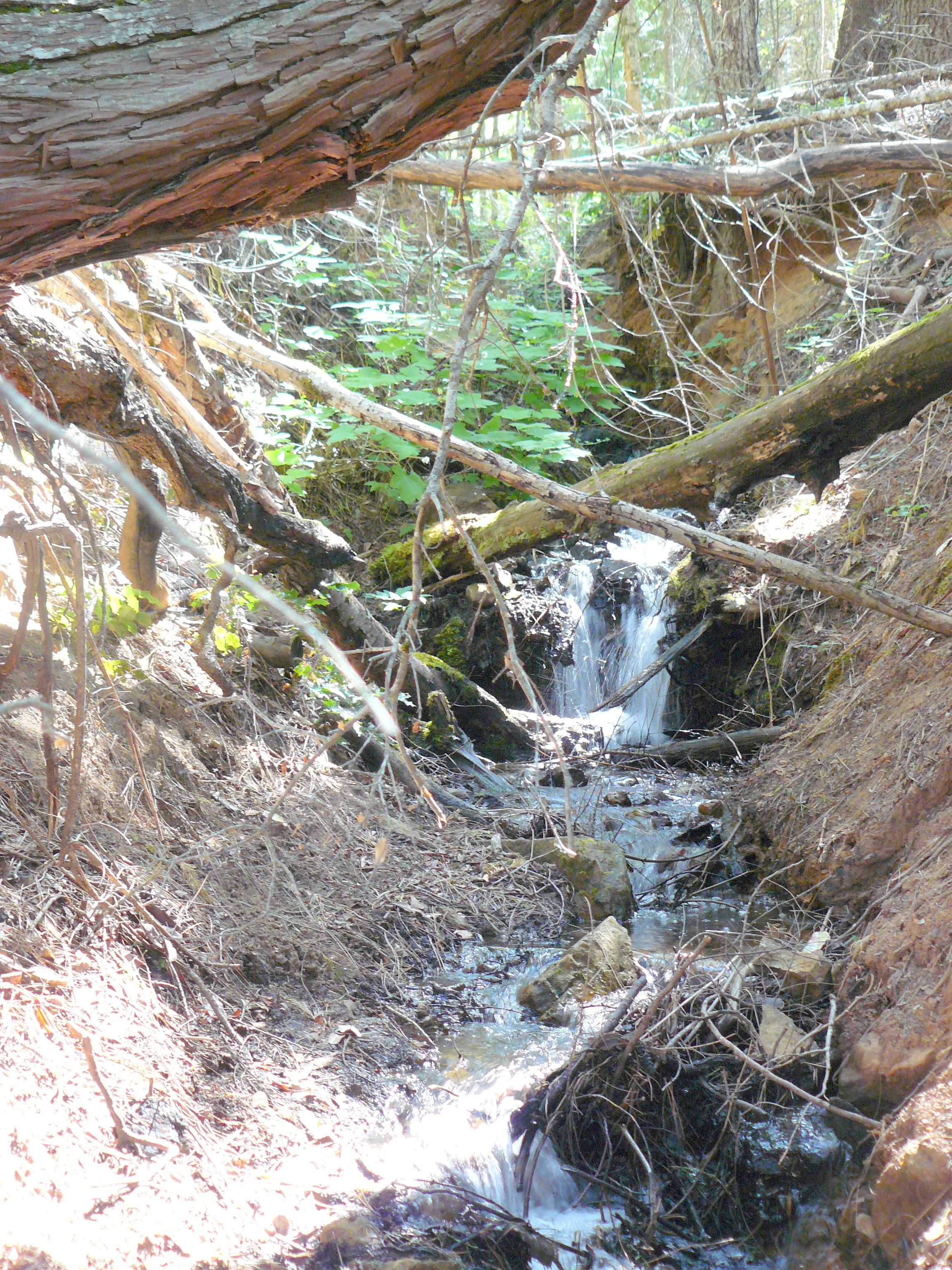
Towards the farthest point of the shoreline, a beautiful stream was flowing into the lake.

Mountain streams.
Mountain streams.

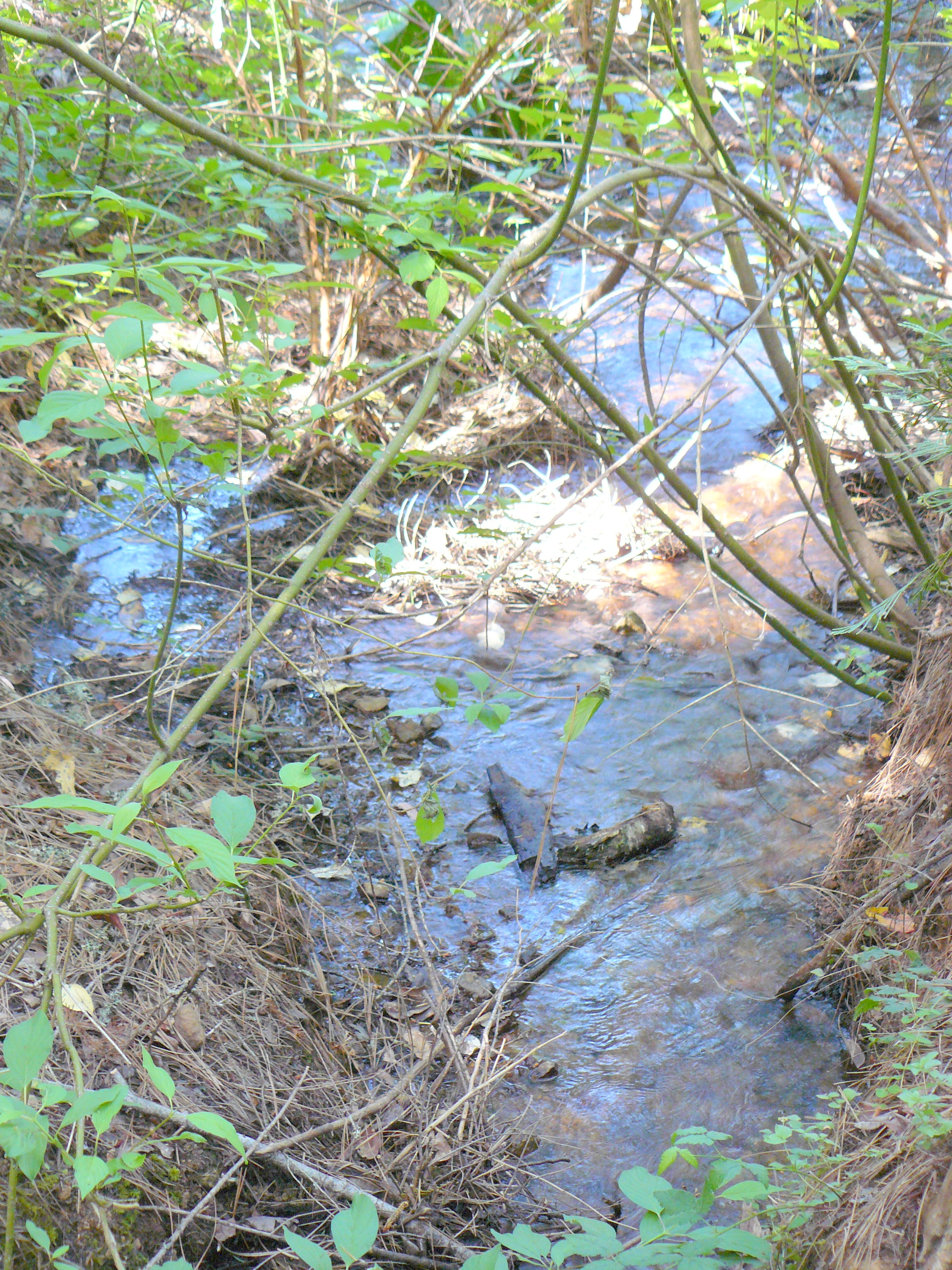
And not too farther along, a likewise beautiful stream outflowed from the lake.

What flows in ... must eventually flow out.
What flows in … must eventually flow out.

From this vantage point, one could look across the full breadth of the lake.

First sighting of the lake!
Tranquility in spades!

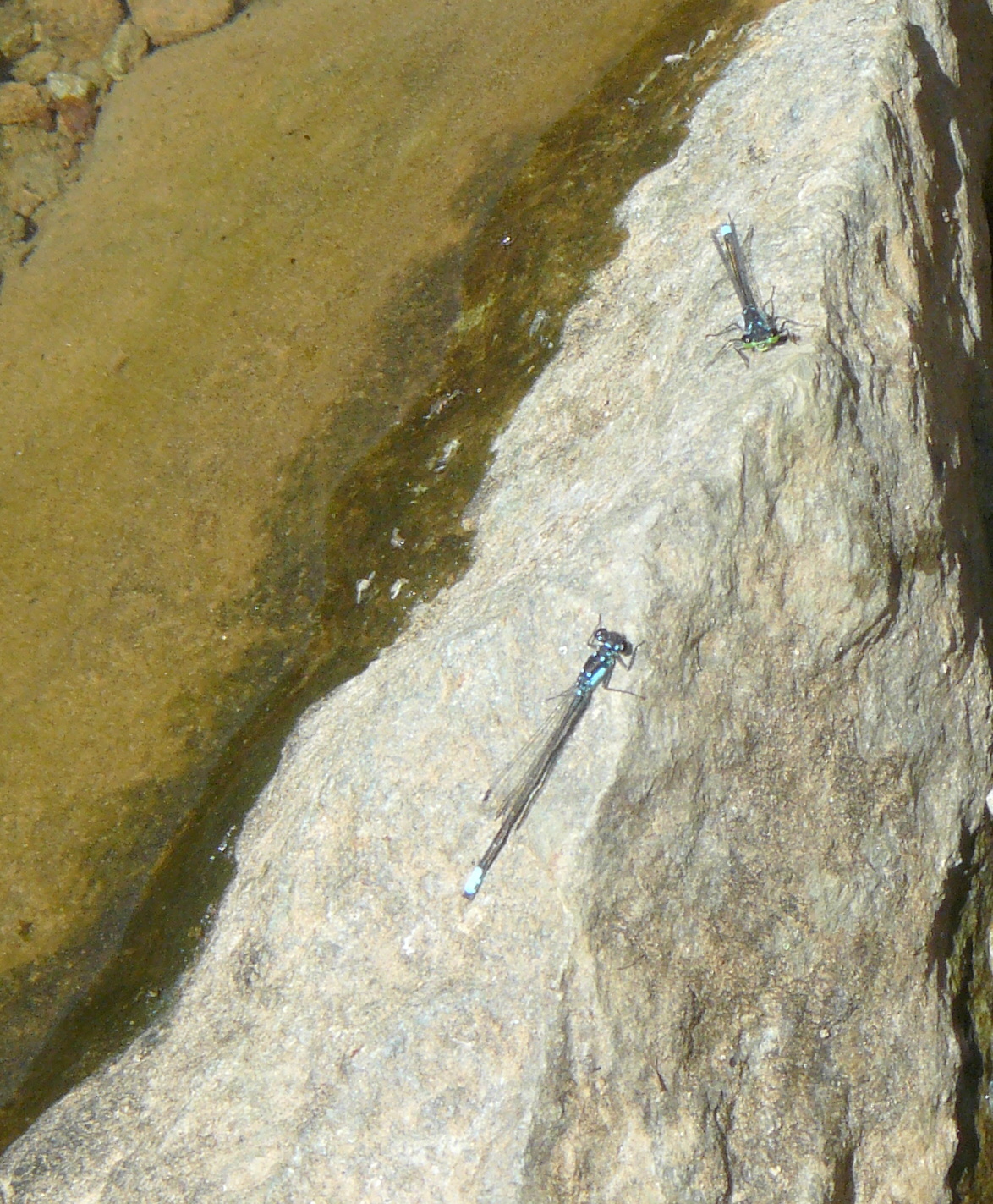
And marvel at the wildlife, from ….

P1140714
Dragon flies.

… the very small, to ….

P1140724
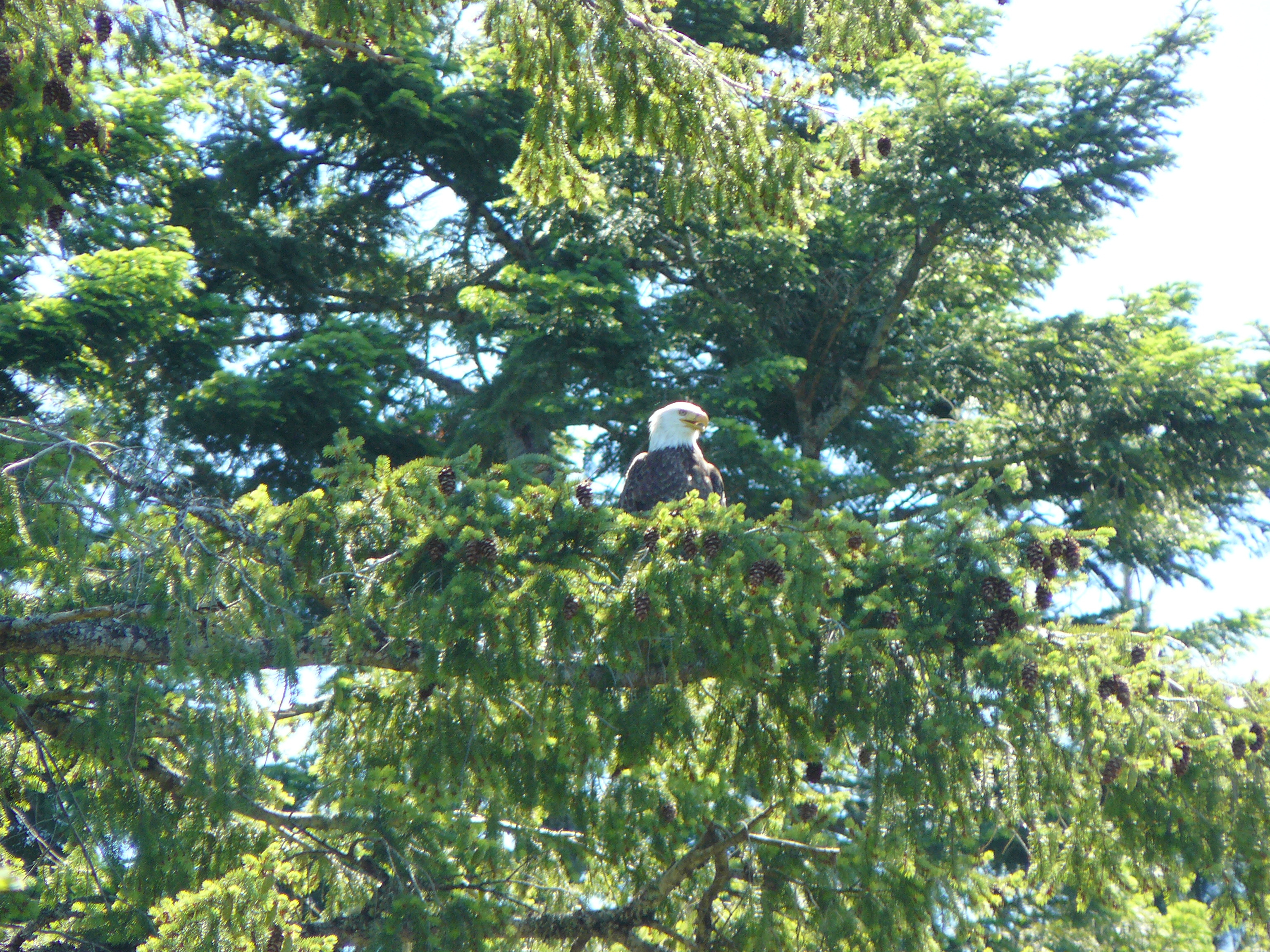
An American bald-eagle.

…. the stunning eagles of the land. A veritable icon of this country!

Returning in time to see Andy pulling a (small) fish from the lake.

that was promptly returned ..

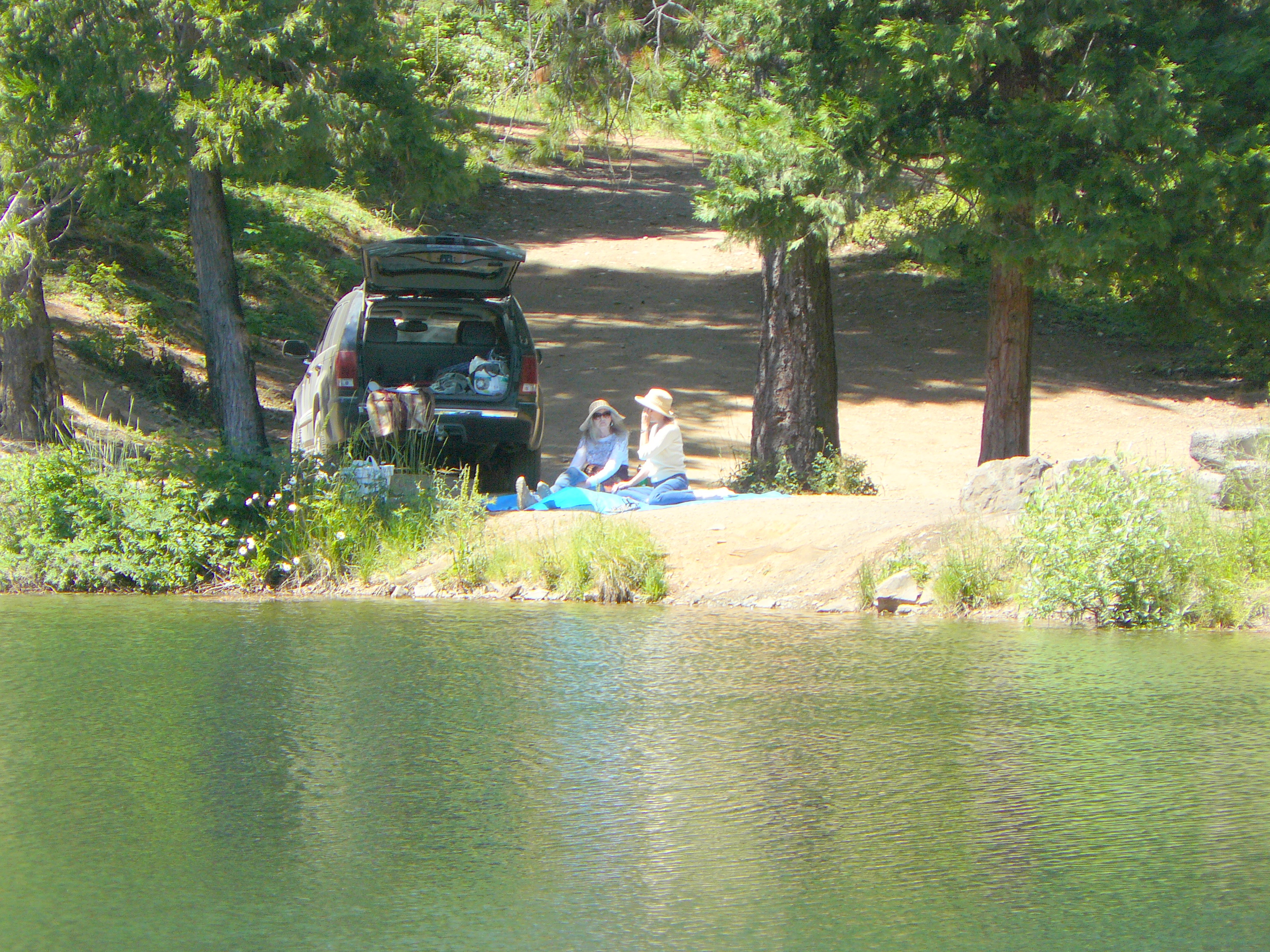
And Jean and Trish catching up on old times.

P1140725
Pure bliss!

What a fabulous discovery!

Less than 25 miles from home.

Thank you, Tad!

We will return – possibly with a dog or two!

Whose land is it?

This has the feel of a moral issue!

It shouldn't have the tragic ending it did have!
It shouldn’t have the tragic ending it did have!

Regular followers know that many of the items that get published here on Learning from Dogs are as a result of followers sending me stuff.

No less so than a recent item from Suzann where in a short email she included the link to a video.

Watch the video first.

I’m sure, like me, you were intrigued to find the background story.  The YouTube page offers that background.

Elk vs. Photographer | Great Smoky Mountains National Park

Published on Nov 12, 2013

Update: I’ve been in contact with the photographer in the above video and we would both like to issue a statement regarding the news of the National Park Service’s decision to put the elk down. Vince M Camilo.

My statement:
I am deeply saddened by the fate of the elk. It has certainly pulled a black cloud over this whirlwind “viral video” experience.

I spoke to the reporter who broke the story and she assured me the decision was based on a pattern of aggressive behavior that began prior to the incident documented in this video. The behavior was the result of visitors feeding the elk and conditioning them to seek food from humans. This video only serves as an example of the elk’s dangerous behavior, not an impetus to it.

Again, it brings me great sadness to learn of this beautiful animal’s demise and the unfortunate circumstances surrounding it. I’m looking into a destination for proceeds from this video to help the NPS educate visitors on the dangers and consequences of feeding wildlife.

I also want to be clear that James, the photographer, was not complicit in a behavior that led to the elk’s demise, but rather was made an example of the result of such behaviors. The elk approached him from behind, likely looking for food as he was conditioned to do.

Statement from James (the photographer):
I love and respect animals and that’s why I photograph them and don’t hunt them. I am deeply hurt by the loss of such a beautiful creature that in its own way bonded with me. I looked forward to watching him grow to a mature bull as the years passed.

I’m truly heartbroken to know he is gone.

Original video description:

While photographing elk at sunrise in the Cataloochee Valley of Great Smoky Mountains National Park I turned around to see what appeared to be just a curious young bull sniffing a photographer’s camera. I snapped a few frames of the apparent harmless encounter.

But the elk became more interested in making trouble than simply the scent of a camera. He started physically harassing the photographer, escallating to full on head-butts.

I quickly switched the camera to video and let it roll (much of the time wondering when I should seriously consider intervening).

Most people who see this ask why the photographer seems to just take the abuse. I asked him in an email what was going through his head. This is his response:

“My first thoughts were “wow, he’s getting pretty damn close here.” But I’ve been up close before without incident. I hoped being still and passive would see him pass on. When he lowered his antlers to me, I wanted to keep my vitals protected and my head down. I felt that standing up would provoke him more and leave me more vulnerable to goring. I think that while protecting myself with my head down, having my head down was a signal that I was rutting with him. I was concerned at first, but when he started rearing back and lunging at me later on, I got scared and pissed off. That’s when I wagged my finger at him to cut that shit out. I was relieved to see the Ranger coming.

So I guess at some point if the Ranger hadn’t of pulled up, I would have had to disengage the best I could. I’ve joked with my friends that at least he took me for a buck and not a cow!”

This video is managed by Newsflare. To use this video for broadcast or in a commercial player email newsdesk@newsflare.com or call +44 (0)843 2895191.

Please feel free to browse my stock archive at:
https://tandemstock.com/browse?q=vinc…

Or get more info at my site:
http://www.runvmc.com

Thanks for checking out the video!

That’s why I photograph them and don’t hunt them.”  Clearly, if I was to be objective in this post I would have to seek a explanation from the National Parks Service as to why the Ranger thought it necessary subsequently to kill the elk.  You can tell that I am more than saddened by the outcome.

“Study nature, love nature, stay close to nature. It will never fail you.” Frank Lloyd Wright.

Until we learn that we are part of the natural order, that we don’t stand above it, then there is little hope for humanity.

Just my two-cents worth.

Legitimate hope.

It’s too easy to be overwhelmed with negativity.

Many will have read yesterday’s post about the slaughter of elephants by ivory poachers and felt, as I did, a feeling of despair in the pit of one’s soul.  We seem to be living in such challenging times with so much madness about us.  It’s incredibly easy to feel as if this is some sort of ‘end of times’ period.

Today’s post tells us that there is always hope.

Let’s remind ourselves that elephants are very intelligent animals.  As I wrote last November in a post with the title of Smart Animals:

There was a fascinating article on the BBC news website a few weeks ago that went on to explain:

10 October 2013

Elephants ‘understand human gesture’

By Victoria GillScience reporter, BBC News
African elephants have demonstrated what appears to be an instinctive understanding of human gestures, according to UK scientists. In a series of tests, researcher Ann Smet, of the University of St Andrews, offered the animals a choice between two identical buckets, then pointed at the one containing a hidden treat.

From the first trial, the elephants chose the correct bucket.

The results are published in the journal Current Biology.

(The two video clips on the BBC website are really worth watching.)

A story published in the Daily Mail just a few days ago underlines the intelligence of elephants.

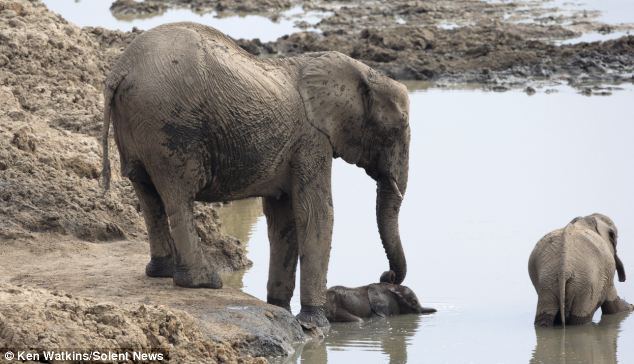
This adorable baby elephant had to be rescued by its mother’s huge trunk after it got stuck in the mud while taking a bath.

The youngster was enjoying a quiet dip in the water but became stranded when it struggled to pull itself out of the lake.

He had to be lifted to safety by its mother and her trusty trunk, which acted as a crane as she carried the three-month-old calf out of the water.

Stuck in the mud: The baby elephant slipped while taking a dip and was unable to haul himself out of the lake.

oooo

A mother's touch: Fortunately the calf's mother was able to scoop him up in her trunk and haul him to safety.
A mother’s touch: Fortunately the calf’s mother was able to scoop him up in her trunk and haul him to safety.

The rest of the story may be read here.

Also what needs to be highlighted are the organisations that are actively working on behalf of the elephants.

The Independent Newspaper have their own elephant campaign.

Elephant Crisis

In 2011, more African elephants were killed than any other year in history. The figures for 2012 and 2013 are not yet known, but are likely to be even higher. At current rates, in twelve years, there will be none left.

It is a familiar cause, but it has never been more urgent. Poaching has turned industrial. Armed militia fly in helicopters over jungle clearings, machine gunning down entire herds. Their tusks are then sold to fund war and terrorism throughout the continent and the wider world. Ivory is still illegal, but as China booms, it is more popular than ever.

This campaign will raise money to support rangers on the ground to protect Kenya’s elephants from armed poachers, together with Space for Giants’ longer term work to create new wildlife sanctuaries where elephants will be safe, forever. More can be found about the charity at Space for Giants

The article above includes two videos.  A shorter one that can be viewed on the paper’s campaign website. Then there is a longer, five-minute, video also on YouTube and included below.

Offering a donation to help is only a click away.

Then there is the David Sheldrick Wildlife Trust helping animals in Africa. And, finally, the campaign over at Bloody Ivory where one can sign a petition and donate towards stopping elephant poaching.

Thus, like so many aspects of life, never give up trying to help those less fortunate.

Without hope there is nothing.