Category: Technology

The food we buy for our pets

A report from BBC Future suggests there is a hidden reason

With six dogs feeding them is quite an exercise. I don’t really take much notice of what Jeannie does although I do know that we feed them kibbles, canned food and Jean cooks up beef for the dogs as well.

Recently BBC Future had a report saying that there is a hidden reason that processed foods are addictive. I am going to share that article with you.

ooOOoo

The hidden reason processed pet foods are so addictive

By Zaria Gorvett 20th May 2021

From potently smelly additives to offal concentrates, pet food companies turn to some surprising ingredients in the quest to make kibble delicious.

The cue might be a hand in a pocket, the opening of a cupboard door, or even a word said carelessly aloud – “dinner”. Before you know it, you’re tripping over a pet excitedly awaiting a portion of… dull-brown dried pellets. What’s in these mysterious morsels, that makes them as delectable as roasted chicken, wild salmon, or bundles of fresh herbs? 

Take my flatmate, a small black rabbit. For a large part of every day, he can be found sitting attentively with his paws on his empty food bowl, awaiting his next portion of kibble – even though it looks like his droppings and smells equally unappetising. He used to have an automatic dispenser with a timer, but he learnt to throw it across the room to access its contents prematurely. No matter what delicacies I place before him – home-grown parsley, soft-cut hay, fresh carrot-tops, organic kale – he would always rather eat processed pet food.

It seems that this is not unusual. Anecdotes abound about pets whose thoughts are largely preoccupied with kibble, such as the cat that has a daily panic attack when it realises it has eaten all its pellets and the pragmatic German shepherd found carrying a bag of dog food around the streets of Houston after Hurricane Harvey.

As it happens, this addictive quality is carefully engineered. Big Pet Food is a multi-billion-dollar industry which invests heavily in research into “palatants” – ingredients that make our pets want to eat their products. And from potently smelly chemicalsusually found in rotting meat to an additive commonly added to potatoes to stop them discolouring, the quest to make the most scrumptious pet food has led to some surprising insights.

“Big [pet food] companies have huge departments that make palatants,” says Darren Logan, head of research at the Waltham Petcare Science Institute, part of the company Mars Petcare. “Just like we make them for humans, we make them for pets as well.” 

Upper-class dogs

The first pet food was invented in 1860 by James Spratt, an enterprising lightning-rod salesman from the US state of Ohio. Legend has it that he had travelled to England for his business, and was looking out over the docks of Liverpool one day when he noticed stray dogs knocking back leftover hardtack biscuits.

This was a revelation for two reasons.
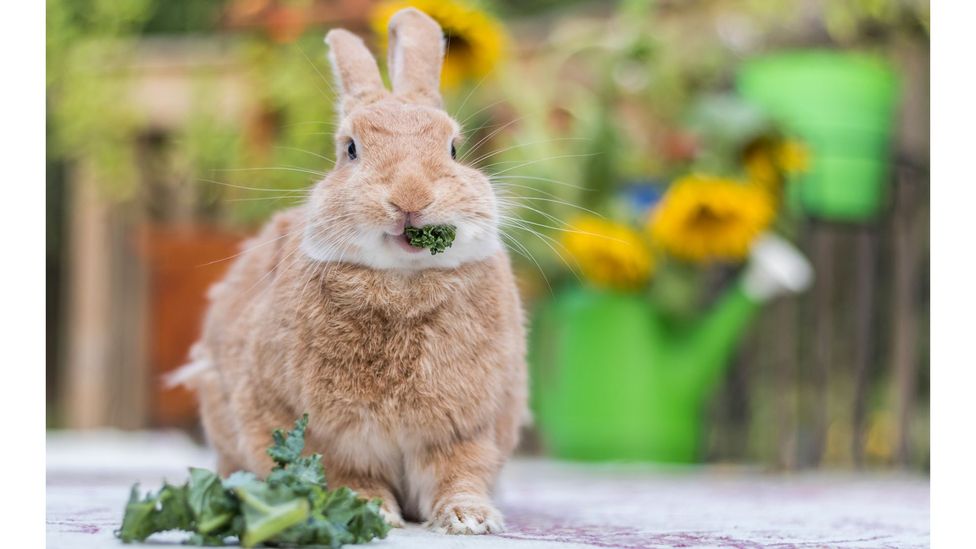
Rabbits eat fresh vegetables in the wild, but many kept as pets feast instead on processed pellets (Credit: Getty Images)

Firstly, hardtack were famously unappealing – loathed by generations of the soldiers and sailors who ate them, these simple slabs of baked flour and water were tougher than wood and sometimes hard enough to break your teeth. Their nicknames included “sheet iron” and “worm castles“, the latter because of the high proportion that were infested with maggots and weevils. The oldest piece of surviving hardtack was baked just nine years before Spratt’s dock visit, and still looks suspiciously well-preserved 170 years later.

Secondly, until that moment it hadn’t occurred to anyone to check what their pets would like to eat – or that this could be monetised. For as long as we had kept domesticated animals, they had been fed more or less the same food as humans, or expected to fend for themselves.

One striking example is the husky. In their native territory of Arctic Greenland, Canada and Alaska, Inuit hunter-gatherers have traditionally fed these dogs on seal meat, which comprises the majority of their own diet. Sled-dogs are so well-adapted to this that when the British Antarctic Survey brought them to Antarctica as a form of transport in 1945, they found that they struggled to digest commercial dog food. In the end, they had to kill a number of local seals each year, just to feed the dogs, before they were largely replaced with skidoos in the 1960s and 70s.

Spratt’s innovation coincided with a cultural revolution in the way people saw their pets

Meanwhile in Victorian London, dogs that were lucky enough to be looked after were either given table scraps or gruel. Even specialist exotic animals were fed everyday human food – the 20,000 or more tortoises imported from Morocco each year were mostly expected to survive on ordinary garden vegetables or bread soaked in water. Cats were considered street animals and rarely fed.

But Spratt had hit upon something entirely new. Over the coming months he developed the “Meat Fibrine Dog Cake”, a biscuit-like concoction of beetroot, vegetables, grains and beef of dubious origins that claimed to meet all the nutritional needs of his customers’ hounds. (While its packaging implied that it was the finest prairie beef, what it was actually made from was a secret he took to his grave.)

Spratt’s innovation coincided with a cultural revolution in the way people saw their pets – dogs and cats went from being viewed as mere utility animals or borderline-vermin to beloved family members to be coddled. Consequently, the Meat Fibrine Dog Cake was marketed as a luxury food for aristocratic pets.
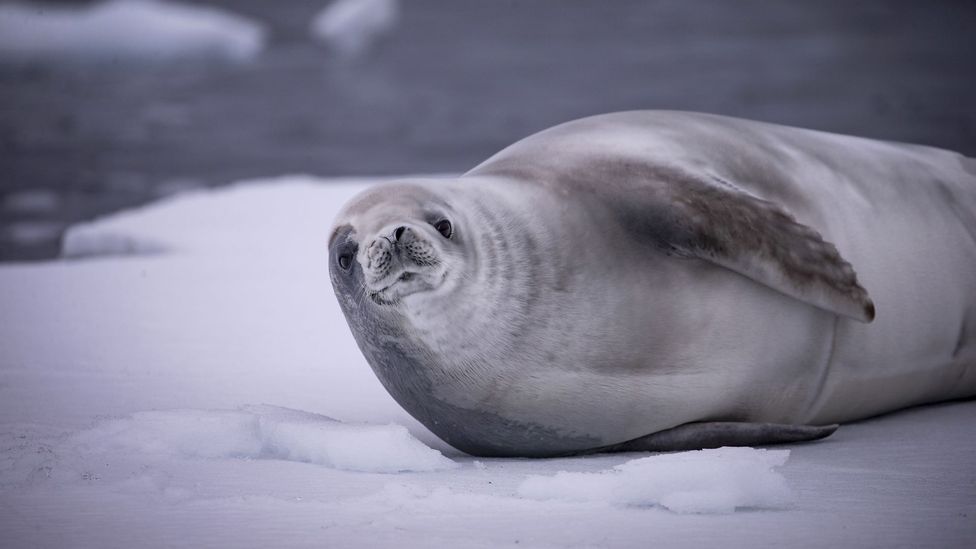
The husky dogs taken on early Antarctic voyages had to be fed with freshly killed seals (Credit: Ozge Elif Kizil/Anadolu Agency/Getty Images)

The adverts labelled them “Dog’s Delight” and included gushing testimonials from wealthy customers. Ironically, Spratt’s also promoted the fact that they were chosen to feed the sled dogs on Captain Scott’s 1901 trip to the Antarctic, though we now know they would much rather have eaten seal.

Eventually the company branched out into cat food – “Spratt’s puts pussy into fine form!”, they said – and the rest is history. However, the science of pet food palatants still had some way to go.

Disgusting smells 

Today it’s possible to buy specialised kibble for almost any kind of pet, from frogs to sugar gliders (a small marsupial). Most follow roughly the same formula – they usually contain some kind of base carbohydrate, assorted proteins and fats, sugars, a source of fibre, antioxidants or other preservatives, emulsifiers (which keep the fat in the food and prevent it from separating), vitamins and minerals, and colouring agents

More sophisticated versions may also contain probiotics or digestibility enhancers – such as chicory, which is often added to dog food – as well as enzymes, anti-parasitic compounds and minerals to prevent the build-up of tartar on teeth.

Oddly, there is very little relationship between how healthy a pet food is and its inherent deliciousness

To turn these ingredients into a dry pet food, it’s formed into a paste and “extruded” via a process that involves heating it up and forcing it through a plate with holes in it, to form an aerated product that matches the shape of the holes. It’s the same process that’s used to make puffed snack foods, with flavourings added in the final step – in the case of pet food, they’re either sprayed on or added as a powder.

Oddly, there is very little relationship between how healthy a pet food is and its inherent deliciousness. That’s because in the US, the EU and many other parts of the world, in order to describe one as “complete” – containing everything the body needs to be healthy – it must meet certain nutritional standards. These set out acceptable ranges for most ingredients, so manufacturers can’t just load up on sugar and fat to make it compelling.

“From my standpoint as a nutritionist, all pet foods are the same,” says Marion Nestle, professor emerita of nutrition, food studies, and public health at New York University.
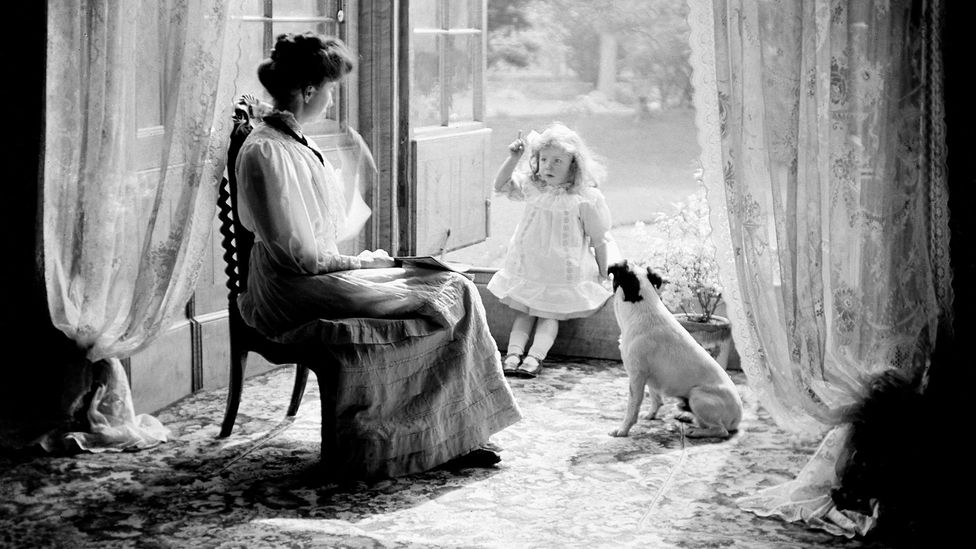
The first processed dog foods were luxury products which ushered in the idea of the "pampered pet" (Credit: Kirn Vintage Stock/Corbis via Getty Images)
The first processed dog foods were luxury products which ushered in the idea of the “pampered pet” (Credit: Kirn Vintage Stock/Corbis via Getty Images)

Instead, companies turn to chemistry.

Many animals rely heavily on smell to navigate the world around them, and this is often the main sense that’s targeted. While human noses contain around 50 million olfactory receptors, cats have 67 million, rabbits have 100 million and dogs have around 220 million. On the other hand, their sense of taste is generally less discriminating than ours – our relatively high density of taste receptors is thought to have evolved to help us cope with our diverse omnivorous diets

The catch is that appealing to animals that find the smell of roadkill, sweaty socks, and vomit utterly enchanting – as carnivorous pets often do – while not making their human companions feel violently ill, is extremly tricky. “There is a slight paradox there, because the smells that cats particularly but also dogs seem to like are often the opposite of what humans like,” says Logan.

Nestle puts it more bluntly – “animals eat faeces”, she says. “They like strong animal odours and pet food manufacturers have a really difficult time, because they have to make it disgusting enough so that the animal will eat it, but not so disgusting that the owners won’t buy it.”

Pet food manufacturers have a really difficult time, because they have to make it disgusting enough so that the animal will eat it, but not so disgusting that the owners won’t buy it – Darren Logan

Examples include putrescine and cadaverine, colourless chemicals produced naturally by the breakdown of proteins. They’re largely responsible for the revolting smell of rotting flesh – and cats love them. While in human food, their levels are sometimes closely monitored as a way of ensuring the freshness and safety of meat, they’re often actively added to cat and dog food, either as offal extracts or lab-made additives.

In the case of naturally vegan animals, such as rabbits and guinea pigs, irresistible smells such as mint and oregano are sometimes added in the form of concentrates.

Japanese-inspired cuisine 

Other insights are arguably more surprising. A recent study identified nine volatile compounds in common pet food flavourings that are linked to how delicious they are to dogs, including heptanal, nonanal, and octanal, which all have strong, fruity odours.

However, taste is also important – and here the preferences of carnivorous pets are not so different from ours.

One of the most popular additives in human food is the enigmatic “hydrolysed protein”, which is formed by breaking down the long strands of proteins into their constituent amino acids, usually using enzymes or hydrochloric acid. It imparts a flavour similar to that achieved by meat or vegetable stock, and often comes with MSG, which is produced as a by-product of the same reaction and is responsible for the savoury taste of tomatoes, cheese and Iberico ham.

Though hydrolysed proteins are produced artificially, the process is similar to what happens when you cook food for a long period of time – it’s a kind of pre-digestion, and is thought to contribute to the enticing smell of many brands of kibble.

Early processed dog food resembled the tooth-challenging hard-tack biscuits often taken on long sea voyages (Credit: Getty Images)

“The understanding of cat palatability is very similar to Japanese or Asian cuisine, where there’s a lot of focus on umami and another taste modality called kokumi,” says Logan.

Kokumi was discovered in Japan in 1989, and has been proposed as the sixth taste in humans, after sweetness, saltiness, bitterness, sourness and umami. It’s described as a kind of mouth-feel rather than a flavour per se – a texture that imparts richness and “thickness” to foods. Unlike the others, kokumi hasn’t yet been linked to a specific set of compounds, but foods that conjure this sensory experience include scallops, soy sauce, shrimp paste, yeast and beer.

While cats are particularly drawn to Japanese food, which is rich in meat and seafood, you’re unlikely to find them stealing ice-creams or doughnuts

The sixth taste is thought to be particularly popular with carnivorous animals, which may discern it via receptors in their mouths that evolved to detect calcium. And as you would expect, pet food companies have already begun targeting it with cocktails of flavour-enhancing chemicals.   

But there are some flavours that you will never find in certain pet foods.  

For example, most wild carnivorous animals lack the receptors for tasting sugar or carbohydrates. And unlike dogs, which have been living around humans and feasted off our scraps for up to 40,000 years, domestic cats have only been around for about 4,300. For the majority of that time, they were considered a kind of free pest-control that could fend for themselves.

So, while cats are particularly drawn to Japanese food, which is rich in meat and seafood, you’re unlikely to find them stealing ice-creams or doughnuts – unlike dogs, they simply haven’t been around humans for long enough to have evolved the ability to taste sugar.
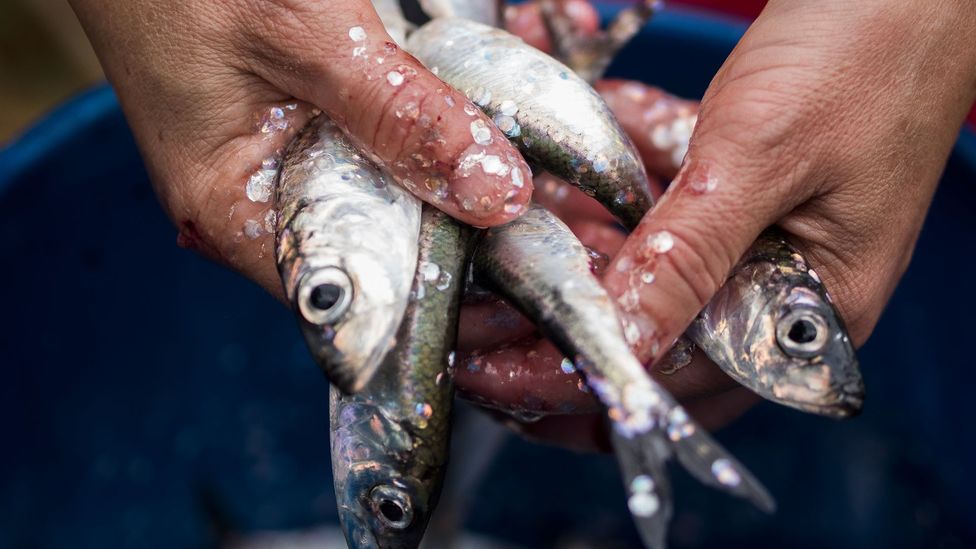
Cats are irresistibly drawn to the chemical compounds found in rotting fish (Credit: Getty Images)

On the other hand, because vegan animals eat exclusively vegetable matter, which is often rich in fibre and carbohydrates, they tend to prefer sweeter pet food.

Finally, no list of palatants would be complete without pyrophosphate, described in Popular Science as “cat crack”. This common additive performs a number of roles in human food, such as preventing potato products from going dark after they’re cooked – none of which involve improving its taste. Nevertheless, cats go nuts for it, possibly because it intensifies the flavour of amino acids.

Pet food companies are now so successful at making food delicious that they’re increasingly encountering a dilemma – it’s almost too good. “The danger for cats and dogs today is the same as for people, it’s overconsumption,” says Andrew Knight, a professor of animal welfare and ethics at the University of Winchester.

Pet obesity is a growing problem in the developed world, with one survey of veterinary professionals at a vet show in London suggesting that around 51% of dogs, 44% of cats and 29% of small mammals are now overweight or obese.

Pet foods made from more sustainable ingredients such as insects or soya are generally just as acceptable to carnivorous pets as the real deal

According to Logan, this is not down to the way pet food is formulated, but humans succumbing to their beloved pets’ pleading gazes. “The reason we make pet food palatable is that if they don’t eat all the food that we give them, it won’t meet the nutritional needs that they require,” he says. “The real problem is owners feeding them too much – pets can’t open the packets themselves.”

However, there is an upside. There are mounting concerns about the environmental impact of pet food, too – in 2009, two New Zealand scientists estimated the planetary cost of keeping a dog as roughly twice that of having a medium-sized SUV.
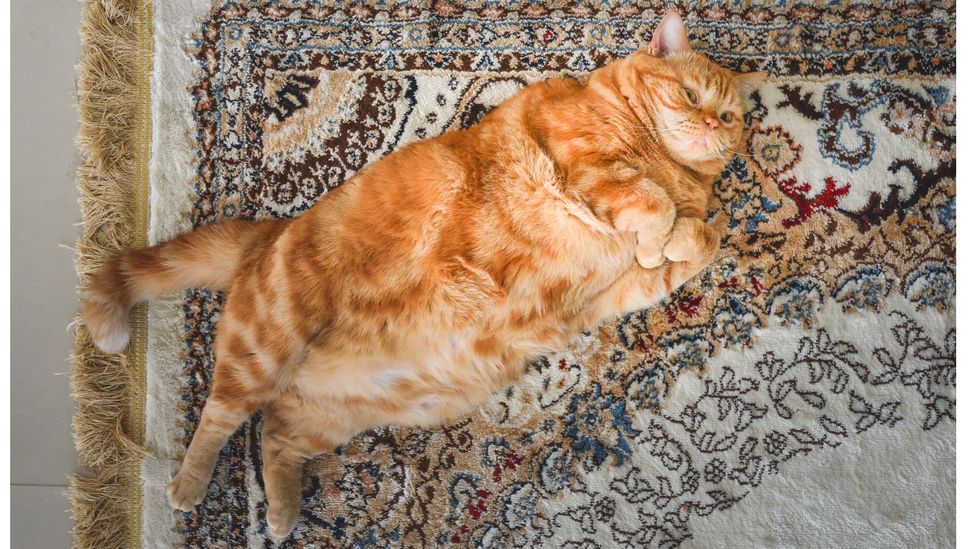
Pets given too much calorific processed food may, just like humans, put on extra weight (Credit: Getty Images)

This is where palatants come in. Because most pet foods comprise a fairly tasteless base that is spruced up with delicious flavourings and smells, pet foods made from more sustainable ingredients such as insects or soya are generally just as acceptable to carnivorous pets as the real deal. (Though cats cannot be fed a diet that is meat free.)

“According to this really large-scale study that we’ve just finished, the animals on vegan pet foods seem to be just as happy as animals on meat ones,” says Knight, who is hopeful about their future potential.

“There is a broad recognition that the need to be more sustainable will have a big impact on the pet food business,” says Logan, who explains that the pet food company he works for has just released its own brand of insect-based pet food.

So, why do our pets find pet food so addictive? Well, because it’s been made that way. Just like us, our pets find it hard to say no to the food we have designed to be tasty.

* Zaria Gorvett is a senior journalist for BBC Future and tweets at @ZariaGorvett

ooOOoo

That is a really useful article that goes a very long way to explaining how ‘big business’ interferes with the food that our pets eat.

And did you read right at the end of the article: “According to this really large-scale study that we’ve just finished, the animals on vegan pet foods seem to be just as happy as animals on meat ones,” says Knight.

Now there’s a thing!
The Elephant in the Room

This is one of the most important posts since I started blogging!

I was born in 1944 and that makes me 76. I am reasonably engaged in the issues facing us but, in a sense, protected from the realities of the modern world because I have a loving wife, two loving young people, as in my son Alex and my daughter Maija, and a special grandson, Morten.

We are also very lucky in that my wife, Jean, and I are both retired and we live on 13 rural acres in a beautiful part of Southern Oregon and enjoy immensely our six dogs, two horses, two parakeets and feeding the wild birds and deer.

But it can’t stay that way because of the encroaching elephant in the room.

I am speaking of climate change that if not dealt with in the near future, say in the next 10 years, will lead to an unimaginable state of affairs.

Now one could argue that you come to Learning from Dogs to get away from climate change and the like. But this is too important and, also, involves all of us including our gorgeous dogs.

First, I want to include an extract from a recent Scientists Warning newsletter (and please read this extract carefully).

Recently, one article on the climate emergency above all others has cut through – with over ONE MILLION views, “Climate scientists: concept of net zero is a dangerous trap”  published in The Conversation is being talked about by many thousands, and led Greta Thunberg to tweet:  “This is one of the most important and informative texts I have ever read on the climate- and ecological crises.” 
So why is this article so very important?

In our latest interview, I talk with two of the authors – Dr.  James Dyke, global systems scientist at the University of Exeter and Dr. Wolfgang Knorr, climate scientist at Lund University. And the conversation does not make for comfortable viewing.  We discuss what led James, Wolfgang and Professor Bob Watson to write an article that they have described as being one of the hardest they have ever written. The article is *not* an attack on net zero, nor does it advocate a fatalistic position. Instead, as you will hear, the interview reveals the heartfelt concerns of two scientists who are profoundly worried about the failure of a climate policy system that suppresses the  voice of science and is fundamentally flawed. A climate policy system that year after year has failed.

But  it is not just the climate policy system that has failed. Academia has failed too, and continues to fail Greta and young people like her. And this *must* stop. Young people have become the adults in the room. We cannot place this burden on their shoulders. They have shown their courage and bravery. Now it’s time for academia to step up to the challenge and to critically examine why we are failing. 

Secondly, I want to share that interview with you. This is a 36-minute interview. Please, please watch it. If it is not a convenient time just now then bookmark the post and watch it when you can sit down and be fully engaged. You will understand then and agree with me that this is one of the most important videos ever!

Lastly, I would like you to read the article published in The Conversation. I have included a link to it but I am also going to republish it on Friday.

Because we have to listen to the scientists without delay and press for change now.

Thank goodness for our younger generation. Because these young people are coming together to fight for change. May they have universal encouragement from those of us who will never see our younger days again!

men's white and blue gingham dress shirt
Photograph by Zach Lucero

What goes around comes around!

Another account of dogs bonding with humans.

Chernobyl is a name that anyone born before, say, 1970 will associate with a terrible nuclear accident in Russia.

As Wikipedia put it:

The Chernobyl disaster was a nuclear accident that occurred on Saturday 26 April 1986, at the No. 4 reactor in the Chernobyl Nuclear Power Plant, near the city of Pripyat in the north of the Ukrainian SSR in the Soviet Union. It is considered the worst nuclear disaster in history both in terms of cost and casualties, and is one of only two nuclear energy accidents rated at seven—the maximum severity—on the International Nuclear Event Scale, the other being the 2011 Fukushima Daiichi nuclear disaster in Japan. The initial emergency response, together with later decontamination of the environment, ultimately involved more than 500,000 personnel and cost an estimated 18 billion Soviet rubles—roughly US$68 billion in 2019, adjusted for inflation.

But recently BBC Future spoke of the bond that the guards and the abandoned dogs made.

Read it below: (Unfortunately you will have to go here to view the stunning photographs because the BBC prevents them being republished! But it is still a very interesting article.)

ooOOoo

The guards caring for Chernobyl’s abandoned dogs

The descendants of pets abandoned by those fleeing the Chernobyl disaster are now striking up a curious relationship with humans charged with guarding the contaminated area.

It wasn’t long after he arrived in the irradiated landscape of the Chernobyl Exclusion Zone that Bogdan realised his new job came with some unexpected companions. From his first days as a checkpoint guard in Chernobyl, he has shared the place with a pack of dogs.

Bogdan (not his real name) is now in his second year of working in the zone and has got to know the dogs well. Some have names, some don’t. Some stay nearby, others remain detached – they come and go as they please. Bogdan and the other guards feed them, offer them shelter, and occasionally give them medical care. They bury them when they die.

All the dogs are, in a sense, refugees of the 1986 disaster in which Reactor No. 4 at the Chernobyl Nuclear Power Plant exploded. In the aftermath, tens of thousands of people were evacuated from the Ukrainian city of Pripyat. They were told to leave their pets behind. (Read more about the long-term toll of the Chernobyl disaster.)

Soviet soldiers shot many of the abandoned animals in an effort to prevent the spread of contamination. But, undoubtedly, some of the animals hid and survived. Thirty-five years later, hundreds of stray dogs now roam the 2,600km (1,000 sq mile) Exclusion Zone put in place to restrict human traffic in and out of the area. Nobody knows which of the dogs are directly descended from stranded pets, and which may have wandered into the zone from elsewhere. But they are all dogs of the zone now.

Their lives are perilous. They are at risk from radioactive contamination, wolf attacks, wildfires and starvation, among other threats. The dogs’ average lifespan is just five years, according to the Clean Futures Fund, a non-governmental organisation that monitors and provides care for dogs living within the Exclusion Zone.

That dogs inhabit this ruined place is well known – some of them have even become minor celebrities on social media. Clean Futures Fund co-founder Lucas Hixson, who gave up a research career to look after the animals, offers virtual tours of the Exclusion Zone featuring the dogs.

But less is known about the local workers who interact with these canines on a daily basis.

Jonathon Turnbull, a PhD candidate in geography at the University of Cambridge, realised it might be worth collecting these people’s stories.

“If I wanted to know the dogs,” he says, “I needed to go to the people who know them best – and that was the guards.”

What he discovered is a heart-warming story of the guards’ relationship with the animals they encounter in this abandoned environment – a tale that provides insights into the deep bond between humans and dogs.

The guards sometimes go to the trouble of helping the dogs by pulling out ticks embedded in their skin, or by giving them rabies injections

For instance, the guards have given several of the dogs nicknames. According to Turnbull, there’s Alpha, whose name refers to a type of radiation, and Tarzan, a dog well-known to Chernobyl tourists, who can do tricks on command and who lives near the famous Duga radar installation built by the Soviets. Then there is Sausage – a short, fat dog that likes to warm herself in the winter by lying on heating pipes. These pipes serve one of the buildings used by workers in the Exclusion Zone who are part of ongoing efforts to decommission and decontaminate the ruined power plant.

Access to the Chernobyl Exclusion Zone requires a permit, so guards are tasked with controlling checkpoints on roads in and out of the area. People who dodge these checkpoints to trespass in the Exclusion Zone are known as “stalkers”. Guards report them to the police.

When Turnbull, who lives in Ukraine’s capital Kyiv, started making regular visits to the zone, he met Bogdan, and other checkpoint guards. They were reluctant to talk at first so he had to win them over. Then he offered them to chance to take part in his research, which he says was a “turning point”. His idea was to give the guards disposable cameras and ask them to take pictures of the dogs – not posed portraits but scenes of everyday life. The guards only had one other request – “please, please – bring food for the dogs”. So Turnbull did.

The photos taken by the guards revealed how much they had developed companionships with the wandering dogs of the Exclusion Zone.

Turnbull published some of the resulting images and material from interviews with the guards in a paper in December. More recently, he interviewed one of the study participants again on behalf of BBC Future. The guard in question has asked not to be identified to avoid disciplinary action at work, so we refer to him here by the pseudonym “Bogdan”.

When Bogdan walks around the abandoned streets of the zone to check for stalkers, the dogs happily accompany him, he says. They always appear eager to see whether he, or a passing tourist, might be carrying food. Should a companion dog get distracted or run off to chase an animal, it always eventually returns to Bogdan, he adds.

You might also like:

The loyalty goes both ways. Turnbull says the guards sometimes go to the trouble of helping the dogs by pulling out ticks embedded in their skin, or by giving them rabies injections.

Wolves, dogs and other animals could in theory carry radioactive contamination, or genetic mutations potentially passed on by breeding, to places outside the Exclusion Zone

Monitoring who comes and goes from the Exclusion Zone sometimes makes for a dull occupation. But there are always dogs nearby.

At some checkpoints, the guards have more or less adopted some of the animals. They feed them and give them shelter. But not all are so tame. During his research, one guard told Turnbull, “We can’t inject Arka because she bites.”

Another participant spoke of one dog that was even more difficult to approach. It refuses to be touched at all. “You should just give her a pan [of food] and go. She waits until you leave and then she eats,” the guard explained.

The dogs sometimes bark at strangers on first sight, that’s their nature, says Bogdan. But so long as they don’t feel threatened, they sometimes calm down and wag their tails. Occasionally it even seems as though they’re smiling, he adds.

Generally, visitors to Chernobyl are advised not to touch the dogs, for fear that the animals may be carrying radioactive dust. It’s impossible to know where the dogs roam and some parts of the Exclusion Zone are more contaminated than others.

There is wildlife living in the Chernobyl Exclusion Zone besides dogs. In 2016, Sarah Webster, a US government wildlife biologist who was working at the University of Georgia at the time, and colleagues published a paper in which they revealed how mammals, from wolves to boars and red foxes, had colonised the Exclusion Zone. Camera trap data showed that the animals’ numbers were not noticeably lower in those areas where radioactive contamination is higher.

Animals living in the Exclusion Zone are not necessarily confined there. A later studyby Webster and colleagues, published in 2018, detailed the movements of a wolf tagged with a GPS device. It travelled 369km (229 miles) from its home range in the zone, taking a long arc to the south-east, then north-east again, eventually entering Russia.

Wolves, dogs and other animals could in theory carry radioactive contamination, or genetic mutations potentially passed on by breeding, to places outside the Exclusion Zone.

“We know it’s happening but we don’t understand the extent or the magnitude,” says Webster.

Turnbull says the guards do not generally worry about radiation, though they might occasionally use dosimeters to check a dog over.

It actually seems as though the dogs, through the companionship they offer, end up reassuring those who interact with them regularly, says Greger Larson, an archaeologist who studies animal domestication at the University of Oxford and who was not involved in Turnbull’s research.

“They’re kind of putting themselves in the shoes of the dogs,” he suggests, referring to the guards. “If the dog is fine, that means you’re fine.”

But in truth, this may only be a false sense of security.

“It’s an uncanny environment,” notes Turnbull. “You can’t see the danger. You’re constantly aware that it might be there but everything looks normal.”

Despite the fact that the dogs could pose a risk in terms of radioactivity, guards like Bogdan instead emphasise the benefits of having them around. For example, he claims to know dogs that bark in noticeably different ways depending on what they have spotted in the distance – a human stranger, a vehicle, a wild animal. Because of these helpful warning signals, Bogdan thinks of the dogs as “assistants”.

What’s happening in the Exclusion Zone is an echo of interactions with dogs that are known to have occurred within human civilisations for thousands of years, says Larson.

“We find this for the last 15,000 years or more, this is what people do, they make very close associations with not just dogs but a lot of domestic animals […] to sort of say, ‘this is our attachment to the landscape’,” he explains.

All over the world, there are dogs that inhabit a similar, in-between state – not quite fully domesticated, not quite fully wild. These are the feral dogs that roam cities and industrial areas looking for food, the ones that may become to some extent adopted by people but still wouldn’t be considered pets.

Chernobyl’s dogs also live in this sort of space, on the edge of domestication, but there is a difference argues Webster, who has participated in a separate study of Turnbull’s in the past.

“The Exclusion Zone is very different in that it’s abandoned by humans,” she says. “The only people in that landscape on a day-to-day basis, really, are the guards.” As such, the dogs’ opportunities for befriending humans are very limited.

While the outside world remains fascinated by the dogs, and their story, for many guards the connection runs much deeper. Bogdan says he is often asked why the dogs ought to be allowed to stay in the Exclusion Zone. “They give us joy,” he replies. “For me personally, this is a kind of symbol of the continuation of life in this radioactive, post-apocalyptic world.”

ooOOoo

What is so fascinating is that this interaction between the dogs and the people is an echo of the first interaction between hunter/gatherers and wolves of, perhaps, 25,000 years ago or more. And the guards of today and the dogs, whom Larson calls his assistants, are perfectly bonded.

It just goes to show that ‘what goes around comes around’!

Picture Parade Three Hundred and Eighty

This was a real treat!

Jim Ingraham of our local Caveman Camera Club sent out an email last week.

Wednesday, March 17th will be our next education meeting. It will be a light painting field trip with Dale George as the teacher/instructor.

We will meet at Reinhart Volunteer Park (also known as All Sports Park) at 7 pm. When you go into the park take your first left. Just go to the end of the very long parking lot and you are there.

As much as I don’t want to say this, I gotta…Observe social distancing and wear your facial covering. I want all members to attend. I cannot and would not attempt to enforce this, do what you’re going to do, but please be respectful of others.

Bring camera, tripod, remote shutter (not absolutely necessary), fully charged battery, warm clothes, maybe a headlamp to see your camera dials.

Daylight savings time will be in effect so it won’t be getting dark until 7:30 or so.

Let’s get out of the house and have some fun.

Jim Ingraham
Education Coordinator

Now I didn’t have a clue as to what a “light painting field trip” was but Jeannie agreed to come with me so we both turned up on the 17th at 7pm.

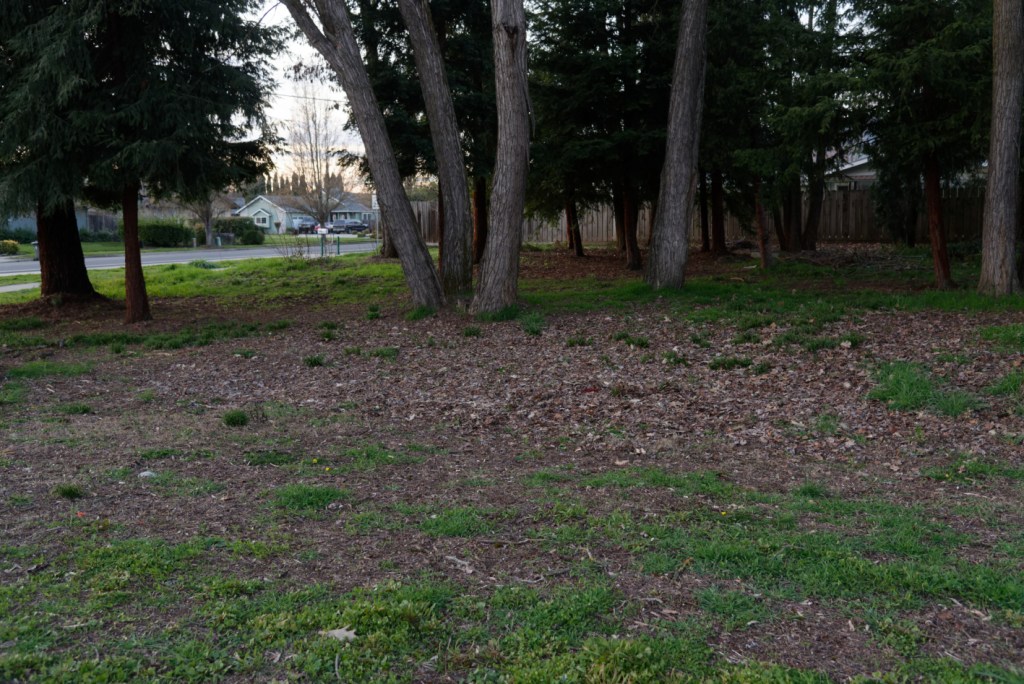
This was the area of the park where we all assembled.

oooo

oooo

oooo

oooo

oooo

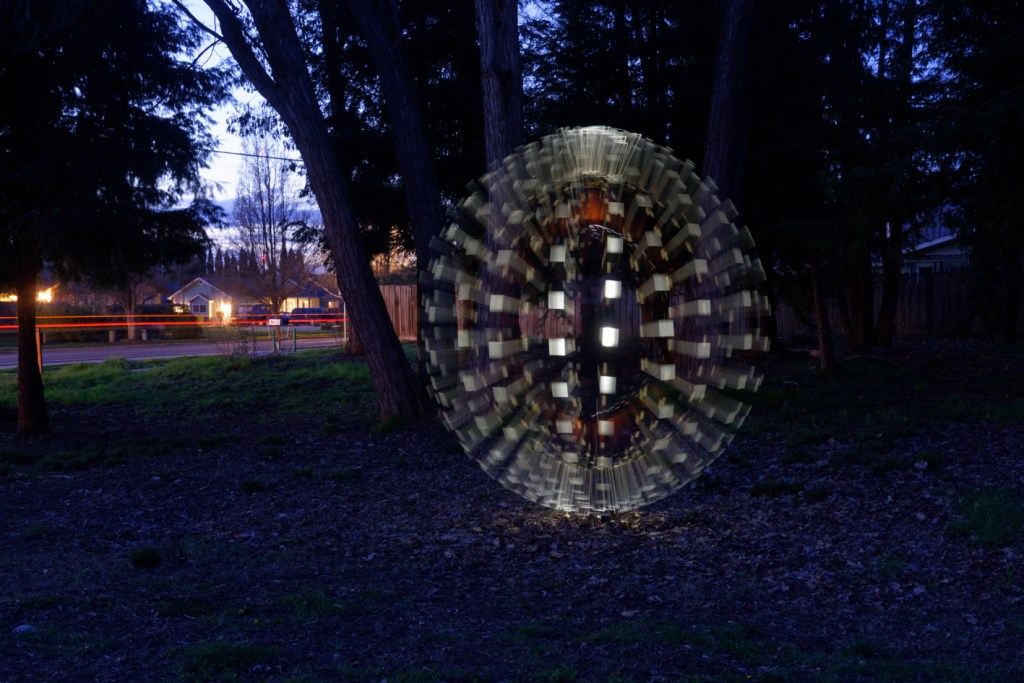
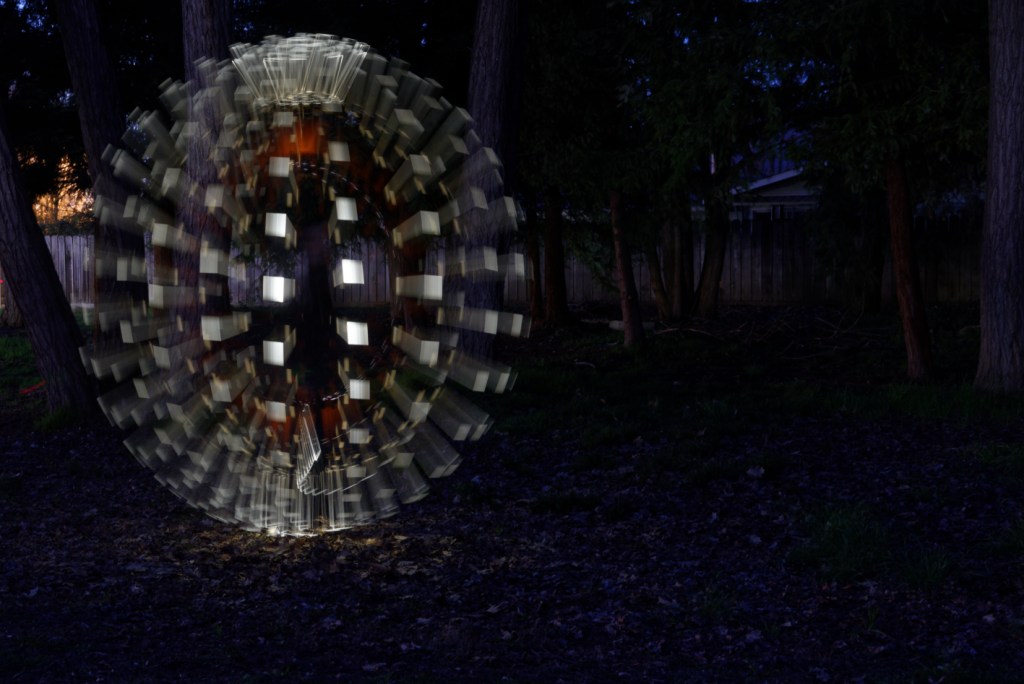
In the main a single individual stood in front of us waving a light board in a synchronised manner. It was a flashing board. But there were times when he was joined by a woman and they both swung their own light boards.

Apart from cropping the images a little these photographs are as they were shot!

Talk about incredible!

(The shots were taken with a Nikon D750 with a Nikon 24-120 mm lens attached.

The settings were approximately 30 seconds Bulb f7.1 ISO 320.)

Lessons

Nothing to do with dogs but everything to do with the future!

An item in The Conversation recently was not only interesting from a scientific point-of-view but also it had real lessons for the way that we humans are interfering with the planet.

As The Conversation introduced the article:

A mile below the surface of the Greenland ice sheet, an ancient Arctic ecosystem is preserved in the frozen soil. How scientists discovered its leaves, twigs and mosses is a story in itself. It starts with a secret military base built into the northern Greenland ice.

Scientists Andrew Christ and Paul Bierman describe the discovery as something of a Rosetta stone for understanding how well the ice sheet stood up to global warming in the past – and how it might respond in the future.

So, for a change, read something that has nothing to do with our furry friends.

ooOOoo

Ancient leaves preserved under a mile of Greenland’s ice – and lost in a freezer for years – hold lessons about climate change

Remnants of ancient Greenland tundra were preserved in soil beneath the ice sheet. Andrew Christ and Dorothy Peteet, CC BY-ND

Andrew Christ, University of Vermont and Paul Bierman, University of Vermont

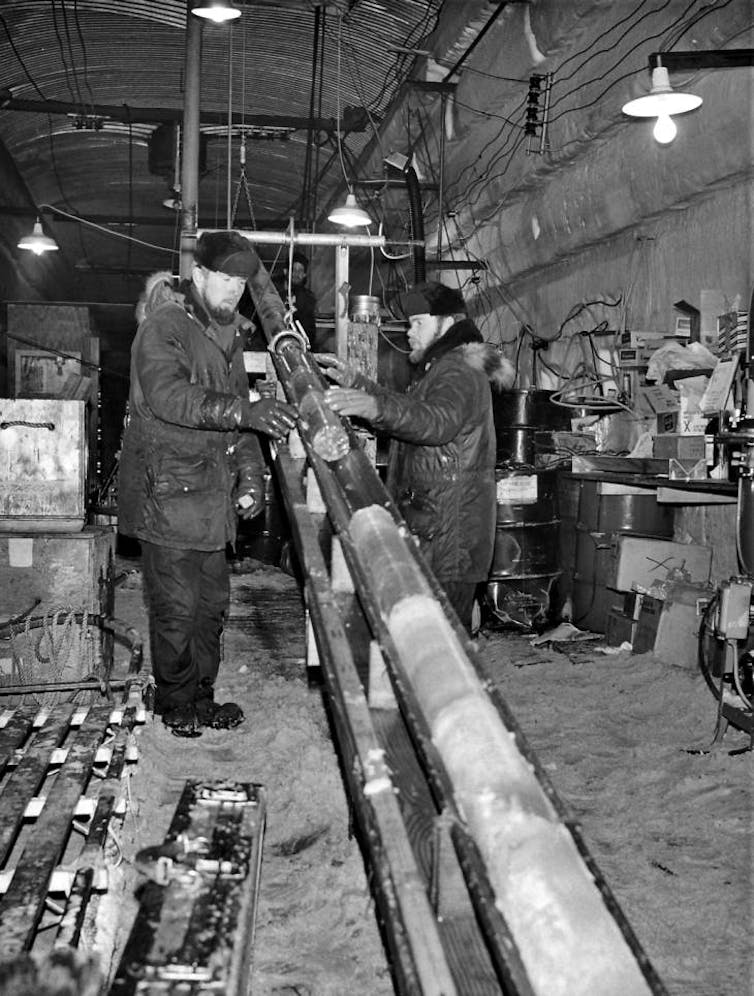
In 1963, inside a covert U.S. military base in northern Greenland, a team of scientists began drilling down through the Greenland ice sheet. Piece by piece, they extracted an ice core 4 inches across and nearly a mile long. At the very end, they pulled up something else – 12 feet of frozen soil.

The ice told a story of Earth’s climate history. The frozen soil was examined, set aside and then forgotten.

Half a century later, scientists rediscovered that soil in a Danish freezer. It is now revealing its secrets.

Using lab techniques unimaginable in the 1960s when the core was drilled, we and an international team of fellow scientists were able to show that Greenland’s massive ice sheet had melted to the ground there within the past million years. Radiocarbon dating shows that it would have happened more than 50,000 years ago. It most likely happened during times when the climate was warm and sea level was high, possibly 400,000 years ago.

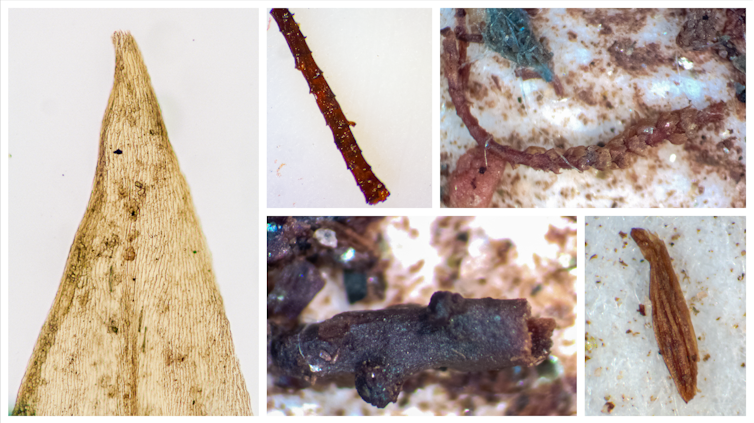
And there was more. As we explored the soil under a microscope, we were stunned to discover the remnants of a tundra ecosystem – twigs, leaves and moss. We were looking at northern Greenland as it existed the last time the region was ice-free. Our peer-reviewed study was published on March 15 in Proceedings of the National Academy of Sciences.

Two men with the ice core
Engineers pull up a section of the 4,560-foot-long ice core at Camp Century in the 1960s. U.S. Army Corps of Engineers

Paul Bierman, a geomorphologist and geochemist, describes what he and his colleagues found in the soil.

With no ice sheet, sunlight would have warmed the soil enough for tundra vegetation to cover the landscape. The oceans around the globe would have been more than 10 feet higher, and maybe even 20 feet. The land on which Boston, London and Shanghai sit today would have been under the ocean waves.

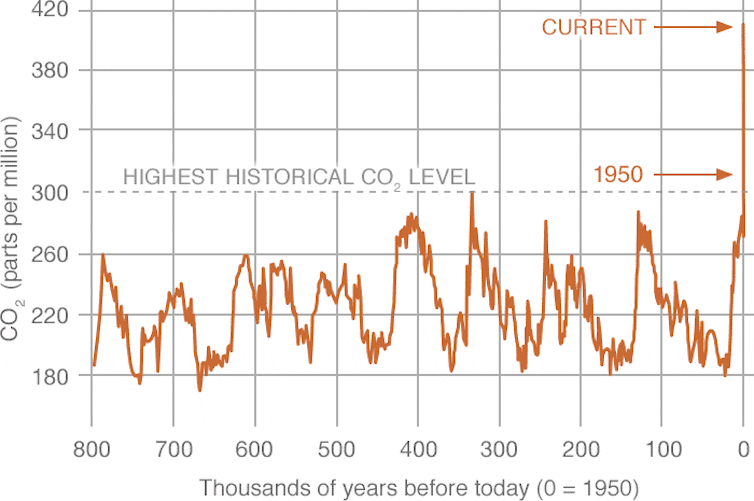
All of this happened before humans began warming the Earth’s climate. The atmosphere at that time contained far less carbon dioxide than it does today, and it wasn’t rising as quickly. The ice core and the soil below are something of a Rosetta Stone for understanding how durable the Greenland ice sheet has been during past warm periods – and how quickly it might melt again as the climate heats up.

Secret military bases and Danish freezers

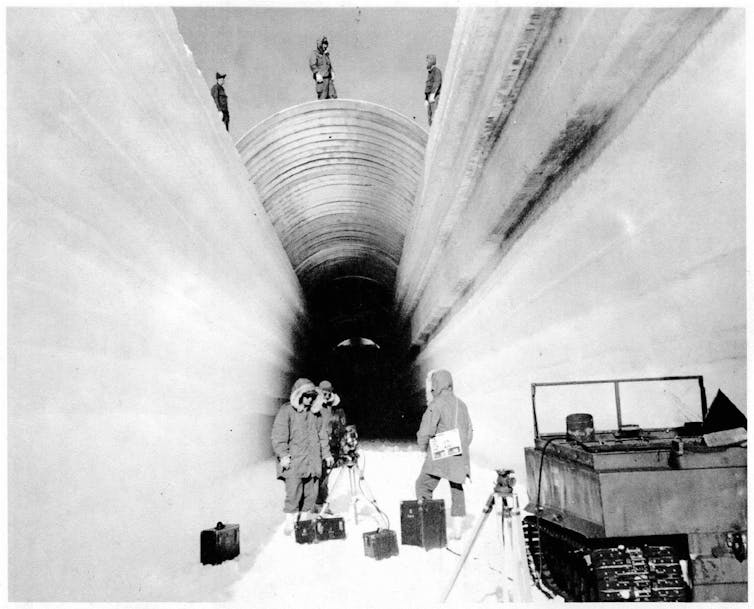
The story of the ice core begins during the Cold War with a military mission dubbed Project Iceworm. Starting around 1959, the U.S. Army hauled hundreds of soldiers, heavy equipment and even a nuclear reactor across the ice sheet in northwest Greenland and dug a base of tunnels inside the ice. They called it Camp Century.

It was part of a secret plan to hide nuclear weapons from the Soviets. The public knew it as an Arctic research laboratory. Walter Cronkite even paid a visit and filed a report.

Workers cover a trench to build the under-ice military base
Workers build the snow tunnels at the Camp Century research base in 1960. U.S. Army Corps of Engineers

Camp Century didn’t last long. The snow and ice began slowly crushing the buildings inside the tunnels below, forcing the military to abandon it in 1966. During its short life, however, scientists were able to extract the ice core and begin analyzing Greenland’s climate history. As ice builds up year by year, it captures layers of volcanic ash and changes in precipitation over time, and it traps air bubbles that reveal the past composition of the atmosphere.

One of the original scientists, glaciologist Chester Langway, kept the core and soil samples frozen at the University at Buffalo for years, then he shipped them to a Danish archive in the 1990s, where the soil was soon forgotten.

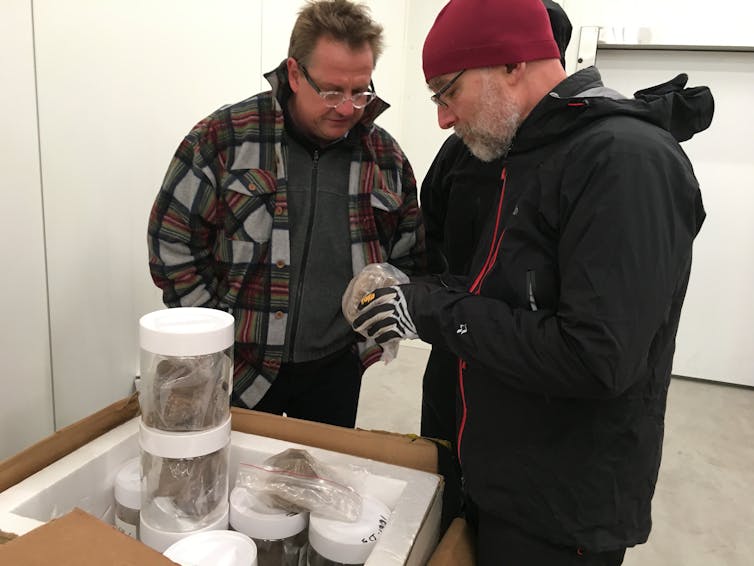
A few years ago, our Danish colleagues found the soil samples in a box of glass cookie jars with faded labels: “Camp Century Sub-Ice.”

Scientists look at the sediment in jars
Geomorphologist Paul Bierman (right) and geochemist Joerg Schaefer of Columbia University examine the jars holding Camp Century sediment for the first time. They were in a Danish freezer set at -17 F. Paul Bierman, CC BY-ND

A surprise under the microscope

On a hot July day in 2019, two samples of soil arrived at our lab at the University of Vermont frozen solid. We began the painstaking process of splitting the precious few ounces of frozen mud and sand for different analyses.

First, we photographed the layering in the soil before it was lost forever. Then we chiseled off small bits to examine under the microscope. We melted the rest and saved the ancient water.

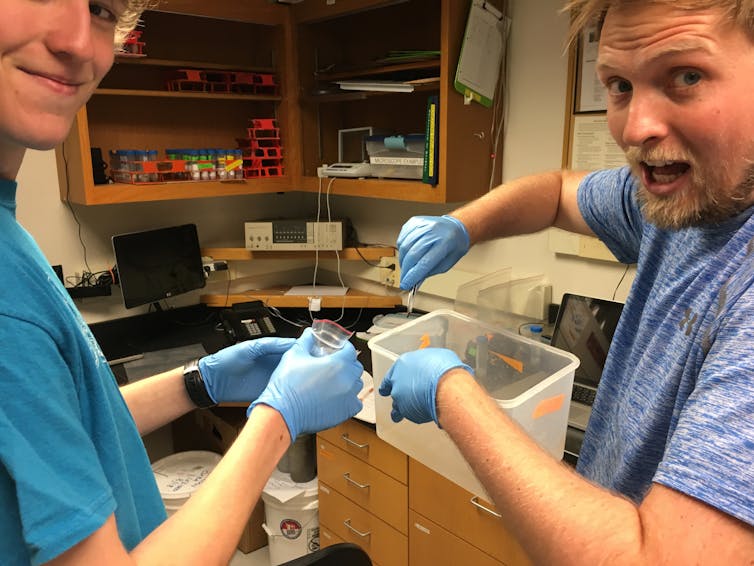
Then came the biggest surprise. While we were washing the soil, we spotted something floating in the rinse water. Paul grabbed a pipette and some filter paper, Drew grabbed tweezers and turned on the microscope. We were absolutely stunned as we looked down the eyepiece.

Staring back at us were leaves, twigs and mosses. This wasn’t just soil. This was an ancient ecosystem perfectly preserved in Greenland’s natural deep freeze.

One of the authors looking excited
Glacial geomorphologist Andrew Christ (right), with geology student Landon Williamson, holds up the first twig spotted as they washed a sediment sample from Camp Century. Paul Bierman, CC BY-ND

Dating million-year-old moss

How old were these plants?

Over the last million years, Earth’s climate was punctuated by relatively short warm periods, typically lasting about 10,000 years, called interglacials, when there was less ice at the poles and sea level was higher. The Greenland ice sheet survived through all of human history during the Holocene, the present interglacial period of the last 12,000 years, and most of the interglacials in the last million years.

But our research shows that at least one of these interglacial periods was warm enough for a long enough period of time to melt large portions of the Greenland ice sheet, allowing a tundra ecosystem to emerge in northwestern Greenland.

We used two techniques to determine the age of the soil and the plants. First, we used clean room chemistry and a particle accelerator to count atoms that form in rocks and sediment when exposed to natural radiation that bombards Earth. Then, a colleague used an ultra-sensitive method for measuring light emitted from grains of sand to determine the last time they were exposed to sunlight.

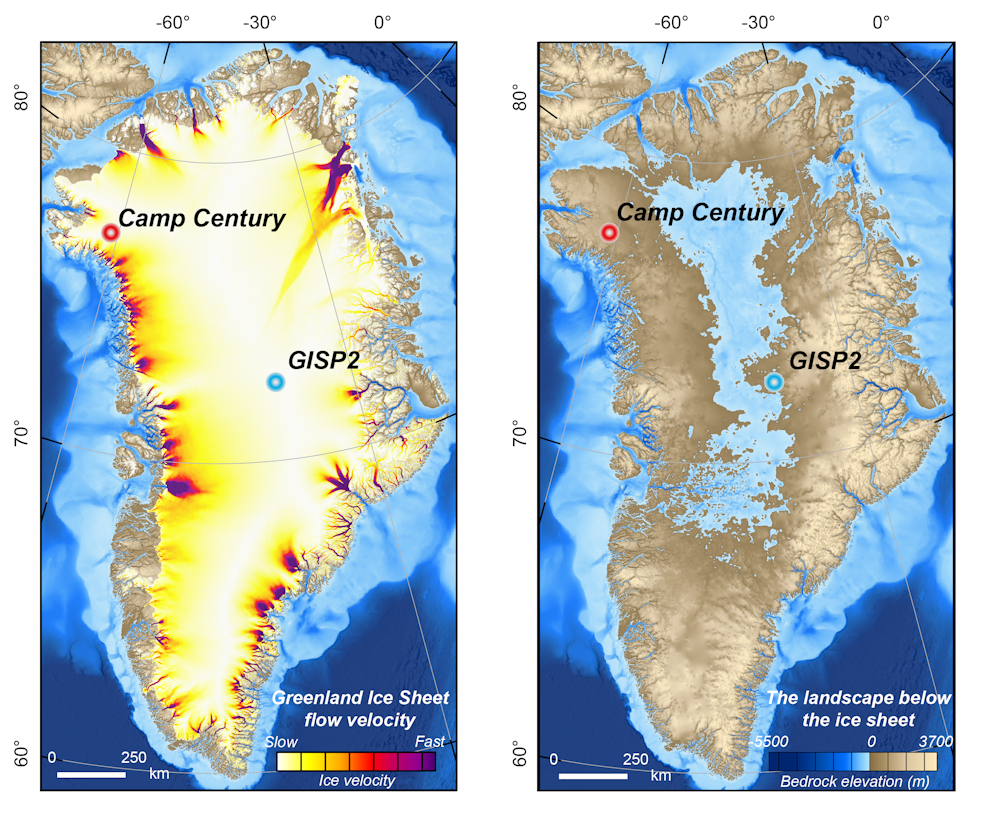
Maps of Greenland Ice Sheet speed and bedrock elevation
Maps of Greenland show the speed of the ice sheet as it flows (left) and the landscape hidden beneath it (right). BedMachine v3; Copernicus Climate Change Service (C3S), CC BY-ND

Chart of CO2 concentrations over time
The concentration of carbon dioxide in the atmosphere today is well beyond past levels determined from ice cores. On March 14, 2021, the CO2 level was about 417 ppm. NASA Jet Propulsion Laboratory, CC BY-ND

The million-year time frame is important. Previous work on another ice core, GISP2, extracted from central Greenland in the 1990s, showed that the ice had also been absent there within the last million years, perhaps about 400,000 years ago.

Lessons for a world facing rapid climate change

Losing the Greenland ice sheet would be catastrophic to humanity today. The melted ice would raise sea level by more than 20 feet. That would redraw coastlines worldwide.

About 40% of the global population lives within 60 miles of a coast, and 600 million people live within 30 feet of sea level. If warming continues, ice melt from Greenland and Antarctica will pour more water into the oceans. Communities will be forced to relocate, climate refugees will become more common, and costly infrastructure will be abandoned. Already, sea level rise has amplified flooding from coastal storms, causing hundreds of billions of dollars of damage every year.

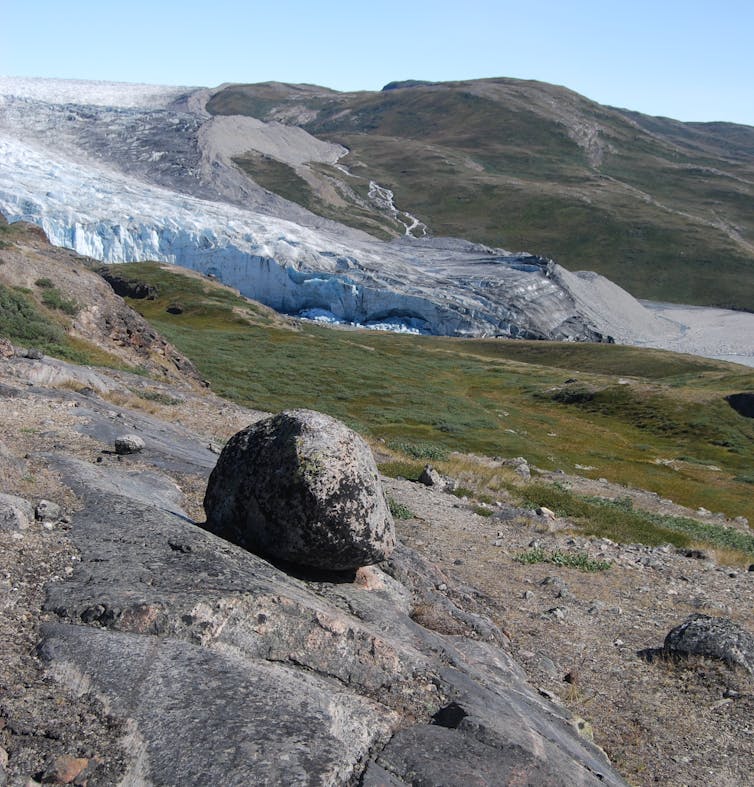
A rock and tundra with a glacier in the background
Tundra near the Greenland ice sheet today. Is this what Camp Century looked like before the ice came back sometime in the last million years? Paul Bierman, CC BY-ND

The story of Camp Century spans two critical moments in modern history. An Arctic military base built in response to the existential threat of nuclear war inadvertently led us to discover another threat from ice cores – the threat of sea level rise from human-caused climate change. Now, its legacy is helping scientists understand how the Earth responds to a changing climate.

Andrew Christ, Postdoctoral Fellow and Lecturer in Geology, University of Vermont and Paul Bierman, Fellow of the Gund Institute for Environment, Professor of Geology and Natural Resources, University of Vermont

This article is republished from The Conversation under a Creative Commons license. Read the original article.

ooOOoo

The article is republished with the full permission of The Conversation.

I hope you read it because the way the climate is changing is affecting all of us now and sooner rather than later we have all got to amend our ways. Indeed, when I look at anyone who has potentially thirty or more years of life in them I ponder what their future is going to be like. And, of course, it won’t be a drastic change in thirty years it is already happening now albeit at times difficult to see.

But there is not one scintilla of doubt that we humans are the cause and we humans have to be the solution!

A re-run of March, 2018

A very frustrating day!

I powered on my Mac to see some malware present. It was the “ActivityInputd” malware.

I spent a great deal of time trying to get rid of it, including a long call with Apple Support and an attempt to install Malwarebytes software. All to no avail at present.

So I just decided to republish the post I published on March 4th, 2018. It was a Picture Parade. Number Two Hundred and Thirty-Three.

ooOOoo

Closer to home!

In a reply to a post response left by fellow blogger Tails Around the Ranch I wrote:

Came up to Oregon for the rain, found a property that had been empty for years, Bank owned, put in a silly offer that was accepted, sold our Payson home and moved here, with 12 dogs and 6 cats, in October, 2012! Love the place. Will share some pictures of here next Sunday!

So today I am sharing a few pictures with you all. (All of them taken very recently.)

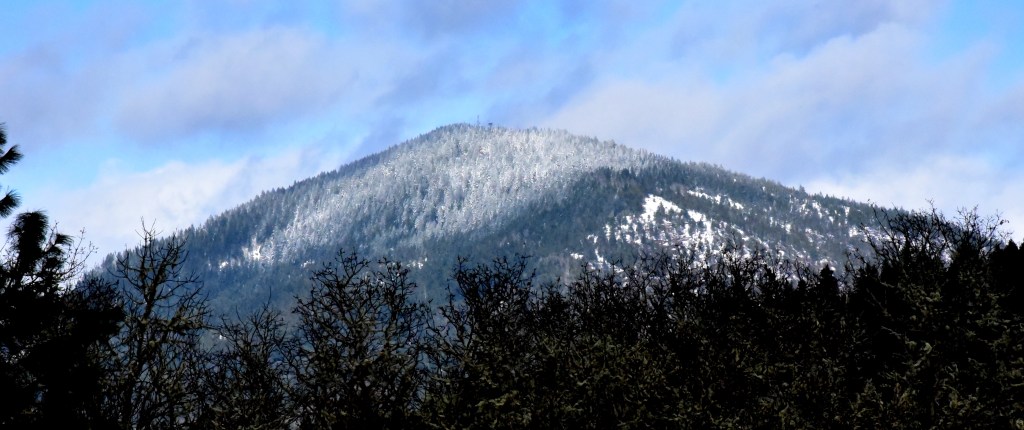
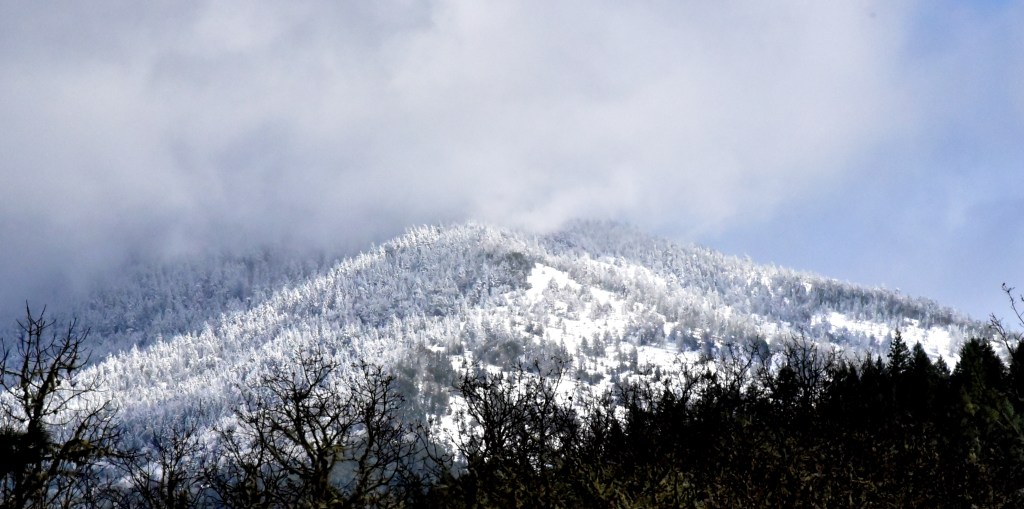
Mount Sexton just to the North-East of us. Take Feb. 24th.

oooo

Another, more starker, Mt. Sexton taken two days later.

oooo

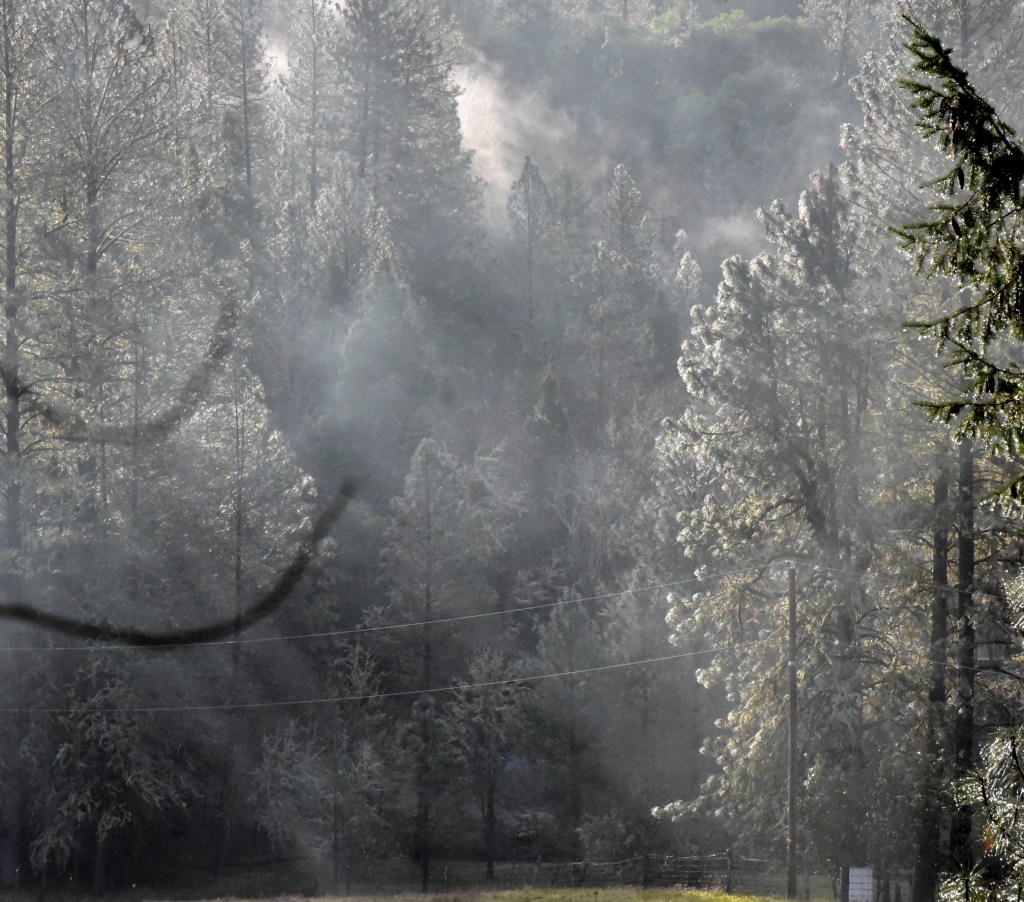
Smoke from our neighbour’s wood fire mingles in the damp air of the trees in the corner of our property. Taken March 1st.

oooo

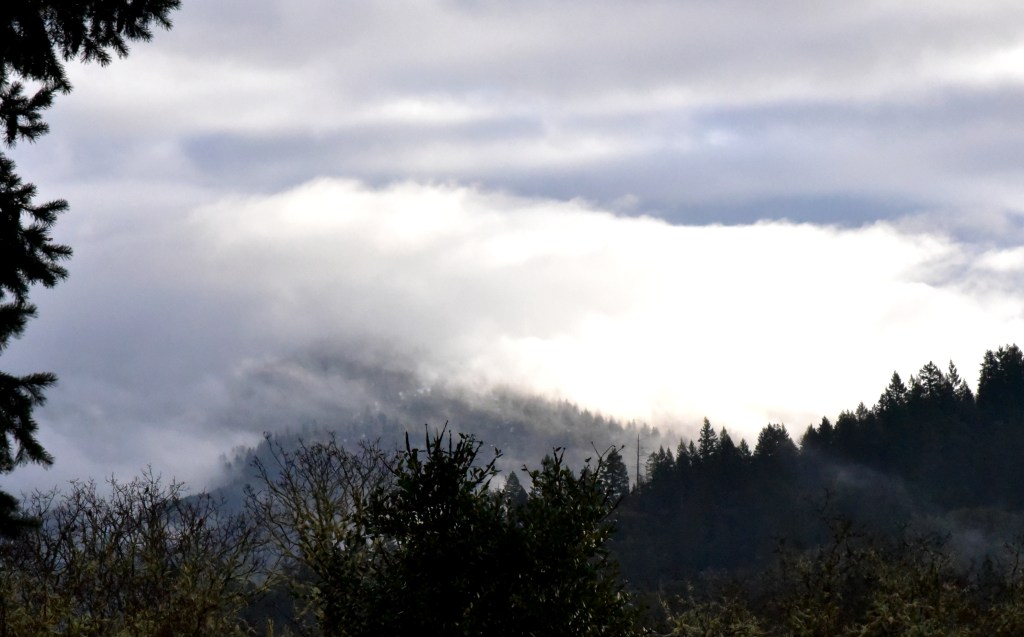
Rain-laden clouds almost mask Mt. Sexton. Taken March 1st.

oooo

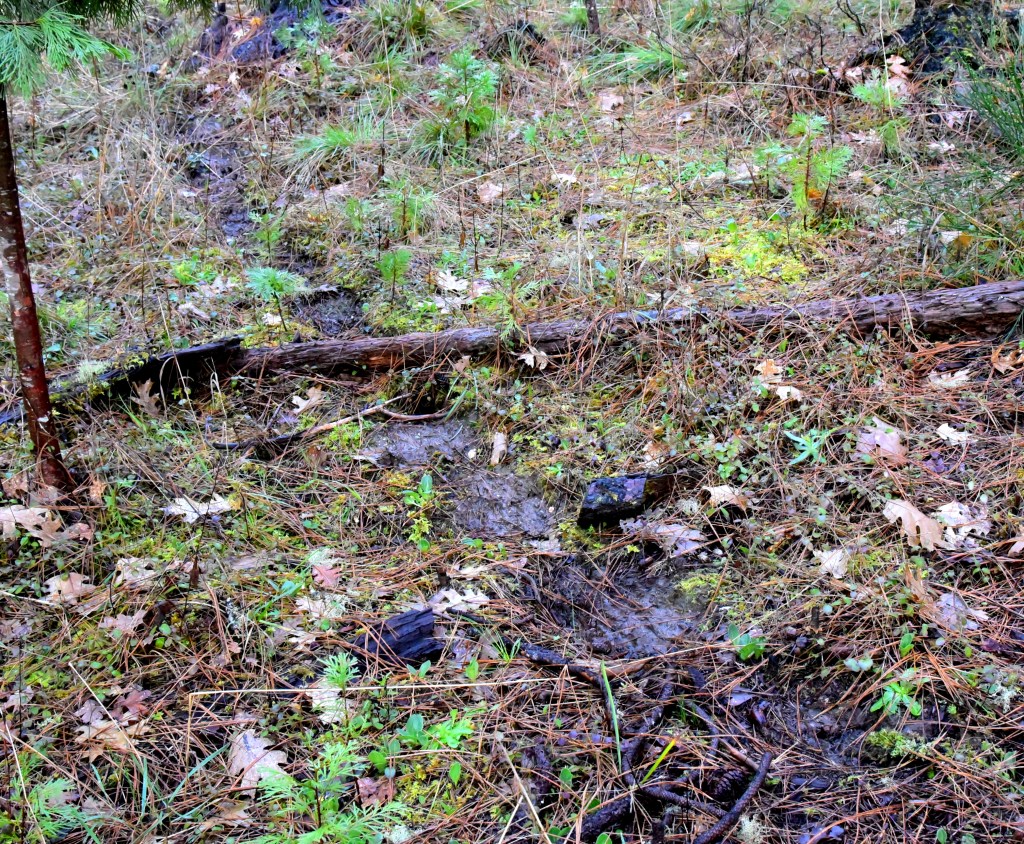
The deer that we feed each morning have made their own trail. March 1st.

oooo

The deer trail to the area by the stables where the food is put out each morning. March 1st.

oooo

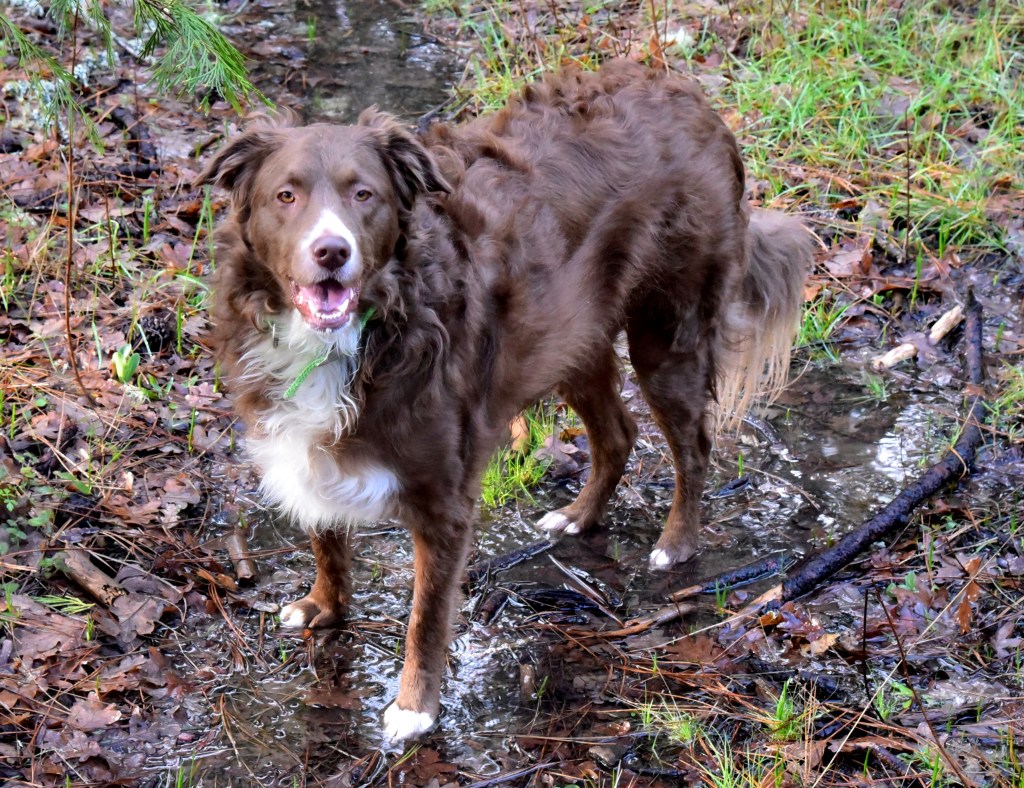
Young, dear Oliver playing in that deer trail. March 1st.

oooo

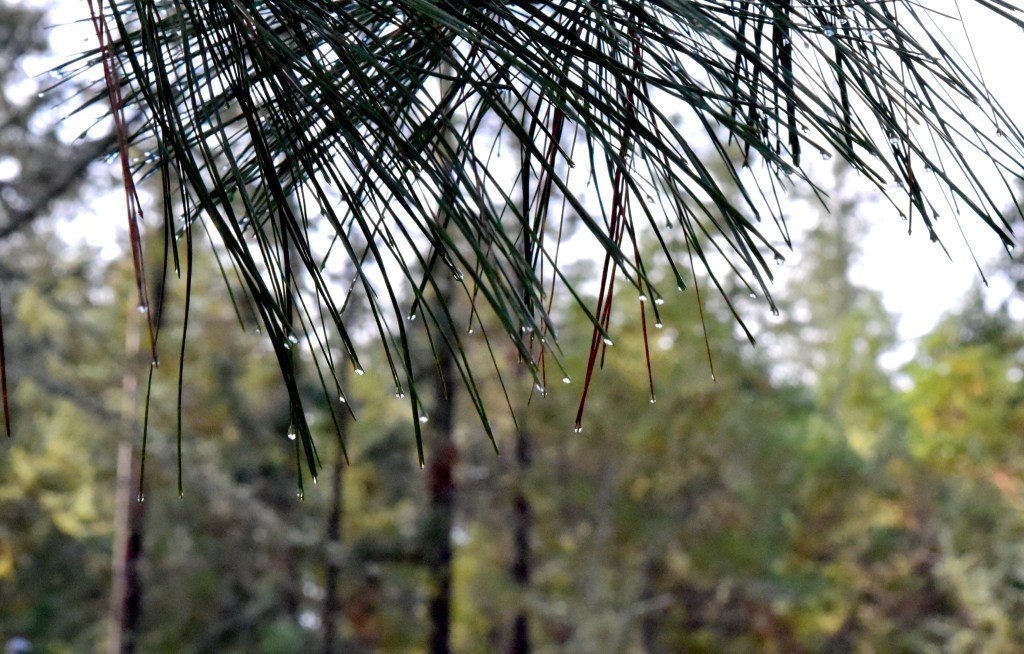
The rain drops on these pine needles caught my eye. March 1st.

oooo

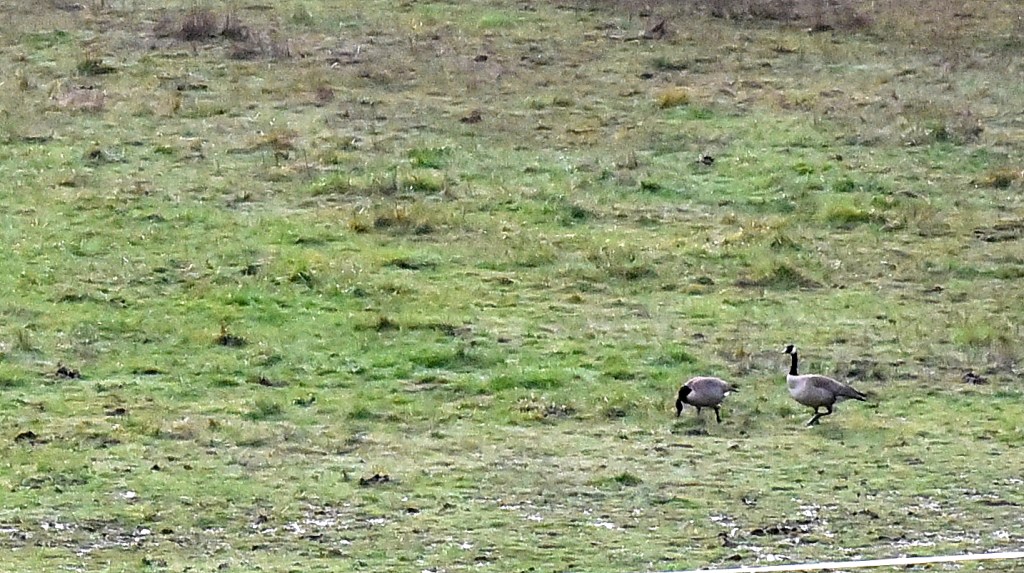
Not just deer that coming feeding on our property. March 1st.

oooo

Another scene that caught my eye. March 1st.

oooo

Final picture showed how the storm deteriorated during that first day of March. Taken at 2pm.

So this is why Jeannie and me and all our dogs, not to mention the horses, love living here.

ooOOoo

It was chosen purely at random but it is a real pearl of a post.

My how things change!

More from the family.

And it involves dogs! Well in a roundabout way!

Back on Monday I spoke of Rik and his company Ahead4Heights.

Rik then sent me another piece of news about a film that he produced at short notice for Brixham Council.

Recent projects being a the Front page of the local rag, a roof inspection in Teignmouth for one of the largest local roofing contractors who is now on board and promising more work.

More interesting was a commission from Brixham Council for a short film showing the natural beauty of an area near Brixham in order to oppose a planning application for 400 houses. I received a call on that Friday telling me they needed the film for the public inquiry the following Tuesday! With only that Sunday looking good for flying I managed to fly, edit and upload the film later that evening so they had it for Monday morning, it was played at the hearing and has become a pivotal part of the evidence and was watched over 600 times over the following few days.


The land in question is dog walkers heaven and used by all the local residents.

Here is that front page of the Herald Express.

I regret that it is probably far too small a file to show the details. Never mind!

It’s family!

A little promotional video!

My son, Alex, recently shared on Facebook a video posted by Rik Christiansen who is the son of my elder sister, Rhona, now dead unfortunately.

This is what Alex said:

Anybody who needs Drone survey’s, my cousin has a business in Devon

Please go across to Rik’s website, Ahead4Heights, and also watch his promotional video; luckily on YouTube so it may be shared.

This is a short promotional film that showcases Ahead4Heights abilities within the drone industry as well as our production and editing skills. All footage, music, sound design, editing and production was created in-house. We are a complete solution.

Who knows!

It is not the first time I have written about Rik! Here is a previous post.

Well done the team at NASA.

What an outstanding feat.

Many, many congratulations!

On Feb. 18, 2021, NASA’s Mars Perseverance rover makes its final descent to the Red Planet.

A little more information:

Landed: Feb. 18, 2021, 12:55 p.m. PST (3:55 p.m. EST), (20:55 UTC)

Landing Site: Jezero Crater, Mars

Mission Duration: At least one Mars year (about 687 Earth days)

Main Job: The Perseverance rover will seek signs of ancient life and collect rock and soil samples for possible return to Earth.

As someone who watched the television non-stop in 1969 to see man’s remarkable achievement, NASA has been an organisation of considerable interest all my life.

At 10:56 p.m. EDT Armstrong is ready to plant the first human foot on another world. With more than half a billion people watching on television, he climbs down the ladder and proclaims: “That’s one small step for a man, one giant leap for mankind.

What an achievement!

Learning with Lisa!

It is amazing what can be shared these days!

But to get you in the mood, I am going to start with this video about small dog breeds for young persons.

Right, now to the essence of today’s post.

My son, Alex, recently sent me details of a new teaching programme introduced by his partner, Lisa. It is called Learning with Lisa.

It consists of 32 videos each one being published at 0700 British time (presently GMT). In other words one new video each working day; i.e. Monday to Friday.

Here is the background to this new service.

Learning with Lisa.

I am a qualified primary school teacher of 26 years now teaching a series of early phase phonics lessons designed for children in the Early Years Foundation Stage (pre-school and reception).

The first series – “Preparing for reading and writing in the Early Years” aims to give children, aged 3 to 4, the best possible start with early literacy skills by providing fun yet challenging activities 5 days a week. Some of the later sections are also suitable for children aged 4 to 5.

These videos are suitable for parents, carers and their children, trainee teachers and other early-years practitioners.

Here is the link to the YouTube channel that you will need if you want to subscribe to each new video:  https://www.youtube.com/channel/UCGlsoYGeT6YOZAvbsOWe9YQ/featured

Preparing for reading and writing in the Early years.

The video gives an outline of the lessons included in the series and discusses the teacher’s philosophy. The video is aimed at parents, carers and early-years practitioners and gives an understanding of the processes involved in early phonics, reading and writing.

It will help viewers to navigate their way through the series so their child can participate in a fun and challenging experience. The series aims to give pre-school children the best possible start to early literacy.

Below, this is the first teaching video in the series.

If there are any readers willing to share and subscribe to Lisa’s channel please do.

Especially those that have 3-4 year old children and/or grandchildren, that would be great.

Have a think as to your friends who have young children and send them this link: Please!