Category: taxation

Voting for hope.

Considered reflections to yesterday’s post.

Yesterday, I published Bitter Lake ripples, a post that, in turn, was my response to the fabulous comments left by readers of my earlier post Oil, money, banks, guns and blood.  The overall feeling I read in those comments was one of terrible uncertainty about these present times. Or in the words of Sue Dreamwalker in response to a comment left by Patrice Ayme.

I have to say Patrice.. I agree with your comment here… And yes people are not understanding the whole of what is going on.. The Truth of it would seem unbelievable..

Patrice, in a post published on Monday entitled Arm Ukraine, Disarm Bankers sent shivers down my spine with the suggestion, the strong suggestion, that Ukraine, if not handled properly by ‘the West’ could be a tipping point into another major war between Europe (and the USA?) and Russia.  Here’s an extract from Patrice’s post:

The way it was said, in conjunction with Putin’s recent admission that Russian “volunteers” were fighting in Ukraine, is basically a declaration of war. On top of this, the head of the Eastern Ukraine rebels declared that he was raising a 100,000 men army. This means he expect tens of thousands of Russian troops (Putin’s “volunteers”) to cross the border.

This is not contained. Putin is billowing out of control, all by himself. One has to see what the combination of Putin’s dictatorial powers, media control, psychology and sinking economy leads to. Let me spell it out.

Once Putin has conquered Ukraine, he will push for more: he is already partly occupying Moldavia, WEST of Ukraine. Putin is also messing up with Hungary: there were street demonstrations about this, just yesterday, in Budapest. Putin uses the fact that Hungary is extremely dependent upon Russia’s fossil fuels. Merkel, who desperately wants to avoid war with Putin, flew to Budapest in emergency, to sort the situation out.

Patrice continues the warning of possible terrible times ahead in a subsequent post: Mental Inertia, Evil’s Friend, published yesterday.

Just as it takes a long time to erect, or change a vast building, so it is with the brain. The brain has inertia. Thus psychological inertia.

This mental inertia is why human beings tend to go on with a task, or with an attitude, once they got launched into it (a Jihadist laden with explosives just flew by).

Once a force is applied to an object, for example a propaganda to a brain, it tends to gather momentum, and develop ever more inertia.

Putin of course creates his own propaganda, and then can listen to it, reinforcing his deviance, in a self-reflective way. It’s all the more efficient if others repeat his ideas, and he listens to them. Actually that’s not just a problem with Putin, but with all Great Leaders. (And that’s one reason why Great Leadership has to be discontinued, and replaced by Direct Democracy.)

This amplifies the inertia.

By not fiercely opposing Putin, one collaborates with him. It is not just a question of sanctions. Putin is a liar, and an aggressive one, he should be publicly called for what he is.

Thus in terms of my own personal ideas, I freely admit to struggling to see things clearly.  Simply because I find it very difficult to get to the heart of these international issues through not having access to clear, impartial commentators who know what they are speaking about. As Patrice infers much of the media is corrupted by self-serving agendas.

However, on balance, despite Patrice Ayme being a ‘nom-de-plume’ and me having no idea who the person behind the label really is, I do trust his (?) writings and believe that Patrice writes from a position of having very good access to the inner workings of the US Government. (I am not privy to anything to support my proposition; just my guess.)

The other commentator whose opinions and judgements are trusted by me in equal fashion is George Monbiot. Mr. Monbiot has been gracious to grant permission to me for his essays to be republished here on Learning from Dogs.

On the 28th January, Mr. Monbiot published an essay that in words better than I could write encapsulates my response to the comments left on my Bitter Lake ripples post. Here is that post from George Mobiot.

ooOOoo

The Lamps Are Coming On All Over Europe

28th January 2015

By George Monbiot, published in the Guardian 28th January 2015

Here is the first rule of politics: if you never vote for what you want, you never get it. We are told at every election to hold our noses, forget the deficiencies and betrayals and vote Labour yet again, for fear of something worse(1). And there will, of course, always be something worse. So at what point should we vote for what we want, rather than keep choosing between two versions of market fundamentalism? Sometime this century? Or in the next? Follow the advice of the noseholders and we will be lost forever in Labour’s Bermuda triangulation.

Perhaps there was a time when this counsel of despair made sense. No longer. The lamps are coming on all over Europe. As in South America, political shifts that seemed impossible a few years earlier are now shaking the continent. We knew that another world was possible. Now, it seems, another world is here: the sudden death of the neoliberal consensus. Any party that claims to belong to the left but does not grasp this is finished.

Syriza, Podemos, Sinn Fein, the SNP; now a bright light is shining in England too, as the Green party stokes the radical flame that Labour left to gutter. On Tuesday morning, its membership in England and Wales passed 50,000(2); a year ago it was less than 15,000. A survey by the website voteforpolicies.org.uk reports that in blind tests (the 500,000 people it has polled were unaware of which positions belong to which parties), the Green Party’s policies are more popular than those of any other. If people voted for what they want, the Greens would be the party of government.

There are many reasons for this surge, but one of them must be a sense of popular ownership. Green party policies are determined democratically. Emerging from debates led mostly by younger members(3), they feel made for their time, while those of the major parties appear trapped in the 1980s.

Let me give you a flavour of the political transformation the Green Party seeks. There would be no prime minister of the kind we have today, no secretaries of state. Instead, Parliament would elect policy committees which in turn appoint convenors(4). It would also elect a First Minister, to chair the convenors’ committee. Parliament, in other words, would be sovereign rather than subject to the royal prerogative prime ministers abuse, leaders would be elected by the whole body and its various parties would be obliged to work together, rather than engage in perennial willy-waving.

Local authorities would set the taxes they chose. Local currencies, which have proved elsewhere to have transformative effects in depressed areas (see Bernard Lietaer’s book The Future of Money(5)) would become legal tender(6). Private banks would no longer be permitted to create money(7) (at the moment they issue 97% of our money supply, in the form of debt). Workers in limited companies would have the legal right, following a successful ballot, to buy them out and create cooperatives(8), with funding from a national investment bank.

The hideously unfair council tax system would be replaced by land value taxation(9), through which everyone would benefit from the speculative gains now monopolised by a few. All citizens would receive, unconditionally, a basic income(10), putting an end to insecurity and fear and to the punitive conditions attached to benefits, which have reduced recipients almost to the status of slaves.

Compare this vision of hope to Labour’s politics of fear. Compare it to a party so mesmerised by the City and the Daily Mail that it has promised to sustain the Tory cuts for “decades ahead”(11) and to “finish that task on which [the Chancellor] has failed”: eradicating the deficit.

Far too late, a former Labour minister, Peter Hain, now recognises that, inasmuch as the books need balancing, it can be done through measures like a financial transaction tax and a reform of national insurance(12), rather than through endless cuts. These opportunities have been dangling in front of Labour’s nose since 2008(13), but because appeasing the banks and the corporate press was deemed more important than preventing pain and suffering for millions, they have not been taken. Hain appears belatedly to have realised that austerity is a con, a deliberate rewriting of the social contract to divert our common wealth to the elite. There’s no evidence that the frontbench is listening.

Whether it wins or loses the general election, Labour is probably finished. It would take a generation to replace the sycophants who let Blair and Brown rip their party’s values to shreds. By then it will be history. If Labour wins in May, it is likely to destroy itself faster and more surely than if it loses, through the continued implementation of austerity. That is the lesson from Europe.

Fearful voting shifts the whole polity to the right. Tony Blair’s obeisance to corporate power enabled the vicious and destructive policies the Coalition now pursues(14). The same legacy silences Labour in opposition, as it pioneered most of the policies it should oppose. It is because we held our noses before that there is a greater stink today. So do we keep voting for a diluted version of Tory politics, for fear of the concentrate? Or do we start to vote for what we want? Had the people of this nation heeded the noseholders a century ago, we would still be waiting for the Liberal Party to deliver universal healthcare and the welfare state.

Society moves from the margins, not the centre. Those who wish for change must think of themselves as the sacrificial margin: the pioneering movement that might not succeed immediately, but that will eventually deliver sweeping change. We cannot create a successful alternative to the parties that have betrayed us until we start voting for it. Do we start walking, or just keep talking about the journey we might one day take?

Power at the moment is lethal. Whichever major party wins this election, it is likely to destroy itself through the pursuit of policies that almost no one wants. Yes, it might mean five more years of pain, though I suspect in these fissiparous times it won’t last so long. And then it all opens up. This is what we must strive for; this is the process that begins in May by voting, regardless of tactical considerations, for parties offering a genuine alternative. Change arises from conviction. Stop voting in fear. Start voting for hope.

http://www.monbiot.com

References:

1. http://www.theguardian.com/commentisfree/2014/dec/09/labour-tories-vote-osborne

2. Green Party office, by email, 27th January 2015

3. http://bright-green.org/green-movement/how-the-green-party-changed-itself-to-make-the-greensurge-possible/

4. http://policy.greenparty.org.uk/pa.html

5. http://www.lietaer.com/writings/books/the-future-of-money/

6. http://policy.greenparty.org.uk/ec.html#EC678

7. http://policy.greenparty.org.uk/ec.html

8. http://policy.greenparty.org.uk/in.html

9. http://policy.greenparty.org.uk/ec.html

10. http://policy.greenparty.org.uk/ec.html

11. http://press.labour.org.uk/post/87284550049/long-termism-in-public-finance-speech-by-chris

12. http://www.theguardian.com/politics/2015/jan/22/labour-radical-counter-greens-peter-hain

13. I was not the first to propose these alternatives to austerity Peter Hain has just discovered, but even I had got there by 2011: http://www.theguardian.com/commentisfree/2011/mar/06/march-26-protest-aims-first-draft

14. http://www.monbiot.com/books/captive-state/

ooOOoo

I said that Mr. Monbiot’s words were much finer than my own. No better illustrated than by his closing three sentences:

“Change arises from conviction. Stop voting in fear. Start voting for hope.”

A breath of common-sense.

George Monbiot perfectly spells it out.

Regular readers of this place will know that it is a rare couple of weeks without a republication of a George Monbiot essay.  His voice seems so often to be a ray of common-sense shining into a dark cave of present-day madness. None more obvious than this essay that was published last Monday under the title of There Is An Alternative.

It’s a huge honour to be able to share this with you, dear readers.

ooOOoo

There Is An Alternative

December 8, 2014

The great political question of our age is what to do about corporate power. It’s time we answered it.
By George Monbiot, published in the Guardian 8th December 2014

Does this sometimes feel like a country under enemy occupation? Do you wonder why the demands of so much of the electorate seldom translate into policy? Why the Labour Party, like other former parties of the left, seems incapable of offering effective opposition to market fundamentalism, let alone proposing coherent alternatives? Do you wonder why those who want a kind and decent and just world, in which both human beings and other living creatures are protected, so often appear to find themselves confronting the entire political establishment?

If so, you have already encountered corporate power. It is the corrupting influence that prevents parties from connecting with the public, distorts spending and tax decisions and limits the scope of democracy. It helps to explain the otherwise inexplicable: the creeping privatisation of health and education, hated by almost all voters; the private finance initiative, which has left public services with unpayable debts(1,2); the replacement of the civil service with companies distinguished only by their incompetence(3); the failure to re-regulate the banks and to collect tax; the war on the natural world; the scrapping of the safeguards that protect us from exploitation; above all the severe limitation of political choice in a nation crying out for alternatives.

There are many ways in which it operates, but perhaps the most obvious is through our unreformed political funding system, which permits big business and multimillionaires effectively to buy political parties. Once a party is obliged to them, it needs little reminder of where its interests lie. Fear and favour rule.

And if they fail? Well, there are other means. Before the last election, a radical firebrand said this about the lobbying industry(4): “It is the next big scandal waiting to happen … an issue that exposes the far-too-cosy relationship between politics, government, business and money. … secret corporate lobbying, like the expenses scandal, goes to the heart of why people are so fed up with politics.” That, of course, was David Cameron, and he’s since ensured that the scandal continues. His lobbying act restricts the activities of charities and trade unions, but imposes no meaningful restraint on corporations(5).

Ministers and civil servants know that if they keep faith with corporations while in office they will be assured of lucrative directorships in retirement. Dave Hartnett, who, as head of the government’s tax collection agency HMRC, oversaw some highly controversial deals with companies like Vodafone and Goldman Sachs(6,7), apparently excusing them from much of the tax they seemed to owe, now works for Deloitte, which advises companies like Vodafone on their tax affairs(8). As head of HMRC he met one Deloitte partner 48 times(9).

Corporations have also been empowered by the globalisation of decision-making. As powers but not representation shift to the global level, multinational business and its lobbyists fill the political gap. When everything has been globalised except our consent, we are vulnerable to decisions made outside the democratic sphere.

The key political question of our age, by which you can judge the intent of all political parties, is what to do about corporate power. This is the question, perennially neglected within both politics and the media, that this week’s series of articles will attempt to address. I think there are some obvious first steps.

A sound political funding system would be based on membership fees. Each party would be able to charge the same fixed fee for annual membership (perhaps £30 or £50). It would receive matching funding from the state as a multiple of its membership receipts. No other sources of income would be permitted. As well as getting the dirty money out of politics, this would force political parties to reconnect with the people, to raise their membership. It will cost less than the money wasted on corporate welfare every day.

All lobbying should be transparent. Any meeting between those who are paid to influence opinion (this could include political commentators like myself) and ministers, advisers or civil servants in government should be recorded, and the transcript made publicly available. The corporate lobby groups that pose as thinktanks should be obliged to reveal who funds them before appearing on the broadcast media(10,11), and if the identity of one of their funders is relevant to the issue they are discussing, it should be mentioned on air.

Any company supplying public services would be subject to freedom of information laws (there would be an exception for matters deemed commercially confidential by the information commissioner). Gagging contracts would be made illegal, in the private as well as the public sector (with the same exemption for commercial confidentiality). Ministers and top officials should be forbidden from taking jobs in the sectors they were charged with regulating.

But we should also think of digging deeper. Is it not time we reviewed the remarkable gift we have granted to companies in the form of limited liability? It socialises the risks which would otherwise be carried by a company’s owners and directors, exempting them from the costs of the debts they incur or the disasters they cause, and encouraging them to engage in the kind of reckless behaviour that caused the financial crisis. Should the wealthy authors of the crisis, like Fred Goodwin or Matt Ridley, not have incurred a financial penalty of their own?

We should look at how we might democratise the undemocratic institutions of global governance, as I outlined in my book The Age of Consent(12). This could involve the dismantling of the World Bank and the IMF, which are governed without a semblance of democracy, and cause more crises than they solve, and their replacement with a body rather like the international clearing union designed by John Maynard Keynes in the 1940s, whose purpose was to prevent excessive trade surpluses and deficits from forming, and therefore international debt from accumulating.

Instead of treaties brokered in opaque meetings between diplomats and transnational capital (of the kind now working towards a Transatlantic Trade and Investment partnership), which threaten democracy, the sovereignty of parliaments and the principle of equality before the law, we should demand a set of global fair trade rules, to which multinational companies would be subject, losing their licence to trade if they break them. Above all perhaps, we need a directly elected world parliament, whose purpose would be to hold other global bodies to account. In other words, instead of only responding to an agenda set by corporations, we must propose an agenda of our own.

This is not only about politicians, it is also about us. Corporate power has shut down our imagination, persuading us that there is no alternative to market fundamentalism, and that “market” is a reasonable description of a state-endorsed corporate oligarchy. We have been persuaded that we have power only as consumers, that citizenship is an anachronism, that changing the world is either impossible or best effected by buying a different brand of biscuits.

Corporate power now lives within us. Confronting it means shaking off the manacles it has imposed on our minds.

www.monbiot.com

References:

1. http://www.dropnhsdebt.org.uk/

2. http://www.monbiot.com/2010/11/22/the-uks-odious-debts/

3. http://www.monbiot.com/2014/05/05/land-of-impunity-2/

4. https://tompride.wordpress.com/2014/10/13/lobbying-camerons-deleted-speech-and-his-jaw-dropping-hypocrisy/

5. http://www.lobbyingtransparency.org/

6. http://www.theguardian.com/commentisfree/2010/oct/22/vodafone-tax-case-leaves-sour-taste

7. http://www.theguardian.com/business/2011/oct/11/goldman-sachs-interest-tax-avoidance

8. http://www.theguardian.com/business/2013/may/27/deloitte-appoints-dave-hartnett-tax

9. http://www.theguardian.com/business/2013/may/27/deloitte-appoints-dave-hartnett-tax

10. http://www.monbiot.com/2013/11/29/hidden-interests/

11. http://www.monbiot.com/2011/10/17/show-me-the-money/

12. http://www.monbiot.com/books/the-age-of-consent/

Breaking the silence

The second essay this week from George Monbiot

Part of me feels that I am being sucked in to too much ‘doom and gloom’ with the republication of this recent essay from George Monbiot.  I guess it’s a fine balance between spreading the word about the reality of life, in this case in the United Kingdom, or living in sweet innocence of the current state of affairs of ‘man’. But I found George Monbiot’s essay so shocking, in terms of the terrible inequality in British life, that it really did deserve the widest promulgation.

All I can offer in mitigation is that in thirty minutes time, I publish the next chapter of my book: How humans view dogs However, because this chapter is nothing more than setting the scene for the main chapters in Part Five, thirty minutes later comes leading chapter, specifically on Love, under the overall theme of Part Five: What we need to learn.

Your feedback, as always, would be wonderful.

ooOOoo

Breaking the Silence

December 2, 2014

It’s time to bring the Highland Spring south, and, like Scotland, introduce democracy to this quasi-feudal nation.

By George Monbiot, published in the Guardian 3rd December 2014

Bring out the violins. The land reform programme announced by the Scottish government is the end of civilised life on earth, if you believe the corporate press. In a country where 432 people own half the private rural land(1), all change is Stalinism. The Telegraph has published a string of dire warnings, insisting, for example, that deer stalking and grouse shooting could come to an end if business rates are introduced for sporting estates(2). Moved to tears yet?

Yes, sporting estates – where the richest people in Britain, or oil sheikhs and oligarchs from elsewhere, shoot grouse and stags – are exempt from business rates: a present from John Major’s government in 1994(3). David Cameron has been just as generous with our money: as he cuts essential services for the poor, he has almost doubled the public subsidy for English grouse moors(4), and frozen the price of shotgun licences(5), at a public cost of £17m a year.

But this is small change. Let’s talk about the real money. The Westminster government claims to champion an entrepreneurial society, of wealth creators and hard-working families, but the real rewards and incentives are for rent. The power and majesty of the state protects the patrimonial class. A looped and windowed democratic cloak barely covers the corrupt old body of the nation. Here peaceful protestors can still be arrested under the 1361 Justices of the Peace Act. Here, the Royal Mines Act 1424 gives the Crown the right to all the gold and silver in Scotland(6). Here the Remembrancer of the City of London sits behind the Speaker’s chair in the House of Commons(7), to protect the entitlements of a Corporation that pre-dates the Norman conquest. This is an essentially feudal nation.

It’s no coincidence that the two most regressive forms of taxation in the UK – council tax banding and the payment of farm subsidies – both favour major owners of property. The capping of council tax bands ensures that the owners of £100 million flats in London pay less than the owners of £200,000 houses in Blackburn(8,9). Farm subsidies, which remain limitless as a result of the Westminster government’s lobbying(10), ensure that every household in Britain hands £245 a year to the richest people in the land(11). The single farm payment system – under which landowners are paid by the hectare – is a reinstatement of a mediaeval levy called feudal aid(12): a tax the vassals had to pay to their lords.

If this is the government of enterprise, not rent, ask yourself why capital gains tax (at 28%) is lower than the top rate of income tax. Ask yourself why principal residences, though their value may rise by millions, are altogether exempt(13). Ask yourself why rural landowners are typically excused capital gains tax, inheritance tax and the first five years of income tax(14). The enterprise society? It’s a con, designed to create an illusion of social mobility.

The Scottish programme for government(15) is the first serious attempt to address the nature of landholding in Britain since David Lloyd George’s budget of 1909. Some of its aims hardly sound radical until you understand the context. For example it will seek to discover who owns the land. Big deal. Yes, in fact, it is. At the moment the owners of only 26% of the land in Scotland have been identified(16).

Walk into any mairie in France or ayuntamiento in Spain and you will be shown the cadastral registers on request, on which all the land and its owners are named. When The Land magazine tried to do the same in Britain(17), it found that there was a full cadastral map available at the local library, which could be photocopied for 70p. But it was made in 1840. Even with expert help, it took the magazine several weeks of fighting official obstruction and obfuscation and cost nearly £1000(18) to find out who owns the 1.4 km2 around its offices in Dorset. It discovered that the old registers had been closed and removed from public view, at the behest of a landed class that wishes to remain as exempt from public scrutiny as it is from taxes. (The landowners are rather more forthcoming when applying for subsidies from the rural payments agency, which possesses a full, though unobtainable, register of their agricultural holdings). What sort of nation is this, in which you cannot discover who owns the ground beneath your feet?

The Scottish government will consider breaking up large land holdings when they impede the prospects of local people(19). It will provide further help to communities to buy the land that surrounds them. Compare its promise of “a fairer, wider and more equitable distribution of land” to the Westminster government’s vision of “greater competitiveness, including by consolidation”(20): which means a continued increase in the size of land holdings. The number of holdings in England is now falling by 2% a year(21), which is possibly the fastest concentration of ownership since the acts of enclosure.

Consider Scotland’s determination to open up the question of property taxes, which might lead to the only system that is fair and comprehensive: land value taxation(22). Compare it to the fleabite of a mansion tax proposed by Ed Miliband, which, though it recoups only a tiny percentage of the unearned income of the richest owners, has so outraged the proprietorial class that some of them (yes Griff Rhys Jones, I’m thinking of you(23)) have threatened to leave the country. Good riddance.

The Scottish government might address the speculative chaos which mangles the countryside while failing to build the houses people need. It might challenge a system in which terrible homes are built at great expense, partly because the price of land has risen from 2% of the cost of a house in the 1930s to 70% today(24). It might take land into public ownership to ensure that new developments are built by and for those who will live there, rather than for the benefit of volume housebuilders. It might prevent mountains from being burnt and overgrazed(25) by a landowning class that cares only about the numbers of deer and grouse it can bag and the bragging rights this earns in London clubs. As Scotland, where feudalism was not legally abolished until 2000(26), becomes a progressive, modern nation, it leaves England stuck in the pre-democratic past.

Scotland is rudely interrupting the constructed silences that stifle political thought in the United Kingdom. This is why the oligarchs who own the media hate everything that is happening there: their interests are being exposed in a way that is currently impossible south of the border.

For centuries, Britain has been a welfare state for patrimonial capital. It’s time we broke it open, and broke the culture of deference that keeps us in our place. Let’s bring the Highland Spring south, and start discussing some dangerous subjects.

http://www.monbiot.com

References:

1. http://bit.ly/1vi0kuK

2. http://www.telegraph.co.uk/news/uknews/scotland/11262856/Future-bleak-for-grouse-shooting-and-deer-stalking.html

3. http://www.andywightman.com/?p=3975

4. Defra has tried to pass this off as payments for “moorland farmers”, but all owners of grazed or managed moorlands, of which grouse moors are a major component, are eligible. https://www.gov.uk/government/news/cap-boost-for-moorland

5. http://www.theguardian.com/uk-news/2014/apr/22/cameron-blasted-battle-shotgun-licence-fees

6. The Land Reform Review Group, 2014. The Land of Scotland and the Common Good.
http://www.scotland.gov.uk/About/Review/land-reform/events/FinalReport23May2014

7. http://www.monbiot.com/2011/10/31/wealth-destroyers/

8. http://www.theguardian.com/commentisfree/2014/mar/29/why-do-we-pay-more-council-tax-than-knightsbridge-oligarchs

9. This assumes that a house in Blackburn valued at £69,000 in 1991 would cost around £200,000 today. http://www.blackburn.gov.uk/Pages/Council-tax-charges.aspx

10. http://www.monbiot.com/2014/03/03/the-benefits-claimants-the-goverment-loves/

11. Defra, 31st August 2011, by email.

12. http://en.wikipedia.org/wiki/Feudal_aid

13. http://www.theguardian.com/business/2014/sep/22/charge-capital-gains-tax-main-residencies-says-housing-expert

14. http://www.ft.com/cms/s/2/99ae5756-1d89-11df-a893-00144feab49a.html#ixzz3Kexs2dL2

15. http://www.scotland.gov.uk/Publications/2014/11/6336

16. http://www.andywightman.com/?p=3816

17. http://www.thelandmagazine.org.uk/issue/land-issue-14-summer-2013

18. http://www.thelandmagazine.org.uk/issue/land-issue-14-summer-2013

19. http://www.scotland.gov.uk/Publications/2014/11/6336

20. http://archive.defra.gov.uk/foodfarm/policy/capreform/documents/110128-uk-cap-response.pdf

21. Compare the figures, Agriculture in the United Kingdom 2013: http://bit.ly/1vLQSi4
to the figures in the 2011 version: https://www.gov.uk/government/statistics/agriculture-in-the-united-kingdom-2011

22. http://www.theguardian.com/commentisfree/2013/jan/21/i-agree-with-churchill-shirkers-tax

23. http://www.theguardian.com/commentisfree/2014/nov/04/griff-rhys-jones-mansion-tax-soft-option

24. The Land Reform Review Group, 2014. The Land of Scotland and the Common Good. http://www.scotland.gov.uk/About/Review/land-reform/events/FinalReport23May2014

25. http://www.theguardian.com/commentisfree/2014/may/19/vote-yes-rid-scotland-of-feudal-landowners-highlands

26. http://www.scotland.gov.uk/Topics/Justice/law/17975/Abolition

Vested interests, perhaps.

I’m being very brave and stepping into the climate change cauldron!

Learning from Dogs has been posting a wide range of items for well over five years. Indeed, today’s post is number 2,238!

Over those five years, my position regarding climate change or global warming has been pretty clear: a belief in the proposition that man’s behaviours are changing the very climate of our planet.  For instance, a little over a year ago I posted under the title Sceptical about global warming?  It opened:

Learning from Dogs is not a blogsite about climate change!

Why, you may ask, do I start today’s post with that sub-heading?  Because, I am conscious that many of my posts do touch on this subject.  For example, just two days ago there was Breaking news.  Then there was the piece about the climate implications for Phoenix, Arizona.  Followed the next day by the changes in the flow of the jet stream across the North Atlantic with all the weather implications for North-West Europe.

Indeed, as the heading to today’s post makes clear, this is also about the changes going on to our planet.

Learning from Dogs is about a different way of living and behaving.  A campaign, if one wants to call it that, to show that the way that modern man is living is corrupt.  Not with a big ‘C’ but still in the sense of living a dishonest life.  Learning from Dogs attempts to show that our wonderful dogs, a source of so much love and pleasure for so many millions, offer us an example of a life in and of this planet.

If there was ever a time in the history of man when we needed being reminded of our frailty and vulnerability, it is now.  As the following so starkly illustrates.

Peter Sinclair of Climate Crocks recently republished an item from Skeptical Science that opened up as follows:

A new study of ocean warming has just been published in Geophysical Research Letters by Balmaseda, Trenberth, and Källén (2013).  There are several important conclusions which can be drawn from this paper.

  • Completely contrary to the popular contrarian myth, global warming has accelerated, with more overall global warming in the past 15 years than the prior 15 years.  This is because about 90% of overall global warming goes into heating the oceans, and the oceans have been warming dramatically.

Then last week-end, Dan Gomez, friend for over 40 years, sent me the following:

Weather Channel Founder: Global Warming Science ‘Not Valid’

Meteorologist John Coleman, who co-founded The Weather Channel, says the claim that human activity is leading to global warming is no longer scientifically credible.

Instead, the “little evidence” there is for rising global temperatures points to a “natural phenomenon,” Coleman asserts.

In an open letter to the United Nations’ Intergovernmental Panel on Climate Change (IPCC), he wrote: “There is no climate crisis. The ocean is not rising significantly. The polar ice is increasing, not melting away. Polar bears are increasing in number.

“Heat waves have actually diminished, not increased. There is not an uptick in the number or strength of storms.

“I have studied this topic seriously for years. It has become a political and environmental agenda item, but the science is not valid.”

Coleman says he based his views on the findings of the Nongovernmental International Panel on Climate Change (not to be confused with the U.N. panel), a body of scientists and scholars who assess the science of global warming.

“There is no significant man-made global warming at this time. There has been none in the past and there is no reason to fear any in the future,” says Coleman, who was the original meteorologist on “Good Morning America.”

“Efforts to prove the theory that carbon dioxide is a significant greenhouse gas and pollutant causing significant warming or weather effects have failed.

“There has been no warming over 18 years.”

The U.N.’s IPCC argues that their research shows man-made global warming will lead to extreme weather events becoming more frequent and unpredictable, the Express in Britain reported.

Climate expert William Happer, a professor at Princeton University, expressed support for Coleman’s claims.

“No chemical compound in the atmosphere has a worse reputation than CO2, thanks to the single-minded demonization of this natural and essential atmospheric gas by advocates of government control [of] energy production,” Happer said.

“The incredible list of supposed horrors that increasing carbon dioxide will bring the world is pure belief disguised as science.”

What Dan had seen was an article in the UK Daily Mail that, in turn, was echoed on the US WesternJournalism blogsite.  Here’s how that Daily Mail story opens:

Climate change has been proven to be a lie, according to a leading meteorologist.

John Coleman, who co-founded the Weather Channel, claims that the belief humans are causing climate change is not backed up by science.

In an open letter attacking the UN, the 80-year-old from San Diego, said that what ‘little evidence’ there is for global warming points to natural cycles in temperature.

‘There is no climate crisis,’ he wrote. ‘The ocean is not rising significantly. The polar ice is increasing, not melting away. Polar bears are increasing in number. ‘Heat waves have actually diminished, not increased. There is not an uptick in the number or strength of storms.

‘I have studied this topic seriously for years. It has become a political and environment agenda item, but the science is not valid.’

The WesternJournalism post runs with the story explaining (in part):

John Coleman, the original meteorologist for ABC’s Good Morning America and the founder of The Weather Channel, which launched in 1982, wrote an open letter to the UCLA’s Hammer Forum urging them “to re-examine their plan” for their forum, scheduled for this past Thursday, after they announced their experts, both of whom believe in climate change science.

Coleman has made his position against climate change science clear in the past.

“There is no significant man-made global warming at this time, there has been none in the past and there is no reason to fear any in the future. Efforts to prove the theory that carbon dioxide is a significant ‘greenhouse’ gas and pollutant causing significant warming or weather effects have failed. There has been no warming over 18 years.”

The Weather Channel founder cites professors from Princeton University, Massachusetts Institute of Technology (MIT), Harvard Smithsonian Observatory, and the University of Alabama, along with “9,000 Ph.D scientists” who agree with him.

“Yet at your October 23 Hammer Forum on Climate Change you have scheduled as your only speakers two people who continue to present failed science as though it is the final and complete story on global warming/climate change. This is a major mistake.”

Coleman urged the UCLA group to reconsider, noting he is not a “flat Earther,” or a “paid shill of the Koch Brothers.”

In a discussion yesterday with Dan, he was of the clear mind that, yes, the climate is changing, as it always has over eons of time, but that the degree of change that is directly attributed to man’s affairs is minute.  Then all around me I see sign after sign, read article after article, that we, as in mankind, are relentlessly ‘fouling our own nest’ and the time left for us to learn how to live sustainably on this planet is fast running out.

Can we get to the truth? The topic will be continued tomorrow!

Being proud to be a deviant!

A powerful essay from George Monbiot.

Many will be aware that on a fairly regular basis, I repost essays here from George Monbiot, the last being Monbiot Unmasked on the 6th August.

I do so because in a world where much of the media is ‘bought’, and do understand that I use the term loosely, solid and trustworthy correspondents are to be applauded and, in turn, their views shared.  Mr. Monbiot is a classic example of someone who adheres to a truthful perspective. I am more than grateful for the blanket permission given to me by GM for the republication of his essays.

Thus with no further ado, here is George Monbiot’s essay Deviant and Proud published in the UK’s Guardian newspaper on the 6th August, 2014.

ooOOoo

Deviant and Proud

August 5, 2014

Do you feel left out? Perhaps it’s because you refuse to succumb to the competition, envy and fear neoliberalism breeds.

By George Monbiot, published in the Guardian 6th August 2014

To be at peace with a troubled world: this is not a reasonable aim. It can be achieved only through a disavowal of what surrounds you. To be at peace with yourself within a troubled world: that, by contrast, is an honourable aspiration. This column is for those who feel at odds with life. It calls on you not to be ashamed.

I was prompted to write it by a remarkable book, just published in English, by a Belgian professor of psychoanalysis, Paul Verhaeghe (1). What About Me?: The Struggle for Identity in a Market-Based Society is one of those books that, by making connections between apparently distinct phenomena, permits sudden new insights into what is happening to us and why.

We are social animals, Verhaeghe argues, and our identity is shaped by the norms and values we absorb from other people. Every society defines and shapes its own normality – and its own abnormality – according to dominant narratives, and seeks either to make people comply or to exclude them if they don’t.

Today the dominant narrative is that of market fundamentalism, widely known in Europe as neoliberalism. The story it tells is that the market can resolve almost all social, economic and political problems. The less the state regulates and taxes us, the better off we will be. Public services should be privatised, public spending should be cut and business should be freed from social control. In countries such as the UK and the US, this story has shaped our norms and values for around 35 years: since Thatcher and Reagan came to power (2). It’s rapidly colonising the rest of the world.

Verhaeghe points out that neoliberalism draws on the ancient Greek idea that our ethics are innate (and governed by a state of nature it calls the market) and on the Christian idea that humankind is inherently selfish and acquisitive. Rather than seeking to suppress these characteristics, neoliberalism celebrates them: it claims that unrestricted competition, driven by self-interest, leads to innovation and economic growth, enhancing the welfare of all.

At the heart of this story is the notion of merit. Untrammelled competition rewards people who have talent, who work hard and who innovate. It breaks down hierarchies and creates a world of opportunity and mobility. The reality is rather different. Even at the beginning of the process, when markets are first deregulated, we do not start with equal opportunities. Some people are a long way down the track before the starting gun is fired. This is how the Russian oligarchs managed to acquire such wealth when the Soviet Union broke up. They weren’t, on the whole, the most talented, hard-working or innovative people, but those with the fewest scruples, the most thugs and the best contacts, often in the KGB.

Even when outcomes are based on talent and hard work, they don’t stay that way for long. Once the first generation of liberated entrepreneurs has made its money, the initial meritocracy is replaced by a new elite, which insulates its children from competition by inheritance and the best education money can buy. Where market fundamentalism has been most fiercely applied – in countries like the US and UK – social mobility has greatly declined (3).

If neoliberalism were anything other than a self-serving con, whose gurus and think tanks were financed from the beginning by some of the richest people on earth (the American tycoons Coors, Olin, Scaife, Pew and others) (4), its apostles would have demanded, as a precondition for a society based on merit, that no one should start life with the unfair advantage of inherited wealth or economically-determined education. But they never believed in their own doctrine. Enterprise, as a result, quickly gave way to rent.

All this is ignored, and success or failure in the market economy are ascribed solely to the efforts of the individual. The rich are the new righteous, the poor are the new deviants, who have failed both economically and morally, and are now classified as social parasites.

The market was meant to emancipate us, offering autonomy and freedom. Instead it has delivered atomisation and loneliness. The workplace has been overwhelmed by a mad, Kafka-esque infrastructure of assessments, monitoring, measuring, surveillance and audits, centrally directed and rigidly planned, whose purpose is to reward the winners and punish the losers. It destroys autonomy, enterprise, innovation and loyalty and breeds frustration, envy and fear. Through a magnificent paradox, it has led to the revival of a grand old Soviet tradition, known in Russian as tufta. It means the falsification of statistics to meet the diktats of unaccountable power.

The same forces afflict those who can’t find work. They must now contend, alongside the other humiliations of unemployment, with a whole new level of snooping and monitoring. All this, Verhaeghe points out, is fundamental to the neoliberal model, which everywhere insists on comparison, evaluation and quantification. We find ourselves technically free but powerless. Whether in work or out of work, we must live by the same rules or perish. All the major political parties promote them, so we have no political power either. In the name of autonomy and freedom we have ended up controlled by a grinding, faceless bureaucracy.

These shifts have been accompanied, Verhaeghe writes, by a spectacular rise in certain psychiatric conditions: self-harm, eating disorders, depression and personality disorders. Of the personality disorders, the most common are performance anxiety and social phobia; both of which reflect a fear of other people, who are perceived as both evaluators and competitors, the only roles for society that market fundamentalism admits. Depression and loneliness plague us. The infantilising diktats of the workplace destroy our self-respect. Those who end up at the bottom of the pile are assailed by guilt and shame. The self-attribution fallacy cuts both ways (5): just as we congratulate ourselves for our successes,we blame ourselves for our failures, even if we had little to do with it.

So if you don’t fit in; if you feel at odds with the world; if your identity is troubled and frayed; if you feel lost and ashamed, it could be because you have retained the human values you were supposed to have discarded. You are a deviant. Be proud.

www.monbiot.com

References:

1. Paul Verhaeghe, 2014. What About Me?: The struggle for identity in a market-based society. Scribe. Brunswick, Australia and London.

2. http://www.theguardian.com/commentisfree/2010/oct/18/conservative-financial-crisis-opportunity

3. http://www.theguardian.com/news/datablog/2012/may/22/social-mobility-data-charts

4. http://www.theguardian.com/commentisfree/2007/aug/28/comment.businesscomment

5. http://www.theguardian.com/commentisfree/2011/nov/07/one-per-cent-wealth-destroyers

ooOOoo

What powerful observations; what common-sense written by Paul Verhaeghe, and beautifully reported by Mr. Monbiot in an incredible essay.

You have probably guessed where I stand! 😉

And another postscript!

Further reflections on Tom’s essay Is Climate Change a Crime Against Humanity?

If you are new to this thread then drop in here to read the essay and here to read my postscript from last Monday.

This further postscript is founded on a recent email from Dan Gomez that included two stories that seemed relevant to the theme.  I’m going to reproduce the email as Dan sent it to me.

Idealism, Pragmatism, Irony and Hypocrisy

Two short stories attempting to explain why everyone should think twice about their leaders, their promises and their intent regarding climate change and money:

Story One

The guy who just made the big global warming/climate change announcement, President Obama, today [Dan’s email was dated 7th July] flew into Los Angeles at around 5PM, rush hour. At a cost of $6M and unbelievable amounts of expended carbon matter, one B747 and two C-141 four-engined jets landed at LAX. LAX TCA [Terminal Control Area] was tied up for hours. And this is to say nothing of the traffic disruption caused by multiple street shut-downs as everyone headed home.

The C-141 delivered Marine One, Obama’s helicopter; a Sikorsky SH-3 Sea King. After assembly, Obama flew 12 miles to a hotel in Beverly Hills. This only cost several thousand dollars and just a bit more hydrocarbons.

Why did Obama come to LA? To raise Money. Really? Millions to raise a million?

At a Beverly Hills hotel, and after several SUVs, also flown in, dropped off the support team, Obama and his entourage delivered a dinner speech to many wealthy Hollywood types to raise money for the Democratic Party. Most expensive “donation” – $38,500 per plate. Just think, all this public money spent for a partisan political campaign revenue event.

This is the guy who the day before claimed that “climate change” and CO2 contributions were causing the destruction of the planet. In one event, over a couple of hours, he wasted millions of tax payer dollars and injected a shit load of carbon into the atmosphere to wine and dine a few very wealthy party donors.

Why the press does not point out this obvious hypocrisy, I’ll never know.

Why the public and climate idealists who live the dream cannot understand that their leaders are as greedy, corrupt and egocentric as any Wall Street Hedge Fund Manager, I’ll never know.

Anyway, this is the guy who everyone loves and ostensibly believes has the best interests of his constituency and the future of the world at heart. Right.

Story Two

Last week, Toyota announced it was vacating California for Texas after more than 50 years running its USA business from Torrance, CA. Taxes and local EPA regulations finally drove them out. Over the years, all of Toyota’s production lines were developed in other business friendly states. With HQ finally debouching, 3,000 good paying jobs are gone, mostly due to strict environmental regulatory laws harder and harder to comply with.

Now, Tesla, the new, tax-payer supported, alternative car company, who has declined to build any manufacturing plants in California is being aggressively wooed by Governor Brown. Brown wants Tesla’s battery technology to be manufactured here. Fits with his idealistic view of California’s future. Only thing is, Tesla wants no part of this due to the same issues that Toyota, a conventional auto builder, has stated. It’s too expensive in California with too many regulations and unknown future regulations. California’s predatory regulatory agencies are now “bending” all the rules to try to get them to come into California. Irony and hypocrisy, all rolled up in one.

Crazy world.

Dan.

Reminds me of the old saying, “There are lies, damn lies, and politicians!”

Irishman

It also reminds me of that wonderful Irish response to a young Englishman who was asking an elderly local how to get to Tipperary in Southern Ireland.  The old Irishman pulled at his grey beard for a while, looked the young man full in the face and said, “I’ve been thinkin’ about it and have to tell ‘ee, me young man, that if I were going to Tipperary, I wouldn’t been startin’  out from here!

So whatever the rights and wrongs of Dan’s two stories, core issues, as in deeper, more fundamental concerns, override them both.

More on the theme tomorrow.

Birds, castles and time immemorial.

A wonderful reminder of a very ancient custom.

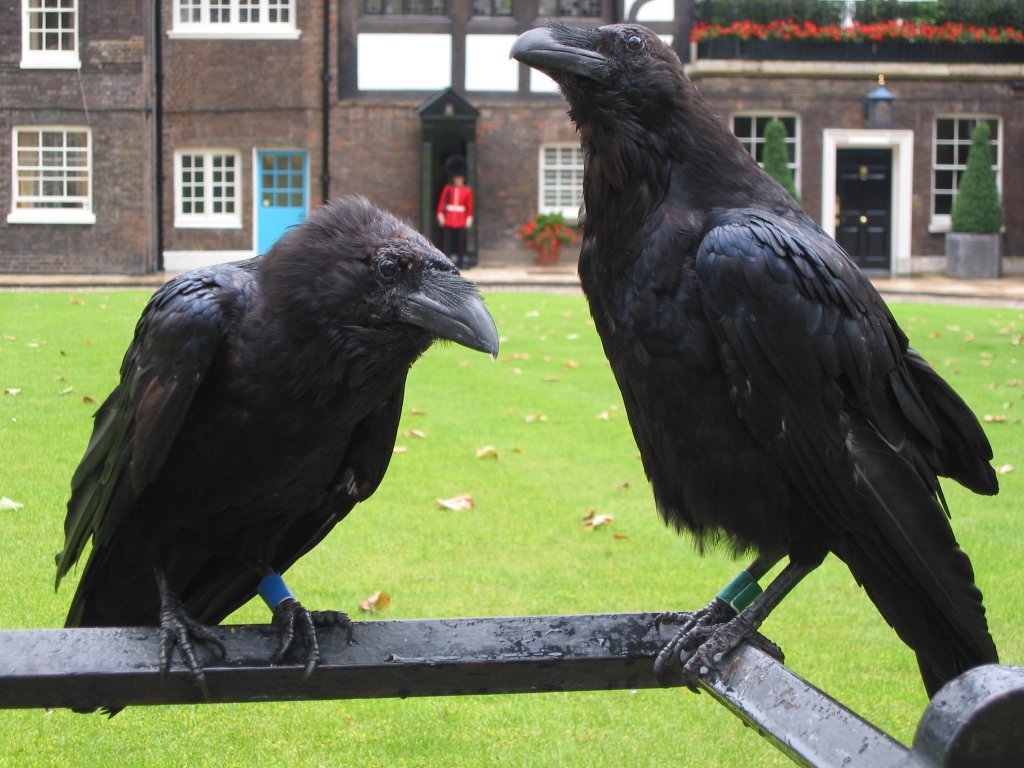
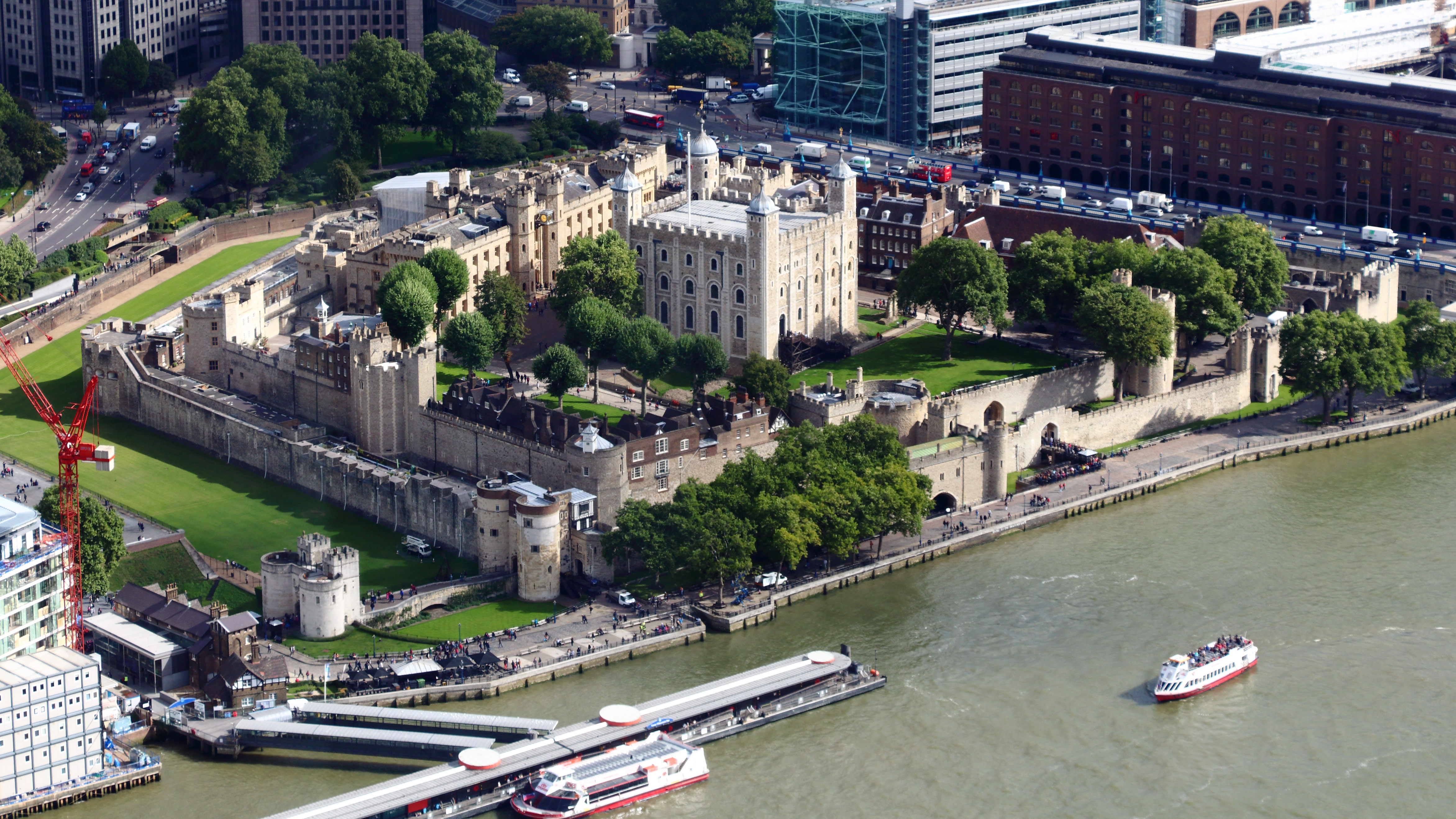
We recently watched a programme about Britain’s Castles and Palaces.  Part of the programme focussed on the long (and I mean ‘long’!) history of the Tower of London and the black ravens who watch over it.

The Tower of London is old! Very old.

An aerial view of the Tower of London

As the website Britain Express explains:

Founded nearly a millennium ago, the Tower of London has been expanded upon over the centuries by many a king and queen. The first foundations were laid in 1078 and the castle has been constantly improved and extended.

The Tower of London is the oldest palace, fortress and prison in Europe. History has it that King Edward of England backed down on his promise to give the throne to William, Duke of Normandy and ended up giving the throne to Harold Godwinson, his English brother-in-law.

Foundations laid in 1078! 936 years ago!

Almost beyond imagination is the story, according to this BBC programme, that the ravens were known to be inhabiting this part of London even before those foundations were laid!

Defenders of the Realm!

I’m delighted to see that a segment of that programme has found its way onto YouTube.

Legend says that the kingdom and the Tower will fall if the six resident ravens ever leave the fortress…

There are nine ravens at the Tower today (the required six plus a few spare!). Their lodgings are to be found next to the Wakefield Tower. These magnificent birds, large members of the genus Corvus, the crow family, respond only to the Ravenmaster and should not be approached too closely by anyone else!

Rather puts all the craziness of present times into perspective!

Has it always been like this?

An essay from George Monbiot that highlights a world most would rather not think about.

It was past 4pm when I realised that I didn’t have a post for tomorrow (today!).  I went through my email folder that I devote for potential blog posts and came across this recent essay from George Monbiot.  Some time ago George gave me a general permission to republish his essays here on Learning from Dogs.

As it happens, this essay from George resonated unpleasantly with an article that I read this morning on the Permaculture Research Institute website.  It was called 10 Ways to Prepare for a Post-Oil Society.  Take this extract, for example:

2. We have to produce food differently.

The Monsanto/Cargill model of industrial agribusiness is heading toward its Waterloo. As oil and gas deplete, we will be left with sterile soils and farming organized at an unworkable scale. Many lives will depend on our ability to fix this. Farming will soon return much closer to the center of American economic life. It will necessarily have to be done more locally, at a smaller-and-finer scale, and will require more human labor. The value-added activities associated with farming — e.g. making products like cheese, wine, oils — will also have to be done much more locally. This situation presents excellent business and vocational opportunities for America’s young people (if they can unplug their iPods long enough to pay attention). It also presents huge problems in land-use reform. Not to mention the fact that the knowledge and skill for doing these things has to be painstakingly retrieved from the dumpster of history. Get busy.

When I read the full piece it made me feel angry that those in power both sides of ‘The Pond’ display no focus or interest in the future of modern societies over the next 25-years; well none that I can pick up!  Yet when you speak to friends, neighbours and people one meets when out-and-about, almost without exception people are nervous about just where it’s all heading – and that’s even before Russia and the Ukraine comes up!

Read George’s essay and see what comes to your mind.  Oh, and do leave a comment!

Follow the smoke trails!

ooOOoo

How the media gives Big Tobacco everything it wants.

By George Monbiot, published in the Guardian 18th March 2014

Almost everything is fake. The brave proverbs with which we were brought up – the truth will out, cheats never prosper, virtue will triumph – turn out to be unfounded. For the most part, our lives are run and our views are formed by chancers, cheats and charlatans. [Ed. my emphasis!]

They construct a labyrinth of falsehoods from which it is almost impossible to emerge without the help of people who devote their lives to navigating it. This is the role of the media. But the media drags us deeper into the labyrinth.

There are two kinds of corporate lobbyists in the UK. There are those who admit they are lobbyists but operate behind closed doors, and there are those who operate openly but deny they are lobbyists. Because David Cameron has broken his promise to shine “the light of transparency on lobbying in our country and … come clean about who is buying power and influence” we still “don’t know who is meeting whom. We don’t know whether any favours are being exchanged. We don’t know which outside interests are wielding unhealthy influence. … Commercial interests – not to mention government contracts – worth hundreds of billions of pounds are potentially at stake.” (All that was Cameron in 2010 by the way)(1). At the same time, the media is bustling with people working for thinktanks which refuse to say who is paying them, making arguments which favour big business and billionaires.

Perhaps the most prominent is the Institute of Economic Affairs. Like most groups of this kind, it refuses to disclose its funding. But there’s a trail of smoke. We now know that it has been taking substantial sums from British American Tobacco (BAT), Japan Tobacco International, Imperial Tobacco and Philip Morris International(2,3). BAT has funded the institute since 1963(4). By pure coincidence, the IEA has fiercely defended the tobacco companies from efforts to regulate their products.

In their indispensable new book A Quiet Word, Tamasin Cave and Andy Rowell explain why corporations want other people to front their campaigns. “The third party has the credibility of looking independent; seems to be motivated by something other than self-interest and profit; and therefore has a much greater chance of being believed. Credibility, authenticity and the impression of independence are key. It is about separating the message from the self-interested source.”(5) While many controversial companies use this tactic, it is particularly important for tobacco firms; first because no one trusts them; secondly because they are banned from seeking to influence public health policy, under the Convention on Tobacco Control, which the UK has ratified(6).

Last year a presentation made in 2012 by Philip Morris International (which sells Marlboro and other brands) was leaked(7). It explained how the company intended to fight the proposed plain packaging rules in the UK. Plain packaging is a misnomer: the packs show only horrible photographs of medical conditions caused by smoking. The evidence suggests that they’re a powerful deterrent(8). Philip Morris listed the arguments that should be made in the media to try to prevent the government from introducing plain packaging, identified the BBC as a key outlet, and named the Institute of Economic Affairs and the Tax Payers’ Alliance as potential “media messengers”(9).

So you might imagine that the media – and the BBC in particular – would exercise a certain amount of caution when interviewing think tanks funded by tobacco companies about the regulation of tobacco. Such as disclosing that they are, er, funded by tobacco companies. You would of course be wrong.

At the end of last year the BBC’s Today programme interviewed Mark Littlewood, the head of the Institute of Economic Affairs, about plain packaging(10). It failed to inform listeners that the IEA has received funding from tobacco companies. Mark Littlewood used two of the arguments recommended by Philip Morris in that leaked document: there’s no evidence that plain packaging affects the number of people who smoke, and it stimulates a black market in cigarettes.

I encouraged readers to complain, on the grounds that the BBC’s failure to disclose his interests in the issue he was discussing flatly contravenes three of its editorial guidelines. The BBC’s responses astonished me. First it claimed that it was not “appropriate or necessary” to include this information, on the grounds that the IEA doesn’t publish it(11). In other words, if you’re not candid about who funds you, you’re off the hook. Then, as the complaints continued, it maintained that “all we have to go on are newspaper reports. In the absence of any independent verification therefore, it remains an allegation”(12).

When the BBC was told that tobacco companies have admitted funding the IEA, the reasoning changed again. Now it argues that it would be wrong to assume “that an organisation adopts a particular position on an issue because it receives funding from an interested party”: it might have formed the position first and received the money as a consequence(13). That’s true, though it’s hard to see what difference it makes: if think tanks survive and prosper because their position just happens consistently to align with the grimmest of corporate interests, the politics of the relationship don’t change very much. In either case, surely listeners should be allowed to make up their own minds. Who would not wish to be told that an organisation whose spokesperson is defending Big Tobacco on the Today programme receives money from Big Tobacco? What kind of broadcaster does not see that as relevant information?

Since then, the IEA’s staff have been interviewed by the BBC about tobacco eight more times(14). In none of the interviews I have listened to are their interests declared. It’s all about to blow up again, as the government’s review of plain packaging reports at the end of this month, and the thinktanks will be trundling all over the media(15). The petition I published on change.org, calling on the BBC to disclose its contributors’ financial interests, has 11,000 signatures so far(16). If they reach 20,000, I’ll present it.

Stories like this remind me that much of life is a struggle against disappointment. Perhaps I’m an idiot, but I expected a world that was so much better. I still believe it’s possible. But getting there requires a daily struggle against those who would mislead us.

www.monbiot.com

References:

1. http://toryspeeches.files.wordpress.com/2013/11/david-cameron-rebuilding-trust-in-politics.pdf

2. http://www.theguardian.com/society/2013/jun/01/thinktanks-big-tobacco-funds-smoking

3. http://www.tobaccotactics.org/index.php/Institute_of_Economic_Affairs

4. As above.

5. Tamasin Cave and Andy Rowell, 2014. A Quiet Word: Lobbying, Crony Capitalism and
Broken Politics in Britain. Bodley Head, London.

6. Article 5.3. http://whqlibdoc.who.int/publications/2003/9241591013.pdf

7. www.tobaccotactics.org/index.php/PMI%E2%80%99s_Anti-PP_Media_Campaign

8. Crawford Moodie et al, no date give. Plain Tobacco Packaging: A Systematic Review. Report for the Department of Health by the Centre for Tobacco Control Research, University of Stirling. http://phrc.lshtm.ac.uk/papers/PHRC_006_Final_Report.pdf.

9. www.tobaccotactics.org/index.php/PMI%E2%80%99s_Anti-PP_Media_Campaign

10. Today, 28th November 2013. BBC Radio 4.

11. BBC Complaints, 4th December 2013.

12. BBC Complaints, 9th January 2014.

13. BBC Editorial Complaints Unit, 19th February 2014.

14. http://www.iea.org.uk/in-the-media/media-coverage

15. http://www.thelancet.com/journals/lancet/article/PIIS0140-6736%2814%2960480-3/fulltext?version=printerFriendly

16. https://www.change.org/en-GB/petitions/the-bbc-always-disclose-the-financial-interests-of-the-people-you-interview-in-the-issues-they-are-discussing

ooOOoo

Won’t be the first time, nor the last time, that I mention the need, the critical need, for human society to learn the value of integrity: the quality that we see coming from our animals day-in; day-out!

What goes up?

Civilizations die from suicide, not by murder. Arnold J Toynbee

I’m not sure where to start but as a result of finishing a particular book, plus a recent essay on Tom Dispatch, then another recent essay from Simon Johnson of Baseline Scenario fame, there were so many thoughts bumping around this aged brain that I had no alternative than to offer them to you, dear reader.  You should also be warned that this is going to be two posts, covering today and tomorrow.

So let’s start with the book: The United States of Fear by Tom Engelhardt.  To be brutally honest, I purchased the book more as a gesture of support to Tom who has been very supportive of Learning from Dogs, in particular allowing me permission to reproduce any essays that were published on TomDispatch, as a number have so been.  What an error of judgment!  Tom’s book provided another one of those rare but inspirational occasions where you know the world will never look quite the same again!

The back cover page of the book sets out the theme, thus,

Published 2011

In 2008, when the US National Intelligence Council issued its latest report meant for the administration of newly elected President Barack Obama, it predicted that the planet’s “sole superpower” would suffer a modest decline and a soft landing fifteen years hence. In his new book The United States of Fear, Tom Engelhardt makes clear that Americans should don their crash helmets and buckle their seat belts, because the United States is on the path to a major decline at a startling speed. Engelhardt offers a savage anatomy of how successive administrations in Washington took the “Soviet path”—pouring American treasure into the military, war, and national security—and so helped drive their country off the nearest cliff.This is the startling tale of how fear was profitably shot into the national bloodstream, how the country—gripped by terror fantasies—was locked down, and how a brain-dead Washington elite fiddled (and profited) while America quietly burned.

Think of it as the story of how the Cold War really ended, with the triumphalist “sole superpower” of 1991 heading slowly for the same exit through which the Soviet Union left the stage twenty years earlier.

One of the fascinating aspects of the book is that it was put together from 32 essays previously published online by Tom; the complete list with titles and dates is on pps. 205 & 206.  So giving you a real feel for the book is easy!  I’m going to do that by linking to one of those essays available in the archives of TomDispatch here.  That essay was called Washington’s Echo Chamber and appears in the book starting on page 170 under the sub-heading of Five Ways to Be Tone Deaf in Washington. Let me quote you a little,

So much of what Washington did imagine in these last years proved laughable, even before this moment swept it away.  Just take any old phrase from the Bush years.  How about “You’re either with us or against us”?  What’s striking is how little it means today.  Looking back on Washington’s desperately mistaken assumptions about how our globe works, this might seem like the perfect moment to show some humility in the face of what nobody could have predicted.

It would seem like a good moment for Washington — which, since September 12, 2001, has been remarkably clueless about real developments on this planet and repeatedly miscalculated the nature of global power — to step back and recalibrate.

As it happens, there’s no evidence it’s doing so.  In fact, that may be beyond Washington’s present capabilities, no matter how many billions of dollars it pours into “intelligence.”  And by “Washington,” I mean not just the Obama administration, or the Pentagon, or our military commanders, or the vast intelligence bureaucracy, but all those pundits and think-tankers who swarm the capital, and the media that reports on them all.  It’s as if the cast of characters that makes up “Washington” now lives in some kind of echo chamber in which it can only hear itself talking.

As a result, Washington still seems remarkably determined to play out the string on an era that is all too swiftly passing into the history books.  While many have noticed the Obama administration’s hapless struggle to catch up to events in the Middle East, even as it clings to a familiar coterie of grim autocrats and oil sheiks, let me illustrate this point in another area entirely — the largely forgotten war in Afghanistan.  After all, hardly noticed, buried beneath 24/7 news from Egypt, Bahrain, Libya, and elsewhere in the Middle East, that war continues on its destructive, costly course with nary a blink.

That was published by Tom a little over 18 months ago!  Seems as relevant today as then!  Let me stay with perspectives from 2011.

Chomsky, visiting Vancouver, Canada in March 2004

On the 24th August 2011 Noam Chomsky wrote an essay entitled American Decline: Causes and Consequences.  Chomsky, as Wikipedia relates, is Professor (Emeritus) in the Department of Linguistics & Philosophy at MIT, where he has worked for over 50 years.  Here is how that essay opens,

In the 2011 summer issue of the journal of the American Academy of Political Science, we read that it is “a common theme” that the United States, which “only a few years ago was hailed to stride the world as a colossus with unparalleled power and unmatched appeal — is in decline, ominously facing the prospect of its final decay.” It is indeed a common theme, widely believed, and with some reason. But an appraisal of US foreign policy and influence abroad and the strength of its domestic economy and political institutions at home suggests that a number of qualifications are in order. To begin with, the decline has in fact been proceeding since the high point of US power shortly after World War II, and the remarkable rhetoric of the several years of triumphalism in the 1990s was mostly self-delusion. Furthermore, the commonly drawn corollary — that power will shift to China and India — is highly dubious. They are poor countries with severe internal problems. The world is surely becoming more diverse, but despite America’s decline, in the foreseeable future there is no competitor for global hegemonic power.

So, according to Chomsky, it’s not as ‘black and white’ as Engelhardt sets out.  But do read the full essay.

Nevertheless, the idea that the USA is ‘fiddling while Rome burns’ is supported in an essay published by Mattea Kramer on TomDispatch on the last day of September.  I’m going to end Part One by republishing the essay in full.  (Note that this is being published here after the first ‘debate’ had taken place.)

oooOOOooo

Tough Talk for America

A Guide to the Presidential Debates You Won’t Hear 
By Mattea Kramer

Five big things will decide what this country looks like next year and in the 20 years to follow, but here’s a guarantee for you: you’re not going to hear about them in the upcoming presidential debates. Yes, there will be questions and answers focused on deficits, taxes, Medicare, the Pentagon, and education, to which you already more or less know the responses each candidate will offer. What you won’t get from either Mitt Romney or Barack Obama is a little genuine tough talk about the actual state of reality in these United States of ours. And yet, on those five subjects, a little reality would go a long way, while too little reality (as in the debates to come) is a surefire recipe for American decline.

So here’s a brief guide to what you won’t hear this Wednesday or in the other presidential and vice-presidential debates later in the month. Think of these as five hard truths that will determine the future of this country.

1. Immediate deficit reduction will wipe out any hope of economic recovery: These days, it’s fashionable for any candidate to talk about how quickly he’ll reduce the federal budget deficit, which will total around $1.2 trillion in fiscal 2012. And you’re going to hear talk about the Simpson-Bowles deficit reduction plan and more like it on Wednesday. But the hard truth of the matter is that deep deficit reduction anytime soon will be a genuine disaster. Think of it this way: If you woke up tomorrow and learned that Washington had solved the deficit crisis and you’d lost your job, would you celebrate? Of course not. And yet, any move to immediately reduce the deficit does increase the likelihood that you will lose your job.

When the government cuts spending, it lays off workers and cancels orders for all sorts of goods and services that would generate income for companies in the private sector. Those companies, in turn, lay off workers, and the negative effects ripple through the economy. This isn’t atomic science. It’s pretty basic stuff, even if it’s evidently not suitable material for a presidential debate. The nonpartisan Congressional Research Service predicted in a September report, for example, that any significant spending cuts in the near-term would contribute to an economic contraction. In other words, slashing deficits right now will send us ever deeper into the Great Recession from which, at best, we’ve scarcely emerged.

Champions of immediate deficit reduction are likely to point out that unsustainable deficits aren’t good for the economy. And that’s true — in the long run. Washington must indeed plan for smaller deficits in the future. That will, however, be a lot easier to accomplish when the economy is healthier, since government spending declines when fewer people qualify for assistance, and tax revenues expand when the jobless go back to work. So it makes sense to fix the economy first. The necessity for near-term recovery spending paired with long-term deficit reduction gets drowned out when candidates pack punchy slogans into flashes of primetime TV.

2. Taxes are at their lowest point in more than half a century, preventing investment in and the maintenance of America’s most basic resources: Hard to believe? It’s nonetheless a fact. By now, it’s a tradition for candidates to compete on just how much further they’d lower taxes and whether they’ll lower them for everyone or just everyone but the richest of the rich. That’s a super debate to listen to, if you’re into fairy tales. It’s not as thrilling if you consider that Americans now enjoy the lightest tax burden in more than five decades, and it happens to come with a hefty price tag on an item labeled “the future.” There is no way the U.S. can maintain a world-class infrastructure — we’re talking levees, highways, bridges, you name it — and a public education system that used to be the envy of the world, plus many other key domestic priorities, on the taxes we’re now paying.

Anti-tax advocates insist that we should cut taxes even more to boost a flagging economy — an argument that hits the news cycle nearly every hour and that will shape the coming TV “debate.” As the New York Times recently noted, however, tax cuts might have been effective in giving the economy a lift decades ago when tax rates were above 70%. (And no, that’s not a typo, that’s what your parents and grandparents paid without much grumbling.) With effective tax rates around 14% for Mitt Romney and many others, further cuts won’t hasten job creation, just the hollowing out of public investment in everything from infrastructure to education. Right now, the negative effects of tax increases on the most well-off would be small — read: not a disaster for “job creators” — and those higher rates would bring in desperately-needed revenue. Tax increases for middle-class Americans should arrive when the economy is stronger.

Right now, the situation is clear: we’re simply not paying enough to fund the basic ingredients of prosperity from highways and higher education to medical research and food safety. Without those funds, this country’s future won’t be pretty.

3. Neither the status quo nor a voucher system will protect Medicare (or any other kind of health care) in the long run: When it comes to Medicare, Mitt Romney has proposed a premium-support program that would allow seniors the option of buying private insurance. President Obama wants to keep Medicare more or less as it is for retirees. Meanwhile, the ceaseless rise in health-care costs is eating up the wages of regular Americans and the federal budget. Health care now accounts for a staggering 24% of all federal spending, up from 7% less than 40 years ago. Governor Romney’s plan would shift more of those costs onto retirees, according to David Cutler, a health economist at Harvard, while President Obama says the federal government will continue to pick up the tab. Neither of them addresses the underlying problem.

Here’s reality: Medicare could be significantly protected by cutting out waste. Our health system is riddled with unnecessary tests and procedures, as well as poorly coordinated care for complex health problems. This country spent $2.6 trillion on health care in 2010, and some estimates suggest that a staggering 30% of that is wasted. Right now, our health system rewards quantity, not quality, but it doesn’t have to be that way. Instead of paying for each test and procedure, Medicare could pay for performance and give medical professionals a strong incentive to provide more efficient and coordinated care. President Obama’s health law actually pilot tests such an initiative. But that’s another taboo topic this election season, so he scarcely mentions it. Introducing such change into Medicare and the rest of our health system would save the federal government tens of billions of dollars annually. It would truly preserve Medicare for future generations, and it would improve the affordability of health coverage for everyone under 65 as well. Too bad it’s not even up for discussion.

4. The U.S. military is outrageously expensive and yet poorly tailored to the actual threats to U.S. national security: Candidates from both parties pledge to protect the Pentagon from cuts, or even, in the case of the Romney team, to increase the already staggering military budget. But in a country desperate for infrastructure, education, and other funding, funneling endless resources to the Pentagon actually weakens “national security.” Defense spending is already mind-numbingly large: if all U.S. military and security spending were its own country, it would have the 19th largest economy in the world, ahead of Saudi Arabia, Taiwan, and Switzerland. Whether you’re counting aircraft carriers, weapons systems, or total destructive power, it’s absurdly overmatched against the armed forces of the rest of the world, individually or in combination. A couple of years ago, then-Secretary of Defense Robert M. Gates gave a speech in which he detailed that overmatch. A highlight: “The U.S. operates 11 large carriers, all nuclear powered. In terms of size and striking power, no other country has even one comparable ship.” China recently acquired one carrier that won’t be fully functional for some time, if ever — while many elected officials in this country would gladly build a twelfth.

But you’ll hear none of this in the presidential debates. Perhaps the candidates will mention that obsolete, ineffective, and wildly expensive weapons systems could be cut, but that’s a no-brainer. The problem is: it wouldn’t put a real dent in national defense spending. Currently almost one-fifth of every dollar spent by the federal government goes to the military. On average, Americans, when polled, say that they would like to see military funding cut by 18%.

Instead, most elected officials vow to pour limitless resources into more weapons systems of questionable efficacy, and of which the U.S. already owns more than the rest of the world combined. Count on one thing: military spending will not go down as long as the U.S. is building up a massive force in the Persian Gulf, sending Marines to Darwin, Australia, and special ops units to Africa and the Middle East, running drones out of the Seychelles Islands, and “pivoting” to Asia. If the U.S. global mission doesn’t downsize, neither will the Pentagon budget — and that’s a hit on America’s future that no debate will take up this month.

5. The U.S. education system is what made this country prosperous in the twentieth century — but no longer: Perhaps no issue is more urgent than this, yet for all the talk of teacher’s unions and testing, real education programs, ideas that will matter, are nonexistent this election season. During the last century, the best education system in the world allowed this country to grow briskly and lift standards of living. Now, from kindergarten to college, public education is chronically underfunded. Scarcely 2% of the federal budget goes to education, and dwindling public investment means students pay higher tuitions and fall ever deeper into debt. Total student debt surpassed $1 trillion this year and it’s growing by the month, with the average debt burden for a college graduate over $24,000. That will leave many of those graduates on a treadmill of loan repayment for most or all of their adult lives.

Renewed public investment in education — from pre-kindergarten to university — would pay handsome dividends for generations. But you aren’t going to hear either candidate or their vice-presidential running mates proposing the equivalent of a GI Bill for the rest of us or even significant new investment in education. And yet that’s a recipe for and a guarantee of American decline.

Ironically, those in Washington arguing for urgent deficit reduction claim that we’ve got to do it “for the kids,” that we must stop saddling our grandchildren with mountains of federal debt. But if your child turns 18 and finds her government running a balanced budget in an America that’s hollowed out, an America where she has no chance of paying for a college education, will she celebrate? You don’t need an economist to answer that one.

Mattea Kramer is senior research analyst at National Priorities Project and a TomDispatch regular. She is lead author of the new book A People’s Guide to the Federal Budget.

Copyright 2012 Mattea Kramer

oooOOOooo

Let me close with another quote from Arnold J. Toynbee:

Of the twenty-two civilizations that have appeared in history, nineteen of them collapsed

when they reached the moral state the United States is in now.

Part Two continues tomorrow.

Civilisations do fail!

Any lessons for today from the Valley of the Pyramids at Tucume in Peru?

The view of Huaca Larga (Photo: Heinz Plege/PromPerú)

Let’s set the scene,

It’s amazing to think that anyone lived here, that this valley was once green. Now it is sun-blasted, scorching hot, and the only life is the circling vultures and the rainbow-colored iguanas, like something out of a desert hallucination, skittering across the rocks.

The reminders of past life rise up around me, however, eroded to look more like drip castles than the pyramids they once were. I am in Túcume, the once-grand capital of the Sican culture, Peru’s mythical Valley of the Pyramids.

I am not far from Chiclayo, and even closer to the city of Lambayeque, where the Royal Tombs of Sipán Museum serves as one of the major tourist attractions on the north coast. Here at Túcume however, there are few visitors.

It is not hard to get to the site. Combis leave regularly from Chiclayo and Lambayeque, dropping passengers in the modern village of Túcume, from which an quick mototaxi ride leads to the ruins. By car or taxi, it is about a 30 minute ride from Chiclayo.

There are two main trails marked out across the desert plain in Túcume. One leads to Cerro Purgatorio, a craggy hill overlooking the 26 pyramids that comprise the site. The trail winds across the scorched valley, between several of the pyramids, before arriving at a staircase leading to different scenic overlooks on the face of Purgatorio.

WikiPedia, too, has a short reference.

Then there’s a long and revealing article on the InkaNatura Travel Site, which I recommend you go to.

So what happened at Túcume to cause the civilisation to fail?  Maybe this 10-minute film gives the answers, but just a note to say that there are some potentially upsetting scenes for the younger or more sensitive among us.

So anyone sufficiently brave to say that history won’t repeat itself.

Wonder which would be the ‘cursed cities’?