They are such wonderful, amazing creatures – man’s longest and best friend, the dog.
A couple of events caused me to be reminded about the preciousness of our relationship with the dog. The first was coming across this article in The Boston Globe. It is entitled, A friendly paw to a veteran and is all about how therapy dogs bring relief and joy to veterans. Incidentally, the story was written by good friend to Learning from Dogs, Daniela Caride who has her own blog, The Daily Tail. Here’s how that article opens,
NORTHAMPTON — Carter the Chesapeake Bay retriever, Sassy the Pomeranian, and Spyder the German shepherd spend most of their time playing, begging for treats, and getting belly rubs just like other pet dogs. But their unconditional love gains a purpose every time their owners take them to the hospital to visit veterans.
They are therapy dogs — canines trained to give affection to strangers — and they are becoming more popular in veteran facilities. An increasing number of dog owners are willing to volunteer at VA homes and hospices, where 6 million veterans get treated for acute and chronic health conditions. The service they provide is invaluable, health care specialists say.
The second event was coming across something that I wrote nearly three years ago. Here it is in full.
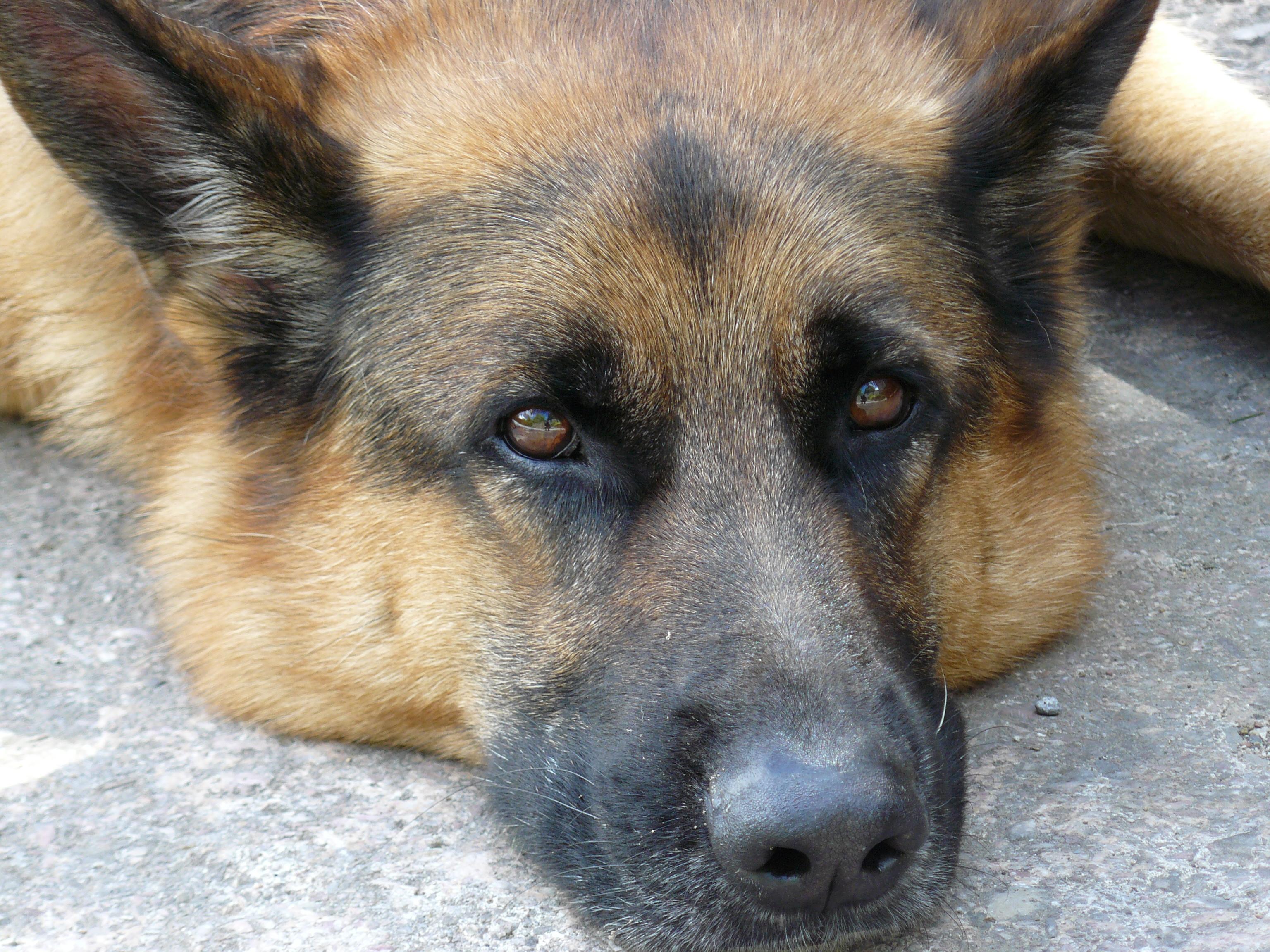
The knowing eyes of your best friend
Pharaoh
(Based on an article sent to me, unfortunately from an unknown author, and modified to reflect the special relationship that I have with my 4 year old German Shepherd, Pharaoh. Paul Handover, 14 September, 2007.)
I am your dog and have something I would love to whisper in your ear. I know that you humans lead very busy lives. Some have to work, some have children to raise, some have to do this alone. It always seems like you are running here and there, often too fast, never noticing the truly grand things in life.
Look down at me now. While you sit at your computer. See the way my dark, brown eyes look at yours.
You smile at me. I see love in your eyes. What do you see in mine? Do you see a spirit? A soul inside who loves you as no other could in the world? A spirit that would forgive all trespasses of prior wrong doing for just a single moment of your time? That is all I ask. To slow down, if even for a few minutes, to be with me.
So many times you are saddened by others of my kind passing on. Sometimes we die young and oh so quickly, so suddenly that it wrenches your heart out of your throat. Sometimes, we age slowly before your eyes that you may not even seem to know until the very end, when we look at you with grizzled muzzles and cataract-clouded eyes. Still the love is always there even when we must take that last, long sleep dreaming of running free in a distant, open land.
I may not be here tomorrow. I may not be here next week. Someday you will shed the water from your eyes, that humans have when grief fills their souls, and you will mourn the loss of just ‘one more day’ with me. Because I love you so, this future sorrow even now touches my spirit and grieves me. I read you in so many ways that you cannot even start to contemplate.
We have now together. So come and sit next to me here on the floor and look deep into my eyes. What do you see? Do you see how if you look deeply at me we can talk, you and I, heart to heart. Come not to me as my owner but as a living soul. Stroke my fur and let us look deep into the other’s eyes and talk with our hearts.
I may tell you something about the fun of working the scents in the woods where you and I go. Or I may tell you something profound about myself or how we dogs see life in general. I know you decided to have me in your life because you wanted a soul to share things with. I know how much you have cared for me and always stood up for me even when others have been against me. I know how hard you have worked to help me be the teacher that I was born to be. That gift from you has been very precious to me. I know too that you have been through troubled times and I have been there to guard you, to protect you and to be there always for you. I am very different to you but here I am. I am a dog but just as alive as you.
I feel emotion. I feel physical senses. I can revel in the differences of our spirits and souls. I do not think of you as a dog on two feet; I know what you are. You are human, in all your quirkiness, and I love you still.
So, come and sit with me. Enter my world and let time slow down if only for a few minutes. Look deep into my eyes and whisper in my ears. Speak with your heart and I will know your true self. We may not have tomorrow but we do have now.
There is no question that one of the important aspects of life that we can surely learn from dogs is the ability to stay in the present as much as we can. Easier to write than accomplish, of course. But letting go of the past (because it’s gone) and making the best of today as opposed to worrying about the future (because that interferes in the joy of today) is still a powerful reminder of that we would do well to keep close to our heart.
It was back in March, the 8th to be precise, when I first wrote about Peter Russell. Well just over a week ago, I came across another article by Russell from the Huffington Post. It was then a moment’s work to find it on Peter Russell’s own website. (This links to various essays on the topic.)
Science has had remarkable success in explaining the structure and functioning of the material world, but when it comes to the inner world of the mind science falls curiously silent. There is nothing in physics, chemistry, biology, or any other science that can account for our having an interior world. In a strange way, scientists would be much happier if there were no such thing as consciousness.
David Chalmers, professor of philosophy at the University of Arizona, calls this the “hard problem” of consciousness. The so-called “easy problems” are those concerned with brain function and its correlation with mental phenomena: how, for example, we discriminate, categorize, and react to stimuli; how incoming sensory data are integrated with past experience; how we focus our attention; and what distinguishes wakefulness from sleep.
It would be wrong to publish anything more so if you are interested in more, then go here and pick away or better still buy the book!
If you have a quiet 30 minutes, settle down and watch these videos
Probably the best lesson dogs offer their human companions.
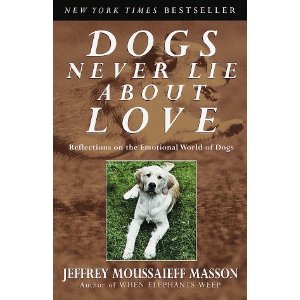
Having surfaced recently from being completely immersed in the writings of Dr. Rupert Sheldrake’s book, Dogs That Know When Their Owners Are Coming Home (start here and work backwards if you missed my musings on Sheldrake) I used the recent flight across to London to start into the book by Jeffrey Moussaieff MassonDogs Never Lie About Love.
Masson's book
While I might disagree with some minor aspects of the way that dogs relate to humans, the essential premise of the book is very powerful.
Indeed, the very last sentence of Chapter 2, Why We Cherish Dogs reads as follows:
Questers of the truth, that’s who dogs are; seekers after the invisible scent of another’s authentic core.
For me, any attempt to seek our own ‘authentic core’ can only come from understanding the power of remaining in the present. Dogs do this so naturally and instinctively. As Masson writes a little earlier in the above chapter,
A dog does not tremble at the thought of his own mortality; I doubt if a dog ever thinks about a time when he will no longer be alive. So when we are with a dog, we, too, enter a kind of timeless realm, where the future becomes irrelevant.
One could almost imagine this being the ancient wisdom of the teachings of Buddha!
Anyway, in a rather serendipitous manner, just before starting this essay, I read my weekly News and Notes from Terry Hershey. This is what he wrote about being in the present.
Did you see Mr. Holland’s Opus? About Glenn Holland’s lifetime of teaching music to a high school band. In one scene he is giving a private lesson to Gertrude. She is playing clarinet, making noises that can only be described as other-worldly. He is clearly frustrated. As is she. Finally Mr. Holland says, “Let me ask you a question. When you look in the mirror what do you like best about yourself?”
“My hair,” says Gertrude.
“Why?”
“Well, my father always says that it reminds him of the sunset.”
After a pause, Mr. Holland says, “Okay. Close your eyes this time. And play the sunset.”
And from her clarinet? Music. Sweet music.
Sometime today, I invite you to set aside the manual, or the list, or the prescription.
Take a Sabbath moment. . . close your eyes and play the sunset.
Mary Oliver describes such a moment this way, “. . .a seizure of happiness. Time seemed to vanish. Urgency vanished.”
Because, in such a moment, we are in, quite literally, a State of Grace. In other words, what we experience here is not as a means to anything else.
If I am to focused on evaluating, I cannot bask in the moment.
If I am measuring and weighing, I cannot marvel at little miracles.
If I am anticipating a payoff, I cannot give thanks for simple pleasures.
If I am feeling guilty about not hearing or living the music, I cannot luxuriate in the wonders of the day.
Living in the present is not specifically mentioned but how else could one interpret these beautiful concepts.
Travelling the 5,200 miles, give or take, between Payson (AZ) and London (UK)
Apologies for a slightly reduced service over the next 10 days but Monday 6th June finds me travelling from Phoenix to Dallas, and then Dallas to London Heathrow. This as a result of the U.S. Citizenship and Immigration Service (USCIS) granting me permanent residence (the Green Card) in April and thus me being able to travel back to England to see my new grandson for the first time.
So just a few thoughts, courtesy of Terry Hershey. I subscribe to his weekly Sabbath Moment and they always contain some beautiful sayings and other gems. Take these for example, from his Sabbath Moment of the 30th May.
Anything I’ve ever done that ultimately was worthwhile. . .initially scared me to death. Betty Bender
Betty Bender
Or what about this?
To dare is to lose one’s footing momentarily. To not dare is to lose oneself. Soren Kierkegaard
Søren Aabye Kierkegaard (b. 1813, d. 1855) was a profound and prolific writer in the Danish “golden age” of intellectual and artistic activity. His work crosses the boundaries of philosophy, theology, psychology, literary criticism, devotional literature and fiction. Kierkegaard brought this potent mixture of discourses to bear as social critique and for the purpose of renewing Christian faith within Christendom. At the same time he made many original conceptual contributions to each of the disciplines he employed. He is known as the “father of existentialism”, but at least as important are his critiques of Hegel and of the German romantics, his contributions to the development of modernism, his literary experimentation, his vivid re-presentation of biblical figures to bring out their modern relevance, his invention of key concepts which have been explored and redeployed by thinkers ever since, his interventions in contemporary Danish church politics, and his fervent attempts to analyse and revitalise Christian faith.
OK, dear readers, from somewhere over who knows where!
Further to the guest post from Patrice Ayme, an introduction to John Hurlburt.
I wrote on the 2nd May that an unintended consequence of my beautiful minds articles about Hugh Everett and Stephen Hawking was a recognition that the need for ‘beautiful’ thinking is more important than ever before. I wrote,
The French philosopher Voltaire was reputed to have said, “Think for yourselves and let others enjoy the privilege to do so, too.” In these days where ‘spin’ and ‘counter-spin’, to put it kindly, are so widely used, and millions live in a culture where our societies’ communication outlets compete for the maximum provocation (sorry audience!) it is challenging, to say the least, to think independently.
But of course as you, dear reader, will instantly acknowledge, these are just THE times when independent thinking is so, so important. Thus I want to acknowledge two completely different and totally disconnected people who set such wonderful examples of the power of a beautiful mind.
Unlike Patrice Ayme whom neither do I know nor have I met (Patrice Ayme is a pseudonym), today’s guest post is from someone that lives here in Payson and whom I have met on numerous occasions. What John writes about couldn’t be more different to Patrice’s article but that isn’t the point. Well, to be honest, that is the point! It goes towards underlining my proposition that these are times where we need a huge variety of thinkers who can be honest about their approach to life, and not hostage to any particular ‘group think’.
John’s essay is entitled, What’s for Dinner?
What’s for Dinner?
Ancient man had a legitimate fear about being gobbled up for dinner by a ravenous beast. The vestigial fear remains in spite of the reality that mankind has become a ravenous beast which is gobbling up nature for dinner. It’s interesting to note that although God and Nature can get along without earth or man, man and earth could not and would not exist without God and Nature. After all, God is Nature.
We get careless when we don’t stop to think about what we are, where we are and who we are. We don’t have to make a choice between God and money. We can invest in the business of God which includes education, formation, transformation and the well being of the earth which sustain us all.
Walking the way we talk means having the courage of our convictions. What can we do that is possible, plausible, practical and probable to protect ourselves and our descendents from the results of ravaging mother earth for personal profit?
Wisdom is neither an individual conclusion nor an opinion. We live in a world that is financially dominated by economic interests which are gambling with humanity’s future. It’s time to end the game. We grow best when we live and learn together in harmony with God, nature and each other. Saving the Earth from which we come and which sustains all planetary life is called conservation. That’s as conservative as life gets.
There is a fraction of our population which prefers fear, hate and ignorance to faith, love and our common well-being; both as a nation and as a world. What does this say about the United States of America? Well, for one thing, it says that we’re hell bent toward our own destruction and can’t get our act together because of the influences of money, power and tribalism.
The facts of nature can not be ignored indefinitely. While our nation becomes divided and we continue to face economic collapse four years after a journey to the brink of a world economic abyss, the environment which is our source, our natural birthright and our home continues to be stolen from us by those who seek personal gain and aggrandizement.
Let’s go back to the beginning and keep it simple. We hold these truths to be self evident.
1. The bible tells us the same thing as all sacred scriptures; love God and each other.
2. We are a country that is chartered as one nation under God. The powers of our government come from “We the people”.
3. Economics: a pump won’t work when the well runs dry.
These fundamental truths of faith, humanity, economics and the American vision transcend petty bickering and are ignored at our common peril. Considering recent world events, it would seem that we have a window of opportunity to refocus our priorities. We pray for God’s guidance.
An old lamplighter
Amen to that!
So two wonderful examples that illustrate the power of beautiful minds and how, in my opinion, we need the minds of Ayme, Hurlburt and countless others to pick our way out of this self-defeating mess that we are all in and lead us to a true long-term sustainable future for the Planet Earth and all of God’s creatures for whom this is the only home we will ever have.
I wrote on the 2nd May of the French philosopher Voltaire who was reputed to have said, “Think for yourselves and let others enjoy the privilege to do so, too.” Let me end with a quote from President Abraham Lincoln, “All my life I have tried to pluck a thistle and plant a flower wherever the flower would grow in thought and mind.”
Regular followers of Learning from Dogs will recall that in March we had the pleasure of a visit to St Paul’s Episcopal Church, here in Payson, of the well-known Terry Hershey. He is a great inspirational speaker, based on deep and sound personal values. Terry’s website is here.
Well it seemed like a nice idea to offer some more of TH. Here is his presentation on World Communion Day, October 4th 2009, at the First Community Church, Columbus, Ohio. Letting the light that is in each one of us shine out.


 Learning from Dogs