A canine charitable opportunity that deserves wide support.
The details that follow strike a chord with me, strike a chord in a big way. When I first came to live with Jean back in 2008 it was clear that this wasn’t going to be a normal relationship. Why? Because, at that time Jean had 12 dogs living with her in San Carlos, Mexico and my arrival, together with my Shepherd dog, Pharaoh (see home page for a picture of him), took that number to 13. Jean’s dogs were all Mexican rescues; she also ran her own local humane society in San Carlos and over the years had found homes for literally dozens of dogs.
One of those Mexican rescues was a dog called Loopy, who had been terribly treated by local Mexicans. The consequence when I arrived, a stranger in the middle of Loopy’s life with Jean, was that Loopy was very aggressive towards me; my hands have small scars to bear witness to the number of nips Loopy launched in my direction.
It took over a year before I was able to just let my hand ‘accidentally’ brush her side. Slowly Loopy’s trust in me built up until now I can press my face to her face and cuddle her for ages. (To underline the love that Loopy bestows on me, I will get Jean to take a picture and publish that before the end of the week.) So with that in mind, let me turn to the details recently sent to me by friend and colleague, Dapinder Singh, from England.
———————
George and loving owner, Ian.
This is George. He was in an English dog pound and condemned to death.
He had been very badly abused, one eye blinded by what was thought to be a kick, he trusted no-one and had rejected all human contact. He was desperate and in despair.
After an exhaustive search for anyone who take on the rescue of George, we (as in Doris Banham) took him into our care just a day before he was due to be euthanased. His veterinary problems were easier to deal with than the mental ones. His eye was damaged beyond repair causing him constant pain so it had to be removed, teaching George to trust again was much harder.
That journey back to trusting humans was long, George had suffered severe and terrible abuse, but there was no question of giving up on him and slowly but surely he began to live again as we fought to undo the wrongs that had been done to him. After some months with us, a wonderful family came to the rescue and offered George his ‘forever’ home where he found the love that he so deserved. His family are completely devoted to him.
His story, however, could have been a very different one were it not for the work of the team at Doris Banham’s. Below is an extract written by the lovely family who adopted him and from our fantastic volunteer, Sheila, who helped bring George back to life again.
“Hi, Sheila. Here is a shot of George in his new garden. He is settling down very well and seems to be very happy. I will keep you posted as to his progress. All the best Liz and Ian.”
There were a number of photographs sent to Sheila, however I have taken editor’s liberty and moved them to the foot of the article – I want you to stay with this to the point where you can see how to help. Here’s Sheila’s reply,
“WELL THESE BOUGHT ME TO TEARS , OUR GEORGE , THIS IS TRUE RESCUE , THIS IS ALL DOWN TO YOU DORIS BANHAM NOTHING ELSE TO SAY …” SHEILA X.
Are there other Georges out there? You bet! Far too many of them, right across the world. So let’s all do something to help these special creatures, who show us humans just what unconditionally love feels like.
Friday 4th November, 7.30pm – Come to the Hellaby Hall Hotel, Old Hellaby, Maltby, Yorkshire, S66 8SN
Call for tickets now to the Pound Dog Ball telephone number (UK) 07772 538513 or email pogpublications@yahoo.com Full details here.
Please help all the Georges out there by supporting this Charity Fundraising Event: Black Tie, Dinner/Dance at Hellaby Hall, Rotherham, 7.30pm, on Friday 4th November. It’s a don’t miss night…..3 course meal, live entertainment all night and dancing ’til late!!!! It’s going to be a great night.
If you can’t make the Ball but would like to send in a donation then please post a cheque, made out to Pound Dog Ball, to the following address:
c/o Jennifer Smith
Clumber Lodge,
50 Hemingfield Road
Wombwell, S73 0LY.
Or if you prefer an electronic donation, further details are:
Pound Dog Ball
A/C 31542265
Sort 40-45-29 (HSBC)
The account is a charity account, set up only for this event. Once the money has been paid to the charities the account will be closed.
I know that Dapinder, and everyone else involved in helping these precious animals, sends you their heartfelt thanks.
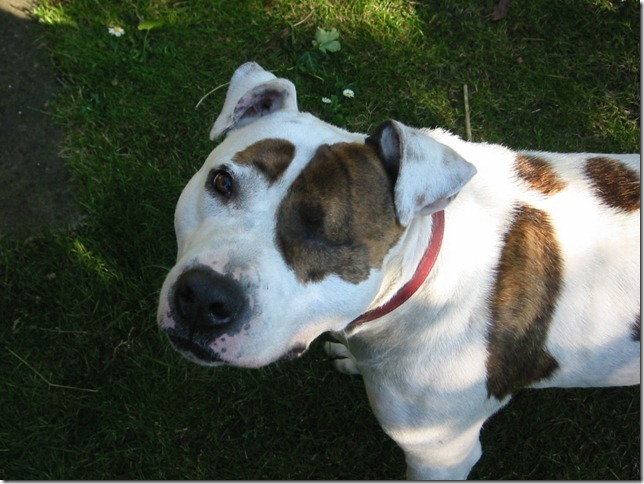
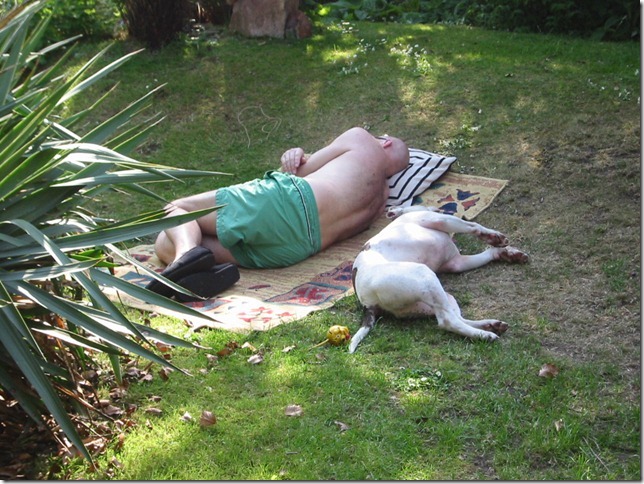
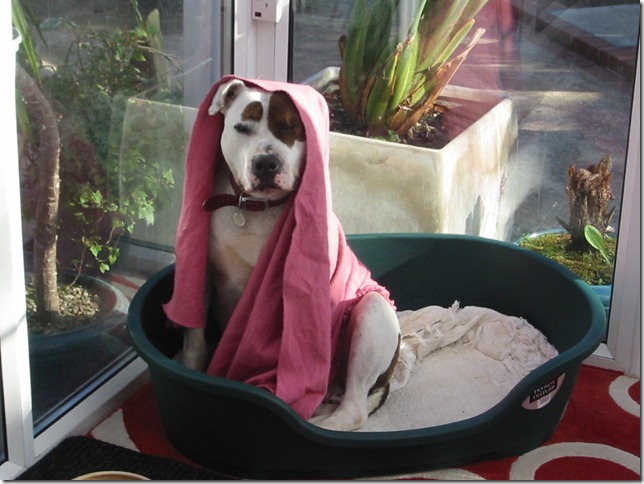
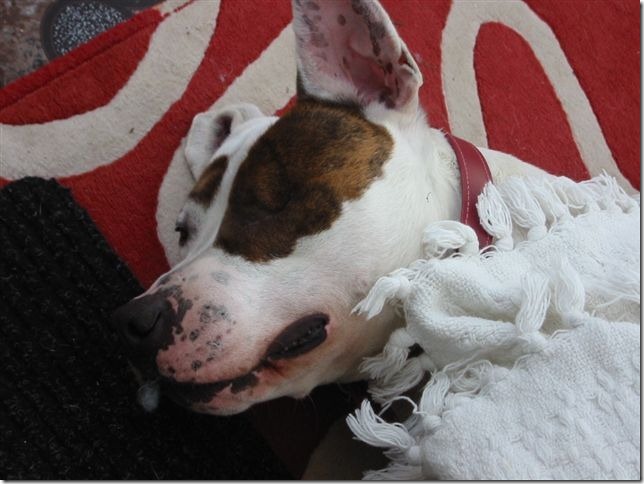
Finally, more photos of George enjoying life as all dogs should. What a wonderful story, an honour to be able to publish it, and promote the Ball, on Learning from Dogs. Please help.
Maybe less is more is really at the heart of our thirst for something more
A number of disparate recent experiences seem to have an underlying common thread.
See if these strike you in a similar fashion.
Yesterday, Joelle Jordan wrote about joy, about the wonderful relationship that dogs have with the world around them. As Joelle wrote,
Joy is a difficult commodity to come by these days. I don’t mean entertainment, I don’t mean a good laugh, I mean pure joy, where, even just for a single moment, all worries and doubts, frustration and anger are lifted as though by Atlas.
Like so many other humans in our world, I often find myself in a constant state of stress. There always seems to be something to worry about, whether it’s money, job fulfilment, the state of my relationships, getting the house cleaned, finding time to get to the market, and more. If given the chance, I know we all could spend nearly all of our waking hours (and some of our sleeping hours, too) worrying about something. We spend so much time on the many things that inevitably work themselves out, and so little time on things that will create a memory and a crystal moment of joy.
My little dog Charlie spends his time in the completely opposite fashion; spending his waking hours seeking joy, and committing less time to things that worry him.
Charlie seems to exist normally in three states of being; content, happy and utterly joyful.
How many of us can echo Charlie’s existance in our own lives?
Then last Sunday, Father D’s sermon spoke about our tendency to develop habitual behaviours and rarely challenge the point of them.
The truth is that we get used to doing things a certain way and keep doing them without ever thinking of what we are doing. We say things in the liturgy without even thinking of what we are saying. I’m sure many people utter the words in the Book of Common Prayer without thinking of the theology behind the words, or the relationship between church and state that they express.
Later on,
There was a desire for “something more” but it was hard to put a finger on what it was. I realized from these conversations that we are involved today in a time of intense searching. Few of us are satisfied with what the church and society have served up.
The honest among us will readily admit we lead fractured lives – with a disembodied spirituality on one side, and a soulless daily existence on the other. We are desperate for something more, for a faith with the power to transform both ourselves and our world.
“…. we are involved today in a time of intense searching“! That smacked me right in the eye!
These are clearly challenging times with mankind facing increasing odds of an ecological disaster of Old Testament proportions, and much of the western world on the cusp of a long and difficult recession. It is so easy to go on “doing things a certain way and keep doing them without ever thinking of what we are doing” while we wait for the leaders of our societies to fix our problems.
The truth is that we have to be the first to change, to question what we do on a daily basis and amend it if it is not truly healthy for us and for the planet. As was said in that sermon, “It means bringing forth each day the fruits of the Spirit: Love, joy, patience, kindness, generosity, faithfulness, gentleness and self-control.”
Go back and read yesterday’s Post and reflect on how many of those ‘fruits’ are the ways of dogs.
My final connection with the theme of today’s essay is with a recent series from the BBC called ‘Status Anxiety’. The programmes are still on YouTube and the first 10 minutes is below,
Status Anxiety discusses the desire of people in many modern societies to “climb the social ladder” and the anxieties that result from a focus on how one is perceived by others. De Botton claims that chronic anxiety about status is an inevitable side effect of any democratic, ostensibly egalitarian society. De Botton lays out the causes of and solutions to status anxiety.
Or if you prefer, all 2 hours 23 minutes may be watched on Top Documentary Films, described thus,
De Botton's book
Why doesn’t money (usually) buy happiness? Alain de Botton breaks new ground for most of us, offering reasons for something our grandparents may well have told us, as children.
It is rare, and pleasing, to see a substantial philosophical argument sustained as well as it is in this documentary. De Botton claims that we are more anxious about our own importance and achievements than our grandparents were. This is status anxiety.
Alain quotes philosophical writings, such as Democracy in America, a report by Alexis de Tocqueville on his visit to the USA in 1831. De Tocqueville noted that American equality, notable in those times, was accompanied by a climate of envy.
We jump to present-day USA, and see what, to de Botton, are some awful examples ofThe American Way. A Christian preaches get rich. A steelworker tells of his insecure life in an industry being closed down through others’ love of money.
Our protagonist points out the advantage of high status: those with high status will enjoy the care and attention of the world. Then joins this advantage with the illusion, orattempt at meritocracy in the USA, mentioning Jefferson’s notion of an aristocracy of talent.
Some of the messages towards the end of the programme are very thought-provoking indeed. Let me draw this all together.
If you own a dog, or a cat, or any pet, stop a while today and see how their simplicity of life brings them so much more. Naturally, we can never live life in the same way that our pet does but there are strong metaphors that carry equally strong messages for us. Less is more.
Now watch the last part of Status Anxiety even if you didn’t watch the first segment above, Reason? Watch and it will become clear.
My apologies but the demands on my time are a little challenging this week. All as a result of the creative writing course that is being undertaken at our local Gila Community College, a course that I am loving, by the way!
Last Saturday, John H. and I went down to Tempe, Phoenix to attend the nearest Moving Planet event. It was well-attended especially by people the right side of 40 years-old! After all it is the succeeding generation that is going to cope with the consequences of the present abuse of the planet’s resources.
The leader of the event down in Tempe was Doug Bland of Arizona Interfaith Power and Light and it was very encouraging to see such a strong ecumenical involvement.
Later this week, I want to respond to the views that came out in the first part of the Sceptical voices piece last week but for now let me just leave you with a 4-minute video that was shown to the group down in Tempe last Saturday. It is called Try not to Make Connections.
A fascinating point of view of the relationship between humans and animals.
Jean and I were at our regular gardening college class yesterday. It was all about the growing of vegetables. OK, I can hear you thinking, what on earth does that have to do with today’s topic? Simply because the tutor, Cayci V., mused at the start of her lesson how gardeners were great animal lovers and then proceeded to list all the animals she and her husband kept at their home in Globe, about an hour from Payson, Arizona. Cayci admitted to having 5 dogs, 15 cats, 2 emus, 2 llamas, numerous chickens. She also had 2 bison that recently died having been poisoned by Oleander cuttings. Anyway, to the article.
A recent article on the BBC News Magazine was about the need for humans to have contact with animals. It was presented by John Gray who is a political philosopher and author of the book False Dawn: The Delusions of Global Capitalism which argues that free market globalization is unstable and is in the process of collapsing! H’mmm. John is also the author of the book Straw Dogs: Thoughts on Humans and Other Animals, a book that was described by the British Observer newspaper thus,
There is unlikely to be a more provocative or more compelling book published this year than Straw Dogs. A long-time scourge of the delusions of global capitalism, John Gray is one of the most consistently interesting and unpredictable thinkers in Britain. He is unpredictable because, unlike most political commentators, he never ceases to question the underlying assumptions of his own beliefs and prejudices.
Anyway, I’m at risk of digressing, as many of you will regularly notice! The article by John Gray on the BBC News website was published over a couple of weeks ago and, therefore, I feel it not too great a copyright sin to reproduce it in full on Learning from Dogs. It’s a fascinating article.
Why does the human animal need contact with something other than itself, asks John Gray.
Many years ago an eminent philosopher told me he’d persuaded his cat to become a vegan. To begin with I thought he was joking. Knowing a bit about cats, I couldn’t take seriously the idea that they’d give up their predatory ways.
“You must have provided the cat with some pretty powerful arguments,” I said jokingly. “It wasn’t as difficult as you may think,” he replied rather sternly.
He never explained exactly how the transformation was achieved. Was his cat presented with other cats that had converted to veganism – feline role models, so to speak? Had he prepared special delicacies for his cat – snacks that looked like mice but were made of soya, perhaps?
Beginning to suspect that the philosopher might after all be serious, I asked if the cat went out. He told me it did. That answered a part of my puzzlement. Evidently the cat was supplementing its vegan diet by hunting, natural behaviour for cats after all.
I was still a little perplexed though. Cats tend to bring their hunting trophies back home and I wondered how the philosopher had missed seeing them. Had the cat hidden them out of sight? Or were the cat’s trophies prominently displayed but disregarded by the philosopher, marks of atavistic feline behaviour that would eventually disappear as the cat progressed towards a new kind of meat-free life?
The conversation tapered off and I never did get to the bottom of the mystery. The dialogue did set me thinking. Evidently the philosopher thought of the cat as a less evolved version of himself that, with a lot of help, could eventually share his values. But the idea that animals are inferior versions of humans is fundamentally misguided.
Each of the millions of species that evolution has thrown up is different and particular, and the animals with which we share the planet aren’t stages on the way to something else – ourselves. There’s no evolutionary hierarchy with humans perched at the top. The value of animals – or as I’d prefer to say other animals – comes from being what they are. And it’s the fact that they are so different from humans that makes contact with them so valuable to us.
Human qualities
Some philosophers – not many it must be admitted – have in the past understood this. The 16th Century French essayist, Michel de Montaigne, loved cats because he knew he would never be able to enter their minds. “When I play with my cat,” he asked, “how do I know she is not amusing herself with me rather than I with her?”
Montaigne didn’t want his animal companions to be mirrors of himself, he wanted them to be a window from which he could look out from himself and from the human world.
Never more than partly domesticated, cats are never fundamentally humanised. Montaigne found them lovable for precisely this reason, it wasn’t that he was suggesting we should emulate cats. Wiser than the philosopher who believed he’d converted his cat to veganism, he understood that the good life means different things for animals with different natures. What he questioned was the idea that one kind of life, the kind humans alone can live, is always best.
It’s true that cats don’t have some of the capacities we associate with morality. They seem to lack empathy, the capacity of identifying with the emotions of others. This may explain what has often been described as cruelty in their behaviour, toying with captured mice for example. Attributing cruelty to cats seems a clear case of anthropomorphism – the error of projecting distinctively human qualities onto other species.
Cats are not known to display compassion, but neither do they inflict pain and death on each other in order to gratify some impulse or ideal of their own. There are no feline inquisitors or suicide bombers. Pedants will say that this is because cats lack the intellectual equipment that is required to formulate an idea of truth or justice. I prefer to think that they simply decline to be enrolled in fanaticism, another peculiarly human trait.
Dogs seem to be capable of showing human-like emotions of shame, but though they are more domesticated they still remain different from us. And I think it’s their differences from us, as much as their similarities, that makes them such good companions.
Whatever you feel about cats and dogs, it seems clear that the human animal needs contact with something other than itself. For religious people this need may be satisfied by God, even if the God with whom they commune seems too often all-too-human. For many landscape gives a sense of release from the human world, even if the land has been groomed and combed by humans for generations, as it has in England.
The contemplation of field, wood and water intermingling with wind and sky still has the power to liberate the spirit from an unhealthy obsession with human affairs. Poets such as Edward Thomas and Ted Hughes have turned to the natural world in an attempt to escape a purely human view of things. Since they remained human and used human language in the attempt, it’s obvious that they couldn’t altogether succeed. It’s also obvious that searching for a way of looking at the world that’s not simply human expresses a powerful human impulse.
The most intense example of this search I know is that recorded by John Baker in his book The Peregrine. First published in 1967 and recently reissued, the book is seemingly a piece of nature writing which slowly reveals itself as the testament of someone struggling to shed the point of view of a human observer.
Renewed humanity
Baker records his pursuit of two pairs of peregrines, which had arrived to hunt in the part of East Anglia where he lived. Alone he followed the birds for over 10 years. Concentrating the decade-long quest into a single year in order to recount it in the book, he writes of the peregrine: “Wherever he goes, this winter, I will follow him. I will share the fear, and the exaltation, and the boredom of the hunting life.”
He tells us that he came late to the love of birds. “For years I saw them only as a tremor on the edge of vision. They know suffering and joy in simple states not possible for us. Their lives quicken and warm to a pulse our hearts can never reach. They race to oblivion.”
In time the human observer seemed to be transmuted into the inhuman hawk. “In a lair of shadow,” Baker writes, “the peregrine was crouching, watching me… We live, in these days in the open, the same ecstatic fearful life. We shun men.”
Note how Baker switches suddenly from describing the hawk watching him to describing how “we” flee from humans. Baker found a sensation of freedom in the feeling that he and the hawk were fused into one. Sharing in the “exaltation and serenity” of the birds’ life he could imagine that he’d shed his human identity, at least for a time, and could view the world through hawks’ eyes.
Of course he didn’t take this to be literal truth. He knew he couldn’t in the end be anything other than human. Yet he still found the pursuit of the peregrine deeply rewarding, for it opened up a temporary exit from the introspective human world.
John Baker’s devotion to the peregrine hadn’t enabled him to see things as birds see them. What it had done was to enable him to see the world through his own eyes, but in a different way. His descriptions of the landscape of East Anglia are exact and faithful to fact. But they reveal that long-familiar countryside in a light in which it looks as strange and exotically beautiful as anything in Africa or the Himalayas. The pursuit of a bird had revitalised his human perceptions.
What birds and animals offer us is not confirmation of our sense of having an exalted place in some sort of cosmic hierarchy, it’s admission into a larger scheme of things, where our minds are no longer turned in on themselves. Unless it has contact with something other than itself, the human animal soon becomes stale and mad. By giving us the freedom to see the world afresh, birds and animals renew our humanity.
A fascinating, beautiful and incredibly thought-provoking essay.
Martin Luther King, (January 15, 1929-April 4, 1968)
One of the aspects of modern life that is deeply unsatisfactory is the way that politicians and leaders of democratic societies fudge the truth in the hope that trying to be all things to all men means wider acceptance of their messages.
Think of the quote from Martin Luther King, Jr., “A genuine leader is not a searcher for consensus but a molder of consensus. ”
These words serve as an introduction to some beautiful thoughts from a loyal American living here in Payson. This is a man who is deeply spiritual, who has fought for his country, and who is soft and gentle to the core. This is a man who is not afraid to offer a personal vision to the world. I regard it as a real bonus that Jean and I have his friendship.
Here is the first of two contributions from John H.
The Passion of Enlightenment
Enlightenment includes deep grief and a passion to leave life a bit better than we found it. Enlightenment has little practical value in a growing and constantly consuming cultural demographic. Consumers tend to spiritually disconnect when faced by a need for change or when morality becomes inconvenient.
Is God truth? What is the opposite of truth? We’ve lost our way as a species. Does God tell us to worship money? Does God tell us to ignore our finite earth? Does God tell us to kill each other? Does God tell us to ignore human history and the emerging network of scientific understandings?
Human wisdom has been far greater in the past than it is today. God is not known through empirical knowledge. Man is as limited as the finite planet which gave life to our species and sustains our existence. Matter and energy are interchangeable as fundamental forces. God is experienced through our inner being and understood through the wisdom tradition of our species.
Sustainability includes the well-being of our planet and the life it supports. Sustainability includes serving as caretakers rather than acting as owners. Sustainability includes surrendering our addictions, our illusions and our delusions. Surrendering includes the courage to speak the truth and walk as we talk. Surrendering assures our common well-being as a conscious component of God. We have nothing to fear.
Consider world leadership. Who are the aggressors? Who are the oppressed? Who serves God? Who serves Mammon? We each must search our heart, mind and soul to answer these questions honestly. We need to face our shame and guilt in order to redeem ourselves and make a sustained effort to change.
The roots of wisdom in a constantly changing world are God, nature, history, and science. We’ve come a long way since we first learned to use tools. What have we forgotten in the process? We can’t wait for the truth to become popular. We each need to help make the truth popular.
Reflections on these present times, concluding part.
I closed yesterday with, So maybe there’s a blindness with humans, and then set out the characteristics of that blindness. One of those characteristics being,
Our obsession with how things are now prevents us from reflecting on those signs that indicate changes are under way, even when the likely conclusions are unmistakeable. The ecological and climatic changes being the most obvious example of this strange blindness that mankind possesses.
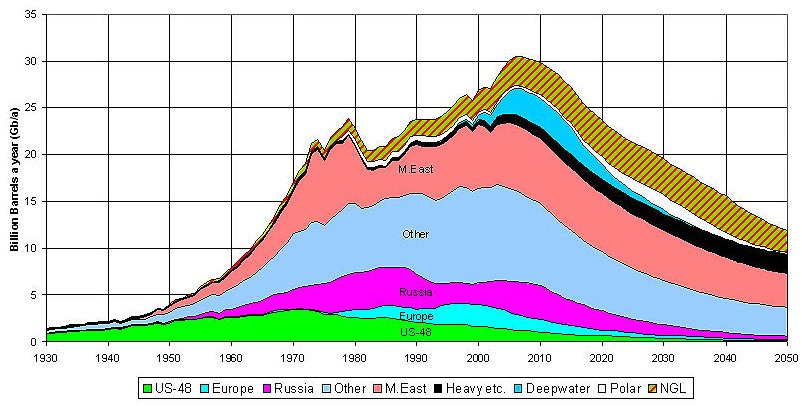
Let’s move this on a little. The arguments from a wide range of scientists are overwhelmingly in favour of the proposition that mankind is using vastly more resources from the planet than the planet can provide. Take oil. This graph show past and projected oil production for the whole Earth out to 2050, less than 40 years away.
Here’s an extract from that website which I encourage you to read in full,
The part before 2007 is historical fact. The part that comes afterward is an ASPO extrapolation.
This graph is worth careful attention as a lot of world history is written into it. Note the steep rise in oil production after World War II. Note that 1971 was the peak in oil production in the United States lower 48. There is a sliver of white labled Arctic oil. That is mostly Alaskan Prudhoe Bay oil, which peaked in 1990. Prudhoe Bay was almost big enough to counteract the lower 48 peak of 1971. The sliver is very narrow now. The OPEC oil embargo of 1973 is very visible. The oil produced by non-OPEC countries stayed nearly constant while OPEC production nearly halved. The embargo caused the world economy to slow. But the high cost of energy spurred the development of energy efficient automobiles and refrigerators and a lot of other things. Note the effect of the collapse of the Russian economy in 1990 on Russian oil production. Note the rapid increase in oil production when the world economy boomed near the end of the twentieth century. Oil was $12 a barrel at that time. Note that European (North Sea) oil peaked in 2000. Note especially what would have happened if the 1973 embargo had not occurred. It is possible that the world would now be on the steep part of the right side of the Hubbert curve.
Take population growth. Here’s a graph that shows that going through seven billion, which is due shortly, is likely to be way short of the eventual peak. Likely peak might be in the range of eight to ten billion! Just take a look at that graph,
Take global warming. Here’s a graph from NASA, from which I quote,
The five warmest years since the late 1880s, according to NASA scientists, are in descending order 2005, 1998, 2002, 2003 and 2006. (reported in the year 2007!)
No apologies for bashing you around the head with these graphs and figures – most people have a good sense about these aspects of our life on this planet. But, in a very real sense, that’s the point.
The point that despite powerful and obvious evidence, mankind has great difficulty accepting obvious trends and understanding that whatever ‘today’ feels like, ‘tomorrow’ is almost certainly not going to be more of the same.
At the risk of hammering this point to death, here are two pictures and some text to show how quickly ‘today’ changes and becomes ‘tomorrow’.
Scientist left speechless as vast glacier turns to water
THESE images show the astonishing rate of break-up of an enormous glacier in north Greenland – from ice to water in just two years.
The before and after photographs, which left a Welsh scientist who led the 24-month project “speechless”, reveal the worrying effects of climate change in an area previously thought too cold to be much affected.
The Petermann glacier pictured August, 5th, 2009Petermann glacier, pictured from same position, July 24th, 2011
Dr Alun Hubbard, a reader at Aberystwyth University’s Centre for Glaciology, returned from the Petermann Glacier in north-west Greenland a month ago, but did not see the stark images documenting the changes until this week.
He said: “Although I knew what to expect in terms of ice loss from satellite imagery, I was still completely unprepared for the gob-smacking scale of the break-up, which rendered me speechless. It was just incredible to see. This glacier is huge, 20km across, 1,000m high.”
“It’s like looking into the Grand Canyon full of ice and coming back two years later to find it’s full of water.”
“It’s quite hard to get your head around the scale of the change. To be able to see that, everything changed in such a short period of time, I was speechless.”
Do read the full article on the Wales Online website here.
Stay with me a little longer, if you will.
Yves Smith in her wonderfully broad and addictive Blog, Naked Capitalism, had the first part of a powerful interview with Satyajit Das published on the 7th. Here are a couple of extracts,
It’s amazing how much money you can make just shuffling paper backwards and forwards. Malcolm Gladwell wrote a piece praising John Paulson who made a killing from the subprime disaster as an entrepreneur. But what did he make? What did he leave behind? Paul Volcker, the former chairman of the Federal Reserve, argued: “I wish someone would give me one shred of neutral evidence that financial innovation has led to economic growth — one shred of evidence. US financial services increased its share of value added from 2% to 6.5% but is that a reflection of your financial innovation, or just a reflection of what you’re paid?”
Just let that quote from Paul Volcker stay with you for a while. Satyajit goes on to say,
Management and directors of financial institutions cannot really understand what is going on – it’s simply not practical. They cannot be across all the products. For example, Robert Rubin, the former head of Goldman Sachs and Treasury Secretary under President Clinton, encouraged increased risk taking at CitiGroup. He was guided by a consultant’s report and famously stated that risk was the only underpriced asset. He encouraged investment in AAA securities assuming that they were ‘money good’. He seemed not to be aware of the liquidity puts that Citi had written which meant that toxic off-balance sheet assets would come back to the mother ship in the case of a crisis. Now, if he didn’t understand, others would find it near impossible. And I’m talking about executive management.
Non executives are even further removed. Upon joining the Salomon Brothers Board, Henry Kaufman, the original Dr. Doom found that most non-executive directors had little experience or understanding of banking. They relied on board reports that were, “neither comprehensive … nor detailed enough … about the diversity and complexity of our operations.” Non-executive directors were reliant “on the veracity and competency of senior managers, who in turn … are beholden to the veracity of middle managers, who are themselves motivated to take risks through a variety of profit compensation formulas.”
Kaufman later joined the board of Lehman Brothers. Nine out of ten members of the Lehman board were retired, four were 75 years or more in age, only two had banking experience, but in a different era. The octogenarian Kaufman sat on the Lehman Risk Committee with a Broadway producer, a former Navy admiral, a former CEO of a Spanish-language TV station and the former chairman of IBM. The Committee only had two meetings in 2006 and 2007. AIG’s board included several heavyweight diplomats and admirals; even though Richard Breeden, former head of the SEC told a reporter, “AIG, as far as I know, didn’t own any aircraft carriers and didn’t have a seat in the United Nations.”
In other words, there is no shortage of information from all corners of the world to show, with very little doubt, that the last few decades have seen unprecedented mistakes by national governments, mistakes in corporate governance, a lack of understanding of economic fundamentals, poor financial and social management, and on and on and on.
But practically all of us, and I mean all of us, didn’t see it at the time, didn’t see where it was heading and only now, when it is full in our faces, do we get it and see it for what it has really been, a long period of over two decades where the ‘me‘ has been more important than the ‘us‘.
That me versus us even being promoted, if that’s the right word, by a British Prime Minister twenty-five years ago. That quote from Margaret Thatcher back in 1987, “And, you know, there is no such thing as society. There are individual men and women, and there are families.” (Margaret Thatcher, talking to Women’s Own magazine, October 31 1987)
Let me draw this all together, yesterday’s part and this concluding part.
There is significant evidence, real hard evidence, that the patterns of mankind’s behaviours of the last few decades cannot continue. Simply because mankind will go over the edge of self-extinction. Darwin’s evidence and all that! We have to accept that humans will see the bleedin’ obvious before it is too late. We have to keep the faith that our species homo sapiens is capable of huge and rapid change when that tipping point is reached, so eloquently written by Paul Gilding in his book, The Great Disruption, reviewed by me here. We have to embrace the fact that just because the world and his wife appears to be living in total denial, the seedlings of change, powerful change, are already sprouting, everywhere, all over the world.
So let’s welcome those changes. Let’s nurture those seedlings, encourage them to grow and engulf our society with a new richness, a new fertile landscape.
Let’s embrace the power of now, the beauty of making today much better and letting go of tomorrow.
For today, I am in charge of my life,
Today, I choose my thoughts,
Today, I choose my attitudes,
Today, I choose my actions and behaviours.
With these, I create my life and my destiny.
It’s very difficult to make predictions, especially when they involve the future!
Yesterday, I published a soft little item showing some reflective pictures and rather appropriate words of attachment. Little did I know that some very powerful word forces were planning same day to really thump me around the head. Here’s what happened.
The church that Jean and I go to on a regular basis is very inspiring. Two reasons come to mind. The first is the love and friendship that the congregation offer, both to regulars and visitors alike. The second is the spiritual inspiration gifted to the priest and, boy oh boy, does that come out through his sermons. Indeed, the rest of this article was motivated by yesterday’s sermon.
Take a look at the American railway ticket above. Turn your head and look at the right-hand part. What do you read? ‘This check is not good if detached‘. Now let me quote a little from the sermon,
It is difficult to care for people in the world when we are not a caring community. It is totally absurd to speak of peace in a world when we do not have peace in our community. It is impossible to be an instrument of love in the world if we are not a community of love.
What is true in the Church is of course true in the world as a whole. We do need to learn to live together. Railway tickets used to carry the words, “Not good if detached.” That is true of life in general. Our survival and progress as people on this planet are dependent on our interrelatedness.
See the beautiful spiritual inspiration that comes from those gifted to draw such powerful word pictures. Take that last word ‘interrelatedness’. Jean and I are studying at the local college for a Master Gardener’s Certificate. For the simple reason that we have to find a way to tame our wild garden, comprised mainly of decomposed granite granules, so that we can grown our own vegetables, have some chickens, that sort of thing.
The last session was about botany. To a complete non-gardener like me it was, nonetheless, fascinating. What moved me beyond measure was the detail and complexity of all things botanical; grasses, trees, shrubs, flowering plants, you name it. It was the interconnectedness of it all. Here’s an example.
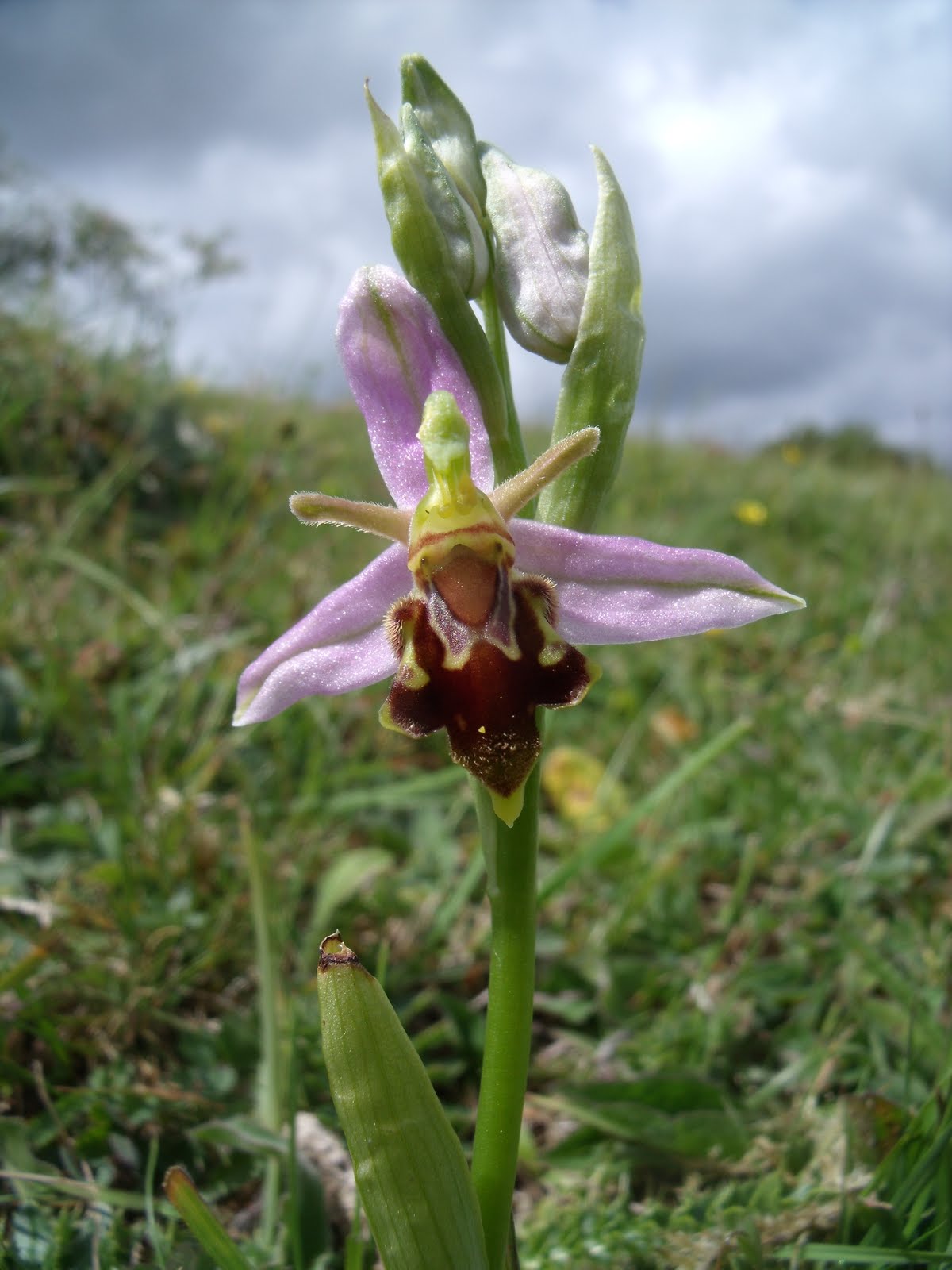
Not a female wasp, just an orchid.
Certain orchids dupe male wasps into trying to mate with them. Here are a few extracts from a piece in the New Scientist website,
Few can resist the allure of a beautiful rose, but some wasps outdo even the most ardent flower lover. Presented with the right specimen, a male orchid dupe wasp ejaculates right on the petals.
Many insects mistake flowers for femmes, but few go as far as these wasps, says Anne Gaskett, a biologist at Macquarie University in Sydney, Australia, who led a study of the insects’ amorous intentions toward two species of Australian tongue orchids. “It’s just so hard [for the wasps] to resist,” she says.
Now have a quick watch of this video extract from the BBC,
OK, let me get back to that botany class. As our teacher pointed out, lose that particular species of wasp and the planet probably loses that species of orchid. Think about the interconnectedness of that, and much more in the beautiful planet all around us. It is such a marvellous, beautiful, complex and interconnected world. We need constant reminding of that fact. Which is where yesterday’s sermon hit the mark again.
Inspired by the pictures from a flight to the moon in 1968, American poet Archibald MacLeish spoke these beautiful words:
“To see the earth as it truly is, small, blue, beautiful in the eternal silence where it floats, is to see ourselves as riders on the earth together …“
That is a wonderful image, riders on the earth together. It speaks of our togetherness as a human race, brothers and sisters on this fragile island within the vastness of the universe. Brothers and sisters … that really need to know … that we are brothers and sisters.
We need to do all that we can to build bridges, to mend bridges, to stay together as a true community… because we are:
Not good if detached. Amen.
What a powerful sermon. What inspired power in those words. Real words.
Earthrise, from Apollo 8, 1968
Forgive me for holding your attention just a tad longer. This is the full Archibald MacLeish’s quotation, referred to in the sermon above.
To see the earth as it truly is, small and blue and beautiful in that eternal silence where it floats, is to see ourselves as riders on the earth together, brothers on that bright loveliness in the eternal cold—brothers who know now they are truly brothers.
— Archibald MacLeish, American poet, ‘Riders on earth together, Brothers in eternal cold,’ front page of the New York Times, Christmas Day, 25 December 1968
This is what Frank Borman, who was on Apollo 8, had published in Newsweek, 23 December 1968,
When you’re finally up at the moon looking back on earth, all those differences and nationalistic traits are pretty well going to blend, and you’re going to get a concept that maybe this really is one world and why the hell can’t we learn to live together like decent people.
This is what Frank Borman was reported as saying in the press in early 1969,
I think the one overwhelming emotion that we had was when we saw the earth rising in the distance over the lunar landscape . . . . It makes us realize that we all do exist on one small globe. For from 230,000 miles away it really is a small planet.
and this,
The view of the Earth from the Moon fascinated me—a small disk, 240,000 miles away. It was hard to think that that little thing held so many problems, so many frustrations. Raging nationalistic interests, famines, wars, pestilence don’t show from that distance.
The power in those words. The power of the truth about our interconnectedness and the power of Not good if detached.
Let me leave you with a fragment from another Blogsite that I came across quite by chance while researching for this piece.
A blog is a voice, the inner voice, telling, in this case, what is going on, inside and out. And in me, that means it should also be about my spiritual path. My spiritual life is as important to me as breathing. Without connection with the One, what is life? What is it for?
With grateful thanks to Cynthia G. for forwarding this to me.
The Rescue
On the morning of May 18, 2011 , my wife noticed a deer in our yard that appeared to be frantically looking for something in the rocks that form a wall on our property line in Brush Prairie, WA.
When we first went out with our neighbors, we didn’t see anything, but the deer wouldn’t leave our yard. We went back to our house and watched; after a few minutes the deer came back. We went out to the area the deer was concentrating on and could hear a baby fawn crying in the rocks.
We moved some of the rocks and smaller boulders and saw a baby fawn’s face in the rocks. He had apparently fallen in one of the gaps and was now trapped. The larger boulders were too heavy to move, and we didn’t want the rocks to cave in on the baby deer.
We called our Clark County Fire District 3. The B Shift team came out; they were able to move the larger rocks out of the way with the Jaws of Life enough to be able to reach in a pull the baby fawn out and reunite it with its momma.
The fawn, maybe stuck in there most of the night, quickly went to nurse its momma. One of our neighbors took some video clips of the fire department’s rescue. I edited the clips into this short clip. After sharing it with some friends they thought that it was just too cute not to share with more people; my neighbor agreed to let me upload it.
Being in the present is the key message that we can learn from dogs. Why is this so important?
‘Drink your tea slowly and reverently, as if it is the axis
on which the world earth revolves – slowly, evenly, without
rushing toward the future. Live the actual moment. Only this moment is life.’ ~Thich Nhat Hanh
[my blue emboldening]
Unlike Jon, I muse as an ‘amateur’ when I sense that the human psyche is attracted to fear. I use that word ‘attracted’ simply because some stimuli that touch our consciousness seem to have more force than others. Ergo, the response to the simple question of asking someone how they are, is likely to me more engaging if they come up with some form of crisis reply than by saying, “Everything’s fine, thanks!” Look at how the news media use the power of fear to capture our attention.
There is a strong biological explanation for this. From the Science daily website,
The amygdala (Latin, corpus amygdaloideum) is an almond-shape set of neurons located deep in the brain’s medial temporal lobe. Shown to play a key role in the processing of emotions, the amygdala forms part of the limbic system.
In humans and other animals, this subcortical brain structure is linked to both fear responses and pleasure. Its size is positively correlated with aggressive behaviour across species. In humans, it is the most sexually-dimorphic brain structure, and shrinks by more than 30% in males upon castration.
Conditions such as anxiety, autism, depression, post-traumatic stress disorder, and phobias are suspected of being linked to abnormal functioning of the amygdala, owing to damage, developmental problems, or neurotransmitter imbalance.
For more information about the topic Amygdala, read the full article at Wikipedia.org
I am going to get to the point of this article but stay with me a little longer. Let’s look some more at the ‘fight or flight’ aspect of our brains. From the website, How Stuff Works,
It’s dark out, and you’re home alone. The house is quiet other than the sound of the show you’re watching on TV. You see it and hear it at the same time: The front door is suddenly thrown against the door frame. Your breathing speeds up. Your heart races. Your muscles tighten.
An instant later, you know it’s the wind. No one is trying to get into your home.
For a split second, you were so afraid that you reacted as if your life were in danger, your body initiating the fight-or-flight response that is critical to any animal’s survival. But really, there was no danger at all. What happened to cause such an intense reaction? What exactly is fear? In this article, we’ll examine the psychological and physical properties of fear, find out what causes a fear response and look at some ways you can defeat it.
What is Fear?
Fear is a chain reaction in the brain that starts with a stressful stimulus and ends with the release of chemicals that cause a racing heart, fast breathing and energized muscles, among other things, also known as the fight-or-flight response. The stimulus could be a spider, a knife at your throat, an auditorium full of people waiting for you to speak or the sudden thud of your front door against the door frame.
The brain is a profoundly complex organ. More than 100 billion nerve cells comprise an intricate network of communications that is the starting point of everything we sense, think and do. Some of these communications lead to conscious thought and action, while others produce autonomic responses. The fear response is almost entirely autonomic: We don’t consciously trigger it or even know what’s going on until it has run its course.
Because cells in the brain are constantly transferring information and triggering responses, there are dozens of areas of the brain at least peripherally involved in fear. But research has discovered that certain parts of the brain play central roles in the process:
Thalamus – decides where to send incoming sensory data (from eyes, ears, mouth, skin)
Sensory cortex – interprets sensory data
Hippocampus – stores and retrieves conscious memories; processes sets of stimuli to establish context
Amygdala – decodes emotions; determines possible threat; stores fear memories
Hypothalamus – activates “fight or flight” response
Now I originally called this article Present Perfect but WordPress quickly indicated that the title had already been used. Once again, the old memory cells are failing me! In fact the post of the name Present Perfect was published on the 8th June, just a couple of months ago. Glad that I was reminded because from that article in June,
Did you see Mr. Holland’s Opus? About Glenn Holland’s lifetime of teaching music to a high school band. In one scene he is giving a private lesson to Gertrude. She is playing clarinet, making noises that can only be described as other-worldly. He is clearly frustrated. As is she. Finally Mr. Holland says, “Let me ask you a question. When you look in the mirror what do you like best about yourself?”
“My hair,” says Gertrude.
“Why?”
“Well, my father always says that it reminds him of the sunset.”
After a pause, Mr. Holland says, “Okay. Close your eyes this time. And play the sunset.”
And from her clarinet? Music. Sweet music.
Sometime today, I invite you to set aside the manual, or the list, or the prescription.
Take a Sabbath moment. . . close your eyes and play the sunset.
Mary Oliver describes such a moment this way, “. . .a seizure of happiness. Time seemed to vanish. Urgency vanished.”
Because, in such a moment, we are in, quite literally, a State of Grace. In other words, what we experience here is not as a means to anything else.
If I am to focused on evaluating, I cannot bask in the moment.
If I am measuring and weighing, I cannot marvel at little miracles.
If I am anticipating a payoff, I cannot give thanks for simple pleasures.
If I am feeling guilty about not hearing or living the music, I cannot luxuriate in the wonders of the day.
Beautiful thoughts all woven around the power of focusing on the moment (if you want to catch up on the full article it is here).
Jon’s article last Monday was all about the way forward in a positive, well-being sense. In that article Jon showed the Maslow Hierarchy of Needs pyramid. It’s reproduced again below; spend a few moments absorbing the nature and sense of each level in that hierarchy.
Now ponder on that fear – ‘fight or flight’ – response. Most likely it’s going to be initiated in the ‘Safety’ level but flick straight down one level to the ‘Physiological’ layer. All very primitive stuff and utterly out of our control! Remember from the extract above, “The fear response is almost entirely autonomic.”
Even modest amounts of these fear responses is very wearying, very unsettling. Remember Jon touched on that when he wrote,
The point I’m trying to make is that the same panic I notice in many of the companies I work in, and in me, is based on fear of the unknown and on a lack of trust in all its forms. I’ve deliberately underlined that last phrase because it is so incredibly important. The truth is that we get more of what we focus on. So we can choose to focus on the constant news of more difficulties, hardship and redundancies, or we can focus on what is working.
So because our fear response is entirely autonomic and because there is so much out there, all around us, pulling those autonomic strings we have to actively, quite deliberately, do what dogs (and many other animals) do quite naturally. We deliberately have to focus on spending time being in the present!
There was a recent piece from Leo Babauta about being in the present. While he doesn’t touch on the underlying biology of why we humans are so ‘attracted’ to fear, he does offer some excellent advice about being in the present.
No matter how out-of-control your day is, no matter how stressful your job or life becomes, the act of being present can become an oasis. It can change your life, and it’s incredibly simple.
Look at Lorraine’s website (a recent visitor to Learning from Dogs). In particular this piece, from which I quote,
3. The Serenity Prayer – all about accepting the things I cannot change and changing the things I can.
4. People are always more important than things. Things can mostly be replaced but people cannot.
5. Do it now – if there is something to be done, then what is stopping me from doing it straight away?
6. If I appreciate and look after what I have now, there will be a positive flow back to me in the future. If I am neglectful and ungrateful with what I have now, I cannot expect to be rewarded with more in the future.
7. Be quiet and keep breathing – no one will know how crazy I feel inside
8. Don’t hold on to people or things too tightly. Be open to letting go and letting be.
9. It is really important to let others know that I love them. They need to know now and often. Love isn’t just a beautiful feeling – show it by how I act and speak with those I love.
10. I can’t make anyone love me and I can’t fix anyone by loving them. I may have a script for how life should be but I have no control over other people, places or things. Go with the flow and accept what is.
(The blue emboldening is mine – highlighting the power of now.)
Grandson Morten - peace in the present
“Live the actual moment. Only this moment is life.”







 Learning from Dogs