They ask for so little!
That sub-heading was inspired by a comment left by Barb, author of the blog Passionate About Pets, in response to Maria Matthews’ story on Monday. This is what Barb wrote (my emphasis):
I loved Maria’s story, very uplifting and special. I can’t imagine my life without a dog, they give us so much and ask for little in return, just to be loved and cared for.
Yesterday, I mentioned that as well as Maria’s guest post there would be another today. In fact, the guest post will be in two parts. That guest is Peter Sonne.
Today, I am going to focus on the email that Peter sent to me and then on Thursday I will publish the article that accompanied Peter’s email. Peter also included pictures of Peggy that will be shared with you both today and tomorrow. So here’s Peter’s email:
ooOOoo
 Hello Paul, I hope you all have been well.
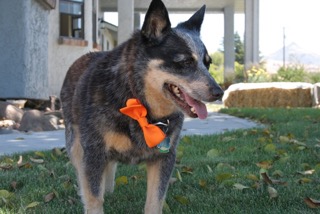
I wanted to send you this little write-up and photos that Leslie put together for our little cattle dog, Peggy.
We had to let her go about a week ago. We had sent this out to all our animal friends and I thought of you as I have started to read your book. It is giving me a good deal of comfort, for I can relate to most everything. This one has been particularly hard on me.
Peggy was with me most everyday, and went just about everywhere with us. I think what stands out in my thoughts is that we know the first half of her life was pretty much a nightmare all around. When she was rescued, most of her hair was gone, her skin was in terrible shape, her teeth the same, etc. We quickly found that loud noises would send her running and she was a grubber for sure; food was her top priority, even up to the end.
 I could see in her eyes when we first met her that she still had a spark, a desire if you will, to be a ‘good’ part of something; a pack.
She took to us, and to me right off she sensed a good change for her. Up until the end, however, when I would reach over to her to put my hand on her, she would always, always have a slight flinch – but followed through the connection.
I would catch her just staring at me many times while in the truck or in the house, just relaxing. You know, as I have mentioned to people before, if its dogs, cats, horses or what ever, if one takes that extra second to pay attention, to look at what’s happening when these beings see you each time, it’s really amazing. They do recognize you, and if one always tries to make that connection a positive one, that reward of seeing the reaction between that animal and you, time after time, can be extremely fulfilling for both, and that bond grows.
I think I felt more protective over her than all the others. That alone is a strong statement from 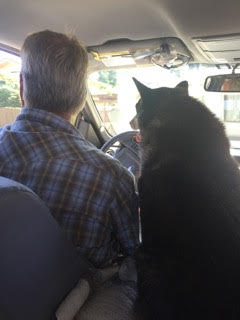 me, as I have loved all those so dearly that have blessed us, by allowing us to be a part of their pack. Leslie was speaking with our cancer vet, whom we have worked with many times before, and mentioned this never gets easier only harder it seems.
Our vet said that is true and more so for us as we always have 3 to 5 dogs, and the odds of dealing with this loss are much, much higher for us. Most families have maybe 1 dog for 10 or so years and then something happens, and it’s time to let them go.
So with us, and others who always have multiple dogs, the need to deal with sickness and that final decision to let them go is greatly increased. It makes sense, but it is still very hard to deal with.
Didn’t mean to ramble, but it seems to help a little. Thanks again for writing that book! It helps as well.
ooOOoo
All dogs respond to our love and affection as does almost every species of warm-blooded animal, and a fair few humans as well!
But those dogs that are rescued truly appear to find a joyfulness, call it an inner happiness, that is just a tad richer than with dogs that were born straight into loving families.
Impossible to prove; just my ‘pet’ theory!
Come back tomorrow and read Leslie’s story.


 By: Laura Goldman August 16, 2016


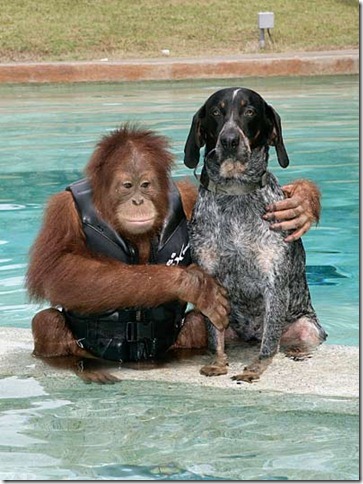


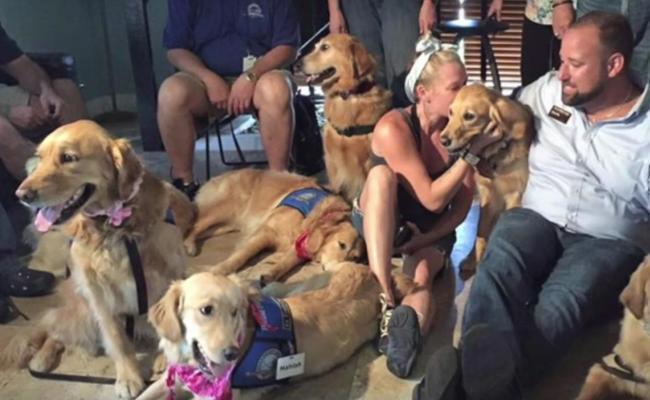
 Together, they have discovered the joy and laughter in life and the value of friendship.
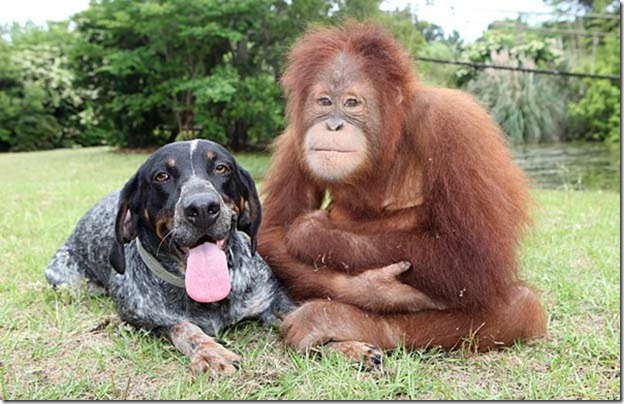 They have found more than a friendly shoulder to lean on.





 Learning from Dogs
Diane, as someone who previously has run his own business and then, after selling it in 1986, spent a number of years as a mentor with the Prince’s Youth Business Trust in the UK, I have come to the conclusion that the best role model we adults can offer our ‘students’ is this: “Be the best you can be!” That flows from being fully aware of the person that one is. For self-awareness is the key to understanding oneself and, consequently, of understanding others. Understanding why people think and behave the way they do, for good and bad, is the only effective way of engaging with others and seeking that ‘civic engagement’ so critically important.
Apologies, that paragraph sounds like a damn speech! I didn’t intend it to be so. Plus, my own journey of self-awareness has been a long and tortuous one – but that doesn’t change my view just expressed.
Coincidentally, I have been having some informal chats with Jan Schmuckle: http://www.janconsults.com/home
Her recently released book on the effectiveness of Role Montage in building leadership skills is highly relevant to today’s students. In Jan’s words (and I have no commercial or financial link with Jan):
Role Montage: A Creative New Way to Discover the
Leader Within You is written from Jan’s experience
with her client work and her research. It helps
leaders explore self-awareness and leadership using
the role montage process.
I’ll creep back into my hole!