I am, of course, referring to the recent death of Stephen Hawking.
There’s no way that I can add anything to the widespread reporting of the very sad death of the theoretical physicist, cosmologist and author Professor Stephen Hawking.
Except, possibly, this interesting quirk of fate.
For this great man died yesterday: March 14th.
The very same day that another very famous man, the German-born Albert Einstein, was born. As in March 14th. Albeit, Stephen Hawking’s death being 139 years after the birth of the 1921 winner of the Nobel Prize in Physics.
Did you also know that Professor Hawking was a great dog lover!
I was very pleased that The Conversation blog site released a wonderful tribute to Stephen Hawking. The item opens, thus:
ooOOoo
Acclaimed British theoretical physicist, cosmologist and author Stephen Hawking has died aged 76. Hawking is best known for his work on black holes, which revolutionised our understanding of the universe.
Hawking passed away today peacefully at his home in Cambridge, his family confirmed in a statement:
We are deeply saddened that our beloved father passed away today. He was a great scientist and an extraordinary man whose work and legacy will live on for many years.
His courage and persistence with his brilliance and humour inspired people across the world. He once said, “It would not be much of a universe if it wasn’t home to the people you love.” We will miss him forever.
Hawking was born on January 8, 1942, in Oxford, England. In 1963 he was diagnosed with ALS, a form of Motor Neurone Disease, and later confined to a wheelchair and forced to communicate via a computerised voice. But he continued his theoretical work and was outspoken on many things over much of his life.
Tributes have been pouring in on social media for the scientist, who made complex science accessible to everyone in his 1988 bestselling book A Brief History of Time.
ooOOoo
Do read the rest of that article. I will take the tribute from Alice Gorman that closes The Conversation article to close today’s post.
ooOOoo
Alice Gorman, Senior Lecturer in archaeology and space studies, Flinders University
There are few scientists who reach as far into popular culture as Stephen Hawking did. His research tackled the biggest of big questions – the nature of time, space and the universe we live in.
Sometimes it feels like science is losing ground in the modern world, but people still look to the stars for answers about who we are and how we come to be here.
Hawking’s bestselling A Brief History of Time made cosmology accessible to people and brought black holes out of the shadows and into the public imagination.
Personally I’ll miss his appearances on The Big Bang Theory, where he could out-nerd the nerds, and also provide some often necessary common sense. It was always great to see a world-class scientist just having fun.
Again and again I feel so privileged to be writing this blog!
For so many reasons! But the top reasons are that I feel part of an enormous family of dog lovers and that so frequently I am approached by a person who has valuable information to share with me and you.
Such as it was when back last September in came an email from Zara Lewis.
Hi Paul,
As you probably already know, all the pet stories you are sharing are super interesting and, most importantly, super useful to the entire community of us, pet parents.
Professionally, I am a regular contributor at highstylife.com magazine, while personally I am very interested in pet topics, as I am a proud mom of two + one. I say “+one” because I can hardly separate my foster dog from my children 😀
I have no book to publish, but I was wondering if you are willing to add guest content to your blog. Here you can check my style and previous posts:
Here are some topic suggestions that I believe can be useful for your community:
-Teaching your child responsibility with animals
-The Latest Trends in Pet Care
Looking forward to your response.
Regards from me & furry Joey,
Zara
You will not be surprised to hear me say that I replied to Zara saying that I would be delighted to receive an essay from her.
The weeks slipped by, as they do, but on the 6th March Zara sent the following.
It’s a wonderful essay!
ooOOoo
Dog Allergies 101: What Are the Most Common Ones & What to Do About Them
by Zara Lewis, March 6th, 2018.
Allergies are a very common ailment, so it’s not unusual for your dog to have one. Even though people have the ability to describe the symptoms to the last detail, dogs tend to show different ones, so it’s very important for us to know and recognize them. Unless you have some kind of a super dog breed, your four-legged friend might start developing certain allergies. This mostly happens because their bodies mistakenly believe a certain type of food is bad for them, or they use it too much or too often, so their immune system responds by releasing antibodies that can cause serious problems. Take a look at the most common symptoms and allergens:
What could the symptoms be?
So before starting with the most common allergens, it’s very important to know what the most common symptoms of food allergies in dogs are. So, if you happen to notice that your dog is experiencing one of the following, make sure to get them checked by a vet as it’s very probable they have a certain food allergy:
Itching
Poor fur quality
Nausea
Obsessive Licking
Vomiting
Chronic diarrhoea
Chronic gas
Chronic ear inflammation
What are the most common allergens?
Eggs
It’s a well-known fact that eggs (more specifically egg yolks) are very rich in protein, so your dog can easily become allergic to them. On the positive side, avoiding eggs is not difficult; just make sure to check dog food labels to see if there’s any danger for your four-legged friend. Even though one of the most common symptoms of this type of allergy in your dog is the appearance of bald spots, egg allergy can manifest in other ways as well.
Beef, chicken and lamb
Beef is also known to have high amounts of protein, which means that your dog can become intolerant to this kind of meat as well. This usually happens if you’ve been feeding your dog a certain type of food for a very long time, so your dog becomes intolerant or allergic to that specific food. Due to this reason, beef allergies are very common, as most dog foods contain this type of meat. The same rule applies to chicken as well. Dog foods are most commonly made of beef and chicken, so it would be best to feed your dog with all possible meats – beef, pork, chicken and lamb, and rotate them as much as you can. On the other hand, lamb is very often regarded as a ‘safe haven’ for dogs with meat allergies. However, if you don’t pay attention to rotating your dog’s diet, your dog can also become allergic to lamb.
Grain
Another thing that most types of dog food contain is grains, which means that this is also one of the most common allergens. If you happen to notice itchy and dry skin or hair loss, make sure to check if your dog is allergic to grain. Mind that finding completely grain-free food can be quite tricky, so there might be a chance you have to cook everything by yourself. Luckily, for all those who don’t have the time to do this daily, there are certain products that can help with that, such as the grain-free line of Ivory Coat dog food. Always check your dog – if they’re allergic to grain, the sooner you discover it, the better.
Dairy products
It’s not only people who can be lactose intolerant – dogs can be as well. This means they are not allowed to eat or drink any dairy products, such as cheese or milk. Otherwise, they’ll end up with gas problems, diarrhoea and vomiting. As far as dairy products are concerned, there is one tricky thing you need to pay attention to – a dog can actually develop an allergy towards them, so it’s crucial for you to be able to tell the allergy apart from the intolerance. If you notice itchiness or redness on your dog, make sure to have it checked by the vet as soon as possible. If it’s only diarrhoea or vomiting, it’s probably only intolerance, but a check-up won’t hurt. Soy
There’s an ongoing debate whether soy is good for your dog or not, but it’s definitely true that soy food is very common. Soy can cause many health problems that can be more serious than simple allergies, including reproductive and growth problems, and diseases of the liver. Furthermore, soy is the second most genetically modified crop that is grown, so it would be the most advisable to avoid this product.
It’s not for nothing that they say dogs are people’s best friends. And we treat our best friends nicely, don’t we? This is why we should all (especially if we’re the owners) make sure to treat them the best we can. The first step is making sure our little furry friends are not allergic to anything, and discovering this quickly won’t make only our lives easier, but those of our dogs as well.
ooOOoo
Great email from Zara! Great guest essay with great pictures and loads and loads of valuable advice, and great links to other websites.
The U.S. FDA has announced Smokehouse Pet Products of Sun Valley, CA, is expanding its recall of its “Beefy Munchies” and “Beefy Bites” dog treats due to contamination with Salmonella bacteria.
To learn which products are affected, please visit the following link:
If one follows that link then you come to these details:
ooOOoo
FDA Expands Nationwide Beefy Munchies Dog Treats Recall
February 19, 2018 — The FDA has announced that Smokehouse Pet Products, Inc. of Sun Valley, CA is recalling all sizes and package types of dog treats labeled as “Beefy Munchies” because they have the potential to be contaminated with Salmonella.
About the Recall
“Beefy Munchies” was distributed nationwide through distributors selling to various retailers.
The product comes in individual bags, resealable bags and plastic tubs.
The plastic tub will be labeled “Beefy Bites”.
All sizes and packaging types will include a UPC code, lot number, and a best used by date of stamped on the back.
The current recall is expanded to include all “Beefy Munchies”.
No illnesses have been reported to date in connection with this problem.
What Caused the Recall
The potential for contamination was noted after routine sampling and testing by the Colorado Department of Agriculture revealed the presence of Salmonella in two 4-oz packages of “Beefy Munchies”.
About Salmonella
Salmonella can affect animals eating the products and there is risk to humans from handling contaminated pet products, especially if they have not thoroughly washed their hands after having contact with the products or any surfaces exposed to these products.
Healthy people infected with Salmonella should monitor themselves for some or all of the following symptoms: nausea, vomiting, diarrhea or bloody diarrhea, abdominal cramping and fever.
Rarely, Salmonella can result in more serious ailments, including arterial infections, endocarditis, arthritis, muscle pain, eye irritation, and urinary tract symptoms.
Consumers exhibiting these signs after having contact with this product should contact their healthcare providers.
Pets with Salmonella infections may be lethargic and have diarrhea or bloody diarrhea, fever, and vomiting.
Some pets will have only decreased appetite, fever and abdominal pain.
Infected but otherwise healthy pets can be carriers and infect other animals or humans.
If your pet has consumed the recalled product and has these symptoms, please contact your veterinarian.
What to Do?
Any consumers who have purchased “Beefy Munchies” should discontinue use of the product and may return the unused portion to the place of purchase for a full refund.
Consumers with questions may contact Smokehouse Pet Products, Inc. at 877-699-7387, Monday through Friday 7 AM to 3:30 PM PT.
U.S. citizens can report complaints about FDA-regulated pet food products by calling the consumer complaint coordinator in your area.
By Deanna Conners in EARTH | HUMAN WORLD February 9, 2018
Scientists need your help counting birds for the 21st annual Great Backyard Bird Count. It is free and easy to participate. Find out how here.
Bird watching in the Santa Monica Mountains National Recreation Area. Image via National Park Service.
The annual Great Backyard Bird Count, now in its 21st year, is set to take place February 16 to 19, 2018. During this popular citizen science event, people from all over the world head outdoors to count birds and the data are used by scientists to track the health of bird populations.
Gary Langham, Chief Scientist at the National Audubon Society, commented on the Great Backyard Bird Count on Audubon’s website. He said:
This count is so fun because anyone can take part—we all learn and watch birds together—whether you are an expert, novice, or feeder watcher. I like to invite new birders to join me and share the experience. Get involved, invite your friends, and see how your favorite spot stacks up.
The 2017 count was a huge success. Over 200,000 people participated from around the world, and they submitted a record number of checklists. A total of 6,259 bird species were spotted during the event, which was the highest number ever recorded over the 20-year history of the count. This number represents more than half of all known bird species on Earth!
Siberian stonechat photographed in Zhemgang, Bhutan, during the 2017 Great Backyard Bird Count. Image via Sancha Rai.
Participating in the 2018 Great Backyard Bird Count involves three easy steps.
First, register with your name on the event’s website at the link here. Registration is free. This website has a ton of useful information about birds and the upcoming bird count.
Second, spend some time counting birds on the weekend of the event at the location of your choice, such as your backyard or a local park. The minimum amount of time required is 15 minutes, but you can count for longer if you wish. During your count, simply record the start and end time, location, and number and types of birds that you see. You can perform counts in multiple locations too. Just be sure to submit separate checklists for each location.
Not to worry if you can’t identify the birds you see at first. Just take good notes about their prominent features, for example, size, shape, color, and unusual markings, or you can try to snap a close-up picture. Then, you can use a bird guide to look them up later. All About Birds and What Bird are two good online bird identification guides that are free and easy to use. Additionally, the free Merlin Bird ID App can be downloaded to your smartphone and used offline. Merlin will ask you five simple questions about the bird you are trying to identify and suggest matches for you—you can even upload a picture to Merlin and let the app try to identify it.
The third and last step involves uploading your data to the event’s website. This step usually only takes a few minutes to complete. While you’re visiting the website, check out the live map that displays dots in the various locations where people have uploaded a checklist. It’s fun to watch the data pour in from all over the world.
As an added bonus, there is a photo contest for those who want to submit pictures of the birds that they see during the event. You can even submit photos of yourself watching the birds. Hence, don’t forget your binoculars. If you do shoot some good photos, please share them with EarthSky too. We love birding photos!
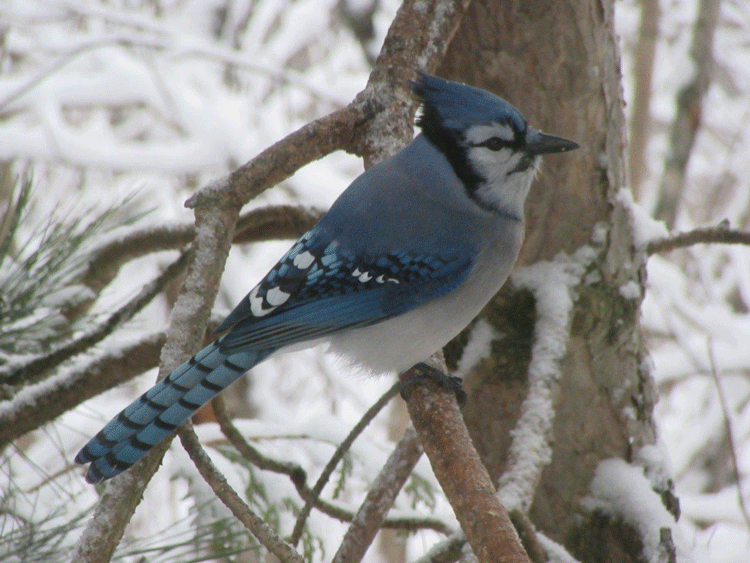
Bluejay photographed in Sioux Lookout, Ontario, Canada, during the 2017 Great Backyard Bird Count. Image via Rose Pogoda.
Use the hashtag #GBBC to follow Great Backyard Bird Count conversations on Twitter and Facebook.
The first annual Great Backyard Bird Count was held in 1998, and the event has continued to grow year after year. Hopefully, 2018 will be another record breaker.
The Great Backyard Bird Count is a collaborative project of the Cornell Lab of Ornithology, National Audubon Society, and Bird Studies Canada.
Bottom line: The annual Great Backyard Bird Count runs from February 16 to 19, 2018. This popular citizen science project helps scientists keep track of the health of bird populations. Participating is free and easy, so why not give it a try?
ooOOoo
So, once again, the Bird Count starts on this coming Friday, the 16th, and runs through to the end of next Monday, the 19th.
Do please join Jean and me and many thousands of others in this very important survey.
Or more specifically the cleansing power of indoor plants.
Back in 2012, I published a post called Clean, clean air. I am going to republish it tomorrow because Kelli sent me an email setting out that over on her blog site she has a much more comprehensive list of plants that purify the air.
We need fresh air to live a healthy and full life, but it’s fast becoming a luxury. Residents of many major cities around the world are plagued with smog and poisonous gases from motor vehicles, fossil fuel based power plants, and factories.
The good news is there is a simple solution you can use at home to make your air much cleaner. While air purifiers might help, air purifying plants are a great and natural way to clean your home’s air supply. In this article, you’ll learn more about air pollution, its dangers, and how to choose the best air purifying plants for your home.
Anyway, if you wish to read more then go here and, as I mentioned above, my post of August, 2012 will be republished tomorrow.
While this post doesn’t specifically look at what we feed our dogs, there’s no question in my mind that good nutrition is just as important for our dogs as it is for ourselves.
Moving on!
You will know that quite a few of my recent posts have been on the back of me being made aware of how a strict diet plus taking many vitamins and supplements had had the effect of putting Colin Potter’s Parkinson’s Disease (PD) into remission. All of which was summarised in an post last week called Food Truly Does Matter.
But then a good friend who lives locally, and has a solid medical background, spoke to me and said what you are writing can’t possibly be correct because if diet and supplements really did put PD patients into remission then “everyone would be doing it“. It was difficult to argue that.
So I thought the best people to call would be the American Parkinson Disease Association. I was put through to the director of the North-West Chapter of the APDA, located in Seattle, WA., and she agreed that there was no magic bullet in terms of diet and PD remission.
But the director went on to say that diet and lifestyle were nonetheless incredibly important and that there was no question that the correct decisions in terms of lifestyle were vital for anyone with PD; whatever the stage of the disease .
Dr. Laurie Mischley
The director also went on to say that without a doubt we should make contact with Seattle Integrative Medicine also, as the title suggests, in Seattle.
In particular, make contact with Dr. Laurie Mischley for the director said that Dr. Mischley’s clinical speciality is Parkinson’s Disease.
Plus we were advised to watch a talk that Dr. Mischley gave in British Columbia towards the end of 2016.
The talk is 49 minutes long and should be watched by everyone!
Reason?
Because in the talk there is much evidence, as in factual evidence, that shows the link between our lifestyle choices and what helps or hinders those with PD.
But even more critical to my way of thinking is that the evidence presented in the talk offers solid reasons why all of us as we approach middle-age and beyond should be careful about what we eat.
This is a recorded presentation from Parkinson Society British Columbia’s Victoria Regional Conference featuring Laurie Mischley. Dr. Mischley studied naturopathic medicine (ND) at Bastyr University and epidemiology (MPH) and nutritional sciences (PhD) at the University of Washington. Her work is focused on identifying the nutritional requirements unique to individuals with neurodegenerative diseases. She has published articles on coenzyme Q10, lithium and glutathione deficiency in Parkinson’s disease (PD). Dr. Mischley maintains a small clinical practice at Seattle Integrative Medicine focused on nutrition and neurological health.
So, my dear reader, here is a little plea from Paul.
Whether or not you have PD, watch the talk and have all the people you love and care for watch it as well.
Oh, and give your dog a cuddle from Jean and me!
Please understand that I do not offer advice and nothing on any website, including the blog site Learning from Dogs, email or any other communication is intended to treat, diagnose, prevent or cure any disease. It is not a substitute for consulting your doctor. You should consult a doctor for diagnosis of conditions, before beginning any diet, exercise or supplementation or if you suspect you have any healh issue. You should not stop medication without consulting your doctor.
In yesterday’s post I mentioned that Justina had sent me a couple of links in response to me wondering if there was good nutritional advice for dogs as well as there clearly was for us!
Here are those two articles that Justina sent me links to.
Since the onset of my veterinary career, I’ve had a strong interest in how the foods our pets consume contribute to an overall state of wellness or illness. Learning how to apply this interest to my patients took many years of post-veterinary school practice, continuing education, and an ongoing belief in the inherent nutritional benefits of whole foods.
During veterinary school, students’ brains are heavily saturated with a variety of academic information. As graduation date nears, a general sense of insecurity develops about making the appropriate professional choices to best serve our patients. As a result, common sense notions about the value of looking more discerningly at the ingredients formulating a pet’s diet are often overlooked.
Chinese Medicine Meets Dog Food Therapy: What You Need to Know
You may have heard of Chinese medicine for people, but did you know that it can also be used for dogs? In fact, Chinese medicine has an entire approach to dog food therapy that is quite intriguing. Let’s talk a bit about it so you can decide if it’s right for your dog.
Chinese medicine is often referenced when anyone talks about holistic approaches to healthcare. It seems that it has a treatment for almost everything, and often those treatments work. Something I learned recently is that traditional Chinese medicine extends to dogs, and many people use hot, cold, and neutral foods to help their dogs feel better.
I am going to explore getting permission to republish both articles in full.
(Post alert! This is a longish post so if you are interested in diet, nutrition and health and are short on time just now then bookmark it for a better time for you. For I am of the opinion that this post will be of great value to you and many others!)
Regular readers of this place (you poor people!!) will be aware that via a series of lucky chances, or the fickle finger of fate as I like to call it, not being a religious person, I made contact with Justina, a London-based nutritionist, following contacting Colin Potter.
I wrote about that connection in more detail in my post The Power of Good Food that was published on the 16th January. Here’s a snippet from that post:
Richard lives with his good lady, Julie, in Minety, a village in North Wiltshire. He and I go back many, many years and we have been close friends from the day that we first met. Richard was diagnosed with early-stage Parkinson’s Disease (PD) the same year and month as my Jeannie: December, 2015.
Last New Year’s Eve Richard and Julie were at a local party and the subject of PD came up. Richard subsequently told me that he was speaking to a fellow party guest who said that he was, in turn, an acquaintance of a Colin Potter. He went to add that Colin had also been diagnosed with PD but had decided not to ‘give in’ to the diagnosis but undertake comprehensive research into the causes and whether it was possible to go into remission. He later launched a website Fight Parkinsons.
We then reached out to Colin and very quickly subscribed to his Fight-Parkinson’s site. Colin’s message was that it was all about diet! Here’s that message in a short video from Colin.
That, in turn, resulted in both Jean and me adding to our already reasonably healthy diet a significant number of additional vitamins and supplements; the reasons for which will be spelt out later on. Plus more fruit, eggs, cheese but most definitely coming off all grains, sugar, carbohydrate and processed foods. Or in Colin’s words:
The right diet
This is the high fat/ low carb diet which is covered in the Fight-Parkinsons Recovery Eating Plan on my website.
I follow a diet that excludes all grains, sugar, carbohydrate and processed foods, and is rich in fats and cholesterol-laden foods. So, in addition to organic vegetables, I eat plenty of eggs, butter, dairy (full fat), fish and a little meat.
This raises the question of cholesterol and the so-called link to heart disease.THIS ARTICLE should lay this misguided information to rest and inform you of the fraud that has been practised upon us over the past 60 years (the same period during which chronic disease, in all its forms, has rocketed).
I consume foods rich in antioxidants and avoid inflammatory foods.
Supplementation
It is vital that we get the required minerals, vitamins and amino acids on a daily basis, and THIS VIDEOof an interview with Dr Joel Wallach explains why.
I have taken numerous supplements over the past few years, often leading to me taking a small mountain of capsules each day.
So, to underline that “small mountain” phrase here is a photograph of what Jeannie and yours truly are now taking by way of vitamins and supplements.
Plus, all the other organic fruit and vegetables and nutrients.
Returning to Justina.
She has been very helpful in bringing us up to speed on the efficacy of the the required minerals, vitamins and amino acids we need on a daily basis. Or to put it more specifically on the efficacy of the products that one can purchase from Youngevity. She said that the Wellness 90 Pak was effective albeit one had to commit to taking it for a period of at least 90 days (hence the name) as the body required that time to ‘adjust’ if that’s the correct term. Here’s a description of the purpose of that ‘Wellness Pak’ from their website.
The Wellness 90 Pak™ delivers the nutritional support needed for individuals following the Wellness 90 Program. This program focuses on a diet rich in fruits, vegetables, whole grains, legumes, nuts, olive oil, and other healthy options, that helps improve your overall nutrition. This Pak™ includes: (1) TMR Total Meal Replacement-Vanilla canister, (1) Slender FX™ Sweet EZE™, (1) TrueDetox Tea™ box (30 packets), and (1) Slender FX™ Rev™ bottle. See individual products for details.
Justina then mentioned about the online food resource site known as Food Matters TV (FMTV). Not a site we had come across before but, again, once we signed up to the site, a subscription site, we were blown away by what was available. Especially a documentary called Food Matters. Here’s the trailer to that documentary (that has been viewed nearly 1.8 million times!).
As Justina pointed out the documentary expresses the same critically important message as Dr. Joel Wallach is promoting: We Are What We Eat! But there is no connection between the two.
The bottom line is that Jean and I are going to add the Wellness 90 Pak to our diets for the next 90 days and you can be sure that how it goes will be reported here.
What about our dear, dear dogs?
I asked Justina the question knowing that I would be writing and publishing this post and this is what she said:
I don’t have dogs, but my friend has two golden retrievers and one of them didn’t or couldn’t lift his tail.
She went to see conventional vet and they said he needed a surgery that costs thousands and there’s still possibility of him being paralyzed. So she found holistic vet and wanted to get their opinion.
She was really impressed as they made a special food plan for him and after 3 month he lifts his tale half way! In Chinese medicine he was called a ‘hot dog’ and needed certain nutrients daily for his condition and that was natural just majority raw food that humans eat too!
More on good food for dogs coming along tomorrow.
Hope this was interesting to you!
Finally, please understand that I do not offer advice and nothing on any website, including the blog site Learning from Dogs, email or any other communication is intended to treat, diagnose, prevent or cure any disease. It is not a substitute for consulting your doctor. You should consult a doctor for diagnosis of conditions, before beginning any diet, exercise or supplementation or if you suspect you have any health issue. You should not stop medication without consulting your doctor.
It primarily featured a short video from the home page of Colin Potter’s Fight Parkinson’s website. That video explained how a strict regime of the right food and supported by supplements had made an incredible difference to his health, effectively putting his PD into remission.
Or in Colin’s words:
I am Colin Potter and I have a Parkinson’s diagnosis.
Only there’s one difference between me and virtually all other people with Parkinson’s
I no longer suffer from its symptoms. I don’t take conventional medications.
You’d hardly know I had Parkinson’s. How is this possible?
I’m not a doctor, I’m just an ordinary bloke diagnosed with Parkinson’s in 2011 who just didn’t like what he was being told by his doctors; that his condition was incurable and his health would go into permanent decline.
So, I started my own research, and found thousands of authoritative research studies that:
Showed that Parkinson’s mostly had its origins in our lifestyle and environment
Revealed the possible, specific causes behind Parkinson’s
Promoted the actions I could take to fix the problem
Allowed me to cease levodopa medication
I then made the necessary changes to my lifestyle and diet and here I am, two+ years later, healthy and recovered.
I know many of you will find it hard to dedicate a measurable amount of ‘viewing’ time to this post but that doesn’t stop me from recommending a subsequent video.
Namely, a longer (32 minutes) interview of Colin Potter that really explains his transformation
There’s even more to share with you but Jeannie and I have made a fundamental decision. That is that before we go any further it is only right that we seek the views of a local nutritionist in nearby Grants Pass.
We need to be certain that the major changes that we are planning in terms of diet and supplement intake are supported by local, qualified persons.
We will share those findings with you very soon.
But it does cross my mind that the following should be included in this post.
We do not offer advice and nothing on any website, email or any other communication is intended to treat, diagnose, prevent or cure any disease. It is not a substitute for consulting your doctor. You should consult a doctor for diagnosis of conditions, before beginning any diet, exercise or supplementation or if you suspect you have any health issue. You should not stop medication without consulting your doctor.
Getting to the truth of what is or is not good for our dogs.
As many will understand so very often I am acting more as a messenger than an authoritative source in this place. It is very difficult for me, almost impossible indeed, for me to verify the validity of what is posted here.
On January 11th, I published a guest post from Kathreen Miller. Her article was called Is Organic Food Really Good For Your Dog To Eat?
Yesterday, local good friend and neighbour, Jim Goodbrod, sent me an email pointing out a number of weaknesses in Kathreen’s article and giving me permission to republish what he wrote as a post on Learning from Dogs.
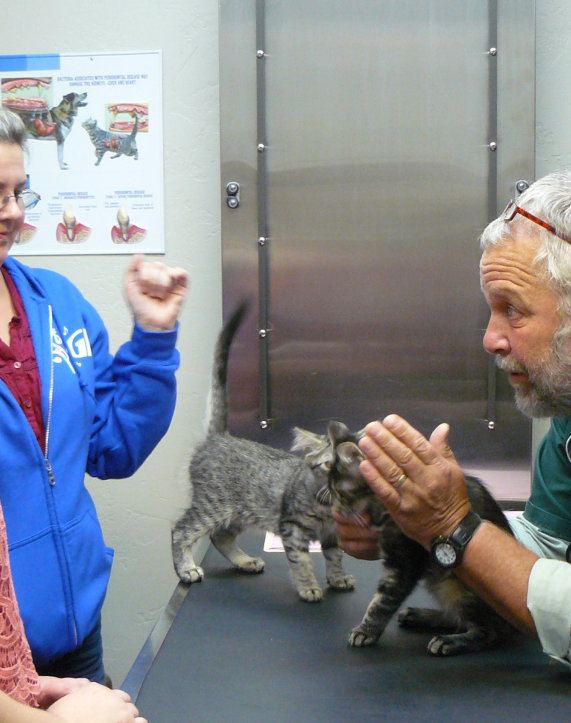
Jim is an experienced Doctor of Veterinary Medicine (DVM) and has frequently advised us, both professionally and informally, about our own dogs and cats. We trust him fully. Jim attends a couple of local vet clinics including Lincoln Road Veterinary Clinic in Grants Pass to where we take our pets when required.
Dr. Jim seeing a patient at Lincoln Road Vet.
Here is Jim’s update published with his kind permission and unchanged by me apart from some minor formatting amendments including italicising some phrases.
ooOOoo
Hey Paul …
Regarding your post of 1-11-18, a guest post by Kathreen Miller concerning canine diet, I feel the need (justified or not) to clarify a few points. She seems to be a big proponent of “organic diets” and lest your readers be misled, I think we need to define what is meant by “organic”.
The legal definition of “organic” is codified by the USDA National Organic Program (NOP) in 7 CFR 205. Pet foods and pet treats must comply with these regulations or they may not legally use the word “organic” on the label. If you read these regulations, you will find that “organic” refers only to the handling and processing of ingredients and products.
These regulations cover: ingredient sourcing, ingredient handling, manufacturing, and labeling & certification of products wanting to use the word “organic” in their labeling.
However, these rules are not considered by NOP as a means to ensure safer, healthier, or more nutritious foods. In fact, there is no regulatory distinction in the tolerable levels of pesticides, drugs, or other residues allowed in organic vs conventional products (even though lower residues may in fact be a result).
Rather, the “organic” label is viewed as a confirmation of the organic production process, and the purchaser is left to his or her own determination as to whether the costs merit the perceived benefits. The bottom line is that “organic” refers to the processing of a product, and makes no guarantees as to the quality or digestibility of ingredients, safety, nutritional value or health benefits of the product.
A savvy pet owner, in order to ensure her dog’s optimal nutritional health, would be better advised to follow guidelines outlined by WSAVA or AAHA (or other reputable source) rather than to reflexively reach for the dog food that says “organic” on the label. The “organic” label does not necessarily mean a diet is good or bad, but it has nothing to do with the nutritional adequacy of the diet and hence your dog’s health.
Another point: Kathreen seems to buy into the popular myth that plant-based ingredients (like corn) are poorly digested fillers that provide little nutritional value and can cause allergies. Corn provides a good source of carbohydrates, essential amino acids, protein, and essential fatty acids in the diets of dogs and cats. It is highly digestible and is not a common cause of allergies. It is actually a very good nutrient as an ingredient in pet food.
My last point is regarding the product “Pet Bounce” that Kathreen endorses as a treatment for arthritic pain in dogs. This product is labelled as homeopathic and as such is nothing more than a placebo.
It has been proven over and over and over again that homeopathic remedies are nothing but water and perform no better than placebos in numerous clinical trials. Reading the list of ingredients, one can see that it contains:
1) Belladonna 6X
2)Caulphyllum 6C
3) Colchicum autumnale 200C
4) Apis mellifica 30C
5) Rhus toxicodendron 200C
6) Ruta graveolens 6X.
Anyone familiar with homeopathic nomenclature knows that, for example, the Apis mellifica 30C designation means that this particular herb is diluted in water 1 to or (that’s 1 followed by 60 zeroes!).
To put it into perspective, that’s equivalent to 1 molecule of this substance in a sphere of water 90 million miles in diameter (approximately the distance of the earth to the sun). That’s a 30C dilution.
At a 200C dilution, the treating substance is diluted more than the total number of atoms in the known universe!
Regardless of any medicinal properties these herbs may have, they are so fantastically diluted that there is not one molecule present in the final solution.
I defy any reasonable person to tell me that this so-called remedy is effective to treat anything and consists of anything more than a water placebo.
My problem with this kind of snake oil is that well-meaning pet owners waste their money (~$50.00 per bottle!) on this useless product, believing all the hype and thinking that they are improving the quality of their dog’s life, meanwhile squandering the opportunity to actually help their dog with an effective and evidence-based treatment.
Kathreen seems to be a nice and well-intentioned woman, but I don’t know what qualifies her as a “pet health expert”, other than her own opinion. According to her profile (from your blog) she lives in Chicago with her daughter and dog “Buddy” and listens to music, watches TV, and travels. That’s it? Nothing more??


 It’s not only people who can be lactose intolerant – dogs can be as well. This means they are not allowed to eat or drink any dairy products,