It primarily featured a short video from the home page of Colin Potter’s Fight Parkinson’s website. That video explained how a strict regime of the right food and supported by supplements had made an incredible difference to his health, effectively putting his PD into remission.
Or in Colin’s words:
I am Colin Potter and I have a Parkinson’s diagnosis.
Only there’s one difference between me and virtually all other people with Parkinson’s
I no longer suffer from its symptoms. I don’t take conventional medications.
You’d hardly know I had Parkinson’s. How is this possible?
I’m not a doctor, I’m just an ordinary bloke diagnosed with Parkinson’s in 2011 who just didn’t like what he was being told by his doctors; that his condition was incurable and his health would go into permanent decline.
So, I started my own research, and found thousands of authoritative research studies that:
Showed that Parkinson’s mostly had its origins in our lifestyle and environment
Revealed the possible, specific causes behind Parkinson’s
Promoted the actions I could take to fix the problem
Allowed me to cease levodopa medication
I then made the necessary changes to my lifestyle and diet and here I am, two+ years later, healthy and recovered.
I know many of you will find it hard to dedicate a measurable amount of ‘viewing’ time to this post but that doesn’t stop me from recommending a subsequent video.
Namely, a longer (32 minutes) interview of Colin Potter that really explains his transformation
There’s even more to share with you but Jeannie and I have made a fundamental decision. That is that before we go any further it is only right that we seek the views of a local nutritionist in nearby Grants Pass.
We need to be certain that the major changes that we are planning in terms of diet and supplement intake are supported by local, qualified persons.
We will share those findings with you very soon.
But it does cross my mind that the following should be included in this post.
We do not offer advice and nothing on any website, email or any other communication is intended to treat, diagnose, prevent or cure any disease. It is not a substitute for consulting your doctor. You should consult a doctor for diagnosis of conditions, before beginning any diet, exercise or supplementation or if you suspect you have any health issue. You should not stop medication without consulting your doctor.
Getting to the truth of what is or is not good for our dogs.
As many will understand so very often I am acting more as a messenger than an authoritative source in this place. It is very difficult for me, almost impossible indeed, for me to verify the validity of what is posted here.
On January 11th, I published a guest post from Kathreen Miller. Her article was called Is Organic Food Really Good For Your Dog To Eat?
Yesterday, local good friend and neighbour, Jim Goodbrod, sent me an email pointing out a number of weaknesses in Kathreen’s article and giving me permission to republish what he wrote as a post on Learning from Dogs.
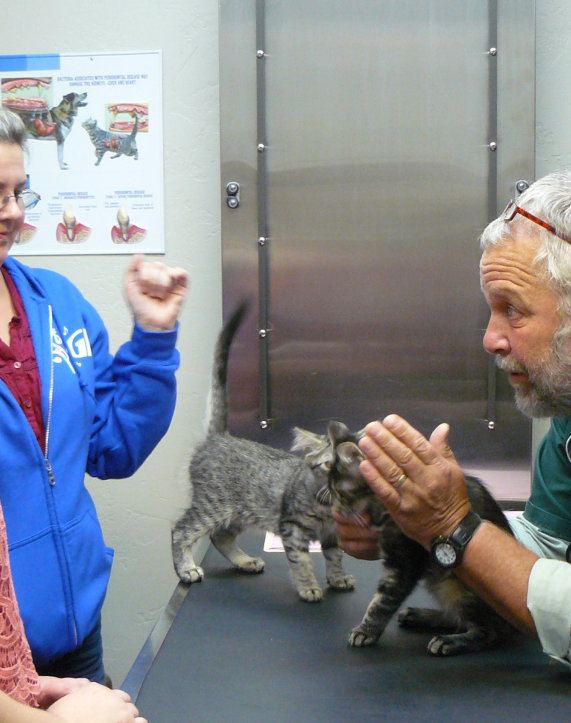
Jim is an experienced Doctor of Veterinary Medicine (DVM) and has frequently advised us, both professionally and informally, about our own dogs and cats. We trust him fully. Jim attends a couple of local vet clinics including Lincoln Road Veterinary Clinic in Grants Pass to where we take our pets when required.
Dr. Jim seeing a patient at Lincoln Road Vet.
Here is Jim’s update published with his kind permission and unchanged by me apart from some minor formatting amendments including italicising some phrases.
ooOOoo
Hey Paul …
Regarding your post of 1-11-18, a guest post by Kathreen Miller concerning canine diet, I feel the need (justified or not) to clarify a few points. She seems to be a big proponent of “organic diets” and lest your readers be misled, I think we need to define what is meant by “organic”.
The legal definition of “organic” is codified by the USDA National Organic Program (NOP) in 7 CFR 205. Pet foods and pet treats must comply with these regulations or they may not legally use the word “organic” on the label. If you read these regulations, you will find that “organic” refers only to the handling and processing of ingredients and products.
These regulations cover: ingredient sourcing, ingredient handling, manufacturing, and labeling & certification of products wanting to use the word “organic” in their labeling.
However, these rules are not considered by NOP as a means to ensure safer, healthier, or more nutritious foods. In fact, there is no regulatory distinction in the tolerable levels of pesticides, drugs, or other residues allowed in organic vs conventional products (even though lower residues may in fact be a result).
Rather, the “organic” label is viewed as a confirmation of the organic production process, and the purchaser is left to his or her own determination as to whether the costs merit the perceived benefits. The bottom line is that “organic” refers to the processing of a product, and makes no guarantees as to the quality or digestibility of ingredients, safety, nutritional value or health benefits of the product.
A savvy pet owner, in order to ensure her dog’s optimal nutritional health, would be better advised to follow guidelines outlined by WSAVA or AAHA (or other reputable source) rather than to reflexively reach for the dog food that says “organic” on the label. The “organic” label does not necessarily mean a diet is good or bad, but it has nothing to do with the nutritional adequacy of the diet and hence your dog’s health.
Another point: Kathreen seems to buy into the popular myth that plant-based ingredients (like corn) are poorly digested fillers that provide little nutritional value and can cause allergies. Corn provides a good source of carbohydrates, essential amino acids, protein, and essential fatty acids in the diets of dogs and cats. It is highly digestible and is not a common cause of allergies. It is actually a very good nutrient as an ingredient in pet food.
My last point is regarding the product “Pet Bounce” that Kathreen endorses as a treatment for arthritic pain in dogs. This product is labelled as homeopathic and as such is nothing more than a placebo.
It has been proven over and over and over again that homeopathic remedies are nothing but water and perform no better than placebos in numerous clinical trials. Reading the list of ingredients, one can see that it contains:
1) Belladonna 6X
2)Caulphyllum 6C
3) Colchicum autumnale 200C
4) Apis mellifica 30C
5) Rhus toxicodendron 200C
6) Ruta graveolens 6X.
Anyone familiar with homeopathic nomenclature knows that, for example, the Apis mellifica 30C designation means that this particular herb is diluted in water 1 to or (that’s 1 followed by 60 zeroes!).
To put it into perspective, that’s equivalent to 1 molecule of this substance in a sphere of water 90 million miles in diameter (approximately the distance of the earth to the sun). That’s a 30C dilution.
At a 200C dilution, the treating substance is diluted more than the total number of atoms in the known universe!
Regardless of any medicinal properties these herbs may have, they are so fantastically diluted that there is not one molecule present in the final solution.
I defy any reasonable person to tell me that this so-called remedy is effective to treat anything and consists of anything more than a water placebo.
My problem with this kind of snake oil is that well-meaning pet owners waste their money (~$50.00 per bottle!) on this useless product, believing all the hype and thinking that they are improving the quality of their dog’s life, meanwhile squandering the opportunity to actually help their dog with an effective and evidence-based treatment.
Kathreen seems to be a nice and well-intentioned woman, but I don’t know what qualifies her as a “pet health expert”, other than her own opinion. According to her profile (from your blog) she lives in Chicago with her daughter and dog “Buddy” and listens to music, watches TV, and travels. That’s it? Nothing more??
Sometime over the next few days I will write a post about an amazing connection that Jean made, via Richard in England, with Colin Potter. He is the founder of the site Fight Parkinson’s.
It is mentioned as an introduction to today’s post because Colin stresses the critical importance of the right diet for us humans.
Richard lives with his good lady, Julie, in Minety, a village in North Wiltshire. He and I go back many, many years and we have been close friends from the day that we first met. Richard was diagnosed with early-stage Parkinson’s Disease (PD) the same year and month as my Jeannie: December, 2015.
Last New Year’s Eve Richard and Julie were at a local party and the subject of PD came up. Richard subsequently told me that he was speaking to a fellow party guest who said that he was, in turn, an acquaintance of a Colin Potter. He went to add that Colin had also been diagnosed with PD but had decided not to ‘give in’ to the diagnosis but undertake comprehensive research into the causes and whether it was possible to go into remission. He later launched a website Fight Parkinsons.
This is Colin’s video that appears on the home page of Fight Parkinson’s.
Parkinson’s RecoveryThis is where you find the answers to the causes of Parkinson’s and the actions you can take which may bring about a recovery.
There are actions that I’ve taken which have required guidance from a doctor (of Functional Medicine) or special practitioner. Other steps, such as changing to a better diet, I have done independently based upon my research.
Nowadays, there are so many ways that we fall foul of nature and the kind of life we are built to lead. Industrialisation and technology expose our bodies to so much stress and toxic substances, it’s no wonder that chronic disease arises. It also means that there are many things to put right.
This has been a journey of learning over several years and, with subsequent knowledge, there are some things I did at the start that I would do differently now. Nevertheless, I did them and can’t turn the clock back.
I share this with you because the chances are that you know someone who knows someone with PD. The information on the Fight Parkinson’s website is too important not to be shared as far and wide as possible.
The subscription price for signing up to all the information is just $5/GBP3.60 per month. Both Jeannie and Richard are subscribers.
Last Wednesday I was signed off in terms of being over my medical challenge and the good doctor said I was clear to return to driving; I drove home that afternoon from Eugene to Merlin.
I wanted to offer you good people a sense of what being home, more or less compus mentus , feels like.
For just two days ago I published a post under the heading of Meat is Heat. It featured an essay by Michael Greger. He of the website NutritionFacts.org. That essay promoted the message:
What we eat may have more of an impact on global warming than what we drive.
Just cutting out animal protein intake one day of the week could have a powerful effect. Meatless Mondays alone could beat out a whole week of working from home and not commuting.
Many of you read that post.
On the same day that I published that post, George Monbiot published an article in The Guardian newspaper that offered the same message, albeit coming at it from a different place but nonetheless just as critically important.
Here it is republished with Mr. Monbiot’s very kind permission.
ooOOoo
We Can’t Keep Eating Like This
This is the question everyone should be attending to – where is the food going to come from?
By George Monbiot, published in the Guardian 11th December 2017
Brexit; the crushing of democracy by billionaires; the next financial crash; a rogue US president: none of them keeps me awake at night. This is not because I don’t care – I care very much. It’s only because I have a bigger question on my mind. Where is the food going to come from?
By mid-century there will be two or three billion more people on Earth. Any one of the issues I am about to list could help precipitate mass starvation. And this is before you consider how they might interact.
The trouble begins where everything begins: with soil. The UN’s famous projection that, at current rates of soil loss, the world has 60 years of harvests left, appears to be supported by a new set of figures. Partly as a result of soil degradation, yields are already declining on 20% of the world’s croplands.
Now consider water loss. In places such as the North China Plain, the central United States, California and north-western India – among the world’s critical growing regions – levels of the groundwater used to irrigate crops are already reaching crisis point. Water in the Upper Ganges aquifer, for example, is being withdrawn at 50 times its recharge rate. But, to keep pace with food demand, farmers in South Asia expect to use between 80 and 200% more water by 2050. Where will it come from?
The next constraint is temperature. One study suggests that, all else being equal, with each degree Celsius of warming the global yield of rice drops by 3%, wheat by 6% and maize by 7%. This could be optimistic. Research published in the journal Agricultural & Environmental Letters finds that 4°C of warming in the US Corn Belt could reduce maize yields by between 84 and 100%.
The reason is that high temperatures at night disrupt the pollination process. But this describes just one component of the likely pollination crisis. Insectageddon, caused by the global deployment of scarcely-tested pesticides, will account for the rest. Already, in some parts of the world, workers are now pollinating plants by hand. But that’s viable only for the most expensive crops.
Then there are the structural factors. Because they tend to use more labour, grow a wider range of crops and work the land more carefully, small farmers, as a rule, grow more food per hectare than large ones. In the poorer regions of the world, people with less than 5 hectares own 30% of the farmland but produce 70% of the food. Since 2000, an area of fertile ground roughly twice the size of the United Kingdom has been seized by land grabbers and consolidated into large farms, generally growing crops for export rather than the food needed by the poor.
While these multiple disasters unfold on land, the seas are being sieved of everything but plastic. Despite a massive increase in effort (bigger boats, bigger engines, more gear), the worldwide fish catch is declining by roughly 1% a year, as populations collapse. The global land grab is mirrored by a global seagrab: small fishers are displaced by big corporations, exporting fish to those who need it less but pay more. Around 3 billion people depend to a large extent on fish and shellfish protein. Where will it come from?
All this would be hard enough. But as people’s incomes increase, their diet tends to shift from plant protein to animal protein. World meat production has quadrupled in 50 years, but global average consumption is still only half that of the UK – where we eat roughly our bodyweight in meat every year – and just over a third of the US level. Because of the way we eat, the UK’s farmland footprint (the land required to meet our demand) is 2.4 times the size of its agricultural area. If everyone aspires to this diet, how do we accommodate it?
The profligacy of livestock farming is astonishing. Already, 36% of the calories grown in the form of grain and pulses – and 53% of the protein – are used to feed farm animals. Two-thirds of this food is lost in conversion from plant to animal. A graph produced last week by Our World in Data suggests that, on average, you need 0.01m2 of land to produce a gram of protein from beans or peas, but 1m2 to produce it from beef cattle or sheep: a difference of 100-fold.
It’s true that much of the grazing land occupied by cattle and sheep cannot be used to grow crops. But it would otherwise have sustained wildlife and ecosystems. Instead, marshes are drained, trees are felled and their seedlings grazed out, predators are exterminated, wild herbivores fenced out and other lifeforms gradually erased as grazing systems intensify. Astonishing places – such as the rainforests of Madagascar and Brazil – are laid waste to make room for yet more cattle.
Because there is not enough land to meet both need and greed, a global transition to eating animals means snatching food from the mouths of the poor. It also means the ecological cleansing of almost every corner of the planet.
The shift in diets would be impossible to sustain even if there were no growth in the human population. But the greater the number of people, the greater the hunger meat eating will cause. From a baseline of 2010, the UN expects meat consumption to rise by 70% by 2030 (this is three times the rate of human population growth). Partly as a result, the global demand for crops could double (from the 2005 baseline) by 2050. The land required to grow them does not exist.
When I say this keeps me up at night, I mean it. I am plagued by visions of starving people seeking to escape from grey wastes, being beaten back by armed police. I see the last rich ecosystems snuffed out, the last of the global megafauna – lions, elephants, whales and tuna – vanishing. And when I wake, I cannot assure myself that it was just a nightmare.
Other people have different dreams: the fantasy of a feeding frenzy that need never end, the fairytale of reconciling continued economic growth with a living world. If humankind spirals into societal collapse, these dreams will be the cause.
There are no easy answers, but the crucial change is a shift from an animal to a plant-based diet. All else being equal, stopping both meat production and the use of farmland to grow biofuels could provide enough calories for another 4 billion people and double the protein available for human consumption. Artificial meat will help: one paper suggests it reduces water use by at least 82% and land use by 99%.
The next Green Revolution will not be like the last one. It will rely not on flogging the land to death, but on reconsidering how we use it and why. Can we do this, or do we – the richer people now consuming the living planet – find mass death easier to contemplate than changing our diet?
As many of you know Jeannie and I changed our diet to a vegan diet some four weeks ago. It was done more for personal health reasons than from an awareness of the difference that it made to the future of the planet. But over the last few weeks we have had our eyes opened to the broader benefits of not eating meat. George Monbiot spells out the urgency of change for all of us, especially the richer people in the richer countries.
Am I hopeful that there will be a mass awareness of the need to change? I truly just don’t know. I will close be repeating Mr. Monbiot’s closing sentence.
Can we do this, or do we – the richer people now consuming the living planet – find mass death easier to contemplate than changing our diet?
A counter-intuitive approach to stopping global warning.
About three weeks ago, the 22nd November to be precise, I published a post under the title of Our Beautiful Planet. It included the reply to an email that I had sent to Prof. Bill Ripple or, to give him his full nomenclature, William J. Ripple, Distinguished Professor of Ecology, Department of Forest Ecosystems and Society, Oregon State University, Corvallis, Oregon.
I reached out to the good Professor because I wanted to share with you what he thought were the top priorities in terms of how each and every one of us should change our lifestyle. You may well recall his reply (my emphasis):
Paul, Consider suggesting that if people want to help, they could have fewer children, reduce energy consumption such as driving autos and flying, avoid meat and eat mostly plant-based foods and avoid wasting food. Below are quotes from our paper. Bill
“It is also time to re-examine and change our individual behaviors, including limiting our own reproduction (ideally to replacement level at most) and drastically diminishing our per capita consumption of fossil fuels, meat, and other resources ….
… reducing food waste through education and better infrastructure; promoting dietary shifts towards mostly plant-based foods
I am keeping my fingers crossed that Dr. Michael Greger is happy for me to republish this article in full. For it so underlines what Professor Ripple is promoting. (Indeed, further browsing on the NutritionFacts website showed that articles are published under the Creative Commons License arrangement.)
ooOOoo
Image Credit: Andrew Walton / Unsplash. This image has been modified.
Meat is Heat: The Effects of Diet on Global Warming
One of the most prestigious medical journals in the world editorialized that climate change represents “the biggest global health threat of the 21st century.” Currently, chronic diseases are by far the leading cause of death. Might there be a way to combat both at the same time? For example, riding our bikes instead of driving is a win-win-win for the people, planet, and pocketbook. Are there similar win-win situations when it comes to diet?
As I discuss in my video Diet and Climate Change: Cooking Up a Storm, the foods that createthe most greenhouse gases appear to be the same foods that are contributing to many of our chronic diseases. Researchers found that meat (including fish), eggs, and dairy had the greatest negative environmental impact, whereas grains, beans, fruits, and vegetables had the least impact. And not only did the foods with the heaviest environmental impact tend to have lower nutritional quality, but they also had a higher price per pound. So, avoiding them gives us that triple win scenario.
The European Commission, the governing body of the European Union, commissioned a study on what individuals can do to help the climate. For example, if Europeans started driving electric cars, it could prevent as much as 174 million tonnes of carbon from getting released. We could also turn down the thermostat a bit and put on a sweater. But the most powerful action people could take is shift to a meat-free diet.
What we eat may have more of an impact on global warming than what we drive.
Just cutting out animal protein intake one day of the week could have a powerful effect. Meatless Mondays alone could beat out a whole week of working from home and not commuting.
A strictly plant-based diet may be better still: It’s responsible for only about half the greenhouse gas emissions. Studies have suggested that “moderate diet changes are not enough to reduce impacts from food consumption drastically.” Without significant reduction in meat and dairy, changes to healthier diets may only result in rather minor reductions of environmental impacts. This is because studies have shown that the average fossil energy input for animal protein production systems is 25 calories of fossil energy input for every 1 calorie produced—more than 11 times greater than that for grain protein production, for example, which is around 2 to 1.
Researchers in Italy compared seven different diets to see which one was environmentally friendliest. They compared a conventional omnivorous diet adhering to dietary guidelines; an organic omnivorous diet; a conventional vegetarian diet; an organic vegetarian diet; a conventional vegan diet; an organic vegan diet; and a diet the average person actually eats. For each dietary pattern, the researchers looked at carcinogens, air pollution, climate change, effects on the ozone layer, the ecosystem, acid rain, and land, mineral, and fossil fuel use. You can see in the video how many resources it took to feed people on their current diets, all the negative effects the diet is having on the ecosystem, and the adverse effects on human health. If people were eating a healthier diet by conforming to the dietary recommendations, the environmental impact would be significantly less. An organic omnivorous diet would be better still, similar to a vegetarian diet of conventional foods. Those are topped by an organic vegetarian diet, followed by a conventional vegan diet. The best, however, was an organic vegan diet.
The Commission report described that the barriers to animal product reduction are largely lack of knowledge, ingrained habits, and culinary cultures. Proposed policy measures include meat or animal protein taxes, educational campaigns, and putting the greenhouse gas emissions information right on food labels.
Climate change mitigation is expensive. A global transition to even just a low-meat diet, as recommended for health reasons, could reduce these mitigation costs. A study determined that a healthier, low-meat diet would cut the cost of mitigating climate change from about 1% of GDP by more than half, a no-meat diet could cut two-thirds of the cost, and a diet free of animal products could cut 80% of the cost.
Many people aren’t aware of the “cow in the room.” It seems that very few people are aware that the livestock sector is one of the largest contributors to greenhouse gas emissions. But that’s changing.
The UK’s National Health Service is taking a leading role in reducing carbon emissions. Patients, visitors, and staff can look forward to healthy, low-carbon menus with much less meat, dairy, and eggs. “Evidence shows that as far as the climate is concerned, meat is heat.”
The Swedish government recently amended their dietary recommendations to encourage citizens to eat less meat. “If we seek only to achieve the conservative objective of avoiding further long-term increases in [greenhouse gas] emissions from livestock, we are still led to rather radical recommendations” such as cutting current consumption levels in half in affluent countries—“an unlikely outcome if there were no direct rewards to citizens for doing so. Fortunately, there are such rewards: important health benefits…” By helping the planet, we can help ourselves.
There are tons of articles on diet and sustainability. It’s such an important topic that I may review the new science once every year or two. When the U.S. Department of Agriculture entered these waters, the meat industry appeared to freak out, and the Dietary Guidelines debate continues.
ooOOoo
Just reflect on the key message from this article (my emphasis):
“A study determined that a healthier, low-meat diet would cut the cost of mitigating climate change from about 1% of GDP by more than half, a no-meat diet could cut two-thirds of the cost, and a diet free of animal products could cut 80% of the cost.”
In other words, the most cost-effective way of mitigating climate change is to change to a diet free of animal products. Plus, it’s a damn sight healthier for you and me!
The FDA reports it has received about 68 reports of pet illnesses related to “bone treats”.
Bone treats differ from regular uncooked butcher-type bones because they’re processed and packaged for sale as “dog treats”.
Then just early last Saturday there was an email that warned:
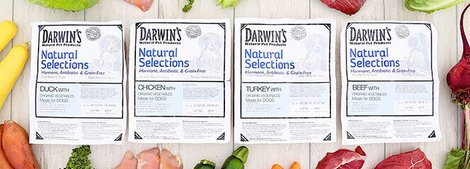
Darwin’s Natural Pet Products of Tukwila, Washington, has notified its customers that it is recalling 2 lots of its Natural Selections raw dog food products because they have the potential to be contaminated with Salmonella bacteria.
To learn which products are affected, please visit the following link:
Please be sure to share the news of this alert with other pet owners.
Mike Sagman, Editor
The Dog Food Advisor
Here are the full details of that alert.
ooOOoo
Darwin’s Dog Food Recall of December 2017
December 8, 2017 — Darwin’s Natural Pet Products of Tukwila, Washington, has notified distributors that it is recalling select lots of its Darwin’s Natural Selections dog food due to possible contamination with Salmonella bacteria.
What’s Recalled?
The product was shipped to distributors between September and early October 2017.
The affected product includes the following:
Natural Selections Turkey Meals for Dogs
Net wt 2 lbs
Lot #39937
Manufacture date 08/24/17
Natural Selections Duck Meals for Dogs
Net wt 2 lbs
Lot #40487
Manufacture date 09/29/17
Why Is It Recalled?
Through testing, the company determined that the products listed above, have the potential to be contaminated with Salmonella.
About Salmonella
Salmonella is a bacterial organism that can cause serious and sometimes life-threatening infections in people, particularly young children, frail or elderly people, and those with weakened immune systems.
There is risk to humans from handling contaminated products, especially if they have not thoroughly washed their hands after having contact with the product or any surfaces exposed to these products.
Some healthy individuals who are infected may experience fever, diarrhea, nausea, vomiting and abdominal pain.
In rare circumstances, infections can result in the organism getting into the bloodstream and producing more severe or chronic illness.
According to the FDA, it is uncommon for healthy dogs to become sick from Salmonella.
However, dogs with weakened immune systems (such as puppies or older dogs) have a higher risk of becoming sick.
Pets with infections may be lethargic and have diarrhea or bloody diarrhea, fever, and vomiting.
Some pets will have only decreased appetite, fever and abdominal pain.
In an email message to distributors, Darwin’s president, Gary Tashjian writes…
We have not received any reports from customers regarding these meals, and are taking these steps out of an abundance of caution.
However, if your pet has consumed the recalled product and has any of the above symptoms, please contact your veterinarian if they persist.
We are recommending that you inspect your inventory of Darwin’s meals to determine if you have any left from the lot listed above.
If any of the above product is still in your inventory, please take the following steps:
Write down the lot number, date/time of manufacture and quantity of any product from the above lot remaining in your inventory.
Dispose of the product by placing it in a plastic bag, then placing the bag in the trash in a secure manner.
Contact us at productsafety@darwinspet.com to confirm that you have taken the above steps and to arrange for replacement of any unused product.
Please note the following:
Your name and address (or customer number)
The date and time of manufacture and quantity of food from this lot that you have remaining in your inventory
Confirmation that you have disposed of it.
We anticipate that some of our customers will have questions or concerns regarding this matter.
We welcome the opportunity to talk with you about it.
Toward that end, we have set up a special toll-free number for you to call: 866-832-8319 (Monday through Friday from 6 AM to 6 PM and Saturday 7 AM to 3 PM Pacific Time).
Please note that we may not be able to talk with each of you at once, so we do ask that you be patient, particularly if your issue is not of an urgent nature.
We regret any concern and/or inconvenience that this causes you.
We are taking steps to reduce the opportunity for this to occur again.
What to Do
U.S. citizens can report complaints about FDA-regulated pet food products by calling the consumer complaint coordinator in your area.
Or more specifically living a long and healthy life assisted by our dogs!
Recently the Care 2 site published a wonderful item about the real benefits of having a dog in our life when we are the ‘wrong’ side of (fill in your own number!).
So here it is for all you good people. I know without a doubt that there will be many nodding heads out there as the article is being read.
According to a 2016 Gallup poll, 44 percent of Americans own a dog. That is a pretty significant number. In fact, dogs are easily the most popular pet among US pet owners—sorry cat lovers. But what is it that makes dogs so great? Well, they’re fun loving, energetic, make excellent companions and… may actually help you live longer.
A recent Swedish study suggested that owning a dog may be linked to a reduced risk of cardiovascular disease and premature death. According to the study, owning a dog was associated with a 20 percent reduced risk of overall death and a 23 percent reduced risk of dying from cardiovascular disease. The study tracked 3.4 million people over the course of 12 years, including both dog owners and non-dog owners. Interestingly, the effects of dog ownership were most pronounced when subjects lived alone and were the sole caretakers for the dog, as they experienced a 33 percent reduced risk of death.
So what is it that makes dogs so beneficial to our health and our lives? Here are a few theories:
EXERCISE
Dogs need exercise as much as we do, but, oftentimes people prioritize their pup’s needs above their own. Many people would more readily take their dog on a walk than walk alone down the block to get some fresh air and take care of themselves. But lucky for us, exercising a dog means exercising yourself, too! It is well established that regular exercise reduces your likelihood of developing cardiovascular disease. A dog may provide irrefutable motivation to get you off the couch and on a walk, which could be saving your life.
OUTDOOR TIME
Along the same lines, dogs encourage us to get outside more. Being outside reduces stress, can increase vitamin D levels and promotes happiness. It can be easy for us to get lazy and stay snuggled up inside when the weather is less than ideal, but dogs need regular outside access. Our pups encourage us to get outside on a regular basis, which can have a small but significantly healthful impact on overall mood and stress levels.
BENEFICIAL BACTERIA
Having a dog is essentially like consuming a powerful probiotic every single day. Dogs go out in nature, roll in mud and grass, chew on sticks, sniff all sorts of bacteria-ridden substances and then track little microscopic bits of this array of bacteria back into our homes. But that may actually be a good thing. According to the New York Times, “Epidemiological studies show that children who grow up in households with dogs have a lower risk for developing autoimmune illnesses like asthma and allergies — and it may be a result of the diversity of microbes that these animals bring inside our homes.” The wider the spectrum of bacteria we subject ourselves to, the more balanced our own microbiomes will become. Since the microbiome can affect all areas of our health, including the likelihood of developing cardiovascular disease, the long term health benefits of diverse bacterial populations should not be underestimated. Dogs, and other pets, do an incredible job of strengthening our microbiomes, which has a profound impact on our health.
EMOTIONAL SUPPORT
There is something to said for the emotional stability a dog provides. Chronic stress has been linked to increased risk of cardiovascular disease and premature death, which makes it even more significant that dogs are great at reducing our stress and anxiety levels. They are like our little furry therapists—they are always there for us, through good times and bad, and they always love us indiscriminately. The companionship of a dog and a human is one of the purest, most mutually beneficial relationships one can have. It’s pretty powerful.
Of course, just giving your parents a dog doesn’t mean they will necessarily live longer—especially if they aren’t ‘dog people.’ But for those who are, next time you come home to a wagging tail and a wild tongue, be grateful to your pup pal for all the amazing things they bring to your life.
ooOOoo
Again and again one realises just how incredible it is to have a dog, or several!, in one’s life!
Good people, ran out of time yesterday but wanted to republish the following.
It first appeared in October, 2015. The pictures are no longer available online.
Exploring the range of emotions felt and displayed by our dogs.
Like so many bloggers, I subscribe to the writings of many others. Indeed, it’s a rare day when I don’t read something that touches me, stirring up emotions across the whole range of feelings that we funny humans are capable of.
Such was the case with a recent essay published on Mother Nature Network. It was about dogs and whether they are capable of complex emotions. Better than that, MNN allow their essays to be republished elsewhere so long as they are fully and properly credited.
Joy, fear, surprise, disgust, sadness. These are the basic emotions dogs feel that are also easy enough for humans to identify. But what about more complex emotions?
Many dog owners are convinced their dogs feel guilty when they’re caught misbehaving. In the same way, many owners are sure their dogs feel pride at having a new toy or bone. But it gets tricky when you assign these sorts of emotions to a dog. These are definitely emotions felt by humans, but are they also felt by dogs?
(see footnote)
Why we question the presence of complex emotions is wrapped up in the way we get to those emotions. The American Psychological Association explains, “Embarrassment is what’s known as a self-conscious emotion. While basic emotions such as anger, surprise or fear tend to happen automatically, without much cognitive processing, the self-conscious emotions, including shame, guilt and pride, are more complex. They require self-reflection and self-evaluation.”
Essentially we’re comparing our behavior or situation to a social expectation. For instance, guilt comes when we reflect on the fact that we’ve violated a social rule. We need to be aware of the rule and what it means to break it. So, can dogs feel guilt? Well, exactly how self-reflective and self-evaluative are dogs?
Among humans, children begin to experience empathy and what are called secondary emotions when they are around 2 years old. Researchers estimate that the mental ability of a dog is roughly equal to that of an 18-month-old human. “This conclusion holds for most mental abilities as well as emotions,” says Stanley Coren in an article in Modern Dog Magazine. “Thus, we can look to the human research to see what we might expect of our dogs. Just like a two-year-old child, our dogs clearly have emotions, but many fewer kinds of emotions than found in adult humans.”
In other words, if 18-month-old children can’t yet experience these emotions, and dogs are roughly equal to them in cognitive and emotional ability, then dogs can’t feel these self-reflective emotions either. At least, that’s what researchers have concluded so far.
Is that guilt or fear?
The evidence for primary emotions like love and happiness in dogs abounds, but empirical evidence for secondary emotions like jealousy and guilt is sparse. And this is partially because it’s difficult to create tests that provide clear-cut answers. When it comes to guilt, does a dog act guilty because she knows she did something wrong, or because she’s expecting a scolding? The same expression can come across as guilt or fear. How do we know which it is?
“In wolves, it is thought that guilt-related behaviors serve to reinforce social bonds, as in primates, by reducing conflict and eliciting tolerance from other members of the social group. The same could be true of dogs, though their social groups would primarily include humans. The problem is that the display of the associated behaviors of guilt are not, themselves, evidence of the capacity to emotionally experience guilt… It may still be some time before we can know for certain whether dogs can experience guilt, or whether people can determine if a dog has violated a rule prior to finding concrete evidence of it.”
Guilt, and other secondary emotions, are complicated. That’s exactly why cognitive awareness and emotional capacity in dogs is still a topic under study. In fact, it’s an area that has grown significantly in recent years. We may discover that dogs have a more complex range of emotions than we’re aware of today.
Dogs are highly social animals, and social animals are required to navigate a range of emotions in themselves and those around them to maintain social bonds. It wasn’t so long ago that scientists thought that dogs (and other non-human animals) didn’t have any feelings at all. Perhaps our understanding of dog emotions is simply limited by the types of tests we’ve devised to understand their emotions. After all, we’re trying to detect a sophisticated emotional state in a species that doesn’t speak the same language.
There’s a lot we don’t know
Marc Bekoff makes the argument for leaving the possibility open. In an article in Psychology Today he writes, “[B]ecause it’s been claimed that other mammals with whom dogs share the same neural bases for emotions do experience guilt, pride, and shame and other complex emotions, there’s no reason why dogs cannot.”
Keeping the possibility open is more than just an emotional animal rights issue. There is a scientific basis for continuing the research. A recent study showed that the brains of dogs and humans function in a more similar way than we previously thought.
Scientific American reports that “dog brains have voice-sensitive regions and that these neurological areas resemble those of humans. Sharing similar locations in both species, they process voices and emotions of other individuals similarly. Both groups respond with greater neural activity when they listen to voices reflecting positive emotions such as laughing than to negative sounds that include crying or whining. Dogs and people, however, respond more strongly to the sounds made by their own species.”
Until recently, we had no idea of the similar ways human and dog brains process social information.
So do dogs feel shame, guilt and pride? Maybe. Possibly. It’s still controversial, but for now, there seems to be no harm in assuming they do unless proven otherwise.
ooOOoo
Footnote: At this point in the MNN article there was a link to a series of gorgeous photographs of dogs. If you dear readers can wait, then I will publish them this coming Sunday. If you can’t wait, then go here!
That ‘we’ being all the animals, plants, insects and humans there are.
I’m not saying anything new and not making this plea for the first time in this place.
But just take a few minutes out of your busy day to reflect that for you, for me, for everyone wherever they are in the world, physically and culturally, doing nothing is not an option.
More of that in a minute.
First I want to share with you a few autumnal photographs of our home here in Oregon.
Below was taken at 9am on October 24th showing the mountain mist right down to the tops of our trees that mark the edge of our driveway from the house to our Hugo Road entrance.
Next, a sunrise photograph with the camera pointing to the East. The tree line follows the ridge of some hills the other side of Hugo Road. The picture taken on the 19th October at 07:20. Now a close-up of the remains of a very old tree trunk with the trees that border Bummer Creek, that runs through our land, just showing through the morning mist. Taken on the 24th October at 09:05.
Final photograph I wanted to share with you is this beautiful sight of the moon taken from our property at 16:05 on the 25th. October.
Regular readers will know that Jean and I are not believers in any religion; we are atheists. But to my way of thinking that puts even more pressure on me and Jean to try to make a difference. We do all that we can but there’s no doubt that we can do more.
Yesterday, I referred to Bill Ripple, or to give him his full signature: William J. Ripple, Distinguished Professor of Ecology, Department of Forest Ecosystems and Society, Oregon State University, Corvallis, Oregon.
I sent Bill an email:
Dear Bill (and forgive the over familiarity if that offends),
I am a Brit, just turned 73, living with my beautiful wife, Jean, London-born as I was, down in Merlin, Oregon.
We live on 13 wonderful acres of rural property with 6 dogs (down from 12 when we moved here 5 years ago) and 4 horses, the majority of whom are ex-rescues.
I am the author of the blog Learning from Dogs and want to publish a post highlighting that viewpoint article. Because I believe with every neuron left in my ageing brain that the political changes that this world so urgently needs can only come when 99.9% of the public are screaming out “enough is enough”!
But there’s another saying that comes to mind, the one about being the change you want to see or something like that.
Is there information anywhere online that spells out, almost in words of one syllable, what lifestyle changes each of us can and need to commit to today? Changes that are as appropriate for elderly authors living in the country as young people seeking their first job or those up to their necks in working and raising families?
For that is what I want to publish on my blog!
If it would be easier for me to make an appointment to call you and take notes over the phone then I am just as happy to do that.
Sincerely,
Paul Handover
Hugo Road, Merlin,
Bill promptly replied:
Hi Paul, how long of a list of lifestyle changes do you want to make? Would three or four be enough? Bill
then followed that up with another email:
Paul, Consider suggesting that if people want to help, they could have fewer children, reduce energy consumption such as driving autos and flying, avoid meat and eat mostly plant-based foods and avoid wasting food. Below are quotes from our paper. Bill
“It is also time to re-examine and change our individual behaviors, including limiting our own reproduction (ideally to replacement level at most) and drastically diminishing our per capita consumption of fossil fuels, meat, and other resources ….
… reducing food waste through education and better infrastructure; promoting dietary shifts towards mostly plant-based foods
Now watch this video
I will close this post by listing out all the things that you and I can do now!
Set a target for reducing your car mileage next year compared to 2017,
If you are a regular aircraft passenger, then set a target for flying fewer hours in 2018 compared to 2017,
reduce or stop eating meat,
do not waste food,
reduce the use of heating and cooling in your home/s for next year,
commit to a dietary change away from meats and processed foods to a plant-based diet.
Then for younger couples who want a family around them, limit the number of children to a “replacement level” at most. Adopt??
 This is where you find the answers to the causes of Parkinson’s and the actions you can take which may bring about a recovery.

 Good people, ran out of time yesterday but wanted to republish the following.
 Next, a sunrise photograph with the camera pointing to the East. The tree line follows the ridge of some hills the other side of Hugo Road. The picture taken on the 19th October at 07:20.
 Now a close-up of the remains of a very old tree trunk with the trees that border Bummer Creek, that runs through our land, just showing through the morning mist. Taken on the 24th October at 09:05.
 Regular readers will know that Jean and I are not believers in any religion; we are atheists. But to my way of thinking that puts even more pressure on me and Jean to try to make a difference. We do all that we can but there’s no doubt that we can do more.
 Learning from Dogs