Category: Science

The dog’s nose!

Yet another amazing story about the dog’s nose.

There is so much about dogs in general to be amazed at.

But the nose is something to really marvel at.

There are many sources of information about how incredible is the dog’s nose. For example, I am looking at the page on The Dogington Post that speaks of the dog’s nose.

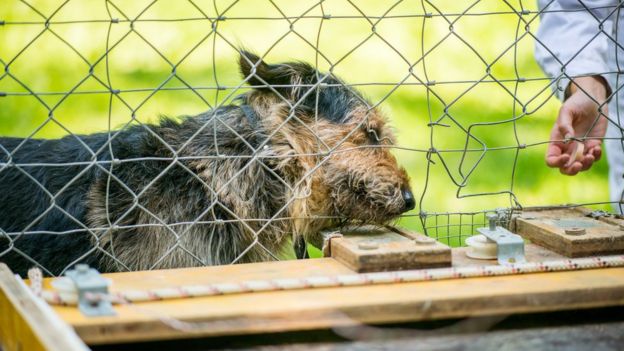
Nature has provided dogs with a nearly perfect sense of smell. If you have a dog, you probably already know that your dog will smell something long before you can. In fact, the average dog has over 300 million olfactory receptors in their noses (compared to a relatively tiny six million for humans). That means, your dog’s sense of smell is over fifty times greater than your own!

It’s a great article, by the way, and one you should read.

But for now read this:

ooOOoo

Very Good Dogs Can Detect the Scent of Seizures, Study Finds

But can they predict seizures before they occur?

(David Osberg / iStock)
smithsonian.com
April 1, 2019
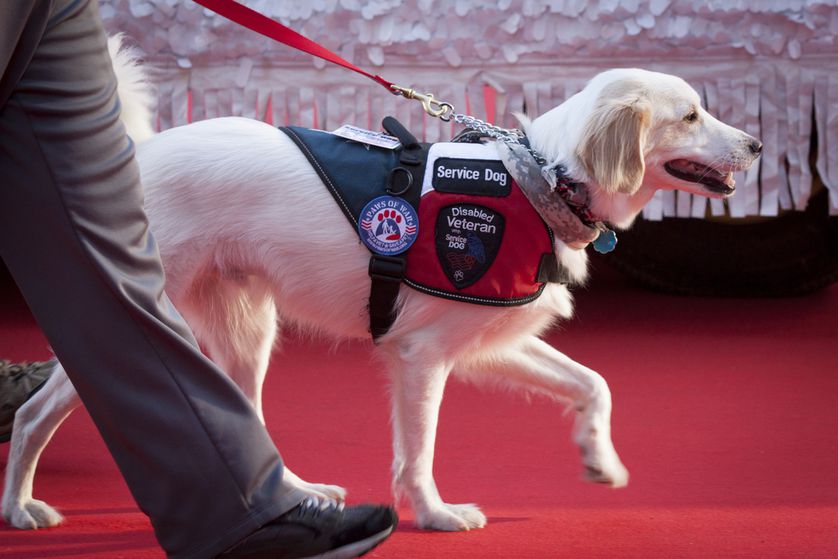
Service dogs can offer vital assistance to those who suffer from epilepsy, helping to prevent injury and signal for help when a seizure episode occurs. Whether dogs can detect seizures before they happen is another, more complicated question; anecdotal reports suggests that they can, but the evidence is inconclusive, and it hasn’t been clear what signals might trigger dogs to anticipate an oncoming seziure. But as Megan Schmidt reports for Discover, a small and intriguing new study suggests that people with epilepsy emit a specific odor when they are having seizures—and dogs can be trained to detect it.
The study’s very good subjects were five service dogs from Medical Mutts in Indianapolis, trained to respond to the bodily odors of people with diabetes, anxiety and epilepsy. To test the dogs’ seizure-detecting abilities, researchers recruited five patients with different types of epilepsy to collect sweat samples at various intervals: either during or right after a seizure, after moderate exercise and at random points in the day during calm activity. Seven samples from each patient were then placed in opaque cans, which the dogs were given a chance to sniff. Each dog underwent nine trials in total: five of those trials were repeat tests with the odor of one patient, and the rest were conducted with samples from the four remaining patients. The dogs had not been exposed to the patients’ scents prior to the experiment.

The results, the study authors write in Scientific Reports “were very clear: all dogs discriminated the seizure odor.” Some of the pooches had a better track record than others—the dogs correctly identified the seizure samples between 67 and 100 percent of the time—but all of their performances were “well above” the margins of chance, according to the researchers.

It’s not entirely surprising that dogs have super-powered noses when it comes to detecting human ailments. Our best animal buddies have been used to sniff out diseases like cancer and diabetes “with some success,” the researchers note. The new study, however, not only shows that dogs can smell seizures, but also offers the first known proof that different types of seizures are associated with common scents; the patients, after all, did not all have the same kind of epilepsy.

Granted, the study was small and limited in scope. It suggests that dogs can smell seizures as they happen, but the verdict is still out on whether the animals can detect seizures that are about to happen. Further research is also needed to determine precisely what bodily chemicals the dogs are smelling in the sweat of epileptic patients. But “[a]s far as implications go, the results are very exciting,” Tim Edwards, a behavioral analyst and senior lecturer at New Zealand’s University of Waikato, who was not involved in the study, tells Scientific American’s Emily Willingham. Perhaps understanding how dogs detect seizures can help pave the way for artificial intelligence technology that is able to do the same.

Additionally, the study authors maintain that their findings dispel the “belief that epilepsy and seizure types were too individual-specific for a general cue to be found.” And this, the researchers say, offers “hope” that people with epilepsy can be warned of oncoming seizures by their furry, faithful friends.

ooOOoo

Wouldn’t that be fabulous! That people with epilepsy could be warned of oncoming seizures. All as a result of a dog’s keen, very keen, sense of smell.

Darwin’s Natural Dog Food

Yet another dog food alert.

Dear Fellow Dog Lover,
The U.S. Food and Drug Administration is warning pet owners not to feed 3 specific lots of Darwin’s Natural dog food because Salmonella bacteria were discovered in the product.
To learn which products are affected, please visit the following link:

FDA Warning: Do Not Feed These Lots of Darwin’s Natural Dog Food

Please be sure to share the news of this alert with other pet owners.

If you go to that link then you will see the following:

FDA Warning: Do Not Feed These Lots of Darwin’s Natural Dog Food

March 26, 2019 — The U.S. Food and Drug Administration is cautioning pet ownersnot to feed their pets 3 lots of Darwin’s Natural Pet Products raw dog food after samples from these lots tested positive for Salmonella.

No images were provided by the FDA in its announcement.

The following image was previously retrieved from the brand’s website and is provided in good faith by The Dog Food Advisor. It may not be an accurate representation of the affected products.

What Products Are Affected?

The codes for each product affected are listed in the second group of numbers found just below the barcode on the package.

Here are the affected products:

  • Darwin’s Natural Pet Products Natural Selections Chicken Recipe with Organic Vegetables for Dogs
    Package: 5309(11)181019
    Manufacture Date: October 19, 2018
  • Darwin’s Natural Pet Products Natural Selections Chicken Recipe with Organic Vegetables for Dogs
    Package: 5375(11)181106
    Manufacture Date: November 11, 2018
  • Darwin’s Natural Pet Products Natural Selections Turkey Recipe with Organic Vegetables for Dogs
    Package: 5339(11)181026
    Manufacture Date: October 26, 2018

These products are manufactured by Arrow Reliance Inc., doing business as Darwin’s Natural Pet Products.

They are sold online direct to consumers.

What Caused This Alert?

The FDA is issuing this alert because the affected lots of Darwin’s raw dog food represent a serious threat to human and animal health.

They are are considered adulterated under the Federal Food, Drug, and Cosmetic Act because they contain Salmonella bacteria.

The FDA collected and analyzed unopened samples of products from these 3 lots in response to a consumer complaint.

Samples from all three lots tested positive for Salmonella.

Because these products are sold and stored frozen, the FDA is concerned that people may still have them in their possession.

About Salmonella

Salmonella is a bacterium that can cause illness and death in humans and animals, especially those who are very young, very old, or have weak immune systems.

According to the Centers for Disease Control and Prevention (CDC), people infected with Salmonella can develop diarrhea, fever and abdominal cramps.

Most people recover without treatment. But in some people, the diarrhea may be so severe that they need to be hospitalized.

In these patients, the Salmonella infection may spread from the intestines to the blood stream and then to other body sites unless the person is treated promptly with antibiotics.

Consult your health care provider if you have symptoms of Salmonella infection.

Pets do not always display symptoms when infected with Salmonella, but signs can include vomiting, diarrhea (which may be bloody), fever, loss of appetite and/or decreased activity level. If your pet has these symptoms, consult a veterinarian promptly. You should also be aware that infected pets can shed the bacteria in their feces without showing signs of being sick.

Consult a veterinarian if your pet has symptoms of Salmonella infection.

What to Do?

If you have any of the affected Darwin’s Natural Pet Products in your possession, stop feeding it to your pets.

Discard the product in a secure container where other animals, including wildlife, cannot access it.

Consumers who have had the affected products in their homes should clean refrigerators and freezers where they were stored.

Clean and disinfect all bowls, utensils, food prep surfaces, pet bedding, toys, floors, and any other surfaces that the food or pet may have had contact with.

Clean up the pet’s feces in yards or parks where people or other animals may become exposed.

Consumers should thoroughly wash their hands after handling the recalled product or cleaning up potentially contaminated items and surfaces.

U.S. citizens can report complaints about FDA-regulated pet food products by calling the consumer complaint coordinator in your area.

Or go to https://www.fda.gov/petfoodcomplaints.

Canadians can report any health or safety incidents related to the use of this product by filling out the Consumer Product Incident Report Form.

Get Dog Food Recall Alerts by Email

Get free dog food recall alerts sent to you by email. Subscribe to The Dog Food Advisor’s emergency recall notification system.

ooOOoo

Please do all your best to ensure the news gets out!

A dog food advisory.

This came in late yesterday.

ooOOoo

Dear Fellow Dog Lover,

Because you signed up on our website and asked to be notified, I’m sending you this special recall alert. If you no longer wish to receive these emails, please click the “unsubscribe” link at the bottom of this message.

Hill’s Pet Nutrition is expanding its recall of specific lots of its Prescription Diet and Science Diet dog foods due to elevated levels of vitamin D.

Very high levels of vitamin D can lead to serious health issues in dogs, including kidney dysfunction.

To learn which products are affected, please visit the following link:

Hill’s Prescription Diet and Science Diet Dog Food Recall Expands

Please share the news of this alert with other pet owners.

Mike Sagman, Editor
The Dog Food Advisor

If one then follows up that link then you will see this:

Hill’s Prescription Diet and Science Diet Dog Food Recall Expands

March 20, 2019 — Hill’s Pet Nutrition is expanding its voluntary recall of canned dog food products due to elevated levels of vitamin D.

This recall expansion relates to the same vitamin premix that led to the January 31 voluntary recall previously announced on The Dog Food Advisor website.

Vitamin D, when consumed at very high levels, can lead to serious health issues in dogs including kidney dysfunction.

What’s Recalled?

The following products and lot numbers are affected by the recall.

Items marked in blue are new SKUs that were added to the list on March 20, 2019.

About Excessive Levels of Vitamin D

While vitamin D is an essential nutrient for dogs, ingestion of elevated levels can lead to potential health issues depending on the level of vitamin D and the length of exposure.

Dogs may exhibit symptoms such as vomiting, loss of appetite, increased thirst, increased urination, excessive drooling, and weight loss.

Pet parents with dogs who have consumed any of the products listed and are exhibiting any of these signs should contact their veterinarian.

In most cases, complete recovery is expected after discontinuation of feeding.

What to Do?

If your SKU, Date and Lot codes are found in the list above, you have an affected product.

You should stop feeding it and should return to the place of purchase for a full refund.

If you have questions, you may contact Hill’s Consumer Affairs at 800-445-5777.

U.S. citizens can report complaints about FDA-regulated pet food products by calling the consumer complaint coordinator in your area.

Or go to https://www.fda.gov/petfoodcomplaints.

Canadians can report any health or safety incidents related to the use of this product by filling out the Consumer Product Incident Report Form.

Get Dog Food Recall Alerts by Email

Get free dog food recall alerts sent to you by email. Subscribe to The Dog Food Advisor’s emergency recall notification system.

ooOOoo

Hopefully, there are not people that are affected by this alert. But, nonetheless, it needs promulgating.

The equinox!

Have you seen the moon?

It’s a particularly beautiful moon and more so because it coincides with the equinox.

Taken from here.

ooOOoo

Full supermoon at March 2019 equinox

By in

Photo above: Bruce Tennant captured the March 2014 full moon rising over Santiago Peak, Alamitos Bay, Long Beach, California.

The March 20-21, 2019, full moon ushers in the first full moon of spring for the Northern Hemisphere, and the first full moon of autumn for the Southern Hemisphere. This full moon is also a supermoon, particularly close to Earth. It comes less than four hours after the arrival of the March 20 equinox.

This is the closest coincidence of a full moon with the March equinox since March 2000 – 19 years ago. The full moon and March equinox won’t happen less than one day apart again for another 11 years, or until March 2030.

March 2000 full Moon: March 20 at 4:44 UTC
March 2000 equinox: March 20 at 7:35 UTC

March 2030 full moon: March 19 at 17:56 UTC
March 2030 equinox: March 20 at 13:51 UTC

This month’s full moon also presents the third and final supermoon of 2019. Will it appear bigger in your sky? No, not unless you happen to catch the moon just after it has risen in the east, around sunset. Then its larger-than-usual size has less to do with the supermoon, but more from a psychological effect known as the moon illusion.

Supermoons don’t look bigger to the eye to most people, but they do look significantly brighter. If you’re in the suburbs or a rural area, notice the bright moonlight cast on the landscape at this full moon.

Also, supermoons have a stronger-than-usual effect on Earth’s oceans. Watch for higher-than-usual tides to follow the supermoon by a day or so, especially if a coastal storm is happening in your part of the world.

This March supermoon isn’t 2019’s closest supermoon, by the way. That happened last month. See photos of last month’s supermoon.

The Virtual Telescope Project will show the March 20 supermoon live, as it rises above the skyline of Rome. Click here for more info.

At U.S. time zones, the equinox arrives on March 20, at 5:58 p.m. EDT, 4:58 p.m. CDT, 3:58 p.m. MDT, 2:58 p.m. PDT, 1:58 p.m. AKDT and 11:58 a.m. HST.

At U.S. time zones, the full moon falls on March 20, at 9:43 p.m. EDT, 8:43 p.m. CDT, 7:43 p.m. MDT, 6:43 p.m. PDT, 5:43 p.m. AKDT and 3:43 p.m. HST.

In Universal Time, the equinox arrives on March 20, at 21:58 UTC, and the full moon comes on March 21, at 1:43 UTC. Here’s how to convert Universal Time to your local time.

At the equinox, the sun is at zenith (straight overhead) at the Earth’s equator. Because the Earth’s atmosphere refracts (bends) sunlight, a tiny bit more than half of the globe is covered over in daylight.Generally, the first full moon of a Northern Hemisphere spring heralds the imminent coming of the Christian celebration of Easter. Since Easter Sunday – by proclamation – occurs on the first Sunday after the first full moon in spring, some of us might expect the upcoming Sunday on March 24 to be Easter Sunday. However, by ecclesiastical rules, the equinox is fixed on March 21, so that places this year’s Easter Sunday (for Western Christendom) on April 21, 2019.

By the Gregorian calendar, the last time that an ecclesiastical Easter and an astronomical Easter didn’t occur on the same date was 38 years ago, in 1981. The next time won’t be until 19 years from now, in 2038.

(Easter Sunday for Eastern or Orthodox Christendom actually falls on April 28, 2019. That’s because the Eastern Church bases Easter on the old style Julian calendar, instead of the revised Gregorian calendar used by Western Christianity and most of the world.)

For our friends in the Southern Hemisphere, this March full moon counts as your Harvest Moon. The Harvest Moon is the full moon occurring closest to the autumnal equinox. On the average, the moon rises about 50 minutes later with each passing day. But for several days around the time of the Harvest Moon, the lag time between successive moonrises is reduced to a yearly minimum. For instance, at 40 degrees south latitude, the moon now rises some 30 to 35 minutes later (instead of the average 50 minutes later) each day for the next several days.

Like Earth, Saturn has equinoxes too! The ringed planet last had an equinox in 2009, and will have its next equinox in 2025. From Earth, Saturn’s rings disappear from view at a Saturn equinox, because these rings are then edge-on from our vantage point. But this near-equinox view of Saturn’s rings is readily visible from the Cassini spacecraft, because it’s 20 degrees above the ring plane. Image via NASA.

Here in the Northern Hemisphere, where it’s the closest full moon to the spring equinox, the lag time between successive moonrises is at a yearly maximum. At 40 degrees north latitude, the moon now rises around 70 to 75 minutes later daily. In the Northern Hemisphere, we ‘ll have to wait for the September full moon to bring forth our procession of early evening moonrises.

Last but hardly least, this March 2019 full moon gives us the first of four full moons in one season (between the March equinox and June solstice). Most of the time, a season – the time period between an equinox and a solstice, or vice versa – only harbors three full moons. But since this March full moon comes very early in the season, that allows for a fourth full moon to take place before the season’s end.

March 2019 equinox: March 20 at 21:58 UTC

March 2019 full moon: March 21 at 1:43 UTC
April 2019 full moon: April 19 at 11:12 UTC
May 2019 full moon: May 18 at 21:11 UTC
June 2019 full moon: June 17 at 8:31 UTC

June 2019 solstice: June 21 at 15:54 UTC

Some people call the third of four full moons in one season a Blue Moon. So our next Blue Moon (by the seasonal definition of the term) will fall on May 18, 2019.

The next Blue Moon by the monthly definition – second of two full moons in one calendar month – will come on October 31, 2020.

Resources:

Astronomical and Gregorian Easter Sunday
Phases of the moon: 1901 to 2000
Phases of the moon: 2001 to 2100
Solstices and equinoxes: 2001 to 2100
Equinox and solstice calculator

Bottom line: Enjoy the equinox full moon on March 20-21, 2019. It’s the third and final full supermoon of 2019, and the first of four full moons in the upcoming season (spring for the Northern Hemisphere, autumn for the Southern Hemisphere).

Bruce McClure has served as lead writer for EarthSky’s popular Tonight pages since 2004. He’s a sundial aficionado, whose love for the heavens has taken him to Lake Titicaca in Bolivia and sailing in the North Atlantic, where he earned his celestial navigation certificate through the School of Ocean Sailing and Navigation. He also writes and hosts public astronomy programs and planetarium programs in and around his home in upstate New York.

ooOOoo

It’s not about dogs. But then again maybe it is. For I’m thinking of dogs howling at the moon.

A dog licking you?

A guest post from David Huner.

Here is a guest post. It’s about the reasons that dogs lick us.

Enjoy!

ooOOoo

What Does It Mean When Dog Licks You?

Eight Possible Answers to This Question

By David Huner

You may think that when your dog is licking you, he’s basically giving you a kiss. But, not all zoologists would agree.

Sure, it’s proven that licking releases endorphins in dogs in basically the same manner kissing releases endorphins in humans. However, getting high on the happiness hormone is not the only reason why dogs do it. Sometimes, dog licks can have many other meanings.

Your dog can’t talk to you, but you can be sure that he’d like to. This is why he has to use other methods to communicate with you. And one of those methods is through licking. The big question is what kind of message he’s trying to send?

Well, there are many potential answers to this question, but whether they’re right depends on the circumstances. In order to be able to figure out what your dog is saying, you better take a look at 8 most common scenarios.

Here are 8 Potential Reasons Why Your Dog is Licking You

1. He’s Just Saying Hello
In most cases, dog licks mean nothing other than saying hello. As he can’t express himself with words, to say hello, he’s got two options before him. The first one is to bark, which can be loud and scary. The second is to give you a gentle lick on the hand.

2. He’s Saying He’s Hungry
Another very plausible scenario is that your dog is politely asking for more food. Actually, whenever you notice that he’s behaving strange, the chances are that his behavior has something to do with food.
After all, food is one of the most important things in the world of dogs.

3. You Taste Delicious
Humans have 6 million olfactory receptors in the nose, which are responsible for picking up smells. Dogs, on the other hand, have 300 million such receptors, which makes their sense of smell 50 times better.

So, even if you’ve washed your hands thoroughly after lunch, your dog is probably going to know what you had just by sniffing your fingers. And if you ate some really awesome food for lunch, he might decide to give it a taste by licking your hand. The one that was in touch with the food, glorious food.

But, even if you were nowhere near any food, it doesn’t mean that your hand doesn’t make him hungry.
No, he doesn’t want to eat your arm off, he wants to lick it as there might be some sweat on it. Sweat is salty, so licking your hand is like eating chips for him.

4. He’s Saying Everything’s Alright
It’s been more than 15,000 years since dogs were domesticated. And for most of that time, the role of the dogs in human society was to provide protection. Essentially, all dogs are guard dogs, even those tiny ones like Chihuahuas.

No matter the breed, you can be sure your dog would give his life to protect you. Hopefully, he won’t ever get in a need to prove his courage, but this doesn’t mean he can fight his nature. He’s always on a watch and in order to tell you he’s got everything under control, he will give you a lick.

5. He’s Saying Not Everything is Alright
Sometimes, the reason why dogs lick their owners is that they feel sad or hurt. In most cases, the reason is emotional – they might feel bored, alone, or miss hanging out with other dogs.
However, sometimes the reason is that they’re feeling physical pain. Because licking releases endorphins that make them feel euphoric, by doing it they can forget about the pain.

6. He’s Being Your Personal Physician
There are certain enzymes in dog saliva that kill off bacteria, while also promoting a faster wound healing. This is why you can often see dogs vigorously licking their wounds or hot spots they might have on their skin.
For the same reason, he might decide to give you a lick or two. Even if there are no visible blisters or wounds on your skin, your dog could still decide that it’s best that his favorite human remains germ-free.

7. He’s Grooming You
Sure, your dog doesn’t have OCD when it comes to cleanliness, but this doesn’t mean dogs are dirty. On the contrary, dogs take really good care of their hygiene. Licking their fur is one of the ways of ensuring it stays clean and beautiful.
Another reason why they lick their fur is that it makes them feel calm and happy. If your dog notices that you’re feeling distressed, he might decide to try to calm down your nerves by grooming you a bit. And he’s gonna do it by licking your hand.

8. He Just Has No Other Business
Sometimes dogs decide to start licking their owners because they got nothing else to do. If he’s feeling bored, he could try to engage you by giving your hand a lick. A single lick could prove to be the first step in an hours’ long play between him and you.

Is Licking Good For You?
It surely is good for your dog, but what about you? Is dog saliva healthy or dangerous for human health?
Well, the answer is a bit complicated. Although it’s true that dog saliva kills off some germs, it’s a fact that some germs live freely in that environment. And if they get into your body, they can cause all sorts of problems.

Playing it safe seems like the best advice you can get. Preventing dog saliva from getting into your mouth is crucial. Germs can’t get in your system through thick layers of skin, but they can get in your body through your mouth.

This is why you should never let the dog lick your face. You also need to wash your hands every time you finish playing with your dog, so that you wouldn’t get germs on your food. And you need to wash your hands thoroughly, by which we mean to rub them vigorously and use anti-bacterial soap.

Author Bio:

David Huner is the founder of the pettrainingtip, where he and his team provides all necessary information related to pet care, supplies, health and even more. His team also always doing research on new pet related article topics to cover information from all bases including training tips.

ooOOoo

Victoria Stillwell has a piece on dog-licking. It only adds to the article that David wrote by including the fact that a mother dog licks her newborn puppies.

Why is the dog licking?  Right from birth that is how the mother communicates with her new puppies, how she stimulates them to start breathing and how she cleans them when they are born, so it’s very important to the survival of puppies.  In the wild and in domestic dogs, you’ll find they will lick around the mother’s mouth as newborns and puppies still retain that instinct.  It’s also sort of a submissive gesture — the more subordinate members of a pack will lick the more dominant members and that’s important in maintaining pack harmony.

Dogs also lick because they like the taste of an owner’s salty skin and out of habit.  Mostly, with domestic dogs, it’s a sign of affection.

Licking releases pleasurable endorphins which gives dogs a feeling of comfort and pleasure — like the feeling people get when they are biting their nails — it relieves stress.  If your dog’s licking is purely a sign of affection, one way to decrease this is to ignore the licking. Licking never gets attention.  If  your dog licks you, then you immediately stand up and walk into another room. You want to teach your dog that licking means the person will leave the room.  When you pet your dog, if he starts to lick, the petting stops and you walk away. With repetition the licking will stop.

If a dog is chronically licking himself, it can be because he is bored, anxious, has skin problems such as allergies, or could be feeling pain either in their paws or elsewhere in their bodies. You should make sure your dog is getting enough stimulation and rule out any infections or allergies by visiting your vet.

Let me know if you found this guest article interesting.

Wow! This is some story!

Incredible!

There are so many stories and articles about dogs that it’s easy to overlook some of them.

Take this recent story from BBC News, back on February 11th.

ooOOoo

‘Brain tumour’ dog in Beauly had 7cm needle in neck

Toby the Yorkshire terrier had seizure symptoms before owners knew he had a needle lodged in his neck.

A dog that showed signs of a brain tumour was found to have a 7cm (3in) needle lodged in its neck.

Toby, a 13-year-old Yorkshire terrier, was taken to a vet in Nairn in the Highlands after he suffered neck pain, struggled to walk and showed seizure symptoms.

X-rays later showed the needle had pierced his spinal cord.

But surgeons in Edinburgh were able to extract it and Toby went on to make a full recovery.

X-rays revealed the 7cm metal sewing needle piercing Toby’s spinal cord

Owner Alexander Jamieson, from Beauly, near Inverness, said: “We feel that without the help of the experts in Edinburgh, Toby would not be here today.

“The care and attention he got was out of this world and we are delighted to see him back to his old self.”

Toby was referred to the specialist surgical clinic at the University of Edinburgh’s Hospital for Small Animals at the Royal (Dick) School for Veterinary Studies where vets performed a CT scan to assess any major damage to his spinal cord in August 2018.

They found that the sewing needle – which still had thread attached – was dangerously close to his brain.

Toby has now recovered to the point where he is able to walk and run normally.

Vets are delighted with Toby’s recovery

It is not known how the needle ended up in Toby’s neck but vets suspect that he could have eaten it or laid his head on it.

Samantha Woods, senior lecturer, and Jessica McCarthy, senior clinical training scholar in small animal surgery, said they were delighted with Toby’s progress.

Ms Woods added: “We are really pleased to see Toby back to full health, thanks to the combined efforts of his vets and our specialist teams here in Edinburgh.”

ooOOoo

That was fantastic! All kudos to the whole team that swung into action.

How Do You Know I’m Real?

More than that how do you know if anything is real?

I was sitting in the living-room yesterday and watching Cleo dream. She was on the floor in front of the lit fire and happily involved in her dream.

Young Cleo, May 12th, 2012.

She was such a beautiful dog. It was natural of me to wonder of what she was dreaming. I could see her feet twitching and her eyelids flicking as though she was dreaming of chasing. But any more than that was pure speculation.

Then I mused about how the world looked for Cleo, and for the rest of our dogs come to that.

Then I went back to a philosophical article that I read quite recently.

What does it all mean? Are we real? What is reality?

ooOOoo

3 philosophers set up a booth on a street corner – here’s what people asked

By 

Research Fellow Center for Philosophy and History of Science, Boston University

February 6th, 2019

Greek philosopher Socrates. Nice_Media_PRO/Shutterstock.com

The life choices that had led me to be sitting in a booth underneath a banner that read “Ask a Philosopher” – at the entrance to the New York City subway at 57th and 8th – were perhaps random but inevitable.

I’d been a “public philosopher” for 15 years, so I readily agreed to join my colleague Ian Olasov when he asked for volunteers to join him at the “Ask a Philosopher” booth. This was part of the latest public outreach effort by the American Philosophical Association, which was having its annual January meeting up the street.

I’d taught before – even given speeches – but this seemed weird. Would anyone stop? Would they give us a hard time?

I sat between Ian and a splendid woman who taught philosophy in the city, thinking that even if we spent the whole time talking to one another, it would be an hour well spent.

Then someone stopped.

At first glance, it was hard to tell if she was a penniless nomad or an emeritus professor, but then she took off her hat and psychedelic scarf and came over to the desk and announced, “I’ve got a question. I’m in my late 60s. I’ve just had life threatening surgery, but I got through it.”

She showed us the jagged scar on her neck. “I don’t know what to do with the rest of my life,” she said. “I’ve got a master’s degree. I’m happily retired and divorced. But I don’t want to waste any more time. Can you help?”

Wow. One by one, we all asked her to elaborate on her situation and offered tidbits of advice, centering on the idea that only she could decide what gave her life meaning. I suggested that she might reach out to others who were also searching, then she settled in for a longer discussion with Ian.

And then it happened: A crowd gathered.

At first I thought they were there to eavesdrop, but as it turned out they had their own existential concerns. A group of teenagers engaged the philosopher on my right. One young woman, who turned out to be a sophomore in college, stepped away from the group with a serious concern. “Why can’t I be happier in my life? I’m only 20. I should be as happy as I’m ever going to be right now, but I’m not. Is this it?”

It was my turn. “Research has shown that what makes us happy is achieving small goals one after the other,” I said. “If you win the lottery, within six months you’ll probably be back to your baseline of happiness. Same if you got into an accident. You can’t just achieve happiness and stay there, you have to pursue it.”

“So I’m stuck?” she said.

“No…” I explained. “Your role in this is huge. You’ve got to choose the things that make you happy one by one. That’s been shown from Aristotle all the way down to cutting-edge psychological research. Happiness is a journey, not a destination.”

She brightened a bit, while her friends were still puzzling over whether color was a primary or secondary property. They thanked us and moved on.

Suddenly, the older woman who had stopped by initially seemed satisfied with what Ian had told her, and said that she had to be on her way as well.

Again it was quiet. Some who passed by were pointing and smiling. A few took pictures. It must have looked odd to see three philosophers sitting in a row with “Ask a Philosopher” over our heads, amidst the bagel carts and jewelry stalls.

During the quiet I reflected for a moment on what had just happened. A group of strangers had descended upon us not to make fun, but because they were carrying around some real philosophical baggage that had long gone unanswered. If you’re in a spiritual crisis, you go to your minister or rabbi. If you have psychological concerns, you might seek out a therapist. But what to do if you don’t quite know where you fit into this world and you’re tired of carrying that burden alone?

And then I spotted her … an interlocutor who would be my toughest questioner of the day. She was about 6 years old and clutched her mother’s hand as she craned her neck to stare at us. Her mother stopped, but the girl hesitated. “It’s OK,” I offered. “Do you have a philosophical question?” The girl smiled at her mother, then let go of her hand to walk over to the booth. She looked me dead in the eye and said: “How do I know I’m real?”

Suddenly I was back in graduate school. Should I talk about the French philosopher Rene Descartes, who famously used the assertion of skepticism itself as proof of our existence, with the phrase “I think, therefore I am?” Or, mention English philosopher G.E. Moore and his famous “here is one hand, here is the other,” as proof of the existence of the external world?

Or, make a reference to the movie “The Matrix,” which I assumed, given her age, she wouldn’t have seen? But then the answer came to me. I remembered that the most important part of philosophy was feeding our sense of wonder. “Close your eyes,” I said. She did. “Well, did you disappear?” She smiled and shook her head, then opened her eyes. “Congratulations, you’re real.”

She grinned broadly and walked over to her mother, who looked back at us and smiled. My colleagues patted me on the shoulder and I realized that my time was up. Back to the conference to face some easier questions on topics like “Academic Philosophy and its Responsibilities in a Post-Truth World.”

ooOOoo

Fascinating!

And that video appeal by Greta Thunberg

You may have already seen this because it was very widely shown.

In the tail end of Deep Adaptation there is reference to Greta’s video because it was so powerful. Young Greta Thunberg is a 16-year-old person who passionately wants this world to change and to change soon.

Here’s the piece that accompanied that video:

In this passionate call to action, 16-year-old climate activist Greta Thunberg explains why, in August 2018, she walked out of school and organized a strike to raise awareness of global warming, protesting outside the Swedish parliament and grabbing the world’s attention. “The climate crisis has already been solved. We already have all the facts and solutions,” Thunberg says. “All we have to do is to wake up and change.”

And here’s the video:

Well said, Greta, well said indeed.

Back to dogs tomorrow!

An introduction to Scientists Warning

The power of networking!

I am indebted to Margaret K. for including a number of videos in her long comment to my post The End Of Ice. They are being watched.

On Monday morning we watched one of them Deep Adaptation. It was a stark message.

It is included below. It’s 39 minutes long.

Please watch it!

Then if you are so minded their website is here. It’s free to join and you will be left with the feeling that you are doing something important. From that website:

The Union of Concerned Citizens of Earth

At some point we realize that humanity has strayed down a rabbit hole from which it cannot seem to emerge.  This quagmire is the belief in the idea of Consumerism, with its cast of advertising executives, bankers and economists, corporate CEOs, politicians, etc.  We have evolved a defective ‘operating system’ that insists on infinite, accelerating economic growth despite the ecological costs – namely the destruction of Nature.  Those who have signed or endorsed the Scientists’ Warning through this website have displayed a clear understanding of what is wrong and how we must head to avoid the worst of ecological destabilization that we have inflicted on Mother Earth.  We are all therefore de facto members of what we are calling the Union of Concerned Citizens of Earth.

“The world will have to start listening to the good scientists and not the ones paid to justify dodgy developments.”
– Greer Hart

Picture Parade Two Hundred and Seventy-Five

A remarkable set of images.

All the more important as for us it was a cloudy night.

These images are taken from here. I sincerely hope I am not infringing copyright by republishing them.

The lunar eclipse on January 21, 2019 before the moon is fully cast in shadow, hovering over the dome of the church St. Elisabeth in Nuremberg, Germany. ( Daniel Karmann / Picture Alliance / Getty Images)

oooo

The moon during the January 21, 2019 total lunar eclipse over the skyline of Frankfurt. (Frank Rumpenhorst / Picture Alliance / Getty Images)

oooo

A composite photo shows all the phases of the so-called Super Blood Wolf Moon total lunar eclipse on Sunday January 20, 2019 in Panama City. (Luis Acosta / AFP / Getty Images)

oooo

The moon slips into Earth’s dark umbral shadow during a total lunar eclipse over Angel de la Independencia in Mexico City on January 20, 2019. (Alfredo Estrella / AFP / Getty Images))

oooo

The January 21, 2019 total lunar eclipse as seen over Laatzen, Germany. (Julian Stratenschulte / Picture Alliance / Getty Images)

oooo

A picture taken on January 21, 2019 the Super Blood Moon seen behind the equestrian statue of the Saxon king Johann during a lunar eclipse in Dresden, Germany. ( Sebastian Kahnert / AFP / Getty Images)

oooo

The Super Blood Wolf Moon lunar eclipse passes over One World Trade Center on January 20, 2019 in New York City. (Gary Hershorn / Getty Image)

oooo

A picture taken on January 21, 2019 in Cologne, Germany, shows the Super Blood Moon lunar eclipse above the landmark Dome.

oooo

The January 21, 2019 total lunar eclipse beside Naumburg Cathedral in Germany. (Hendrik Schmidt / Picture Alliance / Getty Images)

oooo

The lunar eclipse on January 21, 2019 before the moon is fully cast in shadow, hovering over the dome of the church St. Elisabeth in Nuremberg, Germany (Daniel Karmann/Picture Alliance/Getty Images)

These are really spectacular and very, very clever!