Category: Science

The most common human infrastructure.

Is the fence!

I saw this article yesterday on The Conversation and thought it was very significant and, as a result, worthy of sharing with you.

But first a picture of the Australian dingo.

By Henry Whitehead – Original photograph, CC BY-SA 3.0,

Taken from an article on WikiPedia.

Here is that article from The Conversation.

ooOOoo

Fences have big effects on land and wildlife around the world that are rarely measured

November 30, 2020

By , Postdoctoral Researcher, University of California Santa Barbara,

and

, Ph.D. Candidate in Environmental Science, Policy and Management, University of California, Berkeley,

and

, PhD Candidate in Environmental Science, Policy and Management, University of California, Berkeley.

What is the most common form of human infrastructure in the world? It may well be the fence. Recent estimates suggest that the total length of all fencing around the globe is 10 times greater than the total length of roads. If our planet’s fences were stretched end to end, they would likely bridge the distance from Earth to the Sun multiple times.

On every continent, from cities to rural areas and from ancient to modern times, humans have built fences. But we know almost nothing about their ecological effects. Border fences are often in the news, but other fences are so ubiquitous that they disappear into the landscape, becoming scenery rather than subject.

In a recently published study, our team sought to change this situation by offering a set of findings, frameworks and questions that can form the basis of a new discipline: fence ecology. By compiling studies from ecosystems around the world, our research shows that fences produce a complex range of ecological effects.

Some of them influence small-scale processes like the building of spider webs. Others have much broader effects, such as hastening the collapse of Kenya’s Mara ecosystem. Our findings reveal a world that has been utterly reorganized by a rapidly growing latticework of fences.

Connecting the dots

If fences seem like an odd thing for ecologists to study, consider that until recently no one thought much about how roads affected the places around them. Then, in a burst of research in the 1990s, scientists showed that roads – which also have been part of human civilization for millennia – had narrow footprints but produced enormous environmental effects.

For example, roads can destroy or fragment habitats that wild species rely on to survive. They also can promote air and water pollution and vehicle collisions with wildlife. This work generated a new scientific discipline, road ecology, that offers unique insights into the startling extent of humanity’s reach.

Our research team became interested in fences by watching animals. In California, Kenya, China and Mongolia, we had all observed animals behaving oddly around fences – gazelles taking long detours around them, for example, or predators following “highways” along fence lines.

We reviewed a large body of academic literature looking for explanations. There were many studies of individual species, but each of them told us only a little on its own. Research had not yet connected the dots between many disparate findings. By linking all these studies together, we uncovered important new discoveries about our fenced world.

Early advertisement for barbed wire fencing, 1880-1889. The advent of barbed wire dramatically changed ranching and land use in the American West by ending the open range system. Kansas Historical Society, CC BY-ND

Remaking ecosystems

Perhaps the most striking pattern we found was that fences rarely are unambiguously good or bad for an ecosystem. Instead, they have myriad ecological effects that produce winners and losers, helping to dictate the rules of the ecosystems where they occur.

Even “good” fences that are designed to protect threatened species or restore sensitive habitats can still fragment and isolate ecosystems. For example, fences constructed in Botswana to prevent disease transmission between wildlife and livestock have stopped migrating wildebeests in their tracks, producing haunting images of injured and dead animals strewn along fencelines.

Enclosing an area to protect one species may injure or kill others, or create entry pathways for invasive species.

One finding that we believe is critical is that for every winner, fences typically produce multiple losers. As a result, they can create ecological “no man’s lands” where only species and ecosystems with a narrow range of traits can survive and thrive.

Altering regions and continents

Examples from around the world demonstrate fences’ powerful and often unintended consequences. The U.S.-Mexico border wall – most of which fits our definition of a fence – has genetically isolated populations of large mammals such as bighorn sheep, leading to population declines and genetic isolation. It has even had surprising effects on birds, like ferruginous pygmy owls, that fly low to the ground.

Australia’s dingo fences, built to protect livestock from the nation’s iconic canines, are among the world’s longest man-made structures, stretching thousands of kilometers each. These fences have started ecological chain reactions called trophic cascades that have affected an entire continent’s ecology.

The absence of dingoes, a top predator, from one side of the fence means that populations of prey species like kangaroos can explode, causing categorical shifts in plant composition and even depleting the soil of nutrients. On either side of the fence there now are two distinct “ecological universes.”

Our review shows that fences affect ecosystems at every scale, leading to cascades of change that may, in the worst cases, culminate in what some conservation biologists have described as total “ecological meltdown.” But this peril often is overlooked.

The authors assembled a conservative data set of potential fence lines across the U.S. West. They calculated the nearest distance to any given fence to be less than 31 miles (50 kilometers), with a mean of about 2 miles (3.1 kilometers). McInturff et al,. 2020, CC BY-ND

To demonstrate this point, we looked more closely at the western U.S., which is known for huge open spaces but also is the homeland of barbed wire fencing. Our analysis shows that vast areas viewed by researchers as relatively untrodden by the human footprint are silently entangled in dense networks of fences.

Do less harm

Fences clearly are here to stay. As fence ecology develops into a discipline, its practitioners should consider the complex roles fences play in human social, economic and political systems. Even now, however, there is enough evidence to identify actions that could reduce their harmful impacts.

There are many ways to change fence design and construction without affecting their functionality. For example, in Wyoming and Montana, federal land managers have experimented with wildlife-friendly designs that allow species like pronghorn antelope to pass through fences with fewer obstacles and injuries. This kind of modification shows great promise for wildlife and may produce broader ecological benefits.

Another option is aligning fences along natural ecological boundaries, like watercourses or topographical features. This approach can help minimize their effects on ecosystems at low cost. And land agencies or nonprofit organizations could offer incentives for land owners to remove fences that are derelict and no longer serve a purpose.

Nonetheless, once a fence is built its effects are long lasting. Even after removal, “ghost fences” can live on, with species continuing to behave as if a fence were still present for generations.

Knowing this, we believe that policymakers and landowners should be more cautious about installing fences in the first place. Instead of considering only a fence’s short-term purpose and the landscape nearby, we would like to see people view a new fence as yet another permanent link in a chain encircling the planet many times over.

ooOOoo

This is something that I hadn’t hitherto thought about. I suspect that I am not alone.

There are many aspects of the fence that warrant more careful thought. I will close by repeating what was said just a few paragraphs above:

There are many ways to change fence design and construction without affecting their functionality. For example, in Wyoming and Montana, federal land managers have experimented with wildlife-friendly designs that allow species like pronghorn antelope to pass through fences with fewer obstacles and injuries. This kind of modification shows great promise for wildlife and may produce broader ecological benefits.

Another option is aligning fences along natural ecological boundaries, like watercourses or topographical features. This approach can help minimize their effects on ecosystems at low cost. And land agencies or nonprofit organizations could offer incentives for land owners to remove fences that are derelict and no longer serve a purpose.

We are never too old to learn!


Of dogs and men.

Ancient genomes reveal the common history of human and dog.

At the end of October, 2020 Science magazine published an article about the evolutionary genetics of humans and dogs.

I am not allowed to republish the full text, despite being an AAAS member, but I am sure that selected quotes will be alright.

The article was written by Pavlos Pavlidis and Mehmet Somel.

Dogs likely evolved from a wolf population that self-domesticated, scavenging for left-overs from Palaeolithic hunter-gatherers in Eurasia. However, the exact timing and geographic location where the dog lineage started remain unknown, owing to the scarcity of Palaeolithic dogs in the archaeological record. Analyses of genetic data suggest that dog-wolf divergence took place ~25,000 to 40,000 years ago, providing an earliest possible date for dog domestication.

The last paragraph in the short article is as follows:

For example, there is evidence that pigs were domesticated in both Anatolia and China. For dogs, however, the story is different. Dogs and modern-day Eurasian grey wolves appear as monophyletic groups; that is, any dog is genetically closer to another dog than to a wolf, and vice versa, Monophyly supports a single origin of dogs from a possible extinct wolf lineage.

Absolutely fascinating!

A couple of photographs, courtesy of Pexels, to close the piece.

The wolf

oooo

The dog.

See you tomorrow.

The dark of the night!

This recent post from EarthSky is a fascinating read!

By some amazing luck when we came to Merlin, Oregon some eight years ago we found these acres distant from any form of light pollution. Frankly, light pollution at night never crossed our mind at the time.

But almost every evening, when it is dark, I go outside to call in the dogs and look up at the night sky. At this time of the year the Big Dipper is high in the sky. Also the Milky Way can be seen as a faint ‘smudge’ of light. It is a glorious sight and one that I will never, ever tire of seeing.

Which is my introduction to today’s post Why we need darkness.

And, please watch this TED Talk given by Paul.

ooOOoo

Paul Bogard on why we need darkness

Posted by in ASTRONOMY ESSENTIALS, October 29, 2020

Light at night may be a sign of life on Earth, but the darkness will proclaim our true intelligence. Check out this video on why we need darkness, from Paul Bogard. In his captivating talk Paul describes what we call “light pollution,” the overuse and misuse of artificial light at night. In cities and towns, in suburbs and villages all over the world, we are using more light than we need, and we are using it ways that waste money and energy, harm our physical health, harm the environment, and yes — rob us of the stars. What are the solutions for this problem? A native Minnesotan, Paul Bogard loves night’s natural darkness. So much so that he wrote two successful books about it. He is author of The End of Night: Searching for Natural Darkness in an Age of Artificial Light and editor of Let There Be Night: Testimony on Behalf of the Dark. He also likes to walk through the woods, surrounded by the trees and birds and hidden animals. For 15 years he had a dog who would come with him on these walks. Her name was Luna, like the moon. He misses her a lot. He loves coffee in the morning and red wine at night. Paul is now an assistant professor at James Madison University in Harrisonburg, Virginia, where he teaches creative writing and environmental literature.

The dark is good for our sleep, our biology, and the health of our ecosystems. It’s good for our creativity and our spirits, and, yes, it’s even good for our safety and security. That’s the message of Paul Bogard, who has written extensively on the importance of darkness. His book is titled “The End of Night.” His TEDx Talk – above – focuses on why we need darkness. I’ve spent time mulling over both the book and this video and recommend them highly. In this pandemic year – as many wondered whether lockdowns gave us darker skies – you might enjoy thinking about it, too.

Bogard researched night-shift workers, those who are exposed to light during the hours that most bodies crave darkness and sleep. Humans have a circadian trough from approximately midnight to 6 am. The absence of darkness and sleep during this trough contributes to night-shift work being labeled a probable carcinogen, with workers more likely to suffer from obesity, diabetes, cardiovascular issues, depression, substance abuse, and especially breast and prostate cancer. Light at night disrupts the body’s production of melatonin, which is thought to be needed to keep these types of cancers at bay.

But it’s not just night-shift workers who suffer from exposure to lights at night. Any quick look at a photo of the Earth at night shows the great glows of cities and suburbs spilling across the land and down highways into the edges of the countryside. Even when we keep the lights dark outside our own home, the light from our neighbors’ homes seeps around the cracks in our blinds and splashes across our back patio.

Earth at night, via NASA.

The light we see on maps of Earth at night isn’t just interrupting our sleep or blinding us on a late-night walk with our dog. It’s also wasting money. Bogard claims that billions of dollars are wasted each year throughout the world on light that illuminates nothing on the ground, but instead points straight up.

He points out that proper lighting directs illumination toward the ground, away from the sky and out of the eyes of those nearby. Bright lights near someone’s front door create an illusion of safety, but not true safety, according to Bogard. That’s because the glare shining into our eyes makes it difficult to impossible to see what is hiding in the deep shadows cast by the light.

Policing in some communities has been made much easier with the replacement of constant lighting by motion lights. For example, Bogard recounts how Loveland, Colorado, changed their schoolyard lighting to motion detectors, which made it simple for patrols to see if someone was present or not determined by whether or not the area was dark or light.

The issue with safety and lighting isn’t black or white, or darkness or light. It’s choosing proper lighting for each situation, which helps to make an area safer, saves money, preserves sleep, and protects the dark night sky.

When we protect the night sky, Bogard says, we’re also protecting not just ourselves and our biology but those of the ecosystem around us. In his book “The End of Night,” Bogard writes:

I remember Pierre Brunet arguing in Paris that the presence of an astronomer was the sign of a healthy ecosystem; that when the sky grows too bright for astronomy and the astronomers go away, you know you have a light-polluted sky, and whatever has polluted that sky will eventually pollute other resources, given time.

Countless animals are dependent on darkness, Bogard points out. More than 60% of invertebrates and 30% of vertebrates are nocturnal, having evolved to find food and mates in uninterrupted darkness.

Sea turtles are a well-known example of animal life that needs darkness to survive. Anyone who has been to the oceanfront has seen the lighting adapted to help the sea turtles find their way back to the sea. At my parents’ condo in Florida, the ocean-facing side of lamps have been blacked out so that the newly-hatched sea turtles, upon leaving their nests, are not lured onshore by false light but find their right paths into the water.

When you examine the night sky map of the United States and consider where most of the population lies, it’s not hard to believe, as Bogard tells us, that more than 80% of Americans can no longer see the Milky Way from their home. I live in the suburbs of a large city, for example, and my location on a map of light pollution is nearly bright white.

Recently, I spent some time about three hours west of Chicago in a quiet patch of countryside that is a rare blue shade of darkness on light pollution maps. When I stepped out onto the deck on a crystal-clear evening, I looked up at the stars and was immediately lost.

I’ve been observing and writing about the night sky for two decades, but my familiarity with the sky is linked to recognizing what I see nightly above me, which is usually a dim cousin to the depth and wonder of a truly dark sky. None of the conventional patterns were popping out at me like I was used to: the Big Dipper, the Summer Triangle, the V-shape of Taurus’s head. Instead, a brilliant orange Mars was bright enough to wash out the stars around it, yet the lush Milky Way held her own and a thousand normally unseen stars twinkled in a chorus.

For the first time ever, I witnessed the fuzzy oval glow of the Andromeda Galaxy with nothing more than my eyes. I saw star clusters dig out patches of sky and anchor their surroundings instead of having to hunt them down with binoculars. Cassiopeia and Perseus were nearly swallowed up by the sea of stars flowing from the Milky Way behind them.

We need darkness for moments like that. We need darkness to feed our spirit, protect our health and protect the health of our planet. Light at night may be a sign of life on Earth, but the darkness will proclaim our true intelligence.

Bottom line: A video on why we need darkness from Paul Bogard, author of the book “The End of Night.” The video explains why light pollution is detrimental and why darkness is good for our bodies, our world and our spirits.

Via Paul Bogard

Via YouTube

ooOOoo

Yes, we need darkness!

So, please, take a moment to view the night sky. If you are somewhere where there is excessive light pollution then plan at some point to get away to the darkness. Also make sure you sleep in a dark room. It’s too easy to let a light or two get in the way of a properly darkened room.

Finally, amongst my many photographs I do not have is one of the night sky. And, frankly, if I did it wouldn’t be as fantastic as the one below. So let me close with a Pexels photograph of the Milky Way by Sam Kolder.

Photo by Sam Kolder from Pexels

Stunning and what a brilliant photograph.

That DNA link; from the BBC.

Another article about the origin of the dog.

This time on the BBC News website.

When I published the post about the dog’s nose and heart I concluded at the end that:

When one quietly reflects on the span of time that dogs and humans have been together, something in the order of 40,000 years, it’s no surprise that dogs have evolved to be our closest companion.

But the BBC proclaimed that:

The analysis reveals that dog domestication can be traced back 11,000 years, to the end of the last Ice Age.

So that rather confused me.

But read the full article from the BBC before I comment further.

ooOOoo

Dogs are humans’ oldest companions, DNA shows

By Paul Rincon
Science editor, BBC News website, 29th October, 2020

A study of dog DNA has shown that our “best friend” in the animal world may also be our oldest one.

The analysis reveals that dog domestication can be traced back 11,000 years, to the end of the last Ice Age.

This confirms that dogs were domesticated before any other known species.

Our canine companions were widespread across the northern hemisphere at this time, and had already split into five different types.

Despite the expansion of European dogs during the colonial era, traces of these ancient indigenous breeds survive today in the Americas, Asia, Africa and Oceania.

The research fills in some of the gaps in the natural history of our close animal companions.

Dr Pontus Skoglund, co-author of the study and group leader of the Ancient Genomics laboratory at London’s Crick Institute, told BBC News: “Dogs are really unique in being this quite strange thing if you think about it, when all people were still hunter gatherers, they domesticate what is really a wild carnivore – wolves are pretty frightening in many parts of the world.

“The question of why did people do that? How did that come about? That’s what we’re ultimately interested in.”

To some extent, dog genetic patterns mirror human ones, because people took their animal companions with them when they moved. But there were also important differences.

The Rhodesian Ridgeback retains ancestry from an ancient African dog lineage

For example, early European dogs were initially diverse, appearing to originate from two very distinct populations, one related to Near Eastern dogs and another to Siberian dogs.

But at some point, perhaps after the onset of the Bronze Age, a single dog lineage spread widely and replaced all other dog populations on the continent. This pattern has no counterpart in the genetic patterns of people from Europe.

Anders Bergström, lead author and post-doctoral researcher at the Crick, said: “If we look back more than four or five thousand years ago, we can see that Europe was a very diverse place when it came to dogs. Although the European dogs we see today come in such an extraordinary array of shapes and forms, genetically they derive from only a very narrow subset of the diversity that used to exist.”

An international team analysed the whole genomes (the full complement of DNA in the nuclei of biological cells) of 27 ancient dog remains associated with a variety of archaeological cultures. They compared these to each other and to modern dogs.

The results reveal that breeds like the Rhodesian Ridgeback in southern Africa and the Chihuahua and Xoloitzcuintli in Mexico retain genetic traces of ancient indigenous dogs from the region.

The New Guinea singing dog is one representative of a lineage found in dogs across Asia and Oceania

The ancestry of dogs in East Asia is complex. Chinese breeds seem to derive some of their ancestry from animals like the Australian dingo and New Guinea singing dog, with the rest coming from Europe and dogs from the Russian steppe.

The New Guinea singing dog is so named because of its melodious howl, characterised by a sharp increase in pitch at the start.

Greger Larson, a co-author from the University of Oxford, said: “Dogs are our oldest and closest animal partner. Using DNA from ancient dogs is showing us just how far back our shared history goes and will ultimately help us understand when and where this deep relationship began.”

Dogs are thought to have evolved from wolves that ventured into human camps, perhaps sniffing around for food. As they were tamed, they could then have served humans as hunting companions or guards.

The results suggest all dogs derive from a single extinct wolf population – or perhaps a few very closely related ones. If there were multiple domestication events around the world, these other lineages did not contribute much DNA to later dogs.

Dr Skoglund said it was unclear when or where the initial domestication occurred. “Dog history has been so dynamic that you can’t really count on it still being there to readily read in their DNA. We really don’t know – that’s the fascinating thing about it.”

Many animals, such as cats, probably became our pets when humans settled down to farm a little over 6,000 years ago. Cats were probably useful for controlling pests such as mice, that were attracted by the waste generated by dense settlements. This places their domestication in cradles of agriculture such as the Near East.

“For dogs, it could almost have been anywhere: cold Siberia, the warm Near East, South-East Asia. All of these are possibilities in my mind,” Pontus Skoglund explained.

The findings have been published in the journal Science.

ooOOoo

Well back to that age thing!

I decided to review the Wikipedia page on the origin of dogs. At last the discrepancy became clear. The difference between divergence and domestication. (My emboldening.)

The genetic divergence between dogs and wolves occurred between 20,000–40,000 years ago, just before or during the Last Glacial Maximum[6][1] (20,000–27,000 years ago). This timespan represents the upper time-limit for the commencement of domestication because it is the time of divergence but not the time of domestication, which occurred later.[6][7] One of the most important transitions in human history was the domestication of animals, which began with the long-term association between wolves and hunter–gatherers more than 15,000 years ago.[4]

So that explains a great deal.

But it nevertheless remains the fact that they are our longest, dearest companion.

The dog world!

A fascinating account of the differences and similarities between dogs and ourselves.

I couldn’t believe it but three days ago The Conversation published a post about dogs that told me something that I didn’t know. That there was the similarity between dogs and humans when it came to the brain and love!

I can’t wait for you to read it!

ooOOoo

Your dog’s nose knows no bounds – and neither does its love for you.

By

Associate Professor of Psychology, Illinois Wesleyan University.

October 26th, 2020

I have discovered one positive amid the pandemic: I love working with two dogs at my feet.

As someone who studies dog cognition, I often wonder: What is Charlie learning when he stops to sniff the crisp fall air? What is Cleo thinking when she stares at me while I write? Are my dogs happy?

I’m not alone in finding myself suddenly spending more time with my pups and contemplating what’s on their minds. More people in the U.S. are working from home now than are working in the workplace, and many now share home offices with their canine companions. What’s more, many are finding their lives enriched with the addition of a new pet, as people started adopting dogs at massive rates during the pandemic.

This uptick in dog time means I have been fielding questions from new and experienced dog owners alike about their companions’ mentalities. Many questions center on the same themes I ponder: What is my dog thinking? Am I doing everything I can to ensure my pup is content?

Fortunately, research on dog cognition can help unravel what is on their minds and provide insight into what they need for psychologically fulfilling and happy lives.

Smelling superstars

Dogs are both familiar and yet fascinatingly alien. To appreciate their “otherness” all you need to do is consider their sensory world.

My dogs and I have very different experiences when we walk a trail. I marvel at the beautiful autumn day, but my dogs have their heads to the ground, seemingly ignoring the wonders around them.

However, they are appreciating something I can’t perceive: the scent of the fox who scampered through last night, the lingering odor of the dogs who’ve walked this way and the footsteps of my neighbor, who last wore her hiking shoes in woods my dogs have never visited.

You’ve probably heard about dogs who sniff out cancer, weapons or even coronavirus. These dogs are not special in their nose power: Your dog could do the same thing. In fact, the first dog to sniff out cancer sniffed a mole on his owner’s leg so frequently that she went to the dermatologist, where she was diagnosed with melanoma.

A dog’s sense of smell is estimated to be 10,000 to 100,000 times better than that of a human. This is due, in large part, to staggering differences in odor processing in humans and dogs.

While we have about 6 million olfactory receptors, dogs have a staggering 300 million. Their epithelium, or nasal tissue, is about 30 times larger than ours. And while people have between 12 million and 40 million olfactory neurons – specialized cells involved in transmitting odor information to the brain – dogs, depending on the breed, can have 220 million to 2 billion!

How can you even conceptualize this breathtaking difference in abilities? This disparity is like detecting one teaspoon of sugar in enough water to fill two Olympic-sized swimming pools.

Now that your mind has been blown about your dog’s incredible sense of smell, you can use this information to make your dog happier by taking it on the occasional “sniffy walk” – letting it lead the way and take as much time to smell as it would like. Such walks can make dogs happier by allowing them to gain lots of information about the world around them.

The love is mutual

While there are parts of a dog’s mind that are alien, there are also parts that feel very familiar. Chances are, your dog occupies a special place in your heart. Recent research suggests your dog feels the same way about you. Your dog adores you.

The average dog spends a lot of time gazing at its owner – creating a ‘love-loop.’ Murat Natan/EyeEm via Getty Images

Dogs attach to their owners in much the same way human infants attach to their parents. Like babies, dogs show distress when left with a stranger and rush to reunite upon their person’s return.

A recent study found that dogs that have been deprived of food and owners choose to greet their owners before eating. Further, their brain’s reward centers “light up” upon smelling their owners. And, when your eyes meet your dog’s, both your brains release oxytocin, also know as the “cuddle hormone.”

All of this research shows that you can make your dog happier with just one ingredient: you. Make more eye contact to release that cuddle hormone. Touch it more – dogs like pats better than treats! Go ahead and “baby talk” to your dog – it draws the dog’s attention to you more and may strengthen your bond.

Understanding your dog’s mind can not only satiate your curiosity about your companion, but can also help you ensure your pup lives a good, happy life. The more you know about your furry friends the more you can do to meet their needs.

And now I am off to gaze into Cleo’s bright blue eyes, give Charlie a belly rub, and then let them take me on a “sniffy” walk.

ooOOoo

How many of you also learnt something about our dogs when it comes to love?

This was a fascinating report of the research that was carried out by Illinois Wesleyan University.

When one quietly reflects on the span of time that dogs and humans have been together, something in the order of 40,000 years, it’s no surprise that dogs have evolved to be our closest companion. Indeed, the initial connection between man and wolf had a profound impact on man. We went from eating crops and nuts to eating meat. It was the first human-animal relationship, and it is still extremely special.

Yes, the dog’s nose and heart know no bounds!

A dog’s nose dominates its face for good reason. Capuski/iStock via Getty Images Plus

Purple Mountains

This is a film that all should watch!

Now again this has nothing to do with dogs and I would be the first person to say that there are still some people out there who are not convinced that global warming is a major result of human activity.. But none other than the Union of Concerned Scientists are persuaded that humans are the major cause. See their website here. (From which the following is taken.)

Every single year since 1977 has been warmer than the 20th century average, with 16 of the 17 warmest years on record occurring since 2001, and 2016 being the warmest year on recorded history. A study from 2016 found that without the emissions from burning coal and oil, there is very little likelihood that 13 out of the 15 warmest years on record would all have happened.

And further on in the article, this:

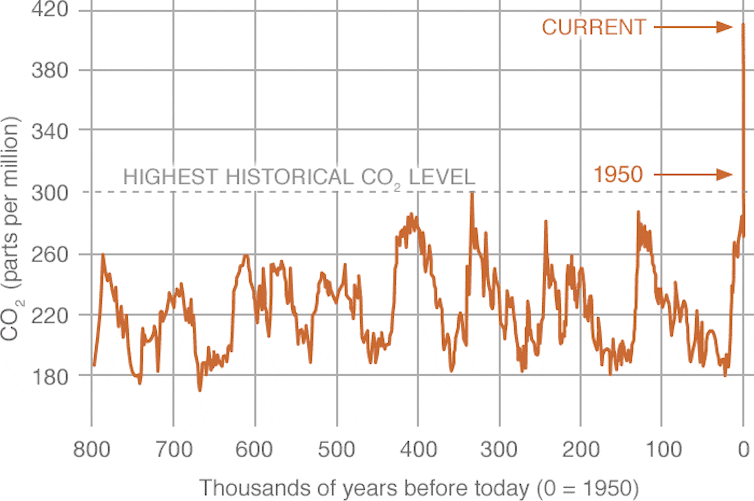
Scientists agree that today’s warming is primarily caused by humans putting too much carbon in the atmosphere, like when we choose to extract and burn coal, oil, and gas, or cut down and burn forests.

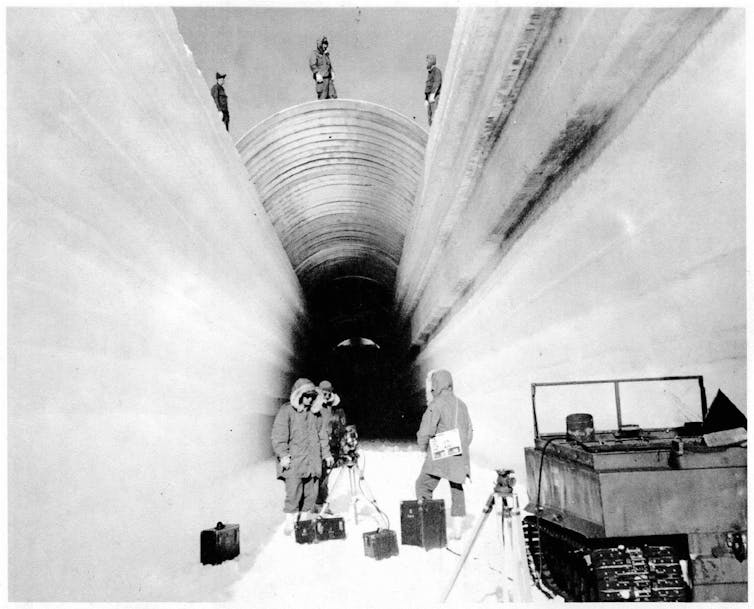
Today’s carbon dioxide levels haven’t been seen in at least the last 800,000 years. Data assembled from Antarctic ice core samples and modern atmospheric observations.

So on to the film.

My son, Alex, sent me the following email on the 7th October.

Hi Dad

This is a really interesting film about climate change in the west coast mountains, USA.  A bit skiing related but a good watch !

Lots of love

Alex

Included in the email was a link to the film available on YouTube.

The film is just under one hour in length and a great film to watch as well as having a clear, fundamental message: All of us must act in whatever ways we can if our children and grandchildren are to have a future. Indeed, do you believe you have another twenty or more years to live? Then include yourself as well.

ooOOoo

About The Film
Professional snowboarder and mountaineer Jeremy Jones has an intimate relationship with the outdoors. It’s his escape, his identity, and his legacy. But over the course of his 45 years in the mountains, he’s seen many things change: more extreme weather, fewer snow days, and economic strain on mountain towns.
Motivated by an urge to protect the places he loves, Jeremy sets out on a physical and philosophical journey to find common ground with fellow outdoor people across diverse political backgrounds. He learns their hopes and fears while walking a mile in their shoes on the mountain and in the snow.
With intimacy and emotion set against breathtaking backdrops, Purple Mountains navigates America’s divide with a refreshing perspective: even though we may disagree about climate policy, our shared values can unite us.

Please, please watch the film!

Thank you!

Dog Food Advisor, again.

This is one from Sunshine Foods and high levels of Aflatoxin; whatever that is!

This alert came in on October 8th but this has been the first opportunity to republish the warning.

The original document is online but the full text is presented for you here.

ooOOoo

15 Pet Food Brands Recalled Due to High Levels of Aflatoxin

Moldy Corn Containing Aflatoxin

October 8, 2020 — Sunshine Mills, Inc. is expanding its recall of 15 brands of pet food that were made with corn that contained high levels of aflatoxin.

What’s Recalled?

The following brands and products are affected by this recall:

The lot codes can be located on the back of each bag.

About the Expanded Recall

This is an expansion of the recall initiated September 2, 2020, after an investigation along with the U.S. Food and Drug Administration determined that additional corn-based pet foods produced between April 3 and April 5, 2020 may contain corn from a single load of corn with elevated levels of aflatoxin.

No illnesses have been reported in association with these products to date, and no other Sunshine Mills, Inc. pet food products are affected by this announcement.

Sunshine Mills, Inc. has chosen to expand its voluntary recall to include these additional products as a precautionary measure in furtherance of its commitment to the safety and quality of its products.

About Aflatoxin

Aflatoxin is a naturally occurring mold by-product from the growth of Aspergillus flavus and can be harmful to pets if consumed in significant quantities.

Pets with aflatoxin toxicity (aflatoxicosis) may show symptoms of illness including sluggishness or lethargy combined with a reluctance to eat, vomiting, yellowish tint to the eyes or gums, diarrhea, and in some cases, death.

Pets experiencing any of these symptoms after consuming the recalled products should be seen by a veterinarian.

Where Were the Products Sold?

The affected brands were distributed in retail stores within the United States.

Principle Super Premium Natural Dog Food is exported exclusively to a distributor in Japan. Sortsman’s Pride Maintenance Adult Formula Dog Food is also exported to a distributor in Japan and Colombia.

Retailers who received the recalled lots have been contacted and asked to pull any remaining inventory of these lots from their shelves.

There are no other Champ®, Field Trial®, Good Dog, Hunter’s Special®, Old Glory®, Paws Happy Life®, Pet Expert, Principle, Retriever®, River Bend, Sportsman’s Pride®, Sprout®, Thrifty®, Top Runner® or Whiskers & Tails products or other lot codes of these products affected by this voluntary recall.

What to Do?

Consumers who have purchased the recalled products should discontinue use of the product and may return the unused portion to the place of purchase for a full refund.

Consumers may contact Sunshine Mills, Inc. customer service at (800) 705-2111 from 7AM to 4PM Central Time, Monday through Friday.

Or by email at customer.service@sunshinemills.com for additional information.

The expansion of this voluntary recall is being conducted with the knowledge of the U.S. Food and Drug Administration.

U.S. citizens can report complaints about FDA-regulated pet food products by calling the consumer complaint coordinator in your area.

Or go to the FDA’s “Report a Pet Food Complaint” page.

Canadians can report any health or safety incidents related to the use of this product by filling out the Consumer Product Incident Report Form.

Get Lifesaving Recall Alerts by Email

Get free dog food recall alerts sent to you by email. Subscribe to The Dog Food Advisor’s emergency recall notification system.

There’s no cost. No spam ever. Cancel any time.

ooOOoo
As is said every time, please share this post with all your dog-carer friends wherever they are. There are many products affected. Please be careful. Dogs are too precious for this aflatoxin toxicity or, indeed, being fed any other bad food.

Twelve on twelve!

A look, courtesy of my daughter, at Sarah Nicolls’s 12 Years project.

Again, this is not about dogs, well not in a direct way. But, indirectly, it affects all of us, young and old, and, inevitably, it affects our dear dogs.

I’m writing this in response to something that came my way as an email sent from my daughter’s company, SOUND UK. The company holds to the view that: Sound UK produces extraordinary musical encounters for all.

Sarah Nicolls has her own website and on her About page this is what she presents.

My name is Sarah Nicolls. I am a visual artist who makes pictures with language, books with pictures, prints with type, and animations with words. I combine image, visual narrative, and time in prints, books, and ephemera that are often research-based. I am interested in urbanization, local history, climate change, the history of science and technology, alternative economies, found language, and the history of publishing. I have written a collection of self-help aphorisms, I publish a series of informational pamphlets, and I organize a range of participatory walks and programs around the series.

My recent books include an examination of the history of greenhouses, and a study of the stories we tell ourselves about disappearing islands, both real and imagined. My  limited edition artist books are in the collections of the Brooklyn Museum, Stanford, UCLA, and the University of Pennsylvania, among others.

For twelve years, I ran the studio programs at the Center for Book Arts in NYC, organizing classes, public programs, readings, and talks, coordinating publications, running residency programs, and teaching interns. I learned everything I know about letterpress and bookmaking while I was there. Now I teach at Pratt Institute and Parsons School of Design, and work on a variety of projects.

I also do illustration and design work for individuals and institutions. Do you have an interesting project in mind? Contact me here, I welcome commissions and collaborations.

Well back to Sound UK. This is Sarah.

ooOOoo

“What she does should be happening every week of the year” The Guardian

Acclaimed pianist and composer Sarah Nicolls’ new Inside-Out Piano project 12 Years was inspired by the 2018 IPCC Special Report saying we had just 12 years to radically change our behaviour to save the planet. Starting on the second anniversary of the report, 8 October, Sarah launches 12 nights of online performances.

With her striking vertical grand piano, Nicolls combines original music and recorded speech in an absorbing performance. Piano melodies and textures interweave with phone calls between three fictional characters challenging each other to either worry less or do more. We hear from environmental experts, survivors escaping from a wildfire and a glacier melting, eloquent speeches from Greta Thunberg and finally the sound of hope emerging. There is humour and humanity as well as time for reflection.

On selected nights leading climate scientists will also join Sarah for exclusive post-show discussions online, specifically to talk about what we can all do.

See list of speakers below.

“This should be prescribed viewing/watching/listening for anyone even remotely concerned with the welfare of our planet.” Ciaran Ryan, Galway Jazz Festival

ooOOoo

Plus, if you would care to listen to a track on Sarah playing her piano, then feel free:

I’m bound to say that I am reasonably hopeful of living another twelve years but, at the same time, reasonably expectant that life could become very interesting indeed!

An insight into how breeds come about.

The background to breeds.

Funnily enough, Jeannie and I were speaking just recently about the creation of breeds, in particular because we were fascinated as to the breed origins of Oliver.

Oliver. Taken at home, 17th May, 2020.

Oliver’s eyes are to die for!

Well a recent article on the Treehugger blog threw some light on this.

I hope it is permissible to share it with you.

ooOOoo

Labradoodles Are More Poodle Than Lab

Study helps deepen understanding about how breeds are formed.
By
Published September 22, 2020

Australian Labradoodles aren’t officially recognized as a breed. Purple Collar Pet Photography / Getty Images

The Australian creator of the Labradoodle was trying to find the perfect guide dog for a blind woman whose husband was allergic to dog hair. He tried about a dozen poodles before breeding a poodle with a Labrador retriever. The resulting Australian Labradoodles became incredibly popular as a mix of two well-liked breeds.

But a new study finds that the breed that developed from that popular cross isn’t an even split of both breeds – it is primarily poodle.
Australian Labradoodles have been around for several decades and have been bred to each other and tinkered with since then. By contrast, many Labradoodles that are found in the U.S. are first-generation mixes of one Labrador and one poodle. These dogs were used as the control dogs in the study, researcher Elaine Ostrander, geneticist at the National Human Genome Research Institute of the National Institutes of Health, tells Treehugger.

“We were interested in taking a genomic snapshot of a breed in the making—the Australian Labradoodle. The breed has only been around since the 1980s as opposed to the many breeds we see at the dog park which have been around since Victorian times and were created in Western Europe,” she says.

The Australian Labradoodle has gone through several generations, with careful and thoughtful addition of Labradors and poodles added, reflecting what breeders and owners want. We wanted to see if genomics could be used to tell what was happening to the genome of these dogs as they evolved into a breed.
The Fédération Cynologique Internationale (FCI), an international federation of many national kennel clubs, recognizes about 350 dog breeds. The American Kennel Club (AKC) recognizes 195 breeds. The Labradoodle is not an official breed.

“We were also curious to see if the breed met the statistical definition of a breed. There are many measures in terms of genomic diversity and ability to ‘breed true’ that are taken into account when determining when a dog population is really a ‘breed’ at the genetic level,” Ostrander says.

Many of these breeds have been created through intense breeding programs focused on enhancing specific traits. When designer breeds are created, the genetic diversity is limited because there are a small number of animals being bred together. This often leads to a high incidence of disease and other problems.
Lots of Poodle DNA

For the study, researchers analyzed genetic data from Australian Labradoodles, Labrador retrievers, poodles, and a number of other breeds. The results were published in PLOS Genetics.

Ostrander says they were somewhat surprised at what they found.

“First, the Australian Labradoodle meets the definition of a breed at the statistical level. Those arguing for it to have breed status with various registries have a good argument,” she says. “What we didn’t expect was the degree to which today’s Australian Labradoodle has such a large component of its genome from the poodle. While the breed started as a 50-50 mix, it is clear that poodle traits are highly valued and many more poodles than Labradors have been added to the breed at strategic points.”

That’s likely because poodles have a reputation for being hypoallergenic, she points out, and elicit a lower allergic reaction than many other dog breeds in people with allergies or asthma.

“Owners buy Labradoodles for many reasons including their trainability, family friendly traits, and, importantly, they want a dog that won’t make them sneeze or otherwise respond,” she says. “Interestingly, the Labrador is very much present in every Australian Labradoodle we tested. Likely people are seeking the family-friendly traits of the Labrador and breeders work hard to retain that as well.”

Labradoodles weren’t the first doodle dogs and definitely are not the last. The first poodle mixes were likely Cockapoos because Cocker spaniels and poodles were two of the most popular dog breeds in the U.S. in the 1940s. Today, you’ll find schnoodles (schnauzers), sheepadoodles (Old English sheepdog), and whoodles (soft-coated wheaten terrier). Poodles have been mixed with beagles, pugs, Australian shepherds, corgis, and even Saint Bernards.

The lore behind Australian Labradoodles is that English and American Cocker spaniels were mixed in with the breed early on.

“We did find some minor evidence for the addition of other breeds in some lineages of Australian Labradoodle. Likely this represents the historical relationship of those breeds with the poodle or Labrador more than anything else,” Ostrander says. “We did not see that in every lineage we looked at and where we did see it, the addition was very small and, likely, many generations ago.”

The findings are helpful, the researchers point out, because it shows how quickly genetics can be changed by thoughtful breeding.

“Imagine a breed has a significant risk for a disease. Careful breeding can reduce the incidence of those deleterious variants in just a few generations,” Ostrander says. “This is incredibly important to breeders who have taken very seriously the criticism they have received over the years regarding how established breeds are less healthy than mixes. We all want our dogs to be healthy, regardless of what breed they are.”

ooOOoo

This deserves a very careful read and, to those really interested in the subject, perhaps this will serve as an incentive to do more research. There are links in the article to the FCI and AKC.

And I will finish with the closing statement by Elaine Ostrander: “We all want our dogs to be healthy, regardless of what breed they are.

Simply in awe!

It’s both beautiful and yet beyond comprehension.

When we have a clear night there are two occasions for me to gaze upwards and become lost in thought. One is in the evening when the dogs are outside just before going to bed. The other is in the morning because we are usually awake well before sunrise.

We are very lucky in that there is no light pollution locally.

So, in the evening, while I look at the broad expanse of stars, my eyes are drawn to the Big Dipper and to Orion.

In the morning, when we look to the East there is Venus sparkling bright in the night-sky over the hills.

I still vividly remember all those years ago when I was sailing in the Western Mediterranean coming on deck in the middle of the night to find the stars down to the horizon all 360 degrees about me. I am sure it will be one of the last memories of mine just before I die! I hope so!

But I speak of the solar system. Here’s an article that was recently published by EarthSky that goes way beyond the solar system. It is a wonderful essay and almost mystical.

ooOOoo

What is a galaxy?

Posted by in ASTRONOMY ESSENTIALS, September 25, 2020

We live in a galaxy called the Milky Way. But there is so much more to know about these grand and glorious star islands in space! Click in here, and prepare to have your mind expanded.

This is a giant galaxy cluster known as Abell 2744, aka Pandora’s Cluster, located in the direction of the constellation Sculptor. The cluster is about 4 million light-years across and has the mass of 4 trillion suns. It appears to be the result of a simultaneous pile-up of at least 4 separate, smaller galaxy clusters that took place over a span of 350 million years. Read more about this image at HubbleSite. Image via NASA/ ESA/ J. Lotz/ M. Mountain/ A. Koekemoer/ the Hubble Frontier Fields Team.

A galaxy is a vast island of stars in an ocean of space. Galaxies are typically separated from one another by huge distances measured in millions of light-years. Galaxies are sometimes said to be the building blocks of our universe. Their distribution isn’t random, as one might suppose: galaxies are strung out along unimaginably long filaments across the universe, a cosmic web of star cities.

A galaxy can contain hundreds of billions of stars and be many thousands of light-years across. Our own galaxy, the Milky Way, is around 100,000 light-years in diameter. That’s about 587,900 trillion miles, nearly a million trillion kilometers.

Galaxies are of widely varying sizes, too.

There are an estimated two trillion galaxies in the universe.

Illustration showing snapshots from a simulation by astrophysicist Volker Springel of the Max Planck Institute in Germany. It represents the growth of cosmic structure (galaxies and voids) when the universe was 0.9 billion, 3.2 billion and 13.7 billion years old (now). Image via Volker Springel / MPE/ Kavli Foundation.

Galaxies group together in clusters. Our own galaxy is part of what is called the Local Group, for example: a cluster comprising 55 galaxies that we know of so far.

In turn, galaxy clusters themselves group into superclusters. Our Local Group is part of the Virgo Supercluster.

The “glue” that binds stars into galaxies, galaxies into clusters, clusters into superclusters and superclusters into filaments is – of course – gravity, the universe’s construction worker, which sculpts all the structures we see in the cosmos.

Distances from the Local Group for selected groups and clusters within the Local Supercluster, which is called the Virgo Supercluster.

There are several basic types of galaxy, each containing sub-types. Galaxies were first systematically classified, based on their visual appearance, by the famous astronomer Edwin P. Hubble in the late 1920s and 30s, during years of painstaking observations. Hubble’s Classification of Galaxies, as it is known, is still very much in use today, although, since Hubble’s time, like any good classification system it has been updated and amended in the light of new observations.

Before Hubble’s study of galaxies, it was believed that our galaxy was the only one in the universe. Astronomers thought that the smudges of light they saw in their telescopes were in fact nebulae within our own galaxy and not, as Hubble discovered, galaxies in their own right. It was Hubble who demonstrated, by measuring their velocities, that they lie at great distances from us, millions of light-years beyond the Milky Way, distances so huge that they appear tiny in all but the largest telescopes. Moreover, he demonstrated that, wherever he looked, galaxies are receding from us in all directions, and the further away they are, the faster they are receding. Hubble had discovered that the universe is expanding.

A diagrammatic representation of Edwin Hubble’s “tuning fork diagram.” In the late 1920s and 30s, Hubble conducted the laborious observations needed to begin to classify galaxies. His original classification scheme was published in 1936 in a book called “The Realm of the Nebulae.” His original scheme is – like all scientific work – continually being modified. But his idea of a “tuning fork diagram” has continued to be useful. Image via Las Cumbres Observatory.

The most common type of galaxy is the one most people are familiar with: the spiral galaxy. The Milky Way is of this family. Spiral galaxies have majestic, sweeping arms, thousands of light years long, made up of millions upon millions of stars. Our solar system is situated about 2/3 of the way out from the galactic center towards the periphery of the galaxy, embedded in one of these spiral arms.

Spiral galaxies are also characterised by having a bright center, made up of a dense concentration of stars, so tightly packed that from a distance the galaxy’s center looks like a solid ball. This ball of stars is known as the galactic bulge. At the center of the Milky Way – within the galactic bulge – the density of stars has been calculated at 1 million per 34 cubic light-years, for example.

Meanwhile, in the vicinity of our sun, the stellar density has been estimated as 0.004 stars per cubic light-year. Big difference!

A stunning view of the center of our Milky Way galaxy as seen by the Murchison Widefield Array (MWA) telescope in Australia in 2019. Image via Natasha Hurley-Walker (ICRAR/ Curtin)/ GLEAM Team/ Phys.org.

The Milky Way is, in fact, in one of Hubble’s spiral galaxy sub-types: it’s a barred spiral, which means it has a bar of stars protruding out from either side of the center. The ends of the bar form the anchors of the spiral arms, the place from where they sweep out in their graceful and enormous arcs. This is a fairly recent discovery: how the bar forms in a galaxy is not yet understood.

Also established recently is the fact that the disk of the Milky Way is not, as most diagrams depict, flat: it is warped, like a long-playing vinyl record left too long in the sun. Exactly why is not known, but it is thought to be the result of a gravitational encounter with another galaxy early in the Milky Way’s history.

Artist’s illustration of our warped Milky Way. Image via Ogle/ Warsaw University/ BBC.

Elliptical galaxies are the universe’s largest galaxies. They are huge and football-shaped.

They come to be because – although most galaxies are flying apart from each other – those astronomically close to each other will be mutually gravitationally attracted. Caught in an inexorable gravitational dance, eventually they merge, passing through each other over millions of years, eventually forming a single, amorphous elliptical galaxy. Such mergers may result in the birth of new generations of stars as gravity’s shock-wave compresses huge clouds of interstellar gas and dust.

The Milky Way is caught in such a gravitational embrace with M31, aka the Andromeda galaxy, which is 2 1/2 million light-years distant. Both galaxies are moving toward each other because of gravitational attraction: they will merge in about 6 billion years from now. However, both galaxies are surrounded by huge halos of gas which may extend for millions of light-years, and it was recently discovered that the halos of the Milky Way and M31 have started to touch.

The two galaxies have had their first kiss.

Galaxy mergers are not uncommon: the universe is filled with examples of galaxies in various stages of merging together, their structures disrupted and distorted by gravity, forming bizarre and beautiful shapes.

Galaxies may take billions of years to fully merge into a single galaxy. As astronomers look outward in space, they can see only “snapshots” of this long merger process. Located 300 million light-years away in the constellation Coma Berenices, these 2 colliding galaxies have been nicknamed The Mice because of the long tails of stars and gas emanating from each galaxy. Otherwise known as NGC 4676, the pair will eventually merge into a single giant galaxy. Image via Wikimedia Commons.

At the lower end of the galactic size scale, there are the so-called dwarf galaxies, consisting of a few hundred to up to several billion stars. Their origin is not clear. Usually they have no clearly defined structure. Astronomers believe they were born in the same way as larger galaxies like the Milky Way, but for whatever reason they stopped growing. Ensnared by the gravity of a larger galaxy, they orbit its periphery. The Milky Way has around 20 dwarf galaxies orbiting it that we know of, although some models predict there should be many more.

The two most famous dwarf galaxies for us earthlings are, of course, the Small and Large Magellanic Clouds, visible to the unaided eye in Earth’s Southern Hemisphere sky.

Eventually, these and other dwarf galaxies will be ripped apart by the titanic maw of the Milky Way’s gravity, leaving behind a barely noticeable stream of stars across the sky, slowly dissipating over eons.

Lynton Brown captured this beautiful image of the Milky Way over Taylor’s Lake near Horsham, Australia, on April 22, 2019. The 2 objects on the right are the Magellanic Clouds. Thank you, Lynton!

It is believed that all galaxies rotate: the Milky Way takes 226 million years to spin around once, for example. Since its birth, therefore, the Earth has travelled 20 times around the galaxy.

At the center of most galaxies lurks a supermassive black hole, of millions or even billions of solar masses. The record holder, TON 618, has a mass 66 billion times that of our sun.

The origin and evolution of supermassive black holes are not well understood. A few years ago, astronomers uncovered a surprising fact: in spiral galaxies, the mass of the supermassive black hole has a direct linear relationship with the mass of the galactic bulge. The more mass the black hole has, the more stars there are in the bulge. No one knows exactly what the significance of this relationship is, but its existence seems to indicate that the growth of a galaxy’s stellar population and that of its supermassive black hole are inextricably linked.

This discovery comes at a time when astronomers are beginning to realize that a supermassive black hole may control the fate of its host galaxy: the copious amounts of electromagnetic radiation emitted from the maelstrom of material orbiting the central black hole, known as the accretion disk, may push away and dissipate the clouds of interstellar hydrogen from which new stars form. This acts as a throttle on the galaxy’s ability to give birth to new stars. Ultimately, the emergence of life itself may be tied to the activity of supermassive black holes. This is an area of much ongoing research.

While astronomers still know very little about exactly how galaxies formed in the first place – we see them in their nascent forms existing only a few hundred million years after the Big Bang – the study of galaxies is an endless voyage of discovery.

Less than a hundred years after it was realized that other galaxies beside our own exist, we have learned so much about these grand, majestic star cities. And there is still much to learn.

Bottom line: What is a galaxy? Learn about these starry islands in space.

ooOOoo

There are an estimated two trillion galaxies out there. It is beyond comprehension. Well it is to this mind sitting in front of his Mac in a rural part of Oregon. Two trillion! I can’t even get my mind around the fact that our local galaxy, our Milky Way, is 100,000 light years across. Although some would say that it is even larger; about 150,000 light years across. And what is a light year?

Here’s NASA to answer that:

A light-year is a unit of distance. It is the distance that light can travel in one year. Light moves at a velocity of about 300,000 kilometers (km) each second. So in one year, it can travel about 10 trillion km. More precisely, one light-year is equal to 9,500,000,000,000 kilometers.

Why would you want such a big unit of distance? Well, on Earth, a kilometer may be just fine. It is a few hundred kilometers from New York City to Washington, DC; it is a few thousand kilometers from California to Maine. In the universe, the kilometer is just too small to be useful. For example, the distance to the next nearest big galaxy, the Andromeda Galaxy, is 21 quintillion km. That’s 21,000,000,000,000,000,000 km. This is a number so large that it becomes hard to write and hard to interpret. So astronomers use other units of distance.

In our solar system, we tend to describe distances in terms of the Astronomical Unit (AU). The AU is defined as the average distance between the Earth and the Sun. It is approximately 150 million km (93 million miles). Mercury can be said to be about 1/3 of an AU from the Sun and Pluto averages about 40 AU from the Sun. The AU, however, is not big enough of a unit when we start talking about distances to objects outside our solar system.

For distances to other parts of the Milky Way Galaxy (or even further), astronomers use units of the light-year or the parsec . The light-year we have already defined. The parsec is equal to 3.3 light-years. Using the light-year, we can say that :

  • The Crab supernova remnant is about 4,000 light-years away.
  • The Milky Way Galaxy is about 150,000 light-years across.
  • The Andromeda Galaxy is 2.3 million light-years away.

So here we are. In a remote part of our galaxy, the Milky Way, far, far from everywhere, on a pale blue dot. As Carl Sagan put it in his talk from The Age of Exploration given in 1994:

On it, everyone you ever heard of… The aggregate of all our joys and sufferings, thousands of confident religions, ideologies and economic doctrines, every hunter and forager, every hero and coward, every creator and destroyer of civilizations, every king and peasant, every young couple in love, every hopeful child, every mother and father, every inventor and explorer, every teacher of morals, every corrupt politician, every superstar, every supreme leader, every saint and sinner in the history of our species, lived there on a mote of dust, suspended in a sunbeam. …
Think of the rivers of blood spilled by all those generals and emperors so that in glory and triumph they could become the momentary masters of a fraction of a dot.

Carl Sagan, Cornell lecture in 1994

It all seems impossible for us mortals to understand.

But it won’t stop me from peering up into the night sky and wondering about the universe with total awe.

And thank goodness for dogs!