Category: Science

The Greenwich Meridian

Don’t know what time it is?  Hardly surprising in Spring and Autumn.

Today is exactly one month before the United Kingdom ‘moves’ its clocks forward and enters British Summer Time; 1am (UTC) on Sunday 28th March 2010.  Is that date the same across the world?  One would think so because it makes life, especially international air transport, so much easier.

But no!  In fact the way that time zones are applied and changed for Daylight Saving is a complete hotch-potch.

In the United States of America, daylight saving starts at 2am on March 14th, 2010.  And just three years ago that start time would have been the first Sunday in April.  Changes were made in the US Energy Policy Act of 2005.

From this geographic site comes the following:

Other parts of the world observe Daylight Saving Time as well. While European nations have been taking advantage of the time change for decades, in 1996 the European Union (EU) standardized an EU-wide “summertime period.” The EU version of Daylight Saving Time runs from the last Sunday in March through the last Sunday in October. During the summer, Russia’s clocks are two hours ahead of standard time. During the winter, all 11 of the Russian time zones are an hour ahead of standard time. During the summer months, Russian clocks are advanced another hour ahead. With their high latitude, the two hours of Daylight Saving Time really helps to save daylight. In the southern hemisphere where summer comes in December, Daylight Saving Time is observed from October to March. Equatorial and tropical countries (lower latitudes) don’t observe Daylight Saving Time since the daylight hours are similar during every season, so there’s no advantage to moving clocks forward during the summer.

Of course, someone had to create a web-site to track all these various time zones and changes.  Here it is.

Last year, the BBC News website published an interesting article about the Greenwich Meridian aka The Prime Meridian.  The setting of the Prime Meridian was done just over 125 years ago, in October 1884.  When one thinks of the importance in having a standard meridian, both for time keeping and navigation, I would have guessed that it went back much further in time.

The other aspect that was news to me was that the conference had been convened at the request of the American President Chester Arthur.

From that BBC article:

Until the 19th Century, many countries and even individual towns kept their own local time based on the sun’s passage across the sky and there were no international rules governing when the day would start or finish.

Maps with multiple meridians were confusing

However, with the rapid expansion of the railways and communications networks during the 1850s and 1860s, setting a standard global time soon became essential.

“The world was in a very big mix-up,” explains Dr Avraham Ariel, author of Plotting the Globe. “People had lots of prime meridians. Earlier in Europe there were 20 prime meridians. The Russians had two or three, the Spanish had their own and so on.”

Thus that famous line in the grounds of the National Maritime Museum at Greenwich, London is not as old as many might have thought.

Prime Meridian, Greenwich

By Paul Handover

How Earth Made Us …

... and the way we treat it!

Once again the British Broadcasting Company, BBC, has put together a spectacular television production; the epic story of how geology, geography and climate have influenced mankind.  It is remarkable and fabulous viewing as you can sample in these opening minutes from the first episode on Deep Earth.

The four programmes, Deep Earth; Water; Wind; Fire, are testament to both the incredible symbiosis between mankind and the elements and how that relationship is critically balanced in a way that allows us to survive.  Some of the images are truly outstanding, for example, the section on Prof. Iain Stewart exploring the Naica Cave system in Mexico.

Naica Cave system, Mexico

This theme of the balance of geological circumstances that allows, just, mankind to survive comes across time and time again in these films.  For example, our relationship with fresh water which we all take completely for granted.

Have any of us really pondered how long we would survive if there was insufficient clean, safe drinking water to go around?

The programmes also reveal something of the technological prowess that mankind has achieved to allow the way these films have been produced.

So why, oh why, are we also such a stupid, stupid species – so stupid that we foul our own nest to an incredible degree.

Continue reading “How Earth Made Us …”

Growth is BAD for us

Growth is good for us?  Sorry, wrong!

An interesting story on the BBC recently. It seems that growth is now “bad” and incompatible with reducing global warming.

I have to say that this always seemed obvious to me (and despite appearances  – or indeed pretentions – I am not that clever) since IF industrial production and emissions are creating too much CO2 then it is surely obvious that more of the former will produce more of the latter. Any flaws in this argument will surely be pointed out to me pdq, but I won’t be losing any sleep – or indeed I suspect – the argument!

Well, the theory that growth is bad has now been confirmed by a scientific study …..  of course, we have learned to take some of these studies with a pinch of salt, and it doesn’t help when scientists on the “we are doomed” side sex up their findings to make their case, as was revealed just recently. I found this hilarious!! Once again, a dishonest intention to achieve ONE kind of result (boost the doomsayers’ cause) actually achieved the OPPOSITE!!! When will they ever learn?

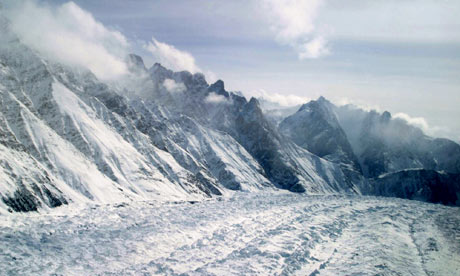
An aerial view of the Siachen Glacier, which traverses the Himalayan region dividing India and Pakistan. Photograph: Channi Anand/AP

As for the evils of growth, I am wondering if the British Prime Minister has been informed? His entire strategy (if that is not too noble a word to use in this context) has for well over a decade been based on growth (indeed growth triumphantly trumpeted in advance as likely to be at a level far higher than it actually turns out to be) bringing in enough money to pay for his humungous over-spending.

He must be urgently rearranging his matchsticks in an effort to cook the books once again ….

And there is another side of the “no-growth” movement. YOU may very well decide that in the cause of saving the planet you will keep your consumption where it is, but – logically – that also means people in the developing world who are incredibly poor keeping THEIR consumption where IT is.  That is one hard sell. Of course, YOU may then decide to REDUCE your consumption down until it meets theirs coming up ….. No? Oh well …..

The way I see it, growth is inevitable, whether it is good for the planet or not. Which is a bit of a poser if growth is going to doom us. Still, I remain an optimist – some genius will find a way out of this enigma …. but please make it soon before we grow too much!!

By Chris Snuggs

Fear!

Capitalising on people’s fears

I often feel that a situation is manipulated by fear. The word is regularly used on television and in the newspapers, and once the thought is planted it is easy to influence the masses!

I was not surprised to read that the Head of Health at the Council of Europe, Dr. Wolfgang Wodard, had said flu drug

Dr. Wodarg

makers had influenced the World Health Organisation to declare Swine flu as a pandemic so they could rake in millions.

Earlier virus outbreaks of Bird Flu, SARS, the Severe Acute Respiratory Syndrome and West Nile virus all had major news coverage lasting weeks, but despite the scare mongering, only six deaths, for example, were attributed to Bird Flu.  1.5 million chickens were slaughtered!

The initial “breaking news” regarding Swine flu warned of 65,000 possible deaths, however the campaign of panic provided a golden opportunity for representatives from the drugs companies to lay the golden egg.

To date only 251 deaths have been attributed to the N1H1 bug, and Dr Wodarg, who made the accusation, said it was just a normal flu. The swine flu scare was faked by greedy drug companies, he claimed.

I wonder how, as if by magic, the research, testing and the availability of millions of injections could be there ready for this unexpected outbreak.

In America a few years ago, the news about Anthrax being sent through the post to a government office lasted weeks. Cheap news, Scare mongering, Fear.

Have we moved on to a situation where we create commercial business at the expense of ourselves.

Big business? We wait now for the emergency debate on the issue at the end of the month.

By Bob Derham

Frozen in ice

Serendipity

Vickers aircraft

Thanks to a small piece on AOPA Online (Aircraft Owners and Pilots Association), a wonderful insight into a hitherto unheard of organisation and a most charming story.

That organisation is Mawson’s Huts Foundation, an Australian organisation that describes itself as:

The Mawson’s Huts Foundation has been established to conserve in perpetuity for the Australian people the unique, historical buildings known as Mawson’s Huts, base for one of the most significant expeditions in Antarctic history. The Foundation’s website provides a variety of resources concerning current and future efforts to conserve the huts and information about the archaeology and heritage of the site.

Sir Douglas Mawson was an Australian Antarctic explorer and geologist born in 1882.  More background from the Mawson’s Huts website:

Sir Douglas Mawson, a geologist, who led the Australasian Antarctic Expedition of 1911, landed a party of

Sir Douglas Mawson

18 at Cape Denison on Commonwealth Bay in January, 1912, and remained there until December 1913. The site was not visited again until Mawson returned in 1931 with the British, Australian and New Zealand Antarctic Research Expedition and then not again until the 1950’s. Only a concerted public campaign would save and conserve this historic site for all Australians, and the Mawson’s Huts Foundation was formed in 1996 for this purpose.

Read more about this story

Identifying Bullshit in Science

Well founded suspicions of Sensationalised Science Reporting

Ben Goldacre

One of my daughters gave me a super Christmas present this year, the book  “Bad Science”, by Ben Goldacre.

This is a wonderful work and should be a set book for all “A” level schoolkids. There are chapters on:

  • Brain Gym
  • Homeopathy
  • the Placebo Effect
  • Mainstream Medicine
  • How the Media Promote the Public Misunderstanding of Science
  • Medical “trials”
  • the Pharmaceutical Companies
  • Bad Stats
  • Health Scares
  • the Media’s MMR Hoax

…. plus several others on various very rich charlatans in the field of alternative medicine and other areas. It also contains a concise and terrible account of the insanity of Thabo Mbeki’s nutty ideas on HIV and AIDS, which killed tens of thousands of people. Continue reading “Identifying Bullshit in Science”

Remarkable people: John S Denker

Scientist and pilot

John S Denker is both a scientist and pilot. Now, I have no doubt that there are many scientists who are pilots, and that many of them combine these interests in a variety of ways. So in what way is he “remarkable”?

Experts as communicators

Sometimes experts dedicate considerable effort to communicate their understanding for the benefit of people who are much less knowledgeable. It is probably important that this happens, because it is the main means by which substantial topics are understood in any depth by other people. Without the experts’ thorough knowledge of a specific subject area, very little understanding is likely to be transferred. Continue reading “Remarkable people: John S Denker”

Dark Matter

Not really understanding but knowing it’s important!

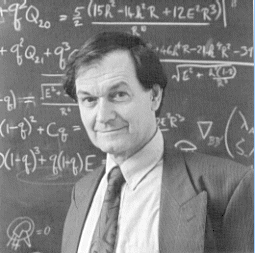
I recently read a glowing review of the latest book by Sir Roger Penrose, the eminent mathematical physicist, called The Road To Reality. Having previously read his book The Emperors’ New Mind and just understanding it, I thought

Roger Penrose

his next one would be a welcome companion for long winter evenings.  Wrong!

I managed to the bottom of the third page of the preface before “According to the mathematician’s “equivalence class” notion …..” had me grasping for meaning.  Well over a 1,000 pages of content was destined to gather dust on the bookshelf.

But wrong again!

The idea of matter out there in the universe that is essential to the universe as we know it but is unseen has been sufficiently fascinating for the popular media to refer to it from time to time.  Most people are familiar with the term even if like me don’t really have a clue as to what dark matter is all about.

So a recent press release in a popular English newspaper suggesting that dark matter has been ‘discovered’, if discover is the appropriate term, had me reaching out for Penrose’s book again.  There under the chapter headed Speculative theories of the early universe was, on page 773, a few sentences that almost made sense.  Let me quote them:

For many years, it had become clear that the dynamics of stars within galaxies does not make sense, according to standard theory unless there is a good deal of more material in the neighbourhood of the galaxy than is directly seen in stars.  A similar comment applies to the dynamics of individual galaxies within clusters.  Overall, there seems to be about 10 times more matter than is perceived in ordinary baryonic form.  This is the mysterious dark matter whose actual nature is still not agreed upon by astronomers, and which may even be of some material different from any that is definitely known to particle physicists – though there is much speculation about this at the present time.

Read more about Dark Matter

Copenhagen – the unspoken issue

It’s getting crowded down here!

For those readers who are not regular BBC television viewers, the Beeb has for many years run an excellent factual/science & nature series under the name of Horizon.  Just recently there was a programme with the title of How Many People Can Live on Planet Earth?

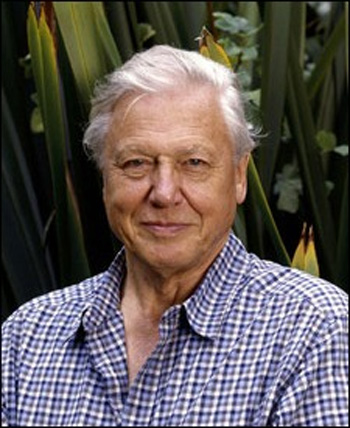
Sir David Attenborough

It was presented by that familiar face on the BBC in terms of the natural world, Sir David Attenborough.  It was an appropriate and worthy person to present the information.

But before getting into some of the details underpinning the programme, there seems to been an enormous and unspoken omission at Copenhagen – why no debate about global population trends?

Luckily the media noticed the rather obvious exclusion.  Here’s the UK Daily Telegraph newspaper (online version) of the 8th December, 2009. An extract:

Population growth is the one issue accused of causing driving climate change that no one at the Copenhagen climate summit dares to talk about.

The argument is that more people consume more resources, therefore producing more greenhouse gases that cause global warming.

The global population is currently at 6 billion and could rise to 11 billion by 2050 if fertility rates continue, not only threatening the climate, but food shortages and conflict as well.

Organisations like the Optimum Population Trust, that is backed by Sir Jonathan Porritt, Dame Jane Goodall and Sir David Attenborough, advocate birth control as a way of slowing climate change.

As Sir David has said: “I’ve never seen a problem that wouldn’t be easier to solve with fewer people, or harder, and ultimately impossible, with more.”

A study by the London School of Economics found contraception is almost five times cheaper as a means of preventing climate change than conventional green solutions such as investing in green technology.

Read more of this Post

Copenhagen – that’s clear then.

Will we ever know the truth, the whole truth, and nothing but the truth?

It’s a week since the start of The United Nations Climate Change Conference – Copenhagen, 2009 and it’s clearly been a media success if nothing else.

My instinct has, for many years, been the assumption that mankind behaves in many ways that harm our environment and that, ultimately, harming the very planet upon which our survival depends could happen.  Stupid, yes!  But in line with some of the more strange behaviours of homo sapiens.

But like millions of people, I do not have either the scientific background or the time available to test the statements made by so many governments and other ‘wise’ bodies as to whether the science of climate change, global warming or whatever, is real and irrefutable.  One thinks that would be relatively easy to do and that after all the years and millions of dollars spent on climate research, the proof would be there.  Cause and effect were perfectly understood.

Read more of this Post