Category: Sales

Potty training.

Advice from DoctorPup.

I’m always a little cautious about submissions of guest articles from those who are ‘in the business’. But sometimes drawing the line between a genuinely informative article from a pet-related business and overt promotion is a fine one. I chose to publish an article from Alex back in November last year. It was about behavioral issues with dogs and was well received.

Earlier this month, in came another guest article from DoctorPup and, again, I think this is a good share with you. But please do let me know if you think it is too much of a product ‘sell’. I protect the integrity of this blog without question.

ooOOoo

Michael Schoeff reveals how to effectively potty train a puppy

Written by Florentina Popa on behalf of the company
Michael Schoeff, the inventor of the innovative potty training system called Pup Pee Poo Palace, considers that classic house training a puppy is a difficult process that takes time, patience, commitment and consistency.

Traditional potty training

If you want to follow the traditional path, it is important to inform yourself carefully and to establish clear guidelines to get on the right track your pup in just a few weeks. Puppies learn very fast from two to four months, picking up easily on the concept of housebreaking. Five to 30 minutes after eating, puppies want to defecate, so it is important to respect a clear schedule. The most important aspects you should take into consideration is to stay consistent, positive and patient and the results will appear gradually.
The first step is to establish a routine by creating a schedule for eating and playing. Feeding your puppy according to a clear schedule depending on his age, ensures eliminations at consistent times. This is crucial because generally, a puppy has control of his bladder one hour for every month of age so they are prone to accidents if they are not taken outdoor regularly. During his first months of life, a puppy should be taken outside at least every two hours as well as immediately after he wakes up, during and after playing and after eating.

Pick a specific spot outside and always take him there. Also, use a specific word or phrase before he goes outside to remind what he has to do. Take him to walks or playtime after he eliminated. Your attitude is important during potty training, so avoid being nervous or impatient as well as using a loud tone because you’ll make your pup anxious.

Reward him every time he eliminates outdoor, praising or giving treats immediately after he has finished and before coming back inside. This will help teaching him what you are expecting from him.
It is recommended to pick up his water dish about two hours before bedtimes to avoid relieving himself during the night.
An essential rule and hard to apply is to always supervise your puppy when he is indoor to avoid accidents or soiling. Keep your puppy in a specific area and watch him for signs he needs to go out. If you notice him barking, scratching the door, squatting, sniffing or circling, take him outdoor.
If there are times when you cannot supervise him, restrict him to an area small enough that he won’t want to eliminate there. Make sure that the space is comfortable to stand, lie down and turn around. A good idea is to use a crate or a leash, but don’t forget to take him outdoors whenever he needs to eliminate. You can gradually give him more freedom in the house as he learns to eliminate outdoor.
Keep in mind that accidents can happen anytime and make sure you act properly. If you see him eliminating indoor, interrupt him by saying “outside!” or making a noise without scaring him and take him to his eliminating spot outdoors. Always use positive reinforcement, keep calm and be assertive. Don’t punish him for eliminating in the house to avoid a negative connection with his bodily function, just clean up the room and make sure to remove the smell.
If your program doesn’t allow to stay at home with your puppy, you need to find someone to take your pup for bathroom breaks several times a day. You can teach him to eliminate in specific place indoors, but be careful regarding this process as he will get used to it and will practice it as well when becoming adult.
Pup Pee Poo Palace was released in 2013 as an ideal solution for busy dog owners that don’t have enough time to spend with their puppies. The system is based on puppies’ natural behavior to get up on things, so it contains the separate elevated sleep and play area and the elimination area. Bedding area is made of a frame covered in bedding material and it is raised above the floor of the cage using frame extensions. The system helps reinforcing good patterns for puppies and encouraging them to repeat the actions.Puppy owners can let the palace door open when being with their puppies so they can return to the cage whenever they need to eliminate.
Using Pup Pee Poo Palace avoids the risks of infections especially if your puppy hasn’t completed all his vaccinations. You can perform your daily activities while your pup is enjoying his comfortable private space without worrying that he needs to potty.
Furthermore, you can still train your puppy to go outdoors whenever you can, especially after eating, drinking, playing or sleeping, but if you are busy or you’re not at home, count on Pup Pee Poo Palace and stay assured. Your puppy potty training will be easier and faster.
Michael Schoeff and his partner, Gary Rybka, have created not only a very useful tool for dog owners, but a tool that suits any dog breed, starting with breeds that weigh under 5 lbs at maturity and finishing with those that weigh under 70 lbs at maturity.
Author Bio

Florentina Popa is the founder of the digital marketing agency. She is a young entrepreneur with a strong passion for innovation, digital marketing technologies and a real focus on marketing strategies and evaluation process for her clients. She currently advises several companies in the Southeastern Europe and USA. She is content writer and social media manager for several small and medium companies located in the Southeastern Europe. She loves to create articles about business, leadership, digital marketing, lifestyle, animals (especially dogs). She has a great collection of materials published on various online marketing, business and lifestyle websites. When she’s not online, Florentina loves exploring the mountains and local coffee shops with her dogs, traveling and discovering new cultures watching movies and reading. ‘If you believe, you can achieve’ – that’s her motto!

ooOOoo

Good people, I do hope you found this interesting and not crossing the line of offering free promotion to a business. Neither me nor Learning from Dogs in publishing this guest post can offer any explicit or implicit endorsement of the company or this product. Any reader interesting in learning more must conduct their own research.

You can’t beat a good book!

Advance notice of a book event this coming Saturday.

Oregon Books & Games, our local independent bookstore in Grants Pass, are having a book event this Saturday. In their own words:

tl_imgSaturday, April 30th, 11AM – 2PM
A day to celebrate the independent bookstores that continue to improve communities around the nation, and our day to celebrate YOU, our wonderful customers. In the same strain as last year, we will be inviting dozens of local authors to sign books and meet with their fans, raffling off TONS of prizes, barbecuing, and having a lot of FUN!


I’m sure that the vast majority of you dear readers that read the title to today’s post would have nodded in agreement with the statement: You can’t beat a good book!

But how many of you were equally cogniscent of the importance of buying from an independent book store, such as Oregon Books & Games? I would be the first to put my hand up in admitting that I had no idea of the damage that online booksellers, such as Amazon, were causing these same independent stores.

Here are some eye-opening statements kindly supplied by Oregon Books but that originally came from the organisation IndieBound.

What is IndieBound?
A product of ongoing collaborations between the independent bookstore members of the American Booksellers Association, IndieBound is all about independent bookstores and the power of “local first” shopping. Locally owned independent businesses pump money back into the their communities by way of taxes, payrolls and purchases. That means more money for sound schools, green parks, strong police and fire departments, and smooth roads, all in your neighborhood.

Independent bookstores have always occupied a special place in communities. Through IndieBound—and the Indie Next List flyers and Indie Bestseller Lists—readers find trusted bookseller curated reading options, newly discovered writers, and a real choice for buying.

IndieBound allows indie booksellers to communicate this vital role they play in their local economies and communities. It allows authors to show their dedication to indies nationwide, easily done through linking to thousands of indie bookstores through IndieBound.org. And it allows consumers to feel that their actions are a part of a larger picture—to know that their choices make a difference and that others are working toward the same goals.

Here’s the effect of buying from your local independent book store.

Here’s What You Just Did

  1. You kept dollars in our economy. For every $100 you spend at one of our local businesses, $52 will stay in the community.
  2. You embraced what makes us unique. You wouldn’t want your house to look like everyone else’s in the U.S. So why would you want your community to look that way?
  3. You created local jobs. Local businesses are better at creating higher-paying jobs for our neighbors.
  4. You helped the environment. Buying from local business conserves energy and resources in the form of less fuel for transportation, less packaging, and products that you know are safe and well made, because we stand behind them.
  5. You nurtured community. We know you, and you know us. Studies have shown that local businesses donate to community causes at more than twice the rate of chains and online retailers.
  6. You conserved your tax dollars. Shopping in a local business district means less infrastructure, less maintenance, and more money available to beautify our community. Also, spending locally instead of online ensures that your sales taxes are reinvested where they belong—right here in your community!
  7. You created more choice. We pick the items we sell based on what we know you like and want. Local businesses carry a wider array of unique products because we buy for our own individual market.
  8. You took advantage of our expertise. You are our friends and neighbors, and we have a vested interest in knowing how to serve you. We’re passionate about what we do. Why not take advantage of it?
  9. You invested in entrepreneurship. Creativity and entrepreneurship are what the American economy is founded upon. Nurturing local business ensures a strong community.
  10. You made us a destination. The more interesting and unique we are as a community, the more we will attract new neighbors, visitors and guests. This benefits everyone!

And turning to Amazon?

Here’s What Amazon Just Did

  1. In 2014, Amazon avoided paying $625 million in much-needed local and state tax revenue in 23 states and Washington, D.C., all while selling $44.1 billion worth of retail goods nationwide.
  2. In 2014, Amazon’s retail sales displaced the equivalent of more than 30,000 storefronts and 107 million square feet of commercial space, estimated to be worth $420 million in property taxes for local and state governments.
  3. In 2014, by avoiding sales tax, and quashing the viability of local bricks-and-mortar retail, Amazon deprived thousands of communities of tax revenue necessary for schools, roads, and police and fire safety, as well as of vibrant downtowns and main streets.
  4. In 2014, Amazon operated 65 million square feet of distribution space, employing both full-time workers and part-time and seasonal workers, yet still, Amazon’s dominance produced a net loss of 135,973 retail jobs nationwide.
  5. In 2014, Amazon’s sales and operations accounted for a loss of more than $1 billion in revenue to state and local governments.
  6. Amazon received the benefits of local grants, tax breaks, road improvements, and other government considerations to build its distribution centers, notwithstanding the net loss in jobs, property taxes, and downtown vitality.
  7. Amazon achieved dominance over the book industry equivalent to Standard Oil’s share of the refined oil market just before it was broken up in 1911.*
  8. Amazon has cheapened the value of both printed and electronic publishing, and dampened opportunities for new authors and diverse ideas, by discounting books to lower than wholesale price and bullying publishers and its marketplace sellers.
  9. In our state, Amazon accounts for a sale tax gap of $3.1 million and the displacement 1,200,000 square feet, which is the equivalent of 348 retail storefronts, and 3,029 jobs.
  10. In 2015, Amazon’s total sales and operations revenue increased by 20%, meaning the above 2014 figures are likely to be grossly understated.

So back to the event.
If you are within reach of Grants Pass this coming Saturday then do come along and meet many local authors, including yours truly, and help support the wonderful job that our independents are doing for authors.

Saturday, April 30th, 11AM – 2PM
Oregon Books & Games
150 N.E. E St., Corner of 7th and E St.
Grants Pass, OR  97526

Support local authors!

LfDFrontCoverebook

A revisit to earlier times.

How time flies!

Last Monday, Jean and I had been living here in Merlin, Oregon for three years.

Why I am explaining this is because my day yesterday ended up being so busy that I ran out of time to focus on writing a fresh new post for you good people.

Thus, I decided to repost something that I published that first week we moved in to our Merlin home. Namely, a post published on the 16th October, 2012 under the heading of The death of the USA?.

So my apologies for you dear readers that recall this from three years ago, and welcome to the many new followers of this place that have signed up since then.

ooOOoo

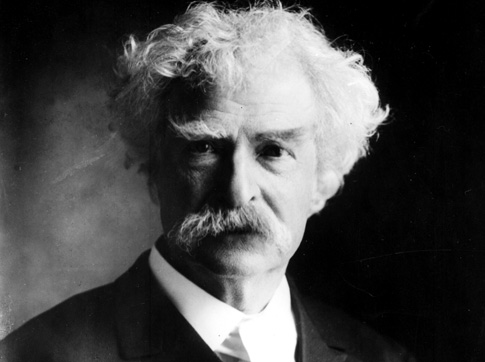
“The reports of my death are greatly exaggerated!” Mark Twain.

Mark Twain

The Mark Twain quotation after hearing that his obituary had been published in the New York Journal.

Mistaken publications of obituaries aren’t as rare as you might expect. A recent example is of Dave Swarbrick, the British folk/rock violinist, who was killed off mistakenly by the Daily Telegraph in April 1999 when they reported that his visit to hospital in Coventry had resulted in his death. He did at least get the opportunity to read a rather favourable account of his life, not something we all get to do, and to deliver the gag “It’s not the first time I have died in Coventry”.

So why have I opened with this quote from Mark Twain?  Read on and I hope all will be clear.

A little under a week ago, I published a couple of posts that proposed that the United States of America is an empire in decline.  The first was What goes up? and the second Might just come down! As a Brit, I well know that aspect of British history!

However a recent conversation with a friend of many years back in England, who has also been a shrewd and wise entrepreneur for longer than I care to remember, argued that the evidence for the ‘end of the USA’ could be challenged.

He cited five reasons why he thought the USA would remain, more or less, in its dominant position.  They were:

  1. Spirit of innovation
  2. Relaxed labour laws
  3. The importance of Mexico
  4. The uncertainty of China in terms of the next ’empire’
  5. The likely energy self-sufficiency for the USA in the near-term.

So let me expand on each of those points.

Spirit of innovation

Let me quote from an article in TIME Magazine of the 5th June, 2011,

Innovation is as American as apple pie. It seems to accord with so many elements of our national character — ingenuity, freedom, flexibility, the willingness to question conventional wisdom and defy authority. But politicians are pinning their hopes on innovation for more urgent reasons. America’s future growth will have to come from new industries that create new products and processes. Older industries are under tremendous pressure. Technological change is making factories and offices far more efficient. The rise of low-wage manufacturing in China and low-wage services in India is moving jobs overseas. The only durable strength we have — the only one that can withstand these gale winds — is innovation.

Now there are plenty who would argue both ways in terms of the future innovation potential for the USA, as a recent article in The Atlantic does, see American Innovation: It’s the Best of Times and the Worst of Times.  But the spirit of innovation will, nonetheless, be a powerful economic potential for the USA for many years to come.

Relaxed labour laws.

Definitely an area that I have little knowledge of except for the subjective notion that compared to many other nations, the laws in the USA are much less of a restraint on economic productivity than elsewhere.

The importance of Mexico.

The importance in the context of providing the USA with a source of cheaper manufacturing facilities.  My English friend thought that this was a significant competitive advantage for the USA.  Now, as it happens, we had a couple staying with us over the week-end of the 6th/7th October.  The husband is a senior manager of Horst Engineering, an American firm based in Guaymas, Sonora County, Mexico.  Here’s a picture from their website,

We are a contract manufacturer of precision machined components and assemblies for aerospace, medical, and other high technology industries. Our core processes include Swiss screw machining, turning, milling, thread rolling, centerless grinding, and assembly. Our extensive supply chain offers our customers a full service logistics solution for managing their precision product requirements. We are ISO9001:2008 and AS9100 registered and proud of our 66 year, three-generation legacy of quality and performance.

I was told that many American and British firms were using Mexico rather than China for a number of reasons.  Not least because Chinese suppliers require full payment before shipment.  Plus that taking into account that financial aspect together with shipping costs and other logistical issues, China wasn’t as ‘cheap’ over all.  Here’s a recent announcement from Rolls Royce,

Rolls-Royce plans new Sonora hub

The burgeoning aerospace industry in Guaymas had its efforts validated recently when the venerable Rolls-Royce chose it as the site for its newest global purchasing office.

Surrounded by several of its aerospace manufacturing suppliers, London-based Rolls-Royce will move into a Guaymas industrial park owned by Tucson-based The Offshore Group to develop a supply hub for commercial jets and military aircraft around the globe.

“Rolls-Royce has very robust booking orders for the next 10 years,” said Joel Reuter, director of communications for Rolls-Royce in North America. “We need to double our production.”

Because a number of Rolls-Royce suppliers already operate in Guaymas, the city was a logical choice, Reuter said.

The uncertainty of China in terms of the next ’empire’

The point made in terms of China taking over ’empire’ status from the USA, as Simon Johnson argues over at Baseline Scenario, is countered by the fact that politically China is an unknown quantity.  Until China endorses some form of democratic process, that unknowingness is not going to disappear.

The likely energy self-sufficiency for the USA in the near-term.

I can’t do better than to ask you to watch this video!  Just 27-minutes long, it is a very interesting review of the energy future of the USA.

As the TED website suggests in terms of why you should listen to Amory Lovins,

Amory Lovins was worried (and writing) about energy long before global warming was making the front — or even back — page of newspapers. Since studying at Harvard and Oxford in the 1960s, he’s written dozens of books, and initiated ambitious projects — cofounding the influential, environment-focused Rocky Mountain Institute; prototyping the ultra-efficient Hypercar — to focus the world’s attention on alternative approaches to energy and transportation.

His critical thinking has driven people around the globe — from world leaders to the average Joe — to think differently about energy and its role in some of our biggest problems: climate change, oil dependency, national security, economic health, and depletion of natural resources.

More on Reinventing Fire may be found here.

So, don’t know about you, but I found those five points deeply convincing.  How about you?  Are the reports of the death of the USA  greatly exaggerated? Do leave a comment.

ooOOoo

Now some three years later on, these five factors still seem to be valid.

A ‘growing’ awareness.

The pun is deliberate!

Just at the moment there seems to be an incredible explosion of awareness about the need to change. Won’t say anymore other than from the day of the Winter Solstice, less that two weeks away, I will be publishing a number of posts about this new awareness and the implications, the positive implications, for the coming years.

To set the tone, I am republishing an article that appeared on the website of the organisation Nature Needs Half. I am grateful for their permission to so do.

ooOOoo

Nature Needs Half in the Earth Island Journal

Originally published in the Earth Island Journal by William H. Funk

Conservation group promoting an ambitious new proposal for wilderness protection

During the last half century conservationists around the world have won some impressive victories to protect wild places. Here in the US, the Wilderness Act preserves some 110 million acres of public land. Private holdings by groups like The Nature Conservancy safeguard tens of millions of additional acres. The idea of protecting ecosystems from industrial development has spread around the world. There’s the Mavuradonha Wilderness in Zimbabwe, the El Carmen ecosystem in northern Mexico, Kissama National Park in Angola, and the Tasmanian Wilderness in Australia, to name just a few stunning parks and preserves; UNESCO’s world heritage list includes 197 sites of special beauty and/or biodiversity.

Photo by Trey Ratcliff Nature Needs Half has set out an unbelievable challenge: to formally, legally set aside one half of Earth’s land and water as interconnected natural areas.

But conservation biologists now recognize that these sanctuaries are limited in what they can accomplish precisely because they are special — which is to say, rare. Parks and preserves are all too often islands of biological integrity in a sea of human development. To really protect natural systems, healthy biomes need to be the rule, not the exception.

To achieve that vision, The WILD Foundation, a multinational NGO based in Boulder, Colorado, is pushing a bold concept called “Nature Needs Half.” In a world in which even the wealthiest governments routinely abdicate their responsibilities toward future generations and the environment, Nature Needs Half has set out an unbelievable challenge: to formally, legally set aside one half of Earth’s land and water as interconnected natural areas.

This is, of course, a hugely ambitious endeavor, opposing as it does the assumption that Earth’s resources are here to be exploited solely by humans. We live in what some have called the “Anthropocene,” the Age of Man, a world in which every aspect of physical being, from the oceanic depths to the troposphere, has been radically altered by humankind. Rivers are being dammed, forests leveled, oceans emptied and wildlife eradicated. It’s not a pretty picture, but as an empiric truth it’s difficult to refute. Consider a few facts:

The long-term acidification of the oceans by our ongoing buildup of industrial carbon dioxide is killing off coral reefs around the world, resulting in the loss of a critical barrier to storm surge and further endangering coastal areas at heightened risk from rising seas and stronger and more frequent storms.

Hydropower is increasingly being developed in South America, South Asia and sub-Saharan Africa, preventing the migration of anadromous fishes and destroying the elaborate flood-regime ecosystems of biomes like the Amazon.

The accelerating rate of animal and plants extinctions under the twin hammers of climate change and habitat loss is being compared to Earth’s five other extinction events that followed catastrophic geophysical change such as meteor impact or sudden tectonic shifts. In the case of the sixth great extinction, however, the root cause is purely biotic: us. Either from directly causing species decline through poaching, habitat conversion and the introduction of competitive exotic species, or by indirectly altering ecosystems through our industrial assault on the planet’s atmosphere, one in eight birds, one in four mammals, one in five invertebrates, one in three amphibians, and half of the world’s turtles are facing the eternal night of extinction.

Given those facts, the Nature Needs Half goal is startling in the grandiosity of its vision and the ambitious range of its projects. It is also, in a word, fair. “Half the world for humanity, half for the rest of life, to make a planet both self-sustaining and pleasant,” is how eminent naturalist E.O. Wilson explains the idea in his book The Future of Life. Other endorsers include marine explorer Sylvia Earle and the Zoological Society of London. And while the scope and scale of Nature Needs Half is unprecedented, conservation groups such as the World Wildlife Fund recognize that connecting biodiverse “hotspots” must guide preservation efforts.

The stated goal of Nature Needs Half is “to ensure that enough wild areas of land and water are protected and interconnected (usually at least about half of any given ecoregion) to maintain nature’s life-supporting systems and the diversity of life on Earth, to ensure human health and prosperity, and to secure a bountiful, beautiful legacy of resilient, wild nature.” Underlying this objective is the assumption that humanity, despite its often destructively “unnatural” behavior, is inescapably a part of life on Earth, and that efforts to preserve and protect untrammeled wilderness areas are ultimately means of assuring that the ecosystem services people depend upon are available to us in the distant future. We’re all in this together, and the sooner H. sapiens gets that through its pointy little head, the better off we’ll all be.

How is “protected” defined? The International Union for the Conservation of Nature defines it quite flexibly: “A protected area is a clearly defined geographical space, recognized, dedicated and managed, through legal or other effective means, to achieve the long term conservation of nature with associated ecosystem services and cultural values.” Thus any number of means may be put into play to preserve land, from conservation easements in Virginia to armed ranger patrols in Namibia; what matters is the end result, namely the retention of naturally functioning ecosystems over time.

During the past two decades scientists have determined that the planet’s ecoregions need at least 50 percent ecological integrity, and in some cases more, to ensure the survival of their biological productivity over the long term. (In plain language, “ecological integrity” means that an area’s biodiversity and basic processes are mostly intact.) The goals of Nature Needs Half simply echo the empirical scientific reality: to function over time the world’s biomes need at least half of their structural integrity preserved from human alteration. We are currently falling short of that. A recent report from Yale’s Environmental Performance Index states that just17 percent of Earth’s terrestrial areas and inland waters, and less than 10 percent of marine areas, are currently protected (though for many parks and refuges in poorer countries this protection is often illusory), while about 43 percent remains relatively open and undeveloped, with low human populations and generally undamaged ecosystems.

Nature Needs Half is pursuing its aim in two simultaneous directions: the protection of at least half of the planet’s mostly intact contiguous wilderness areas — concentrating on Eurasian boreal forests, the Amazon basin and Antarctica — and the identification and protection of those fragments or hotspots of abundant biodiversity that have become isolated islands in a sea of human activity.

The aims of Nature Needs Half are precisely the kind of bold approach, rooted in cutting-edge science, which our increasingly desperate times call for. In an Anthropocene of radical climate change and accelerating species extinctions, nothing less than a grand vision of what might yet be achieved will bring about the preservation of our remaining unspoiled landscapes. As the most farsighted wilderness preservation program on Earth, Nature Needs Half promises to be the kind of revolutionary undertaking that, if its aims are fully or even mostly achieved, will be looked back on centuries from now as perhaps the most important attainment in modern human history.

William H. Funk
William H. Funk is a freelance writer, documentary filmmaker and environmental lawyer living in Virginia’s Shenandoah Valley. His work explores the confluences of the natural world, history, culture, law and politics, and as an attorney he has had broad experience with land preservation and endangered species. He may be contacted at williamfunk3@icloud.com or williamhfunk.weebly.com

ooOOoo

Rather puts my next book chapter, Community, into perspective; that chapter being published in thirty minutes time.

The dog machine.

Yes, I know it’s an advertisement for Beneful!

A number of things conspired yesterday to make the spare hours disappear.  Including time to write a post for this place.

However, during the day Chris Snuggs sent me the following video.

Don’t know about you, but I found the ‘machine’ made me smile!

Hope it does the same for you.

The manageability of innovation

Innovation is manageable

“Innovation” means different things to different people but, generally, it involves the application of novel ideas, products or processes for some purpose. But even if we can agree on “what” it is, do we understand “how” innovation happens?

Managing 'bright' ideas

There is a significant change taking place in the way that the process of innovation is understood. We can put this in the context of developments in the manageability of other areas of business activity in recent times. Read more of this Post

Craftsmanship and business in the modern age

Sally Ryan for the New York Times

Pizza and a business plan

Here is a wonderful story of craftsmanship in the modern age and its interaction with business expectations. There is a very small, but reportedly excellent, pizza place in Chicago called “Great Lake”; and I learnt about it when a friend referred me to an article about its culture, its success and the consequences published by the New York Times.

The effect of extremely good reviews has been that they have been overwhelmed by demand and some customers have reacted unfavourably as a result. I think that they should stick to their guns and not compromise their principles and standards. However, this does not mean that they could not be doing some other things too!

There also seems to be an interesting systems story here! Continue reading “Craftsmanship and business in the modern age”

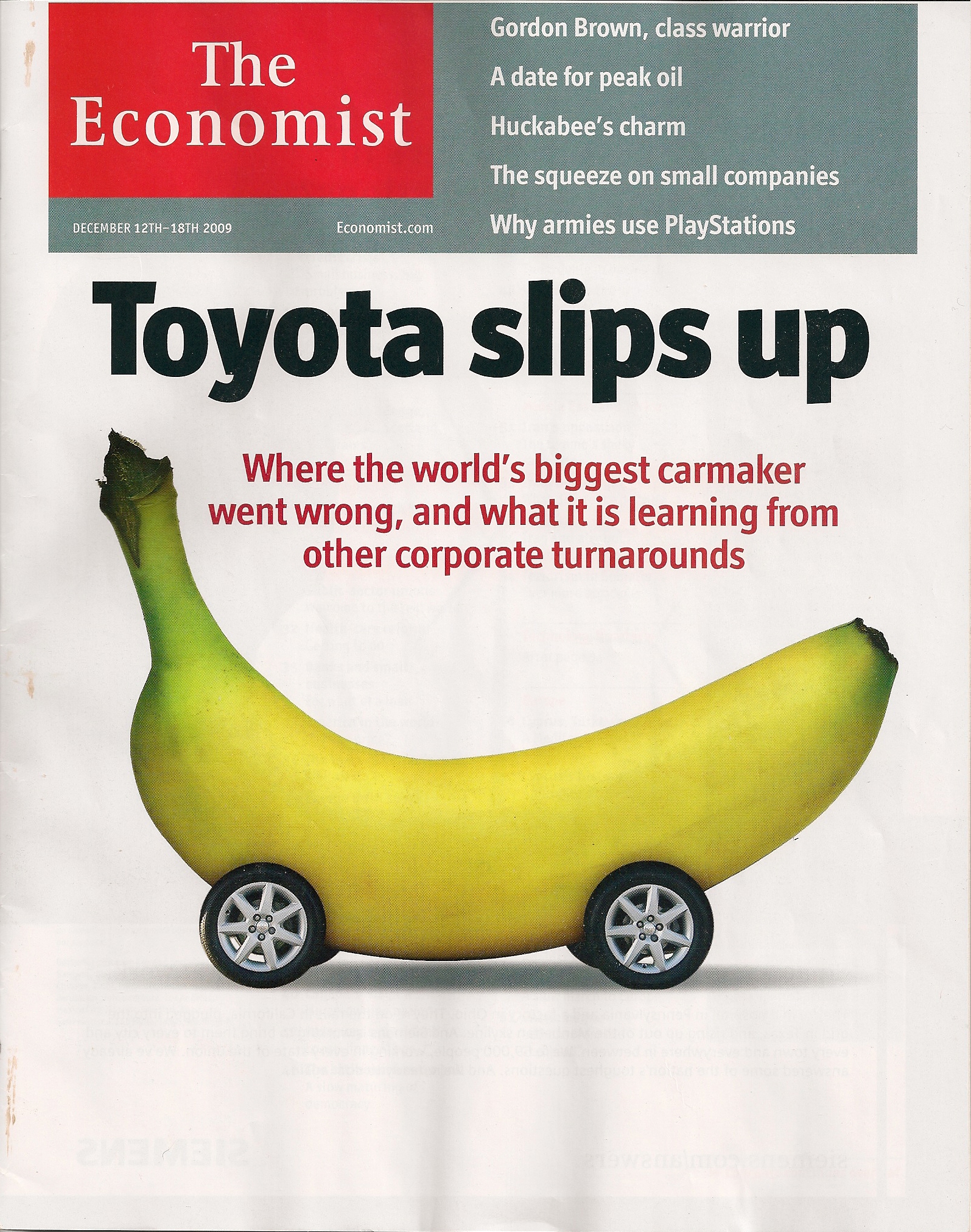
Bananas and common sense!

This is more than about the problems with Toyota.

The Economist is a newspaper.  It was first published in September 1843 which, of itself, makes it a notable newspaper.  Many years ago, more than I can recall just now, I became a subscriber to the newsprint version of this weekly paper.  It has become such a companion, so to speak, that when I left the UK in September 2008 to come to Mexico I made arrangements to continue receiving The Economist each week.

However, the Mexican postal system, despite being thoroughly reliable, is rather slow and, rather logically if you muse on it, the postman always only delivers when there is more than one item.  Thus the particular copy of The Economist that carried the story about Toyota arrived late and with three other editions!

Let me turn to the point of this article.

Read more of this Post

Pocket computing – innovation in an expanding market

On a more professional note …

In the various posts that I have contributed here on the “Learning from Dogs” blog, my approach to the general topic of integrity has been broadly related to people, their behaviour and their contribution. However, it is noticeable that I have barely mentioned any professional interests; so, this post relates to an area which I have usually discussed elsewhere: it is reproduced from my personal blog.


Go, Nokia, go!

You have nothing to fear and everything to gain!

The mobile internet is becoming mainstream, so the smartphone market is booming. Nokia occupy the strongest position in the smartphone market, has loyal customers and a reputation for phones that, relative to other mainstream phones, are user friendly.

So what is happening?

Continue reading “Pocket computing – innovation in an expanding market”

Understanding your Market, Part Three

Market research for sales people

Yesterday, in part two of this three-part Post, we looked at two real-life examples of how listening to your market works.  In this concluding part we examine some practical methods for sales people.  (By sales people I also include those who run their own business because there is no better sales person than the person who runs their own enterprise!)

  1. Empty your mind of all your pre-conceived ideas as to why your customers buy your product or service.
  2. Start off by listening to the reasons why a recent customer bought from you.  Ideally in person but if not, then by telephone.  Never by email!  I’ll leave it to you to think how you might do that – easy in practice.  Comment if you want to explore this aspect.
  3. Listen to sufficient number of customers so that you feel you have a representative view.  I guess what you are looking for is the Pareto relationship – what are the 20% of reasons/motives that generate 80% of your sales.  You should be able to end up knowing what are the differences that make the difference (between you and your competitors.)
  4. Just like Guy Watson of Riverford, knowing why a customer buys MUST also include knowing what use that customer is making of your product/service.
  5. Negotiate with as many customers as possible the opportunity to stay in touch – at whatever frequency makes sense to both sides. Again, think about how you stay in touch – personal visits may be unwieldy but phone usually is acceptable.  Not via email!
  6. Once you know why people become customers then you need to know what their experience is when they are accustomed to using your product or service.  This is key!  Think what you felt like when you bought your last car.  Full of the thrill of a new experience and the anticipation of enjoying your ‘smart’ decision.  Now think how you regard your car today after the reality of the cost of ownership, a few unplanned service issues and when it now feels much more like the utility vehicle that it really is.  If the original sales person doesn’t know how you feel today then there is no way that the sales person’s next sales proposition can be modified to keep you as a client.
  7. Staying in touch allows you to anticipate future needs of your customers – the key to all business success.
  8. Understanding your customers means that you can build loyalty – and loyal customers is the key to business LoyaltyEffectRevCoverprofitability.  If at all possible get hold of a copy of Prof. Fred Reichheld’s The Loyalty Effect.
  9. Use the relationships you build with your customers to seek their ideas as to what their future needs may be, how they would like to see your products and services evolve and who, and why,  they regard as your potential competitors.
  10. Finally, as in the first point, keep an open mind and never assume.  Remember the old ditty – if you assume you make an ‘ass’ out of ‘u’ and ‘me’.

By Paul Handover