Our doughty mole has unearthed more secret transcriptions from the Ministry ….
The Ministry
Hello Perkins! Let’s get to it!
Get to what, Sir?
Perkins – there’s a mini-crisis …..
There usually is, Sir …..
We have a stark, difficult choice ahead of us.
Oh, Dear, Sir – not again.
Yes, Perkins. I know that choice is not something we prefer to face, but there it is.
But why has it come to this, Sir?
Cuts, Perkins – The IMF are about to be called in so the PM – I mean the Chancellor – has been forced to make some cuts.
Oh Dear, Sir. But how does this affect us?
Well, you know those consultants that were called in?
You mean those on £100,000 a day plus bonus, Sir?
Yes, that’s them! By Jove don’t you admire this dynamic synergy between public and private, Perkins!!
Well ….
Anyway, after weeks of in-depth research they’ve narrowed it down for us to a clear choice, which certainly saves us some head-banging, I must say.
And this choice is ……?
Well, we either buy more flak jackets for the men on front-line duty in Iraq or we pay the MOD mandarins a bonus.
A very far-sighted view of European collaboration from 12 years ago!
Once again, Learning from Dogs welcomes a guest post from Per Kurowski.
Per Kurowski
——————-
I was intrigued by a recent Post on Learning from Dogs entitled Poor Old Europe. It included two commentaries from elsewhere about the state of Europe and how the feeling of trying to force, politically, very disparate countries together was still ever so dominant. It reminded me of an article that I wrote for my own Blog nearly 12 years ago just before the Euro came into effect. Reading it today is interesting, to say the least.
In just a few weeks, on the 1st of January 1999, eleven European countries will forsake the right to issue their own currency and accept the circulation within their boundaries of a common currency, the Euro. Monetary policy related to the Euro will be set by a European Central Bank. One fact that struck me as curious is that in all the abundant legislation that regulates this process, there is no mention whatsoever of how to manage the withdrawal or future regret of any of the union’s members.
The absence of alternatives in this case evidently represents a burning of the bridges, but this may be necessary to achieve credibility. There is no turning back and there is no doubt that this is a truly historical moment. As participants in a globalized world in which Europe has an important role, we must naturally wish all members luck, no matter what worries we might secretly harbor.
Until 1971, all money used throughout the history of humanity was backed in one way or another by something physical to which a real value was attributed. Sometimes the backing was direct, pearls for example, while in other cases it was indirect such as the right to exchange bills for a certain quantity of gold.
This physical backing in itself did not necessarily mean it consisted of something of fixed value. The value of a pearl, for example, is in itself subjective. The promise to exchange bills for gold did not guarantee anything either, since this promise could easily be voided by fraud. Whatever the backing was, however, it did at least offer the holder of the money the illusion that it was supported by something concrete.
In 1971, the United States formally abandoned the gold standard and the direct backing, however imaginary, disappeared. Since the Dollar is a legal currency, it could always be used to repay Dollar denominated debt. Today, however, in spite of the fact that the Dollars may have lost some of their purchasing power, a holder of excess Dollars can only hope that the Government of the United States will exchange his old bills for new ones of the same tenor.
This apparently precarious situation must be the raison d’etre of the motto printed clearly on the bills which states “In God We Trust”.
Since 1971, the real value of the Dollar as an element of exchange, has lost some of its value due to inflation. Today, we would need many more Dollars to buy the same houses, cars, movie tickets and gold than we would have needed in 1971. In spite of the above, with few exceptions such as the end of the ‘70s during which inflation increased dramatically, few would dare qualify the United States’ elimination of the gold standard as a failure.
The world’s economies have managed to increase international commerce drastically and with it, sustain a healthy growth rate. Many analysts would explain this phenomenon by saying that the discipline exacted by the gold standard represented a brake on international commerce. The growth rate registered in commerce after 1971 was the result of the release of this brake. Other more critical analysts sustain the thesis that, due to the fact that we have abandoned the discipline required by the gold standard, the world has accumulated gigantic accounts payable, which we may be coming due very soon.
I personally swing back and forth between amazement of the fact that the world has accepted such a fragile system and satisfaction that it actually has done so.
The Euro has one characteristic that differentiates it from the Dollar. This characteristic makes me feel less optimistic as to its chances of success. The Dollar is backed by a solidly unified political entity, i.e. the United States of America. The Euro, on the other hand, seems to be aimed at creating unity and cohesion. It is not the result of these.
The possibility that the European countries will subordinate their political desires to the whims of a common Central Bank that may be theirs but really isn’t, is not a certainty. Exchange rates, while not perfect, are escape valves. By eliminating this valve, European countries must make their economic adjustments in real terms. This makes these adjustments much more explosive. High unemployment will not be confronted with a devaluation of the currency which reduces the real value of salaries in an indirect manner, but rather with a direct and open reduction of salaries or with an increase of emigration to areas offering better possibilities.
What worries me most is the timing. The world is facing the possibility of a global recession. This will require very flexible economic and monetary policies. The fact that the search for initial credibility for the Euro is based on trying to assure markets around the world that the new currency will be guided by a philosophy closer to that of Bonn than that of Rome, probably goes against the best interests of the world.
Published in Daily Journal, Caracas, November 19, 1998
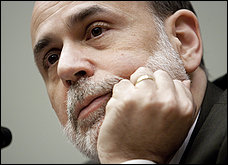
Ben Bernanke, Chairman of the U.S. Federal Reserve, announced that the Fed was likely to begin to sell some of the $1 trillion in mortgages, the so-called “toxic assets,” that it purchased over the last fifteen months to help stave off a total credit market meltdown. Those purchases essentially doubled the U.S. money supply, igniting fears of potential inflation should the underlying real economy recover before the money supply could be drawn back down. See earlier post.
Well, the process of tightening the money supply may be just around the corner. And increases in interest rates and the cost of everything purchased on credit – homes, cars, durable goods, and business capital expenditures – are not far behind. Increases in interest rates dampen economic activity, an unfortunate development given the current lethargic state of the U.S. economy. But it has to be done sometime – we cannot sustain such a huge increase in the money supply without paying an even higher price in terms of inflation and a weak dollar.
It will be interesting to see who buys the toxic assets and how much they will pay. Regardless, the sale will reduce the money supply which, if done in a slow, orderly manner, is a good thing for the economy. Getting the Fed out of the business of buying and selling private market securities will be an even better thing for the U.S. economy. Now more than ever we need a monetary authority that is focused on the best policies for our economy, not those that help Fannie Mae, the White House, or the Treasury Secretary save face.
“Daily Mail”! What on earth are you doing with that?
Well, I thought I’d check it out, Sir.
Check it out?
Yes Sir. People have been attacking it.
Attacking it?
You keep repeating me, Sir …
I’m just stunned Perkins! Why on earth would anyone sane want to “check it out”?
Well, I’ve always been suspicious of situations where the establishment and so-called cognoscenti collectively attack something, Sir.
Why on earth is that, Perkins?
Well, they could have an ulterior motive, Sir.
Ulterior motive?”
You’re doing it again, Sir.
Look Perkins, the Mail is a ghastly, sensationalist rag.
When did you last read it, Sir?
Goodness me, Perkins. I have better things to do with my time.
How can you be sure then that you’re not just baying the mindless mantra of your peers?
Look Perkins. I don’t read the Mail because it appeals to the mob and has no analysis.
But “the mob” are the mass of the people, Sir.
Exactly, Perkins. Now you’re on the right track.
So you don’t believe in democracy, Sir?
Don’t ask silly questions, Perkins. Of course I do, just as long as the people don’t get their hands on government. But seriously, the Mail has little analysis; just a crude statement of facts.
But why are you so attached to “analysis”, Sir? Surely it’s the facts that are most important?
Well if you don’t have analysis then how do you know what’s really going on? You need analysis to explain the headlines.
But surely any analysis depends on the spin of the author? Why can’t people be given the facts and allowed to make up their own minds?
“Make up their own minds?” Be serious, Perkins. The mob hasn’t got a mind to make up; that’s why it’s called “the mob”.
I think you’ll find it was the mob that fought and died in two World Wars to protect freedom and democracy in Britain, Sir.
Aha! That proves my point! You don’t need to understand much to pop your head over the top and get it shot off, do you! The mob is ideally suited to it.
But “analysis” is overrated, Sir. People should be encouraged to think for themselves.
“Think for themselves!” Now Perkins, those who went to public school can be expected to think for themselves, but as for the rest …
I’m sorry, Sir; there is in fact too much analysis. I was put off at school at an early age. No sooner had we opened a Shakespeare play than we had FR Leavis shoved down our throats telling us what to think about it rather than being allowed to interpret and analyze it ourselves.
I’m sorry your education seems to have gone so seriously wrong, Perkins. Did you in fact go to a public school?
Only a poor man’s one, Sir …. but analysis in the press just seems to me a clever way of trying to tell people what they should think. I believe Goebbels was very good at analysis, and of course Tony Blair …
Now Perkins, analysis is all that differentiates us from unthinking morons who cannot understand the law.
You mean British MPs and their expense accounts, Sir?
No … errm …. perhaps I should rephrase that … but really Perkins, this “Defend the Mail” crusade is really a bit OTT, isn’t it?
Perhaps, Sir, but it’s because it is so heavily attacked by verbal diarrhoearists who support totalitarianism. My principle is that your enemy’s enemy is your friend, so to speak. If someone who supports dictatorship attacks it at every chance then it can’t be all bad, sort of thing.
I’m sorry, Perkins. I don’t think I will ever be able to follow the tortured meanderings of your mind.
I think that’s because deep down I identify with “the mob”, Sir, or as I prefer to call them; “the people” ……..
Hmm …… if I were you Perkins I wouldn’t go trumpeting that too loudly round Whitehall. It could put an end to a promising career.
It is a sad and lonely vigil that we who long for good news sometimes keep. But now and again, like London buses, it does arrive in welcome batches, and so it has proved this week.
Oh look! Here's five of them!
US Health Care
First of all, our faith in Obama has been somewhat resurrected from what had become – in my case at least – a depressingly-comatose condition. For he has managed to squeeze his
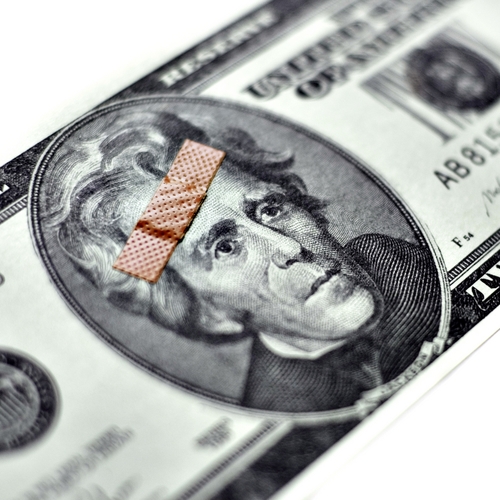
Band-aid or long-term fix?
health bill through Congress, which is more than the glamorous Clinton duo managed the last time it was tried.
Now I am sure Learning from Dogs has many American friends – at least, I hope so. And they are surely better-qualified to give an objective view of exactly what has been achieved. To listen to the Republicans, you’d think the end of the world had arrived, yet it is surely surreal that “the greatest country in the world” should NOT have universal health care, isn’t it?
As far as I understand, another 32 million Americans will now have health cover, even if that still – apparently – leaves some outside the fold. Well, let’s not quibble; it’s a major step forward. How even the reddest-necked Republicans could accept poor Cuba having better overall health care for their poorest citizens than the mighty USA was always a mystery to me. So, let’s chalk it up and celebrate.
Palestine
Secondly, the Obama-Clinton team is AT LAST standing up to Israel. Now this is a major topic, and beyond the scope of one post, but if you empathize – as I feel one should – then from a Palestinian’s point of view, the Israelis are occupying their territory by force. And they are not alone in this belief; the international community has long considered the Israeli presence in the West Bank and Jerusalem to be illegal. Yes, Israeli supporters may find ways of rationalizing their presence there, but the facts speak for themselves.
“Whom the Gods seek to destroy, they first make mad.” Well, Netanyahu may not quite be mad, but he was certainly very silly – in my opinion – to so impudently announce more building in Jerusalem just as efforts to restart serious negotiations were under way. How he could imagine this would not be a major slap in the face to the US is a mystery. Perhaps he was just seeing how much he could get away with? Well, he seems to have found out, and for once – after nearly a year of pussy-footing about with Israel – the USA is moving closer to the international community’s position.
The world – let alone the Palestinians – needs a permanent solution to the problem, and that will not be achieved by Netanyahu prattling on about Jerusalem “belonging to Israel”. It is obvious to any outsider that the city has to be shared. As with Berlin, what will no doubt be a divided city for some time will eventually – through the force of position and logic – become a united one. WITHOUT goodwill (and there has been precious little in recent years from victorious Israel) this running sore will only come back to bite the Israelis time and time again. Friends of Israel – as I count myself in fact – should make this point more strongly.
However, the only friend that really counts is the USA, and we need them to keep up the pressure. Can and will Obama tough this one out in the face of the very powerful Israeli lobby? I believe Obama has said that he would prefer to be a one-term President if it meant he could get some real reforms through, and this is a welcome change from the “I’ll do anything to stay in office” syndrome that we seem to be seeing in Britain right now. Let’s hope he can live up to this promise. It is after all now nearly a decade since 9/11, after which there was so much talk about “finding a solution” that has – so far – come to little.
Google & China
Where next?
Finally, we hear from Asia that China is cross with Google for removing filters from its search engines. Now we have got used to cosying up to China, to the point where the west imports a VAST quantity of cheap goods that have helped China’s economy to make a real leap forward, and of course pay for a vast increase in their military spending.
Yet the truth remains the truth, no matter how you dress it up. It remains a Communist dictatorship.
That Google even tolerated acquiescence in the fascist suppression of free speech in the first place was a disgrace, but they seem now to be moving to a more defensible position. What was sad about their original move into China was that they are big and powerful enough to have made a stand before. All over that vast country, individuals are trying to stand up to a fascist state, so how must they have felt when a vast, rich and powerful organisation from the west (Statue of Liberty and all that) got into bed with their oppressors?
Well, perhaps those little people will feel a bit better now. Predictably, the Chinese are now making threats against other “partners” of Google, saying that they “must obey its laws”. Well, we’ll see how this plays, but united we stand, divided we fall, and is it moral to respect immoral laws?
Yes, it will irritate the Chinese Communist Party leaders (I won’t be losing any sleep there …) and No, it won’t make a vast practical difference in the short-term; the Chinese have their OWN search engines, but it is a symbol, and symbols count. Sooner or later, the Chinese will join the modern world; but every now and then the free world needs to give it a prod in the right direction.
By Chris Snuggs
[Explanation of title to our non-UK readers. Londoners are so used to waiting in the cold for a bus to arrive and then having three arrive at once, that the phrase has become a little bit of English folklaw! Ed.]
Why has it seemed like pushing water uphill for so long?
I’m in my mid-60s, having been born six months before the end of WWII. From the earliest days that I can remember, my parents loved to holiday in France and Spain. In those days if one was to motor into Europe then it was a case of the car being craned aboard the ferry from England to France. How things change!
Modern cross-channel ferry
Much later on in life, I did business extensively in many European countries and, for a while, taught sales and marketing at the international school, ISUGA, in Quimper, NW France. (Indeed, fellow Blog author Chris Snuggs was my Director of Studies at ISUGA – that’s how we came to meet.) I like to think that I have a reasonable understanding of the variety of cultures that is Europe.
So while acknowledging the convenience of a common currency (sort of) and ease of border transits, the one thing that has remained in my mind is that each country in Europe is very, very different to the other. These core differences have always struck me as so strong and deep-rooted that any form of real union was a ridiculous concept. The present deep problems with Greece seem to be the tip of this fundamental issue. Thus a couple of recently published articles, on Baseline Scenario and The Financial Times seem worthy of being aired on Learning from Dogs.
Well, this is election season in Britain, or as near as it gets ….. no doubt British PM Gordon Brown will wait to the last possible moment in the hope that either oil in vast quantities will be struck on Salisbury Plain or that David Cameron will be found wandering around near the men’s toilets on Wandsworth Common late one night.
But Gordon-Brown’s procrastination has almost reached its consume-by date and everyone expects an announcement soon for an election on May 6th.
This will be a momentous election. As it seems that British politics has evolved into mammoth-long parliamentary stints – a bit like Japan – the government of the next 15 years could be up for grabs. Will we stagger along under the camel-breaking weight of turgid bureaucracy, overspending and debt under Labour or emerge post-election into the great entrepreneurial leap forward à la Maggie Thatcher Mark II? (this is a slight over-simplification for newcomers to British politics).
We’ll see, but one of the most fascinating aspects of general elections is always to listen to what politicians say. On rare occasions we may be inspired and amazed by their vision and rhetoric, but unfortunately one’s reaction is more often one of total disbelief. I had one of the latter yesterday when I read the following in the Guardian:
“I will continue as Labour leader even if I lose election, “Gordon Brown says.
Now nobody pretends being British PM is easy, but one does at least hope that one’s leader – the one with the finger on the nuclear button after all – will not lose touch with reality. And the idea that Brown could soldier on after a defeat is surreal.
He was never actually elected by his party in the first place, nor of course as PM by the British Public. He has already nearly been thrown out a couple of times by his own party so what possible justification could there be for trying to stay on in defeat? Is the following a justification?
“I owe it to people to continue and complete the work we have started of taking this country out of the most difficult global financial recession.” (Reuters)
Does he really think that NOBODY ELSE can save Britain? Megalomaniac delusions, I fear. And IF he loses the election, the Labour Party could face another 15 years in opposition. The idea of Brown staggering on until he drops is rather sobering.
Mr Brown didn’t NEED to say what he did; the usual politician’s deviousness would have sufficed: “no point speculating about hypothetical situations …. ” and so on …. the fact that he cannot seem to imagine NOT being leader after so many years of playing sulky bridesmaid to the slick and charismatic Tony Blair is pathetic in the true sense of the word.
In sport, business, love and politics, there comes a time when you have to give up, and leading your party to defeat at an election is one of them ……..
PS Of course, he could WIN the election! Oh dear …… pass me the Glenfiddich …..
Learning from Dogs has been publishing on a daily basis since July 15th, 2009. That’s over 460 posts and is a great tribute to the commitment of all the authors of this Blog. We are grateful that our regular readership is also measured in the hundreds and is growing steadily.
Elliot Engstrom
It seemed time to make a small change. We have decided to include articles from Guest Authors on a regular basis. Our first guest is Elliot Engstrom.
Elliot Engstrom is a senior French major at Wake Forest University, and aside from his schoolwork blogs for Young Americans for Liberty and writes at his own Web site, Rethinking the State
Elliot first post for Learning from Dogs is about the US Federal Government and Poverty. This also appeared in The Daily Caller.
————–oooOOOooo—————-
The federal government, which claims to be the greatest supporter of those in need, is anything but a friend of the impoverished.
Often times when conservatives speak of the government treating the rich differently than the poor, the discussion is framed around taxes and welfare, with the argument being made that the government forces the highest earners to pay a massive percentage of all taxes, both punishing success and stifling overall economic productivity and making it all the more difficult for anyone not in the upper echelons to accumulate wealth for themselves. I sincerely hope that I have not constructed a straw man version of this common conservative argument, as I certainly think it has a great deal of credibility. However, I also would like to draw attention to the fact that while government loots the rich through the direct means of taxation, it likewise loots the poor, albeit through a different set of means that is much more difficult to recognize, and thus much more difficult to counteract.
While looting the wealthy can often be construed as some kind of humanitarian effort to aid the poor, looting the impoverished is a much more difficult enterprise to disguise as a moral good. Thus we will find that the government’s means of taking money from the poor are much more difficult to detect, comprehend, and eliminate than the means of direct taxation that is used to extract money from the wealthier members of society.
The dollar in which the majority of Americans receive their wages or salary has no absolute, set value. We see this in the fact that the value of the dollar is constantly fluctuating when compared to gold, silver, or the currencies of other nations (which are all constantly fluctuating in value themselves). “Value” is determined by a wide range of factors, but is based in the fact that human beings are all rational maximizers who are all trying to get what they want while expending the least amount of resources possible to do so. The occurrence of this phenomenon in the mind of every single individual economic actor coordinates the price system in a free market economy.
A given worker making $10.50/hour may see himself as bringing home a constant source of income. However, this is not the case at all due to the constantly shifting value of the dollar. Even in a free and unhindered market, the value of the dollars that this worker takes home each day would fluctuate based on factors like how much liquid currency was actually in existence in the market, how many resources had been invested in banks or stocks, and what amount of resources had been converted into physical capital or products. In the end, the dollar itself has all the value of a flimsy piece of cotton paper – it derives its true value from the productive activities of economic actors who use it as a medium of exchange. In other words, the dollar is a widely accepted “I.O.U.” This would be the case even in the freest of economies. Values of commodities and currencies are always changing based on the effectual demand and effectual supply of the moment.
But, as we all know, we live in anything but a free and unhindered economy. Our supposed “free market” is criss-crossed with a Federal Reserve System that manipulates the value of the dollar at will, a corporate welfare system that socializes the losses of corporations at the expense of the rest of society, and law enforcement policies that weigh the heaviest on those who do not have the time or resources to easily deal with court and lawyer fees, jury duty, and detainments prior to trial, not to mention the fact that the War on Drugs does substantially greater damage to the lower classes of American society than it does good, particularly when speaking of poor African-Americans.
And here’s the scary part – this was all the case before the bailouts and stimulus package that George Bush began and Barack Obama continued and amplified. Not only do these bailouts threaten to massively inflate our currency, spelling disaster for those whose livelihood is based in hourly wages paid in dollars, but it also directly took from all of society, not just the rich or the poor, and gave to a few select corporate entities such as Goldman-Sachs and Wells Fargo. We know this because every new dollar created by the government in the stimulus plan detracted from the value of every dollar already existing in the pre-stimulus economy (or will do so when released into the economy).
Does this sound confusing? It should, because it is, and that’s exactly how the federal government likes it.
While the federal government would tell us that they protect the poor from the exploitation of the rich, economics would tell us that it is in fact the federal government itself that is the greatest exploiter of our nation’s impoverished, and it is this institution that in fact facilitates much of the disparity in wealth between wealthy national corporations and impoverished local communities.
Those of the small government mindset who wish to rally more people to their cause should not go about proclaiming that we should be immediately getting rid of affirmative action and welfare for the poor, but instead should be putting forth a rallying cry against corporate welfare, an inflation-minded Federal Reserve System, and a law enforcement system whose economic penalties weigh heaviest on those with the least money in their savings accounts. It does not have to be out of selfishness that we advocate for a reduction of the federal nanny-state. It can, and should, instead be out of a concern for the poverty and destruction of wealth that is directly generated by this institution’s misguided policies.
Very early on in the life of this Blog, indeed on the second day, I wrote a short article about the NASA mission to the moon, some 40 years after the event. You see, for me that has been the historic event of my lifetime.
I believe that this nation should commit itself to achieving the goal, before this decade is out, of landing a man on the Moon and returning him safely to the Earth. No single space project in this period will be more impressive to mankind, or more important in the long-range exploration of space; and none will be so difficult or expensive to accomplish.
Apollo 11 badge
That speech before Congress by President Kennedy was on the 25th May, 1961. I was 16 and was enthralled by the idea of being alive when man first set foot on another planetary body. That came about on July 20th, 1969 at which time I was living and working in Sydney, Australia. I took three days off work, rented a TV and watched every minute of the event.
Exploration is a core need of man. By pushing out the boundaries of our knowledge we continue to offer hope to mankind.
So it is with great disappointment that it has been announced by President Obama that the manned mission programs to the moon are to be severely curtailed – that sounds terribly like political speak for cancelled!
As Eugene Cernan (last astronaut to set foot on the moon) said:
I’m quite disappointed that I’m still the last man on the Moon. I thought we’d have gone back long before now.
I think America has a responsibility to maintain its leadership in technology and its moral leadership… to seek knowledge. Curiosity’s the essence of human existence.
Curiosity is indeed the essence of human existence.
That curiosity and the investment in space exploration by NASA on behalf of the whole world has shown us some remarkable findings about Saturn and it’s majestic rings. Just watch the video segments in this piece from the BBC.
The one-time cost of Cassini-Huygens mission was $3.26 billion. Just 0.3% of the cost of one year’s expenditure on U.S. defense spending.
Science missions like Cassini enhance cooperation between nations, and greatly contribute to scientific progress which benefits everyone.
Perhaps the big Banks would like to pick up the cost of further manned missions to the Moon?
The Federal Reserve finally addresses how it plans to unwind trillions in toxic assets
Finally, we hear from the Federal Reserve about how they plan to unwind the billions of dollars of toxic assets they purchased over the last 18 months or so without creating further distortions in the U.S. and world financial markets (Fed lays out exit detail). This after the Fed barely acknowledged one of the most dramatic runups in the money supply in U.S. history.
Brian Sack, EVP Markets Group, Federal Reserve
The announcement came in a speech by Brian P. Sack, the executive Vice President of the Markets Group at the Fed. I am impressed by this guy. He seems to know what he’s talking about and seems to understand how markets and fed policy interact.
In earlier posts I wondered aloud how the Fed might accomplish this tricky task. It is a very delicate balance between reducing the money supply too quickly, which would spike short term rates, and too slowly, which would increase long-term rates due to worries about inflation (which occurs when money growth is higher than the economy’s real growth, even if money growth is falling).
The Fed, the article explains, apparently intends to let $200 billion of the estimated $1.25 trillion in new money supply simply “mature” by the end of 2011 without replacing it. This represents largely toxic assets. The Fed might let another $140 billion of Treasuries it purchased during normal open market operations mature at the end of 2011, but they aren’t committing to that. So that’s about $340/$1,250 or about 35% of the historic increase in money supply that may be vaporized over the next 21 months. What about the rest? It would be nice to know but….
The Fed is doing the right thing by explaining its policy intentions — ANY of its policy intentions — to the markets. Markets want, need, and deserve information from our officials, something that has been sorely lacking of late. With information, lenders and borrowers can plan, they can optimize. Without information, guessing, withdrawing from the market, and fear rule the day. Not a good environment for economic recovery.









 Learning from Dogs