Category: Philosophy

The book! Part Four: The process of change.

They didn’t bring us here to change the past!

That opening quote to this chapter comes from the blockbuster film Interstellar that was drawing in the crowds when I was up to my neck in the first draft of the book. Jean and I had taken an afternoon off, together with neighbours, Dordie and Bill, to go and watch it. It was the middle of November, 2014.

I’ll resist the temptation to include a review of the film in this place; this is meant to be a book about what we can learn from dogs! But there were two spoken lines that really jumped off the screen at me; one of them being the opening quote to this chapter.

Why did that opening quote strike me so forcibly?

Simply because when it comes to making deep, fundamental changes in who we are, how we see ourselves and, flowing from that, how we behave, or better put, how we wish to change how we behave, we have to change the past.

Sorry, I was being ‘tricky’; we can’t change the past in any real sense! But what we can change is our understanding of our past and how it made us the person we are; at this present moment in our life. That self-understanding is paramount before we set out along any journey of personal change. That was my motivation in recounting, in the opening chapter of Part Four, my discovery of my fear of rejection that for so many years had remained out of sight; albeit not quietly so within me.

Before continuing, I am minded to issue a ‘health’ warning. My writings and my conclusions are purely and solely my personal view of my life and the world as I see and experience it. Don’t empower me with talents and skills that I don’t have! Phew!

Moving on.

Anyone who has attempted a change in their behaviour, from a New Year’s Resolution, to a metaphorically large slap on the wrist for being dumb about some aspect of their life, will appreciate the difficulty of achieving a lasting change in behaviour. Changing our behaviour is rarely simple, straightforward or even, surprisingly, logical. Very often it requires a major commitment of time, effort and, perhaps most importantly of all, an emotional commitment.

The other vital thing to appreciate is that what works for one person, in all likelihood, will not work for another. Even trickier than that; what worked for you one time, may not work another time! That, just for the avoidance of doubt, is not me downgrading the need for change, when your intuition is saying to you that a change or two wouldn’t do any harm at all! Not at all!

So don’t worry about it not ‘speaking’ to you clearly in the first instance, in the sense of you not being clear as to how it is that you need to change, just embrace the fact that it is a process of trial-and-error, and keep reminding yourself why it is that you wish to change an aspect or two of your behaviour.

This important aspect of being relaxed about achieving change for yourself is more easily understood, as in understood rationally, when one takes an overview of the models (note the use of the plural) of change as used by therapists, physicians, and teachers. The researchers, that therapists and others base their knowledge and understanding upon, have multiple theories to explain how change occurs.
One of these theories, a popular one known as the Stages of Change model, demonstrates that change is rarely easy and often requires a gradual progression of small steps toward a larger goal.
In other words, only through understanding the elements of change, the stages of change, and the ways to work through each stage, can help one achieve a lasting behavioural change.

I’m not going to go much further because I’m conscious of potentially over-stepping boundaries. This is a book about learning from dogs, not an amateur self-help manual on change!

But I do want round off with the following; the product of my research and from speaking to a couple of professionals in the field of change.

Apparently, about 20 years ago, two researchers into alcoholism, Carlo C. DiClemente and J. O. Prochaska, proposed a multi-stage model of change. Their aim was to help professional ’change consultants’ understand their clients who had problems of addiction and how to motivate those clients to change. It was a model that was not based on theories but on the observations by DiClemente and Prochaska into how people tackled problem behaviours such as smoking, overeating and excessive drinking.

The multiple stages of the model were called: precontemplation; contemplation; determination; action; maintenance and termination. Six stages in all.

I’m only going to dip into that first stage: Precontemplation.

Precontemplation

Individuals in the precontemplation stage of change are not even thinking about changing their drinking behavior. They may not see it as a problem, or they think that others who point out the problem are exaggerating.

There are many reasons to be in precontemplation, and Dr. DiClemente has referred to them as “the Four Rs” —reluctance, rebellion, resignation and rationalization:

Right that’s enough from me. But for anyone that would like to read the full article by M. Gold (2006) Stages of Change, there’s a footnote [APA Reference Gold, M. (2006). Stages of Change. Psych Central.] that includes a link to a website that can offer you more detailed information about this multi-stage approach to change; indeed has the full article from Mark Gold, MD.

It’s never too late to change.

Oh, nearly forgot! I noted that the film Interstellar offered “two spoken lines that really jumped off the screen at me”, using one, “They didn’t bring us here to change the past!”, as the opening line of this chapter. The second spoken line couldn’t be more appropriate to close a chapter entitled: The process of change.

We all want to protect the world, but we don’t want to change.”

999 words. Copyright © 2014 Paul Handover

The book! Part Four: Of change in thoughts and deeds

Setting the scene

Well done for getting through Part Three: Mankind in the 21st century, and a number of the challenges of our present times! I don’t mean that to come over in a flippant manner but it must have been tough reading; it certainly was tough writing for this scribe! Then again, from way back yonder from my days of selling during the 70s and 80s, comes that old saw about not being able to embrace a new idea if one doesn’t really understand the issues, as in the strengths and weaknesses, of the existing situation.

Change is a fascinating subject and one that even the briefest trawl through the internet reveals a wealth of material. But the theme of change here in Part Four is about change at an individual level and not anything to do with organisations; let alone countries. And as such, in terms of how we understand the need for change as individuals, it seemed pertinent to offer this personal anecdote as a way of setting the scene.

You will recall that in Part One – Man and Dog, there was a chapter headed Unsettled times. In that chapter I wrote about learning that my previous wife informed me that she was having an affair with another man, this revelation taking place on December 20th, 2006, fifty years to the day of my father’s death on December 20th, 1956.
I also mentioned that earlier on in 2006 I had started mentoring a Jon Lavin as he was going through a major transition in his counselling practice. Jon was living a few miles from where I was living in South Devon and was, and still is, a psychotherapist, or to put it more accurately, a UKCP accredited therapist and NLP Practitioner.

Thus in a state of some emotional turmoil, I rang Jon early on in 2007 and asked if I might be his client! Jon was initially reluctant to agree to that, simply because he and I had started developing a relationship in another context, within a completely different perspective, as in me coaching him in the ways of developing his own business. As Jon made clear, he was worried that our existing relationship might get in the way of a very different relationship; one where I was trying to understand the catastrophe that had just taken place in my private life.

I was pretty insistent on wanting, needing, to see Jon; as you might imagine. Thankfully, Jon did agree after giving it some thought but on the strict understanding that if he was concerned about how the counselling relationship was progressing that I had to agree, agree before we started our sessions, that he had the right to terminate the relationship. Of course, I agreed. Without a moment’s hesitation.

Thus Jon and I started my personal counselling relationship soon after.

Naturally, Jon wanted to learn more about my emotional background and gently, when it felt right, asked me to explain the circumstances of my father’s death back in 1956. That was easy for me for the memories of that time had never dimmed.

That I had turned twelve back in November, 1956 and had started that previous September at my new secondary school; Preston Manor Grammar School. At the time of my birthday in November, 1956, I was only vaguely conscious of my father having been ill for a while. Not ill for months and months but bedridden for a few weeks. My father was fifty-five years old and had always been a gentle, caring father to me and my younger sister, Elizabeth.

Then just a few weeks further on, on the evening of the 19th December, when I was tucked up in bed, next door to my parent’s bedroom, my mother came into my bedroom to say goodnight to me; a perfectly ordinary and routine event. But on this particular evening, there was an unmistakeable sadness about her and rather than promptly coming up to me and kissing me goodnight, she sat down on the edge of my bed, just where my knees were under the sheet and bedspread.

I could still recall so clearly Mum giving a deep sigh, a sigh that seemed to confirm what I feared and, somehow, knew in my heart: that his illness might be serious. Mum turning and reaching out with her right hand so that she could hold my right arm that lay on top of the bedspread. “Paul, you do know that your father is not very well, not very well at all. I’m sorry to tell you that he may not live for very much longer.” Words that have never left me.

Mum then leaning forward, kissing me goodnight, and leaving my bedroom, turning the light out as she closed the door. Me falling asleep within moments of the closing of that bedroom door.

My father died that same night: my mother calling the doctor who attended, confirmed the death, issued the death certificate and arranged for my father’s body to be removed from our home.

It all taking place before daybreak. It all taking place as I slept on.

In the morning, my father was no longer part of my life.

As one could easily imagine, the following days were surreal, yet all of my life I have had no recollection of any emotions at all.

Going back to the death of my father, it was thought that my father’s funeral, a cremation, would be too upsetting for me and my sister so we didn’t attend the funeral.

The only other recollection from those times was being teased and bullied at my new school, the one that I had started a few months previously, because I was prone to bouts of crying. I also recall that one day in the playground, surrounded by a group of jeering and taunting boys, I had snapped and gone for the ring leader in a wild frenzied physical attack. Both he and I receive the cane from the headmaster but at least the teasing was brought to an end.

So all of this was spoken of to Jon in those early days of 2007!

Jon gently explored my feelings, wondering what were my emotional echoes from over fifty years ago. I’m not sure I voiced anything particularly revealing.

Then, in a change of tack, he asked me how my own son might have felt if he, my son, had endured the same tragedy at the same age and experienced the death of me, his father, in a similar fashion, and, in addition, not been able to go to the funeral.

It was a straightforward question but one that had me disappearing into my own inner thoughts for some time, Jon sitting quietly in his armchair just next to me, me only half aware that time seemed to have come to a halt. As if for the first time in my life since that dreadful day in 1956 I had the courage to listen to my deep inner voice, to sense my most inner feelings.

I stuttered, “My son would be angry, angry that one of the key events in the life of any person, the death of a parent, no more than that, the death of a son’s father, no that’s still not right; the death of his father, had been denied him.

Jon looked at me, in a way that seemed to connect with me very strongly. Then he quietly asked, “What other feelings might you expect your son possibly to have?

Again, another long silence, and then I said, feeling strongly that something very important was about to happen: “He would feel left out. Overlooked. Denied the experience of something irreplaceably important. He would feel emotional rejection; in spades!

As those last words, quietly and clearly, left my lips, the most incredible sensation overtook me, both without and within me, encompassing me totally, the awareness that for the first time in my life, with me now sixty-three-years old, something that had been emotionally and psychologically hidden from me for fifty-one years, was now out in the open.

The clear knowledge that the circumstances surrounding my father’s death and my subsequent decline in my school performance had left me with a long-term psychological ‘dysfunction’; a certainty that I had been emotionally rejected way back in the Winter of 1956-57. A certainty, for sure, yet an understanding of myself that, hitherto, had been out of sight of my conscious mind, hidden deep inside of me, until this moment, this precious moment, in time.

Jon remained still and quiet as I continued to turn over in my mind this inner discovery. The realisation that, incredibly, for fifty years, my emotional response to my father’s death had remained totally out of my consciousness yet, nonetheless, had influenced me in very real and tangible ways; ways both negatively and positively that came to me almost immediately.

That the negative influence was that I was drawn to any woman who offered me love and affection and, therefore, I was emotionally unable to understand, to judge as it were, whether she had the potential to be a match as a life-long partner, however good a person she might be. I was doing anything to avoid emotional rejection!

The positive influence was that I tried very hard to please others (still do) so as to avoid their rejection, and had successful careers in selling for IBM UK, later starting and building a successful business in the early days of personal computing and, then, when my company was sold in 1986 becoming a freelance journalist and business coach.

So it took a chance association with Jon in those early weeks of 2007 to make me understand a fundamental lesson, one that had its roots fifty years previously, back in those early weeks of 1957. The lesson that we may only fully embrace change when we fully know just who we are. In other words, if there’s the tiniest voice inside you telling you that there may be some hidden nooks and crannies within you, psychologically and emotionally speaking, then some time spent with the appropriate ‘mentor’ will be the best investment you ever made.

There was a second reward from that self-awareness that arose in 2007. Namely, that in the December of that year, while the guest of dear Californian friends, enjoying a Christmas vacation in their holiday home in San Carlos, Mexico, I met Jean. Jean had been married to an American, Ben, for many years, latterly the two of them living permanently in San Carlos. Ben had died in 2005. Jean was born an Englishwoman, born in Dagenham in Essex. I had been born in Acton, North London. As the crow flies, the distance from Dagenham to Acton is twenty-three miles.

Jean and I met on December 15th, 2007. I was now emotionally unencumbered and able to give my full love to her and receive her full love for me. Jean and I were married in Payson, Arizona on November 20th, 2010. Now we live in a rural part of Oregon with our dogs and horses. It is a life together that is everything that any man could ever dream of.

The power of change!

1877 words Copyright © 2014 Paul Handover

oooo

It is only right for me to mention that the above is entirely my own work and while it is my best recollection of a series of true events, the chapter has not been previously seen or endorsed by Jon.

Never looking backwards!

“They didn’t bring us here to change the past!”

That quote is from the film Interstellar.  Last Thursday, Jean and me, with our neighbours Dordie and Bill, went into Grants Pass to watch the film.  Speaking for myself, even after three days have passed, I still haven’t settled on a clear opinion of the film. Don’t get me wrong, it was a magnificent production and held one’s attention for every minute of the three-hour performance.

All of which is a preamble for an insightful essay from George Monbiot published on November 11th and republished here with George’s kind permission.

ooOOoo

Better Dead Than Different

Our visions of the future are defined, like the film Interstellar, by technological optimism and political defeatism.

By George Monbiot, published in the Guardian 12th November 2014

“It’s like we’ve forgotten who we are,” the hero of Interstellar complains. “Explorers, pioneers, not caretakers … We’re not meant to save the world. We’re meant to leave it.” It could be the epigraph of our age.

Don’t get me wrong. Interstellar is a magnificent film, true to the richest traditions of science fiction, visually and auditorally astounding. See past the necessary silliness and you will find a moving exploration of parenthood, separation and ageing. It is also a classic exposition of two of the great themes of our age: technological optimism and political defeatism.

The Earth and its inhabitants are facing planetary catastrophe, caused by “six billion people, and every one of them trying to have it all”, which weirdly translates into a succession of blights, trashing the world’s crops and sucking the oxygen out of the atmosphere. (When your major receipts are in the US, you can’t afford to earn the hatred of the broadcast media by mentioning climate change. The blight, an obvious substitute, has probably averted millions of dollars of lost takings).

The civilisational collapse at the start of the film is intercut with interviews with veterans of the Dust Bowl of the 1930s. Their worn faces prefigure the themes of ageing and loss. But they also remind us inadvertently of a world of political agency. Great follies were committed but big, brave things were done to put them right: think of the New Deal and the Civilian Conservation Corps (1). That world is almost as different from our own as the planets visited by Interstellar’s astronauts.

They leave the Earth to find a place to which humans can escape or, if that fails, one in which a cargo of frozen embryos can be deposited. It takes an effort, when you emerge, to remember that such fantasies are taken seriously by millions of adults, who consider them a realistic alternative to addressing the problems we face on Earth.

NASA runs a website devoted to the idea (2). It claims that gigantic spaceships, “could be wonderful places to live; about the size of a California beach town and endowed with weightless recreation, fantastic views, freedom, elbow-room in spades, and great wealth.” Of course, no one could leave, except to enter another spaceship, and the slightest malfunction would cause instant annihilation. But “settlements in earth orbit will have one of the most stunning views in our solar system – the living, ever-changing Earth.” We can look back and remember how beautiful it was.

And then there’s the money to be made. “Space colonization is, at its core, a real estate business. … Those that colonize space will control vast lands, enormous amounts of electrical power, and nearly unlimited material resources. [This] will create wealth beyond our wildest imagination and wield power – hopefully for good rather than for ill.”(3) In other words, we would leave not only the Earth behind but also ourselves.

That’s a common characteristic of such fantasies: their lack of imagination. Wild flights of technological fancy are accompanied by a stolid incapacity to picture the inner life of those who might inhabit such systems. People who would consider the idea of living in the Gobi Desert intolerable – where, an estate agent might point out, there is oxygen, radiation-screening, atmospheric pressure and 1g of gravity – rhapsodise about living on Mars. People who imagine that human life on Earth will end because of power and greed and oppression imagine we will escape these forces in pressure vessels controlled by technicians, in which we would be trapped like tadpoles in a jamjar.

If space colonisation is impossible today, when Richard Branson, for all his billions, cannot even propel people safely past the atmosphere(4), how will it look in a world that has fallen so far into disaster that leaving it for a lifeless, airless lump of rock would be perceived as a good option? We’d be lucky in these circumstances to possess the wherewithal to make bricks.

Only by understanding this as a religious impulse can we avoid the conclusion that those who gleefully await this future are insane. Just as it is easier to pray for life after death than it is to confront oppression, this fantasy permits us to escape the complexities of life on Earth for a starlit wonderland beyond politics. In Interstellar, as in many other versions of the story, space is heaven, overseen by a benign Technology, peopled by delivering angels with oxygen tanks.

Space colonisation is an extreme version of a common belief: that it is easier to adapt to our problems than to solve them. Earlier this year, the economist Andrew Lilico argued in the Telegraph(5) that we can’t afford to prevent escalating climate change, so instead we must learn to live with it. He was challenged on Twitter to explain how people in the tropics might adapt to a world in which four degrees of global warming had taken place. He replied: “I imagine tropics adapt to 4C world by being wastelands with few folk living in them. Why’s that not an option?”(6)

Re-reading his article in the light of this comment, I realised that it hinged on the word “we”. When the headline maintained that “We have failed to prevent global warming, so we must adapt to it” (7), the “we” referred in these instances to different people. We in the rich world can brook no taxation to encourage green energy, or regulation to discourage the consumption of fossil fuels. We cannot adapt even to an extra penny of tax. But the other “we”, which turns out to mean “they” – the people of the tropics – can and must adapt to the loss of their homes, their land and their lives, as entire regions become wastelands. Why is that not an option?

The lives of the poor appear unimaginable to people in his position, like the lives of those who might move to another planet or a space station. So reducing the amount of energy we consume and replacing fossil fuels with other sources, simple and cheap as these are by comparison to all other options, is inconceivable and outrageous, while the mass abandonment of much of the inhabited surface of the world is a realistic and reasonable request. “It is not contrary to reason to prefer the destruction of the whole world to the scratching of my finger”, David Hume noted (8), and here we see his contemplation reified.

But at least Andrew Lilico could explain what he meant, by contrast to most of those who talk breezily about adapting to climate breakdown. Relocating cities to higher ground? Moving roads and railways, diverting rivers, depopulating nations, leaving the planet? Never mind the details. Technology, our interstellar god, will sort it out, some day, somehow.

George: this is a formula for the deferment of hard choices to an ever-receding neverland of life after planetary death.

No wonder it is popular.

www.monbiot.com

References:

1. http://www.cityprojectca.org/blog/archives/5392

2. http://settlement.arc.nasa.gov

3. http://settlement.arc.nasa.gov/

4. http://www.theguardian.com/science/2014/nov/01/sir-richard-branson-space-tourism-project-doubt

5. http://www.telegraph.co.uk/finance/economics/10644867/We-have-failed-to-prevent-global-warming-so-we-must-adapt-to-it.html

6. http://www.businessgreen.com/bg/james-blog/2337458/climate-adaptation-lobby-is-reckless-dangerous-and-partly-right

7. http://www.telegraph.co.uk/finance/economics/10644867/We-have-failed-to-prevent-global-warming-so-we-must-adapt-to-it.html

8. https://ebooks.adelaide.edu.au/h/hume/david/h92t/B2.3.3.html

ooOOoo

Do go and see Interstellar!

Ambition; the film.

Striving to achieve what is humanly possible.

A day almost exclusively devoted to writing left me wondering what to post for today.

Then in my ‘blog’ folder was this recent item from the blog site EarthSky.

It is republished here as it was received by me.

ooOOoo

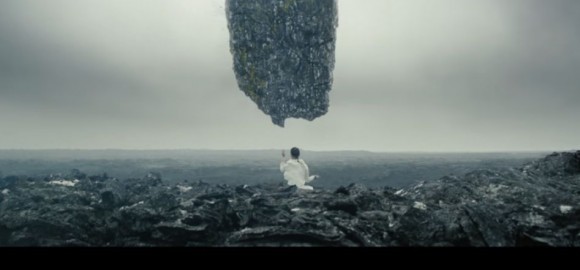
Exciting Rosetta space mission inspires a magical short film

A very good 7-minute film, called Ambition. It’s not like any film about space exploration you’ve ever seen. The Rosetta comet mission lies at its heart.

Everything about the European Space Agency’s Rosetta mission – which, in August, caught up to Comet 67P/Churyumov–Gerasimenko and began moving in tandem with it – has been fantastic so far. For us space buffs, this mission has gone a long way toward fulfilling our fantasies about what might be accomplished in outer space. It’s caused us to remember why we got so excited about space exploration in the first place. And now – just weeks before Rosetta will send a lander to the surface of its comet – ESA and Platige Image have released a very good short film, called Ambition. It’s not a space documentary, or like any film about space exploration you’ve ever seen. It doesn’t focus so much on the mission itself – although the Rosetta mission does lie at the heart of the film – as on why we need to go into space.

The film features an apprentice magician and her master, talking about the making of solar systems.

I won’t tell you more; you should watch the film. It might touch your heart in ways you’ve forgotten, as the Rosetta mission itself has touched mine.

Tomek Baginski directed the film Ambition, which stars Aiden Gillen – who played Littlefinger in Game of Thrones – and Aisling Franciosi. Its producers shot Ambition on location in Iceland and produced it primarily in Poland. Its first public screening was October 24, 2014 during the British Film Institute’s celebration of Sci-Fi: Days of Fear and Wonder, at the Southbank, London.

By the way, Tim Reyes at UniverseToday.com has written a very good essay about the film Ambition, and what it means in the context of U.S. and European space efforts, and in the larger context of our striving to meet challenges in the world today. He also says you should watch the film. Because it’s about what it means to want to know what’s possible.

In the film Ambition, a young magician tries to build a solar system … but fails.
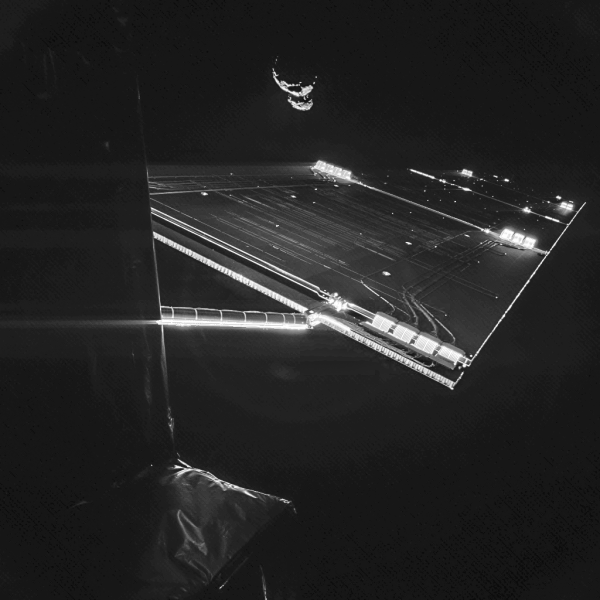
Did you assume this was an artist’s concept? It’s not. It’s a real image. It’s the Rosetta spacecraft’s selfie with comet 67P/Churyumov–Gerasimenko, imaged Sunday, September 7, 2014. Image via ESA/Rosetta/Philae/CIVA

Bottom line: A very good 7-minute film, called Ambition. It’s not like any film about space exploration you’ve ever seen. The Rosetta comet mission lies at its heart.

ooOOoo

And here is that film.

Published on Oct 24, 2014
Ambition is a collaboration between Platige Image and ESA. Directed by Tomek Bagiński and starring Aidan Gillen and Aisling Franciosi, Ambition was shot on location in Iceland, and screened on 24 October 2014 during the British Film Institute’s celebration of Sci-Fi: Days of Fear and Wonder, at the Southbank, London.

A small step to inner peace.

That journey towards stillness.

I didn’t intend this to be a theme for the week but sometimes one gives in to the forces of fate!

For after Monday’s post about making that inner journey to better know oneself, itself prompted by Rick Hanson’s Power of Stillness, came yesterday’s post on the power of love between a dog and his elderly owner.

So I was wondering what to write for today and wandering around the web looking for inspiration and, serendipitously, came across the blogsite The Commoner Princess.  I had never heard of it before but there on the home page was a post published on the 21st October: Unlocking inner peace: forgiveness.

Here’s a flavour of that post.

Unlocking inner peace: forgiveness

POSTED ON 21 OCTOBER 2014

What hurts the most in life? Trying to make everybody happy. I think this is one of the ultimate life lessons. I remember having a specific unease when someone close to me wasn’t happy for some reason. Things got even more dramatic when I knew I was the cause in one way or another. Time taught me that this perspective wasn’t exactly the healthier approach to life. It is more than normal to care for the wellbeing of your loved ones, to stand by them in need or to try to have a zen relationship with them at all times. But oh boy, this is one of the hardest things to achieve. Detachment is hard enough when you are not directly involved, but when there are emotional ties, becoming the observer takes a lot of mindfulness, awareness, compassion and most importantly, a loooooot of restraint.

Even better, the post concluded like this:

Here is a beautiful meditation to send love and peace to the entire world. Sit in easy pose or any comfortable position of your choosing. Place your arms against your ribs, forearms in horizontal position, palms facing upwards. Start by taking long deep breaths. Breath in through the nose, exhale through your mouth. You can try the 5-5-5 technique as I call in. 5 seconds breathing in, 5 seconds holding, 5 seconds breathing out. Keep this cycle of breath for as long as you feel comfortable with it or until the end of the meditation.Thank you gabbyb.tv for your teachings.

May this be of service to you all!

Then closed with this video that you have to play in the background as you just think of stillness.

http://www.youtube.com/watch?v=QuUszAzp4GU

Wonder what tomorrow will bring?

The one journey we should take before we die.

I’m referring to the journey within.

Last Friday I offered a post under the title of The power of stillness.  It was founded on a recent essay seen in the newsletter called Just One Thing published, freely, by Dr. Rick Hanson.  Here’s the closing paragraph of that essay:

 Wherever you find it, enjoy stillness and let it feed you. It’s a relief from the noise and bustle, a source of clarity and peace. Give yourself the space, the permission, to be still – at least in your mind – amidst those who are busy. To use a traditional saying:

May that which is still
be that in which your mind delights.

There’s a very strong correlation between finding that stillness within and having the self-awareness and peace that comes from knowing who one is.  Seems such an easy ‘walk in the park’ to know ourselves but most times it is far from that.  Many are the ways that we hide who we really are! 😉

However the rewards are everything.  Knowing and liking oneself offers the richest scenery of any journey.

All of which constitutes my way of introducing a truly wonderful poem from Sue Dreamwalker, a great friend of this blog.

ooOOoo

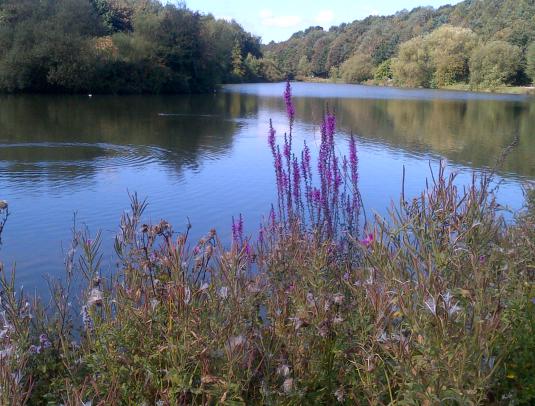
Vicar’s Water. A Sanctuary for wild life.

Journey Within..

Come with me on a journey it starts inside my head

Create a place to dwell from all the Fear and dread

Close your eyes and behind them create a perfect vision

Build a garden full of beauty get ready for your transition

~

Sit upon the grass as sky lark sings above

Hold out your hand to feed the many cooing Doves

See the babbling stream as the young fawn drinks her fill

And listen to the Woodpecker’s distant woodland drill

~

Watch the tiny fishes as the light glistens from their scales

You’re now adrift in the ocean, as you watch the Humpback Whales

You listen to their song a lament as old as time

Each breath takes you deeper as your Spirit begins to climb

~

Now you are on a mountain its top all crisp and white

You fly among the Eagles suspended in effortless flight

Thermals take you higher as you travel within its ring

Higher yet you travel, more peace to feel and bring

~

Through the clouds you break into outer-space you speed

Looking back at a Blue Planet which provided all your needs

Weightless and suspended no longer feeling Form

You fly around the heavens exploring each star born.

~

Filled up now with knowledge no mortal Words could speak

You return back to your garden upon your grassy seat

A new sense of Peace surrounds you as you open up your eyes

You can return in an instant, just open up your mind.

We can travel anywhere we wish when we just close our eyes and allow our mind to relax in a meditation.. Breathe deep and create your perfect space…. The above poem I wrote last week as I recollected part of a meditation.. The view I have included is one taken on a regular walk we often take..Have a fabulous week.

Thank you for Reading

Sue

ooOOoo

What can one say? All that comes to mind is stay on your own journey and never stop enjoying the views.

Is it really the age of loneliness?

Much as I respect Mr. Monbiot’s views, I hope he is wrong in this respect.

I have long admired the writings of George Monbiot and, as often as not, have republished his essays in this place.

But an essay by George that was published in the UK Guardian newspaper yesterday portrays a frightening picture of modern-day Britain.  It was called Falling Apart and is republished, with George’s permission, today.

I want to offer a personal response to the essay, that immediately follows George’s piece.

ooOOoo

Falling Apart

October 14, 2014

Competition and individualism are forcing us into a devastating Age of Loneliness

By George Monbiot, published in the Guardian 15th October 2014

What do we call this time? It’s not the information age: the collapse of popular education movements left a void now filled by marketing and conspiracy theories(1). Like the stone age, iron age and space age, the digital age says plenty about our artefacts but little about society. The anthropocene, in which humans exert a major impact on the biosphere, fails to distinguish this century from the previous twenty. What clear social change marks out our time from those that precede it? To me it’s obvious. This is the Age of Loneliness.

When Thomas Hobbes claimed that in the state of nature, before authority arose to keep us in check, we were engaged in a war “of every man against every man”(2), he could not have been more wrong. We were social creatures from the start, mammalian bees, who depended entirely on each other. The hominims of East Africa could not have survived one night alone. We are shaped, to a greater extent than almost any other species, by contact with others. The age we are entering, in which we exist apart, is unlike any that has gone before.

Three months ago we read that loneliness has become an epidemic among young adults(3). Now we learn that it is just as great an affliction of older people. A study by Independent Age shows that severe loneliness in England blights the lives of 700,000 men and 1.1m women over 50(4), and is rising with astonishing speed.

Ebola is unlikely ever to kill as many people as this disease strikes down. Social isolation is as potent a cause of early death as smoking 15 cigarettes a day(5); loneliness, research suggests, is twice as deadly as obesity(6). Dementia, high blood pressure, alcoholism and accidents – all these, like depression, paranoia, anxiety and suicide, become more prevalent when connections are cut(7,8). We cannot cope alone.

Yes, factories have closed, people travel by car instead of buses, use YouTube rather than the cinema. But these shifts alone fail to explain the speed of our social collapse. These structural changes have been accompanied by a life-denying ideology, which enforces and celebrates our social isolation. The war of every man against every man – competition and individualism in other words – is the religion of our time, justified by a mythology of lone rangers, sole traders, self-starters, self-made men and women, going it alone. For the most social of creatures, who cannot prosper without love, there is now no such thing as society, only heroic individualism. What counts is to win. The rest is collateral damage.

British children no longer aspire to be train drivers or nurses, more than a fifth now say they “just want to be rich”: wealth and fame are the sole ambitions of 40% of those surveyed(9). A government study in June revealed that Britain is the loneliness capital of Europe(10). We are less likely than other Europeans to have close friends or to know our neighbours. Who can be surprised, when everywhere we are urged to fight like stray dogs over a dustbin?

We have changed our language to reflect this shift. Our most cutting insult is loser. We no longer talk about people. Now we call them individuals. So pervasive has this alienating, atomising term become that even the charities fighting loneliness use it to describe the bipedal entities formerly known as human beings(11). We can scarcely complete a sentence without getting personal. Personally speaking (to distinguish myself from a ventriloquist’s dummy), I prefer personal friends to the impersonal variety and personal belongings to the kind that don’t belong to me. Though that’s just my personal preference, otherwise known as my preference.

One of the tragic outcomes of loneliness is that people turn to their televisions for consolation: two-fifths of older people now report that the one-eyed god is their principal company(12). This self-medication enhances the disease. Research by economists at the University of Milan suggests that television helps to drive competitive aspiration(13). It strongly reinforces the income-happiness paradox: the fact that, as national incomes rise, happiness does not rise with them.

Aspiration, which increases with income, ensures that the point of arrival, of sustained satisfaction, retreats before us. The researchers found that those who watch a lot of television derive less satisfaction from a given level of income than those who watch only a little. Television speeds up the hedonic treadmill, forcing us to strive even harder to sustain the same level of satisfaction. You have only to think of the wall-to-wall auctions on daytime TV, Dragon’s Den, the Apprentice and the myriad forms of career-making competition the medium celebrates, the generalised obsession with fame and wealth, the pervasive sense, in watching it, that life is somewhere other than where you are, to see why this might be.

So what’s the point? What do we gain from this war of all against all? Competition drives growth, but growth no longer makes us wealthier. Figures published this week show that while the income of company directors has risen by more than a fifth, wages for the workforce as a whole have fallen in real terms over the past year (14). The bosses now earn – sorry, I mean take – 120 times more than the average full-time worker. (In 2000, it was 47 times). And even if competition did make us richer, it would make us no happier, as the satisfaction derived from a rise in income would be undermined by the aspirational impacts of competition.

The top 1% now own 48% of global wealth(15), but even they aren’t happy. A survey by Boston College of people with an average net worth of $78m found that they too are assailed by anxiety, dissatisfaction and loneliness(16). Many of them reported feeling financially insecure: to reach safe ground, they believed, they would need, on average, about 25% more money. (And if they got it? They’d doubtless need another 25%). One respondent said he wouldn’t get there until he had $1 billion in the bank.

For this we have ripped the natural world apart, degraded our conditions of life, surrendered our freedoms and prospects of contentment to a compulsive, atomising, joyless hedonism, in which, having consumed all else, we start to prey upon ourselves. For this we have destroyed the essence of humanity: our connectedness.

Yes, there are palliatives, clever and delightful schemes like Men in Sheds and Walking Football developed by charities for isolated older people(17). But if we are to break this cycle and come together once more, we must confront the world-eating, flesh-eating system into which we have been forced.

Hobbes’s pre-social condition was a myth. But we are now entering a post-social condition our ancestors would have believed impossible. Our lives are becoming nasty, brutish and long.

http://www.monbiot.com

References:

1. http://www.autodidactproject.org/other/hj1.html

2. http://oregonstate.edu/instruct/phl302/texts/hobbes/leviathan-contents.html

3. http://www.theguardian.com/lifeandstyle/2014/jul/20/loneliness-britains-silent-plague-hurts-young-people-most

4. http://www.independentage.org/isolation-a-growing-issue-among-older-men/

5. http://www.campaigntoendloneliness.org/threat-to-health/

6. http://www.theguardian.com/science/2014/feb/16/loneliness-twice-as-unhealthy-as-obesity-older-people

7. http://www.theguardian.com/lifeandstyle/2014/jul/20/loneliness-britains-silent-plague-hurts-young-people-most

8. http://www.campaigntoendloneliness.org/threat-to-health/

9. http://www.telegraph.co.uk/news/newstopics/howaboutthat/11014591/One-in-five-children-just-want-to-be-rich-when-they-grow-up.html

10. http://www.telegraph.co.uk/news/politics/10909524/Britain-the-loneliness-capital-of-Europe.html

11. http://www.campaigntoendloneliness.org/wp-content/uploads/downloads/2014/05/FINAL-Age-UK-PR-response-02.05.14.pdf

12. http://www.campaigntoendloneliness.org/loneliness-research/

13. http://boa.unimib.it/bitstream/10281/23044/2/Income_Aspirations_Television_and_Happiness.pdf

14. http://www.thetimes.co.uk/tto/news/uk/article4234843.ece

15. http://www.theguardian.com/business/2014/oct/14/richest-1percent-half-global-wealth-credit-suisse-report

16. http://www.theatlantic.com/magazine/archive/2011/04/secret-fears-of-the-super-rich/308419/

17. http://www.independentage.org/isolation-a-growing-issue-among-older-men/

ooOOoo

Our lives are becoming nasty, brutish and long.

As closing sentences go, that’s about as tough as it gets.

Nevertheless, I’m going to offer a perspective, something that George doesn’t mention.  That is the importance of community.

Back in 2008 BBC Timewatch screened a programme about the revelations that came from the latest archaeological dig at Stonehenge, near Amesbury in Wiltshire in England.  I wrote about the programme over four years ago: Stonehenge – a place of healing.

Stonehenge is one of Britain’s most famous historical sites, deservedly so because Stonehenge was one of the most important places in ancient Europe.

Stonehenge

But evidence from a dig that was authorised in 2008 has shown that not only is Stonehenge a much older site of human habitation but that it’s purpose is altogether different to what has been assumed.  It was, indeed, a healing place, possibly the most important in Europe.

Professors Tim Darvill and Geoff Wainwright are the world-renowned archaeologists who believe they have cracked the conundrum of Stonehenge’s original purpose.

If you would like to watch that Timewatch episode, and it is highly recommended, then someone has neatly uploaded it to YouTube.

http://www.youtube.com/watch?v=U8DqKArmdyo

The programme clearly offers evidence from the carbon-dating of seeds buried under the famous blue stones that dates this settlement to some 9,000 years BP. The detailed examination of ancient humans buried nearby indicates they came to Stonehenge with a range of diseases, many terminal in nature.

So back to George Monbiot’s essay and the element that screams out at me.

We have lost sight of the huge healing benefits that come from old-fashioned, shoulder-to-shoulder communities.

Not to mention the healing properties of a loving dog or two in one’s life!

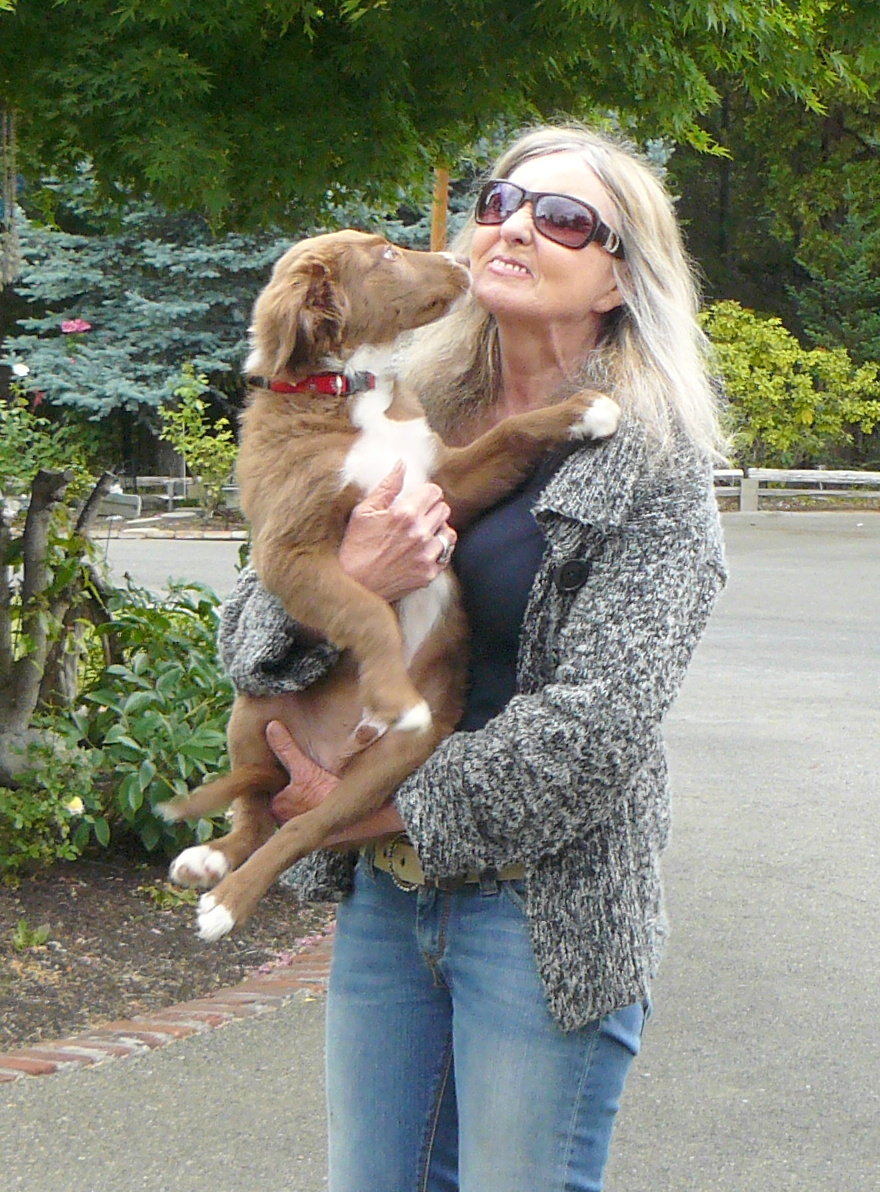
Loving each other: woman and dog!

The struggle between the forces of light and dark.

At least dogs can go off and find new homes!

Let’s start with the Ebola outbreak with the latest news from the BBC suggesting:

The death toll from the Ebola virus outbreak has risen to 4,447, with the large majority of victims in West Africa, the World Health Organization (WHO) says.

WHO assistant director-general Bruce Aylward also said there could be up to 10,000 new cases a week within two months if efforts were not stepped up,

But the rate of new infections in some areas has slowed down, he added.

Next up.

I’ve been musing as to whether or not I was going to republish a recent essay from George Monbiot.  The one in question being The Kink in the Human Brain.  It opens, thus:

Pointless, joyless consumption is destroying our world of wonders.

By George Monbiot, published in the Guardian 2nd October 2014

This is a moment at which anyone with the capacity for reflection should stop and wonder what we are doing.

If the news that in the past 40 years the world has lost over 50% of its vertebrate wildlife (mammals, birds, reptiles, amphibians and fish) fails to tell us that there is something wrong with the way we live, it’s hard to imagine what could. Who believes that a social and economic system which has this effect is a healthy one? Who, contemplating this loss, could call it progress?

In fairness to the modern era, this is an extension of a trend that has lasted some two million years. The loss of much of the African megafauna – sabretooths and false sabretooths, giant hyaenas and amphicyonids (bear dogs), several species of elephant – coincided with the switch towards meat eating by hominims (ancestral humans). It’s hard to see what else could have been responsible for the peculiar pattern of extinction then.

My spirits continued downward, especially when I clicked on that first link and read this from the Guardian website:

Rubbish dumped on the tundra outside llulissat in Greenland stand in stark contrast to icebergs behind from the Sermeq Kujullaq or llulissat Ice fjord – a Unesco world heritage site. Photograph: Global Warming Images/WWF-Canon

The number of wild animals on Earth has halved in the past 40 years, according to a new analysis. Creatures across land, rivers and the seas are being decimated as humans kill them for food in unsustainable numbers, while polluting or destroying their habitats, the research by scientists at WWF and the Zoological Society of London found.

“If half the animals died in London zoo next week it would be front page news,” said Professor Ken Norris, ZSL’s director of science. “But that is happening in the great outdoors. This damage is not inevitable but a consequence of the way we choose to live.” He said nature, which provides food and clean water and air, was essential for human wellbeing.

“We have lost one half of the animal population and knowing this is driven by human consumption, this is clearly a call to arms and we must act now,” said Mike Barratt, director of science and policy at WWF. He said more of the Earth must be protected from development and deforestation, while food and energy had to be produced sustainably.

Then a few days ago, one of our neighbours sent me an email with his latest news about ISIS.  This is what he sent:

Got this from one of my closest friends today, it came from his brother so I’m pretty confident that it’s true. There is some really bad stuff on the horizon and it’s probably gonna come this way like a runaway train!! Everybody better start thinking about where they want to stand when push comes to shove!

With “this’ being in part:

Missionaries who are in the areas that are being attacked by ISIS. ISIS has taken over the town they are in today. He said ISIS is systematically going house to house to all the Christians and asking the children to denounce Jesus. He said so far not one child has. And so far all have consequently been killed. But not the parents. The UN has withdrawn and the missionaries are on their own. They are determined to stick it out for the sake of the families – even if it means their own deaths. They are very afraid, have no idea how to even begin ministering to these families who have had seen their children martyred. Yet he says he knows God has called them for some reason to be His voice and hands at this place at this time. Even so, they are begging for prayers for courage to live out their vocation in such dire circumstances. And like the children, accept martyrdom if they are called to do so. These brave parents instilled such a fervent faith in their children that they chose martyrdom. Please surround them in their loss with your prayers for hope and perseverance.

One missionary was able to talk to her brother briefly by phone. She didn’t say it, but I believe she believes it will be their last conversation. Pray for her too. She said he just kept asking her to help him know what to do and do it. She told him to tell the families we ARE praying for them and they are not alone or forgotten — no matter what. Please keep them all in your prayers.

I didn’t and still don’t know how to reply.  That is until Maria Matthews left a comment to yesterday’s post.

Love the poem/verse Illusion. The lines, Following the herd, bleating like sheep, Held captive, half asleep. hit a strong note with me.

As we often wonder why people can’t think for themselves outside the box but then again maybe that is part of being human. Life is a mystery isn’t it? Enjoyed the post,

Maria’s comment about life being a mystery was interpreted by me as humans being a mystery and the realisation that it has ever been so. For it resonated with a recent programme over on the BBC that included information on the ancient Teotihuacan people who ruled in what is present-day Mexico some 2,000 years ago.  From Wikipedia:

View of the Avenue of the Dead and the Pyramid of the Sun, from Pyramid of the Moon (Pyramide de la Luna).

Teotihuacan /teɪˌoʊtiːwəˈkɑːn/, also written Teotihuacán (Spanish About this sound teotiwa’kan (help·info)), was a pre-Columbian Mesoamerican city located in the Valley of Mexico, 30 miles (48 km) northeast of modern-day Mexico City, known today as the site of many of the most architecturally significant Mesoamerican pyramids built in the pre-Columbian Americas. Apart from the pyramids, Teotihuacan is also anthropologically significant for its complex, multi-family residential compounds, the Avenue of the Dead, and the small portion of its vibrant murals that have been exceptionally well-preserved. Additionally, Teotihuacan exported a so-called “Thin Orange” pottery style and fine obsidian tools that garnered high prestige and widespread utilization throughout Mesoamerica.

The city is thought to have been established around 100 BC, with major monuments continuously under construction until about AD 250. The city may have lasted until sometime between the 7th and 8th centuries AD, but its major monuments were sacked and systematically burned around 550 AD. At its zenith, perhaps in the first half of the 1st millennium AD, Teotihuacan was the largest city in the pre-Columbian Americas, with a population estimated at 125,000 or more, making it at minimum the sixth largest city in the world during its epoch. Teotihuacan began as a new religious center in the Mexican Highland around the first century AD. This city came to be the largest and most populated center in the New World. Teotihuacan was even home to multi-floor apartment compounds built to accommodate this large population. The civilization and cultural complex associated with the site is also referred to as Teotihuacan or Teotihuacano.

That BBC programme also included the fact that almost on a daily basis the Teotihuacan authorities viewed the assassinations of often hundreds of lower class people as perfectly normal.

In other words, despicable cruelty of man upon man, not to mention an utter disregard for the natural world, has been going on for thousands of years!

Thus it underlined to me, in spades, that what ‘other people’ get up to is, to a very great extent, irrelevant.  Because whatever the circumstances we have a choice: we always have a choice.  Or if you will forgive me for repeating my closing sentences in yesterday’s post:

Whatever is going on in the world, whatever has the power to create fear in our minds, in the end it comes down to another power, the power of thought, and our choice of the behaviors that we offer the world.

That is why dogs are so important. Because they almost predominantly love sharing and living their lives in the company of humans.


evil

And we’re back!

My internet connection was restored late yesterday afternoon.

Thus, inevitably, the weight of my ‘in-box’ prevented quiet writing times.

So for today’s post I’m going to do no more than republish an extract from a recent Terry Hershey mailing.  I have included items from Terry before but for those new to him, do pop across to his website and catch up on what he writes.  To give you a flavour of what you may find, this is from his home page.

TERRY HERSHEY is an inspirational speaker, humorist, author, organizational consultant and designer of sanctuary gardens who has been featured on The Hallmark Channel, CNN, PBS, and NPR. Terry holds a mirror up to our fast-forward, disconnected lives, and offers us the power of pause—the wisdom of slowing down and the permission to take an intentional Sabbath moment to regain emotional and spiritual balance… to find the sacred in every single day.

I’m sure that touches many people in these interesting times.

So on to Terry’s item.  Written in Terry’s voice.

ooOOoo

Tell me the weight of a snowflake,” a coal-mouse (a small bird) asked a wild dove.

Nothing more than nothing,” was the answer.

In that case, I must tell you a marvelous story,” the coal-mouse said.

I sat on a fir branch, close to its trunk, when it began to snow–not heavily, not in a raging blizzard–no, just like in a dream, without a wind, without any violence. Since I did not have anything better to do, I counted the snowflakes settling on the twigs and needles of my branch. Their number was exactly 3,741,952. When the 3,741,953rd dropped onto the branch, nothing more than nothing, as you say, the branch broke off.

Having said that, the coal-mouse flew away.

You see, it takes just one snowflake to make a difference.

Just one.

Every once in a while we are all pestered by the question, “Does what I do, or give, or offer, make any difference? Does it mean anything?” Sometimes it doesn’t take much to make me wonder.

It’s been an odd week for me, six states in ten days (close to two thousand miles, not one on an airplane). Translation: I spent a boatload of time in a rental car, with a boatload of time to cogitate.

My week began in Northern Indiana (Victory Noll Retreat Center, Huntington), the landscape an endless horizon of cornfields, still unharvested, the stalks acorn brown. I pointed my rental car north, toward Michigan’s Upper Peninsula, drinking in the progression of autumn color along the way toward Lake Superior. I had time with my Father. We began each day with breakfast at deer camp (his home-away-from-home, heated with an antique wood-stove/oven), an ATV ride from his house into the woodland, and only a stone’s throw from the Ottawa National Forest. (I will concede that this menu is neither found nor endorsed by any diet book.) After a few days, like the flocks of Canadian geese who escorted me on the way, my rental car headed back south, down through Wisconsin (passing on the temptation to buy cheese trinkets) and to a reunion dinner with a friend in Chicago. Again through Indiana, this time in a driving rainstorm–a heavenly show and tell — with thunder and lightning, and the night sky erupting with a rippling light spectacle. On to my weekend in Cincinnati (Transfiguration Retreat Center) where we talked about living our days from sufficiency instead of scarcity.

In case I wasn’t clear, I’m not an enthusiast for road trips, so I confess that my attitude is dictated by an agenda — an impatience to cross another state line, and cross another milestone off the list.

No, it’s not easy to savor the scenery when you have an agenda.

And yes, I don’t always practice what I preach.

Which means that surprises are nice. Like the view from Brockway Mountain Drive, above Copper Harbor Michigan; below a sea of autumn color framed to the north by Lake Superior’s cobalt blue.

I discover that driving long distances creates an ideal container for musing, which, somehow, in a rainstorm deluge, morphs into existential angst, questioning everything about life and the pursuit of happiness; an opportunity to weigh and measure, and find some reason why I’ve come up short on this road toward success. Lord help us and down the rabbit hole we go … So, just before the precipice of self-pity, I crank up my friend Bruce, and sing along; This Little Light of Mine, and smile, and laugh out loud.

Have you ever asked yourself the same question: Do I make a difference?

I have found that this question messes with me only when I assume that something is missing from my life. Or that I need to prove something to someone. And it doesn’t help that we live in a culture that assumes “enough is never enough.” (Only insuring that we will respond to the question with an even more frenzied lifestyle.)

In the airport before returning home to Seattle today, this question about making a difference still dogs me, so I peruse an airport bookshop. One book offers inner peace, another balance, another wealth, another a renewed sense of urgency, and yet another some comprehension about life’s most pressing questions. The variety made it awfully difficult to choose, so I settled for a bag of Ghirardelli’s dark chocolate. That seemed to help.

In the Gospel of Luke, a 12 or 13-year-old girl is given an extraordinary assignment. Her response, “I am the Lord’s servant. May it be to me as you have said.”

In essence, Mary said to the angel, “I am willing to be one snowflake.

I am willing to do what I can, with what I have been given, with a full, grateful and willing heart.
I am willing to not worry about the outcome.
I am willing not to worry about what people think or say, or how it will be measured in the court of public opinion.
I am willing to literally, let it be.

So, why am I afraid to let this be enough?

To know that, even as a single snowflake, there is enough. In fact, there is abundance. The retreat group this weekend reminded me of this truth, and I gladly sent them forth, to know that one touch means the world.

You may doubt it if you wish. But know this, you still make a difference.

On the ferry ride home tonight, the sun is setting beyond the Olympic Mountain range. Back-lit, the entire range is art done in charcoal. And to the south, the moon–a day or two shy of full–shines down on Tacoma harbor. I breathe in the night air.

The scene is exquisite.

It is perfection.

Which takes me back to snowflakes.

The moon, after all, is just being the moon.

Here’s the deal: the journey to wholeness it not about me becoming something I am not. The journey toward wholeness is about reflecting what is already there. Inside.

It is about snowflakes, and making a difference by just being you.

ooOOoo

Do you recall Terry writing of singing aloud the Bruce Springsteen song This little light of mine? Here it is.

Wherever you are in the world, have a wonderful weekend, and if you have a dog or two in your life reflect on the example of wholeness that dogs offer us.

Happy lives!

Happiness.

I guess that it would be difficult to find a greater change in topic than going from America’s relationship with war to the secret of happiness!  But that’s what’s on offer today!

All as a result of reading a recent article on the Grist blogsite written by one of the Grist staff writers, David Roberts.

ooOOoo

The secret to a happy life: revealed!

By David Roberts
10 Sep 2014

I don’t want to brag, but while I was on sabbatical I discovered the secret to happiness.

The crazy thing is, it was lying right there in the open. It’s been revealed dozens, hundreds of times over the course of human history. It’s revealed every day in ordinary human affairs, if you’re paying attention.

What is it? Let’s ask George Vaillant.

Vaillant is a Harvard psychologist who has been working for over 40 years on the Grant Study, one of the longest-running longitudinal studies in scientific history. It began tracking a set of 268 (white, physically and mentally healthy) men when they were sophomores at Harvard in 1939 and has been tracking them ever since, for 75 years, with exhaustive regular physical and psychological tests. It has followed them as they’ve grown, gone to war, married, divorced, worked, been fired, gotten sick, found God, and so on. (The ups and downs of the study’s history are recounted in this classic Atlantic piece, one of my favorite magazine stories ever.)

Vaillant has spent most of his adult life analyzing the data from the study, attempting to determine which factors most reliably correlate with well-being. He’s probably studied happiness longer, and in greater depth, than any other single human being. So what is it, George Vaillant? What’s the secret to a happy life?

“That the only thing that really matters in life are your relationships to other people.”

Wow. That’s pretty straightforward. But can you boil it down just a little more?

“Happiness is love. Full stop.”

All right then! There you have it. The secret to happiness, revealed. It’s love.

If you want to break it down a little more, there’s plenty of social science research on it. We live longer, healthier, happier lives when we are at the center of overlapping social networks, when we have a devoted life partner, close family and friends (and pets), extensive “weak ties” with acquaintances and colleagues, peer and professional networks that value our skills, and a sense of autonomy balanced with a sense of involvement in something larger than ourselves. We are happiest when we have a place in the world, when we love and are loved, when we make the most of our gifts.

This is all obvious, of course, and has been said a million times. But that’s the point. People want there to be a what of happiness, a secret, an epiphany that once you learn it changes you forever. But the what of happiness is banal. It’s been confirmed by research. It’s in a kajillion self-help books. It’s cliché.

The what of happiness is not the hard part. The how is the hard part. As a million deathbed testimonials have taught us, when we look back on our lives, we won’t wish we’d worked harder, maintained Inbox Zero, finished those reports on deadline, gotten more promotions, owned a nicer car. We’ll wish we’d spent more time appreciating the ones we love and who love us, that we’d done more meaningful work, that we’d traveled more and had more memorable experiences.

We all know this. But it is no easy matter to translate that knowledge into action. Why? Vaillant is insightful about that, too, as The Atlantic explains:

Vaillant [says] positive emotions make us more vulnerable than negative ones. One reason is that they’re future-oriented. Fear and sadness have immediate payoffs—protecting us from attack or attracting resources at times of distress. Gratitude and joy, over time, will yield better health and deeper connections—but in the short term actually put us at risk. That’s because, while negative emotions tend to be insulating, positive emotions expose us to the common elements of rejection and heartbreak.

Gratitude and joy are emotions we can muster when we don’t feel threatened, when our lizard brain calms and our prefrontal cortex takes over. But it’s very difficult when our egos feel under siege. Relationships are more meaningful the more we open and extend ourselves (and are reciprocated), but our degree of openness is also our degree of vulnerability. Often we close off, deciding, consciously or not, that it’s not worth the risk of getting hurt; our lizard-brain fear overpowers us.

We cannot control this dynamic entirely. As the Atlantic piece explains, researchers believe that about 50 percent of our happiness is determined by our internal “set point,” which is shaped by genetics and early childhood and mostly fixed in place. About 10 percent is determined by circumstances. But that other 40 percent comes from how we react to circumstances, and over that we do have some control.

We can learn to detach from fear and anger, to let them go, to take deep breaths, return our focus to the present, and choose positive emotions. That, as I wrote yesterday, is what mindfulness is all about. It’s what the entire discipline of positive psychology (which counts Vaillant as a founding father) is about: strengthening the prefrontal cortex so that it’s more able to override instinctual fear and anger. The more inclement the circumstances we face, the more we need it. That’s why mindfulness training is catching on in low-income communities, the military, and elderly care.

So when people ask, as they have many times in the last week, “What did you learn over your break?” … the honest answer is, nothing. I already knew the what of happiness, just as you already know it. The break was about more consciously practicing the how, and on that score I’m afraid I have no grand epiphanies, only a few baby steps down a road I’ll be walking all my life.

ooOOoo

The original Grist article was headed with a picture of a group of happy dogs and it seemed almost an automatic response from me to close today’s post with a picture of happy dogs here in Oregon. But rather obvious, don’t you think!

Instead, I’m going to use a photograph of me being ‘loved’ by Ben so soon after he came to us in April; Ben being one of the two horses (Ben and Ranger) to come here that were rescued by Darla Clark, as explained here.

P1140593

Now going to offer my own reflection on happiness.

Animals that are comfortable being around us readily display unconditional affection to humans.  All that these dogs, cats, horses, and others, require is trust in us.  The knowledge that we are there to care for them, to comfort them, to cuddle them, to love them for the majority of the interactions between the person and the creature.  That doesn’t rule out chastisement, far from it, just that it comes from a heartfelt desire to care for the animal.

I now have a life surrounded by loving animals.  It has been that way since I started living with Jean back in 2008. Yes, I had had Pharaoh in my life since 2003.  Still have him; the precious animal. But the one-on-one bond that existed between Pharaoh and me hadn’t previously opened my heart in the way that all 14 dogs and 5 cats did that were living with Jean when I joined her.

The unconditional love shown by those animals in my life for the last six years has profoundly affected me.  We are now ‘down’ to 9 dogs and 4 cats plus we have the 4 horses (2 rescue quarter-horses and 2 miniature horses). Still there are very few moments in the whole of my day, either day or night, where I am not in the company of, or in contact with, an animal that offers me unconditional love.

Recall earlier in the David Roberts article: “We are happiest when we have a place in the world, when we love and are loved, when we make the most of our gifts.

Of course, I have ‘off’ days!

But down to my core, I know that being loved by Jean and all the animals and returning that love provides me with a deep happiness unimaginable prior to 2008.

It is better to have a heart that makes love than a mind that makes sense.” Robert Keck