Category: Philosophy

The male of the species, Part Two

Further musings on dogs, women and men.

A few weeks ago, I read a book entitled The Republican Brain written by Chris Mooney and to quote WikiPedia:

The Republican Brain: The Science of Why They Deny Science — and Reality is a book by the journalist Chris Mooney that is about the psychological basis for many Republicans’ rejection of mainstream scientific theories, as well as theories of economics and history.

On page 83, Chris Mooney writes (my emphasis):

Here also arises a chief liberal weakness, in Lakoff’s view (*), and one that is probably amplified by academic training. Call it the Condorcet handicap, or the Enlightenment syndrome. Either way, it will sound very familiar: Constantly trying to use factual and reasoned arguments to make the world better and being amazed to find even though these arguments are sound, well-researched, and supported, they are disregarded, or even actively attacked by conservatives.

When glimpsed from a bird’s eye view, all the morality research that we’re surveying is broadly consistent. It once again reinforces the idea that there are deep differences between liberals and conservatives – differences that are operating, in many cases, beneath the level of conscious awareness, and that ultimately must be rooted in the brain.

(*) George Lakoff, Berkeley Cognitive Linguist and author of the book Moral Politics.

What Chris Mooney is proposing is that the difference between liberals and conservatives could be genetically rooted, at least in part.

That underlines in my mind how each of us, before even considering our gender differences, is truly a complex mix of ‘nature and nurture’ with countless numbers of permutations resulting.

That there are deep differences, apart from the obvious ones, between man and woman goes without saying. In earlier times, these differences were essential in us humans achieving so much and leading to, in the words of Yuval Noah Harari from yesterday’s post., ” … few would disagree that humans dominate planet Earth; we’ve spread to every continent, and our actions determine the fate of other animals (and possibly Earth itself).”

Speaking of earlier times, let me turn to dogs, for it is pertinent to my post, and I would like to quote an extract from what Doctor of Veterinarian Medicine, Jim Goodbrod, writes in the foreword of my forthcoming book:

But what exactly is this human-dog bond and why do we feel such an affinity for this species above all others? My feeling is that it may be associated with our deep but subconscious longing for that age of simple innocence and innate human goodness that we supposedly possessed before we became truly “human”: that child-like innocence or what Rousseau referred to as the “noble savage”, before being corrupted by civilization, before we were booted out of the Garden of Eden. We humans, for better or worse, somewhere along that evolutionary road acquired consciousness or so-called human nature and with it we lost that innocence. What we gained were those marvelous qualities that make us uniquely human: a sense of self-awareness, an innate moral and ethical code, the ability to contemplate our own existence and mortality, and our place in the universe. We gained the ability to think abstract thoughts and the intellectual power to unravel many of the mysteries of the universe. Because of that acquired consciousness and humans’ creative and imaginative mind we have produced the likes of Shakespeare, Mozart, and Einstein. We have peered deep into outer space, deciphered the genetic code, eradicated deadly diseases, probed the bizarre inner world of the atom, and accomplished thousands of other intellectual feats that hitherto would not have been possible without the evolution of our incredible brain and the consciousness with which it is equipped.

No other living species on this planet before or since has developed this massive intellectual power. But this consciousness was attained at what cost? Despite all the amazing accomplishments of the human race, we are the only species that repeatedly commits genocide and wages war against ourselves over political ideology, geographic boundaries, or religious superstition. We are capable of justifying the suffering and death of fellow human beings over rights to a shiny gold metal or a black oily liquid that powers our cars. We are the only species that has the capability to destroy our own planet, our only home in this vast universe, by either nuclear warfare, or more insidiously by environmental contamination on a global scale. Was it worth it? No matter what your or my opinion may be, Pandora’s Box has been opened and we cannot put the lid back on.

What can we do now to reverse this trend and help improve the quality of life for humanity and ensure the well-being of our planet? I think, if we recognize the problem and look very critically at ourselves as a unique species with awesome powers to do both good and bad, and put our collective minds to the task, it may be possible to retrieve some of the qualities of that innocence lost, without losing all that we have gained.

Dogs represent to me that innocence lost. Their emotions are pure. They live in the present. They do not suffer existential angst over who or what they are. They do not covet material wealth. They offer us unconditional love and devotion. Although they certainly have not reached the great heights of intellectual achievement of us humans (I know for a fact that this is true after having lived with a Labrador retriever for several years), at the same time they have not sunk to the depths of depravity to which we are susceptible. It could be argued that I am being overly anthropomorphic, or that dogs are simply mentally incapable of these thoughts. But nevertheless, metaphorically or otherwise, I believe that dogs demonstrate a simple and uncorrupted approach to life from which we all could benefit. I think the crux of Paul’s thesis is that, within the confines and limitations of our human consciousness, we can (and should) metaphorically view the integrity of the dog as a template for human behavior.

“Dogs demonstrate a simple and uncorrupted approach to life …”

I closed yesterday’s post with these words, “It is my contention that humankind’s evolution, our ability to “cooperate flexibly in large numbers”, is rooted in the gender differences between man and woman.”

The premise behind that proposition is that until, say one hundred years ago, give or take, that co-operation between large numbers of humans was critically important in so many areas: health; science; medicine; physics; exploration; outer space and more. (And whether one likes it or not: wars.)  My proposition is that it is predominantly men who have been the ‘shakers and movers’ in these areas. Of course not exclusively, far from it, just saying that so many advances in society are more likely to have been led by men.

But (and you sensed a ‘but’ coming up, perhaps) these present times call for a different type of man. A man who is less the rational thinker, wanting to set the pace, and more a man capable of expressing his fears, exploring his feelings, defining his fear of failure, and more. I don’t know about you but when I read Raúl Ilargi Meijer words from yesterday, “And if and when we resort to only rational terms to define ourselves, as well as our world and the societies we create in that world, we can only fail.”, it was the male of our species that was in my mind. As in, “And if and when we [males] resort to only rational terms to define ourselves …”.

Staying with Raúl Meijer’s words from yesterday (my emphasis), “And those should never be defined by economists or lawyers or politicians, but by the people themselves. A social contract needs to be set up by everyone involved, and with everyone’s consent.”

Dogs demonstrate a simple and uncorrupted approach to life but that doesn’t extend to them making social contracts. Women do understand social contracts, they are predominantly caring, social humans. Less so for men. But for that social contract to be successfully set up by everyone it must, of course, include men. And that requires men, speaking generally you realise, to find safe ways to get in touch with their feelings, to tap into their emotional intelligence, using positive psychology to listen to their feelings and know the truth of what they and their loved ones need to guarantee a better future. What they need in terms of emotional and behavioural change. And, if I may say, sensing when they might need the support of subject experts to embed and sustain those behavioural changes.

It was the fickle finger of fate that led me to the arms, metaphorically speaking, of a core process psychotherapist back in Devon in the first half of 2007. That counselling relationship that revealed a deeply hidden aspect of my consciousness: a fear of rejection that I had had since December, 1956. That finger of fate that took me to Mexico for Christmas 2007 and me meeting Jean and all her dogs. That finger of fate that pointed me to the happiest years of my life and a love between Jeannie and me that I could hitherto never ever have imagined.

However, as much as I love and trust Jean, wholeheartedly, it comes back to dogs.

For when I curl up and wrap myself around a dog and sense that pure unconditional love coming back to me, I have access to my inner feelings, my inner joys and fears, in a way unmatched by anything else.

Where learning from dogs is a gateway to learning from me.

Pharaoh – more than just a dog!


The male of the species, Part One

Dogs, women and men.

I did warn you, my dear reader, at the end of yesterday’s post that my introspective mood continues!

Over today and tomorrow, I want to explore why we humans can be so incredibly clever, especially in a group sense, yet the males of our species find it so difficult to express themselves, and what that means for the future of humanity (at the risk of sounding a tad pompous).

More or less at random, a dip into yesterday’s selection of blogs brought to light some deeply disturbing items.

Professor William Even, Professor of Economics at the Farmer School of Business at Miami University was reported in The Conversation saying that:

As of 2014, there were approximately 39 million people aged 16-24 in the US, and 5.4 million of them were neither employed nor in school. That’s almost 14% of the age cohort, or more than two-and-a-half times the national rate of unemployment.

In that same bulletin from The Conversation, John Shepherd, a Professorial Research Fellow in Earth System Science at the University of Southampton in England, in writing about the challenges of directly removing CO2 from the atmosphere, stated (my emphasis):

A new paper in Nature Communications shows just how big the required rates of removal actually are. Even under the IPCC’s most optimistic scenario of future CO2 emission levels (RCP2.6), in order to keep temperature rises below 2℃ we would have to remove from the atmosphere at least a few billion tons of carbon per year and maybe ten billion or more – depending on how well conventional mitigation goes.

We currently emit around eight billion tonnes of carbon per year, so the scale of the enterprise is massive: it’s comparable to the present global scale of mining and burning fossil fuels.

Then Raúl Ilargi Meijer authored an item on The Automatic Earth blog, a blog that usually writes almost exclusively about money matters. His article was called: Power and Compassion. He opens his essay:

Time to tackle a topic that’s very hard to get right, and that will get me quite a few pairs of rolling eyes. I want to argue that societies need a social fabric, a social contract, and that without those they must and will fail, descend into chaos.

Then after referring to the European Union, he goes on to write (my emphasis):

Though it may look out of far left field for those of us -and there are many- who think in economic and political terms only, we cannot do without a conscious definition of a social contract. We need to address the role of compassion, morals, even love, in our societies. If Jesus meant anything, it was that.

There have been times through history when this subject would have been much easier to breach, but we today almost seem to think they are irrelevant, that we can do without them. We can’t. But in the US, people get killed at traffic stops every day, and in Europe, they die of sheer negligence. Developments like these will lead to ‘centers that cannot hold’.

In that part of the media whirlwind that we at the Automatic Earth expose ourselves to, virtually all discussions about our modern world, and what goes wrong with it, which is obviously a whole lot, are conducted in rational terms, in financial and political terminology.

But that’s exactly what we should not be doing. Because it’s never going to get us anywhere. In the end, let alone in the beginning too, we are not rational creatures. And if and when we resort to only rational terms to define ourselves, as well as our world and the societies we create in that world, we can only fail.

For a society to succeed, before and beyond any economic and political features are defined, it must be based solidly on moral values, a moral compass, compassion, humanity and simple decency among its members. And those should never be defined by economists or lawyers or politicians, but by the people themselves. A social contract needs to be set up by everyone involved, and with everyone’s consent. Or it won’t last.

How and why that most basic principle got lost should tell us a lot about where we are today, and about how we got here. Morals seem to have become optional. The 40-hour death struggle of Cecil the lion exemplifies that pretty well. And no, his is not some rare case. The lack of morals involved in killing Cecil is our new normal.

Let me now set the stage for what I want to write about tomorrow. And I’m going to do that by referring to a TED Talk that was recorded by historian and author Yuval Noah Harari. Here’s how that TED Talk was introduced:

Seventy thousand years ago, our human ancestors were insignificant animals, just minding their own business in a corner of Africa with all the other animals. But now, few would disagree that humans dominate planet Earth; we’ve spread to every continent, and our actions determine the fate of other animals (and possibly Earth itself). How did we get from there to here? Historian Yuval Noah Harari suggests a surprising reason for the rise of humanity.

Yuval Harari’s talk is based firmly on his thesis presented in his book: Sapiens: A Brief History of Humankind. (There’s a review of his book in The Guardian newspaper.) Namely:

The book surveys the history of humankind from the evolution of archaic human species in the Stone Age up to the twenty-first century. Its main argument is that Homo sapiens dominates the world because it is the only animal that can cooperate flexibly in large numbers. The book further argues that Homo sapiens can cooperate flexibly in large numbers, because it has a unique ability to believe in things existing purely in its own imagination, such as gods, nations, money and human rights. The author claims that all large scale human cooperation systems – including religions, political structures, trade networks and legal institutions – are ultimately based on fiction.

Other salient arguments of the book are that money is a system of mutual trust; that capitalism is a religion rather than only an economic theory; that empire has been the most successful political system of the last 2000 years; that the treatment of domesticated animals is among the worst crimes in history; that people today are not significantly happier than in past eras; and that humans are currently in the process of upgrading themselves into gods.

It is my contention that humankind’s evolution, our ability to “cooperate flexibly in large numbers”, is rooted in the gender differences between man and woman. A contention that I expand upon tomorrow.

Synecdoche : Little World

The concluding part of Hariod Brawn’s wonderful essay.

Haroid’s opening part was republished by me in this place yesterday, under the blog title of Alone in a sea of many. For the concluding part, I have named this blog post in accordance with Hariod’s chosen name. Thank you to all who read Part One and I hope you find Part Two equally stimulating.

ooOOoo

Synecdoche (Part Two): Little Person

Fool’s Cap Map of the World. Unknown origin c.1580-1590

In the first part of this article, we discussed how each person, in coming to understand how they construct themselves as the self-entity they take themselves to be, must in the process come to understand how all others do too. In other words, self-knowledge is not particular to the individual, because the self – in essence an embedded, accumulating and by graduation morphing narrative and body schema – comes into being by identical means in our species. Each of us remains unique in many ways, such as in our formative experience, our psychological make-up, conditioned traits, genetic inheritance, and in our individuated physicalities. Yet that which we regard as our quintessence, the enduring internalised construct we each unquestioningly hold as the self and the aspect of ourselves which we most intimately cling to, is little more than a formulaic pretence determined and governed solely by means of evolved, unbidden and unconscious processes.

Each character has a given name, societal position, cultural identity and perhaps a hierarchical status; yet all such markers are in part a figure of speech, or synecdoche, denoting an undeniable correlation with countless others. The markers delineate superficial distinctions alone, and the greater the number of them, the more we remove from our understanding the underlying truth of the other’s commonality with us. In much the same way, in our coming to understand how the worlds we ourselves inhabit are constructed, we see also that same world as a synecdoche for all others. How I relate to my home and environment, my relatives and loved ones, those I engage with out of chance or necessity, and those whom I depend upon or those who depend upon me, human or non-human, all make up my little world. It is a relational world, an interactive adventure forged from myriad connections, surprisingly few of which do I have great control over.

The argument against this is to assert that such correlations are facile, that how can I, a materially secure Westerner living in a largely strife-free state, possibly share any commonality with the oppressed and malnourished other on, say, the Indian sub-continent? Are these conditions not worlds apart, if only qualitatively? Well, in examining human suffering, we find it has a common genesis, proceeding as it does from the mind. For example, we commonly mistake unpleasant bodily sensations for suffering, failing to distinguish between physical pain and the attendant overlay of mental anguish. Is the suffering of the wealthy financier who contemplates suicide at her portfolio’s decimation greater than that of the homesteader in sub-Saharan Africa facing a crop failure of a few sacksful of grain? Objectively, then yes, these are worlds apart, yet the subjective suffering of each may be qualitatively indistinct, even in their wildly differing experiential settings.

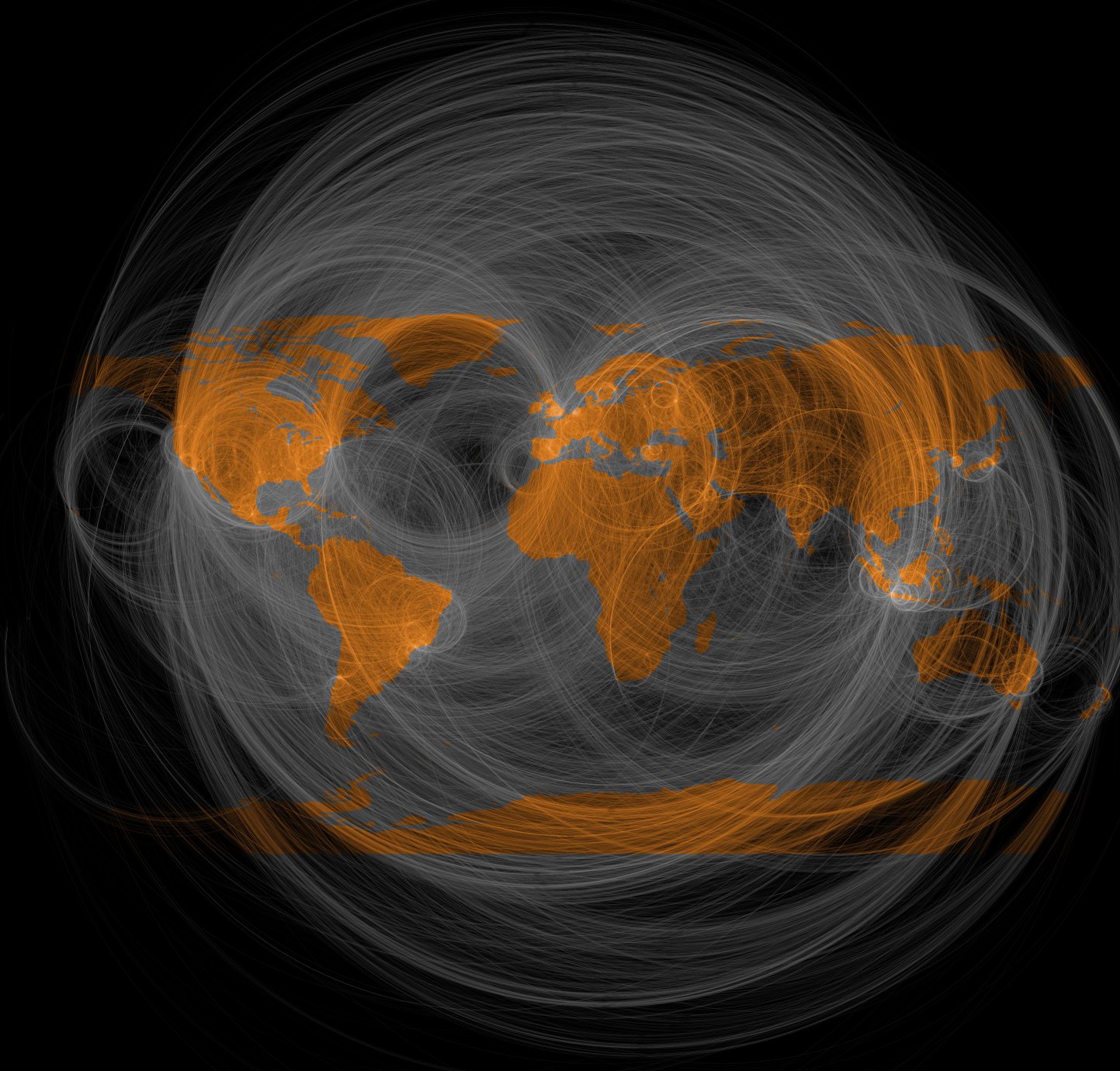
Geography of Twitter. By Eric Fischer, Washington, DC

And what of care and affection; are we to suppose that our world as comprising love is any the lesser or greater than others? Ought we to suppose the human instinct to loving solicitude is greater than that of our fellow creatures? Who amongst us knows what human love is as distinct from other forms of animal love, and whether it is qualitatively superior? Am I so arrogant as to suggest my altruistic benevolence is any the greater than that of my pet Border Collie, for it seems far from being so? If I am unable to define precisely what constitutes this world aspect, how am I to know that those of other animals are not simulacra of my own, there being no original and authentic love-world other than the one as represented by the many – is this not a truth hard to refute? I may describe a personal world of felt affection, yet in doing so prescribe but a figure of speech alone, a synecdoche for all worlds inhabited perhaps by most beings of sentience.

My little world is forged at the interface between psyche and otherness, between ideas and the world as impressed upon my senses. Those impressions and the precise nature of that otherness differ in every detail from the next person’s, yet the means of forging are identical. This shared action results in distinct narratives of course, and it is these that are held to in our bids to assert the pre-eminence of individuality over commonality. I want to believe I am, if not special, then unique; yet that is only true in the differing stories of what I am and what my little world is. To those without privilege to my narratives of self and world, my assumed mantle of uniqueness is meaningless, and the same is true of theirs to me. We may here be at a cold and sterile juncture, yet it also is a starting point from which we may begin to introduce the binding agents of humankind – our innate qualities of kindness and compassion, of empathic understanding.

So what, why should I care about such ideas when I have altogether more pressing concerns? What is the point in abstracting notions such as these from the warp and weft of daily living, the place where I earn my crust, feed my children, and work on my betterment as a means of personal fulfilment? Perhaps the answer lies somewhat starkly in the evidence, and which seems to me to be in a state of constant deterioration. We live in a polarised world, where theists fight theists and atheists argue against both, where the wealthy seldom flinch in their impoverishment of others, and where power-hungry and psychopathic leaders crush the potential of all they have dominion over. Is it not time to find our common humanity, or even our common animality? We humans are destroying our sole environment; we are chasing down the darkening corridors of economic systems at the point of failure. Can we not rest awhile so as to perceive our little worlds as one?

ooOOoo

My sense is that for quite a few readers who read yesterday’s and today’s postings, they were not the easiest read that has been seen on Learning from Dogs. But in a world where the dumbing down of the English vocabulary seems ever more present, to read Hariod’s essay slowly and carefully, and let the deeper meanings of her arguments settle within the mind, is a profound and compelling reminder of the beauty and elegance of the English language.

This introspective mood continues tomorrow: you have been warned!

Alone in a sea of many

A few days of inner contemplation.

I suspect that many, if not most, originally came to this place expecting the blog to be directly about dogs. And, in many instances, the posts are directly about canis lupus familiaris. But the original idea behind choosing the blog name Learning from Dogs was the sense that we, as in mankind, have to change our ways if we are to offer our grandchildren a viable planet upon which they may live. More succinctly expressed in The Vision for this blog:

Our children require a world that understands the importance of faith, integrity and honesty,

Learning from Dogs will serve as a reminder of the values of life and the power of unconditional love – as so many, many dogs prove each and every day,

Constantly trying to get to the truth …

The power of greater self-awareness and faith; faith that the only way forward for us is through the truth …

If you have read this far you may be wondering if the old guy has lost yet another marble!

So what has prompted this introspection? I’ll tell you.

I subscribe to Hariod Brawn’s blogsite Contentedness.net For those that do not know Hariod’s writings then her About page offers (in part):

We’re here to discuss aspects of human well-being as they relate to our sense of self, our personal identity and whatever other notions we may hold for our own uniquely human sense of being. This means the discussion centres upon the pragmatic or real-life dimensions of experience – things like our sense of contentedness, of personal meaningfulness, and other tangibly perceived aspects of well-being. The discussion is positive, respectful, non-judgemental, considerate.

That, as you can see, resonates very much with me thinking of Learning from Dogs as a means, metaphorically so, of finding greater self-awareness.

On June 10th, Hariod published the first part of an essay called Synecdoche: Little Person. I found the essay extraordinarily interesting and wanted to share it with you in this place. Hariod generously gave me permission, so here is Part One.

ooOOoo

Synecdoche (Part One): Little Person

Hariod1

I am just a little person, one person in a sea of many little people who are not aware of me, yet each potentially a simultaneous understanding of the other; each, in a sense, a simulacrum or synecdoche for all others: if I understand myself sufficiently deeply, then in that moment I understand the other, however remote my presence to them. This is not to say I can appreciate their specific complexities, of course, and the detail, the true intricacy of any given life, remains forever removed from that quota of awareness I am privileged to. Each little person, tagged with their own unique package of characteristics, is still a synecdoche though, potentially at least, for all the little people out in the sea of otherness. The word means literally ‘take with something else’, so conveying the idea that even a partial representation alone is sufficient to apprehend the whole, or vice versa.

This sounds rather fanciful to the contemporary mind, conditioned as it is in a belief as to the total, inarguable individuality of each little person. What an appealing belief this is too, for this same little person here finds a seemingly plausible counter to a reluctantly intuited sense of homogeneity, which word itself derives from the Greek ‘homogene’, meaning ‘of the same kind’: Homo Sapiens. Even though each of the little person’s internal organs are replaceable with those fished from the sea of many little people, even though their blood, hair, bones, limbs, eyes and hands can be substituted with biological or manufactured alternatives, still the little person resists the evidence, demanding their status as a uniquely enduring entity. It is of course the mind itself that insists upon countering the intuited and actual homogeneity, and the mind, so the little person believes, belongs to them.

Hariod2

This raises a problem, for if the little person’s physicality is all but totally interchangeable, then at what point during this theoretical process does the supposed possessor of the mind cease to exist? When does the point arrive at which we can no longer claim the mind belongs to any little person? If we hold to Physicalism, or Hard Materialism, we assert the mind belongs, if not to the little person, then to the organ of the brain. Should we be an Eliminative Materialist, we say there is no mind, and so no such question arises. I resist these philosophical perspectives, for to me there is a non-locality of awareness, meaning it arises both within as well as about what we think of as the little person, and whilst we call this aware experience ‘mind’, I do not adhere to any Cranialism; it’s not exclusively headstuff. In accepting this, we logically must ask whether the mind is under ownership.

Ownership implies agency, or self-determination, and it is belief in this that makes the little person feel unique and autonomous, directing their life just as all others would theirs. Yet this owning agent is never verifiable other than as consciousness, for it is only ever a belief that resides within and as that consciousness. Now, all conscious displays are themselves non-local simulacra, representations of otherness that are neither the little person nor any owning agent, and which clearly may never be evidenced outside of consciousness. This means the little person is always a thought-construct, a put-up job forged by mind and subsisting in otherness but never in essence itself. Should this hypothesis obtain, then the little person is a synecdoche for the entirety of others in kind; this is because every little person, being a fabrication of mind, comes into apparent existence in an identical manner.

Hariod3

Where are we? We heard that the mind persists in countering a reluctantly intuited homogeneity of all the little persons. Further, we said the mind forges each little person as a thought-construct, and that the little person does not exist as an enduringly instantiated entity – just like a house, a car, or a computer, its parts are interchangeable. Beyond this, we learned the mind produces only conscious effects as verification of its own fabrications, and that these subsist universally for all the apparent little persons, being as they are culled from the same sea of otherness. And lastly, we found that the hypothesis as a whole demonstrates that each apparent little person is a synecdoche for the sea of many little people. So, in understanding myself sufficiently deeply, then in that moment I understand the other, which was the assertion of the opening paragraph and a challenge to the curious mind.

In the ‘Ship of Theseus’ paradox, a parallel question is raised: in replacing a wooden ship plank by plank, are the ongoing resultants still the original ship? In point of fact, only the conception itself endures across the constant transitioning. The ship, as known, is not a wooden construct; it is a thought-construct, a fixed conception presenting to any observing little person, all of whom create each the other in identical fashion. Each parallel the ship in that their structure constantly mutates whilst a sense of enduring selfhood smears out across the whole, forged in mind in homogeneous ways. Now, if the little person turns the mind in on itself reflectively, they in time realise that they must be more than a thought-construct, a belief. They see that the little person whom they believed they existed as was a synecdoche: a motif in play which in its perfectly clear seeing brings knowledge of all of its kind.

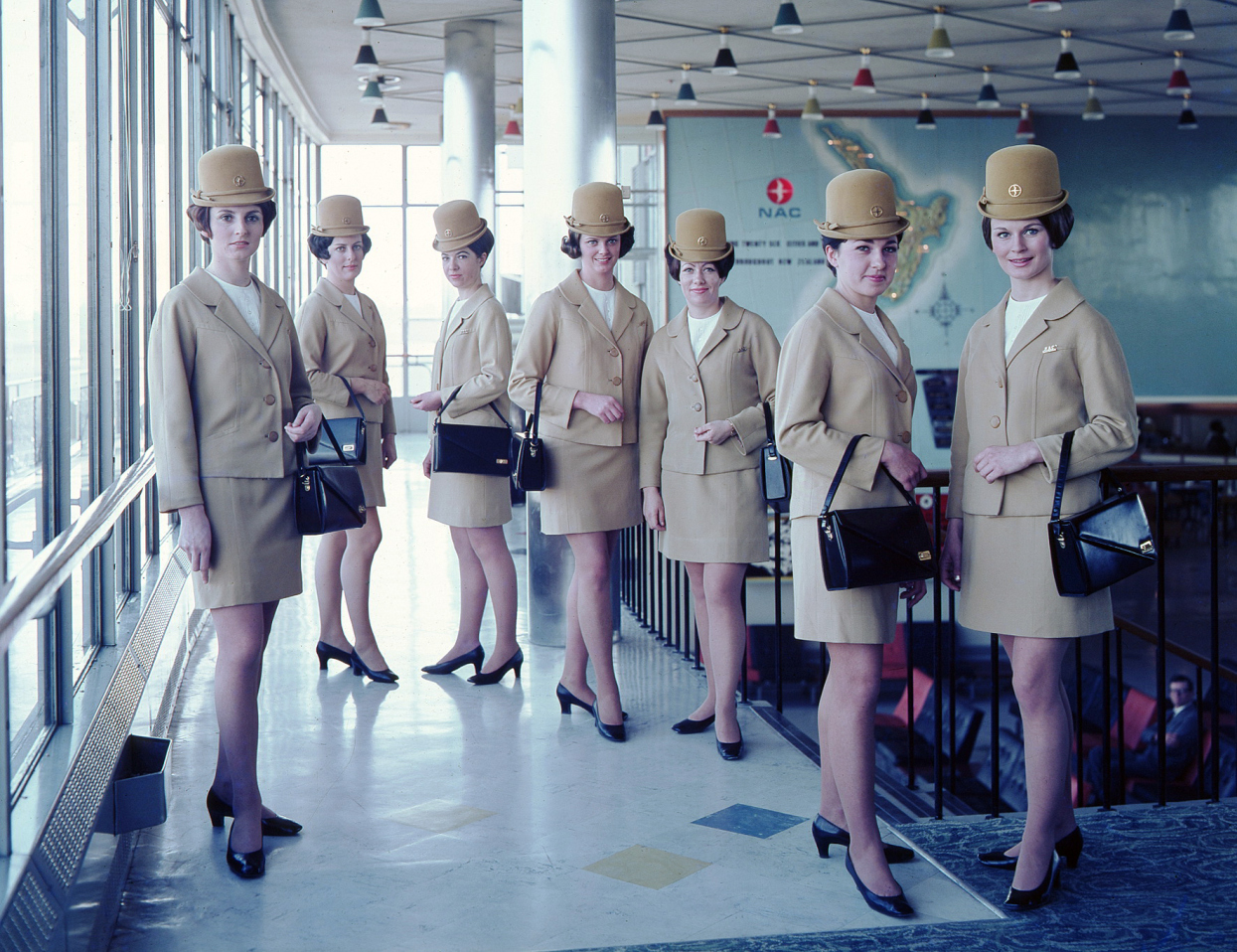
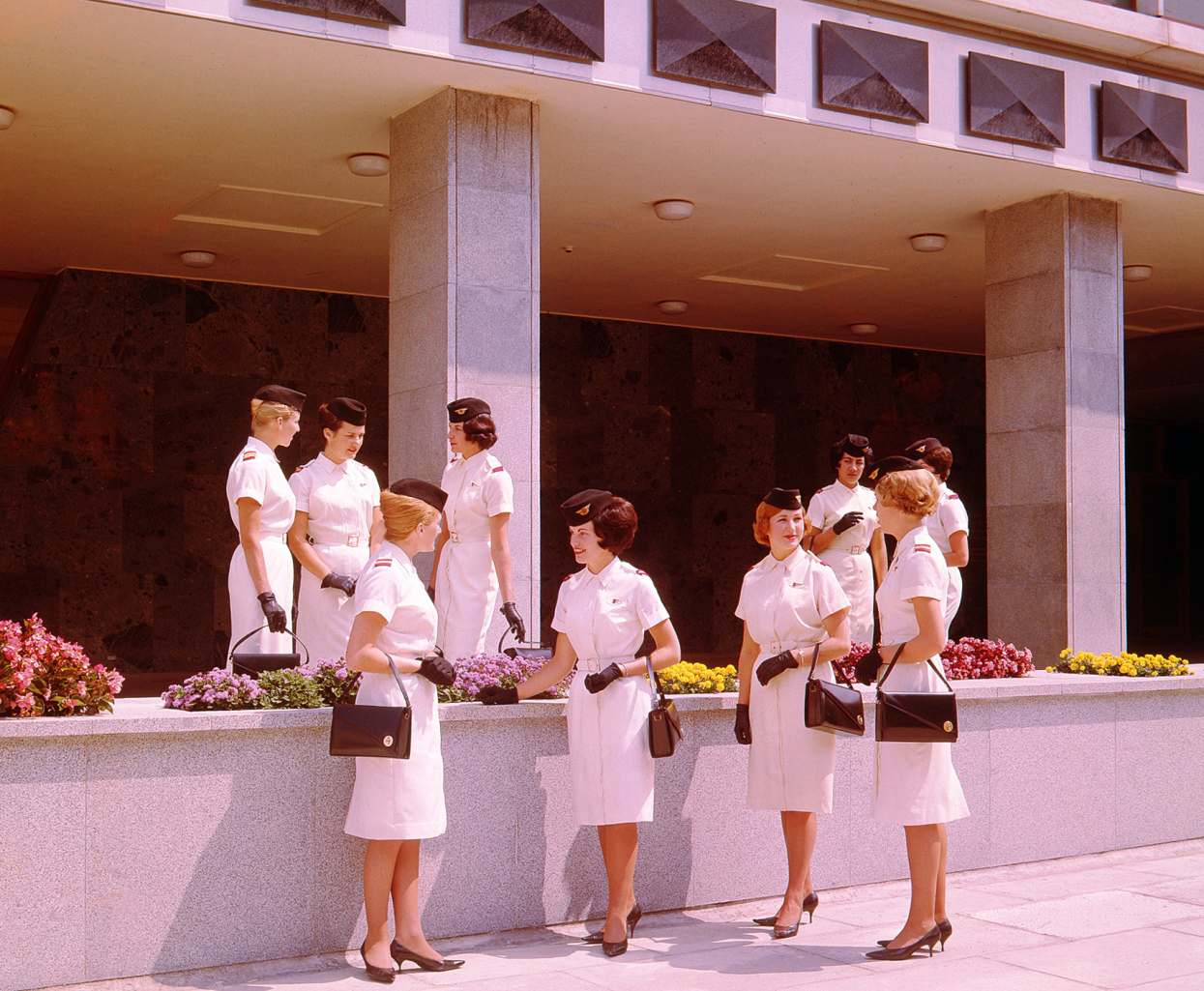
Images courtesy of New Zealand Government Archives.

ooOOoo

The concluding part of Hariod’s essay is published tomorrow.

A chance in love.

Our neighbourhood watch garage sale has Jean and me fully occupied for these next two days.

Plus much of yesterday afternoon was spent getting our ‘site’ all set up ready for today.

I have taken the opportunity of showing you two videos, one today and one tomorrow.

This was sent to me by Suzann and will melt your heart in a very big way.

►If watching the flowering of love could inspire love, then “The Story Of The Weeping Camel” would forever alter the world…

►The Story of the Weeping Camel.
Mongolian: Ингэн нулимс, Ingen nulims, “Tears of the Camel” is a 2003 German docudrama released internationally in 2004.

►During Spring, a family of nomadic shepherds in the Gobi Desert, South Mongolia, assists the births of their camel herd. The last camel to calve this season has a protracted labor that persists for two days. With the assistance and intervention of the family, a rare white bactrian camel (Camelus bactrianus) calf is born.
This is the mother camel’s first calving. Despite the efforts of the shepherds, the mother rejects the newborn, refusing it her milk and failing to establish a care-bond with it. The family resolve to secure the services of an indigenous ‘violinist’ to play the music for a Mongolian ‘Hoos’ ritual.

When repeatedly intoned the calming sounds and beautiful melody of the violin, the mother camel starts to weep, tears visibly streaming from her eyes. Immediately after the rite the mother and calf are reconciled and the calf draws milk from her teat.

►Added music: Sad Romance – Thao Nguyen Xanh

The core subject of integrity.

Integrity really is at the heart of all that we are – or it should be.

The fundamental premise behind this blog is my discovery back in 2007, when I was living in South Devon, England with Pharaoh, that dogs are creatures of integrity. As is written elsewhere in this place:

Dogs are part of the Canidae, a family including wolves, coyotes and foxes, thought to have evolved 60 million years ago.  There is no hard evidence about when dogs and man came together but dogs were certainly around when man developed speech and set out from Africa, about 50,000 years ago.  See an interesting article by Dr. George Johnson.

Because of this closeness between dogs and man, we (as in man!) have the ability to observe the way they live.  Now I’m sure that scientists would cringe with the idea that the way that a dog lives his life sets an example for us humans, well cringe in the scientific sense.  But man seems to be at one of those defining stages in mankind’s evolution where the forces bearing down on the species homo sapiens have the potential to cause very great harm.  If the example of dogs can provide a beacon of hope, an incentive to change at a deep cultural level, then the quicker we ‘get the message’, the better it will be.

Dogs:

  • are integrous ( a score of 210) according to Dr David Hawkins
  • don’t cheat or lie
  • don’t have hidden agendas
  • are loyal and faithful
  • forgive
  • love unconditionally
  • value and cherish the ‘present’ in a way that humans can only dream of achieving
  • are, by eons of time, a more successful species than man.

And have poetry written for them:

Inner Peace

If you can start the day without caffeine,

If you can always be cheerful, ignoring aches and pains,

If you can resist complaining and boring people with your troubles,

If you can eat the same food every day and be grateful for it,

If you can understand when your loved ones are too busy to give you any time,

If you can take criticism and blame without resentment,

If you can conquer tension without medical help,

If you can relax without liquor,

If you can sleep without the aid of drugs,

You are probably the family dog!

So an essay that I came across in undertaking research for ‘the book’ really struck a chord. An essay written by Stephanie Staples (see footnote), and you can learn more about her at this place.  Her essay was entitled Reflections On The Value of Integrity and is republished here with Stephanie’s very kind permission.

ooOOoo

Your Life, Unlimited

Stephanie Staples

Reflections on The Value of Integrity?

Integrity comes into play in everything we do.
In fact, it’s more than everything we do,
it’s everything we are.

Having a high level of integrity is one of the most important characteristics we can possess. It is a core value, a choice, and something we can nurture. Integrity is modeled all around us, yet its value in our society seems to be underrated.

Coming from a place of integrity means being truthful and honest. It means being reliable. It means trying to build rather than break, help rather than hurt, connect rather than crumble. Coming from a place of integrity means being authentic—the same you, whether people are watching or not.

We will not always be right or do right, but when we have integrity, we step up; we accept responsibility for our actions, we feel remorse, we have an understanding of what went wrong and why it happened so that we can put a plan in place to ensure it won’t happen again.

You know how a bad reputation follows you around? Well, the fabulous thing about living life brimming with integrity is that it actually precedes you. If you tell the truth even when you don’t have to, do the right thing even when nobody is around to notice, honestly do your best, keep your promises, etc., then that is what people will assume of you. Your actions define your character. This comes in handy so when you do make a mistake, people tend to give you the benefit of the doubt, and perhaps forgive more easily. You see how the reputation comes first? Can you see how it could work in reverse as well? If you lack integrity, people will not trust, value or respect you.

Think about how integrity plays a role in your life, in the life of your family, and in your career. Think about what sort of values you are modeling, how you are modeling them, and how you can live a life of integrity.

This could mean being honest and saying your son is 12, even if he looks 11, and 12 years olds have to pay. This may mean answering a call light of a patient who is not ‘yours.’ It might mean accommodating a request even if you don’t want to. Perhaps it is giving credit where credit is due? What might it mean to you?

If you are not getting what you want out of your life, then look inside and see exactly what’s going on in your life. I know if you focus on being a person of integrity, your character will be strengthened, your relationships at home and at work will be strengthened, and your life will be strengthened. Start by being honest and true to yourself, and the rest will follow.

One final point—it is not just the big things that count, it is the hundreds of little things we do every day that mould our character, that develop our integrity, and that help us live our lives, unlimited!


ooOOoo

Of all the qualities that we have to learn from dogs, the one of integrity is the most important, by a mile. Stephanie’s essay gets to the heart of what integrity really means in a way that I have not previously come across. I am very grateful to have been given her permission to republish it.

Footnote

Stephanie Staples New Picture

Stephanie Staples is a member of Rockford Kingsley’s Advisory Board

and is a proud Canadian coach and speaker who helps audiences

around North America shift their perspective and kick up the quality of their life!

Love is the Bridge

This fabulous world of blogging.

When I first started writing Learning from Dogs, some six years ago this coming July 15th, I didn’t have a clue. Not a clue about how addictive it would become, how eventually it would motivate me to write a book of the same name as the blog (not yet published), and, above all, what a wonderful family feeling would develop. Not only between me and my followers but also, and just as importantly, from the many wonderful blogs that I follow in turn.

One of those mutual friendships is with Val Boyco and her blog Find Your Middle Ground. Two days ago, Val published a beautiful post entitled Love is the Bridge for Understanding.

In a world that offers so many examples of everything that we don’t love, it’s a great pleasure to republish Val’s post, done so with her very kind permission. Thank you, Val.

ooOOoo

Love is the Bridge for Understanding – and Action

Posted on July 1, 2015 by Val Boyko

Valslide1

Diana over at Talk to Diana wrote a moving post today that has stayed with me. “He Deserves Better Than This” is about her father who has been in chronic back pain for years and has not received treatment to alleviate it. Diana decided that enough was enough and made several calls until she spoke to an administrator in the health service.

Diana’s intention was clear. “They know his medical history, but I wanted to tell them about the man who is my dad, who worked hard all his life, who deserves better than this; who deserves to live his last years with some enjoyment and quality of life.
Wow.

Sometimes we let ourselves think that others have our best interests in mind… And we suffer in silence. It is up to us to ensure that they understand what our needs are and support us in getting them met. (Having a caring daughter as an advocate also helps!)

So, how do we make ourselves be seen, heard and understood?

Having a good argument doesn’t cut it. Bringing all the facts to the discussion won’t either. Getting angry could also backfire.

I believe that in Diana’s case, her passion and love for her father touched the goodness inside a fellow human being. The administrator wanted to help and she did. He gets treatment on Friday. Yeah!

Love is the bridge for understanding. It moves us from being “one of them” in the eyes of another to become “us” in our common humanity and caring.

val2

Here’s an other story that touched me deeply. Daniel Gottlieb is a family therapist, psychologist and award winning radio host. Thiry years ago he survived a traumatic car accident. He is paralyzed from the neck down and gets around in a special wheelchair.

In his book The Wisdom We’re Born With he shares a personal story. While staying at a hotel on business, the manager approached him and said “I hope you are enjoying your stay”. As it turned out there had been several hurdles that he had had to overcome in order to find a room that was easily accessible and comfortable. He asked to meet with the manager the next day to go on a guided tour with him. The manager seemed sincerely interested.

Gottlieb then asked the manager “Who do you love most in the world?” The manager quickly responded “My daughter.” Gottlieb then said “Okay, could you do this before we meet tomorrow morning? Imagine your daughter is visiting your hotel…. and she is in a wheelchair.”

They did meet the next morning but there really was no need, the manager had already seen the obstacles and hurdles. He was eager for more input from Gottlieb so that he could make it right.

When we reach out with love, we touch the innate love and compassion in others. We come together in our common humanity and caring. We hear each other and understand. We are all connected by love.

And then we know what is to be done.

ooOOoo

Revealing my age, what comes immediately to mind after having read Val’s post is this song:

Lessons in contentment.

Welcome to July!

A young Pharaoh already embracing contentment. September, 2003.

Sidney Bloch, who is Emeritus Professor in Psychiatry at the University of Melbourne, recently published an essay over on the blogsite The Conversation. (Greatly recommended, by the way.)

His essay was about happiness versus contentment and certainly touched a few spots in this old Englishman’s psyche, contented as I am in this rural part of Oregon. However, until now I had never stopped to think about the difference between being happy and being contented.

So, I think you are going to enjoy Professor Bloch’s views, that now follow. His essay is republished, with permission, just as it was presented on The Conversation.

ooOOoo

Happiness is an illusion, here’s why you should seek contentment instead.

June 29, 2015 4.07pm EDT

Feeling content means having a deep-seated, abiding acceptance of oneself and one’s worth, together with a sense of self-fulfilment, meaning and purpose. James Theophane/Flickr, CC BY-SA

I want to share a personal view of what it is to be happy and how it differs from feeling content. Let me begin with a clinical story.

They met at a party; it was love at first sight just like one reads about in romantic novels. They married following an exhilarating courtship, and since they shared an eagerness to raise a family, Jennifer soon announced the joyful news of her pregnancy. They called their baby Annie after Adam’s late mother.

They felt blessed; every moment since their first encounter had been nothing but pleasurable. Everyone who knew them concurred that their lives as a couple had been replete with happiness.

Tragically, it was not to endure. Their first setback occurred only days after Annie’s birth. She was sleeping fitfully and her colic stubbornly persisted. Jennifer felt utterly demoralised as a new mother. Her mounting sense of guilt and melancholy led to her admission to a psychiatric ward (her first ever encounter with psychiatry); the fear of her harming Annie or herself spread through the family and circle of friends.

And then, quite shockingly, despite the most diligent medical and nursing care, Jennifer met her death after jumping off a second floor balcony. Her family and friends plunged into deep grief; the medical professionals who had looked after her were similarly bereft.

An elusive goal

Having worked as a psychiatrist for over four decades and got to know dozens of men, women, and children of diverse backgrounds and with unique life stories, I have witnessed many a sad narrative, although suicide has mercifully been a rare event.

These experiences, in tandem with a lifelong fascination with what makes people tick, have led me most reluctantly to the judgement that while we may savour happiness episodically, it will invariably be disrupted by unwelcome negative feelings. Still, most of humankind will continue to harbour the expectation of living happily and remain oblivious that this wishful fantasy is an unconscious way of warding off the threat of psychic pain.

Rather than confront and demoralise those who have sought my help, I have gently but honestly responded to their plaintive yearning (“all I want is just to be happy”), by highlighting an inherent human sentiment. Namely that clinging to the fiction of being able to avoid suffering and enjoying a continuing state of pleasure is tantamount to self-deception.

I have offered them the hope – but not a guarantee – that they have the potential to lead a more fulfilling life than hitherto by participating in a challenging, and at times even distressing process of self-exploration whose purpose is to enhance self understanding and acceptance of the reality-bound emotional state I call contentment.

You may retort: “But you treat people who are miserable, pessimistic and self-deprecating, surely you must be hopelessly biased.” I would readily understand your reaction but suggest that all of us, not just those in treatment, crave happiness and are repeatedly frustrated by its elusiveness.

Most of humankind continues to harbour the expectation of living happily and remains oblivious that this wishful fantasy is an unconscious way of warding off the threat of psychic pain.  Kate Ter Haar/Flickr, CC BY-SA
Most of humankind continues to harbour the expectation of living happily and remains oblivious that this wishful fantasy is an unconscious way of warding off the threat of psychic pain. Kate Ter Haar/Flickr, CC BY-SA

As the father of psychoanalysis Sigmund Freud emphasised in his 1930 essay, Civilization and Its Discontents, we are much more vulnerable to unhappiness than its opposite. That’s because we are constantly threatened by three forces: the fragility of our physical self, “doomed” by ageing and disease; the external world, with its potential to destroy us (through floods, fires, storms and earthquakes, for example); and our unpredictably complicated relationships with other people (regarded by Freud as the most painful source of unhappiness).

So, am I simply a misanthrope? I hope not but I am inclined to agree with Elbert Hubbard, the American artist and philosopher, who said, “Life is just one damn thing after another“.

We only have to think about the 50 million people who are currently displaced and unlikely to find a secure haven anytime soon, or the 2.2 billion people – including millions of children – who live on less than US$2 a day to appreciate the validity of that remark.

A better option

Given the formidable obstacles to chasing after happiness or promoting its sustainability if we are lucky enough to come by it, what options do human beings have? I have not come across any meaningful approach to this question, even from the unswervingly confident proponents of the contemporary school of positive psychology.

So, I espouse the following: given that we have the means to distinguish between happiness and contentment, we can examine how they differ and, in so doing, identify an alternative to the futile pursuit of happiness.

Happiness, derived from the Norse word hap, means luck or chance; the phrase happy-go-lucky illustrates the association. Many Indo-European languages similarly conflate the feeling of happiness and luck. Glück in German, for instance, can be translated as either happiness or chance, while eftihia, the Greek word for happiness, is derived from ef, meaning good, and tixi, luck or chance.

Thus, a mother may have the good fortune to feel ecstatic when responding to her infant’s playfulness, only to see it evaporate a couple of years later and be replaced by the initial features of autism. In the story we started this article with, Jennifer may have persevered had her baby slept peacefully and not been assailed by colicky pain in her first few weeks of life.

Contentment is derived from the Latin contentus and usually translated as satisfied. No multiple meanings here to confuse us. In my view, feeling content refers to a deep-seated, abiding acceptance of one’s self and one’s worth together with a sense of self-fulfilment, meaning and purpose.

And, most critically, these assets are valued and nurtured whatever the circumstances, or even especially when they are distressing or depressing.I have had the privilege of knowing men and women who suffered grievously as children in the ghettoes and concentration camps of Nazi Europe but emerged from their nightmare to face the challenge of seeking strengths, emotional and spiritual, within themselves. With the passage of time, many succeeded in achieving a sense of deep-seated contentment.

What these survivors have clearly demonstrated is that accepting and respecting oneself, coupled with determining what is personally meaningful, stand a greater chance of accomplishment, even if never completed, than a relentless and ultimately futile pursuit of happiness. What’s more, contentment has the potential to serve as a robust foundation upon which episodes of joy and pleasure can be experienced and cherished.

ooOOoo

I read the essay on The Conversation out aloud to Jeannie yesterday morning and we both found it a very wise and insightful reflection.

Seems to me that there’s another aspect of life that we could learn from our wonderful dogs!

Hazle and Cleo demonstrating mutual contentment!

The Joy of Caring.

Things prosper when cared for and loved.

This is a repost of what appeared over on Alex Jones’ blog Liberated Way last Thursday. It resonated so wonderfully with all the young plants and trees around us here at home in Merlin, and the numerous oak saplings making their way into the world! Republished with Alex’s kind permission.

ooOOoo

Things prosper when cared for!

The joy of caring for something.

These oak saplings prosper because of care.

Today, I moved my eight oak saplings into the full sun, added a new layer of quality compost to their pots, and watered them. In their second year of life these oak saplings prosper because of care.

Caring for something means one must pay attention to the small details. For instance, I remove the caterpillars from the oak leaves, and the weeds that grow in the pots. If I did not concentrate on the small details, the little problems could grow into larger problems, the caterpillars destroying the oak saplings, the weeds stealing their nutrients in the pots.

Also, the individual spends time on the thing cared about, establishing regular activities, such as in my case, watering the oak saplings every few days. The individual looks for ways that the cared for thing might benefit, just as I moved my oak saplings into the full sun, added new compost to them, and infected them with a type of symbiotic fungus that aids oak sapling growth.

The thing cared for becomes special, for instance there are millions of oak trees in Britain, but only eight of those, my saplings, are special to me. In such a caring relationship, both sides come to depend upon the other. My oak saplings need my care and attention to survive, I need my oak saplings to feel good about myself when life is hard.

If the individual has nothing to care for, their life becomes empty and meaningless. I love the book by Antoine De Saint-Exupery called The Little Prince, which explores ideas around friendship and caring for things. In The Little Prince is the following beautiful quote:

You are beautiful, but you are empty. One could not die for you. To be sure, an ordinary passerby would think that my rose looked just like you — the rose that belongs to me. But in herself alone she is more important than all the hundreds of you other roses: because it is she that I have watered; because it is she that I have put under the glass globe; because it is she that I have sheltered behind the screen; because it is for her that I have killed the caterpillars; because it is she that I have listened to, when she grumbled, or boasted, or even sometimes when she said nothing. Because she is my rose.”

ooOOoo

Can’t recommend too highly you dropping in on Alex’s blog Liberated Way – even signing up as a ‘follower’!

My tribute to Pharaoh

Pharaoh has been my dearest companion every day for these last 12 years.

I’m choosing today to recognise what Pharaoh has meant to me since I took him in my arms, both literally and emotionally, in August, 2003.

Pharaoh, nine months old.

oooo

The story of a great dog!

Pharaoh, as of yesterday afternoon!
Pharaoh, as of 25th March, 2013.

The biggest, single reward of having Pharaoh as my friend goes back quite a few years.  Back to when I was living in Devon, South-West England, and to the time when Jon Lavin and I used to spend hours talking together.  Pharaoh was always contentedly asleep in the same room as Jon and me.

It was Jon who introduced me to Dr. David Hawkins and his Map of Consciousness. It was also Jon, who one day when looking down at the sleeping Pharaoh, pointed out that Dr. Hawkins offered evidence that dogs are creatures of integrity with a ‘score’ on that Map of between 205 and 210. (Background is here.)

So this blog, Learning from Dogs, and me writing a book of the same name flow from that awareness of what dogs mean to us humans and what Pharaoh specifically means to me.  No, more than that!  As a result of that mix of Jon, Dr. David Hawkins, experiencing unconditional love from an animal living with me day-in, day-out, came a journey into myself.  From that journey came the self-awareness that allowed me truly to like who I was, to be openly loved by this dog of mine, and be able to love openly in return.  As is said: “You cannot love another until you love yourself.

Trying to pick out a single example of the bond that Pharaoh and I have had is practically impossible.  I have to rely on photographs to remind me of the thousands of times that a simple look or touch between Pharaoh and me ‘speaks’ to me in ways that words fail. Here’s an extract from my celebration of Pharaoh’s tenth birthday in June, 2013. It perfectly illustrates the friendship bond between us.

oooo

For many years I was a private pilot and in later days had the pleasure, the huge pleasure, of flying a Piper Super Cub, a group-owned aircraft based at Watchford Farm in South Devon.  The aircraft, a Piper PA-18-135 Super Cub, was originally supplied to the Dutch Air Force in 1954 and was permitted by the British CAA to carry her original military markings including her Dutch military registration, R-151, although there was a British registration, G-BIYR, ‘underneath’ the Dutch R-151.  (I wrote more fully about the history of the aircraft on Learning from Dogs back in August 2009.)

Piper Cub R151
Piper Cub R151

Anyway, every time I went to the airfield with Pharaoh he always tried to climb into the cockpit.  So one day, I decided to see if he would sit in the rear seat and be strapped in.  Pharaoh had absolutely no problem with that!

Come on Dad, let's get this thing off the ground!
Come on Dad, let’s get this thing off the ground!

My idea had been to fly a gentle circuit in the aircraft.  First, I did some taxying around the large grass airfield that is Watchford to see how Pharaoh reacted.  He was perfectly behaved.

But then I thought long and hard about taking Pharaoh for a flight.  In the Cub there is no autopilot so if Pharaoh struggled it would have been almost impossible to fly the aircraft and cope with Pharaoh.  So, in the end, I abandoned the idea of taking him for a flight.  The chances are that it would have been fine.  But if something had gone wrong, the outcome just didn’t bear thinking about.

So we ended up motoring for 30 minutes all around the airfield which, as the next picture shows, met with doggie approval.  The date was July 2006.

That was fun!
That was fun!

oooo

Moving on again.  This time to another flying experience.  To the day when Pharaoh and I flew out of London bound for Los Angeles and a new life with Jeannie and all her dogs (16 at that time) down in San Carlos, Sonora, Mexico.  The date: September 15th, 2008.  Just ten months after I had met Jean in Mexico and realised that this was the woman that I was destined to love! (Now you will understand why earlier on I described the Jon Lavin, Dr. Hawkins, Pharaoh mix as the biggest, single reward of having Pharaoh as my friend!)

There followed wonderful happy days for me and Pharaoh.  It was gorgeous to see how Pharaoh became so much more a dog, if that makes sense, from having his own mini-pack around him.  Those happy days taking us all forwards to Payson, AZ, where Jean and I were married, and then on to Merlin, Oregon arriving here in October, 2012.

Fr. Dan Tantimonaco with the newly weds!

oooo

Pharaoh 'married' to his dearest friends. December, 2013.
Pharaoh ‘married’ to his dearest friends in Oregon. December, 2013.

oooo

Perfect closeness. Pharaoh and Cleo with Hazel in the middle.  Taken yesterday.
Smelling the flowers! Pharaoh and Cleo with Hazel in the middle.

I could go on!  Hopefully, you get a sense, a very strong sense, of the magical journey that both Pharaoh and I have experienced since I first clasped him in my arms back in September, 2003.

Both Pharaoh and I are in the Autumn of our lives; he has just turned 12, I am now 70, and we both creak a little. But so what! Pharaoh has been my greatest inspiration of the power of unconditional love; of the need to smell the flowers in this short life of ours.

One very great animal! (March 25th, 2014)

Thank you, my dear, dear friend!

Can’t close today’s tribute without adding one last photograph of this great dog; a photograph of Pharaoh greeting Cleo, back in 2012.

First meeting between Pharaoh and Cleo; April 7th, 2012.

Nor can I close without including a quotation from the author, Suzanne Clothier:

“There is a cycle of love and death that shapes the lives of those who choose to travel in the company of animals. It is a cycle unlike any other. To those who have never lived through its turnings or walked its rocky path, our willingness to give our hearts with full knowledge that they will be broken seems incomprehensible. Only we know how small a price we pay for what we receive. Our grief, no matter how powerful it may be, is an insufficient measure of the joy we have been given.

Writing in his essay, “The Once Again Prince,” animal lover and gifted writer Irving Townsend summed it up:

We who choose to surround ourselves with lives even more temporary than our own, live within a fragile circle easily and often breached. Unable to accept its awful gaps, we still would live no other way. We cherish memory as the only certain immortality, never fully understanding the necessary plan. It is a fragile circle. But it goes round and round without end.”