Category: People

Afraid of the light!

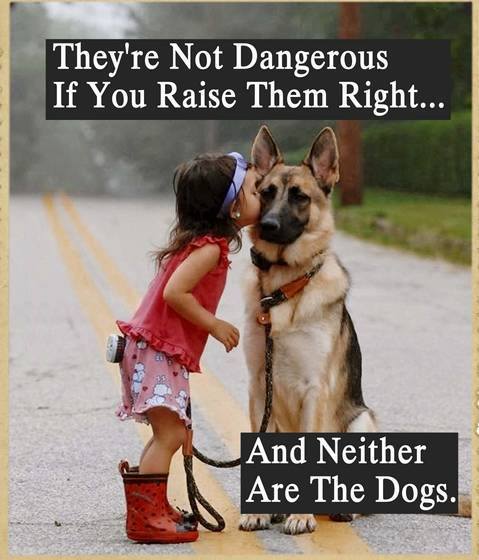
Back to learning from our wonderful dogs.

Last week, on the 9th to be exact, I published a post under the title of What a funny lot we all are! The thrust of that post was the republication of a recent Tom Dispatch essay by Michael Klare: Tipping Points and the Question of Civilizational Survival. Professor Michael T. Klare is professor of peace and world security studies at Hampshire College and the author, most recently, of The Race for What’s Left. Those who read his essay will have found it a gloomy report on the future of mankind on this planet.

Back to my sub-title.

One of the golden pieces of advice for all of us who succumb to a fear of the future is to live in the present. Living in the now, in the present, is what our dogs do so very well, and it is a fabulous example for us humans. Because there is such a volume of news about so many things going wrong in our world, that it is easy to become overly negative, possibly to the point of causing us ill health, for there is strong link between mind and body.

When circumstances actually do change then dogs are incredibly quick to adapt to those changed times. Dogs, however, do not worry about the future.

All of which is my preamble to an essay that was published under The Conversation header on Sunday. It was an essay by Melanie Randle, and the link goes to a page that offers:

Melanie is an Associate Professor of Marketing in the School of Management, Operations and Marketing in the Faculty of Business at the University of Wollongong. Her primary research areas are social and non-profit marketing, particularly in the areas of volunteering and foster care. Other research interests include marketing to children, obesity and gambling.

That profile doesn’t give much of a heads-up to the theme of her essay. That theme, to my way of thinking, is that right now change is underway. A change in the awareness of people that change has to take place.

Which is why I chose part of a saying attributed to Plato for the title to this post. The full saying being:

We can easily forgive a child who is afraid of the dark; the real tragedy of life is when men are afraid of the light.

So to Melanie’s essay.

ooOOoo

Many fear the worst for humanity, so how do we avoid surrendering to an apocalyptic fate?

Melanie Randle, October 11, 2015

A new, four-nation study has found people rate the risks of global threats to humanity surprisingly high. These perceptions are likely to be important, socially and politically, in shaping how humanity responds to the threats.

The study, of more than 2000 people in the US, UK, Canada and Australia, found:

  • 54% of people surveyed rated the risk of our way of life ending within the next 100 years at 50% or greater;
  • almost one in four (24%) rated the risk of humans being wiped out within a century at 50% or greater;
  • almost three in four (73%) believe there is a 30% or greater risk of our way of life ending (30% said that the risk is 70% or more); and
  • almost four in ten (39%) believe there is a 30% or greater danger of humanity being wiped out (10% said the risk is 70% or more).

Perceptions of risks to way of life and humanity by country

Percentage support for propositions that existing way of life and humanity have a 50% or more chance of ending in a century. University of Wollongong, Author provided

The study also asked people about different responses to the threats. These responses were categorised as nihilism (the loss of belief in a social or moral order; decadence rules), fundamentalism (the retreat to certain belief; dogma rules), or activism (the transformation of belief; hope rules). It found:

  • a large majority (78%) agreed “we need to transform our worldview and way of life if we are to create a better future for the world” (activism);
  • about one in two (48%) agreed that “the world’s future looks grim so we have to focus on looking after ourselves and those we love” (nihilism); and
  • more than one in three (36%) said “we are facing a final conflict between good and evil in the world” (fundamentalism).

Findings were similar across countries, age, sex and other demographic groups, although some interesting differences emerged. For example, more Americans (30%) believed the risk of humans being wiped out was high and that humanity faces a final conflict between good and evil (47%). This presumably reflects the strength in the US of Christian fundamentalism and its belief in the “end time”, a coming Apocalypse.

Perceptions of risk to way of life and humanity by generation

Percentage support for propositions that existing way of life and humanity have a 50% or more chance of ending in a century. University of Wollongong, Author provided

A world of threats coming to a head

There is mounting scientific evidence and concern that humanity faces a defining moment in history – a time when it must address growing adversities or suffer grave consequences. Reputable journals are canvassing the possibilities; the new study will be published in a special issue of Futures on “Confronting catastrophic threats to humanity”.

Most focus today is on climate change and its many, potentially catastrophic, impacts. Other threats include depletion and degradation of natural resources and ecosystems; continuing world population growth; disease pandemics; global economic collapse; nuclear and biological war and terrorism; and runaway technological change.

Many of these threats are not new. Scientists and other experts have warned of the dangers for decades. Nevertheless, the evidence is growing stronger, especially about climate change, and never before have actual events, including natural disasters and calamities, and their sustained and graphic media coverage so powerfully reinforced the possible impacts.

Not surprisingly, then, surveys reveal widespread public pessimism about the future of the world, at least in Western countries. This includes a common perception of declining quality of life, or that future generations will be worse off.

However, there appears to have been little research into people’s perceptions of how dire humanity’s predicament is, including the risk of collapse of civilisation or human extinction. These perceptions have a significant bearing on how societies, and humanity as a whole, deal with potentially catastrophic futures.

How does loss of faith in the future affect us?

People’s responses in our study do not necessarily represent considered assessments of the specific risks. Rather, they are likely to be an expression of a more general uncertainty and fear, a loss of faith in a future constructed around notions of material progress, economic growth and scientific and technological fixes to the challenges we face.

This loss of faith is important, yet hardly registers in current debate and discussion. We have yet to understand its full implications.

At best, the high perception of risk and the strong endorsement of an activist response could drive a much greater effort to confront global threats. At worst, with a loss of hope, fear of a catastrophic future erodes people’s faith in society, affecting their roles and responsibilities, and their relationship to social institutions, especially government.

It can deny us a social ideal to believe in – something to convince us to subordinate our own individual interests to a higher social purpose.

There is a deeply mythic dimension to this situation. Humans have always been susceptible to apocalyptic visions, especially in times of rapid change; we need utopian ideals to inspire us.

Our visions of the future are woven into the stories we create to make sense and meaning of our lives, to link us to a broader social or collective narrative. Historians and futurists have emphasised the importance of confidence and optimism to the health of civilisations and, conversely, the dangers of cynicism and disillusion.

Despite increasing political action on specific issues like climate change, globally the scale of our response falls far short of matching the magnitude of the threats. Closing this gap requires a deeper understanding of how people perceive the risks and how they might respond.

This article was co-authored by Richard Eckersley, founding director of Australia21.

ooOOoo

Now there’s nothing in the essay from Randle and Eckersley to say that these are not critically important times for all of humanity. Yet, I detect that among the many people one meets on a day-to-day basis there is a growing understanding that we can’t just lie down and let the future ride on over us. That living in the present and responding to the world around us here and now is the healthiest way to be, and the most effective. No more powerfully expressed than by Thich Nhat Hanh

“Fear keeps us focused on the past or worried about the future. If we can acknowledge our fear, we can realize that right now we are okay. Right now, today, we are still alive, and our bodies are working marvelously. Our eyes can still see the beautiful sky. Our ears can still hear the voices of our loved ones.”

Saturday serenity.

If you don’t care for yourself, then you can not care for others.

This beautiful Tao Wisdom was published over on Find Your Middle Ground, Val Boyko’s blogsite, and is republished here with Val’s very kind permission.

ooOOoo

night-and-day

Knowing the world is intelligent.
Knowing yourself is enlightenment.

Bending the world to your will takes force.
Willing yourself to bend is true strength.

Succeeding in the world yields riches.
Being content with what is yields wealth.

Apply Tao to the physical world and you will have a long life.
See past the physical world to the enduring presence of Tao and death will lose its meaning.

Lao Tzu*

This is one of my favorite passages from the Tao Te Ching.
May it enrich the whole of you and your day. ☯

*Braun Jr., John; Tzu, Lao; von Bargen, Julian; Warkentin, David (2012-12-02). Tao Te Ching (Kindle Locations 492-498). . Kindle Edition.

ooOOoo

May you, and all your friends and loved ones, including your beautiful animals, have a very contented weekend, extending forever more!

What a funny lot we all are!

We must constantly remind ourselves that we are the servants of Nature, not the other way around!

There is only one species of creature on this planet that has the power to destroy its own species, and much else: Homo sapiens!

It’s such an obvious reflection, yet it is also such an incredibly difficult commitment to make. I am speaking of the commitment to do more than “tut, tut” but to make a real difference in how each of us live, ensuring that we are making real changes year by year.

I am being little more than a “smart arse” in saying we should learn from dogs to live in harmony with our planet because, in truth, this is the one key area where we can’t learn from our dogs: we each have to learn for ourselves and influence others to do the same.

All of which is my way of introducing a very recent essay from Tom Dispatch. It now follows, but be aware that there were simply too many links to recreate in my republished version. It is republished with the very kind permission of Tom Engelhardt.

ooOOoo

Tomgram: Michael Klare, Tipping Points and the Question of Civilizational Survival

Posted by Michael Klare at 8:00am, October 8, 2015.

In mid-August, TomDispatch’s Michael Klare wrote presciently of the oncoming global oil glut, the way it was driving the price of petroleum into the “energy subbasement,” and how such a financial “rout,” if extended over the next couple of years, might lead toward a new (and better) world of energy. As it happens, the first good news of the sort Klare was imagining has since come in. In a country where the price of gas at the pump now averages $2.29 a gallon (and in some places has dropped under $1.90), Big Oil has begun cutting back on its devastating plans to extract every imaginable drop of fossil fuel from the planet and burn it. Oil companies have also been laying off employees by the tens of thousands and deep-sixing, at least for now, plans to search for and exploit tar sands and other “tough oil” deposits worldwide.

In that context, as September ended, after a disappointing six weeks of drilling, Royal Dutch Shell cancelled “for the foreseeable future” its search for oil and natural gas in the tempestuous but melting waters of the Alaskan Arctic. This was no small thing and a great victory for an environmental movement that had long fought to put obstacles in the way of Shell’s exploration plans. Green-lighted by the Obama administration to drill in the Chukchi Sea this summer, Shell has over the last nine years sunk more than $7 billion into its Arctic drilling project, so the decision to close up shop was no small thing and offers a tiny ray of hope for what activism can do when reality offers a modest helping hand.

As Klare makes clear today, when it comes to the burning of fossil fuels, reality — if only we bother to notice it — is threatening to offer something more like the back of its hand to us on this embattled planet of ours. He offers a look at a future in which humanity, like various increasingly endangered ecosystems including the Arctic, may be approaching a “tipping point.” Tom

Welcome to a New Planet

Climate Change “Tipping Points” and the Fate of the Earth

By Michael T. Klare

Not so long ago, it was science fiction. Now, it’s hard science — and that should frighten us all. The latest reports from the prestigious and sober Intergovernmental Panel on Climate Change (IPCC) make increasingly hair-raising reading, suggesting that the planet is approaching possible moments of irreversible damage in a fashion and at a speed that had not been anticipated.

Scientists have long worried that climate change will not continue to advance in a “linear” fashion, with the planet getting a little bit hotter most years. Instead, they fear, humanity could someday experience “non-linear” climate shifts (also known as “singularities” or “tipping points”) after which there would be sudden and irreversible change of a catastrophic nature. This was the premise of the 2004 climate-disaster film The Day After Tomorrow. In that movie — most notable for its vivid scenes of a frozen-over New York City — melting polar ice causes a disruption in the North Atlantic Current, which in turn triggers a series of catastrophic storms and disasters. At the time of its release, many knowledgeable scientists derided the film’s premise, insisting that the confluence of events it portrayed was unlikely or simply impossible.

Fast forward 11 years and the prospect of such calamitous tipping points in the North Atlantic or elsewhere no longer looks improbable. In fact, climate scientists have begun to note early indicators of possible catastrophes.

Take the disruption of the North Atlantic Current, the pivotal event in The Day After Tomorrow. Essentially an extension of the Gulf Stream, that deep-sea current carries relatively warm salty water from the South Atlantic and the Caribbean to the northern reaches of the Atlantic. In the process, it helps keep Europe warmer than it would otherwise be. Once its salty water flows into sub-Arctic areas carried by this prolific stream, it gets colder and heavier, sinks to lower depths, and starts a return trip to warmer climes in the south where the whole process begins again.

So long as this “global conveyor belt” — known to scientists as the Atlantic Meridional Overturning Circulation, or AMOC — keeps functioning, the Gulf Stream will also continue to bring warmer waters to the eastern United States and Europe. Should it be disrupted, however, the whole system might break down, in which case the Euro-Atlantic climate could turn colder and more storm-prone. Such a disruption might occur if the vast Greenland ice sheet melts in a significant way, as indeed is already beginning to happen today, pouring large quantities of salt-free fresh water into the Atlantic Ocean. Because of its lighter weight, this newly introduced water will remain close to the surface, preventing the submergence of salty water from the south and so effectively shutting down the conveyor belt. Indeed, exactly this process now seems to be underway.

By all accounts, 2015 is likely to wind up as the hottest year on record, with large parts of the world suffering from severe heat waves and wildfires. Despite all this, however, a stretch of the North Atlantic below Iceland and Greenland is experiencing all-time cold temperatures, according to the National Oceanic and Atmospheric Administration. What explains this anomaly? According to scientists from the Potsdam Institute for Climate Impact Research and Pennsylvania State University, among other institutions, the most likely explanation is the arrival in the area of cold water from the Greenland ice sheet that is melting ever more rapidly thanks to climate change. Because this meltwater starts out salt-free, it has remained near the surface and so, as predicted, is slowing the northern advance of warmer water from the North Atlantic Current.

So far, the AMOC has not suffered a dramatic shutdown, but it is slowing, and scientists worry that a rapid increase in Greenland ice melt as the Arctic continues to warm will pour ever more meltwater into the North Atlantic, severely disrupting the conveyor system. That would, indeed, constitute a major tipping point, with severe consequences for Europe and eastern North America. Not only would Europe experience colder temperatures on an otherwise warmer planet, but coastal North America could witness higher sea levels than those predicted from climate change alone because the Gulf Stream tends to pull sea water away from the eastern U.S. and push it toward Europe. If it were to fail, rising sea levels could endanger cities like New York and Boston. Indeed, scientists discovered that just such a slowing of the AMOC helped produce a sea-level rise of four inches from New York to Newfoundland in 2009 and 2010.

klarepbk2012

In its 2014 report on the status of global warming, the IPCC indicated that the likelihood of the AMOC collapsing before the end of this century remains relatively low. But some studies suggest that the conveyor system is already 15%-20% below normal with Greenland’s melting still in an early stage. Once that process switches into high gear, the potential for the sort of breakdown that was once science fiction starts to look all too real.

Tipping Points on the Horizon

In a 2014 report, “Impacts, Adaptation, and Vulnerability,” Working Group II of the IPCC identified three other natural systems already showing early-warning signs of catastrophic tipping points: the Arctic, coral reefs, and the Amazonian forest. All three, the report suggested, could experience massive and irreversible changes with profound implications for human societies.

The Arctic comes in for particular scrutiny because it has experienced more warming than any other region on the planet and because the impact of climate change there is already so obvious. As the report put it, “For the Arctic region, new evidence indicates a biophysical regime shift is taking place, with cascading impacts on physical systems, ecosystems, and human livelihoods.”

This has begun with a massive melt of sea ice in the region and a resulting threat to native marine species. “For Arctic marine biota,” the report notes, “the rapid reduction of summer ice covers causes a tipping element that is now severely affecting pelagic [sub-surface] ecosystems as well as ice-dependent mammals such as seals and polar bears.” Other flora and fauna of the Arctic biome are also demonstrating stress related to climate change. For example, vast areas of tundra are being invaded by shrubs and small trees, decimating the habitats of some animal species and increasing the risk of fires.

This Arctic “regime shift” affects many other aspects of the ecosystem as well. Higher temperatures, for instance, have meant widespread thawing and melting of permafrost, the frozen soil and water that undergirds much of the Arctic landmass. In this lies another possible tipping-point danger, since frozen soils contain more than twice the carbon now present in the atmosphere. As the permafrost melts, some of this carbon is released in the form of methane, a potent greenhouse gas with many times the warming potential of carbon dioxide and other such gases. In other words, as the IPCC noted, any significant melting of Arctic permafrost will “create a potentially strong positive feedback to accelerate Arctic (and global) warming.” This, in fact, could prove to be more than a tipping point. It could be a planetary catastrophe.

Along with these biophysical effects, the warming of the Arctic is threatening the livelihoods and lifestyles of the indigenous peoples of the region. The loss of summer sea ice, for example, has endangered the marine species on which many such communities depend for food and the preservation of their cultural traditions. Meanwhile, melting permafrost and coastal erosion due to sea-level rise have threatened the very existence of their coastal villages. In September, President Obama visited Kotzebue, a village in Alaska some 30 miles above the Arctic Circle that could disappear as a result of melting permafrost, rising sea levels, and ever bigger storm surges.

Coral Reefs at Risk

Another crucial ecosystem that’s showing signs of heading toward an irreversible tipping point is the world’s constellation of coral reefs. Remarkably enough, although such reefs make up less than 1% of the Earth’s surface area, they house up to 25% of all marine life. They are, that is, essential for both the health of the oceans and of fishing communities, as well as of those who depend on fish for a significant part of their diet. According to one estimate, some 850 million people rely on coral reefs for their food security.

Corals, which are colonies of tiny animals related to sea anemones, have proven highly sensitive to changes in the acidity and temperature of their surrounding waters, both of which are rising due to the absorption of excess carbon dioxide from the atmosphere. As a result, in a visually dramatic process called “bleaching,” coral populations have been dying out globally. According to a recent study by the Worldwide Fund for Nature, coral reef extent has declined by 50% in the last 30 years and all reefs could disappear as early as 2050 if current rates of ocean warming and acidification continue.

“This irreversible loss of biodiversity,” reports the IPCC, will have “significant consequences for regional marine ecosystems as well as the human livelihoods that depend on them.” Indeed, the growing evidence of such losses “strengthens the conclusion that increased mass bleaching of corals constitutes a strong warning signal for the singular event that would constitute the irreversible loss of an entire biome.”

Amazonian Dry-Out

The Amazon has long been viewed as the epitome of a tropical rainforest, with extraordinary plant and animal diversity. The Amazonian tree cover also plays a vital role in reducing the pace of global warming by absorbing vast amounts of carbon dioxide from the atmosphere during the process of photosynthesis. For years, however, the Amazon has been increasingly devastated by a process of deforestation, as settlers from Brazil’s coastal regions clear land for farming and ranching, and loggers (many operating illegally) harvest timber for wood products. Now, as if to add insult to injury, the region faces a new threat from climate change: tree mortality due to a rise in severe drought and the increased forest fire risk that accompanies it.

Although it can rain year-round in the Amazon region, there is a distinct wet season with heavy rainfall and a dry season with much less of it. An extended dry season with little rain can endanger the survival of many trees and increase the risk of wildfires. Research conducted by scientists at the University of Texas has found that the dry season in the southern Amazonian region has grown by a week every decade since 1980 while the annual fire season has lengthened. “The dry season over the southern Amazon is already marginal for maintaining rainforest,” says Rong Fu, the leader of the research team. “At some point, if it becomes too long, the rainforest will reach a tipping point” and disappear.

Because the Amazon harbors perhaps the largest array of distinctive flora and fauna on the planet, its loss would represent an irreversible blow to global biodiversity. In addition, the region hosts some of the largest assemblages of indigenous peoples still practicing their traditional ways of life. Even if their lives were saved (through relocation to urban slums or government encampments), the loss of their cultures, representing thousands of years of adaptation to a demanding environment, would be a blow for all humankind.

As in the case of the Arctic and coral reefs, the collapse of the Amazon will have what the IPCC terms “cascading impacts,” devastating ecosystems, diminishing biodiversity, and destroying the ways of life of indigenous peoples. Worse yet, as with the melting of the Arctic, so the drying-out of Amazonia is likely to feed into climate change, heightening its intensity and so sparking yet more tipping points on a planet increasingly close to the brink.

In its report, the IPCC, whose analysis tends, if anything, to be on the conservative side of climate science, indicated that the Amazon faced a relatively low risk of dying out by 2100. However, a 2009 study conducted by Britain’s famed Meteorological (Met) Office suggests that the risk is far greater than previously assumed. Even if global temperatures were to be held to an increase of 2 degrees Celsius, the study notes, as much as 40% of the Amazon would perish within a century; with 3 degrees of warming, up to 75% would vanish; and with 4 degrees, 85% would die. “The forest as we know it would effectively be gone,” said Met researcher Vicky Pope.

Of Tipping Points and Singularities

These four natural systems are by no means the only ones that could face devastating tipping points in the years to come. The IPCC report and other scientific studies hint at further biomes that show early signs of potential catastrophe. But these four are sufficiently advanced to tell us that we need to look at climate change in a new way: not as a slow, linear process to which we can adapt over time, but as a non-linear set of events involving dramatic and irreversible changes to the global ecosphere.

The difference is critical: linear change gives us the luxury of time to devise and implement curbs on greenhouse gas emissions, and to construct protective measures such as sea walls. Non-linear change puts a crimp on time and confronts us with the possibility of relatively sudden, devastating climate shifts against which no defensive measures can protect us.

Were the Atlantic Meridional Overturning Circulation to fail, for example, there would be nothing we could do to turn it back on, nor would we be able to recreate coral reefs or resurrect the Amazon. Add in one other factor: when natural systems of this magnitude fail, should we not expect human systems to fail as well? No one can answer this question with certainty, but we do know that earlier human societies collapsed when faced with other kinds of profound changes in climate.

All of this should be on the minds of delegates to the upcoming climate summit in Paris, a meeting focused on adopting an international set of restrictions on greenhouse gas emissions. Each participating nation is obliged to submit a set of measures it is ready to take, known as “intended nationally determined contributions,” or INDCs, aimed at achieving the overall goal of preventing planetary warming from exceeding 2 degrees Celsius. However, the INDCs submitted to date, including those from the United States and China, suggest a distinctly incremental approach to the problem. Unfortunately, if planetary tipping points are in our future, this mindset will not measure up. It’s time to start thinking instead in terms of civilizational survival.

Michael T. Klare, a TomDispatch regular, is a professor of peace and world security studies at Hampshire College and the author, most recently, of The Race for What’s Left. A documentary movie version of his book Blood and Oil is available from the Media Education Foundation. Follow him on Twitter at @mklare1.

Follow TomDispatch on Twitter and join us on Facebook. Check out the newest Dispatch Book, Nick Turse’s Tomorrow’s Battlefield: U.S. Proxy Wars and Secret Ops in Africa, and Tom Engelhardt’s latest book, Shadow Government: Surveillance, Secret Wars, and a Global Security State in a Single-Superpower World.

Copyright 2015 Michael T. Klare

ooOOoo

Just to repeat myself in that if you find this essay from Michael Klare one that you want to refer to again, then go across to the version published on TomDispatch so you can follow up the many links in that essay.

English: How She is Spoken!

For all those who love the English language.

With thanks to neighbour Dordie who forwarded the following under her introduction of: “This will give you something else to ponder while editing.”

ooOOoo

Heteronyms…

Homographs are words of like spelling but with more than one meaning. A homograph that is also pronounced differently is a heteronym.

You think English is easy?

I think a retired English teacher was bored…THIS IS GREAT!

1) The bandage was wound around the wound.

2) The farm was used to produce produce.

3) The dump was so full that it had to refuse more refuse.

4) We must polish the Polish furniture.

5) He could lead if he would get the lead out.

6) The soldier decided to desert his dessert in the desert.

7) Since there is no time like the present, he thought it was time to present the present.

8) A bass was painted on the head of the bass drum.

9) When shot at, the dove dove into the bushes..

10) I did not object to the object.

11) The insurance was invalid for the invalid.

12) There was a row among the oarsmen about how to row.

13) They were too close to the door to close it.

14) The buck does funny things when the does are present.

15) A seamstress and a sewer fell down into a sewer line.

16) To help with planting, the farmer taught his sow to sow.

17) The wind was too strong for me to wind the sail.

18) Upon seeing the tear in the painting I shed a tear..

19) I had to subject the subject to a series of tests.

20) How can I intimate this to my most intimate friend?

oooo

Let’s face it – English is a crazy language. There is no egg in eggplant, nor ham in hamburger; neither apple nor pine in pineapple. English muffins weren’t invented in England or French fries in France . Sweetmeats are candies while sweetbreads, which aren’t sweet, are meat. We take English for granted. But if we explore its paradoxes, we find that quicksand can work slowly, boxing rings are square and a guinea pig is neither from Guinea nor is it a pig.

And why is it that writers write but fingers don’t fing, grocers don’t groce and hammers don’t ham? If the plural of tooth is teeth, why isn’t the plural of booth, beeth? One goose, 2 geese. So one moose, 2 meese? One index, 2 indices? Doesn’t it seem crazy that you can make amends but not one amend? If you have a bunch of odds and ends and get rid of all but one of them, what do you call it?

If teachers taught, why didn’t preachers praught? If a vegetarian eats vegetables, what does a humanitarian eat? Sometimes I think all the English speakers should be committed to an asylum for the verbally insane. In what language do people recite at a play and play at a recital? Ship by truck and send cargo by ship? Have noses that run and feet that smell?

How can a slim chance and a fat chance be the same, while a wise man and a wise guy are opposites? You have to marvel at the unique lunacy of a language in which your house can burn up as it burns down, in which you fill in a form by filling it out and in which, an alarm goes off by going on.

English was invented by people, not computers, and it reflects the creativity of the human race, which, of course, is not a race at all. That is why, when the stars are out, they are visible, but when the lights are out, they are invisible..

PS. – Why doesn’t ‘Buick’ rhyme with ‘quick’?

You lovers of the English language might enjoy this.

There is a two-letter word that perhaps has more meanings than any other two-letter word, and that is ‘UP.’

It’s easy to understand UP, meaning toward the sky or at the top of the list, but when we awaken in the morning, why do we wake UP?

At a meeting, why does a topic come UP?

Why do we speak UP and why are the officers UP for election and why is it UP to the secretary to write UP a report?

We call UP our friends.

And we use it to brighten UP a room, polish UP the silver; we warm UP the leftovers and clean UP the kitchen.

We lock UP the house and some guys fix UP the old car.

At other times the little word has real special meaning.

People stir UP trouble, line UP for tickets, work UP an appetite, and think UP excuses.

To be dressed is one thing, but to be dressed UP is special..

A drain must be opened UP because it is stopped UP.

We open UP a store in the morning but we close it UP at night.

We seem to be pretty mixed UP about UP!

To be knowledgeable about the proper uses of UP, look the word UP in the dictionary.

In a desk-sized dictionary, it takes UP almost 1/4th of the page and can add UP to about thirty definitions.

If you are UP to it, you might try building UP a list of the many ways UP is used.

It will take UP a lot of your time, but if you don’t give UP, you may wind UP with a hundred or more.

When it threatens to rain, we say it is clouding UP.

When the sun comes out we say it is clearing UP..

When it rains, it wets the earth and often messes things UP.

When it doesn’t rain for a while, things dry UP.

One could go on and on, but I’ll wrap it UP,

for now my time is UP,

so…….it is time to shut UP!

Now it’s UP to you what you do with this email.

ooOOoo

Well, I’m glad that’s all clear then!

No hiding place!

I am referring to my forthcoming book!

Layout 1

Late yesterday evening, I loaded onto a memory stick the final version of my manuscript, 32 black & white photographs, and a list of the captions to said photographs.

Around 4pm this afternoon (Tuesday PDT), that memory stick will be passed to Deborah Perdue of Illumination Graphics. It is Deborah who designed the cover of the book, as shown above, and is handling all the interior design work to ensure that the book is visually attractive, and that the final print file is perfect. Once there has been a final check for any typos, then the print file will go to IngramSparks, who I am using for my Print on Demand requirements plus other services, as their website fully describes. (There will be an eBook version as well.)

Deborah Perdue
Deborah Perdue

I met Deborah the first time I was invited to a monthly meeting in nearby Grants Pass of AIM, an acronym for Authors Innovative Marketing: a group of authors who work together to help sell their books. Deborah is an author in her own right and an AIM member.

However, this post is much less about me promoting my book than me applauding the incredible, professional talents of Deborah and Joni Wilson, my editor, who was recommended by Deborah. If there is anyone out there thinking of writing their first book, or has another one in the pipeline, I couldn’t recommend too strongly Deborah and Joni.

Joni has spent dozens of hours, literally, going through my manuscript time and again recommending changes. Her degree of attention to detail simply beggars belief.  Here’s a tiny example of that showing my marked-up draft, followed by Joni’s recommended amendments:

In March 2013 there was a study published in the PLOS ONE10 scientific journal that revealed, according to lead author Dr. Robert Losey(1) talking with Discovery News:

Dog burials appear to be more common in areas where diets were rich in aquatic foods because these same areas also appear to have had the densest human populations and the most cemeteries. . . .(2)

If the practice of burying dogs was solely related to their importance in procuring terrestrial game, we would expect to see them in the Early Holocene (around 9,000 years ago), when human subsistence practices were focused on these animals. . . .

Further, we would expect to see them in later

Losey(1) Comment [JW6]: Your reference is only for the journal article. The quote below does not appear in the journal article. Instead these words are what Losey said to Discovery News about the article. See http://news.discovery.com/animals/pets/prehistoric-dog-lovers-profiled-130521.htm. I added this to reference 10.

. . . .(2) Comment [JW7]: These ellipses indicate that the text was left out of the original article—it is not quoted verbatim here.

I wanted Joni to share a few words with you and this is what she wrote.

ooOOoo

Joni Wilson
Joni Wilson

Words to Share

While I was an advisor for a college nursing program, I met many older adults who often lamented that they wished they could have had become students when they were younger. To them, it seemed a bit awkward to be going back to nursing school in their later years. I shared with them that their life experiences and what they had learned would serve them well to become better nurses. Everything that had occurred in their lives to this point had prepared them for the next part of the journey.

Those words struck home with me, as I too have had a wealth of experiences to prepare me for where I am now. From nursing to religion to liberal arts degrees; from single life to married life to parenting, and then back to single life; from working with hospitals, corporations, religious institutions, and celebrities, I have learned a lot from the people who have crossed my path.

I am now a fulltime freelancer, providing professional editing and formatting services for individuals and businesses, sharing what I’ve learned during a lifetime of interacting with others in various situations. I have met the most incredible people from around the world who have written their thoughts and feelings and want to share their expertise and wisdom through writing fiction or nonfiction, usually ebook or print books, but also websites, blogs, brochures, and manuals.

How envious I am of authors who are able to express themselves—to tell a story, to share a passion, or to express a concern! It’s incredible the way that words can be used! I do not consider myself a writer, but instead I help mold the words to help the author say what they really mean to say in the most acceptable, reader-friendly manner. I’ve found that my talents include attention to detail; knowledge of spelling, grammar, and punctuation; and a perception to discern if things just seem a bit off. I offer suggestions for revisions of words, phrases, or formatting, always remembering that these are the author’s words and I’m helping to fine tune the finished product.

I love what I do—the people I meet through their words, the new concepts that I’m introduced to that help me grow to create a better life, and the knowledge that our paths intersect because we have something to share with one another.

ooOOoo

I consider myself very fortunate to have Deborah and Joni alongside me.

But that was then, and this is now! This is a moment that is difficult to define in emotional terms. But I am aware that it won’t be long before the marketplace votes with their feet, so to speak, as to whether they like the book or not.

I would be less than human if I didn’t admit to a slight fear of failure. Hence the title to today’s post!

The power of hope!

It really is about good people refusing to let evil dominate our world.

The response to yesterday’s post was incredible and very gratifying.

For I was conscious that many would simply reject the proposition that I saw in John Zande’s book, namely that, “there was an evil origin to the universe and, more directly, that the deep, and growing, suffering of the pinnacle of evolution, us humans, can be traced back to that evil origin.”

The emotional challenge, of which I am acutely aware, is recognising that core proposition, that as we humans evolve so too does the capacity for human suffering, yet not wanting to give up on my personal core belief that better times ahead are possible, given sufficient people sharing that power of hope. Echoing what Sue wrote as a response to yesterday’s post that motivated me to reply, in part, thus:

If there was one sentence of yours that struck me as spot on, it was your declaration that what we think is what we create. Or as I often reflect, we are what we think.

Jean and I last night watched the latest BBC Panorama report about the migrant/refugee crisis in Europe. It was profoundly upsetting for reasons that many will understand.

George Monbiot’s essay that follows shortly is also profoundly upsetting.

But if hope is to be translated into a determination to make a difference, then it demands that we don’t ignore the pain but use our anger to fuel our passion to behave appropriately: We are what we think! Or in the much more eloquent words of Albert Einstein:

Learn from yesterday, live for today, hope for tomorrow. The important thing is not to stop questioning.

George Monbiot is to be saluted for his commitment to questioning and I am privileged to have his permission to republish the following.

ooOOoo

Inhospitable Planet

29th September 2015

There may be water on Mars. But is there intelligent life on Earth?

By George Monbiot, published in the Guardian 30th September 2015

Evidence for flowing water on Mars – this opens up the possibility of life; of wonders we cannot begin to imagine. Its discovery is an astonishing achievement. Meanwhile, Martian scientists continue their search for intelligent life on Earth.

We might be captivated by the thought of organisms on another planet, but we seem to have lost interest in our own. The Oxford Junior Dictionary has been excising the waymarks of the living world. Adders, blackberries, bluebells, conkers, holly, magpies, minnows, otters, primroses, thrushes, weasels and wrens are now surplus to requirements.

In the past four decades, the world has lost 50% of its vertebrate wildlife. But across the latter half of this period, there has been a steep decline in coverage. In 2014, according to a study at Cardiff University, there were as many news stories broadcast by the BBC and ITV about Madeline McCann (who went missing in 2007) as there were about the entire range of environmental issues.

Think of what would change if we valued terrestrial water as much as we value the possibility of water on Mars. Only three percent of the water on this planet is fresh, and of that two-thirds is frozen. Yet we lay waste to the accessible portion. Sixty percent of the water used in farming is needlessly piddled away by careless irrigation. Rivers, lakes and aquifers are sucked dry, while what remains is often so contaminated that it threatens the lives of those who drink it. In the UK, domestic demand is such that the upper reaches of many rivers disappear during the summer. Yet still we install clunky old toilets and showers that gush like waterfalls.

As for salty water of the kind that enthralls us when apparently detected on Mars, on Earth we express our appreciation with a frenzy of destruction. A new report suggests that fish numbers have halved since 1970. Pacific bluefin tuna, that once roamed the seas in untold millions, have been reduced to an estimated 40,000, yet still they are pursued. Coral reefs are under such pressure that most could be gone by 2050. And in our own deep space, our desire for exotic fish rips through a world scarcely better known to us than the red planet’s surface. Trawlers are now working at depths of 2000 metres. We can only guess at what they might be destroying.

A few hours before the Martian discovery was announced, Shell terminated its Arctic oil prospecting in the Chukchi Sea. For the company’s shareholders, it’s a minor disaster: the loss of $4 billion. For those who love the planet and the life it sustains, it is a stroke of great fortune: it happened only because the company failed to find sufficient reserves. Had Shell succeeded, it would have exposed one of the most vulnerable places on Earth to spills that are almost inevitable, where containment is almost impossible. Are we to leave such matters to chance?

At the beginning of September, two weeks after he granted Shell permission to drill in the Chukchi Sea, Barack Obama travelled to Alaska to warn Americans about the devastating effects that climate change, caused by the burning of fossil fuels, might catalyse in the Arctic. “It’s not enough just to talk the talk”, he told them. “We’ve got to walk the walk.” We should “embrace the human ingenuity that can do something about it.” Human ingenuity is on abundant display at Nasa, which released those astounding images. But when it comes to policy, the search for intelligent life goes on.

Let the market decide: this is the way in which governments seek to resolve planetary destruction. Leave it to the conscience of consumers, while that conscience is muted and confused by advertising and corporate lies. In a near-vacuum of information, we are each left to decide what we should take from other species and other people; what we should allocate to ourselves or leave to succeeding generations. Surely there are some resources and some places – such as the Arctic and the deep sea – whose exploitation should simply stop?

All this drilling and digging and trawling and dumping and poisoning – what is it for anyway? Does it enrich human experience, or stifle it? A couple of weeks ago, I launched the hashtag #extremecivilisation, and invited suggestions. They have flooded in. Here are just a few of the products my correspondents have found. All of them, as far as I can tell, are real.

An egg tray for your fridge, that syncs with your phone to let you know how many eggs are left. A gadget for scrambling them – inside the shell. Wigs for babies, to allow “baby girls with little or no hair at all the opportunity to have a beautifully realistic hair style”. The iPotty, that permits toddlers to keep playing on their iPads while toilet training. A £2000 spider-proof shed. A snow sauna, on sale in the United Arab Emirates, in which you can create a winter wonderland with the flick of a switch. A refrigerated watermelon case on wheels: indispensable for picnics. Or perhaps not, as it weighs more than the melon. Anal bleaching cream, for … to be honest, I don’t want to know. An “automatic watch rotator” that saves you the bother of winding your luxury wrist candy. A smart phone for dogs, with which they can take pictures of themselves. Pre-peeled bananas, in polystyrene trays covered in clingfilm. Just peel back the packaging …

Every year, clever new ways of wasting stuff are devised, and every year we become more inured to the pointless consumption of the world’s precious resources. With each subtle intensification, the baseline of normality shifts. It should not be surprising to discover that the richer a country becomes, the less its people care about their impacts on the living planet.

Our alienation from the world of wonders with which we evolved has only intensified since David Bowie described a girl stumbling through a “sunken dream”, on her way to be “hooked to the silver screen”, where a long series of distractions diverts her from life’s great questions. The song, of course, was Life on Mars.

www.monbiot.com

ooOOoo

David Bowie’s track Life on Mars from the album Hunky Dory was released in 1971. Courtesy of YouTube, here it is again:

More than a book review,

a whole new way of looking at you and me, and the rest of humanity.

Back on September 16th, I published the post Of paradoxes, and headaches! It included the fact that I was about 20% of the way through John Zande’s book The Owner of All Infernal Names.

John Zande cover_zpsz7wuq9cc

On Tuesday evening of this week, I finished the book and, without doubt, I shall be publishing a review on Amazon books by the end of the week. First, I wanted to share a longer reflection of Zande’s book with all of you dear readers.

ooOOoo

One of the many five-star reviews of this book that has been published on the relevant Amazon page opens simply: “This is a beautifully written, terribly uncomfortable book to read.” I couldn’t better that summary. This is, indeed, a beautifully written book. Yet it is also a book that will forever change the way you think about species: Homo sapiens.

Zande offers a powerful argument that, “Following then the Principle of Sufficient Reason, the observer concludes with a level of argued certainty that a Creator must exist.” Then sets out to demonstrate that this Creator, far from being an expression of universal love, is fundamentally an expression of universal suffering. Reminding the reader that, “This world was never good. It was never peaceful, and never without suffering.”

For the first time in my life, Zande’s words had cause for me to reflect on something that, hitherto, had never dawned on me. That if there is a God, why have I, and countless others, assumed that this God be necessarily benevolent. The evidence presented in Zande’s book is comprehensive: that there was an evil origin to the universe and, more directly, that the deep, and growing, suffering of the pinnacle of evolution, us humans, can be traced back to that evil origin. Better than that, frequently the book is almost scientific. And in the best of scientific traditions, Zande adopts the position of a neutral witness.

Whether or not you are relaxed about that previous paragraph, and I suspect many readers will not, it is impossible not to be in awe of the beauty, the power, and the eloquence of Zande’s words. Take this opening paragraph of Zande’s chapter titled A SIGHTLESS CREATION.

It is a basal vagary, a question that screams for attention and if left unresolved – if left problematic – could invalidate all practicalities of a functioning Creation lorded by a maximally wicked Creator: Would sentient, attentive, self-respecting life choose to live in a world underwritten by evil? Could self-aware life endure a thoroughly hopeless reality?

Whether one is a believer in a religious god or not, it will also be impossible not to have one’s deepest emotions and beliefs about the nature of humankind stirred very deeply around. No-one who reads this book will be left unchanged.

If you have ever pondered about the way the world is heading, or more accurately put, about the way that we humans are managing our existence on Planet Earth, then you need to read this book. Period!

ooOOoo

Reinforcing what I have just written is the latest essay from George Monbiot, that will be published on Learning from Dogs on Friday.

No way to run a world!

Why we have to learn integrity from our dogs, and soon!

After yesterday’s post about the ice dagger poised to fall on the heads of humanity, I was hoping to offer something more cheerful for today. Indeed, I had a guest post ready for publication but then ran into a small technical hitch that stopped it being scheduled for today.

So I turned to this recent article that appeared on The Conversation blogsite that is, unfortunately, another reminder of these mad times. It is republished within the terms of articles that appear on The Conversation.

ooOOoo

How could VW be so dumb? Blame the unethical culture endemic in business.

Author: Edward L Queen, Director of Ethics and Servant Leadership Program, Emory University.

How much can corporate culture explain VW’s deception? Jim Young/Reuters

That far too much of the world’s corporate leadership is driven by moral midgets who have been educated far beyond their capacities for good judgment should be obvious after observing the events of the past week.

The financial industry-led economic collapse of 2008 should have taught us this lesson, but the specificity and clarity of it was brought home by news of price-gouging in the pharmaceutical industry and, even more blatantly, by the announcement that Volkswagen intentionally programmed thousands of its diesel automobiles to cheat emissions testing.

We should be outraged by such behavior and demand appropriate punishments and sanctions as well as restitution and correction. But we should not be shocked. As an ethicist who has looked at the behavior of individuals in business and corporations, I can point to a number of troubling trends that help explain these transgressions.

Impaired moral imaginations

For the past five to six decades, epigones of Milton Friedman have been emphasizing that the only duty of a corporation is return on investment (regularly ignoring his caveat of doing so within the law and social norms).

This lesson, drilled into generations of business school graduates, now drives tsunamis of corporate malfeasance. Data regularly demonstrate that business school students are more likely to cheat on examinations and assignments than their peers, although – and this is of interest for the Volkswagen case – they are closely followed by engineering students.

Are business school teaching the right values? mleiboff/flickr, CC BY-NC-ND

Additionally, some evidence suggests that not only are business students more impaired in their moral judgments in a broader sense than are those in other majors and professional schools, but that business schools themselves may be responsible.

More disturbing, observational and anecdotal evidence suggests that business students are not only impaired in their moral judgments but that significant percentages of them have severely impaired moral imaginations. By this I mean not only do they make bad ethical decisions, but they actually are incapable of identifying an ethical situation when they are presented with one.

Numerous interviews with business ethics faculty I have had over the past decade suggest that when business students are presented with an ethics case, that is a case where they have been told that there is an ethical problem, 20% to 30% of the students cannot find or identify the ethical issue. This has been borne out by my personal experience when teaching business students.

Unmistakable malfeasance

With regards to the Volkswagen scandal, let us be clear about the nature of the company’s activities. This was not a mistake, an error, an ethical lapse or poor judgment. This was an intentionally designed and executed violation of the law in both its letter and its spirit. It also was an ethical violation of the highest level.

Volkswagen intentionally deceived those to whom it owed a duty of honesty. It fraudulently misrepresented its automobiles to be other than what they were. Most significantly, it intentionally chose to do so and went out of its way to commit the wrong.

This last fact may make it far more difficult for VW to recover from the reputational hit than it perhaps has been for GM or Toyota. Even though the latter’s product defects cost people their lives, they did not intentionally produce such parts.

The sheer brazenness and conniving that went into Volkswagen’s actions are probably what shocked people the most. This was a highly technical and sophisticated operation that basically taught the emissions system how to distinguish between road travel, typical idling and idling while undergoing an emissions test.

No spin can mitigate that fact. There is and can be no claims of confusion or misunderstanding, no failures to communicate. This will erode people’s trust in Volkswagen as a company to a degree that the failures of other companies may not have experienced. In the Volkswagen scandal, just like the story about price gouging in pharmaceuticals that broke the same week, consumers are confronted with the stark reality of corporate malfeasance.

In both instances, the wrongdoing was exacerbated by the responses of the companies’ CEOs. The now former CEO of Volkswagen, Martin Winterkorn, basically acknowledged his incompetence and failure of leadership by claiming that he was unaware of the actions taken by his employees. Martin Shkreli, the CEO of Turing Pharmaceuticals, in a series of tweets responding to criticisms of its pricing of the drug Daraprim demonstrated a level of knowledge of moral and social norms that can only be described as clueless.

Redefining success

These events – and others – make clear that there is a need to look at the broader cultural realities that drive unethical decisions in business, particularly the perception that the only way of determining value and worth is money.

This situation is not new – as early as 1906 William James wrote in a letter to H G Wells, “The moral flabbiness born of the exclusive worship of the bitch-goddess SUCCESS. That – with the squalid cash interpretation put on the word success — is our national disease.”

When a person’s worth is determined only by money, only by success as it is and can be monetized, when one has no sense of being without the BMW, the Rolex, the Armani suits, the yacht, etc, the moral flabbiness emerges. Indeed, it engulfs entire organizations and perhaps even entire societies.

ooOOoo

Those last two sentences of that essay need repeating over and over again. This may just be a blog about learning from our beloved dog companions but as my home page spells out, this is not some silly romantic notion:

As man’s companion, protector and helper, history suggests that dogs were critically important in man achieving success as a hunter-gatherer. Dogs ‘teaching’ man to be so successful a hunter enabled evolution, some 20,000 years later, to farming, thence the long journey to modern man. But in the last, say 100 years, that farming spirit has become corrupted to the point where we see the planet’s plant and mineral resources as infinite. Mankind is close to the edge of extinction, literally and spiritually.

Dogs know better, much better! Time again for man to learn from dogs!

So there!

The most beautiful dagger of them all!

This is the wake-up call that we humans simply can’t afford to sleep through.

img_9627-1024x768

This stunningly beautiful image is of an Antarctic iceberg, with a cavity. It belies the power of ice to destroy the world that we currently experience, and that “we” is not just humans but vast tracts of nature and, of course, our dogs.

So what has got “my knickers in a twist“? Answer: A reminder that the potential melting of the Antarctic ice sheet is a real and tangible threat; something that mankind has understand within the next few years.

First, let me share some of the material from the website of Antarctic Glaciers.

Ice shelves, icebergs and sea ice

Ice shelves

An ice shelf is a floating extension of land ice. The Antarctic continent is surrounded by ice shelves. They cover >1.561 million km2 (an area the size of Greenland)[1], fringing 75% of Antarctica’s coastline, covering 11% of its total area and receiving 20% of its snow.

The difference between sea ice and ice shelves is that sea ice is free-floating; the sea freezes and unfreezes each year, whereas ice shelves are firmly attached to the land. Sea ice contains icebergs, thin sea ice and thicker multi-year sea ice (frozen sea water that has survived several summer melt seasons, getting thicker as more ice is added each winter).

You can see the flat, floating ice shelf is almost featureless.
You can see this flat, floating ice shelf is almost featureless.

With this in mind, let me turn now to a recent post from Patrice Ayme in which he spells out very clearly the metaphorical dagger hanging above all our heads.

ooOOoo

Ice Sheets Melt: Academics Waking Up; New York Times In Denial

There has never been a more important moral, philosophical, military, civilizational, psychological, sociological and economic issue than the concerted holocaust of the biosphere by Homo Sapiens, presently passing one tipping point after another. Thus I will not present excuses for keeping abreast of any advance in understanding in the field. Even if it is just to confirm what I have long said.

The first scientific paper including computerized models of ice sheets melt predicts the obvious: if we burn all PROVEN fossil fuels reserves, ice will completely melt, all over Earth. Yet it is a big surprise to most scientists

This is humanity as a geologic force,” said Ken Caldeira, a researcher at the Carnegie Institution for Science in Stanford, California, an author of the paper. “We’re not a subtle influence on the climate system – we are really hitting it with a hammer.”

Nice to read. Nietzsche was doing philosophy with a hammer, we went further: we are doing climate with a hammer. Hopefully, it will crack soon: nothing like a great catastrophe to bring further fascism. Nihilism is bad thing, naivety, even worse. To please the powers that be, and thus to be taken seriously, serious climate scientists have made unwarranted, profoundly unscientific, over-optimistic declarations about the ice sheets. Now their time is up. In truth the GreenHouse emissions are completely out of control, and still increasing… At a geological scale, every year:

global_greenhouse_gas_emissions
50 Gigatons Per Year: This GreenHouse Is Bigger Than CO2 Alone.

I didn’t expect it would go so fast,” Dr. Caldeira said. “To melt all of Antarctica, I thought it would take something like 10,000 years.” Didn’t they all. Why? Because only then would one be invited at the White House. Thinking correctly means, first, to think in a way that pleases those with power.

“Combustion of available fossil fuel resources sufficient to eliminate the Antarctic Ice Sheet” [Ricarda Winkelmann, Anders Levermann, Andy Ridgwell,, Ken Caldeira]:

“The Antarctic Ice Sheet stores water equivalent to 58 meters in global sea-level rise. We show in simulations using the Parallel Ice Sheet Model that burning the currently attainable fossil fuel resources is sufficient to eliminate the ice sheet. With cumulative fossil fuel emissions of 10,000 gigatonnes of carbon (GtC), Antarctica is projected to become almost ice-free with an average contribution to sea-level rise exceeding 3 m per century during the first millennium. Consistent with recent observations and simulations, the West Antarctic Ice Sheet becomes unstable with 600 to 800 GtC of additional carbon emissions. Beyond this additional carbon release, the destabilization of ice basins in both West and East Antarctica results in a threshold increase in global sea level. Unabated carbon emissions thus threaten the Antarctic Ice Sheet in its entirety with associated sea-level rise that far exceeds that of all other possible sources.”

The famous Doctor Hansen and his collaborators upset the establishment two months ago by predicting a rise of three meters within 85 years (they use the reasoning I have used before, namely that paleontological data show sea level rise of 5 to 9 meters, with a rise of just one degree Celsius; actually the reasoning was obvious since 2009, when I pointed out that “2C Is Too Much“). The new paper potentially confirms Hansen’s findings. As I said, the new paper tries to NOT upset the powers that be (differently from yours truly, who view most individuals and institutions in power more than suspiciously, and it shows). Thus, one has to read between the lines to deduce that, from the paper itself, interpreting it optimistically is completely unwarranted.

The paper says: “Consistent with recent observations and simulations, the West Antarctic Ice Sheet becomes unstable with 600 to 800 GtC of additional carbon emissions.” Hmm… Let’s see, how long would that take, at the present increasing rate? Now emissions of CO2 itself are around 35 Gt, per year. That’s a number often brandished, but, left at that, it’s disinformation. With other GreenHouse Gases, we are at 50 Gigatons of CO2 equivalent emission, per year. Sorry for taxing the mathematical capabilities of our great leaders: 12 x 50 = 600. This fits perfectly my “Ten Years To Catastrophe” essay. Thus, the West and EAST Antarctic Ice Sheet becomes unstable in TWELVE YEARS (according to this paper; I obtained the same rough estimate with a paleoclimate approach).

The United Nations has said that the rise of the sea would not likely exceed three feet in this century. Some island nations will be wiped out (oops). Yet experts officially hope that major cities could be protected from it, in the richest countries that is (re-oops), though at a cost in the trillions of dollars (contemplate the enormous works to protect London or Venice).

The New York Times mentioned the paper above, which say the ice sheets will start melting irreversibly within a decade, to argue, in Politically Correct fashion, that ice sheets respond slowly enough to changes in the climate that it simply takes longer than a century for large-scale melting to begin. As if that notion was in the paper. It is not. Far from it. As I have argued before, that notion is ridiculous.

Indeed, warm water will rush below the ice sheets in West Antarctica, and East Antarctica’s immense Wilkes and Aurora subglacial basins.

antarctica-subglacial-basins
Subglacial Basins Are The Achilles’ Heel Of The Biosphere.

{WAIS = West Antarctica Ice Shelf; WB = Wilkes Basin; AB = Aurora Basin.]

Yet from that (tipping) point on, the paper found that thereafter, the sea would rise at the rate at a foot per decade, ten times faster than now, the New York Times admitted.

However the real text is much more alarming. Here is an extract:

The Antarctic Ice Sheet is severely affected by high carbon emissions through both the marine ice-sheet instability and surface elevation feedbacks. On the time scale of millennia, large parts of the ice sheet melt or drain into the ocean, raising global sea level by several tens of meters. Most of the ice loss occurs within the first millennium, leading to high rates of sea-level rise during this period (Fig. 3; for more details, see also fig. S6). Our simulations show that cumulative emissions of 500 GtC commit us to long-term sea-level rise from Antarctica of 1.15 m within the next millenium, which is consistent with the sensitivity of 1.2 m/°C derived with a different ice-sheet model (33, 34). Paleo data suggest that similar rates of sea-level rise have occurred during past warm periods (35). If the 2°C target, corresponding to about 600 GtC of additional carbon release compared to year 2010, were attained, the millennial sea-level rise from Antarctica could likely be restricted to 2 m. In our simulations, this would keep the ice sheet below the threshold for the collapse of the Wilkes Basin. However, if that threshold is crossed, the Antarctic ice cover is significantly reduced in thickness and area (Fig. 4). If we were to release all currently attainable fossil fuel resources, Antarctica would become almost ice-free. It is unclear whether this dynamic discharge would be reversible and, if so, on which time scales.”

As I already said, since 2010, we have added another 230 Gigatons. So we are within eight year of the Wilkes ice sheet, the largest in the world, to become unstable. The paper admitted that about half the Antarctic ice sheet would melt or fall into the sea in the first thousand years.”

The New York Times’ interpretation that it will take nearly a century for dramatic melting to start was obviously tainted. It is just driven by political Machiavellianism: let’s admit there is climate “change” just as there is sea level “change”, and misinform about the unfolding catastrophe (although Main Stream Media had to recently admit the snow pack in California last April was the lowest in at least 500 years). How do I know this? The scientific paper used computerized models of the huge ice sheets covering Antarctica and Greenland. It is the first paper to do so. Yet, according to the biased New York Times, it would have found exactly what the UN found, during this century… Although the UN did not incorporate the ice sheet melt models.

Once the ice sheet melting is incorporated, faster melting ought to have been predicted, for THIS century. However that grim prediction would have upset the powers that be. We don’t want that to happen. Now that they have the drone habit, killing throngs of people they know nothing about, who knows what’s coming next if one disparages them? Beheading and crucifixion at the most esteemed Saudi plutocracy?

For plutocrats, the Saudis are a model of Human Rights: thus they elected them to head the UN panel on Human Rights. And ice sheet melting is perfect: all great catastrophes call onto what Obama calls “leaders” (our masters). If a bit of engineered inflation could bring Hitler, imagine what an inflating ocean can bring! A great future for the few who rule us, tax free.

Patrice Ayme’

ooOOoo

Let me close with two pictures:

sea-ice
That is a very great deal of water locked up in that ice!

and this one that shows how at least one would have a wonderful view of the sea from your room at the Boston Harbour Hotel!

The dagger has fallen!

 Interesting times!

Ageing brains.

A postscript to yesterday’s post.

There was a comment left on yesterday’s post that seemed a delightful reason to stay with the topic; more or less!  This was the comment left by Tony.

“at the age of 70, I am already noticing the creeping onset of reduced verbal IQ, cognitive decline, and worry about the onset of dementia….”

Paul, I am 75 and lost an aunt to Alzheimer’s and a mother to dementia. I consider myself to also be at risk. There seems no defense, yet, against Alzheimer’s, but cardiovascular exercise is absolutely one against dementia. Cardio sends oxygen molecules to the brain which actually create new neurotransmitters. Check out my Page – Important Facts About Your Brain (and Exercise Benefits).

Nine days ago, dear friend Bob Derham from my UK days, emailed me the following (in turn, it had been sent on to Bob):

ooOOoo

I’m only sending this to the brightest of my older friends

This test will keep that dreaded disease that effects your memory at bay!

New Senior’s Exam, you only need 4 correct out of 10 questions to pass.

1) How long did the Hundred Years’ War last?

2) Which country makes Panama hats?

3) From which animal do we get cat gut?

4) In which month do Russians celebrate the October Revolution?

5) What is a camel’s hair brush made of?

6) The Canary Islands in the Pacific are named after what animal?

7) What was King George VI’s first name?

8) What color is a purple finch?

9) Where are Chinese gooseberries from?

10) What is the color of the black box in a commercial airplane?

Remember, you need only 4 correct answers to pass.

Check your answers below ….

Continue reading “Ageing brains.”