The exact time was Mon, Sep 22, 2025, 11:19 AM. This is for the Northern Hemisphere and is Pacific Time.
Hope this finds a home with some of you!
Welcome to the fall Equinox or September Eqinox Meditation on September 22nd. Autumn is a time of change – Welcome to this guided autumn meditation for letting go, renew & cleanse – recharge your inner core, find balance and prepare for the new start. Autumn Equinox in September is a season of change. Fall Equinox is a great opportunity to let go of unnecessary burdens and to self heal and prepare for the new start in the spring.
We live in a world that is rapidly becoming more and more digital. But we also live in a world where the criminals are becoming better at carrying out their crimes. So a recent article in The Conversation seemed appropriate to republish.
ooOOoo
Scams and frauds: Here are the tactics criminals use on you in the age of AI and cryptocurrencies
Scammers often direct victims to convert cash to untraceable cryptocurrency and send it to them. Joe Raedle/Getty Images
Scams are nothing new – fraud has existed as long as human greed. What changes are the tools.
Scammers thrive on exploiting vulnerable, uninformed users, and they adapt to whatever technologies or trends dominate the moment. In 2025, that means AI, cryptocurrencies and stolen personal data are their weapons of choice.
And, as always, the duty, fear and hope of their targets provide openings. Today, duty often means following instructions from bosses or co-workers, who scammers can impersonate. Fear is that a loved one, who scammers also can impersonate, is in danger. And hope is often for an investment scheme or job opportunity to pay off.
AI-powered scams and deepfakes
Artificial intelligence is no longer niche – it’s cheap, accessible and effective. While businesses use AI for advertising and customer support, scammers exploit the same tools to mimic reality, with disturbing precision.
Deepfake scams use high-tech tools and old-fashioned emotional manipulation.
Criminals are using AI-generated audio or video to impersonate CEOs, managers or even family members in distress. Employees have been tricked into transferring money or leaking sensitive data. Over 105,000 such deepfake attacks were recorded in the U.S. in 2024, costing more than US$200 million in the first quarter of 2025 alone. Victims often cannot distinguish synthetic voicesor faces from real ones.
Fraudsters are also using emotional manipulation. The scammers make phone calls or send convincing AI-written texts posing as relatives or friends in distress. Elderly victims in particular fall prey when they believe a grandchild or other family member is in urgent trouble. The Federal Trade Commission has outlined how scammers use fake emergencies to pose as relatives.
Cryptocurrency scams
Crypto remains the Wild West of finance — fast, unregulated and ripe for exploitation.
Pump-and-dump scammers artificially inflate the price of a cryptocurrency through hype on social media to lure investors with promises of huge returns – the pump – and then sell off their holdings – the dump – leaving victims with worthless tokens.
Pig butchering is a hybrid of romance scams and crypto fraud. Scammers build trust over weeks or months before persuading victims to invest in fake crypto platforms. Once the scammers have extracted enough money from the victim, they vanish.
Pig-butchering scams lure people into fake online relationships, often with devastating consequences.
Scammers also use cryptocurrencies as a means of extracting money from people in impersonation scams and other forms of fraud. For example, scammers direct victims to bitcoin ATMs to deposit large sums of cash and convert it to the untraceable cryptocurrency as payment for fictitious fines.
Phishing, smishing, tech support and jobs
Old scams don’t die; they evolve.
Phishing and smishing have been around for years. Victims are tricked into clicking links in emails or text messages, leading to malware downloads, credential theft or ransomware attacks. AI has made these lures eerily realistic, mimicking corporate tone, grammar and even video content.
Tech support scams often start with pop-ups on computer screens that warn of viruses or identity theft, urging users to call a number. Sometimes they begin with a direct cold call to the victim. Once the victim is on a call with the fake tech support, the scammers convince victims to grant remote access to their supposedly compromised computers. Once inside, scammers install malware, steal data, demand payment or all three.
Fake websites and listings are another current type of scam. Fraudulent sites impersonating universities or ticket sellers trick victims into paying for fake admissions, concerts or goods.
One example is when a website for “Southeastern Michigan University” came online and started offering details about admission. There is no such university. Eastern Michigan University filed a complaint that Southeastern Michigan University was copying its website and defrauding unsuspecting victims.
The rise of remote and gig work has opened new fraud avenues.
Victims are offered fake jobs with promises of high pay and flexible hours. In reality, scammers extract “placement fees” or harvest sensitive personal data such as Social Security numbers and bank details, which are later used for identity theft.
How you can protect yourself
Technology has changed, but the basic principles remain the same: Never click on suspicious links or download attachments from unknown senders, and enter personal information only if you are sure that the website is legitimate. Avoid using third-party apps or links. Legitimate businesses have apps or real websites of their own.
Enable two-factor authentication wherever possible. It provides security against stolen passwords. Keep software updated to patch security holes. Most software allows for automatic update or warns about applying a patch.
Remember that a legitimate business will never ask for personal information or a money transfer. Such requests are a red flag.
Relationships are a trickier matter. The state of California provides details on how people can avoid being victims of pig butchering.
Technology has supercharged age-old fraud. AI makes deception virtually indistinguishable from reality, crypto enables anonymous theft, and the remote-work era expands opportunities to trick people. The constant: Scammers prey on trust, urgency and ignorance. Awareness and skepticism remain your best defense.
The Sun will someday die. This will happen when it runs out of hydrogen fuel in its core and can no longer produce energy through nuclear fusion as it does now. The death of the Sun is often thought of as the end of the solar system. But in reality, it may be the beginning of a new phase of life for all the objects living in the solar system.
When stars like the Sun die, they go through a phase of rapid expansion called the Red Giant phase: The radius of the star gets bigger, and its color gets redder. Once the gravity on the star’s surface is no longer strong enough for it to hold on to its outer layers, a large fraction – up to about half – of its mass escapes into space, leaving behind a remnant called a white dwarf.
I am a professor of astronomy at the University of Wisconsin-Madison. In 2020, my colleagues and I discovered the first intact planet orbiting around a white dwarf. Since then, I’ve been fascinated by the prospect of life on planets around these, tiny, dense white dwarfs.
Researchers search for signs of life in the universe by waiting until a planet passes between a star and their telescope’s line of sight. With light from the star illuminating the planet from behind, they can use some simple physics principles to determine the types of molecules present in the planet’s atmosphere.
In 2020, researchers realized they could use this technique for planets orbiting white dwarfs. If such a planet had molecules created by living organisms in its atmosphere, the James Webb Space Telescope would probably be able to spot them when the planet passed in front of its star.
In June 2025, I published a paper answering a question that first started bothering me in 2021: Could an ocean – likely needed to sustain life – even survive on a planet orbiting close to a dead star?
Despite its relatively small size, a white dwarf – shown here as a bright dot to the right of our Sun – is quite dense. Kevin Gill/Flickr, CC BY
A universe full of white dwarfs
A white dwarf has about half the mass of the Sun, but that mass is compressed into a volume roughly the size of Earth, with its electrons pressed as close together as the laws of physics will allow. The Sun has a radius 109 times the size of Earth’s – this size difference means that an Earth-like planet orbiting a white dwarf could be about the same size as the star itself.
White dwarfs are extremely common: An estimated 10 billion of them exist in our galaxy. And since every low-mass star is destined to eventually become a white dwarf, countless more have yet to form. If it turns out that life can exist on planets orbiting white dwarfs, these stellar remnants could become promising and plentiful targets in the search for life beyond Earth.
But can life even exist on a planet orbiting a white dwarf? Astronomers have known since 2011 that the habitable zone is extremely close to the white dwarf. This zone is the location in a planetary system where liquid water could exist on a planet’s surface. It can’t be too close to the star that the water would boil, nor so far away that it would freeze.
Planets in the habitable zone aren’t so close that their surface water would boil, but also not so far that it would freeze. NASA
The habitable zone around a white dwarf would be 10 to 100 times closer to the white dwarf than our own habitable zone is to our Sun, since white dwarfs are so much fainter.
The challenge of tidal heating
Being so close to the surface of the white dwarf would bring new challenges to emerging life that more distant planets, like Earth, do not face. One of these is tidal heating.
Tidal forces – the differences in gravitational forces that objects in space exert on different parts of a nearby second object – deform a planet, and the friction causes the material being deformed to heat up. An example of this can be seen on Jupiter’s moon Io.
The forces of gravity exerted by Jupiter’s other moons tug on Io’s orbit, deforming its interior and heating it up, resulting in hundreds of volcanoes erupting constantly across its surface. As a result, no surface water can exist on Io because its surface is too hot.
Of the four major moons of Jupiter, Io is the innermost one. Gravity from Jupiter and the other three moons pulls Io in varying directions, which heats it up. Lsuanli/Wikimedia Commons, CC BY-SA
In contrast, the adjacent moon Europa is also subject to tidal heating, but to a lesser degree, since it’s farther from Jupiter. The heat generated from tidal forces has caused Europa’s ice shell to partially melt, resulting in a subsurface ocean.
Planets in the habitable zone of a white dwarf would have orbits close enough to the star to experience tidal heating, similar to how Io and Europa are heated from their proximity to Jupiter.
This proximity itself can pose a challenge to habitability. If a system has more than one planet, tidal forces from nearby planets could cause the planet’s atmosphere to trap heat until it becomes hotter and hotter, making the planet too hot to have liquid water.
Enduring the red giant phase
Even if there is only one planet in the system, it may not retain its water.
In the process of becoming a white dwarf, a star will expand to 10 to 100 times its original radius during the red giant phase. During that time, anything within that expanded radius will be engulfed and destroyed. In our own solar system, Mercury, Venus and Earth will be destroyed when the Sun eventually becomes a red giant before transitioning into a white dwarf.
For a planet to survive this process, it would have to start out much farther from the star — perhaps at the distance of Jupiter or even beyond.
If a planet starts out that far away, it would need to migrate inward after the white dwarf has formed in order to become habitable. Computer simulations show that this kind of migration is possible, but the process could cause extreme tidal heating that may boil off surface water – similar to how tidal heating causes Io’s volcanism. If the migration generates enough heat, then the planet could lose all its surface water by the time it finally reaches a habitable orbit.
However, if the migration occurs late enough in the white dwarf’s lifetime – after it has cooled and is no longer a hot, bright, newly formed white dwarf – then surface water may not evaporate away.
Under the right conditions, planets orbiting white dwarfs could sustain liquid water and potentially support life.
Search for life on planets orbiting white dwarfs
Astronomers haven’t yet found any Earth-like, habitable exoplanets around white dwarfs. But these planets are difficult to detect.
Traditional detection methods like the transit technique are less effective because white dwarfs are much smaller than typical planet-hosting stars. In the transit technique, astronomers watch for the dips in light that occur when a planet passes in front of its host star from our line of sight. Because white dwarfs are so small, you would have to be very lucky to see a planet passing in front of one.
The transit technique for detecting exoplanets requires watching for the dip in brightness when a planet passes in front of its host star.
If habitable planets are found to exist around white dwarfs, it would significantly broaden the range of environments where life might persist, demonstrating that planetary systems may remain viable hosts for life even long after the death of their host star.
Graham Greene, the Canadian First Nations actor who starred in films including Dances With Wolves, has died aged 73, his manager says.
“It is with deep sadness we announce the peaceful passing of award-winning legendary Canadian actor Graham Greene,” Gerry Jordan said in a statement to CBC News. The outlet reported he died of natural causes.
Greene scored an Academy Award nomination for Best Supporting Actor for his role in Kevin Costner’s 1990 epic western, where he played Kicking Bird.
He was a member of the Oneida Nation, part of the Six Nations Reserve in southern Ontario.
Greene worked as a draftsman, civil technologist, steelworker and rock-band crew member before starting his career in theatre in the UK in the 1970s.
In a 2012 interview with Canadian publication Playback, he credited theatre with giving him a grounding for acting.
“It helps you build a character. When you get into film you don’t have that luxury. The discipline of theatre is what I recommend to all actors.”
In the same interview, he said a key moment for him came when he married his wife Hilary Blackmore, which led to “the best time of my life”.
His breakthrough came in 1990 when he played Kicking Bird, a Lakota medicine man, in Dances With Wolves. Greene won widespread acclaim for the role.
He also appeared in the 1992 western thriller Thunderheart, playing tribal officer Walter Crow Horse.
In the 1999 fantasy drama The Green Mile, Greene played Arlen Bitterbuck, a Native American man on death row in prison.
He also starred in Die Hard With A Vengeance (1995), Maverick (1994), The Twilight Saga: New Moon (2009) and Wind River (2017).
He picked up numerous awards through his storied career, including the Earle Grey Award for Lifetime Achievement by the Academy of Canadian Film and Television in 2004.
In 2016, he was inducted into the Order of Canada, the country’s second highest civilian honour.
Came across this a few days ago and you will love it!
The new world comes up with some marvellous treats. Here I was listening to the radio (BBC – Radio 4) from Southern Oregon and they had this item about a Scottish thatcher using a variety of plants to thatch roofs. The thatcher had been thatching for years.
Then a quick search on the internet found this video:
An interesting article about the benefits of being active.
I try and stay as active as I can mainly by bicycle riding. This article from The Conversation shows the importance of this. It is just a shame that they do not mention being old and active; as in being 80!
ooOOoo
Some pro athletes keep getting better as they age − neuroscience can explain how they stay sharp
Recovery and mental resilience support the development of neuroplasticity, which helps athletes like Allyson Felix stay sharp. AP Photo/Charlie Riedel
In a world where sports are dominated by youth and speed, some athletes in their late 30s and even 40s are not just keeping up – they are thriving.
Novak Djokovic is still outlasting opponents nearly half his age on tennis’s biggest stages. LeBron James continues to dictate the pace of NBA games, defending centers and orchestrating plays like a point guard. Allyson Felix won her 11th Olympic medal in track and field at age 35. And Tom Brady won a Super Bowl at 43, long after most NFL quarterbacks retire.
The sustained excellence of these athletes is not just due to talent or grit – it’s biology in action. Staying at the top of their game reflects a trainable convergence of brain, body and mindset. I’m a performance scientist and a physical therapist who has spent over two decades studying how athletes train, taper, recover and stay sharp. These insights aren’t just for high-level athletes – they hold true for anyone navigating big life changes or working to stay healthy.
Increasingly, research shows that the systems that support high performance – from motor control to stress regulation, to recovery – are not fixed traits but trainable capacities. In a world of accelerating change and disruption, the ability to adapt to new changes may be the most important skill of all. So, what makes this adaptability possible – biologically, cognitively and emotionally?
The amygdala and prefrontal cortex
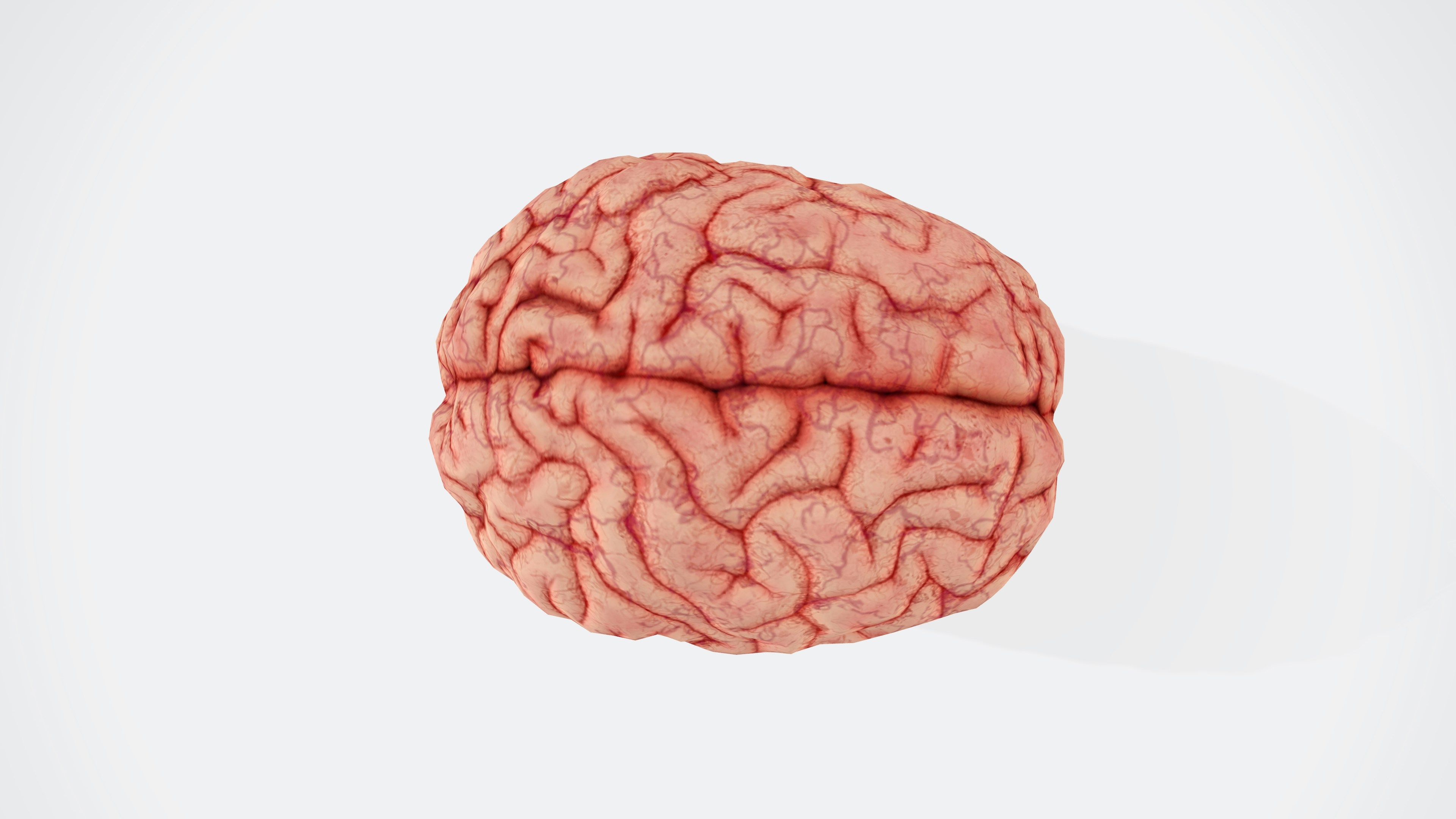
Neuroscience research shows that with repeated exposure to high-stakes situations, the brain begins to adapt. The prefrontal cortex – the region most responsible for planning, focus and decision-making – becomes more efficient in managing attention and making decisions, even under pressure.
During stressful situations, such as facing match point in a Grand Slam final, this area of the brain can help an athlete stay composed and make smart choices – but only if it’s well trained.
In contrast, the amygdala, our brain’s threat detector, can hijack performance by triggering panic, freezing motor responses or fueling reckless decisions. With repeated exposure to high-stakes moments, elite athletes gradually reshape this brain circuit.
They learn to tune down amygdala reactivity and keep the prefrontal cortex online, even when the pressure spikes. This refined brain circuitry enables experienced performers to maintain their emotional control.
Creating a brain-body loop
Brain-derived neurotrophic factor, or BDNF, is a molecule that supports adapting to changes quickly. Think of it as fertilizer for the brain. It enhances neuroplasticity: the brain’s ability to rewire itself through experience and repetition. This rewiring helps athletes build and reinforce the patterns of connections between brain cells to control their emotion, manage their attention and move with precision.
In moments like these, higher BDNF availability likely allows him to regulate his emotions and recalibrate his motor response, helping him to return to peak performance faster than his opponent.
Rewiring your brain
In essence, athletes who repeatedly train and compete in pressure-filled environments are rewiring their brain to respond more effectively to those demands. This rewiring, from repeated exposures, helps boost BDNF levels and in turn keeps the prefrontal cortex sharp and dials down the amygdala’s tendency to overreact.
This kind of biological tuning is what scientists call cognitive reserve and allostasis – the process the body uses to make changes in response to stress or environmental demands to remain stable. It helps the brain and body be flexible, not fragile.
Importantly, this adaptation isn’t exclusive to elite athletes. Studies on adults of all ages show that regular physical activity – particularly exercises that challenge both body and mind – can raise BDNF levels, improve the brain’s ability to adapt and respond to new challenges, and reduce stress reactivity.
Programs that combine aerobic movement with coordination tasks, such as dancing, complex drills or even fast-paced walking while problem-solving have been shown to preserve skills such as focus, planning, impulse control and emotional regulation over time.
After an intense training session or a match, you will often see athletes hopping on a bike or spending some time in the pool. These low-impact, gentle movements, known as active recovery, help tone down the nervous system gradually.
Serbian tennis player Novak Djokovic practices meditation, which strengthens the mental pathways that help with stress regulation. AP Photo/Kin Cheung
Over time, this convergence creates a trainable loop between the brain and body that is better equipped to adapt, recover and perform.
Lessons beyond sport
While the spotlight may shine on sporting arenas, you don’t need to be a pro athlete to train these same skills.
The ability to perform under pressure is a result of continuing adaptation. Whether you’re navigating a career pivot, caring for family members, or simply striving to stay mentally sharp as the world changes, the principles are the same: Expose yourself to challenges, regulate stress and recover deliberately.
While speed, agility and power may decline with age, some sport-specific skills such as anticipation, decision-making and strategic awareness actually improve. Athletes with years of experience develop faster mental models of how a play will unfold, which allows them to make better and faster choices with minimal effort. This efficiency is a result of years of reinforcing neural circuits that doesn’t immediately vanish with age. This is one reason experienced athletes often excel even if they are well past their physical prime.
Physical activity, especially dynamic and coordinated movement, boosts the brain’s capacity to adapt. So does learning new skills, practicing mindfulness and even rehearsing performance under pressure. In daily life, this might be a surgeon practicing a critical procedure in simulation, a teacher preparing for a tricky parent meeting, or a speaker practicing a high-stakes presentation to stay calm and composed when it counts. These aren’t elite rituals – they’re accessible strategies for building resilience, motor efficiency and emotional control.
Humans are built to adapt – with the right strategies, you can sustain excellence at any stage of life.
Earlier this month, a homeowner called Tidewater Wildlife Rescue with an urgent request. A common garter snake was hopelessly tangled in a piece of netting in their yard. Could someone come help?
Rescue volunteer Serenity Reiner quickly headed to the scene.
TIDEWATER WILDLIFE RESCUE
Reiner and her rescue partner, Daniel, used scissors to cut away big pieces of the net. Then, Daniel gently held the snake as Reiner snipped away netting closer to the animal’s body.
“We were very focused,” Reiner told The Dodo. “We wanted to be as fast as possible to limit [her] stress.”
The rescuers were almost finished when they noticed something amazing — the snake was giving birth in their hands.
TIDEWATER WILDLIFE RESCUE
Reiner hastily removed the remaining netting as the mama snake birthed two babies. Then, she took the snake and her little ones to a wooded area behind the house and released them back into the wild.
Surprisingly, despite their size, baby garter snakes don’t need to live with their mom for very long. In fact, as the rescue notes, these young snakes are completely independent from the moment they’re born and can immediately find food on their own.
TIDEWATER WILDLIFE RESCUE
According to the U.S. National Park Service, garter snakes typically give birth to 15-40 babies at a time. Reiner suspects this mama welcomed many more little ones into the world once she was safe in the forest.
The rescuer encouraged the homeowners to use animal-safe netting next time. She’s grateful that, in this case, everything turned out OK.
“I felt so much joy knowing that she was able to go back to her normal life unharmed,” Reiner said.