Category: People

Boonrod has a home!

Good news to our earlier story.

On April 30th I published a story that had been on the BBC News website about a dog that had been rescued from the sea some 200+ kilometres from the Thai coast.

It drew a fair amount of replies.

Then Margaret from Tasmania left a reply that contained the link to an article in the Bangkok Post. It was very good news!

ooOOoo

Rescue dog heads to new home in Khon Kaen

29 Apr 2019

WRITER: GARY BOYLE

ORIGINAL SOURCE/WRITER: ASSAWIN PAKKAWAN

Vitisak Payalaw sits behind Boonrod, the dog he helped rescue from the ocean, as he prepares to take him from a shelter in Hat Yai district, Songkhla, to his home in Khon Kaen on Saturday. (Photo from Boonrod Facebook account)

Seafaring dog Boonrod is heading to a new life in Khon Kaen with his new owner — one of the oil rig workers who rescued him from the ocean in a story that captured international attention.

“We’re leaving,” owner Vitisak Payalaw posted in a message on the Boonrod Facebook page on Saturday evening.

Mr Vitisak, an planner of Chevron Thailand Exploration and Production, met Boonrod — in Thai — on Saturday for the first time since the team found him to an oil platform in the Gulf of Thailand about 220km from the shore in Songkhla on April 12.

How Boonrod got there remains a mystery, but it is believed that he must have fallen off a trawler. After helping rescue the deepwater dog, Mr Vitisak offered to be his new owner.

The exhausted animal was brought ashore on April 15 and lodged at Dog Smile House, a shelter in Hat Yai district of the southern province, with financial support from the US oil firm and Watchdog Thailand, a non-profit group.

Boonrod appeared delighted to see Mr Vitisak and the other members of the oil rig team who rescued him.

Mr Vitisak said he was taking annual leave from his work at the oil platform to transport the dog to his home in Khon Kaen, almost 1,500km from Hat Yai. The house in the northeastern province has been prepared to accomodate a new resident, the Chevron employee added.

Mr Vitisak asked for privacy and requested that well-wishers not visit his new pet at his parents’ home in Khon Kaen. But fans are welcome to greet Boonrod when he walks the dog, he added.

He also encouraged other animal lovers to adopt pets if they can.

The story of Boonrod was carried by global news agencies, including CNN. He can be followed on his Facebook page.

ooOOoo

We love stories like that!

Good luck to Boonrod and to his new friends.

Svalbard video

And, yes, it does concern dogs!

I wasn’t going to post anything today but then came across this YouTube video.

So watch and enjoy.

A bit too cold for my liking!

Burn Baby, Burn.

A rather depressing essay from Tom Englehardt.

The world is getting hotter. That’s a fact!

And no amount of stuffing one’s head under the pillow is going to change that fact.

We must take note of all the many articles and stories about the warming of the planet. Because we need to change the way we are responding. Not from climate change but to climate crisis.

I’m republishing a recent essay from Tom Engelhardt, with his permission, because he articulates perfectly where we are heading.

ooOOoo

Suicide Watch on Planet Earth

As the Flames Began to Rise, the Arsonists Appeared
By Tom Engelhardt, April 25th, 2019

As Notre Dame burned, as the flames leapt from its roof of ancient timbers, many of us watched in grim horror. Hour after hour, on screen after screen, channel after channel, you could see that 850-year-old cathedral, a visiting spot for 13 million people annually, being gutted, its roof timbers flaring into the evening sky, its steeple collapsing in a ball of fire. It was dramatic and deeply disturbing — and, of course, unwilling to be left out of any headline-making event, President Trump promptly tweeted his advice to the French authorities: “Perhaps flying water tankers could be used to put it out. Must act quickly!” No matter that water from such planes would probably have taken the cathedral’s towers down and endangered lives as well — “the equivalent,” according to a French fire chief, “of dropping three tons of concrete at 250 kilometers per hour [on] the ancient monument.”

Still, who could doubt that watching such a monument to the human endeavor being transformed into a shell of its former self was a reminder that everything human is mortal; that, whether in a single lifetime or 850 years, even the most ancient of our artifacts, like those in Iraq and Syria recently, will sooner or later be scourged by the equivalent of (or even quite literally by) fire and sword; that nothing truly lasts, even the most seemingly permanent of things like, until now, Notre Dame?

That cathedral in flames, unlike so much else in our moment (including you-know-who in his every waking moment), deserved the front-and-center media attention it got. Historically speaking, it was a burning event of the first order. Still, it’s strange that the most unnerving, deeply terrifying burning underway today, not of that ancient place of worship that lived with humanity for so many tumultuous centuries but of the planet itself, remains largely in the background.

When the cathedral in which Napoleon briefly crowned himself emperor seemed likely to collapse, it was certifiably an event of headline importance. When, however, the cathedral (if you care to think of it that way) in which humanity has been nurtured all these tens of thousands of years, on which we spread, developed, and became what we are today — I mean, of course, the planet itself — is in danger of an unprecedented sort from fires we continue to set, that’s hardly news at all. It’s largely relegated to the back pages of our attention, lost any day of the week to headlines about a disturbed, suicidal young woman obsessed with the Columbine school massacre or an attorney general obsessed with protecting the president.

And let’s not kid ourselves, this planet of ours is beginning to burn — and not just last week or month either. It’s been smoldering for decades now. Last summer, for instance, amid global heat records (Ouargla, Algeria, 124 degrees Fahrenheit; Hong Kong, over 91 degrees Fahrenheit for 16 straight days; Nawabsha, Pakistan, 122 degrees Fahrenheit; Oslo, Norway, over 86 degrees Fahrenheit for 16 consecutive days; Los Angeles, 108 degrees Fahrenheit), wildfires raged inside the Arctic Circle. This March, in case you hadn’t noticed — and why would you, since it’s gotten so little attention? — the temperature in Alaska was, on average, 20 degrees (yes, that is not a misprint) above normal and typical ice roads between villages and towns across parts of that state were melting and collapsing with deaths ensuing.

Meanwhile, in the Antarctic, ice is melting at a rate startling to scientists. If the process accelerates, global sea levels could rise far faster than expected, beginning to drown coastal cities like Miami, New York, and Shanghai more quickly than previously imagined. Meanwhile, globally, the wildfire season is lengthening. Fearsome fires are on the rise, as are droughts, and that’s just to begin to paint a picture of a heating planet and its ever more extreme weather systems and storms, of (if you care to think of it that way) a Whole Earth version of Notre Dame.

The Arsonists Arrive

As was true with Notre Dame, when it comes to the planet, there were fire alarms before an actual blaze was fully noted. Take, for example, the advisory panel of scientists reporting to President Lyndon Johnson on the phenomenon of global warming back in 1965. They would, in fact, predict with remarkable accuracy how our world was going to change for the worse by this twenty-first-century moment. (And Johnson, in turn, would bring the subject up officially for perhaps the first time in a Special Message to Congress on February 5, 1965, 54 years before Alexandria Ocasio-Cortez’s Green New Deal proposal.) As that panel wrote at the time, “Through his worldwide industrial civilization, Man is unwittingly conducting a vast geophysical experiment. Within a few generations he is burning the fossil fuels that slowly accumulated in the earth over the past 500 million years…” In other words, the alarm was first sounded more than half a century ago.

When it comes to climate change, however, as the smoke began to appear and, in our own moment, the first flames began to leap — after all, the last four years have been the hottest on record and, despite the growth of ever less expensive alternative energy sources, carbon dioxide emissions into the atmosphere are still rising, not falling — no firemen arrived (just children). There were essentially no adults to put out the blaze. Yes, there was the Paris climate accord but it was largely an agreement in principle without enforcement power of any genuine sort.

In fact, across significant parts of the planet, those who appeared weren’t firefighters at all, but fire feeders who will likely prove to be the ultimate arsonists of human history. In a way, it’s been an extraordinary performance. Leaders who vied for, or actually gained, power not only refused to recognize the existence of climate change but were quite literally eager to aid and abet the phenomenon. This is true, for instance, of the new president of Brazil, Jair Bolsonaro, who came to power prepared to turn the already endangered carbon sink of the Amazon rain forest into a playground for corporate and agricultural destroyers. It is similarly true in Europe, where right-wing populist movements have begun to successfully oppose gestures toward dealing with climate change, gaining both attention and votes in the process. In Poland, for instance, just such a party led by President Andrzej Duda has come to power and the promotion of coal production has become the order of the day.

And none of that compared to developments in the richest, most powerful country of all, the one that historically has put more greenhouse gas emissions into the atmosphere than any other. On taking office, Donald Trump appointed more climate-change deniers to his cabinet than might have previously seemed possible and swore fealty to “American energy dominance,” while working to kneecap the development of alternative energy systems.  He and his men tried to open new areas to oil and gas drilling, while in every way imaginable striving to remove what limits there had been on Big Energy, so that it could release its carbon emissions into the atmosphere unimpeded. And as the planetary cathedral began to burn, the president set the mood for the moment (at least for his vaunted “base”) by tweeting such things as “It’s really cold outside, they are calling it a major freeze, weeks ahead of normal. Man, we could use a big fat dose of global warming!” or, on alternative energy, “You would be doing wind, windmills, and if it doesn’t if it doesn’t blow you can forget about television for that night… Darling, I want to watch television. I’m sorry, the wind isn’t blowing.”

Among those who will someday be considered the greatest criminals in history, don’t forget the Big Energy CEOs who, knowing the truth about climate change from their own hired scientists, did everything they could to increase global doubts by funding climate-denying groups, while continuing to be among the most profitable companies around. They even hedged their bets by, among other things, investing in alternative energy and using it to more effectively drill for oil and natural gas.

Meanwhile, of course, the planet that had proven such a comfortable home for humanity was visibly going down. No, climate change won’t actually destroy the Earth itself, just the conditions under which humanity (and so many other species) thrived on it. Sooner or later, if the global temperature is indeed allowed to rise a catastrophic seven degrees Fahrenheit or four degrees Celsius, as an environmental impact statement from the Trump administration suggested it would by 2100, parts of the planet could become uninhabitable, hundreds of millions of human beings could be set in desperate motion, and the weather could intensify in ways that might be nearly unbearable for human habitation. Just read David Wallace-Wells’s The Uninhabitable Earth, if you doubt me.

This isn’t even contestable information anymore and yet it’s perfectly possible that Donald Trump could be elected to a second term in 2020. It’s perfectly possible that more right-wing populist movements could sweep into power in Europe. It’s perfectly possible that Vladimir Putin’s version of great powerdom — a sagging Russian petro-state — could continue on its present globally warming path well into the future.

Understand this: Trump, Bolsonaro, Duda, Putin, and the others are just part of human history. Sooner or later, they will be gone. Climate change, however, is not part of human history (whatever it may do to civilization as we know it). Its effects could, in human terms, last for almost unimaginable periods of time. It operates on a different time scale entirely, which means that, unlike the tragedies and nightmares of human history, it is not just a passing matter.

Of course, the planet will survive, as will some life forms (as would be true even if humanity were to succumb to that other possible path to an apocalypse, a nuclear holocaust resulting in “nuclear winter”).  But that should be considered small consolation indeed.

Putting the Planet on a Suicide Watch

Consider global warming a story for the ages, one that should put Notre Dame’s near-destruction after almost nine centuries in grim perspective. And yet the planetary version of burning, which should be humanity’s crisis of all crises, has been met with a general lack of media attention, reflecting a lack of just about every other kind of attention in our world (except by those outraged children who know that they are going to inherit a degraded world and are increasingly making their displeasure about it felt).

To take just one example of that lack of obvious attention, the response of the mega-wealthy to the burning of Notre Dame was an almost instantaneous burst of giving. The euro equivalent of nearly a billion dollars was raised more or less overnight from the wealthiest of French families and other .01%ers. Remind me of the equivalent for climate change as the planet’s spire threatens to come down?

As for arsonists like Donald Trump and the matter of collusion, there’s not even a question mark on the subject. In the United States, such collusion with the destroyers of human life on Planet Earth is written all over their actions. It’s beyond evident in the appointment of former oil and gas lobbyists and fellow travelers to positions of power. Will there, however, be the equivalent of a Mueller investigation? Will the president be howling “witch hunt” again? Not a chance. When it comes to Donald Trump and climate change, there will be neither a Mueller Report, nor the need for a classic Barr defense. And yet collusion — hell, yeah! The evidence is beyond overwhelming.

We are, of course, talking about nothing short of the ultimate crime, but on any given day of our lives, you’d hardly notice that it was underway. Even for an old man like me, it’s a terrifying thing to watch humanity make a decision, however inchoate, to essentially commit suicide. In effect, there is now a suicide watch on Planet Earth. Let’s hope the kids can make a difference.

Tom Engelhardt is a co-founder of the American Empire Project and the author of a history of the Cold War, The End of Victory Culture. He runs TomDispatch.com and is a fellow of the Type Media Center. His sixth and latest book is A Nation Unmade by War (Dispatch Books).

Follow TomDispatch on Twitter and join us on Facebook. Check out the newest Dispatch Books, John Feffer’s new dystopian novel (the second in the Splinterlands series) Frostlands,Beverly Gologorsky’s novel Every Body Has a Story, and Tom Engelhardt’s A Nation Unmade by War, as well as Alfred McCoy’s In the Shadows of the American Century: The Rise and Decline of U.S. Global Power and John Dower’s The Violent American Century: War and Terror Since World War II.

Copyright 2019 Tom Engelhardt

ooOOoo

Tom and I are of the same age, give or take a year or two, and I have long been worried about the state of things. Part of me thinks that I won’t live long enough to experience the worst of this climate crisis and that my grandchild will have to sort it out. But then another part of me thinks that this is accelerating and we are already experiencing weather and climate that is strange and …..

I don’t know!

A beautiful story!

Rocky ends up getting rescued, and more..

For a while now I have been subscribing to The Dodo. As the website explains it’s for animal people and as you and I know that’s quite a great many people!

Until now I have been a little nervous of sharing articles from The Dodo with you. But then I noticed quite recently that there is a ‘share’ button at the end of the articles.

So I presume it’s alright to share these wonderful stories!

Try this one published in April, 2019!

ooOOoo

Fireman Shows Up To Save Puppy Trapped Under Concrete — And Immediately Falls In Love

“I knew he was coming home with me.”

By 
PUBLISHED ON 04/15/2019

A family was out riding their bikes one day in South Carolina when they suddenly heard what sounded like a puppy crying. They pulled their bikes over to the side of the road and went to investigate, and were shocked to find a little puppy trapped under a pile of dirt and concrete. Not knowing how else to help, they quickly called 911, and both the police and firefighters with the North Charleston Fire Department responded in hopes that they could free the trapped puppy.

North Charleston Fire Department

“They showed us where the dog was located,” Captain Paul Bryant, of the North Charleston Fire Department, told The Dodo. “It was piles of concrete 4 foot by 4 foot, some smaller, some bigger. One of the police officers said he could see the dog so we got on our hands and knees to look and saw his nose sticking out of the pile of rubble.”

After moving the concrete slabs out of the way with a pry bar, Captain Bryant attempted to pull the puppy, later named Rocky, out from the remaining dirt and rubble, but unfortunately there just wasn’t enough room. He then took a shovel and started digging, and finally was able to create enough space to pull the confused puppy out to safety. The whole rescue only took about 11 minutes, but no one has any idea how long Rocky had been stuck under there before everyone arrived.

North Charleston Fire Department

As soon as he was free, little Rocky couldn’t stop licking Bryant’s face in gratitude. The puppy clearly had so much energy and lots of love to give, and everyone immediately fell in love with him — especially Bryant. The family who had initially found Rocky said they would take him to a nearby animal hospital to get checked for a microchip so he could hopefully be reunited with his family, but after he was gone, Bryant just couldn’t get Rocky out of his head.

North Charleston Fire Department

Rocky was taken in by Charleston Animal Society, and ended up not being microchipped after all. The search for his potential family came up empty, and as soon as Bryant heard, he knew exactly what he had to do.

“I wanted to know if his owner was found, or if the person who found him was going to keep him,” Bryant said. “Once I found out he did not have an owner and the family who found him could not keep him, I knew he was coming home with me.”

North Charleston Fire Department

Sir David Attenborough.

A very great man!

For someone born on May 8th, 1926 he, perhaps, should be slowing down. But none of it. He is passionate about how we are endangering our planet. And having a public profile he is the right position to do something about it, albeit a warning statement.

Plus, he is not the only one doing something about it. For Extinction Rebellion are protesting in the London streets.

But back to Sir David.

I’m assuming that it is OK to republish in full an item that appeared on BBC News yesterday. And according to their terms it is OK.

ooOOoo

Climate change: Sir David Attenborough warns of ‘catastrophe’

By Matt McGrath, Environment correspondent

(There is a video on the webpage that I am unable to copy across. Please go here to watch it. Update: I think I have got it.)

Sir David Attenborough has issued his strongest statement yet on the threat posed to the world by climate change.

In the BBC programme Climate Change – The Facts, the veteran broadcaster outlines the scale of the crisis facing the planet.

Sir David says we face “irreversible damage to the natural world and the collapse of our societies”.

But there is still hope, he says, if dramatic action to limit the effects is taken over the next decade.

Sir David’s new programme lays out the science behind climate change, the impact it is having right now and the steps that can be taken to fight it.

“In the 20 years since I first started talking about the impact of climate change on our world, conditions have changed far faster than I ever imagined,” Sir David states in the film.

“It may sound frightening, but the scientific evidence is that if we have not taken dramatic action within the next decade, we could face irreversible damage to the natural world and the collapse of our societies.”

Speaking to a range of scientists, the programme highlights that temperatures are rising quickly, with the world now around 1C warmer than before the industrial revolution.

“There are dips and troughs and there are some years that are not as warm as other years,” says Dr Peter Stott from the Met Office.

“But what we have seen is the steady and unremitting temperature trend. Twenty of the warmest years on record have all occurred in the last 22 years.”

The programme shows dramatic scenes of people escaping from wildfires in the US, as a father and son narrowly escape with their lives when they drive into an inferno.

Scientists say that the dry conditions that make wildfires so deadly are increasing as the planet heats up.

Greenland is losing ice five times as fast as it was 25 years ago – Getty Images.

Some of the other impacts highlighted by scientists are irreversible.

“In the last year we’ve had a global assessment of ice losses from Antarctica and Greenland and they tell us that things are worse than we’d expected,” says Prof Andrew Shepherd from the University of Leeds.

“The Greenland ice sheet is melting, it’s lost four trillion tonnes of ice and it’s losing five times as much ice today as it was 25 years ago.”

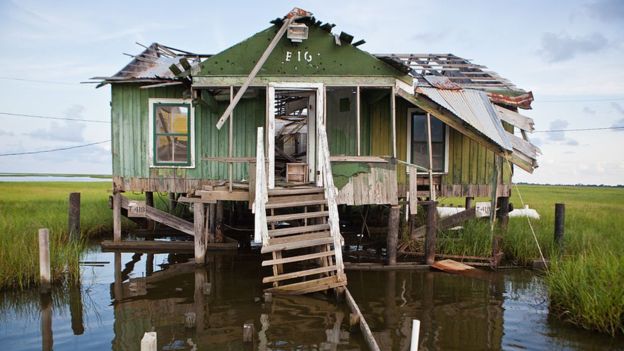
These losses are driving up sea levels around the world. The programme highlights the threat posed by rising waters to people living on the Isle de Jean Charles in Louisiana, forcing them from their homes.

“In the US, Louisiana is on the front line of this climate crisis. It’s losing land at one of the fastest rates on the planet – at the rate of of a football field every 45 minutes,” says Colette Pichon Battle, a director of the Gulf Coast Center for Law & Policy.

People are moving from parts of Louisiana in the US as a result of rising waters. – Julie Dermansky

“The impact on families is going to be something I don’t think we could ever prepare for.”

Hope rising

Sir David’s concern over the impacts of climate change has become a major focus for the naturalist in recent years.

This has also been a theme of his One Planet series on Netflix.

His new BBC programme has a strong emphasis on hope.

Sir David argues that if dramatic action is taken over the next decade then the world can keep temperatures from rising more than 1.5C this century. This would limit the scale of the damage.

“We are running out of time, but there is still hope,” says Sir David.

“I believe that if we better understand the threat we face the more likely it is we can avoid such a catastrophic future.”

The programme says that rapid progress is being made in renewable energy, with wind now as cheap as fossil fuels in many cases. It shows how technologies to remove and bury carbon dioxide under the ground are now becoming more viable.

But politicians will need to act decisively and rapidly.

“This is the brave political decision that needs to be taken,” says Chris Stark from the UK’s Committee on Climate Change.

Teenage campaigner Greta Thunberg has helped spark school strikes all over the world. – Getty Images.

“Do we incur a small but not insignificant cost now, or do we wait and see the need to adapt. The economics are really clear on this, the costs of action are dwarfed by the costs of inaction.”

The programme also highlights the rising generation of young people who are deeply concerned about what’s happening to the planet.

Swedish teenager Greta Thunberg explains that things can change quickly, despite the scale of the challenge on climate change.

“The first day I sat all alone,” she says, speaking of her decision to go on strike from school and sit outside the Swedish parliament to highlight the climate crisis.

“But on the second day, people started joining me… I wouldn’t have imagined in my wildest dreams that this would have happened so fast.”

“Change is coming whether you like it or not.”

Follow Matt on Twitter@mattmcgrathbbc

Climate Change – The Facts is on BBC One on Thursday 18 April at 9pm

ooOOoo

There are so many quotes in this item that one can hardly pick out the most pertinent one.

Change is coming whether you like it or not.

The impact on families is going to be something I don’t think we could ever prepare for.

… irreversible damage to the natural world and the collapse of our societies“.

But this is the most powerful one! “We are running out of time, but there is still hope,” says Sir David.

It stretches the mind beyond imagination!

The most incredible story of all!

I first read the story early yesterday morning in The Guardian Newspaper.

But then I saw another version of the same story on the BBC News site, from which I republish it in its entirety.

ooOOoo

First ever black hole image released

By Pallab Ghosh
Science correspondent, BBC News

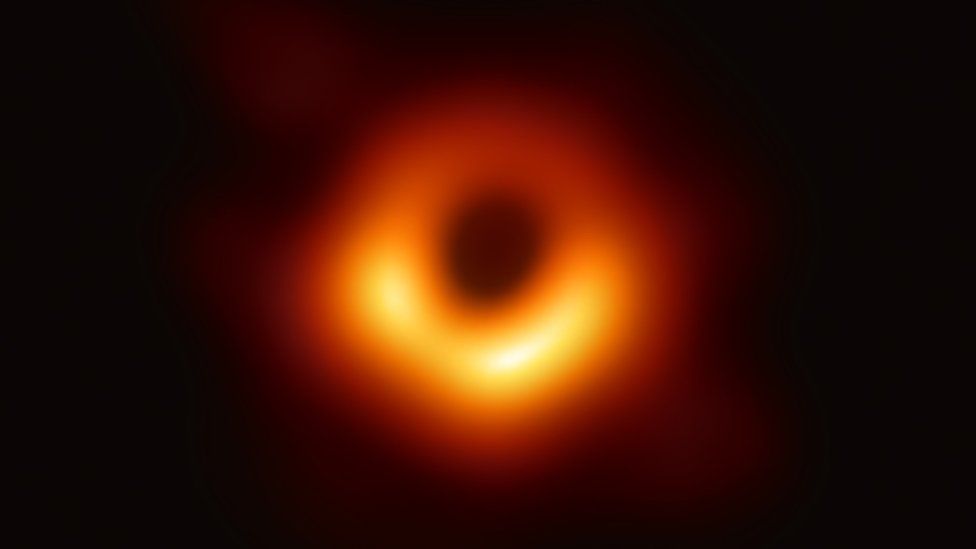
The first ever picture of a black hole: It’s surrounded by a halo of bright gas.

Astronomers have taken the first ever image of a black hole, which is located in a distant galaxy.

It measures 40 billion km across – three million times the size of the Earth – and has been described by scientists as “a monster”.

The black hole is 500 million trillion km away and was photographed by a network of eight telescopes across the world.

Details have been published today in Astrophysical Journal Letters.

Prof Heino Falcke, of Radboud University in the Netherlands, who proposed the experiment, told BBC News that the black hole was found in a galaxy called M87.

“What we see is larger than the size of our entire Solar System,” he said.

“It has a mass 6.5 billion times that of the Sun. And it is one of the heaviest black holes that we think exists. It is an absolute monster, the heavyweight champion of black holes in the Universe.”

The image shows an intensely bright “ring of fire”, as Prof Falcke describes it, surrounding a perfectly circular dark hole. The bright halo is caused by superheated gas falling into the hole. The light is brighter than all the billions of other stars in the galaxy combined – which is why it can be seen at such distance from Earth.

The edge of the dark circle at the centre is the point at which the gas enters the black hole, which is an object that has such a large gravitational pull, not even light can escape.

Taking the temperature of black holes

Hawking: Black holes store information

Dozen black holes at galactic centre

DR JEAN LORRE/SCIENCE PHOTO LIBRARY I have suspected that the M87 galaxy has a supermassive black hole at its heart from false colour images such as this one. The dark centre is not a black hole but indicates that stars are densely packed and fast moving.

The image matches what theoretical physicists and indeed, Hollywood directors, imagined black holes would look like, according to Dr Ziri Younsi, of University College London – who is part of the collaboration.

“Although they are relatively simple objects, black holes raise some of the most complex questions about the nature of space and time, and ultimately of our existence,” he said.

“It is remarkable that the image we observe is so similar to that which we obtain from our theoretical calculations. So far, it looks like Einstein is correct once again.”

But having the first image will enable researchers to learn more about these mysterious objects. They will be keen to look out for ways in which the black hole departs from what’s expected in physics. No-one really knows how the bright ring around the hole is created. Even more intriguing is the question of what happens when an object falls into a black hole.

What is a black hole?

  • A black hole is a region of space from which nothing, not even light, can escape
  • Despite the name, they are not empty but instead consist of a huge amount of matter packed densely into a small area, giving it an immense gravitational pull
  • There is a region of space beyond the black hole called the event horizon. This is a “point of no return”, beyond which it is impossible to escape the gravitational effects of the black hole
Presentational white space

Prof Falcke had the idea for the project when he was a PhD student in 1993. At the time, no-one thought it was possible. But he was the first to realise that a certain type of radio emission would be generated close to and all around the black hole, which would be powerful enough to be detected by telescopes on Earth.

He also recalled reading a scientific paper from 1973 that suggested that because of their enormous gravity, black holes appear 2.5 times larger than they actually are.

These two previously unknown factors suddenly made the seemingly impossible, possible. After arguing his case for 20 years, Prof Falcke persuaded the European Research Council to fund the project. The National Science Foundation and agencies in East Asia then joined in to bankroll the project to the tune of more than £40m.

The eventual EHT array will have 12 widely spaced participating radio facilities

It is an investment that has been vindicated with the publication of the image. Prof Falcke told me that he felt that “it’s mission accomplished”.

He said: “It has been a long journey, but this is what I wanted to see with my own eyes. I wanted to know is this real?”

No single telescope is powerful enough to image the black hole. So, in the biggest experiment of its kind, Prof Sheperd Doeleman of the Harvard-Smithsonian Centre for Astrophysics, led a project to set up a network of eight linked telescopes. Together, they form the Event Horizon Telescope and can be thought of as a planet-sized array of dishes.

KATIE BOUMAN Information gathered is too much to be sent across the internet. Instead the data was stored on hundreds of hard drives which were flown to a central processing centre.
JASON GALLICCHIO

Each is located high up at a variety of exotic sites, including on volcanoes in Hawaii and Mexico, mountains in Arizona and the Spanish Sierra Nevada, in the Atacama Desert of Chile, and in Antarctica.

A team of 200 scientists pointed the networked telescopes towards M87 and scanned its heart over a period of 10 days.

The information they gathered was too much to be sent across the internet. Instead, the data was stored on hundreds of hard drives that were flown to a central processing centres in Boston, US, and Bonn, Germany, to assemble the information. Prof Doeleman described the achievement as “an extraordinary scientific feat”.

“We have achieved something presumed to be impossible just a generation ago,” he said.

“Breakthroughs in technology, connections between the world’s best radio observatories, and innovative algorithms all came together to open an entirely new window on black holes.”

The team is also imaging the supermassive black hole at the centre of our own galaxy, the Milky Way.

Odd though it may sound, that is harder than getting an image from a distant galaxy 55 million light-years away. This is because, for some unknown reason, the “ring of fire” around the black hole at the heart of the Milky Way is smaller and dimmer.

Follow Pallab on Twitter

ooOOoo

One of the most remarkable things about this story is that it continues to validate the theories of Albert Einstein (1879-1955). That is doubly impressive.

The film, How to see a Black Hole: The Universe’s Greatest Mystery,    is a most interesting account of the skills that were utilised by the team, and the luck of that same group in pulling it all together.

This is clearly the start of a new journey in astronomy.

I will leave you by repeating the image of the black hole.

The first ever picture of a black hole: It’s surrounded by a halo of bright gas.

Territtorio de Zaguates

A compelling Netflix documentary.

There is a series on Netflix called Dogs. It consists of a series of 1-hour films showing many different qualities of our special dogs.

Last Monday evening we watched the episode that took the viewer to Costa Rica.

Territorio de Zaguates – Land of the Strays

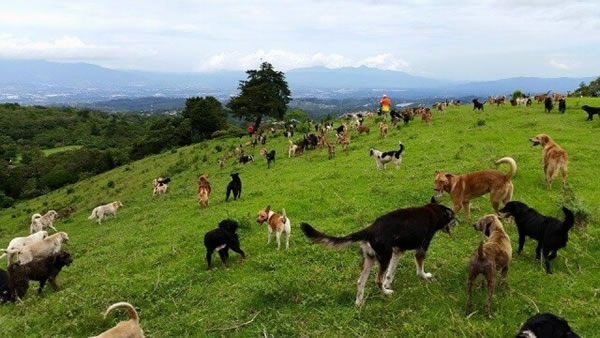
Territorio de Zaguates is an extraordinary dog shelter located in the mountains above Heredia Costa Rica an hour from downtown San José.

Dog Walk at Territorio Zaguates

It was incredible. Almost too much to put into words.

Firstly, there were the huge number of homeless dogs, in all states of health, that roamed Costa Rica.

Secondly, the dog sanctuary was founded by Lya Battle and Alvaro Saumet who are still hard at it.

Thirdly, they have somewhere between 700 and 1,100 dogs in the sanctuary.

Finally, let me let them say it in their own words.

WE ARE…

A non profit organization, founded by Lya Battle and Alvaro Saumet. During the last eight years we’ve been promoting well-being and respect for animals.
HOW WE DO IT?
Veterinarian: We take care of our mutts with deworming, sterilization and any other care they need. The cost of maintaining a dog healthy is $5 per month.

Shelter: Territorio is home for hundreds of doggies. We give them here a safe place to live, free of maltreatment, and full of love. The cost of providing a home is $11 per month for each of our unique specimens.

Food: Each mont we consume thousands of kilos of dog food, to keep our pack healthy. Giving a full small plate to each mutt cost us $20 per month.

There is much, much more on their website that I encourage you to go to. Here are some photographs of the dogs that they rescue.

oooo

oooo

oooo

oooo

oooo

oooo

There are a number of videos on YouTube to watch.

Here’s a short one.

And here’s a slightly longer one by National Geographic.

Finally, if you feel so minded here is the donate page. It’s a good cause and, for example, for just $36 you can sponsor one dog. That’s what Jeannie and I did.

Anyway, we hope you can spare something.


End the Yulin Dog Meat Festival – now!
This was forwarded to me by John Zande.

ooOOoo

Dogs in the cage in animal shelter.

Tens of Thousands of Dogs Die Each Year During China’s Dog Meat Festivals. This Is Our Chance To End The Slaughter!

John,

The yearly Yulin Dog Meat Festival is responsible for the slaughter of tens of thousands of dogs each year. Now, we have a chance to end it once and for all.

Two Chinese governing bodies plan to introduce new legislation that will provide special protections to canines by classifying them as companion animals. This would exclude dogs from being used for human consumption.

Sign and show your support for this new measure to protect dogs and help end the Yulin Dog Meat Festival.

If you are unfamiliar with the festival, it is notorious for its bloodshed and cruelty. Because dog meat consumers believe that the meat tastes better when dogs have more adrenaline in their blood, dog meat butchers torture the animals. Dogs are beaten, burned alive with blowtorches, or tossed into pots of boiling water.

Thanks to public outcry, the festival’s popularity has decreased and restrictions have been set, however, that hasn’t been enough to end the festival for good. Now’s our chance.

John, will you sign the petition today and help end the Yulin Dog Meat Festival and save thousands of dogs?

Thank you,
Ashley A.
The Care2 Petitions Team

ooOOoo

Now you will want to go to the page where you can sign this important petition.

You will go here.

Thank you, thank you, and thank you!

The equinox!

Have you seen the moon?

It’s a particularly beautiful moon and more so because it coincides with the equinox.

Taken from here.

ooOOoo

Full supermoon at March 2019 equinox

By in

Photo above: Bruce Tennant captured the March 2014 full moon rising over Santiago Peak, Alamitos Bay, Long Beach, California.

The March 20-21, 2019, full moon ushers in the first full moon of spring for the Northern Hemisphere, and the first full moon of autumn for the Southern Hemisphere. This full moon is also a supermoon, particularly close to Earth. It comes less than four hours after the arrival of the March 20 equinox.

This is the closest coincidence of a full moon with the March equinox since March 2000 – 19 years ago. The full moon and March equinox won’t happen less than one day apart again for another 11 years, or until March 2030.

March 2000 full Moon: March 20 at 4:44 UTC
March 2000 equinox: March 20 at 7:35 UTC

March 2030 full moon: March 19 at 17:56 UTC
March 2030 equinox: March 20 at 13:51 UTC

This month’s full moon also presents the third and final supermoon of 2019. Will it appear bigger in your sky? No, not unless you happen to catch the moon just after it has risen in the east, around sunset. Then its larger-than-usual size has less to do with the supermoon, but more from a psychological effect known as the moon illusion.

Supermoons don’t look bigger to the eye to most people, but they do look significantly brighter. If you’re in the suburbs or a rural area, notice the bright moonlight cast on the landscape at this full moon.

Also, supermoons have a stronger-than-usual effect on Earth’s oceans. Watch for higher-than-usual tides to follow the supermoon by a day or so, especially if a coastal storm is happening in your part of the world.

This March supermoon isn’t 2019’s closest supermoon, by the way. That happened last month. See photos of last month’s supermoon.

The Virtual Telescope Project will show the March 20 supermoon live, as it rises above the skyline of Rome. Click here for more info.

At U.S. time zones, the equinox arrives on March 20, at 5:58 p.m. EDT, 4:58 p.m. CDT, 3:58 p.m. MDT, 2:58 p.m. PDT, 1:58 p.m. AKDT and 11:58 a.m. HST.

At U.S. time zones, the full moon falls on March 20, at 9:43 p.m. EDT, 8:43 p.m. CDT, 7:43 p.m. MDT, 6:43 p.m. PDT, 5:43 p.m. AKDT and 3:43 p.m. HST.

In Universal Time, the equinox arrives on March 20, at 21:58 UTC, and the full moon comes on March 21, at 1:43 UTC. Here’s how to convert Universal Time to your local time.

At the equinox, the sun is at zenith (straight overhead) at the Earth’s equator. Because the Earth’s atmosphere refracts (bends) sunlight, a tiny bit more than half of the globe is covered over in daylight.Generally, the first full moon of a Northern Hemisphere spring heralds the imminent coming of the Christian celebration of Easter. Since Easter Sunday – by proclamation – occurs on the first Sunday after the first full moon in spring, some of us might expect the upcoming Sunday on March 24 to be Easter Sunday. However, by ecclesiastical rules, the equinox is fixed on March 21, so that places this year’s Easter Sunday (for Western Christendom) on April 21, 2019.

By the Gregorian calendar, the last time that an ecclesiastical Easter and an astronomical Easter didn’t occur on the same date was 38 years ago, in 1981. The next time won’t be until 19 years from now, in 2038.

(Easter Sunday for Eastern or Orthodox Christendom actually falls on April 28, 2019. That’s because the Eastern Church bases Easter on the old style Julian calendar, instead of the revised Gregorian calendar used by Western Christianity and most of the world.)

For our friends in the Southern Hemisphere, this March full moon counts as your Harvest Moon. The Harvest Moon is the full moon occurring closest to the autumnal equinox. On the average, the moon rises about 50 minutes later with each passing day. But for several days around the time of the Harvest Moon, the lag time between successive moonrises is reduced to a yearly minimum. For instance, at 40 degrees south latitude, the moon now rises some 30 to 35 minutes later (instead of the average 50 minutes later) each day for the next several days.

Like Earth, Saturn has equinoxes too! The ringed planet last had an equinox in 2009, and will have its next equinox in 2025. From Earth, Saturn’s rings disappear from view at a Saturn equinox, because these rings are then edge-on from our vantage point. But this near-equinox view of Saturn’s rings is readily visible from the Cassini spacecraft, because it’s 20 degrees above the ring plane. Image via NASA.

Here in the Northern Hemisphere, where it’s the closest full moon to the spring equinox, the lag time between successive moonrises is at a yearly maximum. At 40 degrees north latitude, the moon now rises around 70 to 75 minutes later daily. In the Northern Hemisphere, we ‘ll have to wait for the September full moon to bring forth our procession of early evening moonrises.

Last but hardly least, this March 2019 full moon gives us the first of four full moons in one season (between the March equinox and June solstice). Most of the time, a season – the time period between an equinox and a solstice, or vice versa – only harbors three full moons. But since this March full moon comes very early in the season, that allows for a fourth full moon to take place before the season’s end.

March 2019 equinox: March 20 at 21:58 UTC

March 2019 full moon: March 21 at 1:43 UTC
April 2019 full moon: April 19 at 11:12 UTC
May 2019 full moon: May 18 at 21:11 UTC
June 2019 full moon: June 17 at 8:31 UTC

June 2019 solstice: June 21 at 15:54 UTC

Some people call the third of four full moons in one season a Blue Moon. So our next Blue Moon (by the seasonal definition of the term) will fall on May 18, 2019.

The next Blue Moon by the monthly definition – second of two full moons in one calendar month – will come on October 31, 2020.

Resources:

Astronomical and Gregorian Easter Sunday
Phases of the moon: 1901 to 2000
Phases of the moon: 2001 to 2100
Solstices and equinoxes: 2001 to 2100
Equinox and solstice calculator

Bottom line: Enjoy the equinox full moon on March 20-21, 2019. It’s the third and final full supermoon of 2019, and the first of four full moons in the upcoming season (spring for the Northern Hemisphere, autumn for the Southern Hemisphere).

Bruce McClure has served as lead writer for EarthSky’s popular Tonight pages since 2004. He’s a sundial aficionado, whose love for the heavens has taken him to Lake Titicaca in Bolivia and sailing in the North Atlantic, where he earned his celestial navigation certificate through the School of Ocean Sailing and Navigation. He also writes and hosts public astronomy programs and planetarium programs in and around his home in upstate New York.

ooOOoo

It’s not about dogs. But then again maybe it is. For I’m thinking of dogs howling at the moon.

Picture Parade Two Hundred and Eighty-One

And, boy, did I find some beautiful images!

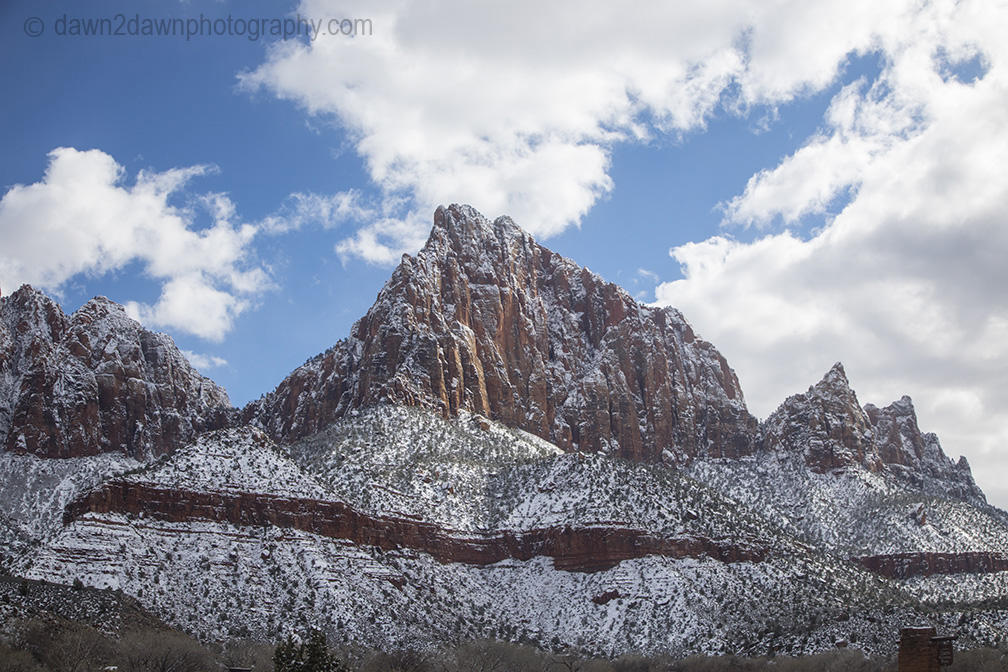
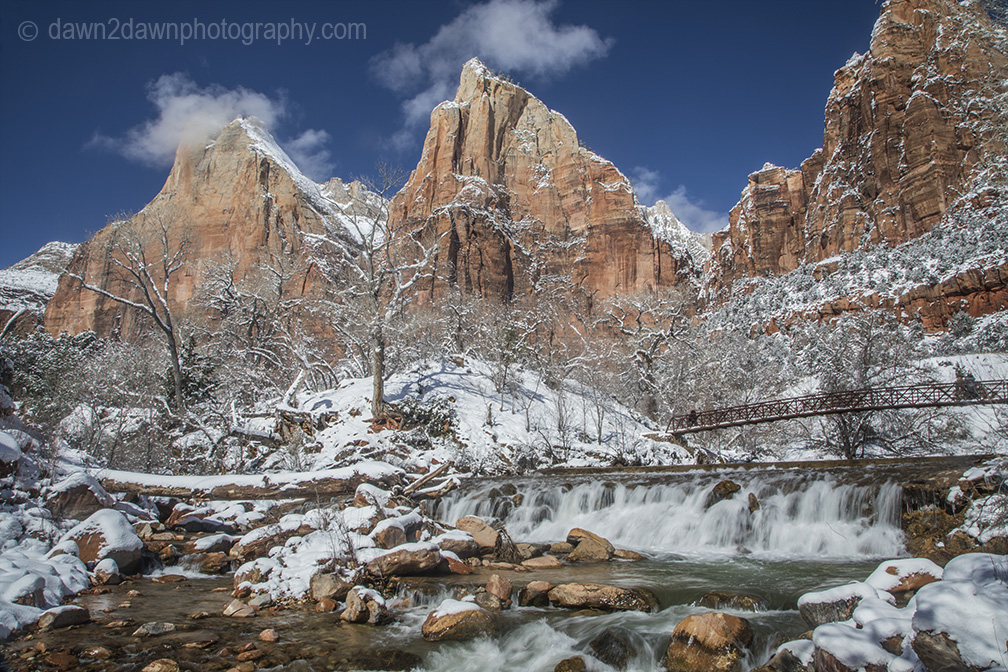
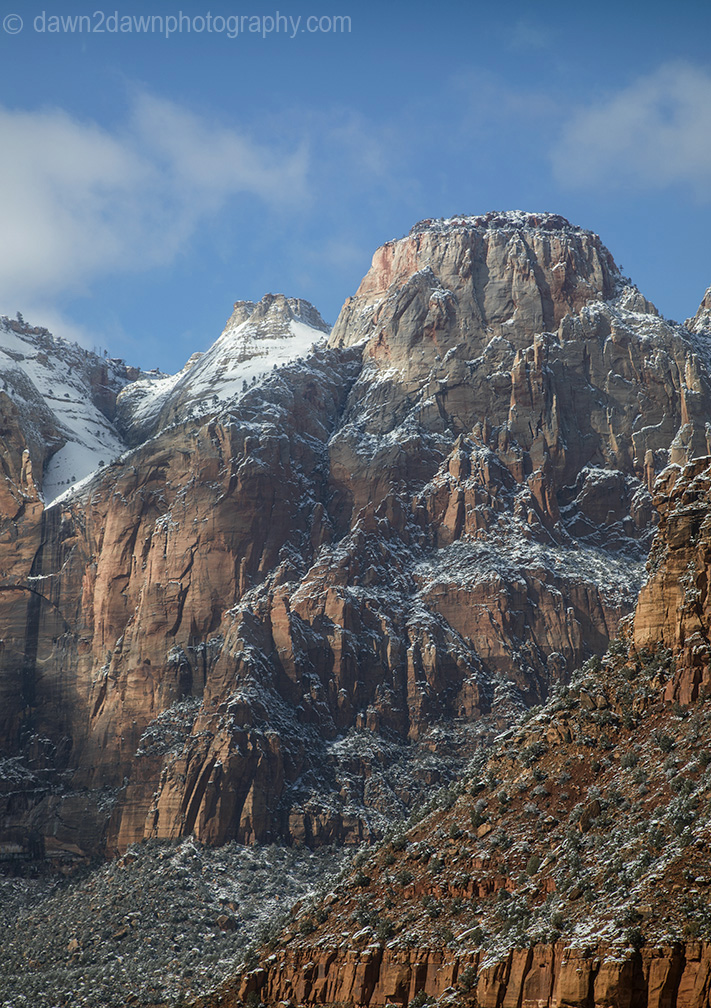
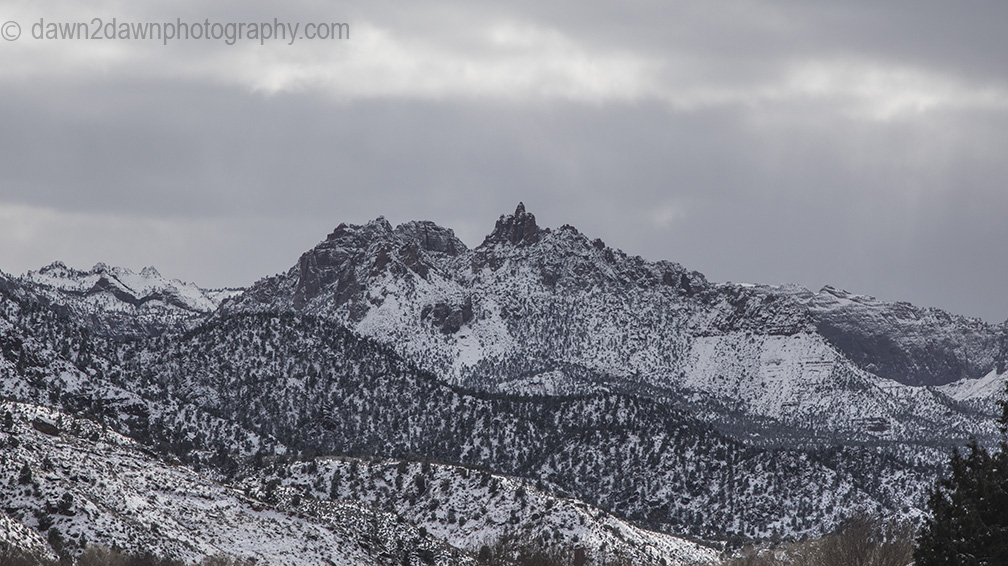
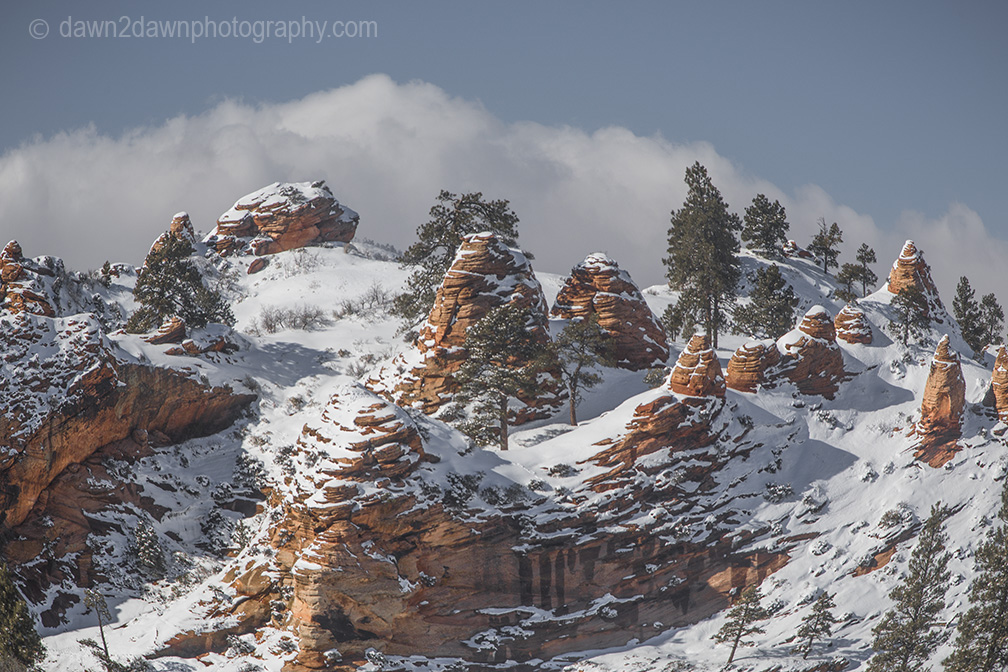
During the week I was browsing the web and I came across Dawn2Dawn Photography. Specifically I came across a series of fantastic photographs under the heading of A Snowy Week At Zion National Week. I rather hesitantly asked if I might republish them here and Michael Just said of course. Thank you Michael.

So here they are.

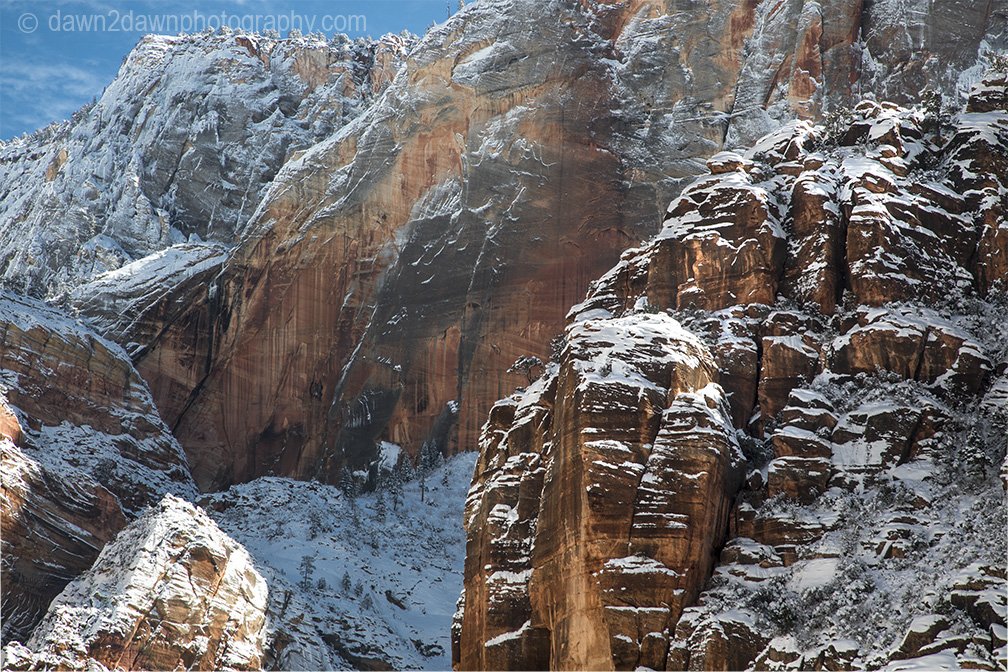
Fresh winter snow has fallen at Zion National Park, Utah

oooo

Fresh winter snow has fallen at Zion National Park, Utah

oooo

Fresh winter snow has fallen at Zion National Park, Utah

oooo

Fresh winter snow has fallen at Zion National Park, Utah

oooo

Fresh winter snow has fallen at Zion National Park, Utah

oooo

Fresh winter snow has fallen at Zion National Park, Utah

oooo

These are exquisitely beautiful photographs.

There are more of them!