Category: People

Bananas and common sense!

This is more than about the problems with Toyota.

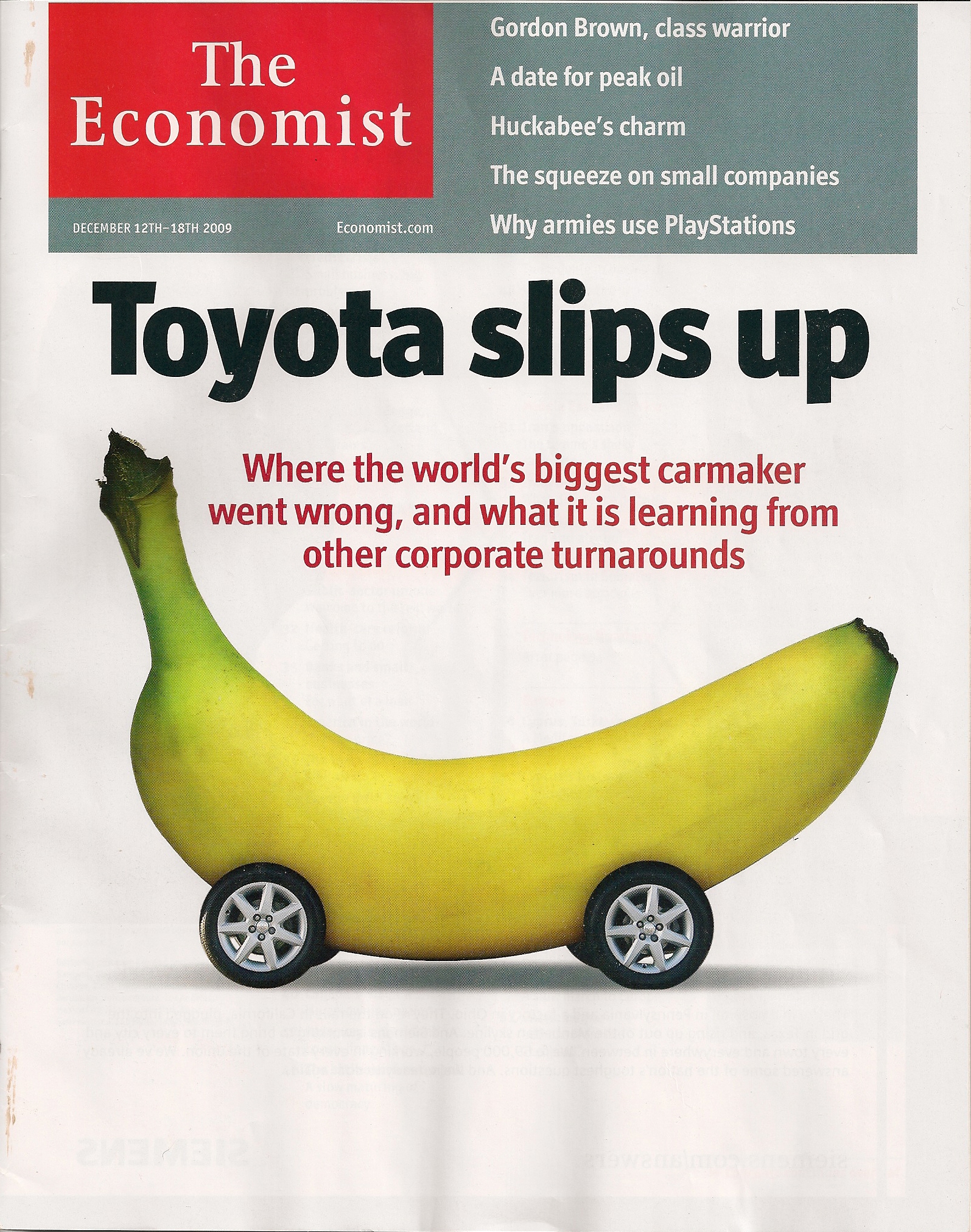
The Economist is a newspaper.  It was first published in September 1843 which, of itself, makes it a notable newspaper.  Many years ago, more than I can recall just now, I became a subscriber to the newsprint version of this weekly paper.  It has become such a companion, so to speak, that when I left the UK in September 2008 to come to Mexico I made arrangements to continue receiving The Economist each week.

However, the Mexican postal system, despite being thoroughly reliable, is rather slow and, rather logically if you muse on it, the postman always only delivers when there is more than one item.  Thus the particular copy of The Economist that carried the story about Toyota arrived late and with three other editions!

Let me turn to the point of this article.

Read more of this Post

Dad, what job am I going to do?

Approaching that big boundary between learning and earning.

It seems like only yesterday that my first daughter Natalie was born.  Now Natalie is approaching 17, going to college and will soon be learning to drive. She did very well in her GCSE [UK exams taken around the age of 16. Ed] exams, but at the moment has no real idea of what she wants to do.

Perhaps not what you would expect her Dad to say but I think that is great.  Because she can continue with a broad based approach to learning and from this she will eventually channel her interests and knowledge in a particular direction.

For A levels [University entrance exams taken around the age of 18. Ed] she is taking French, Psychology, Law, and Textiles!

Clearly for a young person another language enhances the ability to communicate with the wider world.  Psychology is an interesting and a useful insight into fellow humans.  Law will help to make her aware of what she will be expected to deal with but textiles, that was an initial puzzle to me.

The college were very unhappy about Natalie taking up textiles because she had not done art at school but, to be honest, that was because the school, at the time, had put pressure on her to drop art in favour of another subject that fitted into the weekly program of lessons.

But in just three months Natalie has shown great flair for textiles and I am amazed by the work she has produced. However, when I called her this evening from abroad (I’m currently in the Middle East), she was feeling very unsure because her form master has been putting pressure on her to decide what she wants to do when she leaves college.

If you are lucky enough to know your career path then life is easy but actually I am pleased that my daughter is building her knowledge in an open way. I only ask that she does her best.

Exam results might seem important on the day of announcement, and they may well be of serious consideration when applying for jobs in competition with other applicants, but who is the person?

Social awareness is hugely important, and trying different jobs earning money in the school holidays has given her an insight into various ways that people earn their living.

My suggestion is for her to not even worry about exams.  Just enjoy the information she is learning.  In France last year she was chatting away to locals in French, and laughing, because the level of understanding was already there.

Take the pressure off ! Make learning fun. Take the subjects you want. Enjoy education. There is greater variety with regard to work these days.  Natalie will not end up in an office as she fears. Her general level of education and happy disposition will guide her to something different.

It is difficult to try an explain all this, but success in adult life is not a multitude of qualifications and lots of money, it is a balance of finding something that is of interest, pays a suitable wage, and makes you happy.

When I was at school nobody suggested making stained glass windows, or restoring paintings, or moving to Greece and working with different textiles but many things are possible now.

I only hope that she will trust herself, and then when she finally discovers something she really likes, she will be happy.

By Bob Derham
Time Flies!

Family echoes.

Today is my 54th birthday.  I am now the age that my mother was when she died, on January 8th, 1985.  I knew then that she died too young, that she had so much more living to do.

Two weeks before her death, I visited her in the convalescent hospital where she had been for months.  She was going home!  The doctors had given her a clean bill of health.   She ordered a new skirt to celebrate and had it shipped to her home.  We got out maps of London and made plans to take a trip there together, as adults, as friends, the following summer.  I went back to school, happy to have had such a nice visit, happy she would soon be going home.

About ten days later, on January 5th, 1985, I got a call from my brother, telling me that mother had septic shock, that she might not make it, and that I needed to get there, fast.  I bought a one-way ticket and packed a dark suit.   She was still alert when I finally arrived.  The nurses remembered me, and let me stay with her, even when visiting hours were over.  I got to talk to her, and ask her what she wanted me to do for her, what she wanted the doctors to do for her, what measures she wanted taken.  She wanted to live.  She was getting weak, working to breath, waiting for the antibiotics to work. Or not. The doctors recommended a ventilator, to help her conserve her strength.  Before they put it in, she had one last thing to say:  “I love my children.”   She died that night.

Lillian Harris, Sherry's mother, at age 20 with her first child Brenda

I remember thinking at the time how sad it was that she had never gone to college, never had a career, never fulfilled her dreams.  That she had fallen in love at 18, gotten married, and devoted her entire adult life to her children.    That her last thought was of her children. I was single and doing odd jobs while earning a doctorate.  I had a cat and helped take care of my 90-year-old neighbor, but having children was the furthest thing from my mind.

Fast forward to today, January 12, 2010.   I am now the age my mother was when she died.  I did go to college, I do have a career, and I have chipped away at those dreams.    But those are the side bars of my life.  Like every parent out there, the moment my first child was born, I understood what my mother meant.  I understood how much you could love someone, how you could put their interests ahead of your own,  and how you could not be happy unless they were okay.  And, as the years go by and I get older, I understand what a precious gift my mother gave me when she said those last words.  She taught me that time flies, and you never know what day might be your last.  She taught me to treasure every second with your children because, before you know it, they have grown up and are out the door. Just yesterday, they were toddlers; blink, and they are turning 30.

Time passes so fast.   Make it worth it.

By Sherry Jarrell
[Readers may find that an earlier Post by Sherry fits very beautifully with this moving account published today. Ed.]

Don’t Ask a Lawyer about Terrorists!

Criminals or enemies of the State?

I’ve just about had it with the media interviewing lawyers and judges about the courtroom developments in the case against the “underwear” bomber.   They all, without exception, end up circling around to the apparently “happy” fact that this individual will be found guilty of the charges against him (none of which includes any reference to terrorism, by the way), and will spend the rest of his life in jail.

My reaction?  SO WHAT???? The mere fact that the likely verdict is a topic of discussion is insanity!  Finding him guilty is not the point; it is precisely beside the point!  He is not a criminal — he is an enemy combatant, a willing participant in an on-going war with the United States.  And he should be treated as such.   There is a reason we don’t fight wars in courtrooms.

EVEN Obama had to finally admit that fact when he used the word “war” for the first time in discussing this issue.

By Sherry Jarrell

Frozen in ice

Serendipity

Vickers aircraft

Thanks to a small piece on AOPA Online (Aircraft Owners and Pilots Association), a wonderful insight into a hitherto unheard of organisation and a most charming story.

That organisation is Mawson’s Huts Foundation, an Australian organisation that describes itself as:

The Mawson’s Huts Foundation has been established to conserve in perpetuity for the Australian people the unique, historical buildings known as Mawson’s Huts, base for one of the most significant expeditions in Antarctic history. The Foundation’s website provides a variety of resources concerning current and future efforts to conserve the huts and information about the archaeology and heritage of the site.

Sir Douglas Mawson was an Australian Antarctic explorer and geologist born in 1882.  More background from the Mawson’s Huts website:

Sir Douglas Mawson, a geologist, who led the Australasian Antarctic Expedition of 1911, landed a party of

Sir Douglas Mawson

18 at Cape Denison on Commonwealth Bay in January, 1912, and remained there until December 1913. The site was not visited again until Mawson returned in 1931 with the British, Australian and New Zealand Antarctic Research Expedition and then not again until the 1950’s. Only a concerted public campaign would save and conserve this historic site for all Australians, and the Mawson’s Huts Foundation was formed in 1996 for this purpose.

Read more about this story

The “Vicar of Baghdad”

Christianity and the Anglican church in Baghdad

After many years of coverage of Iraq on the television I was surprised to see reference to an Anglican church in Iraq, because I was convinced that the country was completely based on the Muslim religion, with the main two sided Shia, and Sunni always fighting each other.

Iraq, if you follow the news is still considered a dangerous place, and yet some of the major airlines regularly fly through its air airspace, and so the other day when flying north from the Middle East I was able to look down on the very different countryside of Iraq.

Iran to the East is mostly high ground, mountain regions and few obvious signs of habitation other than the main cities. Saudi Arabia to the West by contrast is sand.

Iraq was very green and seemingly flat. The two major rivers Euphrates, and Tigress were clearly visible, and over Baghdad you could see what must have been one of the grand palaces of Sadaam Hussein. All the pictures I have in my mind are from that which I have seen in the paper or seen on the television.

Anglican church

What struck me was the sudden idea that there could be an Anglican community, and from the story which was being covered, the Vicar of the church in Baghdad had been instrumental in the release of the hostage Peter Moore.

I looked up on the magic website the Anglican church in Baghdad, and there discovered the history of Christianity in Iraq, and the role the church has played in the past, and the work it continues to do today.

The Vicar, Andrew White, suffers with Multiple Sclerosis and has seen many things during his work. Until now it has not been interesting to show such an image of Iraq, but now it makes news. If only we could show good in the world rather than sensationalist detail.

By Bob Derham

Mexican outlook

The work ethic!

I moved out to San Carlos, Sonora State, Mexico in September 2008 and while San Carlos is a favourite holiday & second home place for North Americans, it is still possible to watch the way that Mexicans approach their lives and view the world.

This lovely tale was sent to me recently (thank you Jonathan) and it is published because it not only illustrates the Mexican attitude but also reminds us ‘Westerners’ that we aren’t necessarily correct with our Western views.

Read the rest of this Post

Remarkable people: John S Denker

Scientist and pilot

John S Denker is both a scientist and pilot. Now, I have no doubt that there are many scientists who are pilots, and that many of them combine these interests in a variety of ways. So in what way is he “remarkable”?

Experts as communicators

Sometimes experts dedicate considerable effort to communicate their understanding for the benefit of people who are much less knowledgeable. It is probably important that this happens, because it is the main means by which substantial topics are understood in any depth by other people. Without the experts’ thorough knowledge of a specific subject area, very little understanding is likely to be transferred. Continue reading “Remarkable people: John S Denker”

Blogging and jail!

Is blogging the same as journalism?

There is a very interesting Post on the Blog TechCrunch.  Let me quote a little from that Post:

Last week two bloggers, Steven Frischling and Chris Elliot, were visited by TSA agents and threatened with jail time if they did not reveal their source of the TSA Travel Directive that they each published shortly after the attempted terrorist attack on Christmas day. Frischling caved immediately and handed over his computer. Elliot did not. Since then the Department of Homeland Security has dropped the subpoenas, but there is a bigger issue here. The protection of sources is a cornerstone of our freedom of speech.As bloggers, we have a duty of confidentiality to our sources. And that means keeping information confidential even if threatened with the tyranny of government. And even if the legislatures and courts haven’t decided that as bloggers we have real rights protecting us from that tyranny.

I’ll never be surprised by a tyrannical government. In a sense, it’s their job. It’s our job as bloggers to stand up to that tyranny, even if our liberty has been threatened. Journalists have gone to jail rather than disclose their sources. If bloggers want the same level of respect, and protection from government by the courts, they need to stand up for what’s right.

Read more of this Post

The New Year’s Day walk

A walk in two continents.

For many years it’s been traditional for me and the family to take a walk on New Year’s Day.  But this time, without me, my wife and family back in the UK decided to go to Stonehenge for a walk, on a cold crisp day.

Why ‘back in the UK’? Because I was in Sharjah, one of the seven emirates in the UAE.

When here I always stay in one of the original hotels of the country, built on the edge of the corniche.  As the day was warm and bright I decided to vary my walk.

Instead of going some 5kms round the lagoon, I made my way towards the area where the shops are mostly run by Indian people. For many years their influence has been very strong, indeed the rupee was used as currency until not long ago.

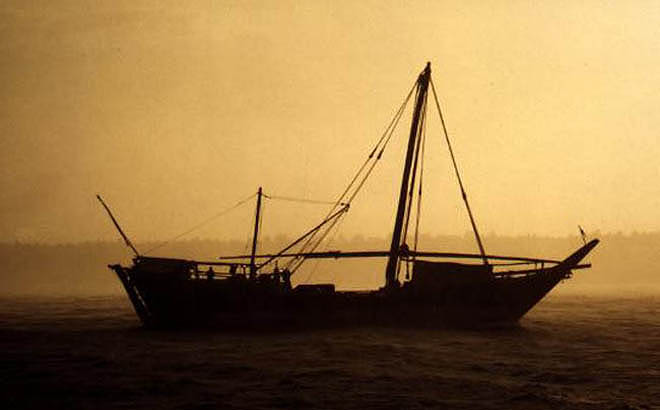
Arab dhow

It didn’t take long to leave the main area that is regularly seen and head down towards the old port where the Dhows are moored. There is an ancient feel to this area, and the water front is full of activity.

There was one man who had been unloading coal from his boat onto the quay side. You could hardly see his features until he smiled. All along there were people onboard their various craft, none of which really looked seaworthy, but which obviously make a regular and long journey to India.

The pathway was broken, and the occasional cat appeared from a rubbish bin. I made my way past the open market where animals are sold. Nothing is hidden here ! It was prayer time, and from many different minarets came the sound of the chanting. There was a lot of dirt and rubbish, uneven walk areas, and tatty shops. All with quite an East African feel. I passed a selection of tents where many plants and flowers were for sale; no garden centre as we have come to expect in England.

I finally worked my way down to the fish market, and was amazed at the white covering to the broken pathway, which turned out to be made up entirely of fish scales.

The next part of the walk was back towards the lagoon where directly in front of me was the Burj Dubai, which has taken

The Burj Dubai

just over 5 years to build, and measures 2684 feet. It is due to open this week, and if you want some office space, the cost is $4000 per square foot. The contrast from such back street filth to the glitter of the world’s tallest building separated by only a few miles brought home the stark contrast of what for most people is reality, and the unreal.

Sadly the amount of rubbish in all its forms is a huge problem, but I did smile when I saw one fisherman improvising, for instead of a float on the end of his line he was using the upturned remains of an old plastic bottle, but it did work!

Nobody bothered me, and I was quite happy taking in the sights and smells, and lost in my own thoughts, amazed that if you smiled and caught somebody’s gaze they would likely wish you Happy New Year.

By Bob Derham