Of course, that’s a crazy idea. So why in business do we so often find almost a direct parallel?
Most people who have had anything to do with manufacturing in any form know that the first thing that generally gets cut in a down turn is training and development.
Why? Because it’s seen as a ‘nice to have’ and most companies reckon they can do without it.
In the very short term, that may be true; note the ‘maybe’
True, because things will seem to be normal. In fact there will be an important change almost immediately – a drop in morale, which many managers will not notice!
But who is in business for the short term? So we need to look at the longer term and see if there is any valid strategy for cutting back on the most vital resource for a business’s people.
Look what has happened to much of our manufacturing capability. Outsourced abroad. Clearly if it’s cheaper to do that then why wouldn’t you?
Change?
Why is it cheaper, though? Because, I believe, most British companies weren’t able to adapt and change quickly enough. Shareholders or senior management got fed up and the decision was made.
Change is a funny thing. If it’s our idea then we’ll do it but if it is seen to be inflicted on us, resistance is guaranteed. This leads us into the next thing:
You can’t impose change. People need to be facilitated to find their own solutions.
Engage with people, ask them where greater efficiencies should be made. This is the only way towards successful change and requires high levels of interpersonal and communications skills.
What’s good for business is the same outside for that matter. Without these skills it is very difficult to develop the relationships which are necessary to encourage people to pull together in times of hardship. These do need developing in people and not to bother is a highly risky option.
So, investing money in planned and structured people development, where benefits and performance improvements can be identified, is a good use of money, especially in difficult times.
Pure luck in discovering things you were not looking for.
But the Buddhist belief is that there is no such thing as luck. See here:
The dictionary defines luck as ‘believing that whatever happens, either good or bad, to a person in the course of events is due to chance, fate or fortune.’ The Buddha denied this belief completely. Everything that happens has a specific cause or causes and there must be some relationships between the cause and the effect. (My italics.)
So you takes your choice! The Free Dictionary goes on to provide a fascinating account of the word history of serendipity:
Word History: We are indebted to the English author Horace Walpole for the word serendipity, which he coined in one of the 3,000 or more letters on which his literary reputation primarily rests. In a letter of January 28, 1754, Walpole says that “this discovery, indeed, is almost of that kind which I call Serendipity, a very expressive word.” Walpole formed the word on an old name for Sri Lanka, Serendip.He explained that this name was part of the title of “a silly fairy tale, called The Three Princes of Serendip:as their highnesses traveled, they were always making discoveries, by accidents and sagacity, of things which they were not in quest of….”
The work that the dedicated folks at WITNESS do is both humbling and uplifting and puts into perspective the value of what we do everyday.
Take 10 minutes from your busy day to view this video and then look at the WITNESS website to see what real change looks like. It will inspire you and enrich your life. It is important.
That reference to the charity WITNESS impressed me. Especially the fact that
Peter Gabriel
it was founded by that great musician Peter Gabriel.
Here’s the video mentioned in the extract above:
So how to close this particular post? Not sure, to be honest. But whether one believes in luck or not, there’s no doubt that we attract the world around us that we ‘deserve’.
As has been said before on this Blog, we get more of what we think about most. So really the Buddhist approach that there “must be some relationships between the cause and the effect” is more than sufficient reason to be a good and integrous member of this planet.
Your task is not to seek for love, but merely to seek and find all the barriers within yourself that you have built against it.Jala ad-Din Rumi 1207 – 1273
One would suspect that readers of this Post title would have many different responses to the word ‘love’. Perhaps in this harsh, economically challenged world, it seems a little quaint to think about love in anything other than a romantic sense.
But, trust me, there’s nothing quaint or ‘away with the fairies’ about reminding us all of both the power of love and the urgent need to bring that power further up the scale of human consciousness. Let’s even try and aim for where dogs are. Dogs intuitively demonstrate unconditional love to those around them that they trust.
Dog love!
Before we look at the effects of love, let’s remind ourselves of some of the outcomes from the stress and trauma generated by present times. A news item from the London School of Hygiene and Tropical Medicine published in July, 2009, said this:
Researchers at London School of Hygiene & Tropical Medicine and Oxford University estimated that soaring stress brought on by job losses could prompt a 2.4% rise in suicide rates in people under-64 years of age, a 2.7% rise in heart attack deaths in men between 30 and 44 years, and a 2.4% rise in homicides rates, corresponding to thousands of deaths in European Union countries, such as the UK.
Nor is the impact just economic. The sudden flipping from the wild optimism of the boom to the personal gloom and self-doubt of recession and system-wide financial crisis is bad for health and well-being.
So it appears as if there’s no shortage of reasons why engaging the power of love offers infinite possibilities for us all.
The BBC recently reported on research that shows that people in love can lower their levels of pain.
Love hurts, at least according to many a romantic songwriter, but it may also help ease pain, US scientists suggest.
Brain scans suggest many of the areas normally involved in pain response are also activated by amorous thoughts.
Stanford University researchers gave 15 students mild doses of pain, while checking if they were distracted by gazing at photos of their beloved.
He said: “One example is a footballer who has suffered quite a painful injury, but who is able to continue playing because of his emotionally charged state.”
He added that while the effect noticed by the Stanford researchers might only be short-lived in the early stages of a love affair, it may well be replaced by something similar later in a relationship, with a sense of comfort and wellbeing generating the release of endorphins.
“It’s important to recognise that people who feel alone and depressed may have very low pain thresholds, whereas the reverse can be true for people who feel secure and cared for.
Prof Gilbert states on his web page that “After years of exploring the processes underpinning shame and its role in a variety of psychopathologies,
Prof. Gilbert
my current research is exploring the neurophysiology and therapeutic effectiveness of compassion focused therapy.” (My italics.)
The old adage that you can’t love another if you don’t love yourself is based on very high levels of awareness. So the starting point to gaining the power of love is self-awareness. Here’s something from MIND:
Good mental health isn’t something you have, but something you do. To be mentally healthy you must value and accept yourself. This means that:
You care about yourself and you care for yourself. You love yourself, not hate yourself. You look after your physical health – eat well, sleep well, exercise and enjoy yourself.
You see yourself as being a valuable person in your own right. You don’t have to earn the right to exist. You exist, so you have the right to exist.
You judge yourself on reasonable standards. You don’t set yourself impossible goals, such as ‘I have to be perfect in everything I do’, and then punish yourself when you don’t reach those goals.
Finally, back to romantic love. The most glorious feeling in the world.
Again expressed so beautifully by Rumi: “The minute I heard my first love story I started looking for you, not knowing how blind that was. Lovers don’t finally meet somewhere. They’re in each other all along.”
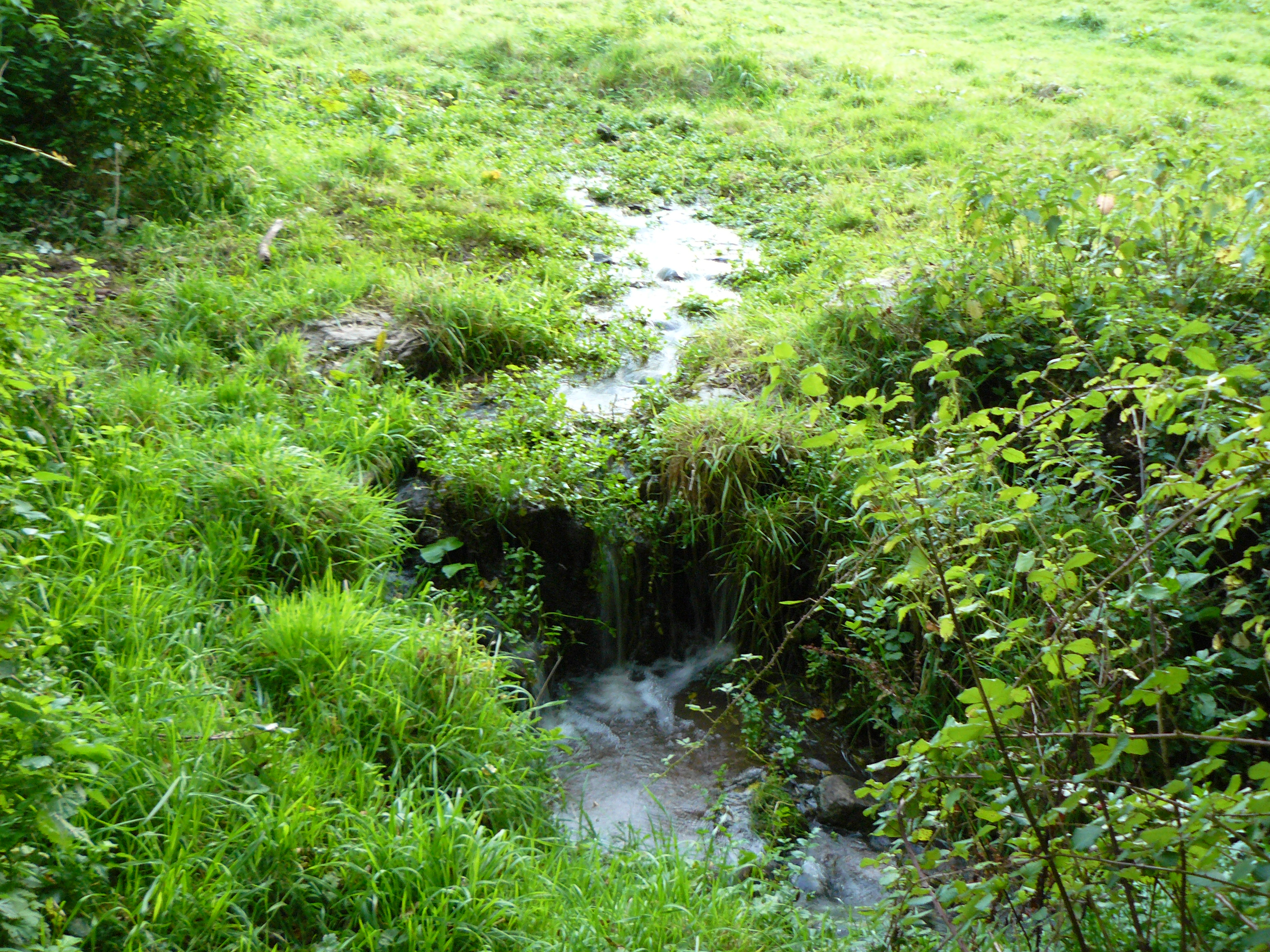
Celebrating the beautiful Planet Earth and a stream running through a field
Evening peace
Today is Blog Action Day and the theme is water. It seemed a worthwhile cause so Learning from Dogs has joined the many thousands of Bloggers ‘speaking’ to millions of combined readers.
I have no idea what aspects of water will be covered by all those many authors but Blog Action Day sets the theme thus:
Why Water?
Right now, almost a billion people on the planet don’t have access to clean, safe drinking water. That’s one in eight of us who are subject to preventable disease and even death because of something that many of us take for granted.
Access to clean water is not just a human rights issue. It’s an environmental issue. An animal welfare issue. A sustainability issue. Water is a global issue, and it affects all of us.
I’m staying over in SW England at present with friends who live in a beautiful part of the County of Devon and that means plenty of lovely walks. Just a few days ago, the setting sun was glorious across the green rolling hills that are so typical of South Devon.
But this day is about water. That bountiful gift from a wonderful planet perfectly positioned from our Sun.
Hopefully, by the time this Post is published (it’s being written on the 12th) the steel rescue chamber above the trapped Chilean miners will be in action, carefully and steadily bringing the men to the surface, one by one. The event will be mainstream news so Learning from Dogs will simply watch from the side.
(And to the huge joy of millions, we now all know the miners are safe! Jon)
But there was something that caught my eye from the BBC News website on the 12th. Here’s the extract:
Meanwhile, Alejandro Pino, a journalist who has been in daily contact with the miners and advising them on handling interviews, revealed that he had been helping them prepare a speech.
“I asked them to give me just one word and with that word I would show them how to create a speech,” he said.
“It was just a try, so I can repeat to you what happened because I was touched by it and they were touched by it too, not because I made the speech but because the word they chose to start with was extraordinary: it was ‘comradeship’.”
Comradeship!
It doesn’t take very long to realise that mining is one of those crafts that relies on comradeship.
Here’s a quote from Antoine de Saint-Exupery, “The greatness of a craft consists firstly in how it brings comradeship to men.”
From the word ‘comradeship’ it seems a small step to the word ‘community’ and all that is implied for the health and welfare of mankind.
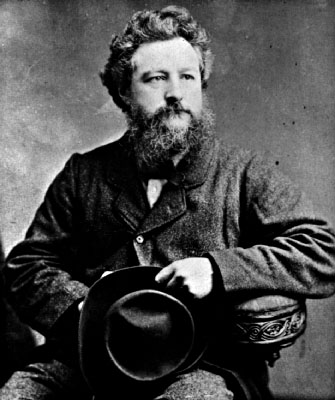
Fellowship is heaven, and lack of fellowship is hell; fellowship is life, and lack of fellowship is death; and the deeds that ye do upon the earth, it is for fellowship’s sake ye do them. (A Dream of John Ball, Ch. 4; first published inThe Commonweal 1886/7)
Fellowship, community, comradeship – call it what you will, it will have to be the essence of mankind’s future.
By Jon Lavin
(Full citation is: Smith, M. K. (2001) ‘Community’ in the encyclopedia of informal education
This Post for Learning from Dogs was inspired by a simple email. An email sent out automatically by Facebook inviting me to join a group committed to holding the Nobel prize in Economics accountably for the crisis.
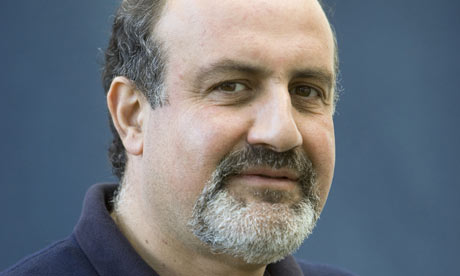
Nassim Nicholas Taleb
That intrigued me. Like thousands of others I had previously read The Black Swan, a book The Times newspaper describes as ” as one of the 12 most influential books since World War II”.
Wikipedia has a thorough description of Taleb much recommended if you have 10 minutes to read it.
Bryan Appleyard of The Times wrote an excellent piece on Taleb on the 1st June, 2008 which may be read here. Here’s an extract from near the front of that piece in The Times:
He spilt the tea – bear with me; this is important – while grabbing at his BlackBerry. He was agitated, reading every incoming e-mail, because the Indian consulate in New York had held on to his passport and he needed it to fly to Bermuda. People were being mobilised in New York and, for some reason, France, to get the passport.
The important thing is this: the lost passport and the spilt tea were black swans, bad birds that are always lurking, just out of sight, to catch you unawares and wreck your plans. Sometimes, however, they are good birds. The recorders cost $20 less than the marked price owing to a labelling screw-up at Circuit City. Stuff happens. The world is random, intrinsically unknowable. “You will never,” he says, “be able to control randomness.”
To explain: black swans were discovered in Australia. Before that, any reasonable person could assume the all-swans-are-white theory was unassailable. But the sight of just one black swan detonated that theory. Every theory we have about the human world and about the future is vulnerable to the black swan, the unexpected event. We sail in fragile vessels across a raging sea of uncertainty. “The world we live in is vastly different from the world we think we live in.”
Despite the article being over two years old, it is still an important piece for anyone trying to understand the causes of the financial mess we are all still in.
Finally, Taleb’s own website is a rich resource of much that will allow us all to better understand where we got to, where we are and what has to change if we are to have real hope for a better future.
Here’s a YouTube video of a TV interview taken in May, 2010.
Here’s an earlier video of Taleb explaining what his theory of black swans is about.
Work to line the top of an escape shaft with metal tubing is expected to finish in the next few hours at the mine where 33 men are trapped in northern Chile.
A winch and pulley will be installed and the shaft tested before the rescue begins, it is hoped, on Wednesday.
Amid the final preparations for the rescue the Chilean health minister said some of the miners were gallantly insisting they should be last to leave.
And some wonderful pictures on the BBC website here.
I’m sure the vast majority of Learning from Dogs readers will be on top of the news that is spreading around the globe reporting that the Chilean miners have been reached. Here’s the BBC:
Rescuers have drilled through to the underground chamber where 33 Chilean miners have been trapped since August.
The breakthrough at the San Jose mine came shortly after 0800 local time (1200 GMT).
It means efforts to remove the miners through the tunnel should begin within days. Tim Willcox was at the mine when the breakthrough happened.
Rescuer workers have broken through to the 33 Chilean miners trapped half a mile underground.
Engineers and relatives of the men began celebrating on Saturday morning after the escape shaft reached the point where the miners have been stuck now for over two months.
Mining minister Laurence Golborne warned though it could take days before attempts start to remove the men from the San Jose mine.
All fabulous news.
Picture from the Daily Mail online.
Contact: Rescue workers broke through to the 33 trapped Chilean miners earlier on Saturday morning
For some reason I have been thinking a lot recently about my school English Master, perhaps as a result of feature articles on the Dead Poets Society and the Oxford Boys.
With a slightly unusual name, and some knowledge of an area I might concentrate on, I checked the internet and, indeed, found an address and phone number which might tie up.
Bearing in mind I left school in 1968, and probably last saw him in 1970, I was apprehensive about him remembering me. I called the phone number.
A man answered, “Are you Mr Anthony Weeks-Pearson?” I asked. “Yes”, he said.
“My name is Robert Derham, I was a pupil at your old school during the 60s”, replied I.
“Oh”, he said, “I was thinking about you only yesterday!”
We then proceeded to have an hour-long conversation covering detailed facts from my happy school days. He was as sharp as a button, and had forgotten nothing!
I learnt so much more about him in that conversation and am looking forward to meeting him again next month. Isn’t that wonderful.
But there’s an even more interesting aspect to this event. That is, what is the nature of coincidences? This video throws some light on this.
Yesterday, Learning from Dogs published a Post about Ricochet, the surfing dog.
Ricochet - follow this dog!
I was delighted to receive a ‘reply’ from this wonderful canine which is reproduced in full here.
Thank you for posting about my work. It really helps raise awareness of my causes, and I appreciate it!
Here is the latest video of me & little Ian with the brain injury. He experienced a huge milestone in this video, during the session. http://www.youtube.com/watch?v=-iIv5t2qKL4
Indeed, I have to offer my thanks for the reply from Ricochet because my travels over the last few days made it impossible to keep the Blog posts running. This reply, turned into a Post, prevented a day being missed which, if it would have happened, would have been the first missed day since the Blog started on July 15th, 2009!




 Learning from Dogs