A Nat Geo talk with some surprising conclusions.
Won’t say anything more. Just enjoy.
Dogs are animals of integrity. We have much to learn from them.
Category: People
Just this and two other chapters before the end of November!
Where did the month go!
As I explained yesterday, I shall change chapter publishing from next Monday.
From next Monday I will revert to publishing the range of articles and essays that I have been doing since July 2009. In other words, a new post every day of the week, just as before. But, in addition, I will be releasing three of the forthcoming draft Chapters, on Monday, Wednesday and Friday.
So if you are not into reading the book, just pass those posts by. If you are, poor soul, then read away to your heart’s content.
Any reactions or comments would be wonderful.
With that, on to the story!
As so today.
oooOOOooo
Chapter Thirteen
It was February 14th, 2007; Valentine’s Day. What would have been his seventh wedding anniversary for him and Maggie. Eight weeks to the day since she had blown his life apart.
Rather than mope on his own, he had decided ahead of time deliberately to arrange something unusual and different for this potentially disturbing day. A chance remark with friend, Julian, who lived in Exeter, revealed that he was a private pilot and, coincidentally, also a single man; his marriage having failed a few years previously. So when Julian offered to fly Philip and him to Guernsey for lunch he could hardly believe his luck. It turned out to be a wonderful experience even when soon after climbing out from Exeter Airport Philip was blown away by the incredible views of the broad reaches of the English Channel and the Atlantic way beyond. Julian demonstrated the remarkable ease with which two people can travel to a place in a light aircraft, in this case an island no less, enjoy a few hours of food and fresh air, and be back home in not a lot longer than it would have taken a ferry to steam one-way from Poole in Dorset to Guernsey. Philip had often wondered what becoming a private pilot would be like and Julian’s generous gift had triggered a little thought that maybe, once the crap of the divorce was behind him, he might enrol in flying lessons.
Thus upon their return to Exeter Airport and later when Philip collected Pharaoh from Sandra’s kennels and set off home to Harberton he felt good that he had not succumbed to the regrets of his lost relationship with Maggie, that could so easily have hung over this day.
Back home, with both him and Pharaoh fed and watered, fire burning brightly, he reflected on the past sixty days. It had been an incredible roller-coaster of feelings, moods and emotions.
At the root of Maggie’s unfaithfulness had been her longing for another child. Her first child, a daughter, had chosen to go and live with her father before Maggie and Philip had met. He knew that Maggie had been conscious that her child-bearing years were almost over. He guessed that with him having had that vasectomy so long ago, and being significantly older than her, that Maggie had been drawn elsewhere.
It didn’t lessen his anger towards her, not in the slightest, because he truly believed that trust was fundamental to any relationship and trust was impossible without the openness of one’s concerns and worries.
That day after the terrible day of December 20th, Philip had rung Diana, his elder half-sister; James’ mother. He explained what had happened. Her reply was immediate and all and much more than Philip had expected. Diana told him to put some things together and to come straight over to the house, with Pharaoh of course. Philip replied by asking if it would be alright with John, her husband, to which Diana had simply told him not to worry, she would speak with John and to come across now.
So that’s just what Philip did later that Thursday afternoon. Leading to him spending eight days of being loved and cared for by Diana and John. He had known them for more years than he cared to remember. In fact, Diana and her sister, Rhona, who died a few years previously, were the primary reasons why Philip had settled down in South Devon after returning to England from overseas in the early 1990s.
Luckily, Diana and John’s house and small-holding, just up the lane from Littlehempston, was only six miles from Harberton so it had been easy for Philip to pop back home to pick up clothes and food for Pharaoh over the Christmas period. Pharaoh thought that every one of those days over with Diana and John was Christmas Day!
He didn’t have that talk with Maggie the day after she went to her parents and, frankly, he wasn’t bothered. All that mattered was getting his mind around this new phase of his life that had been thrust upon him and, in his own time, moving on to Plan B, as it were, whatever that turned out to be.
Which, in a very real sense, was what Philip was musing over that evening back home after his Valentine’s Day flight and lunch with Julian in Guernsey.
When he had first spoken with Julian back in January and the idea of the flight had been mentioned, Julian had also recommended avoiding person-to-person contact with Maggie. His argument was that the wounds would more quickly heal by appointing a solicitor to handle the legal separation and eventual divorce, than having to have continued contact with Maggie. That’s what he had done.
But there was one aspect that did not hang easily over Philip; that of what to do with the house. He was torn. It was a lovely converted stone barn in a popular South Devon village. If he stayed there, inevitably there would be some pay-out due to his ex and that galled him, seriously so, as it had been ninety percent of his money that had paid for the house. He resolved to go and talk to some estate-agents in Totnes over the coming days to see if that made the decision of to sell or not to sell easier.
It turned out to be the next day. He had run into Totnes in the morning to pick up some food from Safeway, then walked the short distance to Fore Street at the bottom of town. It had been ages since he had looked through the windows of an estate agent, at the many panels advertising properties for sale, and he just couldn’t believe his eyes. The prices were astronomical. It was the same in all the agents’ windows: Rendells; Fulfords; Michelmore Hughes; Luscome Maye. Curiosity overcame him. On the way back down Fore Street he went into Fulfords and was quickly seen by a eager young, slick-haired sales assistant. Philip explained where he lived and that he was curious as to the current price. The young man asked him to remain seated and went across to speak to someone whom Philip presumed was one of the partners. They both returned to the desk where Philip was sitting.
“Hello, my name is Jeremy Stanton and I’m a partner here at Fulfords. How may I assist you?”
“Jeremy, my name is Philip, Philip Stevens, and I live in Harberton, in Tristford Barn in the cul-de-sac just off Tristford Road.”
“Yes, I know where you are. Isn’t your house that old, converted stone barn that overlooks the other properties around you? That beautiful barn, to my eyes anyway?” replied Jeremy.
“Yes, that’s the place. I purchased the barn privately from the owner who did the conversion, bought it back in 1999, and just wondered what it might be worth these days.”
Jeremy paused for a moment, “Oh, wasn’t that Barry Williams who did the conversion?”
Philip was impressed.
Jeremy indicated to him that they both go to a small room towards the rear of the open floor area.
“Philip, would you like a coffee or tea?”
“Well a tea would go down very nicely.”
Jeremy stepped outside the room for a couple of minutes and to Philip’s great surprise came back with a couple of mugs that obviously held freshly-made tea, not of either the instant or machine variety.
“I made us a couple of mugs of the proper tea. Can’t abide the instant stuff.”
Philip took a careful sip from his mug. The tea was hot to his lips yet very welcome.
“So Philip, you purchased the barn in 1999, I guess going on for eight years ago now. Do you mind telling me what you paid for it?”
“I paid one hundred and sixty thousand pounds, that I’m pretty sure was a little over the odds at the time. But, as I’m sure you know, properties in Harberton don’t often come on to the market especially a converted stone barn right in the middle of the village.”
“Philip, I couldn’t agree more. Now, of course, we would need to come over and take a look in order to give you a more accurate estimate but I would say that today’s price, especially in these times of significant demand for village properties, won’t be far off five hundred thousand pounds.”
The look on Philip’s face as he heard that estimate from Jeremy said it all. He was staggered.
“I had no idea that prices had risen to that level.”
“So, Philip, do you want us to come over to Harberton and give you a detailed analysis and estimate?”
Philip could hardly quieten his mind and stammered out, “Er, er, yes, I suppose so. No, sorry, of course you should come out. That would be very helpful.”
They settled on a date, the coming Saturday, just the day after tomorrow.
Later that afternoon, when out walking with Pharaoh, he thought more about his future. It seemed to be pretty clear to him that selling Tristford Barn made a huge amount of sense. There were strong and persistent rumours that property prices were overdue for a correction, that selling the barn would allow him to settle with Maggie and pocket a tidy amount of cash while he worked out where his life was going. Going on to reflect that if it turned out that it might be a while before he bought another house, then the present savings rates would reduce the pain, big time, of paying for rented accommodation. That last thought of his being immediately tempered by Pharaoh barking at something up in the trees; squirrels most likely. Of course, renting somewhere dog-friendly might be a challenge. The thought then crossed his mind as to whether the place that he had been renting over at Diptford, before he and Maggie had bought Tristford Barn, might be available and, more importantly, would they accept a dog; after all it had been a farm property with sheep and livestock. Upper Holsome Farm, that was it. What was the woman’s name?
As he drove back home her name came to him. It was Liz Jones, of course. He recalled how she had explained that her husband had died from a tragic tractor accident back in 1990 and Liz had decided to keep the farm running but to let out a wing of the main house to ensure some steady money coming in.
Liz’s phone rang a few times before it was answered.
“Hi, is that Liz?”
“Yes. My goodness, is that you Philip? How are you?”
Philip summarised what had happened over the past couple of months.
“Oh, I am so sorry to hear that. Gracious, it only seems like yesterday that I was at your wedding at Harberton Church.”
“Liz, it was seven years ago yesterday. Anyway, moving on. I’m kicking around the idea of selling Tristford Barn and perhaps renting somewhere while I take stock of things. So just wondered if you were still renting out your rooms. But, Liz, it wouldn’t be just for me. I now have a beautiful German Shepherd dog: Pharaoh. He’s the love of my life. He’s four this coming June. So I didn’t know, assuming you are still letting your rooms, whether or not a dog could be included.”
Liz’s reply was direct. “For God’s sake, Philip, this is still a working farm and you’ll will remember the dogs we have here. Of course your dog would be welcome.”
Philip felt a ray of emotional sunshine lighting him up. Pharaoh sensed it as well, coming over to where Philip was sitting with the phone and laying his head across Philip’s leg, so typical a gesture for him. What a sensitive dog he was.
“That’s fantastic. Let me see how things develop but whatever, I’ll stay in touch, Liz.”
“Yes, please do. I have a professional woman in the rooms at present. She’s something to do with Plymouth Hospital. But, as it happens, it wasn’t that long ago that she was saying to me that she might be facing a job move during the year. I’ll quietly sound her out. Oh, and Philip, the best of luck. You’re a good man and it will all turn out fine, trust me.”
“Thank you, Liz, thank you so much. Will be in touch.”
And with that Philip rang off, stroked Pharaoh’s soft warm head and felt a whole lot more contented than he had done for quite a while.
Again the evening, after he had made a meal for himself and fed Pharaoh, was a time for more inner reflection. One of the things that had been troubling him was the incredibly intense emotional reaction that he had had to Maggie’s announcement of her miscarriage back that last December.
When he had been staying with Diana over Christmas, they had had long talks about their father and the consequences of his death all those years ago. Diana had said to Philip that while she had been aware of the trauma it must have caused him, she had never shared with him her concerns about the long-term possible emotional consequences. The suddenness of their father’s death, the way he must have felt shut out from everything, even though she had no doubt that everyone was doing their best to protect him.
Philip knew that Diana had been stirring up some deep feelings because of the way he had such trouble even listening to her words. So, as he sat before the warm wood stove, Pharaoh fast asleep on the rug before him, he thought that now might be a good time to seek some personal counselling. The last thing he wanted to do was to carry baggage, known or unknown, into the next phase of his life. He resolved to call Jonathan Atkins in the morning.
2,337 words. Copyright © 2013 Paul Handover
This blog publishing of chapters may not be that smart!
Publishing the chapters of my NaNo novel since the start of the month has had both positive and negative results. On the positive side, there’s no question that readers who have clicked the ‘Like’ button have really boosted my morale. On the other hand, it’s been impossible not to notice how on days when a Chapter has been published on the blog, readership levels have fallen, at times dramatically so.
So today is the start of the last six days of NaNoWriMo. There’s no question that I shall finish the draft of the book. I’m already on the edge of 45,000 words.
However, if I publish four chapters on Learning from Dogs this week, that will bring the total up to 15. The completed draft of the book will be around 25 chapters, possible one or two more. To subject you dear readers to another three weeks of four chapters a week seems wrong.
So this is what I propose.
From next Monday I will revert to publishing the range of articles and essays that I have been doing since July 2009. In other words, a new post every day of the week, just as before. But, in addition, I will be releasing three of the forthcoming draft Chapters, on Monday, Wednesday and Friday.
So if you are not into reading the book, just pass those posts by. If you are, poor soul, then read away to your heart’s content.
Any reactions or comments would be wonderful.
With that, on to the story!
oooOOOooo
Chapter Twelve
Philip was lost for words. No, far more than that. He was lost for words, feelings, reactions, responses. He was totally and utterly numbed.
Maggie had turned away from him, pulled the bedcover over her head, signalling who knows what.
Philip stood up slowly, practically in a trance, left the bedroom and climbed the stairs up to the living room one slow, deliberate step at a time. He put his empty tea mug in the cream-coloured plastic washing-up bowl sitting empty in the kitchen sink. He slowly crossed the living-room and stepped across to the full-length window just to the left of their wood-stove that sat in the corner of the room, the window that looked out over the grass slope that comprised much of their garden area. Philip looked out over the grass, the birds collecting seeds or whatever they feed on with a Winter’s night rapidly approaching. He looked beyond the grass, beyond to Jimmy Fletcher’s fields, then looked over to his left to where trees ran alongside a small stream that occasional filled with water during periods of rain. The Western sky was still largely cloud free. It would be dark within an hour or so. He was incapable of grasping anything, he was emotionally dead. In fact he was so disconnected from the world around him that he was barely aware of Pharaoh slipping down from the settee, where he shouldn’t have been in any case, and quietly coming up to his left side. Pharaoh had sat back on his haunches and touched his wet nose against Philip’s left wrist. Philip crumbled, his chest heaving and tears flowing from his eyes. He collapsed down to floor level, put his arms around the only creature in the world, human or canine, that cared for him, and cried his heart out. Pharaoh gently licked the tears from his cheeks. It was the release that Philip needed. Slowly over the next ten or fifteen minutes Pharaoh’s clear and obvious concern for Philip brought him back in touch with the world. And he realised just how angry he was; just how incredibly angry
He was still holding his arms around Pharaoh when he heard the sound of Maggie coming up the stairs. He turned his head and watched her go across to the kitchen and start putting Pharaoh’s evening meal together.
“Just you stop what you are doing!”, he shouted at her. “Nothing is ever going to be the same now and you don’t need to ask me why! I’ll be feeding Pharaoh from now on. He is not your dog, not in the slightest now.”
Maggie turned and went downstairs without a word, indeed without a look towards Philip.
Philip went across to the kitchen area and completed putting Pharaoh’s food together in his stainless-steel bowl. It was placed on the floor in its usual spot. He also refreshed Pharaoh’s water bowl.
Pharaoh came over to his food and, in an almost reluctant manner, started to eat. Philip was of no doubt that the dog was affected by what was going on. Any dog would have been and Pharaoh was no ordinary dog. Like most big dogs and especially like other German Shepherds, Pharaoh was incredibly sensitive to the feelings and emotions of those humans in his life.
Philip’s mind was now churning over and over, raising question after question. How long had Maggie been seeing whoever this bastard was? When did she become pregnant? Was she pregnant when they had gone on holiday to Turkey? That last thought made him sick to his stomach. The dirty, rotten, two-timing cow! To think that he had been making love to his wife, rediscovering what he believed was their genuinely loving relationship and all the time she had had …… he couldn’t even finish the thought!
He opened the ‘fridge door and took out a beer. Not even bothering to find a glass, he carried the can across to the settee, pulled the ring-top, took a long mouthful and tried to marshal his thoughts, the one most dominating his mind was the sleeping arrangements for the coming night-time. The answer came almost immediately for he heard Maggie down in the hallway. She came up the stairs to the point where she could face him.
“I’ve rung my parents and I’m going across to their place now. Can’t imagine you want me staying here!”
“Probably best under the circumstances,” came Philip’s gruff response. “Call me in the morning because, believe me, you have got some questions to answer.”
There was no reply from Maggie as she let herself out of the front door. Philip noticed Pharaoh looking out of the front window, looking intently at her as she started her car and drove down the driveway, pausing only to open the gate, manoeuvre the car to the cul-de-sac, come back and close the gate, and disappear from sight.
He sipped at his beer, deep in thought, trying to re-adjust his whole life. He looked at the clock, their grand old long-case clock that Philip had spent hundreds of hours bringing back to working order. In what already seemed like a previous life, he recalled shouting out a ludicrously silly price at a morning auction at the sale rooms in Totnes, back some three or four years ago now. The item in question had been the oak case of this English clock utterly bereft of any working parts, not even a dial face. Upon querying if there were parts, an auction assistant had simply pointed to a large cardboard box placed by the clock case. Philip had looked inside the box and seen an incredible jumble of clock bits and pieces, almost as if someone had taken the clock mechanism completely apart and gone on to something else in their life. Frankly, he hadn’t a clue as to whether everything was there but, hey, worth a punt.
Indeed, it had been very much worth the punt because the auctioneer had opened the bidding with, “So who will give me a hundred pounds for this long-case clock, believed to be early eighteenth century?” No interest from the fifty or so people clustered around. “What about fifty? Who will start me there?” Again, no interest.
Philip had raised his arm, attracted the eye of the auctioneer, and called out, “I’ll bid twenty-five.”
“I’m bid twenty-five pounds for this genuine oak-case English grandfather clock with an eight-day movement. Anyone raise that to thirty pounds?”
Twenty seconds later the auctioneer’s gavel struck his block, “Sold to the gentleman down to my left for twenty-five pounds!”
It took Philip more than three months to fathom out how to reconstruct the intricate parts of the clock’s movement, aided by many visits to Totnes Museum that was beautifully situated within an authentic Elizabethan Merchant’s House that included a number of working long-case clocks. In fact, Philip had gone there so regularly that, under supervision, he was allowed to open a couple of the clock cases to better understand how the clock movements functioned.
Philip reluctantly dragged himself back from pleasant memories of earlier times to the reality of this evening of December 20th. His eyes focused on the time; it was a little after five P.M. Completely on the spur of the moment he realised that over in California it would be something after nine in the morning. Philip picked up the phone and dialled Danny’s mobile phone number.
Within a couple of rings the call was answered, “Hey, this is Dan.”
Philip quickly established that Danny was out walking in the desert with his dog Wendy.
“So how goes it Philip?”
“Danny, just got an early Christmas present from Maggie.” Philip went on to explain what had happened just a few hours ago.
Danny’s response was clear and direct, “Hey man, ain’t that the works. Hell, I’m so sorry to hear that. Man, life can be such a bitch at times.”
Philip heard Danny calling Wendy back from something it sounded she was chasing. He then continued, “Hey, just been thinking. You get your arse out to California now, you just come on over.”
“Danny, I would so love to do that. But, hey dear friend, just not possible right now as I’m facing a pile of shit a mile high. But, trust me, just as soon as I’m clear I’ll be there. No doubt at all.”
1,420 words. Copyright © 2013 Paul Handover
Ouch, ouch and more ouch!
In yesterday’s chapter I wrote of what, perhaps, was one of the better times in the lives of our hero, Philip, and his wife Maggie. But as we move to Chapter Eleven the phrase ‘first impressions may be misleading’ does come to mind.
oooOOOooo
Chapter Eleven
Later that evening, after he and Maggie had eaten their evening meal, a rather poor affair that Philip had to admit, Monday being his turn to prepare dinner, he couldn’t shake off something approaching a cloud over him. Most likely associated with the forthcoming fiftieth anniversary of his father’s death, he guessed.
It was the same every year. Whatever he was involved in, however interesting and engaging his life was during the last few months of the year, Philip knew that the period between his birthday in early November and the date of his father’s death on the twentieth of December had some ill-defined greyness about it. Then as soon as the twenty-first of December dawned, he was back to his usual brightness. Indeed, he was always embarrassed by the fact that his pre-Christmas mood never arrived until the twenty-first of December, frequently a bit on the late side to engage properly in the annual ritual of present-buying.
Still that’s how it had been for every year of his adult life and, privately, he wondered if that was his way of treasuring a father he never really knew.
Thus so it was this year. In the sense that it was about a week before Christmas Day, probably around the eighteenth of December that, again, he had to pull himself up sharply and start thinking as to what he should give Maggie as her main present.
What really caused him to focus on Maggie and Christmas was a very strange, decidedly untypical, interaction between Maggie and Pharaoh. Up until then, whenever Maggie had gone out somewhere on her own, Pharaoh would always bark as her car turned into the driveway. On their upper floor, the main living room area, there was a floor-to-ceiling pair of glass-panelled doors overlooking the front of the house, the garden and their short driveway and their five-bar, wooden gate. The glass doors would have been wooden shutters back in the days when it was a cow barn. Today, the doors could be opened during hot summer weather; there was a wooden rail across the opening to prevent any falling accidents.
Pharaoh’s usual routine with arriving cars was to bound up to the windows barking furiously when he heard the latch on the gate being handled and when any car drove up the driveway. If it was Maggie returning home then as soon as he recognised her he would bound down the short, single flight of wooden stairs from the living-room level to the hallway and stand inside the front door, also glassed from head to foot, wagging his tail furiously until he was let out whereupon he would run joyously to her.
However this day, Philip was pretty sure is was the Monday, Pharaoh did his usual barking act as Maggie drove in. Then there was the sound of Pharaoh coming down the steps to the front door with a growl in his throat. That’s what made Philip look up from his computer screen; he was certain that he had heard Maggie’s car but then the growling suggested otherwise.
Pharaoh’s growl became quite intense, practically a sound from him that Philip had never heard before.
He quickly pushed his office chair back on its wheels and stood up from his desk. Within moments, he was beside Pharaoh looking out at Maggie walking back down the driveway to close the front gate.
“Pharaoh, quiet!”, Philip said with a sternness to his voice. Pharaoh reduced the constant growl to a sort of angry muttering in the back of his throat. Philip had no doubt that Pharaoh was not playing around. To the point where he practically dragged Pharaoh by his collar back into the small office and firmly closed the door on the two of them.
Pharaoh pushed to the office window, also full length, his eyes, ears and full body stance continuing to signal a great unease. What on earth was happening? Philip just couldn’t fathom it out.
He left his office room, closing the door with Pharaoh inside, and went out to meet Maggie who was walking towards the house with a semi-full bag of groceries in a cloth shopping bag.
“Hi, is that all there is to bring in?”, Philip asked.
“Yes, only a few items that I needed from Safeways.”
As Maggie came up to the front door, Philip continued, “You know, there’s something weird about Pharaoh just now.” He went on to explain what had just happened, continuing, “It’s almost as though he didn’t know it was you.”
They climbed the stairs up to the open-plan kitchen area that was at one end of the living room, to the right of the stairs, the main living room area to the left. Philip then went over to the log-burner in the corner of the living room and fiddled with it for a while. In fact, his mind was still on Pharaoh wondering if his angst had now subsided. Only one way to find out.
He returned to his office room and opened the door. Pharaoh was lying on the rug. He looked up at Philip and, again, very strangely, only raising himself from the floor and following Philip upstairs to the living-room after a great deal of coaxing.
It was all very peculiar.
Wednesday, the 20th, dawned to reveal a bright pleasant morning with soft, cumulus clouds across a broadly blue sky. A great morning to be over at the woods for a walk.
After breakfast, Philip called out to Maggie, who had been in the bathroom for a while, actually more than a while when he thought about it, that he and Pharaoh were off to James’ woods. Philip just heard Maggie call out that she had heard him.
It was a wonderful walk. Pharaoh was in his prime chasing squirrels, a fairly pointless task Philip always thought, then sticking his nose down the many rabbit holes, sniffing such large lungfulls of air that Philip wondered if Pharaoh thought he could suck the poor rabbits out of their burrows.
The date, fifty years to the day that his father had died, seemed to rest much more easily with him than he had feared. It was all so, so long ago. It crossed his mind to buy Maggie a bouquet of flowers on the way home.
A couple of hours later, he and Pharaoh bounced into the house, a fresh bouquet of flowers newly purchased at Safeways in Totnes in Philip’s right hand.
“Hi sweetheart, bought you these. Just thought you looked a little off-colour earlier this morning and that some flowers might cheer you up.”
As he was offering the flowers to Maggie he realised that whatever it was that had been afflicting her earlier that morning was still troubling her. Frankly, she looked very pale and drawn.
“Maggie, what’s the problem? You don’t look at all well.”
“Philip, do you mind if I lie down on the bed for a little while, just not feeling that brilliant.”
“No, of course not,” came his reply. “Look you go and lie down, I’ll put the flowers in water, make us both a nice cup-of-tea and bring them down to the bedroom.”
With that Philip went upstairs to the living room, dug out a glass vase and put the flowers in water, placing the vase with the flowers on one of the work surfaces in the kitchen.
He also noted that the fire was pretty low and needed rejuvenating. Thus it was nearer thirty minutes before he returned to their bedroom with the hot teas. Maggie’s body was under the bedspread, her head back against a pair of pillows, still giving the appearance of being significantly out of sorts.
He put Maggie’s cup down on the bedside table next to her and cradling his own mug of tea in his hands sat down on the edge of the bed, just adjacent to where Maggie’s knees were under the cover.
Maggie heaved herself up, leaning back against the headboard and reached for her tea. “Thank you, Philip, that was very kind of you.”
They both sat without saying a word, Philip conscious of the hot tea reminding him of an empty stomach not yet having had lunch.
Maggie took a breath, put her empty cup down on the bedside table, and looked at Philip.
“Philip, I don’t know how to say this. The reason for me being unwell this morning was that I have just had a miscarriage.”
Philip’s world came to an instant, shuddering halt. Of course, that’s what Pharaoh had picked up, the impending breakup of his home. Because, after the birth of his second child with his first wife in 1972, Philip had opted for a vasectomy.
1,495 words. Copyright © 2013 Paul Handover
oooOOOooo
Have to wait until Monday to see where it all leads to.
Steadily working towards the climax in Philip’s life.
Tomorrow in Chapter Eleven, Philip’s life comes apart, in spades. Thus today’s chapter produces the contrast of a sweet life, running smoothly to create the appropriate backdrop to tomorrow.
Having been very unhappy with my feelings about this ‘write a novel in a month’ as expressed on Tuesday in my introduction to Chapter Nine, today I’m much more contented. The thick end of 34,000 words are now down on ‘paper’ and yet another pep talk from an experienced, published author really spoke to me. In fact, I’m going to repost that talk here:
Dear Novelist,
Okay, here we are: more than halfway through, right in the thick of it. Probably at this point the last thing you want is a big lecture on Writing and How You’re Supposed to Do It. So I’m not even going to talk about writing.
Instead I’m going to talk about a metaphor for writing. Better, right?
Let’s say you’re not a writer hard at work on your first novel. Let’s say you’re a Tribute who’s just been selected for the Hunger Games. You’re freaking out because you’re facing almost certain death in the Arena. And instead of a published author, I’m going to be that drunk guy who’s supposed to be telling you how to survive.
It’s a good fit. Like Woody Harrelson, I am short and bald. And I like a drink. I may be drunk right now, who knows? But more important, I’ve done this before and lived. So I’m here to tell you: it is survivable.
Writing Requires Nerve
Which brings me to my first point. Writing a novel belongs to that category of thing—like surviving the Hunger Games, and eating an entire large pizza by yourself—that appears to be impossible but actually isn’t. I’ve written four of them, with another coming out next year, and every time around halfway through, I get to a point where I say to myself: let’s admit it, this just isn’t going to happen. Given the number of words I have written, and the number of words I have left to write, and the rate at which I am currently producing words, and the crappiness of said words, it is mathematically and physically impossible that I will ever finish this book. It’s like the arrow in Zeno’s paradox: it’ll never get there.
But the thing is, the books do get there. It astounds me every time, but the books get done. How? It’s not about having some triumphant breakthrough moment. Being a novelist is a matter of keeping at it, day after day, just putting words after other words. It’s a war of inches, where the hardest part is keeping your nerve. The number one reason why people who want to write novels don’t is that they lose their nerve and quit.
So heads up: once you get in that Arena, Tributes are going to be biting the dust to the left and right of you, and it’ll be because they’ve lost their nerve. But that won’t happen to you. You’re going to keep your nerve. If talent exists, that is talent.
Writing Comes with Doubt
So, you are a Tribute for the Hunger Games but you don’t feel confident. You feel like crap. Like you have no idea what you’re doing. Sometimes you pick up your bow and arrow or your throwing knives and you’re like, I don’t even remember how these damn things work. Why? Why are you different? What is wrong with you?
So this is point number two: nothing is wrong with you. You’re not different. Everybody feels as bad as you do: this is just what writing a novel feels like. To write a novel is to come in contact with raw, primal feelings, hopes and longings and psychic wounds, and try to make a big public word-sculpture out of them, and that is a crazy hard thing to do. When you look at other people’s published novels, they seem gleaming and perfect, like the authors knew what they wanted to do from the start and just did it. But trust me: they didn’t know.
What you’re feeling is not only normal: it’s a good sign. A writer—someone once said—is a person for whom writing is difficult. That resistance you’re feeling is proof that you’re digging deep. To write a novel is to lose your way and find it over, and over, and over again.
A lousy draft proves nothing. Rough drafts are rough—everybody’s are. Being a writer isn’t like being a musician. You don’t have to get it right every day. The wonderful thing about being a writer is, you only have to get it right once. That’s all anyone will ever see. The only bad draft is the one that doesn’t get finished.
So get back at it. Let the others lose heart and give up. You stay out there in the woods. The weapons of a writer, James Joyce once wrote, are silence, exile, and cunning, and probably he wasn’t thinking of the Hunger Games when he wrote that—probably—but it fits the metaphor. While Tributes are falling left and right, you will fashion man-traps from ninja stars, steal weapons from the fallen, and bide your time, and when you’re ready you will come out of those woods like an avenging angel of death.
Forget that stuff about the odds being ever in your favor. What does that even mean? Screw the odds. There are no odds. You’re a writer, and writers make their own odds.
I’ll see you in the Victors’ Village.
Lev
Lev Grossman is the author of the bestselling novels The Magicians and The Magician King
So to Chapter Ten.
oooOOOooo
Chapter Ten
Well, as is the way of things, 2005 came to an end, moved on to 2006 and before Philip could really get his head around it, the end of January was in sight. It was a New Year but in so many other ways nothing really seemed to change, either locally or internationally. Philip was disgusted with the state of the world at so many levels; the tragedy of the conflict in Iraq being just one example of a political system that seemed broken beyond repair. Locally, house prices were still ramping upwards and there was a sense that inflation rates were starting to rise. But, hey ho, most people seemed to be enjoying the party.
Philip was enjoying this period of his life as well; immensely so. There was just the right balance of mentoring to offer both a regular income and a variety of interesting engagements. His relationship with Pharaoh was fulfilling to an extent that he could never have before imagined. Plus the sessions over at Angela’s place were clearly stimulating for Pharaoh, and a joy for Philip because of this unanticipated aspect of owning a teaching dog. He had been undertaking some coaching for a youth opportunities organisation in Plymouth, a real and pragmatic effort to reduce the high levels of youth unemployment that had been a hallmark of the city of Plymouth for some time now. Last, but by no means least, he and Maggie seemed to be much more settled in their relationship.
Thus the weeks became months and Winter gave way to Spring, possibly the most delightful time of the year for South Devon, especially for those who lived in this part of England.
It was on such a beautiful Spring day in May, in fact the Monday of the late Spring Bank Holiday in May, with he and Maggie having an afternoon tea by the raised flower beds directly in front of the house, when he heard his office telephone ringing. Ever the salesman who could never let a phone ring unanswered, Paul stepped the ten paces inside to his office room and picked up the receiver.
“Hallo.”
“Philip, is that you, it’s Jonathan.”
“Hallo, Jonathan, this is a nice surprise, how are you?”
“Good thanks. In fact very good. Because last Friday was the end of my relationship with Cowdrays.”
Philip could hear the excitement in Jonathan’s voice.
“I know I shouldn’t have called you on a Bank Holiday but didn’t want to wait until tomorrow and find you were away from your desk.”
“Jonathan, it’s not a problem at all. One of the things that all of us find out, those who run their own businesses, and find out pretty quickly, is that the concept of nine-to-five is dead and buried. Are you ready for us to get together?”
“Yes, any time over the next couple of weeks, your place or mine.”
“Great. Just hang on a moment while I look at my diary. What I will say is that while you had indicated preferring that we worked over at your place, the first few sessions will be easier on me over here. That’s because I will have close-to-hand reference materials that almost certainly will be relevant to you.”
There was a pause as Philip looked at his diary.
“How about the morning of the fifth of June, in other words a week from today? Say ten o’clock?”
There was a return pause before Jonathan replied by saying that it was perfect.
Philip asked, “Jonathan, how are you with dogs? Because Pharaoh is usually free to be around the house and just loves being in my office when I am chatting to someone.”
“Not a problem at all, I’m very fond of dogs and especially German Shepherd dogs,” came Jonathan’s reply.
“Fantastic,” and Philip went to add, “In fact he will have just turned three-years-old; his birthday is June 3rd. See you in a week’s time. Take care.”
That first meeting with Jonathan came upon Philip almost before he could breath. He wasn’t sure if it was an age thing but the days, in particular, and time in general just seemed to fly past now.
As Philip had expected, working with Jonathan was quite unlike any of his previous mentoring engagements. Because previously whoever he was working with was involved in a business that was dealing with a tangible product or service. Thus even back to the days when he endeavoured to assist an accountant, rather poorly if he recalled, at least the product, while not something you could hold in your hand, was something that didn’t touch on people’s sensitivities. Philip smiled at that recollection thinking there might be some humour around the idea of whether or not accountants upset people. No, back to his main line of thought.
What Jonathan was presenting to his potential customers, was entirely concerned with the delicate and complex issue of human relationships; nothing more, nothing less.
Slowly over their next four meetings, what became clearer and clearer to Philip was that the route to finding new clients for Jonathan, the way to develop his business on his own account, was to direct a really appropriate open question, and salesmen do so love open questions, to the prospective client, to the professional person, along the lines of, ‘when you reflect on the relationships around you within your business life, what strengths and weaknesses come to mind?’
It all seemed to be in line with Jonathan’s ambitions and Philip’s only regret was that between his and Jonathan’s commitments elsewhere, their meetings frequently were interspaced by a couple of weeks, at times more.
Thus it was at the end of their meeting on the 16th August when sharing diaries, looking for the next mutually convenient date, Philip had to say to Jonathan, “I’m afraid September is going to be a challenge as Maggie and I have decided to take a holiday. Somewhere in the Mediterranean; possibly Turkey.”
Jonathan looked up from scanning the pages of his diary in anticipation of Philip’s next sentence.
“Can’t be sure of the dates just now, because we haven’t booked kennel space for Pharaoh, but within the next week that should all be settled and flight tickets arranged.”
Jonathan replied, “Give me a ring when you know your dates and we’ll pencil in our next session to suit us both.”
That was agreed.
Philip and Maggie’s vacation dates were soon arranged, Pharaoh’s kennel space booked, and before they knew it, they were winging their way to a two-week vacation in the coastal town of Kaş, in Turkey.
It was a beautiful holiday. Philip mused that in ways that were beyond his grasp the holiday was more relaxing, more intimate and more bonding than anything he and Maggie had ever done since they had married back in the year 2000. Philip was conscious that the relationship between him and Maggie had had its ups and downs. For a start there was a big age gap; he was eighteen years Maggie’s elder. Then something about their backgrounds exacerbated that age gap at times. Almost as though Maggie was young for her age and Philip the reverse. Perhaps that was the result of them both having very different backgrounds. He losing his father suddenly when he had just turned twelve-years-old and not long after that trauma his mother remarrying. Whereas Maggie having, indeed still having, a very strong family relationship with her parents who obviously put close family ties above all else. Philip also found it slightly odd that there was a smaller age gap between him and Maggie’s father and mother, David and Gwen, than between him and Maggie.
Maggie and he had first met when he had been speaking at an engagement arranged by the South Devon Business Advisory Council back in 1998. The event was promoting the benefits of running one’s own business and Philip had been talking about sales and marketing for the budding entrepreneur.
During the next session break, Maggie had come up to him, offered some flattering words about how much she had learnt, and then asked if she could meet him later on to get some feedback on her own business ideas.
Philip had arranged to visit her at her small home, where she lived alone, Maggie being divorced from her first husband. Her two-up, two-down terraced home was in the coastal town of Exmouth, not so far South-East of Exeter. One meeting became two meetings became a dinner out and, inevitably, became him staying the night. It all lead to them wanting to live together with, subsequently, them choosing to purchase the converted stone barn in Harberton. Maggie’s financial situation meant that it was Philip who financed the purchase initially with the agreement between them being that later on, when Maggie wanted to buy into the property, her name would be added to the deed.
So their cultural, age and background differences, including financial differences had offered their challenges but Maggie let him more-or-less run his life as he wanted to and she could be very attentive to him especially between the sheets. They had married on the 14th February, Valentine’s Day, in the year 2000 and that had been that.
That’s what made their Turkish holiday so outstanding. Maggie’s attentiveness towards him harked back to those days of flirting and love-making back in 1998 and 1999. By the time they were boarding the coach for the three-hour return to Dalaman Airport and their flight back to Gatwick Airport in England, Philip sensed that his disquiet that Maggie had married him for his money had evaporated and that this was a genuinely loving relationship that just happened to be between two persons with an unusually large age gap.
Back to Devon and life quickly picked up its regular patterns and routines. September closed and led in a very blustery October, well certainly a very blustery start to the month. Jonathan and he resumed their meetings, still over at Harberton, and October ushered in a cold but clear start to November.
They were meeting on November 20th and during their session, there was a pause. Jonathan was looking intently at Philip, who seemed to have slipped away somewhere in his mind, and quietly spoke, “Philip, are you OK? You and I have spent quite a few hours together now and, well, how can I put this, you are not in your usual place today.”
Philip started back with a bit of a shock. “Oh, sorry, don’t know why, but all of a sudden it struck me that exactly one month from today, the 20th December, it will be the fiftieth anniversary of my father’s death, on December 20th, 1956.”
There was a silence between them.
“Sorry, Jonathan, let’s get back to what we were discussing.”
1,817 words. Copyright © 2013 Paul Handover
Tried hard to avoid a grim reality post, but failed!
As last week, I thought that wall-to-wall book chapters were a bit much and that Wednesdays should be a break. Ideally, a light-hearted break. But failed! Sorry!
For a long time, I have followed George Monbiot’s writings. Like a number of other correspondents that come to mind, Mr. Monbiot writes with a clarity and intellect that takes some beating. Rather tentatively I wrote to him asking if I might republish some of his essays, including those that are published in the UK newspaper, The Guardian. To my great pleasure, George replied that so long as his essays did not appear in print then permission was given.
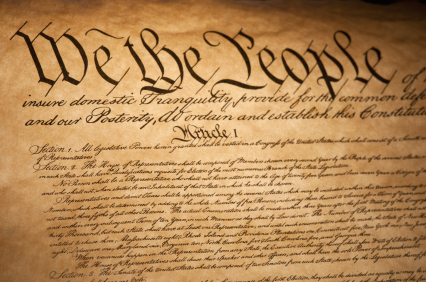
Before going on, it may do no harm to remind me and so many millions of others, of the opening preamble of the US Constitution:
We the People of the United States, in Order to form a more perfect Union, establish Justice, insure domestic Tranquility, provide for the common defence, promote the general Welfare, and secure the Blessings of Liberty to ourselves and our Posterity, do ordain and establish this Constitution for the United States of America.
Whatever the country, the concept of ‘by the people, of the people, for the people’ takes one hell of a lot of beating.
So to the essay. I was struck by a recent essay from George Monbiot that seemed to touch on something that more and more ordinary folk sense; that many so-called democratic political systems are not functioning in the interests of the people. Thus with no further ado, here it is.
oooOOOooo
November 11, 2013
Nothing will change until we confront the real sources of power.
By George Monbiot, published in the Guardian 12th November 2013
It’s the reason for the collapse of democratic choice. It’s the source of our growing disillusionment with politics. It’s the great unmentionable. Corporate power. The media will scarcely whisper its name. It is howlingly absent from parliamentary debates. Until we name it and confront it, politics is a waste of time.
The political role of corporations is generally interpreted as that of lobbyists, seeking to influence government policy. In reality they belong on the inside. They are part of the nexus of power that creates policy. They face no significant resistance, from either government or opposition, as their interests have now been woven into the fabric of all three main parties.
Most of the scandals that leave people in despair about politics arise from this source. On Monday, for example, the Guardian revealed that the government’s subsidy system for gas-burning power stations is being designed by an executive from the company ESB, who has been seconded into the energy department(1). What does ESB do? Oh, it builds gas-burning power stations.
On the same day we learnt that a government minister, Nick Boles, has privately assured the gambling company Ladbrokes that it needn’t worry about attempts by local authorities to stop the spread of betting shops(2). His new law will prevent councils from taking action.
Last week we discovered that G4S’s contract to run immigration removal centres will be expanded, even though all further business with the state was supposed to be frozen while allegations of fraud are investigated(3). Every week we learn that systemic failures on the part of government contractors are no barrier to obtaining further work, that the promise of efficiency, improvements and value for money delivered by outsourcing and privatisation have failed to materialise(4,5,6). The monitoring which was meant to keep these companies honest is haphazard(7), the penalties almost non-existent(8), the rewards stupendous, dizzying, corrupting(9,10). Yet none of this deters the government. Since 2008, the outsourcing of public services has doubled, to £20bn. It is due to rise to £100bn by 2015(11).
This policy becomes explicable only when you recognise where power really lies. The role of the self-hating state is to deliver itself to big business. In doing so it creates a tollbooth economy: a system of corporate turnpikes, operated by companies with effective monopolies.
It’s hardly surprising that the lobbying bill – now stalled by the Lords – offered almost no checks on the power of corporate lobbyists, while hogtying the charities who criticise them. But it’s not just that ministers are not discouraged from hobnobbing with corporate executives: they are now obliged to do so.
Thanks to an initiative by Lord Green, large companies have ministerial “buddies”, who have to meet them when the companies request it. There were 698 of these meetings during the first 18 months of the scheme, called by corporations these ministers are supposed be regulating(12). Lord Green, by the way, is currently a government trade minister. Before that he was chairman of HSBC, presiding over the bank while it laundered vast amounts of money stashed by Mexican drugs barons(13). Ministers, lobbyists – can you tell them apart?
That the words corporate power seldom feature in the corporate press is not altogether surprising. It’s more disturbing to see those parts of the media that are not owned by Rupert Murdoch or Lord Rothermere acting as if they are.
For example, for five days every week the BBC’s Today programme starts with a business report in which only insiders are interviewed. They are treated with a deference otherwise reserved for God on Thought for the Day. There’s even a slot called Friday Boss, in which the programme’s usual rules of engagement are set aside and its reporters grovel before the corporate idol. Imagine the outcry if Today had a segment called Friday Trade Unionist or Friday Corporate Critic.
This, in my view, is a much graver breach of BBC guidelines than giving unchallenged airtime to one political party but not others, as the bosses are the people who possess real power: those, in other words, whom the BBC has the greatest duty to accost. Research conducted by the Cardiff school of journalism shows that business representatives now receive 11% of airtime on the BBC’s 6 o’clock news (this has risen from 7% in 2007), while trade unionists receive 0.6% (which has fallen from 1.4%)(14). Balance? Impartiality? The BBC puts a match to its principles every day.
And where, beyond the Green Party, Plaid Cymru, a few ageing Labour backbenchers, is the political resistance? After the article I wrote last week, about the grave threat the transatlantic trade and investment partnership presents to parliamentary sovereignty and democratic choice(15), several correspondents asked me what response there has been from the Labour party. It’s easy to answer: nothing.
Blair and Brown purged the party of any residue of opposition to corporations and the people who run them. That’s what New Labour was all about. Now opposition MPs stare mutely as their powers are given away to a system of offshore arbitration panels run by corporate lawyers.
Since Blair’s pogroms, parliament operates much as Congress in the United States does: the lefthand glove puppet argues with the righthand glove puppet, but neither side will turn around to face the corporate capital that controls almost all our politics. This is why the assertion that parliamentary democracy has been reduced to a self-important farce has resonated so widely over the past fortnight.
So I don’t blame people for giving up on politics. I haven’t given up yet, but I find it ever harder to explain why. When a state-corporate nexus of power has bypassed democracy and made a mockery of the voting process, when an unreformed political funding system ensures that parties can be bought and sold, when politicians of the three main parties stand and watch as public services are divvied up by a grubby cabal of privateers, what is left of this system that inspires us to participate?
References:
1. http://www.theguardian.com/environment/2013/nov/10/gas-industry-employee-energy-policy
2. http://www.theguardian.com/society/2013/nov/10/planning-law-changes-help-bookmakers-minister
3. http://www.theguardian.com/business/2013/nov/08/g4s-expand-contract-freeze-government-work
4. http://www.theguardian.com/commentisfree/2013/aug/05/privatisation-public-service-users-bill
6. http://www.theguardian.com/society/2013/jul/22/disabled-benefits-claimants-test-atos
7. http://www.theguardian.com/society/2013/nov/07/government-outsourcing-problems-g4s-serco-a4e
9. http://www.theguardian.com/commentisfree/2013/jan/09/financial-transparency-privatised-nhs
10. http://www.theguardian.com/commentisfree/2013/nov/04/rail-privatisation-train-operators-profit
11. http://www.theguardian.com/commentisfree/2013/feb/07/public-sector-outsourcing-shadow-state
12. http://www.theguardian.com/politics/2013/jan/18/buddy-scheme-multinationals-access-ministers
13. http://www.theguardian.com/business/2012/jul/24/lord-green-hsbc-scandal
14. http://downloads.bbc.co.uk/bbctrust/assets/files/pdf/our_work/breadth_opinion/content_analysis.pdf
15. http://www.theguardian.com/commentisfree/2013/nov/04/us-trade-deal-full-frontal-assault-on-democracy
oooOOOooo
Nothing that I can add to Mr. Monbiot’s essay, that’s for sure.
Life is full of surprises and that seems to apply to writing a book as well!
I was chatting to Jeannie yesterday afternoon taking a break from, yes, you guessed it, book writing! Speaking about another aspect of ‘write a book in November’ that had been unexpected; that of the range of emotions associated with the task.
First up was excitement that I had committed to the idea. Next was surprise that I had actually got stuck into it. Then came the feeling of being over the worst, that I really would write a 50,000 word book. But what followed next, to a certain extent reflecting my present mood, is that writing words for words sake is one thing, writing something that would result in a compelling and engaging story is something completely different.
As you can see my emotions are rather at odds with what NaNoWriMo published yesterday:
Wrimos, congratulations. You’ve made it through the strenuous Week Two, and emerged (mostly) unscathed. Not only are you past the halfway point of the month, but you’re far enough into your novel that actual things are (likely) starting to happen.
I’ve always found the shore of Week Three to be the most exciting place to stand, and the trip through it the most exhilarating portion of the month. You’ve gotten to know your characters, the story has a discernible shape and trajectory, and it’s just so thrilling to go play in that world you’ve crafted.
That being said, a brief addendum: if the bogs of Week Two sucked you in a bit, and you’re behind on word count, don’t despair. Week Three’s momentum is fantastic for helping get back on track.
Ah well!
oooOOOooo
Chapter Nine
Philip easily found the house, a relatively modern brick-built detached house in a suburban road just off the Torbay Road, the road that connected Torquay with Brixham and then on to Dartmouth. Indeed, as Philip turned into the concrete drive that lead to the garage door, a neat garden on his left, he realised that a much shorter way back home via Totnes would be along the Preston Down Road just a couple of turnings from where the Atkins had their home.
Jonathan opened the front door just as Philip’s hand went to the bell-push.
“Ah, excellent timing. Helen has just left so there’s been no need to ask you to park at the kerbside. Do come on in.”
He led Philip into a front room that seemed to be set up as an office room or study.
“Can I get you a warm drink? Coffee, tea?”
“I would murder for a tea, missed my second cup of the day to be here on time.”
“Oh, apologies, hope this wasn’t too early to meet up?”
“Jonathan, not at all, I was just kidding. Well, maybe partially kidding!”
This levity from Philip came naturally and spontaneously, reflecting a sense of openness that he couldn’t put his finger on. That same feeling that he had had when listening to Jonathan’s presentation back, golly when was that now, he had to think for a moment, back in the Autumn some two months ago now.
Over the hot cup of tea, Earl Grey as Philip noticed, a favourite of his, Jonathan outlined his background. That he was a registered psychotherapist with a Master’s degree in Core Process Psychotherapy, whatever that was Philip mused, and, interestingly, a qualified teacher with a teaching degree from Exeter back in 1989. Going on to add that he was a member of the Institute of Transactional Analysis and a licensed practitioner in neuro-linguistic programming.
At this point Jonathan paused noticing that Philip’s eyes had started to glaze over.
“Sorry, Philip, guess this all is a little mumbo-jumbo for the uninitiated,” going on to suggest that Philip can look up the full details on his website. Philip made a note of the web address.
Philip then paused before saying, “Sorry, Jonathan, I’m sure your background is crucial in terms of your professional way of life. But the challenge for me before even thinking of being your business mentor is that there is nothing in my background that would allow me to understand your experiences, to know your world.” Philip paused, and then added, “Well, I guess I now know who to call if I become even sillier than I already am.”
“Philip, just stay with me for a little longer while I explain what my situation is.”
Philip looked down at his notebook, drew a line under the website address he had just noted, put down the time and date and looked back up at Jonathan.
“I have been working as a psychotherapist for a number of years on the payroll of an Exeter company; Cowdrays. It was something I needed to do in terms of becoming fully accredited as a psychotherapist. It’s a long and drawn out process.”
Just as well Philip thought.
“I am now very close to the point where I want to stand on my own two feet and run my own business. That’s why hearing you speak at that Exeter event was so useful. I appreciate you saying how you don’t understand my background in detail.” Jonathan took a couple of breaths and continued, “But while I’m clear about the services that I can offer and where I would like to operate, when it comes to starting, running, and more critically, marketing my own business, frankly I haven’t a clue.”
Wow, Philip thought, still looking down at the page on his knee.
“So it occurred to me when listening to you speak whether you were still taking on clients and whether you felt you and I could work together?”
Philip let a few moments pass, trying to listen to the quieter, inner parts of his brain.
“Jonathan, In principle, I believe I have the experience and background that you are looking for. But here’s the rub. My knowledge of your market is practically zero. OK, I’ve been on the receiving end of some counselling, some relationship counselling, but many of the terms you used when explaining your background, terms like neuro-linguistic programming, did I hear that correctly?”
Jonathan nodded.
“Those were terms I didn’t understand at all. Even the phrase core process psychotherapy didn’t mean much to me. So what bothers me is whether or not I could properly and competently understand your clients, in other words your potential customers’ needs. Because if I can’t within reasonable time understand exactly who your potential customers are, what they have, what they don’t have, what they need, what the payoff is, sorry to use such a clumsy term, and more, I can’t competently mentor you.”
Philip went on to add, “Back in my old days of selling for IBM, we described the process of selling a product to a customer as the business of understanding need, feature and benefit. OK, I was only selling IBM Selectric typewriters, you know the old golfball typewriters, but the principle is still the same. That for every aspect of a service that you wish to sell to a customer, you need to understand fully what the customer’s need is for that service, how it can be described in terms that the customer understands and, finally, why the Jonathan Atkins’ service is better than your competitors. Sorry if that sounded too much like a lecture.”
Philip realised that he had become quite agitated in those last few minutes and consciously breathed in and out a few times to settle himself down. Jonathan had noticed but instinctively knew that Philip had a few more thoughts to offer.
Philip smiled, “Sorry, I got a little passionate just there,” and went on to say, “I think what I was responding to was the potential appeal of working with you but, at the same time, realising that I just didn’t have the appropriate experience of your likely market segments; to use some more jargon.”
Jonathan looked Philip in the face and said, “How well do you understand business people?”
“Er, that sounds like a trick question,” Philip replied with a smile across his face.
“No, it’s not. For the area that I wish to be in is the area of the relationships that professional persons have in their workplace. Let me explain.”
Philip sensed something significant was about to happen.
“Professional people, managers, directors, even lawyers, those that are more likely than not to be driven people, they are much more likely to have some interesting childhood experiences, various levels of parental issues of one form or another, than people in general. In a very real sense, those backgrounds give them the edge, the fuel, for want of a better term, to succeed.”
Again, Philip felt a breath of something blow across his consciousness.
“However, the very drivers of success are also the root causes of the many issues that these people have in managing their teams and, frequently, in getting the best from their suppliers and other key business relationships including, of course, their relationships with their customers.”
Jonathan added, with a wry smile on his face, “You see I can dish the jargon just as well as you.”
Philip smiled back and could sense where this was leading.
“So, it’s my guess that first as a salesman for IBM, then when running your own company selling software around the world, and now mentoring those already running their own businesses, you have a much better idea of this group of people, the personalities, the frequent lack of mindfulness, what may be expressed as their emotional ignorance, than you first thought.”
Philip got it.
“Well, yes, of course. I just hadn’t thought of it in those terms. As a salesman both for IBM and then for my own company, I must have met on a personal one-to-one basis, thousands of business people. In fact, it got to the stage where I could make a private guess as to whether or not I was going to sell to that person within the first couple of minutes of meeting them.
Philip reflected for a moment, then went on to say, “In fact, my very good Californian friend, Danny Mitchell, who was my US West Coast distributor and with as many years of selling experience as me, used to say exactly the same thing. That he knew whether or not he was going to close the deal within the first five minutes.”
This was starting to be very interesting.
“Philip, you don’t need to worry yourself about all the strange terms and descriptions that are wall-to-wall in my line of work, you need to understand that what I seek to offer are reliable, people-centred, sorry another term, ways of allowing professional people to realise that a better understanding of self, of who they are, can offer huge dividends in understanding others. That, of course, if we are talking about a business, has a direct and hugely positive effect on the performance of that business.”
“OK, I’m sold,” Philip said, as he threw his arms up in mock surrender, going on to add in a light-hearted almost frivolous mood, “Of course, you do know that the easiest persons to sell to are salesmen!” He noted how comfortable this new relationship with Jonathan seemed to feel.
They then talked through the mentoring aims, agreed on the financial terms, and the usual other bits and pieces that such a new relationship often entailed.
“So, Jonathan, in terms of a schedule, when you do want to get started?”
“Frankly, Philip, there’s going to be a slight delay. I’ll tell you why. Namely, that it’s not going to be possible for you and I to work together until not only have I resigned from Cowdrays but then worked out my notice.”
Philip showed with a nod that he understood this.
Jonathan continued, “What I am thinking is once the New Year is here and the coaching programme for the early part of 2006 is settled, then I will know what my obligations are to Cowdrays and when would be the appropriate time to give notice.”
Adding, almost as an afterthought, “And my inclination is that I should offer three months notice but appeal to Cowdrays that if it makes no difference to them, could I be released earlier. So it could well be heading towards the middle of 2006 before I can come to you unencumbered, as it were.”
“Jonathan, that’s not an issue at all. In fact, it will give me plenty of time to think things through. Because, what’s clear to me is that building your own business will require much more sensitivity than a classical start-up. It’s not as though you can shout across the roof-tops, ‘are you a professional person who screws up relationships, because, hey, here’s someone who can really help’, much as it would be nice to do so.” There was a hint of a giggle in Philip’s voice.
Philip made a few notes, closed his notebook, and started to rise from his chair.
“Once again, Jonathan, thank you so much. I’m going to enjoy working together; hugely enjoy. You and your family have a wonderful Christmas and a very Happy New Year. Going to be quite a year, me thinks.”
“Philip, you too. Be in touch just as soon as I can.”
With that Philip bade farewell to Jonathan, unlocked his car door, started up the engine and reversed carefully out on to the street.
Yes, 2006 looked like being quite a year.
1,980 words. Copyright © 2013 Paul Handover
Half-way mark passed.
I’m preparing this post the afternoon of Sunday; yesterday in other words.
In terms of progress, I’m over 29,000 words. Thus well and truly beyond the half-way mark. However, more and more as the days pass and the words flow on to the screen, I having severe doubts about the literary quality of my writing. My view is that it is far too reportorial in style. Those who follow comments will have seen my comment last Friday in reply to Sue Dreamwalker.
This is what Sue wrote:
Loved your description here Paul of the interaction between Pharaoh and Betsy, I could almost see them in the paddock, hind leg lifted Lol Pee and all…
How are you enjoying your writing challenge? You seem to be well on track so far…
I hope you are enjoying your weekend
Sue
This was my reply:
Dearest Sue,
Yes, past the half-way point. 25,690 words when I stopped yesterday. In terms of enjoying it, immensely so. Mind you, it’s so auto-biographical to be less of a novel than more a personal ‘dump’!
The weakness that is becoming apparent is that without me outlining a clear plot line before I started writing then two things are happening.
The first is that I haven’t yet really fleshed out the main characters: Philip; Maggie; (Pharaoh!); and, to come, Susannah Middleton.
The second is that I get side-tracked into detailed explanations of people and incidents along the way that don’t really support the ‘story’.
But I have faith that the NaNoWriMo organisation will offer a lead to all the tyro writers who, having finished a very rough draft of their novel, now don’t have a clue as to what to do next!
Anyway, as they say in the old country, it’s keeping me off the streets.
Big hugs from Oregon.
Paul
Anyway, onwards and upwards. Here’s Chapter Eight, warts and all!
oooOOOooo
Chapter Eight
Over the next two Saturdays Philip returned with Pharaoh and, just as Angela had predicted, Betsy behaved as a normal and self-confident dog.
Thus by the end of March there were two wonderful outcomes. Pharaoh was clearly the teaching dog that Angela had seen in him and Pharaoh’s first customer, so to speak, Betsy, had overcome her fears, the cause of her antagonistic attitude towards strange dogs. There was a bonus as well. Gordon and Angela had a bit of a private chit-chat along the way and Gordon very happily changed his mind about Betsy becoming a participant at Plymouth’s grey-hound racing track.
The weeks settled into a gentle pattern and before Maggie and Philip had really taken it onboard, Pharaoh celebrated his first birthday on June 3rd, 2004. He seemed such a permanent part of their lives. In many ways it felt as though Pharaoh had become a member of a new family. That this strong, intelligent and sensitive dog had expanded the relationship of two persons, husband and wife, into a family of three with more love and affection than ever before.
The Saturdays over with Angela clearly provided Pharaoh with what in human terms would be described as purpose. It didn’t take Philip many trips with Pharaoh for him to see something appearing in his dog that just couldn’t be defined in human words. Angela grew more and more delighted with the way that Pharaoh resolved some quite tricky teaching demands with dogs that had arrived with significant social weaknesses. Frequently in a single session but just sometimes over a couple of meetings between Pharaoh and the ‘client’.
Before Philip could believe it his sixtieth birthday arrived, was celebrated with enthusiasm in The Church House Inn, passed by and less than eight weeks later 2004 slid into 2005.
Life was a very settled affair. There was sufficient income from his business mentoring to keep things ticking along, he was much fitter from the exercise of walking Pharaoh, and Maggie and he seemed to be in a very good space together. She was a fair few years younger than Philip, eighteen to be exact. At times, Philip had longed for a deeper connection between them but gradually came to the conclusion that their difference in ages and backgrounds was the underlying reason for what Philip felt was missing, and that he should move on and just be thankful for what was a good and harmonious relationship.
Autumn of 2005 brought along a lovely event. Philip had been asked to present at a conference being held at Exeter University. It was an all-day affair with a number of outside speakers, the purpose of which was to give graduates, on the verge of heading off to the big outside world, an awareness of some of the skills and tools their professional lives might require. Philip’s chosen subject was marketing for the entrepreneur, a topic he was very comfortable with, and the forty-minute session, the second one in the afternoon, had seemed to have gone well. That is, if the bundle of intelligent questions coming from the audience was any measure. The UK economy was enjoying strong growth along with many other Western countries. In fact, there were many who felt that this period of economic growth, especially in regard to ever-higher house prices, had an over-heated feel to it. But the good news was that the economy seemed to be motivating many young people to have a go at starting their own business.
As Philip returned to the table where the speakers were sitting he passed the next speaker walking out towards the podium. He reflected on the speed at which we form impressions of another person. For in the two or three seconds it took for each to pass the other, he found the smile offered to him coming from an open and engaging face.
His name was Jonathan Atkins and the title of his talk was ‘Being the best you can.’ A simple but riveting theme, Philip noted.
Jonathan introduced himself and went on to say,
“Ladies and Gentlemen, you stand on the threshold of your life’s journey. Neither you nor anyone else has the slightest chance of predicting that when you get to my age or more, heaven forbid, and look back over your forty or more years, what vista of your life you will see. But one thing is sure beyond anything.”
There was a slight pause and then Jonathan illuminated his first slide. It read plainly and clearly: Be The Best You Can Be.
Philip hung on to Jonathan’s words and underlying messages for every single minute of the forty-minute presentation. The critical importance of the relationships that all working people, but especially professional people, make and maintain with all those within their workplaces, and beyond the workplace. Why, so often, professional people struggle with their relationships in the workplace. The importance of mindfulness, rapport, holding boundaries, and more. All of it within a framework of integrity. Philip more than hung on to Jonathan’s every word. There was something else, something that was beyond his consciousness, something that was stirring him so deeply that it was beyond his reach.
At the end of Jonathan’s presentation, there was a huge plethora of questions from what had obviously been an engaged audience. By the time he stepped down and returned to the speakers’ table it was time for the afternoon tea-break. Speakers and audience alike flowed into the adjoining large room where a number of tables, covered in white cotton tablecloths, revealed cups of hot tea and plates of biscuits.
Philip picked a steaming cup, anticipating the pleasure of the hot tea, and moved away from the table area to a broad window looking out over the university buildings and beyond them Exeter’s commercial skyline. He became aware of another person standing close, turned his head and saw that it was Jonathan Atkins.
“Jonathan, I have to say that I found your talk fascinating.” Philip continued, almost without pause, “In fact, using the word fascinating is me opening mouth before engaging brain.”
Philip paused before continuing, noticing a slight smile on Jonathan’s face.
“What I should have said is that your talk opened doors to places in my mind that I sort of knew were there but could never properly access, let alone describe. As you can see for someone who should really have the gift of the gab, I’m not immune to grabbing a verbal idea a tad too quickly.”
“Philip, thank you for that generous compliment.” Jonathan seemed to be thinking a little before continuing, “Your presentation was valuable to me as well. In fact, I wouldn’t mind meeting up with you sometime over the next couple of weeks; wondering if you could offer me some advice relevant to my own business situation, something that I have to decide upon over the coming months?”
“Jonathan, of course, that would be wonderful. Would love to meet up on any basis. Hang on a moment while I pull out a card.”
Philip took his black leather wallet that he kept in his rear trouser pocket, unfolded it and drew out a white business card. He passed it across to Jonathan’s outstretched hand.
“Ah, I see you are not that far from me,” said Jonathan. “We are over at Torquay; can’t be more than ten miles from Harberton. Let me give you a call sometime over the next week.”
“Look forward to hearing from you. Oh, it looks as though we are all being called back into the room for the last sessions. As I said, give me a call whenever you want, it’s a home-office set-up and I’m frequently there. We can arrange a time to meet.”
With that, the pair of them returned their empty cups to a nearby table and made their way back to the main auditorium and thence to the speakers’ table.
It was a late afternoon in October, well on into the month, as Philip and Pharaoh were settling themselves back home after a blustery afternoon’s walk over at the woods, when he heard his office phone ringing. He grabbed it just before it went across to voicemail.
“Hi, Philip, it’s Jonathan, how are you?”
“Jonathan, fine thanks, and how are you?” Philip had almost forgotten leaving his card with him.
“Good, and please accept my apologies for not calling you sooner. Do you remember when we met up at that Exeter Uni event, I wondered about seeing you and you gave me your card?”
“Of course,” came Philip’s reply.
“Well, is that offer still open?”
“Yes, of course,” Philip then adding, “When would you like to meet up, want me to come to your place or meet somewhere neutral, as it were?”
“Well if that was OK with you, you coming over to the house in Torquay would be very helpful.”
They kicked around a few dates and settled on the 15th November, a Tuesday Philip saw as he looked at his wall calendar.
“What time would suit you, Jonathan?”
“Well if 9:30 wasn’t too early for you, that would be perfect. I know that Helen, my wife, has to go out around then for most of the morning, so it would let me explain what’s in my mind without feeling I should be giving Helen a hand. I’m so rarely at home during the day just now.”
Jonathan then read his address out to Philip over the phone, that he in turn read back as a double-check, then declined Jonathan’s instructions as to how to get there. Philip knew pretty well where the house was in Torquay, and that was that.
He said to Jonathan, “See you in a little under four weeks,” and they closed the call.
So, as they inevitably do, the days and weeks soon passed and on that Tuesday morning in November, with the tail end of an Atlantic weather low chasing low clouds away from tops of Devon hills, Philip drove across to Jonathan and Helen’s house near Preston, just a short distance along the coast road out of Torquay.
In a million years, he couldn’t have predicted, not even dreamt, what consequences would flow from the meeting.
1,725 words. Copyright © 2013 Paul Handover
Still they keep on coming.
A week ago, the last set of the gorgeous pictures from John Hurlburt was published. They had been highly enjoyed by you.
To be honest, I had been wondering how on earth I was going to follow them.
Then Chris Snuggs partially came to my aid in sending me the following two pictures. (Chris has his own blogsite here.)

oooo
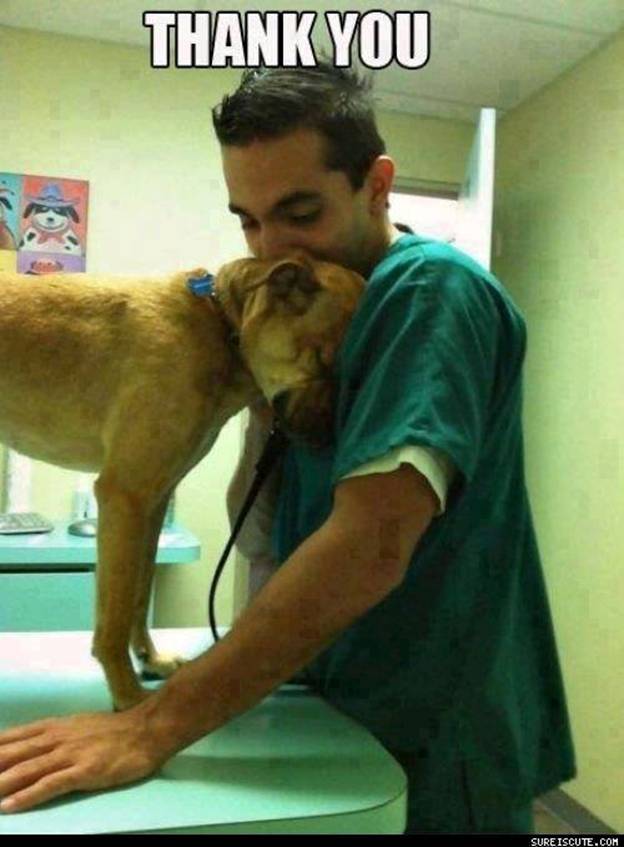
oooo
Then John H. sent me another great set of pictures. Here’s the first five.

oooo

oooo

oooo

oooo

oooo
Thank you Chris, thank you John.
More coming in a week’s time.
You all take care out there.
But on this Saturday in November it really is a fish story, or so I thought.
Earlier in the month, I received an e-mail from Dan Gomez. It told of this tale from Grand Lake St. Marys:
A guy who lives at Lake Saint Mary’s (60 miles north of Dayton, OH ) saw a ball bouncing around kind of strange in the lake and went to investigate.
It turned out to be a flathead catfish that had apparently tried to swallow a basketball which became stuck in its mouth!!
The fish was totally exhausted from trying to dive, but unable to, because the ball would always bring him back up to the surface.
The guy tried numerous times to get the ball out, but was unsuccessful. He finally had his wife cut the ball in order to deflate it and release the hungry catfish.
You probably wouldn’t have believed this, if you hadn’t seen the following pictures:

oooo

oooo
oooo

oooo

oooo
Be kinder than necessary because everyone bites off more than they can chew sometime in life…
oooOOOooo
I loved the story but then wanted to know: was it true?
Sadly, the story is true but the location is false. Snopes.com researched this back in 2005. Hoax-Slayer.com wrote about it in 2007 after it “went viral”.
The true story originated in the Whichita (Kansas) Eagle on May 30, 2004. The man in the photo turns out to be Bill Driver, a fisherman at Sandalwood Lake who discovered the catfish with a taste for hardwood glory.
Two wonderful lessons to be learned from both the story and the story behind the story!
Don’t believe everything you read on the Internet and there’s always something fishy about a fisherman’s tale.
Have a great week-end.
 Learning from Dogs