A number of essays and items from a variety of sources have passed my screen in recent times that ….. well, you complete the sentence! Let me illustrate; in no particular order.
I have long been a follower of the writings of George Monbiot. Those who haven’t come across Mr. Monbiot before can avail themselves of his background and dip into his articles, many of which underscore my proposition that we really are a peculiar race. For example, just three days ago George Monbiot published an article under the title of The Benefits Claimants the Government Loves. It highlights one mad aspect of UK Policy.
Corrupt, irrational, destructive, counter-productive: this scarcely begins to describe our farming policy.
By George Monbiot, published in the Guardian 4th March 2014
Just as mad cow disease exposed us to horrors – feeding cattle on the carcasses of infected cattle – previously hidden in plain sight, so the recent floods have lifted the lid on the equally irrational treatment of the land. Just as BSE exposed dangerous levels of collusion between government and industry, so the floods have begun to expose similar cases of complicity and corruption. But we’ve heard so far just a fraction of the story.
You really do need to read the article in full to get your arms around the terrible state of affairs of the UK benefits scandal. But try this:
As a result of these multiple failures by the government, even Farmers’ Weekly warns that “British soils are reaching crisis point” (16). Last week a farmer sent me photos of his neighbours’ fields, where “the soil is so eroded it is like a rockery. I have the adjoining field … my soil is now at least 20 cm deeper than his.” In the catchment of the River Tamar in Devon, one study suggests, soil is being lost at the rate of five tonnes per hectare per year (17).
I could go on. I could describe the complete absence of enforceable regulations on the phosphates farmers spread on their fields, which cause eutrophication (blooms of algae which end up suffocating much of the freshwater ecosystem) when they run into the rivers. I could discuss the poorly-regulated use of metaldehyde, a pesticide that is impossible to remove from drinking water (18). I could expand on the way in which governments all over Europe have – while imposing a temporary ban for flowering crops – permitted the use of neonicotinoid insecticides for all other purposes, without any idea of what their impact might be on animals in the soil and the rivers into which they wash. The research so far suggests it is devastating, but they were licensed before any such investigation was conducted (19).
There is just one set of rules which are effective and widely deployed: those which enforce the destruction of the natural world. Buried in the cross-compliance regulations is a measure called GAEC 12 (20). This insists that, to receive their money, farmers must prevent “unwanted vegetation” from growing on their land. (The rest of us call it wildlife habitat). Even if their land is producing nothing, they must cut, graze or spray it with herbicides to get their money. Unlike soil erosion, compaction and pollution, breaches of this rule are easy to detect and enforce: if the inspectors see trees returning to the land, the subsidy can be cut off altogether.
Perhaps a clue to the extreme unfairness of who is in receipt of UK benefits can be explained by the fact expressed by George Monbiot above, “The biggest 174 landowners in England take £120m between them.”
With that in mind, let’s move on. Move on to a recent essay from Patrice Ayme: WAR MAKES HISTORY! To say it makes disturbing reading is, trust me, an understatement. But in the context of the UK’s rich landowners, as George Monbiot explained above, try this closing extract from Patrice’s essay:
We are a deeply equalitarian species. Out of equality rises our superior cultural performance. Plutocracy, the rule of the Dark Side, denies giving, love, and the equality which make us possible. Thus plutocracy is a denial of our species. Only an anger great enough to destroy it, will save us, and the biosphere. And there is hope: greed is neither as natural, nor as strong as anger.
It’s time to get angry against dictator Putin. Angry now is better than very sorry tomorrow.
War makes history. Of this we must think, if we want to make history better.
Patrice Aymé
Frankly, my own knowledge of these ‘dark forces’, of the influence of money and power, is practically zero. But the more that one looks at the madness of so many aspects of mankind’s existence, the more one thinks the truth, as Patrice writes it, is the real truth. Indeed, here’s how Patrice opens his essay:
WAR MAKES HISTORY
HERE WE GO AGAIN
The earlier unjustifiable, unprovoked fascism, greedy plutocracy, imperial overstretch, murderous paranoia and other aspects of the Dark Side get smashed, the better.
Such is the most basic lesson of the 1930s.
For the millions of us that live relatively comfortable lives, it’s easy to read this stuff, nod sagely, and wonder if the heating needs to be left on this coming night. But, pardon the pun, wake-up calls as to the approaching nightmares (sorry!) are not hard to find.
Try this from an interview with Elizabeth Kolbert, as recently published on Grist:
In “The Sixth Extinction,” Elizabeth Kolbert reports from the frontlines of a dying world
The New Yorker writer and acclaimed author Elizabeth Kolbert has a penchant for depressing topics. Her 2006 book, Field Notes from a Catastrophe, helped push climate change into the mainstream (with bonus points for not mincing words in the title).
Now that climate change is safely keeping most of us up at night, Kolbert turned her pen to another big bummer: the sixth extinction. We’re currently losing species at a rate of 1,000 to 10,000 times higher than unassisted nature wiping out the occasional newt. While humans weren’t responsible for the last five mass extinctions, our fingerprints are all over this one. Yep: We collectively have the force of an asteroid when it comes to erasing species (high five, guys!) and for the most part, our response has been classic Urkel.
That interview concludes:
Q. You also write about some efforts to save species. Could you share some of those?
A. I happened to go to the San Diego Zoo, where they have a very impressive conservation program. I was there to see something called the “frozen zoo.” It’s just a bunch of vats of liquid nitrogen with cell lines from, in many cases, highly endangered animals and, in one case, an animal that doesn’t exist anymore, a Hawaiian bird. The idea is pretty much what it sounds like: You have these cell lines, you’re going to keep them alive forever, and eventually people are going to figure out how to resurrect some of these species. Or maybe if you don’t want to go quite that sci-fi, we’ll take the cell lines, we’ll do a DNA analysis, we’ll try to figure out why this population is having trouble.
They took me to see this bird named Kinohi, one of the last Hawaiian crows. He’s “reluctant to part with his genetic material,” let’s put it that way. He had been taken from this breeding facility on Maui to San Diego, and he is ministered to by a PhD physiologist who is trying to, let’s say, pleasure this bird, so that he will give up some sperm, so she can artificially inseminate a bird back in Maui. When I visited he had not yet, you know, come through. She was literally preparing to try again — I don’t know if it has ever worked, I should call her.
That was really, to me, emblematic of this crazy situation we find ourselves in. We’re incredibly smart, we’ve figured out how to freeze cell lines and quite possibly bring back extinct animals — we’re willing to pleasure crows. And yet, the Hawaiian Islands are called the extinction capital of the planet — it’s an absolutely devastated ecosystem. Many, many birds are extinct already; those that aren’t are just clinging to existence. Those forces are not changing and, in fact, things are getting worse. There used to be no mosquitoes in Hawaii; there are now mosquitoes. They carry avian malaria, and as the climate warms, avian malaria is moving up the slopes so that even these refugees species that are high on the mountains are increasingly not there. A lot of birds are in terrible trouble there.
All of these things are happening at once and, once again, they’re all true. People are devoting a lot of time and energy and love to trying to preserve these species, and meanwhile the world is increasingly screwed up. So that is how I end the book: They can both be true; it’s not one or the other.
Did you notice the reference to yet another example of mankind’s madness? “That was really, to me, emblematic of this crazy situation we find ourselves in. We’re incredibly smart, we’ve figured out how to freeze cell lines and quite possibly bring back extinct animals — we’re willing to pleasure crows. And yet, the Hawaiian Islands are called the extinction capital of the planet — it’s an absolutely devastated ecosystem.“
I believe inherently that the great majority of individuals are good people. Take Kevin Richardson for instance. Not for him money and power. Just a passion to save lions. Oh, and hugging them! Just watch, and be moved.
Don’t know how to close this? Maybe using a quotation from Ernest Hemingway:
The world breaks everyone, and afterward many are strong at the broken places.
So in these broken times, let all the good people come out strong – stronger than those who are corrupt, irrational, destructive and counter-productive!
It is the ultimate time for hope and faith in the power of goodness!
A reflection on WordPress that powers so many blogs.
All too often in life, it’s very easy to take things for granted. Such as the software that powers Learning from Dogs and so many other blogs right across the world, namely WordPress. What prompted this? Reading the February WordPress report.
ooOOoo
WordPress.com by the Numbers: The February Hot List
Ben Huberman, Editor at WordPress.com
February was another eventful month at WordPress.com. Here’s the lowdown on what we’ve all been up to.
It might be the shortest month of the year, but that certainly didn’t stop WordPress.com users from making February another month to remember. Frigid weather, suspenseful curling matches, The Lego Movie: nothing could keep you away from your sites. Enjoy this winter tale of blogging success.
The blog’s the thing
We were joined this month by no fewer than 1,670,000 new sites and blogs — that’s almost three times the population of Wyoming. Welcome, welcome, welcome.
Old bloggers or new, you set to work with zeal: you wrote nearly 40,000,000 posts this month (if each stood for an hour, it would be enough time to walk to the sun — and back). You made sure not to miss a beat by tapping away on your devices: 2,230,000 posts were published on iPhones and iPads, about a million on your Android devices, and nearly 200,000 came from the BlackBerry crowd.
A contribution to The Daily Post’s recent photo challenge, Threes, by rodocarda.
In case you were curious — we know you were! — you collectively wrote 9.4 billion words. That would roughly be the word count in Shakespeare’s collected plays — if the Bard had the stamina to write them 10,000 times.
As always, you weren’t exactly shy engaging with your fellow bloggers. You liked their posts 7,300,000 times, and left more than 48,000,000 comments.
Is that a widget that I see before me?
Your sidebars got some serious love this month, with 1,360,000 widgets added. The most popular ones? Text Widgets with 145,000, followed by 94,000 Image Widgets.
You also made your posts come alive, embedding 11,600,000 YouTube videos, 3,000,000 image galleries, and 265,000 SoundCloud tracks.
Now Is the Winter of Our Disco Tent
Yes, for those of us who live in the Northern Hemisphere, February was cold (please don’t gloat, Floridians). Which might explain the 24,659 posts tagged with winter and the 942 with polar vortex. The daydreamers among us wrote 4,861 posts about the sun, and 416 about Barbados (rumor has it the piña coladas are better in the latter).
Of course, winter is always coming for Game of Thrones fans, who, as loyal as direwolves, wrote 1,553 posts about a show that isn’t starting until April.
A contribution to The Daily Post’s recent photo challenge, Treasure, by theweeklyminute.
February was dominated by talk of Sochi (10,587 posts) and the Olympics (16,283). For some unfathomable reason, more bloggers published about hockey (a stunning 77,218 posts) than about curling (1,117). Then again, more posts were written about Lego (1,972) than about curling, probably because it’s harder to blog while vigorously brushing ice.
We can’t omit what’s possibly the most anticipated stat of all: in February, dogs (10,060 posts) still beat cats (5,729).
What else kept us warm last month? Laughter — 24,720 posts were added to the humor topic. Unsurprisingly, the month that gave us Valentine’s (6,988 posts) let itself be swept off its feet by love, with 103,147 posts. Please note that this is an odd number — isn’t it ironic? (Alanis Morissette: 40 posts.)
What feats we did last month
February was a hectic month behind the scenes, too, with Automatticians — including four new ones — working hard to make WordPress.com the best it can be (if that sounds like fun, join us!).
Finally, if you’re looking to update the look of your site, there’s no better time to try out some of our new themes. In the past month we introduced ten themes (four of them free!) to our Theme Showcase. Take a look at Axon,Mayer, Tuned Balloon, Yumblog, Lens, Hexa, Singl, MH Magazine, Circa, and Quadra — you won’t regret it.
Spring Equinox is right around the corner — we can’t wait to see what you accomplish this month!
ooOOoo
Now if all that isn’t amazing then take a look at the number of people who, like me, are ‘followers’ of WordPress.
You are following this blog
You are following this blog, along with 14,195,761 other amazing people
Those that know this blog know that posts of just eleven words coming from yours truly are as rare as hen’s teeth. So stay with me!
The number of LfD followers has just passed 900. To say that I am amazed, grateful and humbled still feels like an inadequate response. Thank you: to everyone of you.
One of those new followers left a recent comment that said, ” I love this blog, dedicated to dogs ..” It struck me that as the number of new followers has increased significantly in recent times that it wouldn’t do any harm to return to the principles behind Learning from Dogs.
For it’s not a blog about dogs per se but about the qualities that we, as in mankind, have to learn from dogs.
The starting point is truth; as in what is truth? Such a straightforward question of just three words requires many more words, indeed a book, to answer. A little over two years ago, I published a post called The evolution of the domestic dog, that included the following:
Way back in 2007 I was working with a good friend of mine, Jon, who lives in SW England. Anyway, Jon spoke of the philosophies of Dr. David Hawkins. David Hawkins has written a number of books including Truth vs Falsehood: How to Tell the Difference which I read a few years ago and found very convincing.
Dr David Hawkins of Veritas Publishing, Sedona, Arizona.
Here’s how Amazon describes the book,
The exploration into the truth of man’s activities is unique, intriguing, and provocative. From a new perspective, one quickly grasps the levels of truth expressed by the media, the arts, writers, painters, architecture, movies, TV, politics, and war, as well as academia and the greatest thinkers and philosophies through the ages and up to present-day science and advanced theories of the nature of the universe. Most importantly, the ego and its structure are revealed to facilitate the understanding of religious and spiritual truths expressed by the mystics and enlightened sages over the centuries. It becomes apparent why the human mind, unaided, has been intrinsically incapable of discerning truth from falsehood. A simple test is described that, in seconds, can solve riddles that have been irresolvable by mankind for centuries. This book delivers far more than it promises.
Reveals a breakthrough in documenting a new era of human knowledge. Only in the last decade has a science of Truth emerged that, for the first time in human history, enables the discernment of truth from falsehood. Presented are discoveries of an enormous amount of crucial and significant information of great importance to mankind, along with calibrations of historical events, cultures, spiritual leaders, media, and more.
A science of consciousness developed which revealed that degrees of truth reflect concordant calibratable levels of consciousness on a scale of 1 to 1,000. When this verifiable test of truth was applied to multiple aspects of society (movies, art, politics, music, sociology, religion, scientific theories, spirituality, philosophy, everyday Americana, and all the countries of the world), the results were startling.
Trust me, I am (slowly) getting to the point!
Dr. Hawkins created a ‘map’ of those calibrated levels of consciousness, see details of that map here. Also, it wasn’t too difficult to find a plain B&W version on the Web, reproduced below.
Map of Consciousness, copyright Dr. David Hawkins
As you can see when you study the map, the boundary between ‘truth’ and ‘falsehood’ is the calibrated level of 200, the blue line in the above described as ‘The beginning of integrity’.
Anyway, back to Jon. When I used to visit him, I always had Pharaoh with me and he would settle down behind my chair and let the human talk just flow over him, happy at some dog level to be included.
One day Jon was talking about the different levels of consciousness and looked over at Pharaoh asleep on the floor and said, “Do you that dogs are integrous!” I responded that I didn’t know that, please tell me more.
Jon continued, “Yes, dogs have been calibrated as having a level of consciousness in the zone of 205 to 210.”
So dogs, horses, cats and many other warm-blooded species of animals are fundamentally integrous creatures. Creatures that display the qualities of unconditional love, trust, courage, integrity and forgiveness. Just see where those emotions appear on David Hawkin’s ‘map’ above. However of all those animals, dogs have been man’s longest companion by far, perhaps all the way back to neolithic times.
So what gets written about Learning from Dogs is what we, as in society, have to learn from dogs. Because the time for mankind to place integrity, as in integrity of thought, word and deed, at the highest pinnacle of our domain is fast running out.
Going to close with a photograph taken yesterday afternoon here at home in Oregon, showing a pair of geese that are giving every indication of using our ‘island’ in our so-called pond as their base for having their goslings!
The integrity of Nature!
Some content on this page was disabled on August 23, 2017 as a result of a DMCA takedown notice from Susan Hawkins. You can learn more about the DMCA here:
A powerful reminder of ethical business practices.
First the background to today’s post. (You may want to settle down with a glass of something; it’s a bit of a ramble!)
In 1968, I emigrated to Sydney, Australia. In those days, one could get a sponsored one-way flight ticket to Australia for 10 GBP if one intended to make Australia your new home. Once there, I obtained a sales clerking job with the Australian division of the famous British company, ICI (Imperial Chemical Industries). I had previously been working for a UK part of ICI Plastics, British Visqueen Ltd, in Stevenage, Hertfordshire.
Going to Australia came about because in the UK, I had been dating a Finnish woman who, together with her parents and sisters, was living in Sydney. So when Britta returned to Sydney I thought ‘what the hell’ for a ‘tenner’ I can follow her out there. (We subsequently married and Britta is the mother of my son, Alex, and daughter, Maija.)
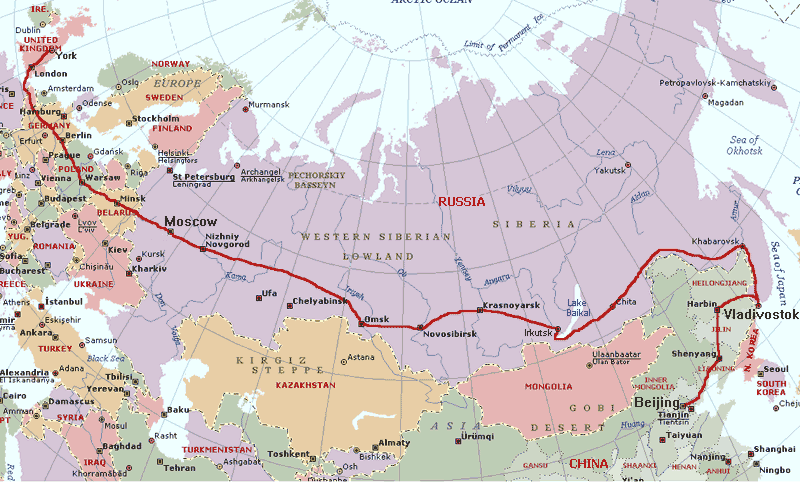
Via very circuitous circumstances, I ended up as a freelance journalist working for a Finnish magazine KotiPosti. Britta and I spent many months in 1969-1970 driving 30,000 miles all around around Australia finding Finns in the most amazing places doing the most incredible things, and me writing about them. Then I was invited to travel to Helsinki and in 1970, Britta and I decided to go to Finland via the Trans-Siberian Railway, all the way from Nakhodka in Eastern Russia, on the Sea of Japan, to Moscow, thence on to Helsinki. The route being via Vladivostok, Irkutsk (where we took 24 hours out to visit Lake Baikal), Novosibirsk, Moscow, St. Petersburg (Leningrad) and the short hop to Helsinki.
What on earth does this have to do with IBM? Hang on in there! 😉
We initially travelled from Australia to Japan because in 1970, Expo 70 was being held in Japan, and KotiPosti had asked me to write about the event. One of the most impressive stands at Expo 70 was the IBM stand. Frankly, it blew me away.
So now fast-forward to Britta and me having completed our stuff in Helsinki and on our way home to Sydney, via London of course, because I still had family in England. A couple of evenings after we had arrived at Preston Road, Wembley, where my mother’s house was, I read an advertisement in the daily evening newspaper, The London Evening Standard, (still going strong) that IBM UK Ltd, their office products division, were looking for salesmen. I had been so impressed with IBM at Expo 70 that I seemed unable to resist applying for the job. To my amazement, I won a place in IBM’s sales team and was with IBM for 8 years – we never returned to Australia.
Fast forward all the way to present times.
A while ago, I signed up to the Current and Ex-IBM Employee Group (Unofficial) on Linked-In. Yesterday, a member of that group published, The Original IBM Basic Beliefs for those that have never seen them. They really are worth sharing because how much better would our corporate world be if all businesses subscribed to these beliefs. Here they are:
ooOOoo
The Original IBM Basic Beliefs for those that have never seen them.
Respect for the Individual
===================
Our basic belief is respect for the individual, for his rights and dignity. It follows from this principle that IBM should:
1. Help each employee to develop his potential and make the best use of his abilities
2. Pay and promote on merit
3. Maintain two-way communications between manager and employee, with opportunity for a fair hearing and equitable settlement of disagreements.
Service to the Customer
===================
We are dedicated to giving our customers the best possible service. Our products and services bring profits only to the degree that they serve the customer and satisfy his needs. This demands that we:
1. Know our customers’ needs, and help them anticipate future needs
2. Help customers use our products and services in the best possible way.
3. Provide superior equipment maintenance and supporting services
Excellence Must Be a Way of Life
==========================
We want IBM to be known for its excellence. Therefore, we believe that every task, in every part of the business, should be performed in a superior manner and to the best of our ability. Nothing should be left to chance in our pursuit of excellence. For example, we must:
1. Lead in new developments
2. Be aware of advanced made by others, better them where we can, or be willing to adopt them whenever they fit our needs.
3. Produce quality products of the most advanced design and at the lowest possible cost
Managers Must Lead Effectively
=========================
Our success depends on intelligent and aggressive management which is sensitive to the need for making an enthusiastic partner of every individual in the organization. This requires that managers:
1. Provide the kind of leadership that will motivate employees to do their jobs in a superior way.
2. Meet frequently with all their people.
3. Have the courage to question decisions and policies; have the vision to see the needs of the Company as well as the division and department
4. Plan for the future by keeping an open mind to new ideas, whatever the source
Obligations to stockholders
=====================
IBM has obligations to its stockholders whose capital has created our jobs. These require us to:
1. Take care of the property our stockholders have entrusted to us.
2. Provide an attractive return on invested capital
3. Exploit opportunities for continuing profitable growth
Fair Deal for the Supplier
====================
We want to deal fairly and impartially with suppliers of goods and services. We should:
Select suppliers and according to the quality of their products or services, their general reliability and competitiveness of price.
1. Recognize the legitimate interests of both supplier and IBM when negotiating a contract; administer such contracts in good faith
2. Avoid suppliers becoming unduly dependent on IBM
IBM should be a Good Corporate Citizen
================================
We accept our responsibilities as a corporate citizen in community, national and world affairs; we serve our interest best when we serve the public interest. We believe that the immediate and long-term public interest is best served by a system of competing enterprises. Therefore, we believe we should compete vigorously, but in a spirit of fair play, with respect for our competitors, and with respect for the law. In communities where IBM facilities are located, we do our utmost to help create an environment in which people want to work and live. We acknowledge our obligation as a business institution to help improve the quality of the society we are part of. We want to be in the forefront of those companies which are working to make our world a better place.
Thomas J. Watson, Jr.
April 1969
ooOOoo
1969! Coming up to 45-years ago. Sometimes one wonders if society has learnt anything in the last five decades!
Back on the 20th, just six days ago, I published a post under the title of Oregon wolves, and book writing!Frankly, it was a bit of a hotch-potch of a post but it did include a reference to Melinda Roth’s book Mestengo, that Jean adored and I was finding delightful before ‘circumstances’ caused me to put the book to one side. For ‘circumstances’ read an email from the said Melinda. That, in turn, was the result of a comment that Melinda left on that post, namely:
Just read and re-read your draft of Chapter 23. Extraordinary. I hope you’re not going to leave us hanging… (sending you a private email to further make my point).The draft of Chapter 23 is good, good stuff. I found myself totally caught up without even knowing what came before.
It would be wrong for me to share the whole of that email without Melinda’s prior permission but I am comfortable in revealing this:
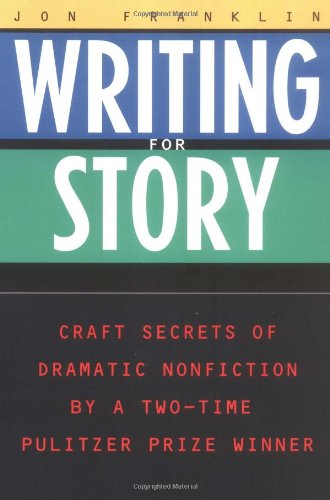
Another book you might consider (not that you have time if you’re going to get this book finished) is “Writing for Story” by Jon Franklin:
This a a very quick read, and I highly recommend it. There are a million books out there about writing, but this one gets straight to the point in a business-like manner and gives THE best advice about how to structure a non-fiction (or fiction) book. The author has won two Pulitzer prizes and uses his two winning pieces as examples – line by line – of how he structures a story.
This book is my bible. One day I was a ho-hum journalist writing mediocre stories. Then I read this book and the first story I wrote afterwards – following his guidelines – became a finalist for the Penn/Faulkner award. I don’t credit myself for this: I credit Jon Franklin and his book.
Jon Franklin’s book arrived last Monday and I’m already half-way through reading it. Wow, what a fantastic book. Because it sets out the power of the art of the short story, or more accurately, the power of the narrative non-fiction story. From page 23:
Then, in the ’60s, Truman Capote, a novelist, short-story writer, and playwright, performed a literary experiment that opened the way for a new kind of literature. Capote recognized and accepted the public’s growing interest in nonfiction but objected to the genre’s traditional dry style. What would happen, he asked, if a true story were told in the form of a novel.
If you go to Jon’s website, there’s a link to one of his short stories, Mrs. Kelly’s Monster, that is in the book. Do read it. Trust me, you will be impressed, enthralled and inspired.
So the logic and power of Jon’s argument slammed me full in the face. And, if you will forgive me, offered some comfort to this tyro author struggling with his first book; a nonfictional book. Because this approach of nonfiction drama resonated with me. For way back in the late 60s I had worked as a freelance journalist for a Finnish magazine, KotiPosti, writing about Finns all across Australia (long story in itself!) and much more by luck than anything else, had written stories in the style of a ‘true story told in the form of a novel.’
Moving on over 40 years, to when Jean and I were living in Payson, Arizona, we both attended a creative writing class held at the local college. One of my stories that came out of that class was published not so long ago on Learning from Dogs: Messages from the Night.
Which is all a long preamble to say that one of the many, many things that Jean and I share includes ‘putting pen to paper’ – story writing.
The following short story was also written by Jean when we were attending that writing course in Payson. Enjoy. I know you will.
ooOOoo
The Kiss
by
Jean Handover
She sat at the end of the bar. Her misery was palpable. An invisible shroud that hunched her shoulders and bent her head over the glass of wine. She peered into the pale liquid like it were a pool to drown in.
She was pretty in a faded way. Trying hard; skirt a little too short, blouse a little too low and blood red lipstick. Dark for a pinched mouth. A slim body the way I liked it! All around were drunken revellers whilst she remained in a bubble. I wanted to take her in my arms and crush her to my body and burst that bubble.
Hoisting my beer, I ambled to the stool beside her. She didn’t stir. Seemed unaware of my presence. I looked at our reflections in the mirror opposite. Then at Rose the barmaid. Rose of the buzzcut and tattoos. The tattoo on her neck. Then a small voice, “Why would anyone have lips tattooed on their neck?”
“Guess that’s where Rose likes to be kissed,” I said, taking a gulp of my beer and casting a glance in her direction.
“Yeah, that is a nice place for a kiss.”
She turned and a small smile twitched her lips. “I shouldn’t have come here. I’m not used to this scene,” she said.
“How long have you been divorced?” I asked.
“How can you tell I’m divorced?” she replied.
“Your ring finger has a wide indent.”
She fanned her fingers and looked. “Dead giveaway, isn’t it,” she wanely replied.
“What happened?” I asked.
“He came home one night and said he’d found someone else!”
“Younger woman?” I asked.
“No worse, a younger man!”
“Oops!” I said.
She swivelled in the stool and faced the crowd. The shroud was slipping perceptively. I finished my beer and beckoned for Rose to bring us another round. The divorcee was prettier that I thought at first. Her hand pushed a lock of hair behind an ear and trailed down her neck, then smoothing her skirt rested on a rounded knee. A fluid sensuous motion. I wanted to touch that hand.
“Oh God, no,” she gasped. Eyes large and face suddenly flushed. “It’s him with the boyfriend. They’ve just come in.”
“Don’t worry, Babe. Let’s just walk right past and get out of here.”
I took her hand and as we strolled past the two men I gently leaned over and kissed her on the neck. On the same place as Rose’s tattoo.
My lips lingered and with my arm around her waist, we drifted out into the night.
Yesterday, I published a post and called it Dogs and wolves – fascinating research. Then blow me down in yesterday’s online BBC News, there was an article headlined: Dogs’ brain scans reveal vocal responses This is how it opened.
Dogs’ brain scans reveal vocal responses
By Rebecca Morelle, Science reporter, BBC World Service
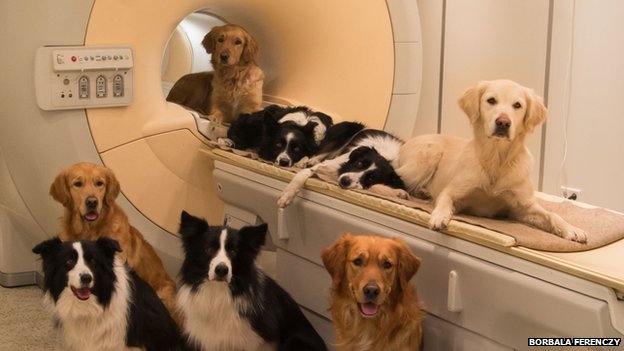
Pet dogs took part in the MRI scanning study.
Devoted dog owners often claim that their pets understand them. A new study suggests they could be right.
By placing dogs in an MRI scanner, researchers from Hungary found that the canine brain reacts to voices in the same way that the human brain does.
Emotionally charged sounds, such as crying or laughter, also prompted similar responses, perhaps explaining why dogs are attuned to human emotions.
Lead author Attila Andics, from the Hungarian Academy of Science’s Eotvos Lorand University in Budapest, said: “We think dogs and humans have a very similar mechanism to process emotional information.”
Eleven pet dogs took part in the study; training them took some time.
During the approximately 18–32 thousand years of domestication [1], dogs and humans have shared a similar social environment [2]. Dog and human vocalizations are thus familiar and relevant to both species [3], although they belong to evolutionarily distant taxa, as their lineages split approximately 90–100 million years ago [4]. In this first comparative neuroimaging study of a nonprimate and a primate species, we made use of this special combination of shared environment and evolutionary distance. We presented dogs and humans with the same set of vocal and nonvocal stimuli to search for functionally analogous voice-sensitive cortical regions. We demonstrate that voice areas exist in dogs and that they show a similar pattern to anterior temporal voice areas in humans. Our findings also reveal that sensitivity to vocal emotional valence cues engages similarly located nonprimary auditory regions in dogs and humans. Although parallel evolution cannot be excluded, our findings suggest that voice areas may have a more ancient evolutionary origin than previously known.
The canine brain reacted to voices in the same way that the human brain does.
“There were 12 sessions of preparatory training, then seven sessions in the scanner room, then these dogs were able to lie motionless for as long as eight minutes. Once they were trained, they were so happy, I wouldn’t have believed it if I didn’t see it.”
For comparison, the team looked at the brains of 22 human volunteers in the same MRI scanners.
The scientists played the people and pooches 200 different sounds, ranging from environmental noises, such as car sounds and whistles, to human sounds (but not words) and dog vocalisations.
The researchers found that a similar region – the temporal pole, which is the most anterior part of the temporal lobe – was activated when both the animals and people heard human voices.
“We do know there are voice areas in humans, areas that respond more strongly to human sounds that any other types of sounds,” Dr Andics explained.
“The location (of the activity) in the dog brain is very similar to where we found it in the human brain. The fact that we found these areas exist at all in the dog brain at all is a surprise – it is the first time we have seen this in a non-primate.”
Emotional sounds, such as crying and laughter also had a similar pattern of activity, with an area near the primary auditory cortex lighting up in dogs and humans.
Likewise, emotionally charged dog vocalisations – such as whimpering or angry barking – also caused a similar reaction in all volunteers,
Dr Andics said: “We know very well that dogs are very good at tuning into the feelings of their owners, and we know a good dog owner can detect emotional changes in his dog – but we now begin to understand why this can be.”
However, while the dogs responded to the human voice, their reactions were far stronger when it came to canine sounds.
They also seemed less able to distinguish between environmental sounds and vocal noises compared with humans.
About half of the whole auditory cortex lit up in dogs when listening to these noises, compared with 3% of the same area in humans.
Commenting on the research, Prof Sophie Scott, from the Institute of Cognitive Neuroscience at University College London, said: “Finding something like this in a primate brain isn’t too surprising – but it is quite something to demonstrate it in dogs.
“Dogs are a very interesting animal to look at – we have selected for a lot of traits in dogs that have made them very amenable to humans. Some studies have show they understand a lot of words and they understand intentionality – pointing.”
But she added: “It would be interesting to see the animal’s response to words rather than just sounds. When we cry and laugh, they are much more like animal calls and this might be causing this response.
For the full report, as it was posted on the BBC website, click here.
Plus, do watch this five-minute video abstract.
Published on Feb 20, 2014
The video presents the first study to compare brain function between humans and any non-primate animal. Scientists at MTA-ELTE Comparative Ethology Research Group in Hungary found that dogs and humans use similar neural mechanisms to process social information in voices. The fact that dogs can be trained to lie motionless during fMRI tests opens up the space for a new branch of comparative neuroscience.
The first study to compare brain function between humans and any non-primate animal shows that dogs have dedicated voice areas in their brains just as people do. Dog brains, like those of people, are also sensitive to acoustic cues of emotion, according to a study in the Cell Press journal Current Biology.
The findings suggest that voice areas evolved at least 100 million years ago, the age of the last common ancestor of humans and dogs, the researchers say. It also offers new insight into humans’ unique connection with our best friends in the animal kingdom, perhaps explaining how our two species have lived and worked together so effectively for tens of thousands of years.
“Our findings suggest that dogs and humans not only share a similar social environment, but they also use similar brain mechanisms to process social information,” said Atilla Andics of MTA-ELTE Comparative Ethology Research Group in Hungary. “This may help the successfulness of vocal communication between the two species.”
Andics and his colleagues trained eleven dogs to lay motionless in an fMRI brain scanner. That made it possible to run the very same neuroimaging experiment on dog and human participants — something that had never been done before. They captured both dogs’ and humans’ brain activities while they listened to dog and human sounds, ranging from whining or crying to playful barking or laughing.
The images show that dog and human brains include voice areas in similar locations. Not surprisingly, the voice area of dogs responds more strongly to other dogs, while that of humans responds more strongly to other humans. The researchers also noted striking similarities in the ways the dog and human brain processes emotionally loaded sounds. In both species, an area near the primary auditory cortex lit up more with happy sounds than unhappy ones. Andics said they were most struck by the common response to emotion across species.
There were some differences too: in dogs, 48 percent of all sound-sensitive brain regions respond more strongly to sounds other than voices. That’s in contrast to humans, in which only three percent of sound-sensitive brain regions show greater response to non-vocal versus vocal sounds.
The study is the first step to understanding how it is that dogs can be so remarkably good at tuning into the feelings of their human owners. “This method offers a totally new way of looking at neural processing in dogs,” Andics said. “At last we begin to understand how our best friend is looking at us and navigating in our social environment.”
Yesterday, Sunday, Jean and I went North in Oregon to visit Strawberry Mountain Mustangs to explore the pros and cons of adopting a horse previously rescued by Darla, of Strawberry Mountain. It was a long day and by the time I sat down in front of the PC it was already past 5pm.
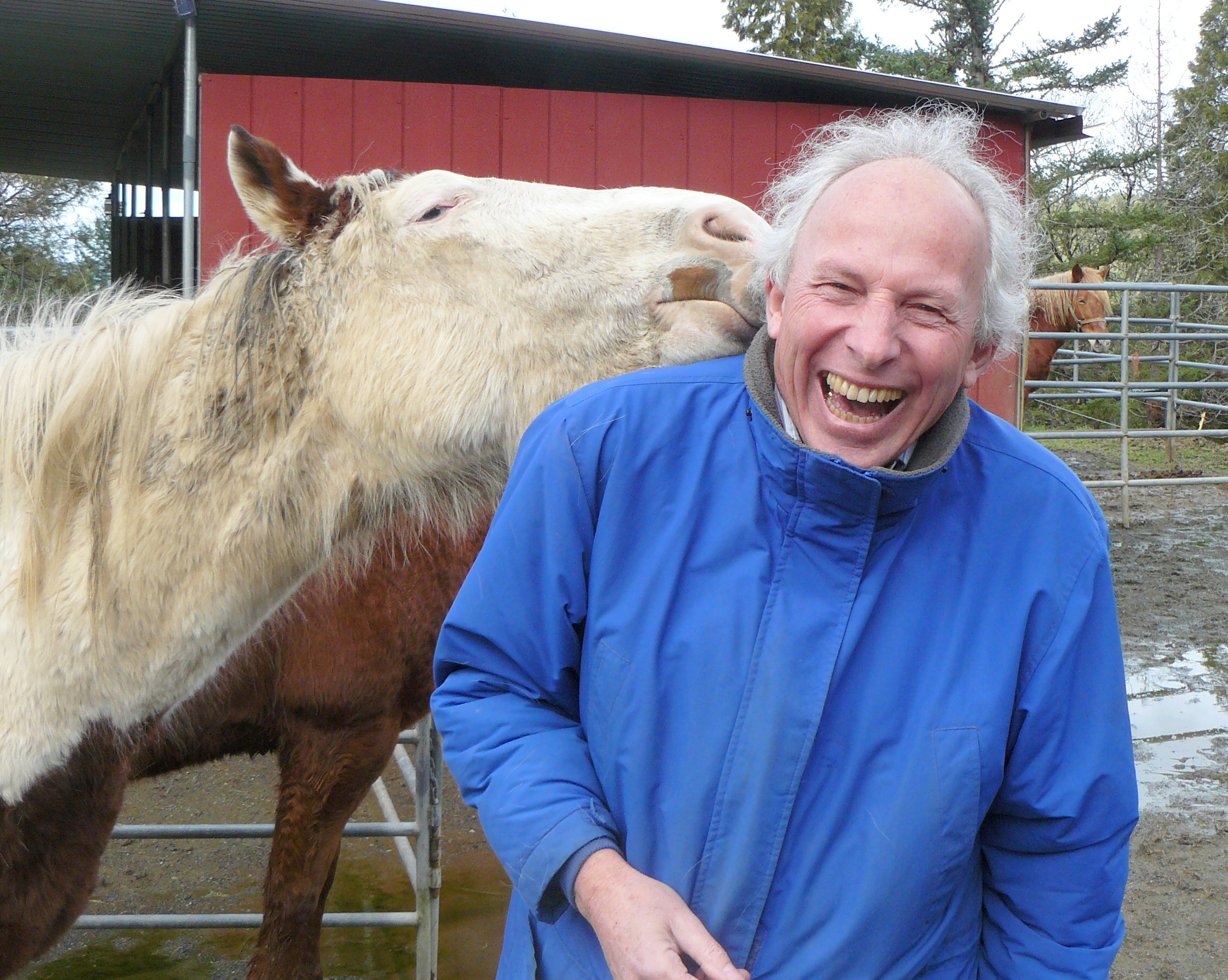
So for today going to offer you two pictures from our inspiring time with Darla and all her magnificent horses, most of whom have backgrounds that would make one weep.
Tomorrow, I will write more fully about what we are discovering when it comes to adopting a horse.
Trust me, a horse with its tongue in your ear is very ticklish!
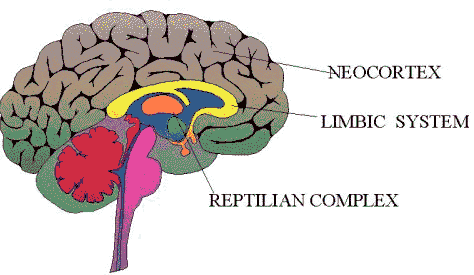
Now of all the things I am not, I am neither a biologist nor a scientist of any description. However, general knowledge told me years ago that the human brain is composed of three areas, as the following diagram shows.
The first time you observe the anatomy of the human brain, its many folds and overlapping structures can seem very confusing, and you may wonder what they all mean. But just like the anatomy of any other organ or organism, the anatomy of the brain becomes much clearer and more meaningful when you examine it in light of the evolutionary processes that created it.
The most efficient model for understanding the brain in terms of its evolutionary history is the famous triune brain theory developed by Paul MacLean. According to this theory, the following three distinct brains emerged successively in the course of evolution and now co-inhabit the human skull:
The reptilian brain, the oldest of the three, controls the body’s vital functions such as heart rate, breathing, body temperature and balance. Our reptilian brain includes the main structures found in a reptile’s brain: the brainstem and the cerebellum. The reptilian brain is reliable but tends to be somewhat rigid and compulsive.
The limbic brain emerged in the first mammals. It can record memories of behaviours that produced agreeable and disagreeable experiences, so it is responsible for what are called emotions in human beings. The main structures of the limbic brain are the hippocampus, the amygdala, and the hypothalamus. The limbic brain is the seat of the value judgments that we make, often unconsciously, that exert such a strong influence on our behaviour.
The neocortex first assumed importance in primates and culminated in the human brain with its two large cerebral hemispheres that play such a dominant role. These hemispheres have been responsible for the development of human language, abstract thought, imagination, and consciousness. The neocortex is flexible and has almost infinite learning abilities. The neocortex is also what has enabled human cultures to develop.
These three parts of the brain do not operate independently of one another. They have established numerous interconnections through which they influence one another. The neural pathways from the limbic system to the cortex, for example, are especially well developed.
I’m well into reading the book Waking The Tiger: Healing Trauma authored by Peter A. Levine. As early as Chapter One, Peter Levine explains [my emphasis]:
The involuntary and instinctual portions of the human brain and nervous system are virtually identical to those of mammals and even reptiles. Our brain, often called the ‘triune brain,’ consists of three integral systems. The three parts are commonly known as the ‘reptilian brain’ (instinctual), the ‘mammalian or limbic brain (emotional), and the ‘human brain or neo-cortex’ (rational). Since the parts of the brain that are activated by a perceived life threatening situation are the parts we share with animals, much can be learned by studying how certain animals, like the impala, avoid traumatization. To take this one step further, I believe that the key to healing traumatic symptoms in humans lies in our being able to mirror the fluid adaptation of wild animals as they ‘shake out’ and pass through the immobility response and become fully mobile and functional.
Unlike wild animals, when threatened, we humans have never found it easy to resolve the dilemma of whether to fight or flee. This dilemma stems, at least in part, from the fact that our species has played the role of both predator and prey. Prehistoric peoples, though many were hunters, spent long hours each day huddled together in cold caves with the certain knowledge that they could be snatched up at any moment and torn to shreds.
Anyway, to get back to what triggered today’s post.
If you read yesterday’s post you will recall me chatting with Jon Lavin and Jon reminding me that humans are drawn to positive messages. But in stark contrast, the news media industry excels in promoting ‘doom and gloom’. Why is this? Why are we so fascinated by danger?
Well here’s my theory.
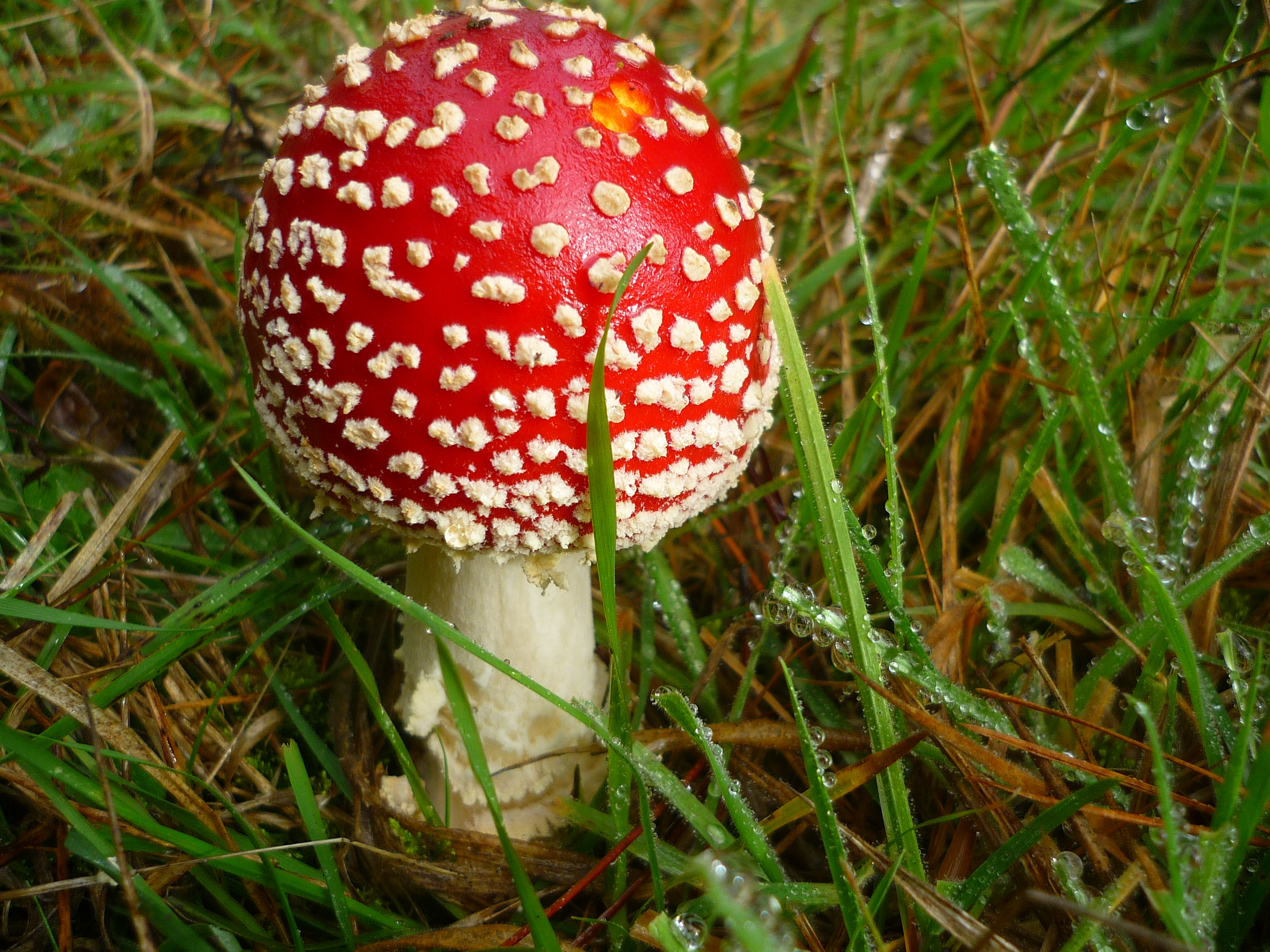
That is our evolution would not have succeeded if early man didn’t become pretty smart at identifying animal behaviours and plants and fruits that had the capacity to harm or even kill. For example, what parent hasn’t made it a priority to teach their children the difference between harmful fungi and edible mushrooms. Indeed to the extent that most of us would think long and hard before eating any fungi found in the wild unless we were 150% certain it was edible. Look at the following picture. Your instinct tells you if it’s safe to eat or not – it’s not!
So early man became over-sensitised to dangers to his health for his own good and continued existence. While modern man functions in ways almost unrecognisable from early man, that good old reptilian brain still is doing it’s best to protect us (flight, fight or freeze). Think how we all respond to a sudden alarming sound, such as a gun shot or a scream, to know that the old reptilian brain is still alive and well.
Thus while all of us hate negativity we all seem to have this fascination with doom and gloom – just in case it helps us and our loved ones survive.
Back to Jon Lavin. He makes it very clear that anything more than a small amount of ‘doom and gloom’ speaking to our consciousness increases the odds of depression and introversion.
Thus the message is that we humans should allow our Neocortex to tell our Reptilian ‘neighbour’ to go easy on the bad news, go and open a beer and watch the world go by! Whoops! Watch the world go by with a smile!
There are things that are beyond rational explanation.
Warning – this post is rather more ‘touchy-feely’ than you are used to seeing on Learning from Dogs. So if it wanders about in ways that you struggle to follow then just stifle your yawn and come back tomorrow!
It goes back to an earlier plan that I had in terms for a couple of posts. Both focussing on the myriad of examples of the appalling decline in our world. I had been collecting a number of essays to support the proposition that if we don’t learn from dogs the qualities of integrity and unconditional love then our world was doomed. I had collected the essay from Ellen Cantaro over on TomDispatch about the incredible stupidity of fracking. Or the one from Tom’s own pen in an essay about climate change being the new ‘Anti-News’. I had saved the recent essay from George Monbiot discussing the madness of the so-called dredging practices in the UK’s Somerset Levels. I had fumed at another George Monbiot essay Bring It On that included this incredible statement:
It is hard to think of a more serious allegation. For six months an undercover officer working for the Metropolitan Police was instrumental in planning a major demonstration, which ended up causing injuries and serious damage to property. Yet the police appear to have failed to pass this intelligence to the City of London force, leaving the target of the protest unprotected.
I had many more examples but you get the message!
So what stopped me?
I was chatting to Jon Lavin on Monday about a variety of things. Jon asked how the book was coming along. I replied by saying that a recent NaNoWriMo webinar had persuaded me that the book wasn’t a novel and should be re-written as a non-fiction story. Going on to add that I might include some of the appalling examples of what was going wrong in our society to strengthen the argument that we truly have much to learn from dogs.
Jon, who had read the first, very rough draft of the book that appeared on this blog, cautioned me against doing that. He went on to say that in the world of solutions focussed therapy, the area that Jon practices in professionally, the way forward was always to focus “on what’s working“. Jon continued by saying that while one would initially allow the problems to be voiced, this negativity would always be a tiny piece of the overall process, say less than 5% of the session. That even if a client’s whole world seemed to be failing, there would always be something that was alright, always a 1% that was working, and that would be the place to start. A quick web search endorsed that as the website of Good Therapy revealed, from where I read:
Solution focused brief therapy (SFBT) targets the desired outcome of therapy as a solution rather than focusing on the symptoms or issues that brought someone to therapy. This technique only gives attention to the present and the future desires of the client, rather than focusing on the past experiences. The therapist encourages the client to imagine their future as they want it to be and then the therapist and client collaborate on a series of steps to achieve that goal. This form of therapy involves reviewing and dissecting the client’s vision, and determining what skills, resources, and abilities the client will develop and use to attain his desired outcome. Solution focused therapy was developed by Steve De Shazer, Insoo Kim Berg, and their team at the Brief Family Therapy Family Center in Milwaukee, USA.
Thus coming back to the book rewrite, Jon said that people wanted to read ‘good news’ not negativity. It was a key reminder for me and an incredibly inspiring call that in these challenging times, whether on this blog or in a potential book, I need to write about all the powerfully, positive lessons that dogs, and all warm-blooded creatures, offer mankind. The lessons of integrity, love, trust, balance, loyalty, faithfulness, affection, forgiveness and more.
OK, moving on.
On the evening of February 7th Jean and I settled down to watch a YouTube video. It had been featured in a post from LadyBlueRose that had been published on the 6th. The post was called His Name is Spirit and it was the story of a woman, Anna Breytenbach, who has dedicated her life to what she calls interspecies communication.
We had reached the six-minute point in the film, already captivated by it, when the telephone rang. I paused the film and answered the phone. It was neighbour Dordie from next door ringing to say that when she had seen us earlier in the day she had forgotten to mention that there was this incredible film that we really had to watch …… yes, you guessed it! The film that Jean and I were watching at that moment.
Here is that film.
Now here is Anna’s website Animal Spirit where one learns:
ENHANCING THE RELATIONSHIP BETWEEN HUMANS, OTHER ANIMALS AND THE NATURAL WORLD
Welcome to an exploration of interspecies communication – a journey of discovering ways to restore a deep relationship with all of life.
Human and animal communication creates a valuable bridge between human and non-human animals. By connecting with our intuition, we can engage in meaningful dialogue and remember how to hear the subtle messages from those whose space we share in our lives and our natural environment. Coming from a place of respect and reverence for all life, we can learn to understand our wilder relatives, honour their truths and live in greater harmony.
and where one also can watch the short introductory film that is on her home page; as below.
A web search then came across a fascinating interview with Anna.
So where does this all end up?
Simply, that in a world dominated by media of all types that favour ‘doom and gloom’ it can be incredibly difficult to hang on to the message offered by Jon and by Anna, and by many others no doubt, the message that our individual health, and by implication the health of this planet, is afforded through staying positive.
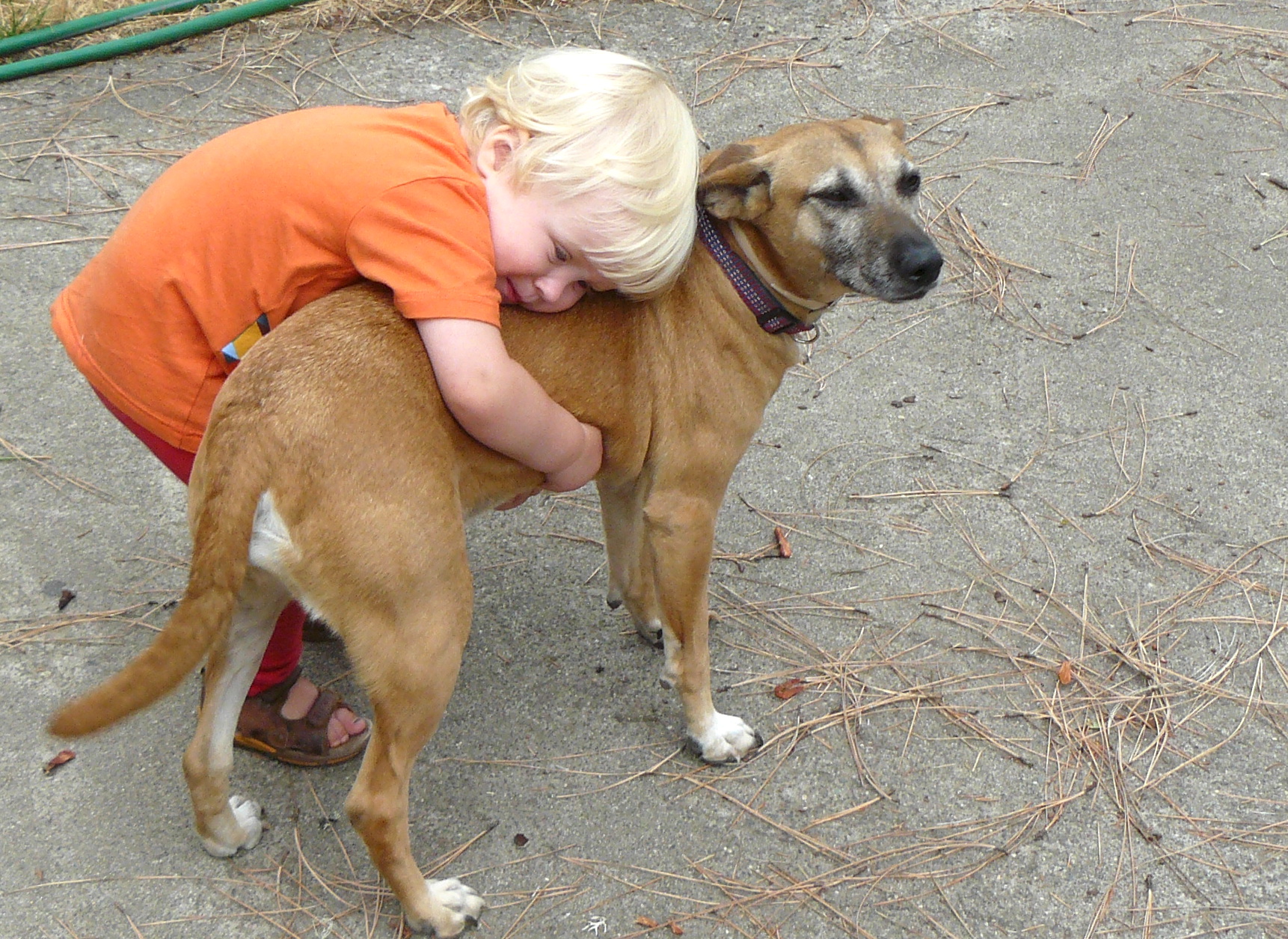
Or put more basically, if you are feeling low go and hug a dog! So I can do no better than to close with the same picture that closed Tuesday’s post Meet the dogs – Dhalia.
On the 24th January this year, I published a post called 20:20 self-awareness. To save you clicking the link and returning to that post, the essence was speaking clearly; not only to others but to ourselves. I quoted George Bernard Shaw, “The single biggest problem in communication is the illusion that it has taken place.”
Then went on to write:
Yet, what we hear and what we say are both modified, frequently unconsciously, by past events, experiences and trauma. That being the case, then it is key, critically so, that we achieve the best possible self-awareness. Because it is only through an understanding of our past that we come to learn of our sensitivities and our associated ‘tender spots’ and their potential for ‘pulling our strings’.
Closing the post by including a twenty-minute, documentary film about fear. (Here it is again for those that missed it.)
One of the comments to that post was from Sue who writes the blog Dreamwalker’s Sanctuary. (It’s a beautiful blog, by the way.)
This was the comment left by Sue.
Fear is inherent in us all for that Flight or Fight mode.. But the F word has now been used and abused as it has been used as a useful tool .. Self awareness comes when we wake up to what our world is generating and we have a choice. We can allow ourselves to get embroiled within the Fear.. Or we can see it for what it is and who and what is creating that fear and why?…. Once that awareness kicks in we can see there is nothing to Fear but Fear itself… Living in the Now of a moment prevents us also from fearing the future, and fearing what has passed..
Easier said than done, I guarantee you .. But once you can get your head around it all… We breathe deeper and evenly and let all fear go… ( I am still working on this, I am not perfect by any means ) for as your video states its been ingrained within us for so long we know no other way, and we are a creature of habit!..
Thought provoking post, Paul thank you
Sue then pointed me to one of her essays, that I have the great pleasure of republishing today.
ooOOoo
Do You Chose Love Over Fear?
One Love Heart.
Remember those Prophesies of “2012”? I posted many of my thoughts upon this timeline which I thought was to mark the end of one era and the beginning of the Next – Maybe those ancients teachers didn’t know whether we would rise or fall as they marked the end of their calendar.
Maybe that fate awaits us still depending upon our choices we make in the Now dependant upon our Next actions! But as we read through those teachings of ancient prophecy you will see also they speak of transformation. Transformation requires Change, and we are being urged now to Think! Think outside our boxes as our comfort zones are now being tweaked as we become ever more sensitive to the Energy Shifts within our World.
Whether we realise it or not we are incarnated with a ‘Soul Mission’ even though we caught amnesia after we were born. But more and more of us are thankfully waking up as we begin to remember who we are. It may have taken many life times and lessons to align with our present purpose as we pass through various stages on our journey, often not understanding the reasons for painful events and experiences. It isn’t until later that we look back and see the gifts and healing which were given to us and that through them we learn to grow, letting go of the past as we step into the Now.
Giving Birth is not without pain, and our new earth is only now going through her own birthing pains. We see it in the spasms of conflict, the wars, hunger, poverty, displacement of refugees and the destruction through pollution of Mother nature. Pains which are now being experienced which we humans have carried with us over many life times. Pains that emerge as a build-up of our Fear and Prejudices.
The choices are simple: we either choose Fear or Love.
Even while writing this a sense of peace has swept over me as I smile to myself. I recently read an article which said “…we incarnate with these wounds and at a soul-level choose to encounter those whose actions catalyse us to resolve and heal our soul wounding“. That made me smile even wider as I have long held the belief that our enemies are our greatest teachers helping serve our soul’s growth as we learn the various lessons such as patience, kindness, love, forgiveness, and compassion.
We are each of us now experiencing shifts in our emotions and lives, as we feel the ‘Shift’ in energy within our Mother Earth who is calling us to wake up and remember who we are; as our vibrations alter.
When I first started my blog back in 2007 I stumbled almost by accident to the opening post. But it was no accident! In fact my very first post was an experiment called Smile. I wanted to make a difference even if it was only through the words of a poem.
As we ‘Lighten Up’, letting go of what we no longer need, we lift our vibration higher; as we leave behind the wounds of the past. We are Energy Beings – and it’s time now to realise we each are a part of the Whole, that Oneness that permeates all things with the same Energy.
We are now ‘Shifting’ from duality to Unity Consciousness. This was brought home again to me on how many of us are thinking similar thoughts even here on WordPress. We see similar themes as we link into the Mass Consciousness, as we join together our thoughts, as we link subconsciously to the Cosmic web of thoughts.
We need to be aware of the Power of our thoughts and how we can assist in raising our planet’s vibration and our own collective Consciousness.
Much has been spoken upon The Ascension. First we need to ascend through our own layers as we climb ever higher, leaving behind the things that no longer serve us.
We do that by not getting swept up in conflict, by being more loving and tolerant, by being compassionate rather than being judgmental holding hate and anger.
We need to put the Care back in the world. If we embrace and choose Love over fear and stop looking who to blame but start to set examples of living in harmony and unity, then the true magnificence of who we really are can begin to manifest that ‘Golden Age’ that was once prophesied to bring about Peace.
It is up to each one of us to pledge to change our own lives, because only that way will those prophesies come to fruition.










 Learning from Dogs