Category: People and their pets

Best laid plans!

Our tree work is now set for Wednesday, 30th!

Our arborist called early afternoon yesterday to say that they had ended up too late with their prior job for them to fell our tree that day. It has been re-scheduled for next Wednesday.

Conveniently, there was another dog food recall notice issued yesterday and that is the topic of today’s post.

Dear Fellow Dog Lover,Because you signed up on our website and asked to be notified, I’m sending you this special recall alert. If you no longer wish to receive these emails, please click the “unsubscribe” link at the bottom of this message.
Merrick Pet Care of Amarillo, Texas, is voluntarily recalling a limited amount of its dog treats due to elevated levels of naturally occurring beef thyroid hormone.

To learn which products are affected, please visit the following link:
Merrick Recalls Multiple Dog Treats

Please share the news of this alert with other pet owners.

Mike Sagman, Editor
The Dog Food Advisor

P.S. Get instant access to a list of The Dog Food Advisor’s safest and most recommended dog food brands. Click here for details.

That link offers much more information that is re-published here.

ooOOoo

Merrick Recalls Multiple Dog Treats

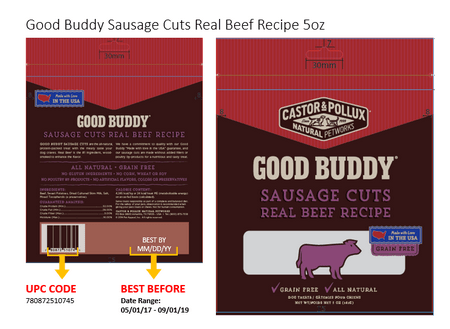
May 23, 2018 – Merrick Pet Care, of Amarillo, Texas, is initiating a voluntary recall of a limited amount of beef dog treat varieties due to the potential that they contain elevated levels of a naturally-occurring beef thyroid hormone.

What’s Recalled?

Batch Information

The voluntary recall is limited to the production codes listed below.

To locate the production code, consumers should look on the lower back of the treat bag.

No other production codes, sizes or varieties of these products are affected. The voluntary recall covers only specific production codes of the following beef treat products:

About Beef Thyroid

Dogs consuming high levels of beef thyroid hormone may exhibit the following symptoms: increased thirst and urination, weight loss, increased heart rate and restlessness.

These symptoms may resolve when consumption decreases.

If a dog consumes high levels for a long period of time, these symptoms may increase in severity and may include vomiting, diarrhea and rapid or labored breathing.

If your pet has consumed the product listed and has exhibited any of these symptoms, please discontinue feeding and contact your veterinarian.

What Caused the Recall?

This potential health risk was brought to Merrick’s attention as a result of the FDA sharing one consumer complaint where the dog’s health was temporarily impacted while eating Merrick Backcountry Great Plains Real Beef Jerky 4.5 ounce.

The dog’s health improved and fully recovered after discontinuing consumption of the treat.

Message from Merrick

Pet owners should know there is limited risk given treats are not intended for full nutrition and should only be occasionally consumed.

However, out of an abundance of caution and to maintain trust with our consumers, we are withdrawing all potentially impacted product.

We have not received any similar reports to date from consumers about issues with these products.

As a company of pet owners and pet lovers, we know our consumers place a tremendous amount of trust in us when their pet uses our products.

The quality and safety of our products are the top priority for our company.

We apologize to our retail customers and consumers and sincerely regret any inconvenience and concerns caused by this voluntary recall.

We are working with the U.S. Food and Drug Administration on this voluntary recall and will cooperate with them fully.

What to Do?

If you have product, please contact Merrick at 800-664-7387 from 8 am to 5 pm Central Time Monday through Friday.

Or by email at customerservice@merrickpetcare.com so we can provide a refund.

Or visit Merrick’s website and fill out a form: http://www.merrickpetcare.com/customerrelations.

No other Merrick or Castor & Pollux products are impacted. These treats are distributed in the U.S. through pet specialty, grocery and online retailers with limited distribution in Canada.

For more information visit http://www.MerrickPetCare.com.

U.S. citizens can report complaints about FDA-regulated pet food products by calling the consumer complaint coordinator in your area.

Or go to http://www.fda.gov/petfoodcomplaints.

Canadians can report any health or safety incidents related to the use of this product by filling out the Consumer Product Incident Report Form.

ooOOoo

As I always say, do share this post as much as you can because we all care so much for the health of our dogs!

The continuing fallout from Chernobyl

Will you, please, consider taking one of these puppies!

I closed last Saturday’s post with this plea: “If only there wasn’t a single dog in need of adoption in the world!

That plea is being used to introduce today’s post. An article that was recently read on the Smart News section from The Smithsonian magazine website.

I have republished it, hopefully without infringing copyrights, because it’s a story that needs to be circulated as far and wide as possible.

ooOOoo

Chernobyl Puppies Going Up for Adoption in the U.S.

Now in quarantine, the pups are expected to come to the U.S. this summer in search of their forever homes.

Please for to adopt us, Comrade. (Chernobyl Exclusion Zone Authority)
By Jason Daley smithsonian.com , May 16, 2018

In 1986, the Chernobyl nuclear power plant melted down, sending nearby residents fleeing the disaster zone. And sadly, most pets got left behind. Over the last 32 years, the surviving pups have multiplied, creating a community of hundreds that live in the Chernobyl Exclusion Zone and another 250 that live on the grounds of the former power plant itself.

Now, a dozen of those homeless puppies will head to the United States for adoption, reports Matt Novak at Gizmodo.

According to the Russian website Meduza, Ukrainian authorities have captured 200 of the stray Chernobyl puppies. They are currently keeping them in a 45-day quarantine in the city of Slavutych, and then a dozen will be shipped to the United States.

“We have rescued the first puppies, they are now in our adoption shelter going through the quarantine and decontamination process,” Lucas Hixson, co-founder of the U.S.-based Clean Futures Fund, a non-profit created to take care of Chernobyl clean-up workers, their families and the dogs tells Novak. “The goal is 200 dogs but will likely be more in the long run. My hope is to get 200 dogs rescued and adopted in the next 18 months and then go from there.”

The pups have a heartbreaking story, as The Guardian’s Julie McDowell detailed earlier this year. During the evacuation, more than 120,000 people were herded onto buses to escape the meltdown of the Unit 4 reactor, leaving most of their valuables and their pets behind. Many dogs tried to follow their owners onto the buses but were kicked off. People left notes on their doors asking authorities not to kill their animals, but Soviet Army squads were dispatched to put down as many contaminated animals as they could find.

Some of the dogs survived the army and the radiation, rebuilding their community as a pack. The Clean Futures Fund reports that the 250 dogs living on the grounds of the former power plant were likely driven out of the surrounding forests by wolves and a lack of food. Another 225 dogs roam Chernobyl City and hundreds of others live and scrounge at security checkpoints and throughout the woods and abandoned communities in the Exclusion Zone. Most of the dogs around the plant are under the age of 4 or 5, and clean-up workers at the site sometimes feed and tend to sick animals.

But last year, after becoming aware of the animals, The Clean Futures Fund decided the pups needed a more permanent solution. That’s why they’ve implemented a three-year program in the Exclusion Zone to spay and neuter 1,000 animals and vaccinate them against rabies. At their first clinic last August, the Fund spayed and neutered 350 dogs and cats in the area. Each animal was tested for radiation, given antibiotics, vaccinated for rabies and microchipped. Each dog’s vital data was also recorded.

For the next clinic scheduled for June, the Fund has also partnered with researchers from the University of South Carolina. The team will study the dogs for signs of radiation poisoning as well as genetic damage and disruptions to the dogs’ microbiomes, reports Mary Katherine Wildeman at The Post and Courier. The team will sedate the dogs and look for tumors and cataracts, which can signal radiation poisoning.

Understanding the impacts of radiation exposure is becoming increasingly important, says Timothy Mousseau, a researcher who has studied radiation in the birds, insects and small animals of Chernobyl and will lead the project. Exposure rates in daily life from medical treatments and other sources are on the rise, with the average yearly dose Americans receive doubling in the last 20 years alone.

There is no word when or where the dozen Chernobyl pups will go up for adoption. But even if you’re not lucky enough to have one of the reminders of Soviet-era nuclear power at the foot of your bed, it’s still possible to see the place for yourself and hand out treats to some of the remaining pups. There’s a booming tourism industry in the area to visit the eerie ghost towns and surprisingly quiet and beautiful green space that has overtaken the Zone.

ooOOoo

I am going to contact The Clean Futures Fund to see how one can register a potential interest in taking one of these puppies.

In the meantime, is there any reader who would be interested in having a puppy? Send me an email if so.

Picture Parade Two Hundred and Forty

The final photographs sent to me by Dan Gomez.

oooo

oooo

oooo

That last one really does get to the essence of what having a dog in one’s life truly means.

You all have a wonderful week!

Finally, thank you Dan!


More tips for healthy dogs

Another interesting article from Susan Combs.

It’s self-explanatory and needs no further introduction from me save to say that this is the third guest post from Susan.

ooOOoo

Four Essential Tips to Make Your Dog Healthy and Active Round the Year

(Susan asked me to remove her article. The background to that decision may be read in my post of the 25th May, 2018: Living and Learning.)

ooOOoo

Susan also included the following graphic that I will leave you with.

We all love our dogs too much to take any risks with them!

Summer heat and caring for our dogs.

A guest post by Wendy Lipscomb.

Already there are some places in the USA that are experiencing some pretty hot days. For instance, at the time of me writing this introduction, around 2pm last Friday, the temperature in Phoenix, Arizona is 97 deg F. (36 deg C.)  That’s perfectly hot enough for us humans even before we think of dogs. Especially dogs that have thicker coats.

Over to Wendy!

ooOOoo

Regulating the Body Temperature of Your Thick-Haired Dog during the Summer.

by Wendy Lipscomb, May 9th, 2018

Summer brings in many outdoor activities such as hiking, swimming, running and going for a picnic or maybe going out just for a walk. There is nothing wrong with taking your dog out with you if you know how to regulate your pet’s body temperature.

Humans regulate their body temperature by sweating but animals do not have this property. Dogs do sweat very slightly from their nose and paws but that cannot help them regulate their body temperature. Dogs regulate their body temperature by panting; when a dog breathes through his mouth the saliva evaporates cooling down the blood in the veins. Put another way, the air that a dog breathes passes through its nasal passage before reaching its lungs. The air is cooled when it is passed through that nasal passage.

Therefore, it becomes even harder for dogs to regulate their body temperature when the sun is shining down, and also when the humidity in the air increases. This builds up a pressure on the dog’s lungs and heart as he breathes in and out more frequently to regulate his body temperature.

But you can take some measures to help your pet to regulate his body temperature during summer outdoors.

No doubt about it that dogs are super active animals and love to go outdoors. But while taking them out in those summer months it is easy to forget that the paws of our dogs are very sensitive and they can be burned by walking on the pavement and roads in the daytime. So, invest in good protective booties or apply paw wax to protect your dog’s paws.

In addition, your dog can also get sunburned by excessive exposure to the sun. Therefore, either limit the exposure of sun for your four footers or visit your vet clinic so that they can recommend a good sunscreen for your dog.

Another thing that you can consider while going out in the summer is that if you are traveling in a car and stop for rest never ever leave your furry companion in a locked or closed car. Because in summer your car becomes extremely hot by trapping the heat inside. If you leave your pet inside a hot car it can suffocate within minutes. Yes, within minutes!

Always carry a bottle of water to keep your dog hydrated. Create breeze for your dog to make the hot temperature tolerable for them. The breeze helps in cooling sweat and will make your dog feel relaxed. For this purpose buy a shop fan that is portable; a good option to create a breeze to keep yourself and your dog cool.

The above-mentioned tips are general tips that you must keep in your mind to implement in the summer. However, thick-haired dogs require a little more attention to maintain their safe body temperature.

People have the misconception that a dog with thick hair will suffer more during summer but let me tell you that thick-haired dogs are good at regulating their body temperatures. The fur of thick-coated dogs helps them to stay warm in winter and in summer their fur works as insulators and protects their skin from direct exposure to the sun.
Bathing For Thick-Haired Dog:
Well, fleas and ticks are around all of the year. Fleas can survive outside for long periods of time, particularly in a warm and sticky climate. As mentioned previously, summer bring in more heat, humidity and more outdoor time. Thus, it is the peak time for your thick-haired dog to catch fleas or ticks. Therefore, bathing your dog regularly is as important as anything else because it will not only help your dog to regulate his body temperature but bathing will also help you and your puppy be rid of these tiny crawlies as flea bites can cause redness, irritation, allergy and even illness such as Lyme diseases. It is recommended to use a good quality flea shampoo to get rid of fleas. Always examine the ingredients of the shampoo to avoid buying one with harsh chemicals because it may cause a reaction to your dog’s skin.
You should not Shave Your Dog in summer:

People ask me if I am going to shave my thick-haired dog in the summer? The answer to this question is “No”. Thick-haired dogs have two layers of hairs. The long-guard hairs protect the dogs in the winter from snow and the inner layer helps them to stay warm in those same winters. However, these dogs shed their undercoat in the summer and they are left with only long-guard hairs that insulate dogs from heat and protects them from sunburn.
Shaving your double-coated dog is not a good idea because shaving changes the texture of the coat. Your dog sheds off his inner coat in the summer. If you shave his coat his hair will soon start growing back and you will see that the soft and fluffy inner coat will grow first and later on the guard-hairs will combine with them. In addition to this, the texture of the new coat will be sticky and your dog will bring in whatever he passes through and that sticks to his new coat.
Moreover, the combination of the new growing inner and outer coat will also make your dog feel hotter on summer days.
Brush Your Dog Frequently:
Instead of shaving your dog’s coat, try to brush it every alternate day. Brushing your dog’s coat with a fine-toothed comb will untangle the hairs and it will also help in removing the winter undercoat of your thick-haired four-footer. This will increase air circulation and will make your dog feel cool and comfortable.

ooOOoo

I asked Wendy for a little about herself. This is what she sent in:

Wendy is a self-employed beauty therapist, mother of two; life-long pet parent and lover of dogs who somehow manages to squeeze in the time to satisfy another of her loves – writing. Wendy is the founder, main contributor to and editor of TotallyGoldens.com

So no other way than to close this post with the message: Stay Cool Peeps!

(Brandy! Take Note!)

Jean and Brandy at a local yard sale back in June 2016.

Picture Parade Two Hundred and Thirty-Nine

More of those pictures sent to me by Dan Gomez.

oooo

oooo

oooo

oooo


The last of these super pictures in a week’s time.

Thanks Dan!

Picture Parade Two Hundred and Thirty-Eight

The pictures that were mentioned in Dan’s item last Tuesday.

oooo

oooo

oooo

oooo

oooo

The second set of these compelling photographs in a week’s time.

You all take care out there!

Doggie Aromas!

Dogs! We love them to pieces but sometimes they do smell a tad!

Zara Lewis has provided two previous guest posts for you good people and both of them were well received. Very well received!

So here is Zara’s third. My intuition is that will similarly go down well with all you good people out there!

ooOOoo

8 Tips for Keeping a Dog-Friendly Home Clean and Odor-Free

The love and affection that you give your dog and that it gives back to you makes the whole relationship truly fulfilling. But it wouldn’t be lying if we said that taking care of a pet dog and keeping a clean and tidy home at the same time does requires quite a bit of effort and energy. Here are some of the most practical tips on how to confront your four-legged companion’s gift to create a mess.

1 – Brush and bathe regularly

One of the most effective ways in which you can avoid finding your pooch’s hair in your soup, ears, sock drawers, or anywhere else in your home is to brush its coat on a daily basis, preferably somewhere outside. Besides keeping a neater appearance, you will prevent tons of hair piling up in the furthest, least accessible corners and areas of your rooms.

Make sure your pet also gets a good bath whenever it needs to. The frequency depends on its coat—dogs with more oily coats may need a bath as often as once a week, while for others, it is usually no more than once a month.

2 – Keep those paws clean

Whenever you and your pooch return from a walk, thoroughly wipe its paws with a damp towel or baby wipes. That way, no mud or dirt will be spread around, and maintaining the hygiene of the whole place will be even easier.

3 – Teach your dog where to do its business

Don’t let your precious one do its business wherever and whenever it feels like doing it. It may seem like something implied and silly to even mention, but some dog owners still do disregard this advice. Train your pooch to poop or pee outside, or only at specific places in your home if it’s left alone for a longer period of time—for example, in a litter box. Even when it does happen that he or she simply can’t control it, clean the mess right away.

4 – Maintain hygiene in all rooms

Ok, this one is somewhat obvious—keep your vacuum cleaner, duster, and mop close. No matter how much hair you manage to brush off your friend, some of it will inevitably sneak its way into your surroundings. Cleaning and dusting all the surfaces in your home will significantly reduce the amount of hair lying around, but also dander, dirt, and bacteria.

5 – Wash your dog’s food bowls

Not only can the remains from your dog’s previous meals get stuck in there and start smelling pretty bad, dirty bowls and dishes can be a breeding ground for masses of bacteria. That is why you should wash them at least once a day to prevent any minor or major consequences. After all, you do it with your plates, don’t you? Same thing.

6 – Be aware of the air you breathe

Living with dogs, we quickly get used to their smell and stop noticing the unpleasant odor that they may occasionally leave behind. But your guests certainly notice. You can tackle this problem by airing all the rooms regularly, along with lighting scented candles or sticks, or using high-quality air fresheners.

An even more effective solution than scented candles and sticks would be to equip yourself with an air purifier. If you’re looking for a top-notch product with more long-lasting benefits, turn to a mold air purifier by Oransi. It contains a HEPA filter which, besides removing the unpleasant odor, keeps the air even fresher, and gets rid of dust, dander, mold, and allergens floating round your room. A highly recommendable option for people with pets.

7 – Define your pooch’s territory

If you have the luxury of living in a bigger house or apartment, set boundaries or determine the space where your pet can roam freely. For example, allow him or her to enjoy the first floor of the house, and make the second floor a ‘humans only’ area. Also, determine a specific space or object for them to sleep on, like a cushion or a cozy blanket that will always remain in the same spot.

8 – Lint rollers are your friends

Lint removers are a really convenient way of keeping your furniture, as well as your clothes, hair and dander-free. It only takes a minute and requires minimal effort. Moreover, you can use them on any kind of textile. So, in case you haven’t got one, you might want to consider changing that.

Remember that keeping a clean and odor-free home primarily means keeping you and your beloved pet healthy and happy.

ooOOoo

Let me repeat Zara’s opening sentence: “The love and affection that you give your dog and that it gives back to you makes the whole relationship truly fulfilling.” No question at all about that!

But I would word it in a more gutsy manner ( and this is in no way a criticism of Zara) especially as the coming-home greeting that Jean and I had from our dogs just last Friday is still fresh in my mind.

Pure unconditional love is very rare between humans as opposed to true love that, thankfully, is common. Our dogs offer us unconditional love. Pure, total, perfect unconditional love!

Real Learning from Dogs – for our Children!

Another wonderful guest post from Zara Lewis.

Back on March 13th, Zara published her first guest post in this place. It was called Dogs and allergies and was very well received by many if not most of you.

So what a pleasure it was to receive a further email and material from Zara last Friday.

Here it is for all you good people!

ooOOoo

How Your Family Pooch Can Teach Your Youngsters Responsibility

by Zara Lewis, March 30th 2018

It’s easy to confuse pure obedience with true responsibility, simply because the former serves as the stepping stone, while the latter is a mindset that takes years to build. We as parents make choices every day that affect how well this mindset develops in our kids, but one of the best, most seamless ways for them to succeed is by nurturing their relationship with your family doggo.

With a four-legged friend by their side, kids tend to assume the role of a leader, a friend, and a caregiver with greater ease. Although it comes with its own set of parenting challenges, teaching your kids responsibility with your little fuzzy buddy is a rewarding experience that will enrich your kids’ childhood and help you be a better parent, as well!

Building healthy habits

From regular vet check-ups, vaccines, feeding on a schedule, and taking them for walks every day, your kids will quickly realize that only a healthy dog will be a happy dog. I know that some kids will be eager to split their chocolate cake with their furry pal, but when you explain to them that such a diet can be very harmful, they will be much more careful when choosing the right dog food.
When they’re young, they won’t perceive those walks and frisbee throws as exercise, but if they start embracing this lifestyle so early, they will be much more likely to stay active throughout their adulthood, too.

Learning about boundaries
No matter how in love your youngsters may be with their pet, they often don’t understand that dogs have moods, too. That means they won’t always be in the mood to be hugged, or that dogs won’t put up with having their tail pulled all the time.

The sooner they understand to respect the needs and wants of their pets, your kids will appreciate the meaning of personal preferences even in life. They will learn how to recognize certain body language signals that they are about to cross a line and transfer that knowledge to their hooman friends as well.


Mastering discipline

Just like that birthday cake is almost too irresistible not to be shared with your pooch, it’s no surprise that many kids want to take their dogs everywhere and share absolutely everything with them. My own little boy wanted to share his bed with our dog, Joey, and even though this is perfectly fine from time to time, making it into a habit wasn’t the best option for either of them.

So, we got a Snooza bed for Joey and placed it in our son’s bedroom and explained that it’s best for each of them to have their own space, since they both grow very fast. Plus, once I told my son that the cleaning of his room will be much more difficult if his bed was filled with dog hair, he immediately changed his mind!


Handling suitable tasks

Overburdening your kids with too many difficult chores is as bad as not giving them enough opportunities to be responsible. It’s best to discern how much your youngsters can handle depending on their age. For example, toddlers can tell you if their water bowl is empty or if they caught the little rascal in the potty act.

Older kids can share the entire feeding, grooming, and walking routine with you, depending on their school responsibilities and other chores. In fact, older kids can even help you train the dog by teaching them various tricks, and playing sessions are beneficial both for your kids and the dog, as they’ll help them grow stronger, and build their bond over time.

Fostering independence

Sometimes the homework will pile up and perhaps the flu season will kick in, so you’ll feel the need to spare your kids the trouble of caring for your pet. Even though it’s perfectly fine to help them manage their chores and take over a portion until they are well enough, they shouldn’t suddenly let you take over for good.
Moreover, encourage your kids to pitch in, no matter how little, with their birthday savings or their pocket money when buying dog food, or getting new chew toys. This is yet another way of sharing and learning to become more autonomous even financially with their pets.

The cycle of learning and teaching
While we’re on the subject of sharing, some kids perceive their pooch as another toy at first, or even as a chore you’ve added to their “unwanted” list. This is especially common among very young kids, and it becomes essential for parents to help them cope with these responsibilities by gradually introducing new ones.
Talk to them, see if they would actually like to take charge of a particular activity such as feeding or walking, while you share other responsibilities with them. Explain why these actions are important for keeping your pooch happy and healthy, and they will be much more likely to take on more responsibilities over time.

Finally, don’t forget to be a true role model while your kids are still in the learning stages of caring for your family pet. They will make mistakes, but they should look up to you for better behavioral patterns, and it’s your duty to be the caregiver you’d want your kids to become for your pooch.

ooOOoo

You do know if Zara carries on like this I shall hang up my keyboard and just savour Zara’s writings!!

Moving house – With A Dog

Or with 12 in our case!!

Back in February I received an email from a John Stuart:

Hi ,

I work on behalf of at kennelstore.co.uk, and I recently noticed your blog while I was looking around for a few resources on pets especially Dog! You have some great content there, I especially enjoyed this one https://learningfromdogs.com/2015/05/04/irish-wolfhound-guest-post/

I know sometimes it’s hard to create new content all the time and sometimes you probably find yourself needing blog content at learningfromdogs.com

I’m looking for high-quality sites like yours that I can contribute quality articles to in order to continue to build my profile, win a Pulitzer Prize and eventually take over the Universe.

Hopefully it’s a great opportunity for us to collaborate, you get some great content and I take a step towards world domination.

Hit me up and we can move forward from there. I’d be eager to contribute my knowledge and expertise and I’m confident I’ve got the writing chops to draw your readers in and even add value to your site.

Don’t just take my word for it though. Give me the nod and I’ll shoot across something for you to review and then we can go from there, I’d also be happy to work on something you might have had in mind for a while and not managed to get around to.

Note: I wont be charging anything for the article, it will be free of cost.

Regards,

John

Now I am pretty cautious when it comes to ‘promoting’ a guest author’s business or employer but if it’s clear that I have no direct connection with that business, and the article has real merit in being shared with you, then I think that is satisfactory. (But only if you dear readers agree with my stance in such cases: if you don’t then tell me!!)

Here is that article from John; the photographs were also supplied by him.

ooOOoo

Thinking of moving house? Here’s how to ensure it’s a dog friendly experience

Moving house can be stressful enough for us humans, and it’s even more of a confusing experience for the canine members of our household. Dogs are territorial animals by nature, and a sudden change of environment can upset the balance of their day-to-day lives. These changes can be very small; i.e. changing the room where you keep your dog’s food bowl or toys. It can also be a much greater logistical change; i.e. having to introduce your dog to a new vet, or new neighbours (human or canine)

Step One – Ensuring your new home is dog friendly 

This is arguably the most important step in ensuring your house move is as dog friendly as possible – your pooch needs to feel as happy and well-adjusted in a new house as possible. There are a number of factors to take into account when you’re first house-hunting (it’s worth noting that it’s ok if you can’t tick off all the items on this list!)

Living quarters

This is pretty essential. Your dog needs plenty of space to roam around, and probably won’t enjoy a confined space. If you’re used to keeping your dog indoors, it’s vital that your new home has plenty of space for their bed, toys and food bowl. Likewise, if your dog is kept outdoors, you need sufficient space to keep a kennel.

Security and safety

Make sure that your new residence is safe and secure for your dog to roam around. If you are keeping him/her outside, then you may wish to minimise visibility to and from the street, especially if your dog is easily excited by the site of strangers.

It’s also worth getting to know your local area and gaining a keen understanding of the potential hazards or threats which any pet owner needs to be aware of. If you are living in a highly built up area, then it’s doubly vital that your dog isn’t allowed to roam without your knowledge; likewise you may wish to familiarise yourself with any other dogs which your pet may come into contact with when you finally make the move.

Step Two – How to make your new home as dog-friendly as possible

Unfortunately, there’s no one-size-fits all, magical solution to making your dog’s home as friendly as possible. As long as you’ve got space and there are minimal hazards, the rest is a case of how much effort you’re willing to put in.

The secret of moving your dog into his/her new home smoothly is actually a relatively simple one – make your new home as similar as your old home as is humanly possible. There are several ways you can do this.

  • Establish a new routine as quickly as possible – this is very important; making sure your dog has an active routine is vital to ensuring continuity in your new home. Make this routine as similar to the old one. Feeding times and walk time should be exactly as they were in your previous residence. This routine should, of course, be as geared towards exploring your dog’s new surroundings as possible.
  • Don’t wash blankets – dogs are very responsive to familiar smells, meaning that it’s important to maintain as much familiarity as possible in the initial phases of a move. Familiar scents can make all the difference in making your dog feel more at home.
  • Transition is important – the actual experience of moving day might be unsettling for your dog, so making the transition as seamless and comfortable as possible is a good idea. Consider packing a little travel pack to make your dog as comfortable as possible. This should include blankets, toys, medication, water and food, as many things as possible to maximise comfort and continuity for your dog. As long as he/she feels at home, that’s all that matters.
  • Toilet train them immediately – when you get your dog to your new place, it’s important to make sure they know where to go to the toilet to avoid any unfortunate accidents.
  • Take special precautions for puppies – if you are moving a puppy, you may need to take extra precautions. It may be worthwhile to ask someone to puppy-sit for you if you’re planning to be out of the house for long periods of time.

Step Three – Important admin

This part is, admittedly, for you rather than your dog. However, there are some simple but important administrative tasks which can make all the difference in ensuring that your dog is happy in their new home. These can include:

  • Changing any dog tags which may have your old address on them
  • Registering with a new vet if possible. Dogs may not like visits to the vet at the best of times, so getting them adjusted to a new face is important.

Kennelstore specialise in the sale of wooden dog kennels, dog runs and dog cabins to homeowners and industry professionals.

http://kennelstore.co.uk/

ooOOoo

Your feedback as to the degree of value this post was for you would be most useful to me!