For as long as I live I will never stop marvelling at dogs.
Dogs are many things. In a sense they have as many likes and dislikes as us humans. But the one thing that is unique to these beautiful animals is their unconditionality. That, especially, shows through in the way that they care and love the humans and dogs around them.
This story on The Dodo emphasised that special way they care for their fellow dogs. Read it and you will see what I mean.
ooOOoo
Camera Catches Dog Bringing His Bed To His Sick Brother So He’s Comfy
“As he’s dragging it he’s looking at Roman almost to say, ‘This is for you’”
From the moment they became brothers, Spanky has always adored and looked up to his big brother Roman. He follows Roman everywhere he goes, and is always happiest whenever they’re together.
“Roman is definitely Spanky’s security blanket,” Jackie Rogers, Roman and Spanky’s aunt, told The Dodo. “Spanky will do nothing without Roman and always makes sure he is close to him and if he’s not he gets up and goes near him.”
JACKIE ROGERS
About two weeks ago, Roman’s ear started looking a little puffy and infected, so his mom took him to the vet and discovered he has a hematoma on his ear. They scheduled a surgery to take care of it, but unfortunately, while he waited for the surgery, his ear kept getting worse and poor Roman got more and more uncomfortable.
JACKIE ROGERS
At first, Spanky didn’t notice anything was different, but as Roman’s ear got worse, everyone noticed that Spanky was much more gentle and concerned about his best friend.
“We had to take him back to the vet to confirm he could wait five more days for surgery and I brought Spanky along for the ride, but due to COVID we couldn’t go inside with Roman and for 20 minutes Spanky sat in the car crying/whining/barking until Roman got back,” Rogers said.
JACKIE ROGERS
With the surgery set, all the family could do for Roman was to let him rest. During the day while everyone is at work, the family has a Ring camera set up so they can check in on the dogs, which is especially important now so they can make sure Roman is OK. Rogers was checking the camera recently when she noticed Spanky watching his brother lying on the floor, looking very concerned — and then he did the cutest thing.
“I see Spanky pacing for a minute while looking at Roman and then the bed and then I see him dragging the bed to Roman and as he’s dragging it he’s looking at Roman almost to say, ‘This is for you,’ and then the next clip is them snuggling,” Rogers said. “I had to re-watch it multiple times, I was in disbelief that he did that!”
Spanky was worried about his brother and wanted him to be as comfortable as possible, so he brought his bed to him so he wouldn’t have to move — because that’s how much he loves his big brother.
JACKIE ROGERS
Spanky brought the bed over to Roman around 10 a.m., and when Rogers got home that evening, they were still snuggled up there together. Spanky knows his brother isn’t feeling well, and he’s determined to stay by his side until he’s feeling better — and will do anything he can to make sure he’s safe and comfortable in the meantime.
ooOOoo
There’s no real way that words can explain that. It’s beautiful, loving and caring and just goes to show how the loving bond works in practice.
The FDA has announced that Midwestern Pet Food is recalling select lots of Sportmix dog and cat foods because they contain potentially deadly levels of aflatoxin.
FDA is aware of at least 28 deaths and 8 illnesses in dogs who ate the affected products.
So this is extremely important.
The full details now follow:
ooOOoo
Sportmix Dog and Cat Foods Recalled Due to Deadly Mold Toxin
December 30, 2020 — The FDA is alerting consumers that Midwestern Pet Foods, Inc. is recalling nine lots of Sportmix pet food products because they contain potentially fatal levels of aflatoxin.
FDA is aware of at least 28 deaths and 8 illnesses in dogs that ate the recalled products.
This is an ongoing investigation. Case counts and the scope of this pending recall may expand as new information becomes available.
What’s Recalled?
The dry pet food products to be recalled by Midwestern Pet Foods, Inc. on December 30, 2020 include:
Sportmix Energy Plus, 50 lb. bag
Exp 03/02/22/05/L2
Exp 03/02/22/05/L3
Exp 03/03/22/05/L2
Sportmix Energy Plus, 44 lb. bag
Exp 03/02/22/05/L3
Sportmix Premium High Energy, 50 lb. bag
Exp 03/03/22/05/L3
Sportmix Premium High Energy, 44 lb. bag
Exp 03/03/22/05/L3
Sportmix Original Cat, 31 lb. bag
Exp 03/03/22/05/L3
Sportmix Original Cat, 15 lb. bag
Exp 03/03/22/05/L2
Exp 03/03/22/05/L3
Lot code information may be found on the back of bag and will appear in a three-line code, with the top line in format “EXP 03/03/22/05/L#/B###/HH:MM”.
As new information becomes available, the product list above may continue to expand.
FDA and the Missouri Department of Agriculture are working with the firm to determine whether any additional products may have been made with the same ingredients containing potentially fatal levels of aflatoxin.
About Aflatoxin
Aflatoxin is a toxin produced by the mold Aspergillus flavus and at high levels it can cause illness and death in pets.
The toxin can be present even if there is no visible mold.
Pets are highly susceptible to aflatoxin poisoning because, unlike people, who eat a varied diet, pets generally eat the same food continuously over extended periods of time.
If a pet’s food contains aflatoxin, the toxin could accumulate in the pet’s system as they continue to eat the same food.
Pets with aflatoxin poisoning may experience symptoms such as sluggishness, loss of appetite, vomiting, jaundice (yellowish tint to the eyes, gums or skin due to liver damage), and/or diarrhea.
In some cases, this toxicity can cause long-term liver issues and/or death.
Some pets suffer liver damage without showing any symptoms.
Pet owners whose pets have been eating the recalled products should contact their veterinarians, especially if they are showing signs of illness.
There is no evidence to suggest that pet owners who handle products containing aflatoxin are at risk of aflatoxin poisoning.
However, pet owners should always wash their hands after handling pet food.
What to Do?
Affected products may still be on store shelves, online, or in pet owners’ homes.
Pet owners should stop feeding their pets the recalled products listed above and consult their veterinarian, especially if the pet is showing signs of illness.
The pet owner should remove the food and make sure no other animals have access to the recalled product.
Further information regarding this recall can be found in the related FDA Bulletin.
U.S. citizens can report complaints about FDA-regulated pet food products by calling the consumer complaint coordinator in your area.
In a post The power of community I introduced you to Nimbushopper. Let me repeat what I said:
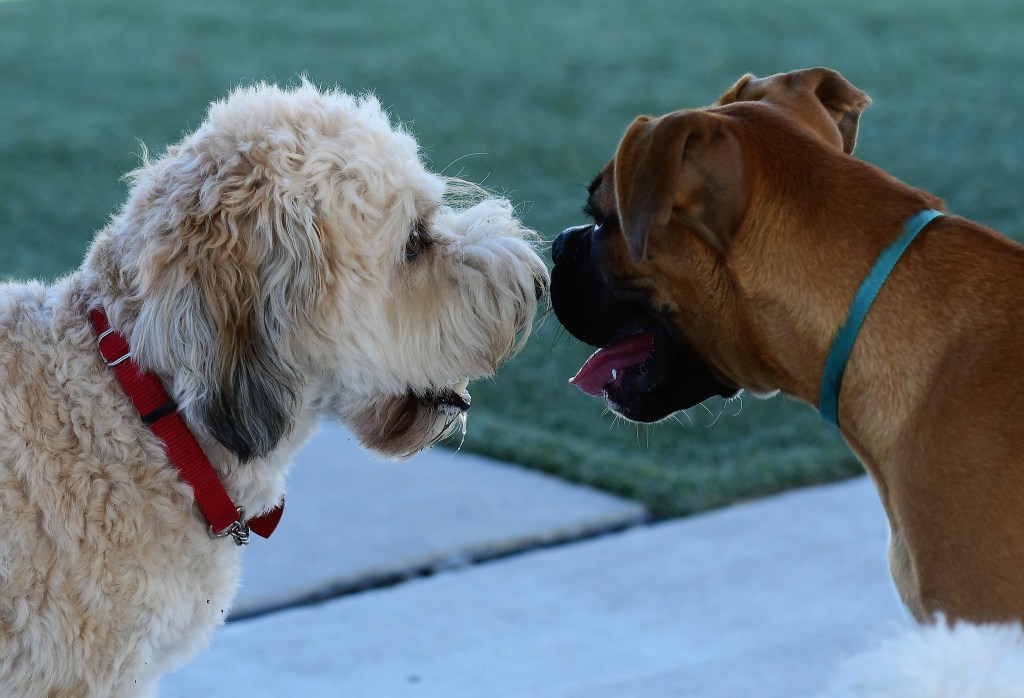
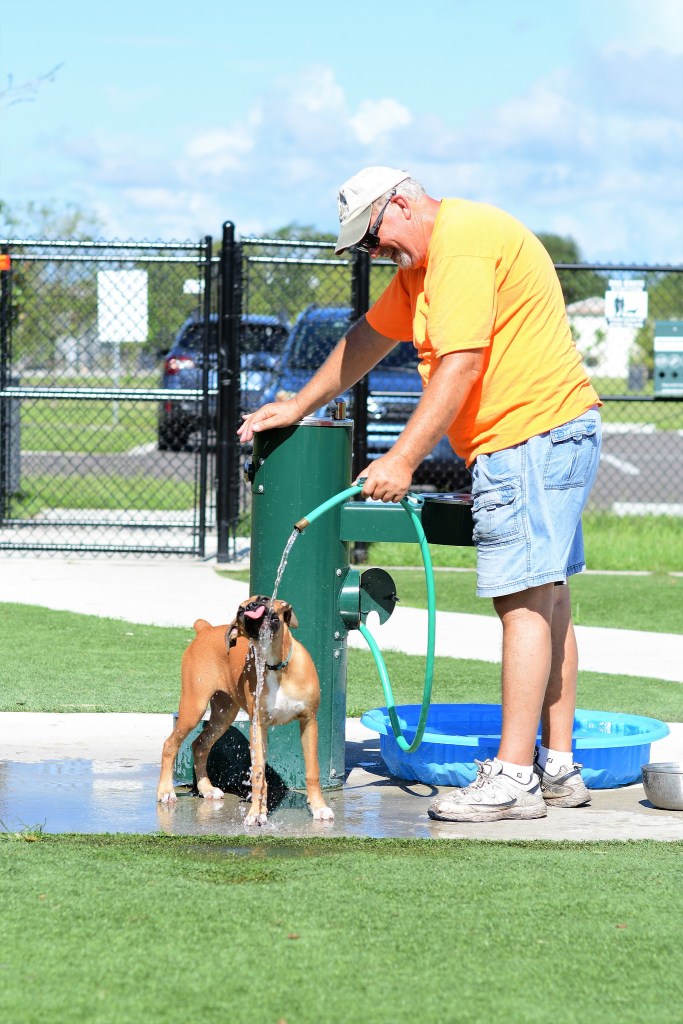
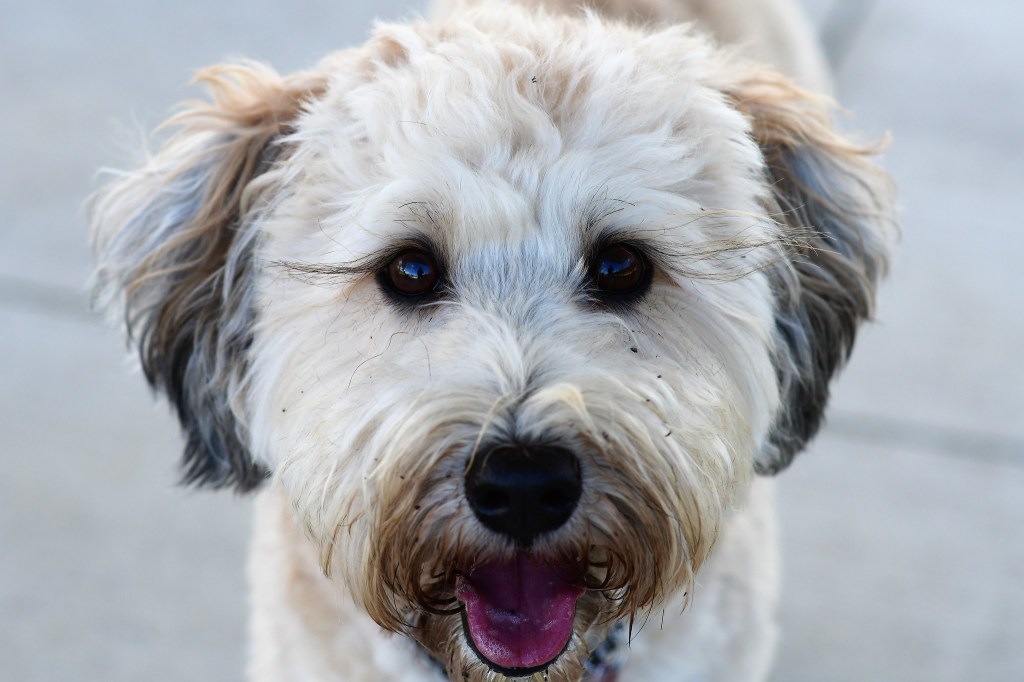
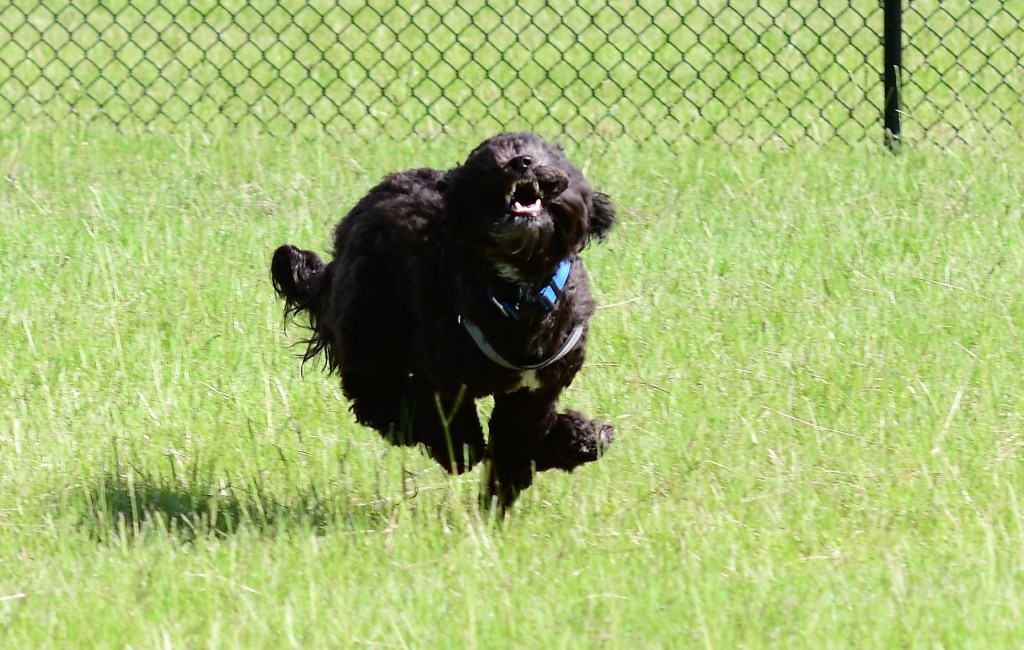
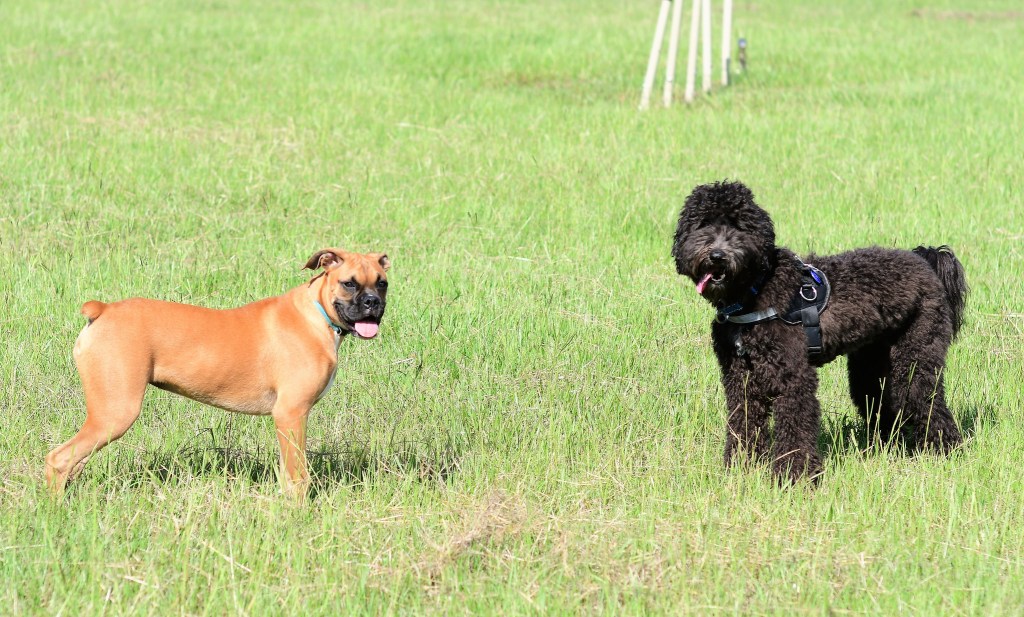
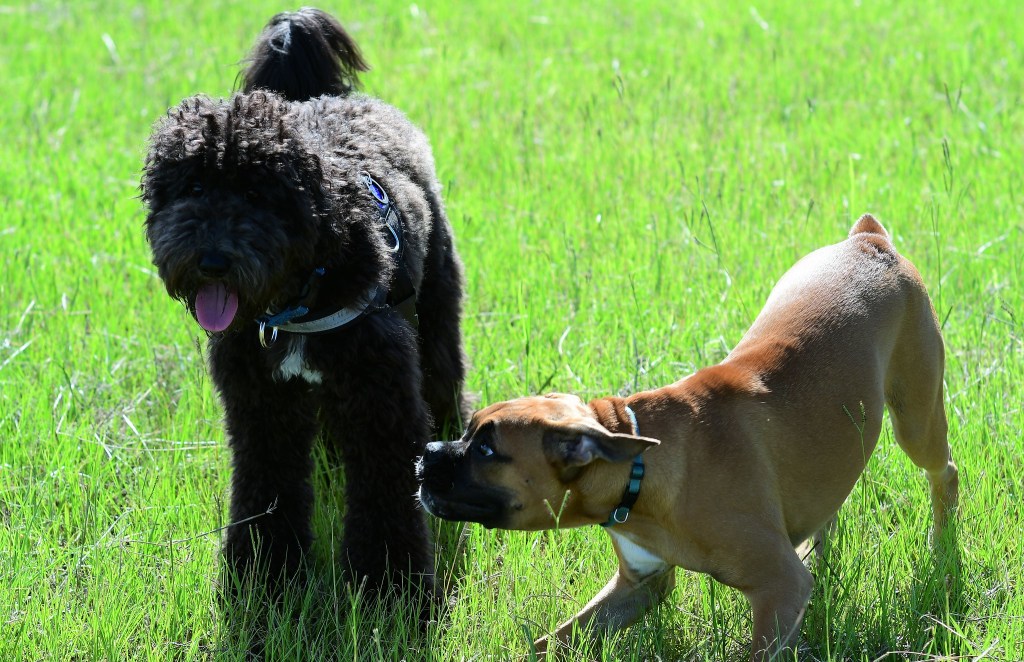
Recently on the forum Ugly Hedgehog there was a gentleman who posted some photographs of some dogs that he had seen at the dog park. It was in a post called Today at the dog park.
They were lovely and I thought what a good idea it would be if I was able to republish them for next week’s Picture Parade. So I asked!
Well I was not disappointed and indeed said gentleman emailed me with a short bio and a photograph of him and his dog by way of an introduction. This is what he wrote:
I was born on Long Island and spent the first 60 years of my life there except for my Naval service for four years during the Vietnam war. I was a Naval Aviator, and after my active duty was over I returned to Long Island and got into a career in law enforcement that lasted 31 years. I made thousands of arrests during my career and many of those who were incarcerated threatened to “get me” some day, so I would prefer that you don’t use my real name.
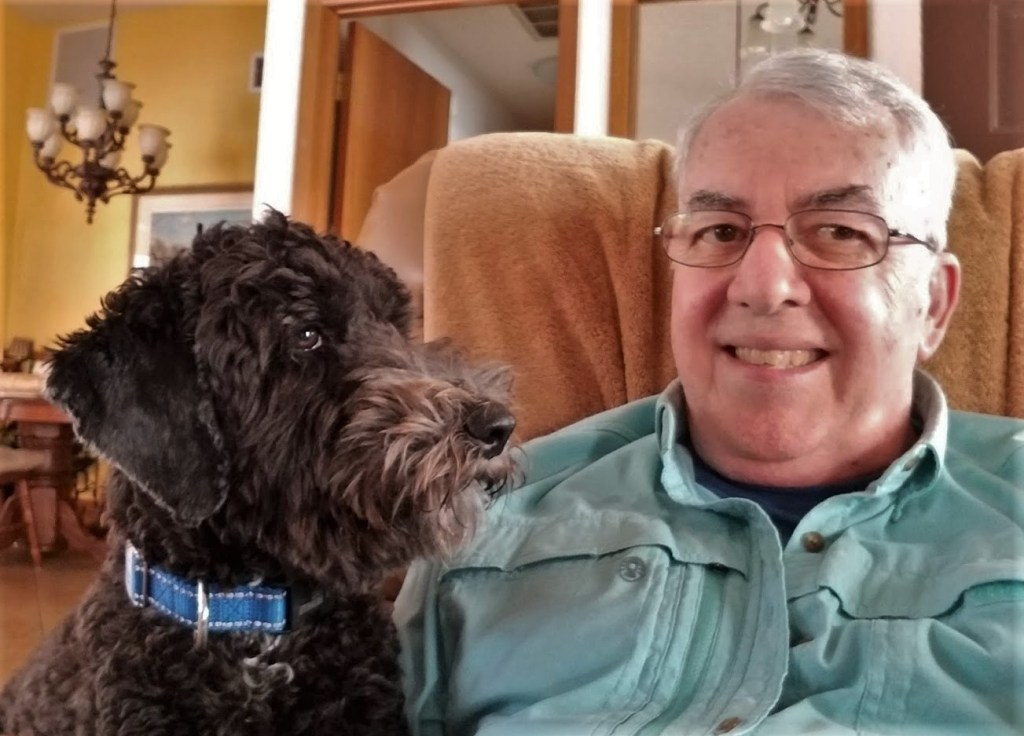
When I retired at age 60 I moved to Tampa, FL because my daughter lived there and I have two granddaughters and now my son lives here too. It’s great for photographing flora and fauna all year round. My love for dogs has worn off on my kids as my daughter has two of them and my son three! Photography has been a hobby of mine for over 60 years. Here is a casual photo of me and my buddy Ollie (a three year old golden doodle).
Nimbushopper and Ollie
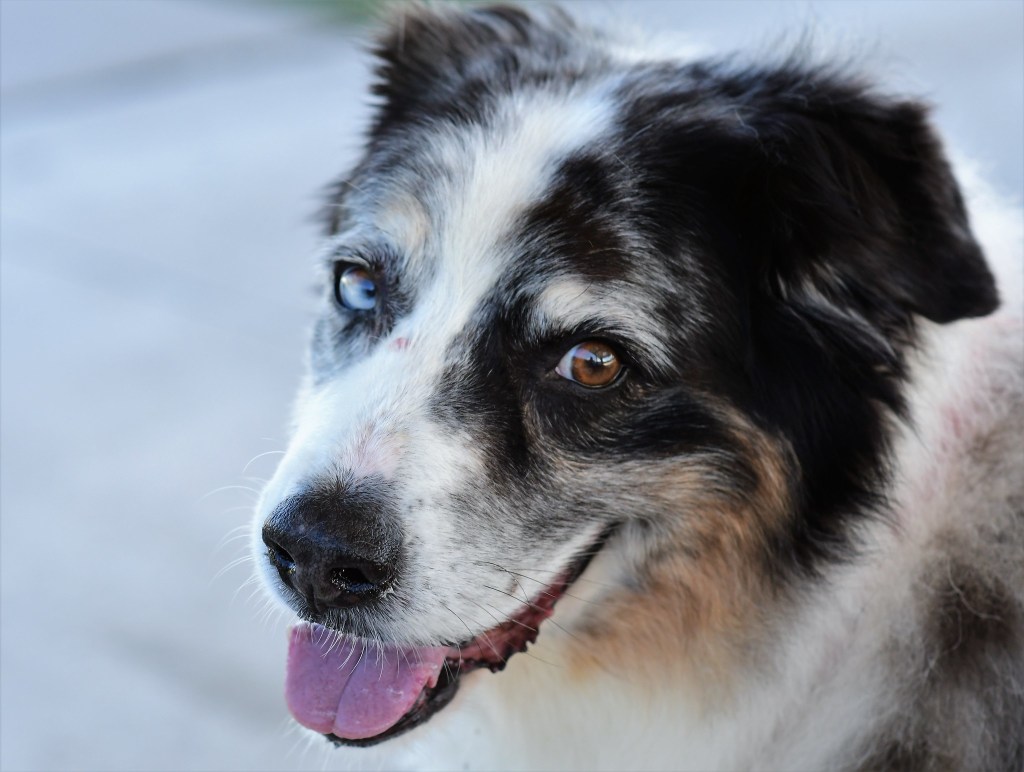
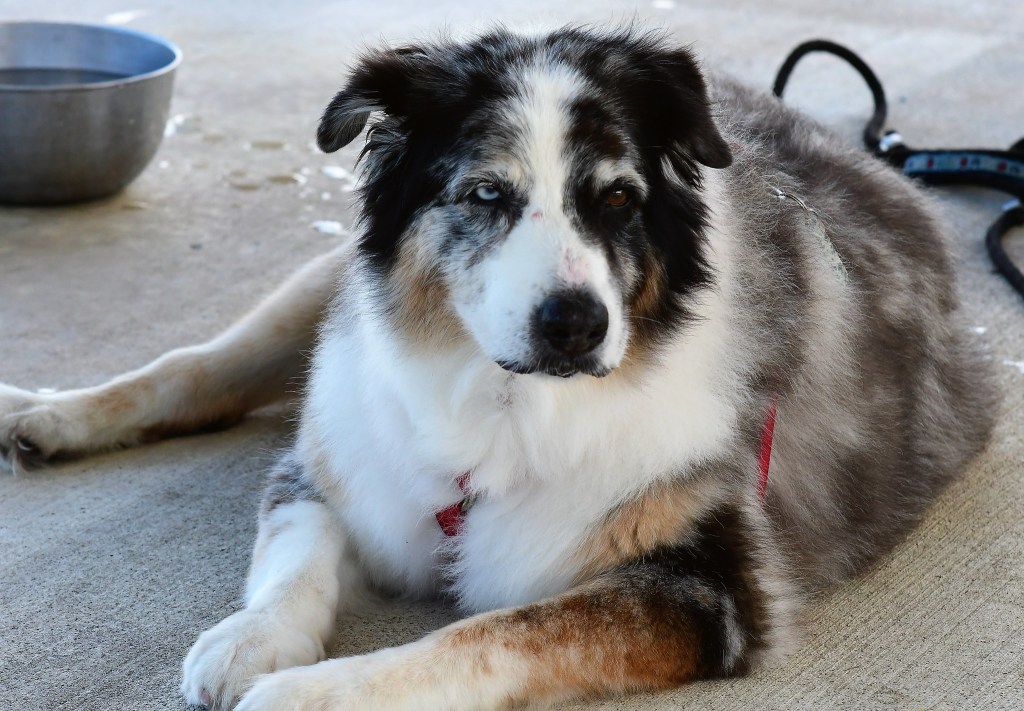
Well Nimbushopper has given me permission to republish his many photographs of dogs and today I start off with them. Enjoy!
oooo
oooo
oooo
oooo
oooo
oooo
Marvellous!
Hopefully these doggie pictures from Nimbushopper will run and run.
Inspires me to try and take some photos of our own dogs!
This is an account of blogger Auntysocial’s post about her Border Collie. Part Two will be on Tuesday.
ooOOoo
The wonderful world of Border Collies
I love the sheer time, care and patience these dogs have for things. This one stealing a bottle of Coke kills me because it has the same careful creeping side eye Puddi had as a puppy when she was in pure arsehole mode and determined to get on my nerves.
Back then she wasn’t allowed inside the kitchen and knew the line was drawn at the physical point where wood floor met ceramic tiles. Most of the time she stood there cos she knew the rules but when she was that way out she would stand there for a bit, then put one paw so it was literally half in and half out.
I could see her out the corner of my eye but carried on chopping veg or whatever I was doing and reckoned not to have noticed which was a similar technique I used with the kids when they were little. Would allow them to take things to a point they knew they’d already broken a rule but gave them a minute or so to decide if they should quit while ahead or try pushing it further.
Puddi just didn’t know the meaning of quitting so this one day as I chopped veg and made tea pretending not to notice, in came the paw. The half in – half out lingered a moment but because it go no reaction, in came the whole paw.
Then came the second paw with her head peering round the side of the wall looking and no doubt expecting me to suddenly see and tell her off. Nothing.
So in came the third then after what felt like an eternity she moved that last one and all four paws were now on the kitchen tiles. OFFICIAL REBEL
Me casually without even glancing her way “Out you go”
She stood there momentarily, casually started backing up, scanned her immediate surroundings and did the old “Yeah well I’m going anyway… don’t wanna be in your shit kitchen BUT I’M HAVING THIS SO SCREW YOU BITCH!!!!”
The nearest thing happened to be a used train ticket that had fallen next to the bin so she grabbed that and legged it feeling thoroughly pleased and satisfied I’d been one-upped.
This was what we went through all day every day until she was about a year old.
And another
ooOOoo
Simply put: A puppy’s start to a happy life! Certainly for puppy Puddi!
Yesterday’s post about the loyalty of dogs brought to mind a post that I published way back in 2013. Let me take an extract from yesterday’s post:
It’s no secret that domesticated dogs are descendants of wolves. Even today, modern dogs continue to share similar genes to wolves that live in the wild. The idea of “the loyal dog” is both a cultural and biological construct, as humans have created the dog over years of selective breeding and domestication to be this way. Essentially, humans picked and chose the wolf characteristics that would best serve their own benefit, transforming a wolf’s hierarchical structure and social bond to their packs into obedience and loyalty to humans.
The fact that is key is that dog packs are hierarchical. They have three status roles and the rest of the pack are all pack members. The three roles are Alpha dog, always a female, the Beta dog, always a male, and the Omega dog that could be either male or female.
The role of the alpha dog is to have first pick of the eligible males and to move the whole pack if in her analysis the territory becomes unsuitable for the pack. The role of the beta dog is to keep the pack under control and not to let fights get out of hand. The omega dog is to keep the pack happy and playful.
So to the post that was first published on the 10th April, 2013.
ooOOoo
Yearnings for a new start!
You may wonder about the title of this post? Stay with me for a moment.
As has been written before on Learning from Dogs, when dogs were living in the wild just three animals had pack roles. The leader of the pack, always a female animal, was the alpha dog. Second in command was the beta dog, always a dominant male, and the third role was the omega or clown dog. The wild dog pack was thought to have consisted, typically, of about 50 animals.
The wisdom of thousands of years showing clearly in Pharaoh’s eyes, our very own beta dog. Beloved Pharaoh. Born: June 3rd., 2003 – Died: June 19th., 2017. A very special dog that will never be forgotten.
As leader of her pack an alpha dog had two primary functions . One was having first choice as to the male dog she was going to mate with – thus demonstrating how women always choose! 😉
Her second important duty was deciding that her pack’s home range was insufficient for the needs of her ‘family’. As wolves still do, wild dogs lived within small, well-defined territories when food was abundant. When food became less abundant then it was time to move to more fertile grounds. As an aside, research in South Africa as to the area requirements for a small pack of African wild dogs (Lycaon pictus) shows they require from 65 square kilometers (25 square miles) to 150 sq. km. (58 sq. mi.). (See footnote.)
Dogs, like all wild animals, instinctively live in harmony with nature. So the call from the alpha dog to find a new range didn’t mean they left their old one as a barren disaster area. You can see where this is heading!
Wild dogs were in contact with early man at least 50,000 years ago. (Just reflect for a moment on the length of that relationship between man and dog.) So each specie has had plenty of time to learn from the other.
Thus, as mankind is on the verge of discovering that our existing ‘territory’ is becoming unsustainable for the healthy life of the species, one fundamental learning point from dogs appears to have escaped us: Mankind doesn’t have a new range available to our species.
This preamble came to mind when I recently read a short but powerful essay on Alex Jones’ blog The Liberated Way. The essay was called A global leaky bucket. Alex has very kindly given me permission to republish it.
A global leaky bucket
Global weather extremes will force people to hard choices.
Nature will have the last word in the debate over sustainability.
I write this in despair, it is snowing again here in Colchester UK. I admit envy for those of you who live in California or Hong Kong area, I see your photographs where the seasons always seem to be warm and sunny. The northern Jet Stream refuses to move, Greenland enjoys growing strawberries as the lambs die in the fields of Britain from the winter that refuses to let go.
The extremes of weather are noted in the South of the world as well as the North. Argentina has had the worst floods in decades last week. The cause is that the systems such as the Jet Stream are paralysed in one place, thus everyone suffers flood, drought or winter in excess. Nobody is sure why this paralysis is going on with systems like the Jet Stream, some say it is climate change, the point is that we are experiencing this, and it appears to be more than a temporary issue.
My opinion is that these weather extremes are here to stay for the long duration. One is then left with a harsh reality of does one seek to control the weather or adapt to the weather? How does one control the weather, a chaotic energy system where even a small change can have great consequences? Perhaps adaptation is the better option, but does one know how huge those adaptations will have to be where drought and flood could be lasting decades?
Lets say food, water and energy are all contained in a bucket. We take a jug and scoop out from the bucket what we need. There is a tap that is constantly running filling the bucket with the food, water and energy. We waste those resources so the bucket leaks. We disrupt or destroy the renewal systems in the ecosystems so the tap is no longer running as fast as it should. We are greedy consumers so we take more than we need from the bucket with our jug. How will the bucket look now? Is this a sustainable future to you?
If our global weather extremes continue as they are it will be like a storm rocking the bucket spilling its contents, will our bucket future look even less sustainable? Extreme weather destroys harvests, kills animals, sends already distressed ecosystems into the abyss. What happens when the bucket is so empty that people can no longer enjoy their lifestyle of wasteful excess, or worse that people grow cold, hungry and thirsty? Do they sit there and do nothing but die? Will they fight? Who will fight who? As the bucket contents get ever smaller, who will win in the fighting for what is left?
Copyright (c) Alex Jones 2011-2013.
Colchester has a place in my past as I started and ran a business there between the years of 1978 to 1986. More about that some other day.
Back to Alex’s essay. It strongly resonated with a recent item on Peter Sinclair’s excellent blog Climate Denial Crock of the Week which I will refer to tomorrow.
So I will leave you with this tragic, emotional thought – where, oh where, is our alpha dog?
Footnote: The figures for the ranges of wild dogs were taken from a fascinating paper published by Lindsay, du Toit and Mills that may be read here.
ooOOoo
One thing that has become clearer over the years and with the advent of DNA analysis is that the process of wolf and man coming together, and wolf becoming dog, was in the timeframe of 25,000 to 40,000 years ago. It’s a very wide band of time but there’s no scientific method, certainly at the moment, to refine the years down to a shorter number.
But even taking the lower limit, 25,000 years ago, it is still an indescribably long time back in the past.
I had a particularly uncomfortable 24 hours Monday afternoon through Tuesday morning.
I went to upload an update to my iMac early on Monday afternoon but for some reason it all went wrong. As in the iMac became unresponsive and continuously showed the Apple icon for about 10 minutes and then went blank for another 10 minutes, and went on repeating itself.
On Tuesday morning I spent several hours on the phone to Apple support and finally the third adviser told me to turn everything off and do a cold reset. That fixed it and I didn’t have to go down to Medford and leave the machine with Connecting Point Computers. Plus I saved $99!
So I am very grateful to be able to share this post with you all! It’s an article on Treehugger, Why Are Dogs So Loyal?
Enjoy!
ooOOoo
Why Are Dogs So Loyal?
There’s a scientific explanation to what makes them “man’s best friend”
Any dog owner will tell you that there’s something indescribable and unique about their loyal companions. Dogs wait for their humans patiently by the door when they leave, act like they’ve been given the world when their dinner bowls are filled, and express a sense of devotion that is rare in many other pets. Where does this trait, the trait that makes dogs “man’s best friend,” come from? Why are dogs so innately loyal? The obvious explanation would be that their owners provide them with food and shelter, but the deeper answer actually comes down to science.
It’s no secret that domesticated dogs are descendants of wolves. Even today, modern dogs continue to share similar genes to wolves that live in the wild. The idea of “the loyal dog” is both a cultural and biological construct, as humans have created the dog over years of selective breeding and domestication to be this way. Essentially, humans picked and chose the wolf characteristics that would best serve their own benefit, transforming a wolf’s hierarchical structure and social bond to their packs into obedience and loyalty to humans.
Selective Breeding
Throughout history, long-term domestication has resulted in hundreds of different dog breeds designed to fulfil specialized functions in society, many with significant behavioral differences. Early humans likely participated in selective breeding without even knowing they were doing so, by killing off the dogs who attacked or bit a member of their family or community. Additionally, dogs who were naturally gifted as loyal hunters would have been better cared for, upping the chances of successful and repeated reproduction. Dogs that contributed to society were kept for longer, while aggressive or unskilled dogs weren’t. And, as humans promoted dogs with tame or friendly characteristics, physical attributes began to change as well.
The early domesticated dogs intelligent enough to associate their owners with things like food and shelter in exchange for obedience (think: “don’t bite the hand that feeds you”) were more likely to survive longer. In a reliance comparison between dogs and cats, for example, studies show that dogs attempt tasks before looking at their owners while cats do not.
While it may have started with a simple exchange of food and shelter for animal-assisted guarding or hunting, humans eventually began to favor dogs that were more docile and sociable. As humans evolved to hunt less and moved on to more secure lifestyles, the domestication process eventually began to encourage companionship.
Pack Behavior
Dogs, like their wolf ancestors, are pack animals at their core. In order to survive in the wild, members of a pack have to be trusting and cooperative. A wolf leader, or alpha, is in charge until it becomes too sick or old to perform at its highest abilities and is eventually challenged by a stronger wolf for the betterment of the entire pack. This suggests that wolves are motivated by the good of the group rather than pure loyalty to its leader. This is exactly what a 2014 study in Vienna found when researchers examined lab-raised dog and wolf packs, concluding that the relationship between dogs and humans is hierarchical (with their owner at the top) rather than cooperative. As wolves were slowly domesticated into modern dogs, the study suggests, they were bred for their loyalty, dependance on human masters, and ability to follow orders.
Social Bonding
Oxytocin, the peptide hormone released when people hug, snuggle, or bond socially, also has a part to play. Gaze-mediated bonding, as well as petting and talking, increases oxytocin levels in both humans and dogs. This is a human-like mode of communication, since wolves rarely make eye contact with their handlers, meaning that the fact that you and your dog like to lock eyes is a trait likely picked up during the domestication process. Oxytocin is linked to feelings of attachment and confidence, which in turn facilitate the establishment of loyalty and love in emotional relationships. The fact that oxytocin increases in both humans and dogs — but not wolves — while engaging in eye contact and communicating social attachments may have supported the evolution of human-dog bonding.
Are Some Breeds More Loyal Than Others?
The domestic dog, or Canis lupus familiaris, is the first and only large carnivore ever to have been domesticated by humans. Mostly within the last 200 years or so, dogs have undergone a rapid change characterized by maintaining breeds through selective breeding imposed by humans. Compared to other wild and domestic species, modern dogs display incomparable genetic diversity between breeds, from a 1-pound poodle to a 200-pound mastiff.
We’ve all heard stories of individual dogs known for fierce loyalty, like Hachiko, the Japanese Akita who waited for his master every day by the Shibuya Station in Tokyo even after he passed away at work. A 2018 study on the genomic make-up of the Czechoslovakian wolfdog found that a common German shepherd crossed with a wild wolf has the same tameness and loyalty to its master as a fully domesticated dog.
There isn’t much scientific evidence of certain breeds being more loyal than others, though one could certainly argue that dogs bred for specific jobs like hunting and herding would have a higher chance of staying loyal to their owners. Breeds that are known for specific tasks may not check all the boxes depending on qualities preferred by the owner. The dependency on human guidance desired in companion dogs may get in the way of a rescue dog’s ability to function successfully in situations when its handler isn’t around, for example. There is a “nature vs. nurture” aspect to consider as well. It isn’t all about genes, though they do play a critical role, but a dog’s individual environment and history can also greatly affect its lifetime behavior.
ooOOoo
There, the science behind a dog’s loyalty.
Despite having spent a number of years writing and learning about dogs there were still a few points mentioned in this essay that were news to me.