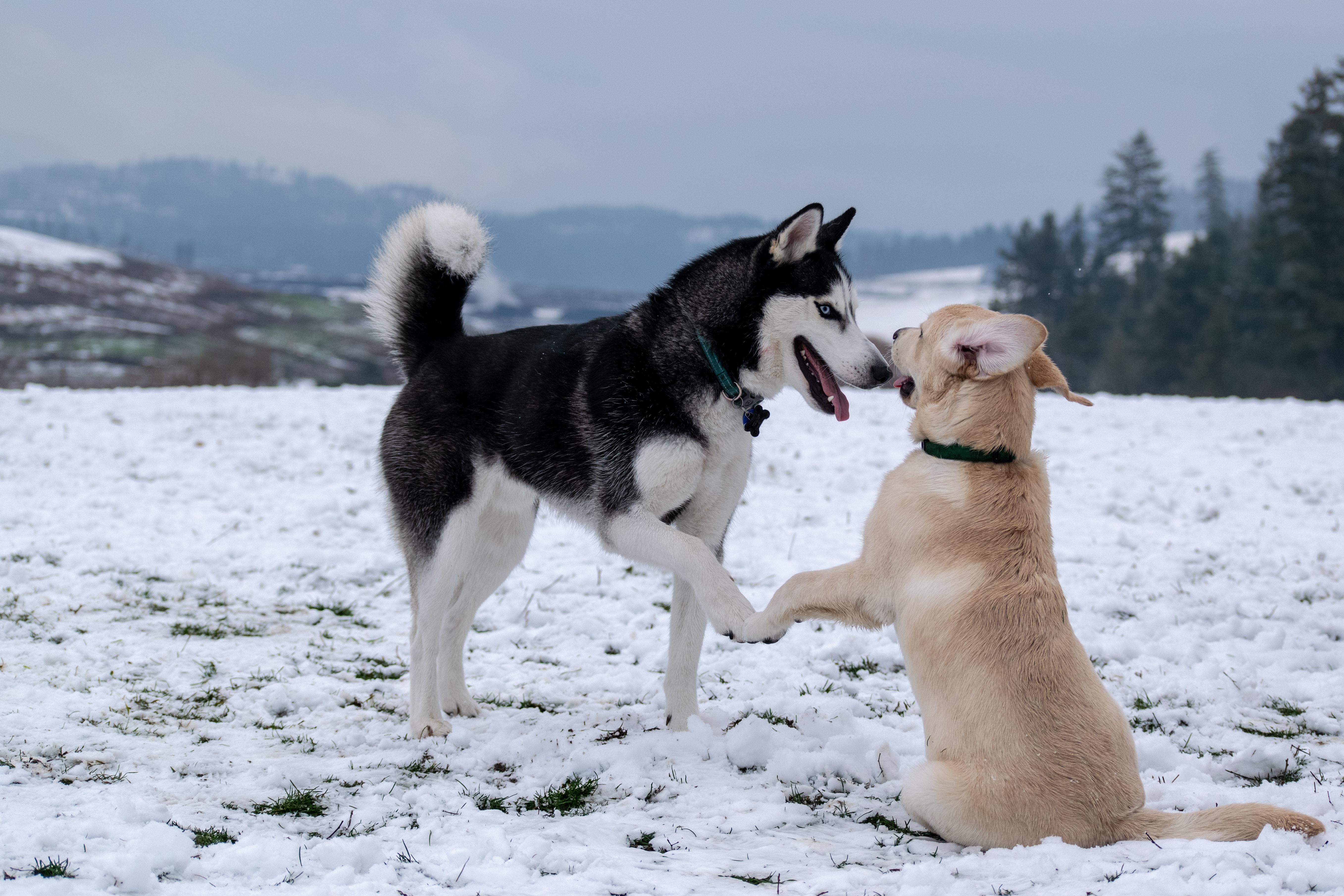
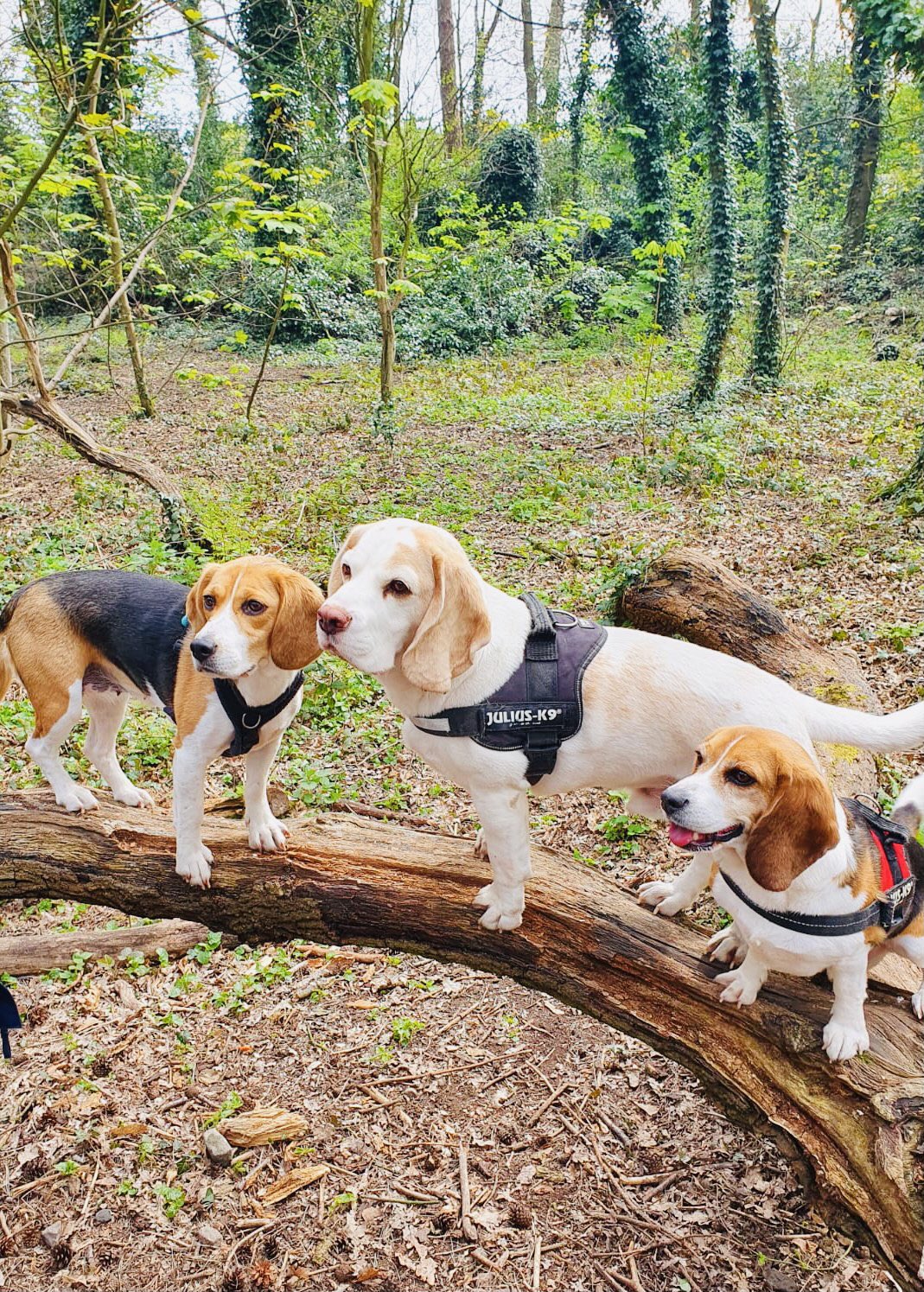
I know this has been said before and no doubt I will say it again many times but dogs frequently bond closely with other dogs. There’s no knowing, frankly, what triggers the friendship but we humans can see it so clearly.
Take this recent article published on The Dodo about a dog and his sister.
ooOOoo
Dog Knows Just How To Help His Anxious Sister When She Gets Carsick
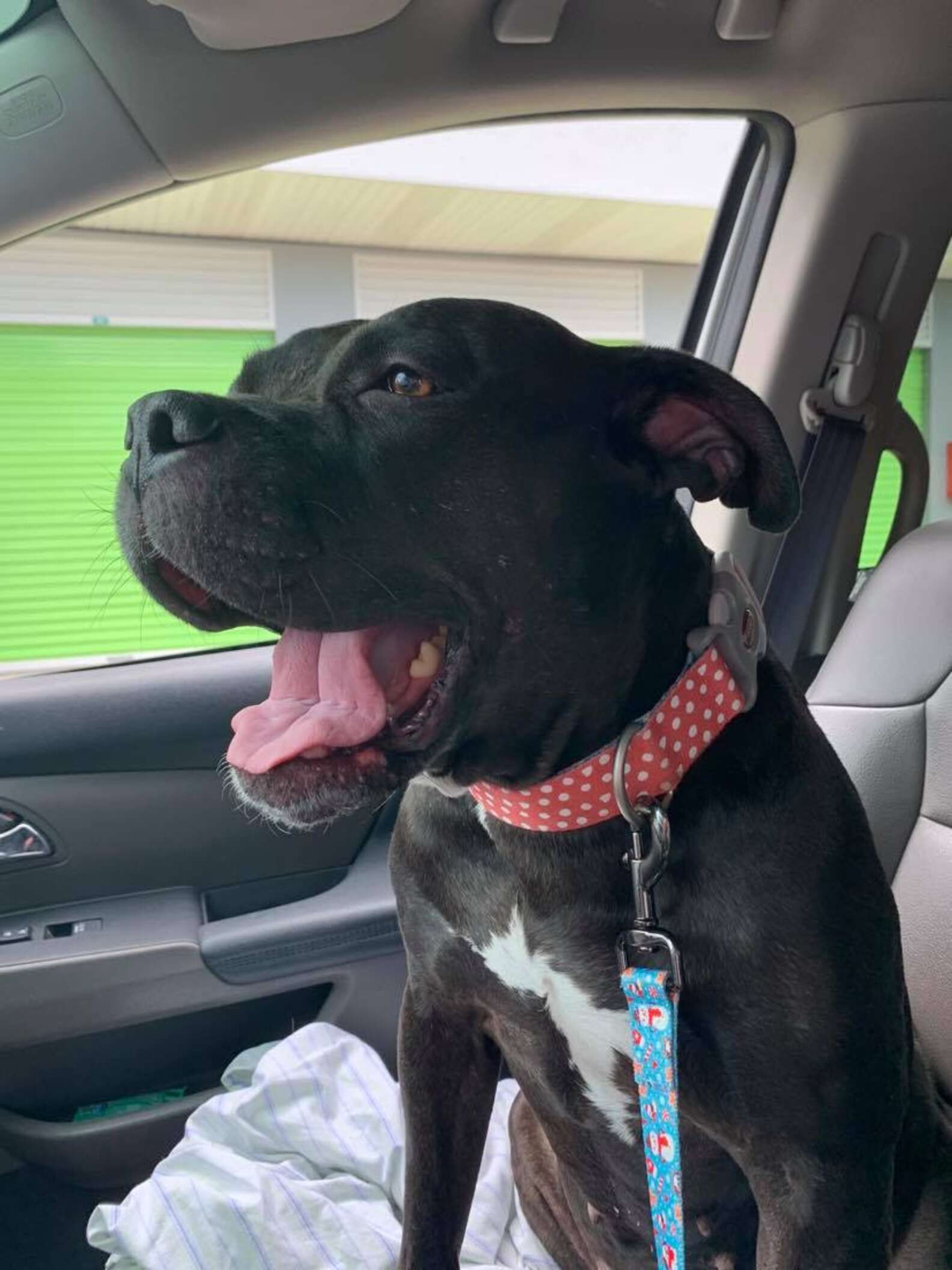
Meet Eddy — a dog who knows exactly when his family needs a little extra help.
Ashley Karlin adopted Eddy, a black Lab, from a shelter two years ago as a companion for her senior dog, Daisy. And since that day, Eddy and Daisy have been inseparable.
“Eddy and Daisy play like siblings. They egg each other on and run around in the backyard together,” Karlin told The Dodo. “They sleep next to each other and sometimes on each other.”
The 95-pound cuddle bug is also extremely perceptive. Eddy can sense immediately when something is off with a member of his family — and he hops into action.
Eddy uses this skill frequently when traveling with his sister. Daisy has always had car sickness and gets anxious when it’s time to go for a drive, but Eddy is a pro when it comes to soothing her.
“When she lies down in the back seat and starts to drool, Eddy lays the opposite way so he can rest his head on top of hers,” Karlin said. “If he doesn’t do this, Daisy constantly gets up, lies down, gets up, lies down on repeat until she vomits.”
“I think Eddy just has a sense of when others aren’t feeling well and he’s always there to comfort her,” Karlin added. “We’ve noticed every time they lie down together like this, she doesn’t puke and usually will fall asleep.”
Eddy also monitors his mom to make sure she’s OK and is always the first to know when there’s any change.
“My husband and I recently found out I’m pregnant, and one of the signs that tipped us off was that Eddy constantly would put his head on my tummy,” Karlin said. “Eddy has [also] on numerous occasions woken me while sleeping to alert me that I was going hypoglycemic, even though he’s not trained to do so.”
Eddy is always there when his mom or sister needs him — and they can’t picture their lives, or car rides, without him.
ooOOoo
All photographs by Ashley Karlin
This is yet another example of the caring and bonding that dogs make. Make with many other dogs and many of us humans.
They are an example to all of us!
And another case of ex-rescue dogs bearing no scars!
We are relying on a Level One call, a Be Ready call, to finish off the packing. Of course we hope that never comes but at least we have done the planning.
The Dodo had a great article the other day and I wanted to share it with you all.
ooOOoo
Dog Refuses To Eat Snow Cone After Mom Orders The Wrong Flavor
Lola’s story started when she was taken in by a local shelter, but when she was spayed she experienced rare complications that left her unable to walk. She started to recover very slowly, and after a few months, she was taken in by Big Hearts for Big Dogs. The rescue found her a foster family who could commit to taking her to physical therapy every week, and they fostered her for two years — before deciding they couldn’t pretend anymore and officially adopted her into their family.
ANNIE BELANGER BURLEY
Now Lola lives on a farm with her forever family, where every other animal has a rescue story, too. She’s blossomed into the weirdest, most personality-filled dog her family has ever met, and they wouldn’t have her any other way.
Annie Belanger Burley
“We have had her for six years, but she’s been ‘ours’ for four,” Annie Belanger Burley, Lola’s mom, told The Dodo. “We have no clue how old she is, but she literally doesn’t age. She has the most amazing temperament, but she’s a total weirdo! She requires being tucked in at night. She’s goofy, she snores when she’s awake, other dogs think she’s growling, but she’s really just breathing. She has looks that could kill. Sometimes her happy face looks like her mean mug.”
Annie Belanger Burley
Lola’s family loves her so much and loves to spoil her whenever they can. One of her favorite activities is going out for snow cones, and she always gets so excited, even if she’s not always sure how to show it.
“We go to Pelican Snowballs in North Fort Myers a few times a month,” Burley said. “Her favorite flavor is chicken broth served with a Milk-Bone on top … When she gets excited, it’s usually with her eyes. She has a grumpy face the majority of the time.”
Annie Belanger Burley
Lola and her mom were getting snow cones recently, like they always do, but this time, Burley decided to order Lola a plain snow cone because she’d had an upset stomach the night before and she didn’t want her to overdo it. She figured Lola would still enjoy a treat even if it wasn’t her normal order — but she was wrong.
Annie Belanger Burley
Lola sniffed the plain snow cone, then stared at her mom and made it very clear that she had absolutely no intention of eating it. It wasn’t the right flavor, and she refused to compromise.
“She refused to eat it the entire way home and glared at me in her usual side-eye,” Burley said.
Annie Belanger Burley
Instead, Lola let the snow cone melt right next to her. She decided it was better to stand up for what she believes in rather than eat it. She’s strong in her convictions.
Annie Belanger Burley
Even though Lola didn’t get her snow cone that day, there will be many, many other trips, and hopefully, her mom can redeem herself in Lola’s eyes by ordering her the “correct” thing again next time.
ooOOoo
To be honest if it were not for our dogs (and Jeannie) I don’t think it would ever be normal again.
But one can stroke and cuddle a dog or six and cuddle up to Jeannie and forget about the outside world for a tad!
Lots of people who don’t have a yard still want a dog!
We are incredibly lucky in that we have many acres for our dogs, and our horses, to play in. Mind you, it is at times like the present where our acres are not such a brilliant idea. Times in the Summer that bring drought and the ever-present risk of a fire storm.
But taken in the round we are grateful that we ended up living in this property.
Not all people are as lucky as us but for them a dog or two is just as important. So what is the truth of having a dog in an apartment.
That is why I am so pleased to share this recent article from The Dodo with you.
So you’re dying to have a dog, but you’re worried he won’t be happy in your apartment.
Do you really need a giant house with a big yard to give your dog the best life?
The Dodo spoke with Mikayla Park, director of adoptions and education at Wags & Walks, to bust that myth wide open.
Is living in an apartment worse for your dog?
Great news! The idea that a dog can’t be happy in an apartment is totally a myth.
“There is no one perfect environment in which to introduce a new dog,” Park told The Dodo. “Everyone has the ability to give a dog a happy and fulfilling life regardless of the size of their home, and the presence of an outdoor yard space.”
If you’re waiting to adopt a dog until you have your own yard due to personal preference, that’s totally understandable.
But the only real requirement for having a pup of your own is a willingness to love and take care of him — even if that means getting creative about outdoor time.
“Adopting a dog is about making a commitment to give that dog everything they need for the rest of their life,” Park said. “It might be a bit more work if you don’t have the ability to open a door and let your pup go outside, but it is by no means impossible, nor does it make your home any lesser a home in which to have a dog.”
Getting your dog outside when you live in an apartment
But just because you don’t have a backyard or live in an apartment, that doesn’t mean your pup can’t get that quality outside time.
“Outdoor time is a vital part of this daily routine, but it’s more about the way you spend that outdoor time than the mere presence of it,” Park explained. “Dogs thrive on having jobs, on pleasing their humans, on working their brains! Challenge them to work while they are outside with you.”
So instead of just idly letting your dog get his zoomies out when you pop outside, you can actually use this time to engage his brain — such as by slipping some training time in on your daily walks.
This will help tire him out so he’s not bursting with energy when you return to your apartment. And with enough active walks or dog park trips, any pup can be happy (regardless of where he lives).
Things that’ll make your dog happy inside an apartment
While your dog definitely needs outdoor enrichment, there are plenty of things that will help keep him entertained while he’s inside your apartment.
“There are lots of wonderful products out there to help you in maintaining a happy and balanced dog without a yard,” Park said. “Brain games like treat puzzles and Kongs are fabulous ways to create some mentally stimulating entertainment.”
Plus, believe it or not, your dog’s bed can even help with that indoor enrichment.
“Buy a raised-place bed and practice having your dog stay there while you cook dinner,” Park explained, noting that this can actually be a fun mental game for some pups. “If they get up, lead them right back onto the bed. They cannot move until you give them the signal to do so. Sound boring? You would be surprised how hard it is for some dogs to make their bodies sit still for 20 minutes.”
So, there are plenty of ways you can give your dog a happy life with lots of enrichment while living in an apartment.
“Not having a backyard is certainly a bit of a challenge, but one that any adopter is capable of rising to meet, with dedication and time,” Park said.
We independently pick all the products we recommend because we love them and think you will too. If you buy a product from a link on our site, we may earn a commission.
ooOOoo
As was said earlier on in the article: “But the only real requirement for having a pup of your own is a willingness to love and take care of him.“
My experience is that huge numbers of people are really committed to loving their dogs. Simply because a dog offers in return unconditional love. It’s a short statement of just two words. But it is a profound quality of our dogs and one that at frequent times has Jeannie and me, and tons of other people, lost for words!
“She was so determined that there was something amazing at the bottom of the box, and couldn’t get to it quick enough.”
While Noora is a lazy bulldog at heart, she’s grown up around a bunch of Labs, so over time, she’s slowly become more and more fascinated with the concept of tennis balls.
“Noora has almost always had a tennis ball-obsessed Lab in the house with her, and while the concept of repetitively chasing a tennis ball makes no sense to her, she’s intrigued by the obsession with something she can’t eat,” Katie Swartout, Noora’s mom, told The Dodo.
Katie Swartout
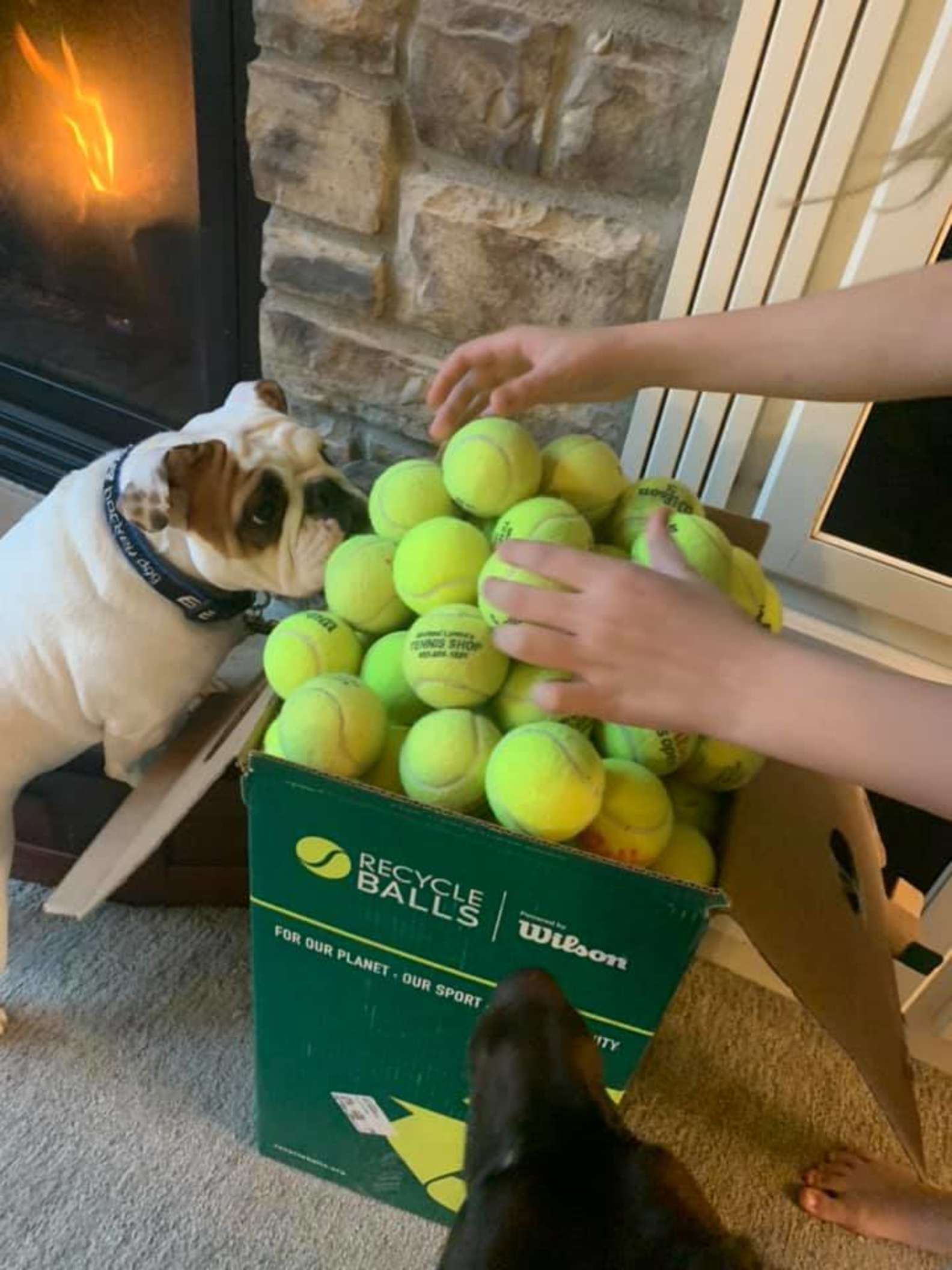
Noora’s family definitely goes through a lot of balls, so when they recently found a great deal on a box of 350 tennis balls, everyone was pretty excited — including Noora.
“Noora LOVES when packages come,” Swartout said. “It started with BarkBoxes coming to the door, and the queen of the house deciding that every box that comes must be for her! When this box came, Noora immediately started crying for joy, and doing everything she could to get into the box!”
Katie Swartout
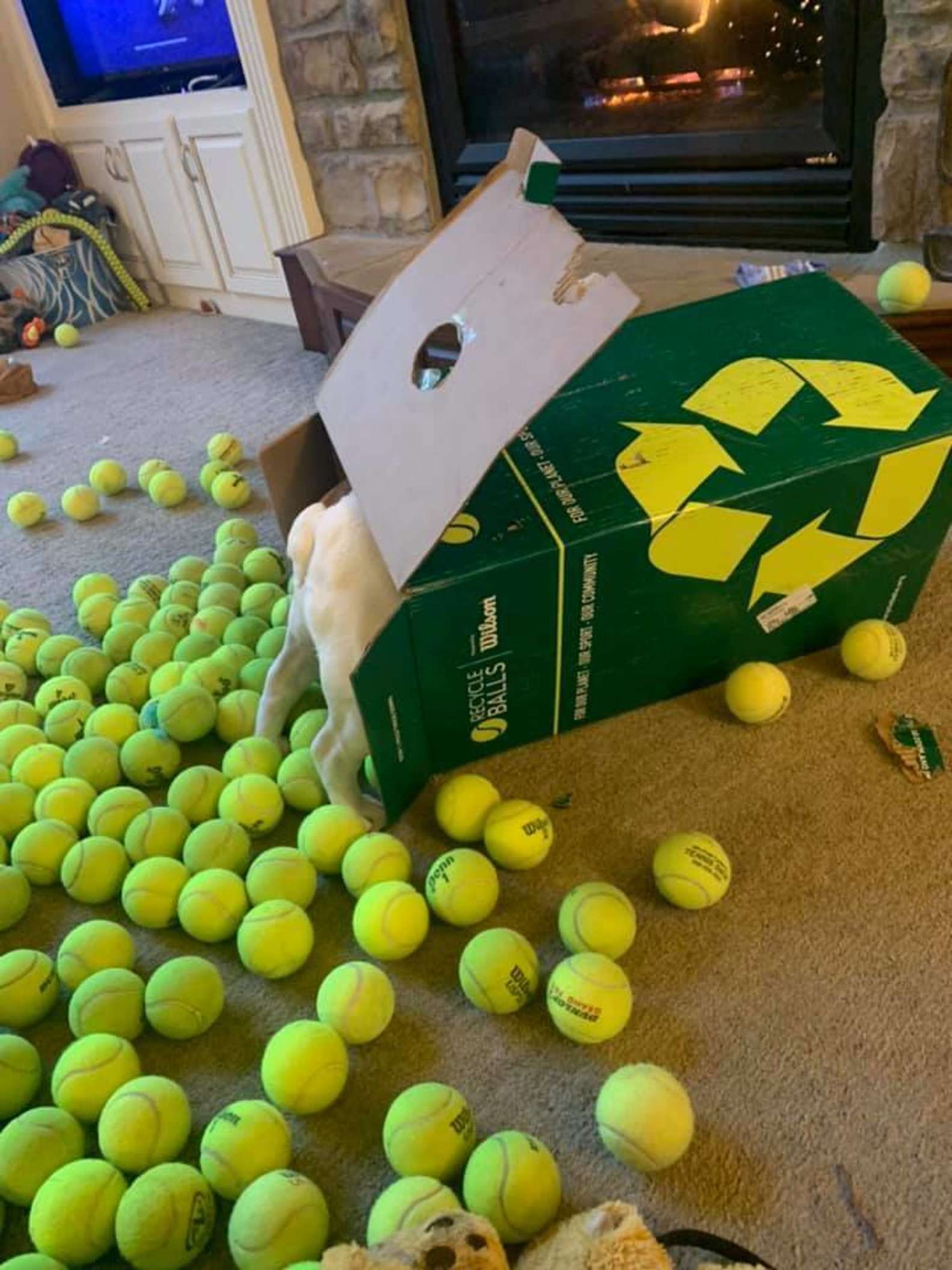
As her family opened the box, Noora got a little overexcited — and quickly dumped the entire box all over the living room floor.
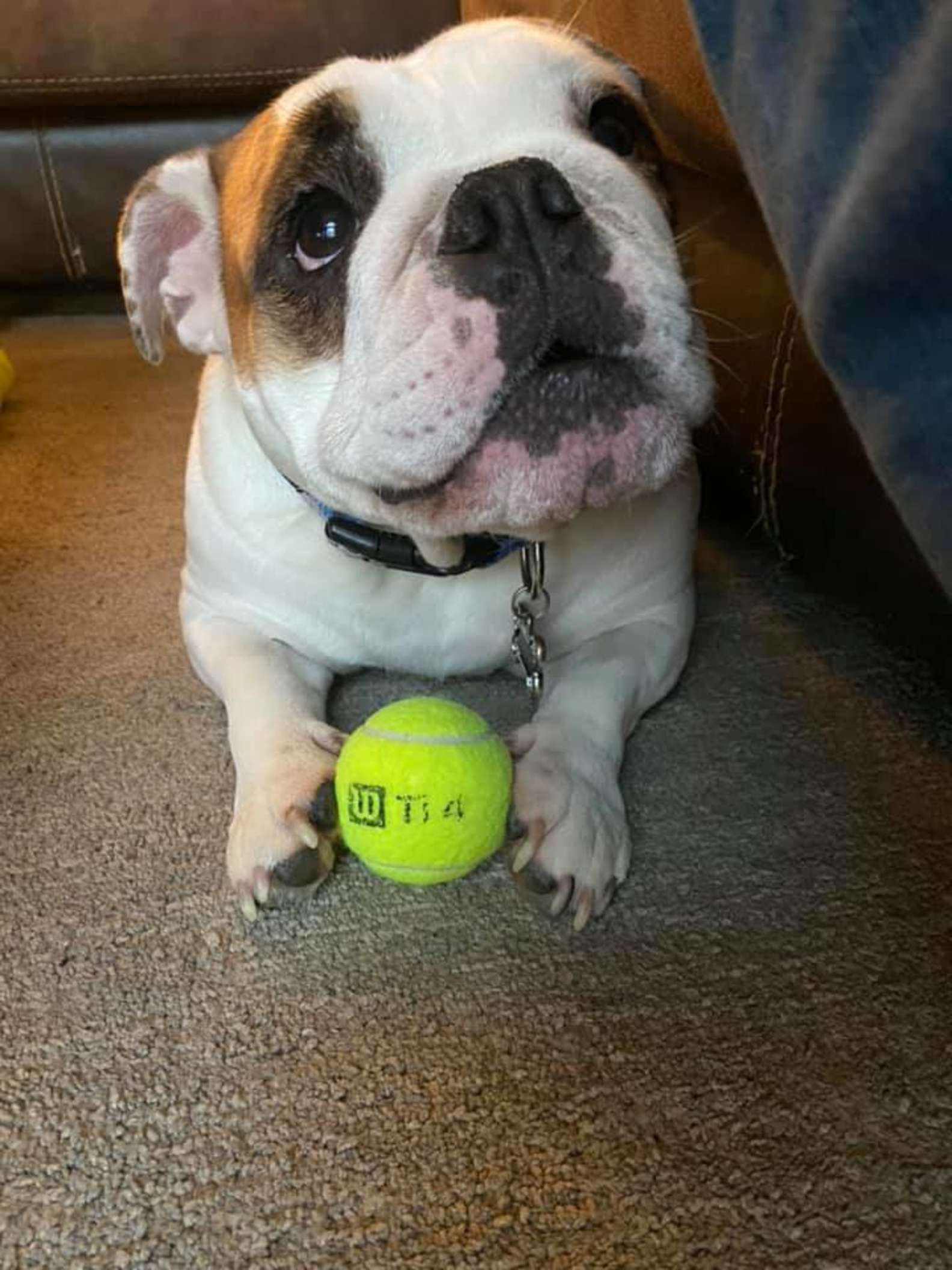
Instead of excitedly playing with every single ball, though, Noora dug her way to the bottom of the box, and found the one ball that she had apparently been looking for.
“She was so determined that there was something amazing at the bottom of the box, and couldn’t get to it quick enough,” Swartout said.
Katie Swartout
Once Noora had picked out her ball, and subsequently spilled the rest of them onto the floor, she refused to play with any of the others. Out of the 350 balls, there was only one that was meant for her.
“For a few hours, Noora wanted nothing to do with any other ball or toy,” Swartout said. “She was very protective of ‘her ball’ and if any of the other dogs would come near, she made sure they were aware of who was boss!”
Katie Swartout
For some reason, that one ball at the very bottom of the box was the only one Noora wanted, and she was completely confident in that decision.
Eventually, though, Noora got bored of her coveted chosen ball and went on with her life — until she rediscovered the box. Then she got excited all over again.
Katie Swartout
“Noora has moved on to other toys, demonstrating she has the attention span of a 3-year-old, but when she sees the bin of tennis balls in the garage now, she still gets as excited as she did when the box first arrived,” Swartout said.
ooOOoo
You see! We don’t really know what Noora is thinking of but that doesn’t take away for one moment the joy that Katie gets from Noora’s behaviour!
We had a high of 112 deg F. (44.4 deg C.) here in Merlin on the 27th June, 2021. That is hot in anyone’s language.
Fortunately first thing in the morning it was cooler, down in the low 60’s (F), and our dogs were alright with that. But in the afternoon it was too hot for them.
So it seemed like a good idea to republish an article from The Dodo about walking your dog in this heat.
Have you ever felt like it was just too hot outside to walk your dog?
To make sure you’re keeping your dog safe — and his paws free from burns or irritation — it’s important to know how to tell when it actually is too dangerous to take your dog on a walk.
The Dodo spoke to Dr. Jessica Romine, a veterinarian at BluePearl Pet Hospital in Southfield, Michigan, to get some answers and tips to make sure your walks are always safe — and fun — for you and your pup.
How to test if it’s too hot out to walk your dog
According to Dr. Romine, there’s a simple test you can do to check if it’s too hot out to walk — and all you need is your hand.
“A good rule of thumb is to place your hand on the sidewalk or asphalt for 5 seconds; if it becomes uncomfortable to the touch, it is probably also uncomfortable for your dog to walk on,” Dr. Romine told The Dodo.
Signs your dog is uncomfortable
If you do need to take a walk on a hot day — or if it starts to heat up after you’ve already left home — keep a close eye on your pup.
“Dogs can suffer burns from very hot surfaces, usually in direct sunlight,” Dr. Romine said.
Signs to look out for include your dog starting to slow down or limp, or not wanting to keep walking.
If this happens, Dr. Romine recommends “checking their paw pads for tenderness, redness, or erosions and try[ing] to get them into the grass or at least shade.”
Tips for walking your dog in the heat
If you live in an area where hot concrete is unavoidable, you can try a paw wax to protect your pup’s paws. If you’d like to try one, Musher’s Secret Paw Wax is highly recommended by one of The Dodo’s editors, who uses it on her own pup.
“If you dog tolerates them, they are a fine option,” Dr. Romine said about protective products, “but remember that prolonged contact can still cause damage, and dogs still need to be monitored for signs of overheating.”
So in general, try to stick to the grass or at least the shade on your summer walks — and going out in the morning or evenings, when most surfaces aren’t in direct sun, will be much more comfortable for your dog.
(We independently pick all the products we recommend because we love them and think you will too. If you buy a product from a link on our site, we may earn a commission.)
ooOOoo
I must say that is a good piece of advice about placing one’s hand on the sidewalk.
We are lucky here because there is only grass to play on but not everyone is so fortunate.
Personally, I think these should be banned in all countries!
Yes, I know that sub-heading is me being away with the fairies, but one can always hope.
The reason behind the heading and the topic is that on the 21st June this year Dexter sent me a guest post for including in this blog. Nothing gives me greater pleasure, so on with the show!
ooOOoo
Well well, Fancy that.
By Dexter.
This blog is on a subject that I have wanted to tackle but haven’t had the chance or insight to do so. Until now.
Puppy mills are an abhorrent method of producing large sums of money at the detriment to the dogs involved. I discovered that Fancy, who is one of the Wirral & Cheshire Beagles was used in a puppy mill. As I wanted to write something on this subject, I asked for the kind assistance of her mum, auntie Karen, who has been wonderful and extremely helpful in helping me write this blog. I cannot say “enjoy it” as I hope that you find it predominantly thought provoking and enlightening as to these terrible practices.
Thank you for allowing me to ask some questions about Fancy. When we spoke you told me that she was a puppy mill dog. Can you let me know a little more about her position before she came to live with you?
She had been in a puppy farm, kept in a concrete pig pen and had 3-4 litters in just over 3 years. Many of her pups died of Parvo either there or within 24 hours of being picked up for their new homes.
That sounds awful. Do you know how old she was when you met her?
They told us she was about 5 but she turned out to be 3.6 years. She was 4 on Valentine’s Day.
So, by my calculations, she was about one year old when she would have been forced to have her first litter. This makes me feel very sad.
How did you find out that Fancy was up for rescue and rehoming?
We saw Fancy on a “Beagles missing, found and in need ” site on FaceBook and we fell in love with her immediately. She had such sad, dark eyes and it occurred to us that she had never known a day’s happiness or been loved. There were so many people applied for her we didn’t think we stood a chance. However we were contacted by Many Tears twice that week and, because I’d previously had a home check and had 2 kind caring beagles, we were chosen.
Please help me, please!
We drove over 10 hours that day to Llanelli, Camarthenshire and met her in an area used for meet and greets. She was petrified of us but not my beagles, Eddie & George. She just ignored them. There was no eye contact with us, nothing. She just paced up and down and cowered in a corner. When it was time to take her home she had to be cornered and caught to get a slip lead on her. She just wet herself. It was heartbreaking. My husband Alan carried her to the car where she laid down in the travel crate. She didn’t sleep but just kept very quiet all the way home. She came from a real lowlife puppy farmer. He’s a multi millionaire who posts “his” beagles or pups running free on fields. In actual fact they’ve never seen a blade of grass. The BBC did an undercover investigation on him.
In any case, when she arrived it was a lovely Sunday evening last July 2020. So we sat outside and watched her exploring and sniffing around the garden. She kept hiding in a corner if we looked at her so we stopped. It took 8 long days before I touched her and that was only because there was a wall behind her. She went to the toilet in the house but thanks to Eddie & George she soon got the hang of going outside. They were fabulous with her and soon realised she wasn’t a boarder but a new sister. I certainly couldn’t have done this without them and the beagle field.
Is this OK? Is this what I am allowed to do?
What sort of condition was Fancy in when she arrived? I am going to assume she wasn’t in the greatest shape, given her life up to her time coming home with you?
She was in a bad condition when we got her. She had a dull dry coat and was very underweight with her ribs showing and tail between her legs. It took a few days for her to eat and she’d only do that if we weren’t around. When I first took her to the beagle field she spent the whole time pinned up against the fence. Nothing the beagles did bothered her, only the actions of the humans. I think it took about a month for her to trust one person and let them touch her. Eleven months later and she is still very wary of people she doesn’t know and she will cower away.
That sounds awful, and so sad. Looking at the pictures she seems to have come some way on her path to rehabilitation.
Yes,it doesn’t take much to win her round. A belly tickle, something tasty and she’s your best friend.
Give us a cuddle, says Jay.
How long did it take for Fancy to stop going toilet in the house? Was she called Fancy when you met her at the meet & Greet?
She did her toilets in the house for about 4 days. Maybe twice a day then just first thing in the morning. It tailed off after that as she went out every time with her brothers. Yes she already had the name Fancy I rescued a kitten on the A55 motorway many years ago and she was called Fancy.
You’re safe now, Fancy!
You said that Eddie & George immediately knew Fancy was in need of some help. Did they act as if they were guardians to her, showing her the ropes if you like, and making sure that she felt at least some comfort with them.
Definitely. They gave her space from day one when she needed it. Even at the busy beagle field the others knew as well. She never got the initial newbie rough welcome. They all love her very much. Beagles know these things.
Welcome to the clan, Fancy.
Erm, when did you start to see a real breakthrough in her feeling more at home and less scared of all sorts of situations? What was the thing that made you think “you know, Fancy is feeling a bit happier”.
I lay that lead next to her for about a week. I started to show it to her and make a big fuss like it was a toy. She was petrified as she’d only been put in a “rape harness”. She’s still wary of it but can’t get out of it thank dogness.
A week from A to B
If you could give people a simple message regarding getting pups from a mill what would it be? Apart from “dont do it” that is.
I’ve given many messages of support to people thinking of puppy farm rescues. Don’t ever give up on them because of their fear. Beagles are so loving and trusting of us the good times far outweigh the bad and no mistake. I have a friend who 12 days ago adopted one with identical problems and the difference in her each day is amazing. Day 12 today and she was dying to jump into his arms when he got home but held back and did an excited dance. We all love his daily updates.
I wish I knew the answer to the puppy mills question I really do. They’re clever people who advertise their pups as living in loving happy homes with caring owners. When in reality they use dirty filthy concrete pig pens where they receive no vet care whatsoever. People see the advertisement and pay a large deposit, when the time comes most travel hours and they won’t leave their puppy their a minute longer so will take them home and face the consequences. Many die over 24 hours and some will be saved by a good vet. One of Fancys pups and owner I know so I know how she was fooled. She knows others.
May I ask about Wirral & Cheshire Beagles generally. Are you a registered charity and, if so, with whom do you work and co-operate?
Yes the beagle group is a charity. We give £1000’s away to beagle charities each year. Mainly Unite to Care where we got ex laboratory George from and Many Tears who are absolutely fabulous and rescue so many ex breeding beagles.
Beautiful!
To sum up I am so happy that Fancy is now safe and loved. It is wonderful that she will never again suffer the privations of puppy mill life. It is sad and wholly awful that she had to suffer in the first place. If people didn’t buy from puppy mills, then there might be a chance that they are prevented of their ability to operate. Please please think before making a decision to adopt a dog. Puppy mills are awful and make our lives a misery.
Thank you to Fancy’s mum for her wonderful help on what is a very difficult subject. Without her help, I couldn’t have written this.
Rescue dogs sometimes have a bad reputation. Cross breed rescue dogs sometimes seem to have a worse reputation. I wasn’t dangerous or bad. I was unlucky. Now I am enjoying life in my forever home and I am sharing my contentment with whoever will read my tails.
This is the essence of what having a dog in one’s life means.
I can’t voice Jean’s and my disgust at puppy mills. It is beyond terrible. All you and I can do is to never entertain buying a puppy where the commercial legitimacy is uncertain.
I was looking through my LfD future posts folder and came across this story about a rescue dog in Kentucky River, in Kentucky, a long way from here ( Merlin, OR).
But that doesn’t diminish in the slightest how beautiful this story is and how generous are the management and staff of Home Depot.
Read it and see what I mean. Thanks to The Dodo for publishing it.
ooOOoo
Dog Is Literally The Cutest Home Depot Employee Ever
“She finds who needs her and gives them that smile” 😍
Luckily, her mom found the perfect place to help her come out of her shell — Home Depot.
JACKIE RAKERS
“The Home Depot runs started as a way to help her with her fears,” Rakers told The Dodo. “She was nervous about new places and new sounds, so we’d go for five minutes and she’d get all the treats. Then we started going longer and longer and exposing her to more and more things within the store.”
The large, dog-friendly store was the perfect place for Heaven to socialize, and the pup was such a good girl on her visits that she earned her own tiny employee apron.
JACKIE RAKERS
Now, Heaven knows that when the apron comes out, she’s about to go to her favorite place.
“I keep it in the car so we are always ready,” Rakers said. “As soon as she can tell we are in the parking lot, she just quivers until I put [the apron] on her and then she takes off towards ‘work.’”
“She walks around like she owns the place,” Rakers added.
JACKIE RAKERS
Heaven has become a bit of a celebrity at her local Home Depot, where all the staff knows her by name, and there’s even a picture of her in the break room.
And while she may not be an official employee, when she’s at her favorite store, she offers excellent customer service.
“She walks around minding her own business and then suddenly insists on meeting someone,” Rakers said. “She just sits and stares. They always end up saying how they needed that pick-me-up. It’s like she has a sense of who needs to be shown they are loved that day — and one of her favorite places to do that is Home Depot!”
JACKIE RAKERS
Heaven loves running errands with her mom, and everywhere they go, she finds someone having a rough day who needs her smile.
“She was scared of everything, but with a lot of training and patience she learned to trust and now it’s like she pays it forward,” Rakers said. “She finds who needs her and gives them that smile and a cuddle.”
JACKIE RAKERS
The only downside of all their Home Depot runs is that every time they visit, Rakers comes up with a new home improvement project. But all the retail therapy is worth it when she sees how happy Heaven is and how far she’s come.
“She’s the perfect example of what happens when you meet someone where they are at and love unconditionally,” Rakers said. “She went from so scared and so sad to the happiest dog.”
ooOOoo
Thank goodness our local Home Depot here in Grants Pass (Oregon) don’t have a Heaven in the store. For if they did Jean and I would be in the store every day of the year. OK, maybe a small exaggeration but only a small one!
Seriously, Home Depot are to be congratulated. It’s good for the store. It’s good for the employees. It’s good for the customers. But it is fantastic for Heaven!
The first day that Pharaoh was passed across to me. He is being held by Sandra Tucker of Jutone Kennels, Bovey Tracy, Devon, Pharaoh was born on the 3rd June 2003. I picked him up on the 12th August.
oooo
Pharaoh settling in at home soon after he was collected from Jutone. This is about mid-August, 2003. Home being Upper Barn, Harberton, Devon, just three miles from Totnes.
oooo
At the other end of the scale! Pharaoh just turned 14 outside our house in Merlin, Oregon. The date June 3rd, 2017.
John is becoming a regular contributor to Learning from Dogs. He was last here on March 26th, this year with a guest post Reasons to get a pet portrait.
This is a timely and pertinent post.
ooOOoo
Five Questions you need to ask a Boarding Kennel
If you’re planning a vacation or a work trip, you’ll need to decide what to do with your beloved pooch. This can be a stressful event for both you and your pup, but things will go a lot easier if you pick the right boarding kennel.
How do you know whether you’ve picked a good kennel?
The best way to determine the quality of a kennel is by asking appropriate questions. Not sure what those would be? Never fear! We’ve got you covered!
Read on to learn what questions to ask to help you choose the best available pet hotels or kennels.
Five Questions to Ask a Kennel or Pet Hotel
One – Is Your Kennel or Pet Hotel Certified?
Certification is not mandatory for kennels. However, certified kennels have to comply with 250 standards in 17 areas of pet care facility operation. This certification is known as the Voluntary Facilities Accreditation (VFA) certificate. If they have a certificate, you can assume several things about the facility:
They have put time and money into making sure they have the best facility possible for the animals they care for. They care about reassuring pet parents that their dogs will be well cared for. They have all the necessary space and equipment to take excellent care of your pooch. Your pup will be secure and safe while you’re away.
Two – Can I Tour The Kennel?
You must always ask to tour the facilities. Just like you put in research when you book a hotel, you need to be equally as fastidious when you book a kennel. Therefore, you should look for the following:
Is the kennel odor-free?
A clean kennel will not smell because all urine and feces will have been cleaned up quickly and appropriately.
Is it loud or quiet?
Dog kennels will be noisy, but an extreme amount of noise usually signals that the pups are unhappy.
Are there enough staff?
There should be a 1-to-10 staff to dog ratio. The higher the people to animal ratio, the more individual attention your dog will get.
Are the living and playing areas clean?
Are there feces, urine, and debris? Or are the areas open and clean?
Do all animals have proper bedding and water?
The pooches should look content and stress-free and have both comfortable bedding and ample water. If a kennel doesn’t let you take an impromptu tour, do not leave your pup there.
Three – What Will the Facility Do if Your Dog Gets Sick?
The kennel must have a procedure in place for dealing with small issues like diarrhea and broken toenails and more significant problems like medical emergencies. Ideally, they will ask you to pre-approve an amount for vet services. They should also know basic pet first-aid.
Four – How Knowledgeable Are the Staff?
Kennel staff, like the facility, are not required to be certified in animal behavior or training. However, what’s more, important than a certificate is the staff’s attitude and attentiveness. Good staff can tell you details about each animal under their care.
When you enter the kennel, staff should welcome your dog and take meticulous notes about your pup’s diet, exercise needs, medications, and any other pertinent information. Take note of whether they are patient, friendly, and seem genuinely interested in your pooch’s welfare.
Five – What Do the Exercise and Play Programs Look Like?
You must look at the package your kennel is offering. Some kennels have one playtime, whereas others don’t include any in their base fee.
Good kennels will have a system for playtime where they divide dogs by style, size, age, etc., to keep the pups safe and happy.
Dogs that need more exercise should get walked by a kennel assistant. So, if you own a dog that needs regular walking, make sure that the kennel offers this service and has enough staff to meet your pup’s needs.
Furthermore, not all kennels offer toys for your pooch to play with. So it’s important to find out ahead of time if you need to provide your own toys.
To Sum Up…
We know you love your dog, so you should plan where they will stay while you’re away as carefully as you planned your vacation. The most essential thing to look for when visiting different kennels or pet hotels is how the environment makes you feel. Listen to your gut. If you feel comfortable and you get along well with the staff, then there’s a high probability that your pup will feel at ease there as well. While no kennel can replace the feeling of home for your dog, it should come close. This way, you’ll be able to go on your trip knowing your pooch is safe, sound, and well cared for.
ooOOoo
This is a very useful list from John. One that will provide guidance to everyone but especially to the new dog owners.