Category: People and their pets

Until Tuesday by Luis Carlos Montalvan

A book review

While being born an Englishman in 1944 has me slightly ahead of the so-called Baby Boomer period, which in American terms, ergo the U.S. Census Bureau, is defined as those born between January 1st, 1946 and December 31st, 1964, American and British people born in those ‘boomer’ years after WWII share many attitudes.

However, there is one stark difference between the UK and the USA regarding that period; the Vietnam War.

U.S. military advisors arrived beginning in 1950 and that U.S. involvement escalated in the early 1960s, with U.S. troop levels tripling in 1961 and tripling again in 1962.

Many good young Americans paid the ultimate price for that involvement (58,220 U.S. service members died in the conflict).

Why do I mention this?  Because just as so many Americans have no idea of the scale of enemy bombing that England suffered during WWII, just as many Brits have no idea of the scale of the ‘draft’ (i.e. conscription) that was employed by the U.S. Government as the Vietnam involvement grew.

Now keep that in mind as a means of adding context to what follows.

Until Tuesday is a book of many extremes.  It is a powerful book, a disturbing book, and a book about the beauty, dignity and, sadly, the madness of man.

I have been talking to a good friend of my life-long Californian pal, Dan Gomez.  Let me just call him Tom.  Tom saw service in Vietnam.  This is how Tom describes his early experiences.

I was young and keen for some adventure.  I had watched many war movies so I knew exactly what war was all about.  So I enlisted as a soldier and was shipped out to Vietnam.  After 60 days, I had experienced sufficient to know that things were not as they were portrayed by the media and the reality of Vietnam was very different to those movies. I had seen enough and was ready to come home.

Except that it didn’t work that way. I was there for a full tour of duty.

It became increasingly apparent by our behavior that we were not there to liberate the masses. We were there because some politicians had a theory and because of it didn’t want the locals to have a democratic election.  So good people were put into harm’s way, died or were severely injured for no other reason than some politicians had a theory – that proved to be false in the end.

Through it all, the biggest pain that I suffered was to see my Government operating under false pretences, with no integrity and no dignity.   It left me with a deep anger and mistrust of government that is still deep inside me.

Tom’s very personal and intimate sharing of his experiences of Vietnam resonates powerfully with what Captain Montalvan experienced in Iraq.  Here’s an extract from the book,

I am an American soldier.  I am an expert and I am a professional.

But at the same time, I was coming unmoored, my mind dwelling on the hand-to-hand struggle for my life, the Syrian ambush, the sandstorms, the riots, and Ali, Emad and Maher, the men left behind.

I am a guardian of freedom and the American way of life.

The wife of one of my best men from Al-Waleed had become pregnant during his midtour leave.  The foetus was fatally deformed, but Tricare, the army’s health service, doesn’t provide abortions under any circumstances, and she was forced to carry the child to term.  I will never accept defeat.  Little Layla was born without a nose and several internal organs.  Her parents had no financial resources on a soldier’s pay to provide her comfort.  I emailed everyone I knew for help – hundreds of dollars were sent to the sergeant and his family.  Nevertheless, it was heartbreaking, absolutely heartbreaking, to hold Layla in my hands.  I will never quit.  She lived eight weeks, and the difficulty of her life, and the inhumanity of forcing that existence not only from her but her parents too – I will never leave a fallen comrade – fuelled my downwards drive.

I was angry with the army. Not on the surface, but underneath, in the depth of my mind.  Why did Layla and her parents have to endure that pain, especially after everything they had already endured?  Why were they forcing our regiment back to Iraq just ten months after our return?  Why weren’t they helping us cope with our pain?  We were badly banged up.  We were undermanned and underequipped.  The army didn’t care.  They were churning us through.  They cared more about getting us back to Iraq and making the numbers than they did about our health and survival.

It was the summer of 2004.  Victory was slipping away.  Everyone could see that, but the media kept pounding the message: ‘The generals say there are enough men.  The generals say there is enough equipment.  The generals say everything is going well.’  It was a lie. The soldiers on the line knew it because we were the ones suffering.  We were the ones who endured days of enemy mortar fire when we arrived in Iraq without weapons or ammunition, as my eighty troopers had in Balad in 2003; we were the ones going back in 2005 without adequate recovery time or armour for our Humvees.  And that is the ultimate betrayal: when the commanding officers care more about the media and the bosses than about their soldiers on the ground. [Chapter 5, An American Soldier, pps 88-89]

So the first thing that most definitely comes out of the pages of Until Tuesday is the depth of disconnect between Montalvan as an active soldier in the front line and his nation.  Just like Tom in Vietnam!

It’s not until Chapter 8, The Thought of Dogs, that the author moves on from his obsessiveness about his military experiences to his future world.  Please realise that when I use the word ‘obsessiveness’, in no way is it used as a derogatory term.  One of the symptoms of mental insecurity is the ease with which we can obsess on things in our lives.

Here’s how Chapter 8 starts,

I can’t tell you how much my life changed when I read the email on 1 July 2008. (A Tuesday, I just realised.  I’ll have to add that to my list of fake reasons for Tuesday’s name.)  The Wounded Warrior Project, the veteran service organisation I went with to the Bruce Springsteen concert, forwarded the message.  They forwarded messages every day, actually, but I usually didn’t read them.  This tagline intrigued me: ‘WWP and Puppies Behind Bars’.  Puppies behind bars?

The message was almost as simple: ‘Dear Warriors, please note below.  Puppies Behind Bars has 30 dogs a year to place, free of charge, with veterans from Iraq or Afghanistan who are suffering from PTSD, traumatic brain injuries or physical injuries.  I’ve attached the Dog Tags brochure which explains the programme, as well as the Dog Tags application.’

As soon as I read the attached description, I knew the programme was for me.  I suffered from debilitating social anxiety, and the dogs were trained to understand and soothe emotional distress.  I suffered from vertigo and frequent falls, and a dog could keep me stable.  Because of my back I could barely tie my own shoes, and a dog could retrieve and pick things up for me.  I was the perfect candidate.  I was down, but I was working towards a future.  I was a leader, so I would never give up.  And I was lonely.  Terribly, terribly lonely.

From this point onwards the remaining 189 pages of Until Tuesday are about Luis Montalvan’s recovery built upon the foundation of his beautiful relationship with Tuesday, his service dog.

Of course there are ups and downs, as there are in all our lives, but the overall message is clear.  A dog loves a human in the most beautiful and purest fashion of all.  That unconditional, undemanding love for the humans in that dog’s life unlock even the most damaged souls.  Tuesday unlocked the private hell that Captain Montalvan endured for so long.

In the privacy of a deep hug of your dog lays release.  From that release comes peace, understanding and the desire to re-connect with the larger world.  There is no greater gift than that.

So standing back in terms of reviewing this book (I reviewed the UK edition) here are my thoughts.

  • It’s a deeply moving book which many, but especially dog owners, will be touched by.
  • It’s a book that offers real hope and inspiration, most certainly for those who are going through their own private hell.
  • It’s a very American book and, at times, when reading it I did wonder if some UK readers might find themselves culturally disconnected.
  • Overall, this is a book that needs to be read.

Perhaps I should close by saying this.  I didn’t have to pay for the book, it was sent to me on a complimentary basis once I had agreed to do the review.  In the UK Until Tuesday is published by Headline Publishing.  However, having read the book I realise that to have missed the opportunity of reading it would have left my life a little poorer.

Footnote

A note for all those that have been good enough to read to the end!  This post published today is the 1,000th post since Learning from Dogs first saw the light of day on July 15th, 2009.  That it has reached this point is a direct result of the number of readers and the support that so many of you give to this rather crazy enterprise!  Thank you all!

The Power of the Dog

An incredible moving account of man’s special relationship with the dog.

(Reproduced in full with the very kind written permission of the author, Laban T. where it was first published on UK Commentators.)

The Power of the Dog

Ross’s dog is gravely ill.

 I suppose if you don’t have a dog it is hard to understand why anyone would be so upset (that isn’t an insult or a judgement just a statement of fact) and if you do there isn’t much need to explain.

 As so often he’s spot-on. I remember in my teens a girlfriend walking through the door one Saturday morning and bursting into floods of tears – and it wasn’t the state of my room.

What’s the matter ?

They’ve taken her to the vet to be put down!” – ‘her’ being the companion of her childhood, a thousand walks and a hundred days out in the country with parents. But I didn’t think like that at the time – I was properly sympathetic and held her till my shoulders were soaked in tears – but it was only a dog, a nice enough dog, but still a dog. At this distance memory fails, but I probably assumed it was just a girl thing, what with being more emotionally open and all that.

The same blindness afflicted me with regard to the effect of children, although I think I wasn’t alone in this. Our single lives were so endlessly fascinating, what friends were doing, who was with whom, the places to go, the people, the parties, that we looked on people who’d got children slightly pityingly, as if they’d been afflicted with a crippling disease (and it IS crippling to a wild social life, although I know a few exceptional people and couples who have just carried on – I’m just not exceptional) which not only curtailed their social life but made them talk about children an awful lot – as if that topic was of any interest at all compared to the important things.

You live and learn. Hopefully. Now I feel more that becoming a parent is gaining access to the secret heart of life and the long chain of familial links down the generations. Not that it doesn’t have its many, many drawbacks. Susan and I looked at each other one day after #2 had arrived and said “whatever did we do with all that time we had?”.

I digress. So I finally learned about why parents are interested in kids, but still didn’t get the dog thing. Our neighbours were childless but treated their dogs like their children – they slept upstairs and their doings were part of our everyday chats. Most odd, we thought.

Dog lovers …

I’d taken my firstborn up to visit his grandpa, and grandpa and I were out walking with grandpa’s dog and the pushchair plus baby. I loved that new dad bit, with bonny boy getting cooed over by all and sundry … the checkout queue turning into a little love fest … and he WAS a beautiful baby – he’s 21 now and six foot.

Lady approaching on the pavement, breaks into happy smile :

Oh, what a beautiful …

(Dad smiles modestly… he’s getting used to this …)

Dog!”

(Smile vanishes instantly)

Then our youngest went off to Big School, and it left a bit of a gap in Susan’s life. Suddenly there were no babies to care for – and she likes caring for things. One day she went off and returned with this chap (and promptly had him snipped, to my horror). Apparently Labradors were very even tempered, good with children and an all round ideal first dog for a family with no dog-owning history on either side, at least since our great-grandparents were on the farm. What’s impressive is that AFAIK, apparently all dogs are descended from domesticated wolves. Just shows what breeding will do.

The dog.

The kids were thrilled, promised to walk him etc., etc., – didn’t last and soon Mum and Dad were doing most of the walks. But the exercise is great – he and we usually get about three miles a day in – it’s good for an ageing chap with a desk job. I’ve learned most of the footpaths and circular routes round the house.

Labradors seem to eat anything – three week old bird carcases, stones, deer poo, sheep poo, horse poo – and they roll in fox poo, which is not a nice smell and means an hour shampooing him in the garden (then a shower and complete change of clothes). On the good side they love apples, blackberries, plums, the farmer’s turnips – healthy eaters.

He once found a rotting, rank dead rabbit inside a plastic bag, scoffed it, then sat in his crate in the kitchen and disgorged the lot some hours later. Not a nice clean-up job – the smell at close quarters was truly evil.

They’re meant to have more acid in their stomachs than humans to enable digestion of bad food – but ours pushes that way beyond the limits. The Muslims are right enough when they consider dogs unclean. They’re filthy, dirty creatures.

But they have a way of wrapping themselves round the heart. Always pleased to have human company, playful, cheery.  All the family quickly grew to love him – even grandma, very much a non-dog person, has a soft spot.

October last year, grandma is round for Sunday tea/dinner, I’m just out in the garden using the last of the light at ten to six.

Can he stay out here with you? ”

OK

The call for tea. I call him – he’s not anywhere in the garden. Round the house – no sign.

Has he come in?”

No

He’s not in the garden

Poor grandma. She was left alone in the house while everyone emptied into the darkening garden, calling, then after a quick conference and grabbing of mobiles, two cars head slowly in opposite directions, and the boys are in the local wood with torches. Daughter and I take the car across rough farm tracks, along the routes of his favourite walks, stopping, scanning the gloomy fields, calling him, on again, repeat.

Forty minutes later it’s pitch black and the cars are back. The boys have been right through the woods to the fields on the other side, which we’ve also scanned from the cars as best we could, then back again. Up and down the village – again – half expecting to see a limp form in the headlights. Not a sight or sound.

Tea at seven in almost total silence. The only thing I can compare it with was the first family Christmas without my grandmother.

Eight o’clock. He’s been gone two hours. We’ve been out in the garden and around the house again. Nothing. The feeling that he’s gone for good starts to solidify.

Nine o’clock. My daughter’s standing at the back door, calling his name. Nothing. I feel she’s wasting her time, but in solidarity I go to the side door to call. Open it – he’s standing on the step.

God knows where he’d been. One moment of tremendous pleasure – calling my daughter into the kitchen, without telling her who was there, then watching the ecstatic reunion – the boys hearing the noise and tumbling in, happy uproar. “For he was lost, and is found“.

Once again Mr Kipling has the words :

There is sorrow enough in the natural way
From men and women to fill our day;
And when we are certain of sorrow in store,
Why do we always arrange for more?
Brothers and sisters, I bid you beware
Of giving your heart to a dog to tear.

Buy a pup and your money will buy
Love unflinching that cannot lie
Perfect passion and worship fed
By a kick in the ribs or a pat on the head.
Nevertheless it is hardly fair
To risk your heart to a dog to tear.

When the fourteen years which Nature permits
Are closing in asthma, or tumour, or fits,
And the vet’s unspoken prescription runs
To lethal chambers or loaded guns,
Then you will find – it’s your own affair
But … you’ve given your heart to a dog to tear.

When the body that lived at your single will,
With its whimper of welcome, is stilled (how still!)
When the spirit that answered your every mood
Is gone – wherever it goes – for good,
You will discover how much you care,
And will give your heart to a dog to tear.

We’ve sorrow enough in the natural way,
When it comes to burying Christian clay.
Our loves are not given, but only lent,
At compound interest of cent per cent.
Though it is not always the case, I believe,
That the longer we’ve kept ’em, the more do we grieve:
For, when debts are payable, right or wrong,
A short-term loan is as bad as a long
So why in Heaven (before we are there)
Should we give our hearts to a dog to tear?

Scamp and other dog’s incredible sense of smell

Almost beyond a human’s ability to comprehend.

On the 24th June, I wrote a piece from the Extraordinary Animals series from the UK’s Channel Five TV station.  In particular, the article focussed on Scamp’s ability to detect when people in care were dying.

Scamp is a little Schnauzer who resides at The Pine nursing home in Canton, Ohio. Like many live-in pets at nursing homes, Scamp brings companionship to the residents but he also does more than that. Scamp seems to have a gift that tells him when the end is near for one of the residents and he loyally stays with them during their final hours.

Jim & Diane Walker

The first of the three YouTube videos, some ten minutes long, examined how Scamp knew that a patient was dying and how scientists Jim and Diane Walker believed it was due to the incredible sense of smell that dogs possess.  From The Examiner of June 1st, 2009,

An amazing scientist, Dr. James Walker of the Sensory Research Institute at Florida State University, documented the power of a dog’s nose in 2002. Using n-amyl acetate (nAA), Dr. Walker documented that a dog can detect chemicals at one ten-thousandth to one hundred-thousandth the concentrations that humans can. In other words, at a minimum, dogs can smell 10,000 times better than a human.

OK, back to that YouTube video.

If you didn’t watch it on the 24th, do watch it again.  Watch it this time to pick up just what Scamp is doing.  At minute 6:30 hear how Dr. Bob Andrysco describes how the sense of smell of a dog is 100,000 times more powerful than that of a human.

Then stay with the video until minute 9:20 when Jim & Diane Walker show how a dog can detect a substance as diluted as 2 parts in a trillion.  That is so diluted as to be beyond comprehension; well to a non-scientist like me!

As the presenter describes, “That’s the equivalent of a teaspoonful of sugar in ten billion cups of tea!”  To me that is utterly mind-boggling.  Let me try and demonstrate the power of 2 parts per trillion, which is the equivalent of 1 part per half-trillion (500,000 million). Half-a-trillion fluid ounces is 522,189,675.651 ft³ – just over 522 million cubic feet.  What does that volume look like?

Here’s the picture of twelve fluid ounces – you’ll just have to imagine what one fluid ounce would look like!

Standard Coke can = 12 fluid ounces

Here’s a picture of ninety million cubic feet – you’ll just have to imagine what five hundred and twenty-two million look like!

Great Pyramid of Giza = 90 million cubic feet

OK, last one from me to allow us all to really, really appreciate the magical ability of that dog’s nose.

Two parts per trillion is the equivalent of smelling that can of Coke (12 fluid ounces) in a volume the equivalent of seventy, yes seventy, Great Pyramids (6,264,000,000 cubic feet).

Think I need to lie down in a darkened room for a while!

Paws of love

They are such wonderful, amazing creatures – man’s longest and best friend, the dog.

A couple of events caused me to be reminded about the preciousness of our relationship with the dog.  The first was coming across this article in The Boston Globe.  It is entitled, A friendly paw to a veteran and is all about how therapy dogs bring relief and joy to veterans.  Incidentally, the story was written by good friend to Learning from Dogs, Daniela Caride who has her own blog, The Daily Tail.  Here’s how that article opens,

NORTHAMPTON — Carter the Chesapeake Bay retriever, Sassy the Pomeranian, and Spyder the German shepherd spend most of their time playing, begging for treats, and getting belly rubs just like other pet dogs. But their unconditional love gains a purpose every time their owners take them to the hospital to visit veterans.

They are therapy dogs — canines trained to give affection to strangers — and they are becoming more popular in veteran facilities. An increasing number of dog owners are willing to volunteer at VA homes and hospices, where 6 million veterans get treated for acute and chronic health conditions. The service they provide is invaluable, health care specialists say.

Read the rest of it here.

The second event was coming across something that I wrote nearly three years ago.  Here it is in full.

The knowing eyes of your best friend

Pharaoh

(Based on an article sent to me, unfortunately from an unknown author, and modified to reflect the special relationship that I have with my 4 year old German Shepherd, Pharaoh. Paul Handover, 14 September, 2007.)

I am your dog and have something I would love to whisper in your ear. I know that you humans lead very busy lives. Some have to work, some have children to raise, some have to do this alone. It always seems like you are running here and there, often too fast, never noticing the truly grand things in life.

Look down at me now. While you sit at your computer. See the way my dark, brown eyes look at yours.

You smile at me. I see love in your eyes. What do you see in mine? Do you see a spirit? A soul inside who loves you as no other could in the world? A spirit that would forgive all trespasses of prior wrong doing for just a single moment of your time?  That is all I ask.  To slow down, if even for a few minutes, to be with me.

So many times you are saddened by others of my kind passing on. Sometimes we die young and oh so quickly, so suddenly that it wrenches your heart out of your throat. Sometimes, we age slowly before your eyes that you may not even seem to know until the very end, when we look at you with grizzled muzzles and cataract-clouded eyes. Still the love is always there even when we must take that last, long sleep dreaming of running free in a distant, open land.

I may not be here tomorrow. I may not be here next week. Someday you will shed the water from your eyes, that humans have when grief fills their souls, and you will mourn the loss of just ‘one more day’ with me. Because I love you so, this future sorrow even now touches my spirit and grieves me. I read you in so many ways that you cannot even start to contemplate.

We have now together. So come and sit next to me here on the floor and look deep into my eyes. What do you see? Do you see how if you look deeply at me we can talk, you and I, heart to heart. Come not to me as my owner but as a living soul. Stroke my fur and let us look deep into the other’s eyes and talk with our hearts.

I may tell you something about the fun of working the scents in the woods where you and I go. Or I may tell you something profound about myself or how we dogs see life in general. I know you decided to have me in your life because you wanted a soul to share things with. I know how much you have cared for me and always stood up for me even when others have been against me. I know how hard you have worked to help me be the teacher that I was born to be. That gift from you has been very precious to me. I know too that you have been through troubled times and I have been there to guard you, to protect you and to be there always for you. I am very different to you but here I am. I am a dog but just as alive as you.

I feel emotion. I feel physical senses. I can revel in the differences of our spirits and souls. I do not think of you as a dog on two feet; I know what you are. You are human, in all your quirkiness, and I love you still.

So, come and sit with me. Enter my world and let time slow down if only for a few minutes. Look deep into my eyes and whisper in my ears. Speak with your heart and I will know your true self. We may not have tomorrow but we do have now.

There is no question that one of the important aspects of life that we can surely learn from dogs is the ability to stay in the present as much as we can.  Easier to write than accomplish, of course.  But letting go of the past (because it’s gone) and making the best of today as opposed to worrying about the future (because that interferes in the joy of today) is still a powerful reminder of that we would do well to keep close to our heart.

The inadequacy of words

Alice and Mabel

Think you have had a bad day/week/month/year/life?  Want to see your life in perspective? Go here and reflect.  This is one very brave and incredibly inspiring young woman.

Those of you who see this and are in the UK, do read Alice’s Bucket List and help if you are at all able.  If not, just hold Alice and all her family, and Mabel, in your prayers.

That very special relationship

No, not the one between the USA and the UK but between dogs and man.

Great thanks to Peter N. a loyal Learning from Dogs reader, who passed this item to me just a few days before I left for England, where I am until the 16th.  The story comes from the website Life With Dogs, not a website that I had previously come across, where it appeared on June 2nd. It is reproduced in full below.

'Puppy' Bear

A Piedmont, OK man says his devoted dog tried to save his wife’s life during last week’s tornado.

Leanne Sneed was at home when the deadly tornado struck. Her husband Gary said she took cover as the twister began to rip the house apart around her, laying down and covering her head as debris fell.

What happened next can only be explained as an act of love. Bear used his considerable frame to protect Leanne. He laid down on top of her, completely covering her body with his. He did not move, keeping her pinned under him until the storm had passed. Miraculously, despite the complete destruction that surrounded them, neither Bear nor Leanne suffered any injuries.

Gary Sneed said that Bear’s bravery is even more impressive when you consider that he’s still just a puppy. He said the 160-pound dog is incredibly loving, and he fully believes Bear was willing to sacrifice his life for Leanne’s.

Present perfect!

Probably the best lesson dogs offer their human companions.

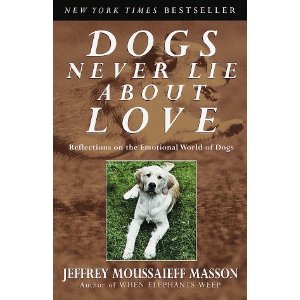
Having surfaced recently from being completely immersed in the writings of Dr. Rupert Sheldrake’s book, Dogs That Know When Their Owners Are Coming Home (start here and work backwards if you missed my musings on Sheldrake) I used the recent flight across to London to start into the book by Jeffrey Moussaieff Masson Dogs Never Lie About Love.

Masson's book

While I might disagree with some minor aspects of the way that dogs relate to humans, the essential premise of the book is very powerful.

Indeed, the very last sentence of Chapter 2, Why We Cherish Dogs reads as follows:

Questers of the truth, that’s who dogs are; seekers after the invisible scent of another’s authentic core.

For me, any attempt to seek our own ‘authentic core’ can only come from understanding the power of remaining in the present.  Dogs do this so naturally and instinctively.  As Masson writes a little earlier in the above chapter,

A dog does not tremble at the thought of his own mortality; I doubt if a dog ever thinks about a time when he will no longer be alive.  So when we are with a dog, we, too, enter a kind of timeless realm, where the future becomes irrelevant.

One could almost imagine this being the ancient wisdom of the teachings of Buddha!

Anyway, in a rather serendipitous manner, just before starting this essay, I read my weekly News and Notes from Terry Hershey.  This is what he wrote about being in the present.

Did you see Mr. Holland’s Opus? About Glenn Holland’s lifetime of teaching music to a high school band. In one scene he is giving a private lesson to Gertrude. She is playing clarinet, making noises that can only be described as other-worldly. He is clearly frustrated. As is she. Finally Mr. Holland says, “Let me ask you a question. When you look in the mirror what do you like best about yourself?”

“My hair,” says Gertrude.

“Why?”

“Well, my father always says that it reminds him of the sunset.”

After a pause, Mr. Holland says, “Okay.  Close your eyes this time. And play the sunset.”

And from her clarinet? Music. Sweet music.

Sometime today, I invite you to set aside the manual, or the list, or the prescription.

Take a Sabbath moment. . . close your eyes and play the sunset.

Mary Oliver describes such a moment this way, “. . .a seizure of happiness. Time seemed to vanish. Urgency vanished.”

Because, in such a moment, we are in, quite literally, a State of Grace.  In other words, what we experience here is not as a means to anything else.

If I am to focused on evaluating, I cannot bask in the moment.

If I am measuring and weighing, I cannot marvel at little miracles.

If I am anticipating a payoff, I cannot give thanks for simple pleasures.

If I am feeling guilty about not hearing or living the music, I cannot luxuriate in the wonders of the day.

Living in the present is not specifically mentioned but how else could one interpret these beautiful concepts.

More poetic praise for dogs

A poem by George Crabbe.

I don’t recall who it was who passed this poem to me so apologies for that.

Also a trawl around the Internet can’t find the name of the poem although it is referred to several times as a quote from the late George Crabbe.

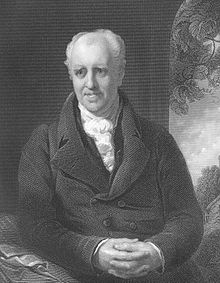
George Crabbe

Anyway, quote or poem, here it is:

With eye upraised his master’s look to scan,
The joy, the solace, and the aid of man:
The rich man’s guardian and the poor man’s friend,
The only creature faithful to the end.

George Crabbe

However my trawl for more details about the poem did lead to some interesting background information about this writer.

From the website, Our Civilisation

George Crabbe

(1754-1832)

George Crabbe combined three careers: doctor, minister, and writer. Born in Aldeburgh, a fishing village in Suffolk, he served his apprenticeship to an apothecary, and then set up as a surgeon-apothecary in 1775. He abandoned this career four years later and went to London to earn his living as a writer. In 1782 he was ordained priest and became chaplain to the Duke of Rutland. He held several livings thereafter, and finally in 1814 became rector of Trowbridge, Wiltshire, where he spent the rest of his life.

Crabbe’s long literary career divides into two parts: the poems, — notably ‘The Village‘ (1783), published during or shortly after his early stay in London; and the long series of works beginning with ‘Poems‘ (1807), which includes ‘The Parish Register‘ and ‘Sir Eustace Grey‘;’The Borough‘ (1810), ‘Tales in Verse‘ (1812), ‘Tales of the Hall‘ (1819), and the inferior ‘Posthumous Tales‘ (1834). This series shows Crabbe moving from static description and portrait toward narrative, until he achieves something which approaches a group of linked short stories in verse. His work, in its low-keyed, realistic, unsentimental picture of rural life, represents less the last gasp of eighteenth-century poetry than a reaction to it different in direction from Wordsworth’s. It is indicative of the kind of work Crabbe produced that Thomas Hardy admired and was influenced by him.

Also Wikipedia has an extensive entry for Crabbe that starts,

George Crabbe (24 December 1754 – 3 February 1832) was an English poet and naturalist.

He was born in AldeburghSuffolk, the son of a tax collector, and developed his love of poetry as a child. In 1768, he was apprenticed to a local doctor, who taught him little, and in 1771 he changed masters and moved to Woodbridge. There he met his future wife, Sarah Elmy, who accepted his proposal and had the faith and patience not only to wait for Crabbe but to encourage his verse writing. His first major work, a poem entitled “Inebriety”, was self-published in 1775. By this time he had completed his medical training, and had decided to take up writing seriously. In 1780, he went to London, where he had little success, but eventually made an impression on Edmund Burke, who helped him have his poem, The Library, published in 1781. In the meantime, Crabbe’s religious nature had made itself felt, and he was ordained a clergyman and became chaplain to the Duke of Rutland at Belvoir Castle in Leicestershire.

The two works for which Crabbe became best known were The Village (1783) and The Borough (1810), both lengthy poems dealing with the way of life he had experienced. In 1783, he also married Sarah. In 1814, he became Rector of Trowbridge in Wiltshire, where he remained. By the time of his death, he was well regarded and a friend of William Wordsworth, Sir Walter Scott and other major literary figures of the time.

Praise poetic for man’s best friend

Thanks to Neil K in Devon for drawing my attention to this poem.

Four-Feet by Rudyard Kipling

I have done mostly what most men do,
And pushed it out of my mind;
But I can’t forget, if I wanted to,
Four-Feet trotting behind.

Day after day, the whole day through —
Wherever my road inclined —
Four-feet said, “I am coming with you!”
And trotted along behind.

Now I must go by some other round, —
Which I shall never find —
Somewhere that does not carry the sound
Of Four-Feet trotting behind.

Rudyard Kipling

Pets finding their people

Linking yesterday’s amazing story with Dr. Sheldrake’s work.

Many of you will have read the account published yesterday about little Mason, the pet dog that was picked up by the recent tornado in North Smithfield, Alabama.  Here’s a recap of what happened.

Mason, a terrier mix, now rests inside the Vulcan Park Animal Care Clinic where he’s waiting to find out what kind of surgery he will need to repair 2 badly broken legs. This is only the 2nd night he’s spent under any kind of roof in the last 2 weeks and the story of how he got there is almost too amazing to believe.

On April 27th, Mason was hiding in his garage in North Smithfield when the storm picked him up and blew him away. His owners couldn’t find him and had about given up when they came back Monday to sift through the debris, and found Mason waiting for them on the porch.

Dr. Sheldrake's book

I have also previously written about Dr. Sheldrake, my most recent item was when I highlighted his book, Dogs That Know When Their Owners Are Coming Home.

In that book, there are several references to both incredible journeys undertaken by pet dogs and the science believed to be involved.  The book is much recommended.

Chapter 13 of Sheldrake’s book is called Pets Finding Their People Far Away.  Here’s how it starts,

In 1582, Leonhard Zollikofer left his native St. Gall, Switzerland, to go to Paris as ambassador to the court of the French King Henri III.  He left behind his faithful dog, aptly named Fidelis.  Two weeks later the dog disappeared from St. Gall.  Three weeks after that he rejoined his master at the court in Paris, exactly at the time when the Swiss ambassadors were being led in to an audience with the king.  The dog had never been to Paris before.  How did he find his master so far away from home?

There are other ‘mind-blowing’ examples in the book.  In Chapter 10, Incredible Journeys, Dr. Sheldrake explores many aspects of this wondrous ability of many animals.

Animals bond not only to members of their social group but also to particular places.  Many kinds of animals, both wild and domesticated, can find their way home from unfamiliar locations.  This attachment to places depends on morphic fields, which underlie the sense of direction that enables animals to find their way home over unfamiliar terrain.

The sense of direction also plays a vital role in migration.  Some species, like swallows, salmon, and sea turtles, migrate from breeding grounds to feeding grounds and back again over thousands of miles.  Their ability to navigate is one of the great unsolved mysteries of biology, as I discuss in the next chapter.  Here too I think that morphic fields, and the ancestral memory inherent in them, could provide an explanation.

If you have read this and are curious, then these videos will give you a little more to mull over.  The first is a little ‘alternate’.