Category: People and their pets

A reminder of very ancient times.

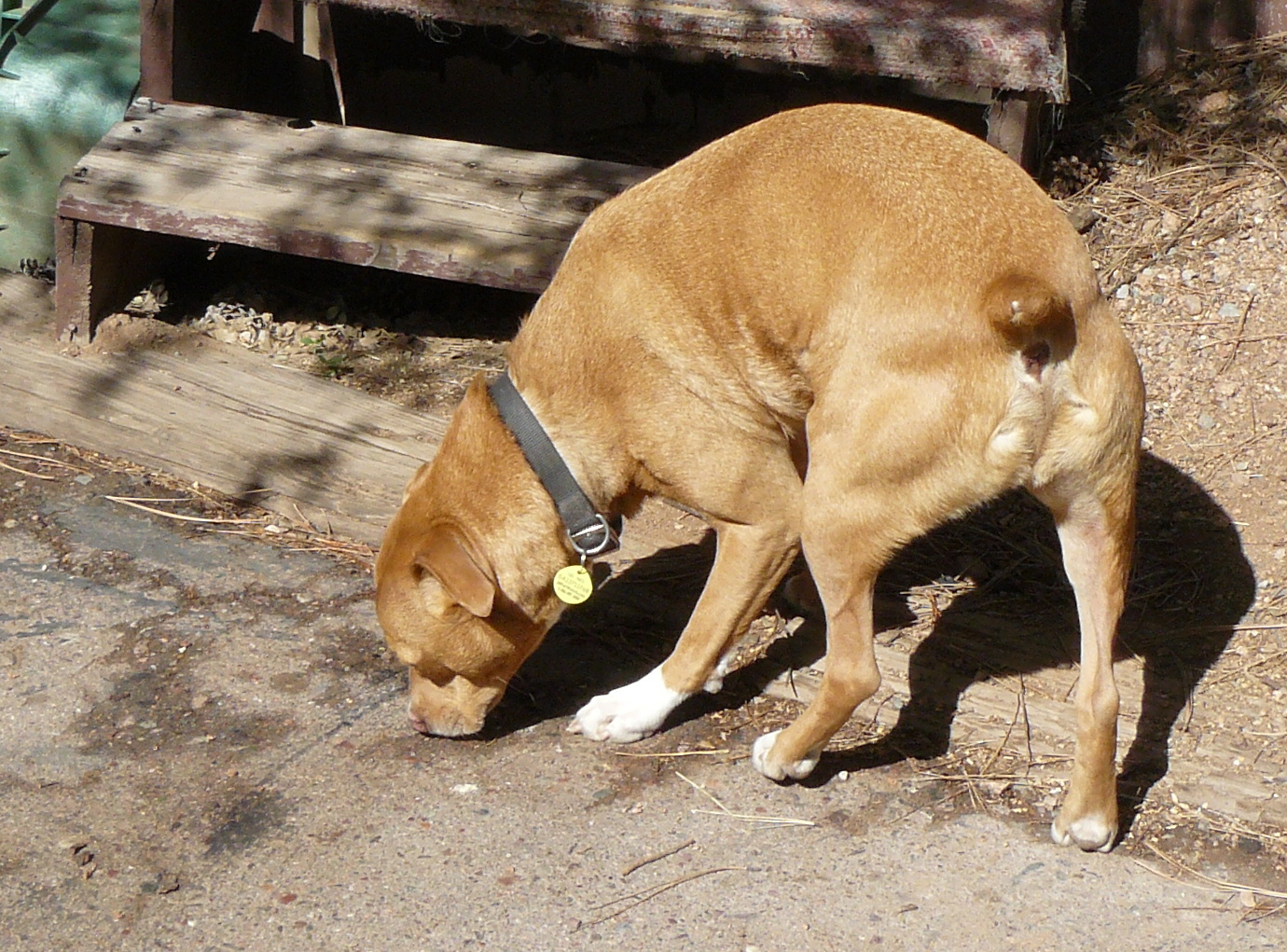
The positives and negatives of dogs being dogs.

It is our routine at home here in Oregon to let the kitchen group of dogs out first (Lily, Ruby, Casey & Paloma, with Sweeny tagging along) while Jean puts together our small breakfast.  The time is around 6am to 6:30am and both Jean and I are usually wearing dressing gowns.  Once this first group has been outside, then I let the ‘bedroom’ group out (Pharaoh, Cleo, Hazel and Dhalia).

Such as I did this morning, unusually a day starting dull with overcast cloud.

Suddenly, I heard the most awful squealing of an animal in pain over in the dense wooded area to the South-West of the property.

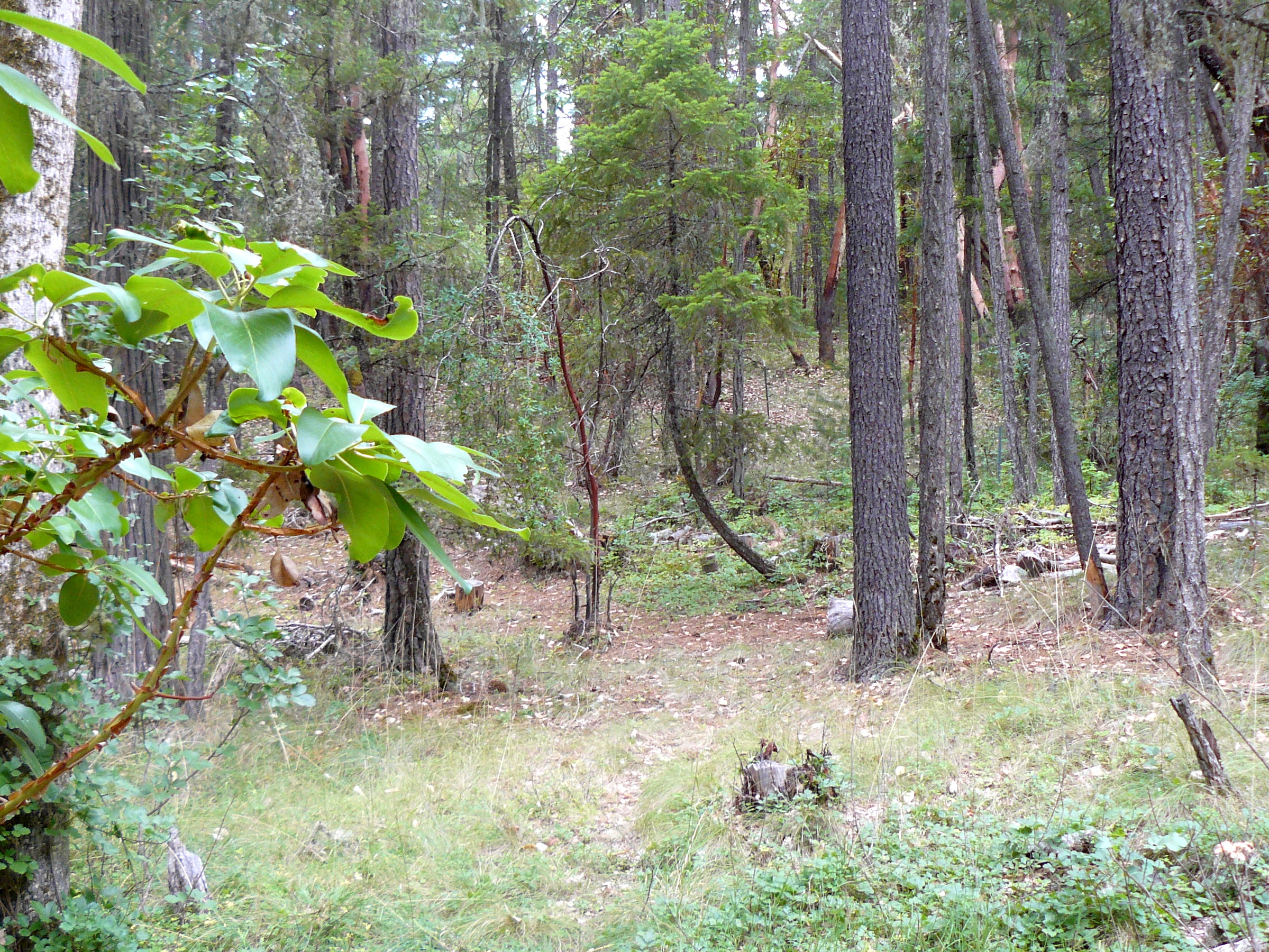
The wooded area in question.

In plastic slippers and dressing-gown only, I dashed into the woods and to my horror saw that Cleo, Hazel and Dhalia had cornered a young deer, and at least Hazel was nipping at a rear leg.

A not uncommon sight at home.

I screamed at the dogs, to no avail.  They took not the slightest notice of me.

Then the young deer wriggled free and fled into the trees.  The dogs recornered it and plunged in again.  The deer broke free again, and so it went on.  Eventually, after some ten minutes of the most dreadful hollering and chasing by me, the young deer jumped a fence and ran off with its mother who had been shadowing the terrible event.  I prayed that it wasn’t badly hurt.

Gracious, I was so angry with the dogs!  What disgusting behaviour towards this young, beautiful creature.

When I was back in the house trying to regain my breath, still so angry at the dogs, a thought came to my mind.  Tens of thousands of years ago, this behaviour of the dogs was held in great esteem.

Early man evolved from a tribal hunter-gatherer existence to the pastoral life of farming about 10,000 years ago.  If the DNA evidence shows, as it does, that the dog evolved from the wolf as a separate species around 100,000 years ago, then dogs were part of the life of hunter-gatherer man for something of the order of 90,000 years, possibly a couple of decades longer!

In fairness, the present lineage of dogs was domesticated from grey wolves only about 15,000 years ago. Despite fossil remains of domesticated dogs having been found in Siberia and Belgium from about 33,000 years ago, none of those lineages survived the Last Glacial Maximum. No fossil specimens prior to 33,000 years ago have indicated that they are clearly from the morphologically domesticated dog.

Even if, and it’s a very big ‘if’, the relationship between man and dog is only about 15,000 years old, one can only speculate how each species came to know the other, in every imaginable way.

Actually, we can go beyond speculation because in a study published by the PLOS ONE scientific journal in March 2013, Dr. Robert Losey, Associate Professor in the Department of Anthropology, University of Alberta and the lead author, explained that:

Dog burials appear to be more common in areas where diets were rich in aquatic foods because these same areas also appear to have had the densest human populations and the most cemeteries,

If the practice of burying dogs was solely related to their importance in procuring terrestrial game, we would expect to see them in the Early Holocene (around 9,000 years ago), when human subsistence practices were focused on these animals. Further, we would expect to see them in later periods in areas where fish were never really major components of the diet and deer were the primary focus, but they are rare or absent in these regions.

The PLOS ONE paper went on to report that researchers found that most of the dog burials occurred during the Early Neolithic period, some 7,000-8,000 years ago, and that “dogs were only buried when human hunter-gatherers were also being buried.

So back to the morning’s drama between the dogs and the young deer.

The efficiency of the way the dogs cornered the deer was breath-taking.  Had I not been coming at them in such a state of anger and agitation, and especially if I was one of a group of say, 2 or 3 humans, the odds are that the deer could have been grabbed and dispatched.  In other words, those three dogs had demonstrated that 20,000, 40,000, 80,000 or more years ago, they were critically useful at helping early hunter-gatherer man feed himself.

Back to Dr. Losey’s view, “I think the hunter-gatherers here saw some of their dogs as being nearly the same as themselves, even at a spiritual level. At this time, dogs were the only animals living closely with humans, and they were likely known at an individual level, far more so than any other animal people encountered. People came to know them as unique, special individuals.

Does make sense, doesn’t it.

P1130569

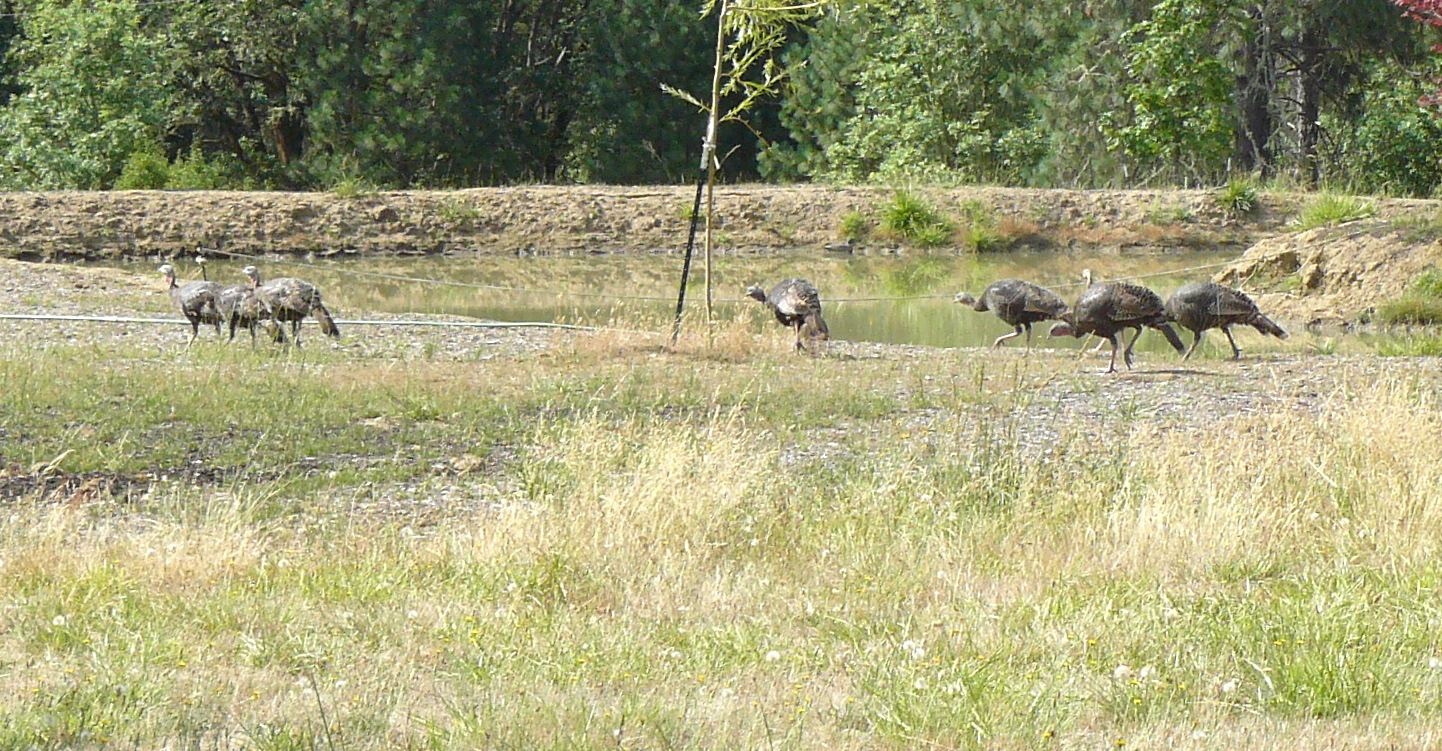
“Oh look! We could have turkey for dinner tonight!”

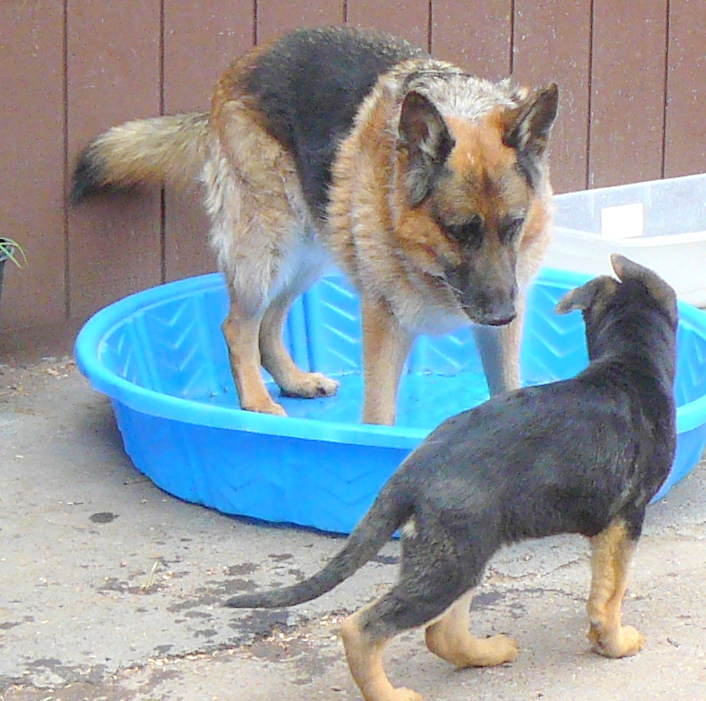
The King of dogs.

A reflection on the history of the German Shepherd dog.

Yesterday’s account of getting to know GSD Duke a little better caused me to find a post that had been sitting in my Drafts folder for a couple of years.  It was about a piece published in The New York Times, Sunday Review, October 8th, 2011 under the heading of Why German Shepherds Have Had Their Day.

Why German Shepherds Have Had Their Day

By SUSAN ORLEAN

SUCCESS can be a drag. You yearn for it, strive for it, and then, when it finally arrives, it sets off repercussions you never anticipated that sometimes undo that success.

Take the German shepherd. Originally bred to the exacting standards of a German cavalry officer, it became one of the 20th century’s most popular working breeds. But in recent years that popularity, and the overbreeding that came with it, has driven the German shepherd into eclipse: even the police in the German state of North Rhine-Westphalia, who had relied on the dogs for years, recently announced they were replacing them with Belgian Malinois, because the less-popular Malinois were hardier and more reliable.

But there is good news about this bad news, if you are a lover of the breed, because less visibility, especially in inspiring roles as public servants, is likely to mean less demand for the dogs. That means less reason to produce too many puppies, which is the best thing that can happen to any purebred dogs.

The article continued with the history of the breed.  But rather than stay with the NYT piece, for more about the breed history I’m going to cross over to the website of the British charity, German Shepherd Dog Rescue (GSDR). They have a comprehensive account of the History and Origins of the Breed.

History and Origins of the German Shepherd Dog

A brief insight into the development of the breed

blue-tudman

The German Shepherd breed appeared late at the end of the 19th century in Germany and they were first exhibited at a show in Hanover in 1882. They were not like German Shepherds as we know them today though being rough coated, short tailed and rather resembling mongrels. The German Shepherd Dog as we now know it didn’t really appear until after the Second World War.

The breed was actually created by the cross breeding of working sheep dogs from rural Germany by an ex cavalry officer called Max von Stephanitz whose aim was to create a working dog for herding which could trot for long periods.

A breed standard was drawn up and the first breed show took place in 1899 following which the GSD became firmly established across Germany. In 1906 the first dogs were exported to the USA .

Since then, the breed has grown enormously in popularity and is now one of the most popular pedigree breeds in the UK as a pet as well as being the favourite working breed for many forces, especially the police. They are widely used for security purposes because of their strong protective instincts.

Many people in the UK still call these dogs Alsatians which may partly be due to the fact that when they were first bred, the Alsace region of France, where these dogs were very popular, was part of Germany . I still get people who think that Alsatians are the traditional short coat black and tan dogs and that German Shepherds are the long coated dogs that have become popular.

GSD’s make wonderful family pets and will protect family and home.

These dogs are highly intelligent and will show undying devotion to their master but they are dogs that need company and stimulation to be at their best. It is however, important to remember that this is a working breed and that they do have certain characteristics that some people might find difficult to live with. The German Shepherd should be steady, loyal, self assured, courageous and willing and should not be nervous over aggressive or shy. Nervous aggression is something that we are now seeing more often as a result of bad breeding. It is sad but there has always been indiscriminate breeding of German Shepherds right from the start, which has lead to problems with temperament and health.

Before leaving the GSDR website, please read more about this important charity, “We are one of the longest standing and largest German Shepherd rescues in the UK.” and if there is any way at all that you can help, please, please, please!  (And fellow bloggers, consider a post spreading the word about this wonderful charity and these most magnificent of dogs.)

So a few memories of German Shepherds closer to home.

OLYMPUS DIGITAL CAMERA

Young Pharaoh 12th August, 2003 when he was just 10 weeks old.

OLYMPUS DIGITAL CAMERA

We are friends for life! Each for the other.

P1130439

Pharaoh, ten-years-old, and King of his Castle!  Taken on the 3rd June, 2013 at our home in Oregon.

P1110332

 The arrival of young Cleo!

I suspect Pharaoh is explaining to Cleo that there’s only rule of the house – his rule!

Picture taken April 7th, 2012

Little Sweeny and Cleo

From puppy to Big Dog!  Cleo resting where she shouldn’t be! February, 2013.

What magnificent animals they are!

Four years old!

How time flies!

Four years ago this day, the first post was published on Learning from Dogs.  Here it is again:

Parenting lessons from Dogs!

Much too late to make me realise the inadequacies of my own parenting skills, I learnt an important lesson when training my GSD (who is called Pharaoh, by the way).  That is that putting more emphasis into praise and reward for getting it right ‘trains’ the dog much quicker than telling it off.  The classic example is scolding a dog for running off when it should be lots of hugs and praise for returning home.  The scolding simply teaches the dog that returning home isn’t pleasant whereas praise reinforces that home is the place to be.  Like so many things in life, very obvious once understood!

Absolutely certain that it works with youngsters just the same way.

Despite being a very dominant dog, Pharaoh showed his teaching ability when working with other dogs.  In the UK there is an amazing woman, Angela Stockdale, who has proved that dogs (and horses) learn most effectively when being taught by other dogs (and horses).  Pharaoh was revealed to be a Beta Dog, (i.e. second in status below the Alpha Dog) and, therefore, was able to use his natural pack instinct to teach puppy dogs their social skills and to break up squabbles within a pack.

When you think about it, don’t kids learn much more (often to our chagrin!) from other kids than they do from their parents.  Still focusing on giving more praise than punishment seems like a much more effective strategy.

As was read somewhere, Catch them in the act of doing Right!

By Paul Handover.

As it happens, it feels a little like ‘what goes around, comes around’.  Why do I say that?

Because just last Saturday, I sent off a selection of pictures and videos to Angela Stockdale.  Stay with me for a while as to the reason why.

Angela trades under the name of The Dog Partnership and, frankly, what she doesn’t know about the behaviour of dogs isn’t worth bothering about!

Just take a peek at the page on her website under the heading of Teaching Dogs.  Here’s a little of what Angela writes:

I consider myself so lucky for dogs alone to have been my teachers. I learnt from watching how my own dogs responded to another dog’s body language and vice versa their language. Watching, learning and working with Teaching Dogs was the only way I knew.

I was and always will be in awe of a Teaching Dog’s dogs ability to consciously adapt their body language in accordance to how the other dog was feeling. The result being, they could relax nervous dogs but at the same time maintain control of a problem situation. Remember, dogs talk dog far better than we do.

It came as quite a shock to me when I learnt about other approaches. It seemed foreign for people to have so much input in resolving what were described as ‘ behavioural’ issues. For me, working with these dogs was far more than resolving a behavioural issue. It was about improving the quality of lives of dogs who were not coping with everyday life. If they found dogs or people worrying, sometimes this was shown in displays of aggression. It is important to understand, these dogs were not aggressive, they simply displayed aggressive behaviour.

Now, I would like to introduce you to the world of Teaching Dogs and how these special dogs change the lives of less fortunate dogs, who never had the opportunity to really understand how to communicate with their own species.

Do read the rest here.

Back to why those photographs and videos had been sent to Angela.  A couple of weeks ago, we enjoyed an evening meal with friends of friends, so to speak.  This other couple owned a beautiful-looking male German Shepherd dog: Duke.  Duke was 4-years-old.  Our hostess remarked that he was very boisterous and had nipped a couple of strangers who had called at the house.  She added that he seemed difficult to control.  Duke had been there for about a month and he was a rescue so they had little or no knowledge of past behaviour.

Well, I’m no expect with dogs, that’s Jean’s domain.  But there was something about Duke that captivated me.  Something in the way he looked at me, his eyes linking so directly with mine, allowing me to see a dog that offered an honest openness.

More or less on impulse I stood up, held my right arm up at 45 degrees, looked Duke in the face and said, “Duke! Sit!”

Duke held my gaze and sat back on his haunches.

I moved my arm in a complete circle, around to the right, and said, “Duke! Lie down!” Duke lay down.

H’mm, I thought. Fascinating.  This dog has been professionally trained at some point in the past, using the same ‘command’ system of voice and arm signalling as I had learnt with Pharaoh way back in 2003/2004.

The food was now on the table.  I grabbed a small piece of meat off my plate and returned to Duke who had, of course, resumed his pottering around the room.  “Duke! Here boy!”  Duke came over to me.  “Duke! Lie down!”  Duke did so.  I placed the piece of meat on the wooden floor about three feet in front of him.  Duke’s eyes were riveted on the meat.  “Duke!”  Duke’s eyes reluctantly engaged with mine.  “Duke! Stay!”  I repeated the Stay command a couple more times as I backed away about 6 or 8 feet.

“Go on, Boy. Take the meat!”  Duke gleefully grabbed the piece of meat.  Gracious, I thought, this dog is magnificent.  I wonder ……..

I took another piece of meat, “Duke! Sit!”  “Duke! Stay!”  I then backed off that 8 feet again, got down on my knees and placed the piece of meat just between my lips.  I knew this was potential madness with a dog I had only met some 30 minutes previously, but there wasn’t an ounce of doubt in my mind.  I voiced in my throat for Duke to fetch the meat. Duke came straight over and confidently and carefully removed the meat from my lips.

What a truly fabulous dog! It was a wonderful evening and once home both Jean and I were eulogising about Duke.

Then two days later, our dinner hostess rang me.  “You know, I have decided we can no longer keep Duke.  He is too strong a dog, I can’t control him.  Is there any chance of you finding a new home for Duke?”

Without question, Jean and I would have offered Duke a new home; in a heartbeat.  The only thing stopping that was me wondering if this strong-willed, male German Shepherd might be a Beta dog, as Pharaoh was. Or just might be too dominant a male dog to fit in comfortably with our dogs, especially Pharaoh who was at the stage of life where the last thing that should happen is for his happiness and contentment to be disturbed.

I hadn’t a clue as to how to answer that question.  But I knew someone who would know: Angela Stockdale.

I rang her, caught up on old times and then explained the background to Duke’s situation.  Angela said to repeat the exercise that I had witnessed when I took Pharaoh to her all those years ago, when I wondered if Pharaoh was an aggressive dog.  My uncertainty with regard to Pharaoh followed a number of times when walking him in a public area with other dogs and he had been very threatening, both in voice and posture, towards some of those other dogs.

This is what Angela arranged.  I took Pharaoh up to her place at Wheddon Cross, near Minehead in Somerset.  When we arrived, Angela was standing just by a gate into a fenced paddock, maybe a half-acre in size.  In the far corner were two dogs.

Angela asked me to bring Pharaoh to the gate and let him off the leash.  It was clear that Pharaoh was going to be let into the paddock.  I cautioned that Pharaoh could be quite a handful with other dogs and, perhaps, it would be better that I walked him into the area still on his lead.  Angela said that wouldn’t be necessary.  So as she held the gate open sufficient for Pharaoh to enter the paddock, I slipped the lead off him and backed away, as requested.

Pharaoh had hardly taken 2 or 3 paces when Angela called out, “Paul, there’s nothing wrong with him!”

I was astounded and stammered, “But, er, er, how can you tell so quickly?”  “Because my two dogs haven’t taken any notice!”, came the reply.

Later Angela explained that in the paddock were her female Alpha dog and her male Beta dog.  Ergo, the two top dogs in terms of status so far as dogs see other dogs.

In fact, Pharaoh was utterly subservient to these dogs, in a way that I had never witnessed before.  Later on, as Pharaoh relaxed and started playing, Angela said that she thought that Pharaoh was a Beta dog.  Mixing some of her other dogs into the group was later able to confirm that.

So back now to present times and Duke.

Thus last Saturday, as Angela recommended, we selected two of our dogs, Cleo our female German Shepherd and the most socialable of dogs, and Casey, a strong but not aggressive male (he had some PitBull in him).

Duke arrived and was allowed freely to nose around the large grassed area some way from the fenced-off horse paddock that we were using for the ‘introduction’.

Duke pottered around and then caught sight of Cleo and Casey in the paddock.

First sighting of Cleo and Casey.

Then the meetings began!

Hello! My name is Duke.  Do I smell OK? Mr. Casey?
Hello! My name is Duke. Do I smell OK? Mr. Casey?

And play didn’t seem to be too far off the agenda!

You lead, Cleo, I'll chase!
You lead, Cleo, I’ll chase!

So all the photographs and videos have been sent to Angela, and we will see what the conclusion is!

As Angela put it, “Remember, dogs talk dog far better than we do.”

How wonderful to have a dog.

Owning a dog really makes a measurable and positive difference to health outcomes!

Yesterday, I republished a post from October, 2010 which included the story of Ricochet.  In that post, I mentioned a graphic that had been sent to me by ZocDoc.  I had been sent an email that in part read:

Hey Paul,

I work for ZocDoc, a doctor’s appointment website (not for dogs yet!).  I just stumbled upon your blog, because you wrote about the healing power of dogs. We’ve just launched an infographic called “the healing power of dogs” and since you also have the post on your site I  thought that this should be interesting to your readership and possibly help adoption.

I hadn’t heard of the company but very quickly the About Us page explained the background.  Now in fairness, that email was all about promoting a commercial organisation.  Nevertheless, it seemed such a useful and enjoyable graphic that I agreed to publish it.

oooOOOooo

The Healing Power of Dogs.

oooOOOooo

They truly are amazing creatures.

Back to dog healing!

Yet more evidence of the healing powers of dogs.

For today, I was going to post a graphic that was sent to me recently by ZocDoc (will offer the link tomorrow).  It’s a fabulous visual reminder of just how important dogs are to humans.

But aware that this subject has been touched on before (the name of the blog rather suggests this might happen!) I was trawling through nearly 4 years of posts and came across a post first published on October 7th, 2010; Real healing power.  So presuming that many of the current readers of Learning from Dogs (big hugs to you all) will not have seen that one, here it is again.

oooOOOooo

Ricochet – just another healing dog!

Ricochet

This story has spread far and wide but, nonetheless, deserves a Post on Learning from Dogs because it is the essence of what dogs offer the world – unconditional love.

To gain the trust of a dog and enter the special relationship that humans have with dogs is to understand the significance of taking people at their face value and expect nothing in return, as dogs do.

Ricochet was born as a service dog and entered into the appropriate training. But there was a hic-cup in her learning, fortuitous as it happened and …. no, that’s enough from me. Watch it yourself ….

Now take a few minutes and understand what Ricochet and Ian McFarland demonstrated to the world.

and here’s Ricochet website.

and, well … just think what the world would be like if we all understood the power of love!

Love is the only answer


oooOOOooo

Tomorrow – How wonderful it is to have a dog in our life.

Dogs and Man: an eternity of a relationship

New research shows the beauty of the bond between dog and man.

I was doing some research for another writing project and came across this on the NBC News website:

What prehistoric dog burials tell us about owners

By Jennifer Viegas

An analysis of ancient dog burials finds that the typical prehistoric dog owner ate a lot of seafood, had spiritual beliefs, and wore jewelry that sometimes wound up on the dog.

The study, published in PLoS ONE, is one of the first to directly test if there was a clear relationship between the practice of dog burial and human behaviors. The answer is yes.

Photo - Robert Losey. The ancient dog was buried in a resting position. It was part of a study to directly test if there was a clear relationship between the practice of dog burial and human behaviors. The answer is yes.
Photo – Robert Losey.
The ancient dog was buried in a resting position. It was part of a study to directly test if there was a clear relationship between the practice of dog burial and human behaviors. The answer is yes.

That PLOS ONE study, published March 2013, found that “dog domestication predates the beginning of agriculture about 10,000 years ago.”

Dr. Losey and his dog, Guiness

Dr. Robert Losey, Associate Professor in the Department of Anthropology, University of Alberta and the lead author, explained that,

Dog burials appear to be more common in areas where diets were rich in aquatic foods because these same areas also appear to have had the densest human populations and the most cemeteries,

If the practice of burying dogs was solely related to their importance in procuring terrestrial game, we would expect to see them in the Early Holocene (around 9,000 years ago), when human subsistence practices were focused on these animals.

Robert Losey continued.

Further, we would expect to see them in later periods in areas where fish were never really major components of the diet and deer were the primary focus, but they are rare or absent in these regions.

The PLOS ONE paper went on to report that researchers found that most of the dog burials occurred during the Early Neolithic period, some 7,000-8,000 years ago, and that “dogs were only buried when human hunter-gatherers were also being buried.”  Dr. Losey went on to say,

I think the hunter-gatherers here saw some of their dogs as being nearly the same as themselves, even at a spiritual level. At this time, dogs were the only animals living closely with humans, and they were likely known at an individual level, far more so than any other animal people encountered. People came to know them as unique, special individuals.

Those interested in the research paper may find it here, and read the Abstract:

Ancient DNA Analysis Affirms the Canid from Altai as a Primitive Dog

Abstract

The origin of domestic dogs remains controversial, with genetic data indicating a separation between modern dogs and wolves in the Late Pleistocene. However, only a few dog-like fossils are found prior to the Last Glacial Maximum, and it is widely accepted that the dog domestication predates the beginning of agriculture about 10,000 years ago. In order to evaluate the genetic relationship of one of the oldest dogs, we have isolated ancient DNA from the recently described putative 33,000-year old Pleistocene dog from Altai and analysed 413 nucleotides of the mitochondrial control region. Our analyses reveal that the unique haplotype of the Altai dog is more closely related to modern dogs and prehistoric New World canids than it is to contemporary wolves. Further genetic analyses of ancient canids may reveal a more exact date and centre of domestication.

DNA testing indicates that the evolutionary split between dogs and wolves was around 100,000 years ago or more. The value of dogs to early human hunter-gatherers led to them quickly becoming ubiquitous across world cultures.

Thus it is in the order of 90,000 years, possibly a couple of decades longer, from the point where a bond was made between early man and the wolf to the era when man evolved from a tribal hunter-gatherer existence to farming the resources of the planet. Thousands and thousands of years of dogs being the greatest animal relationship we humans have ever experienced.

Back to that NBC news item:

Erik Axelsson, a researcher at Uppsala University’s Science for Life Laboratory, has also studied prehistoric dogs. He too found that human and dog diets, burial practices and more often paralleled each other, revealing how close the dog-human bond has been for thousands of years.

Axelsson said, “Dogs and humans share the same environment, we eat similar food and we get similar diseases.

Based on the number of burials, we also often spend eternity together too.

Eons of time.

A hundred, thousand years of knowing man, and it shows in the eyes.

Mid-week break.

Just ran out of time yesterday, so enjoy the following:

(Sent to me by Dan Gomez.)

DanG1

The beautiful strange-eyed kitten, taken in  Lovech, Bulgaria in the summer of 2009 by Bobby Pfeiffer.

DanG3

Zakynthos Island in Greece. The water is so clear, it looks like the boat is floating in the air.

DanG4
This is what ocean sand looks like when it’s magnified 250 times.

DanG5
California Red-Sided Garter Snake.

DanG8

Zanjeer, The Golden Labrador Who Saved Thousands Of Lives.

In March 1993, a series of 12 bombs went off across Mumbai, India. The serial blasts left 257 dead and 713 injured. But in the aftermath, an unlikely hero emerged. According to Reuters, a golden labrador named Zanjeer worked with the bomb squad and saved thousands of lives by detecting “more than 3,329 kgs of the explosive RDX, 600 detonators, 249 hand grenades and 6,406 rounds of live ammunition.” He helped avert three more bombs in the days following the blasts.

The dog died of bone cancer in 2000. He was eight years old.

In the photo, a senior police officer lays a wreath of flowers on Zanjeer as he was buried with full police honors at a widely-attended ceremony.

DanG6

The love of a woman for her horse!

The incredible story of one woman’s loyalty to her horse – she spent three hours holding its head above the tide after it got stuck in the mud on a beach in Australia.  His owner, Nicole Graham, who was enjoying an afternoon ride, stayed with him as rescuers struggled for three hours to pull him out. With moments to spare, the 500kg horse, named Astro, was freed with the help of a tractor and harness at Avalon Beach in Geelong, Victoria, Australia .

DanG7

Now this is a dog!

Kindly sent to me by Chris Snuggs.

bigdogCS

Great Dane – Giant George.

With a spot in the Guinness World Records, George weighs 245 lbs (111 kg) and consumes

over 110 lbs (50 kg) of dog kibble a month.

A new word for love – Kabang!

The story of the Philippine dog, Kabang.

This has been very widely reported but nevertheless it’s a great story about the devotion of dogs to humans, and in return, the way that so many people recognised the need for help for the badly injured dog.

Readers will recall that the dog, Kabang, suffered massive injuries back in December 2011 when she jumped into the path of a motorcycle, stopping it from running over her owner’s daughter and niece in Zamboanga, a city in the Southern Philippines.

Here’s a video that was published back in October last year that explores the circumstances of the dog’s actions and the public’s response.

“A dog who became an international cause celebre after her snout was sliced off saving two young girls in the Philippines was examined by veterinarians Thursday at UC Davis, a milestone event in a remarkable humanitarian effort to help a canine heroine.

The mixed-breed dog, named Kabang, became an unlikely star in the Philippines after she reportedly threw herself into the path of a speeding motorcycle just as it was about to hit two young girls crossing a roadway in Zamboanga City.

The lunge, by all accounts, saved the lives of the daughter and niece of Kabang’s owner, but cost the dog her snout and upper jaw, which was sheared off when she got tangled in the motorcycle’s spokes. The gruesome injury puts her in grave danger of developing an infection. At minimum, the gaping wound must be closed, a delicate procedure that is beyond the capability of veterinarians in the Philippines.”* Would you prolong your dog’s life even if it were that costly? Ana Kasparian, John Iadarola, and Jayar Jackson break it down.

Then on June 3rd, CBS Sacramento News reported:

The clinicians, staff and caregivers that treated and cared for Kabang, the snoutless mutt from the Philippines credited with saving the lives of two young girls last year. Kabang has been treated and will be heading back to the Philippines in the near future. Kabang arrived at the UC Davis Veterinary Medical Teaching Hospital on October 11, 2012 after a long journey from her native Philippines. She presented with pre-existing health conditions that significantly delayed her dental and facial surgeries. As the treatments for those conditions were successfully completed in February 2013, she proceeded on to her dental and facial surgeries in March 2013. Kabang came through both of those surgeries successfully and is currently recovering under the watchful eye of the UC Davis VMTH faculty and staff. Photo by Don Preisler/UCDavis © 2013 UC Regents
The clinicians, staff and caregivers that treated and cared for Kabang, the snoutless mutt from the Philippines credited with saving the lives of two young girls last year. Kabang has been treated and will be heading back to the Philippines in the near future.
Kabang arrived at the UC Davis Veterinary Medical Teaching Hospital on October 11, 2012 after a long journey from her native Philippines. She presented with pre-existing health conditions that significantly delayed her dental and facial surgeries. As the treatments for those conditions were successfully completed in February 2013, she proceeded on to her dental and facial surgeries in March 2013. Kabang came through both of those surgeries successfully and is currently recovering under the watchful eye of the UC Davis VMTH faculty and staff.
Photo by Don Preisler/UCDavis
© 2013 UC Regents

DAVIS (CBS13) – Kabang, the Philippine dog that suffered a severely injured snout and upper-jaw while saving two girls from being hit by a motorcycle, has been released from the hospital.

The dog was brought to the veterinary medicine teaching hospital at UC Davis in October 2012 to be treated for the injury that left her with a gaping wound where her snout had been. But veterinarians found she had heartworm disease and a type of infectious cancer. A team of UC Davis veterinarians specializing in oncology; infectious diseases; dental, oral and soft-tissue surgery; internal medicine; and outpatient care was assembled to treat Kabang, according to the UC Davis News Service.

“We were able to treat all of the complications that arose with the best specialists available,” Verstraete said Professor Frank Verstraete, chief of the hospital’s dentistry and oral surgery service.

Finally, a video of Kabang’s return home.