Category: Musings

Balance!

It is one of many things that deteriorate with age!

Jeannie and I go to the Club Northwest locally in Grants Pass twice a week. It is a local gym. Jean goes to her Rock Steady class and I see a coach. Both of us spend time ensuring our balance is as good as it can be. For me that consists primarily of spending a minute standing on each leg on a vibrating platform; it is not easy.

So for all the more elderly people out there, here is an article that was recently published on The Conversation.

ooOOoo

Balance declines with age, but exercise can help stave off some of the risk of falling

Published: May 19, 2023

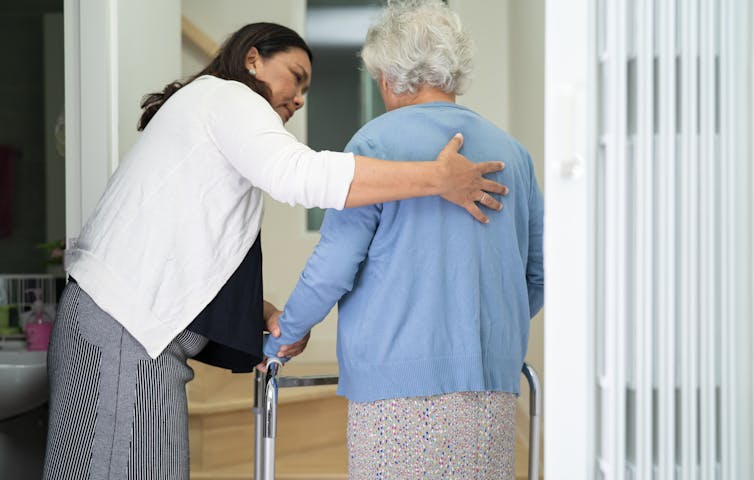
About 1 in 4 adults ages 65 and up experience a fall every year. sasirin pamai/iStock via Getty Images Plus

Evan Papa, Tufts University

My wife and I were in the grocery store recently when we noticed an older woman reaching above her head for some produce. As she stretched out her hand, she lost her balance and began falling forward. Fortunately, she leaned into her grocery cart, which prevented her from falling to the ground.

Each year, about 1 in every 4 older adults experience a fall. In fact, falls are the leading cause of injuries in adults ages 65 and older. Falls are the most common cause of hip fractures and traumatic brain injuries.

Injuries like those are also risk factors for placement in a nursing home, where the fall risk is nearly three times higher than for people living in the community.

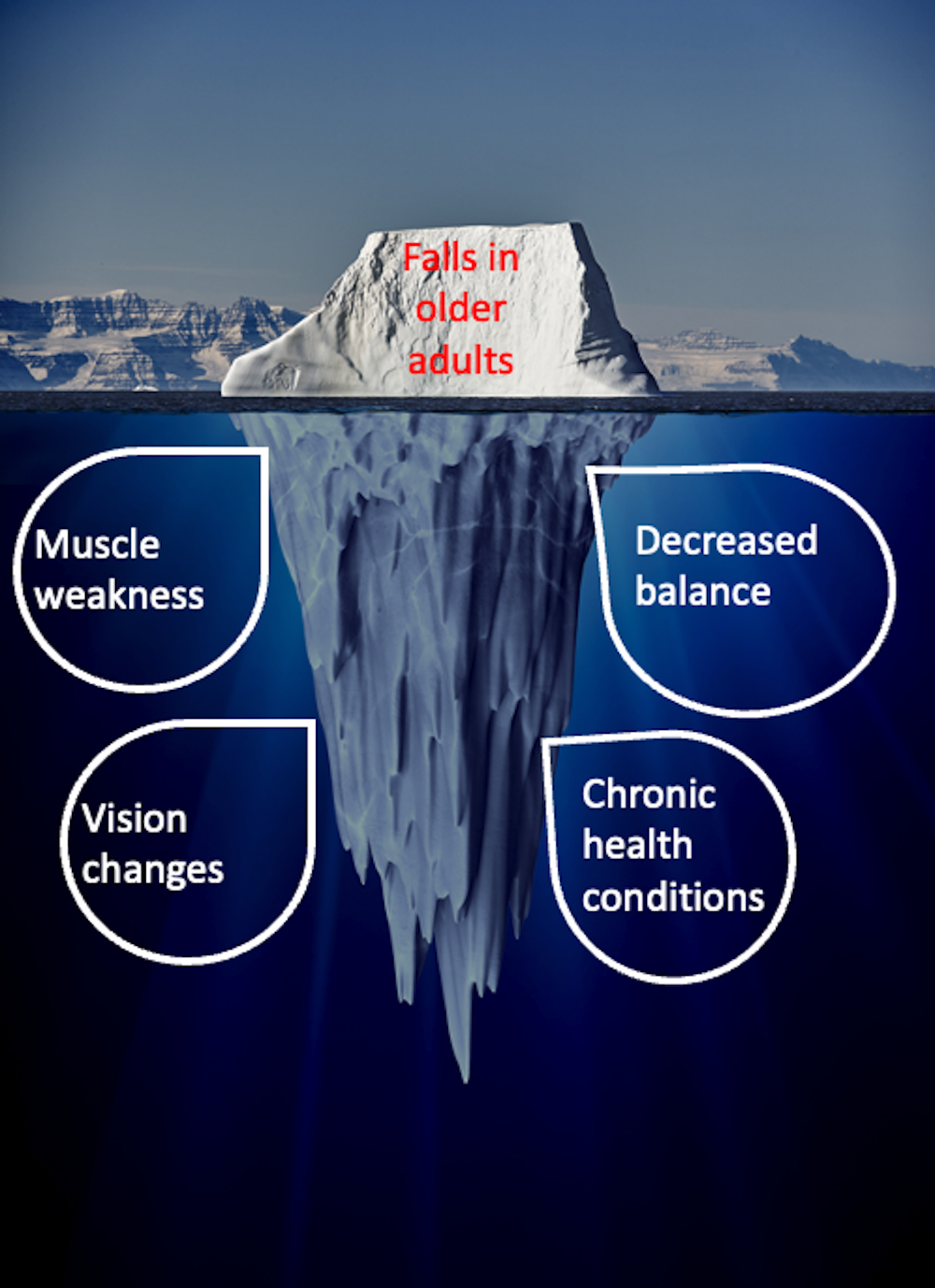
A number of physical changes with aging often go unseen preceding falls, including muscle weakness, decreased balance and changes in vision.

I am a physical therapist and clinical scientist focused on fall prevention in older adults, commonly ages 65 and older. I’ve spent most of my career investigating why older adults fall and working with patients and their families to prevent falls.

Why aging leads to increased risk of falls

Aging is a process that affects the systems and tissues of every person. The rate and magnitude of aging may be different for each person, but overall physical decline is an inevitable part of life. Most people think aging starts in their 60s, but in fact we spend most of our life span undergoing the process of decline, typically beginning in our 30s.

Older adults are more prone to falling for various reasons, including age-related changes in their bodies and vision changes that leave them vulnerable to environmental factors such as curbs, stairs and carpet folds.

Some straightforward measures to improve the safety of the home environment for older adults can significantly lower the risk of falls.

Based on my experience, here are some common reasons older adults may experience falls:

First, aging leads to a natural loss of muscle strength and flexibility, making it more challenging to maintain balance and stability. The loss of strength and poor balance are two of the most common causes of falls.

Second, older adults often have chronic conditions such as arthritis, Parkinson’s disease or diabetes that can affect their mobility, coordination and overall stability.

In addition, certain medications commonly taken by older adults, such as sedatives or blood pressure drugs, can cause dizziness, drowsiness or a drop in blood pressure, leading to an increased risk of falls.

Age-related vision changes, such as reduced depth perception and peripheral vision and difficulty in differentiating colors or contrasts, can make it harder to navigate and identify potential hazards. Hazards in the environment, such as uneven surfaces, slippery floors, inadequate lighting, loose rugs or carpets or cluttered pathways, can significantly contribute to falls among older adults.

Older adults who lead a sedentary lifestyle or have limited physical activity may also experience reduced strength, flexibility and balance.

And finally, such conditions as dementia or Alzheimer’s disease can affect judgment, attention and spatial awareness, leading to increased fall risk.

Illustration of an iceberg underwater and just partially showing above water, annotated with a few of the age-related changes that can increase fall risk.
Falls reflect age-related changes happening under the surface. Annotated by Evan Papa via iStock/Getty Images

Theories of aging

There are numerous theories about why we age but there is no one unifying notion that explains all the changes in our bodies. A large portion of aging-related decline is caused by our genes, which determine the structure and function of bones, muscle growth and repair and visual depth perception, among other things. But there are also numerous lifestyle-related factors that influence our rate of aging including diet, exercise, stress and exposure to environmental toxins.

A recent advance in scientific understanding of aging is that there is a difference between your chronological age and your biological age. Chronological age is simply the number of years you’ve been on the Earth. Biological age, however, refers to how old your cells and tissues are. It is based on physiological evidence from a blood test and is related to your physical and functional ability. Thus, if you’re healthy and fit, your biological age may be lower than your chronological age. However, the reverse can also be true.

I encourage patients to focus on their biological age because it empowers them to take control over the aging process. We obviously have no control over when we are born. By focusing on the age of our cells, we can avoid long-held beliefs that our bodies are destined to develop cancer, diabetes or other conditions that have historically been tied to how long we live.

And by taking control of diet, exercise, sleep and other lifestyle factors you can actually decrease your biological age and improve your quality of life. As one example, our team’s research has shown that moderate amounts of aerobic exercise can slow down motor decline even when a person begins exercise in the latter half of the life span.

Fall prevention

Adopting lifestyle changes such as regular, long-term exercise can reduce the consequences of aging, including falls and injuries. Following a healthy diet, managing chronic conditions, reviewing medications with health care professionals, maintaining a safe home environment and getting regular vision checkups can also help reduce the risk of falls in older adults.

There are several exercises that physical therapists use to improve balance for patients. It is important to note however, that before starting any exercise program, everyone should consult with a health care professional or a qualified physical therapist to determine the most appropriate exercises for their specific needs. Here are five forms of exercise I commonly recommend to my patients to improve balance:

  1. Balance training can help improve coordination and proprioception, which is the body’s ability to sense where it is in space. By practicing movements that challenge the body’s balance, such as standing on one leg or walking heel-to-toe, the nervous system becomes better at coordinating movement and maintaining balance. A large research study analyzing nearly 8,000 older adults found that balance and functional exercises reduce the rate of falls by 24%.
  2. Strength training exercises involve lifting weights or using resistance bands to increase muscle strength and power. By strengthening the muscles in the legs, hips and core, older adults can improve their ability to maintain balance and stability. Our research has shown that strength training can also lead to improvements in walking speed and a reduction in fall risk.
  3. Tai chi is a gentle martial art that focuses on slow, controlled movements and shifting body weight. Research shows that it can improve balance, strength and flexibility in older adults. Several combined studies in tai chi have demonstrated a 20% reduction in the number of people who experience falls.
  4. Certain yoga poses can enhance balance and stability. Tree pose, warrior pose and mountain pose are examples of poses that can help improve balance. It’s best to practice yoga under the guidance of a qualified instructor who can adapt the poses to individual abilities.
  5. Flexibility training involves stretching the muscles and joints, which can improve range of motion and reduce stiffness. By improving range of motion, older adults can improve their ability to move safely and avoid falls caused by limitations in mobility.
  6. Use of assistive devices can be helpful when strength or balance impairments are present. Research studies involving the evaluation of canes and walkers used by older adults confirm that these devices can improve balance and mobility. Training from a physical or occupational therapist in the proper use of assistive devices is an important part of improving safety.

When I think back about the woman who nearly fell in the grocery store, I wish I could share everything we have learned about healthy aging with her. There’s no way to know if she was already putting these tips into practice, but I’m comforted by the thought that she may have avoided the fall by being in the right place at the right time. After all, she was standing in the produce aisle.

Evan Papa, Associate Professor of Physical Therapy and Rehabilitation Science, Tufts University

This article is republished from The Conversation under a Creative Commons license. Read the original article.

ooOOoo

Reading this article reminds me that Bruce, my coach at the Club Northwest, also has me walking toe-to-heel; with my eyes fully open, then blinking rapidly and then with my eyes closed. Plus I go bike riding as often as I can.

This getting old lark really sucks!

    Picture Parade Four Hundred and Eighty-Six

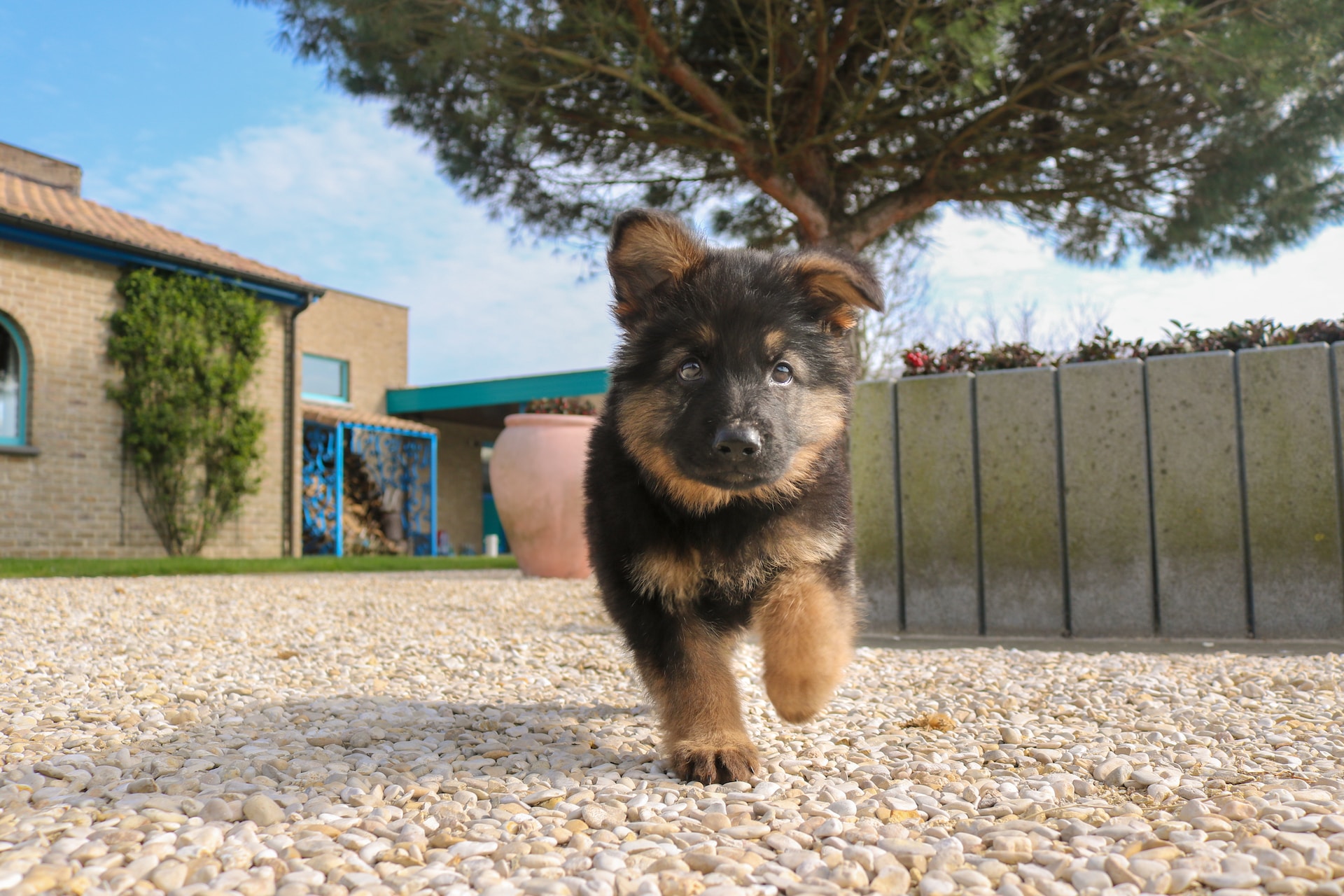
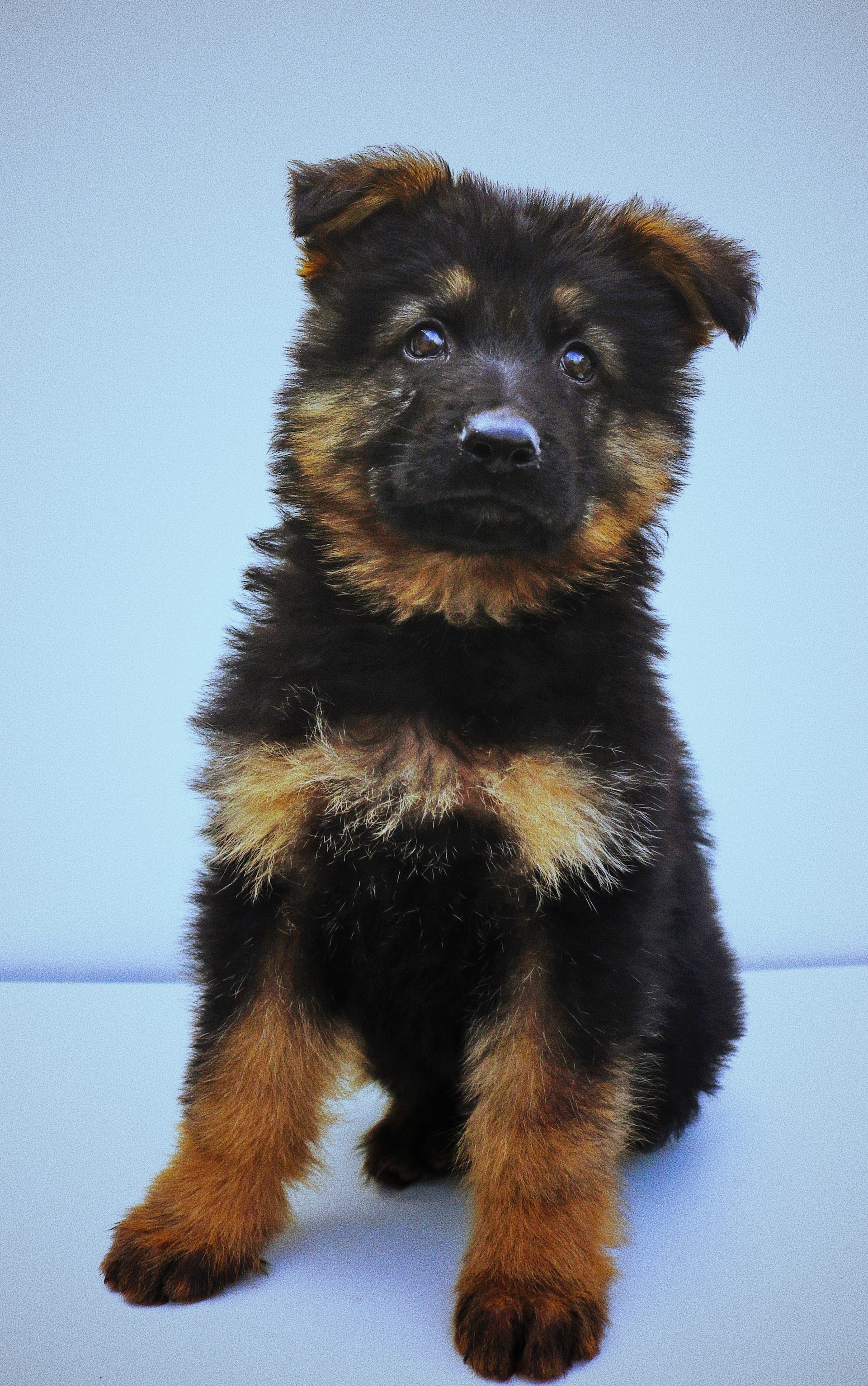
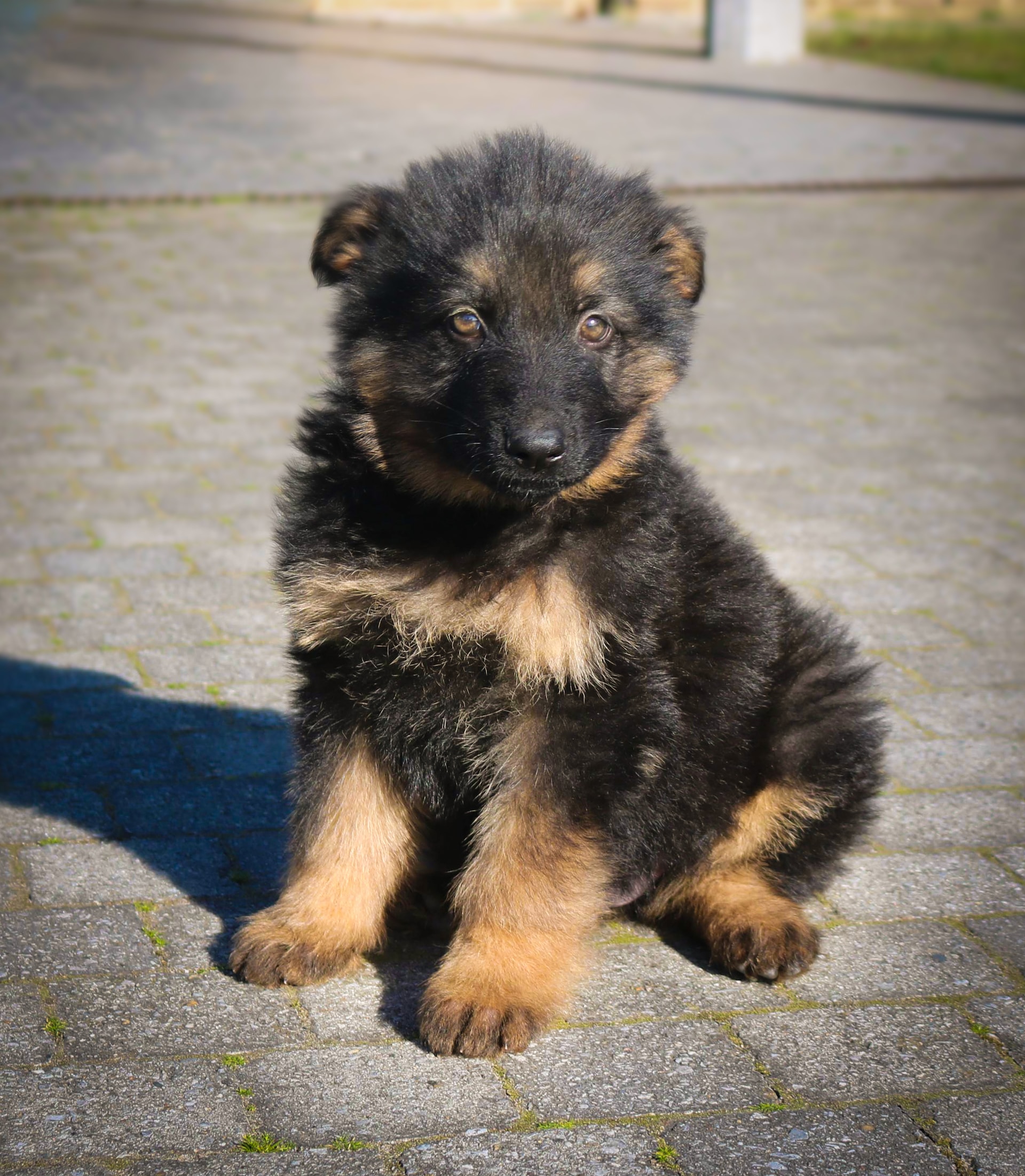
    More German Shepherds from Unsplash.

    oooo

    oooo

    oooo

    oooo

    oooo

    oooo

    oooo

    oooo

    Quite a few puppies, as you can see!

    The communication between dogs and humans.

    A tremendous guest post from Raphael Wildcom.

    Raphael was in contact with me asking whether I had any ideas of a subject that could be written about. I replied that it would be lovely to have a post about the way that dogs understand us humans. The following is the result, and it is great!

    ooOOoo

    Building Bridges: How Dogs Understand Humans and How We Can Improve Our Communication with Them

    By Raphael Wildcom.

    Dogs have been our faithful companions for thousands of years, and during that time, they have evolved to become incredibly attuned to human emotions and communication. Their ability to understand us and our ability to communicate with them has led to a unique bond between our two species. 

    In this article, we will explore how dogs understand humans and offer some tips on how we can improve our communication with our canine friends.

    How Dogs Understand Humans

    1. Body language

    One of the most crucial ways dogs interpret our emotions and intentions is through our body language. Dogs are highly perceptive when it comes to noticing our posture, eye contact, and movements. They can sense if we are relaxed or tense and often respond accordingly. 

    Photo from Pexels.com

    For example, a cute Shiba Inu puppy might approach a person exhibiting relaxed body language while avoiding someone who appears tense or stressed.

    1. Facial expressions

    Dogs are remarkably adept at recognizing human facial expressions. Research has shown that they can distinguish between expressions of happiness, sadness, and anger, among others. This ability allows them to adjust their behavior depending on our emotional state.

    1. Vocalizations

    Although dogs may not understand the specific words we use, they are incredibly sensitive to the tone and pitch of our voices. They can pick up on the emotional content of our speech, which helps them gauge our emotions and intentions. For example, a dog might become excited when they hear a high-pitched, happy voice or become submissive when they hear a low, stern voice.

    1. Training and commands

    Dogs can learn to associate specific words or gestures with actions or objects through training and repetition. This ability allows them to respond to our commands and communicate with us effectively. For example, a dog might learn to sit when they hear the word “sit” or see a specific hand signal.

    1. Scent and pheromones

    Dogs possess an extraordinary sense of smell, and they can pick up on subtle changes in our body odor, which may be indicative of our emotional state. For example, a dog might be able to detect the scent of stress-related hormones and respond accordingly.

    1. Social cues

    Dogs are skilled at observing and interpreting social cues within a group or family. They understand relationships between people and often respond to the social hierarchy within the household. For example, a dog might defer to the person they perceive as the leader of the family.

    Improving Communication with Your Dog

    1. Be consistent

    Consistency is key when it comes to communicating with your dog. Use the same words, tone, and gestures for specific commands, and make sure all family members are on the same page. This consistency will help your dog understand what you expect from them and make it easier for them to respond correctly.

    1. Use positive reinforcement

    Reward your dog with praise, treats, or playtime when they respond correctly to a command or exhibit desirable behavior. Positive reinforcement is an effective way to strengthen your communication with your dog and encourage them to repeat the desired behavior in the future.

    1. Pay attention to your dog’s body language

    Learn to recognize the subtle signs your dog uses to communicate their emotions and intentions. By understanding their body language, you can respond more effectively to their needs and create a stronger bond.

    1. Be patient and persistent

    Training and effective communication with your dog takes time and effort. Be patient, and understand that your dog may need repetition and practice to grasp new commands or break old habits. Persistence and consistency will pay off in the long run.

    1. Learn from the experts

    Consider enrolling in a dog training class, consulting with a professional dog trainer, or reading books on dog behavior and training to improve your communication skills and understanding of your dog’s needs.

    1. Socialize your dog

    Expose your dog to various people, animals, environments, and situations from an early age. Socialization helps your dog become more comfortable in different settings and makes them better equipped to understand and respond to different cues from humans and other animals. Well-socialized dogs are generally more confident, adaptable, and better communicators.

    1. Develop a routine

    Dogs thrive on routines, as they provide structure and predictability. Establish a daily routine for feeding, walks, playtime, and rest. A consistent routine helps your dog feel secure and makes it easier for them to understand your expectations.

    1. Be aware of your own body language and emotions

    Remember that your dog is constantly observing you and responding to your body language and emotions. Be mindful of the signals you send through your posture, facial expressions, and tone of voice. By being aware of your own non-verbal communication, you can create a more harmonious and effective relationship with your dog.

    1. Use clear and simple commands

    When giving your dog a command, use clear, simple words or gestures that are easy for them to understand. Avoid using multiple words for the same command or giving commands when you are angry or frustrated, as this can confuse your dog and hinder communication.

    1. Engage in interactive play and training

    Spend time playing with your dog and engaging them in activities that challenge their mind and body. Interactive play and training sessions can strengthen your bond, improve communication, and provide mental stimulation for your dog.

    Conclusion

    By understanding how dogs interpret our emotions and intentions and implementing strategies to improve communication, we can forge an even stronger bond with our canine companions. This deeper connection not only enhances our relationship with our dogs but also contributes to their overall well-being and happiness. 

    With patience, consistency, and a commitment to understanding each other, we can continue to enjoy the unique and enriching bond that humans and dogs have shared for thousands of years.

    ooOOoo

    This article is such great advice. Thank you very much, Raphael.

    I am sure I am not the only one that would love to have more articles from Raphael.

    Journalism.

    A start to a fascinating programme on BBC Radio 4.

    Yesterday morning (Oregon time) had me listening to a new series on BBC Sounds. It was Frontlines of Journalism. Here is what the Beeb had to say about it:

    Released On: 27 Feb 2023

    Available for over a year

    In the spring of 2023, twenty years after the Americans, the British and their allies invaded to overthrow Saddam Hussein, BBC International Editor Jeremy Bowen was reporting from Iraq for the BBC. He described the invasion as ‘a catastrophe’. Taking you to some of the most difficult stories Jeremy and other journalists have covered; in this episode – why impartiality is not about trying to get perfect balance, the truth lying somewhere in the middle.  Often it does not.   Jeremy speaks with: journalist Rana Rahimpour who was born in Iran but left when she was 25 to work for the BBC; former BBC bureau chief Milton Nkosi, who grew up under apartheid in Soweto, South Africa; journalist and environmentalist George Monbiot, and CNN’s Chief International Anchor Christiane Amanpour.

    Presenter: Jeremy Bowen Producer: Georgia Catt Assistant Producer: Sam Peach Additional research: Rob Byrne Series mixing: Jackie Margerum Series Editor: Philip Sellars.

    But in wanting to present a little more to you readers, I did some research on the topic and came across this article published by the Reuters Institute at the University of Oxford. I cannot see a warning about not sharing this with you.

    ooOOoo

    Impartiality is still key for news audiences. Here’s how to rethink it for the digital age

    Our research shows people still value the ideal of impartial news. A new report offer suggestions to adapt it to a challenging environment.

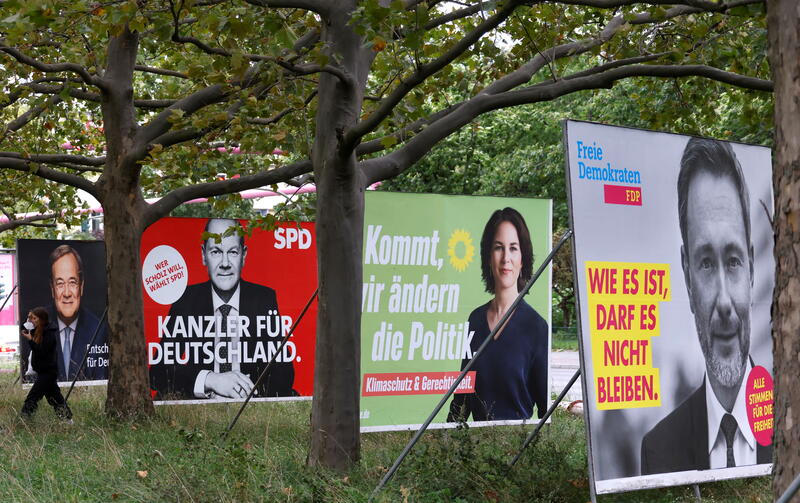
    Election posters of Germany’s top candidates for chancellor.
    September 16, 2021. REUTERS/Fabrizio Bensch

    Nic Newman

    Tuesday 19 October 2021

    Most people agree that news organisations and journalists should reflect all sides of an issue and not push a particular agenda – at least when asked about it in surveys. Our 2021 Digital News Report finds this to be true across countries and age groups

    However, many people feel that the media often fail to live up to this ideal. Our surveys consistently show that committed partisans believe that traditional media coverage is unfair, especially in countries where debates about politics or social justice have become deeply polarised. In recent years we’ve also seen an increase in opinion-led television formats such as Fox News/MSNBC in the United States, GB News in the UK and CNews in France, while many traditional print publications have focussed on distinctive and robust opinion as a way of standing out online.

    Together with the growth of partisan websites, YouTubers and podcasters, audiences now have access to a wider range of views than ever before. Against this background, some have questioned traditional approaches to impartiality that try to represent all points of view within a single broadcast or publication. Other critics go further – arguing that impartiality has given extreme or unrepresentative views undue prominence, through its focus on balance, helping to legitimise climate change deniers and anti-vaxxers amongst others.

    This all raises the question: how relevant is impartial and objective journalism to audiences today? The Reuters Institute commissioned market research company JV Consulting to carry out qualitative research in four countries – Brazil, Germany, the UK, and the US – with different news markets, traditions of public broadcasting, and systems of media regulation. They conducted a series of focus groups and in-depth interviews on our behalf in February and March 2021 with politically and ethnically diverse groups of older and younger people interested in and engaged with news (52 people in total).

    These are some of the key findings of the report:

    • Engaged audiences in the four countries researched still care about impartiality and say it helps define news, even if some consider it an impossible ideal. They want journalists to focus on facts, objectivity and fairness, and to steer clear of opinions and bias in reporting, leaving them to decide for themselves how they feel about the news. Alongside accuracy, impartiality is a foundational value of news that underpins audiences’ trust.
    • People recognise the risk of giving exposure to extreme views or one side in the name of balance. However, evidence from this group of engaged users is that they are even more concerned about the suppression and silencing of viewpoints. There are particular misgivings about this in Brazil and Germany, where twentieth century history frames some people’s views.
    • Most participants recognise that there were some topics (e.g., science stories, natural disasters, and questions of social justice) where there were not always two or more sides to represent. Here, many felt there should be more latitude for journalists to present just one perspective or an established point of view. There are also expectations that journalists will show greater empathy and connection in their reporting than perhaps traditional interpretations of impartiality have allowed in the past.
    • Across countries, newer digital formats such as social media are perceived as carrying more risk of bias along with the growth of more informal and entertaining broadcast formats such as chat shows and podcasts. Impartiality is more vulnerable in these contexts, as well as when the news is emotive or controversial, because journalists’ personal views risk slipping out in the impulse to engage, although the subject and intention have a bearing on how audiences feel about this.
    • Younger people, who have grown up using more informal and digital sources, tend to have different expectations of impartiality, often looking for journalism that aligns with their values. But overall, their underlying attitudes and desires are remarkably similar to older people’s.
    • Different countries’ news traditions shape people’s experiences and expectations. Audiences in the US cannot envisage a world without partisan news outlets, but in the UK and Germany, with their public service traditions, most audiences still laud the upholding of impartiality.
    • Respondents also delineate between news reporting (where impartiality is expected) and opinion/commentary (where people expect that views are argued for). Importantly, many told us that they often find it difficult to distinguish between the two, especially online. Interviewees like news and they like opinion, but want them very clearly separated. 

    It is important to recognise that not all news organisations are committed to impartiality: indeed, some make a virtue of creating news and opinion with a clear point of view. But most will want to take note of audience desires for a range of views to be represented and to see clearer labelling of news and opinion. For news organisations that are committed to impartiality, the report highlights the increased dangers in areas where journalism is more informal or accessed in distributed environments. Public media like the BBC have already embarked on updated training and issued new guidelines on these issues. Audiences have also sent a clear signal in this report that they would like much greater transparency over why certain perspectives are included or excluded, however difficult this may be in practice.

    Finally, the report notes that given the importance of social media, search and other access points, technology platforms such as Facebook, Google and Apple, will also need to develop clearer guidelines on impartiality – as their own trust levels will depend on fair implementation of policies around inclusion and exclusion, whether by algorithm or human intervention.

    Download the full report

    ooOOoo

    Now this isn’t everyone’s cup of tea but when one thinks of the enormous amount of news and information one gathers from the television, the radio, the press and a wide variety of online sources then thinking a little more about the truth of what we are being told is crucial to us making wise decisions. including voting where appropriate.

    People still value the ideal of impartial news; there is no question about that!

    Memories of Pharaoh

    What a wonderful relationship it has been.

    (This post was drafted back in 2020 and, for whatever reason, never got published, until today! Pharaoh, of course, is no longer with us)

    Years ago if I was ever to own a dog, it had to be one breed and one breed only: a German Shepherd Dog.

    The reason for this was that back in 1955 my father and mother looked after a German Shepherd dog called Boy.  Boy belonged to a lovely couple, Maurice and Marie Davies.  They were in the process of taking over a new Public House (Pub); the Jack & Jill in Coulsdon, Surrey.  My father had been the architect of the Jack & Jill.

    Jack & Jill, Longlands Avenue, Coulsdon, Surrey
    Jack & Jill, Longlands Avenue, Coulsdon, Surrey

    As publicans have a tough time taking holidays, it was agreed that the move from their old pub to the Jack & Jill represented a brilliant opportunity to have that vacation.  My parents offered to look after Boy for the 6 weeks that Maurice and Marie were going to be away.

    Boy was the most gentle loveable dog one could imagine and I quickly became devoted to him; I was 11 years old at the time.  So when years later it seemed the right time to have a dog, there was no question about the breed.  Boy’s memory lived on all those years, and, as this post reveals, still does!

    Pharaoh was born June 3rd, 2003 at Jutone Kennels up at Bovey Tracy, Devon, on the edge of Dartmoor.  As the home page of the Jutone website pronounces,

    The Kennel was established in 1964 and it has always been the aim to breed the best German Shepherd Dogs for type and temperament. To this end the very finest German bloodlines are used to continue a modern breeding programme.

    and elsewhere on that website one learns:

    Jutone was established by Tony Trant who was joined by Sandra Tucker in 1976. Sandra continues to run Jutone since Tony passed away in 2004. Both Tony and Sandra qualified as Championship Show judges and Sandra continues to judge regularly. Sandra is the Secretary and a Life Member of the German Shepherd Dog Club of Devon.

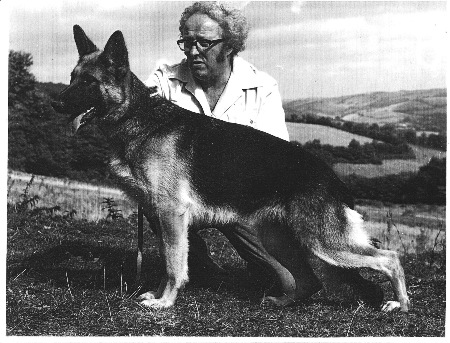
    Tony Trant

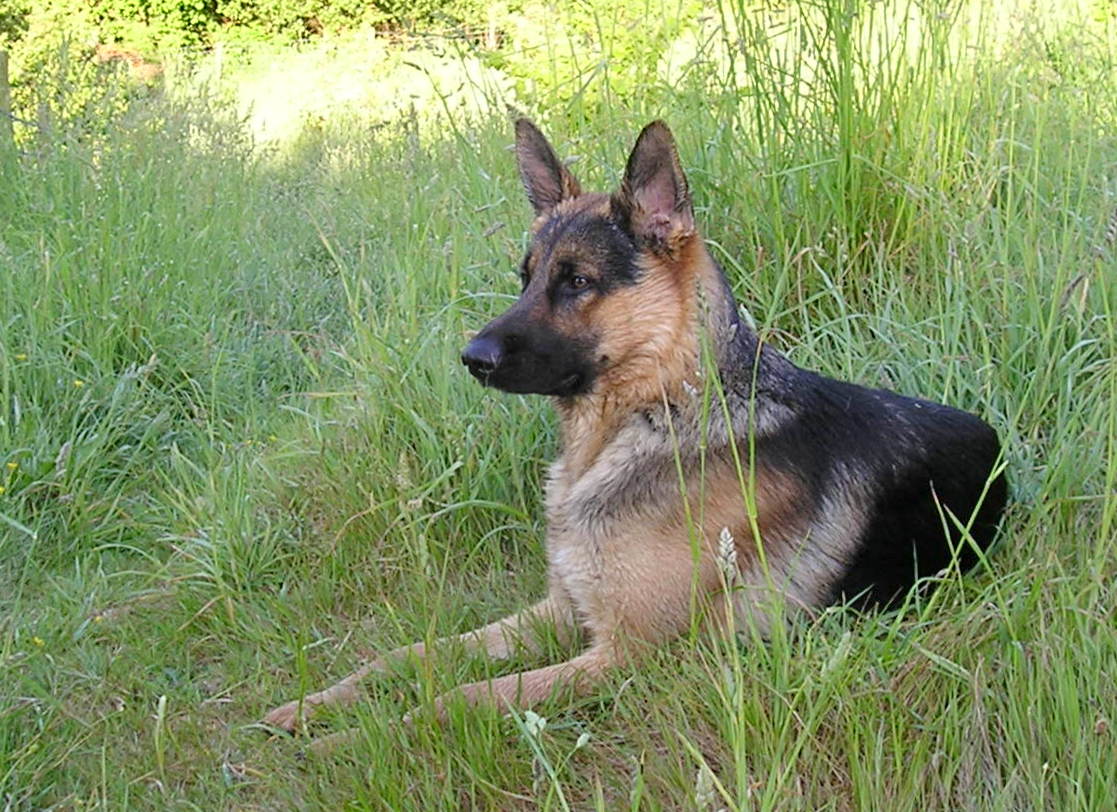
    Turning to Pharaoh, here are a few more pictures over the years.

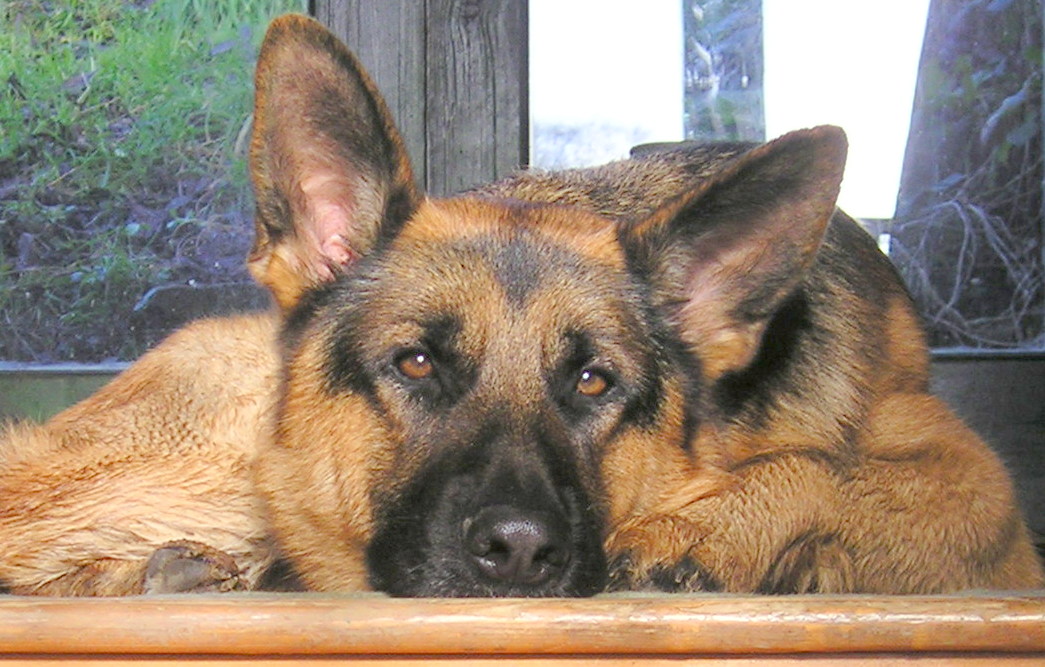
    Pharaoh, nine months old.

    oooo

    One year old: June 3rd 2004.

    The next picture of Pharaoh requires a little background information.

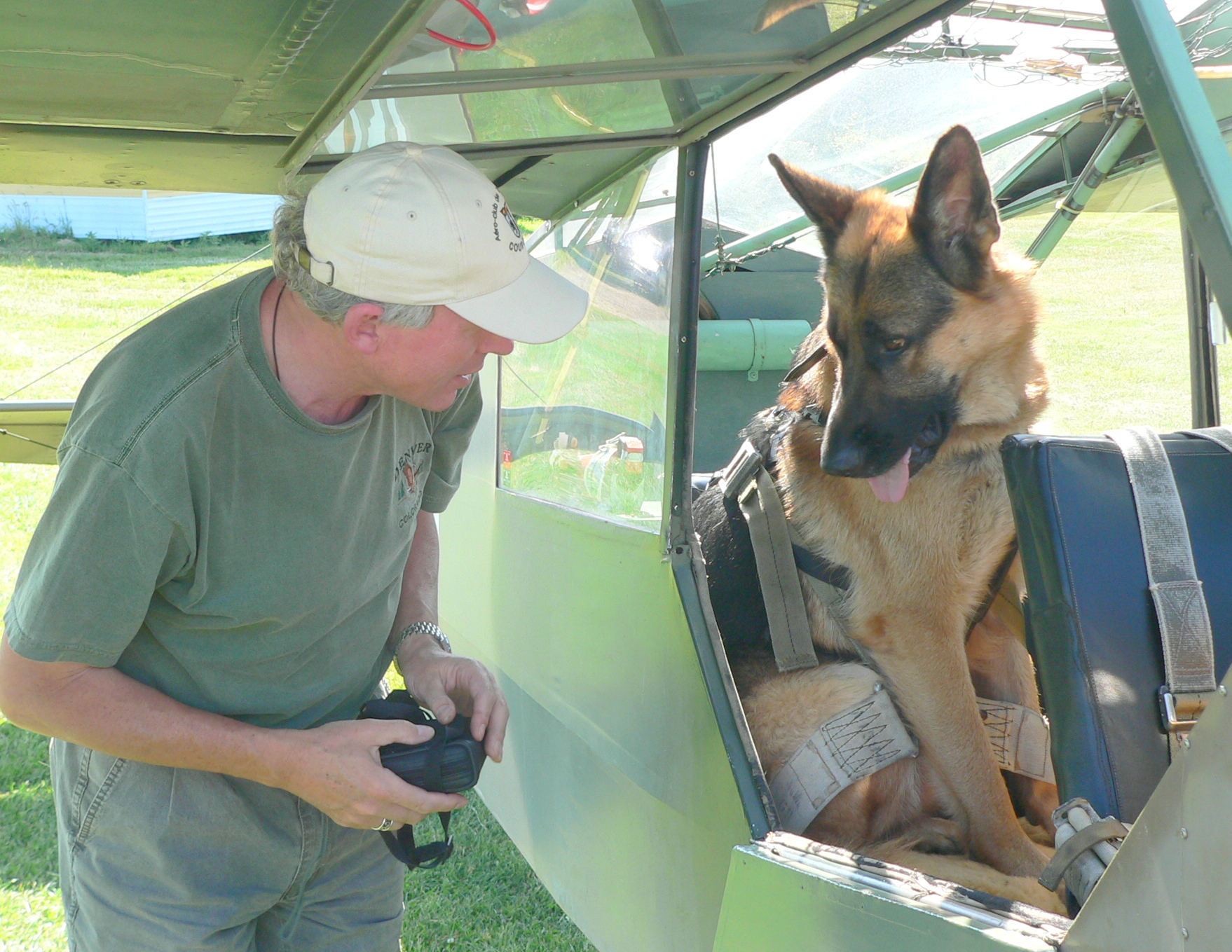
    For many years I was a private pilot and in later days had the pleasure, the huge pleasure I must say, of flying a Piper Super Cub which is a group-owned aircraft based at Watchford Farm in South Devon.  The aircraft, a Piper PA-18-135 Super Cub, was originally supplied to the Dutch Air Force in 1954 and was permitted by the British CAA to carry her original military markings including her Dutch military registration, R-151, although there was a British registration, G-BIYR, ‘underneath’ the Dutch R-151.  (I wrote more fully about the history of the aircraft on Learning from Dogs back in August 2009.)

    Piper Cub R151

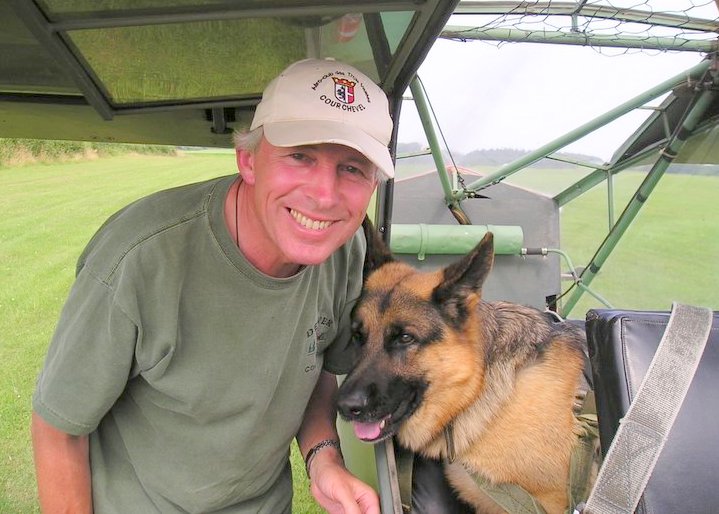
    Anyway, every time I went to the airfield with Pharaoh he always tried to climb into the cockpit.  So one day, I decided to see if he would sit in the rear seat and be strapped in.  Absolutely no problem with that!

    Come on Dad, let's get this thing off the ground!

    My idea had been to fly a gentle circuit in the aircraft.  First I did some taxying around the large grass airfield that is Watchford to see how Pharaoh reacted.  He was perfectly behaved.

    Then I thought long and hard about taking Pharaoh for a flight.  In the Cub there is no autopilot so if Pharaoh struggled, or worse, it would have been almost impossible to fly the aircraft and cope with Pharaoh.  So, in the end, I abandoned taking him for a flight.  The chances are that it would have been fine.  But if something had gone wrong, the outcome just didn’t bear thinking about.

    So we ended up motoring for 30 minutes all around the airfield which, as the next picture shows, met with doggie approval.  The date was July 2006.

    That was fun, Dad!

    What a dear dog he has been over all the years!

    As if to reinforce the fabulous dog he still is, yesterday it was almost as though he knew he had to show how youthful he still was.

    Because, when I took his group of dogs out around 7.30am armed with my camera, Pharaoh was brimming over with energy.

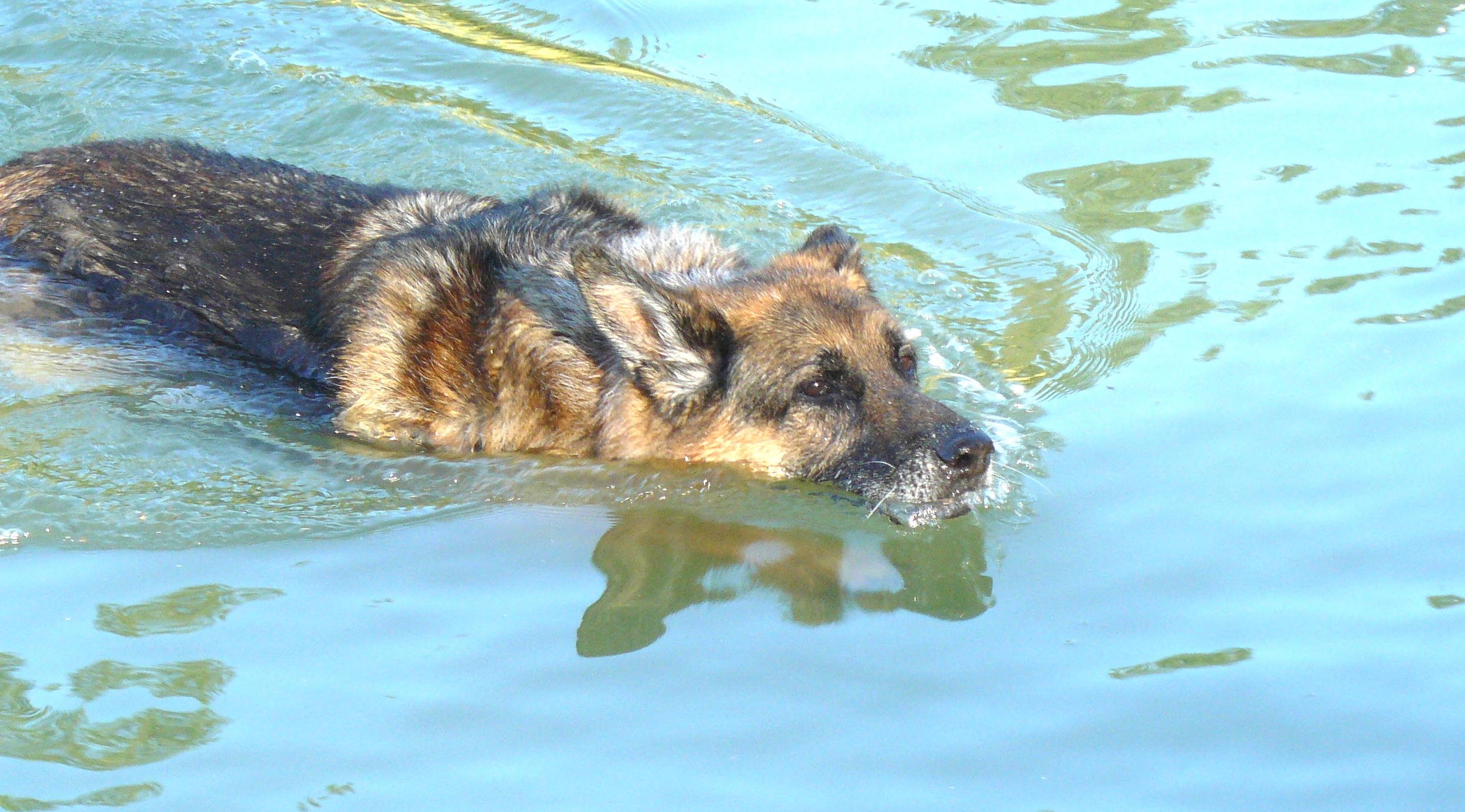
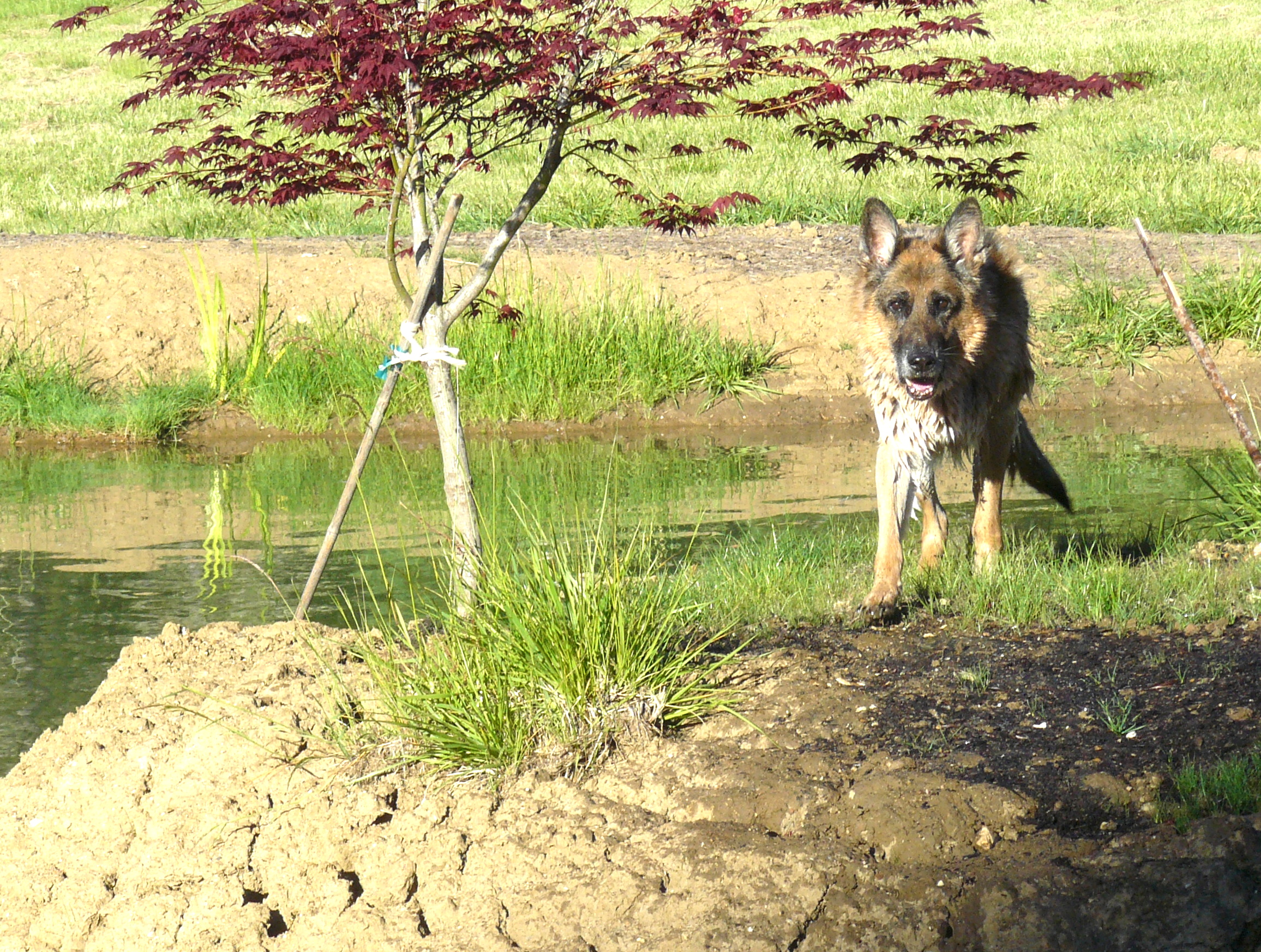
    First up was a swim in the pond.

    Ah, an early birthday dip! Bliss!

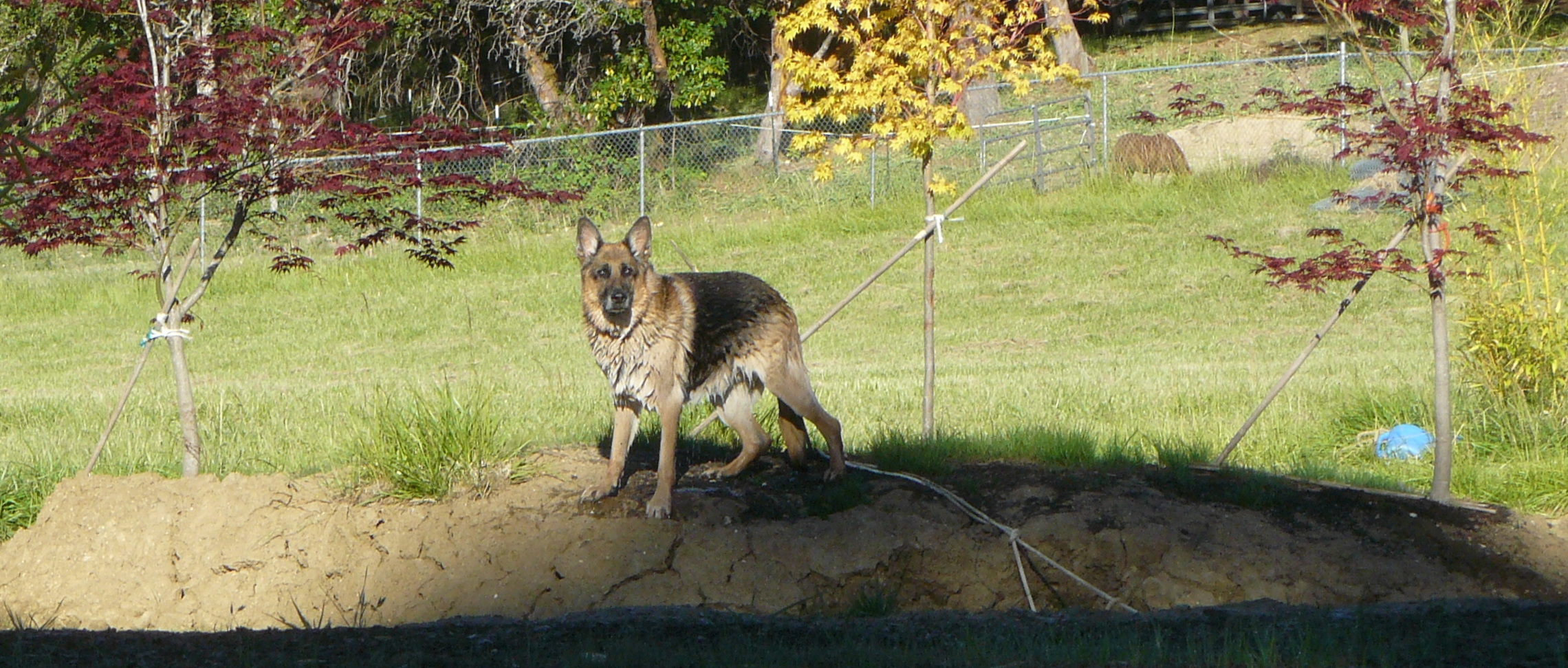
    Then in a way he has not done before, Pharaoh wanted to play ‘King of my Island’, which is in the middle of the pond.

    Halt! Who goes there!

    oooo

    This is my island! So there!

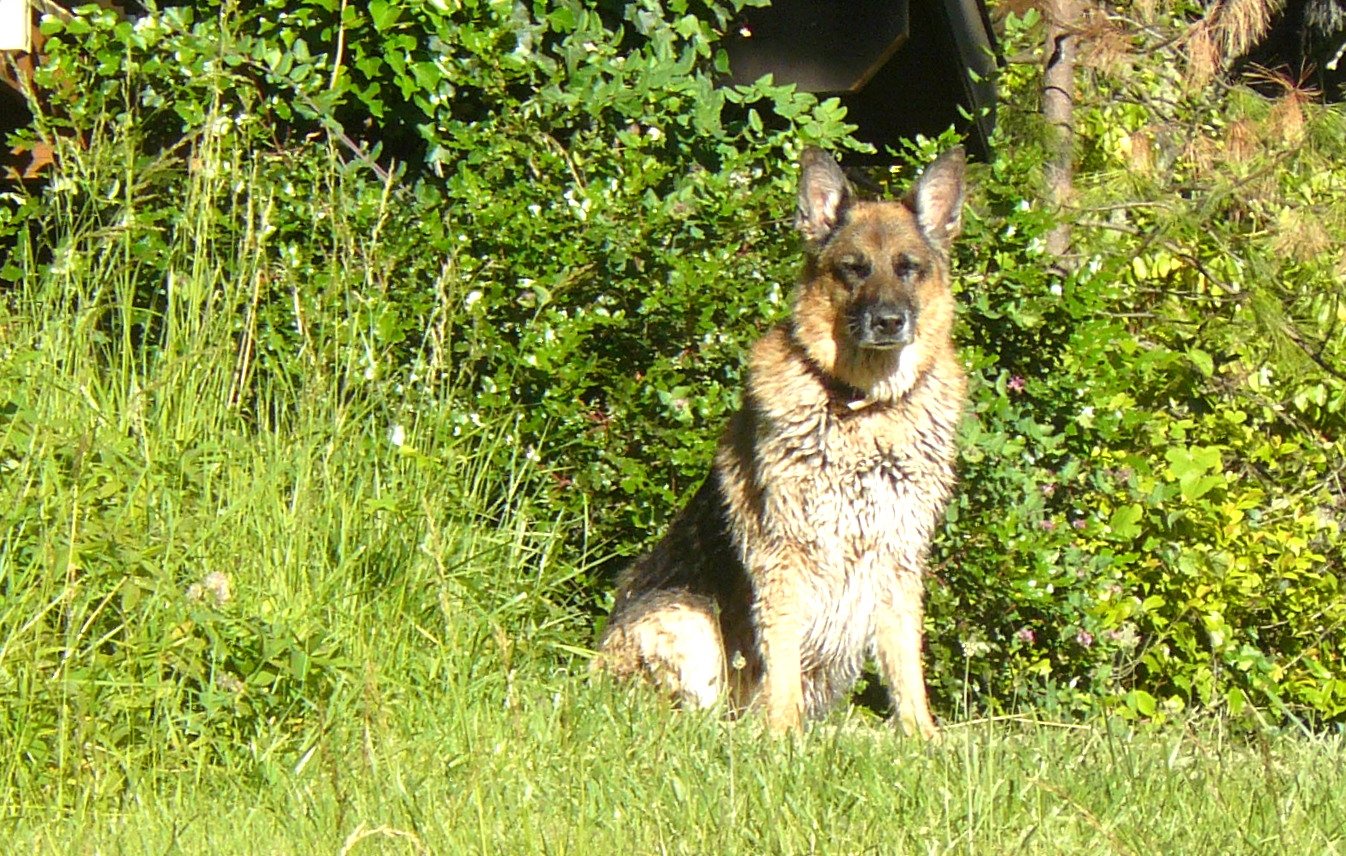
    Then a while later, when back on dry land, so to speak, it was time to dry off in the morning sunshine.

    Actually, this isn’t such a bad life!

    Long may he have an enjoyable and comfortable life.

    ooOOoo

    This was written quite obviously before Pharaoh died. He is still on the home page of this blog.

    Beloved Pharaoh. Born: June 3rd., 2003 – Died: June 19th., 2017. A very special dog that will never be forgotten.

    A post on preventing dog bites.

    This article from the ASPCA is being shared.

    Luckily dogs that have behaviour problems are unknown in our home. But that doesn’t mean that a primer on preventing dog bites is not called for. The following seems like a primer!

    ooOOoo

    Dog Bite Prevention

    Increasing Safety, Reducing Risks

    To reduce the number of injuries from dog bites, adults and children should be educated about bite prevention, and dog owners should practice responsible dog ownership.

    Understanding dog body language is a key way to help avoid being bitten for people of all ages. Know the signs that dogs give to indicate that they’re feeling anxious, afraid, threatened or aggressive, and be sure to respect the dog’s feelings about interacting with or being touched by strangers.

    • An aggressive dog may try to make themselves look bigger. Their ears may be up and forward, the fur on their back and tail may stand on end or puff out, and their tail may be straight up—it may even wag. They may have a stiff, straight-legged stance and be moving toward or staring directly at what they think is an approaching threat. They may also bare their teeth, growl, lunge or bark.
    • An anxious or scared dog may try to make themselves look smaller. They may shrink to the ground in a crouch, lower their head, repeatedly lick their lips, put their tail between their legs, flatten their ears back and yawn. They may look away to avoid direct eye contact. The dog may stay very still or roll on their back and expose their stomach. Alternatively, they may try to turn away or slowly move away from what they think is an approaching threat.
    • Many dogs can show a mixture of these body postures, indicating that they feel conflicted. Remember to avoid any dog showing any of signs of fear, aggression or anxiety—no matter what else the dog is doing. It’s important to realize that a wagging tail or a crouching body doesn’t always mean friendliness.
    • Ask first before petting a dog. When meeting an unfamiliar dog, don’t reach out to pet them. First, ask their pet parent, “May I pet your dog?” A strange hand in a dog’s face may scare them, leading to a bite.
    • If you receive permission to pet a dog, let them sniff your closed hand. Then, you may proceed to pet their shoulders or chest. Avoid petting the top of the dog’s head. If the dog looks uncomfortable, speak happily to the dog and casually remove your hand. Resist moving abruptly or jerkily.
    • Avoid dogs who are barking or growling. It is also best to steer clear of dogs who are loose, behind a fence or tied up.
    • If an unknown dog approaches you, stay quiet and still. Do not run or scream.
    • Always supervise children and dogs. Never leave a baby or young child alone with a dog. Teach your children to treat your dog gently and with respect, giving the dog their own space and opportunities to rest.
    • When in public, always keep your dog on a leash for the safety of your dog and those around them.

    Recommendations for Pet Parents

    Although you can’t guarantee that your dog will never bite someone, there are many ways that you can significantly reduce the risk.

    • Adopt from a well-managed animal shelter whose staff and volunteers can fill you in on the dog’s background, personality and behavior in the shelter.
    • Socialize your dog! Well-socialized dogs make enjoyable, trustworthy companions. Undersocialized dogs are a risk to their owners and to others because they can become frightened by everyday things—which means they are more likely to aggress or bite. Socializing is the opposite of isolating. It’s important for puppies to meet, greet and enjoy a variety of people, animals, places and things. Done properly, socializing helps puppies feel comfortable and friendly in various situations, rather than uncomfortable and potentially aggressive. The main rule for effective socializing is to let your dog progress at their own pace and never force them to be around someone or something when they’re clearly fearful or uncomfortable.
    • Take your dog to humane, reward-based training classes—the earlier the better. We recommend starting your puppy in puppy kindergarten classes as early as eight weeks, right after their first set of vaccinations. Early training opens a window of communication between you and your dog that will help you consistently and effectively teach them good behavior.
    • Always supervise your dog while they’re outdoors—even in a fenced yard. Don’t allow your dog to roam alone.
    • Don’t wait for a serious accident to happen. The first time your dog shows aggressive behavior toward anybody, even if no injury occurs, seek professional help from a Certified Applied Animal Behaviorist (CAAB), a veterinary behaviorist (Dip ACVB), or a qualified Certified Professional Dog Trainer (CPDT). Please see our article, Finding Professional Behavior Help, for information about finding an expert in your area. Your animal shelter may also offer or be able to refer you to helpful services.
    • Err on the safe side. Be aware of common triggers of aggression, including pain, injury or sickness, the approach of strangers or strange dogs, the approach of people in uniforms, costumes or unusual attire (especially hats), unexpected touching, unfamiliar places, crowds and loud noises like thunder, wind, construction, fireworks and appliances. If possible, avoid exposing your dog to these triggers. If they seem stressed or panicked in crowds, leave them at home. If they overreact to visitors or delivery personnel, keep them in another room when they come to your house. Work with a qualified behavior and training professional to help your dog become more comfortable with these and other situations.
    • License your dog as required by law and provide regular veterinary care, including rabies vaccinations.

    ooOOoo

    This appears to be very good advice, and I hope there’s no-one out there that has suffered from the consequences of dog aggression. If there’s a reader who has something to share with you all, then read my Interaction page.

    Dogs foraging!

    A plant list from the ASPCA.

    This list came in from the ASPCA recently and I though it worth sharing with you. But just before I do that let me select from the About Us page on the ASPCA website.

    We Are Their Voice

    The American Society for the Prevention of Cruelty to Animals® (ASPCA®) was the first humane society to be established in North America and is, today, one of the largest in the world.

    Our organization was founded on the belief that animals are entitled to kind and respectful treatment at the hands of humans and must be protected under the law. Headquartered in New York City, the ASPCA maintains a strong local presence, and with programs that extend our anti-cruelty mission across the country, we are recognized as a national animal welfare organization. We are a privately funded 501(c)(3) not-for-profit corporation, and are proud to boast more than 2 million supporters across the country.

    The ASPCA’s mission, as stated by founder Henry Bergh in 1866, is “to provide effective means for the prevention of cruelty to animals throughout the United States.”

    Plus there is a YouTube video.

    Now to that plant list. It is a long list and I am going to only show you the first few dozen plants. If you want to see more of the list then you are going to have to go here and look it up for yourself.

    ooOOoo

    Toxic and Non-Toxic Plant List – Dogs

    Plants Toxic to Dogs

    Adam-and-Eve (Arum, Lord-and-Ladies, Wake Robin, Starch Root, Bobbins, Cuckoo Plant) | Scientific Names: Arum maculatum | Family: Araceae 

    African Wonder Tree () | Scientific Names: Ricinus communis | Family:

    Alocasia (Elephant’s Ear) | Scientific Names: Alocasia spp. | Family: Araceae 

    Aloe () | Scientific Names: Aloe vera | Family: Liliaceae 

    Amaryllis (Many, including: Belladonna lily, Saint Joseph lily, Cape Belladonna, Naked Lady) | Scientific Names: Amaryllis spp. | Family: Amaryllidaceae 

    Ambrosia Mexicana (Jerusalem Oak, Feather Geranium) | Scientific Names: Chenopodium botrys | Family:Chenopodiaceae 

    American Bittersweet (Bittersweet, Waxwork, Shrubby Bittersweet, False Bittersweet, Climbing Bittersweet) | Scientific Names: Celastrus scandens | Family: Celastraceae 

    American Holly (English Holly, European Holly, Oregon Holly, Inkberry, Winterberry) | Scientific Names: Ilex opaca | Family: Aquifoliaceae 

    American Mandrake (Mayapple, Indian Apple Root, Umbrella Leaf, Wild Lemon, Hog Apple, Duck’s Foot, Raccoonberry) | Scientific Names: Podophyllum peltatum | Family: Berberidaceae 

    American Yew (Canada Yew, Canadian Yew) | Scientific Names: Taxus canadensus | Family: Taxaceae 

    Andromeda Japonica (Pieris, Lily-of-the-Valley Bush) | Scientific Names: Pieris japonica | Family: Ericaceae 

    Angelica Tree (Hercules’ Club, Devil’s Walking Stick, Prickly Ash, Prickly Elder) | Scientific Names: Aralia spinosa | Family:Araliaceae 

    Apple (Includes crabapples) | Scientific Names: Malus sylvestrus | Family: Rosaceae 

    Apricot (Group also includes Plum, Peach, Cherry) | Scientific Names: Prunus armeniaca | Family: Rosaceae 

    Arrow-Head Vine (Nephthytis, Green Gold Naphthysis, African Evergreen, Trileaf Wonder) | Scientific Names: Syngonium podophyllum | Family: Araceae 

    Arum (Cuckoo-pint, Lord-and-Ladies, Adam-and-Eve, Starch Root, Bobbins, Wake Robin) | Scientific Names: Arum maculatum | Family: Araceae 

    Arum Lily (Calla Lily, Pig Lily, White Arum, Trumpet Lily, Florist’s Calla, Garden Calla) | Scientific Names: Zantedeschia aethiopica | Family: Araceae 

    Asparagus Fern (Asparagus, Emerald Feather, Emerald Fern, Sprengeri Fern, Plumosa Fern, Lace Fern, Racemose Asparagus, Shatavari) | Scientific Names: Asparagus densiflorus cv sprengeri | Family: Liliaceae 

    Australian Ivy Palm (Schefflera, Umbrella Tree, Octopus Tree, Starleaf) | Scientific Names: Brassaia actinophylla | Family:Araliaceae 

    Australian Nut (Macadamia Nut, Queensland Nut) | Scientific Names: Macadamia integrifolia | Family: Proteaceae 

    Autumn Crocus (Meadow Saffron) | Scientific Names: Colchicum autumnale | Family: Liliaceae 

    Azalea (Rosebay, Rhododendron) | Scientific Names: Rhododendron spp | Family: Ericaceae 

    Baby Doll Ti Plant (Ti-Plant, Good-Luck Plant, Hawaiian Ti Plant) | Scientific Names: Cordyline terminalis | Family:Agavaceae 

    Barbados Aloe (Medicine Plant, True Aloe) | Scientific Names: Aloe barbadensis | Family: Aloaceae 

    Barbados Lily (Amaryllis, Fire Lily, Lily of the Palace, Ridderstjerne) | Scientific Names: Hippeastrum spp. | Family:Amaryllidaceae 

    Barbados Pride (Peacock Flower, Dwarf Poinciana) | Scientific Names: Caesalpinia pulcherrima | Family:

    Barbados Pride 2 (Bird of Paradise, Poinciana, Brazilwood) | Scientific Names: Poinciana gilliesii | Family: Leguminosae 

    Bay Laurel (Sweet Bag, Bay Tree, Tree Laurel, Laurel Tree, Laurel) | Scientific Names: Laurus nobilis | Family: Lauraceae 

    Bead Tree (China Ball Tree, Paradise Tree, Persian Lilac, White Cedar, Japanese Bead Tree, Texas Umbrella Tree, Pride-of-India, Chinaberry Tree) | Scientific Names: Melia azedarach | Family: Meliaceae 

    Begonia (Over 1,000 species and 10,000 hybrids) | Scientific Names: Begonia spp. | Family: Begoniaceae 

    Bergamot Orange (Bergamot, Citrus bergamia) | Scientific Names: Citrus Aurantium | Family: Rutaceae 

    Bird of Paradise (Peacock Flower, Barbados Pride, Poinciana, Pride of Barbados) | Scientific Names: Caesalpinia gilliesii | Family: Leguminosae 

    Bird of Paradise 2 (Peacock Flower, Barbados Pride, Poinciana, Pride of Barbados) | Scientific Names: Poinciana gilliesii | Family: Leguminosae 

    Bird of Paradise Flower (Crane Flower, Bird’s Tongue Flower) | Scientific Names: Strelitzia reginae | Family: Strelitziaceae 

    Bird’s Tongue Flower (Bird of Paradise Flower, Crane Flower) | Scientific Names: Strelitzia reginae | Family: Strelitziaceae 

    Bishop’s Weed (Greater Ammi, False Queen Anne’s Lace) | Scientific Names: Ammi majus | Family: Apiaceae 

    Bitter Root (Dogbane Hemp, Indian Hemp) | Scientific Names: Apocynum androsaemifolium | Family: Apocynaceae 

    Black Calla (Solomon’s Lily, Wild Calla, Wild Arum) | Scientific Names: Arum palestinum | Family: Araceae 

    Black Cherry () | Scientific Names: Prunus serotina | Family: Rosaceae 

    Black Laurel (Dog Hobble, Dog Laurel, Fetter Bush, Sierra Laurel) | Scientific Names: Leucothoe spp. | Family: Ericaceae 

    Black Nightshade (Nightshade, Deadly Nightshade) | Scientific Names: Solanum nigrum | Family: Solanaceae 

    Black Walnut () | Scientific Names: Juglans nigra | Family: Juglandaceae 

    Bobbins (Arum, Lord-and-Ladies, Adam-and-Eve, Starch Root, Wake Robin, Cuckoo Plant) | Scientific Names: Arum maculatum | Family: Araceae 

    Bog Laurel (Pale Laurel, Bog Kalmia) | Scientific Names: Kalmia poliifolia | Family: Ericaceae 

    Borage (Starflower) | Scientific Names: Borage officinalis | Family: Boraginceae 

    Boxwood () | Scientific Names: Buxus spp. | Family: Buxaceae 

    Branching Ivy (English Ivy, Glacier Ivy, Needlepoint Ivy, Sweetheart Ivy, California Ivy) | Scientific Names: Hedera helix | Family: Araliaceae 

    Brazilwood (Bird of Paradise, Poinciana, Barbados Pride) | Scientific Names: Poinciana gilliesii | Family: Leguminosae 

    Bread and Butter Plant (Indian Borage, Spanish Thyme, Coleus, Maratha, Militini, East Indian Thyme) | Scientific Names:Coleus ampoinicus | Family: Labiatae 

    Brunfelsia (Yesterday, Today, Tomorrow, Kiss-Me-Quick, Lady-of-the-Night, Fransiscan Rain Tree) | Scientific Names:Brunfelsia species | Family: Solanaceae 

    Buckeye (Horse Chestnut) | Scientific Names: Aesculus spp | Family: Hippocastanaceae 

    Buckwheat () | Scientific Names: Fagopyrum spp. | Family: Polygonaceae 

    Buddhist Pine (Yew Pine, Japanese Yew, Southern Yew, Podocarpus) | Scientific Names: Podocarpus macrophylla | Family: Podocarpaceae 

    Burning Bush (Wahoo, Spindle Tree) | Scientific Names: Euonymus atropurpurea | Family: Celastraceae 

    Buttercup (Butter Cress, Figwort) | Scientific Names: Ranunculus spp. | Family: Ranunculaceae 

    Butterfly Iris (Spuria Iris) | Scientific Names: Iris spuria | Family: Iridaceae

    ooOOoo

    That was only the ‘A’ and ‘B’ selection!

    I did say it was a long list. Again, if you want to go there here is the link.

    If by sharing this information one dog’s life is saved then it was worthwhile.

    Getting older and older!

    An interesting post for all of us, albeit, those on the right side of 70? will find this less important.

    It is very difficult for me to add anything useful to this article so I will not try.

    Except to say that the author, Aditi Gurkar, is Assistant Professor of Geriatric Medicine at the University of Pittsburgh so she should know what she is talking about!

    ooOOoo

    Are you a rapid ager? Biological age is a better health indicator than the number of years you’ve lived, but it’s tricky to measure

    Healthspan measures incorporate quality of life in ways that lifespan does not. Ira T. Nicolai/The Image Bank via Getty Images

    Aditi Gurkar, University of Pittsburgh

    Do you ever wake up some days and think, “When I was younger, I could survive on just four hours of sleep, but now it seems like I need 10”? Or have you ever walked out of the gym and “felt” your knees?

    Almost everyone experiences these kinds of signs of aging. But there are some people who seem to defy their age. The late U.S. Supreme Court Justice Ruth Bader Ginsberg stayed on the bench until her death at age 87. The “Great British Bake Off” judge Mary Berry, now in her 80s, continues to inspire people all over the world to bake and enjoy life. And actor Paul Rudd was named People magazine’s “Sexiest Man Alive” in 2021 at age 52 while still looking like he’s in his 30s. Is age just a number then?

    Researchers have focused a lot of attention on understanding the causes and risk factors of age-related diseases like Alzheimer’s, dementia, osteoporosis and cancer. But many ignore the major risk factor for all of these diseases: aging itself. More than any individual risk factor such as smoking or lack of exercise, the number of years you’ve lived predicts onset of disease. Indeed, aging increases the risk of multiple chronic diseases by up to a thousandfold.

    However, no two people age the same. Although age is the principal risk factor for several chronic diseases, it is an unreliable indicator of how quickly your body will decline or how susceptible you are to age-related disease. This is because there is a difference between your chronological age, or the number of years you’ve been alive, and your biological age – your physical and functional ability.

    https://youtube.com/watch?v=9eOofp64IYI%3Fwmode%3Dtransparent%26start%3D0

    As the author notes in her TED Talk, aging is not just a number.

    I am a scientist interested in redefining “age.” Instead of benchmarking chronological age, my lab is invested in measuring biological age. Biological age is a more accurate measure of healthspan, or years lived in good health, than chronological age, and doesn’t directly correlate with wrinkles and gray hairs. Rapid agers experience a faster rate of functional deterioration relative to their chronological age.

    My grandmother, who lived to be 83 but was bedridden and could not remember who I was for the last few years of her life, was a rapid ager. My grandfather, on the other hand, also lived until he was 83, but he was active, functional and even did my homework with me until he passed away – he was a healthy ager.

    With the unprecedented growth of the world’s aging population, I believe that figuring out ways to measure biological age and how to maintain or delay its advance is critical not only for individual health, but also for the social, political and economic health of our society. Detecting rapid agers early on presents an opportunity to delay, change or even reverse the trajectory of biological aging.

    Genetics and biological age

    Biological aging is multifaceted. It arises from a complex mix of genetic traits and is influenced by factors like microbiome composition, environment, lifestyle, stress, diet and exercise.

    Genetics were once thought to have no influence on aging or longevity. However, in the early 1990s, researchers reported the first studies identifying genes that were able to extend the lifespan of a small roundworm. Since then, multiple observations support the influence of genetics on aging.

    For example, children of long-lived parents and even those with long-lived siblings tend to live longer. Researchers have also identified multiple genes that influence longevity and play a role in resilience and protection from stress. These include genes that repair DNA, protect cells from free radicals and regulate fat levels.

    However, it is clear from studies in identical twins – who share the same genes but not the same exact lifespans – that genes are not the only factor that influences aging. In fact, genes probably account for only 20% to 30% of biological age. This suggests that other parameters can strongly influence biological aging.

    Environmental and lifestyle effects

    Researchers have found that environmental and lifestyle factors heavily influence biological age, including social connectedness, sleeping habits, water consumption, exercise and diet.

    Social connectedness is essential for well-being throughout life. But social connections can be challenging to maintain over time due to loss of family and friends, depression, chronic illness or other factors. Several studies have reported a strong link between social isolation and increased stress, morbidity and mortality.

    Three women dancing together in a park
    Social connectedness and physical activity are linked to well-being throughout life. Filippo Bacci/E+ via Getty Images

    Similarly, diet and exercise are strong influencers of biological age. Blue zones, which are areas around the world where people live long lives, attribute their successful aging to diet, exercise and social connectedness. Mostly plant-based meals and spurts of activity throughout the day are well-known “secrets” of healthspan and longevity. Although newer studies on the effects of diet interventions such as intermittent fasting and time-restricted feeding on longevity have not been rigorously tested, they do show multiple health benefits, including better glucose and insulin regulation

    While genetics is difficult to control, diet and exercise can be modified to delay biological aging.

    How to measure biological age

    Currently, there is no effective test to predict an individual’s health trajectory early enough in life in order to intervene and improve quality of life with age. Scientists are interested in identifying a molecule that is sensitive and specific enough to serve as a unique fingerprint for biological age.

    Considering the health and resilience of the individual instead of focusing solely on disease state is important in discussions on biological age. Resilience is the state of adapting and bouncing back from a health challenge and is often more predictive of functional health. A molecular aging fingerprint may provide a tool to help identify people who are less resilient and require more aggressive monitoring and early intervention to preserve their health and help reduce gender, racial and ethnic health disparities.

    There are several promising molecular markers that may serve as biological age fingerprints.

    One of these markers are epigenetic clocks. Epigenetics are chemical modifications of DNA that control gene function. Several scientists have found that DNA can get “marked” by methyl groups in a pattern that changes with age and could potentially act as a readout for aging.

    It is important to note, however, that while epigenetic clocks have been valuable in predicting chronological age, they do not equate to biological age. In addition, it is unclear how these epigenetic marks work or how they contribute to aging.

    Older adult holding gold balloons of the number 70 in a backyard
    Age is so much more than a number. Klaus Vedfelt/DigitalVision via Getty Images

    Another well-regarded marker of biological age is the build-up of dysfunctional cells called senescent or zombie cells. Cells become senescent when they experience multiple types of stress and become so damaged that they cannot divide anymore, releasing molecules that cause chronic low-grade inflammation and disease.

    Animal studies have shown that getting rid of these cells can improve healthspan. However, what clearly defines senescent cells in humans is still unknown, making them challenging to track as a measure of biological age.

    Lastly, the body releases unique metabolites, or chemical fingerprints, as byproducts of normal metabolism. These metabolites play a dynamic and direct role in physiological regulation and can inform functional health. My lab and others are figuring out the exact makeup of these chemicals in order to figure out which can best measure biological age. A lot of work still remains on not only identifying these metabolites, but also understanding how they affect biological age.

    People have long sought a fountain of youth. Whether such an elixir exists is still unknown. But research is starting to show that delaying biological age may be one way to live healthier, fuller lives.

    Aditi Gurkar

    This article is republished from The Conversation under a Creative Commons license. Read the original article.

    ooOOoo

    There is no arguing the fact that more and more great articles are appearing online. Indeed, the whole world is changing radically in many areas.

    Onwards and upwards! 😉

    Footnote: This appeared online on the Inspiring Quotes website. The link is here, from which I reproduce the following:

    Growing older is one of the most pervasive preoccupations of humankind. The passing of time is, after all, an inescapable part of the human condition. And aging, like love, is one of the most common themes in literature, be it the calm of poet Robert Brownings’ “Grow old along with me! The best is yet to be,” or poet Dylan Thomas’ raging against the dying of the light. 

    This is just a beautiful Picture Parade

    In other words, Picture Parade Four Hundred and Seventy-Eight.

    Introducing A guest post (sort of) by Cara Sue Achterberg.

    Read this! It tells the story of the volunteers who spend their time at the Animal Control centre in Bernie County.

    ooOOoo

    Animal Control And/Or Care

    By Cara Sue Achterberg

    Bertie County is a small county most people pass through on their way to vacation on the Outer Banks. The county’s tiny shelter is the next to last stop on a road that ends at the regional jail. The shelter sits on a property prone to flooding, and although the county has had plans to move it, the folks we talked to were skeptical that the collection of sheds, trailers, and kennels would leave the spot it has occupied as long as anyone can remember.

    Bertie County Animal Control in Windsor is a municipal, open-intake shelter comprised of ten kennels on a concrete pad with a roof, plus two quarantine kennels, and three puppy runs.

    There is no heat or AC or walls, for that matter. The day we arrived, county maintenance workers were busy wrapping plastic around the kennels to try to give the dogs some protection from the cold.

    The county has two full-time Animal Control officers and one part-time ACO, but the care of the dogs is done by Josh, a full-time kennel tech. The county pays for Josh (and a part-time person who comes in once on Saturday and Sunday to feed/clean), plus the ACO salaries, and the property utilities, but everything else is left up to the Bertie County Humane Society.

    Beyond the $2000/year the county gives the Humane Society, they must raise the money to pay for everything else – veterinary needs, vaccinations, spay/neuter, food/treats, transport to rescues, beds, heartworm preventative, flea/tick treatment, dewormers and anything else.

    Pretty much every dog that comes in is heartworm positive. As Vicky, a volunteer who used to be the kennel manager at the shelter, told me, “If we get one that’s negative, I go buy a lottery ticket!”

    Vicky was at the shelter that day to give rabies vaccines to Cooper and Spot, two young dogs at the shelter. (NC is the first state I’ve discovered that doesn’t require that rabies vaccines be given by a veterinarian.)

    oooo

    oooo

    We learned about Bertie County after we connected with another of their volunteers, Gina. Gina lives two hours away, but she is a tireless advocate for the dogs and the shelter. She networks the dogs to rescues, arranges for veterinarian appointments and transports, even finds donors to pay for heartworm treatment. Gina is one of those rescue warriors with a heart that just slays me. It’s inhuman how many hours and how much work she puts in to save these dogs, many she has never met.

    Gina has been involved with BCHS ever since she discovered how many dogs were being killed in Bertie County. She began pulling dogs to foster within her rescue operation and eventually called on other rescues to get involved. Because she lives so far away, she depends on Diane, who lives in Bertie County and is the president of the Humane Society, and Vicky, who used to be the kennel manager at the shelter and still volunteers her time there.

    There were only six dogs (and lots of cats) the day we visited thanks to Gina’s work to find rescues to empty the shelter just before the holidays and the bitter, record cold that came. The shelter normally handles about 100 dogs a year.

    oooo

    oooo

    oooo

    oooo

    ooOOoo

    Because of the number of photographs, beautiful photographs I would add, this is today’s Picture Parade.

    Dogs and cats

    A guest post from Ashly Brown

    This is a great post. As I just said a guest post that covers an important question; for those that have cats and dogs read on!

    ooOOoo

    How to Stop a Dog Aggression Towards Cats

    By Ashly Brown.

    Meta Description

    Learn how to stop dog aggression towards cats with these helpful tips and techniques. Discover how to train and manage your dog to live peacefully with cats and prevent any dangerous incidents.

    How to Stop a Dog Aggression Towards Cats

    Dogs and cats are known to be natural enemies, and it’s not unusual for dogs to act aggressively towards cats. Even though it’s natural for a dog to feel territorial or defensive around a cat, this can be dangerous for the cat and stressful for the owner. So, it’s important to do something to stop a dog from being mean to cats. Here are some tips:

    • Watch out for your dog around cats.

    The first thing you can do to stop your dog from being mean to cats is to always watch your dog when it’s around cats. Even if you think your dog is friendly towards cats, you should never leave your dog alone with a cat. Dogs can be hard to predict, and their instincts to hunt can come out at any time.

    • Slowly get your dog used to the cat.

    It’s important to go slowly and carefully when bringing a new cat into your home or letting your dog meet a cat for the first time. Keep your dog on a leash and let your cat come up to it at its own speed. Give your dog treats for being good, and keep a close eye on them at all times.

    • Teach your dog the basic commands for obedience.

    If you teach your dog basic obedience commands like “sit,” “stay,” and “leave it,” it will be less likely to attack cats. By teaching your dog to do what you say, you can take its mind off the cat and keep it from chasing or hurting it.

    • Give your dog and cat separate places to live.

    If your dog and cat don’t get along, you may need to give them each their own place to live. This could mean putting your cat in a different room or putting a baby gate between your cat and dog. Make sure your cat’s separate living space has a place to eat, drink, and go to the bathroom.

    • Use training with positive reinforcement

    Positive reinforcement is a great way to teach your dog how to behave well. When your dog acts well around your cat, praise them or give them treats. This will make them more likely to keep behaving well and make them feel good about the cat behavior.

    • Think about asking an expert.

    If your dog is very mean to cats, you may need to get help from a professional dog trainer or behaviorist. They can help you come up with a plan for training your dog that fits its needs and habits. They might also be able to give you more advice on how to stop your dog from being mean to cats.

    • Think About Medications

    In some cases, a dog may need to be put on medicine to stop being mean to cats. Talk to your vet about whether your dog can take a certain medicine. They might be able to give you medicine to help your dog feel less anxious or less likely to attack cats.

    • Be steady and patient.

    Stopping a dog from being mean to a cat can take a long time and patience and consistency. Don’t stop working with your dog if you don’t see results right away. You can teach your dog to get along with cats if you give it time and work at it.

    • Figure out the cause

    Find out what makes your dog act mean towards cats. This can help you stop the behavior. It could be a certain sound or smell, or it could be something the cat does. You can work to get rid of the trigger or get your dog used to it if you know what it is.

    • Desensitize Your Dog

    Desensitizing your dog means slowly exposing them to the thing that makes them aggressive towards cats, while keeping them far away. This can help them feel less scared or worried about the trigger and keep them from getting angry. Start by showing the trigger to your dog from a distance where they don’t show any signs of aggression. Over time, you can slowly get closer.

    • Use a muzzle or head collar.

    Putting your dog in a head collar or giving it a muzzle can help keep it from attacking the cat. Dog bark collars can help you keep your dog from moving around too much, and muzzles can stop them from biting or attacking. It’s important to know how to use these tools right and to never leave your dog alone while they are on.

    • Manage Your Dog’s Environment

    Taking care of your dog’s environment can help stop your dog from being mean to cats. This could mean keeping your dog on a leash when there are cats around or putting up baby gates to keep them apart. It’s important to give your dog and cat a safe and secure place to live.

    Conclusion 

    In conclusion, it is possible to stop a dog from being mean to a cat, but it takes time, patience, and consistent work on the part of the owner. Understanding why your dog is mean to cats is very important for coming up with a good plan to stop the behavior. You should never punish or hurt your dog physically if he or she is mean to cats. This can make the problem worse and cause fear and anxiety.

    Focus instead on training with positive reinforcement, desensitization, and management techniques like making a safe space and using head collars or muzzles. Your dog can learn to live peacefully with cats with consistent training and management. This can prevent any dangerous or harmful situations from happening.

    It’s important to remember that every dog is different, and what works for one dog might not work for another. Talking to a professional dog trainer or behaviorist can help you come up with a custom plan to stop your dog from being mean to cats.

    Author Bio:

    Ashly Brown is an experienced writer and pet enthusiast who loves to share her knowledge and insights on the latest trends in pet care. As a dedicated pet cat owner, Ashley understands the importance of finding the best gadgets to keep your feline friend healthy, happy, and entertained in the pet cats world. With her expertise in technology and pet care, Ashley provides valuable information and advice to help cat owners make informed decisions about the latest gadgets for their furry friends

    ooOOoo

    Ashly shows her experience as a pet lover and being a writer; in spades!

    There will be many that have cats and dogs who take her advice with great interest and many of you that will find in Ashly’s tips some very educational ideas.

    Thank you, Ashly!