Category: Musings

Elliot’s schooling

Elliot Engstrom – Guest Author

Elliot was ‘exposed’ to the Learning from Dogs readership on the 22nd March as our first Guest author.  He wrote about the US Government and Poverty.

Elliot has one important distinction with respect to the other authors of this Blog; he is the right side of 30 years old!

He is going to use this perspective to reflect on schooling, something that most of us ‘aged’ peeps take for granted, assuming we can remember our school days! 😉

It promises to be a fascinating reflection.

———————————–

Setting the scene

I’ve had a plethora of experiences over the past 17 years of my life. I’ve made and lost friends, had romantic

Elliot Engstrom

relationships, read, traveled all around the world, lived in France, and done countless other things that I consider myself immeasurably blessed to have experienced.

Despite the fluidity of where these different experiences have taken me, my entire life since the age of four has had one characteristic in common – I have been a school student.

In the spirit of “Learning from Dogs,” I thought it might be interesting to reflect a bit upon the core dynamic between education (not learning, which is a far broader topic) and schooling.

I often ask myself just how effective the modern US schooling system is as a tool of education, and whether or not its costs outweigh its benefits. I hope to have at least a rough answer to this question in the final post of this series.

In the following three posts, I will examine three topics:

– In what ways does the modern schooling system function as a positive tool for education?

– What costs involved in modern schooling hinder its ability as an educative tool, and even make it a negative influence on students?

– Considering the analyses put forth in the first two posts, do the costs or benefits or this system outweigh the other? On the whole, are school and education complements or antagonists?

This series is going to be exciting for me because, to be quite frank, I have no idea what my final answer is going to be. I guess I’ll just have to stay tuned to see where my brain takes me – and so for you!

By Elliot Engstrom

Poor old Europe!

Why has it seemed like pushing water uphill for so long?

I’m in my mid-60s, having been born six months before the end of WWII.  From the earliest days that I can remember, my parents loved to holiday in France and Spain.  In those days if one was to motor into Europe then it was a case of the car being craned aboard the ferry from England to France.  How things change!

Modern cross-channel ferry

Much later on in life, I did business extensively in many European countries and, for a while, taught sales and marketing at the international school, ISUGA, in Quimper, NW France.  (Indeed, fellow Blog author Chris Snuggs was my Director of Studies at ISUGA – that’s how we came to meet.)  I like to think that I have a reasonable understanding of the variety of cultures that is Europe.

So while acknowledging the convenience of a common currency (sort of) and ease of border transits, the one thing that has remained in my mind is that each country in Europe is very, very different to the other.  These core differences have always struck me as so strong and deep-rooted that any form of real union was a ridiculous concept.  The present deep problems with Greece seem to be the tip of this fundamental issue.  Thus a couple of recently published articles, on Baseline Scenario and The Financial Times seem worthy of being aired on Learning from Dogs.

First, the article by Simon Johnson on Baseline Scenario:
Read more of this Post

The GPS and the AAAs

Welcome Per Kurowski Egerström

On the 22nd March, Learning from Dogs had the pleasure of a Post from our first Guest Author, Elliot Engstrom.  We are doubly delighted to have Per Kurowski join us as our second Guest Author.

Per Kurowski

Per is a prolific blogger.  He has had a full career including serving as an Executive Director of the World Bank from 2002 until 2004 for Costa Rica, El Salvador, Guatemala, Honduras, Mexico, Nicaragua, Spain and Venezuela.  More about Per’s life experiences can be found here.

Here is Per’s first Guest Post for Learning from Dogs.

——————-

The GPS and the AAAs

Not so long ago I asked my daughter to key in an address in the GPS and then even while I continuously heard a little voice inside me telling me I was heading in the wrong direction I ended up where I did not want to go.

Whither we are led?

Something similar caused the current financial crisis.

First the financial regulators in Basel decided that the only thing they would care about was the risk of individual financial defaults and not one iota about any other risks.

Second then, though they must have known these were humanly fallible they still empowered some few credit rating agencies to be their GPS on default risks.

Finally, by means of the minimum capital requirements for banks, they set up all the incentives possible to force them to heed what the GPS said and to ignore any internal warning voices.

Of course, almost like if planned on purpose, it all ended up in a crisis. In just a couple of years, over two trillion dollars followed some AAA signs over the precipice of badly awarded mortgages to the subprime sector. Today, we are still using the same financial risk GPS with the same keyed in instructions… and not a word about it in all recent Financial Regulatory Reform proposals

I hate the GPS type guidance of any system since I am convinced that any kid brought up with it will have no clue of what north, south, east or west means; just as the banker not knowing his client’s business or how to look into his client’s eyes or how to feel the firmness of his client’s handshake, can only end up stupidly following someone else’s opinion about his client on a stupid monitor.

I hate the GPS type guidance system because, on the margin, it is making our society more stupid as exemplified by how society, day by day, seems to be giving more importance to some opaque credit scores than to the school grades of their children. I wait in horror for some DNA health rating scores to appear and cause a total breakdown of civilization as we know it.

Yes, we are buried under massive loads of information and these systems are a tempting way of trying to make some sense out of it all, but, if we used them, at least we owe it to ourselves to concentrate all our efforts in developing our capacity to question and to respond adequately when our instincts tell us we’re heading in the wrong way.

Not all is lost though. I often order the GPS in my car to instruct me in different tongues so as to learn new languages, it gives a totally new meaning to “lost in translation”, and I eagerly await a GPS system that can describe the surroundings in more extensive terms than right or left, AAA or BBB-, since that way not only would I get more out of it but, more importantly, I would also be more inclined to talk-back.

By Per Kurowski

Snowdrops

The snowdrop – a real harbinger of Springtime

The winter can seems very long when the temperature remains extremely cold and the news headlines show dramatic pictures of villages completely cut off by drifting snow.  And the old debate about cold weather payments for pensioners comes around once again.

We are often still able to enjoy time in our garden well into October, but the weeks that follow up to March can be very long and drawn out.  Then comes my favourite flower, The Snowdrop.

Snowdrops

There are several different types of this beautiful little plant, and in the county of Hampshire in England [where Bob and his family live, Ed.], in particular there seem to be clumps of this special white flower everywhere.

Heale House

However the other day I was able to see a complete field of them in the grounds of Heale House, a private residence owned by Patrick Hickman,an ex Lancaster pilot, now 89, who is still very active and keeping his yew bushes well trimmed in the art of topiary.

Heale House is open at this time of year for people to visit the lovely gardens and again enjoy the snowdrops.

Spring has arrived, but it is the first flower that is my favourite!

By Bob Derham

Alan Peters

What is it about wood?

The smell of wood shavings!

When I was a very young boy at Grammar School (aka High School) in Wembley, North West London, one of the subjects taught was wood-working.  I loved the feel of wood, still do, and the smell of a wood shaving fresh off the wood plane is still remembered.  But, for whatever reason, wood and I never got on.

Later on, my first yacht was a pretty little East Coast gaff cutter, built in 1898, with a hull of pitch pine laid on grown oak frames.  Her original name was Mimms but this had been changed to Esterel by the time she was purchased by me. Despite needing a lot of remedial work, the over-riding memory was how the hull ‘spoke’ when she was being sailed.

It’s almost as though wood doesn’t die when the tree is felled, it just passes into another phase depending on the use made of it.

So where’s this all leading?

Alan Peters who died October 11th, 2009

In the issue of The Economist dated November 7th, 2009, there was an obituary about Alan Peters, furniture maker, who died on October 11th, 2009, aged 76.  Like all obits. that appear in The Economist this was well published but something about this particular obituary really stuck in my mind.  I tore out the page so it could be re-read over the coming weeks.

It’s still on my desk even 6 months later and it prompted me to write about Alan Peters on Learning from Dogs.

Here’s an extract of the obituary of Alan Peters as published in the The Times.

In contrast to many of today’s school-leavers, who look for instant success and celebrity, the furniture designer Alan Peters served seven years’ apprenticeship in the workshop of Edward Barnsley, which then operated without power tools. When interviewed last year Peters was still proud that he swept the workshop floor quicker and better than anyone else. His eagerness to share his passion and knowledge of furniture design and furniture making was a theme of his life.

And here’s another reflection from David Savage who studied under Alan Peters:

Damn, Damn, Damn, I am getting fed up writing obituries on dead furniture makers. Why can’t they just go on for ever.

I knew Alan quite well. He was a role model and a mentor when I really needed one. This would be way back in the late 1970s when there were very few people making modern furniture in a barn in Devon which is what I wanted to do. Even fewer making a living doing it. I had all the questions and Alan as far as I could see had all the answers. I spent a short time working with him. I was first in the workshop in the morning and last out in the evening. I’m sure he got fed up with my questions but he patiently answered. He gave and gave and gave. When I was set up he helped me get into the Devon Guild of Craftsmen and much later he would come to my workshop in Bideford to give Saturday seminars showing slides of his work and trips to Japan and Korea. He was an inspiration I know not just to me but to a generation of makers. I miss him.

Question: How many furniture makers does it take to change a light bulb?

Answer: Ten, one to change the bulb and nine to discuss at length how Alan would do it.

By Paul Handover

Celebrity Eclipse

Can this form of holidaying still remain popular?

The Celebrity Eclipse has recently left her construction dockyard at Papenburg, Germany bound for her home base.  This enormous  new ship attracted some news simply because the exercise of getting her from the dockyard to the open sea required some ‘shoe-horning’!  This YouTube video shows why (amateur filming but a great soundtrack!):

The Celebrity Solstice leaving the dockyard at Papenburg
The Celebrity Solstice leaving the dockyard (backwards!) at Papenburg

All would wish any ship that sets out to sea safe travel.  But one wonders whether this huge ship, that must require such huge sums of money just to stay afloat, and that must have been conceived and ordered when times were much rosier, will ever be a commercial success?

By Paul Handover

The manageability of innovation

Innovation is manageable

“Innovation” means different things to different people but, generally, it involves the application of novel ideas, products or processes for some purpose. But even if we can agree on “what” it is, do we understand “how” innovation happens?

Managing 'bright' ideas

There is a significant change taking place in the way that the process of innovation is understood. We can put this in the context of developments in the manageability of other areas of business activity in recent times. Read more of this Post

Lies, damn lies and statistics

How safe is flying?

Safe?

Wikipedia have an interesting, and well referenced, entry on Air Safety.  Within that entry is a table showing comparing deaths by air to other forms of travel.

The table in Wikipedia is much easier to read, it’s here, but the data is shown below for those that do not want to click through.

—————–

There are three main statistics which may be used to compare the safety of various forms of travel:

Deaths per billion journeys
Bus 4.3
Rail 20
Van 20
Car 40
Foot 40
Water 90
Air 117
Bicycle 170
Motorcycle 1640
Deaths per billion hours
Bus 11.1
Rail 30
Air 30.8
Water 50
Van 60
Car 130
Foot 220
Bicycle 550
Motorcycle 4840
Deaths per billion kilometres
Air 0.05
Bus 0.4
Rail 0.6
Van 1.2
Water 2.6
Car 3.1
Bicycle 44.6
Foot 54.2
Motorcycle 108.9

It is worth noting that the air industry’s insurers base their calculations on the number of deaths per journey statistic while the industry itself generally uses the number of deaths per kilometre statistic in press releases.

————————

Interesting to see how air travel varies in terms of comparative safety depending on how it is measured.  But also interesting to see that however it is measured, riding a motorbike doesn’t come out so well.

Finally, that word’ billion’ is too easy to throw away, as it were.  A billion hours ago was over a 114,000 years ago – when mankind was living in the Stone Age.  A billion kilometres would represent 114,285 trips between London and Los Angeles.

If you are interested!

By Paul Handover

Stop Flaunting Sexuality Please

Oh, this is really clever! Not!

I was stunned the other day to read this:

In the latest development in his campaign to show how dramatically the Tories have changed, David Cameron has published the party’s first-ever official list of openly gay MPs.

The Conservatives say they have 20 openly gay candidates standing in the Election. Of those, 11 told party chiefs they were ‘happy’ to be named in the first authorised list of gay Conservative candidates.

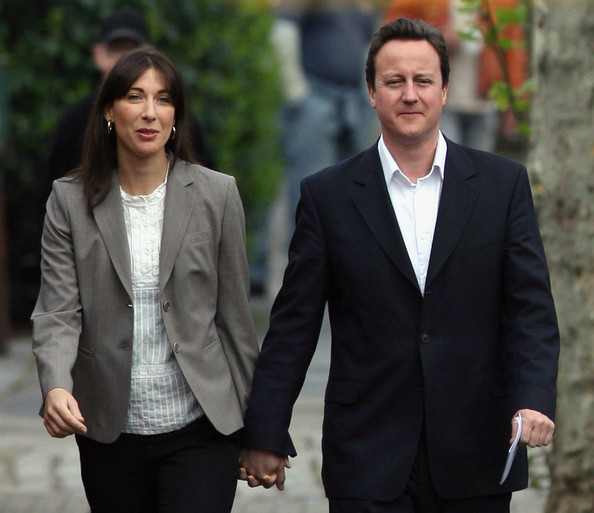
David Cameron

Homosexuality is no longer – thankfully – a crime.  It has always existed and no doubt always will. It is therefore – logically – a normal feature of human society. Isn’t it time to accept it as such and stop flaunting it constantly in the media? Can we not keep private those parts of our lives which are private? Do heterosexuals go around flaunting their heterosexuality?

Why on earth does a potential government-forming party feel obliged to publish lists of people’s sexuality? Why do I suddenly feel as if I am bizarre in thinking that one’s sexuality should be something private? Personally I haven’t got the faintest interest in other people’s sexual inclinations. Like religion, it should be personal and not eternally flaunted in the media.

And it is all illogical. Either homosexuality is normal or it isn’t. If it is (as it is), then why the constant need to bang on about it, as for example in the Tory party? What on earth has it got to do with running the country? Are the Tories supposed to be better-qualified to run the country the more homosexuals they have? Is there a point at which having TOO MANY becomes a negative point? Would they then start to proclaim how many heterosexuals they had? On a personal level, I keep my sexuality to myself. It is nothing to do with you and certainly not with running the country.

It is analagous to sex in the media. It is overdone. The endless superficial titillation and flaunting of sexuality is demeaning of the Human Spirit. Sex is – or should be – a private matter. It’s better that way. It is more mature that way, but the media – and now the political parties – sink to the lowest denominator instead of focusing on what really matters.

Please, please give us some politicians with common-sense.

By Chris Snuggs