Category: Musings

Captain Thomas Murray – RIP

Regular readers of Learning from Dogs will know that we usually only post a single article on week-end days.  But yesterday I received news that a business friend of many years standing had lost his battle against ill-health and died peacefully in the afternoon.  His name was Tom Murray and it’s my wish to celebrate his life by reproducing in full the email that was sent to me. It’s serendipitous that the planned posts by John Lewis for this week-end are aviation related.

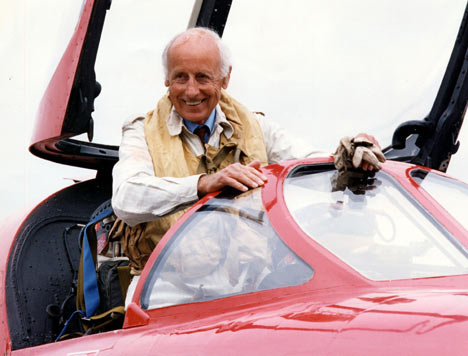
Capt. Tom Murray

On Thursday afternoon the world lost a respected, influential, and creative aviator, one of the “Great Ones”.

Captain Thomas Murray was a pilot, artist, inventor, musician, and father.

A noted jet pilot, he explored the far corners of the globe, mapping out the Canadian Arctic, flying thousands of hours in Africa, Europe, the Himalayas, and the Americas.

Whether flying Gulf streams, Falcon, Hawkers, Learjets or old DC3s, Tom was a pilot’s pilot, the friendly, knowledgeable kind of guy who knew his craft so thoroughly that airmen the world over would “just call Tom”, whenever they needed answers.

He thrilled everyone he met with exciting stories of his travels…

…such as the time he found himself lost while flying over what should have been a large African lake, only to realize the lake had dried up. The only hope of finding civilization was to dead-reckon his way in a straight line and hope he hit the tiny “dot of a town” that was his final destination.

…Or the time his oxygen system failed in the Himalayas at 20,000 feet forcing him to dive the airplane into an 8000-foot valley to find out he was the only conscious crewmember.

…Or the time the entire front panel of his Hawker 800 fell onto his lap during takeoff because someone had forgotten to screw it in.

An adventurer to the max, he was also an inventor and visionary.

Tom took an ordinary problem such as converting hard-to-read aircraft performance charts into easy-to-read tables, and then turned that process into a successful business.

Tom created one of the first electronic documents to find its way into a cockpit – tables of aircraft performance data that minimized the chance of pilot error due to miscalculation that he called “EPADS”.

Constantly working to organize the cockpit, provide higher levels of safety and better information to the pilots, he invented one of the world’s first electronic flight bags, and established the process of managing aircraft electronic checklists, a process that the FAA later modeled their ECL guidelines after.

He joked that the entire cockpit should have a mode that turned it into a simulator during flight to alleviate boredom amongst pilots and give them a chance to train in truly challenging simulations during long flights.

He invented games for children, played flute, and wrote a storybook.

An accomplished artist, he relaxed by attending artist workshops and amazing all with his skill and precision. Just last summer, Tom held his first art exhibition.

His greatest creation with wife Daisy was his son, Thomas Alexander Murray, who was born with the charismatic smile and sense of mischief that characterized Tom at his best.

Tom’s inventions were his “other child”.  He would latch onto a design problem like a pit bull.

He cherished the fact that he would uncompromisingly focus on a design and refuse to leave it go it until it was “perfect”, even to his own financial detriment when those around him insisted he was losing sight of the “big picture”.

To this effect, during his last year, he asked me to form a foundation in his name, to offer an annual award (which I’ll see if it’s possible to do)…

“To the individual who focuses on solving difficult problems; who is clearly addicted to finding the solution; who is unrelenting in the face of opposition – which may seem to be (or genuinely be) to their own personal detriment”

Perhaps he wanted an award, he knew he’d win!

Tom was well known for acting as “pilot in command” in his daily life, often forcing people to act “my way or the highway” and insisting that his way was the “right way”.

While this trait was annoying and frustrating to colleagues and friends, what was possibly more frustrating was the number of times one was forced to humble oneself when he was indeed “right”.

In the last year of his life, Tom worked relentlessly to teach others his design philosophy and prepare several of us to run the company he’d created, the vessel that would carry his vision and concern for the safety of his fellow pilots into the future.

Tom loved life and spent his days on a personal mission to make the world a better place, a more interesting place, a more ordered place, a more beautiful place, a more fun place to live…

Tom wasn’t always too clear with his emotions, and though he often maintained a “business” exterior, at heart he was the artist, and his appreciation and depth of love for his family, fellow pilots, and the people who worked for him and with him, his friends — was endless.

You always knew when he respected you, he’d give you a big pilot’s “Thumbs up!”

We will miss him dearly.

Today, we salute a great airman, Captain Thomas Murray.

On behalf of Tom, I know he would wish you a warm, “Thumbs up!”

Charles Guerin President
On-Board Data Systems (OBDS)

Elliot’s schooling – the positives

Elliot Engstrom – Guest Author

On April 1st I set the scene for the essays that I wanted to write for Learning from Dogs as follows:

I often ask myself just how effective the modern US schooling system is as a tool of education, and whether or not its costs outweigh its benefits. I hope to have at least a rough answer to this question in the

Elliot Engstrom

final post of this series.

In the following posts, I will examine three topics:

In what ways does the modern schooling system function as a positive tool for education?

What costs involved in modern schooling hinder its ability as an educative tool, and even make it a negative influence on students?

Considering the analyses put forth in the first two posts, do the costs or benefits or this system outweigh the other? On the whole, are school and education complements or antagonists?

Here is the first one looking at the positive aspects of the American educational system.

Intellectual exploration

My kindergarten teacher told me to always start with something positive, so I’ll be beginning my analysis of American schooling by looking at how it is a positive tool for education.

One facet of the American education system that I once disapproved of but now find extremely useful and educative is the long period of time that students have before they must commit to a career choice.

I used to view this lag as a waste of resources. However, living in France and being a student at a French university changed my mind. The French system begins to lock children into a career path as early as the closing years of middle school. If a student in France wants to be a doctor, for example, they enter into medical school immediately upon leaving high school. The same is true for professions like pharmacology and law. There is very little opportunity for intellectual exploration in the country’s schools. Rather, one simply must make the best of wherever one ends up.

While the American system is more long-winded, it is a better tool for education in that it allows for a more dynamic range of studies. A liberal arts education forces students to delve into a wide range of subjects, giving students the chance to explore their interests and abilities.

Socrates (or Plato, depending on your interpretation of Plato’s dialogues), believed that a liberal arts education also encouraged the development of critical thinking skills. However, it should be noted that many of the greatest critical

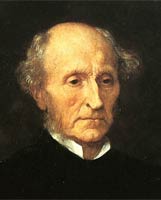
John Stewart Mill, (1806–1873)

thinkers in history did not go through formal schooling. (Socrates himself and John Stewart Mill come to mind.)

This system also allows students to change their mind, pursuing those fields of study that truly interest them the most. It is amazing how many students in the American university system change majors during their tenure as students. This often is because they find that the career path they thought was for them is in fact not their liking – the number of students who abandon the premed track during college is a perfect example of this.

Education also entails socializing with other human beings. The American education system also facilitates this form of education quite well, as a liberal arts form of study at both the high school and university levels mixes together students of different interests.

Whereas in the French model a student studying medicine is constantly surrounded by other students of the same mindset, a premed student in the United States will have classes with students in other fields of study, expanding their social horizons and forcing them to relate to people with whom they may have little in common.

In my next post, I will examine the American schooling system as an antagonist to education, and will then close this series by attempting to weigh the system’s costs and benefits against each other.

By Elliot Engstrom

A Teen’s Reflections

This is the second Guest post from AJ Easton, a 13-year-old girl from North Carolina, USA. AJ first wrote about Learning from Horses on January 17th this year. This is a more reflective essay that would have been a credit to someone with many, many more years.

Trust is a complicated thing…

You have to learn to trust, but it is not something that can be taught in schools. You also have to earn trust, by keeping secrets and not spreading rumors.

With the people you trust, you do things you wouldn’t do with other people . Your true self comes out with the people you trust. You don’t worry about being judged; you don’t worry about people disliking you for who you are.

AJ Easton

But, in our modern-day world, it seems as if everyone judges.

People seem to hate for reasons as stupid as one’s appearance. People don’t trust people anymore because it seems that we are constantly warned to avoid strangers because they might hurt you, murder you, or completely mess up your life in some way, shape, or form.

And in school, if you trust someone enough to tell them a secret, they don’t keep it. And then, in your point of view, the world has ended.

All because of some secret that got out about who you like, or what you did with the person you were dating, or something else that, in the end, isn’t all that important.

Then everyone will judge you based on that rumor until you leave the school or graduate. They do this to make themselves feel “cool” and “important.”  And you learn not to trust.

Social status has become such a big factor in everything we do these days. Everyone feels as though they have to be highly ranked socially to mean anything to the world.

But, truly, all you have to do is love what you do and respect yourself, to follow your dream and be determined. We should make decisions that help us move forward, not dwelling on the past.  Every second is different; everything is unique. Nothing is the same. Not a single person, or tree, or moment.  Each moment represents a new opportunity.

Don’t have regrets. What has happened has already happened and you can’t change it. Time travel is fictitious, not a reality. You can’t rewind your life to change what you have already done. There is a reason behind everything: remember this when you are having doubts about what you have done.  Learn from your past but don’t let it eat at you.

Live your own life. And learn to trust yourself, and those who love you.

By AJ Easton

The Hawker Hunter aircraft

What a beautiful aircraft!

On April 2nd, I published an account of a flight in a Hawker Hunter that my dear cousin, Richard, experienced in 2003, the 50th anniversary of Neville Duke’s breaking of the existing world speed record on September 7th, 1953.  Neville Duke died in 2007 at the age of 85.

Squadron Leader Neville Duke, 85, flew 485 operational sorties during the war

It seemed fitting to add a little more information about this marvellous aircraft from an era when Britain built some of the best aircraft in the world.

As always, WikiPedia has an excellent account of the history of the aircraft.  So this Post will just present a few images for readers to ooh, aah over!

Thunder and Lightnings has some excellent images of all the different types including WB188 that Duke broke the speed record in.

Copyright 2009 Damien Burke

F.3 WB188, Hawker Aircraft, RAF Tangmere, 1953; author
As at 7th September 1953, when World Absolute Speed Record of 722.2 mph gained by Neville Duke; pointed nose, reheated engine, additional curved/raked windscreen
Later scheme of Scarlet Red

There is also a distant connection with our erstwhile editor, Paul.  Paul used to fly a TB2o from Exeter Airfield in SW England which is where the Hunter Club is based.  Jonathan Whaley, who commanded the Hunter that Richard flew in, has his own personal Hunter – Miss Demeanour – registration G-PSST so during the summer months it was not uncommon to see Hunters in the sky above Exeter.

Hawker Hunter 'Miss Demeanour'

Finally, a couple of videos to drool over.

and a lovely display at RAF Waddington in rather unpleasant weather conditions

Wonderfully nostalgic!

By Bob Derham

Science is Us (2)

Amazing Statistics

The expression “mind-boggling” seems most appropriate here.

After reading my book, The Ascent of Science, referred to yesterday, I gathered together just a few of the randomly-miscellaneous statistics which most struck me. No doubt there are plenty more! PLEASE SEND ME YOUR MOST AMAZING NATURAL STATISTICS!

We are carbon-based creatures. EVERY SINGLE CARBON ATOM in our bodies
was created in a supernova explosion of a giant star. We are truly “Children of the Stars”.

The “Nature” of our world and existence is indeed almost unbelievable.

MOLECULES: They are extremely small: a teaspoonful of water contains about 200,000,000,000,000,000,000,000 molecules. If everyone on the planet set out to count these molecules one per second it would take over ONE MILLION YEARS.

  • A molecule of hydrogen in a steel cylinder travels at about 3,800 mph.
  • Molecules NEVER stop moving. A molecule in the air makes 6,000 MILLION collisions with other molecules PER SECOND.
  • The above two facts explain why the progress of molecules through space is extremely slow unless assisted by an external force (e.g. the wind)
  • Every second, your skin is subject to bombardment by 2*10 to the power 24 (200,000,000,000,000,000,000,000,000) blows from molecules in the air.

ELECTRONS: When you switch on a light bulb, approximately 3*10 to the power 19 (30 million million million) electrons flow through your lamp EVERY SECOND

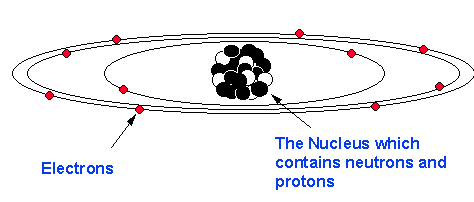
THE ATOM

NOT drawn in "real" proportions
  • A man is about 10 BILLION times larger than an oxygen atom. If an atom were the size of a golf ball then a man would stretch from earth to the moon.
  • A teaspoonful of solid nuclei of atoms would weigh about 500 million tons.
  • The nucleus of a typical atom contains about 99.8% of the total mass of the atom.
  • The diameter of an atom is about 100,000 times the diameter of the central nucleus.
  • Most of an atom is empty space. Imagine a sphere of FIVE MILES to represent an atom. The nucleus on the same scale would be the size of a tennis ball.
  • Most of your body is empty space …..
  • A black hole is supposed to consist entirely of material from the nucleus; all the “empty space” has been stripped away. A black hole of the mass of the earth would be ONE CENTIMETER in diameter.

COLLAPSED STARS

  • There is believed to be a black hole at the centre of our galaxy with the mass of ONE MILLION times that of our Sun.
  • A pulsar or neutron star is a collapsed star that spins on its axis up to three or four thousand times per second.
  • A pulsar is ONE HUNDRED TIMES DENSER than a white dwarf, which is what our Sun will become once its nuclear fuel has been used up.
  • Pulsars sometimes send out gigantic amounts of visible light, equivalent to many times the total light emitted by the Milky Way.
  • A tablespoon of material from a neutron star would weigh about 3 BILLION TONS.

THE HUMAN EAR

  • can distinguish around 400,000 different sounds.
  • can detect sounds so quiet that the vibratory movement induced in the eardrum is not much more than the width of a calcium atom.

By Chris Snuggs

Alistair Cooke

A tribute to Alistair Cooke of Letter from America

Many, many people of a certain age will remember with very fond affection the weekly BBC Radio broadcasts of Alistair Cooke under the title of Letter from America.

Alistair’s broadcast title, Letter from America, came to mind because I have been thinking for a couple of weeks about what to call my impressions about moving to Payson in Arizona.

Payson Perceptions? Pictures of Payson? Payson Profile?  No!  They all seemed naff!

But would it be too presumptuous to echo Cooke’s hugely famous programme title?  Hopefully not.

(And regular readers will know that yesterday, the first Letter from Payson was published.)

I did a Google search on Alistair Cooke and immediately found the BBC web page devoted to him.  For those that don’t know Cooke here are a few details from WikiPedia.

Born in 1908 in Salford, Lancashire, England, Cooke first started broadcasting for the BBC in 1946 and continued until the 20th February, 2004, a total of 58 years and making Letter from America the longest-running speech radio show in the world.

I hope the BBC will forgive me in reproducing here on Learning from Dogs the obituary that is on the Alistair Cooke website.  He was a wonderfully interesting man and his weekly Letter from America seems to have been part of my complete life (in a sense it was).

——————-

Reading Letter from America in the 1950s

He read his Letter from America for 58 years

Esteemed writer and BBC broadcaster Alistair Cooke, famed for his programme Letter From America, has died aged 95. BBC News Online looks back at his long and respected career.

For more than half a century, Alistair Cooke’s weekly broadcasts of Letter from America for BBC radio monitored the pulse of life in the United States and relayed its strengths and weaknesses to 50 countries.

His retirement from the show earlier this month after 58 years, due to ill health, brought a flood of tributes for his huge contributing to broadcasting.

Born in Salford, near Manchester, northern England, Alistair Cooke’s father was an iron-fitter and Methodist lay-preacher.

Alistair Cooke

Alistair Cooke: Consummate broadcaster

Winning a scholarship to Jesus College, Cambridge he read English, edited the undergraduate magazine, Granta, and founded the Cambridge University Mummers.

Alistair Cooke made his first visit to the United States in 1932, on a Commonwealth Fund Fellowship which took him to both Yale and Harvard universities.

Following his return to Britain, he became the BBC’s film critic and, in 1935, London correspondent for America’s National Broadcasting Corporation.

He returned to the United States in 1937 to work as a commentator on American affairs for the BBC. He made his home there and, in 1941, became an American citizen.

Alistair Cooke

A passion for jazz

March 1946 saw the first edition of American Letter, which became Letter from America in 1949.

The series was the longest-running series in history to be presented by a single person.

Alistair Cooke never decided what he was going to talk about until he wrote the script, made no notes during the preceding week and preferred to rely on his memory.

In an interview given at the time of the 3,000th edition of Letter from America, he appeared to have mixed feelings about the future of the United States.

“In America,” he said, “the race is on between its decadence and its vitality, and it has lots of both.”

Addressing Congress in 1973

He addressed Congress in 1973

Cooke led his listeners through the American vicissitudes of Korea, Kennedy, Vietnam, Watergate, Nixon’s resignation and Clinton’s scandals.

In all of this, Cooke pulled no punches. The lyricism of his broadcasting and the urbanity of his voice did not disguise his fears for America which he saw becoming a more violent society.

A liberal by nature, he reserved particular dislike for what he saw as the shallow flag-waving of the Reagan presidency.

Alongside working for the BBC and The Guardian, for which he wrote from 1945 to 1972, he developed a passion for jazz and golf and, as a film critic, he mixed with Hollywood stars.

As a commentator on history, Cooke was sometimes an eyewitness too. He was just yards away from Senator Bobby Kennedy when the latter was assassinated in 1968.

He was never as comfortable on television as radio but, by the 1970s, his hugely successful television series America recounted his personal history of his adopted homeland and won international acclaim, two Emmy Awards and spawned a million-selling book.

British or American?

The Queen awarded him an honorary knighthood in 1973 and the following year, for a journalist, he received the ultimate recognition – he was asked to address the United States Congress on its 200th anniversary.

He told his audience he felt as if he was in a dream, standing naked before them and there was only one thing he could find to say.

Teasing, he exclaimed to the assembled legislators, “I gratefully accept your nomination for President of the United States!”

Naturally, he brought the house down.

Many Britons thought he was American, but to the Americans he was the quintessential Brit, the man who brought them the best of British television as presenter of Masterpiece Theatre. For his part, he explained, “I feel totally at home in both countries.”

He impressed both audiences with his high quality work. With his unquenchable curiosity, Alistair Cooke remained for decades the consummate broadcaster, an elegant writer and a man of enormous wit and charm who made sense of the American Century.

By Paul Handover (still missing Letter from America on the radio.)

Letter from Payson – first impressions

Ma’am, it’s only a small cow town!

On February 26th Jean and I, and a caravan of dogs and cats, arrived at our new home in Payson, Arizona.

We chose Payson simply because we wanted seasons.  Payson is about an hour NE of Phoenix up at 5,000 feet and has very distinct seasons!

Snow in the garden - late March!

Both of us for different reasons thought we knew America pretty well.  Jean was married to an American for nearly 30 years and I had been doing business in the US for a long time, even having my own (small) US company based in New Jersey.

But what neither of us anticipated was the wonderful warmth and friendliness of the Payson inhabitants.  Despite the fact that Payson is hurting big time as a result of the economic situation, the majority of people that we met were happy, smiling and wonderfully accepting of a couple of Brits turning up in their town.

Indeed, Jean spoke to this stranger in the local supermarket, a tall guy complete with the boots and Stetson hat, and asked simply, “Why are so many people in Payson smiling?

His reply was simply, “Ma’am, it’s only a small cow town!

Well here’s a couple of newcomers to this small cow town who like it!

Payson and the Mogollon Rim in the background.

By Paul Handover

The Flirting Pilot

A departure from economics!

I have hit a man only once in my adult life. Only once, but this was a full-out, closed-fist, knock-you-off-your-feet slug that dared him to come back for more. And he didn’t. One slug did it! How empowering!

Bob (name changed) took me and George (my then-fiancé and now ex-husband) for a ride in a four-seat plane above the skyline in downtown Dallas, Texas late one summer night when the skies were dark and the stars were bright.

Private Plane

Bob was a friend of Allen, who was a very good friend of mine and an accomplished private pilot who had introduced me to the joys of flying. Allen trusted Bob and I trusted Allen, so I was not unusually concerned about Bob’s ability to get us back down safely. But I hadn’t factored in Bob’s judgment, or lack thereof.

I think, in hindsight, that Bob had hoped I would show up for the ride alone despite the  fact that I had arranged it as a surprise for George. The plan was for George to sit up front and play co-pilot.  Upon arrival at the hanger, however, Bob promptly stuck George in the back seat of the plane and then turned his full attention to me.  I’m usually fairly dense to these things, but it was apparent even to me that Bob considered this to be a  “date.”  He was charming, animated and very friendly, while virtually ignoring George’s very existence.  We reviewed the safety measures, checked out the plane, and away we went.

Bob was showing me a series of maneuvers, swooping and banking and it was all lovely and exciting until…..a sudden plunge…..and everything instantly blacked out.  It was very disorienting — even though my eyes were  wide open and I was totally conscious, I could not see a thing.

The sirens started blaring; a recorded voice shouted “Stall! Stall! Stall!”  I called to George but he didn’t answer. Either he was unconscious or couldn’t hear me over the noise, but I wasn’t sure which.  I reached out to Bob, but he was unresponsive and felt limp.  Now I was really worried.  Momentarily terrified, actually, with that cold feeling of raw fear in the pit of my stomach.  I thought to myself, “If I am blacked out and cannot see, then HE, the, um, PILOT,  might be blacked out as well!”

I had what seemed like a very long time to ponder what I could do to survive this emergency, and keep George alive, who was there because of me!  I tried to feel my way along the control panel to find the radio to call out “May Day,” but that wasn’t going too well. Somehow — I don’t know how because I still could not see! — Bob got us out of the descent, pulling the nose up and righting the plane.   The sirens and warnings stopped.  After a few more moments, my vision came back, and my stomach returned to its rightful place.  We landed in one piece.

But when ole’ Bob got out of the pilot’s seat and walked around the plane to help me exit, I had a little surprise for him. Actually, it was a surprise for me, too, because I didn’t plan it and didn’t “see” or “feel” it coming. The next thing I knew I had drawn my right arm back, made a fist, and threw it into his left shoulder with everything I had. POW!

He stumbled, grabbed his arm, and said “Ow! What did you do THAT for?”  Well, I didn’t think I had to explain how I thought he had just put my life and that of a friend in danger just to show off.  I didn’t think he would see it the way I did, that he had flown that plane beyond his ability to control it. And even if he was in control the entire time, which I doubted, he scared the bajeebees out of me which was reason enough for me to sock him one!

I don’t recommend physical violence, even if the assailant is half the size of the perpetrator, but I have to tell you that to my knowledge, Bob never took another unsuspecting victim up for a little spin around the tops of buildings in downtown Dallas.   And I know that if I ever really need to wind it up and let her go, I do have it in me.

By Sherry Jarrell

The State of the Union?

A view of the Union from across the Pond

Dr Sherry Jarrell commented recently on her disappointment with President Obama, with two specific criticisms:

A) the way he speaks to the people, or perhaps to some of the people

B) his handling of the economy

With this in mind and given that the President has now been in office for long enough for a judgement to be made, here is a view from this side of the water.

HOME

How he speaks to the people. I can’t judge this; I don’t currently have a television, let alone one with access to all the US media; And “yes”, I know this is a bit bizarre, but there you go …

What does surprise me is that during the election he showed himself to be an orator of considerable talent. Indeed, without this talent to inspire people it seems unlikely that he could have got elected in the first place. So what has gone wrong? Do the people he is speaking badly to perhaps deserve it?

The economy? Dr Jarrell is the expert. However, I just caught sight of a headline about US growth, which seems to be picking up surprisingly well.

Surely it is not all gloom, even if unemployment is high at nearly 10%. However, if you think this is bad you should visit Spain.

Health? As a European, one struggles to understand why he has been criticized by some on this issue. The US can’t afford it? Well, perhaps the bankers should be giving up some of their vast salaries and bonuses to help pay for it.

Priorities? How can the USA possibly NOT have a universal health system, when poor little Cuba has one? As I understand it, health consumes about 17% of US GDP, which is WAY above other comparable nations.

Something is wrong here. Have the medical profession and pharmaceutical companies got Americans by the short and curlies? And even this 17% didn’t until now include tens of millions of people. I would really like to have someone’s take on this.

The Republicans? Well, are we seeing a great party beginning to implode? The hysteria over the health reforms is astonishing. The “Tea Party” group has issued all kinds of threats and complaints that even senior members of the Republican party have not criticized. What is going on here?

Do they have no understanding of how modern, civilised societies work? As a friend of mine put it (as it happens a strong supporter of the Cuban regime, which I certainly am NOT) “You judge a society by the way it treats its poorest and weakest members.” On this score, the Republicans are living on another planet.

I read a fascinating take on this the other day in the New York Times.  In essence, Frank Rich claims that the Tea Party hysteria is nothing to do with the health system, but concerns the fact that WASPs feel threatened as they will soon be in a minority in the USA.

Yup – hard to believe for a British kid brought up on John Wayne, the Pilgrim Fathers, New England and all that … but true. Even so, if the Republicans are not to become a laughing-stock they need to find some more statesmanlike leaders. Sarah Palin just doesn’t cut the mustard I’m afraid.

Oil & Energy? Well, he is cracking down on gas-guzzlers. He has to have points there, surely? It is both essential and long overdue. On the other hand, he has sanctioned oil exploration in hitherto off-limits areas, the  idea being to reduce dependency on imported oil. Very commendable, but the aim of all nations is to reduce consumption, isn’t it?

AWAY

As a European, whatever impression one has of the USA has to be tempered by remembering that one does not live there. One simply cannot pick up the real mood of the country unless one has feet on the ground, and so all the above comments are impressions, possibly misplaced.

But on INTERNATIONAL affairs one is on slightly firmer ground, and of course what the US does internationally also concerns us more directly. When he took office, I decided I would judge him on one thing in particular ……

Palestine: There has been precious little movement since 9/11. Lots of “talks”, “negotiations” and proposals of course, but underlying it all the feeling that the Israelis are not going to give up anything at all.

The present government in particular seems like an immovable object on many key issues that must – frankly – be resolved by compromise on all sides. This is where an irresistible force comes in, and this can only be Obama.

Well, there have been positive signs, but I have yet to see evidence that pressure on Israel will be both real and sustained. Sometimes “negotiations” and “frank-talking” are just NOT enough, and this is one of them. The jury has retired with some recent positive feelings, but it is still out, and very sceptical.

Iran/China?: Obama has tried to be nice to these people, but – as with Israel – being nice sometimes doesn’t do it. There is I feel serious trouble ahead with China, one way or the other. Will Obama be tough enough to deal with it? The jury is still out on that one, too.

SUMMARY: Humans tend to be optimistic folk: we believe there is a solution out there somewhere. We believed Obama might be it.

We were as ever hopelessly-idealistic. Nevertheless, I am mindful that this is an extremely inexperienced President, chosen by Americans for his youth, optimism and charisma more than his long experience as a statesman.

He will need time. Unlike some Americans – who already think he is the anti-Christ (those strange Republicans again) – I am prepared to wait a bit longer to make a final judgement.

By Chris Snuggs

Europe Uber Alles, Pt 2.

A Guest post by Patrice Ayme

Part One ended saying:

The euro, long in planning by some European institutions, was introduced minimally, namely without the governmental apparatus generally associated to a currency. This is the way Europeans have found to progress peacefully towards greater harmony: do what is necessary, and nothing more than that, and do it with total consensus.

Everybody knew that a currency without a government to create and anchor it had never happened before, and was unlikely to endure.

The European Union

Part Two continues

That fit the European federalists just right, and could not have escaped the understanding of Paris and Berlin. As it turned out, the PIIGS’ crisis is putting back Paris and Berlin, the historical engine of Europe, back on top, and this, for an excellent reason.

“PIIGS” stand for Portugal Ireland Iceland Greece Spain. All of them ran bubble economies, partially propelled by taxes from the richest European countries (including France and Germany). It became ridiculous as, for example, Ireland was getting European subsidies while the Irish were already way richer than those subsidizing them. (OK Iceland is not in the EU, yet, but it begged to enter the Eurozone, and it has disappeared the savings of countless Brits and Dutch, which means it has some outstanding business with the rest of Europe, that it will have to sort out, after executing a few more whales, guilty as charged.)

Some acknowledge the convenience of a common European currency and easier border transits, while remaining obsessed by what they view as gigantic differences between European countries. Those quaint nationalists and parochial types obsess that core differences between countries are so strong and deep-rooted that any form of real European union is a ridiculous concept. This is triply erroneous.

Read the rest of this Post