Category: Musings

Eric Clapton and change.

A powerful example of grief and repair.

Normally my week-end posts are lighthearted.  But I do hope you will forgive the departure for today.

Regular readers of Learning from Dogs will recall that on the 2nd August I published a piece under the title of Changing the person: Me.  It offered several examples of how personal change or transition is tough but that the rewards that come from understanding the personal and emotional consequences of big life changes are immense.  As I wrote then,

The most important thing to note, and this is why so many ‘change’ ambitions fail, is that change is deeply unsettling at first.  When change happens for the majority of us, often ‘forced’ on us as a result of unplanned life events, we are left deeply unsettled; a strong feeling of being lost, of being in unfamiliar surroundings.  Think divorce or, worse, the death of a partner or child, reflect on how many sign up for bereavement counselling in such circumstances.  Big-time change is big-time tough (apologies for the grammar!).

Then I came across the story of how Eric Clapton coped when his four-year-old son fell from the window of the 53rd-floor window of his mother’s friend’s New York City apartment.  Here’s an extract from the WikiPedia entry:

The years following 1990 were extremely turbulent for Clapton. In August 1990, his manager and two of his roadies (along with fellow musician Stevie Ray Vaughan) were killed in a helicopter accident. Seven months later, on March 20, 1991, Clapton’s four-year-old son Conor died after falling from the 53rd-floor window of his mother’s friend’s New York City apartment. He landed on the roof of an adjacent four-story building.  After isolating himself for a period, Clapton began working again, writing music for a movie about drug addiction called Rush. Clapton dealt with the grief of his son’s death by co-writing “Tears in Heaven” with Will Jennings.

Here’s Tears in Heaven.  Please stop whatever you are doing now and play this video.  In under 5 minutes it demonstrates the power of the saying from Henry David Thoreau, the American author and poet – “Not until we are lost do we begin to understand ourselves”.

And going back to that WikiPedia entry

In an interview with Daphne Barak, Clapton stated, “I almost subconsciously used music for myself as a healing agent, and lo and behold, it worked… I have got a great deal of happiness and a great deal of healing from music“.

Eric Clapton

Let me close with another saying, this time from George Moore, the novelist, “A man travels the world over in search of what he needs and returns home to find it.”

Not even sure what to call this Post?

A futile attempt to explore the concepts of truth, reason, craziness and … (I give up!)

Can’t make sense of this?

Yesterday, I republished an article that Pete Aleshire recently wrote in the Payson Roundup, our local newspaper, on thinking outside the box.  Pete entitled his essay, Strange theory reveals secrets of the universe, the logic of sycamore leaves and why even smart people struggle with new ideas.

And it was part of that title that resonated with a mind-bending (literally) essay that Patrice Ayme presented on his blog on the 27th July.  The part of the title that ‘clicked’ with me was “why even smart people struggle with new ideas.”

You see what Patrice wrote about on the 27th July was about the proposition “that superior intelligence in a species can only come from an ability to engineer (productive) craziness.”

As Patrice explained,

Two of the creators of modern mathematics and metamathematics, Georg Cantor and Kurt Godel, experienced some craziness. Nietzsche produced some of his best work before he went insane. Van Gogh experienced serious mental difficulties. Bolztman killed himself. All these cases were within a generation. Those may all be unrelated accidents, sure.

Immediately leading on to him writing,

 However I will show below that superior intelligence in a species can only come from an ability to engineer (productive) craziness. (Perhaps the reason why chimps and bears are so unpredictable: they are not just clever, but a bit crazy!)

Then after some very detailed reflections on man, Patrice wrote,

Hominids who practiced a bit of craziness were evolutionary advantaged, because they found more readily solutions to logical incompleteness at hand. Craziness allowed to find new, necessary axioms. Thus evolution learned to exploit logical incompleteness.

Typical of Patrice Ayme, the essay is not an easy read but it is brim full of fascinating ideas and well worth the effort.  Patrice concludes,

 If craziness is so useful to augment those mental powers we need so much to survive as a civilization, how do we survive it? Precisely by augmenting the truth. Thus only craziness compatible with the truth will be able to survive. That is why I have not hesitated to tell various truths about Obama (whom I have intensely supported in all sorts of ways), or Hollande, whom I approved of, until he started to say lies about World War Two (details soon to come).

Truth is my religion. A touch of craziness my sanity. (Latest demonstration: It’s not like I did not know of the danger in advance. I was slightly charged by a large bad mood moose with calf today on an Alaskan trail, where I was nonchalantly running with a bad ankle; after a high speed retreat, as a good predator, I circumvented the difficulty, and anxiety switched sides, the calf nearly spraining its own ankle in the process… . )

There is no truth but the full truth, and a touch of craziness is its prophet.

Now go back to Pete Aleshire and see the harmony between his beautiful prose and the fascinating ideas flowing from Patrice’s mind. This is how Pete concluded his essay,

So Drake [Larson] and I spent the day wandering along the banks of Fossil Creek as he kept trying to come up with metaphors so I could grasp math’s secret within the beauty of Fossil Creek’s sycamore leaves. The well-designed sycamore leaves adhere to the Fibonacci sequence, a mysterious progression of numbers that crops up throughout nature — from the spiral of a nautilus shell to the layout of the ruins of Chaco Canyon.

So I figured I’d just write this — and get earth’s 17 PSI cap for dark energy out there in the time/date/ stamped world.

Oh, yeah: And about Kenny Evans. [Mayor of Payson, AZ]

So that night, I took Drake to the Payson council meeting. Turns out, Drake’s family was growing grapes in the Coachella Valley at the same time Evans was farming 10,000 acres in Yuma. They both managed to survive that tempestuous time when the United Farm Workers union organized agriculture workers.

I introduced them and listened as they recalled events and figured out whom they knew in common.

It was then that I decided to blame Drake for my faith in Evans’ ridiculous conviction that a university will build a campus here in this itty bitty tourist town — complete with a research center and convention hotel. No sensible small-town mayor would risk public ridicule while spending thousands of hours on such an outside-the-box notion … unless he’d learned to gamble on dreams and hard work during all those years as a farmer.

Evans’ notion is almost as silly as a farmer who calculates the amount of dark energy emanating from earth, while credentialed experts scratch their collective heads.

Still, I’m thinking maybe I’ll get a nice suit jacket — something I can wear to both the university’s groundbreaking and the ceremonies in Oslo.

Hey, never hurts to be prepared.

So there, I feel much better now!  None the wiser, indeed even more confused, but just grateful there are some out there who have a go at trying to explain ….. whatever it is they are explaining!

Thinking outside the box

Strange theory reveals secrets of the universe, the logic of sycamore leaves and why even smart people struggle with new ideas.

A guest post from Pete Aleshire, Editor, Payson Roundup.

Introduction

The Payson Roundup is our local newspaper here in Payson, AZ.  I first saw this article by Pete a couple of weeks ago and was just utterly engrossed by it.  Not just the tantalising peek into a physics I know so little about but the beautiful prose.  The latter is not surprising because as well as being editor of the paper, Pete also teaches the creative writing course at our local college.  Jean and I had the benefit of attending the course, I guess about a year ago, and therefore can speak from experience.

So settle down and enjoy.

oooOOOooo

I finally got Drake Larson together with both sycamore leaves and Payson Mayor Kenny Evans. Moreover, I have been entrusted with a formula that may win me an invitation to Oslo if Drake gets a Nobel Prize.

But even if that don’t work out, I did get to eavesdrop on Drake and Evans. Quite the event, from my bemused point of view, since it shed light on dangerous delights of outside-the-box thinking and the Nature of the Universe.

But wait. You look confused.

Let me back up — and start somewhere closer to the beginning. Be patient with me — by the time we’re done, you’ll realize why God’s a math nerd, one surprising secret of Dark Energy, why farmers become original thinkers and what sycamore leaves tell us about the universe.

But first, I have to explain about Drake.

We grew up together, getting into (and mostly out of) various varieties of trouble. Very early on, I realized that he was much (much) smarter than me. This initially really irritated me, as I was previously inclined to vanity about my intelligence. Turns out, I love learning stuff other people have discovered, but Drake only gets truly excited when he has hold of a completely new idea that no one else can quite grasp. This prepared me, as it turns out, for meeting Kenny Evans — but that’s getting ahead of the story.

Drake and I grew up doing math homework together, before I wandered off into a career in newspapers. He got his degree in mathematics, turned down a job with the RAND Corporation and took up growing table grapes.

But he never quit picking at the lock of the universe.

Years ago when I was the science writer for the Oakland Tribune, he came to me all excited about a set of formulas he had. I did my best to follow the two pages of calculations, but all I can tell you is that they described instabilities of any sphere with uniform density. He predicted that when the Voyager spacecraft reached Jupiter, it would report inexplicable turbulence at a certain depth in the atmosphere. I ran his numbers past various top-level physicists and mathematicians who couldn’t find a flaw in his formulas — but concluded that it had to be wrong since it led to a violation of the keystone laws of conservation of mass and energy.

But I took note some months later when the Voyager spacecraft reported mysterious levels of turbulence deep within the atmosphere of Jupiter.

The years passed. Drake kept growing grapes, flowers, dates and vegetables — and working on his calculations. He wrote a book, “The Cults of Relativity,” in which he described a few of his theories, delighted in the conundrums of mathematics and pondered the curious resistance of even smart people to unconventional ideas.

We got together again recently. I took him down to Fossil Creek, all overhung with sycamores with the rustle of floppy, five-pointed leaves. Drake was his old self on our Fossil Creek tour as he tried to show me math’s beauty around us, although I was but a blind man clutching the tail of his mathematical elephant.

He had now connected his formulas to dark energy, a still hypothetical form of energy invoked by desperate cosmologists to explain the startling observation that the expansion of the universe is actually accelerating. To explain this seeming impossibility, they invented “dark energy” — which they figure pervades the universe and at certain densities creates a repulsive force stronger than the attractive force of gravity.

Anyhow, here’s the point: Drake was in awe that his mathematical wanderings offered a way to calculate dark energy’s cap within earth — it happened to be an “inside is now outside” inversion of Isaac Newton’s simplest integral. No. Please. Don’t ask me to explain that. But earth’s dark energy cannot exceed 17 pounds per square inch at a depth of about 1,500 miles. He’s been working with University of Southern California computer crunching guru professor Barry Boehm, and the University of California at Riverside geophysics professor Shawn Biehler on its implications. Among other things, it could explain the perplexing observation that major earthquakes increase the earth’s rotation rate.

No one knows how to measure such a quantity at present. Someday they will. If it turns out that 17 pounds per square inch is a relevant benchmark for earth’s dark energy, then this column will maybe win Drake the Nobel — and I’ll get to dress up and attend the ceremony.

So Drake and I spent the day wandering along the banks of Fossil Creek as he kept trying to come up with metaphors so I could grasp math’s secret within the beauty of Fossil Creek’s sycamore leaves. The well-designed sycamore leaves adhere to the Fibonacci sequence, a mysterious progression of numbers that crops up throughout nature — from the spiral of a nautilus shell to the layout of the ruins of Chaco Canyon.

So I figured I’d just write this — and get earth’s 17 PSI cap for dark energy out there in the time/date/ stamped world.

Oh, yeah: And about Kenny Evans.

So that night, I took Drake to the Payson council meeting. Turns out, Drake’s family was growing grapes in the Coachella Valley at the same time Evans was farming 10,000 acres in Yuma. They both managed to survive that tempestuous time when the United Farm Workers union organized agriculture workers.

I introduced them and listened as they recalled events and figured out whom they knew in common.

It was then that I decided to blame Drake for my faith in Evans’ ridiculous conviction that a university will build a campus here in this itty bitty tourist town — complete with a research center and convention hotel. No sensible small-town mayor would risk public ridicule while spending thousands of hours on such an outside-the-box notion … unless he’d learned to gamble on dreams and hard work during all those years as a farmer.

Evans’ notion is almost as silly as a farmer who calculates the amount of dark energy emanating from earth, while credentialed experts scratch their collective heads.

Still, I’m thinking maybe I’ll get a nice suit jacket — something I can wear to both the university’s groundbreaking and the ceremonies in Oslo.

Hey, never hurts to be prepared.

oooOOOooo

A big thank-you for the permission to republish this on Learning from Dogs. I have no doubt that many LfD readers enjoyed it as much as I did!  Stay with me for tomorrow when the theme of thinking, innovation and craziness is explored a touch more.

The power of touch

Nature, once again, shows the value of loving contact during those crucial early years.

I’m writing this at 7.45am on the 30th.  Coincidentally, Jean and I were chatting in bed about an hour ago about this ‘touchy – feely’ stuff.  This was a bed having four dogs on it!  One of those, Hazel, was laying alongside my left leg just sucking up me stroking her head and tummy.  Jean and I were musing that for animals and humans, how we are touched by our parents, especially our mother, during those first few years of growing up has profound implications for how we as adults respond to being touched and hugged.

So then I opened up my mail box and there was this sent by Cynthia Gomez serving as a wonderful reminder of the power of touch.  Thanks Cynthia, great timing!

oooOOOooo

Some pictures just don’t need captions.
There is nothing like Mom’s lap no matter who you are. This is precious !!!!
This is a newborn offspring of Taskin, a Gypsy Stallion owned by
Villa Vanners of Oregon ..
These pictures were taken immediately after his birth on April 6.
The mare laid down, and then he trotted around and
crawled right up into her lap.
—————–
——–
——–
——–
——–
So give someone a hug today!

And now to do something.

The cumulative effect of millions of decisions brings about change!

Yesterday’s Post was about personal change.  It came on the back of a short series that was triggered by the Bill McKibben essay in Rolling Stone magazine that I republished on 31st July.  If you haven’t read it, do yourself a favour and read it soon.

The essay highlighted the challenge of how we change our ways, that is at a personal level, which is why I decided to devote a complete Post to the subject of change.  There was no doubt that the McKibben essay opened our eyes to the need for change, if they weren’t open already.  So being clear about the need for change and how, initially, it can make us feel less sure of ourselves, where do we go from here?  As John Fisher explains, within the change process, there is the stage where things start to happen.  This is what he writes about that stage,

Moving forward

In this stage we are starting to exert more control, make more things happen in a positive sense and are getting our sense of self back. We know who we are again and are starting to feel comfortable that we are acting in line with our convictions, beliefs, etc. and making the right choices. In this phase we are, again, experimenting within our environment more actively and effectively.

Keep this stage in mind as you journey along your individual path towards reducing your impact on the planet.  It really does act as a beacon for you, as a candle in the darkness.

OK, there’s an old saying in business ‘if you can’t measure it you can’t manage it!‘  So let’s start off by calculating the CO2 we are presently responsible for.

There are a number of CO2 calculators available on the Web but this one from The Resurgence Trust website seems as good as any.  Easy to use and it provides a starting point from which to plan your attack!  Make a promise to calculate your present CO2 output, soon!

Then to the plan of action!  A web search on reducing CO2 produces a huge number of results and I recommend that you undertake your own trawl to find the information that ‘rocks your boat’.  But on the Brave New Climate website there’s a summary that caught my eye, especially how it was introduced:

Top 10 ways to reduce your CO2 emissions footprint

Posted on 29 August 2008 by Barry Brook

Solving climate change is a huge international challenge. Only a concerted global effort, involving the governments of all nations, will be enough to avert dangerous consequences. But that said, the individual actions of everyday people are still crucial. Large and complex issues, like climate change, are usually best tackled by breaking down the problem into manageable bits.

For carbon emissions, this means reducing the COcontribution of each and every one of the six and a half billion people on the planet. But what can you, as an individual person or family, do that will most make a difference to the big picture? Here are my top ten action items, which are both simple to achieve and have a real effect. They are ranked by how much impact they make to ‘kicking the COhabit’.

Then follows ten solid recommendations:

  1. Make climate-conscious political decisions.
  2. Eat less red meat.
  3. Purchase “green electricity“.
  4. Make your home and household energy efficient.
  5. Buy energy and water efficient appliances.
  6. Walk, cycle or take public transport.
  7. Recycle, re-use and avoid useless purchases.
  8. Telecommute and teleconference.
  9. Buy local produce.
  10. Offset what you can’t save.

Each of these recommendations is supported by great web links and plenty of advice.  So don’t just skip through those 10 options, go here and commit to doing something!

And when you are ready to involve others beyond your family, 350.org has a great selection of resources for potential organizers.

We can make a difference!

More reflection on being human!

The voice of reason from James Howard Kunstler.

Yesterday, I published a Post that I called What it is to be human.  It was inspired and based on the compelling film I AM‘ by Tom Shadyac.  As so often seems to happen, shortly after completing yesterday’s Post, an item from Chris Martensen’s Blog caught my eye.

Chris publishes the blog Peak Prosperity and on July 14th Chris had an item featuring James Howard Kunstler.

Let me give you an idea of that item from Chris.

Author and social critic James Howard Kunstler has been one of the earliest, most direct, and most articulate voices to warn of the consequences — economic and otherwise — of modern society’s profligate wasting of the resources that underlie its growth.

In his new book, Too Much Magic, Jim attacks the wishful thinking dominant today that with a little more growth, a little more energy, a little more technology — a little more magic — we’ll somehow sail past our current tribulations without having to change our behavior.

Such self-delusion is particularly dangerous because it is preventing us from taking intelligent, constructive action at the national level when the clock is fast ticking out of our favor. In fact, Jim claims that we are past the state where solutions are possible. Instead, we need a response plan to help us best brace for the impact of the coming consequences. And we need it fast.


James Howard Kunstler

Mr. Kunstler is the author of the very successful book The Long Emergency and his latest book, as mentioned above, Too Much Magic expands on his alarming argument that our oil-addicted, technology-dependent society is on the brink of collapse, ergo that the long emergency has already begun.  His website is here.

Anyway, back to the Chris Martenson’s piece.  Chris goes on to quote Mr. Kunstler, as follows:

[We now live in] this weird, peculiar period in American history when the delusional thinking has risen to astronomical levels — predictably, really — in response to the stress levels that our society feels. And it is expressing itself as sort of “waiting for Santa Claus and the Tooth Fairy” to deliver a set of rescue remedies to us so that we can continue running Wal-Mart, Walt Disney World, Suburbia, the U.S. Army, and the Interstate Highway System by other means. That is the great wish out there. It is kind of understandable, because that is the stuff that we have, and people tend to defend the stuff that they have in any given society and the systems and platforms that they run on. But it is probably a form of collective behavior that is not really going to benefit us very much and really amounts to simply wasting our time, and wasting our dwindling resources, and even our spiritual resources when we could be doing things that are a lot more intelligent.

Here is something I have detected as I travel around the country: There is a clamor for “solutions.” Everywhere I go, people say “Don’t be a doomer; give us solutions.” And I discovered that the subtext to all that is they really want solutions for allowing them to keep on living exactly the way they are living now. To keep on running Wal-Mart, and keep on running Suburbia, and keep on running the highway system, and the whole kit of parts. And what that really means is that they are looking for ways to add on additional complexity to a society that is already suffering from too much complexity.

(Read the full article here.)

There is a podcast of the interview with James Kunstler here and also on YouTube, as below.

My own reflection on this item, as with so many other articles, essays and items available to read online, is that the power of the Web is informing and educating millions of people around the world in a way that Governments and the media have failed to so do.

That promises change and, maybe, sooner than we might expect.

What it is to be human.

A powerful and compelling film by Tom Shadyac.

Background.

I have recently started subscribing to the website of The Permaculture Research Institute of Australia.  Information about them is here, from which I offer,

Permaculture (the word, coined by Bill Mollison, is a portmanteau of permanent agriculture and permanent culture) is the conscious design and maintenance of agriculturally productive ecosystems which have the diversity, stability, and resilience of natural ecosystems. It is the harmonious integration of landscape and people — providing their food, energy, shelter, and other material and non-material needs in a sustainable way. Without permanent agriculture there is no possibility of a stable social order.

Read the full article here.

Tom Shadyac. Photograph by Kevin Parry/WireImage

Anyway, in a recent post there was a link to a video by Tom Shadyac.  Tom’s biographical details are here.

Here’s what was written about Tom in that post,

I think you’ll find this documentary highly watchable. At least, I did. So, be warned — if you click play ten minutes before heading off to work, you may well be late…

I am, written and directed by Tom Shadyac, stands in stark contrast to his previous productions. Tom is well known for hit comedy films, like Ace Ventura: Pet Detective (Jim Carrey), and many others. He was hugely ’successful’ — as judged by the contemporary money-oriented measure of success — with an antique-filled mansion, private jet, etc., but, after a bicycle accident, and the severe physical suffering he experienced for months afterwards, Tom started to think a little more deeply about life and where we’re all headed. His thoughts about consumer society, where it’s taking us and its inability to satisfy us, despite all the damage done, lead him to ask himself two simple, but profound, questions: what’s wrong with the world, and what can we do to make it better?

After Tom’s physical problems finally started to fade, he decided to take a crew of four people and put those questions to some noteworthy individuals around the world — academics, environmentalists, philosophers, spiritual leaders, writers and scientists. It’s an interesting peek at humanity.

I personally like that Tom is trying to get beyond the symptoms of the world’s problems, to look more at the root issues from which they spring. The aspect that becomes central to the movie is whether man (and nature in general, for that matter) is inherently competitive, or inherently cooperative — whether man instinctively wants to live only for his own individualistic advancement, even if he must do so aggressively, or if he is more hard-wired to live for the good of others, collaboratively. My own subjective opinion is that both aspects are part of our makeup, but that one can override the other, depending on the choices we make. I also think these choices can become easier for us, depending on what we make the focus of our attention, and depending on the choices made by others around us — our family, friends, colleagues, etc. (i.e. we all influence each other). But, whatever your own opinion, I think most will find some valuable food for thought with this production.

The video at that URL wasn’t available for copyright reasons but here it is on YouTube.  Settle down for an hour and a quarter and be deeply embraced by Tom’s message.

No let me say a little more. The theme of the film is one of immense hope in the face of what, to millions and millions of people, must seem like a scary and bleak future.  As I have written before on Learning from Dogs, the truth about change is that it starts with the self: to change the world first change oneself.  We can grumble, complain and be outspoken about so many aspects of the societies in which we live but it doesn’t alter the incontrovertible fact that change starts within.

So watch this film!

I AM is an utterly engaging and entertaining non-fiction film that poses two practical and provocative questions: what’s wrong with our world, and what can we do to make it better? The filmmaker behind the inquiry is Tom Shadyac, one of Hollywood’s leading comedy practitioners and the creative force behind such blockbusters as “Ace Ventura,” “Liar Liar,” “The Nutty Professor,” and “Bruce Almighty.” However, in I AM, Shadyac steps in front of the camera to recount what happened to him after a cycling accident left him incapacitated, possibly for good. Though he ultimately recovered, he emerged with a new sense of purpose, determined to share his own awakening to his prior life of excess and greed, and to investigate how he as an individual, and we as a race, could improve the way we live and walk in the world.

Towards a better understanding of this strange species – man!

A coating of thought!

Evidence that supports the notion that deliberation is really rather a good idea!

In the issue of The Economist, the July 7th edition, there was a rather intriguing article from the pen of Schumpeter entitled,

In praise of procrastination

that proposes that the world of speed and instant decisions is much less efficient than giving things a decent ‘coating of thought’.

Here’s an extract from the article that makes this point,

These thoughts have been inspired by two (slowly savoured) works of management theory: an obscure article in the Academy of Management Journal by Brian Gunia of Johns Hopkins University; and a popular new book, “Wait: The Art and Science of Delay”, by Frank Partnoy of University of San Diego. Mr Gunia and his three co-authors demonstrated, in a series of experiments, that slowing down makes us more ethical. When confronted with a clear choice between right and wrong, people are five times more likely to do the right thing if they have time to think about it than if they are forced to make a snap decision. Organisations with a “fast pulse” (such as banks) are more likely to suffer from ethical problems than those that move more slowly. (The current LIBOR scandal engulfing Barclays in Britain supports this idea.) The authors suggest that companies should make greater use of “cooling-off periods” or introduce several levels of approval for important decisions.

Readers who want to read Brian Gunia’s research article may find it in full here.  Details of Frank Partnoy’s book are here.

Then the day after reading that copy of The Economist, this came into my ‘inbox’ from the Big Think website,

The Lost Art of Thinking Before You Act

Megan Erickson on July 8, 2012, 12:00 AM

What’s the Big Idea?

Philosopher Slavoj Žižek is fundamentally anti-capitalist, and yet, the man who describes himself as a “complicated Marxist” also expresses palpable irritation at the idea that capitalists are nothing more than egomaniacal psychopaths. In a recent interview with Big Think, he told us that although he’s highly critical of capitalism in his work, when asked about it in public, he’s tempted to detail all the things that are great about it.

Political critiques that don’t account for the passion of the individual capitalist are flawed, he says, because capitalism is as much an ethical as it is an economic system. “It’s not true when people attack capitalists as egotists. ‘They don’t care.’ No! An ideal capitalist is someone who is ready, again, to stake his life, to risk everything just so that production grows, profit grows, capital circulates. His personal or her personal happiness is totally subordinate to this. This is what I think Walter Benjamin, the great Frankfurt School thinker, had in mind when he said capitalism is a form of religion.”

There’s a video interview with Slavoj Zizek in that Big Think article that isn’t available on YouTube, so to watch that video and read the full article, do go here and enjoy!

But there are other videos of Slavoj Zizek (anyone know how to pronounce his name??) on YouTube and I selected this one as possibly being of wider interest.

Philosopher Slavoj Zizek argues environmentally conscious consumers are desperate for simple tasks they can perform to alleviate their guilt, so they do things like purchase overpriced organic produce. Zizek also highlights Starbucks, which he suggests attracts customers by appealing to their sense of altruism.

Complete video is here – Slavoj Zizek: Catastrophic But Not Serious.  It’s over two hours long but strikes me as two hours of very educational viewing from The Graduate Center, City University of New York.

Footnote:

Having completed this Post, I looked for a relevant photograph to head up the article.  The one I chose came just by chance from the website of Ideas Champions, innovation consultants.  Indeed the photo came from this article Creating Time to Innovate which included this paragraph,

Aspiring innovators don’t need pep talks. They need TIME. Time to think. And time to dream. Time to collaborate. And time to plan. Time to pilot. And time to test. Time to tinker. And time to tinker again.

Fancy that!  Think I’ll go and lie down and have a good think!

Trip down memory lane

The amazing development of electronics over 50 years.

(A republication of a post first shown on the 13th August, 2009)

The calendar reliably informs me that this is my 65th year.  My brain, of course, lags somewhat in accepting this!

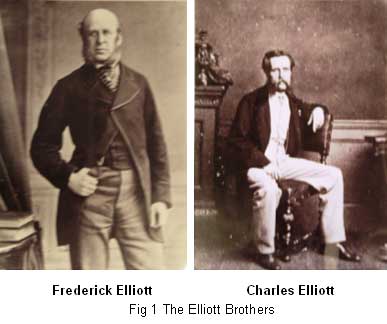
My step-father during my early teenage years worked for Elliott Brothers (the link goes to an interesting history of the firm that started in 1804) in Borehamwood, just north of London.  He encouraged me to fiddle with ‘steam’ radios and

try and understand how these basic circuits worked.  It was then a small step to deciding to become a radio amateur, popularly known as a radio ham!  In those days it was a case of some pretty intensive studying to pass a Theory exam as well as being able to pass an exam in sending and receiving Morse code.

So joining the local radio society seemed like a sensible idea.  That was (and still is!) called the Radio Society of Harrow.  That it is still in existence after all these years is truly delightful.  Those Friday night sessions at the Society and extra-curricular classes on Sunday morning at Ron Ray’s  (G2TA) house, an hour’s bicycle ride away from home, ensured that shortly after my 16th birthday I was granted a Licence, G3PUK.  It was a very proud moment.

Anyway, once granted a licence it was time to build my own radio transmitter.  Most of the details have been lost in the mists of time but what is recalled was that the final amplifier was a pair of 803s driving an 813 (These are radio valve numbers).  It sounds like something from the ark!  But again ploughing the inexhaustible files of the Web, it’s possible to see what these radio valves looked like.  Thanks to the National Valve Museum.

Here are pictures, courtesy of the National Valve Museum of those two radio valves:

803 – The substantial wide glass tube envelope is 58 mm in diameter (2 1/4 in) and, excluding the special five pin base pins, is 216 mm tall (8 1/2 in).

813 The classic envelope is substantial at 60 mm diameter (2 1/3 in) and 170 mm (6 2/3 in) long excluding the special base pins. The anode is 53 mm long and 48 mm wide. The metal is 1 mm thick.

803 radio valve
803 radio valve
813 radio valve
813 radio valve

It’s difficult, today, to imagine devices which are essentially diodes (well, technically the 803 was a pentode and the 813 a tetrode) being between 6 and 8 inches tall!

My own self-build transmitter had not really been successful emitting more heat than light, so to speak.  Literally, in the sense that these large radio valves kept me warm in my converted garden shed at the bottom of the garden.  They also completely wiped out TV reception for those households with a 1/4 mile range that had invested in early television sets!  It was time to move on to the R1155.

Around this era, less than 20 years after the end of the War in Europe in 1945, war-surplus equipment was widely available including ‘compact’ transmitter-receiver units.

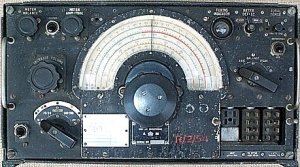
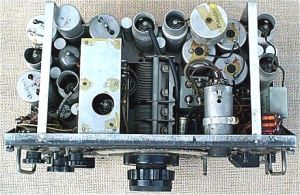
One popular one was the RAF R1155 which had been fitted to RAF Lancaster bombers and RAF marine craft.  It was also fitted to the Sunderland flying boat.  This information plus the photos below is from this fascinating web site for those wishing to be ‘geeky’ about this.

RAF R1155B transreceiver
Internal view of the R1155B

Just compare the view on the right to the inside of your domestic radio or your cell phone.

A lot happens in 50 years!

My personal journey now leaps to 1978 and I have just left IBM UK having had 8 fabulous years with them as an Office Products salesman.  My fledging company, Dataview Ltd, has just become the 8th Commodore Computer (CBM) dealer in the UK, based in a small office in Colchester, Essex, about 50 miles north-east of London.

The CBM PET (Personal Electronic Transactor) released in 1977 initially with a calculator type keyboard was useless for any business application but soon came out with a typewriter sized keyboard, making it a more viable business

CBM computer, circa 1978

machine.  Today, as this is typed on an ‘old’ laptop with 2GB RAM, it seems unbelievable that these CBMs were sold with between 4k and 96k of RAM (memory) and no hard disk, although one could purchase an add-on that comprised dual 5 1/2 inch floppy disk drives.

YouTube obligingly finds  a short video on the Commodore PET for those really wishing to enjoy the nostalgia!

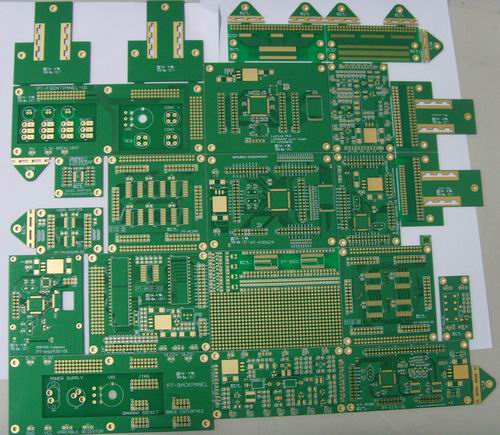
So to turn to the 21st century and to run out of understanding.  We appear to live in a world of multi-later printed circuit boards of unimaginable (to me) component density, assuming that the word ‘component’ is even relevant today.

Haven't a clue what this is but it's very modern.
Haven’t a clue what this is but it’s very modern.

What an amazing period it has been!

A long way from yesterday!

Now let me see was it Pin 920 to Pin 140, or Pin14 to Pin 860 connected to Pin 56 ………?

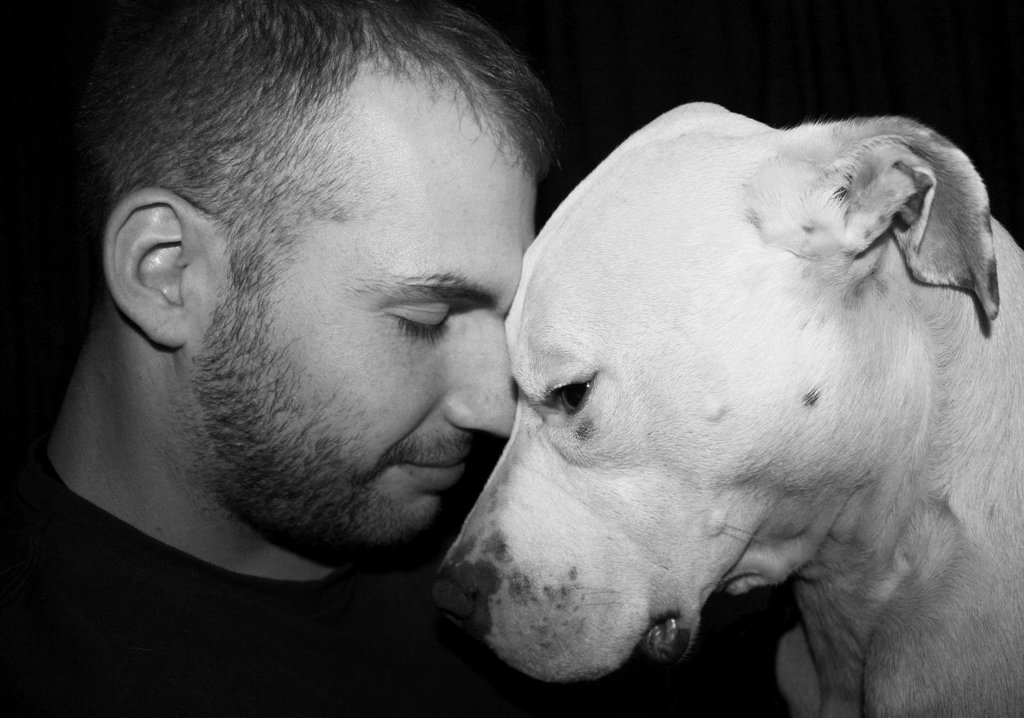
The bond between dogs and humans

Such a beautiful and mutually-important relationship.

I didn’t plan to write more about this subject thinking that my last two posts, Woof at the Door and Prof. Pat Shipman, more than covered the theme; indeed much more.

But then a flurry of other articles conspired to pass my desk.

In no particular order there was an article on the Big Think website, Do Dogs Speak Human?  As the article opened,

What’s the Big Idea?

Perhaps the better question is, do humans speak dog? Either way, the debate over whether language is unique to humans, or a faculty also possessed by wild and domestic animals from dogs to apes to dolphins, is an interesting one. The answer depends on exactly how we define “language,” and who’s doing the talking, says David Bellos, the Booker prize-winning translator.

The article includes this three-minute video,

and concludes,

Broadly, a language is a mode of expression. “The argument that only human language is language and that animal communication systems, however sophisticated they are — and some of them are quite sophisticated — are not languages because they consist of discrete signals is a circular argument,” he argues. “It’s a self-fulfilling thing. And I think we should be a little bit more interested in the complexity and the variability of animal communication systems and less rigid about this distinction between what is a language and what is not a language.”

For now, we’re happy with this:

The June 30th edition of The Economist had an article entitled, Can dogs really show empathy towards humans? (You may have to register (free) to view this.)  That report ends, as follows,

As they report in Animal Cognition, “person-oriented behaviour” did sometimes take place when either the stranger or the owner hummed, but it was more than twice as likely to occur if someone was crying. This indicated that dogs were differentiating between odd behaviour and crying. And of the 15 dogs in the experiment that showed person-oriented responses when the stranger cried, all of them directed their attention towards the stranger rather than their owner.

These discoveries suggest that dogs do have the ability to express empathetic concern. But although the results are clear enough, Dr Custance argues that more work needs to be done to be sure that such behaviour is true empathy. It is possible, she points out, that the dogs were drawing on previous experiences in which they were rewarded for approaching distressed human companions. Dog-owners, however, are unlikely to need any more convincing.

It was then an easy follow-up to that Animal Cognition article which is available online here; here’s the abstract,

Empathy covers a range of phenomena from cognitive empathy involving metarepresentation to emotional contagion stemming from automatically triggered reflexes.

An experimental protocol first used with human infants was adapted to investigate empathy in domestic dogs. Dogs oriented toward their owner or a stranger more often when the person was pretending to cry than when they were talking or humming. Observers, unaware of experimental hypotheses and the condition under which dogs were responding, more often categorized dogs’ approaches as submissive as opposed to alert, playful or calm during the crying condition. When the stranger pretended to cry, rather than approaching their usual source of comfort, their owner, dogs sniffed, nuzzled and licked the stranger instead.

The dogs’ pattern of response was behaviorally consistent with an expression of empathic concern, but is most parsimoniously interpreted as emotional contagion coupled with a previous learning history in which they have been rewarded for approaching distressed human companions.

It doesn’t get closer than this.