A personal perspective on today’s American presidential election
Voting for truth!
In many ways, it’s helpful that despite being a resident of the USA I am not eligible to vote. That’s because my residency status as a ‘Green card’ holder does not give me such entitlement. That’s the domain of citizens, and rightly so.
The reason I find it helpful is that as a non-voter and still very much the ‘newcomer’ to this county, I view the proceedings from a different perspective; well that’s my take on things!
So here are two thoughts.
Integrity
The motivation behind Learning from Dogs came from the realisation that dogs offer mankind many lessons, especially the one of behaving with integrity. You can read more about this aspect of dogs here.
Maybe it’s a naive hope but politicians around the world must rapidly embrace the fact that without integrity in the political processes we are all lost. To underline this plea, go and read a recent essay that was introduced by Daniel Honan on The Big Think. Here’s a dip into that:
Larry Lessig: End Raging Cronyism, Save Our Republic
What’s the Big Idea?
If you are not planning to vote in the upcoming election, Larry Lessig has a good explanation why.
You, like most Americans, believe that money buys results in Congress. No matter who wins, you believe that corporate interests will still have too much power and prevent real change. You are correct in your belief that money buys results in Congress, Lessig says. However, he has a different prescription than non-participation.
What’s the Significance?
Lessig points out that .000015 percent, or 47 individuals, have given 42 percent of the Super PAC donations this election cycle. As a result of this “money election,” Lessig says a few powerful interests exert an influence that conflicts with the public good.
“… 47 individuals, have given 42 percent of the Super PAC donations this election cycle.” Just reflect on the power and influence that flows from such a distortion of fairness.
Truthfulness
My second thought is about being truthful.
The time for all our leaders, right across the world, to come together and face the reality of climate change is upon us. There is no time left to duck and weave.
Peter Sinclair of ClimateCrocks blogsite recently posted this video. Watch it and ask yourself how much longer the leader of the most powerful nation in the world can sit on the sidelines of the greatest threat to our civilisation ever seen.
The widely reported story of a dog saving the life of a baby.
Although this story came into prominence a week ago, this is the first opportunity for inserting it on Learning from Dogs. That doesn’t detract one little bit from the power of the tale, so watch this video!
It’s hard to believe, but some vets actually cut the vocal cords of dogs AND cats just to suppress their voices. We know because it happened to our dogs before we adopted them. They’re two very different breeds—a Newfoundland and a Chihuahua—and we live in two different states.
We joined with Coalition to Protect and Rescue Pets, which led the successful campaign to ban devocalization in Massachusetts, to make sure no other dog or cat anywhere suffers as ours have.
But until the American Veterinary Medical Association (AVMA) changes its position on devocalization, countless other dogs AND cats will be subjected to this inhumane, unnecessary surgery.
Though devocalization is so cruel it is illegal in many countries, the AVMA continues to condone it as a “final alternative” to manage barking.
That leaves animals vulnerable to and legitimizes devocalization.Here’s why:
No vet can possibly know if devocalization is a “final alternative,” and some won’t ask. Even receipts from a trainer or behaviorist don’t mean the advice was followed consistently or at all; devocalization is easier for lazy or impatient owners.
And just as devocalization didn’t keep our dogs from becoming homeless, it hasn’t prevented the abandonment and euthanasia of countless other dogs and cats.
HOW AVMA’S POSITION HURTS ANIMALS
Massachusetts currently has the only enforceable state devocalization ban in the US. Other state laws protect owners and vets but not animals, who are subjected to a dangerous surgery they don’t need but are helpless to refuse: http://cprpets.weebly.com/loopholes-that-hurt-animals.html
We wish veterinary associations had supported legislation that truly protects animals by prohibiting vocal cord surgery except to treat a physical illness, injury or birth defect.
Instead, these associations have opposed enforceable humane laws, using the AVMA’s “final alternative” position to justify cutting an animal’s vocal cords just to deal with barking or meowing.
Why would any vet condone such cruelty?It’s obvious that some devocalize dogs and cats because it’s profitable. Others won’t devocalizebut oppose banning it anyway. It could be they fear these laws would lead to prohibition of other unnecessary, mutilating surgeries like declawing, cropping ears and docking tails.
HOW DEVOCALIZATION HURT OUR DOGS
Please meet our dogs in the video on this page.
Though an experienced vet devocalized our gentle giant, Porter, in the least invasive way, scar tissue formed in his throat, making it hard for him to breathe and swallow; he rasps, coughs and gags throughout the day like a chain smoker. Because devocalization permanently damaged his larynx too, he’s at great risk for inhaling food, liquids, even vomit into his lungs.
Tiny Lola struggles to force out a bark and doesn’t always succeed. Like other devocalized animals, she coughs and gags a lot. One day, she may have to face the same $2,000 surgery Porter needed to save his life after he was devocalized.
That’s brutal punishment for the “crime” of communicating!
Please don’t let this brutality continue. Tell the AVMA: There is no ethical reason to cut vocal cords just to stifle an animal’s voice—ever. Devocalization is an act of cruelty that no animal deserves, no vet should perform, no veterinary association should sanction, and no civilized society should allow.
For every case of cruelty towards animals there is an example of boundless love.
I first saw this story on the popular Grist website, from which I quote,
Watch rescued ducks discover the water for the first time in this heartwarming video
These ducks were rescued from a hoarder, who was keeping over 160 fowl in filthy, overcrowded conditions. The neglected birds had never even seen a pond. But the Woodstock Farm Animal Sanctuary has nursed them back to health, repairing infections, injured feet, and nutritional deficiencies — and now you can watch these newly rehabilitated duckies learn to swim. They’re a bit confused about it at first, but eventually, they take to it like a … well, you know.
Just be warned that the embedded link to that story about the hoarder is a tough read. Although it does have a happy ending, a very happy ending.
Rescue: Over 130 Neglected Birds from Hoarding Case
Almost a year after our initial efforts to rescue over 160 ducks, geese, turkeys and chickens that were living with a hoarder in appalling conditions, we were finally able to bring them to safety. They are now enjoying sunshine on their feathers, water to swim in, clean bedding, warmth, grass under their feet and room to roam for the very first time. Initially, we tried working with their owner towards an amicable surrender, pleading with her to consider the quality of life for the birds and used many of our own resources to help provide a cleaner environment for them. The hoarder’s initial intentions were good and her love for the animals apparent, but she neglected to see how their overcrowding, over-breeding, lack of shelter and space and filthy conditions were hurting them. She also continued to buy chicks and ducklings online and mail ordered to her.
We are treating all of their health issues by providing veterinary care, nutritional supplements, quality food and vitamins daily in their water. They are beginning to thrive with their new freedom. It’s a joy for us to see and we’re so happy to be able to give these animals the lives they deserve. YOUR SUPPORT helps in many cases like this and give them life-long shelter and the care and love they need and so deserve.
Much gratitude to the ASPCA for a grant to help to care for all of these very-deserving animals.
Many of these birds are up for adoption, please contact us if interested.
So back to the ducks!
Probably my favorite part is when the ducks keep running away from the water in what, as one Woodstock worker points out, looks just like a Benny Hill routine. Or maybe it’s the part where the sanctuary workers go for the “tough love uncle” approach to swimming lessons, and just chuck the birds in the pond. Or maybe it’s watching that first duck figure out that the water is amazing. Or maybe it’s watching ALL of them figure out that the water is amazing! What I’m saying is that I could, and will, watch this video all day.
Civilizations die from suicide, not by murder. Arnold J Toynbee
I’m not sure where to start but as a result of finishing a particular book, plus a recent essay on Tom Dispatch, then another recent essay from Simon Johnson of Baseline Scenario fame, there were so many thoughts bumping around this aged brain that I had no alternative than to offer them to you, dear reader. You should also be warned that this is going to be two posts, covering today and tomorrow.
So let’s start with the book: The United States of Fear by Tom Engelhardt. To be brutally honest, I purchased the book more as a gesture of support to Tom who has been very supportive of Learning from Dogs, in particular allowing me permission to reproduce any essays that were published on TomDispatch, as a number have so been. What an error of judgment! Tom’s book provided another one of those rare but inspirational occasions where you know the world will never look quite the same again!
The back cover page of the book sets out the theme, thus,
Published 2011
In 2008, when the US National Intelligence Council issued its latest report meant for the administration of newly elected President Barack Obama, it predicted that the planet’s “sole superpower” would suffer a modest decline and a soft landing fifteen years hence. In his new book The United States of Fear, Tom Engelhardt makes clear that Americans should don their crash helmets and buckle their seat belts, because the United States is on the path to a major decline at a startling speed. Engelhardt offers a savage anatomy of how successive administrations in Washington took the “Soviet path”—pouring American treasure into the military, war, and national security—and so helped drive their country off the nearest cliff.This is the startling tale of how fear was profitably shot into the national bloodstream, how the country—gripped by terror fantasies—was locked down, and how a brain-dead Washington elite fiddled (and profited) while America quietly burned.
Think of it as the story of how the Cold War really ended, with the triumphalist “sole superpower” of 1991 heading slowly for the same exit through which the Soviet Union left the stage twenty years earlier.
One of the fascinating aspects of the book is that it was put together from 32 essays previously published online by Tom; the complete list with titles and dates is on pps. 205 & 206. So giving you a real feel for the book is easy! I’m going to do that by linking to one of those essays available in the archives of TomDispatch here. That essay was called Washington’s Echo Chamber and appears in the book starting on page 170 under the sub-heading of Five Ways to Be Tone Deaf in Washington. Let me quote you a little,
So much of what Washington did imagine in these last years proved laughable, even before this moment swept it away. Just take any old phrase from the Bush years. How about “You’re either with us or against us”? What’s striking is how little it means today. Looking back on Washington’s desperately mistaken assumptions about how our globe works, this might seem like the perfect moment to show some humility in the face of what nobody could have predicted.
It would seem like a good moment for Washington — which, since September 12, 2001, has been remarkably clueless about real developments on this planet and repeatedly miscalculated the nature of global power — to step back and recalibrate.
As it happens, there’s no evidence it’s doing so. In fact, that may be beyond Washington’s present capabilities, no matter how many billions of dollars it pours into “intelligence.” And by “Washington,” I mean not just the Obama administration, or the Pentagon, or our military commanders, or the vast intelligence bureaucracy, but all those pundits and think-tankers who swarm the capital, and the media that reports on them all. It’s as if the cast of characters that makes up “Washington” now lives in some kind of echo chamber in which it can only hear itself talking.
As a result, Washington still seems remarkably determined to play out the string on an era that is all too swiftly passing into the history books. While many have noticed the Obama administration’s hapless struggle to catch up to events in the Middle East, even as it clings to a familiar coterie of grim autocrats and oil sheiks, let me illustrate this point in another area entirely — the largely forgotten war in Afghanistan. After all, hardly noticed, buried beneath 24/7 news from Egypt, Bahrain, Libya, and elsewhere in the Middle East, that war continues on its destructive, costly course with nary a blink.
That was published by Tom a little over 18 months ago! Seems as relevant today as then! Let me stay with perspectives from 2011.
Chomsky, visiting Vancouver, Canada in March 2004
On the 24th August 2011 Noam Chomsky wrote an essay entitled American Decline: Causes and Consequences. Chomsky, as Wikipedia relates, is Professor (Emeritus) in the Department of Linguistics & Philosophy at MIT, where he has worked for over 50 years. Here is how that essay opens,
In the 2011 summer issue of the journal of the American Academy of Political Science, we read that it is “a common theme” that the United States, which “only a few years ago was hailed to stride the world as a colossus with unparalleled power and unmatched appeal — is in decline, ominously facing the prospect of its final decay.” It is indeed a common theme, widely believed, and with some reason. But an appraisal of US foreign policy and influence abroad and the strength of its domestic economy and political institutions at home suggests that a number of qualifications are in order. To begin with, the decline has in fact been proceeding since the high point of US power shortly after World War II, and the remarkable rhetoric of the several years of triumphalism in the 1990s was mostly self-delusion. Furthermore, the commonly drawn corollary — that power will shift to China and India — is highly dubious. They are poor countries with severe internal problems. The world is surely becoming more diverse, but despite America’s decline, in the foreseeable future there is no competitor for global hegemonic power.
So, according to Chomsky, it’s not as ‘black and white’ as Engelhardt sets out. But do read the full essay.
Nevertheless, the idea that the USA is ‘fiddling while Rome burns’ is supported in an essay published by Mattea Kramer on TomDispatch on the last day of September. I’m going to end Part One by republishing the essay in full. (Note that this is being published here after the first ‘debate’ had taken place.)
oooOOOooo
Tough Talk for America
A Guide to the Presidential Debates You Won’t Hear
By Mattea Kramer
Five big things will decide what this country looks like next year and in the 20 years to follow, but here’s a guarantee for you: you’re not going to hear about them in the upcoming presidential debates. Yes, there will be questions and answers focused on deficits, taxes, Medicare, the Pentagon, and education, to which you already more or less know the responses each candidate will offer. What you won’t get from either Mitt Romney or Barack Obama is a little genuine tough talk about the actual state of reality in these United States of ours. And yet, on those five subjects, a little reality would go a long way, while too little reality (as in the debates to come) is a surefire recipe for American decline.
So here’s a brief guide to what you won’t hear this Wednesday or in the other presidential and vice-presidential debates later in the month. Think of these as five hard truths that will determine the future of this country.
1. Immediate deficit reduction will wipe out any hope of economic recovery: These days, it’s fashionable for any candidate to talk about how quickly he’ll reduce the federal budget deficit, which will total around $1.2 trillion in fiscal 2012. And you’re going to hear talk about the Simpson-Bowles deficit reduction plan and more like it on Wednesday. But the hard truth of the matter is that deep deficit reduction anytime soon will be a genuine disaster. Think of it this way: If you woke up tomorrow and learned that Washington had solved the deficit crisis and you’d lost your job, would you celebrate? Of course not. And yet, any move to immediately reduce the deficit does increase the likelihood that you will lose your job.
When the government cuts spending, it lays off workers and cancels orders for all sorts of goods and services that would generate income for companies in the private sector. Those companies, in turn, lay off workers, and the negative effects ripple through the economy. This isn’t atomic science. It’s pretty basic stuff, even if it’s evidently not suitable material for a presidential debate. The nonpartisan Congressional Research Service predicted in a September report, for example, that any significant spending cuts in the near-term would contribute to an economic contraction. In other words, slashing deficits right now will send us ever deeper into the Great Recession from which, at best, we’ve scarcely emerged.
Champions of immediate deficit reduction are likely to point out that unsustainable deficits aren’t good for the economy. And that’s true — in the long run. Washington must indeed plan for smaller deficits in the future. That will, however, be a lot easier to accomplish when the economy is healthier, since government spending declines when fewer people qualify for assistance, and tax revenues expand when the jobless go back to work. So it makes sense to fix the economy first. The necessity for near-term recovery spending paired with long-term deficit reduction gets drowned out when candidates pack punchy slogans into flashes of primetime TV.
2. Taxes are at their lowest point in more than half a century, preventing investment in and the maintenance of America’s most basic resources: Hard to believe? It’s nonetheless a fact. By now, it’s a tradition for candidates to compete on just how much further they’d lower taxes and whether they’ll lower them for everyone or just everyone but the richest of the rich. That’s a super debate to listen to, if you’re into fairy tales. It’s not as thrilling if you consider that Americans now enjoy the lightest tax burden in more than five decades, and it happens to come with a hefty price tag on an item labeled “the future.” There is no way the U.S. can maintain a world-class infrastructure — we’re talking levees, highways, bridges, you name it — and a public education system that used to be the envy of the world, plus many other key domestic priorities, on the taxes we’re now paying.
Anti-tax advocates insist that we should cut taxes even more to boost a flagging economy — an argument that hits the news cycle nearly every hour and that will shape the coming TV “debate.” As the New York Times recently noted, however, tax cuts might have been effective in giving the economy a lift decades ago when tax rates were above 70%. (And no, that’s not a typo, that’s what your parents and grandparents paid without much grumbling.) With effective tax rates around 14% for Mitt Romney and many others, further cuts won’t hasten job creation, just the hollowing out of public investment in everything from infrastructure to education. Right now, the negative effects of tax increases on the most well-off would be small — read: not a disaster for “job creators” — and those higher rates would bring in desperately-needed revenue. Tax increases for middle-class Americans should arrive when the economy is stronger.
Right now, the situation is clear: we’re simply not paying enough to fund the basic ingredients of prosperity from highways and higher education to medical research and food safety. Without those funds, this country’s future won’t be pretty.
3. Neither the status quo nor a voucher system will protect Medicare (or any other kind of health care) in the long run: When it comes to Medicare, Mitt Romney has proposed a premium-support program that would allow seniors the option of buying private insurance. President Obama wants to keep Medicare more or less as it is for retirees. Meanwhile, the ceaseless rise in health-care costs is eating up the wages of regular Americans and the federal budget. Health care now accounts for a staggering 24% of all federal spending, up from 7% less than 40 years ago. Governor Romney’s plan would shift more of those costs onto retirees, according to David Cutler, a health economist at Harvard, while President Obama says the federal government will continue to pick up the tab. Neither of them addresses the underlying problem.
Here’s reality: Medicare could be significantly protected by cutting out waste. Our health system is riddled with unnecessary tests and procedures, as well as poorly coordinated care for complex health problems. This country spent $2.6 trillion on health care in 2010, and some estimates suggest that a staggering 30% of that is wasted. Right now, our health system rewards quantity, not quality, but it doesn’t have to be that way. Instead of paying for each test and procedure, Medicare could pay for performance and give medical professionals a strong incentive to provide more efficient and coordinated care. President Obama’s health law actually pilot tests such an initiative. But that’s another taboo topic this election season, so he scarcely mentions it. Introducing such change into Medicare and the rest of our health system would save the federal government tens of billions of dollars annually. It would truly preserve Medicare for future generations, and it would improve the affordability of health coverage for everyone under 65 as well. Too bad it’s not even up for discussion.
4. The U.S. military is outrageously expensive and yet poorly tailored to the actual threats to U.S. national security: Candidates from both parties pledge to protect the Pentagon from cuts, or even, in the case of the Romney team, to increase the already staggering military budget. But in a country desperate for infrastructure, education, and other funding, funneling endless resources to the Pentagon actually weakens “national security.” Defense spending is already mind-numbingly large: if all U.S. military and security spending were its own country, it would have the 19th largest economy in the world, ahead of Saudi Arabia, Taiwan, and Switzerland. Whether you’re counting aircraft carriers, weapons systems, or total destructive power, it’s absurdly overmatched against the armed forces of the rest of the world, individually or in combination. A couple of years ago, then-Secretary of Defense Robert M. Gates gave a speech in which he detailed that overmatch. A highlight: “The U.S. operates 11 large carriers, all nuclear powered. In terms of size and striking power, no other country has even one comparable ship.” China recently acquired one carrier that won’t be fully functional for some time, if ever — while many elected officials in this country would gladly build a twelfth.
But you’ll hear none of this in the presidential debates. Perhaps the candidates will mention that obsolete, ineffective, and wildly expensive weapons systems could be cut, but that’s a no-brainer. The problem is: it wouldn’t put a real dent in national defense spending. Currently almost one-fifth of every dollar spent by the federal government goes to the military. On average, Americans, when polled, say that they would like to see military funding cut by 18%.
Instead, most elected officials vow to pour limitless resources into more weapons systems of questionable efficacy, and of which the U.S. already owns more than the rest of the world combined. Count on one thing: military spending will not go down as long as the U.S. is building up a massive force in the Persian Gulf, sending Marines to Darwin, Australia, and special ops units to Africa and the Middle East, running drones out of the Seychelles Islands, and “pivoting” to Asia. If the U.S. global mission doesn’t downsize, neither will the Pentagon budget — and that’s a hit on America’s future that no debate will take up this month.
5. The U.S. education system is what made this country prosperous in the twentieth century — but no longer: Perhaps no issue is more urgent than this, yet for all the talk of teacher’s unions and testing, real education programs, ideas that will matter, are nonexistent this election season. During the last century, the best education system in the world allowed this country to grow briskly and lift standards of living. Now, from kindergarten to college, public education is chronically underfunded. Scarcely 2% of the federal budget goes to education, and dwindling public investment means students pay higher tuitions and fall ever deeper into debt. Total student debt surpassed $1 trillion this year and it’s growing by the month, with the average debt burden for a college graduate over $24,000. That will leave many of those graduates on a treadmill of loan repayment for most or all of their adult lives.
Renewed public investment in education — from pre-kindergarten to university — would pay handsome dividends for generations. But you aren’t going to hear either candidate or their vice-presidential running mates proposing the equivalent of a GI Bill for the rest of us or even significant new investment in education. And yet that’s a recipe for and a guarantee of American decline.
Ironically, those in Washington arguing for urgent deficit reduction claim that we’ve got to do it “for the kids,” that we must stop saddling our grandchildren with mountains of federal debt. But if your child turns 18 and finds her government running a balanced budget in an America that’s hollowed out, an America where she has no chance of paying for a college education, will she celebrate? You don’t need an economist to answer that one.
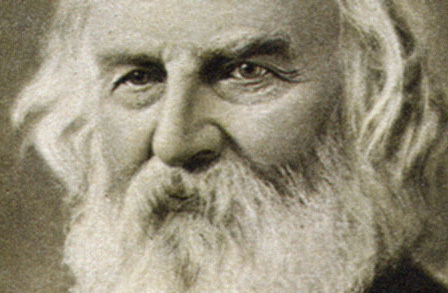
“Lives of great men all remind us, we can make our lives sublime, and, departing, leave behind us, footprints on the sands of time.” Longfellow.
Longfellow, the only American writer honored in the Poets’ Corner of Westminster Abbey.
Longfellow has been dead for 130 years, as of last March, but of his many wonderful words that have stayed with us over the last century and more, these must be some of the more familiar. (Or am I showing my appalling lack of literary knowledge?)
Following on from yesterday’s post about the scary mathematics of climate change, this really is the ONE thing that we have to learn from dogs; from nature. If we don’t live in harmony with our planet pretty damn soon, then this particular civilisation is not far from extinction. Let me remind you of a key paragraph from yesterday,
It’s simple math: we can burn 565 more gigatons of carbon and stay below 2°C of warming — anything more than that risks catastrophe for life on earth. The only problem? Fossil fuel corporations now have 2,795 gigatons in their reserves, five times the safe amount. And they’re planning to burn it all — unless we rise up to stop them.
Ergo, we do not have endless time available to us!
Otherwise the footprints left on those sands of time will be nothing more than the next civilisation pondering from time to time why those Atlantacists that sunk beneath the waves were unable to do anything to save their world!
If you think I’m being a tad excitable, then see what Rob Hopkins wrote recently over at Transition Culture.
New Economics Foundation’s ’100 Months’ campaign today reaches its midway point. It was launched in August 2008 based on the understanding that the time that remains to us to avoid the likelihood of runaway climate change is limited, and based on the science at the time, there was a closing window of opportunity to do something meaningful about it.
Then adding,
“The question here is “what should we do differently?” The answer is “pretty much just about everything”. Nationally and internationally, while the scale and pace of climate change are accelerating, meaningful responses are dwindling. Part of our collective paralysis comes from the fact that we struggle to imagine a world with less energy, less consumerism, less annual GDP growth. What will it look like, sound like, feel like? Does it inevitably mean that you should start seeking out your cave on Dartmoor [Devon in South-West England, PH] as we speak, and developing a taste for slugs? Of course not.
Shortly before the 100 Months campaign began, I was part of initiating an experiment to see what a self-organised response to climate change might look like, one based on rebuilding community, on the belief that what is needed is people, everywhere, making their communities happier, healthier, lower-carbon, and more resilient, in a huge variety of ways.
Rob Hopkins was also asked to write a piece for the UK’s Guardian Newspaper in recognition that we are half-way through that 100-month campaign. Here’s how Rob concluded that piece,
Transition Bath set up an energy company which has raised £250,000 in shares from local people. Transition town Totnes’ Transition Streets programme has enabled almost 700 local householders to reduce their carbon emissions while rediscovering a sense of community on their streets. Bristol soon sees the launch of the Bristol Pound, the UK’s first citywide transition complementary currency. Transition Brixton’s Brixton Energy is installing community-owned renewables supported by local people. Check out transitionnetwork.org to get a sense of the amazing projects under way.
At its core, this is about the belief that our best way forward is for communities to build local resilience in order to be able to better face the shocks of the present and the uncertainties of the future, from economic crisis to climate change, seeing increased community resilience as economic development. It’s a process of plugging the leaks in our local economies, seeing every leak as a potential new business, new livelihood, new apprenticeship opportunity.
Of course we need government responses, and international responses, but all of those will struggle without a vibrant bottom-up movement of ordinary people showing what’s possible and how thrilled they are by those possibilities. So although the answer is “pretty much just about everything”, I would argue that seeing this as a once-in-a-lifetime opportunity for entrepreneurship, vision and action is where our successful navigation of the next 50 months lies.
An important plea to support a major road tour by the 350.org team.
Bill McKibben
There are a number of key players in the movement to arrest the affects of man on the world’s future climate and one of those is Bill McKibben. His organisation, 350.org, has been at the forefront of raising the public’s awareness as to the terrible consequences of not changing our ways pretty damn soon.
As Wikipedia puts it,
William Ernest “Bill” McKibben (born 1960) is an American environmentalist, author, and journalist who has written extensively on the impact of global warming. He is the Schumann Distinguished Scholar at Middlebury College. In 2010, the Boston Globe called him “probably the nation’s leading environmentalist” and Time magazine described him as “the world’s best green journalist.”
Anyway, something came in to my ‘in-box’ the other day that I wanted to share with all Learning from Dogs readers. This is what was said,
Friends,
The reaction to our announcement of our national “Do the Math” road tour has been utterly pheneomenal.
Case in point: the event in Boston sold out in 24 hours. We’re trying to find another, larger venue to seat everyone, but the main point is this: this tour is going to be huge, and you need to be part of it.
Get your tickets here (math.350.org), and please do spread the word to everyone you know.
P.S. If you haven’t gotten a chance to read our first announcement, I’ve included it below.
oooOOOooo
Dear Friends,
We’re getting ready for our most ambitious venture yet.
From November 7th to December 3rd, I’ll be on the road, visiting 20 cities in 20 nights (with a few days for travel in between) to help bring together the movement we need to make sure this planet has a future that we can all appreciate.
We’re calling it the Do the Math tour, but it’s not (thank heaven) just going to be me standing in front of a microphone.The goal is to jump-start the kind of movement that I discussed in the article I wrote for Rolling Stone about the scary new math of climate change. We will bring together musicians, artists and voices from across the movement to work together on directly confronting the financial and political might of the fossil fuel industry.
If you are near one of our stops, I want to make sure you’re there with us. You’re exactly the people we need to be there — folks who understand the climate math already, have experience in the movement, and are willing to step up to do more.
These events will need to be big, and reach beyond our normal circle of friends. That’s why we need to make sure that everyone knows that something big is underway. Can you take a moment to share the Do the Math tour site with your social networks?
Also, just a heads up — we’re going to be putting together a live web event so that everyone who doesn’t happen to be near a tour stop can still get together and get a campaign started in their community. Our team is still hammering out the details for the exact date and time, but please keep an eye out — we absolutely need you in this fight.
I do a lot of talks to big groups, but this is a new kind of undertaking for me, and for 350.org. We’re trying to quickly build up some serious momentum, which is why we’ve gone to great lengths to make this a very different kind of event.
Not only will we have music and guests like Naomi Klein, Jim Hansen, Desmond Tutu, in person and via video, this event is also the kickoff to some serious organizing in your community. This tour will launch our next big mission — a campaign to directly confront the economic power of the fossil fuel industry. Our message will be crystal clear: it’s not OK to sacrifice our future for the sake of one industry’s bottom line. Divestment is one important tool that we’ll discuss, but we’re ready for many other tactics as well.
Over the past few months our planet gave stark warning signs that humans have never seen before. The Arctic melted, breaking every record. The Great Plains sweltered. The West burned. This roadshow is the next big step — but the price of admission, besides the ticket, is a willingness to really go to work to change the world in the year ahead. That’s why we need you this November.
The stakes have never been this high, and I’ve never been more serious.
So go across to that Tour site, where you will read this,
On November 7th, we’re hitting the road to jumpstart the next phase of the climate movement.
It’s simple math: we can burn 565 more gigatons of carbon and stay below 2°C of warming — anything more than that risks catastrophe for life on earth. The only problem? Fossil fuel corporations now have 2,795 gigatons in their reserves, five times the safe amount. And they’re planning to burn it all — unless we rise up to stop them.
This November, Bill McKibben and 350.org are hitting the road to build the movement that will change the terrifying math of the climate crisis.
Don’t see your town on the map? You can still get involved by signing up here.
ABOUT THE TOUR
This won’t be your typical lecture.
Each event will be a unique and interactive experience, unlike any talk you’ve been to before. It will pick up where Bill McKibben’s landmark Rolling Stone article left off — and everyone who comes will be asked to join a growing movement that is strong enough to stand up to the fossil fuel industry. Together we’ll mount an unprecedented campaign to cut off the industry’s financial and political support by divesting our schools, churches and government from fossil fuels.
This won’t be easy: we’re up against the most profitable, powerful, and dangerous industry in history. But we have our own currency: creativity, courage and if needed, our bodies.
Never let it be said that we, as in all of us, don’t have the power to change the world. Oh, and feel free to circulate today’s post.
Scientists have given animals consciousness. Not through complex manipulation of the brain or through genetic manipulation, but by publicly acknowledging the consensus, for the first time in such a straightforward way, that non-human animals, including some of our evolutionarily distant cousins, have awareness and experience like we do.
The declaration, called The Cambridge Declaration On Consciousness, was signed at the Francis Crick Memorial Conference of Consciousness in Human and Non-Human Animals in the presence of Stephen Hawking in July in Cambridge, U.K. by an international group of scientists including cognitive neuroscientists, neuropharmacologists, neurophysiologists, neuroanatomists and computational neuroscientists.
What do they mean by consciousness? The Declaration treats it as the same as the phrase, “subjective experience.” Philosophers who share this view of consciousness with the scientists often say that something is conscious if there is “something that it is like” to be that thing. So, according to this, a rock is not conscious, because there is nothing “that it is like to be a rock.”
The signing marked the first formalization of the scientific consensus about the consciousness of several non-mammals, including birds, octopuses and even bees.
We declare the following: “The absence of a neocortex does not appear to preclude an organism from experiencing affective states. Convergent evidence indicates that non-human animals have the neuroanatomical, neurochemical, and neurophysiological substrates of conscious states along with the capacity to exhibit intentional behaviors. Consequently, the weight of evidence indicates that humans are not unique in possessing the neurological substrates that generate consciousness. Nonhuman animals, including all mammals and birds, and many other creatures, including octopuses, also possess these neurological substrates.”
The full document is really worth reading, by the way.
There is much more about the conference including some remarkable videos here, from which I will select two. The first one, in particular, is very moving, and upsetting! Be warned!
OK, forgive me but I’m going to state the obvious! Just read the entry on Wikipedia about Orangutans.
Orangutans are among the most intelligent primates and use a variety of sophisticated tools, also constructing elaborate sleeping nests each night from branches and foliage. The apes have been extensively studied for their learning abilities. There may even be distinctive cultures within populations. Field studies of the apes were pioneered by primatologist Birutė Galdikas. Both orangutan species are considered to be Endangered with the Sumatran orangutan being Critically Endangered. Human activities have decimated the populations and ranges of both species. Threats to wild orangutan populations include poaching, habitat destruction and the illegal pet trade. There are several conservation and rehabilitation organisations dedicated to the survival of orangutans in the wild.
‘Among the most intelligent primates‘! Yet again, an example of mankind treating the planet as a disposable item! A quick web search came across the Orangutan Foundation so as well as being saddened and angry, there is something we can do; support them.
The second video from that Conference website is about the intelligence of dolphins – enjoy!
The signatories have indicated that we cannot, at least certainly not for the reasons we have been giving, ignore the fact that animals have the same type of experiences that gives us a reason to treat other humans humanely.
Beyond the ethical ramifications, this declaration is another step in a long line of conclusions that the animal brain displays remarkable plasticity and is able to accomplish highly complex tasks in multiple ways.
While anyone who has gone to a zoo or owned a pet has at least temporarily thought of animals as conscious, there is still a large contingent that strongly believes that humans are exceptional in some morally and scientifically significant way. But, as Christof Koch, who co-presented the declaration notes, “The belief in human exceptionalism, so strongly rooted in the Judeo-Christian view of the world, flies in the face of all evidence for the structural and behavioral continuity between animals and people.”
Thousands of elephants die each year so that their tusks can be carved into religious objects. Can the slaughter be stopped?
By Bryan Christy
Photographs by Brent Stirton, Reportage by Getty Images
IN JANUARY 2012 A HUNDRED RAIDERS ON HORSEBACK CHARGED OUT OF CHAD INTO CAMEROON’S BOUBA NDJIDAH NATIONAL PARK, SLAUGHTERING HUNDREDS OF ELEPHANTS—entire families—in one of the worst concentrated killings since a global ivory trade ban was adopted in 1989. Carrying AK-47s and rocket-propelled grenades, they dispatched the elephants with a military precision reminiscent of a 2006 butchering outside Chad’s Zakouma National Park. And then some stopped to pray to Allah. Seen from the ground, each of the bloated elephant carcasses is a monument to human greed. Elephant poaching levels are currently at their worst in a decade, and seizures of illegal ivory are at their highest level in years. From the air too the scattered bodies present a senseless crime scene—you can see which animals fled, which mothers tried to protect their young, how one terrified herd of 50 went down together, the latest of the tens of thousands of elephants killed across Africa each year. Seen from higher still, from the vantage of history, this killing field is not new at all. It is timeless, and it is now.
The full terrible article is here – if you have the stomach to read it.
Photograph by Brent Stirton, Reportage by Getty Images To keep the ivory from the black market, a plainclothes ranger hacks the tusks off a bull elephant killed illegally in Kenya’s Amboseli National Park. In the first half of this year six park rangers died protecting Kenya’s elephants; meanwhile, rangers killed 23 poachers.
I make no apologies for today’s post being more emotional and sentimental.
The phrase ‘sticks and stones may break my bones but names will never hurt me‘ is well known throughout the English-speaking world and surprisingly goes back some way. A quick web search found that in the The Christian Recorder of March 1862, there was this comment:
Remember the old adage, ‘Sticks and stones will break my bones, but words will never harm me’. True courage consists in doing what is right, despite the jeers and sneers of our companions.
So if in 1862 the saying was referred to as an ‘old adage’ then it clearly pre-dated 1862 by some degree.
A few days ago, Dusty M., here in Payson, AZ, sent me a short YouTube video called The Power of Words. I’m as vulnerable as the next guy to needing being reminded about what’s important in this funny old world. Then I started mulling over the tendency for all of us to be sucked into a well of doom and gloom. Take my posts on Learning from Dogs over the last couple of days, as an example.
There is no question that the world in which we all live is going through some extremely challenging times but anger and negativity is not going to be the answer. As that old reference spelt out so clearly, “True courage consists in doing what is right, despite the jeers and sneers of our companions.”
So first watch the video,
then let me close by reminding us all that courage is yet something else we can learn from dogs.
Togo the husky
In 1925, a ravaging case of diphtheria broke out in the isolated Alaskan village of Nome. No plane or ship could get the serum there, so the decision was made for multiple sled dog teams to relay the medicine across the treacherous frozen land. The dog that often gets credit for eventually saving the town is Balto, but he just happened to run the last, 55-mile leg in the race. The sled dog who did the lion’s share of the work was Togo. His journey, fraught with white-out storms, was the longest by 200 miles and included a traverse across perilous Norton Sound — where he saved his team and driver in a courageous swim through ice floes.






 Learning from Dogs