Category: Morality

A village called Rescue.

Never a day where there isn’t something new to learn; and an opportunity to make a difference.

What prompted the heading and sub-heading of today’s post?

Well, I’ll tell you (you knew I was going to, didn’t you!)

I have mentioned Melinda Roth before on Learning from Dogs, most recently on February, 20th in a post called Oregon wolves, and book writing.

I have also previously mentioned Strawberry Mountain Mustangs back on the 18th February, in a post called The lone Ranger. That was where we spoke of visiting Darla and Troy who own Strawberry Mountain Mustangs, near Roseburg in Oregon and coming to the decision, the very happy decision, to adopt Ranger; whom we hope to welcome to our home in Merlin in about 10 days time.
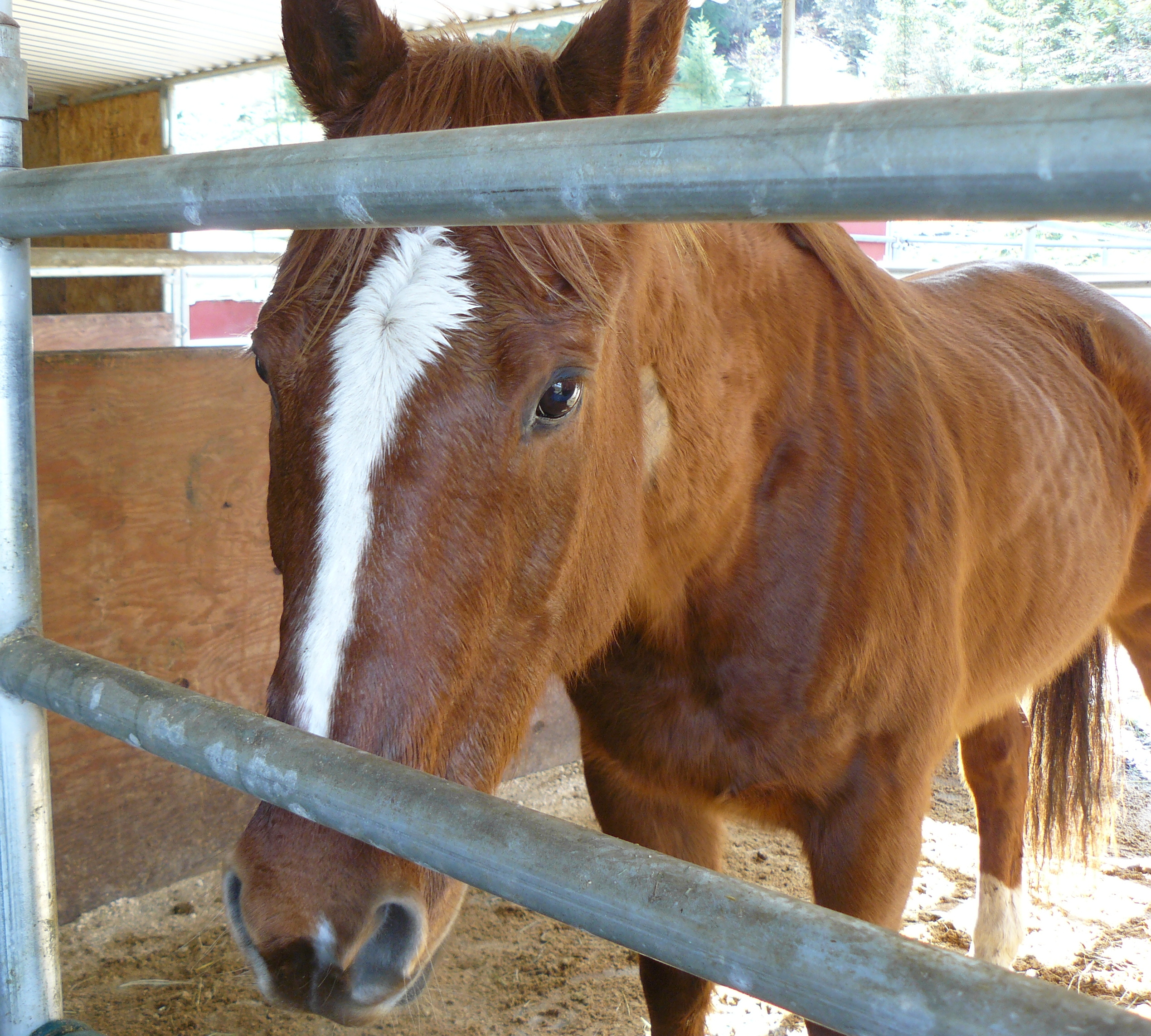
Ranger
Ranger

Anyway, Darla was made aware of Melinda’s blog, Anyone Seen My (BLEEP)ing Horse? and left the following comment to one of Melinda’s posts, that comment from Darla being reproduced in full.  Please read and absorb Darla’s comments because of the power of her words in relation to saving horses.  Plus, later on there’s a plea from me for a competent web-programmer who could help Darla.  But, please read on:

Hello Melinda!

What a wonderful blog… there are no words, but sometimes I guess when a mutual passion is shared, you don’t necessarily need them, do you? Thank you for sharing this.

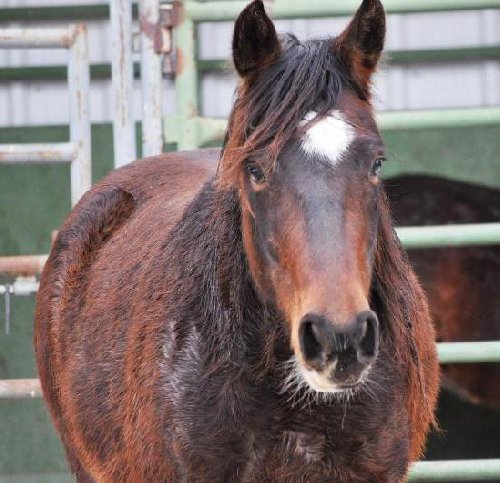
It’s been a great honor to meet Paul & Jean, and we are working toward getting Ranger delivered to them in the coming weeks. While he is not a “mustang” in the common sense of the word, he is a rescue, once abandoned in the Ochoco National Forest, brought here for rehabilitation and care. He’s a sweet, kind gentle soul whose eyes will sometimes give you the hint of the abuse he suffered some time during his past. Now, more often than not, he lets his guard down and will melt into you for the treats and scratches that used to be so foreign to him.

By adopting Ranger, Paul & Jean open up a space for a more critical rescue to come in. Maybe a wild one, they seem to find their way here – often after being abused or mishandled by their first adopter – as you have seen. Those animals are not the clean slate that comes from the desert and they have often learned what it takes to survive against the humans who don’t understand them. Other times, we will get a wild one who’s heart will always be wild, who was never meant to survive in captivity, and we work hard to find a suitable sanctuary for those animals to live out there days. And… we also get those amazing beings who seem to forgive us all for our actions, and seem to meld into what we expect of them – and except for that glimmer in the eye – they seem to forget the wide open spaces. My boy Buddy was that way. (Read about him on our sadly outdated website… http://www.strawberrymountainmustangs.com;)

If it’s not a wild one, it will surely then be a starving creature at death’s door, sent to us by one of the law enforcement agencies we work with. Regardless of breed, we’ll take them in. Make them well, learn “who” they are, and try to find them their human. Sometimes it takes months, sometimes years. We’re in no rush.

I look forward to some day meeting you. I sent Paul some links to information about the Sheldon wild herds, a group that is very near and dear to me. Maybe he can share them with you? Sadly, Fish & Wildlife plans to have them completely eliminated this year I believe.

Take care,

Darla

Melinda replied:

What an honor to have you comment here. And what beautiful words. I wish I could do what you do… I will visiting your site and hope to speak with you soon.

That reply from Melinda prompting this further comment from Darla (my emphasis, by the way).

I get the feeling you DO, do what I do. It takes a village. You may not be “hands on” – but you know horses. You spread the word. You encourage rescue. All of that IS what rescue IS. Don’t discount a bit of it just because you aren’t hanging out your shingle as a rescue organization. I appreciate the thought, but we’re all in this together.

Hope you found Buddy’s story – The Reason – and enjoyed it. The rest of the website is out of date since our web designer became ill. I’m not tech savvy, and prefer to be in the barn anyway…so there it sits. :)

That short sentence from Darla inspired me to write today’s post – hence the post title.

So with no further ado, here is Buddy’s Story.

ooOOoo

Buddy’s Story

Buddy.
Buddy.

Because not all mustangs are created equal…

THE REASON

On August 28, 2007, we lost a legend.

Born in the Nevada desert with a pedigree written in the sands, he was as pure as the air he breathed.

From the inside out, he was pure gold; soft and gentle, yet tough enough to survive the brutality that would have faced him in the wild. He belonged to Mother Nature & no one else, but he CHOSE me.

His amber eyes shone and melted the toughest of souls. If the eyes didn’t do the trick, a persistant lick would. He won over the heart of even the toughest cowboy.

Towering at 16.2 hands, some would call him a giant. I called him my friend.

He won no races, no ribbons, no trophies. Instead he won hearts. He never competed in a halter class. Instead he spent his time visiting elderly at assisted living centers. That was where he chose to stand at attention, perfectly still, for those in the wheelchairs to judge him.

He wasn’t a reining champion. He did no fancy rollbacks, sliding stops or quick turn arounds. Instead he chose to move carefully, cautiously and slowly so that he didn’t dislodge the rider from his back. Whether they were 2, or 62, Buddy took care of them. I think he earned more high points this way than any national champion ever could have.

Saddles and bridles didn’t fit. Maybe they were never meant to? After all, he had much more important things to do with his short life. Instead we went bareback and with a halter and lead. We didn’t need anything more. We had each other.

Buddy was a wild horse from the Sheldon National Wildlife Refuge in Nevada. His heritage was cavalry, old stock run by ranchers for our military. It was in his blood to serve, to protect. He did just that.

The lives he saved are countless. Mine was just the first. He showed me what true passion is, that there was more to life than a paycheck and that even a small town girl could make a difference.

Buddy went on to save hundreds of equine lives as well, many of them the wild horses on Sheldon. Lawmakers and the media have learned about the inadequacies of a poorly run adoption program there and the danger our wild horses are in. He also brought us the quiet survivors of abuse and neglect cases. The malnourished, the broken, the beaten and the forgotten. He stood back and watched them all come in, for us to care for and mend, and he waited patiently for his turn to shine.

Webster’s dictionary defines legend as: a person or thing that inspires. I struggled with the term I wanted to use when writing this. Was Buddy an icon? An idol? A legend? After reading the definition, it became clear. He was my dream, my hope, my love, my reason and my inspiration. He is, and will forever be, my legend.

Darla Clark September 8th, 2007

Buddy
Buddy: The legacy

 Buddy’s legacy lives on at Strawberry Mountain Mustangs, the rescue founded because of him and so many like him. Wild horses who roam on Fish & Wildlife, Forest Service, National Park or reservation lands have no federal protection under the Wild Horse and Burro act of 1971. Please help us save a part of American History. These are OUR living legends. Now we must honor them, and Buddy, by protecting them.

In Buddy’s memory, we are erecting a much needed hay storage barn. We’ve lost several ton of hay to mold already this year. The hay barn will protect the hay and keep our rescue horses safe from any illness caused by hay affected by inclimate weather. Will you help continue Buddy’s work? Please, give whatever you can to help carry on Buddy’s legacy. Buddy made a difference; you can, too.

ooOOoo

So here’s another great way you can really help.

Did you pick up what Darla wrote in her subsequent reply to Melinda?  Here it is again:

The rest of the website is out of date since our web designer became ill. I’m not tech savvy, and prefer to be in the barn anyway…so there it sits. :)

The Strawberry Mountain website is not a complex one. Darla deserves support in so many ways.  OK, are you a web programmer or do you know one?  If not, could you share this post as widely as you can. Because there must be someone out there who could offer Darla some pro-bono help so that her website is updated.  The many horses under Darla’s care deserve the best ‘voice’ in the universe.

So please help in any way possible. Thank you.

Sometimes one just has to wonder ….

…. about the most peculiar species of all: man!

A number of essays and items from a variety of sources have passed my screen in recent times that ….. well, you complete the sentence! Let me illustrate; in no particular order.

I have long been a follower of the writings of George Monbiot.  Those who haven’t come across Mr. Monbiot before can avail themselves of his background and dip into his articles, many of which underscore my proposition that we really are a peculiar race.  For example, just three days ago George Monbiot published an article under the title of The Benefits Claimants the Government Loves.  It highlights one mad aspect of UK Policy.

Corrupt, irrational, destructive, counter-productive: this scarcely begins to describe our farming policy.

By George Monbiot, published in the Guardian 4th March 2014

Just as mad cow disease exposed us to horrors – feeding cattle on the carcasses of infected cattle – previously hidden in plain sight, so the recent floods have lifted the lid on the equally irrational treatment of the land. Just as BSE exposed dangerous levels of collusion between government and industry, so the floods have begun to expose similar cases of complicity and corruption. But we’ve heard so far just a fraction of the story.

You really do need to read the article in full to get your arms around the terrible state of affairs of the UK benefits scandal.  But try this:

As a result of these multiple failures by the government, even Farmers’ Weekly warns that “British soils are reaching crisis point” (16). Last week a farmer sent me photos of his neighbours’ fields, where “the soil is so eroded it is like a rockery. I have the adjoining field … my soil is now at least 20 cm deeper than his.” In the catchment of the River Tamar in Devon, one study suggests, soil is being lost at the rate of five tonnes per hectare per year (17).

I could go on. I could describe the complete absence of enforceable regulations on the phosphates farmers spread on their fields, which cause eutrophication (blooms of algae which end up suffocating much of the freshwater ecosystem) when they run into the rivers. I could discuss the poorly-regulated use of metaldehyde, a pesticide that is impossible to remove from drinking water (18). I could expand on the way in which governments all over Europe have – while imposing a temporary ban for flowering crops – permitted the use of neonicotinoid insecticides for all other purposes, without any idea of what their impact might be on animals in the soil and the rivers into which they wash. The research so far suggests it is devastating, but they were licensed before any such investigation was conducted (19).

There is just one set of rules which are effective and widely deployed: those which enforce the destruction of the natural world. Buried in the cross-compliance regulations is a measure called GAEC 12 (20). This insists that, to receive their money, farmers must prevent “unwanted vegetation” from growing on their land. (The rest of us call it wildlife habitat). Even if their land is producing nothing, they must cut, graze or spray it with herbicides to get their money. Unlike soil erosion, compaction and pollution, breaches of this rule are easy to detect and enforce: if the inspectors see trees returning to the land, the subsidy can be cut off altogether.

Perhaps a clue to the extreme unfairness of who is in receipt of UK benefits can be explained by the fact expressed by George Monbiot above, “The biggest 174 landowners in England take £120m between them.

With that in mind, let’s move on.  Move on to a recent essay from Patrice Ayme: WAR MAKES HISTORY! To say it makes disturbing reading is, trust me, an understatement.  But in the context of the UK’s rich landowners, as George Monbiot explained above, try this closing extract from Patrice’s essay:

We are a deeply equalitarian species. Out of equality rises our superior cultural performance. Plutocracy, the rule of the Dark Side, denies giving, love, and the equality which make us possible. Thus plutocracy is a denial of our species. Only an anger great enough to destroy it, will save us, and the biosphere. And there is hope: greed is neither as natural, nor as strong as anger.

It’s time to get angry against dictator Putin. Angry now is better than very sorry tomorrow.

War makes history. Of this we must think, if we want to make history better.

Patrice Aymé

Frankly, my own knowledge of these ‘dark forces’, of the influence of money and power, is practically zero. But the more that one looks at the madness of so many aspects of mankind’s existence, the more one thinks the truth, as Patrice writes it, is the real truth.  Indeed, here’s how Patrice opens his essay:

WAR MAKES HISTORY

HERE WE GO AGAIN

The earlier unjustifiable, unprovoked fascism, greedy plutocracy, imperial overstretch, murderous paranoia and other aspects of the Dark Side get smashed, the better.

Such is the most basic lesson of the 1930s.

For the millions of us that live relatively comfortable lives, it’s easy to read this stuff, nod sagely, and wonder if the heating needs to be left on this coming night.  But, pardon the pun, wake-up calls as to the approaching nightmares (sorry!) are not hard to find.

Try this from an interview with Elizabeth Kolbert, as recently published on Grist:

In “The Sixth Extinction,” Elizabeth Kolbert reports from the frontlines of a dying world

By 

betsy-kolbert-cropped
University of Montana

The New Yorker writer and acclaimed author Elizabeth Kolbert has a penchant for depressing topics. Her 2006 book, Field Notes from a Catastrophe, helped push climate change into the mainstream (with bonus points for not mincing words in the title).

Now that climate change is safely keeping most of us up at night, Kolbert turned her pen to another big bummer: the sixth extinction. We’re currently losing species at a rate of 1,000 to 10,000 times higher than unassisted nature wiping out the occasional newt. While humans weren’t responsible for the last five mass extinctions, our fingerprints are all over this one. Yep: We collectively have the force of an asteroid when it comes to erasing species (high five, guys!) and for the most part, our response has been classic Urkel.

That interview concludes:

Q. You also write about some efforts to save species. Could you share some of those?

A. I happened to go to the San Diego Zoo, where they have a very impressive conservation program. I was there to see something called the “frozen zoo.” It’s just a bunch of vats of liquid nitrogen with cell lines from, in many cases, highly endangered animals and, in one case, an animal that doesn’t exist anymore, a Hawaiian bird. The idea is pretty much what it sounds like: You have these cell lines, you’re going to keep them alive forever, and eventually people are going to figure out how to resurrect some of these species. Or maybe if you don’t want to go quite that sci-fi, we’ll take the cell lines, we’ll do a DNA analysis, we’ll try to figure out why this population is having trouble.

They took me to see this bird named Kinohi, one of the last Hawaiian crows. He’s “reluctant to part with his genetic material,” let’s put it that way. He had been taken from this breeding facility on Maui to San Diego, and he is ministered to by a PhD physiologist who is trying to, let’s say, pleasure this bird, so that he will give up some sperm, so she can artificially inseminate a bird back in Maui. When I visited he had not yet, you know, come through. She was literally preparing to try again — I don’t know if it has ever worked, I should call her.

That was really, to me, emblematic of this crazy situation we find ourselves in. We’re incredibly smart, we’ve figured out how to freeze cell lines and quite possibly bring back extinct animals — we’re willing to pleasure crows. And yet, the Hawaiian Islands are called the extinction capital of the planet — it’s an absolutely devastated ecosystem. Many, many birds are extinct already; those that aren’t are just clinging to existence. Those forces are not changing and, in fact, things are getting worse. There used to be no mosquitoes in Hawaii; there are now mosquitoes. They carry avian malaria, and as the climate warms, avian malaria is moving up the slopes so that even these refugees species that are high on the mountains are increasingly not there. A lot of birds are in terrible trouble there.

All of these things are happening at once and, once again, they’re all true. People are devoting a lot of time and energy and love to trying to preserve these species, and meanwhile the world is increasingly screwed up. So that is how I end the book: They can both be true; it’s not one or the other.

Did you notice the reference to yet another example of mankind’s madness? “That was really, to me, emblematic of this crazy situation we find ourselves in. We’re incredibly smart, we’ve figured out how to freeze cell lines and quite possibly bring back extinct animals — we’re willing to pleasure crows. And yet, the Hawaiian Islands are called the extinction capital of the planet — it’s an absolutely devastated ecosystem.

I believe inherently that the great majority of individuals are good people.  Take Kevin Richardson for instance. Not for him money and power.  Just a passion to save lions.  Oh, and hugging them!  Just watch, and be moved.

Don’t know how to close this? Maybe using a quotation from Ernest Hemingway:

The world breaks everyone, and afterward many are strong at the broken places.

So in these broken times, let all the good people come out strong – stronger than those who are corrupt, irrational, destructive and counter-productive!

It is the ultimate time for hope and faith in the power of goodness!

Meet the dogs – Casey

On to dog number five.

If you are new to this series then Ruby’s story of last week will link you to all the dogs written about so far.  Today, here is Jean’s account of how Casey became part of the family.

ooOOoo

Casey

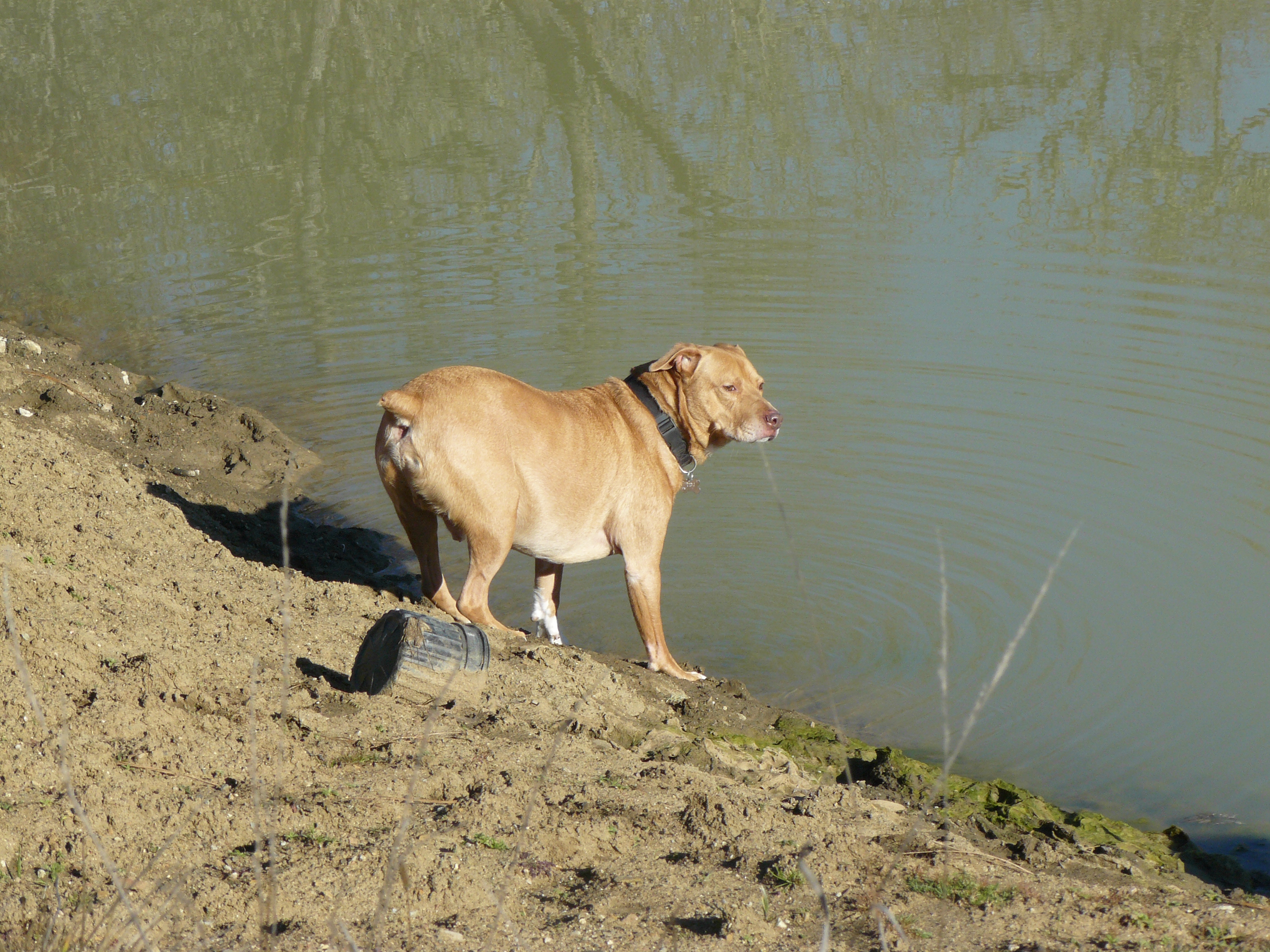
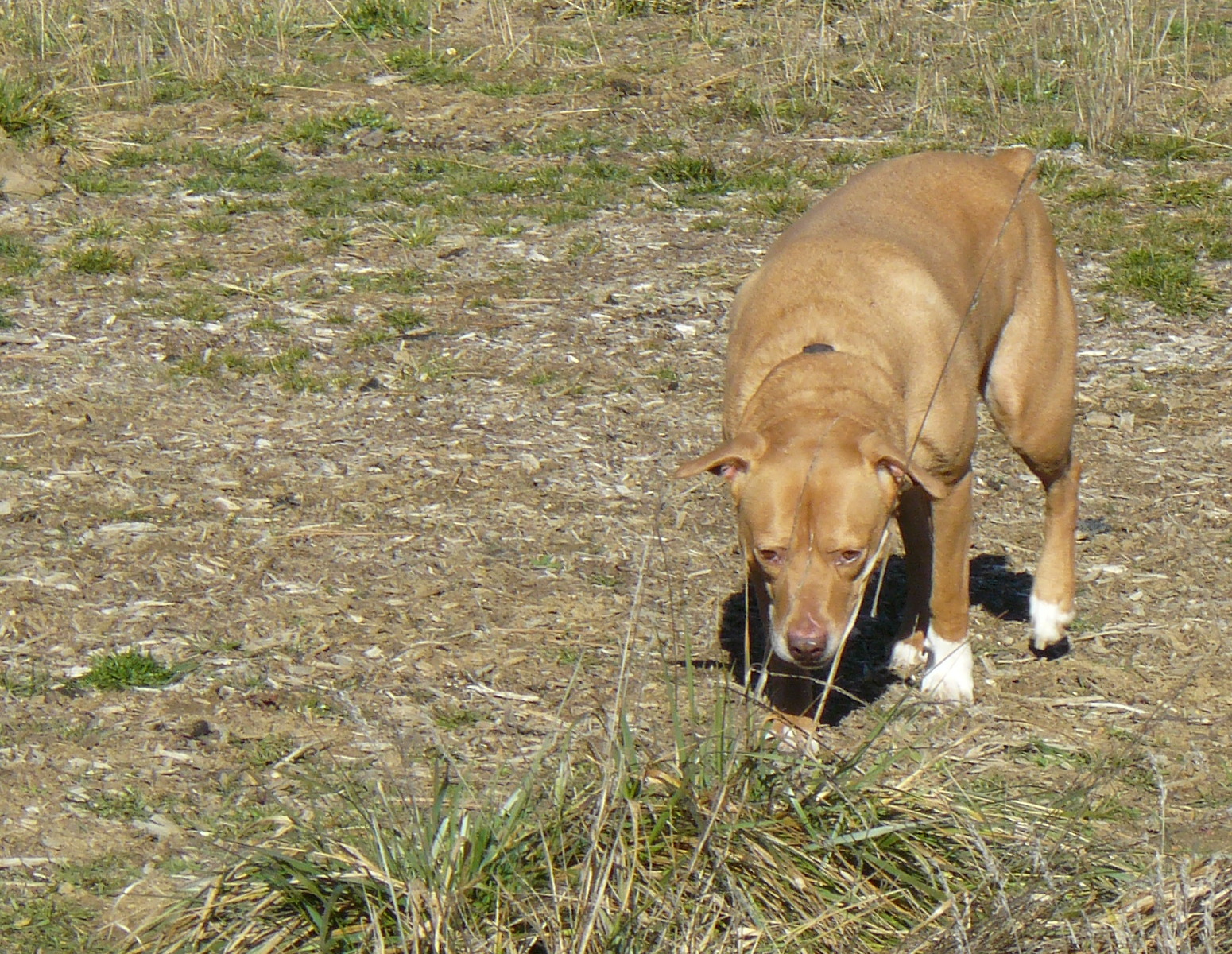
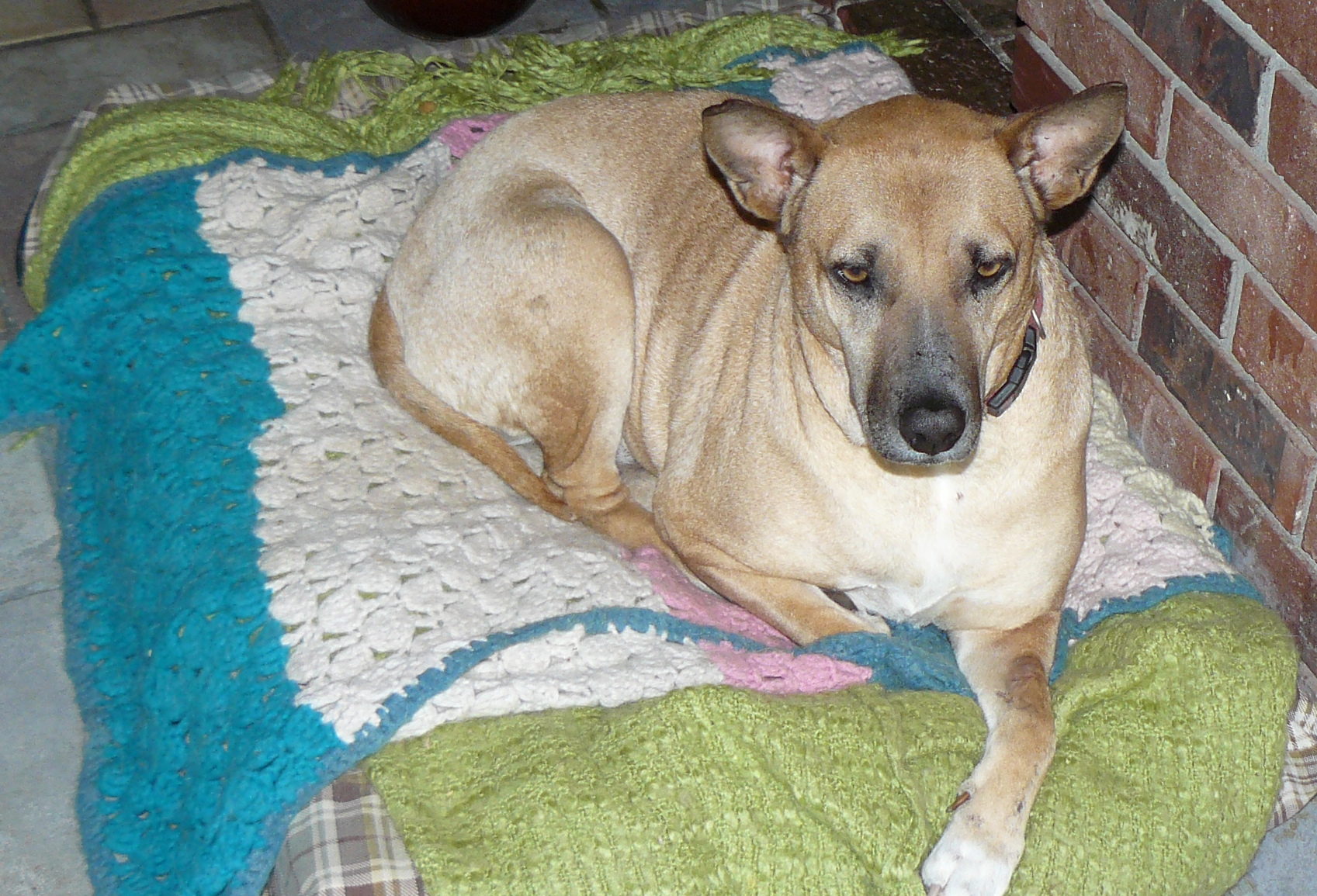
Casey, at home; picture taken a month ago.

Every Friday, the Payson Roundup newspaper would devote a full page to the Humane Society, displaying some of the cats and dogs they had for adoption. I would read about each animal and quietly wish I could bring them all home.

I was particularly taken with one dog that had appeared several times in this Friday page.  His name was Casey and he was a six-year-old Pit Bull mix.  Unfortunately, at home (we were then living in Payson, AZ) we were ‘maxed out’ with a total of 14 dogs in three different sections of our house.  We just couldn’t take Casey.

I had volunteered to be a dog-walker at the Humane Society dog shelter.  But after two sessions walking dogs, I just couldn’t look at these sad little faces without breaking down in tears. I switched my efforts to working at the Society’s Thrift Store.  That was great fun and, at least, it felt as though I was still helping the animals. Nonetheless, I was very impressed with the animal shelter.  They did their utmost to re-home the animals in their care.

Ruby’s ‘pack’ here at home included Phoebe and Tess, rescue dogs from Mexico.   Recently, Phoebe had died with leukaemia and Tess with bone cancer leaving Ruby on her own.  Ruby was a dog that didn’t mix at all well with the other dogs, as was explained in last week’s post.

The next Friday, the Payson Roundup showed the Society’s ‘lonely hearts club’, highlighting animals that had been in care for a long time.  The first dog shown was Casey.  I telephone Chandra, the lady responsible for adoptions, and asked if Paul and I could bring Ruby to the shelter to find a companion for her. When we were at the shelter, Chandra asked us if we had anything against Pit Bulls. Of course we didn’t.  Ruby was introduced to Casey and, as they say, the rest was history.  Casey and Ruby right from the start were just wonderful together.

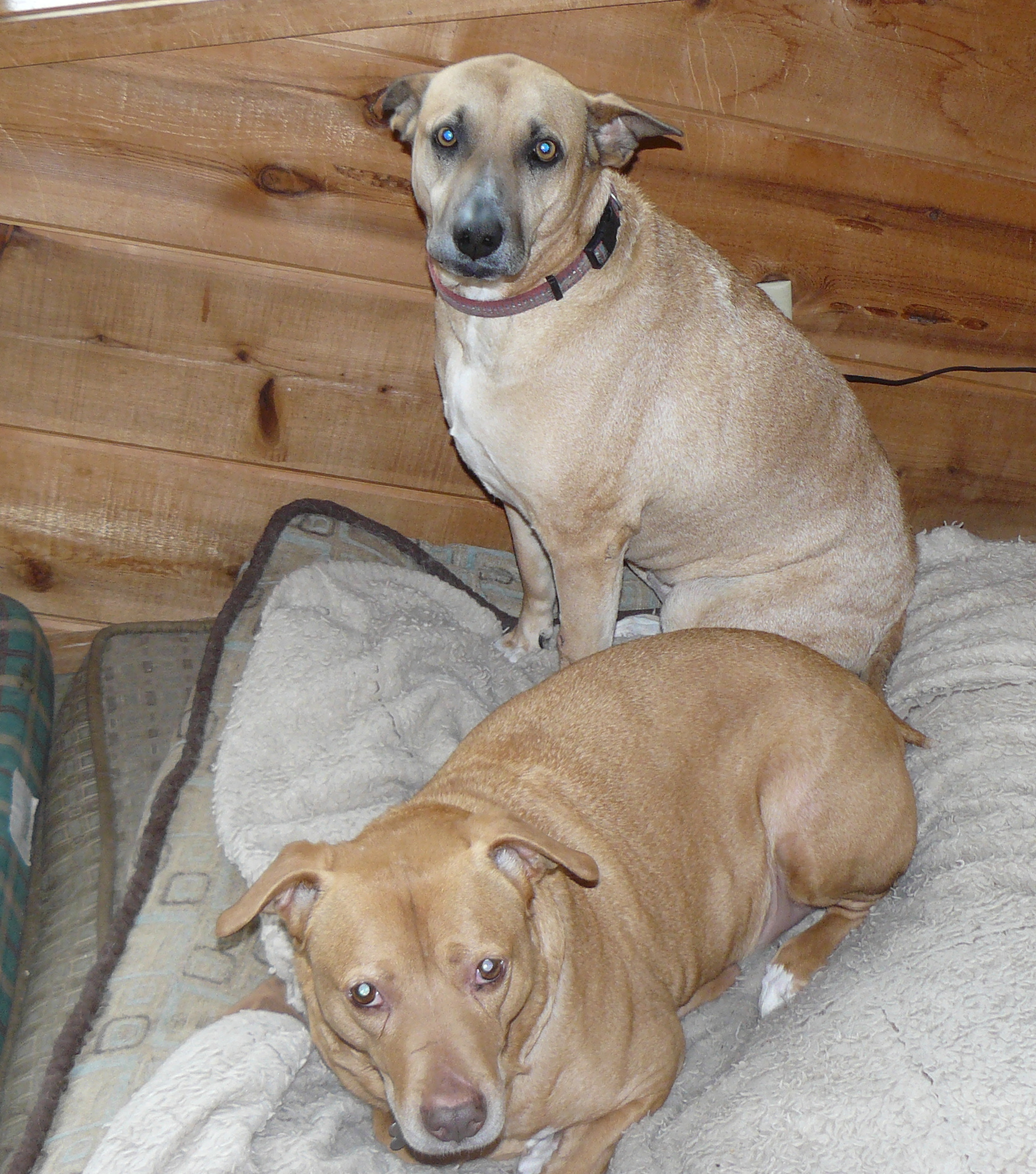
Ruby behind Casey.
Ruby behind Casey.

Subsequently, I learned from Chandra that Casey had been in care for over a year and, had we not taken him home, his days were numbered at the shelter.  There were many cheers and tears when I signed the adoption paper for Casey.

Casey now lives in the kitchen group here in Oregon: Paloma, Ruby, Lilly and Casey.  As with all our dogs, Casey is so happy to have our 14 acres to play in.  He is also the sweetest natured of dogs and will try to climb on to your lap at the first opportunity.  I have always been a great advocate of Pit Bulls and Pit Bull mixes and have never come across a mean one.

Thus, if you are in the position to adopt a dog, please consider Pit Bulls and Pit Bull mixes for the Pit Bull is a much-maligned breed.

Casey demonstrating a dog's focussing skills!
Casey demonstrating a dog’s focussing skills!

ooOOoo

Meet dog number six next week.

Meet the dogs – Ruby.

Ruby – the fourth dog for you to meet.

Firstly, there was Paloma and then Lilly.  Last week, it was Jean’s story about how she found Dhalia. Today, Jean recounts how Ruby came in to the family.

ooOOoo

Ruby

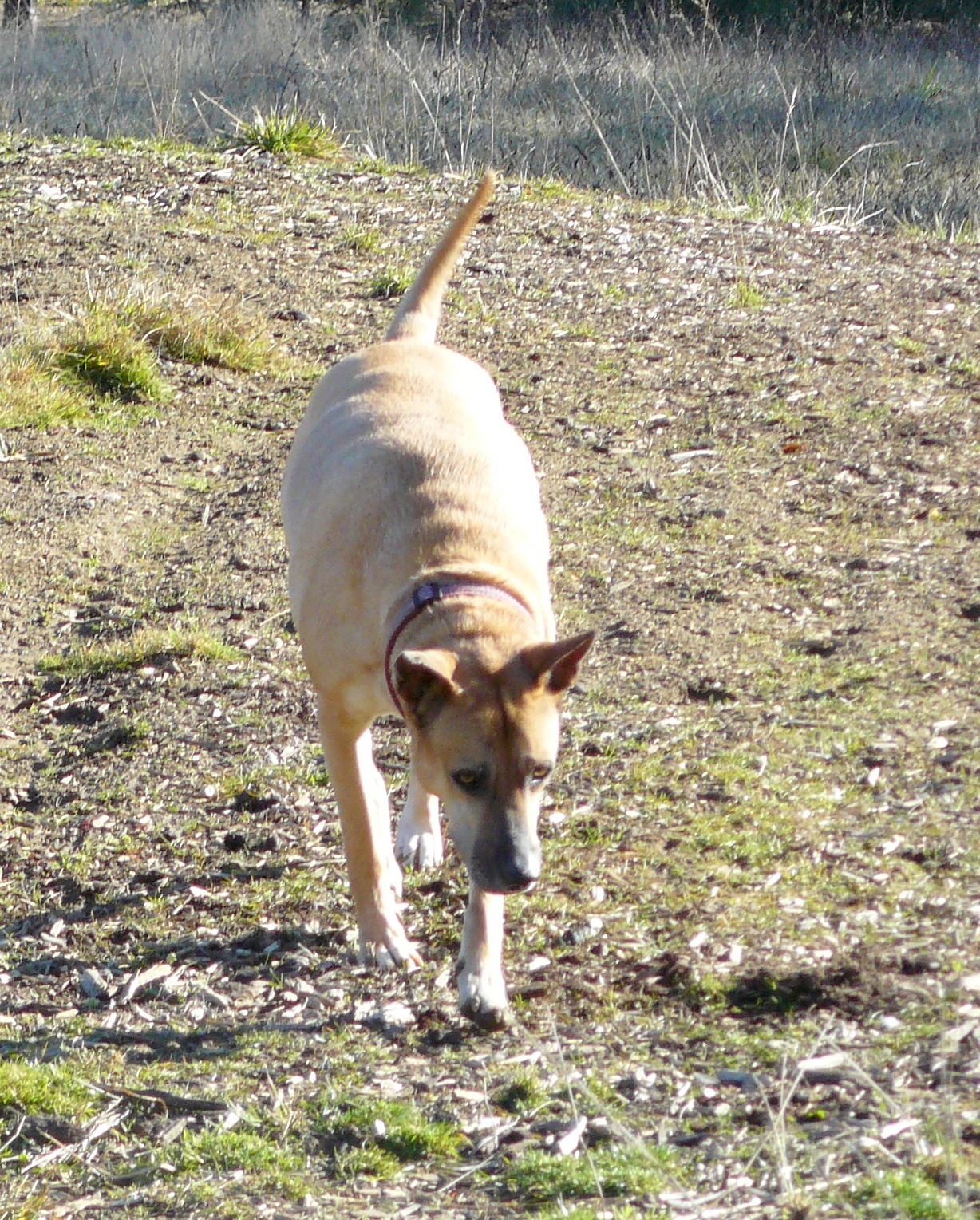
Ruby - picture taken at the end of January, this year.
Ruby – picture taken at the end of January, this year.

My house in Mexico was on the beach.  There was a door in the wall of the rear courtyard that lead almost directly on to the sand.  Most mornings I would rise before dawn to run two or three dogs together along the shore.  It was a good arrangement for all of us!

Next door to my house was a duplex that had been rented out to a family that lived in Hermosillo; the capital of the State of Sonora.  Every month or so this family would visit for a long weekend. This family, unfortunately, had an autistic daughter who, when not supervised, would open my front gate that led on to the dusty road so she could come in to play with my cats that lived in the front area of my house.  That was fine by me when the daughter was in a calm mood but frequently she had screaming fits that would send both my cats and dogs into a state of frenzy.  In addition, the family owned a Chihuahua dog that the daughter often carried as if it were a doll.

One month, the family arrived ‘sans Chihuahua‘ with the news that it had died; adding that their daughter was bereft at the loss.

The following day the mother knocked on my door.  She explained that they had acquired a new puppy but that it was not eating. What could they do? Would I help?

Of course I went with them to have a look. Sure enough, they had a small puppy, probably no more that three weeks old. “It’s a Chihuahua”, they said. I replied, “Firstly, it’s not a Chihuahua and secondly, it’s far too young to be without it’s mother – you must take the puppy back to the mother”.

Despite much pleading, I could not convince the family to do this. So I did the next best thing and went back home to get replacement milk formula and a tiny feeding bottle. I showed the family how to feed the little puppy and also how to massage its tummy to help it go to the toilet. I was more than a little concerned, to say the least. I just couldn’t see the family going to the effort of feeding the puppy every couple of hours or so; essential to ensuring the tiny dog survived.

I planned to check up how things were going the following day.  But didn’t need to. For when opening my front door I found the puppy left on my doorstep. Not even left in a box. The family had returned to Hermosillo.

That little three-week-old puppy is now Ruby; an eight-year-old 80 lbs Shar-Pei mix. After a few weeks of investigation I tracked down Ruby’s mother. She had had 13 pups and was unable to feed them all.

Ruby suffers from skin problems as do many Shar-Peis.  Ruby clearly missed out on the mother-puppy relationship; so important for the development of social skills. Accordingly, she is a bit scatty when playing with the other dogs, frequently bowling them over in her enthusiasm.  Luckily the other dogs seem to realise that she is missed out as a young puppy and are very forgiving.

After such a shaky start I didn’t even try to find her a home.  With countless puppy feeds in the middle of too many nights, I had bonded too deeply.

The family returned to the duplex a couple of months later with a new Chihuahua in tow.  I confronted them about Ruby.  Their answer was that they had given the puppy to a couple on the beach and it was they who had left the puppy on my front door-step.

Yeah! And the moon is made of green cheese!

Ruby in our kitchen area - picture taken yesterday.
Ruby in our kitchen area – picture taken yesterday.

oooo

Another picture of Ruby from yesterday.

oooo

Ruby behind Casey.
Ruby with Casey in front.

oooo

Another week next week – another dog to meet!

Lost your heart to a horse!

Apologies for the brevity of today’s post.

Yesterday, Sunday, Jean and I went North in Oregon to visit Strawberry Mountain Mustangs to explore the pros and cons of adopting a horse previously rescued by Darla, of Strawberry Mountain.  It was a long day and by the time I sat down in front of the PC it was already past 5pm.

So for today going to offer you two pictures from our inspiring time with Darla and all her magnificent horses, most of whom have backgrounds that would make one weep.

Tomorrow, I will write more fully about what we are discovering when it comes to adopting a horse.

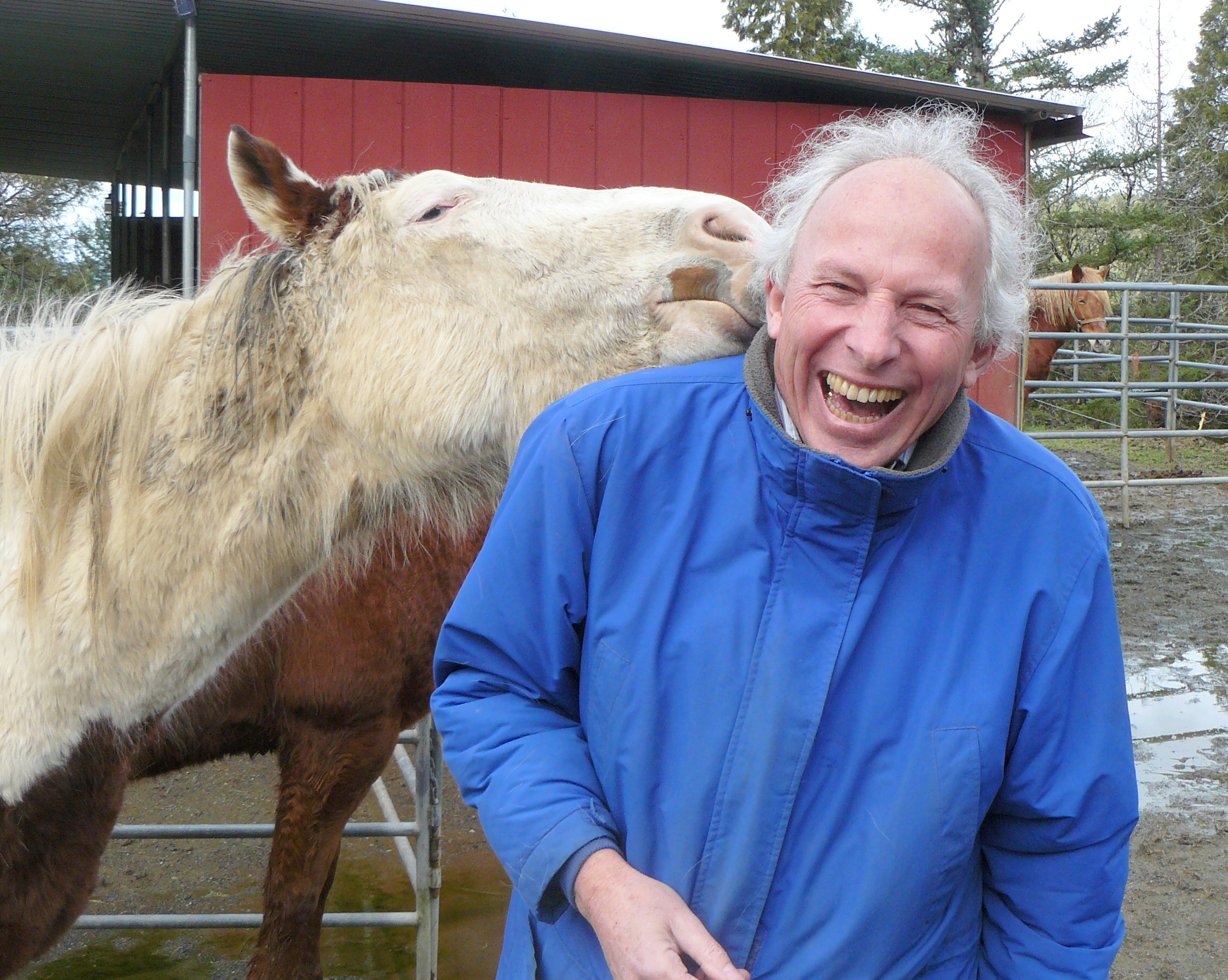
Trust me, a horse with its tongue in your ear is very ticklish!


oooo

Ranger, the 15-year-old horse we hope to adopt.

oooo

Love over fear.

Do we chose love over fear?

On the 24th January this year, I published a post called 20:20 self-awareness.  To save you clicking the link and returning to that post, the essence was speaking clearly; not only to others but to ourselves.  I quoted George Bernard Shaw, “The single biggest problem in communication is the illusion that it has taken place.

Then went on to write:

Yet, what we hear and what we say are both modified, frequently unconsciously, by past events, experiences and trauma.  That being the case, then it is key, critically so, that we achieve the best possible self-awareness.  Because it is only through an understanding of our past that we come to learn of our sensitivities and our associated ‘tender spots’ and their potential for ‘pulling our strings’.

Closing the post by including a twenty-minute, documentary film about fear.  (Here it is again for those that missed it.)

One of the comments to that post was from Sue who writes the blog Dreamwalker’s Sanctuary. (It’s a beautiful blog, by the way.)

This was the comment left by Sue.

Fear is inherent in us all for that Flight or Fight mode.. But the F word has now been used and abused as it has been used as a useful tool .. Self awareness comes when we wake up to what our world is generating and we have a choice. We can allow ourselves to get embroiled within the Fear.. Or we can see it for what it is and who and what is creating that fear and why?…. Once that awareness kicks in we can see there is nothing to Fear but Fear itself… Living in the Now of a moment prevents us also from fearing the future, and fearing what has passed..

Easier said than done, I guarantee you .. But once you can get your head around it all… We breathe deeper and evenly and let all fear go… ( I am still working on this, I am not perfect by any means ) for as your video states its been ingrained within us for so long we know no other way, and we are a creature of habit!..

Thought provoking post, Paul thank you

Sue then pointed me to one of her essays, that I have the great pleasure of republishing today.

ooOOoo

Do You Chose Love Over Fear?

One Love Heart.
One Love Heart.

Remember those Prophesies of “2012”? I posted many of my thoughts upon this timeline which I thought was to mark the end of one era and the beginning of the Next – Maybe those ancients teachers didn’t know whether we would rise or fall as they marked the end of their calendar.

Maybe that fate awaits us still depending upon our choices we make in the Now dependant upon our Next actions!  But as we read through those  teachings of ancient prophecy  you will see also they speak  of transformation. Transformation requires Change, and we are being urged now to Think! Think outside our boxes as our comfort zones are now being tweaked as we become ever more sensitive to the Energy Shifts within our World.

Whether we realise it or not we are incarnated with a ‘Soul Mission’ even though we caught amnesia after we were born.  But more and more of us are thankfully waking up as we begin to remember who we are. It may have taken many life times and lessons to align with our present purpose as we pass through various stages on our journey, often not understanding the reasons for painful events and experiences.  It isn’t until later that we look back and see the gifts and healing which were given to us and that through them we learn to grow, letting go of the past as we step into the Now.

Giving Birth is not without pain, and our new earth is only now going through her own birthing pains.  We see it in the spasms of conflict, the wars, hunger, poverty, displacement of refugees and the destruction through pollution of Mother nature.  Pains which are now being experienced which we humans have carried with us over many life times. Pains that emerge as a build-up of our Fear and Prejudices.

The choices are simple: we either choose Fear or Love.

Even while writing this a sense of peace has swept over me as I smile to myself. I recently read an article which said “…we incarnate with these wounds and at a soul-level choose to encounter those whose actions catalyse us to resolve and heal our soul wounding“. That made me smile even wider as I have long held the belief that our enemies are our greatest teachers helping serve our soul’s growth as we learn the various lessons such as patience, kindness, love, forgiveness, and compassion.

We are each of us now experiencing shifts in our emotions and lives, as we feel the ‘Shift’ in energy within our Mother Earth who is calling us to wake up and remember who we are; as our vibrations alter.

When I first started my blog back in 2007 I stumbled almost by accident to the opening post. But it was no accident! In fact my very first post was an experiment called Smile. I wanted to make a difference even if it was only through the words of a poem.

As we ‘Lighten Up’, letting go of what we no longer need, we lift our vibration higher; as we leave behind the wounds of the past. We are Energy Beings – and it’s time now to realise we each are a part of the Whole, that Oneness that permeates all things with the same Energy.

We are now ‘Shifting’ from duality to Unity Consciousness. This was brought home again to me on how many of us are thinking similar thoughts even here on WordPress. We see similar themes as we link into the Mass Consciousness, as we join together our thoughts, as we link subconsciously to the Cosmic web of thoughts.

We need to be aware of the Power of our thoughts and how we can assist in raising our planet’s vibration and our own collective Consciousness.

Much has been spoken upon The Ascension. First we need to ascend through our own layers as we climb ever higher, leaving behind the things that no longer serve us.

We do that by not getting swept up in conflict, by being more loving and tolerant, by being compassionate rather than being judgmental holding hate and anger.

We need to put the Care back in the world. If we embrace and choose Love over fear and stop looking who to blame but start to set examples of living in harmony and unity, then the true magnificence of who we really are can begin to manifest that ‘Golden Age’ that was once prophesied to bring about Peace.

It is up to each one of us to pledge to change our own lives, because only that way will those prophesies come to fruition.

The Choice is Ours

Choose Well..

Love and Gratitude

Sue Dreamwalker..

ooOOoo

Unconditional Love.
Unconditional Love.

The most important thing we must learn from dogs.

Picture parade thirty.

We interrupt your life to bring you a moment of beauty, part two.

Last week I published the first set of pictures sent across by John Hurlburt.  Here is the second set (but do look at the postscript).

John11

oooo

John12

oooo

John13

oooo

John14

oooo

JH15

oooo

JH16

oooo

John17

oooo

John18

oooo

John19

oooo

John20

oooo

Now a bonus.

I was reading Naked Capitalism earlier on Saturday and came across the link to a story in Huffington Post about a young man who jumped into a swollen river in Bangladesh to rescue a young fawn in danger of being swept away to it’s death.  This how that story opens:

Courageous Teen Risks His Life To Save Drowning Baby Deer

This is pretty incredible.

A wildlife photographer visiting Noakhali, Bangladesh, was able to witness — and document — an amazingly courageous teen risk his own life to save a drowning fawn, Caters News Service reports.

The boy waded into the fast current of a surging, swollen river in Noakhali, holding the deer above his head, even as he, himself, disappeared beneath the water at times.

The link in the last sentence takes you to the article as it appeared in The Daily Mail newspaper (online version).

Two of the photographs from that article.

PIC FROM HASIB WAHAB / CATERS NEWS (Pictured: DEER RETURNED SAFELY) - A brave boy fearlessly risked his own life - to save a helpless baby deer from drowning. The boy, believed to be in his early teens, defiantly held the young fawn in one hand above his head as he plunged through the surging river. During the ordeal onlookers were unsure whether the boy was going to appear again. When he finally made it to the other side the locals cheered as the deer was reunited with its family. The incident took place in Noakhali, Bangladesh, when the young fawn became separated from its family during torrential rain and fast-rising floods.
PIC FROM HASIB WAHAB / CATERS NEWS (Pictured: DEER RETURNED SAFELY) – A brave boy fearlessly risked his own life – to save a helpless baby deer from drowning. The boy, believed to be in his early teens, defiantly held the young fawn in one hand above his head as he plunged through the surging river. During the ordeal onlookers were unsure whether the boy was going to appear again. When he finally made it to the other side the locals cheered as the deer was reunited with its family. The incident took place in Noakhali, Bangladesh, when the young fawn became separated from its family during torrential rain and fast-rising floods.

oooo

PIC FROM HASIB WAHAB / CATERS NEWS (Pictured: DEER) - A brave boy fearlessly risked his own life - to save a helpless baby deer from drowning. The boy, believed to be in his early teens, defiantly held the young fawn in one hand above his head as he plunged through the surging river. During the ordeal onlookers were unsure whether the boy was going to appear again. When he finally made it to the other side the locals cheered as the deer was reunited with its family. The incident took place in Noakhali, Bangladesh, when the young fawn became separated from its family during torrential rain and fast-rising floods.
PIC FROM HASIB WAHAB / CATERS NEWS (Pictured: DEER)

Here’s that article in The Daily Mail newspaper.

OK, I know I have a tendency to get a little sentimental but here’s my closing thought.  That is that while there are people in the world such as young Belal who will not hesitate to rescue a vulnerable creature then there’s hope for all of mankind.

… from helping the mustangs.

If you can help these beautiful animals in any way, read on.

Yesterday, in a post called Wild horses wouldn’t stop me …. I outlined the situation in Nevada where “the Nevada Farm Bureau is suing the Bureau of Land Management because they want the federal agency to round up what’s left of America’s wild horses and send them to slaughter.” The post included the commitment from Jean and me to adopt two of these horses.

In the hope that this post touches others who would also like to adopt a horse or know someone else that would, then here are the details that we have collected in the last twenty-four hours. (NB: please double-check yourself because much, if not all, of this is new to me and I am far from being an authority on the subject.)

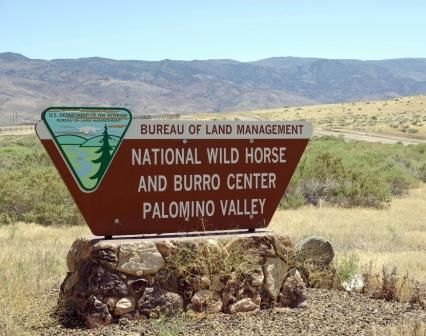
The starting point seems to be Palomino Valley National Adoption Center.  Their website is here.  On the home page of that website, one reads:

palomino_valley_center.

The National Wild Horse and Burro Center at Palomino Valley (PVC) is the largest BLM preparation and adoption facility in the country and serves as the primary preparation center for wild horses and burros gathered from the public lands in Nevada and other near-by states. Nevada is home to more than 50 percent of the Nation’s wild horses and burros with approximately 83 herd management areas throughout the state.

Adoption Details

The majority of animals at PVC are available for adoption 6 days a week. To schedule an appointment to adopt a wild horse or burro at PVC, please call 775-475-2222. Appointments for viewing/adopting are limited to a maximum of one hour. The majority of animals are available for adoption, however, some are not due to the time involved in the preparation process. If you have questions about our adoption requirements, click here to go to our Adoption page.

When I called that office number yesterday afternoon, the person who helpfully answered a number of my questions recommended the BLM Adopt-A-Horse website.  That website offers a number of useful links that anyone wanting to learn more should explore, including how to adopt via the internet. Plus a link to an online gallery where there are many pictures of beautiful horses, such as this one:

Horse 2249

Sex: Mare Age: 5 Years   Height (in hands): 15.0Necktag #: 2249   Date Captured: 08/28/12

Color: Brown   Captured: Paisley Desert (OR)

Notes:
#2249 – 5 yr old brown mare, captured Aug 2012 from the Paisley Desert Herd Area, Oregon.

This horse is currently located at the Corral Facility in Hines, Oregon. For more information, contact Patti Wilson at email pwilson@blm.gov or Tara at tmartina@blm.gov.

Pick up options (by appt): Burns, OR; Salt Lake, UT; Elm Creek, NE; Pauls Valley, OK; Piney Woods, MS; Mequon, WI.

Other pick up options: West Monroe, LA (Mar 21), Archdale, NC (Apr 18) and Springfield, OH (Apr 25).

Adoption confirmation for this animal must be finalized no later than Feb 6. After this date, all unclaimed animals will be available for in-person walk up adoption ONLY.

Some other useful websites now follow:

Ever After Mustang Rescue in Maine.

Wild Horse Mountain Ranch in Sherwood, Oregon (South-West of Portland).  From which I have taken the following photograph.

Wild Horse Mtn

and, finally, MUSTANGS 4 US that has a plethora of information and good advice. Take this link, for example: Adopt A Mustang (Oregon). Plus there’s a very useful page on Where To Adopt. This photograph also came from the Mustangs 4 Us website.

AdoptHorse

Fingers crossed this has been of interest to many and of direct value to some.  Jean and I have much to learn and as we work our way towards being better informed and being ready to take on two horses, all the details will be shared with you.

An Act Of Congress
“Congress finds and declares that wild free-roaming horses and burros are living symbols of the historic and pioneer spirit of the West; (and) that they contribute to the diversity of life forms within the Nation and enrich the lives of the American people …”
(Public Law 92-195, December 15, 1971)

Wild horses won’t stop me …

From alerting you to the potential catastrophe of the Mustangs in Nevada.

Relationships across the internet, especially across the world of blogging are, oh, I don’t know, different! (OK, I hear some saying I could have chosen a more apt word; such as weird, self-indulgent, vain, and so on.)

Melinda Roth is an author. Her ‘goodreads’ page is here; her Amazon Books page is here; her website is here.  Melinda has started reading posts on Learning from Dogs and, likewise, I have read posts over at Anyone Seen My Horse?

Seven days ago, Melinda published a post under the title of Oh, yum.  This is the opening paragraph.

I ran across this recipe while doing a little research on horse slaughter (the Nevada Farm Bureau is suing the Bureau of Land Management because they want the federal agency to round up what’s left of America’s wild horses and send them to slaughter) so… thought I’d share:

When I read that I felt a mixture of anger, confusion, puzzlement; surely this can’t be the case?  Then I read on, skipping the recipes that Melinda included in her post.

Now, you might have to go to Canada or Mexico to get the horse meat, but we ship those countries about 150,000 of our unwanted equines for slaughter anyway, so your meat will probably be home grown in the USA. No worries.

That is, as long as you’re not too concerned about the unregulated administration of numerous chemical substances to horses before slaughter, which according to official reports “are known to be dangerous to humans, untested on humans, or specifically prohibited for use in animals raised for human consumption.”

If travel is out of the question, however, you can always buy imported horse meat online.

Check out My Brittle Pony, which is horse meat jerky seasoned with “Guinness, onions, garlic, fresh herbs and Soy Sauce and is guaranteed to contain no horse substitute such as beef.”

It costs £3.50… and you can pay with Pay Pal.

But if the Nevada Farm Bureau has its way, we won’t have to travel or use currency converters to buy horse meat. A majority of the country’s last wild horses live in Nevada, and that state seems ready to cash in on one of its most popular natural resources.

Anyone who knows anything about Jean and me knows that we love animals and we adore our own animals. Thus as I read Melinda’s post the pain and anguish building in me was indescribable; and I’m only half-way through the post. Yes, there’s worse to come.

According to reports published in the last week, the Nevada Farm Bureau and the Nevada Association of Counties want the BLM to round up just about as many remaining wild horses as they can. The BLM argues that it’s already housing about 50,000 wild horses it’s already captured and can’t afford to take in many more.

The Nevada Farm Bureau has an answer, however: The BLM should “destroy” horses that are deemed unadoptable.

I shall include one more paragraph from her post:

The Nevada Farm Bureau argues that there are too many wild horses on public lands. But there are only about 30,000 wild horses left, and since public lands seem perfectly able to support 1.75 million head of livestock (that belong to private ranchers), what exactly is the problem?

There’s more you should read so please do so.  Especially not forgetting to communicate your feelings to NVFB via the address listed on their web site – nvfarmbureau@nvfb.org

I wrote a comment to Melinda’s post endeavouring to explain what I was feeling. Melinda then pointed me to an essay by Andrew Cohen.  It was beautiful and it seemed in order to share it with you.  So here is Andrew Cohen writing about horses.

ooOOoo

Cohen horses

Why I Write About Wild Horses

 By Andrew Cohen 

29 January 2014

I write about wild horses. I write an awful lot about wild horses. And it’s not just because I cherish the animals or admire all that they have done through the centuries to ease our burden here in North America. I sometimes get grief about my focus upon the nation’s herds, and I know that many people who don’t “get” horses, or who have never been near a horse, cannot fathom the depth of passion the animals engender among their human supporters. What can I say? I can’t help it and I won’t stop.

I write about wild horses for many of the same reasons that I write about mentally ill prisoners who are abused in their cells or about indigent defendants who cannot afford a lawyer or anyone else who has a voice, and rights, but who cannot be properly heard or who cannot have those rights acknowledged. Mordecai Richler, the late, great Canadian writer, long ago captured the essence of what I try to do with all my writing: “The novelist’s primary moral responsibility is to be the loser’s advocate,” he said. The actor Ricky Gervais said pretty much the same thing the other day, without the literary flair, when he said: “Animals don’t have a voice. But I do.”

I have a voice and I’ve chosen to speak out for these horses, which are being rounded up by the tens of thousands from our public and private lands and sent to holding pens in the Midwest — or sold into slaughter even though that is against the law. The government and the ranchers say these roundups must happen because there is no room for the herds, or because they graze too heavily upon the land, but ample evidence exists suggesting that this simply isn’t so. The truth is that there is plenty of room out West for these horses and there are plenty of ways in which the herds may be properly managed to ensure their survival without forcing them into cruel conditions or slaughter.

Why that isn’t happening is a story everyone ought to care about. So I write about wild horses because I think their treatment over the past four decades, since the passage of the federal law designed to protect them, reveals a great deal about American politics and the nature of the bureaucratic state. The Interior Department, which has stewardship over the herds, is little more than a straw man for the industries it is supposed to regulate. And those industries, which receive enormous federal benefits in the form of welfare ranching, and which in turn send millions of dollars and boatloads of lobbyists to Washington, want the horses off the public lands no matter what anyone else says.

I write about wild horses because last year the National Academies of Science issued a report scathing in its criticism of the Bureau of Land Management’s scientific approach to the herds. Before the report was issued, federal officials assured advocates that its conclusions would be respected (or at least publicly discussed). But it’s been seven months now since the report was issued and federal officials have done almost nothing about it. That’s just not unjust to the horses, and unfair to their human advocates, and perhaps a violation of federal law, it’s also terrible policy, as a general rule, for bureaucrats to ignore the findings of a report they themselves commissioned and paid for.

I write about wild horses because the last Secretary of the Interior was a rancher who did not even try to conceal his disdain for federal obligations to the horses and because the current Secretary of the Interior, herself a former engineer, has shown no interest in the herds or in addressing the concerns raised by the NAS report. Only the Interior Department, the backwater of all Washington beats, could engender so little muckracking when so much money, and so much else, is on the line. I write about wild horses because their story is the story of every other small interest without political power in Washington or the statehouses of this nation.

They are persecuted. They have rights but no remedies. And their fate isn’t going to get better unless more people come to understand the injustice of what’s happening to them — and how far the gulf is between the noble image we have given them in our national psyche and the reality of their perilous existence. That’s why I write about wild horses and it’s why I am grateful when anyone happens to read what I’ve written.

ooOOoo

Now I don’t know one end of a horse from the other.  But Jean does.  In previous years, Jean was a keen horse-woman.  But me not speaking horse doesn’t mean that I am not passionate about doing something to help these poor wild horses. Even if what we do is only something tiny, as the old saying goes, by the inch it’s a cinch.  Jean is just as passionate about wanting to help as I.

Not only do we have two miniature horses here in Oregon, we have sufficient pasture to accommodate two of these Mustangs.  We want to adopt two horses or burros that, otherwise, would be slaughtered.

Tomorrow I will share how we are researching how one goes about adopting a mustang or a burro.  Because if only one extra horse is adopted as a result of the Melinda Roth – Andrew Cohen – Learning from Dogs sequence then that’s one less horse destined for slaughter.

Lovely what comes out of relationships!

Unconditional love.

The most important thing, without a doubt, to learn from dogs.

Last Tuesday, Learning from Dogs published the first of the three parts of Martin Lack’s essay From Environmentalism to Ecologism.  It generated a fascinating discussion.  One of the commentators was Chris Snuggs who writes his own blog under the name of Nemo Insula Est.  Here is the essence of a discussion with Martin Lack and Patrice Ayme.  (Without reading the following comments, my closing opinion will make little sense; assuming they do at the best of times!)

Chris: The problem with politics at the moment is that the choices come down to A) being socialist, moral and bankrupt or B) capitalist and immoral but at least with a chance of avoiding poverty and chaos.

Martin: I think I am very much in agreement with you, Chris. It says a l lot when a practicing Catholic can admit that his Church needs to ditch its anthropocentric bias and stop treating the Earth as if we are the only species that matters…

Chris: One of the big questions for me is this. Is the world of our perceptions ONLY what we see, hear, smell and touch or is there another dimension which we cannot sense? Personally, I believe the former, which is why I cannot believe in: God, aliens, ghosts, an afterlife, fairies or indeed a sensible socialist economic policy.

I sometimes feel this makes me boring (or if you like, it just another feature of my boringness), but on the other hand I feel more or less in tune with what I understand “The Enlightenment” to have meant. It would be much more reassuring to know that there is a God (caring if possible, though it is hard to see how he would be) and indeed aliens, as long as they were friendly. But until there is some sound evidence, I cannot. And there IS no evidence that would stand up in court, is there?

So, we are alone; the universe is as it is; how it came into being we do not know and it is perhaps unknowable; the planet Earth cares not a jot about us or our feelings; we have no particular right to exist: we just do, by natural accident (until proven otherwise). I am not a fan of the “There are billions of stars in the universe, so there must be other forms of life elsewhere.” argument. “must be” is not “is”.

So if WE do not ensure our survival by looking after the planet then nobody or nothing will. As for “ecology”, good people are trying to do a lot of things, but as far as I can see:

A) It is too late and too little. Even if we were doing all the right things NOW (which we obviously are not), the time lag before our actions start to correct othe damage done will be too great; we may well have died out by then.

B) Despite all that is being done, CO2 emissions are going up, countries have STILL found no economic model that does not insist on growth and you cannot have growth without increased energy use, which for the moment and foreseeable future means fossil fuel extraction. And THIS of course continues apace with many countries now desperately trying to frack their way to growth, in the case of the USA rather successfully.

Martin: All very interesting, Chris, although I am not sure why your atheism necessitates rejection of socialism. For many people the two are inextricably linked. However, this is all off-topic… All I wanted to point out was that anthropocentrism is a mistake that can be made by both theists and atheists alike; and that it is good to see the former admitting they have made this mistake.

Paul: Chris/Martin, To my way of thinking, there is a more fundamental issue at work. That is the corrupting effect of power. I’m certain you know the famous saying. Thus whatever fine motives propel a person to enter politics, that person seems unable to avoid the call of power and its corrupting effect. The only hope is that key countries, and none so key as the USA, evolve a better, more representative, political process. Otherwise, I fear for the coming years.

Patrice: I agree with Paul 100%. I saw the call of power. Unimaginable. People just get insane. There are also filtering systems to insure they get that way (it starts right away with one week retreats in extremely posh resorts; does not matter if you are capitalist, socialist, blueist, reddist, ecologist, independentist, etc.).

Chris: Agreed. It has been clear time and time again throughout history. Well, so much is obvious, but WHAT TO DO about it?

A) We must end the practice of having career politicians: you serve a maximum of TEN years, at the end of which you go.

B) Inherited wealth allowing the building up of immensely powerful family dynasties over generations must be ended. It is simply untenable. The rich-poor gap is getting obscene everywhere, and money is of course power. My “Abolish inheritance” idea will be wildly unpopular because we are naturally acquisitive and “greedy” and of course would hit those with most to lose who also therefore have the most power.

Patrice:  With all due respect, Chris and Martin sound rather naïve… Huge wealth and power is where it’s at. And it attracts to politics first, foremost, and soon uniquely, those it attracts most, namely the basest sort.

Chris:

A) All a question of balance: SOME ambition is essential; it is when there is too much that it is dangerous.

B) I would have maximum terms for political service. plus:

C) Nobody should be allowed to be a public representative until they have fulfilled certain conditions, for example (but to be debated): worked in the private sector; some experience of life in a factory; nobody under 30; high achievement in some industrial, commercial, academic or social field, and so on

Ed Milliband grew up in a Marxist family, went to a posh school and then straight to university from where he went straight into politics as an “advisor”, thence to become a Minister and now leader of the opposition and possible OM.

THAT is not the proper background for a national leader, but the House of Commons is full of such people. The % of MPs from “working-class” backgrounds is going down and down and down. In the USA, Congress is over-represented by the rich, famous and/or connected. Where are the mailmen, bus drivers and burger-servers? “You need more intelligent Congresspeople than that.”

Sorry, I can’t take that argument from a country that elected Dan Quayle, George Bush and Sara Palin!!!!!

Patrice: Right. Glad to see every body agrees. It’s even worse than that. “Representative” politics is intrinsically demonic, as it vests great power in some individuals. That, per se is not just a crime, but absolutely corrupting.

Representative politics has got to be eliminated. Switzerland has eliminated it at the legislative level. Why can’t all other countries of the West do the same? Because the present plutocracy rules through the representatives, esp. in the USA?  After we have done the legislative, the executive could be handled along Roman Republican lines and Athenian lines. Roman Consuls, for example, had full power only for one month at a time. In Athens enormous quora (say, 8% of the potential electorate) had to be found, before any decision.

Martin:Excellent synopsis, Patrice. All of the things you mention would be made possible by a return to localism and/or bioregionalism, which may well come to pass by default (i.e. as a result of those in power now being in denial about what is happening to our planet).

Now the reason that I offered up this lengthy transcript of the conversation was that it clearly showed to me that bright, well-educated people agree that there is much wrong with many, if not most, countries that offer a representative democratic form of Government.  Bright, well-educated people are also not afraid to offer answers.  Patrice went on to write a most engaging post over at his place under the title of Representative Politics Is Dictatorship.  It opens:

Representative Dictatorship Is Not Democracy

I know a young lady who was elected for the first time in California. She is sent to a posh resort for a week to learn the basics of her new job, being a “Democratic” politician. Everything is wrong with this picture (not just the mansion she lives in and her million dollar family income, while claiming to be a leftie). Everything is wrong, but it’s typical: all elected representatives in the USA are treated very well, and get to meet who, it dawns on them after a while, can insure for them, and their families, much nicer lives. (The New York Times, to its discredit, just discovered this PACS trick in 2014.)

A gigantic manipulation industry has developed, with its own strategists. Barack Obama seemed to have come out of nowhere, but, even before he started to score big, he was viewed as the anointed one, by the highest powers in “Democratic” circles: Axelrod,  a professional manipulator who had just led Kerry’s campaign, was sent to Obama, just a modest Senator. Obama then gave a keynote speech at the Kerry convention, etc.  When he campaigned, Wall Street money started to flow, more than towards any other candidate, by orders of magnitude, etc. No wonder Obama has found so hard to bite the hand that fed him.

Let me draw this all together.  Possibly in a manner that will cause readers to sigh and say the old fella is losing the plot!

Because what I am about to say strikes me as so obvious, so massively demonstrated day-in, day-out by the planet’s sentient, warm-blooded creatures (even man can do it!).

It is this.

We have lost sight of the fact that animals offer an endless set of examples of living in the present and offering unconditional love to those creatures, humans included, that do not threaten them.  These are very difficult times for us and all the creatures on this planet.  Unconditional love for the planet we live on and for all those that do not threaten us is the only way forward!

Let me close with three photographs that provide all the evidence that we need to embrace love and tenderness for everything in our lives.

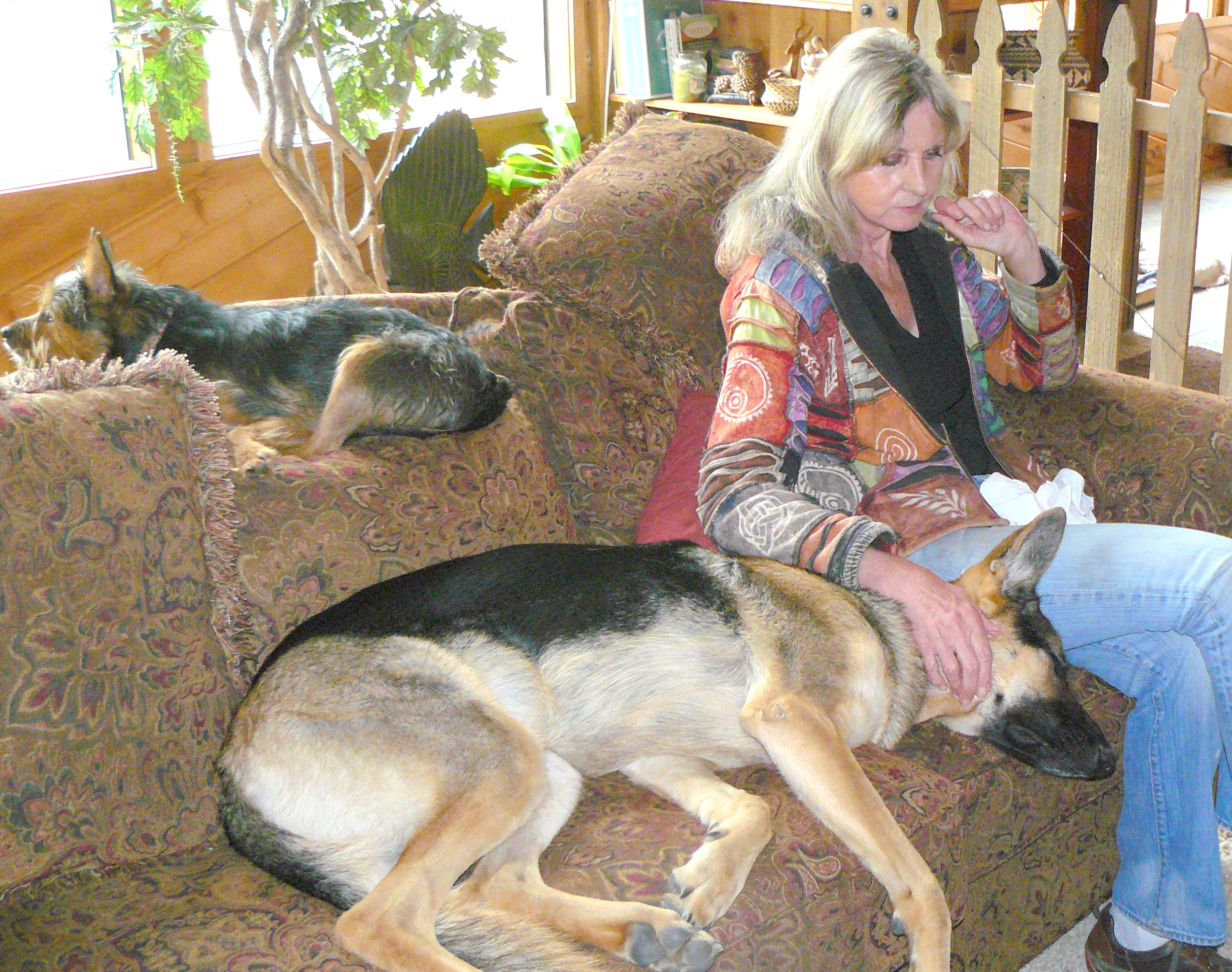
Sweeny on back of settee, Cleo loving Jean.

oooo

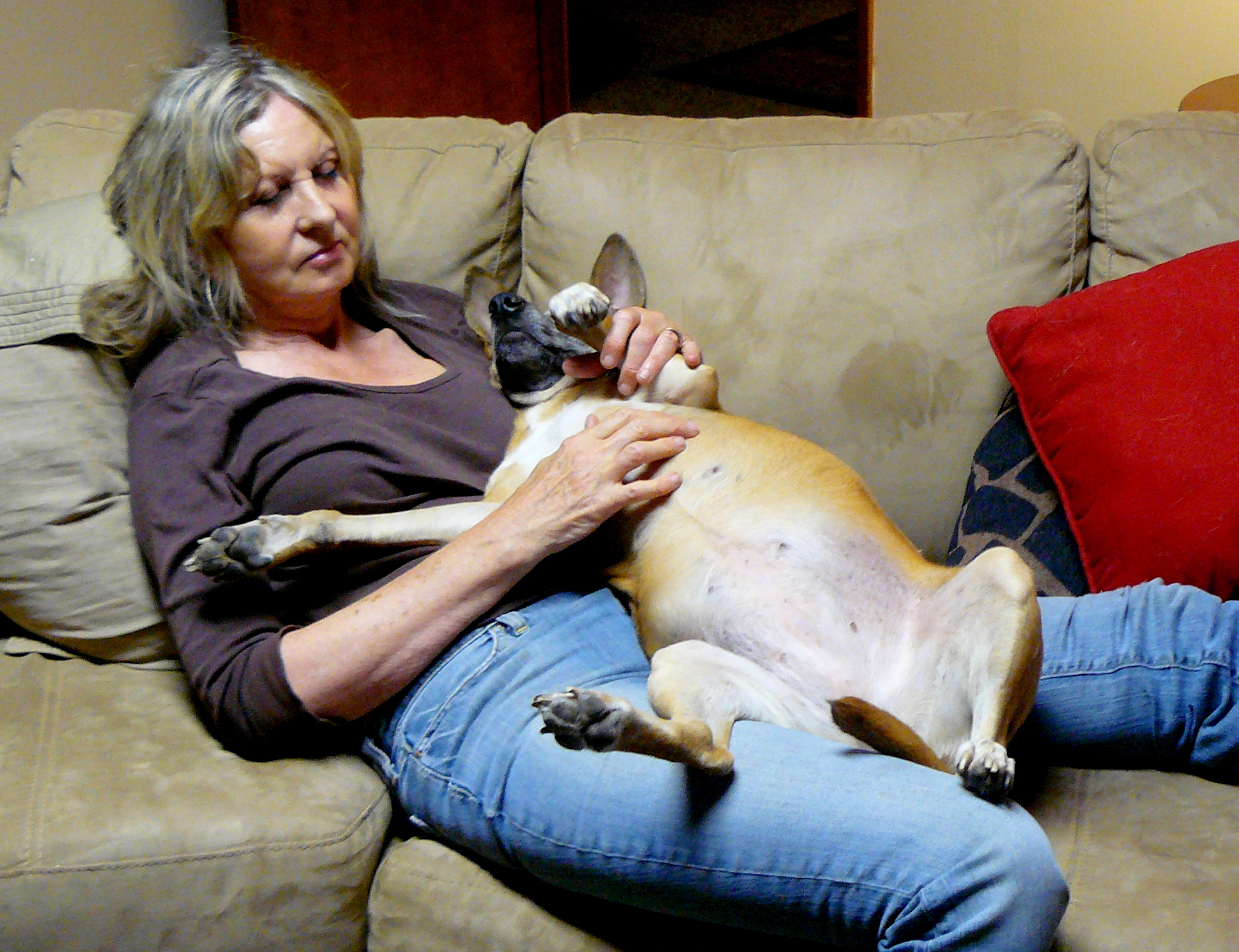
Dhalia's unconditional love for Jean.
Dhalia’s unconditional love for Jean.

oooo

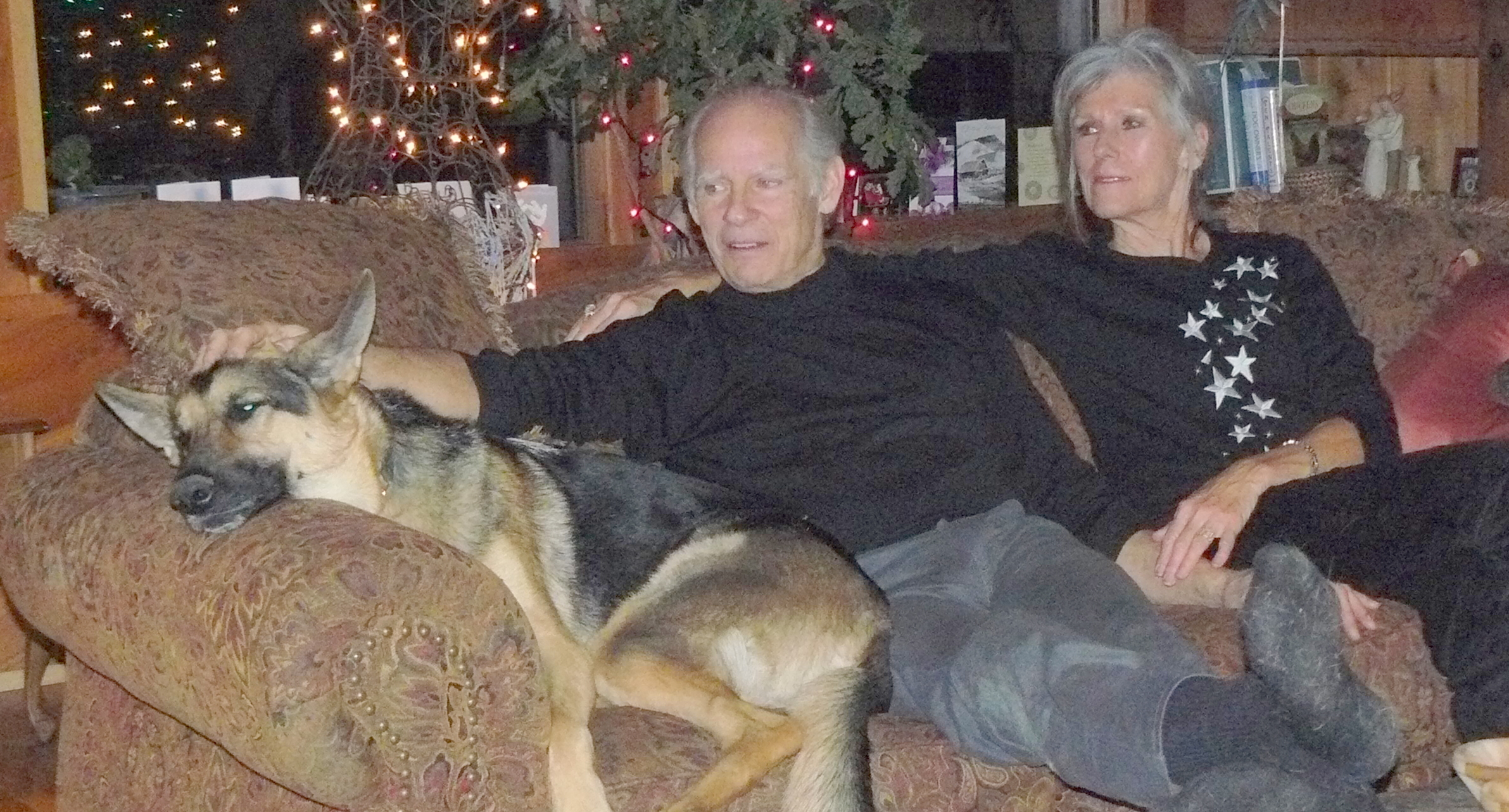
Neighbours Bill and Dordie under the influence of Cleo's unconditional love.
Neighbours Bill and Dordie under the influence of Cleo’s unconditional love.


My case rests!