Photos taken by Alex Handover on his recent trip to Merlin.

oooo

oooo
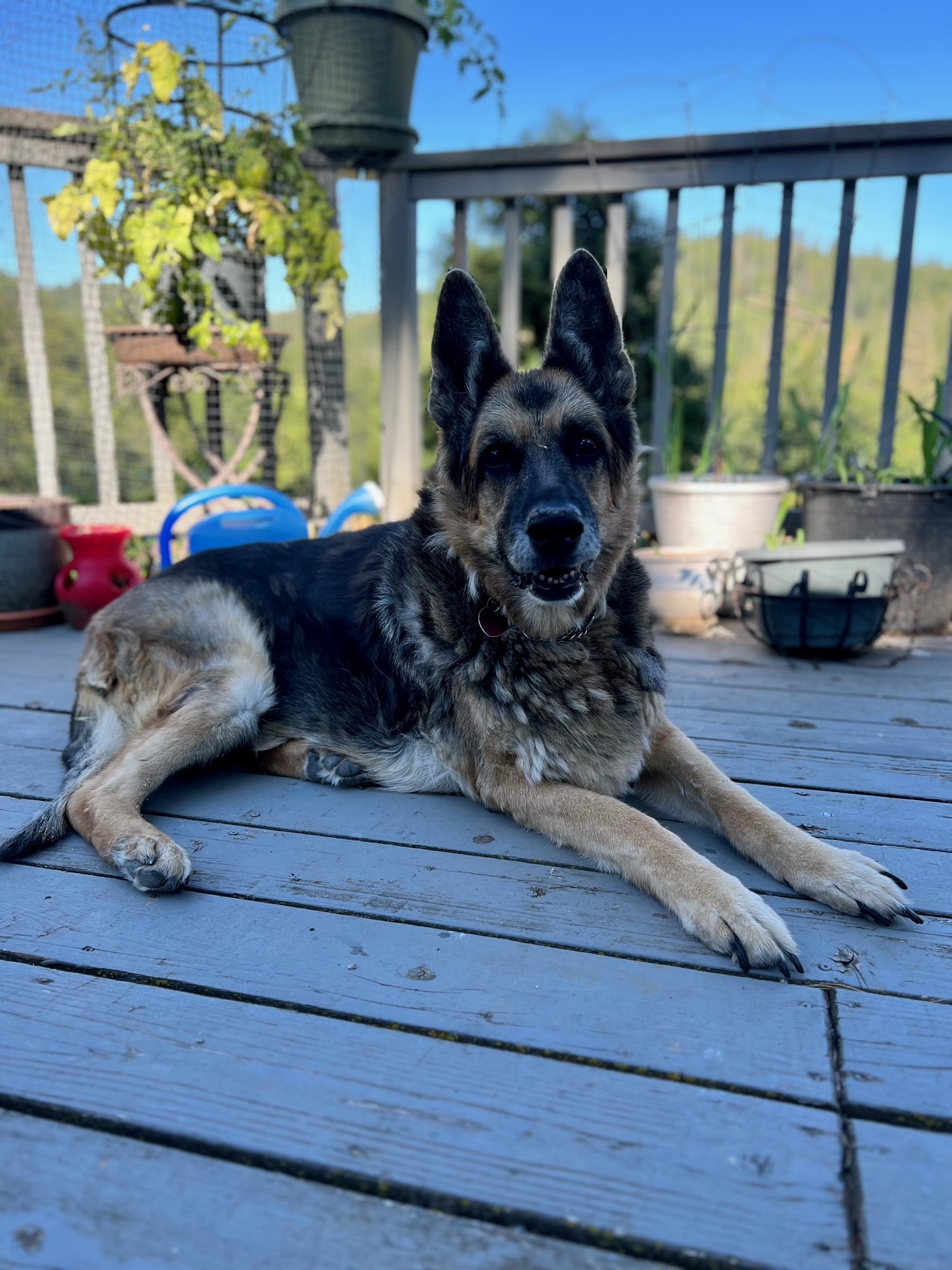
oooo

oooo

oooo
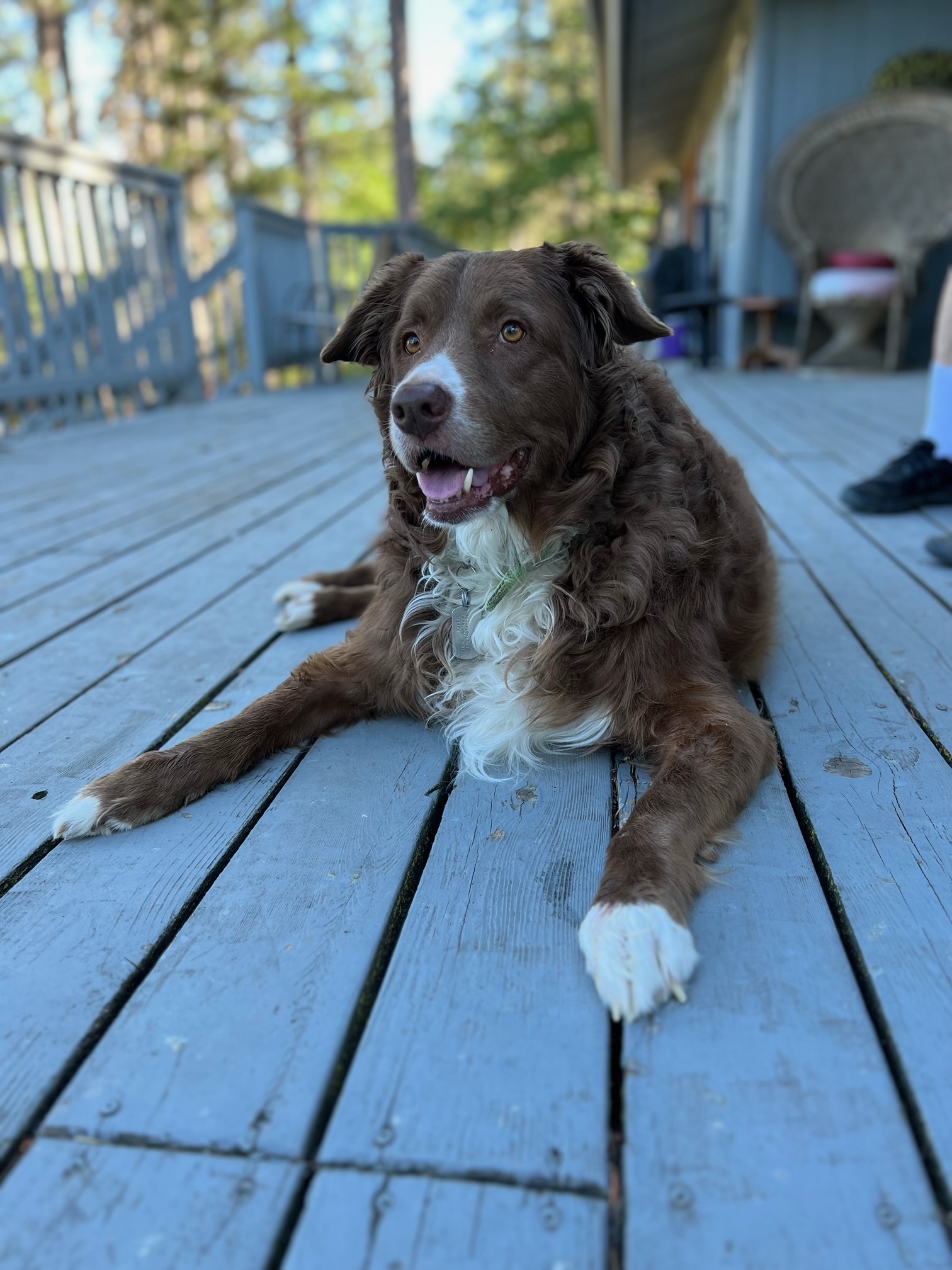
oooo

oooo

oooo

There you go, folks, just nine photographs but what a keepsake of Alex’s visit.
Dogs are animals of integrity. We have much to learn from them.
Category: Innovation
Photos taken by Alex Handover on his recent trip to Merlin.
oooo
oooo
oooo
oooo
oooo
oooo
oooo
oooo
There you go, folks, just nine photographs but what a keepsake of Alex’s visit.
Back to birds, this time the Peregrin Falcon, courtesy of Alex!

oooo
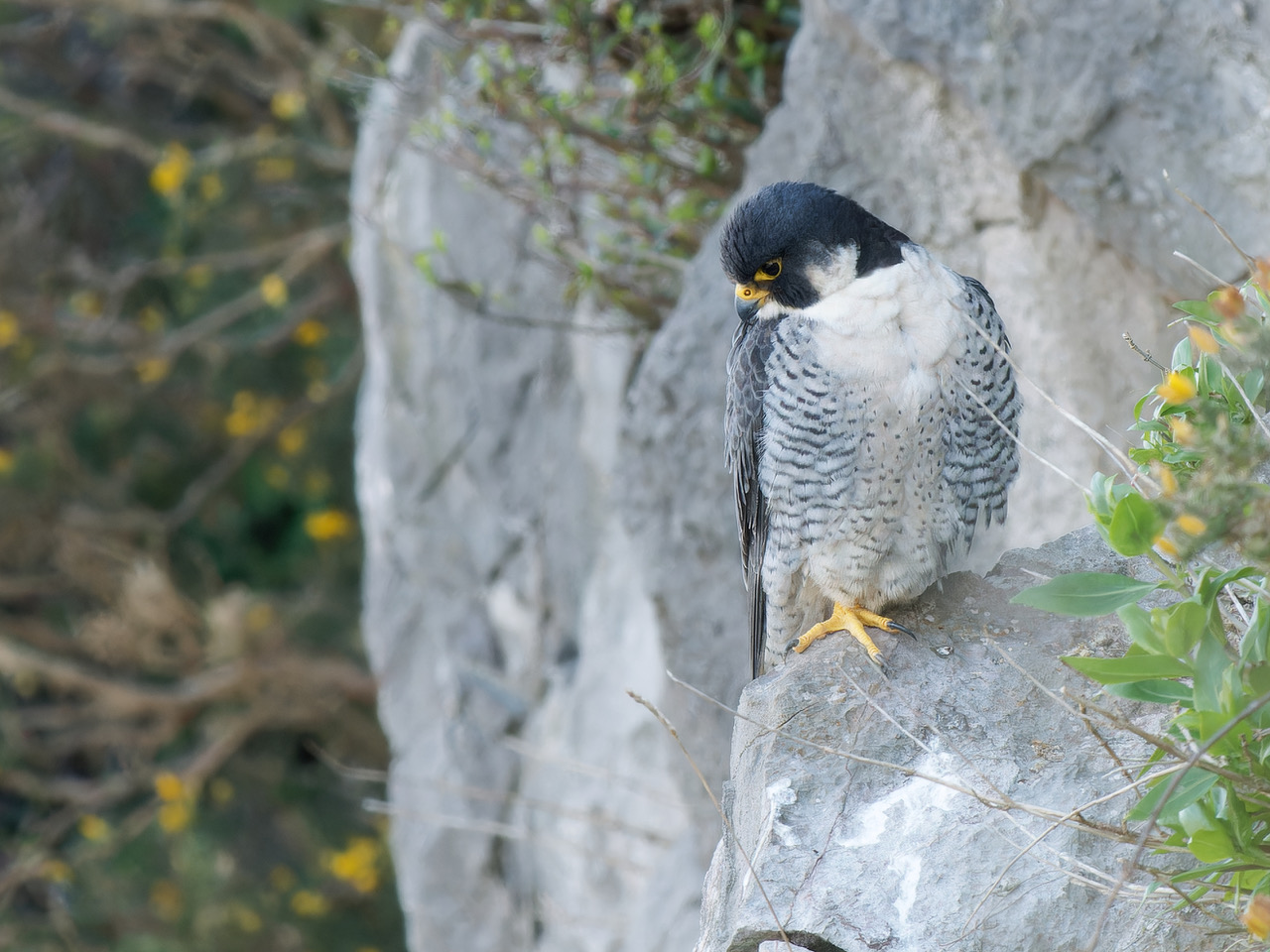
oooo
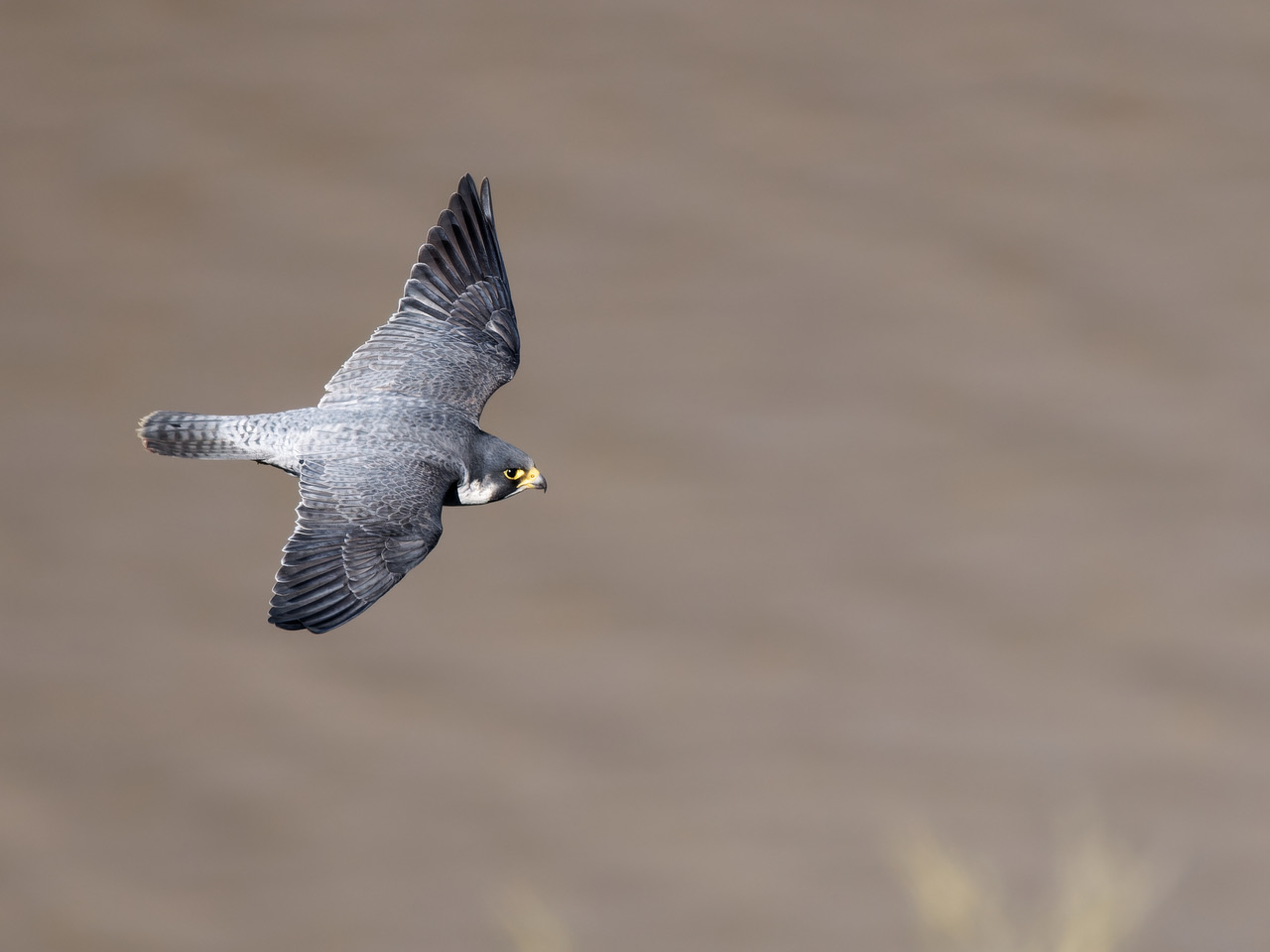
oooo

oooo

oooo

oooo

They are beautiful photographs of these incredible birds!
Introducing a guest post from Gloria Peters.
Although this blog is 99% about dogs that doesn’t preclude a guest post; one that is really charming.
ooOOoo
Fun DIY Toys to Keep Your Cat Entertained
Keep your cat entertained with these easy DIY toys, including puzzle toys and toilet paper roll toys. Challenge your cat’s mind and provide hours of fun with these ideas
Fun DIY Toys to Keep Your Cat Entertained
Cats are known for being playful and curious, so it’s important to give them things to keep them occupied and their minds working. But store-bought toys can be expensive, and your cat may not always be interested in them.

That’s why making your own toys is a good idea. Making your own cat toys is not only cheaper, but it also allows you to make them just the way your cat likes them. In this article, we’ll talk about ten fun toys you can make to keep your cat busy.
A cardboard box is one of the easiest and most useful toys you can make for your cat. You can make a box fortress by cutting holes and tubes in the box and filling it with soft bedding. Cats love to hide and look around, and a cardboard box fort is the right place for them.
Find a large cardboard box to start making your cardboard fort. Cut holes and tubes into the sides of the box, making sure the edges are even so the cat doesn’t get hurt.
You can cut the paper with scissors or a utility knife. Then put something soft inside the box, such as a blanket or towel. Your cat will love hiding in his new fort and exploring it.
Cats love feathers and you can make your own feather toy by tying the feathers to a string or stick. Your cat will enjoy chasing and pouncing on feathers, which will exercise them, keep their mind active, and remind you that cat shed.
Start by getting feathers to make a feather toy. You can use feathers you find on the street or feathers bought from a craft store. Use glue or tape to attach the feathers to a string or stick. Make sure the feathers are well attached so they don’t fall off when the kids play. Then hang a feather toy in front of your cat and watch it jump and run after it.
Cats love the natural catnip stimulant, and you can make your own catnip toy by placing dried catnip in a sock and tying a knot at the end. Your cat will enjoy rubbing and biting on the sock, and the smell of catnip will keep her interested.
Find a clean sock to use as the base for your catnip sock. Put the dried catnip in the sock and then tie a knot at the end so the catnip stays inside. You can also put bells or wrinkled paper inside the sock to make it more interesting. Then give your cat a sock and watch her rub and bite into it, enjoying the smell of catnip.
Cats naturally love to scratch, but if you give them room to scratch, they won’t scratch your furniture. You can make a scratching post by wrapping string or carpet around a cardboard tube or wooden pole.
Find a sturdy cardboard tube or wooden pole to start making your scratching post. Cut a piece of string or carpet long enough to go around the pipe or pole. Then wrap the rope or cloth tightly around the pipe or pole and glue or staple it to keep it in place. Make sure the scratching post is high enough so that the cat can stretch out its entire body when using it. Place the scratching post where your cat likes to scratch and rub it with catnip so the cat can use it.
Make a ping pong ball track a fun and responsive toy for your cat. Make a path for the ping pong ball by cutting holes in the cardboard box and attaching the cardboard tubes. Your cat will love trying to catch the ball when you hit him with the bat.
Find a wooden box to start making a ping pong ball track. After making holes in the sides of the box, make sure they are large enough for a ping pong ball to fit through. Then make a maze by inserting cardboard tubes into the holes. The tubes can be glued with hot glue or tape. Finally, place the ping pong ball in the maze and watch your cat try to catch it by hitting it.
A paper bag tunnel is another easy and cheap toy you can make for your cat. You can make a tunnel for your cat by cutting the bottom out of a paper bag and sticking several bags together. You can also crumple up some paper and put it in bags to make them rustle and make the animals more excited.
Collect some paper bags to start making the paper bag tunnel. Make a long tunnel by cutting out the bottom of each bag and taping them together. You can also put crumpled paper inside the bags so that the cat makes noise while playing inside. Your cat will have a great time exploring his new cave and hiding in the bags.
Another fun toy for cats that looks like their natural prey is playing with a fishing rod. Stretch a toy or some feathers and tie them to a stick or dowel. Your cat will enjoy chasing and jumping on the toy, which will keep her active and stimulate her brain.
Find a stick or fishing rod to start making a fishing rod toy. Use glue or tape to attach the toy or feathers to the string, and tie the other end of the string to the stick. Hang the toy in front of your cat and watch it run and jump on it.
A toy that gives treats is a fun way to give your cat a treat and keep them entertained at the same time. Cut holes in a plastic bottle and fill it with treats to make a toy that dispenses treats. To get a treat, your cat will break the bottle.
Find a plastic bottle to start making a toy that gives out treats. Use a utility knife or scissors to cut some small holes in the sides of the bottle. Then put the best treats for your cat into the bottle. Your cat will love to hit the bottle and try to get treats out of the holes.
Conclusion
After all, making your own cat toys is a great way to keep them entertained and stimulated while saving money. But when you make these toys, it’s important to put your cat’s safety first and give her a range of toys that stimulate different senses. Don’t forget to play with your cat to bond with her and give her some exercise.
ooOOoo
Here is Gloria’s bio that she also supplied:
Gloria Peters is an experienced pet writer and enthusiast, sharing valuable insights on gadgets to keep your feline friend healthy, happy, and entertained. Her expertise in technology and pet care is well-known in the industry, as seen on her popular website blog tulip.

Gloria Peters
I must say that Gloria has done a splendid job in writing the above guest post. It is excellent and way better than I could have done myself.
Thank you, Gloria.
The last day of April, 2023, brings a change in the Picture Parades.
My son, Alex, is a very keen photographer and has taken many beautiful photos of birds. He wants to build his following especially on Instagram (that is a link to Alex’s page) and I was very willing to assist him in his endeavour.
So starting today I will be posting the photographs taken by Alex and repeating this every other Sunday. In other words, I shall now be alternating between birds and dogs for as long as is possible.
But first of all here is Alex’s QR code.

oooo

oooo

oooo

oooo

oooo

oooo

oooo

oooo
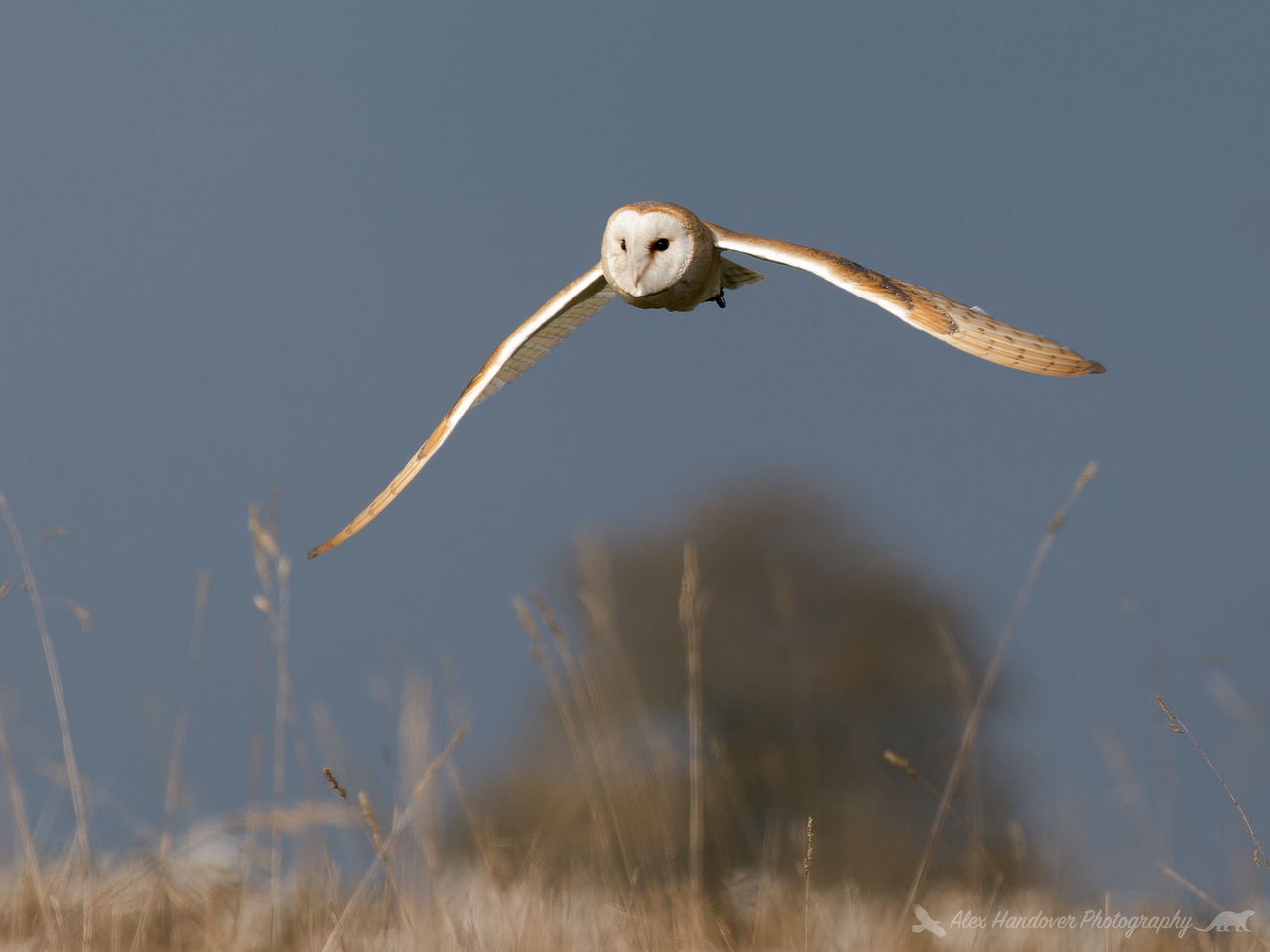
oooo
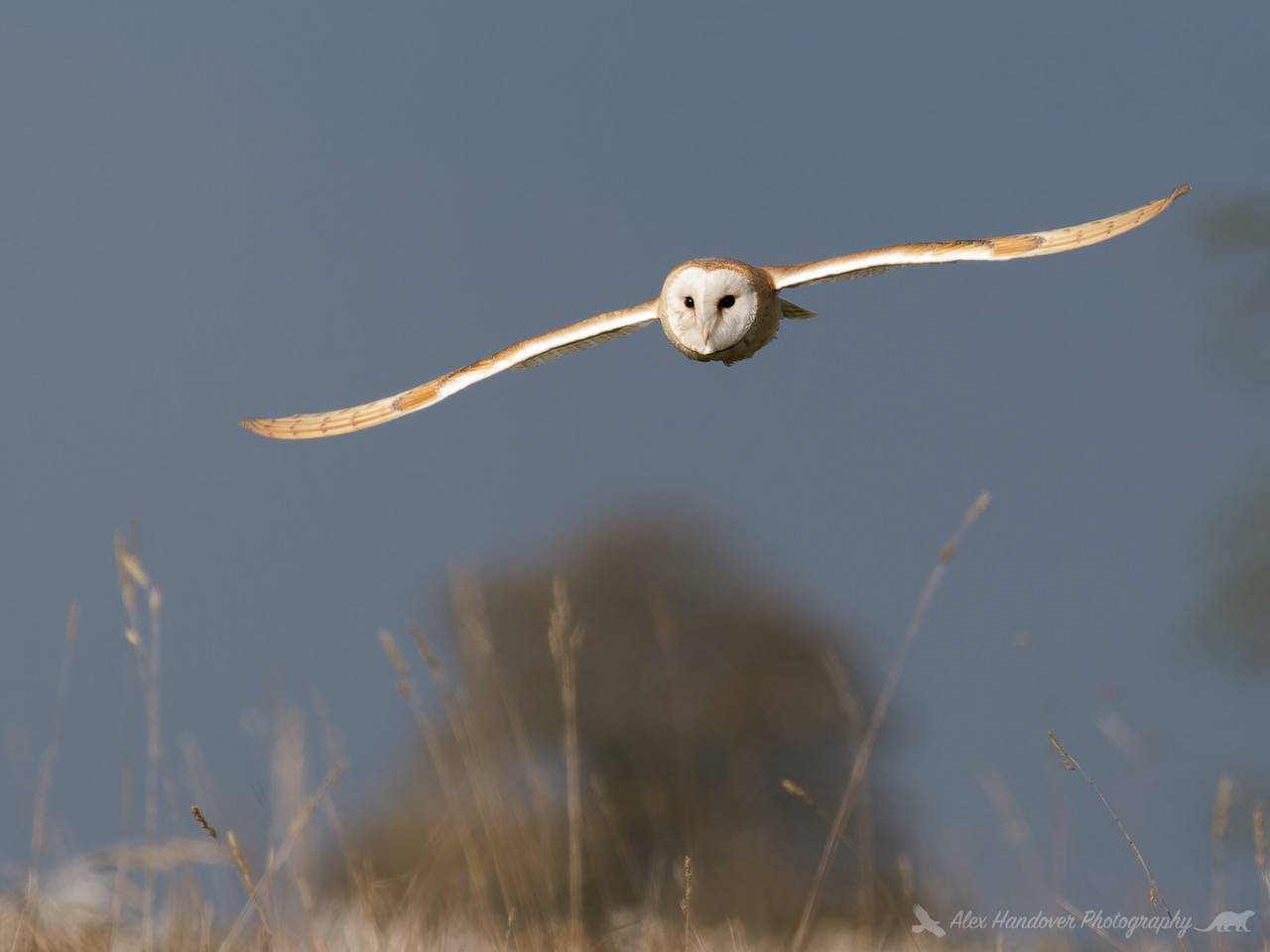
Alex uses an Olympus camera, an OM-1, and his lens is an Olympus M zuiko 150-400TC pro. A feature of the camera is the continuous shooting rate of 130 frames per second that Alex uses to good effect; as you can see.
So if you are interested in photography, please go across to this Instagram link and revel in the wonderful pictures featuring wildlife from the UK🇬🇧, mainly in the counties of Somerset, Gloucestershire and Bristol.
Next Sunday we are back to dogs!
In memory of Gordon Moore.
From Wikipedia:
Gordon Earle Moore (January 3, 1929 – March 24, 2023) was an American businessman, engineer, and the co-founder and emeritus chairman of Intel Corporation.
It was in 1965 that Gordon Moore suggested that every year there would be a doubling of the number of components per integrated circuit. In 1975 he revised his forecast to a doubling every two years; that prediction has become a reliable outcome and became known as Moore’s Law.

Just look at the left-hand scale of that graph above and ponder on the figures. From less than 10,000 in 1971 to more than 10 billion in 2021!
Incredible!

Gordon Earle Moore in 1978. He died on March 24th, 2023 aged 94 years.
What an amazing man!
An interesting post for all of us, albeit, those on the right side of 70? will find this less important.
It is very difficult for me to add anything useful to this article so I will not try.
Except to say that the author, Aditi Gurkar, is Assistant Professor of Geriatric Medicine at the University of Pittsburgh so she should know what she is talking about!
ooOOoo

Aditi Gurkar, University of Pittsburgh
Do you ever wake up some days and think, “When I was younger, I could survive on just four hours of sleep, but now it seems like I need 10”? Or have you ever walked out of the gym and “felt” your knees?
Almost everyone experiences these kinds of signs of aging. But there are some people who seem to defy their age. The late U.S. Supreme Court Justice Ruth Bader Ginsberg stayed on the bench until her death at age 87. The “Great British Bake Off” judge Mary Berry, now in her 80s, continues to inspire people all over the world to bake and enjoy life. And actor Paul Rudd was named People magazine’s “Sexiest Man Alive” in 2021 at age 52 while still looking like he’s in his 30s. Is age just a number then?
Researchers have focused a lot of attention on understanding the causes and risk factors of age-related diseases like Alzheimer’s, dementia, osteoporosis and cancer. But many ignore the major risk factor for all of these diseases: aging itself. More than any individual risk factor such as smoking or lack of exercise, the number of years you’ve lived predicts onset of disease. Indeed, aging increases the risk of multiple chronic diseases by up to a thousandfold.
However, no two people age the same. Although age is the principal risk factor for several chronic diseases, it is an unreliable indicator of how quickly your body will decline or how susceptible you are to age-related disease. This is because there is a difference between your chronological age, or the number of years you’ve been alive, and your biological age – your physical and functional ability.
As the author notes in her TED Talk, aging is not just a number.
I am a scientist interested in redefining “age.” Instead of benchmarking chronological age, my lab is invested in measuring biological age. Biological age is a more accurate measure of healthspan, or years lived in good health, than chronological age, and doesn’t directly correlate with wrinkles and gray hairs. Rapid agers experience a faster rate of functional deterioration relative to their chronological age.
My grandmother, who lived to be 83 but was bedridden and could not remember who I was for the last few years of her life, was a rapid ager. My grandfather, on the other hand, also lived until he was 83, but he was active, functional and even did my homework with me until he passed away – he was a healthy ager.
With the unprecedented growth of the world’s aging population, I believe that figuring out ways to measure biological age and how to maintain or delay its advance is critical not only for individual health, but also for the social, political and economic health of our society. Detecting rapid agers early on presents an opportunity to delay, change or even reverse the trajectory of biological aging.
Biological aging is multifaceted. It arises from a complex mix of genetic traits and is influenced by factors like microbiome composition, environment, lifestyle, stress, diet and exercise.
Genetics were once thought to have no influence on aging or longevity. However, in the early 1990s, researchers reported the first studies identifying genes that were able to extend the lifespan of a small roundworm. Since then, multiple observations support the influence of genetics on aging.
For example, children of long-lived parents and even those with long-lived siblings tend to live longer. Researchers have also identified multiple genes that influence longevity and play a role in resilience and protection from stress. These include genes that repair DNA, protect cells from free radicals and regulate fat levels.
However, it is clear from studies in identical twins – who share the same genes but not the same exact lifespans – that genes are not the only factor that influences aging. In fact, genes probably account for only 20% to 30% of biological age. This suggests that other parameters can strongly influence biological aging.
Researchers have found that environmental and lifestyle factors heavily influence biological age, including social connectedness, sleeping habits, water consumption, exercise and diet.
Social connectedness is essential for well-being throughout life. But social connections can be challenging to maintain over time due to loss of family and friends, depression, chronic illness or other factors. Several studies have reported a strong link between social isolation and increased stress, morbidity and mortality.

Similarly, diet and exercise are strong influencers of biological age. Blue zones, which are areas around the world where people live long lives, attribute their successful aging to diet, exercise and social connectedness. Mostly plant-based meals and spurts of activity throughout the day are well-known “secrets” of healthspan and longevity. Although newer studies on the effects of diet interventions such as intermittent fasting and time-restricted feeding on longevity have not been rigorously tested, they do show multiple health benefits, including better glucose and insulin regulation
While genetics is difficult to control, diet and exercise can be modified to delay biological aging.
Currently, there is no effective test to predict an individual’s health trajectory early enough in life in order to intervene and improve quality of life with age. Scientists are interested in identifying a molecule that is sensitive and specific enough to serve as a unique fingerprint for biological age.
Considering the health and resilience of the individual instead of focusing solely on disease state is important in discussions on biological age. Resilience is the state of adapting and bouncing back from a health challenge and is often more predictive of functional health. A molecular aging fingerprint may provide a tool to help identify people who are less resilient and require more aggressive monitoring and early intervention to preserve their health and help reduce gender, racial and ethnic health disparities.
There are several promising molecular markers that may serve as biological age fingerprints.
One of these markers are epigenetic clocks. Epigenetics are chemical modifications of DNA that control gene function. Several scientists have found that DNA can get “marked” by methyl groups in a pattern that changes with age and could potentially act as a readout for aging.
It is important to note, however, that while epigenetic clocks have been valuable in predicting chronological age, they do not equate to biological age. In addition, it is unclear how these epigenetic marks work or how they contribute to aging.

Another well-regarded marker of biological age is the build-up of dysfunctional cells called senescent or zombie cells. Cells become senescent when they experience multiple types of stress and become so damaged that they cannot divide anymore, releasing molecules that cause chronic low-grade inflammation and disease.
Animal studies have shown that getting rid of these cells can improve healthspan. However, what clearly defines senescent cells in humans is still unknown, making them challenging to track as a measure of biological age.
Lastly, the body releases unique metabolites, or chemical fingerprints, as byproducts of normal metabolism. These metabolites play a dynamic and direct role in physiological regulation and can inform functional health. My lab and others are figuring out the exact makeup of these chemicals in order to figure out which can best measure biological age. A lot of work still remains on not only identifying these metabolites, but also understanding how they affect biological age.
People have long sought a fountain of youth. Whether such an elixir exists is still unknown. But research is starting to show that delaying biological age may be one way to live healthier, fuller lives.
This article is republished from The Conversation under a Creative Commons license. Read the original article.
ooOOoo
There is no arguing the fact that more and more great articles are appearing online. Indeed, the whole world is changing radically in many areas.
Onwards and upwards! 😉
Footnote: This appeared online on the Inspiring Quotes website. The link is here, from which I reproduce the following:
Growing older is one of the most pervasive preoccupations of humankind. The passing of time is, after all, an inescapable part of the human condition. And aging, like love, is one of the most common themes in literature, be it the calm of poet Robert Brownings’ “Grow old along with me! The best is yet to be,” or poet Dylan Thomas’ raging against the dying of the light.
A guest post from Ashly Brown
This is a great post. As I just said a guest post that covers an important question; for those that have cats and dogs read on!
ooOOoo
How to Stop a Dog Aggression Towards Cats
By Ashly Brown.
Meta Description
Learn how to stop dog aggression towards cats with these helpful tips and techniques. Discover how to train and manage your dog to live peacefully with cats and prevent any dangerous incidents.
How to Stop a Dog Aggression Towards Cats
Dogs and cats are known to be natural enemies, and it’s not unusual for dogs to act aggressively towards cats. Even though it’s natural for a dog to feel territorial or defensive around a cat, this can be dangerous for the cat and stressful for the owner. So, it’s important to do something to stop a dog from being mean to cats. Here are some tips:

The first thing you can do to stop your dog from being mean to cats is to always watch your dog when it’s around cats. Even if you think your dog is friendly towards cats, you should never leave your dog alone with a cat. Dogs can be hard to predict, and their instincts to hunt can come out at any time.

It’s important to go slowly and carefully when bringing a new cat into your home or letting your dog meet a cat for the first time. Keep your dog on a leash and let your cat come up to it at its own speed. Give your dog treats for being good, and keep a close eye on them at all times.
If you teach your dog basic obedience commands like “sit,” “stay,” and “leave it,” it will be less likely to attack cats. By teaching your dog to do what you say, you can take its mind off the cat and keep it from chasing or hurting it.
If your dog and cat don’t get along, you may need to give them each their own place to live. This could mean putting your cat in a different room or putting a baby gate between your cat and dog. Make sure your cat’s separate living space has a place to eat, drink, and go to the bathroom.
Positive reinforcement is a great way to teach your dog how to behave well. When your dog acts well around your cat, praise them or give them treats. This will make them more likely to keep behaving well and make them feel good about the cat behavior.
If your dog is very mean to cats, you may need to get help from a professional dog trainer or behaviorist. They can help you come up with a plan for training your dog that fits its needs and habits. They might also be able to give you more advice on how to stop your dog from being mean to cats.
In some cases, a dog may need to be put on medicine to stop being mean to cats. Talk to your vet about whether your dog can take a certain medicine. They might be able to give you medicine to help your dog feel less anxious or less likely to attack cats.
Stopping a dog from being mean to a cat can take a long time and patience and consistency. Don’t stop working with your dog if you don’t see results right away. You can teach your dog to get along with cats if you give it time and work at it.
Find out what makes your dog act mean towards cats. This can help you stop the behavior. It could be a certain sound or smell, or it could be something the cat does. You can work to get rid of the trigger or get your dog used to it if you know what it is.
Desensitizing your dog means slowly exposing them to the thing that makes them aggressive towards cats, while keeping them far away. This can help them feel less scared or worried about the trigger and keep them from getting angry. Start by showing the trigger to your dog from a distance where they don’t show any signs of aggression. Over time, you can slowly get closer.
Putting your dog in a head collar or giving it a muzzle can help keep it from attacking the cat. Dog bark collars can help you keep your dog from moving around too much, and muzzles can stop them from biting or attacking. It’s important to know how to use these tools right and to never leave your dog alone while they are on.
Taking care of your dog’s environment can help stop your dog from being mean to cats. This could mean keeping your dog on a leash when there are cats around or putting up baby gates to keep them apart. It’s important to give your dog and cat a safe and secure place to live.
Conclusion
In conclusion, it is possible to stop a dog from being mean to a cat, but it takes time, patience, and consistent work on the part of the owner. Understanding why your dog is mean to cats is very important for coming up with a good plan to stop the behavior. You should never punish or hurt your dog physically if he or she is mean to cats. This can make the problem worse and cause fear and anxiety.
Focus instead on training with positive reinforcement, desensitization, and management techniques like making a safe space and using head collars or muzzles. Your dog can learn to live peacefully with cats with consistent training and management. This can prevent any dangerous or harmful situations from happening.
It’s important to remember that every dog is different, and what works for one dog might not work for another. Talking to a professional dog trainer or behaviorist can help you come up with a custom plan to stop your dog from being mean to cats.
Author Bio:
Ashly Brown is an experienced writer and pet enthusiast who loves to share her knowledge and insights on the latest trends in pet care. As a dedicated pet cat owner, Ashley understands the importance of finding the best gadgets to keep your feline friend healthy, happy, and entertained in the pet cats world. With her expertise in technology and pet care, Ashley provides valuable information and advice to help cat owners make informed decisions about the latest gadgets for their furry friends

ooOOoo
Ashly shows her experience as a pet lover and being a writer; in spades!
There will be many that have cats and dogs who take her advice with great interest and many of you that will find in Ashly’s tips some very educational ideas.
Thank you, Ashly!
A really fascinating article from The Conversation on Imagination.
The website The Conversation had another very interesting link to something that sorts out the humans from all other life forms. It is imagination!
I have pleasure in republishing it!
ooOOoo

Andrey Vyshedskiy, Boston University
Published February, 23rd, 2023
You can easily picture yourself riding a bicycle across the sky even though that’s not something that can actually happen. You can envision yourself doing something you’ve never done before – like water skiing – and maybe even imagine a better way to do it than anyone else.
Imagination involves creating a mental image of something that is not present for your senses to detect, or even something that isn’t out there in reality somewhere. Imagination is one of the key abilities that make us human. But where did it come from?
I’m a neuroscientist who studies how children acquire imagination. I’m especially interested in the neurological mechanisms of imagination. Once we identify what brain structures and connections are necessary to mentally construct new objects and scenes, scientists like me can look back over the course of evolution to see when these brain areas emerged – and potentially gave birth to the first kinds of imagination.
After life emerged on Earth around 3.4 billion years ago, organisms gradually became more complex. Around 700 million years ago, neurons organized into simple neural nets that then evolved into the brain and spinal cord around 525 million years ago.
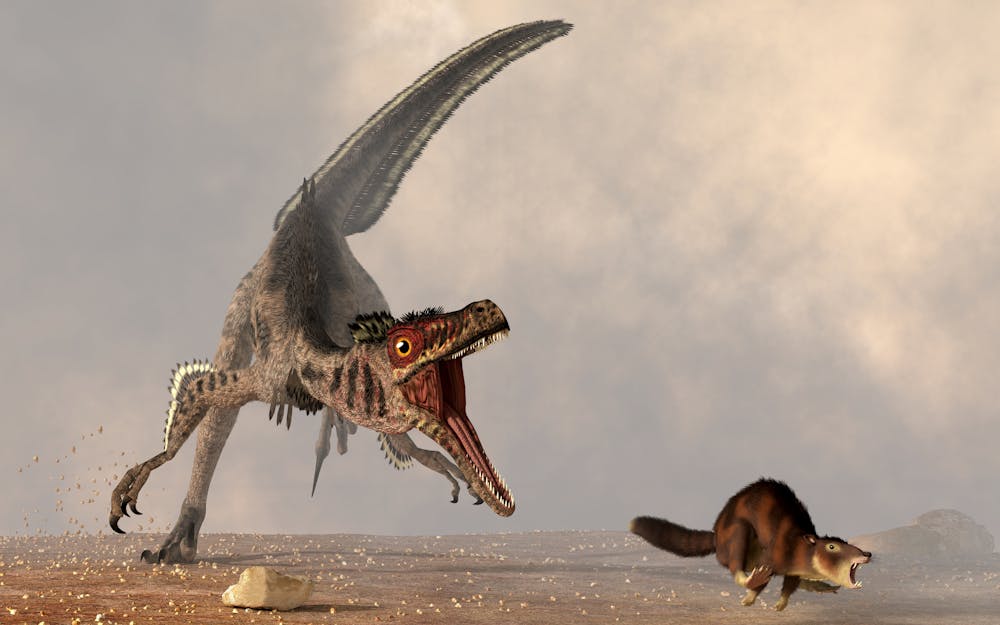
Eventually dinosaurs evolved around 240 million years ago, with mammals emerging a few million years later. While they shared the landscape, dinosaurs were very good at catching and eating small, furry mammals. Dinosaurs were cold-blooded, though, and, like modern cold-blooded reptiles, could only move and hunt effectively during the daytime when it was warm. To avoid predation by dinosaurs, mammals stumbled upon a solution: hide underground during the daytime.
Not much food, though, grows underground. To eat, mammals had to travel above the ground – but the safest time to forage was at night, when dinosaurs were less of a threat. Evolving to be warm-blooded meant mammals could move at night. That solution came with a trade-off, though: Mammals had to eat a lot more food than dinosaurs per unit of weight in order to maintain their high metabolism and to support their constant inner body temperature around 99 degrees Fahrenheit (37 degrees Celsius).
Our mammalian ancestors had to find 10 times more food during their short waking time, and they had to find it in the dark of night. How did they accomplish this task?
To optimize their foraging, mammals developed a new system to efficiently memorize places where they’d found food: linking the part of the brain that records sensory aspects of the landscape – how a place looks or smells – to the part of the brain that controls navigation. They encoded features of the landscape in the neocortex, the outermost layer of the brain. They encoded navigation in the entorhinal cortex. And the whole system was interconnected by the brain structure called the hippocampus. Humans still use this memory system for remembering objects and past events, such as your car and where you parked it.
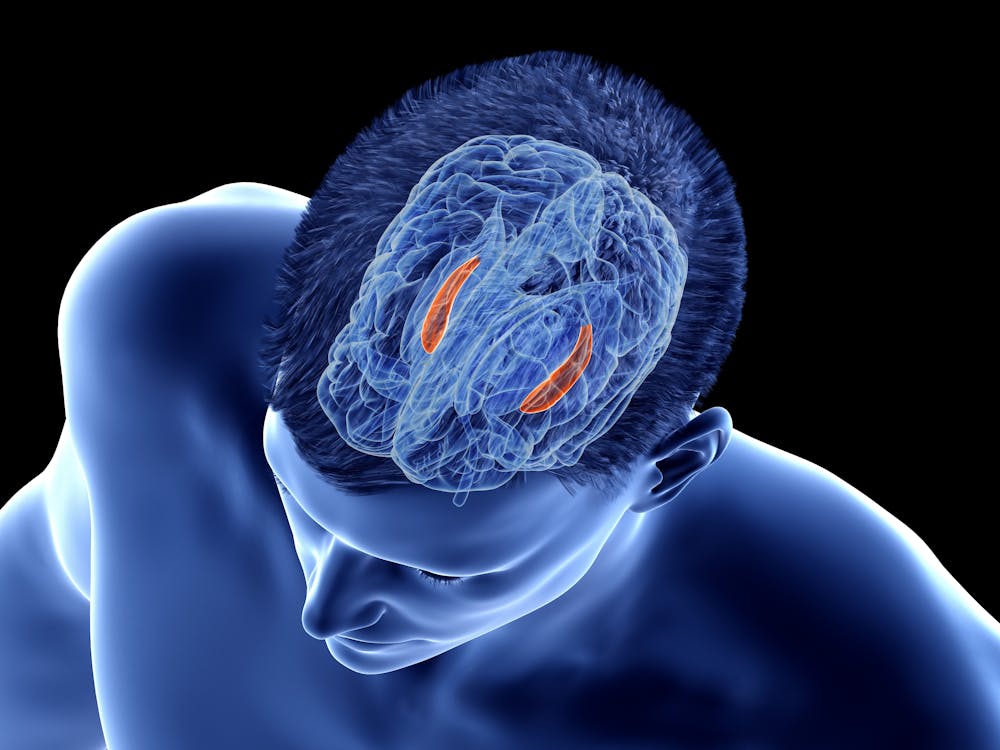
Groups of neurons in the neocortex encode these memories of objects and past events. Remembering a thing or an episode reactivates the same neurons that initially encoded it. All mammals likely can recall and re-experience previously encoded objects and events by reactivating these groups of neurons. This neocortex-hippocampus-based memory system that evolved 200 million years ago became the first key step toward imagination.
The next building block is the capability to construct a “memory” that hasn’t really happened.
The simplest form of imagining new objects and scenes happens in dreams. These vivid, bizarre involuntary fantasies are associated in people with the rapid eye movement (REM) stage of sleep.
Scientists hypothesize that species whose rest includes periods of REM sleep also experience dreams. Marsupial and placental mammals do have REM sleep, but the egg-laying mammal the echidna does not, suggesting that this stage of the sleep cycle evolved after these evolutionary lines diverged 140 million years ago. In fact, recording from specialized neurons in the brain called place cells demonstrated that animals can “dream” of going places they’ve never visited before.
In humans, solutions found during dreaming can help solve problems. There are numerous examples of scientific and engineering solutions spontaneously visualized during sleep.
The neuroscientist Otto Loewi dreamed of an experiment that proved nerve impulses are transmitted chemically. He immediately went to his lab to perform the experiment – later receiving the Nobel Prize for this discovery.
Elias Howe, the inventor of the first sewing machine, claimed that the main innovation, placing the thread hole near the tip of the needle, came to him in a dream.
Dmitri Mendeleev described seeing in a dream “a table where all the elements fell into place as required. Awakening, I immediately wrote it down on a piece of paper.” And that was the periodic table.
These discoveries were enabled by the same mechanism of involuntary imagination first acquired by mammals 140 million years ago.

The difference between voluntary imagination and involuntary imagination is analogous to the difference between voluntary muscle control and muscle spasm. Voluntary muscle control allows people to deliberately combine muscle movements. Spasm occurs spontaneously and cannot be controlled.
Similarly, voluntary imagination allows people to deliberately combine thoughts. When asked to mentally combine two identical right triangles along their long edges, or hypotenuses, you envision a square. When asked to mentally cut a round pizza by two perpendicular lines, you visualize four identical slices.
This deliberate, responsive and reliable capacity to combine and recombine mental objects is called prefrontal synthesis. It relies on the ability of the prefrontal cortex located at the very front of the brain to control the rest of the neocortex.
When did our species acquire the ability of prefrontal synthesis? Every artifact dated before 70,000 years ago could have been made by a creator who lacked this ability. On the other hand, starting about that time there are various archeological artifacts unambiguously indicating its presence: composite figurative objects, such as lion-man; bone needles with an eye; bows and arrows; musical instruments; constructed dwellings; adorned burials suggesting the beliefs in afterlife, and many more.
Multiple types of archaeological artifacts unambiguously associated with prefrontal synthesis appear simultaneously around 65,000 years ago in multiple geographical locations. This abrupt change in imagination has been characterized by historian Yuval Harari as the “cognitive revolution.” Notably, it approximately coincides with the largest Homo sapiens‘ migration out of Africa.
Genetic analyses suggest that a few individuals acquired this prefrontal synthesis ability and then spread their genes far and wide by eliminating other contemporaneous males with the use of an imagination-enabeled strategy and newly developed weapons.
So it’s been a journey of many millions of years of evolution for our species to become equipped with imagination. Most nonhuman mammals have potential for imagining what doesn’t exist or hasn’t happened involuntarily during REM sleep; only humans can voluntarily conjure new objects and events in our minds using prefrontal synthesis.
Andrey Vyshedskiy, Professor of Neuroscience, Boston University
This article is republished from The Conversation under a Creative Commons license. Read the original article.
ooOOoo
There we are! As the author of the article says: “Most nonhuman mammals have potential for imagining what doesn’t exist or hasn’t happened involuntarily during REM sleep; only humans can voluntarily conjure new objects and events in our minds using prefrontal synthesis.“
It has been a very long journey for us humans to be equipped with imagination. One wonders what the next ten or twenty years will bring? Any thoughts you want to leave as comments?
Talk about looking up at the starry night!
I am sure that many of you have seen the latest images but still for those that have not…
ooOOoo
First the BBC presented a report on the 25th December, 2022. This is part of what they described:
James Webb telescope: Amazing images show the Universe as never before
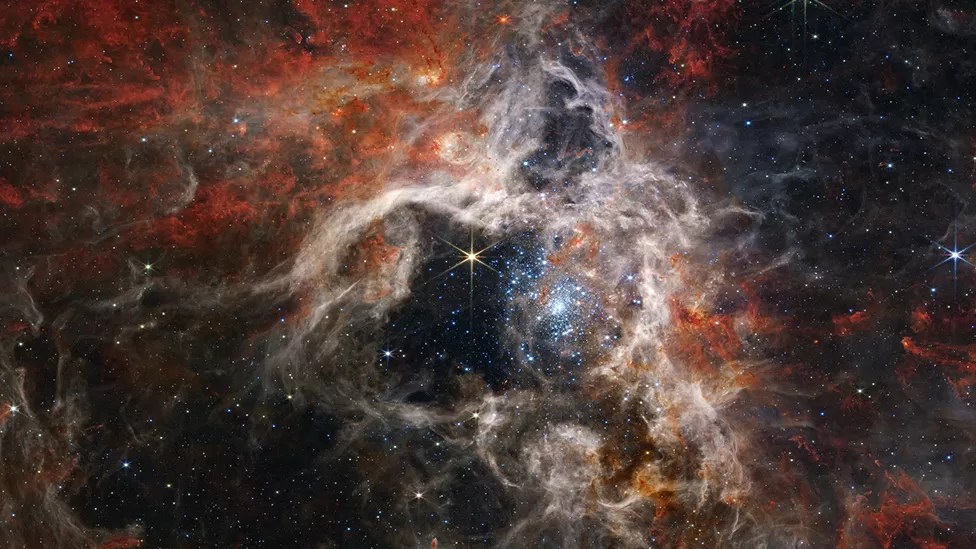
By Jonathan Amos, BBC Science Correspondent
It was the $10bn gift to the world. A machine that would show us our place in the Universe.
The James Webb Space Telescope (JWST) was launched exactly a year ago, on Christmas Day. It had taken three decades to plan, design and build.
Many wondered whether this successor to the famed Hubble Space Telescope could actually live up to expectations.
We had to wait a few months while its epic 6.5m primary mirror was unpacked and focused, and its other systems tested and calibrated.
The first thing you have to remember about James Webb is that it is an infrared telescope. It sees the sky at wavelengths of light that are beyond what our eyes are able to discern.
Astronomers use its different cameras to explore regions of the cosmos, such as these great towers of gas and dust. The Pillars were a favourite target of Hubble. It would take you several years travelling at the speed of light to traverse this entire scene.
Now we go to the NASA site for more of the JWST:
The dawn of a new era in astronomy has begun as the world gets its first look at the full capabilities of NASA’s James Webb Space Telescope, a partnership with ESA (European Space Agency) and CSA (Canadian Space Agency). The telescope’s first full-color images and spectroscopic data were released during a televised broadcast at 10:30 a.m. EDT (14:30 UTC) on Tuesday, July 12, 2022, from NASA’s Goddard Space Flight Center in Greenbelt, Maryland. These listed targets below represent the first wave of full-color scientific images and spectra the observatory has gathered, and the official beginning of Webb’s general science operations. They were selected by an international committee of representatives from NASA, ESA, CSA, and the Space Telescope Science Institute.
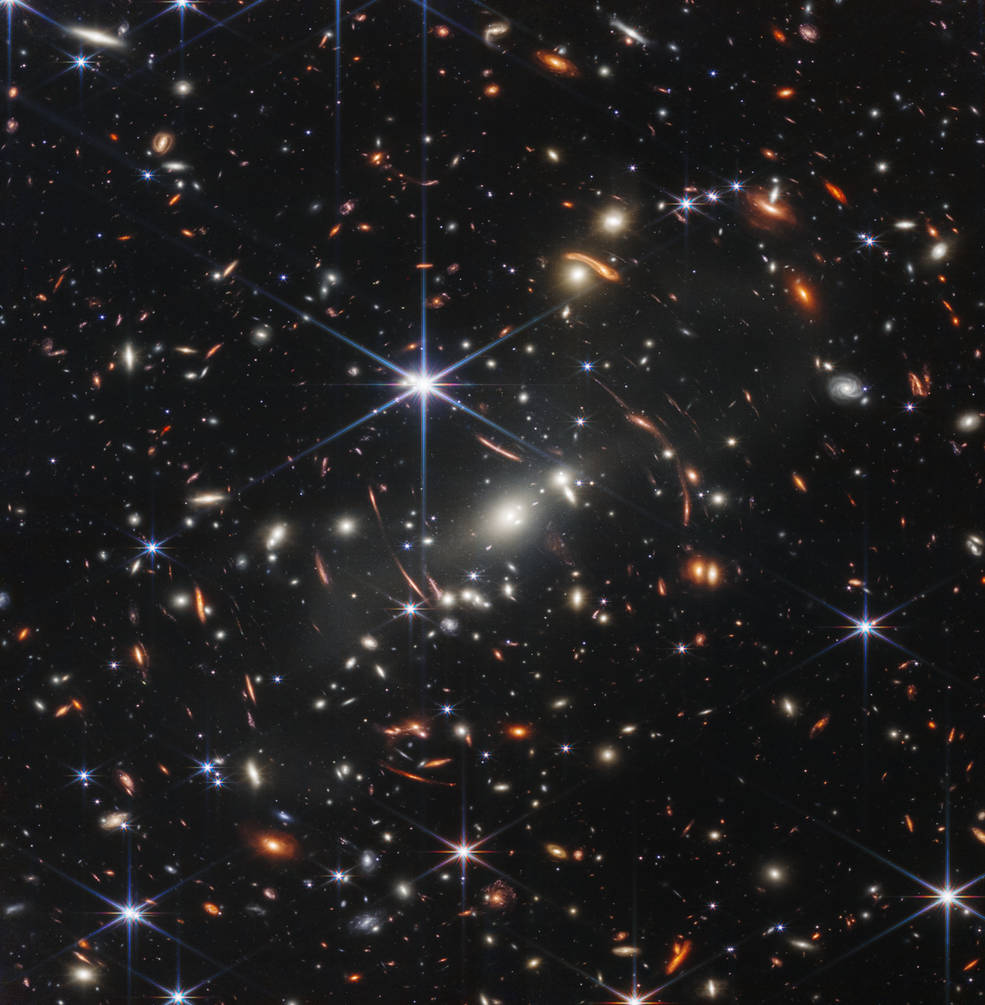
NASA’s James Webb Space Telescope has produced the deepest and sharpest infrared image of the distant universe to date. Known as Webb’s First Deep Field, this image of galaxy cluster SMACS 0723 is overflowing with detail.
Thousands of galaxies – including the faintest objects ever observed in the infrared – have appeared in Webb’s view for the first time. This slice of the vast universe covers a patch of sky approximately the size of a grain of sand held at arm’s length by someone on the ground.

This landscape of “mountains” and “valleys” speckled with glittering stars is actually the edge of a nearby, young, star-forming region called NGC 3324 in the Carina Nebula. Captured in infrared light by NASA’s new James Webb Space Telescope, this image reveals for the first time previously invisible areas of star birth.
Called the Cosmic Cliffs, Webb’s seemingly three-dimensional picture looks like craggy mountains on a moonlit evening. In reality, it is the edge of the giant, gaseous cavity within NGC 3324, and the tallest “peaks” in this image are about 7 light-years high. The cavernous area has been carved from the nebula by the intense ultraviolet radiation and stellar winds from extremely massive, hot, young stars located in the center of the bubble, above the area shown in this image.
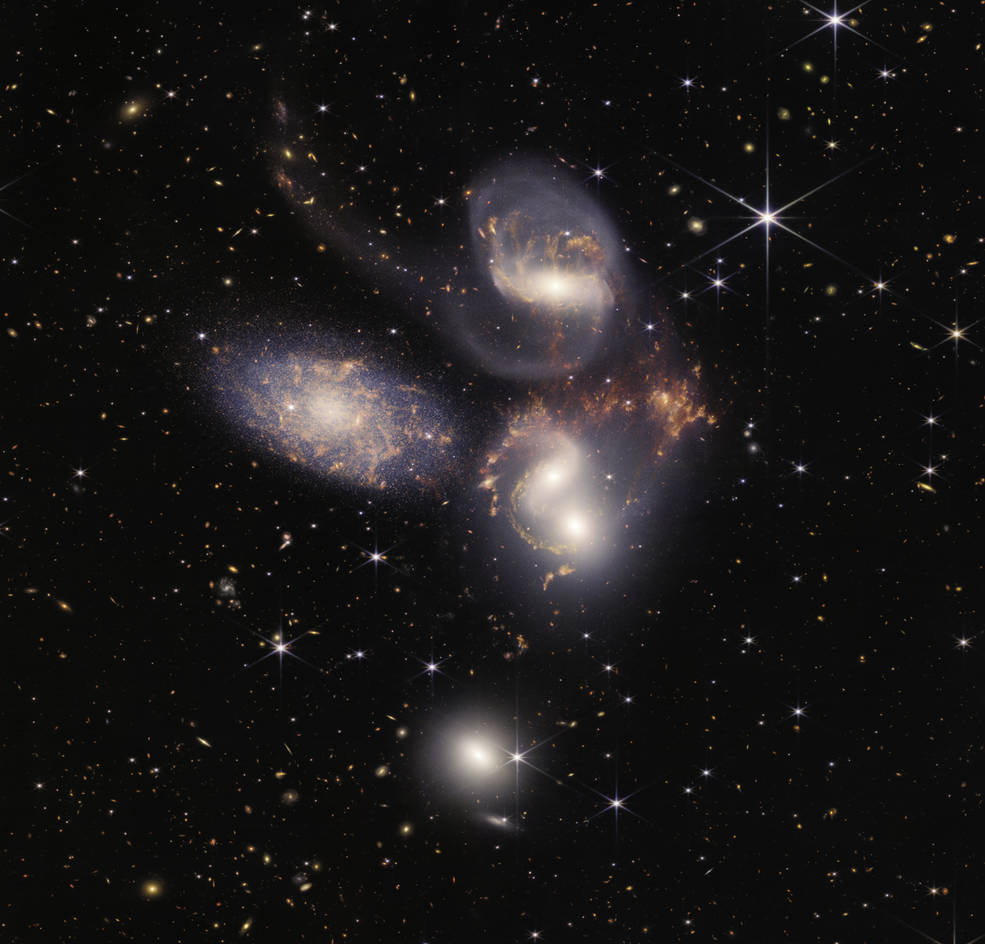
Stephan’s Quintet, a visual grouping of five galaxies, is best known for being prominently featured in the holiday classic film, “It’s a Wonderful Life.” Today, NASA’s James Webb Space Telescope reveals Stephan’s Quintet in a new light. This enormous mosaic is Webb’s largest image to date, covering about one-fifth of the Moon’s diameter. It contains over 150 million pixels and is constructed from almost 1,000 separate image files. The information from Webb provides new insights into how galactic interactions may have driven galaxy evolution in the early universe.
With its powerful, infrared vision and extremely high spatial resolution, Webb shows never-before-seen details in this galaxy group. Sparkling clusters of millions of young stars and starburst regions of fresh star birth grace the image. Sweeping tails of gas, dust and stars are being pulled from several of the galaxies due to gravitational interactions. Most dramatically, Webb captures huge shock waves as one of the galaxies, NGC 7318B, smashes through the cluster.
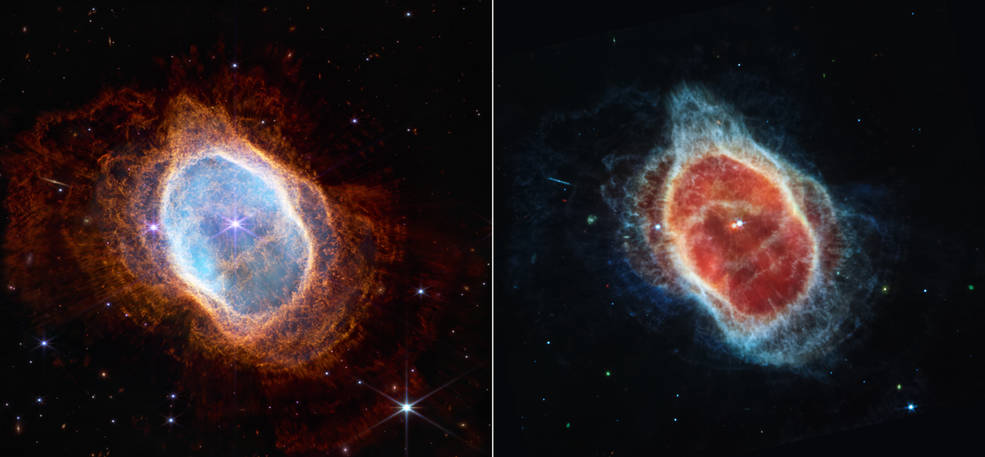
Some stars save the best for last.
The dimmer star at the center of this scene has been sending out rings of gas and dust for thousands of years in all directions, and NASA’s James Webb Space Telescope has revealed for the first time that this star is cloaked in dust.
Two cameras aboard Webb captured the latest image of this planetary nebula, cataloged as NGC 3132, and known informally as the Southern Ring Nebula. It is approximately 2,500 light-years away.
Webb will allow astronomers to dig into many more specifics about planetary nebulae like this one – clouds of gas and dust expelled by dying stars. Understanding which molecules are present, and where they lie throughout the shells of gas and dust will help researchers refine their knowledge of these objects.
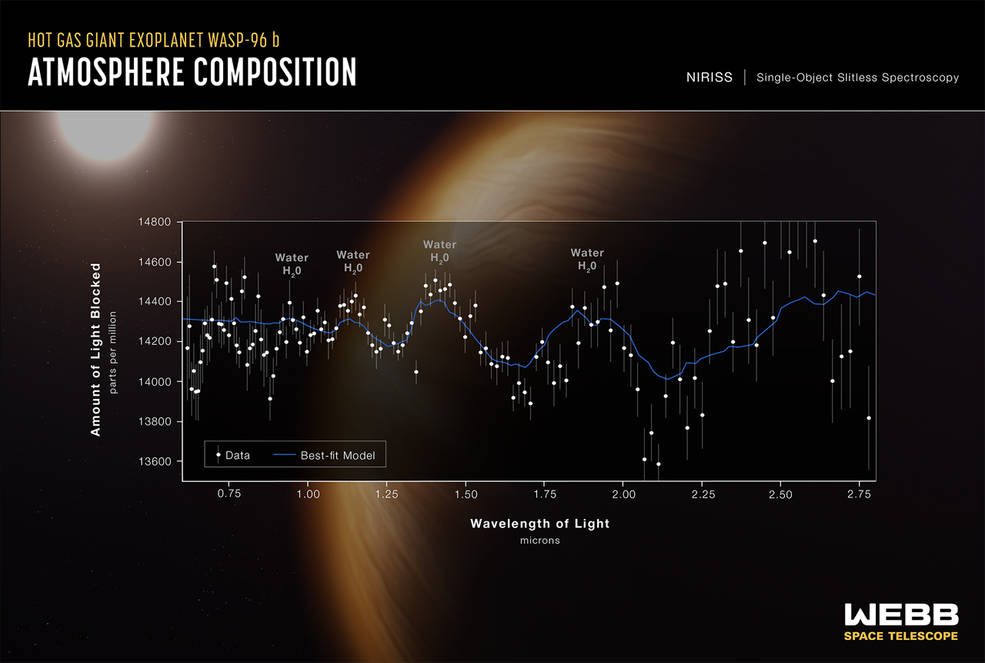
NASA’s James Webb Space Telescope has captured the distinct signature of water, along with evidence for clouds and haze, in the atmosphere surrounding a hot, puffy gas giant planet orbiting a distant Sun-like star.
The observation, which reveals the presence of specific gas molecules based on tiny decreases in the brightness of precise colors of light, is the most detailed of its kind to date, demonstrating Webb’s unprecedented ability to analyze atmospheres hundreds of light-years away.
While the Hubble Space Telescope has analyzed numerous exoplanet atmospheres over the past two decades, as in capturing the first clear detection of water in 2013, Webb’s immediate and more detailed observation marks a giant leap forward in the quest to characterize potentially habitable planets beyond Earth.
ooOOoo
Just a few of the very special photographs. They are remarkable!
December’s issue of the Science magazine had an article in which there was a paragraph that described:
The first data and images beamed back to Earth by JWST suggest it was all worthwhile. They are “beautiful” and ‘mind-blowing,” according to astronomers who have spoken with Science. It was like putting on infrared glasses, one said, and seeing the universe anew.
The GOLDEN EYE, by Daniel Clery
Imagine that just, say, 25 years ago these images and this mission would have been science fiction and now it is a reality.
I will leave you with a quotation from that SCIENCE magazine (16th December): “Politicians and pundits often make up whatever suits their political goals about science, but scientists recognize how little we understand about the Universe. As Kennedy said, “The greater our knowledge increases, the greater our ignorance unfolds.“”
But an important one!
From the 21st November until the 23rd Sunshine Solar installed a solar panel system. But we were then told to wait until Pacific Power had come to the house to put in a new electricity meter. Last Thursday, 1st December, Brent from Pacific Power called by and replaced our electricity meter. He replaced it with a bi-directional meter that when we were producing more power than we are consuming then the surplus would be ‘banked’ to be used at times when we required the surplus.
This was the result of us investing in a ground-mounted solar system.

We purchased the system from Solar Sunshine after doing a great deal of research. Indeed Brent said that they were a great company.
The other thing that we had no choice over was to install a ground-mounted system some 120 feet from the house. Because neither the house nor the roof face East and therefore are no use for solar. But as Brent pointed out last Thursday the ground-mounted system, despite being more expensive, was a good alternative to the roof system because new roof tiles were irrelevant.

The system consists of 30 individual panels capable of producing a maximum output of 65 amps at 240 volts; in other words 15,600 watts!

Yesterday, Cory and Brandon (sp?) came out to the system and checked that it was alright. Plus they gave us an digital application so we could see how much power we were generating, plus more, and they also took some photographs, that I offer you now.
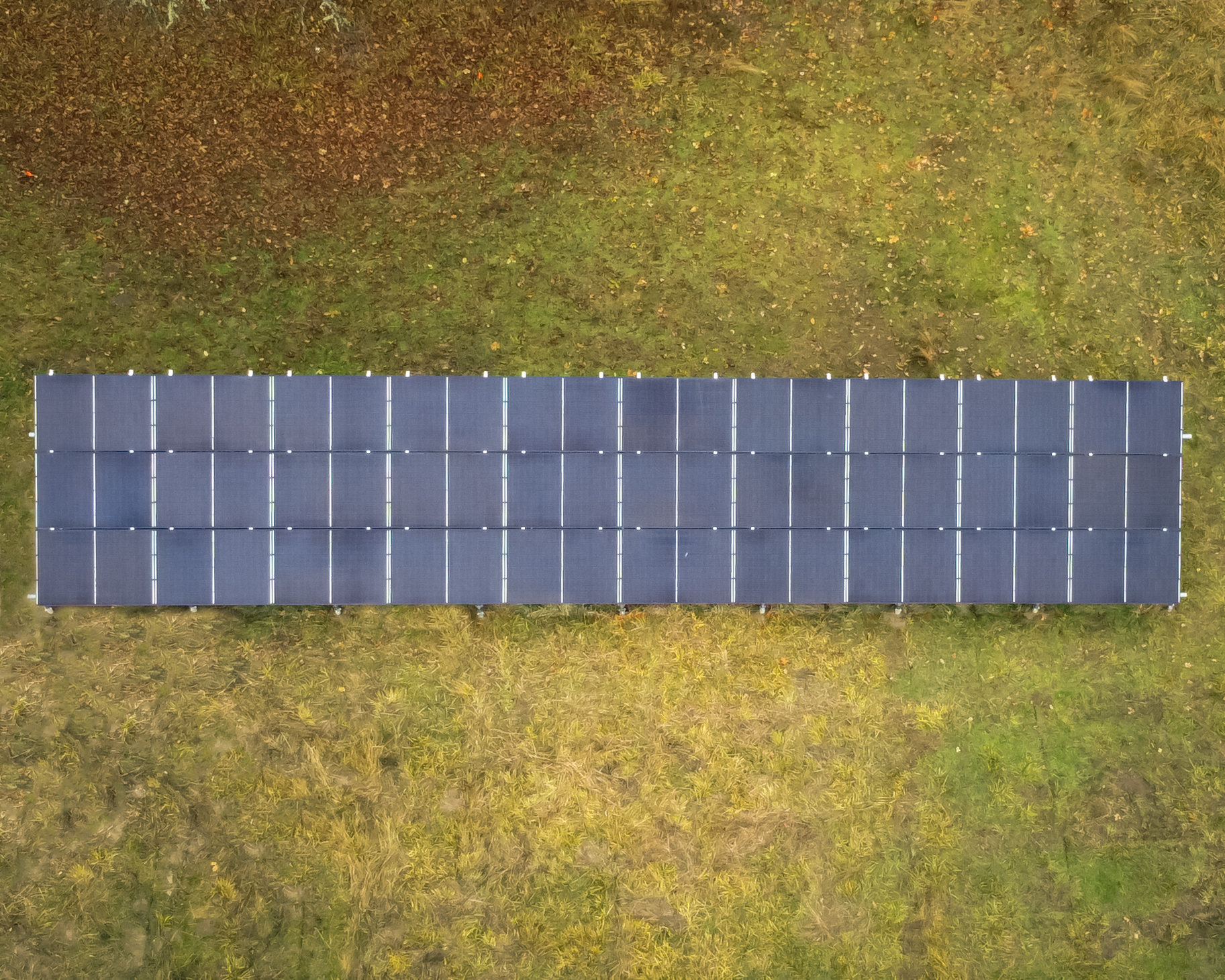
oooo

oooo

oooo
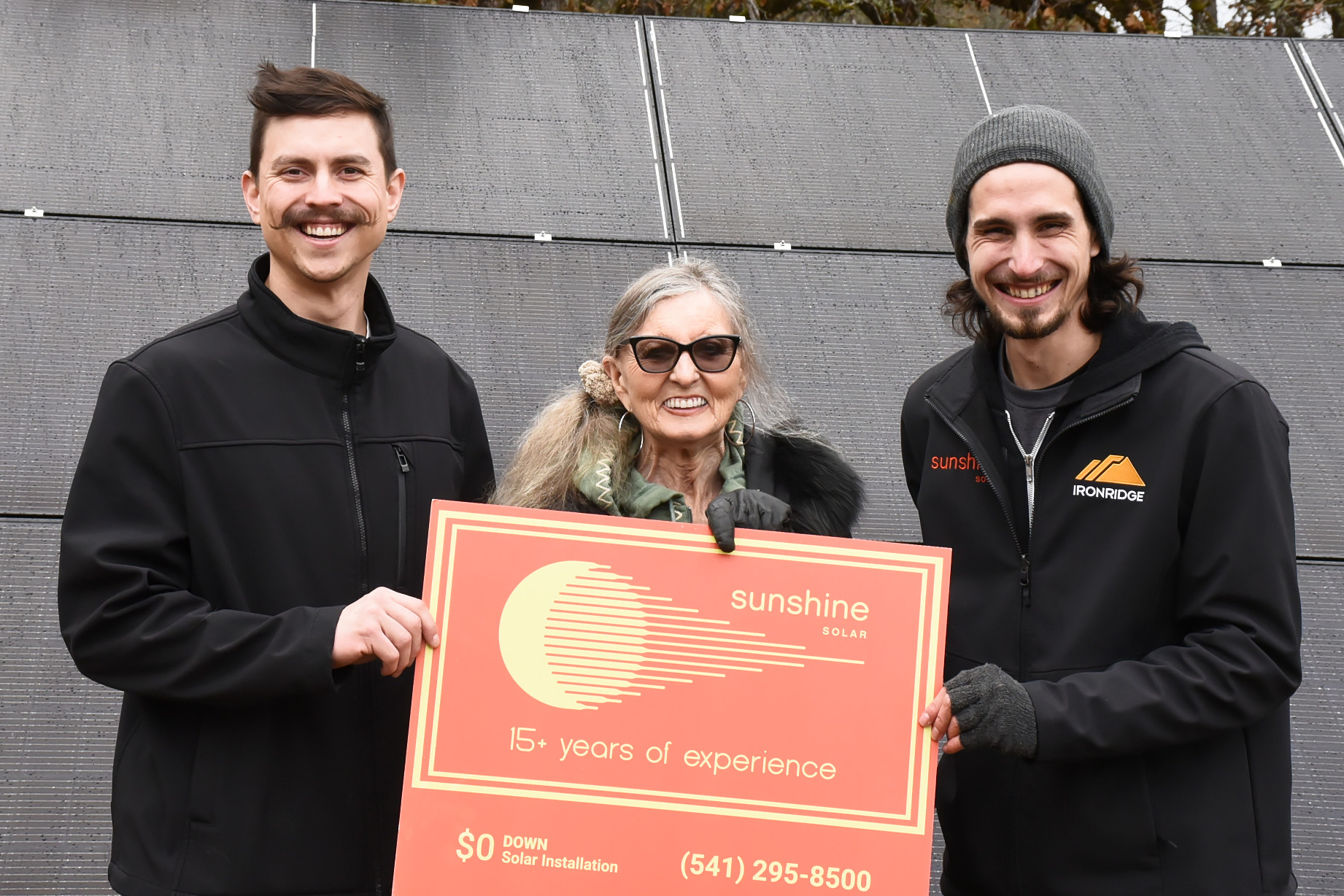
This last photograph was one taken by yours truly with Cory on the left and Brandon on the right with Jeannie in the middle.
Finally, the ‘app’ is going to be very useful.
Already it shows that last Saturday the array produced 29 kilowatts and then yesterday, the 4th December, the array produced 22.9 kilowatts and these were by no means sunlit days all the time. That brings the total for all 5 days in December, in other words since the system went live, to 91.1 kilowatts as of 15:27 PT on the 5th.
We are most pleased with the company and the installation.
 Learning from Dogs