I can’t recall who it was that mentioned this TED video which is a great shame as I really should pay credit to a wonderful examination of the business of being creative.
“Telling people how to be creative is easy – being creative is difficult.” John Marwood Cleese (born 27 October 1939) is an English actor, comedian, writer and film producer. He achieved success at the Edinburgh Festival Fringe and as a scriptwriter and performer on The Frost Report.
In the late 1960s he became a member of Monty Python, the comedy troupe responsible for the sketch show Monty Python’s Flying Circus and the four Monty Python films: And Now for Something Completely Different, The Holy Grail, Life of Brian and The Meaning of Life. In the mid 1970s, Cleese and his first wife, Connie Booth, co-wrote and starred in the British sitcom Fawlty Towers. Later, he co-starred with Kevin Kline, Jamie Lee Curtis and former Python colleague Michael Palin in A Fish Called Wanda and Fierce Creatures.
He also starred in Clockwise, and has appeared in many other films, including two James Bond films as Q, two Harry Potter films, and three Shrek films. With Yes Minister writer Antony Jay he co-founded Video Arts, a production company making entertaining training films. It was founded in 1972 by John Cleese, Sir Antony Jay, and a group of other television professionals. The videos feature well known British actors, and humorously explain business concepts. Productions include Meetings, Bloody Meetings and More Bloody Meetings, and have featured Cleese, Dawn French, Prunella Scales, Hugh Laurie, and Robert Hardy.
In December 1977, Cleese appeared as a guest star on The Muppet Show. Cleese was a fan of the show, and co-wrote much of the episode. He appears in a “Pigs in Space” segment as a pirate trying to hijack the spaceship Swinetrek, and also helps Gonzo restore his arms to “normal” size after Gonzo’s cannonball catching act goes wrong. During the show’s closing number, Cleese refuses to sing the famous show tune from Man of La Mancha, “The Impossible Dream”. Kermit the Frog apologises and the curtain re-opens with Cleese now costumed as a Viking trying some Wagnerian opera as part of a duet with Sweetums. Once again, Cleese protests to Kermit, and gives the frog one more chance. This time, he is costumed as a Mexican maraca soloist. He has finally had enough and protests that he is leaving the show, saying “You were supposed to be my host. How can you do this to me? Kermit — I am your guest!”. The cast joins in with their parody of “The Impossible Dream”, singing “This is your guest, to follow that star…”. During the crowd’s applause that follows the song, he pretends to strangle Kermit until he realises the crowd loves him and accepts the accolades. During the show’s finale, as Kermit thanks him, he shows up with a fictional album, his own new vocal record John Cleese: A Man & His Music, and encourages everyone to buy a copy. This would not be Cleese’s final appearance with the Muppets. In their 1981 film The Great Muppet Caper, Cleese does a cameo appearance as Neville, a local homeowner. As part of the appearance, Miss Piggy borrows his house as a way to impress Kermit the Frog. Cleese won the TV Times award for Funniest Man On TV — 1978-79.
Many people think you are either born with creativity or you aren’t. But John Cleese explains how to become creative and in the video, he talks about such thing as the unconscious mind.
Just one small step for Felix Baumgartner, and some step!
Felix Baumgartner
I was speaking with my son, Alex, in England about an hour ago and he brought to my attention a feat that is breath-taking, in the fullest meaning of that expression. I had to share the details with you as I’m sure that many, like me, were not aware of what is happening in a little under twelve hours time, subject to everything being in place.
A free-fall commencing from an altitude of 120,000 feet! (Oh,that’s just about 23 miles up!)
The website to go to is the Red Bull Stratus site. But if like me you are not really aware of who Felix is then on Wikipedia one can read this,
Felix Baumgartner (born 20 April 1969) is an Austrian skydiver and a BASE jumper. He is renowned for the particularly dangerous nature of the stunts he has performed during his career. Baumgartner spent time in the Austrian military where he practiced parachute jumping, including training to land on small target zones.
The Wikipedia entry goes on to explain,
He was born on 20 April 1969 in Salzburg, Austria.
In 1999 he claimed the world record for the highest parachute jump from a building when he jumped from the Petronas Towers in Kuala Lumpur, Malaysia. On 31 July 2003, Baumgartner became the first person to skydive across the English Channel using a specially made carbon fiber wing.
Baumgartner set the world record for the lowest BASE jump ever (95 feet), from the hand of the Christ the Redeemer statue in Rio de Janeiro.
He became the first person to BASE jump from the completed Millau Viaduct in France on 27 June 2004 and the first person to sky dive onto, then BASE jump from, the Turning Torso building in Malmö, Sweden on 18 August 2006.
On 12 December 2007 he became the first person to jump from the 91st floor observation deck, then went to the 90th floor (about 390 m (1,280 ft)) of the then tallest completed building in the world, Taipei 101, Taipei, Taiwan.
But to my mind, none of those previous jumps compare to this mission,
Red Bull Stratos, a mission to the edge of space, will attempt to transcend human limits that have existed for 50 years. Supported by a team of experts Felix Baumgartner plans to ascend to 120,000 feet in a stratospheric balloon and make a freefall jump rushing toward earth at supersonic speeds before parachuting to the ground. His attempt to dare atmospheric limits holds the potential to provide valuable medical and scientific research data for future pioneers.
The Red Bull Stratos team brings together the world’s leading minds in aerospace medicine, engineering, pressure suit development, capsule creation and balloon fabrication. It includes retired United States Air Force Colonel Joseph Kittinger, who holds three of the records Felix will strive to break.
Joe’s record jump from 102,800 ft in 1960 was during a time when no one knew if a human could survive a jump from the edge of space. Joe was a Captain in the U.S. Air Force and had already taken a balloon to 97,000 feet in Project ManHigh and survived a drogue mishap during a jump from 76,400 feet in Excelsior I. The Excelsior III mission was his 33rd parachute jump.
Although researching extremes was part of the program’s goals, setting records wasn’t the mission’s purpose. Joe ascended in helium balloon launched from the back of a truck. He wore a pressurized suit on the way up in an open, unpressurized gondola. Scientific data captured from Joe’s jump was shared with U.S. research personnel for development of the space program. Today Felix and his specialized team hope to take what was learned from Joe’s jumps more than 50 years ago and press forward to test the edge of the human envelope.
So if you are able and would like to watch the event live then this is the appropriate link.
An important plea to support a major road tour by the 350.org team.
Bill McKibben
There are a number of key players in the movement to arrest the affects of man on the world’s future climate and one of those is Bill McKibben. His organisation, 350.org, has been at the forefront of raising the public’s awareness as to the terrible consequences of not changing our ways pretty damn soon.
As Wikipedia puts it,
William Ernest “Bill” McKibben (born 1960) is an American environmentalist, author, and journalist who has written extensively on the impact of global warming. He is the Schumann Distinguished Scholar at Middlebury College. In 2010, the Boston Globe called him “probably the nation’s leading environmentalist” and Time magazine described him as “the world’s best green journalist.”
Anyway, something came in to my ‘in-box’ the other day that I wanted to share with all Learning from Dogs readers. This is what was said,
Friends,
The reaction to our announcement of our national “Do the Math” road tour has been utterly pheneomenal.
Case in point: the event in Boston sold out in 24 hours. We’re trying to find another, larger venue to seat everyone, but the main point is this: this tour is going to be huge, and you need to be part of it.
Get your tickets here (math.350.org), and please do spread the word to everyone you know.
P.S. If you haven’t gotten a chance to read our first announcement, I’ve included it below.
oooOOOooo
Dear Friends,
We’re getting ready for our most ambitious venture yet.
From November 7th to December 3rd, I’ll be on the road, visiting 20 cities in 20 nights (with a few days for travel in between) to help bring together the movement we need to make sure this planet has a future that we can all appreciate.
We’re calling it the Do the Math tour, but it’s not (thank heaven) just going to be me standing in front of a microphone.The goal is to jump-start the kind of movement that I discussed in the article I wrote for Rolling Stone about the scary new math of climate change. We will bring together musicians, artists and voices from across the movement to work together on directly confronting the financial and political might of the fossil fuel industry.
If you are near one of our stops, I want to make sure you’re there with us. You’re exactly the people we need to be there — folks who understand the climate math already, have experience in the movement, and are willing to step up to do more.
These events will need to be big, and reach beyond our normal circle of friends. That’s why we need to make sure that everyone knows that something big is underway. Can you take a moment to share the Do the Math tour site with your social networks?
Also, just a heads up — we’re going to be putting together a live web event so that everyone who doesn’t happen to be near a tour stop can still get together and get a campaign started in their community. Our team is still hammering out the details for the exact date and time, but please keep an eye out — we absolutely need you in this fight.
I do a lot of talks to big groups, but this is a new kind of undertaking for me, and for 350.org. We’re trying to quickly build up some serious momentum, which is why we’ve gone to great lengths to make this a very different kind of event.
Not only will we have music and guests like Naomi Klein, Jim Hansen, Desmond Tutu, in person and via video, this event is also the kickoff to some serious organizing in your community. This tour will launch our next big mission — a campaign to directly confront the economic power of the fossil fuel industry. Our message will be crystal clear: it’s not OK to sacrifice our future for the sake of one industry’s bottom line. Divestment is one important tool that we’ll discuss, but we’re ready for many other tactics as well.
Over the past few months our planet gave stark warning signs that humans have never seen before. The Arctic melted, breaking every record. The Great Plains sweltered. The West burned. This roadshow is the next big step — but the price of admission, besides the ticket, is a willingness to really go to work to change the world in the year ahead. That’s why we need you this November.
The stakes have never been this high, and I’ve never been more serious.
So go across to that Tour site, where you will read this,
On November 7th, we’re hitting the road to jumpstart the next phase of the climate movement.
It’s simple math: we can burn 565 more gigatons of carbon and stay below 2°C of warming — anything more than that risks catastrophe for life on earth. The only problem? Fossil fuel corporations now have 2,795 gigatons in their reserves, five times the safe amount. And they’re planning to burn it all — unless we rise up to stop them.
This November, Bill McKibben and 350.org are hitting the road to build the movement that will change the terrifying math of the climate crisis.
Don’t see your town on the map? You can still get involved by signing up here.
ABOUT THE TOUR
This won’t be your typical lecture.
Each event will be a unique and interactive experience, unlike any talk you’ve been to before. It will pick up where Bill McKibben’s landmark Rolling Stone article left off — and everyone who comes will be asked to join a growing movement that is strong enough to stand up to the fossil fuel industry. Together we’ll mount an unprecedented campaign to cut off the industry’s financial and political support by divesting our schools, churches and government from fossil fuels.
This won’t be easy: we’re up against the most profitable, powerful, and dangerous industry in history. But we have our own currency: creativity, courage and if needed, our bodies.
Never let it be said that we, as in all of us, don’t have the power to change the world. Oh, and feel free to circulate today’s post.
Regular followers of Learning from Dogs will recall that on Monday 24th September, Alexa Russell published a guest post under the title of The changing ways in which humans communicate.
Thus it seemed entirely appropriate to continue the theme of communications change with this story sent to me by a very good friend, who asked to remain anonymous!
The European Commission has just announced an agreement whereby English will be the official language of the European Union rather than German, which was the other possibility.
As part of the negotiations, the British Government conceded that English spelling had some room for improvement and has accepted a 5-year phase-in plan that would become known as “Euro-English”.
In the first year, “s” will replace the soft “c”. Sertainly, this will make the sivil servants jump with joy. The hard “c” will be dropped in favour of “k”. This should klear up konfusion, and keyboards kan have one less letter. There will be growing publik enthusiasm in the sekond year when the troublesome “ph” will be replaced with “f”. This will make words like fotograf 20% shorter.
In the 3rd year, publik akseptanse of the new spelling kan be expekted to reach the stage where! more komplikated changes are possible.
Governments will enkourage the removal of double letters which have always ben a deterent to akurate speling.
Also, al wil agre that the horibl mes of the silent “e” in the languag is disgrasful and it should go away.
By the 4th yer people wil be reseptiv to steps such as replasing “th” with “z” and “w” with “v”.
During ze fifz yer, ze unesesary “o” kan be dropd from vordskontaining “ou” and after ziz fifz yer, ve vil hav a reil sensi bl riten styl.
Zer vil b e no mor trubl or difikultis and evrivun vil find it ezi tu understand ech oza. Ze drem of a united urop vil finali kum tru.
Und efter ze fifz yer, ve vil al be speking German like zey vunted in ze forst plas.
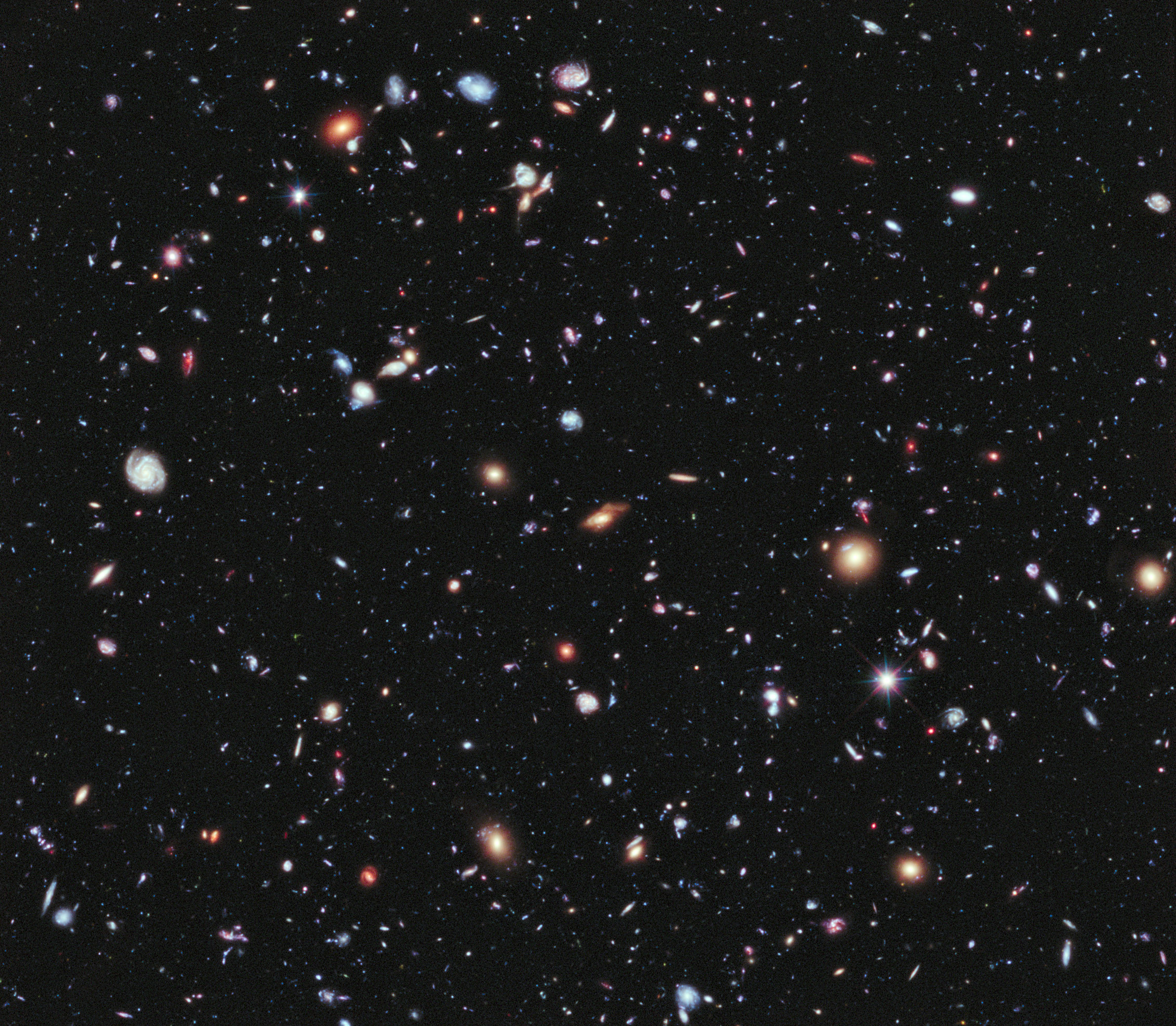
The Hubble Space Telescope (HST) has produced one of its most extraordinary views of the Universe to date.
Called the eXtreme Deep Field, the picture captures a mass of galaxies stretching back almost to the time when the first stars began to shine.
But this was no simple point and snap – some of the objects in this image are too distant and too faint for that.
Rather, this view required Hubble to stare at a tiny patch of sky for more than 500 hours to detect all the light.
“It’s a really spectacular image,” said Dr Michele Trenti, a science team member from the University of Cambridge, UK.
Then while the BBC News item had that stunning picture, over on the NASA website there was the following image together with more information.
Called the eXtreme Deep Field, or XDF, the photo was assembled by combining 10 years of NASA Hubble Space Telescope photographs taken of a patch of sky at the center of the original Hubble Ultra Deep Field. The XDF is a small fraction of the angular diameter of the full moon.
The Hubble Ultra Deep Field is an image of a small area of space in the constellation Fornax, created using Hubble Space Telescope data from 2003 and 2004. By collecting faint light over many hours of observation, it revealed thousands of galaxies, both nearby and very distant, making it the deepest image of the universe ever taken at that time.
The new full-color XDF image is even more sensitive, and contains about 5,500 galaxies even within its smaller field of view. The faintest galaxies are one ten-billionth the brightness of what the human eye can see.
Magnificent spiral galaxies similar in shape to our Milky Way and the neighboring Andromeda galaxy appear in this image, as do the large, fuzzy red galaxies where the formation of new stars has ceased. These red galaxies are the remnants of dramatic collisions between galaxies and are in their declining years. Peppered across the field are tiny, faint, more distant galaxies that were like the seedlings from which today’s magnificent galaxies grew. The history of galaxies — from soon after the first galaxies were born to the great galaxies of today, like our Milky Way — is laid out in this one remarkable image.
Hubble pointed at a tiny patch of southern sky in repeat visits (made over the past decade) for a total of 50 days, with a total exposure time of 2 million seconds. More than 2,000 images of the same field were taken with Hubble’s two premier cameras: the Advanced Camera for Surveys and the Wide Field Camera 3, which extends Hubble’s vision into near-infrared light.
“The XDF is the deepest image of the sky ever obtained and reveals the faintest and most distant galaxies ever seen. XDF allows us to explore further back in time than ever before”, said Garth Illingworth of the University of California at Santa Cruz, principal investigator of the Hubble Ultra Deep Field 2009 (HUDF09) program.
The universe is 13.7 billion years old, and the XDF reveals galaxies that span back 13.2 billion years in time. Most of the galaxies in the XDF are seen when they were young, small, and growing, often violently as they collided and merged together. The early universe was a time of dramatic birth for galaxies containing brilliant blue stars extraordinarily brighter than our sun. The light from those past events is just arriving at Earth now, and so the XDF is a “time tunnel into the distant past.” The youngest galaxy found in the XDF existed just 450 million years after the universe’s birth in the big bang.
Before Hubble was launched in 1990, astronomers could barely see normal galaxies to 7 billion light-years away, about halfway across the universe. Observations with telescopes on the ground were not able to establish how galaxies formed and evolved in the early universe.
Hubble gave astronomers their first view of the actual forms and shapes of galaxies when they were young. This provided compelling, direct visual evidence that the universe is truly changing as it ages. Like watching individual frames of a motion picture, the Hubble deep surveys reveal the emergence of structure in the infant universe and the subsequent dynamic stages of galaxy evolution.
The infrared vision of NASA’s planned James Webb Space Telescope will be aimed at the XDF. The Webb telescope will find even fainter galaxies that existed when the universe was just a few hundred million years old. Because of the expansion of the universe, light from the distant past is stretched into longer, infrared wavelengths. The Webb telescope’s infrared vision is ideally suited to push the XDF even deeper, into a time when the first stars and galaxies formed and filled the early “dark ages” of the universe with light.
The Hubble Space Telescope is a project of international cooperation between NASA and the European Space Agency. NASA’s Goddard Space Flight Center in Greenbelt, Md., manages the telescope. The Space Telescope Science Institute (STScI) in Baltimore, Md., conducts Hubble science operations. STScI is operated by the Association of Universities for Research in Astronomy, Inc., in Washington.
What a fabulous achievement. Just think that “The faintest galaxies are one ten-billionth the brightness of what the human eye can see.” and “The history of galaxies — from soon after the first galaxies were born to the great galaxies of today, like our Milky Way — is laid out in this one remarkable image.” Plus, “The youngest galaxy found in the XDF existed just 450 million years after the universe’s birth in the big bang.”
Do you know what crosses my mind looking at the picture? All those galaxies with, presumably, tens of thousands of planets and, surely, the near certainty that intelligent life must be teeming across those trillions of miles!
Let me close with this YouTube video brought to my attention thanks to Peter Sinclair of Climate Crocks.
We’ve all seen pictures of Earth from space, but have we really taken the time to appreciate what our planet looks like against the starscapes of the Milky Way galaxy? Here, we beckon viewers to see Earth in its cosmic context, which includes the stars, interstellar gases, the moon, the sun, and the solar winds. Be sure to watch in full HD, 1080p, and imagine you’re an astronaut aboard the International Space Station with a little time on your hands.
How Virtual Reality Has Changed the English Language and the Way Humans Communicate
Introduction
Is it noise or content?
One of the wonderful consequences of spending far too much time ‘blogging’ is the connections that I have made over the last 27 months. I have come across a wonderful range of interesting writers and learnt so much more from those links. However, that’s not all, by a long chalk. A number of you have offered to contribute an essay to Learning from Dogs. (And if you are reading this and would like to offer a guest post then ‘fill your boots!‘ )
So it was that a few weeks ago I received an email from Alexa Russell. She offered me a guest post that I found very interesting, leading to it being published today.
I asked Alexa to write a little about herself, to which she replied, “I am a freelance writer who likes to write about technology, education and the changing nature of society. I am currently considering graduate school but fear being scared off by mounting costs and diminishing returns.”
So onto the post, which Alexa explains is about the ways in which virtual reality and digital devices change how we humans communicate and use the English language. Alexa is the author of several resources on studying English and the value in earning anEnglish PhD. Here she asks what Learning from Dogs has previously wondered — do we need to understand language in order to get the message?
oooOOOooo
How Virtual Reality Has Changed the English Language and the Way Humans Communicate
Technology has changed the way we communicate in some obvious (and occasionally obnoxious) ways. Grammar, punctuation, and even a more general respect for lexical rules have diminished in favor of speed and facility in text messages, which are now the most common communicative tool. Probably more periods have been omitted in the last two days than in the hundreds of years since the Gutenberg Bible. None will be omitted here, but maybe they should be.
As social networks expand, making an acquaintance at a coffee shop can easily translate to a lifetime connection – thanks to Facebook. And finally, there is a way to sever contact without engaging in direct conflict – defriending. The funniest thing about defriending is that it is usually considered as an unimpeachable revocation, as starkly offensive as a breakup – when in fact the message has not even crossed the digital threshold to the real world.
As virtual reality and networks progress, so too do our attempts to understand exactly what has happened and may happen to our grip on physical reality. There are a myriad of movies that attempt to explore the subject: The Matrix, Inception, and Avatar, to name a few of the most popular. In The Matrix, Neo discovers that he can will himself to do anything, move with almost infinite speed, gain superman strength, as long as he can carry that belief to his avatar in The Matrix. In Avatar, the protagonist cannot walk in real life but is then given a taller, stronger, more agile host to control. Inception tests the boundaries of the physical, as well as the emotional, as the virtual realities of the “hacked” mind have real impact on his or her emotional truth.
The conclusions that all of these movies come to is the same, albeit shocking fact: virtual reality has real-world effects. Neo can die if he believes he has died. Love can transfer from the blue, tall, strong, avatar to the avatar’s handicapped controller. Inception controls the outlook and actions of an individual well beyond the confines of the dreamworld. It can even come to define the rest of the dreamer’s life.
Virtual reality allows us to shed our physical shells and our weak points. There is nothing holding us back from becoming what or who we want to be. The zits and potbellies of real life give way to what is being communicated. Equally, as in the Matrix, World of Warcraft and even in NASA’s new medical diagnosis virtual reality for astronauts, skills can be learned more quickly than ever will be possible in real life. The NASA device gives astronauts an instant how-to guide, which will enable them to collect data and provide diagnoses as if they had years of medical school under their belts.
So, it really shouldn’t be all that surprising that grammar, punctuation, and spelling have lost a lot of their importance. When people communicate through a virtual medium, they can forget things like academic training and rules of grammar. The value of training and rules is diminishing. It is the essence of the message, not its style, that matters. The biggest question, however is, can you understand the essence?
oooOOOooo
You can understand why it was such a pleasure to receive Alexa’s essay! And the question left in the air, so to speak, in her closing sentence, is one of huge import. As we add to, or is it replace, our tradition of the ‘spoken’ word with this new-world of staccato speak, what’s happening to the essence of the message!
I do hope that Alexa will grace these pages again.
The official video about Miniatur Wunderland Hamburg, the largest model railway in the world, and one of the most successful tourist attractions in Germany. On the 1.300 m² large layout, far more than a thousand trains, aircrafts, cars and ships move about. A wonder of the world in miniature. Please, find more information here.
A lifting of the importance of integrity is the key to our survival.
Let me start by reflecting on the difference between ‘truth’ and ‘integrity’.
Here’s one of the definitions of Truth: conformity with fact or reality; verity: the truth of a statement.
Here’s one of the definitions of Integrity: adherence to moral and ethical principles; soundness of moral character; honesty.
So while in yesterday’s article, I frequently referred to the word ‘truth‘, determining the ‘fact or reality‘ of a wide range of issues associated with anthropogenic climate change is not always straightforward. Many of us probably have a strong intuition of the ’cause and effect’ of man’s footprint on this planet but a strong intuition is not the same as truth.
Then let’s turn to the notion of integrity. This is a much bigger issue, to my mind, the appalling lack of integrity! Illustrated by one simple example. How many leading politicians from any number of countries have demonstrated soundness of moral character; honesty with regard to the changing climate, even offering something as simple as “I don’t know!”
There’s a saying that pilots use, “If there’s any doubt, there’s no doubt!” Come on, politicians and leaders, at the very least there is doubt!
OK, let me move on!
If integrity is partly defined as honesty, then while it’s easy to take a pot-shot at the world’s politicians maybe we need to look closer at home; ourselves. Are we as honest with our own self as we now need to be?
Here’s an example that supports that question.
A few days ago there was a report on the website The Daily Impact about the crash of US fisheries. Let me show you how that report opens,
Report: US Fisheries Crashing
We live in a country in which every household has two TV sets, most of them receiving hundreds of channels, and two cell phones, many of them “smart.” One of every two households has a computer connected to the Internet. This country is currently in the middle of a hotly contested presidential election. And yet among the things that have almost completely escaped public attention is this: last week the US government declared fisheries disasters on four coasts.
Reflect on that paragraph. Surely it’s a reflection about the lack of integrity, of honesty, about our society?
The report ends thus,
The disaster declaration covering all these dire situations makes them eligible for Congressional aid, along with drought-stricken farmers in the Midwest and Southwest, flooded-out homeowners in New Orleans and along the Gulf, the fire-ravaged states of the far West, and the derecho-pounded Northeast. Congress will no doubt be delighted by the opportunity to help.
We eat nearly five billion pounds of seafood every year — about 16 pounds for each of us — and 85 per cent of it is imported (according to NOAA). Yet in the wake of this grim assessment of a large proportion of the domestic industry, and the questions it raises about the future sources of seafood, there is no discussion of “fisheries independence” or “peak fish” in politics or the media. Only in such outposts as this website and Mother Jones will the dire warning from the Commerce Department be reported as what it is — a dire warning.
Then there was a recent article on the Australian Permaculture news website about the US food and dairy industry. Here’s how that opened,
Americans’ right to access fresh, healthy foods of their choice is under attack. Farmageddon tells the story of small, family farms that were providing safe, healthy foods to their communities and were forced to stop, sometimes through violent action, by agents of misguided government bureaucracies, and seeks to figure out why.
Filmmaker Kristin Canty’s quest to find healthy food for her four children turned into an educational journey to discover why access to these foods was being threatened. What she found were policies that favor agribusiness and factory farms over small family-operated farms selling fresh foods to their communities. Instead of focusing on the source of food safety problems — most often the industrial food chain — policymakers and regulators implement and enforce solutions that target and often drive out of business small farms that have proven themselves more than capable of producing safe, healthy food, but buckle under the crushing weight of government regulations and excessive enforcement actions.
I’m not going to insert that YouTube video into this post but you can link to both the full article and the film here. For anyone interested in the fate of the family farm in the USA, the film is a ‘must see’! Once again, the theme of integrity, of adherence to moral and ethical principles; honesty, comes to mind!
How I do want to close this rather personal reflection on present times (some may call it an indulgent reflection!) is by including a video from this seasons TED Talks. It was brought to my attention by Christine over at her excellent blog 350 or bust. The video is about resolving conflict,
William Ury, author of “Getting to Yes,” offers an elegant, simple (but not easy) way to create agreement in even the most difficult situations — from family conflict to, perhaps, the Middle East.
The reason why this seems like a very appropriate way to close this is because the way things are going at the moment, avoiding conflict could become rather important, rather soon!
Science may just be starting to make some sense of this cruelest of diseases.
It used be to the dreaded ‘C’ word; cancer. But now that ‘C’ word has a companion, the dreaded ‘A’ word. The incidence of Alzheimer’s disease seems to be on a terrible rise. Indeed, my wife, Jean, lost her late husband to Alzheimer’s disease. My half-sister back in England is now very ill with the disease. Just chatting to some people here in Payson a few days ago revealed many who had friends or relations suffering.
So a recent item first seen on the website of The Permaculture Research Institute of Australia really jumped off the ‘page’! It was an article by George Monbiot entitled The Mind Thieves. I dropped Mr. Monbiot a quick email requesting permission to republish the article and very promptly received a positive answer. Thank you, Sir.
So before moving to the article, first a little background on George M. From his website, one quickly reads,
George Monbiot
I had an unhappy time at university, and I now regret having gone to Oxford, even though the zoology course I took – taught, among others, by Richard Dawkins, Bill Hamilton and John Krebs – was excellent. The culture did not suit me, and when I tried to join in I fell flat on my face, sometimes in a drunken stupor. I enjoyed the holidays more: I worked on farms and as a waterkeeper on the River Kennet. I spent much of the last two years planning my escape. There was only one job I wanted, and it did not yet exist: to make investigative environmental programmes for the BBC.
I’m not going to copy the full ‘About George‘ description but do urge you to pop across to here and read it yourself; George has had, trust me, a fascinating life journey that I suspect is far from over. This is how that About description closes,
Here are some of the things I love: my family and friends, salt marshes, arguments, chalk streams, Russian literature, kayaking among dolphins, diversity of all kinds, rockpools, heritage apples, woods, fishing, swimming in the sea, gazpacho, sprinting up the pitch in ultimate frisbee, ponds and ditches, growing vegetables, insects, pruning, forgotten corners, fossils, goldfinches, etymology, Bill Hicks, ruins, Shakespeare, landscape history, palaeoecology and Father Ted.
Here are some of the things I try to fight: undemocratic power, corruption, deception of the public, environmental destruction, injustice, inequality and the misallocation of resources, waste, denial, the libertarianism which grants freedom to the powerful at the expense of the powerless, undisclosed interests, complacency.
Here is what I fear: other people’s cowardice.
I still see my life as a slightly unhinged adventure whose perpetuation is something of a mystery. I have no idea where it will take me, and no ambitions other than to keep doing what I do. So far it’s been gripping.
The article was first published in the British Guardian newspaper (there’s an online link to it here) as the article mentions below. But I am republishing, in full thanks to George, the copy that appeared on George’s website on the 10th September last, including the references.
oooOOOooo
The Mind Thieves
September 10th, 2012
The evidence linking Alzheimer’s disease to the food industry is strong and growing.
By George Monbiot, published in the Guardian, 11th September 2012
When you raise the subject of over-eating and obesity, you often see people at their worst. The comment threads discussing these issues reveal a legion of bullies, who appear to delight in other people’s problems.
When alcoholism and drug addiction are discussed, the tone tends to be sympathetic. When obesity is discussed, the conversation is dominated by mockery and blame, though the evidence suggests that it can be driven by similar forms of addiction(1,2,3,4). I suspect that much of this mockery is a coded form of snobbery: the strong association between poor diets and poverty allows people to use this issue as a cipher for something else they want to say, which is less socially acceptable.
But this problem belongs to all of us. Even if you can detach yourself from the suffering caused by diseases arising from bad diets, you will carry the cost, as a growing proportion of the health budget will be used to address them. The cost – measured in both human suffering and money – could be far greater than we imagined. A large body of evidence now suggests that Alzheimer’s is primarily a metabolic disease. Some scientists have gone so far as to rename it. They call it diabetes type 3.
New Scientist carried this story on its cover last week(5): since then I’ve been sitting in the library trying to discover whether it stands up. I’ve now read dozens of papers on the subject, testing my cognitive powers to the limit as I’ve tried to get to grips with brain chemistry. While the story is by no means complete, the evidence so far is compelling.
Around 35 million people suffer from Alzheimer’s disease worldwide(6); current projections, based on the rate at which the population ages, suggest that this will rise to 100 million by 2050(7). But if, as many scientists now believe, it is caused largely by the brain’s impaired response to insulin, the numbers could rise much further. In the US, the percentage of the population with diabetes type 2, which is strongly linked to obesity, has almost trebled in 30 years(8). If Alzheimer’s, or “diabetes type 3”, goes the same way, the potential for human suffering is incalculable.
Insulin is the hormone which prompts the liver, muscles and fat to absorb sugar from the blood. Diabetes 2 is caused by excessive blood glucose, resulting either from a deficiency of insulin produced by the pancreas, or resistance to its signals by the organs which would usually take up the glucose.
The association between Alzheimer’s and diabetes 2 is long-established: type 2 sufferers are two to three times more likely to be struck by this dementia than the general population(9). There are also associations between Alzheimer’s and obesity(10) and Alzheimer’s and metabolic syndrome (a complex of diet-related pathologies)(11).
Researchers first proposed that Alzheimer’s was another form of diabetes in 2005. The authors of the original paper investigated the brains of 54 corpses, 28 of which belonged to people who had died of the disease(12). They found that the levels of both insulin and insulin-like growth factors in the brains of Alzheimer’s patients were sharply reduced by comparison to those in the brains of people who had died of other causes. Levels were lowest in the parts of the brain most affected by the disease.
Their work led them to conclude that insulin and insulin-like growth factor are produced not only in the pancreas but also in the brain. Insulin in the brain has a host of functions: as well as glucose metabolism, it helps to regulate the transmission of signals from one nerve cell to another, and affects their growth, plasticity and survival(13,14).
Experiments conducted since then appear to support the link between diet and dementia(15,16,17,18), and researchers have begun to propose potential mechanisms. In common with all brain chemistry, these tend to be fantastically complex, involving, among other impacts, inflammation, stress caused by oxidation, the accumulation of one kind of brain protein and the transformation of another(19,20,21,22). I would need the next six pages of this paper even to begin to explain them, and would doubtless get it wrong (if you’re interested, please follow the links on my website).
Plenty of research still needs to be done. But if the current indications are correct, Alzheimer’s disease could be another catastrophic impact of the junk food industry, and the worst discovered so far. Our governments, as they are in the face of all our major crises, appear to be incapable of responding.
In this country as in many others, the government’s answer to the multiple disasters caused by the consumption of too much sugar and fat is to call on both companies and consumers to regulate themselves. Before he was replaced by someone even worse, the former health secretary, Andrew Lansley, handed much of the responsibility for improving the nation’s diet to food and drinks companies: a strategy that would work only if they volunteered to abandon much of their business(23,24).
A scarcely-regulated food industry can engineer its products – loading them with fat, salt, sugar and high fructose corn syrup – to bypass the neurological signals which would otherwise prompt people to stop eating(25). It can bombard both adults and children with advertising. It can (as we discovered yesterday) use the freedoms granted to academy schools to sell the chocolate, sweets and fizzy drinks now banned from sale in maintained schools(26). It can kill the only effective system (the traffic light label) for informing people how much fat, sugar and salt their food contains. Then it can turn to the government and blame consumers for eating the products it sells. This is class war: a war against the poor fought by the executive class in government and industry.
We cannot yet state unequivocally that poor diet is a leading cause of Alzheimer’s disease, though we can say that the evidence is strong and growing. But if ever there was a case for the precautionary principle, here it is. It’s not as if we lose anything by eating less rubbish. Averting a possible epidemic of this devastating disease means taking on the bullies: those who mock people for their pathologies and those who spread the pathologies by peddling a lethal diet.
References:
1. Caroline Davis et al, 2011. Evidence that ‘food addiction’ is a valid phenotype of obesity. Appetite Vol. 57, pp711–717. doi:10.1016/j.appet.2011.08.017
2. Paul J. Kenny, November 2011. Common cellular and molecular mechanisms in obesity and drug addiction. Nature Neuroscience, Vol. 12, pp 638-651. doi:10.1038/nrn3105
3. Joseph Frascella et al, 2010. Shared brain vulnerabilities open the way for nonsubstance addictions: Carving addiction
at a new joint? Annals of the New York Academy of Sciences, Vol. 1187, pp294–315. doi: 10.1111/j.1749-6632.2009.05420.x
4. Ashley N. Gearhardt et al, 2010. Can food be addictive? Public health and policy implications. Addiction, 106, 1208–1212. ad. d_3301 1208..1212 doi:10.1111/j.1360-0443.2010.03301.x
5. Bijal Trivedi, 1st September 2012. Eat Your Way to Dementia. New Scientist.
6. Sónia C. Correia et al, 2011. Insulin-resistant brain state: The culprit in sporadic Alzheimer’s disease? Ageing Research Reviews Vol. 10, 264–273. doi:10.1016/j.arr.2011.01.001
7. Fabio Copped`e et al, 2012. Nutrition and Dementia. Current Gerontology and Geriatrics Research, Vol. 2012, pp1-3. doi:10.1155/2012/926082
8. See the graph in Bijal Trivedi, 1st September 2012. Eat Your Way to Dementia. New Scientist.
9. Johanna Zemva and Markus Schubert, September 2011. Central Insulin and Insulin-Like Growth Factor-1 Signaling – Implications for Diabetes Associated Dementia. Current Diabetes Reviews, Vol.7, No.5, pp356-366. doi.org/10.2174/157339911797415594
10. Eg Weili Xu et al, 2011. Midlife overweight and obesity increase late life dementia risk: a population-based twin study. Neurology, Vol. 76, no. 18, pp.1568–1574.
11. M. Vanhanen et al, 2006. Association of metabolic syndrome with Alzheimer disease: A population-based study. Neurology, vol. 67, pp.843–847.
12. Eric Steen et al, 2005. Impaired insulin and insulin-like growth factor expression and signaling mechanisms in Alzheimer’s disease – is this type 3 diabetes?. Journal of Alzheimer’s Disease, Vol. 7, pp.63–80.
13. Konrad Talbot et al, 2012. Demonstrated brain insulin resistance in Alzheimer’s disease patients is associated with IGF-1 resistance, IRS-1 dysregulation, and cognitive decline. The Journal of Clinical Investigation, Vol.122, No.4, pp.1316–1338. doi:10.1172/JCI59903.
14. Naoki Yamamoto et al, 2012. Brain insulin resistance accelerates Aβ fibrillogenesis by inducing GM1 ganglioside clustering in the presynaptic membranes. Journal of Neurochemistry, Vol. 121, 619–628. doi: 10.1111/j.1471-4159.2012.07668.x
15. Eg:
Wei-Qin Zhao and Matthew Townsend, 2009. Insulin resistance and amyloidogenesis as common molecular foundation for type 2 diabetes and Alzheimer’s disease.
Biochimica et Biophysica Acta, Vol.1792, pp.482–496. doi.org/10.1016/j.bbadis.2008.10.014,
16. Sónia C. Correia et al, 2011. Insulin-resistant brain state: The culprit in sporadic Alzheimer’s disease? Ageing Research Reviews Vol. 10, 264–273. doi:10.1016/j.arr.2011.01.001
17. T. Ohara et al, 2011. Glucose tolerance status and risk of dementia in the community, the Hisayama study. Neurology, Vol. 77, pp.1126–1134.
18. Karen Neumann et al, 2008. Insulin resistance and Alzheimer’s disease: molecular links & clinical implications. Current Alzheimer Research, Vol.5, no.5, pp438–447.
19. Eg: Lap Ho et al, 2012. Insulin Receptor Expression and Activity in the Brains of Nondiabetic Sporadic Alzheimer’s Disease Cases. International Journal of Alzheimer’s Disease, Volume 2012. doi:10.1155/2012/321280
20. Suzanne M. de la Monte, 2012. Contributions of Brain Insulin Resistance and Deficiency in Amyloid-Related Neurodegeneration in Alzheimer’s Disease. Drugs, Vol. 72, no.1, pp. 49-66. doi: 10.2165/11597760
21. Ying Liu et al, 2011. Deficient brain insulin signalling pathway in Alzheimer’s disease and diabetes. Journal of Pathology, Vol. 225, pp.54–62. doi: 0.1002/path.2912
22. Konrad Talbot et al, 2012. Demonstrated brain insulin resistance in Alzheimer’s disease patients is associated with IGF-1 resistance, IRS-1 dysregulation, and cognitive decline. The Journal of Clinical Investigation, Vol.122, No.4, pp.1316–1338. doi:10.1172/JCI59903.
Don’t know about you but the above is a fine example of investigative reporting. It deserves the widest circulation because if it is proved that there is a link between diet and Alzheimer’s disease then, once again, it shows how taking personal responsibility for our health has huge implications for us, our families and for society at large.
OK, that sub-heading must seem a tad bizarre! Let me explain. On Tuesday, Jean had an important visit to make down in Mesa, AZ on the outskirts of Phoenix. The first 65 miles, give or take, from Payson to Mesa are down along Highway 87.
At 11.20 we started on our return from Mesa planning on being early back home, say by 1pm at the latest. But 31 miles up the Northbound carriageway of Highway 87, we came to a halt. The road was closed due to an accident with a tanker. As our local newspaper, the Payson Roundup, put it,
The driver of the truck was taken by ambulance to a Scottsdale hospital with non life-threatening injuries. DPS has not ruled out speed as the cause of the crash. Photo by Andy Towle.
Due to a hazardous spill, Highway 87 was closed most of Tuesday, but reopened Wednesday morning after overnight clean up efforts, according to the Arizona Department of Public Safety.
Officials initially thought the roadway could be closed as many as two days due to the amount of oil spewed across both sides of the highway.
The highway closed down after a semi truck carrying oil used for paving rolled Tuesday afternoon near milepost 228, at the bottom of Slate Creek.
That resulted in us having to take a 170 mile detour and not arriving back until 4.30pm!
So what’s that got to do with the post for today? Simply that the implications of Tuesday spilled, like the tanker’s oil cargo, across into Wednesday and the long, thoughtful post I had in my mind to write got put on hold. Thus in its place is this republication of a recent release by Stanford School of Engineering at Stanford University. Apologies for another republished item but the article is relevant and interesting.
oooOOOooo
WIND COULD MEET WORLD’S TOTAL POWER DEMAND – AND THEN SOME – BY 2030
Wind turbines near Livermore, CA.
HIGH RESOLUTION MODELS
In their study, Jacobson and Archer adapted the three-dimensional, atmosphere-ocean-land computer model known as GATOR-GCMOM to calculate the theoretical maximum wind power potential on the planet taking into account wind reduction by turbines. Their model assumed wind turbines could be installed anywhere and everywhere, without regard to societal, environmental, climatic or economic considerations.
The new paper contradicts two earlier studies that said wind potential falls far short of the aggressive goal because each turbine steals too much wind energy from other turbines, and that turbines introduce harmful climate consequences that would negate some of the positive aspects of renewable wind energy.
The new model provides a more sophisticated look than previously possible by separating winds in the atmosphere into hypothetical boxes stacked atop and beside one another. Each box has its own wind speed and weather. In their model, Jacobson and Archer exposed individual turbines to winds from several boxes at once, a degree of resolution earlier global models did not match.
“Modeling the climate consequences of wind turbines is complex science,” said Jacobson. “This software allows that level of detail for the first time.”
With a single model, the researchers were able to calculate the exposure of each wind turbine in the model to winds that vary in space and time. Additionally, the model extracts the correct amount of energy from the wind that gets claimed by the turbines, reducing the wind speed accordingly while conserving energy. It then calculates the effect of these wind speed changes on global temperatures, moisture, clouds and climate.
POTENTIAL APLENTY
Among the most promising things the researchers learned is that there is a lot of potential in the wind—hundreds of terawatts. At some point, however, the return on building new turbines plateaus, reaching a level in which no additional energy can be extracted even with the installation of more turbines.
“Each turbine reduces the amount of energy available for others,” Archer said. The reduction, however, becomes significant only when large numbers of turbines are installed, many more than would ever be needed.
“And that’s the point that was very important for us to find,” Archer said.
The researchers have dubbed this point the saturation wind power potential. The saturation potential, they say, is more than 250 terawatts if we could place an army of 100-meter-tall wind turbines across the entire land and water of planet Earth. Alternatively, if we place them only on land (minus Antarctica) and along the coastal ocean there is still some 80 terawatts available—about seven times the total power demand of all civilization. Hypothetical turbines operating in the jet streams six miles up in the atmosphere could extract as much as an additional 380 terawatts.
“We’re not saying, ‘Put turbines everywhere,’ but we have shown that there is no fundamental barrier to obtaining half or even several times the world’s all-purpose power from wind by 2030. The potential is there, if we can build enough turbines,” said Jacobson.
Mark Z. Jacobson, professor of civil and environmental engineering. Photo: Linda Cicero / Stanford News Service
HOW MANY TURBINES?
Knowing that the potential exists, the researchers turned their attention to how many turbines would be needed to meet half the world’s power demand—about 5.75 terawatts—in a 2030 clean-energy economy. To get there, they explored various scenarios of what they call the fixed wind power potential—the maximum power that can be extracted using a specific number of wind turbines.
Archer and Jacobson showed that four million 5-megawatt turbines operating at a height of 100 meters could supply as much 7.5 terawatts of power—well more than half the world’s all-purpose power demand—without significant negative affect on the climate.
“We have a long way to go. Today, we have installed a little over one percent of the wind power needed,” said Jacobson.
In terms of surface area, Jacobson and Archer would site half the four million turbines over water. The remaining two million would require a little more than one-half of one percent of the Earth’s land surface—about half the area of the State of Alaska. However, virtually none of this area would be used solely for wind, but could serve dual purposes as open space, farmland, ranchland, or wildlife preserve.
Rather than put all the turbines in a single location, Archer and Jacobson say it is best and most efficient to spread out wind farms in high-wind sites across the globe—the Gobi Desert, the American plains and the Sahara for example.
“The careful siting of wind farms will minimize costs and the overall impacts of a global wind infrastructure on the environment,” said Jacobson. “Regardless, as these results suggest, the saturation of wind power availability will not limit a clean-energy economy.”
Funding sources include National Science Foundation, U.S. Environmental Protection Agency, and National Aeronautics and Space Administration high-end computing.
Andrew Myers is associate director of communications for the Stanford University School of Engineering.
Monday, September 10, 2012
oooOOOooo
Let me close by pointing you to Mark Jacobson’s website.




 Learning from Dogs