Category: Horses

Scouring the Horse.

Fascinating almost beyond words.

In the days when I lived in South Devon in England and had cause to travel, as in drive, to London one of the route options was to take the M5 motorway (Freeway in American speak) up to Bristol and then follow the M4 motorway that ran from Bristol all the way into the outskirts of London.

One of the benefits of this was that half-way, give or take, was at the Swindon exit and a further ten-minute drive took one to the delightful car-park at the White Horse at Uffington. No, it wasn’t a pub despite numerous pubs in England being called The White Horse; it was something much more special.

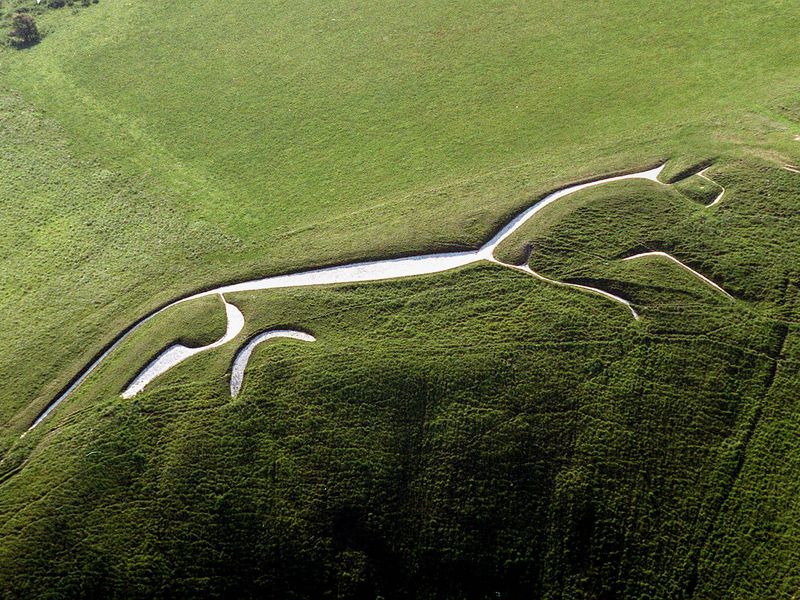
Yes, this is the very ancient White Horse that is introduced in Wikipedia, thus:

The Uffington White Horse is a highly stylised prehistoric hill figure, 110 m (360 ft) long, formed from deep trenches filled with crushed white chalk. The figure is situated on the upper slopes of White Horse Hill in the English civil parish of Uffington (in the county of Oxfordshire, historically Berkshire), some 8 km (5 mi) south of the town of Faringdon and a similar distance west of the town of Wantage; or 2.5 km (1.6 mi) south of Uffington. The hill forms a part of the scarp of the Berkshire Downs and overlooks the Vale of White Horse to the north. The best views of the figure are obtained from the air, or from directly across the Vale, particularly around the villages of Great Coxwell, Longcot and Fernham. The site is owned and managed by the National Trust and is a Scheduled Ancient Monument. The Guardian stated in 2003 that “for more than 3,000 years, the Uffington White Horse has been jealously guarded as a masterpiece of minimalist art.” It has also inspired the creation of other white horse hill figures.

So what prompted today’s post?

A recent article published online by The Smithsonian. Read and be amazed!

ooOOoo

Against All Odds, England’s Massive Chalk Horse Has Survived 3,000 Years

Cleaning up the Uffington Horse is the neigh-borly thing to do

The White Horse at Uffington, Oxfordshire (AP Photo)

If you stand in the valley near the village of Uffington in Oxfordshire, England, and look up at the high curve of chalk grassland above you, one thing dominates the view. Across the flank of the hill runs an enormous white, abstract stick figure horse cut from the chalk itself. It has a thin, sweeping body, stubby legs, a curiously long tail and a round eye set in a square head.

 This is the Uffington White Horse, the oldest of the English hill figures. It’s a 3,000-year-old pictogram the size of a football field and visible from 20 miles away. On this July morning black specks dot the lower slopes as small groups of people trudge slowly upwards. They’re coming to clean the horse.

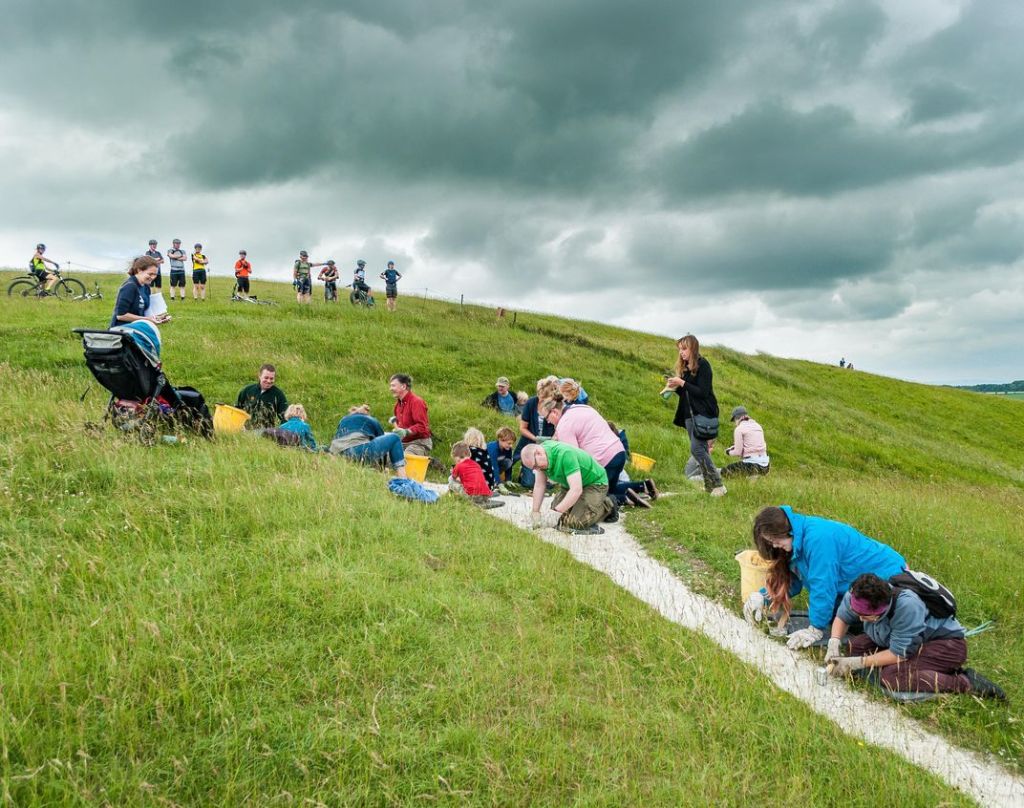
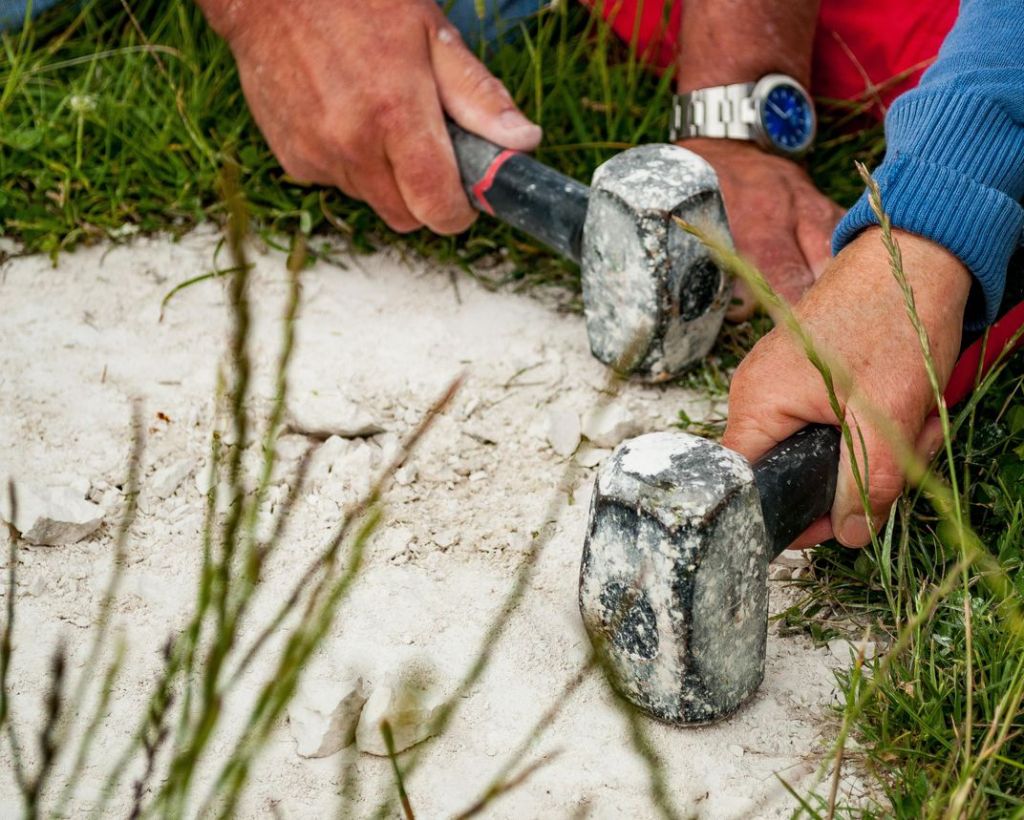
It’s chalking day, a cleaning ritual that has happened here regularly for three millennia. Hammers, buckets of chalk and kneepads are handed out and everyone is allocated an area. The chalkers kneel and smash the chalk to a paste, whitening the stony pathways in the grass inch by inch. “It’s the world’s largest coloring between the lines,” says George Buce, one of the participants.

Chalking or “scouring” the horse was already an ancient custom when antiquarian Francis Wise wrote about it in 1736. “The ceremony of scouring the Horse, from time immemorial, has been solemnized by a numerous concourse of people from all the villages roundabout,” he wrote.

In the past, thousands of people would come for the scouring, holding a fair in the circle of a prehistoric fort nearby. These days it’s a quieter event. The only sounds are the wind, distant birdsong and the thumping of hammers on the chalk that can be felt through the feet.

Conservation organization the National Trust oversees the chalking, making sure the original shape of the horse is maintained. But the work is done by anyone who wants to come along. Lynda Miller is working on the eye, a circle the size of a car wheel. “The horse has always been part of our lives,” she says. “We’re really excited that we’re cleaning the eye today. When I was a little girl and I came here with my mother and father, the eye was a special spot. We used to make a wish on it.”

National Trust ranger Andy Foley hands out hammers. “It must have happened in this way since it was put on the hillside,” he says. “If people didn’t look after it the horse would be gone within 20 to 30 years; overgrown and eroded. We’re following in the footsteps of the ancients, doing exactly what they did 3,000 years ago.”

“There is something very special about this landscape that attracts people,” says archaeologist David Miles. In the 1990s, he led an excavation of the site that established the prehistoric date for the horse. Before the excavation, it was thought that the design was only scratched into the chalk surface, and therefore un-datable, but Miles’ team discovered the figure was actually cut into the hill up to a meter deep. That meant it was possible to use a technique called optical stimulated luminescence to date layers of quartz in the trench.

Emily Cleaver
Emily Cleaver

Up on the hill it’s not possible to view the whole horse at once; the curve of the slope gets in the way, the sheer scale of it confuses the eye. It is only from the valley below that the whole picture can be taken in. From this long distance, the horse is a tiny white figure prancing timelessly across the brow of the hill. But to the people who live near and tend the horse, it’s a monumental reminder of Britain’s ancient past.

“It was older than I’d been expecting,” Miles remembers. “We already knew it must be ancient, because it’s mentioned in the 12th-century manuscript The Wonders of Britain, so it was obviously old then. And the abstract shape of the horse is very similar to horses on ancient British coins just over 2,000 years old. But our dating showed it was even older than that. It came out as the beginning of the Iron Age, perhaps even the end of the Bronze Age, nearly 3,000 years ago.”

The trenches would have been dug out using antler picks and wooden spades: tough, labor-intensive work. How the builders planned and executed such a large figure when the full effect can only be taken in from several miles away is still a mystery.

Nobody knows for certain why the horse was made. “It’s a beautiful shape, very elegant,” says Miles. “It looks like it’s bounding across the hillside. If you look at it from below, the sun rises from behind it and crosses over it. In Celtic art, horses are often shown pulling the chariot of the sun, so that may be what they were thinking of here.”

From the start the horse would have required regular upkeep to stay visible. It might seem strange that the horse’s creators chose such an unstable form for their monument, but archaeologists believe this could have been intentional. A chalk hill figure requires a social group to maintain it, and it could be that today’s cleaning is an echo of an early ritual gathering that was part of the horse’s original function.

The Berkshire Downs where the horse lies are scattered with prehistoric remains. The Ridgeway, Britain’s oldest road, runs nearby. This is the heart of rural England and the horse is one of the country’s most recognizable landmarks, an identity badge stamped into the landscape. During World War II, it was covered over with turf and hedge trimmings so Luftwaffe bombers couldn’t use it for navigation. (Oxford is about a 30-minute drive and London about an hour-and-a-half.)

For locals, it’s part of the backdrop of daily life. Residents in the village reportedly arrange their rooms so that they sit facing the horse. Offerings, flowers, coins and candles are left on the site.

The people who come to the chalking have a variety of motivations. Martha Buckley is chalking the horse’s neck. ” I’m a neo-Pagan and I feel it connects me to the land. It’s of great spiritual significance,” she says. Lucy Bartholomew has brought her children. “It’s good to be able to explain to them why it’s here.” For Geoff Weaver, it’s the imperative to preserve history. “If we don’t do it, it would disappear, and the world would be a sorrier place,” he says.

ooOOoo

There are more fascinating photographs to view in that Smithsonian article.

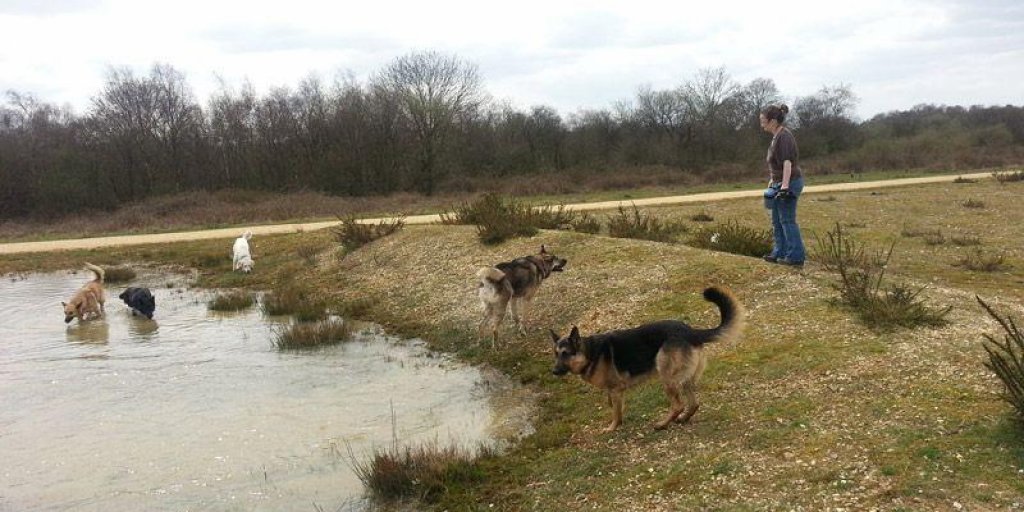
Speaking of Berkshire, as in the Berkshire Downs, the only way to close today’s post is with a link to a dog walk on Greenham Common in Berkshire. That includes the following photograph.

Have a great weekend all of you!


Picture Parade Two Hundred.

The last in the series from Janet Goodbrod.

oooo

oooo

oooo

oooo

oooo

oooo

oooo

oooo

oooo

oooo

Have to see what we can find for all you good people for next Sunday.

Enjoy mid-Summer’s day on Wednesday!

Picture Parade One Hundred and Ninety-Nine

Back to Janet’s wonderful photographs.

oooo

oooo

oooo

oooo

oooo

oooo

oooo

oooo

oooo

oooo

The last set from this series in a week’s time.

Returning to animal communication skills.

As in how a primate chooses to communicate with humans.

In recent times there have been a couple of posts in this place about the science of communication between dogs and humans.

What about other animals?

What about a gorilla?

If you drop across to the YouTube site and search for Koko the Talking Gorilla you will be astounded by how many videos are to be seen.

Try this one:

A very moving account from Robin Williams.

If we then want more background information on this remarkable animal, Wikipedia is there to oblige (in part):

Hanabiko “Koko” (born July 4, 1971) is a female western lowland gorilla who is known for having learned a large number of hand signs from a modified version of American Sign Language (ASL).

Her instructor and caregiver, animal psychologist Francine “Penny” Patterson, reports that Koko is able to understand more than 1,000 signs of what Patterson calls “Gorilla Sign Language” (GSL).[2] In contrast to other experiments attempting to teach sign language to non-human primates, Patterson simultaneously exposed Koko to spoken English from an early age. Reports state that Koko understands approximately 2,000 words of spoken English, in addition to the signs.[3] Koko’s life and learning process has been described by Patterson and some of her collaborators in a number of books, peer reviewed articles, and on a website.

Then, naturally, Koko has her own website, The Gorilla Foundation, where one can watch more videos, enjoy photographs and even drop in to Koko’s very one blog site!

Time for another video from YouTube.

Published on Oct 13, 2015

Koko got her birthday wish this July 4th — not only did one kitten come to visit, but a whole litter. Koko fell in love with one, and the other fell in love with her. Koko has adopted these two kittens into her family, and it has energized her world.
Not only have Koko’s maternal and play instincts kicked in, but she is signing more to her caregivers and generating new content everyday that can be used by The Gorilla Foundation to create empathy for great apes. This can have significant benefits to both endangered free-living great apes and those in captive environments, by encouraging the development of 2-way communication with their caregivers (which Koko has had since she was a baby).
The Gorilla Foundation is now working on a multimedia sequel to the classic book, “Koko’s Kitten,” which has already reached millions of children worldwide, and has the power to motivate millions more to learn how to make the world a better place for all of its conscious inhabitants.
You can support The Gorilla Foundation mission of Conservation through Communication by visiting http://www.koko.org

Thank you!

Will close with this photograph seen ‘on the web’.

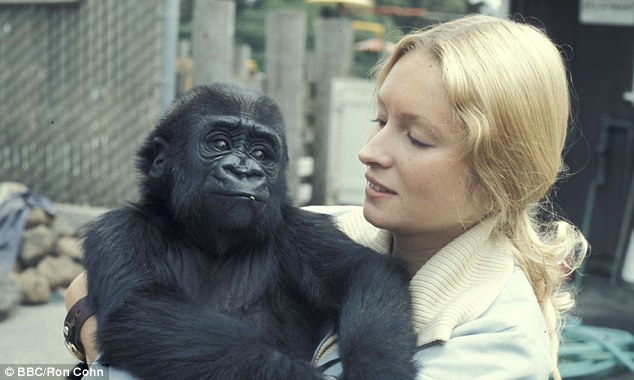
Graduate student Penny Paterson with a young Koko on her back not long after they met in 1971 in San Francisco. (The Daily Mail newspaper 2nd June, 2016.)

Who pulls the strings?

Or, more specifically, do we believe we have free will?

One of the endless benefits of this wired-up, digital world is how easy it is to have one’s mind opened and stretched a little.

Take this, for instance, as an intriguing start to a new day.

Do we have free will?

This isn’t a question I can answer, but what I am interested in is “what happens if we do (or do not) believe in free will?” In other words, does believing in free will matter in your daily life?

Just let one’s mind float around that idea, not only as it applies to us humans but also to the animals that share our human intuition, such as dogs and horses.

So what’s got me bubbling along today? Nothing less than an article that appeared on The Conversation blog-site back last September.

I found it fascinating and hope you do as well. It is republished within the terms of The Conversation site.

ooOOoo

Believing in free will makes you feel more like your true self

September 1, 2016

By Elizabeth Seto, Ph.D. Candidate in Social and Personality Psychology, Texas A&M University .

image-20160830-28235-1xkam7s
Believing in free will makes us feel more like ourselves. Man walking via http://www.shutterstock.com

Do we have free will? This is a question that scholars have debated for centuries and will probably continue to debate for centuries to come.

This isn’t a question I can answer, but what I am interested in is “what happens if we do (or do not) believe in free will?” In other words, does believing in free will matter in your daily life?

My colleagues and I at the Existential Psychology Lab at Texas A&M University study the psychological outcomes of belief in free will. While contemplating my next research project, I realized at some point in our lives, we all want to understand who we are – it’s human nature. So, we decided to explore how believing in free will influences our sense of self and identity.

 One way or another? Feet image via www.shutterstock.com.
One way or another? Feet image via http://www.shutterstock.com.

What is free will?

Free will is generally understood as the ability to freely choose our own actions and determine our own outcomes. For example, when you wake up in the morning, do you hit snooze? Do you put on your workout gear and go for a run? Do you grab a hot cup of coffee? While those are simple examples, if you believe in free will, you believe there are a limitless number of actions you can engage in when you wake up in the morning, and they are all within your control.

Believing in free will helps people exert control over their actions. This is particularly important in helping people make better decisions and behave more virtuously.

For instance, research has found that promoting the idea that a person doesn’t have free will makes people become more dishonest, behave aggressively and even conform to others’ thoughts and opinions. And how can we hold people morally responsible for their actions if we don’t believe they have the free will to act any differently? Belief in free will allows us to punish people for their immoral behaviors.

So, not only is there a value to believing in free will, but those beliefs have profound effects on our thoughts and behaviors. It stands to reason that believing in free will influences how we perceive ourselves.

You might be thinking, “Of course believing in free will influences how I feel about myself.” Even though this seems obvious, surprisingly little research has examined this question. So, I conducted two studies to suss out more about how believing in free will makes us feel.

What believing in free will makes us feel about ourselves

In the first study, I recruited 304 participants from Amazon Mechanical Turk and randomly assigned them to write about either personal experiences reflecting a high belief in free will, like changing career paths or resisting drugs or alcohol, or experiences reflecting a low belief in free will, such as growing up in poverty or working under an authoritative boss. Then, they were all asked to evaluate their sense of self.

Participants who wrote about experiences reflecting low belief in free will reported feeling less “in touch” with their true selves. In other words, they felt like they did not know themselves as well as the participants who wrote about experiences reflecting high belief in free will.

Then, I conducted a follow-up study testing one’s sense of authenticity, the feeling that one is behaving according to their own beliefs, desires and values.

I recruited another group of participants from Amazon Mechnical Turk, and like the first experiment, randomly assigned them to write about personal experiences demonstrating high belief in free will or low belief in free will. Then, they all completed a decision-making task where they had to make a series of choices about whether to donate money to charity or to keep the money for themselves.

Afterwards, participants were asked how authentic they felt while making their decisions. Participants in the low free will group reported feeling less authentic than participants in the high free will group.

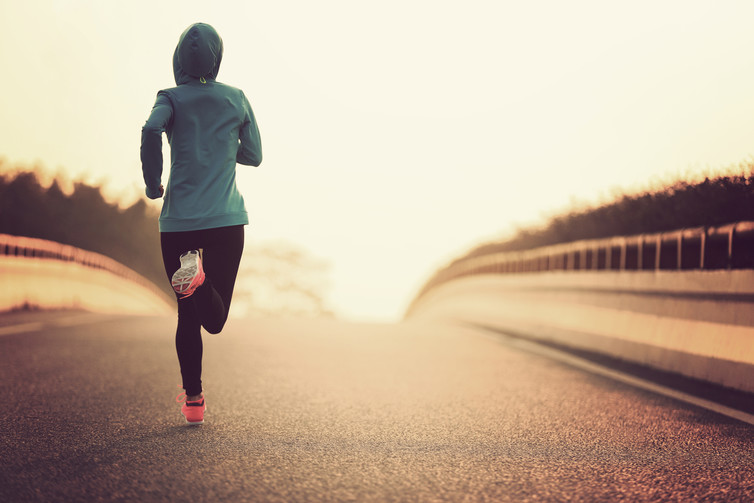
 Up and at it. Female runner image via www.shutterstock.com.
Up and at it. Female runner image via http://www.shutterstock.com.

So, what does this all mean?

Ultimately, when people feel they have little control over their actions and outcomes in life, they feel more distant from their true, authentic selves. They are less in touch with who they are and do not believe their actions reflect their core beliefs and values.

We believe this is because belief in free will is linked to feelings of agency, the sense that we are the authors of our actions and are actively engaged with the world. As you can imagine, this sense of agency is an important part of a person’s identity.

The importance of feeling like you are in charge of your life applies to significant actions like moving or getting a new job or pondering the big questions in life. But it also applies to the minor decisions we make throughout the day.

Here’s one simple, though relatable, decision I am faced with every morning. When I wake up in the morning and decide to put on my workout gear and go for a run instead of hitting snooze, I might feel like I am the primary decision-maker for this morning routine. Additionally, I am most likely acting on the part of me that values physical health.

But what if I wake up, and I feel like I can’t exercise because I have to go to work or some other external factor is making it difficult to go? I might feel as if someone or something else is controlling my behavior, and perhaps, less like my true self.

So, do you have free will? Do any of us? Remember, the question isn’t whether it exists or not, but whether you believe it does.

ooOOoo

Now thinking of dogs having their own free will might seem a little bizarre, but I do not intend it to be seen as such. Many of you will have dogs (and horses) that have ‘minds of their own’.

For our family here at home, if there’s one of our dogs that exhibits free will it is our Brandy.

Our Brandy is a Pyrenean Mastiff!

Without warning or any other indication, he will suddenly decide it is time to go ‘walk-about’. Mainly during the day but sometimes at night, whatever the weather, he will disappear. He will always return but can be wandering around our thirteen acres for up to an hour.

Does he have free will?

Does he believe he has free will?

Do we believe he has free will?

What, dear reader, do you think?

Kindness in our animals.

A wonderful follow-on to yesterday’s post.

A number of domestic circumstances are taking priority at the moment so you will forgive me for the brevity of my words today. But that won’t stop you enjoying this recent item over on the Care2 site.

ooOOoo

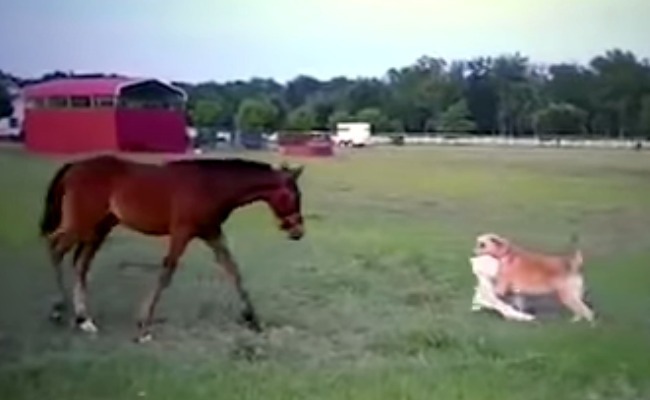
Rescued Horse Befriends Dog

1389721-largeThis rescued horse made an instant friend in his new family’s dog!

ooOOoo

Short but just wonderful!

I dream.

Of there being a day where no animal lives out of sight of love.

Of course, when I speak of animals I have in mind those animals that end up in rescue shelters of one form or another: cats; horses; dogs; ponies; birds; and other species.

But on the broader topic of offering love to animals I must share something with you before going on to the main subject of today’s post.

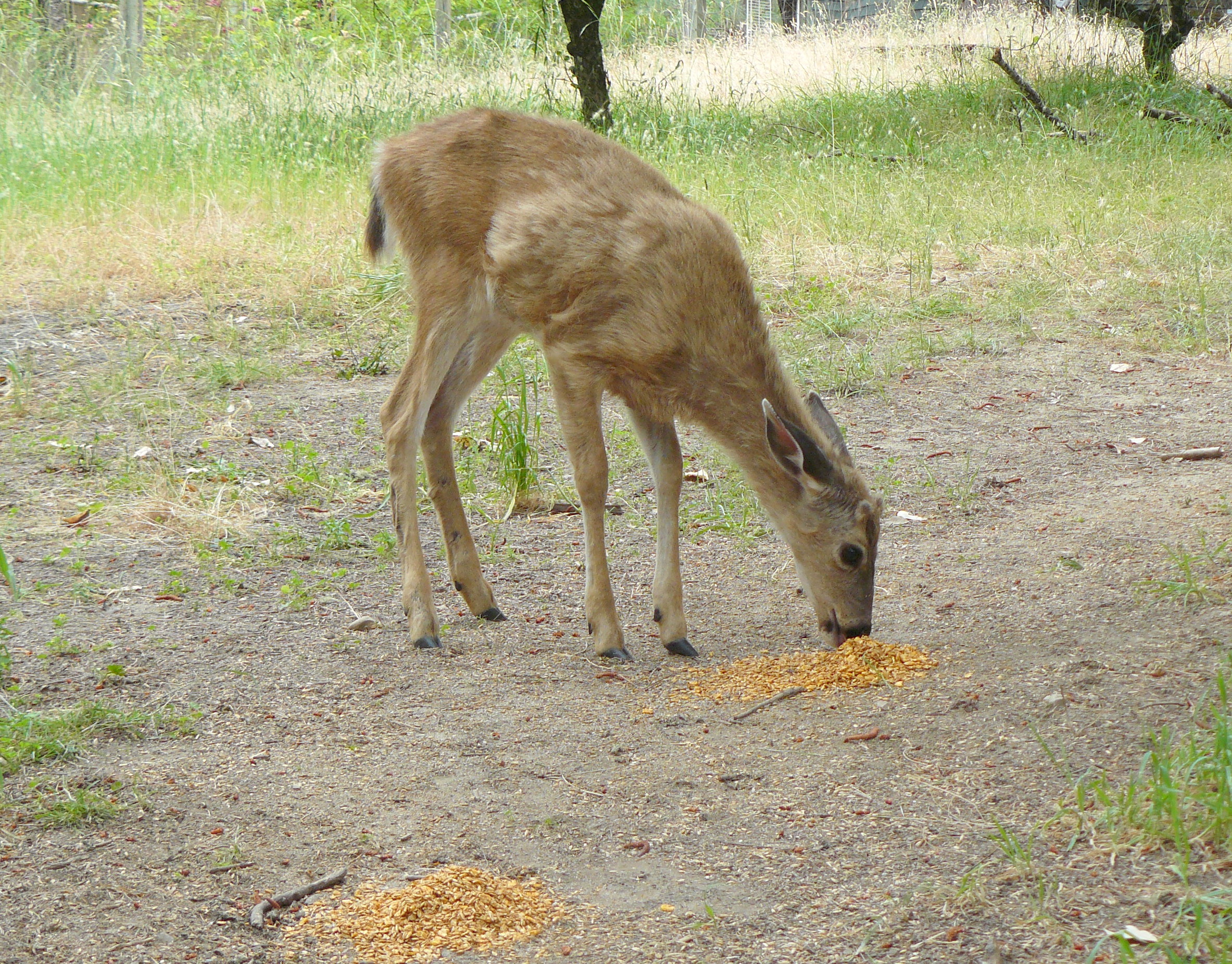
That is that for the last few years we have been feeding the wild deer.

P1160187Slowly a number of them have grown to trust Jean and me to the point where one particular young female became such a regular that we named her: Doris. It is Doris that is in the picture above eating the cob that we put out twice a day.

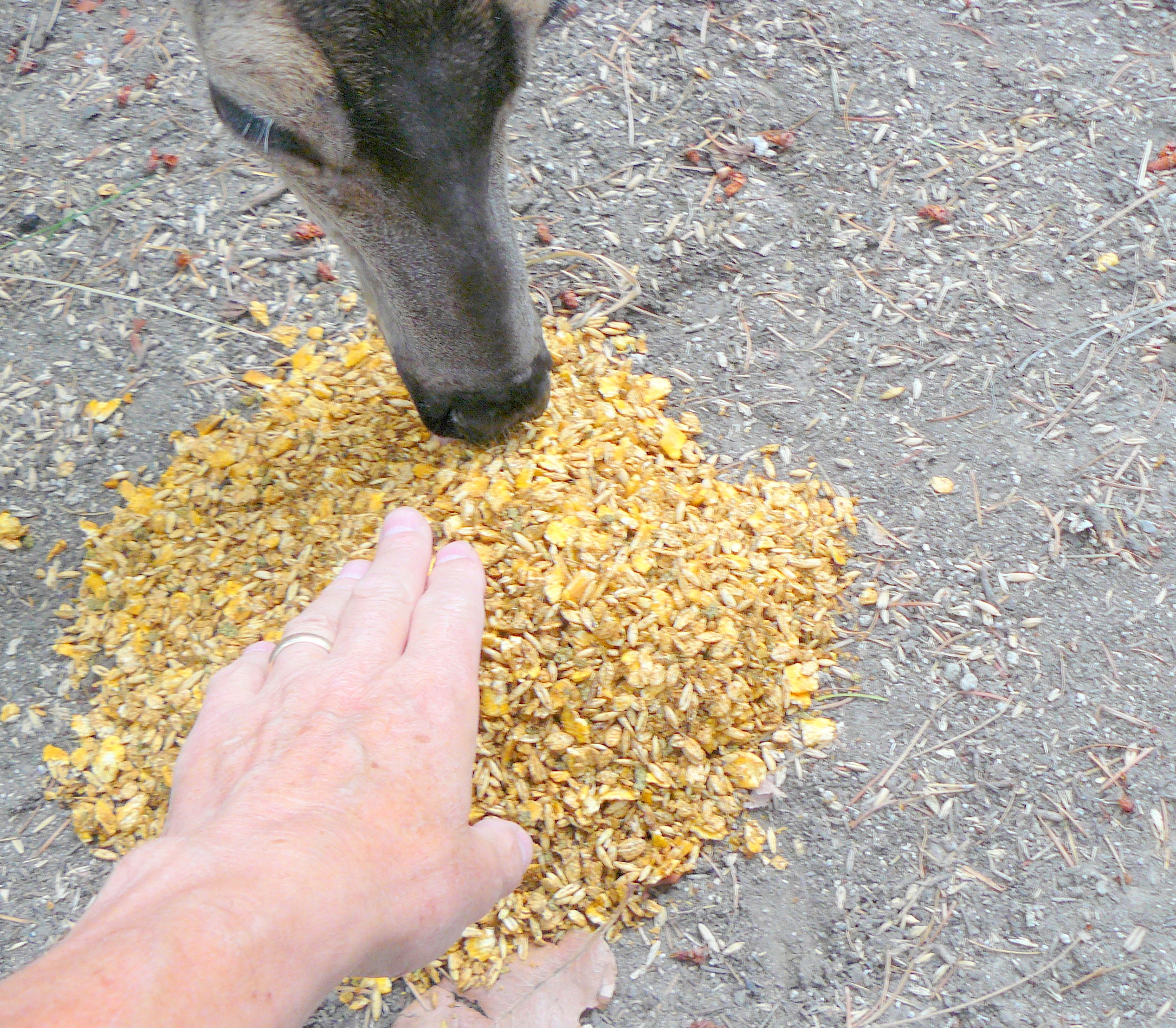
Doris doesn’t warm to strangers plus she doesn’t come every day. When she does it is clear that she is familiar with us and perceives no threat from this ‘neck of the woods’, as the next photograph supports:

P1160243In fact, I can now gently stroke her neck when she is feeding and will share those pictures with you all in a future Picture Parade post.

I call the closeness of me and Doris love. I love how this animal trusts me and, in turn, the care and responsibility that is called for from me.

My dream is that the love, care and responsibility offered by people will one day be so widespread and extensive that there comes no call for animal rescue shelters.

OK!

A couple of days ago Cori Meloney signed up to follow Learning from Dogs. Cori is the author of the blog Three Irish Cats. As is my usual way I went across to her blog to leave a ‘thank you’ note for her decision to follow my scriblings. I immediately saw her latest post and knew without doubt that it should be republished here. Cori very promptly gave me permission to so do.

ooOOoo

Every Day Should Be Clear the Shelters Day

072416-tcas-01
Silly kitty Shadow.

I volunteer with a small (but mighty!) rescue group here in Southern Maryland called Rescue Angels of Southern Maryland. We mostly deal with cats, though we’ve recently begun to rescue dogs as well.

Most of the cats we find homes for come from owner surrenders, friendly cats and kittens from our feral colonies, and at-risk animals from our local municipal shelter, Tri-County Animal Shelter.

Saturday, Rescue Angels was one of the groups that participated in Tri-County’s annual Clear the Shelters Day celebration. Seventy-seven animals found forever homes that day. Watching the parade of happy animals and their new owners as they left the building was totally worth sweltering in the 95-degree heat.

As the only public animal shelter to serve the three Southern Maryland counties, Tri-County is a busy place. It frequently gets full, and organizations like Rescue Angels and others in the area step in when we can to remove animals from the shelter. This is not a no-kill shelter, so a full shelter means animals will die. New animals come in every day.

072416-tcas-03
Gorgeous husky Damien.

Three things struck me when I was at Tri-County last weekend.

The first is that I wish Tri-County could be this busy every Saturday. Granted, adoption fees on Clear the Shelters Day were eliminated or reduced and there was a lot of publicity for this event, but there are always wonderful animals at the shelter that want to go home with a family. Many animals end up there because the owner surrendered them; the reason often given is “did not want.”

The second is that I am increasingly amazed by the dedication of the shelter staff. They have a difficult job, and it often goes without thanks. It’s not easy to be civil to an owner who is dropping off their pet because they don’t want it anymore. It’s not easy to put down perfectly healthy animals because humans have acted irresponsibly. I can only imagine that the staff constantly feels like it is in crisis mode; they may have nearly cleared the shelter on Saturday, but come midweek, those cages and pens will be filled again with animals in need.

The third thought is that we, the community, created this shelter, and we need to fix it. Tri-County has a terrible reputation here in Southern Maryland. The kill rate for cats is more than 50 percent. The facility is small and needs renovation and expansion. It is nearly always full to overflowing. Members of the community sometimes say terrible things about the staff.

072416-tcas-02
Beautiful Nadine, who found a forever home on Clear the Shelters Day.

But Tri-County is constantly full because the Southern Maryland has let its companion animals down. Cats are not spayed or neutered, and they’re treated as disposable. Need to move? Drop your cat at the shelter, or worse, just leave it behind. Dog getting too big? Don’t feel like dealing with behavior or health issues? Drop the animal at the shelter.

I’ll be honest: My opinion of Tri-County and its staff has not always been positive. What makes it worse is that I had those opinions without actually visiting the shelter. I am ashamed of that fact. Since I started volunteering with Rescue Angels, I have visited the shelter many times to take cats that our rescue was putting into foster care. I have met some of the staff members, and they are always happy to talk with me about their animals. They’re ecstatic when an animal leaves the building. The shelter has a rescue coordinator whose job is to work with local rescue groups to remove animals from the shelter when they are at risk of being killed or when shelter life is impacting their well-being. These folks are animal lovers forced into a terrible situation by a community that treats its animals as disposable and Tri-County as its dumping ground.

So, now that Clear the Shelters Day has passed, I challenge my fellow residents of Southern Maryland: Visit Tri-County Animal Shelter. Talk with the staff. Visit with the cats in the free-roaming room. Take a dog for a walk. Take pictures and share them on Facebook. Volunteer. Follow Tri-County on Facebook and interact with their posts. Foster, which allows rescue groups to remove more animals from the shelter. Rescue Angels can help you become a foster family for dogs or cats.

All three Southern Maryland counties are working on plans to build their own shelter facilities. In the meantime, Tri-County Animal Shelter is our public shelter. It’s our job as the community to support the staff, help care for the animals, and reduce the number of animals killed there.

I hope to see you there, leash in hand.

By: Cori S. Meloney

ooOOoo

So if any reader is within reach of Southern Maryland and wants to offer an animal love, care and responsibility then please make your way across to Rescue Angels of Southern Maryland.

How to draw today’s post to a close?

In searching for inspiration about all animals living in the sight of love I realised that what I was dreaming of was more about compassion than love; albeit the two states of mind being very close to one another.

That led me to perusing the Dalai Lama’s teachings on compassion: Compassion and the Individual. Here’s how that teaching concludes:

Compassion and the world
In conclusion, I would like briefly to expand my thoughts beyond the topic of this short piece and make a wider point: individual happiness can contribute in a profound and effective way to the overall improvement of our entire human community.

Because we all share an identical need for love, it is possible to feel that anybody we meet, in whatever circumstances, is a brother or sister. No matter how new the face or how different the dress and behavior, there is no significant division between us and other people. It is foolish to dwell on external differences, because our basic natures are the same.

Ultimately, humanity is one and this small planet is our only home. If we are to protect this home of ours, each of us needs to experience a vivid sense of universal altruism. It is only this feeling that can remove the self-centered motives that cause people to deceive and misuse one another.

If you have a sincere and open heart, you naturally feel self- worth and confidence, and there is no need to be fearful of others.

I believe that at every level of society – familial, tribal, national and international – the key to a happier and more successful world is the growth of compassion. We do not need to become religious, nor do we need to believe in an ideology. All that is necessary is for each of us to develop our good human qualities.

I try to treat whoever I meet as an old friend. This gives me a genuine feeling of happiness.  It is the practice of compassion.

Loving animals is very much part of protecting this home of ours.

That is my dream.

The power of a hug!

Happy Birthday to grandson Morten who is five today!

Indirectly there is a connection between my sub-title, above, and today’s post about squeezing cute creatures. For Morten will already have enjoyed many hugs and, hopefully, will grow up feeling very comfortable at giving and receiving hugs.

Thankfully, Jean is a great hugger and has opened my eyes to the power of giving in to a hug. Not suprising when one thinks of Jean’s years of hugging dogs way before she and I met back in 2007.

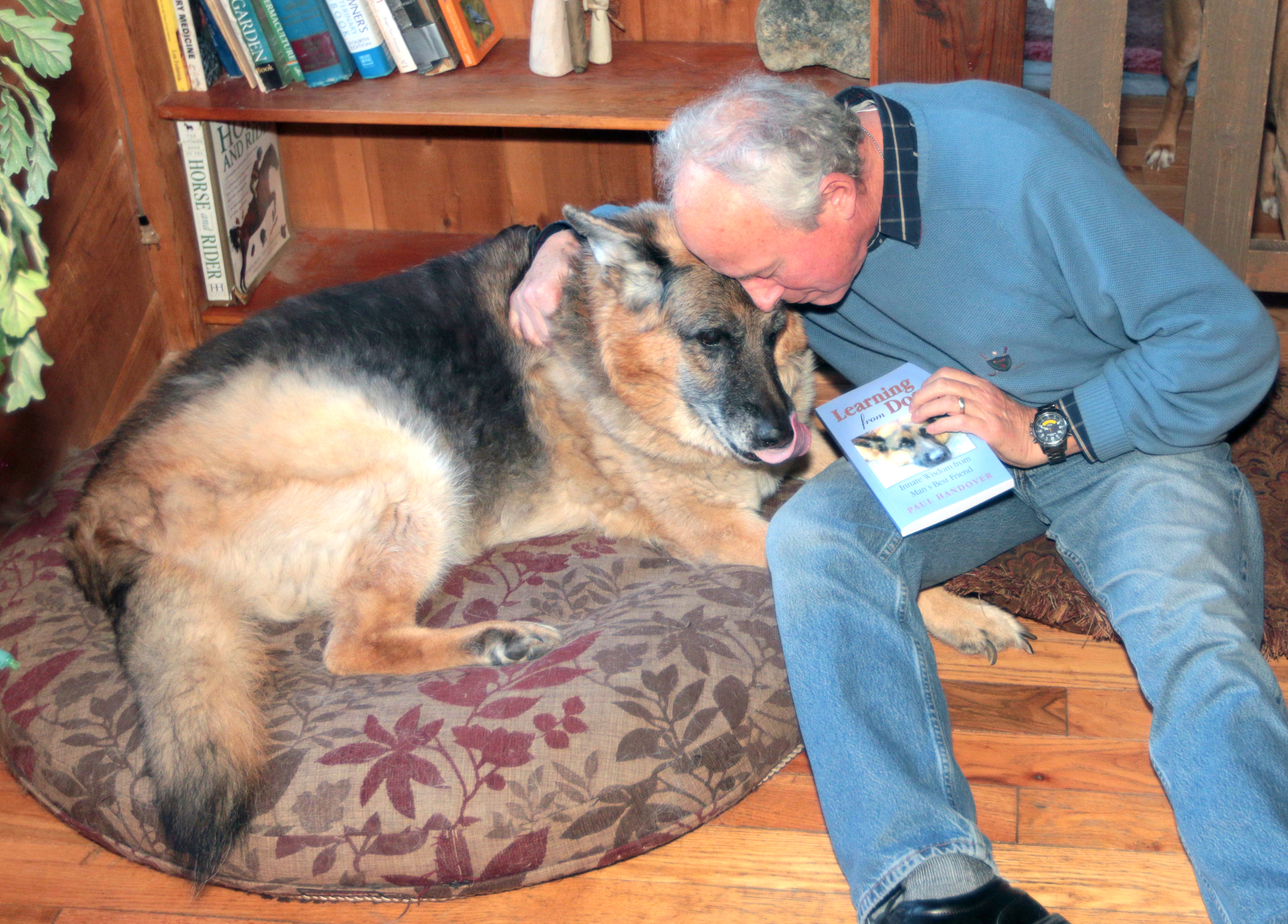
Dear old Pharaoh, as he has aged, (he will be 13 this coming June) clearly enjoys more hugs than when he was a more active, fitter German Shepherd and always on the go.

When The Daily Courier, our local newspaper, came to the house last December Timothy Bullard, the paper’s photographer, took the following photograph of Pharaoh and me having a ‘love in’.

TIMOTHY BULLARD/Daily CourierPaul Handover with Pharaoh, a 12year-old German Shepard that he uses on the cover of his new book about man's best friend.
TIMOTHY BULLARD/Daily Courier – Paul Handover with Pharaoh, a 12year-old German Shepard that he uses on the cover of his new book about man’s best friend.

So this recent article from the Care2 website seems an appropriate follow-on to my introductory remarks.

ooOOoo

Why Do We Feel the Need to Squeeze Cute Things?

1376993.largeBy: Rebecca Bauman March 8, 2016 –About Rebecca

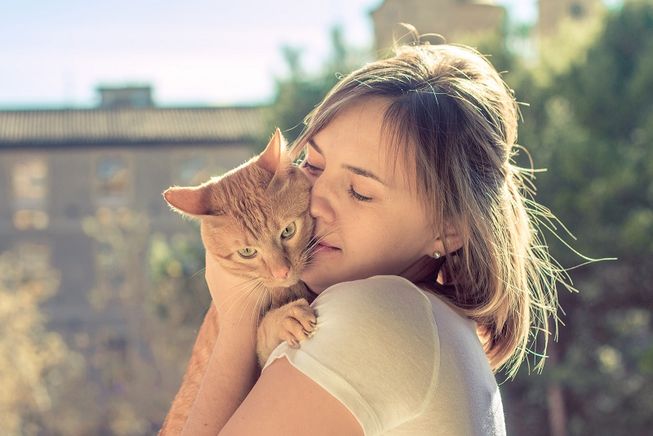
If any of the collected photographs you see here cause you to emit high-pitched noises or ache to cradle the pictured animal tight in your arms, you might be experiencing a bout of “cute aggression.”

The phrase refers to a phenomenon during which we catch sight of a living thing deemed “cute,” usually a baby or an animal or — double-whammy — a baby animal, and feel an overwhelming desire to play with the subject’s features; a compulsion to tickle its feet; the need to tease its rumples or bulges of fat; the want to bury our faces into its belly.

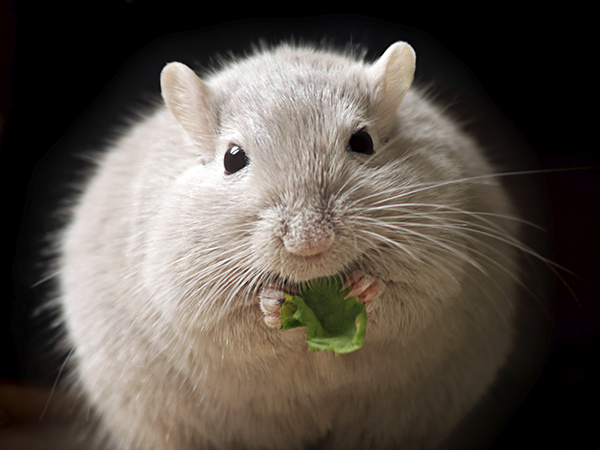
fluffy mouse ball
fluffy mouse ball

Granted, not all voiceless lifeforms enjoy being tugged at or played with in an intrusive manner, which is why this behavior is referred to, in part, as “aggressive.” While we might mean absolutely no harm to the creature we long to hold and hug, our near-hyperactive responses to its presence often seem beyond our control, what some have called the “squee” effect.

Yale researchers studied this “dimorphous expression” — the need to manhandle living creatures for which we feel only positive emotions — in 2014. Part of the experimental regimen involved asking some participants to pop bubble wrap while viewing images of “cute baby animals;” others did the same while looking at images of adult species. The results: Those who viewed the infants popped more bubbles by far.

baby maine coon cat feeling

One of the researchers, psychologist Oriana Aragón, said that participants would have likely squeezed whatever they had in their hands or arms while viewing images of the “cute” animals, be it a purse or a pillow. Had something alive, however, actually been in those arms, the strength with which the participants freed their fuzzy feelings might have been worrisome to the researchers.

But Aragón says that strong human emotions are often balanced by “an expression of what one would think is an opposing feeling.” This is similar to what happens when we cry while angry or laugh while nervous. Our actual expressions “scramble and temper” whatever feeling got us into such a tizzy in the first place, helping to restore our emotional equilibrium, “tamping down or venting” feelings that cause us to become too excited.

Funny portrait of curious baby owl

While wanting to squish what could be one’s own offspring might seem an evolutionary misfire, a 2012 study in the journal PLOS ONE indicates that cuteness creates a powerful “approach motivation,” the very thing that drives us to scoop up puppies and kittens in adoption kennels and squeeze them close to our chests and nuzzle them against our faces. It seems the need to be touchy-feely toward cuteness provokes precisely the kind of nurturing that keeps helpless creatures alive.

As for animals, those worthy of this treatment, appealing to us as “cute,” mimic physical characteristics of human babies — “a large head; rounded, soft, and elastic features; big eyes relative to the face; protruding cheeks and forehead; and fuzziness.” The same, in fact, seems to be true for Great Apes, as has been documented with Koko the gorilla and an Internet celebrity orangutan shown interacting with tiger cubs, though the scene remains controversial.

cutepic4And so it seems the power of cuteness is made all the more apparent when humans (or elevated primates) respond to a rabbit or a duckling the way they might respond to their own kin. Our desire to squeeze is so powerful, in fact, that it “spills over” into interactions with other species. Thus, we have Web sites like Cute Overload that exist only for the compelling pull to exercise that need to feed our “cute aggression,” be the temptation a pleasure or a pain.

ooOOoo
Demonstrating that cuteness can come in all sizes, let me close today’s post with this photograph.
P1150764
Ben and Jeannie having a quiet one-to-one moment.

Don’t go too long without giving or receiving a hug!

Britain before humans.

A remarkable look at the extraordinary history of the British Isles.

Now on first sight, any reasonable follower of my scribblings who lived outside Britain might wonder why this post was so focussed on one particular country, the country of my birth: Great Britain.

My justification, however, for including this George Monbiot essay is that many residents of many other countries, not just North Americans, have roots and family ties in GB. Plus, so typical of a Monbiot essay, the subject will be of interest to anyone, wherever they live in the world, who wonders about time before we shaped our environment. (I have converted some of the figures used in the essay within square brackets [ …] )

Could I also mention that from Thursday through to the end of the year, my posts in this place are going to be a mix of trivial, humorous and repeat posts. I need a bit of a break as much as you good people need a break from Learning from Dogs! 😉

Monbiot’s essay is republished here with the kind permission of George Monbiot.

ooOOoo

Walk on the Wild Side

17th December 2015

Rewilding, hillwalking and the extraordinary history of these islands.

George Monbiot, interviewed by Dan Bailey for UKHillwalking.com, 11th December 2015

What would a natural upland habitat have looked like in Britain before humans started having the dominant influence?

This is a particularly interesting question, because we have two completely different baselines in Britain. The more recent one is the situation that prevailed after the ice retreated, and a temperate climate returned. I’m talking about parts of the Boreal and Atlantic stages, roughly between 9000 and 5000 years ago. It seems that during this period, Britain was more or less covered by closed canopy rainforest from top to toe. I’m using the term rainforest precisely: to denote forests that are wet enough to support epiphytes, plants that grow on other plants. Wherever you see polypody, the many-footed fern, growing along the branches of a tree, it’s a reminder that you are looking at rainforest fragment.

Hardly any land in this country would have been treeless at this time. With the exception of the summits of the Cairngorms, Ben Nevis and one or two other mountains, there is nowhere here that is too high for them to grow. Our bare and rocky hills are an artefact of deforestation, heavy grazing and the subsequent loss of soil.

But even that state arguably reflected the dominant influence of humans. To see what the land would have been like without them, you would have to go back to the previous interglacial period, the Eemian. At this time, the climate was almost identical to ours, but for some reason the people driven out by the previous ice age appear not to have returned to this country. At this stage, there was plenty of forest, but it seems that it was not continuous. The closed canopy rainforest was punctuated by more open forest, as well as wood pasture and savannah. Why? Because humans had not wiped out the dominant species. During the Eemian, Britain had a fairly similar collection of wildlife to the one we know today. You know: foxes, badgers, hedgehogs, deer, robins, jackdaws, elephants, rhinos, hippos, scimitar cats, hyenas and lions.

Ah yes, not the same in all respects. Like everywhere else on earth, we had a megafauna, and this shaped the ecosystem. The large herbivores were driven out of Britain by the ice, then driven to extinction in southern Europe about 30,000 years ago when modern humans arrived. (The hyenas and lions, incidentally, persisted throughout the ice age, hunting reindeer across the frozen tundra, and it seems that they survived here until about 10,000 years ago, when Mesolithic hunters turned up).

What does a typical British upland habitat look like now, and how does it differ from uplands in Mainland Europe?

In almost all other European countries (Ireland is an exception), the pattern of tree cover is what you would expect to see. The lowlands, where the land is worth farming, are largely treeless. The uplands, where the land is infertile and the climate is harsh, largely forested. This is why Europe has an average forest cover of 37%. In Britain, the lowlands are largely treeless, as you might expect, but the uplands are even barer. This peculiarity explains the fact that Britain has only 13% tree cover. Instead of a rich ecosystem in the hills, a mosaic of trees, scrub and glades (which is what would occur now, on our depleted soils, if the land were allowed to recover), the uplands are almost entirely treeless, and therefore remarkably poor in birds, insects and all the other lifeforms you might expect to find there. The parts of the country which would otherwise function as our great wildlife reserves – those places, in other words, where hardly anyone lives and there is almost no economic activity – have even less wildlife than the places that are intensely habited and farmed.

What are the people and processes responsible for keeping our hills bare in England and Wales? Who’s more to blame in Scotland?

In England and Wales, the cause is simply stated. Sheep, which originated in Mesopotamia, are wildly, disproportionately destructive. In many of our hills, they are kept at densities of no more than one per hectare or even less. But because they selectively browse out tree seedlings, they ensure that no recovery can take place. Even where remaining woods exist, they are often dying on their feet, because there are no young trees with which to replace the old ones. In terms of food production, upland sheep farming makes a minuscule contribution. It is hard to think of any industry where there is a higher ratio of destruction to production.

The denuding of our hills by sheep is supplemented by the burning of grouse moors, a fantastically destructive activity carried out for the benefit of a very small number of exceedingly rich people. These two activities ensure that in England and Wales there are scarcely any trees above around 200 m. [Ed: 656 feet]

Both are also important factors in Scotland, but in the Highlands the dominant cause of destruction is the deer stalking estates. By keeping the numbers of red deer very high, so that a banker waddling up the hillside in tweed pantaloons is almost guaranteed to make a kill, these estates have a similar effect to sheep farms. Like sheep, deer seek out the seedlings, and when their numbers rise above five or ten per square kilometre, they ensure that no forest can grow.

So why the difference between Britain and the rest of Europe? The answer seems to be the size of land holdings. Because, unlike most other European countries, Britain never had a successful revolution, we have, on one estimate, the second highest concentration of landholding in the world, after Brazil. This grants landowners inordinate power. It also leads to the situation I’ll describe in the next answer.

Where does subsidy farming come in?

People farming the uplands claimed to make their money by raising sheep. But in economic terms, sheep are ornamental. Sheep farming throughout our hills is a loss-making activity, and persists only as a result of public money, that takes the form of farm subsidies. We pay £3.6 billion [Ed: 5.33 billion US dollars] a year in this country to have our watersheds destroyed and our wildlife wiped out. The reason why the hills are kept bare here but not in the rest of Europe is that the landholdings in Britain are big enough to make subsidy harvesting a worthwhile activity: you are paid by the hectare. The more land you own, the more public money you receive. Some people take millions of pounds in these benefit payments every year. It’s extraordinary, when such restrictions are placed upon the ordinary recipients of social security, that this situation has not yet become politically explosive.

And culturally – how does our idealised view of the upland landscape feed into land management?

Our idealised, romanticised view of sheep farming, that bears almost no relationship to reality, but that is constantly drilled into our minds by programmes like Countryfile, makes it hard for us to see what is really going on. It’s because of this view that we fail to grasp a vast and obvious fact. That by denuding our hills, this economically-tiny industry has done more damage to our ecosystems and wildlife than all the building that has taken place in Britain.

Can you explain, in a nutshell, what you mean by re-wilding, and why you’d like to see it in the British hills?

Rewilding is the mass restoration of ecosystems and the re-establishment of missing species. I’m not arguing for the blanket rewilding of our hills by any means. But I believe that Britain would be greatly enriched, in terms of both wildlife and human experience, if significant areas were allowed to recover; if trees were allowed to grow in some of our denuded places, and some of the wonderful species we have lost were permitted to return. In particular, I’m thinking of beavers, boar, lynx, wolves and species that we retain in small numbers but that were once widespread, such as wildcat, pine martens, capercaillie, eagles and goshawks.

The other great benefit of allowing trees to return to the hills is the restoration of watersheds. In one study in Wales, the soil beneath woodland was found to absorb water at 67 times the rate of the soil beneath sheep pasture. The rain flashes off sheep pasture as if it were concrete, instantly causing floods downstream. Trees hold back the water and release it gradually, smoothing out the cycle of flood and drought.

Could you talk us through the stages of a habitat restoration process that could take a bare hillside and return it to woodland?

Many of our hillsides have been so thoroughly sheepwrecked that there are now no remaining seed sources. In these circumstances, we would need to plant islands of trees, using seed taken from the nearest surviving pockets of woodland in order to sustain local genetic diversity. Short of greatly reducing stocking levels or temporarily keeping herbivores off altogether, there is not a lot more that needs to be done. In some places, all that is required is temporary exclusion of grazing animals.

What is a trophic cascade, and how is this idea relevant in the British context?

A trophic cascade is an ecological process that tumbles from the top of the foodchain to the bottom. It turns out that in many places, large carnivores regulate the entire ecosystem; ecosystems that retain them behave in radically different ways to ecosystems from which they have been lost. This presents a powerful challenge to British models of conservation, as we have lost all our large carnivores here, with the result that ecological processes, and their dynamic and ever-shifting successional patterns, have been curtailed.

Critics sometimes suggest that proponents of re-wilding are advocating turning the clock back to an arbitrary point in history and then keeping things permanently fixed in this state. Is that fair?

It is precisely the opposite. Our current model of conservation fixes ecosystems at an arbitrary point and then keeps them in a state of arrested development through extreme management of the kind that everywhere else on earth we recognise as destruction, not protection: namely cutting, burning and grazing. There is no intelligible reason behind the choices that have been made by conservationists of the ecosystems and species they choose to maintain by these means. Rewilding, by contrast, has no fixed outcomes. It seeks to restore ecological processes by bringing back some of the key elements of ecosystems and the key drivers: species that trigger trophic cascades. To the greatest extent possible, it then seeks to stand back and allow natural processes to take their course.

What would a healthy population of deer look like? How about sheep – do you have a figure for environmentally supportable grazing densities?

In the infertile uplands, it is roughly 5 per square kilometre (in other words per 100 ha). [Ed: 247 acres] Beyond that point, there is almost no regeneration of trees.

The debate often seems to be framed in absolute terms – either we re-wild everywhere, and get rid of all the farmers and deer, or not at all. How big would be big enough to please you? Are you talking about re-foresting every hill, moor and mountain, from valley to summit?

The aim of the group Rewilding Britain, that I helped to found but do not run, is to allow natural ecological processes and key species to return to at least one million hectares (4.5%) of Britain’s land and 30% of our territorial waters over the next 100 years. It would like to see at least one large rewilded area to connect both land and sea – descending from the mountaintops to our coastal waters.

In somewhere as crowded as Britain are vast re-created wildernesses a viable prospect, or would it be more realistic to go for smaller scale projects in which re-wilding is just part of a mixed land use picture – projects such as Wild Ennerdale perhaps, where habitat restoration is being managed in conjunction with forestry, leisure, water extraction and livestock?

The British population is highly concentrated. Some parts of the country are exceedingly crowded; others remarkably empty. Most British uplands have a far lower population density than many parts of Europe in which wolves, lynx, bear and other species are found. Wolves have even been appearing in countries such as Belgium, the Netherlands and Denmark, where there is very little land that is unsuitable for intensive farming, and the rural population density tends to be much higher. Their arrival has been greeted by most sectors of society with delight.

Many hill-goers will recognise your picture of the degraded upland environment, but some may simply be making a different aesthetic judgement to you, valuing the barren wide open spaces for the experience they provide. If they just happen to prefer grass and heather landscape on some romantic level, and don’t much care about botany and wildlife, how might you seek to convert them?

I believe we should have both. At the moment those who value a wild, self-willed landscape have nowhere to turn in Britain. We have to travel abroad to find it and to experience magnificent encounters with wildlife. I believe this deprives us of the wonder and delight that can enhance our lives and of choice and freedom. We have nowhere in which to escape the order and control that governs all other aspects of our lives.

Hillwalkers and climbers have fought long and hard against vested landowning interests for our right to roam. There is a worry that conservation could be used to curtail these freedoms, and some evidence to support that concern. What place does public access on open upland have in a re-wilded landscape, and which would take precedence – amenity or conservation?

I was heavily involved in campaigns for the right to roam, through another group I helped to found, The Land Is Ours, and I would be dismayed by any scheme which sought to keep people out of the hills. I believe that rewilding and access are entirely compatible. While it may be necessary in some places temporarily to fence out grazing animals, the fencing required is no different from that which is already found across the uplands, and exactly the same arrangements can be made to cross it as are used today. My hope is that in some places, as a result of rewilding, in some places there will one day be no fencing at all: in other words it will mean better access than there is today.

On a related note, could public support for re-wilding have unintended consequences? Might it, for instance, be a gift to landowners and conservation bodies with priorities quite other than public access?

I would be surprised if there were no unintended consequences. But if problems arise, the policies should be modified. No good policy emerges from the egg mature and complete. It must be constantly assessed and adjusted to head off any problems that emerge.

What sort of reception have your ideas met from folk in rural communities such as hill farmers and shooting estate workers?

I think it’s fair to say that they have been mixed. There has been a fair bit of hostility from some farming and shooting groups, but also support from surprising quarters, including landowners’ representatives and a large number of individual farmers and estate owners. In the wider countryside, there is often strong support. We would do well to remember that farmers are a very small minority even of the rural population, though this often gets forgotten because of their powerful influence on policy.

Can you offer a fully thought-through transition from sheep farming and shooting to an alternative model for the rural economy, one in which rural residents still have a secure place in a re-wilded countryside? Can you understand people’s aversion to risking this?

I certainly can understand people’s concerns. But there is going to be a major transition in the countryside before long, with or without rewilding, when farm subsidies are either scrapped or greatly reduced, as they inevitably will be. When essential public services are being cut, giving €55 billion [Ed: 61 billion USD] a year from the public purse across the EU to landowners, while helping to destroy both human communities and ecological resilience is surely as unsustainable politically as it is environmentally. So what are farmers whose livelihood is sustained only as a result of farm subsidies going to do?

I have two proposals. The first is that we start campaigning for the retention of some subsidies, whose purpose would be changed to that of ecological restoration and the support of communities. Landowners and tenants would be paid to restore watersheds, woodlands, rivers and wildlife. It’s hard to see how else continued subsidies could remain publicly acceptable. Rewilding could be a way out for struggling rural communities.

The second proposal is to start investigating means by which rural people can enhance their livelihoods by enhancing the ecosystem. There are plenty of examples from around the world of eco-tourism and associated activities reviving communities by generating income and employment. Given that the traditional industries have manifestly failed to sustain jobs and incomes, in some cases it will not be hard to show the alternatives might work better. But more research is needed, and we have to remember that the same approach is not going to work everywhere. Different local circumstances demand different strategies.

“We have an incredibly narrow and restrictive vision of cultural heritage and cultural landscapes” – your words. What would a broader vision look like?

I would love to see rural culture becoming more inclusive. It’s often highly hierarchical, with the landowners and farmers sitting at the top of the pyramid, dictating policy. In some respects, democracy is a stranger to the countryside; the old, landed powers still wield disproportionate influence over the lives of others. But I don’t want to invent a new culture. I believe that democratisation and pluralism creates its own cultures, that will evolve and develop independently in different places. I’m calling on people to challenge cultural hegemony in the countryside – perhaps we could call it agricultural hegemony – and for a much wider range of voices to be heard.

Farming and shooting are supported by the current dominant countryside culture. But wouldn’t a shift to re-wilding simply be replacing this set of special interests with another, a sort of cultural colonisation of the countryside by urbanites?

That’s certainly not how I see it. And this has nothing whatever to do with the presumed urban-rural divide. Many of rewilding’s most ardent proponents live in the countryside, perhaps unsurprisingly. We are repeatedly told that the countryside is at war with the towns and vice versa. But I see no evidence of this. What I see is certain dominant interests in the countryside in conflict with other rural interests. And those dominant interests often have either one or both feet in the cities.

A few years ago there was an article in the Telegraph that sought to characterise authentic rural people. These people apparently don’t care about “newts, trees and bats”: such matters are of interest only in London. It described David Cameron as “at heart, a rural Tory”, who “still grumbles to his wife about what, for him, are ‘banned activities’ – notably shooting”. Authentic rural people, in other words, spend their adult lives in Notting Hill and drive out to their second homes for a shooting party at the weekend. People who live in the countryside and care about wildlife, on the other hand, are, “at heart”, Londoners. The rural-urban divide, as characterised in such papers, has nothing to do with location. It’s really about class.

What chance is there of significant progress being made in the current funding climate? You’ve recently written about the ‘toothless’ Environment Agency in this regard. Given the squeeze on public bodies would it be more effective to promote the out-sourcing of re-wilding to non-governmental organisations, private philanthropists and large corporate landowners such as water companies?

There is a real problem here. Government agencies are being gutted and re-centralised. Cameron’s devolution agenda is a con: he is even more of a micromanager than Tony Blair was. The current environment secretary, Liz Truss, has put her department’s head on the block, volunteering for early execution. Statutory bodies like the Environment Agency are now, in terms of what they can do, almost dead. But the crazy situation that prevails today might not – should not – last forever. It is true to say however, that we cannot rely on government alone to deliver these changes, whatever form a government might take.

Are our National Park Authorities a help or a hindrance?

At the moment, they are a real drag on progress. This is partly because of policy, such as the Lake District National Park’s application for World Heritage status, which, as currently framed, will ensure that destructive practices are locked in (and continue to contribute to flooding). And it’s partly because of the way they frame the issues. They go to great lengths to persuade us that current land management is not only compatible with the protection of nature, but actually essential to it! All their brochures and display boards and websites create the impression that these ecological disaster zones are rich and thriving ecosystems, so people are constantly misled and misdirected. They are led to believe that all is well in our national parks, that these wastelands, which are in most cases little more than sheep ranches, are magnificent wildernesses. Our national parks are a disgrace, a shame upon the nation, and park authorities with an ounce of intellectual honesty would recognise this and seek to address it.

Re-wilding seems to be moving up the agenda of the large conservation organisations, and gaining a space in the public discourse. Do you see grounds for optimism?

It certainly is. Before Feral was published, I visited all the principal conservation groups, and received responses that varied from mild interest to outright rejection. The change over the past three years has been astonishing. Rewilding appears to have moved from the fringe of the mainstream, and I’m delighted to see how these groups have begun to pick it up and engage with it. There’s still a long way to go, and plenty of daft practices still in play, but change among the conservation groups is certainly happening, albeit slowly. We will see rewilding in this country. The question is how far and how fast it will go.

ooOOoo

Much of my adopted country, the United States, is still wild and the Bureau of Land Management state that they manage “over 245 million surface acres ..”. However, to put that into perspective the area of the USA is 2.436 billion acres so the BLM managed area is just a fraction over 10%.

Finally, Monbiot refers to his book Feral. I have read it and can recommend it.

Feral-665x1024

More details of his book may be found here.

This is much more than an issue for just Great Britain.

Hug a pet and extend your life!

With seventeen pets here at home Jean and I should live forever!

Another Saturday and another gentle post about the power of our wonderful pets. (Oh, and who, as I did, missed the fact that yesterday was not only a Friday the Thirteenth but the third one this year!)

Anyway, back to the plot!

Last Monday, Mother Nature Network published an item about how good pets are for our health. It seemed the perfect item to share with all of you this Saturday.

ooOOoo

11 studies that prove pets are good for your health

Check out the ways your 4-legged friends enhance your physical and emotional health.

By: Sidney Stevens, November 9, 2015.

Pets strengthen our hearts, calm our nerves and a whole lot more. (Photo: Juanedc.com /flickr)

If you have pets you already know the joy and love they bring to your life. Now science is confirming just how good they really are for you — both mentally and physically.

How do they help? One theory is that pets boost our oxytocin levels. Also known as the “bonding hormone” or “cuddle chemical,” oxytocin enhances social skills, decreases blood pressure and heart rate, boosts immune function and raises tolerance for pain. It also lowers stress, anger and depression.
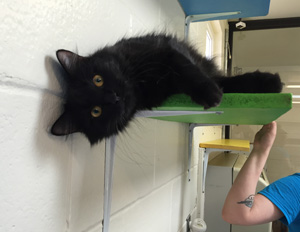
PHOTO BREAK: 12 astonishing facts about horses

No surprise then that keeping regular company with a dog or cat (or another beloved beast) appears to offer all these same benefits and more. Read on to discover the many impressive ways a pet can make you healthier, happier and more resilient.
1. Pets alleviate allergies and boost immune function

One of your immune system’s jobs is to identify potentially harmful substances and unleash antibodies to ward off the threat. But sometimes it overreacts and misidentifies harmless stuff as dangerous, causing an allergic reaction. Think red eyes, itchy skin, runny nose and wheezing. You’d think that having pets might trigger allergies by kicking up sneeze-and-wheeze-inducing dander and fur. But it turns out that living with a dog or cat during the first year of life not only cuts your chances of having pet allergies in childhood and later on but also revs up your immune system and lowers your risk of eczema and asthma. In fact, just a brief pet encounter can invigorate your disease-defense system. In one study, petting a dog for only 18 minutes raised immunoglobulin A (IgA) levels in college students’ saliva, a sign of robust immune function.

2. Pets up your fitness quotient

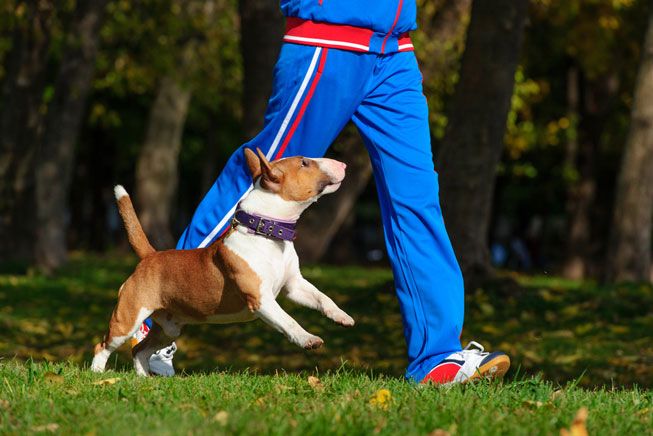
This one applies more to dog owners. If you like walking with your favorite canine, chances are you’re fitter and trimmer than your non-dog-walking counterparts and come closer to meeting recommended physical activity levels. One study of more than 2,000 adults found that regular dog walkers got more exercise and were less likely to be obese than those who didn’t walk a dog. In another study, older dog walkers (ages 71-82) walked faster and longer than non-pooch-walkers, plus they were more mobile at home.

Dog owners who take their canine companions on walks tend to be trimmer and fitter than their fellow dog-less peers. (Photo: AMatveev/Shutterstock)

3. Pets dial down stress

When stress comes your way, your body goes into fight-or-flight mode, releasing hormones like cortisol to crank out more energy-boosting blood sugar and epinephrine to get your heart and blood pumping. All well and good for our ancestors who needed quick bursts of speed to dodge predatory saber-toothed tigers and stampeding mastodons. But when we live in a constant state of fight-or-flight from ongoing stress at work and the frenetic pace of modern life, these physical changes take their toll on our bodies, including raising our risk of heart disease and other dangerous conditions. Contact with pets seem to counteract this stress response by lowering stress hormones and heart rate. They also lower anxiety and fear levels (psychological responses to stress) and elevate feelings of calmness.

4. Pets boost heart health

Pets shower us with love so it’s not surprising they have a big impact on our love organ: the heart. Turns out time spent with a cherished critter is linked to better cardiovascular health, possibly due to the stress-busting effect mentioned above. Studies show that dog owners have a lower risk of heart disease, including lower blood pressure and cholesterol. Dogs also benefit patients who already have cardiovascular disease. They’re not only four time more likely to be alive after a year if they own a dog, but they’re also more likely to survive a heart attack. And don’t worry, cat owners — feline affection confers a similar effect. One 10-year study found that current and former cat owners were 40 percent less likely to suffer a heart attack and 30 percent less likely to die of other cardiovascular diseases.

5. Make you a social — and date — magnet

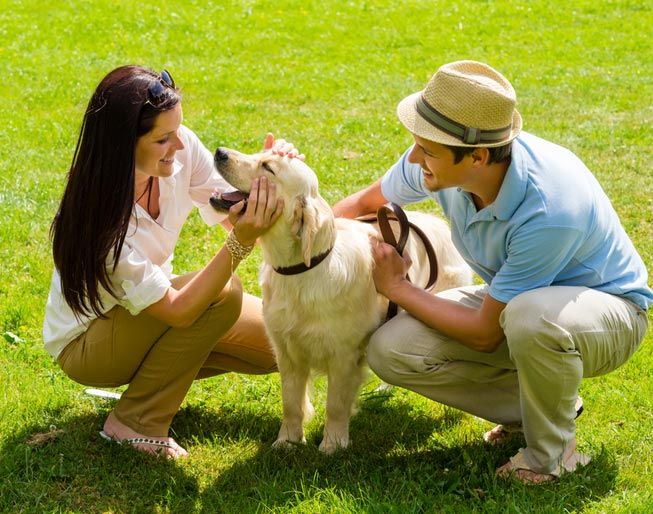
Four-legged companions (particularly the canine variety that pull us out of the house for daily walks) help us make more friends and appear more approachable, trustworthy and date-worthy. In one study, people in wheelchairs who had a dog received more smiles and had more conversations with passersby than those without a dog. In another study, college students who were asked to watch videos of two psychotherapists (depicted once with a dog and once without) said they felt more positively toward them when they had a dog and more likely to disclose personal information. And good news for guys: research shows that women are more willing to give out their number to men with a canine buddy.

A dog can make you appear friendlier and more approachable to others. (Photo: CandyBox Images/Shutterstock)

6. Provides a social salve for Alzheimer’s patients

Just as non-human pals strengthen our social skills and connection, cats and dogs also offer furry, friendly comfort and social bonding to people suffering from Alzheimer’s and other forms of brain-destroying dementia. Several canine caregiver programs now exist to assist at-home dementia patients with day-to-day tasks, such as fetching medication, reminding them to eat and guiding them home if they’ve wandered off course. Many assisted-living facilities also keep resident pets or offer therapy animal visits to support and stimulate patients. Studies show creature companions can reduce behavioral issues among dementia patients by boosting their moods and raising their nutritional intake.

7. Enhances social skills in kids with autism

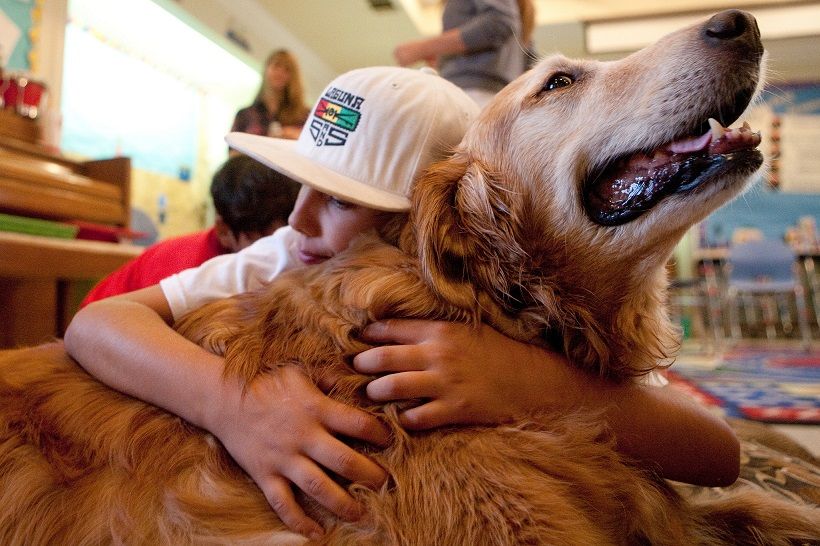
One in nearly 70 American kids has autism (also known as autism spectrum disorder, or ASD), a developmental disability that makes it tough to communicate and interact socially. Not surprisingly, animals can also help these kids connect better to others. One study found that youngsters with ASD talked and laughed more, whined and cried less and were more social with peers when guinea pigs were present. A multitude of ASD animal-assisted therapy programs have sprung up in recent years, featuring everything from dogs and dolphins to alpacas, horses and even chickens.

Animal-assisted therapy helps kids with autism and other developmental disabilities learn social skills. (Photo: UCI UC Irvine/flickr)

8. Dampens depression and boosts mood

Pets keep loneliness and isolation at bay and make us smile. In other words, their creature camaraderie and ability to keep us engaged in daily life (via endearing demands for food, attention and walks) are good recipes for warding off the blues. Research is ongoing, but animal-assisted therapy is proving particularly potent in deterring depression and other mood disorders. Studies show that everyone from older men in a veterans hospital who were exposed to an aviary filled with songbirds to depressed college students who spent time with dogs reported feeling more positive.

9. Defeats PTSD

People haunted by trauma like combat, assault and natural disasters are particularly vulnerable to a mental health condition called post-traumatic stress disorder (PTSD). Sure enough, studies show that the unconditional love — and oxytocin boost — of a pet can help remedy the flashbacks, emotional numbness and angry outbursts linked to PTSD. Even better, there are now several programs that pair specially trained service dogs and cats with veterans suffering from PTSD.

10. Fights cancer

Animal-assisted therapy helps cancer patients heal emotionally and physically. Preliminary findings of an on-going clinical trial by the American Humane Association shows that therapy dogs not only erase loneliness, depression and stress in kids fighting cancer, but canines can also motivate them to eat and follow treatment recommendations better — in other words participate more actively in their own healing. Likewise, new research reveals a similar lift in emotional well-being for adults undergoing the physical rigors of cancer treatment. Even more astounding, dogs (with their stellar smelling skills) are now being trained to literally sniff out cancer.

11. Puts the kibosh on pain

Millions live with chronic pain, but animals can soothe some of it away. In one study, 34 percent of patients with the pain disorder fibromyalgia reported pain relief (and a better mood and less fatigue) after visiting for 10-15 minutes with a therapy dog compared to only 4 percent of patients who just sat in a waiting room. In another study, those who had undergone total joint replacement surgery needed 28 percent less pain medication after daily visits from a therapy dog than those who got no canine contact.

ooOOoo

When I was setting this post up and copying across all the many links I was aware that there was a mountain of information out there. You may want to take some time and explore those links. For example, the link to HABRI- Human-Animal Research Initiative looks incredibly interesting. Then there was the link to the work being undertaken by the American Humane Association, that link being to this video that I am presenting here to close off today’s post.

Wherever you are in the world look after yourself and care for all those lovely pets out there. Love them so dearly!