Category: History

Man on the moon

How many remember this?

Very early on in the life of this Blog, indeed on the second day, I wrote a short article about the NASA mission to the moon, some 40 years after the event.  You see, for me that has been the historic event of my lifetime.

I believe that this nation should commit itself to achieving the goal, before this decade is out, of landing a man on the Moon and returning him safely to the Earth. No single space project in this period will be more impressive to mankind, or more important in the long-range exploration of space; and none will be so difficult or expensive to accomplish.
Apollo 11 badge

That speech before Congress by President Kennedy was on the 25th May, 1961.  I was 16 and was enthralled by the idea of being alive when man first set foot on another planetary body.  That came about on July 20th, 1969 at which time I was living and working in Sydney, Australia.  I took three days off work, rented a TV and watched every minute of the event.

Exploration is a core need of man.  By pushing out the boundaries of our knowledge we continue to offer hope to mankind.

So it is with great disappointment that it has been announced by President Obama that the manned mission programs to the moon are to be severely curtailed – that sounds terribly like political speak for cancelled!

As Eugene Cernan (last astronaut to set foot on the moon) said:

I’m quite disappointed that I’m still the last man on the Moon. I thought we’d have gone back long before now.
I think America has a responsibility to maintain its leadership in technology and its moral leadership… to seek knowledge. Curiosity’s the essence of human existence.

Curiosity is indeed the essence of human existence.

That curiosity and the investment in space exploration by NASA on behalf of the whole world has shown us some remarkable findings about Saturn and it’s majestic rings.  Just watch the video segments in this piece from the BBC.

The one-time cost of Cassini-Huygens mission was $3.26 billion. Just 0.3% of the cost of one year’s expenditure on U.S. defense spending.

Science missions like Cassini enhance cooperation between nations, and greatly contribute to scientific progress which benefits everyone.

Perhaps the big Banks would like to pick up the cost of further manned missions to the Moon?

By Paul Handover

Econned, by Yves Smith

Learning from Dogs muses the new book from Yves Smith

ECONned, by Yves Smith

In Econned, Yves Smith, founder of Naked Capitalism, argues that the economy was doing just fine in the regulated environment up to the 1970s.  Then began the work of the Chicago economists who challenged Keynesian economics and touted the benefits of deregulation which eventually led to the financial crisis we have today.

Yves argument is internally consistent and well researched, but ignores some factors that I think would change the conclusions drawn from her work.

Yves Smith, author and founder of Naked Capitalism

First, Yves notes that the primary reason that economists are not useful to the real world is that economic research presumes equilibrium.  Smith misses the point here, but it is understandable. It took me years of study and contemplation to fully appreciate that an equilibrium simply gives economists a point of reference, a common base, from which to study shocks and movements. In and of itself, equilibrium is not interesting or important.   But movements to and from equilibrium are of real interest because they enable us to study and try to predict how individuals will react to incentives and changes in market conditions.

Second, we have to put the contributions of the Chicago economists of the 1970s into context.  Up until that time, the only real school of thought in macroeconomics was based on Keynes, who presumed that markets fail and that the government must play an active and large role – primarily through government spending and taxes — for the economy to perform well.  Keynes’ work was a reaction to the Great Depression.

Friedman’s monetarism also sought to explain the Great Depression, but focused on the role of monetary policy on the economy. This work showed that the missteps of the Federal Reserve was the primary cause of the depth and length of the Great Depression, and that long-term accommodative monetary policy causes inflation.  This body of work did not stress deregulation, although it did lean more heavily on enabling private market solutions than on replacing them with government solutions.  Neither theory is complete; Keynes focused on the short run (“In the long run, we are all dead” is a rather famous Keynes quip) and Monetarism focused on the long run.

There was a second large body of work that came out of the University of Chicago during the late 1960s and 1970s.  This research documented the tremendous costs of regulation. I know this literature personally and believe that its conclusions are very sound:  it shows that any effective regulation limits either the quantity or price of a good or service away from what it would have been without the regulation.  In fact, in my view, it was the passage of regulations requiring certain lending behavior that set off the series of events that led to the crisis, which is the exact opposite argument from what Ms. Smith makes.

By Sherry Jarrell

The Greenwich Meridian

Don’t know what time it is?  Hardly surprising in Spring and Autumn.

Today is exactly one month before the United Kingdom ‘moves’ its clocks forward and enters British Summer Time; 1am (UTC) on Sunday 28th March 2010.  Is that date the same across the world?  One would think so because it makes life, especially international air transport, so much easier.

But no!  In fact the way that time zones are applied and changed for Daylight Saving is a complete hotch-potch.

In the United States of America, daylight saving starts at 2am on March 14th, 2010.  And just three years ago that start time would have been the first Sunday in April.  Changes were made in the US Energy Policy Act of 2005.

From this geographic site comes the following:

Other parts of the world observe Daylight Saving Time as well. While European nations have been taking advantage of the time change for decades, in 1996 the European Union (EU) standardized an EU-wide “summertime period.” The EU version of Daylight Saving Time runs from the last Sunday in March through the last Sunday in October. During the summer, Russia’s clocks are two hours ahead of standard time. During the winter, all 11 of the Russian time zones are an hour ahead of standard time. During the summer months, Russian clocks are advanced another hour ahead. With their high latitude, the two hours of Daylight Saving Time really helps to save daylight. In the southern hemisphere where summer comes in December, Daylight Saving Time is observed from October to March. Equatorial and tropical countries (lower latitudes) don’t observe Daylight Saving Time since the daylight hours are similar during every season, so there’s no advantage to moving clocks forward during the summer.

Of course, someone had to create a web-site to track all these various time zones and changes.  Here it is.

Last year, the BBC News website published an interesting article about the Greenwich Meridian aka The Prime Meridian.  The setting of the Prime Meridian was done just over 125 years ago, in October 1884.  When one thinks of the importance in having a standard meridian, both for time keeping and navigation, I would have guessed that it went back much further in time.

The other aspect that was news to me was that the conference had been convened at the request of the American President Chester Arthur.

From that BBC article:

Until the 19th Century, many countries and even individual towns kept their own local time based on the sun’s passage across the sky and there were no international rules governing when the day would start or finish.

Maps with multiple meridians were confusing

However, with the rapid expansion of the railways and communications networks during the 1850s and 1860s, setting a standard global time soon became essential.

“The world was in a very big mix-up,” explains Dr Avraham Ariel, author of Plotting the Globe. “People had lots of prime meridians. Earlier in Europe there were 20 prime meridians. The Russians had two or three, the Spanish had their own and so on.”

Thus that famous line in the grounds of the National Maritime Museum at Greenwich, London is not as old as many might have thought.

Prime Meridian, Greenwich

By Paul Handover

Predicting lost decades for Britain

…. and most likely other ‘Western’ nations

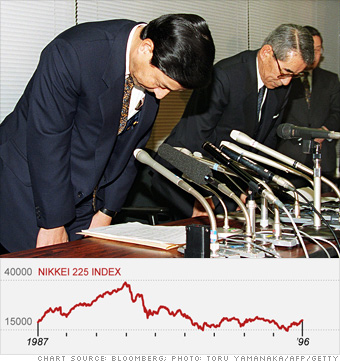
This Post is taken in its entirety from the website Contrary View. Contrary view number 73 has just been published, as follows.  Please see note after signature. [The Japanese Nikkei 225 index was 10352 at the time of writing this Post – 0800 MT, 23rd Feb.]

There is plenty of evidence from Japan about lost decades for investments. Japan has now lost two decades in equity and property investment, during which time only Government Bonds provided any sanctuary. All policy options failed, because none tackled the real problem, which is that there is already too much debt. What lessons can be drawn for Britain?

Lost decades

Shares here [in Britain] have certainly had a lost decade. On the Japanese evidence, they may well suffer another lost decade. Property has only hit minor bumps, so the Japanese experience suggests that property may suffer a long decline for two decades. In the UK, the Bank of England’s support for mortgages will be withdrawn over the next two years, which itself threatens prices. Why, though, the hysteria about Government debt?

It is questionable whether pundits appreciate the extent of the private sector debt problem, which explains why two groups of economists can offer totally contradictory remedies. In a world with no Gold standard and therefore no anchor to the monetary system, Government debt is relatively safe. The global economy is perched on a knife edge, with a permanent loss of output that must cause income loss and therefore restrict the capacity of households to service their debts. Seeing the commercial risks, banks are still restricting lending, which means there can be no sustained recovery.

There is a misconceived demographic argument being touted at present, which completely ignores the real driver of the post-1945 expansion, namely increased credit. That credit growth has simply gone too far and now brings its own problems. For those people who neither saw the credit crunch nor the long fall in interest rates and inflation coming, to now be credible in predicting a lost decade for bonds, is itself unbelievable.

By Paul Handover

Note: Until very recently, the author was a client of Kauders Portfolio Services, the publisher of the Contrary View website.  Please see the warning about these views posted on that site.

The Planet’s Resources

Who do the Earth’s raw materials really “belong” to?
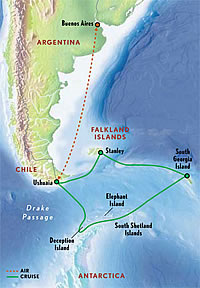
So once again the Falkland Islands have hit the headlines, and as usual for the wrong reasons. The British have given the green light for oil exploration around the islands and Argentina has resisted by imposing restrictions on shipping movements, if not (yet) an all-out blockade.

Who knows where this one will end? It could either fizzle out or erupt into another full-scale confrontation, since big issues are involved, and none bigger than nationalism, for Argentina claims the islands as “its own”.

The history of the Falkland Islands is long and complex, but the idea that Argentina has any fundamental right to these islands is surreally silly. Argentina is owned and ruled by descendants of the Spanish, who took over the land that now forms Argentina (a state in its own right only since the early 19th c) as part of the European colonisation of the world. By all means let us return the Falklands to their original owners, except that the first people to settle there were French for a start. And if you are going to adopt the principle of returning land to its original owners, then we can look forward to most of the population of Argentina returning to Spain and returning the land to the Indians, can we?

The other argument often advanced is that “the islands are near Argentina”. Well, I don’t know when these people last looked at a map but 300 miles isn’t exactly “near”. But in any case, if we are to adopt nearness as a criteria for the reapportioning of land then I look forward to England once again reclaiming France, a mere 21 miles away. And what on earth is Corsica doing as part of France? But of course France must have the Channel Islands, as they are very near – and so on. “Continental shelf”? “We own the land under the sea?” Go down this route and we’ll need a whole new generation of map-makers.

When all the idiotic, overblown, childish and nationalistic guff (which sadly  led to many hundreds of dead in the 1972 war) is stripped away from this debate, we are left with two fundamentals:

  • the right of self-determination
  • the way the Earth’s resources are used

As for the first, there have been British people living on the islands since at least 1833. They have – as I believe all people have – the right to determine their own fate.  This is called self-determination. Unfortunately, it is a noble principle to which the world all too often pays only lip-service. The nation state has become an entrenched, solidified system, mostly because it confers great power on the leaders of each state, who – especially when democracy has not taken root – use the statehood to advance their own power and megalomania. Statism has for centuries run roughshod over people’s fundamental rights. Iraq was a “state”, but one where the Kurds (denied their own state by British cynicism) suffered cruelly under the jackboot of a fascist psychopath. That the British eventually helped to remove this monster (suffering enormous criticism from in particular the country that inspired the world with its own Revolution in 1789) is only a tiny compensation for the original injustice done to the Kurds. They are by no means alone; minorities all over the world suffer in different degrees from arrogant statism: Tibetans; Basques,; American Indians and Australian aborigines among many others. Yes, injustices were done centuries ago, but you cannot wind back history, or where would it end?  How would Europe cope with all those Yanks for a start if they gave the USA back to Sitting Bull’s descendants? Apparently, we all came originally from Africa. Should we all return there and leave our countries empty?

Well, on the Falklands are Brits, and Britain did them the honour of allowing them freely to choose whether they want to be annexed to Argentina. This would in fact give them innumerable advantages, plus of course potentially-disastrous disadvantages. As trust is in short supply, these people prefer not to take the risk and so remain British. That is their right. In refusing to discuss “sovereignty”, Britian is doing no more than strike a blow for self-determination. To give Britain its due, it has pursued the same policy – albeit modestly – towards the (in the eyes of some of them) oppressed Welch, Scots and Irish.

So much for fundamental 1. The Argentinian case is pathetic.

What about the RESOURCES question?

Well, resources are another area where the state jackboot falls with great weight. We all breathe the same air, share the same sun, the same water; but where the stuff under the ground is concerned, it’s every state for itself. Yet casting aside state arrogance, isn’t it ridiculous that state A can derive vast wealth from “its” oil, gold or whatever, while state B alongside it is mired in poverty and misery? So much for “share-and-share” alike. Even belonging to the same race is no help; while some Arabs built extraordinary palaces and Audi Quattros made of solid silver, poor Somalis, Yemenis, and even Egyptians are mired in abject poverty. (Check out this Arab Palace in Dubai, and Mugabe’s presidential palace in Zimbabwe, which is by no means untypical of poverty-stricken Africa)

One day, in a joined-up world which recognizes that we are all brothers, we will share resources “fairly”. Britain could show the way by offering to share any oil resources with – not only Argentina – but all of Latin America (though we could leave out Venezuela …) What a blow for brotherhood that would be!

By Chris Snuggs

Tax, Law, Crime and Morality in Banking

More holes than in a Swiss Cheese!

There is currently a merry old ding-dong spat going on between the German and Swiss governments. Basically, someone has got hold of information about German citizens with bank accounts in Switzerland where they are hiding large sums on which they should pay German taxes.

This or these enterprising whistleblower(s) are offering to sell this data to the German government for a hefty fee. The German government is on the point of accepting to buy this “illegally-obtained” information from the (from the Swiss point of view) criminals who have stolen their secret bank data.

This story raises a large number of fascinating questions. It has long been common knowledge that Switzerland offers banking facilities with few questions asked. Any self-respecting criminal or tax evader has or had a secret, numbered Swiss account.

What has always amazed me is how they have got away with this for so long, stuck as they are in the centre of Europe. How is it possible that other countries have allowed Switzerland to become a haven for money obtained illegally in other countries?

For it is clearly immoral to profit from the illegal activities of foreign nationals, isn’t it? What exactly is the difference between this behaviour and “receiving stolen goods”? Worse, we have to remember that the largest sums come from drugs. Anyone willing to look after (or launder) drug  money is complicit in the misery and deaths of millions of drug addicts worldwide. Yet the Swiss have pulled off this trick for decades. The Swiss banking (and government) fraternity has never shied away from shady dealings, being until the end of WWII covert supporters of the Nazis.

Well, Angela Merkel is going to do a deal with presumably Swiss “criminals” (according to the Swiss government) in order to recoup money it is owed by German criminals (according to Germany). What a merry old moral maze we have here. But in truth, the world is now too small and inter-connected to allow either tax evasion on a vast scale  or the safeguarding of criminal funds.

Switzerland has to decide whether to remain as a supporter of tax evaders and gangsters (including of course African Presidents who have ripped their countries off in a big way) OR to join the real, civil, honest and inter-connected world.

The rest of us should stop tolerating this connivance with crime. “Client secrecy” is no excuse for condoning and profiting from crime.

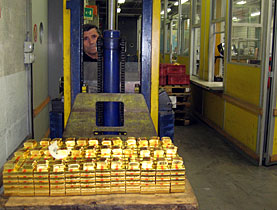
More on the whole  Nazi gold in Switzerland story is here.

By Chris Snuggs

How Earth Made Us …

... and the way we treat it!

Once again the British Broadcasting Company, BBC, has put together a spectacular television production; the epic story of how geology, geography and climate have influenced mankind.  It is remarkable and fabulous viewing as you can sample in these opening minutes from the first episode on Deep Earth.

The four programmes, Deep Earth; Water; Wind; Fire, are testament to both the incredible symbiosis between mankind and the elements and how that relationship is critically balanced in a way that allows us to survive.  Some of the images are truly outstanding, for example, the section on Prof. Iain Stewart exploring the Naica Cave system in Mexico.

Naica Cave system, Mexico

This theme of the balance of geological circumstances that allows, just, mankind to survive comes across time and time again in these films.  For example, our relationship with fresh water which we all take completely for granted.

Have any of us really pondered how long we would survive if there was insufficient clean, safe drinking water to go around?

The programmes also reveal something of the technological prowess that mankind has achieved to allow the way these films have been produced.

So why, oh why, are we also such a stupid, stupid species – so stupid that we foul our own nest to an incredible degree.

Continue reading “How Earth Made Us …” →

The legality of the Iraq invasion

The UK Iraq Inquiry

Our American friends may not all be aware that momentous events are taking place in London. Momentous for us, I mean ….. nothing much of what happens over here is momentous for you of course, though interesting perhaps!

We have an enquiry going on into the 2nd Gulf War , an enquiry which Premier Gordon Brown set up in an untypical

Sir John Chilcott

and in fact reckless fit of statesmanship but which looks is as if it might be the final nail in his coffin. For a whole series of witnesses are parading in front of Lord Chilcot to give their five penn’worth about the reasons for the invasion.

Now the British public is a magnificent beast, but not particularly famed for long-term memory and just when Iraq was beginning to fade a bit from the radar here it is all surging up again and reminding us what a divisive business it was and how the then government – so it is said – blatantly lied about the reasons for sending our young men to die.

Well, that it all very interesting but here is not the place to go into this enquiry in depth. I did wonder, though, how George Bush seems to have escaped any threat of an enquiry!! You folks sure do things differently over there!

No, what particularly interests me is all the talk about the “legality” of the war, but nobody has explained to me how it can be illegal to attack a mass-murdering gangster, which is all SH was. The  “law” only works if ALL are involved. If someone murders our fellow-humans and sets himself up as leader then he or she can’t have recourse to “the law”, can they? You cannot hide behind legality when you murder all your opponents and hundreds of thousands of others, can you?

Now we Anglo-Saxons – and even the French – profess to believe in “democracy”, even if this sometimes throws up complete idiots as leaders (but I won’t mention any names ….) Yet we trade with despots, we take them seriously, we even kow-tow to them on occasion.

But they are just gangsters, aren’t they? Where is their legitimacy? Nobody voted them in, did they? In Sadaam Hussein’s case, there was a party conference at which his rivals were pulled out of the audience and taken away to be summarily shot. Yet this mass-murderer was supposed to be given the respect of a “leader”?  We even had a British MP going out to Iraq to shake him by the hand! It is of course surreal.

The UN Charter – which all members sign up to – has clauses on human rights, freedom of speech, of assembly and all that stuff, yet a large proportion of members are dictatorships! What a humungous LIE to base the government of the world on! Yet the UN is the body that is supposed to make “international law”!! You couldn’t make it up.

So while the case for the invasion of Iraq is extremely complex and controversial, I for one will certainly  dismiss any claptrap about it being “illegal”. How can it be illegal to bring down a man responsible for the deaths of over  ONE MILLION of our fellow-humans, including the use of gas to destroy a whole village of 5,000 in Kurdistan?

It is often said that “the law is an ass”. Well, in this case I cannot but agree.

By Chris Snuggs

UK Iraq Enquiry Update

The UK Iraq enquiry produces some odd insights

I found this on the BBC website last Sunday:

“Gordon Brown was ‘marginalised’ by Tony Blair in the build-up to the Iraq war”, former International Development Secretary Clare Short has said.

“The then chancellor neither opposed nor supported the invasion but was ‘preoccupied’ by other concerns,” she told the BBC’s Andrew Marr Show.

Frankly, it is surreally ludicrous. Is she really saying that while the country was preparing to go to war in extraordinarily-controversial circumstances, with hundreds of thousands marching in protest and all the rest, that

Clare Short

Brown had “other concerns”? And during the whole process these “other concerns” prevented him from AT ANY TIME having an input or indeed an opinion?

Is this some sort of attempt to disassociate him from responsibility? Whatever one thinks about the rights or wrongs of the invasion it was in the end a COLLECTIVE DECISION. Blair could NOT have done it without the support of the British Cabinet, especially Brown and Straw. If they had felt strongly enough about it, they could have resigned, or more likely have told Blair they WOULD resign if he pressed on, and thereby thwarted him.  Now, it isn’t easy to resign, or even threaten to – your bluff could always be called and your career go down the spout – but if you can’t do it when it is a matter of your country going to war when the hell CAN you do it?

Gordon Brown

As for “neither supported nor opposed” the invasion, what a PATHETIC verdict on someone who went on (without an election) to “lead” the country.

“Well, I’m neither supporting nor opposing it since that way I can take either position later depending on how it pans out.”

I can’t recall having seen a more pathetic, fumbling, cowardly shambles. You may love or – more likely – hate Tony Blair, but as with Margaret Thatcher, you certainly knew where he stood.

By Chris Snuggs

The secret life of the dog, Concluding Part

Concluding this fascinating insight into the extraordinary relationship between dogs and man.

If this is your first sight of this multi-part article about dogs then you will need to start at the beginning:

Part One is here.

Part Two is here.

Part Three is here.

Part Four is here.

Part Five is here.

By Paul Handover