Category: History

Loyalty with a capital “D”!

As in Dog!

Towards the end of September in came an email addressed to learningfromdogs.

Hi Paul,

Pete here from The Goody Pet.

Firstly – A big thank you for writing all those amazing articles on dogs. Been sharing these articles with my friends and they really enjoyed reading them. Was wondering if I could contribute a guest post for your website? I have been a dog owner for the past 15 years and would love to share some of my tips to your readers.
If you are interested, please let me know? I will be more than happy to prepare a few topics to send across to you.
Kind Regards,
Pete

Goes without saying that I was delighted to receive Pete’s email and his offer of an article. Here it is!

ooOOoo

DOGS: A LESSON IN LOYALTY

by Pete Decker, October 8th, 2017

Dog is a man’s best friend, this is something we have said and heard enough number of times. They can be better friends that any human can ever be, this is a fact that almost all dog owners can surely vouch for.

A dog’s loyalty has been seen and heard of in many famous incidents as well as stories like Hawkeye, the dog who grieved the death of his Navy SEAL owner by lying down near his casket day in and out. Or the story of Hachiko, the dog who greeted his owner at the train station every day and continued to look for his owner at the same place daily even after the sudden death of the owner.

What makes dogs so loyal?

There have been some people who say that they depend on humans for food and shelter and so have to be loyal without a choice. But when you see the dog of a street dweller loving him unconditionally or when you see the reaction of a dog after meeting his master who has been away for a long time, you know it’s not just about food and shelter.

They are colonial creatures who like to live together, whether it is a colony of humans, dogs or even other animals. They just want to love and be loved back.

Dogs are not like human beings, they are much better. They do not cheat or betray. They only need one master and that is enough for them to live happily. Unknowingly, dogs teach us many important lessons that help us be better and more loyal people. Let us consider some of them:

They teach you never to betray

Your closest human friend or companion may betray you when the time comes, but a dog never ever will. If needed he will lay his life for you, but betraying is out of question. A human being is capable of telling lies, manipulating, or twisting facts, a dog is not capable of any of that.

A dog can never lie

No matter how close you are to a person, they still may not tell you everything or all the truth. As humans, we think withholding information is not considered lying and do that all the time. But a dog can never lie, he doesn’t even know how to. There is no pretense or withholding information with a dog. For a dog the world is only about you. And it only has ways to show you how much it loves you, nothing more.

They teach you never to judge

Your dog does not care whether you are rich or poor, whether you are ugly or beautiful. It does not even care if you are thin, fat, or what nationality you belong to. A dog will not judge if you have failed at anything, or hold prejudices against you. With a dog you can never be scared of being ridiculed or humiliated. As long you it is with you, you mean the world to him, and he will never leave you no matter what.

Forgiving is another lesson they teach us

A dog is not capable of holding grudges, or being revengeful. These qualities are for us humans. Even if you hurt your dog knowing or unknowingly they will still forgive you at all times. They will not hold your mistakes against you. They will forget your flaws and love you as it always did.

Love is beyond everything

This is one thing that differentiates a human from a dog. Your best friend of one time may not be the same anymore, but a dog will be your best friend as long as you live. They will be by your side at all times, through thick or thin.

You can always repay the favor by ensuring that your dog is responsibly cared for, well fed with regular grooming.

These are some important lessons of loyalty that a dog teaches us. If only we humans imbibe even a part of their qualities, the world will be a much happier place to live in.

ooOOoo

That closing photograph, that was also supplied by Pete, says it all.

Naturally, I asked Pete to offer a little background information on his goodself and this is what he wrote me:

The author of this post is Pete Decker, the Lead Editor at The Goody Pet. Pete loves to share his passion for pets through snippets of interesting and helpful information. You can find more of Pete at his website, Twitter or Facebook.

The loyalty of dogs continues tomorrow!
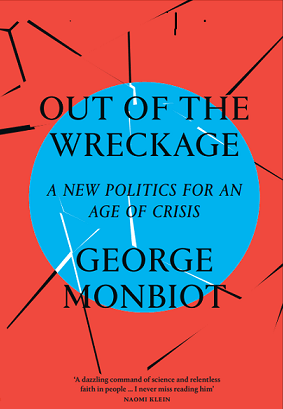
Out Of The Wreckage: A Review

This is one powerful book!

(Please note that I am letting this post run until Sunday, 15th Oct.)

For many years I have both read George Monbiot’s writings, especially those published by The Guardian newspaper, and deeply respected his insight, intelligence and analysis of the world in which we now live.

So when I heard of his latest book, published by Verso Books both sides of the ‘pond’, it was ordered immediately. It was a book I badly wanted to read. I was not disappointed.

So what is Mr. Monbiot’s message?

To answer that question let me lean on a forthcoming talk being given by him in Edinburgh in eight days time. For he is speaking at a Scottish Green Party event on October 20th.
Here’s the thrust of what is to be covered at that meeting:

What does the good life—and the good society—look like in the twenty-first century?

A toxic ideology rules the world – of extreme competition and individualism. It misrepresents human nature, destroying hope and common purpose. Only a positive vision can replace it, a new story that re-engages people in politics and lights a path to a better world.

Join us for an evening of discussion with George Monbiot as he talks about his new book: ‘Out of the wreckage: a new politics in an age of crisis‘. New findings in psychology, neuroscience and evolutionary biology cast human nature in a radically different light: as the supreme altruists and cooperators. George argues that we can build on these findings to create a new politics: a ‘politics of belonging’.

So what does this mean for social and environmental justice campaigning in Edinburgh? How do we create a politics of belongings here in Scotland? There will be plenty of opportunity for George Monbiot and the audience to share their insights.

Doors open: 6pm

George Monbiot will speak from 7-7.30pm and there will then be a Q&A, plus a chance buy books, mingle and browse stalls.

This event is jointly hosted by Global Justice Now and the Scottish Green party.

To my mind, this book not only addresses, full on, the madness (my word) of these present times but also offers strong, positive recommendations as to how we, as in the societies of all the major nations, can turn it around and offer a decent future for future generations. That’s why I am so strongly recommending it.

Take this extract from the review of George Monbiot’s book published by the Guardian newspaper on the 14th September this year:

For George Monbiot, neoliberalism should best be understood as a “story”, one that was conveniently on offer at precisely the moment when the previous “story” – namely Keynesianism – fell to pieces in the mid-1970s. The power of stories is overwhelming, as they are “the means by which we navigate the world. They allow us to interpret its complex and contradictory signals”. The particular story of neoliberalism “defines us as competitors, guided above all other impulses by the urge to get ahead of our fellows”.

Or this extract from the review published by The New Statesman:

It should be said at once that we are desperately in need of new ideas for a society and a democracy where trust in all established institutions is at a record low and even a Tory prime minister admits the country doesn’t work for everyone. Monbiot’s ideas are clear, well-reasoned and sometimes compelling. Many will mock his attempt at a “story of hope and restoration”; even some of his Guardian colleagues call him “George Moonshine”. Human beings, his critics will say, are inherently selfish and self-maximising. Give them the opportunity to freeload off others’ efforts and they will take it.

Such objections are easily dismissed. Yes, there’s a self-interested streak in all of us but, as Monbiot observes, we also have instincts for co-operation and sensitivity to others’ needs. Think of the hundreds who volunteer to run food banks and of the thousands more who donate to them. Think of those Europeans who, at great risk to themselves, sheltered Jews from the Nazis during the Second World War. The altruistic instinct can be kindled in almost anybody. It is suppressed, however, in a society that rewards the selfish but penalises – and brands as “mugs” – those who are more mindful of our needs, and the planet’s. That society has led to loneliness, high levels of mental illness and increasingly discordant political discourse. Shouldn’t we at least try developing a society that does more to nurture the better angels of our nature?

Better still, settle down with a cup of tea, put your feet up for fifteen minutes and listen to this:

This book struck me as the most important book I have ever read in my lifetime. Why? Because it gets to the heart of what is happening today. But it offers even more than that. For instead of a shrug of the shoulders or eyes turned skywards from a friend when one mutters about the fact that we are living in ‘interesting times’, George Monbiot offers hope and guidance.

Take the very last two paragraphs from the final chapter of his book.

Coming Home to Ourselves

Through restoring community, renewing civic life and claiming our place in the world, we build a society in which our extraordinary nature – our altruism, empathy and deep connection – is released.

When we emerge from the age of loneliness and alienation, from an obsession with competition and extreme individualism, from the worship of image and celebrity and power and wealth, we will find a person waiting for us. It is a person better than we might have imagined, whose real character has been suppressed. It is one who lives inside us, who has been there all along.

“- our altruism, empathy and deep connection -”

I see these persons every day of my life. Via the pages of this blog.

Yes, I am referring to all of you who wander in and out of this place, who demonstrate your compassion, your love and your dedication to the dogs and all the other animals of this world.

Read this book!

Return to the movies!

Another movie, another dog! Correction: another world-famous dog!

Monday’s post Hail the Hero was about Max.

Max, a feature film by the producers of the doggie classic Marley and Me, intends to explore a soldier dog’s journey that doesn’t end with this heartbreaking image of a pup chasing down his fallen brother, but rather begins with it.

So it’s rather nice to welcome a guest post from Emily Ridgewell that features a dog that became known far and wide thanks to television and the cinema.

ooOOoo

An Incredible Rescue: An Often Forgotten “Tail” From The Golden Age Of Hollywood

By Emily Ridgewell

In the shadow of recent world tragedies, and long before cute puppies and kittens graced the internet, there were former movie legends in the form of incredible canines that found their way onto the big screen in the golden age of Hollywood. Think of adorable dogs like Toto from The Wizard of Oz or Lassie from many different types of these movies and television shows.

But there’s another “tail” (pardon the pun) about a German Shepherd named Rin Tin Tin who stole America’s heart and eventually had millions of fans all around the world long before the advent of the internet. Few of us today know the real-life story of this precious little puppy who was rescued from a war zone long before Toto or Lassie gained their fame and fortune as canine celebrities.

According to a historically-related biography published long-after this rag-tag dog shot to fame in the late twenties and early thirties, there was a young American soldier stationed in Europe shortly before the end of World War I. Corporal Lee Duncan was traipsing through the aftermath of formerly German-occupied farming village in France when he came across a single building, actually it was a kennel, that remained somewhat intact after a devastating bombing had leveled the entire town.

After cautiously entering the building, the young trooper painfully walked over more than a dozen dead German Shepherd dogs. These canine soldiers were trained for combat and left behind by the Third Reich. Corporal Duncan heard whimpering coming from deeper inside this solitary structure and continued on with his mission. To his amazement, Lee discovered some unlikely survivors of this terrible tragedy.

AFTER THE UNTHINKABLE – LIVING & LOVABLE

Lying in the rubble, there Lee saw a female shepard with five young puppies who were just a few days old. Corporal Duncan was no stranger to abandonment since his own father had left him and his mother to fend for themselves back in 1898. Just a year later, his Mom took him and a younger sibling to an orphanage. Perhaps this tugged on his heartstrings and he couldn’t leave behind this young family so he took them all underneath his wing.

He took the entire brood back to his barracks in a living and loving rescue effort. The young Corporal quickly realized he couldn’t care for all of them and found loving homes for all but two of the pups. He kept a little boy and girl, named them Nanette and Rin Tin Tin, both titles given to good luck charms found in France.

THE CANINES AFTER CHAOS

Lee continued to care for his beloved best buddies as the chaos of the war continued. After the conflict had concluded, Corporal Duncan was bound and determined to take his little war refugees home with him. Imagine the red-tape he was faced with and, long story short, he lost Nanette to pneumonia after bringing them both home to the states.

The WWI veteran got a job in his home state of California and began training Rin Tin Tin to perform some tricks in their spare time. After some filming occurred, the former Corporal wrote a screenplay and the rest (as they say) is history.

There’s an old saying (later turned into a Beatles song – also from many days gone by) that rings true in this case, you “Can’t Buy Me Love.” And that’s the whole point.

You can’t purchase the love and affection of an animal, but if you rescue one, you’ll find unconditional love that lasts forever. You might not become rich and famous after rescuing an animal, but you’ll never find a deeper love and connection with your four-legged best friend.

ooOOoo

Emily Ridgewell is an arts professional and a pet enthusiast from sunny LA. Emily has a creative energy and an aesthetic sense of living, where everything beautiful is worth sharing. She loves her yorkie Olivia and writes original and fun articles on ways to learn and improve your pet-best friend’s life. She finds exciting new things to explore and experience! Don’t forget to connect with her on Twitter: @ridgewell_j

Picking up on that ‘old saying’ with regard to The Beatles makes it easy to close today’s post. (And sorry if this makes some of you feel old!)

Here’s a little bit of music history:

Written by: Lennon-McCartney
Recorded: 29 January; 25 February; 10 March 1964
Producer: George Martin
Engineers: Norman Smith, Geoff Emerick

Released: 20 March 1964 (UK), 16 March 1964 (US)

Can’t Buy Me Love was The Beatles’ sixth British single, released with the b-side You Can’t Do That. It was written while the group were in Paris for a 19-date residency at the city’s Olympia Theatre.

Ah! Nostalgia!

Ghosts.

An emotional post that is potentially upsetting to readers. Especially English readers.

Yesterday, September 14th, saw the opening of the inquiry into the Grenfell Tower fire that happened on June 14th. As the BBC News reported:

The inquiry into the Grenfell Tower fire has opened, with its chairman promising it will provide answers to how the disaster could have happened in 21st century London.

Sir Martin Moore-Bick said he would not shrink away from making recommendations that could lead to prosecutions.

Yesterday morning, I woke at 5am PDT (1pm UK time) and picked up my tablet that has a BBC Radio 4 app installed. I lay there in the dark, Jeannie still fast asleep alongside me, and listened to the World at One: Forty-five minutes of news, analysis and comment, with Martha Kearney. Naturally the opening stages of the inquiry were one of the main items covered.

I was born in London. At the maternity ward at the hospital in Park Royal, West London. Some 5 miles from Grenfell Tower. I was brought up in Wembley, London again some 5 miles straight line distance from the tower.

For much of my early life as a young adult I was in and around that part of London. So while I was not personally familiar with Grenfell Tower itself, the news coverage of the disaster at the time relayed sights of a part of London that seemed like an old friend from the past.

A ghost of my life from over 50 years ago.

Yesterday on the World at One Martha Kearney interviewed Kareem Dennis better known as the rapper Lowkey:

Lowkey: A song for Grenfell, a call for justice

Hip Hop artist Lowkey lives opposite Grenfell tower. He has written a song called Ghosts of Grenfell, featuring people from the local community, which demands justice for those who died.

Lowkey told the World at One about his song and the night of the fire.

(Photo: Lowkey. Credit: BBC)

The interview included snippets of Lowkey’s song.

After I had finished listening to the World at One I did a web search to learn more about the poor animals that lost their lives in the inferno. It broke my heart reading the stories.

Then I started watching the full video of Lowkey’s song: Ghosts of Grenfell. Sixty seconds into the song I could hold my emotions no longer and burst into deep sobs.

Here is Lowkey’s song.

For those that want to stay with this, then here are the lyrics to Ghosts of Grenfell.

ooOOoo

Ghosts of Grenfell

Lowkey
Featuring Mai Khalil

Produced by Jo Caleb and Quincy Tones

[Intro: Lowkey]
The night our eyes changed
Rooms where, love was made and un-made in a flash of the night
Rooms where, memories drowned in fumes of poison
Rooms where, futures were planned and the imagination of children built castles in the sky
Rooms where, both the extraordinary and the mundane were lived
Become forever tortured graves of ash
Oh you political class, so serve out to corporate power

[Chorus: Mai Khalil & Lowkey]
Did they die, or us?
Did they die, for us?
Ghosts of Grenfell still calling for justice
Now hear ’em, now hear ’em scream
Did they die, or us?
Did they die, for us?
This corporate manslaughter will haunt you
Now hear ’em scream
[Verse 1: Lowkey]
Words can not express
Please allow me to begin though
1:30am heard the shouting from my window
People crying in the street
Watchin’ the burning of their kinfolk
Grenfell Tower, now historically a symbol
People reaching, from their windows
Screaming, for their lives
Pleading, with the cries
Tryna reason with the skies
Dale youth birthed champions
Comparison is clear though
That every single person in the building was a hero
So don’t judge our tired eyes in these trying times
‘Cause we be breathing in cyanide, the entire night
They say Yasin saw the fire and he ran inside
Who’d thought that would be the site where he and his family died
The street is like a graveyard, tombstones lurching over us
Those shouting out to their windows, now wish they never woke them up
Wouldn’t hope your worst enemy to go in this position
Now it’s flowers for the dead and printed posters for the missing, come home
[Chorus: Mai Khalil & Lowkey]
Did they die, or us?
Did they die, for us?
Ghosts of Grenfell still calling for justice
Now hear ’em, now hear ’em scream
Did they die, or us?
Did they die, for us?
This corporate manslaughter will haunt you
Now hear ’em scream

[Verse 2: Lowkey]
I see trauma in the faces of all those that witnessed this
Innocence in the faces of all those on the missing list
See hopes unfulfilled
Ambitions never achieved
No I’m not the only one that sees the dead in my dreams
Strive for the bravery of Yasin, artistic gift of Khadija
Every person, a unique blessing to never be repeated
Strive for the loyalty of siblings that stayed behind with their parents
Pray that every loved one lost can somehow make an appearance
We are, calling like the last conversations with their dearest
Until we face, what they face we will never know what fear is
We are, calling for survivors rehoused in the best place
Not to be left sleeping in the West Way for 10 days
We’re, calling for arrests made and debts paid
In true numbers known for the families that kept faith
We’re, calling for safety in homes of love
They are immortalised forever, the only ghosts are us
I wonder
[Chorus: Mai Khalil & Lowkey]
Did they die, or us?
Did they die, for us?
Ghosts of Grenfell still calling for justice
Now hear ’em, now hear ’em scream
Did they die, or us?
Did they die, for us?
This corporate manslaughter will haunt you
Now hear ’em scream

[Bridge: Mai Khalil (Arabic)]
Olooli win arooh
Nas a’am tehtere’a fe sa’at sahoor
Ahess ennee be alam tanee
Olooli win arooh
Nas a’am tehtere’a fe sa’at sahoor
Ahess ennee be alam tanee

[Speech: Lowkey & Various Voices]
To whom it may concern, at the Queen’s royal borough of Kensington in Chelsea. Where is Yasin El-Wahabi? Where is his brother Mehdi? Where is his sister Nur Huda? Where is their mother and where is their father? Where is Nura Jamal and her husband Hashim? Where is their children, Yahya, Firdaus and Yaqoob? Where is Nadia Loureda? Where is Steve Power? Where is Dennis Murphy? Where is Marco Gottardi? Where is Gloria Trevisian? Where is Amal and her daughter Amaya? Where is Mohammed Neda? Where is Ali Yawar Jafari? Where is Khadija Saye? Where is Mary Mendy? Where is Mariem Elgwahry? Where is her mother Suhar?

Tell us, where is Rania Ibrahim and her two daughters? Where is Jessica Urbano Remierez? Where is Deborah Lamprell? Where is Mohammed Alhajali? Where is Nadia? Where is her husband Bassem? Where are her daughters, Mirna, Fatima, Zaina and their grandmother? Where is Zainab Dean and her son Jeremiah? Where is Ligaya Moore? Where is Sheila Smith? Where is Mohammednour Tuccu? Where is Tony Disson? Where is Maria Burton? Where is Fathaya Alsanousi? Where is her son Abu Feras and her daughter Esra Ibrahim? Where is Lucas James? Where is Farah Hamdan? Where is Omar Belkadi? Where is their daughter Leena? Where is Hamid Kani? Where is Esham Rahman? Where is Raymond Bernard? Where is Isaac Paulos? Where is Marjorie Vital? Where’s her son Ernie? Where is Komru Miah? Where is his wife Razia? Where are their children Abdul Hanif, Abdul Hamid, Hosna? Where are Sakineh and Fatima Afraseiabi? Where is Berkti Haftom and her son Biruk?

Tells us, where is Stefan Anthony Mills? Where is Abdul Salam? Where is Khadija Khalloufi? Where is Karen Bernard? Where are these people? Where are these people? Where is Gary Maunders? Where is Rohima Ali? Where is her six year old daughter Maryam, her five year old daughter Hafizah and her three year old son Mohammed? God bless you all! Where are all these people?

[Outro]
Where are all these people?
The blood is on your hands
There will be ashes on your graves
Like a Phoenix we will rise
The blood is on your hands
There will be ashes on your graves
Like a Phoenix we will rise

ooOOoo


The doggie language course continues!

Another delightful insight from Lea.

On the 6th September last I offered a guest post from Lea of the blog Paws Give Me Purpose that carried the title More Doggie Language. It was well-received by all of you.

So it was easy for me to say “Yes” to Lea offering an update. Here it is.

ooOOoo

September 1, 2017, by Lea

Doggie Language Continued

Lately, I have seen many articles written on dog language and what your dog may be telling you. I published my own post entitled “Doggie Language” back on June 25th, the link can be found here:

http://www.pawsgivemepurpose.com/doggie-language/

There are just so many ways our dogs speak to us that one post will never be enough. Even when you think you have it all covered you suddenly think of something else, see your dog do something new, or read something else from another individual’s perspective. That is why today I am writing about this subject once again.

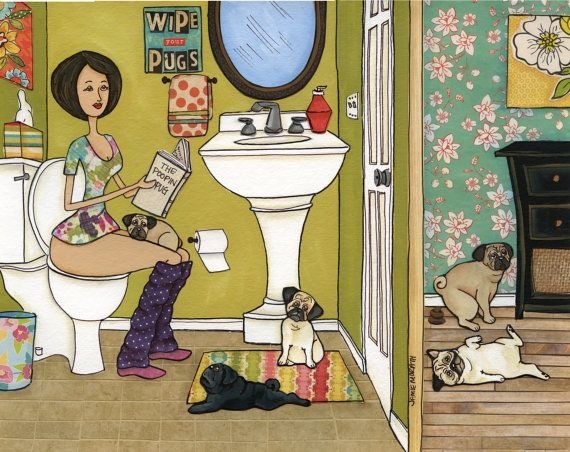
So here’s an interesting question that I have been asked a few times, and it makes me laugh every time I see someone on Facebook, or another site posting a joke or photo about it. Why do dogs follow you into the bathroom?

(image courtesy of Pinterest.com)

Having a loyal dog in your household ensures an incredible amount of love between you and your pup. Understanding your dog can be easy and it’s not hard to understand that your pup wants to give you some love with kisses, however your pup may often behave in more subtle manners as well.

Now, most of us aren’t mentalists or even Dr. Doolittle, so here are some things your dog may do and what they are trying to say to you:

  • Puppy dog eyes – puppy dog eyes are often used by young children whenever they really want something. Your pup may use them to show love and it enforces a greater trust between you both.
  • Following you around – you must agree that it is absolutely adorable when your pup follows you all over the house. According to some Veterinarians, following behavior is a dog’s instinct, to always do things with their pack/family.
  • Giving you gifts – I have had my dogs bring me dead birds, squirrels, and even once a live baby squirrel into the house. The gift is not always as interesting or gross, sometimes it’s a ball to play fetch or a stuffed toy, but turns out that our pups simply want to share their joy with us and there’s no better person to share it with!
  • Cuddle time after dinner – most of us are used to our dogs cuddling at bedtime or on the couch when we watch tv, but cuddling with you after their bellies are filled with a hearty meal shows that your pup is truly comfortable around you.
  • Licking your face and body – there are some people who love it, others find it gross, but all dogs like giving licks once in a while. Licking is actually a submissive behavior and it actually helps your pup ease their stress level as well as of course being a sign of loving you.
  • Going “crazy” when you come home – the second your dog hears you coming back home, chaos ensues. I know at my house it starts the minute I pull into the driveway, I can hear them even before I put my key in the lock.. Your pup is just happy you’re home, happy to see you! This enthusiastic response is just their way of saying “I missed you”.
  • Knowing when something is wrong – Your pet doesn’t need to be able to actually talk to you to sense that something is wrong or if you’re feeling sad. They read your body language and use their senses to detect if something is wrong. They are also more than willing to help you feel better.
  • Crawling into your bed – not everyone sleeps with their dogs, it’s a personal preference. Perhaps once every so often, your pup will join you in your bed, they won’t just sit there, they keep you close. Often they will cuddle you, they lay on you. When you’re not home and away for work, they may just want to smell you so they climb in the bed because they miss you.
  • Raising a single paw or tapping you with a paw – raising one of two paws usually means your dog is in the mood for some playtime or wants attention. Sometimes, they’ll do this when they see something interesting in their environment, they will sit with one paw raised like a statue.
  • Leaning against you – if your dog is actively leaning against you, it means he or she is looking for some extra love, hugs, pets from you. Dogs always love to have your undivided attention!
  • Try to get your opinion – have you ever had the feeling that your dog was looking for your approval? Your pup actually really appreciates and values your opinion. A little love and affection go a long way!
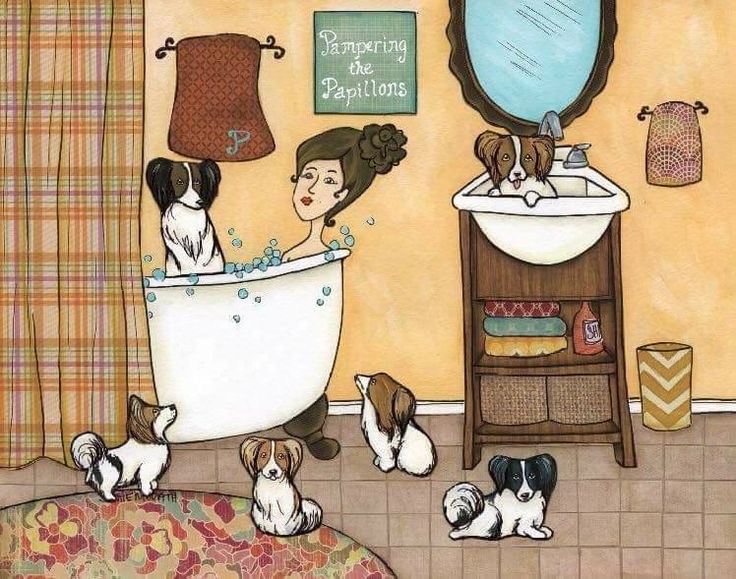
(image courtesy of Pinterest.com)

Whether you have a new dog or you and your pup have been together for a while, it’s helpful to know the meaning of their communication signals so that you can adjust your own behavior as needed and also you know how your pup is feeling.

Dogs make vocalizations and gestures using their face and body just as us humans do in order to express their feelings. While some of these gestures can appear similar to ours, they can have very different meanings. It is my hope that my original post on the subject and in this follow up, I have helped you learn a little more about how to interpret your dog’s various actions and that you’ve learned something new about how to communicate more effectively with your own pup!

Sources and further reading:

http://moderndogmagazine.com/articles/how-read-your-dogs-body-language/415

http://pets.webmd.com/dogs/dog-body-language

http://stories.barkpost.com/dog-body-language-charts/

When I was reading this I was struck by Lea reminding me, and all other dog lovers, that the role of the gestures and faces of our dogs so closely matches how we humans communicate non-verbally. No wonder the bond between dog and human can be so close and wonderful.

So who is Sam?

You loved Sam Grant’s photos of Casper and Scotland. Learn more about her.

Last Sunday my Picture Parade was primarily a recent item that appeared on the BBC website.

Meet Scotland’s ‘most well-travelled dog’

By Ewan Murrie, BBC Scotland news website, 3rd June 2017

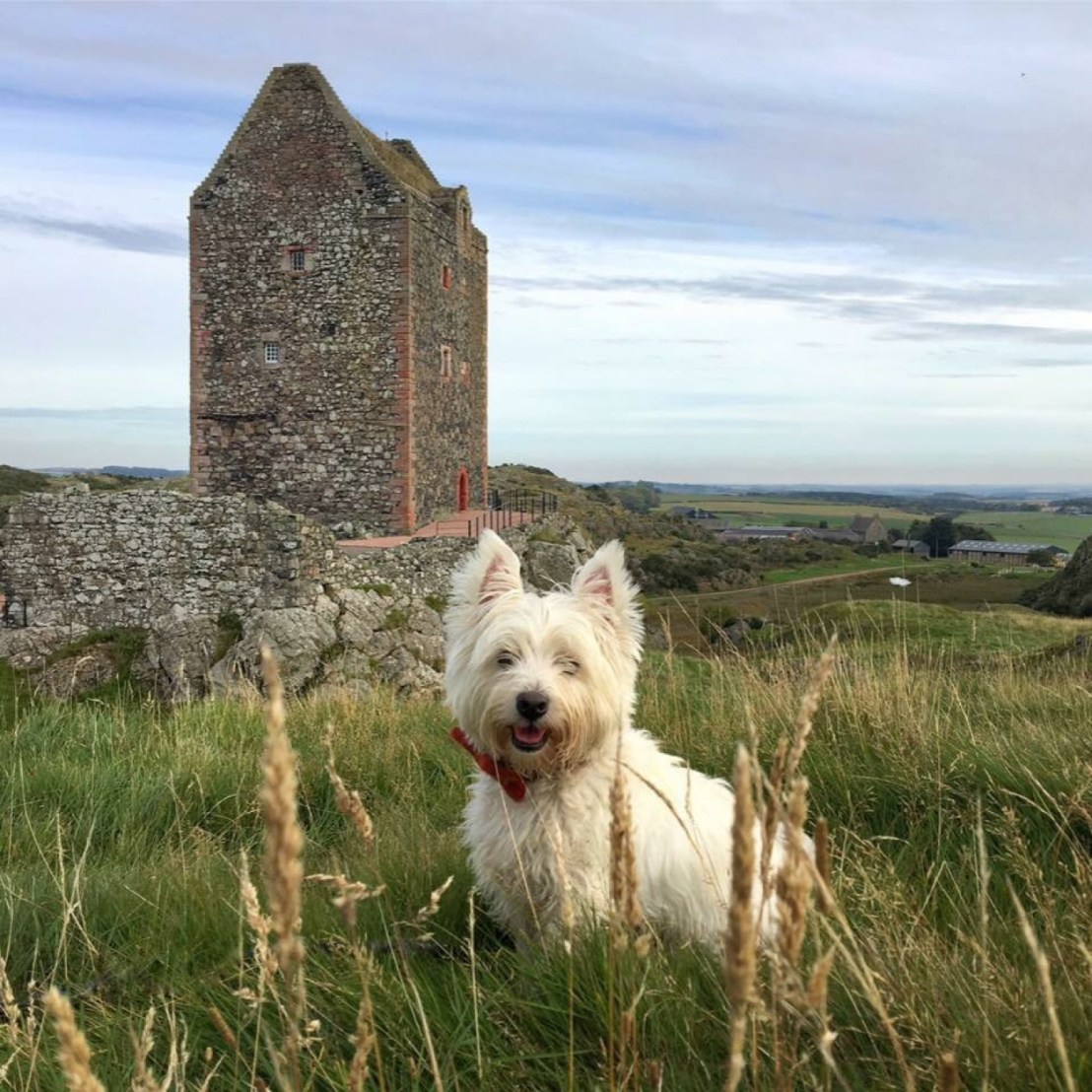
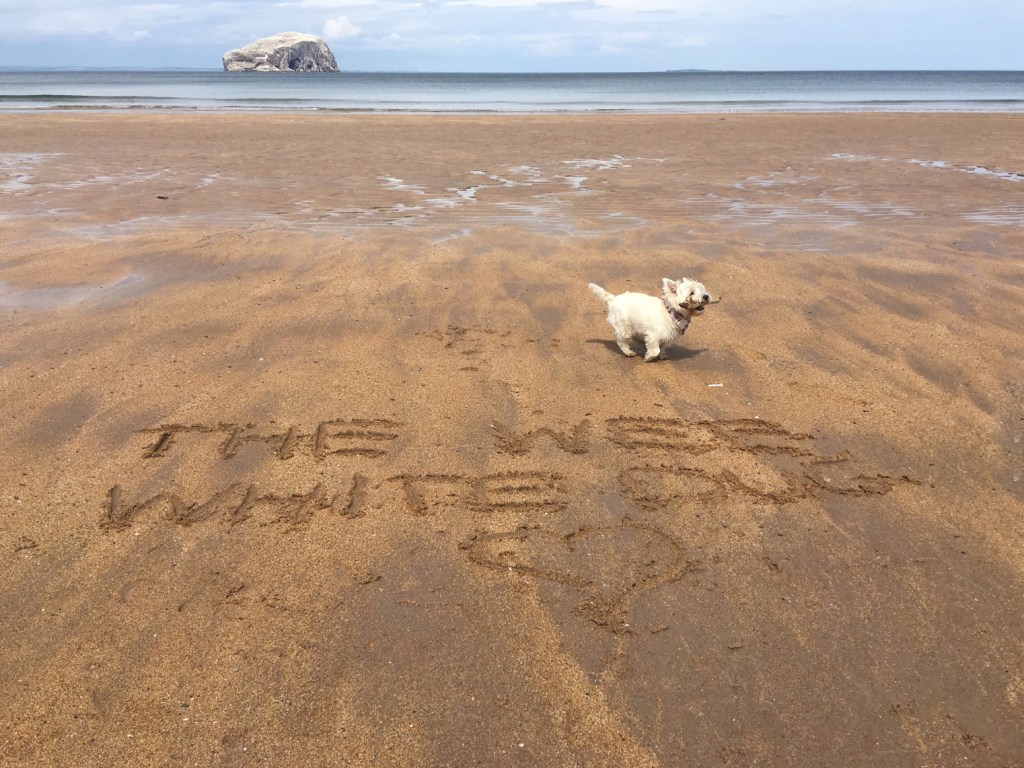
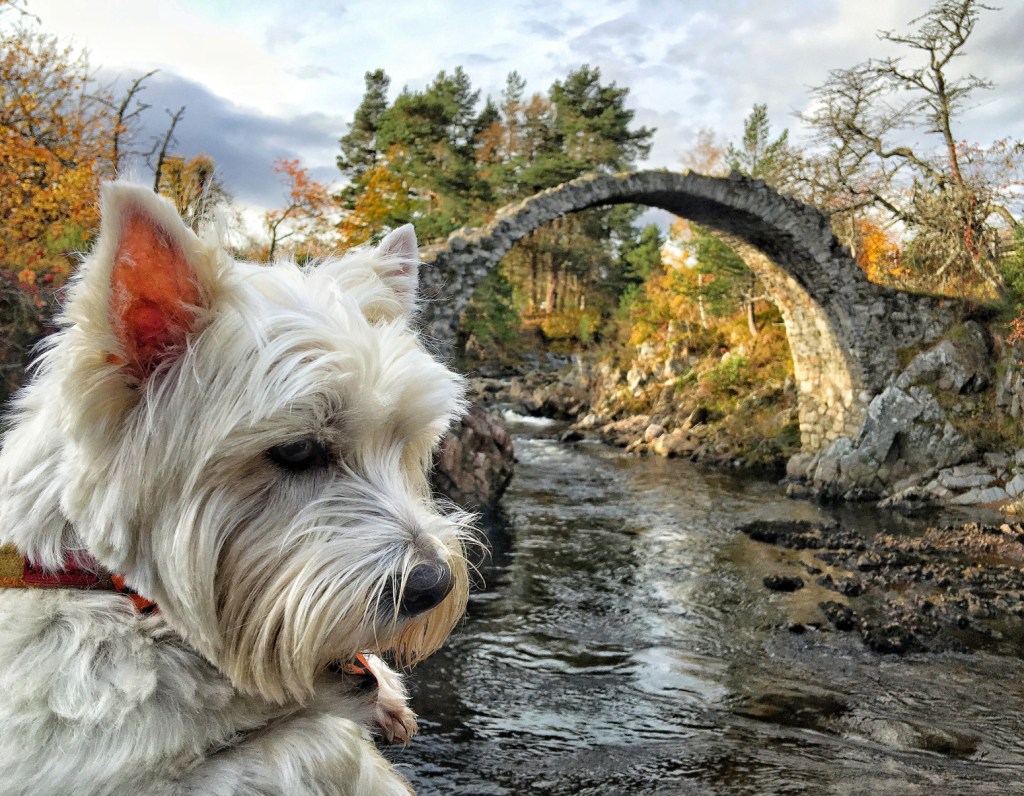
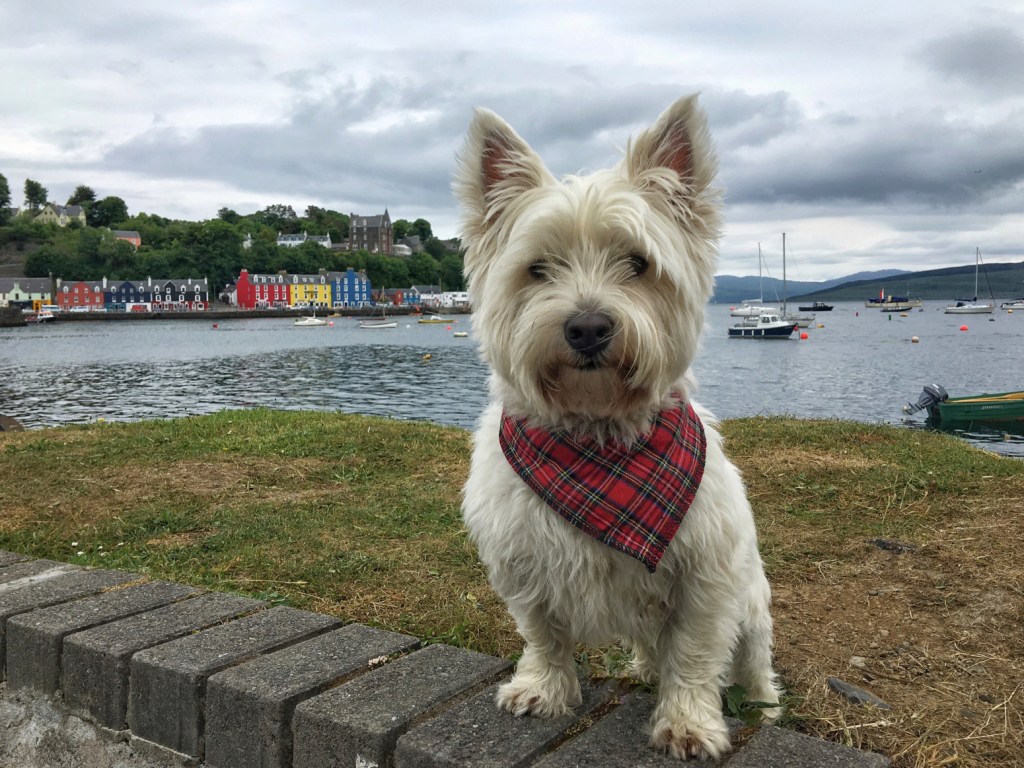
After photographs of her West Highland Terrier received more “likes” on social media than even the most stunning Glencoe landscapes she could capture, Sam Grant conceded that “the wee white dug” should star in her Scottish travel blog.

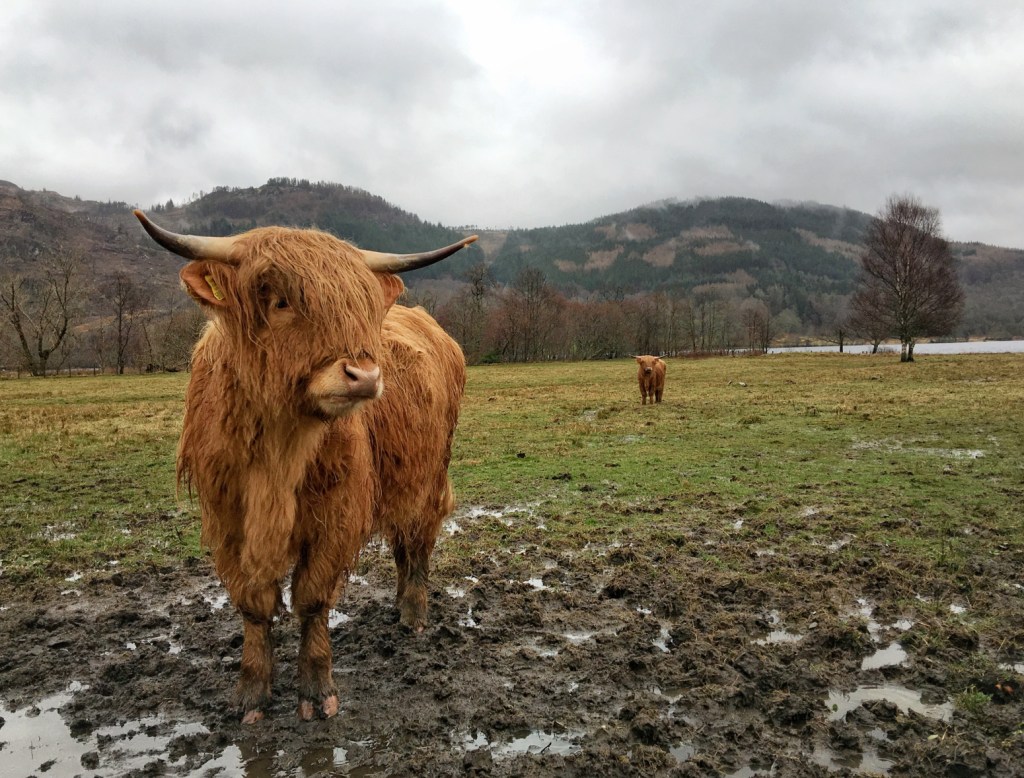
I went on to republish a wonderful set of photographs that had been taken by Sam. You all loved them and that led me to ask Sam if I could republish her About Me page on her blog. Sam very kindly said that would be fine.

ooOOoo

Scotland with the Wee White Dug

A Scottish travel blog showcasing the best of Scotland. Scotland with the Wee White Dug is a comprehensive and informative guide to Scotland, covering history, outdoor activities, events, visitor attractions, accommodation, eating out and more.

About Me

A little bit about me

Hello and welcome to my Scottish travel blog which I hope you’ll find informative and interesting, but most of all fun.

I’m Samantha but am generally known as Sam, Mrs G or Mum.  I’m married to Alex (Mr G) and we live in Edinburgh with a well travelled wee white dug called Casper.  We also share our home with the The Teen, Casper’s sloth like and gadget obsessed big sister.

All of my free time is spent road-tripping around Scotland.  I’ve travelled extensively throughout the country and never tire of its jawdropping and diverse beauty.

I have a vast knowledge of where to stay, eat and what to do in Scotland. Whether it be an afternoon out, a day trip or an extended tour. I also know all of the best places to go with your four legged friend.

I’m a Visit Scotland Ambassador and I helped launch their online Community in the spring of 2016.  The Community is a Scottish travel forum for sharing insider hints and tips about visiting Scotland.  Visit Scotland’s Ambassadors were selected for their expert knowledge of the country.

In January 2017 I took up the role of resident blogger for East Lothian Council on their Visit East Lothian website.  I write a fortnightly post for their blog, highlighting the delights of East Lothian.

I’m passionate about the history, language, literature, customs and myths of Scotland. I read History at the University of Edinburgh and during my time there I studied Scottish History, Literature and Politics which gave me an excellent understanding of how Scotland became the country that it is today.

I absolutely adore the great outdoors – it’s my happy place.  I love hiking, have been known to summit a Munro or two and am happiest when surrounded by lochs, moors and mountains.

My photography

I’ve been an avid hobby photographer since joining Instagram several years ago.  I’m part of a diverse group of Scottish Instagrammers with a passion for sharing Scotland with the World.

My feed @bean_nighe has appeared on Instagram’s prestigious Suggested User list.  You’ll find the Wee White Dug on Instagram too @theweewhitedug.  His feed is also dedicated to sharing our Scottish travels.

I’ve featured in articles recommending the best Scottish Instagram accounts to follow by The Scotsman, Matador Network and the award winning travel blog Stories my suitcase could tell.

My photos appear regularly on various social media channels including those of Canon UK, BBC, Skyscanners, Scottish Memories Magazine, Scotrail, Historic Scotland, Visit Scotland and The Guardian.

I share my Scottish travels on Facebook and Twitter too so if you’re on those sites stop by and say hello.

I’m passionate about promoting Scotland as a wonderful place to visit.  It’s a country with a rich history and heritage. A country full of stories just waiting to be told.

I appreciate you taking the time to stop by my blog to join me on my travels.  I hope ‘Scotland with the Wee White Dug’ inspires you to visit Scotland, helps you to plan for a forthcoming trip or makes you reminisce fondly about a past visit.

If you’re interested in working with me you can find out more here.

Sam

ooOOoo

Just glorious!

Foreboding times?

Something brooding in the air!

The smoke from the forest fires in Oregon and California has been thick in the air here in Merlin for days.

As can be seen in the photograph below. The photograph is as it was captured by the camera at 7:15 am yesterday morning. No changes by me made at all. The middle tree line is at the Eastern end of our property about a 1/4 mile away.

We are fed up with the smoke and the terrible air conditions.

But what drew me to grab the camera and take the photograph was that the image had some sort of, Oh, I don’t know, some sort of end of the world feeling about it.

It also seemed a most apt image to be an introduction to the latest essay from George Monbiot. It is republished here with Mr. Monbiot’s kind permission.

ooOOoo

Don’t Look Now

2nd September 2017

The media avoids the subject of climate breakdown – to do otherwise is to bring the entire infrastructure of thought crashing down

By George Monbiot, published in the Guardian 29 August 2017

It is not only Donald Trump’s government that censors the discussion of climate change; it is the entire body of polite opinion. This is why, though the links are clear and obvious, the majority of news reports on Hurricane Harvey have made no mention of the human contribution.

In 2016, the United States elected a president who believes that human-driven global warming is a hoax. It was the hottest year on record, in which the US was hammered by a series of climate-related disasters. Yet the total combined coverage for the entire year on the evening and Sunday news programmes on ABC, CBS, NBC and Fox News amounted to 50 minutes. Our greatest predicament, the issue that will define our lives, has been blotted from our minds.

This is not an accident. But nor (with the exception of Fox News) is it likely to be a matter of policy. It reflects a deeply ingrained and scarcely conscious self-censorship. Reporters and editors ignore the subject because they have an instinct for avoiding trouble. To talk about climate breakdown (which in my view is a better term than the curiously bland labels we attach to this crisis) is to question not only Donald Trump, not only current environmental policy, not only current economic policy, but the entire political and economic system.

It is to expose a programme that relies on robbing the future to fuel the present, that demands perpetual growth on a finite planet. It is to challenge the very basis of capitalism; to inform us that our lives are dominated by a system that cannot be sustained, a system that is destined, if it is not replaced, to destroy everything.

To claim that there is no link between climate breakdown and the severity of Hurricane Harvey is like claiming that there is no link between the warm summer we have experienced and the end of the last ice age. Every aspect of our weather is affected by the fact that global temperatures rose by around 4° between the ice age and the 19th Century. And every aspect of our weather is affected by the 1° of global warming caused by human activities. While no weather event can be blamed solely on human-driven warming, no weather event is unaffected by it.

We know that the severity and impact of hurricanes on coastal cities are exacerbated by at least two factors: higher sea levels, caused primarily by the thermal expansion of seawater, and greater storm intensity, caused by higher sea temperatures and the ability of warm air to hold more water than cold air.

Before it reached the Gulf of Mexico, Harvey had been demoted from a tropical storm to a tropical wave. But as it reached the Gulf, whose temperatures this month have been far above average, it was upgraded first to a tropical depression, then to a category 1 hurricane. It might have been expected to weaken as it approached the coast, as hurricanes churn the sea, bringing cooler waters to the surface. But the water it brought up from 100 metres and more was also unusually warm. By the time it reached land, Harvey had intensified to a category 4 hurricane.

We were warned about this. In June, for example, Robert Kopp, a professor of earth sciences, predicted that “In the absence of major efforts to reduce emissions and strengthen resilience, the Gulf Coast will take a massive hit. Its exposure to sea-level rise – made worse by potentially stronger hurricanes – poses a major risk to its communities.”

To raise this issue, I’ve been told on social media, is to politicise Hurricane Harvey. It is an insult to the victims and a distraction from their urgent need. The proper time to discuss it is when people have rebuilt their homes, and scientists have been able to conduct an analysis of just how great the contribution from climate breakdown might have been. In other words, talk about it only when it’s out of the news. When researchers determined, 9 years on, that human activity had made a significant contribution to Hurricane Katrina, the information scarcely registered.

I believe it is the silence that’s political. To report the storm as if it were a entirely natural phenomenon, like last week’s eclipse of the sun, is to take a position. By failing to make the obvious link and talk about climate breakdown, media organisations ensure that our greatest challenge goes unanswered. They help push the world towards catastrophe.

Hurricane Harvey offers a glimpse of a likely global future; a future whose average temperatures are as different from ours as ours are from those of the last ice age. It is a future in which emergency becomes the norm and no state has the capacity to respond. It is a future in which, as a paper in the journal Environmental Research Letters notes, disasters like Houston’s occur in some cities several times a year. It is a future that, for people in countries such as Bangladesh, has already arrived, almost unremarked by the rich world’s media. It is the act of not talking that makes this nightmare likely to materialise.

In Texas, the connection could scarcely be more apparent. The storm ripped through the oil fields, forcing rigs and refineries to shut down, including those owned by some of the 25 companies that have produced over half the greenhouse gas emissions humans have released since the start of the Industrial Revolution. Hurricane Harvey has devastated a place in which climate breakdown is generated, and in which the policies that prevent it from being addressed are formulated.

Like Donald Trump, who denies human-driven global warming, but who wants to build a wall around his golf resort in Ireland to protect it from the rising seas, these companies, some of which have spent millions sponsoring climate deniers, have progressively raised the height of their platforms in the Gulf of Mexico, in response to warnings about higher seas and stronger storms. They have grown from 40 feet above sea level in 1940, to 70ft in the 1990s, to 91ft today.

This is not, however, a story of mortal justice. In Houston, as everywhere else, it is generally the poorer communities, that are least responsible for the problem, who are hit first and hit worst. But the connection between cause and effect should appeal to even the slowest minds.

The problem is not confined to the United States. Across the world, the issue that hangs over every aspect of our lives is marginalised, except on the rare occasions on which world leaders gather to discuss it in sombre tones (then sombrely agree to do almost nothing), whereupon the instinct to follow the machinations of power overrides the instinct to avoid a troubling subject. When they do cover the issue, they tend to mangle it. In the UK, the BBC distinguished itself in customary fashion this month, by yet again inviting the climate change denier Lord Lawson onto the Today programme, in the mistaken belief that impartiality requires a balance between correct facts and false ones. They seldom make such a mess of other topics, because they take them more seriously.

When Trump’s enforcers instruct officials and scientists to purge any mention of climate change from their publications, we are scandalised. But when the media does it, without the need for a memo, we let it pass. This censorship is invisible even to the perpetrators, woven into the fabric of organisations that are constitutionally destined to leave the major questions of our times unasked. To acknowledge this issue is to challenge everything. To challenge everything is to become an outcast.

www.monbiot.com

ooOOoo

Dear people, I sat staring at the screen for 10 minutes and then went off when Jeannie called lunchtime. Returned to the screen a little after 2pm yesterday and still couldn’t come up with a closing thought that merited being shared with you all.

See you tomorrow!

It’s in the language!

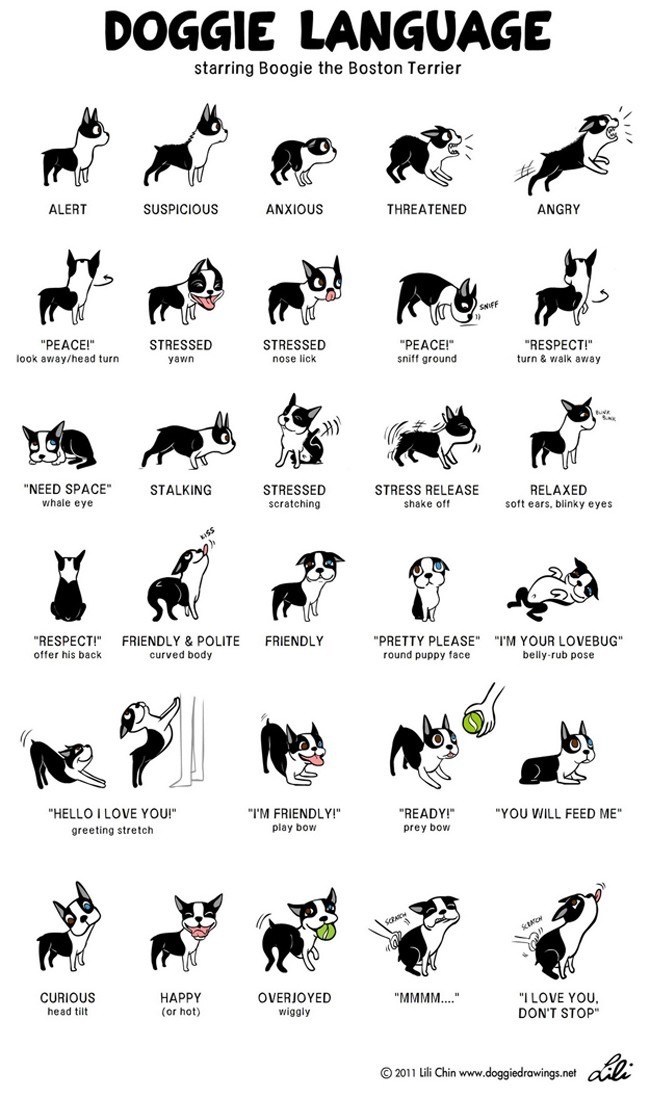
A comprehensive guide to the body language of our beautiful dogs.

Back in August 2016 I shared a post with you all from Vetstreet.com about interpreting the growls of a dog. It seemed to be liked by many of you.

Now fast forward to eleven days ago and an email that came in from Emma.

Dear Learning from Dogs Team,
My name’s Emma, a blogger at Hello Cute Pup.

I have been reading your blog for some time, and I absolutely love what you have been doing! Your content inspires me on a daily basis, and I’m really in love with your website.

I’ve been thinking about how I could help add value to you and your blog and I would love to contribute a guest post on your site.

I was inspired to write this article after reading your great piece “Why Dogs Are Friendly”.

I promise that I will provide HIGH-quality content that you won’t find anywhere else.

As a pet parent myself, I’ve had tons of amazing experience that I could bring to your audience.

Here are some links to other pieces that I have written to give you an idea of the quality that I am bringing to the table.

Dog Express
http://www.dogexpress.in/how-to-choose-the-best-dog-food-for-pugs
Imagine Forest
http://www.imagineforest.com/blog/baileys-best-buddy/

Safe and Healthy Life

http://www.safeandhealthylife.com/food-diet-for-dogs-the-ultimate-guide/

Let me know if you are interested. I already know your blogging style, plus I understand what your readers love as I am one.

Looking forward to hearing from you.

Cheers and have a good day!

Emma

Well you all know me sufficiently well to know that I couldn’t resist. Especially after seeing how nicely Emma had presented those pieces she linked to above.

Here is Emma’s article.

ooOOoo

A Comprehensive Guide to Basic Dog Body Language

Understanding your loved ones’ body language is always important. If you understand how your partner, sister, mother, or father acts when they feel a certain way, you can more accurately meet their emotional needs. This is the same as it is with the canine members of your family.

Understanding how your dog behaves when he or she feels certain things will help you bond, and help build trust, as well as make both you and your dog happier.

How do you decode dog behavior? There are a few ways, and a few certain body signals that your dog will give you that you should understand. Here are a few of them.

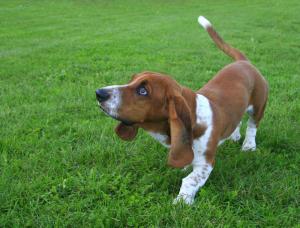
Play Bow

You may have noticed that when a dog is feeling frisky and energetic, he or she will bow their front end to the ground and push their rear end into the air. Typically, this means that the dog wants to play.
Tail Wagging

It’s a common belief that tail wagging means that a dog is happy. While this can be true, tail wagging can also mean a few other things.

  • A tail that wags low can mean your dog is scared or unsure.
  • A high and stiff tail wag can mean that your dog feels irritated, scared, or unsure. This kind of tail wagging can often lead to a dog becoming aggressive if pushed.

Freezing

Dogs often “freeze” when they are scared or guarding something like food, water, a toy, or their owner. This means that the dog will stop what he or she is doing and stand in one position without moving. When a dog is frozen, he or she is more likely to bite.

Rolling

When a dog rolls over, it usually means that he or she is submissive- but it’s important to pay attention to the dog’s whole body. If your dog’s tail and mouth are hanging loose, it can mean that he or she wants a belly rub or some attention. If the tail is tucked in or his or her mouth is stiff, it can mean that your dog is scared or nervous. Before you touch a dog who is rolled over, look for the signs of comfort.
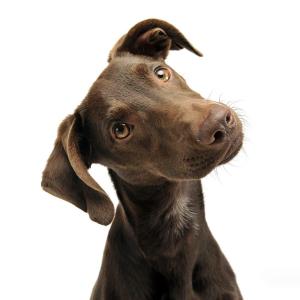
Perked Ears

Chances are, if you own a dog, you’ve seen him or her with his ears perked up. This means that your dog is alert and attentive.
Tail Between Legs

When a dog tucks his or her tail between his legs, this is a classic sign of fear. Dogs who are scared, as a general rule of thumb, are prone to becoming aggressive in an attempt to protect themselves- so be careful when getting too close to a dog who is acting fearful.
Signs of stress

Like humans, dogs can become stressed. Stress in dogs can make them act in certain ways and exhibit specific body language. Some of the signs that mean that a dog is stressed are:

  • Yawning in new situations
  • Panting when it isn’t hot
  • Licking their front paws as someone new approaches
  • Licking of the lips despite not recently having eaten or drank
  • Scratching
  • Avoiding eye contact
  • Shaking himself off after someone new touches him
  • Highly audible exhales that can be accompanied by whining or avoiding eye contact
  • Lying down and refusing to participate

Signs of fear

Dogs exhibit easy-to-read signs of fear. Some of these signs are:

  • Drooling
  • Pacing
  • Tucking his tail while moving away from something
  • Whining
  • His or her feet start to sweat
  • Growling and moving away
  • Curling his or her lips and showing teeth
  • Trying to hide
  • Running away

Signs of Happiness

Along with taking up the play bow position, dogs offer us other physical signs that they are happy. These include:

  • Energetic tail wagging
  • Tail thumping on the floor or ground
  • Lying in a relaxed, one paw tucked under, position
  • Bumping or pressing against you
  • Initiating physical contact
  • Jumping up
  • Smiling (yes, sometimes it really does look as if your dog smiles)
  • Playful barking to get your attention

Although the above behaviors are common in most dogs, it’s important to remember that dogs have individual personalities – what one dog does in a situation, isn’t necessarily what another does in that same situation. For example, if your dog reacts well with some dog shampoo, another dog might hate it. This shampoo might make him panic and he could fear baths forever.
To truly understand what your dog’s body is trying to tell you, pay attention to how he or she acts. He may react in the ways that are listed above, or he may have his own unique way of expressing to you how he feels.
Context is also a key point to focus on when you’re trying to determine how your dog feels based on his body language. For example, if your dog is being cornered by another, bigger and more intimidating dog and he wags his tail, chances are that he isn’t happy. In this situation, he more than likely is gearing up for a fight or is feeling scared.

ooOOoo

My hopes are that Emma will be writing many more guest posts for this place.

Oh, want to know a little more about Emma?

Emma is the founder of HelloCutePup. As the owner of 3 dogs, Emma has had the pleasure of learning the ins and outs to becoming a pet owner. With years of experience working on training, at-home dog health care, and aesthetic maintenance, she has the real-world experience that every pet owner is looking for. She is an avid blogger who enjoys giving realistic tips and tricks to help dog owners understand their pet’s personalities and to help pets easily become a part of the family.

Fabulous!

Enhancing the life of our dogs!

We truly do want our dogs to live to a grand old age.

In recent posts I have included photographs of Cleo and Brandy. (As I will now do again!)

Cleo, the listening dog par excellence!

oooo

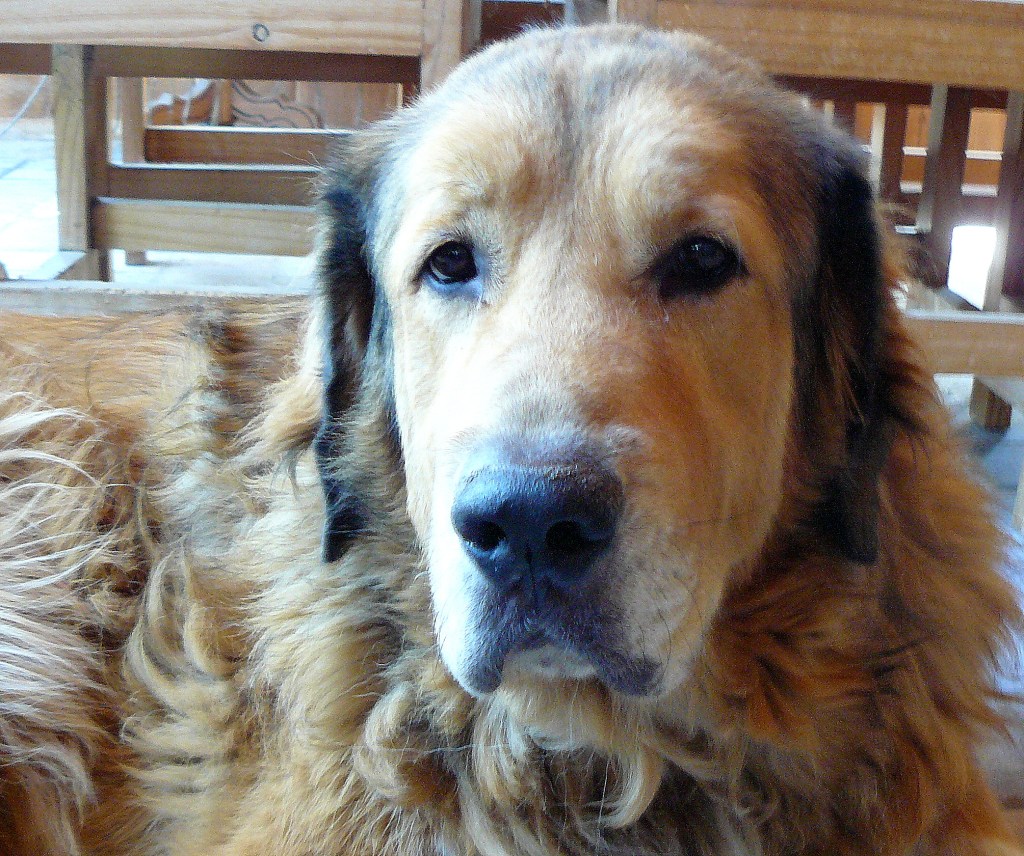
Brandy – as pure as it gets!

However, one of the sad aspects of our bigger dogs is that their lifespan is usually shorter than our smaller dogs.

Wouldn’t it be wonderful if they could live longer lives.

That is the reason that I didn’t hesitate for a moment in wanting to share an essay that was recently published on the Care2 site.

ooOOoo

Want Your Dog to Live to 30? Add This to Their Bowl

a Care2 favorite by Lisa Spector

About Lisa Follow Lisa at @throughadogsear

As I watched pet nutrition blogger Rodney Habib’s TedX video below, I found it simultaneously jaw-dropping and not surprising. After his dog, Sammie, was diagnosed with cancer, Habib went on a mission to find out why canine cancer is a growing epidemic. Currently, one out of every two dogs will be diagnosed with cancer at sometime in their life, mostly between age 6 and 12.

I have a 13-year-old Labrador. Admittedly, I’m obsessed with my awareness that he’s approaching the end of his life. But, what if he weren’t? What if he could live until he’s 30 like Maggie, the Kelpie, from Australia. Maggie was possibly the world’s oldest dog.

During Habib’s trek around the world, he spoke with researchers and scientists. He learned that dogs have a higher rate of cancer than any other mammal. In the ’70s, dogs lived to age 17; today the average life span is 11. Why?

Diabetes is up 900 percent in dogs in the last five years. Obesity is up 60 percent. While 10 percent of all cancer cases are genetic, 90 percent are the results of lifestyle and environmental influences, including stress, obesity, infection, sedentary lifestyle, toxins, pollution and most importantly diet.

Habib spoke with Norwegian scientist, Thomas Sandberg, who is conducting a 30-year-old study (the longest observational study to date). Sandberg is hoping to prove that poor quality food may cause cancer to develop in dogs and cats, mainly due to a compromised immune system.

Natural and dry dog's food

Here’s the part of Rodney’s TedX Talk that was jaw-dropping for me: Research shows that dogs on a diet of dry commercial pet food fed leafy green vegetables at least three times a week were 90 percent less likely to develop cancer than dogs that weren’t. And dogs fed yellow/orange vegetables at least three times a week were 70 percent less likely to develop cancer.

I feed Sanchez and Gina organic kale, spinach, green beans and carrots, along with many fruits. Personally, I wasn’t surprised by the benefits, but by the research showing that just a little bit of produce added to kibble could have such a profound effect on canine health.

Thomas Sandberg has Great Danes, who typically live only six to eight years. In a 6-year study of 80 dogs fed a completely raw diet with low amounts of carbs, only one dog developed cancer.

Another study at Purdue University showed a 90 percent decrease risk of cancer when they added green leafy vegetables to a bowl of processed food three times a week.

Remember Maggie, the world’s oldest dog? In addition to a diet that included raw fed grass milk, she also self fasted some days. She lived on a dairy farm and exercised all day long, often getting in 9 kilometers (5 1/2 miles ). Obesity is also now known to be a contributing factor to canine cancer, which is why exercising with your pet is so important.

We have dogs because we love them. We bring them into our human world and expect them to adjust. They do, because they want to please us. We expect them to follow our house rules, listen to the music we choose,  build their life around our schedules, and accept the food we choose for them. But, what if we knew more and chose differently for them? How long would they live?

Do your pets eat green leafy veggies?

ooOOoo

Now if you have read down to this point but not yet watched Rodney Habib’s talk then …. STOP!

Go back and watch that talk!

Then you can truly appreciate the value of looking at the diets of our beautiful dogs!

Love to hear your thoughts on this!

Oh, and both Brandy and little Pedy are great vegetable eaters. But we will be following the recommendations of Rodney Habib and will share our findings with you all later on.


Those deeper ways of listening

How humans and animals communicate with each other has more than an edge of mystery to it!

We sleep with our bedroom door open to the main run of the rest of the house. Generally, all six dogs sleep in our bedroom unless it is a very warm night when some of them may choose the cooler tiled surface of the kitchen floor.

Cleo, our female German Shepherd, has a bit of a sensitive stomach and it is not unknown for her to need to be let outside in the middle of the night. Just a couple of nights ago her need for a ‘poo’ break came at 02:40!

But the point of this is that no matter how deeply I am sleeping, all it takes is a short, quiet whimper next to my side of bed and I am instantly awake. I need no time at all to know that Cleo has to be let outside from our bedroom door that opens out onto the deck. A few minutes later I hear her feet padding along the wooden boards of the deck and she is let back in to the bedroom.

Thus this demonstrates how well I understand her and in turn how well she acutely listens to me.

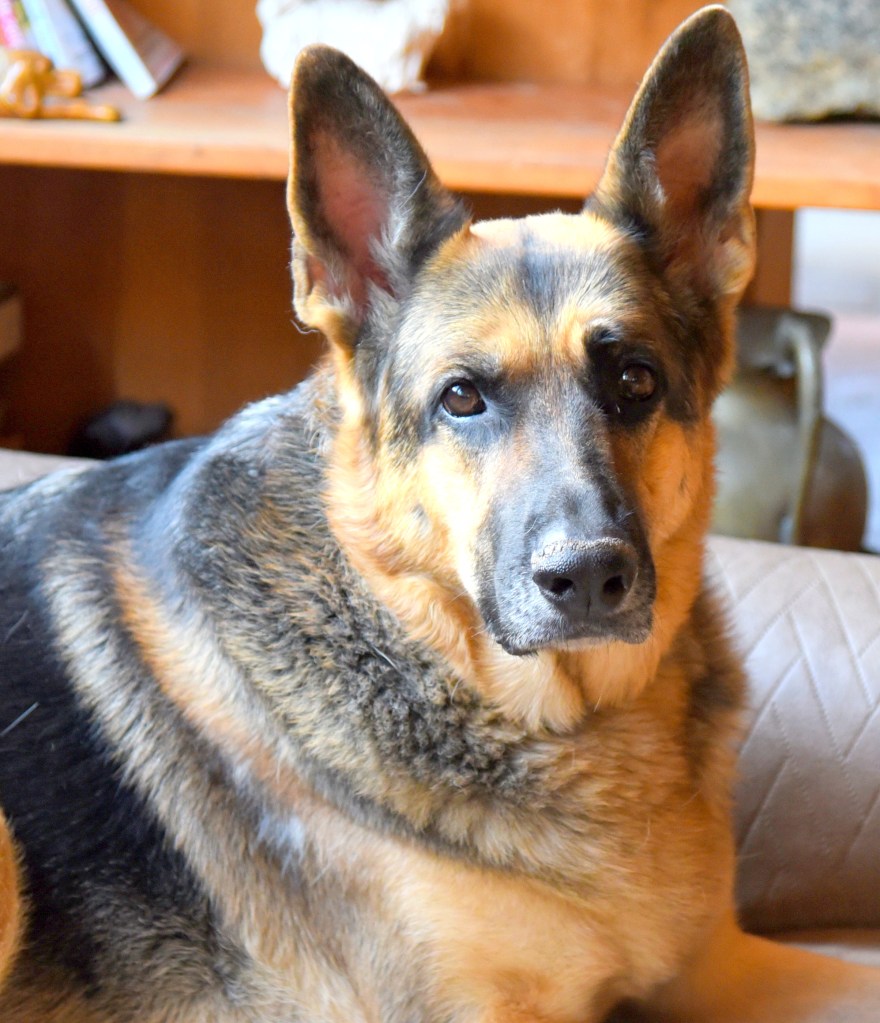
Just look at this photograph.

The connection, the intensity, of her attention towards me. And this was just from me pointing the camera at her and ‘click, clicking’ my tongue.

Moving on!

My introduction today was inspired by an article that I recently read on the Care2 site and that I want to share with you. Here it is.

ooOOoo

Can Humans Understand When Animals Are in Distress?

By: Laura Burge   August 13, 2017

About Laura   Follow Laura at @literarylaura

Have you ever jumped at the sound of birds fighting or a squirrel screaming? Heard an animal make a sound somewhere nearby that made your heart race?

More than one hundred years ago, Darwin suggested that there was a universal understanding of certain animal vocalizations — a way of expressing emotion that went all the way back to the Earth’s earliest animals. Now, researchers are re-examining that theory, and they’re making some interesting headway.

In a study published in the journal “Proceedings of the Royal Society B: Biological Sciences,” researchers decided to explore the idea that animal vocalizations, including distress calls, might be recognizable across different species — and even into different animal classes.

Earlier research delved into whether or not humans could detect which emotion, or signal, another mammal was using, but this study is the first to examine other vertebrates as well. Amphibians and reptiles joined the club, and, perhaps surprisingly, humans did pretty well determining what these animals were trying to communicate.

The researchers primarily looked into whether or not people listening to certain animal sounds would be able to detect the level of arousal — high or low — that an animal expressed vocally. High arousal indicates an animal in distress, expressing desperate or negative screams, who might be calling out because of a fight, a predator in the area or another perceived danger. Scientists believe that these sounds are part of an old signaling system.

Researchers asked 75 college-aged individuals to listen to sounds from nine different species. In order to account for language differences, these people included English, German and Mandarin speakers.

Scientists collected 180 recordings of animal vocalizations, reflecting high or low levels of excitement, such as “the sounds of frogs in competition for mates, monkeys reacting to danger or ravens confronted by a dominant bird,” and included humans in that list, instructing actors to react neutrally or with different, heightened emotions while speaking Tamil.

The 75 people were then asked to identify which vocalization out of paired sounds from the same species represented the higher level of arousal.

In this study, the results showed that people identified the correct “emotion,” roughly speaking, better than expected by chance. Here is how the accuracy broke down across species:

  • Humans: 95 percent correct
  • Giant panda: 94 percent correct
  • Hourglass tree frog: 90 percent correct
  • African bush elephant: 88 percent correct
  • American alligator: 87 percent correct
  • Black-capped chickadee: 85 percent correct
  • Pig: 68 percent correct
  • Common raven: 62 percent correct
  • Barbary macaque (monkey): 60 percent correct

It seems strange that people were less able to identify the distress call of a monkey than a frog, but Harold Gouzoules, a bioacoustician and animal behavior expert at Emory University, posits that the monkey calls may have sounded less extreme in intensity than those of the other species, making it harder to tell the difference.

“Our study shows that humans are naturally able to recognize emotional arousal across all classes of vocalizing animals,” said Piera Filippi, who studies the evolution of cognition and communication at the Vrije University Brussels in Belgium.

This doesn’t mean that humans should feel confident in interpreting animal emotions or body language in general, though. Those behaviors can vary greatly, and humans are prone to misinterpretation and anthropomorphism. You wouldn’t, for example, want to assume a wolf baring its teeth is simply smiling at you.

Naturally, much remains to be studied in the effort to understand a wider range of animal emotions. Filippi hopes to repeat the experiment, but with the black-capped chickadees taking the place of the college-aged humans in interpreting the distress calls. It will be interesting to see if this understanding between humans and other animals goes both ways.

Could there be a beneficial reason for animals to understand each other’s distress calls? What do you think?

Photo Credit: Valentino Funghi/Unsplash

ooOOoo

Just so long as too many different animals don’t all sound out distress calls at the same time around here!