A fascinating article about the domestication of the wolf to the domesticated dog appeared on the BBC back in March.
It was, in turn, based on a report issued by Nature and makes interesting reading. But for the shorter version, read on:
ooOOoo
Study reveals the wolf within your pet dog
By Helen Briggs, BBC News, Science and Environment
14 March 2019
Scientists say the negative image of wolves is not always justified. Getty Images.
Wolves lead and dogs follow – but both are equally capable of working with humans, according to research that adds a new twist in the tale of how one was domesticated from the other.
Dogs owe their cooperative nature to “the wolf within”, the study, of cubs raised alongside people, suggests.
But in the course of domestication, those that were submissive to humans were selected for breeding, which makes them the better pet today.
FRIEDERIKE RANGE/VETMEDUNI VIENNA Dogs were more likely to follow human behaviourFRIEDERIKE RANGE/VETMEDUNI VIENNA.Wolves were equally able to cooperate with humans but also took the lead
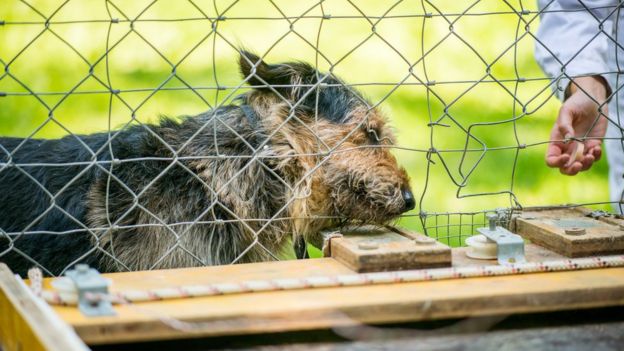
Grey wolves, at the Wolf Science Center in Vienna, were just as good as dogs at working with their trainers to drag a tray of food towards them by each taking one end of a rope.
But, unlike the dogs in the study, they were willing to try their own tactics as well – such as stealing the rope from the trainer.
Friederike Range, from the Konrad Lorenz Institute, at Vetmeduni Vienna university, said: “It shows that, while wolves tend to initiate behaviour and take the lead, dogs are more likely to wait and see what the human partner does and follow that behaviour.”
About 30,000 years ago, wolves moved to the edges of human camps to scavenge for leftovers.
The subsequent “taming” process of domestication and selective breeding then slowly began to alter their behaviour and genes and they eventually evolved into the dogs that we know today.
In Neolithic times there was an important relationship, as there is today. Maybe our dogs have become more of the ‘pet’ rather than the working dog that they are assumed to be then.
But here’s the article.
ooOOoo
Thanks to Facial Reconstruction, You Can Now Look Into the Eyes of a Neolithic Dog
The collie-sized canine was buried in a cavernous tomb on Scotland’s Orkney Islands around 2,500 B.C.
Experts believe the Neolithic dog is the first canine to undergo forensic facial reconstruction (Santiago Arribas/Historic Environment Scotland) By Meilan Solly
SMITHSONIAN.COM,
Some 4,500 years ago, a collie-sized dog with pointed ears and a long snout comparable to that of the European grey wolf roamed Scotland’s Orkney Islands. A valued member of the local Neolithic community, the canine was eventually buried alongside 23 other dogs and at least eight humans in a cavernous tomb known as the Cuween Hill Chambered Cairn.
Now, 118 years after archaeologists first chanced upon its resting place, the prized pup’s image is being reimagined. As Esther Addley reports for the Guardian, experts believe the dog is the first canine to undergo forensic facial reconstruction. Its likeness, commissioned by Historic Environment Scotland (HES) and the National Museum of Scotland, is set to go on view in Orkney later this year.
“Just as they’re treasured pets today, dogs clearly had an important place in Neolithic Orkney, as they were kept and trained as pets and guards and perhaps used by farmers to help tend sheep,” Steve Farrar, interpretation manager at HES, explains in a statement. “But the remains discovered at Cuween Hill suggest that dogs had a particularly special significance for the farmers who lived around and used the tomb about 4,500 years ago.”
It’s possible, Farrar adds, that the Neolithic group viewed dogs as their “symbol or totem,” perhaps even dubbing themselves the “dog people.”
Cuween Hill dates to around 3,000 B.C., Sky News reports, but radiocarbon dating places the dog’s actual interment some 500 years later. It remains unclear why the animal was buried so many centuries after the tomb’s creation, but archaeologists posit the timing may point toward the ceremony’s ritual value within the community. As HES observes, the fact that the Orkney residents placed canine remains alongside those of humans could also speak to their belief in an afterlife for both parties.
According to the Scotsman, forensic artist Amy Thornton drew on a CT scan to create a 3-D print of the animal’s skull. After layering clay approximations of muscle, skin and hair onto this base, she cast the model in silicone and added a fur coat designed to mimic that of the European grey wolf. Interestingly, Thornton notes, the process played out much as it would for a human facial reconstruction, although “there is much less existing data” detailing average tissue depth in canine versus human skulls.
The model is the latest in a series of technologically focused initiatives centered on Orkney’s Neolithic residents. Last year, HES published 3-D digital renderings of the chambered cairn on Sketchfab, enabling users to explore the tomb’s four side cells, tall central chamber and entrance passage. First discovered in 1888 but only fully excavated in 1901, the impressive stone structure held 24 canine skulls and the remains of at least eight humans.
In an interview with the Guardian’s Addley, Farrar explains that the reconstruction aims “to bring us closer to who [the dog’s owners] were and perhaps give a little hint of what they believed.”
“When you look at a Neolithic dog, it somehow communicates human relationships,” Farrar concludes. “… I can empathise with the people whose ingenuity made Orkney such an enormously important place. When this dog was around, north-west Europe looked to Orkney.”
ooOOoo
“When you look at a Neolithic dog, it somehow communicates human relationships,” Farrar concludes.
Built between 3000 and 2400 BC, this is an excellent example of a Neolithic chambered tomb. It has four cells opening off a central chamber, which is accessed down a passage. Entrance into the tomb today is through the original passage.
Secondary burials at the Cuween Hill could reflect a continued reverence for the site. A recently discovered settlement nearby is probably contemporary with the cairn, and would likely have been connected.
Tomb of the dogs
Exploration at the tomb in 1901 found:
Remains of at least eight humans – five skulls on the floor of the chamber, one at the entrance and two in side cells
The skulls of 24 dogs on the chamber floor
The dog remains suggest the local tribe or family perhaps had a dog as their symbol or totem, or there may have been a belief in an afterlife for animals.
The tomb is completely unlit, which serves to both add to the atmosphere and discourage vandalism and graffiti. It also means the tomb is largely free of green algal growth.
The stonework at Cuween Hill is of particularly high quality. The roof of one of the cells is likely to be original, elsewhere the walls and corbelled roofs have survived to a considerable height.
Two Chinese governing bodies plan to introduce new legislation that will provide special protections to canines by classifying them as companion animals. This would exclude dogs from being used for human consumption.
If you are unfamiliar with the festival, it is notorious for its bloodshed and cruelty. Because dog meat consumers believe that the meat tastes better when dogs have more adrenaline in their blood, dog meat butchers torture the animals. Dogs are beaten, burned alive with blowtorches, or tossed into pots of boiling water.
Thanks to public outcry, the festival’s popularity has decreased and restrictions have been set, however, that hasn’t been enough to end the festival for good. Now’s our chance.
As I said in my email to her after Jeannie and I had listened to it:
OK. Have listened to it just now.
I don’t know what to say.
Frankly, I’m overwhelmed. I need some time to let it settle down but it’s going to be featured on the blog very soon.
Thank you
Paul
I’m still ‘processing’ it but that doesn’t stop me from sharing it with you.
ooOOoo
Ralph spends the whole hour with independent journalist, Dahr Jamail, author of “The End of Ice,” his first person report on the front lines of the climate crisis.
In late 2003, award-winning journalist, Dahr Jamail, went to the Middle East to report on the Iraq War, where he spent more than a year as one of only a few independent US journalists in the country. Mr. Jamail has also written extensively on veterans’ resistance against US foreign policy. He is now focusing on climate disruption and the environment. His book on that topic is entitled, The End of Ice.
“So much of what we talk about is so dire and so extreme and so scary and also disheartening that I quote Vaclav Havel, the Czech dissident writer and statesman. And he reminds us that as he said, ‘Hope is not the conviction that something will turn out well but the certainty that something is worth doing no matter how it turns out.” And that’s where I get into this moral obligation that no matter how dire things look, that we are absolutely morally obliged to do everything we can in our power to try to make this better.” Dahr Jamail, author of “The End of Ice”
It’s fair to say that whilst people send me a whole range of items, as yesterday’s post demonstrated, what I am about to republish is the high-water mark for everything! Well it is for me!
But you be the judge!
ooOOoo
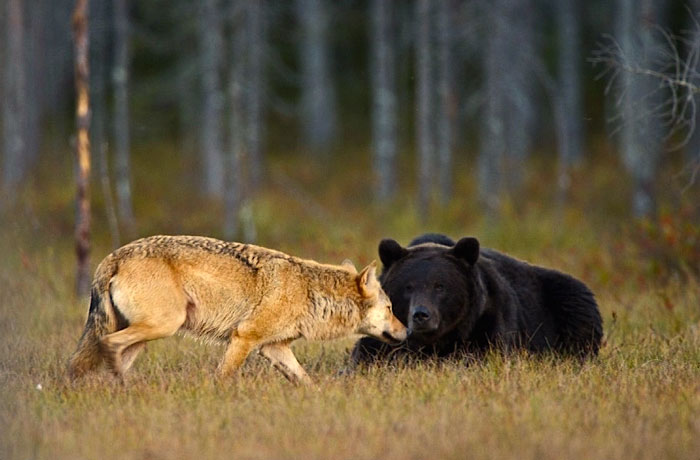
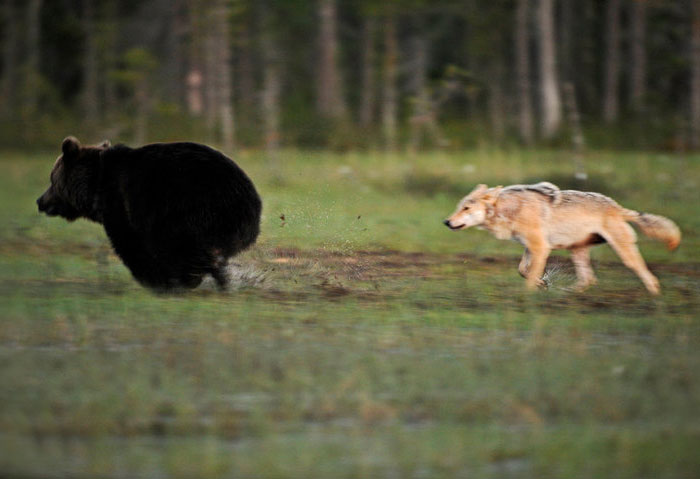
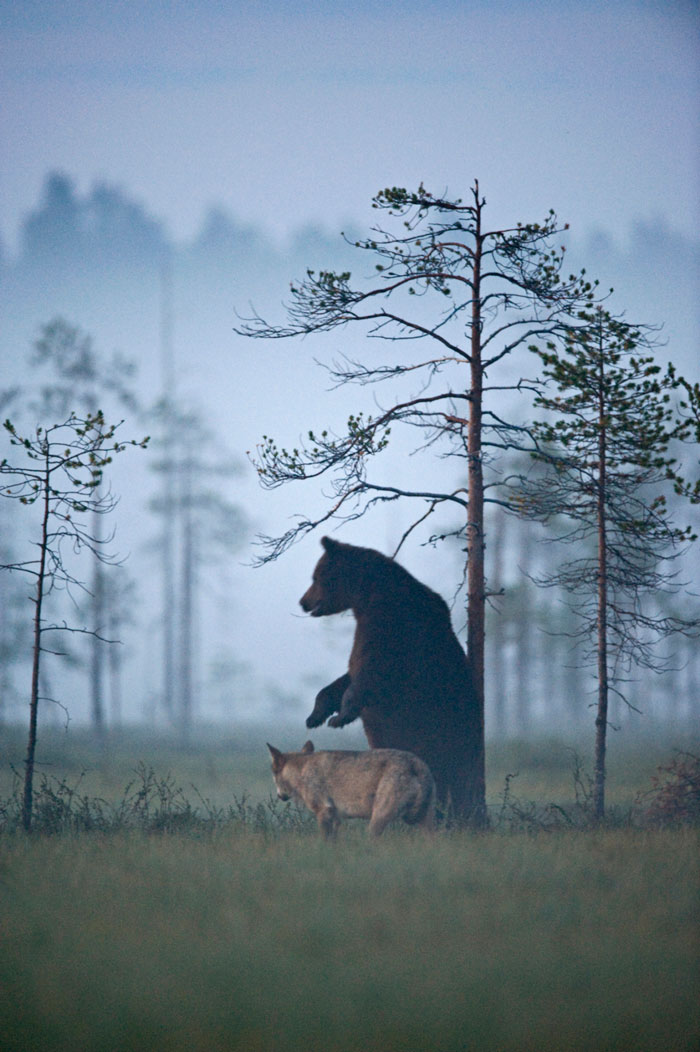
Unusual Friendship Between Wolf And Bear Documented By Finnish Photographer
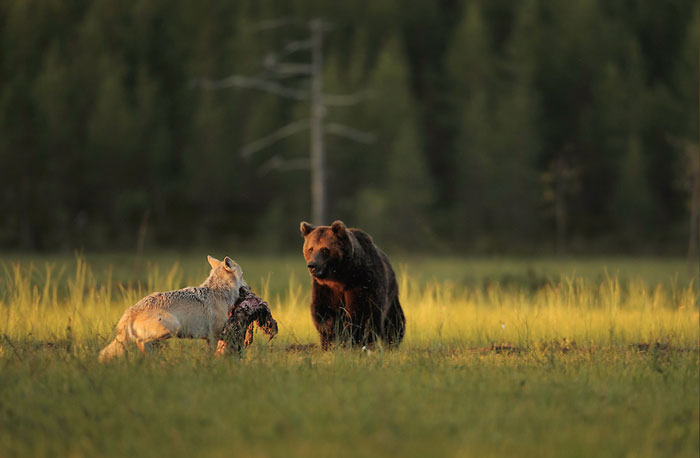
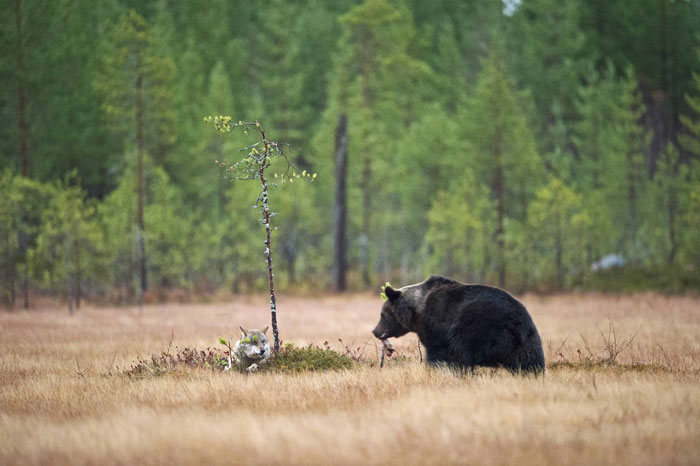
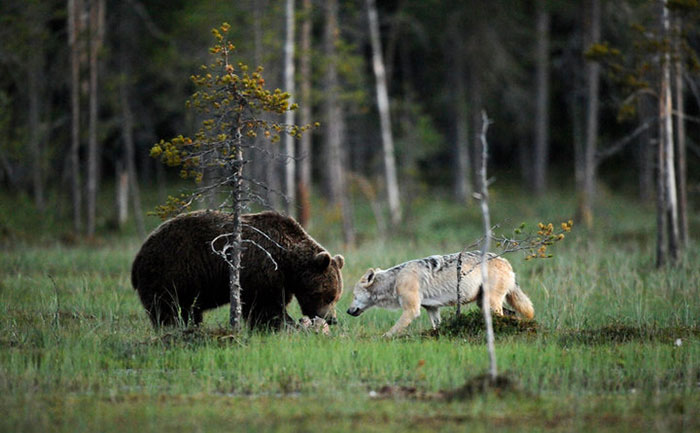
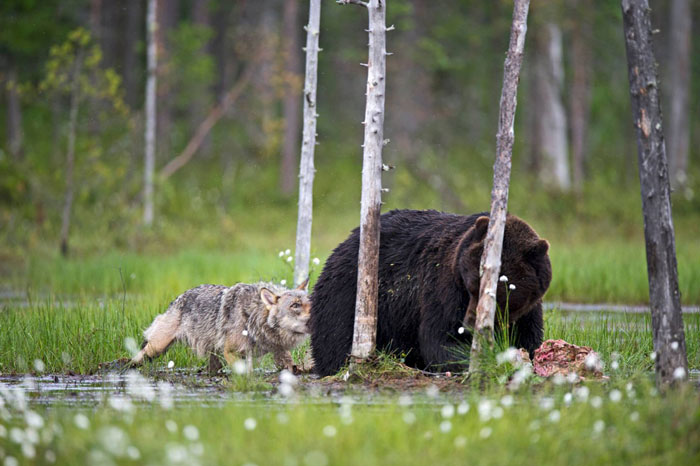
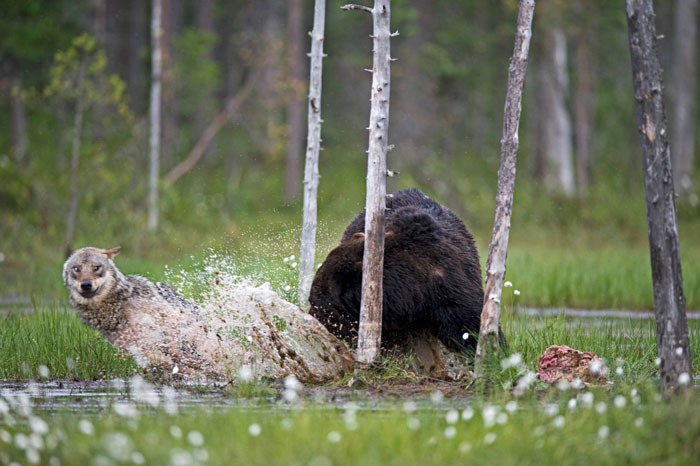
“It’s very unusual to see a bear and a wolf getting on like this” says Finnish photographer Lassi Rautiainen, 56, who took these surprising photos. The female grey wolf and male brown were spotted every night for ten days straight, spending several hours together between 8pm and 4am. They would even share food with each other.
“No-one can know exactly why or how the young wolf and bear became friends,” Lassi told the Daily Mail. “I think that perhaps they were both alone and they were young and a bit unsure of how to survive alone…It is nice to share rare events in the wild that you would never expect to see.”
“It’s very unusual to see a bear and a wolf getting on like this”
This unlikely pair was spotted by Finnish photographer Lassi Rautiainen
He photographed the female grey wolf and male brown bear every night for ten days straight
“No one had observed bears and wolves living near each other and becoming friends in Europe”
The two “friends” were even seen sharing food
“No one can know exactly why or how the young wolf and bear became friends”
“I think that perhaps they were both alone when they were young and a bit unsure of how to survive alone”
“I came across these two and knew that it made the perfect story”
oooo
“It seems to me that they feel safe being together”
ooOOoo
Taken from here but I wouldn’t have known about this beautiful story if Margaret K. hadn’t sent me the link. Thank you, Margaret!
I read this a few moments ago (10am PST Monday, 18th.) and, without question, knew that I had to republish it. It is done with George Monbiot’s kind permission.
ooOOoo
Re: generation
Why older people must stand in solidarity with the youth climate strikes.
By George Monbiot, published in the Guardian 15th February 2019
The Youth Strike 4 Climate gives me more hope than I have felt in 30 years of campaigning. Before this week, I believed it was all over. I thought, given the indifference and hostility of those who govern us, and the passivity of most of my generation, that climate breakdown and ecological collapse were inevitable. Now, for the first time in years, I think we can turn them around.
My generation and the generations that went before have failed you. We failed to grasp the basic premise of intergenerational justice: that you cannot apply discount rates to human life. In other words, the life of someone who has not been born will be of no less value than the life of someone who already exists. We have lived as if your lives had no importance, as if any resource we encountered was ours and ours alone to use as we wished, regardless of the impact on future generations. In doing so, we created a cannibal economy: we ate your future to satisfy our greed.
It is true that the people of my generation are not equally to blame. Broadly speaking, ours is a society of altruists governed by psychopaths. We have allowed a tiny number of phenomenally rich people, and the destructive politicians they fund, to trash our life support systems. While some carry more blame than others, our failure to challenge the oligarchs who are sacking the Earth and to overthrow their illegitimate power, is a collective failure. Together, we have bequeathed you a world that – without drastic and decisive action – may soon become uninhabitable.
Every day at home, we tell you that if you make a mess you should clear it up. We tell you that you should take responsibility for your own lives. But we have failed to apply these principles to ourselves. We walk away from the mess we have made, in the hope that you might clear it up.
Some of us did try. We sought to inspire our own generations to do what you are doing. But on the whole we were met with frowns and shrugs. For years, many people of my age denied there was a problem. They denied that climate breakdown was happening. They denied that extinction was happening. They denied that the world’s living systems were collapsing.
They denied all this because accepting it meant questioning everything they believed to be good. If the science was right, their car could not be right. If the science was right, their foreign holiday could not be right. Economic growth, rising consumption, the entire system they had been brought up to believe was right had to be wrong. It was easier to pretend that the science was wrong and their lives were right than to accept that the science was right and their lives were wrong.
A few years ago, something shifted. Instead of denying the science, I heard the same people say “OK, it’s real. But now it’s too late to do anything about it.” Between their denial and their despair, there was not one moment at which they said “It is real, so we must act.” Their despair was another form of denial; another way of persuading themselves that they could carry on as before. If there was no point in acting, they had no need to challenge their deepest beliefs. Because of the denial, the selfishness, the short-termism of my generation, this is now the last chance we have.
The disasters I feared my grandchildren would see in their old age are happening already: insect populations collapsing, mass extinction, wildfires, droughts, heat waves, floods. This is the world we have bequeathed to you. Yours is among the first of the unborn generations we failed to consider as our consumption rocketed.
But those of us who have long been engaged in this struggle will not abandon you. You have issued a challenge to which we must rise, and we will stand in solidarity with you. Though we are old and you are young, we will be led by you. We owe you that, at least.
By combining your determination and our experience, we can build a movement big enough to overthrow the life-denying system that has brought us to the brink of disaster – and beyond. Together, we must demand a different way, a life-giving system that defends the natural world on which we all depend. A system that honours you, our children, and values equally the lives of those who are not born. Together, we will build a movement that must – and will – become irresistible.
I confess to not having heard of this endangered species before.
But my son, Alex, sent me an email earlier in the week hoping I would post something on the blog.
ooOOoo
Dear Alex
Creating widespread awareness of the four African pangolin species is an important part of our mission, because if people don’t know what a pangolin is, why would they care enough to help save it?
It’s World Pangolin Day this Saturday and here are two easy ways you can get involved right now:
Share this newsletter
Forward this email to all your friends to encourage them to sign up and receive our updates too. Tag10ForPangolins
Share our latest Facebook campaign tagging at least 10 friends in your post, and help us reach our target of telling 100,000 people about pangolins by Saturday. We’ve just passed the 51,000 mark and with your help we can reach our goal!
With thanks,
Catherine and Team Pangolin
ooOOoo
Every little helps!
And guess what I found:
PANGOLIN – The Most Poached Animal in The World
Pangolins are the most heavily poached animal in the world, despite the fact that most people don’t even know that they exist.
The Pangolin is a small mammal, covered in large overlapping scales. It’s mainly a nocturnal animal with a diet consisting of insects such as ants and termites.
They may look like weird-scaly anteaters, but they are actually not part of the anteater family at all. The 2 most unique features of this animal are, that it is covered in plate armor scales from head to toe, and even though it has four legs, it walks predominantly on it’s hind legs, and uses it’s front legs for griping & digging.
So why are these creatures being so heavily poached? Well It’s all to do with their scales. The Pangolin’s scales & meat are used in traditional medicine, fashion and even eaten in high-end cuisine.
Thanks for watching
And then on Wednesday the BBC News had an extensive item about Pangolins. It’s a long article with a video. Please read it.
More than that how do you know if anything is real?
I was sitting in the living-room yesterday and watching Cleo dream. She was on the floor in front of the lit fire and happily involved in her dream.
Young Cleo, May 12th, 2012.
She was such a beautiful dog. It was natural of me to wonder of what she was dreaming. I could see her feet twitching and her eyelids flicking as though she was dreaming of chasing. But any more than that was pure speculation.
Then I mused about how the world looked for Cleo, and for the rest of our dogs come to that.
Then I went back to a philosophical article that I read quite recently.
What does it all mean? Are we real? What is reality?
ooOOoo
3 philosophers set up a booth on a street corner – here’s what people asked
The life choices that had led me to be sitting in a booth underneath a banner that read “Ask a Philosopher” – at the entrance to the New York City subway at 57th and 8th – were perhaps random but inevitable.
I’d been a “public philosopher” for 15 years, so I readily agreed to join my colleague Ian Olasov when he asked for volunteers to join him at the “Ask a Philosopher” booth. This was part of the latest public outreach effort by the American Philosophical Association, which was having its annual January meeting up the street.
I’d taught before – even given speeches – but this seemed weird. Would anyone stop? Would they give us a hard time?
I sat between Ian and a splendid woman who taught philosophy in the city, thinking that even if we spent the whole time talking to one another, it would be an hour well spent.
Then someone stopped.
At first glance, it was hard to tell if she was a penniless nomad or an emeritus professor, but then she took off her hat and psychedelic scarf and came over to the desk and announced, “I’ve got a question. I’m in my late 60s. I’ve just had life threatening surgery, but I got through it.”
She showed us the jagged scar on her neck. “I don’t know what to do with the rest of my life,” she said. “I’ve got a master’s degree. I’m happily retired and divorced. But I don’t want to waste any more time. Can you help?”
Wow. One by one, we all asked her to elaborate on her situation and offered tidbits of advice, centering on the idea that only she could decide what gave her life meaning. I suggested that she might reach out to others who were also searching, then she settled in for a longer discussion with Ian.
And then it happened: A crowd gathered.
At first I thought they were there to eavesdrop, but as it turned out they had their own existential concerns. A group of teenagers engaged the philosopher on my right. One young woman, who turned out to be a sophomore in college, stepped away from the group with a serious concern. “Why can’t I be happier in my life? I’m only 20. I should be as happy as I’m ever going to be right now, but I’m not. Is this it?”
It was my turn. “Research has shown that what makes us happy is achieving small goals one after the other,” I said. “If you win the lottery, within six months you’ll probably be back to your baseline of happiness. Same if you got into an accident. You can’t just achieve happiness and stay there, you have to pursue it.”
“So I’m stuck?” she said.
“No…” I explained. “Your role in this is huge. You’ve got to choose the things that make you happy one by one. That’s been shown from Aristotle all the way down to cutting-edge psychological research. Happiness is a journey, not a destination.”
She brightened a bit, while her friends were still puzzling over whether color was a primary or secondary property. They thanked us and moved on.
Suddenly, the older woman who had stopped by initially seemed satisfied with what Ian had told her, and said that she had to be on her way as well.
Again it was quiet. Some who passed by were pointing and smiling. A few took pictures. It must have looked odd to see three philosophers sitting in a row with “Ask a Philosopher” over our heads, amidst the bagel carts and jewelry stalls.
During the quiet I reflected for a moment on what had just happened. A group of strangers had descended upon us not to make fun, but because they were carrying around some real philosophical baggage that had long gone unanswered. If you’re in a spiritual crisis, you go to your minister or rabbi. If you have psychological concerns, you might seek out a therapist. But what to do if you don’t quite know where you fit into this world and you’re tired of carrying that burden alone?
And then I spotted her … an interlocutor who would be my toughest questioner of the day. She was about 6 years old and clutched her mother’s hand as she craned her neck to stare at us. Her mother stopped, but the girl hesitated. “It’s OK,” I offered. “Do you have a philosophical question?” The girl smiled at her mother, then let go of her hand to walk over to the booth. She looked me dead in the eye and said: “How do I know I’m real?”
Suddenly I was back in graduate school. Should I talk about the French philosopher Rene Descartes, who famously used the assertion of skepticism itself as proof of our existence, with the phrase “I think, therefore I am?” Or, mention English philosopher G.E. Moore and his famous “here is one hand, here is the other,” as proof of the existence of the external world?
Or, make a reference to the movie “The Matrix,” which I assumed, given her age, she wouldn’t have seen? But then the answer came to me. I remembered that the most important part of philosophy was feeding our sense of wonder. “Close your eyes,” I said. She did. “Well, did you disappear?” She smiled and shook her head, then opened her eyes. “Congratulations, you’re real.”
She grinned broadly and walked over to her mother, who looked back at us and smiled. My colleagues patted me on the shoulder and I realized that my time was up. Back to the conference to face some easier questions on topics like “Academic Philosophy and its Responsibilities in a Post-Truth World.”
You may have already seen this because it was very widely shown.
In the tail end of Deep Adaptation there is reference to Greta’s video because it was so powerful. Young Greta Thunberg is a 16-year-old person who passionately wants this world to change and to change soon.
Here’s the piece that accompanied that video:
In this passionate call to action, 16-year-old climate activist Greta Thunberg explains why, in August 2018, she walked out of school and organized a strike to raise awareness of global warming, protesting outside the Swedish parliament and grabbing the world’s attention. “The climate crisis has already been solved. We already have all the facts and solutions,” Thunberg says. “All we have to do is to wake up and change.”
All the more important as for us it was a cloudy night.
These images are taken from here. I sincerely hope I am not infringing copyright by republishing them.
The lunar eclipse on January 21, 2019 before the moon is fully cast in shadow, hovering over the dome of the church St. Elisabeth in Nuremberg, Germany. ( Daniel Karmann / Picture Alliance / Getty Images)
oooo
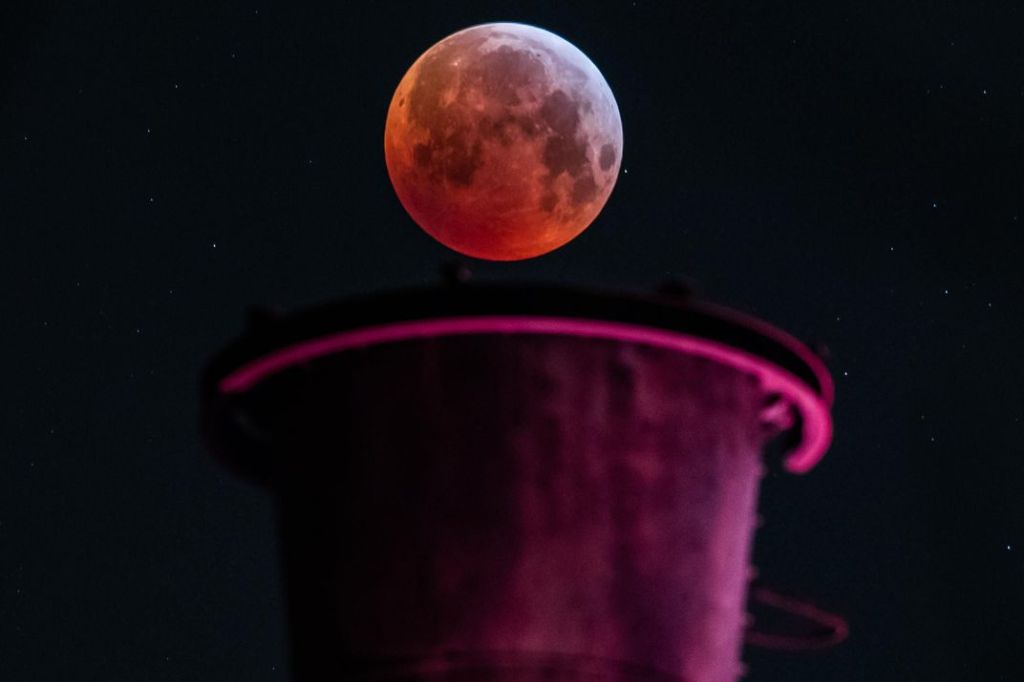
The moon during the January 21, 2019 total lunar eclipse over the skyline of Frankfurt. (Frank Rumpenhorst / Picture Alliance / Getty Images)
oooo
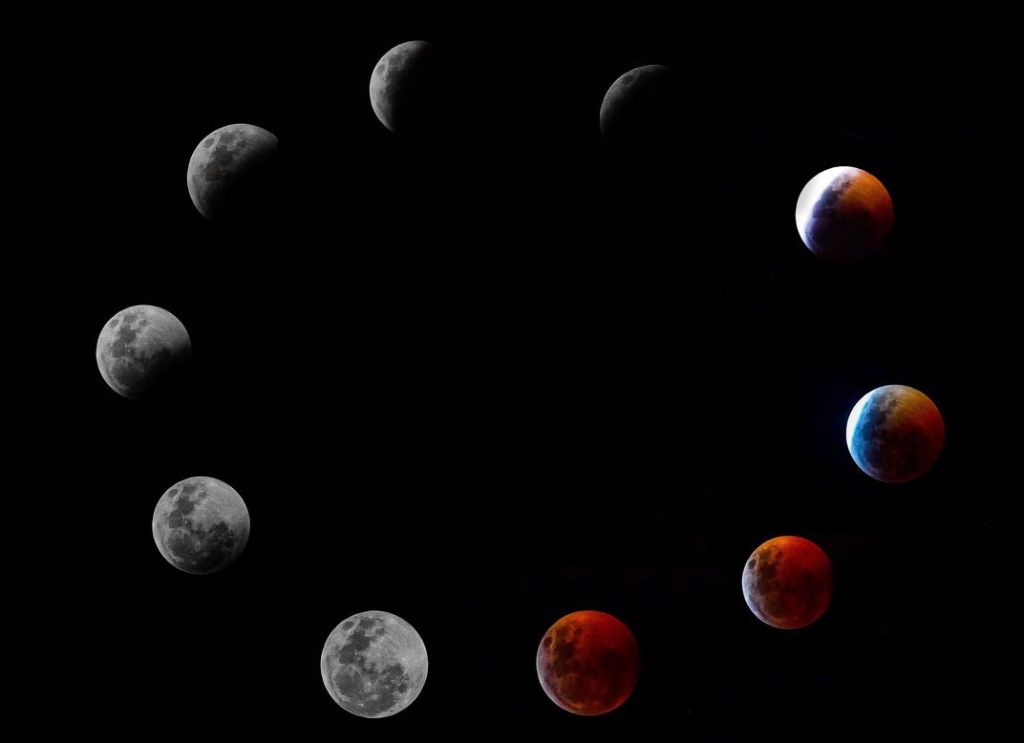
A composite photo shows all the phases of the so-called Super Blood Wolf Moon total lunar eclipse on Sunday January 20, 2019 in Panama City. (Luis Acosta / AFP / Getty Images)
oooo
The moon slips into Earth’s dark umbral shadow during a total lunar eclipse over Angel de la Independencia in Mexico City on January 20, 2019. (Alfredo Estrella / AFP / Getty Images))
oooo
The January 21, 2019 total lunar eclipse as seen over Laatzen, Germany. (Julian Stratenschulte / Picture Alliance / Getty Images)
oooo
A picture taken on January 21, 2019 the Super Blood Moon seen behind the equestrian statue of the Saxon king Johann during a lunar eclipse in Dresden, Germany. ( Sebastian Kahnert / AFP / Getty Images)
oooo
The Super Blood Wolf Moon lunar eclipse passes over One World Trade Center on January 20, 2019 in New York City. (Gary Hershorn / Getty Image)
oooo
A picture taken on January 21, 2019 in Cologne, Germany, shows the Super Blood Moon lunar eclipse above the landmark Dome.
oooo
The January 21, 2019 total lunar eclipse beside Naumburg Cathedral in Germany. (Hendrik Schmidt / Picture Alliance / Getty Images)
oooo
The lunar eclipse on January 21, 2019 before the moon is fully cast in shadow, hovering over the dome of the church St. Elisabeth in Nuremberg, Germany (Daniel Karmann/Picture Alliance/Getty Images)
These are really spectacular and very, very clever!



 Ralph spends the whole hour with independent journalist, Dahr Jamail, author of “The End of Ice,” his first person report on the front lines of the climate crisis.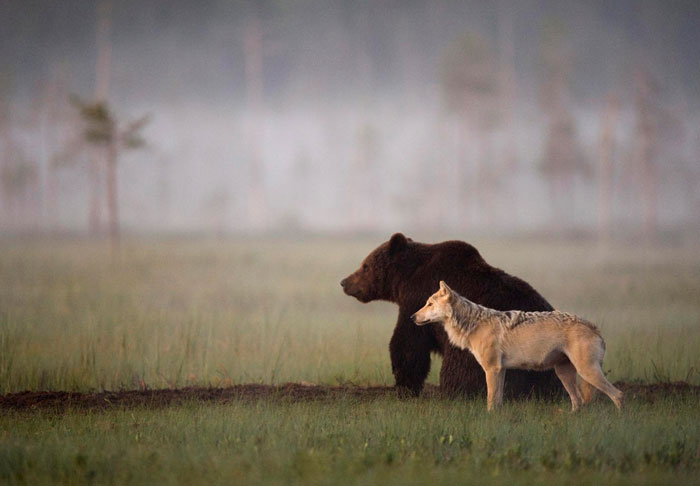

 Dear Alex