Playing a game of fetch with a dog means they are following a human social cue to recover the ball. But fetch isn’t just for dogs, wolf puppies are down to play too, which means they can also understand human communication cues, according to a new study.
Credit Wikipedia Commons
The findings, published in the journal iScience, were made after researchers put 13 8-week-old wolf puppies from three different litters through a series of tests usually used to assess dog-puppy behavior. Three of the pups were interested in playing fetch with a stranger, which included bringing a ball back when encouraged to.
The discovery was quite a surprise for the team as it was believed that the cognitive abilities necessary to understand communication cues given by a human were presented in dogs only after humans domesticated them 15,000 years ago. Dogs differ from wolves physically, genetically and behaviorally.
“When I saw the first wolf puppy retrieving the ball, I literally got goosebumps,” said Christina Hansen Wheat of Stockholm University in a press release. “I immediately knew that this meant that if variation in human-directed play behavior exists in wolves, this behavior could have been a potential target for early selective pressures exerted during dog domestication.”
Wanting to learn more about the effects of domestication on behavior, Hansen Wheat and her team raised wolf and dog puppies from the age of 10 days and put them through various behavioral tests. In one of them, the pup was thrown a ball by an unknown person, encouraging the wolf to get it and bring it back.
Expectations of the wolf pups catching on weren’t high, with the first two litters showing no interest in the balls, let alone of playing fetch. But everything changed with the third litter. A few of the puppies went for the ball and even responded to the social cues and brought it back.
“It was very surprising that we had wolves actually retrieving the ball,” said Hansen Wheat. “I did not expect that. I do not think any of us did. It was especially surprising that the wolves retrieved the ball for a person they had never met before.”
In the past, other research showed that domesticated and non-domesticated species will follow human gestures if a food reward is given, Hansen Wheat and her team said. But in those cases, the animals were previously trained to follow the cues or knew the person conducting the study.
While the new research has a limitation over the size of its sample, it could reassess our interpretation that understanding human social cues came from domestication. Instead, it could be possible that this behavior can be traced back to an ancestral population before wolves were domesticated into dogs.
ooOOoo
Despite this being the twenty-first century there are still things being discovered that cause us humans to be amazed.
Such as this story about the young wolves, way before they evolved into dogs.
I have written quite a few times about the eyes of dogs but never the wolf.
This was sent to me by Julie Thomas-Smith, the wife of my best friend, Richard Maugham, and it is just beautiful.
It comes from the Wolf Conservation Center and when one goes across to that website then one reads:
A wolf’s eyes have the power to speak a great language. Did you know that wolves possess certain ocular characteristics that allow them to communicate with other members of their species using their eyes alone? One can guess that this gives a new meaning to the common phrase “puppy-dog eyes!”
Science has maybe found a clue to the ancestor of the dog and the wolf.
For an animal that means so much to us humans, the origins of the dog are still uncertain. Indeed, as this interesting article shows, the origins of the wolf are uncertain.
ooOOoo
Was This 18,000-Year-Old Puppy Frozen in Siberian Permafrost the Ancestor of Wolves, Dogs or Both?
DNA tests on the well-preserved remains can’t determine whether the little canine was wild or domestic
(Sergey Fedorov/NEFU)
By Jason Daley, smithsonianmag.com
Dec. 3, 2019, 10 a.m.”>December 3, 2019
Meet Dogor, an 18,000-year-old pup unearthed in Siberian permafrost whose name means “friend” in the Yakut language. The remains of the prehistoric pup are puzzling researchers because genetic testing shows it’s not a wolf or a dog, meaning it could be an elusive ancestor of both.
Locals found the remains in the summer of 2018 in a frozen lump of ground near the Indigirka River, according to the North-Eastern Federal University in Yakutsk. Parts of the animal are incredibly well-preserved, including its head, nose, whiskers, eyelashes and mouth, revealing that it still had its milk teeth when it died. Researchers suggest the animal was just two months old when it passed, though they do not know the cause of death.
The pup is so well-preserved that researchers at the Centre for Palaeogenetics in Sweden were able to sequence the animal’s DNA using a piece of rib bone. The results found that Dogor was male, but even after two rounds of analysis the team could not determine whether he was a dog or a wolf.
“It’s normally relatively easy to tell the difference between the two,” David Stanton, a Centre for Palaeogenetics research fellow, tells Amy Woodyatt at CNN. “We have a lot of data from it already, and with that amount of data, you’d expect to tell if it was one or the other. The fact that we can’t might suggest that it’s from a population that was ancestral to both—to dogs and wolves.”
The find is exciting, regardless of whether Dogor turns out to be a common canine ancestor, an early dog, or an early wolf. Hannah Knowles at The Washington Post reports that Dogor comes from an interesting time in canine evolution, when wolf species were dying out and early dogs were beginning to emerge.
“As you go back in time, as you get closer to the point that dogs and wolves converge, [it becomes] harder to tell between the two,” Stanton tells Knowles.
(Sergey Fedorov/NEFU)
The history of just how and when dogs split from wolves is unresolved. There’s a general agreement among scientists that modern gray wolves and dogs split from a common ancestor 15,000 to 40,000 years ago, explains Brian Handwerk previously for Smithsonian.com. How dogs became dogs, however, is contested. Some research suggests that dogs were domesticated by humans once, while other studies have found dogs were domesticated multiple times. Exactly where in the world wild canines became man’s best friend is also disputed. The origin of the human-animal bond has been traced to Mongolia, China and Europe.
Scientists disagree about how dogs ended up paired with people, too. Some suspect humans captured wolf pups and actively domesticated them. Others suggest that a strain of “friendly,” less aggressive wolves more or less domesticated themselves by hanging out near humans, gaining access to their leftover food.
Dorgor’s DNA could help unravel these mysteries. The team plans to do a third round of DNA testing that may help definitively place Dogor in the canine family tree, report Daria Litvinova and Roman Kutuko at the Associated Press.
ooOOoo
This is incredibly interesting, don’t you think?
Hopefully I will hear of that third round of DNA testing and, if so, will most definitely share it with you.
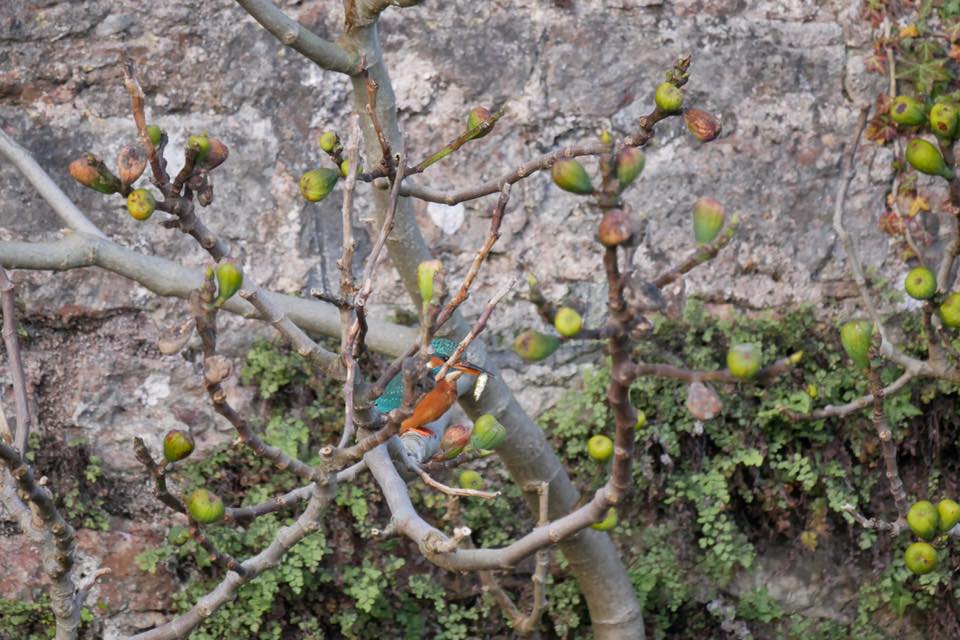
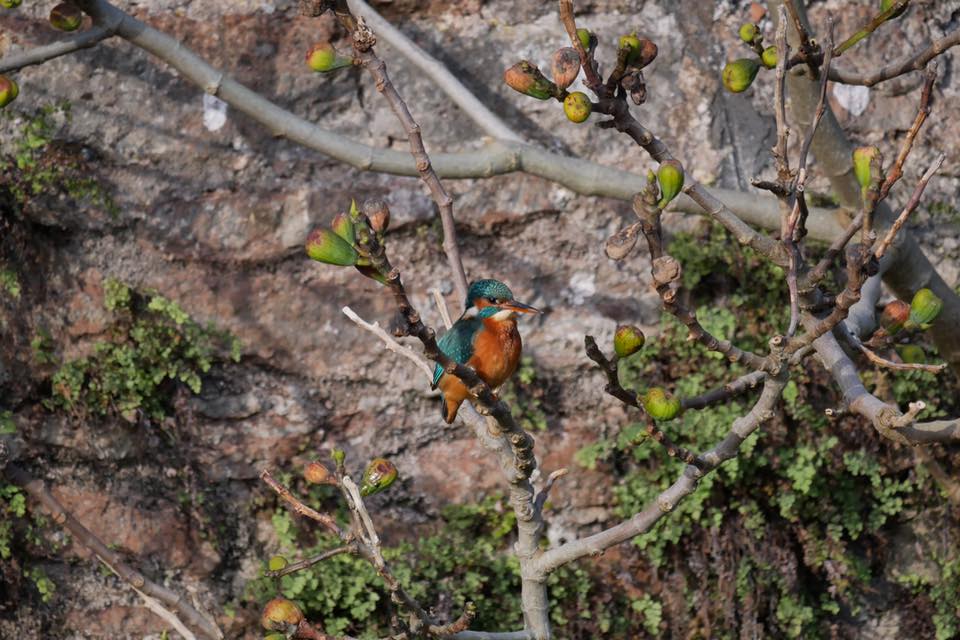
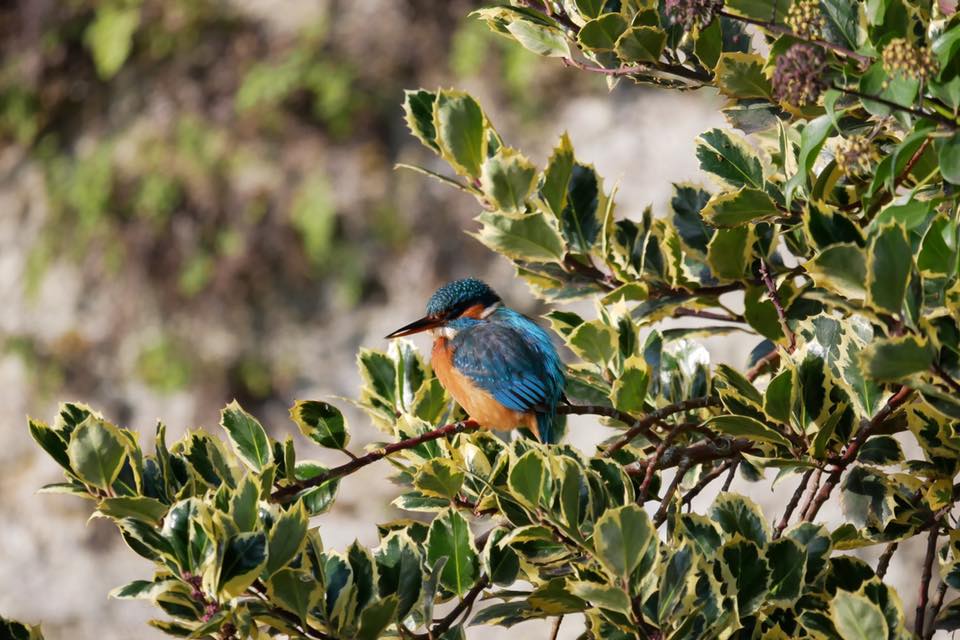
Kingfishers have stout bodies, very short tails, short, rounded wings, large heads and long, dagger-like bills.
Their feet are very small, with the two outer toes partly fused together. They nest in holes tunnelled into earth banks. There is only one UK species, but many more worldwide, most of which are dry-land birds rather than waterside ones like the UK kingfisher.
Posted by Deborah Byrd in Astronomy Essentials | Earth|December 15, 2019
December solstice 2019 arrives on December 22 at 4:19 UTC.
That’s December 21 for much of North America. High summer for the Southern Hemisphere. For the Northern Hemisphere, the return of more sunlight!
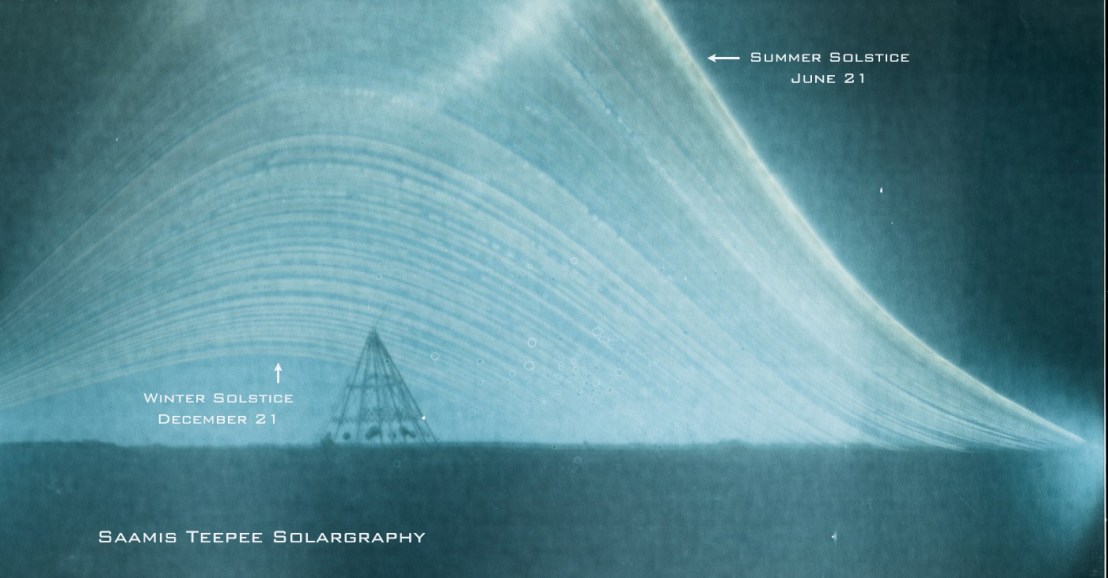
Ian Hennes in Medicine Hat, Alberta, Canada, created this solargraph between a June solstice and a December solstice. It shows the path of the sun during that time period.
Late dawn. Early sunset. Short day. Long night. For us in the Northern Hemisphere, the December solstice marks the longest night and shortest day of the year. Meanwhile, on the day of the December solstice, the Southern Hemisphere has its longest day and shortest night. The 2019 December solstice takes place on Sunday, December 22, at 04:19 UTC (That’s December 21 at 10:19 p.m. CST; translate UTC to your time).
No matter where you live on Earth’s globe, a solstice is your signal to celebrate.
When is the solstice? The solstice happens at the same instant for all of us, everywhere on Earth. In 2019, the December solstice comes on December 21 at 10:19 p.m. CST. That’s on December 22 at 04:19 Universal Time (UTC). It’s when the sun on our sky’s dome reaches its farthest southward point for the year. At this solstice, the Northern Hemisphere has its shortest day and longest night of the year.
Just remember: you’re translating from 04:19 UT on December 22. For example, if you live in Perth, Australia, you need to add 8 hours to Universal Time to find out that the solstice happens on Sunday, December 22, at 12:19 p.m. AWST (Australian Western Standard Time).
Day and night sides of Earth at the instant of the December 2019 solstice (December 22, 2019, at 04:19 UTC). Image via EarthView.
What is a solstice? The earliest people on Earth knew that the sun’s path across the sky, the length of daylight, and the location of the sunrise and sunset all shifted in a regular way throughout the year. They built monuments such as Stonehenge in England – or, for example, at Machu Picchu in Peru – to follow the sun’s yearly progress.
But we today see the solstice differently. We can picture it from the vantage point of space. Today, we know that the solstice is an astronomical event, caused by Earth’s tilt on its axis and its motion in orbit around the sun.
Because Earth doesn’t orbit upright, but is instead tilted on its axis by 23 1/2 degrees, Earth’s Northern and Southern Hemispheres trade places in receiving the sun’s light and warmth most directly. The tilt of the Earth – not our distance from the sun – is what causes winter and summer. At the December solstice, the Northern Hemisphere is leaning most away from the sun for the year.
At the December solstice, Earth is positioned in its orbit so that the sun stays below the North Pole horizon. As seen from 23 1/2 degrees south of the equator, at the imaginary line encircling the globe known as the Tropic of Capricorn, the sun shines directly overhead at noon. This is as far south as the sun ever gets. All locations south of the equator have day lengths greater than 12 hours at the December solstice. Meanwhile, all locations north of the equator have day lengths less than 12 hours.
For us on the northern part of Earth, the shortest day comes at the solstice. After the winter solstice, the days get longer, and the nights shorter. It’s a seasonal shift that nearly everyone notices.
Earth has seasons because our world is tilted on its axis with respect to our orbit around the sun. Image via NASA.
Where should I look to see signs of the solstice in nature? Everywhere.
For all of Earth’s creatures, nothing is so fundamental as the length of daylight. After all, the sun is the ultimate source of all light and warmth on Earth.
If you live in the Northern Hemisphere, you can notice the late dawns and early sunsets, and the low arc of the sun across the sky each day. You might notice how low the sun appears in the sky at local noon. And be sure to look at your noontime shadow. Around the time of the December solstice, it’s your longest noontime shadow of the year.
In the Southern Hemisphere, it’s opposite. Dawn comes early, and dusk comes late. The sun is high. It’s your shortest noontime shadow of the year.
Around the time of the winter solstice, watch for late dawns, early sunsets, and the low arc of the sun across the sky each day. Notice your noontime shadow, the longest of the year. Photo via Serge Arsenie on Flickr.Meanwhile, at the summer solstice, noontime shadows are short. Photo via the Slam Summer Beach Volleyball festival in Australia.
Why doesn’t the earliest sunset come on the shortest day? The December solstice marks the shortest day of the year in the Northern Hemisphere and longest day in the Southern Hemisphere. But the earliest sunset – or earliest sunrise if you’re south of the equator – happens before the December solstice. Many people notice this, and ask about it.
The key to understanding the earliest sunset is not to focus on the time of sunset or sunrise. The key is to focus on what is called true solar noon – the time of day that the sun reaches its highest point in its journey across your sky.
In early December, true solar noon comes nearly 10 minutes earlier by the clock than it does at the solstice around December 22. With true noon coming later on the solstice, so will the sunrise and sunset times.
It’s this discrepancy between clock time and sun time that causes the Northern Hemisphere’s earliest sunset and the Southern Hemisphere’s earliest sunrise to precede the December solstice.
The discrepancy occurs primarily because of the tilt of the Earth’s axis. A secondary but another contributing factor to this discrepancy between clock noon and sun noon comes from the Earth’s elliptical – oblong – orbit around the sun. The Earth’s orbit is not a perfect circle, and when we’re closest to the sun, our world moves fastest in orbit. Our closest point to the sun – or perihelion – comes in early January. So we are moving fastest in orbit around now, slightly faster than our average speed of about 18.5 miles per second (30 kilometers per second). The discrepancy between sun time and clock time is greater around the December solstice than the June solstice because we’re nearer the sun at this time of year.
Solstice sunsets, showing the sun’s position on the local horizon at December 2015 (left) and June 2016 (right) solstices from Mutare, Zimbabwe, via Peter Lowenstein.
The precise date of the earliest sunset depends on your latitude. At mid-northern latitudes, it comes in early December each year. At northern temperate latitudes farther north – such as in Canada and Alaska – the year’s earliest sunset comes around mid-December. Close to the Arctic Circle, the earliest sunset and the December solstice occur on or near the same day.
By the way, the latest sunrise doesn’t come on the solstice either. From mid-northern latitudes, the latest sunrise comes in early January.
The exact dates vary, but the sequence is always the same: earliest sunset in early December, shortest day on the solstice around December 22, latest sunrise in early January.
And so the cycle continues.
Solstice Pyrotechnics II by groovehouse on Flickr.
Bottom line: The 2019 December solstice takes place on Sunday, December 22, at 04:19 UTC (that’s December 21 at 10:19 p.m. CST; translate UTC to your time). It marks the Northern Hemisphere’s shortest day (first day of winter) and Southern Hemisphere’s longest day (first day of summer). Happy solstice, everyone!
ooOOoo
Well for many in the Northern Hemisphere the worst of the winter weather is yet to come.
On Monday when Jeannie and I went to our regular session at Club Northwest, Jean to her Rock Steady class, and me to spend 45 minutes with Austin Raymond, one of the fitness coaches, he and I were speaking of health in general and veganism in particular. Austin, Jean and I are vegans.
Austin mentioned had we watched the film The Game Changers on Netflix? I replied that we had not but we were subscribers to Netflix and would watch it in the evening.
Well what an incredible film! I mean really incredible!
P.S. If you are a Netflix subscriber then you may watch it without any fuss.
(So I taken time out from book writing to publish this post; I’m over 9,000 words already written in November!)
Here’s a YouTube trailer to the film:
Have you ever seen an ox eating meat!
But apart from the solid science that we never were meat-eaters were the facts about illness being so much prevalent in those eating meat compared to vegans. That was just one aspect of the film that grabbed our attention! There were many more.
Back to fundamentals!
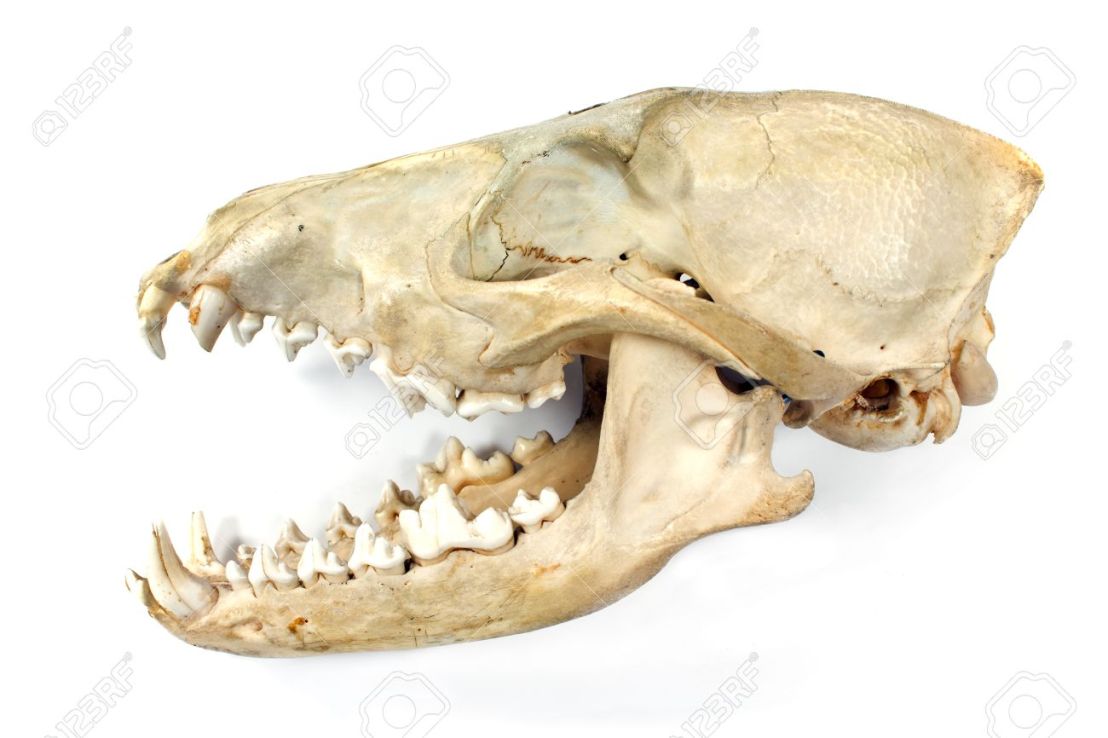
Let’s examine one fact, the jaw shape.
Here’s the jaw of a dog.
Dog skull and jaw isolated on white
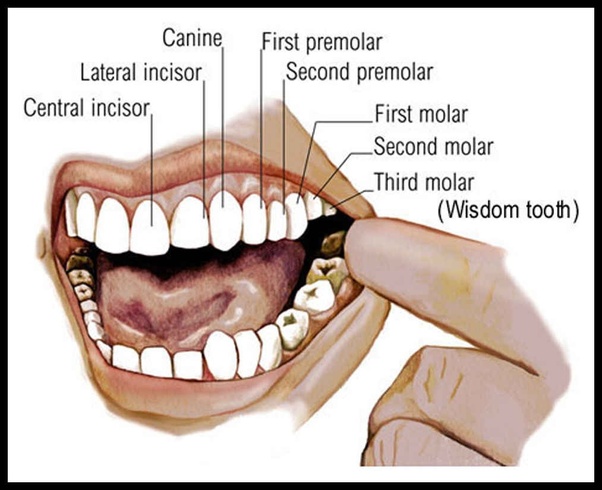
and here’s another:
That is a mouth that has evolved to tear meat from an animal.
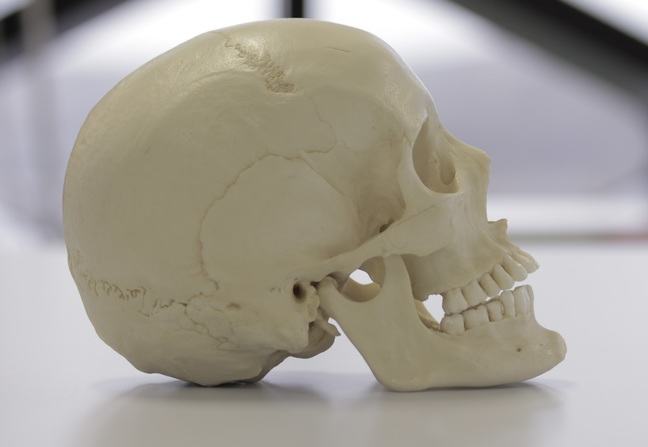
And here’s the jaw of a human:
and the picture of the whole skull.
Notice that the teeth have always been adapted to eat fruit and vegetables.
And that’s before we think how much land has been converted from natural land and forest to grazing land for cattle and sheep!
Now I don’t know how long the full documentary will remain for free on YouTube but here it is:
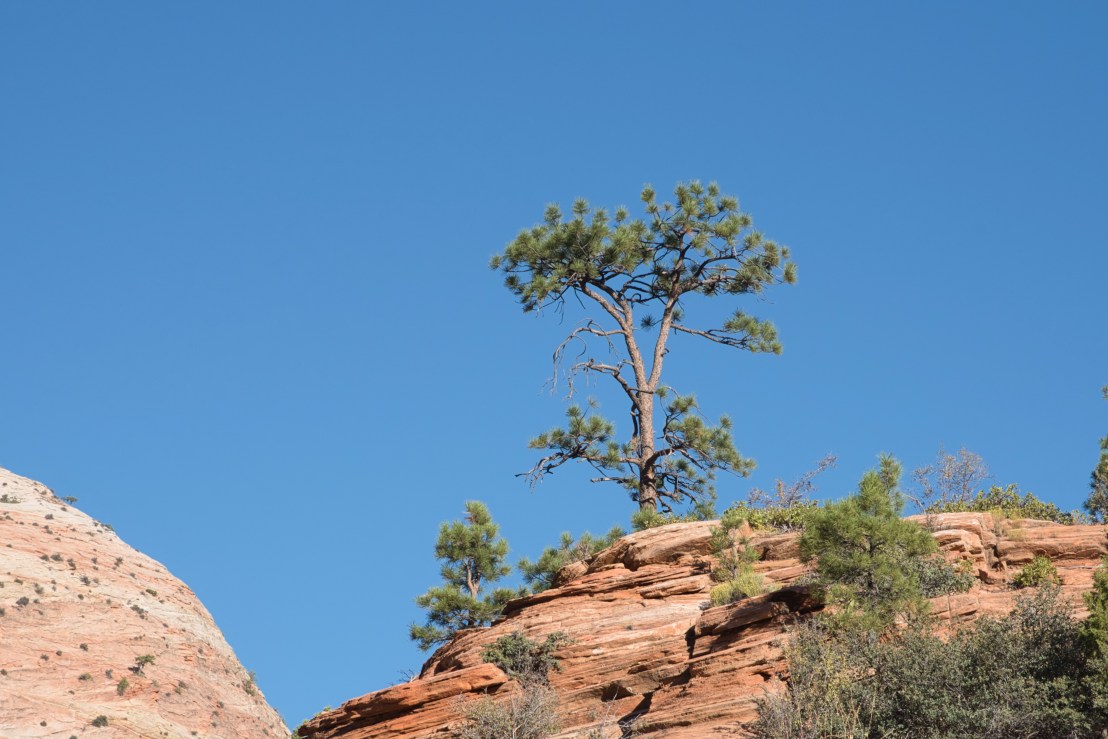
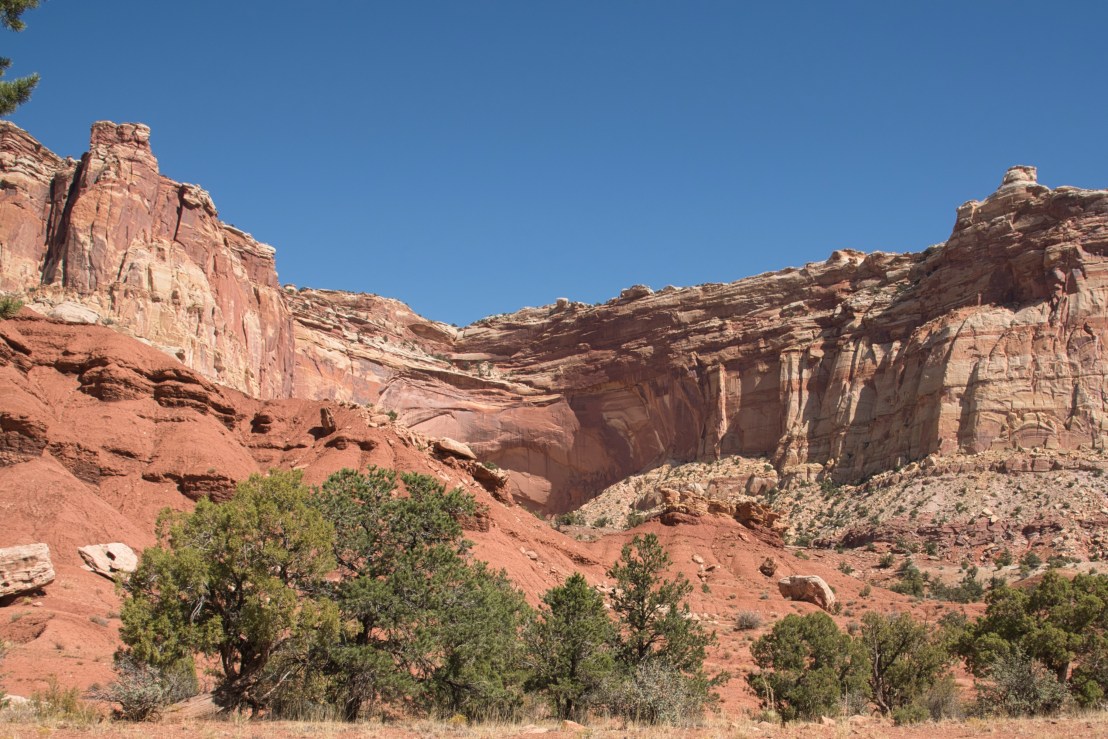
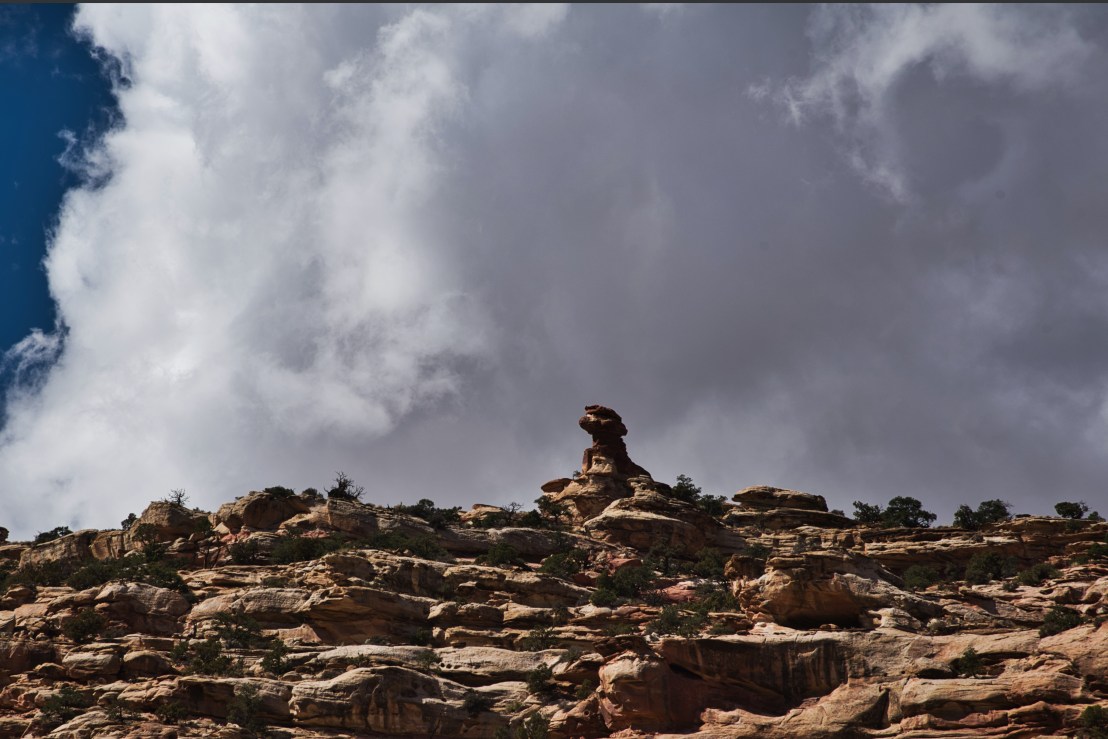
The picture below is primarily of the different rock type that is laid crossways on the top of the ridge. It was the closest that we could get without a major climb.
oooo
I think this is Zion National Park. The pillars above and the stream below.
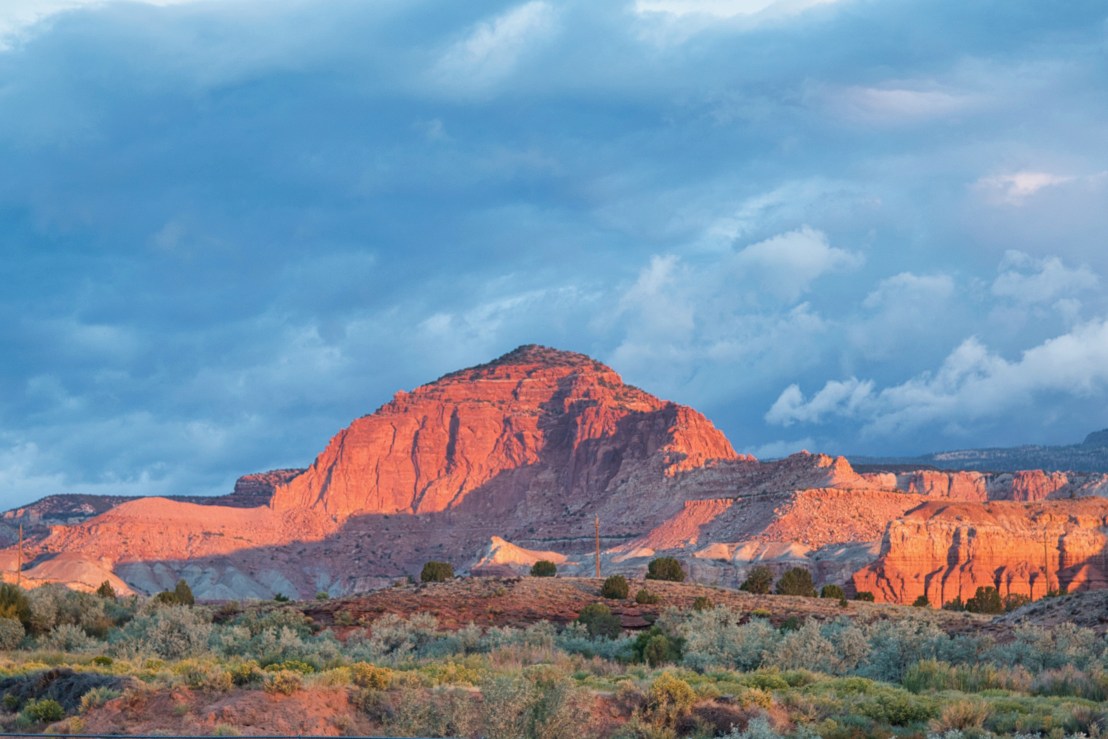
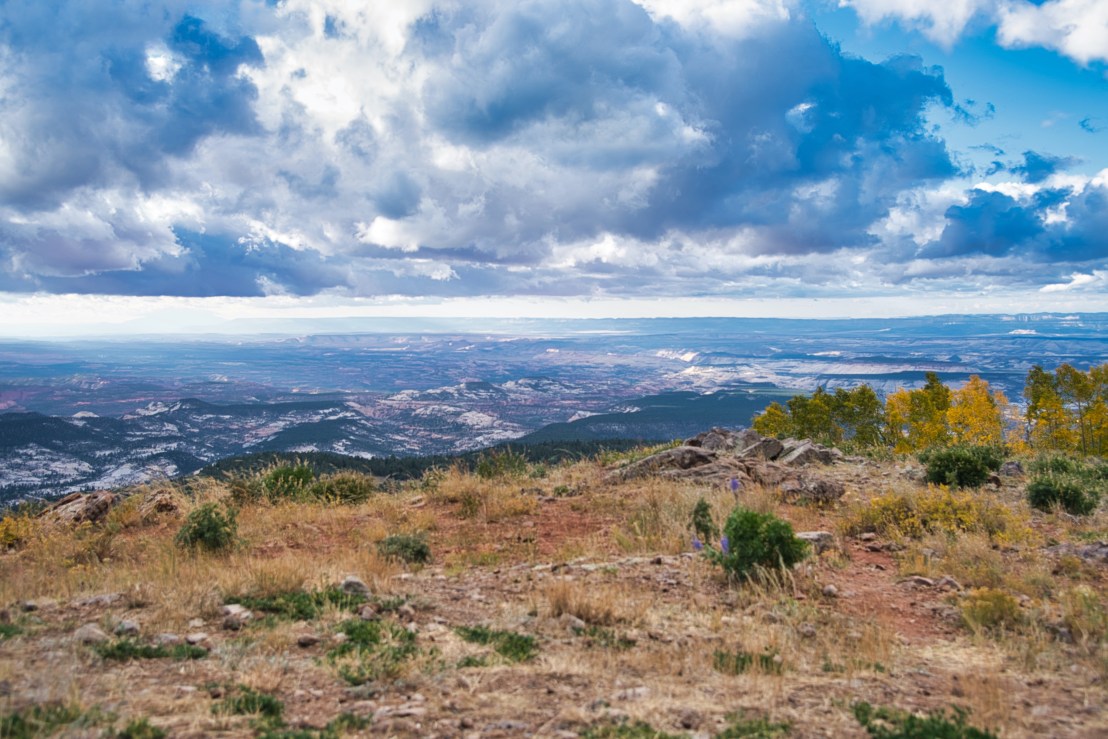
I’m sure that there’s only so much you can take of our trip to Utah and back. So I have selected the more interesting photographs and will share them with you today and the next two days.
Saturday, 28th September
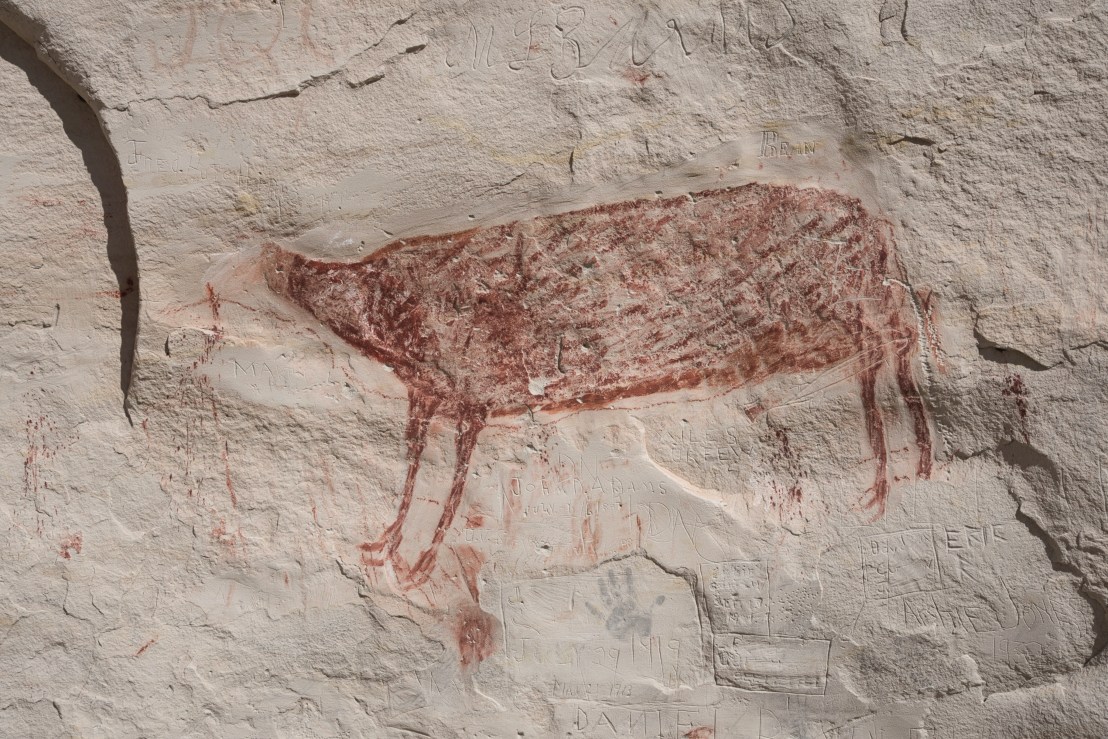
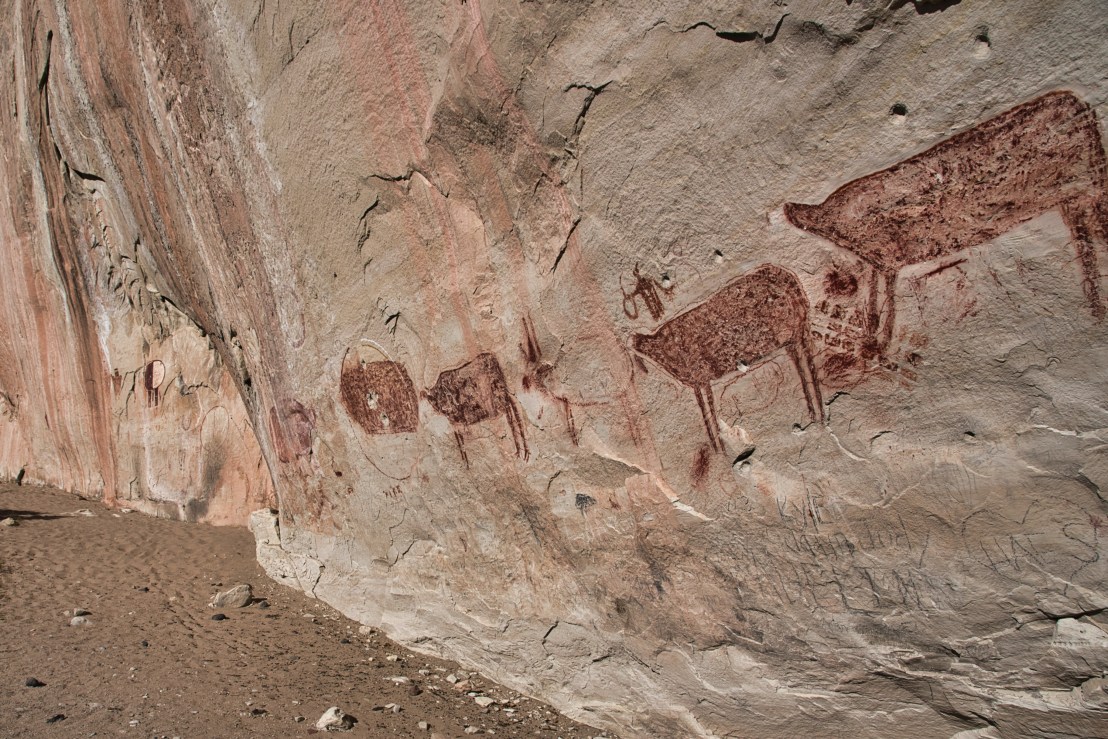
Vance, of The Flute Shop, gave us directions to some ancient petroglyphs that were painted on a rock wall quite close to where we were staying.
First, that rock wall. The petroglyphs can be seen at the bottom of the rock face.
Then a close up. It was amazing that although there was a great deal of name carving close by there was none on the petroglyph images themselves.
They were about 700 years old.
Sunday, 29th September
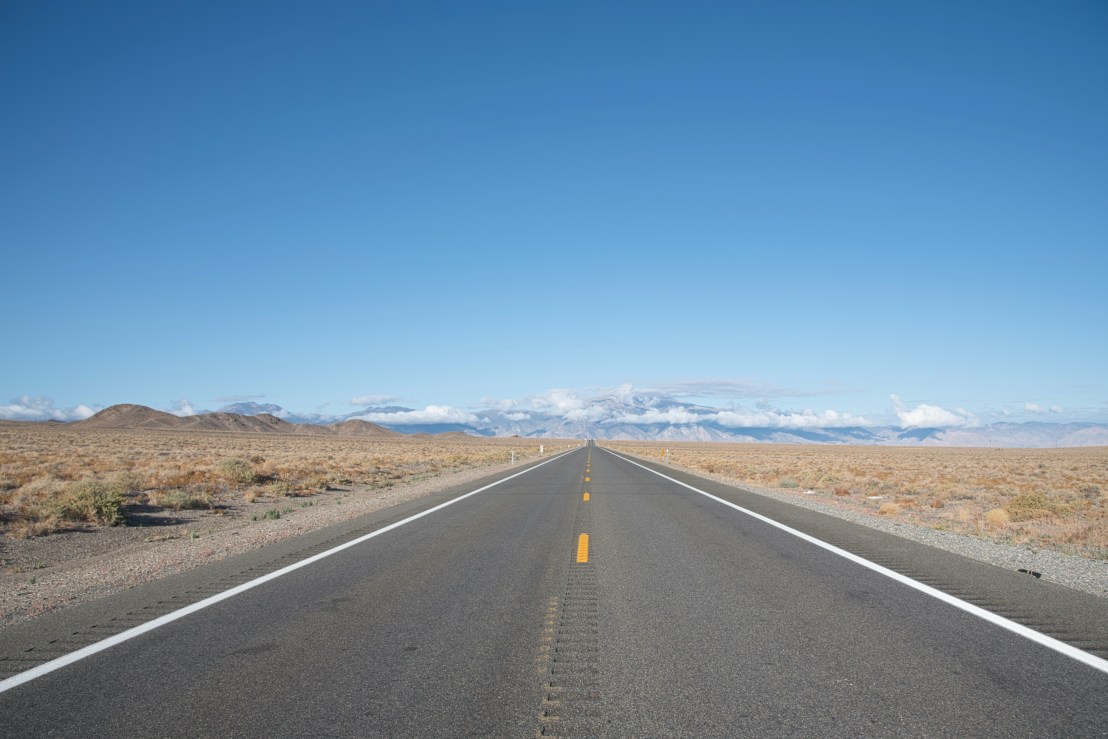
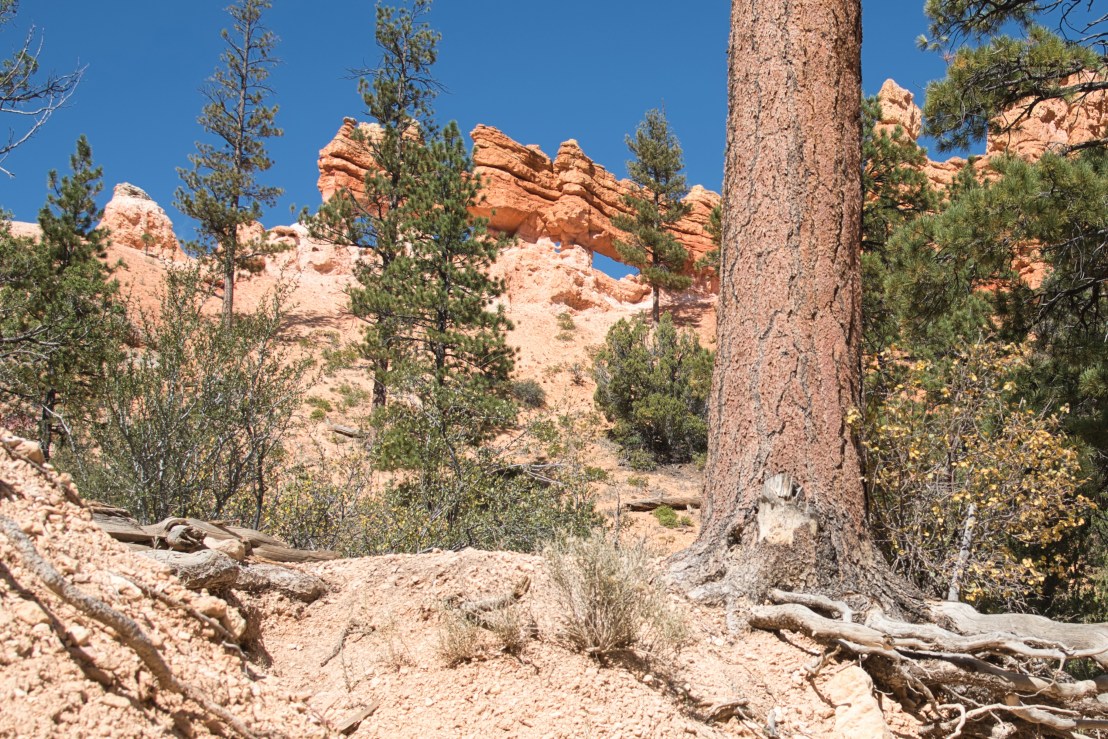
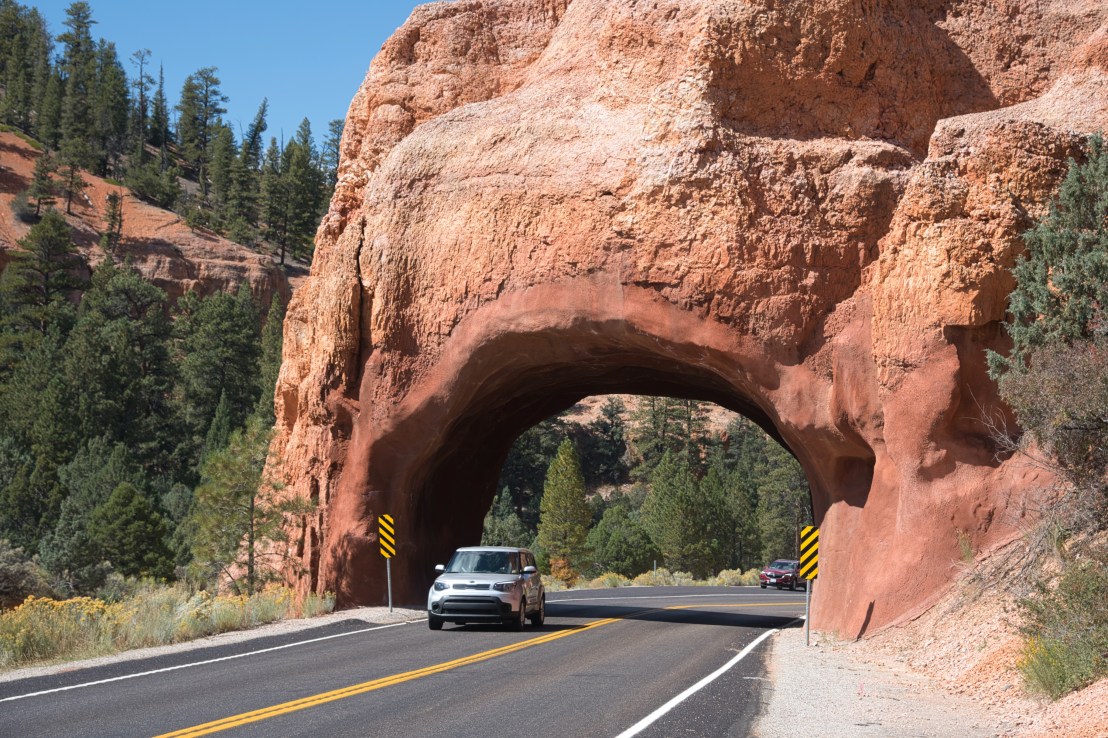
Today it was the long drive down to Kanab, about 200 miles, but we stopped frequently to take photographs of the never-ending marvels that we saw.