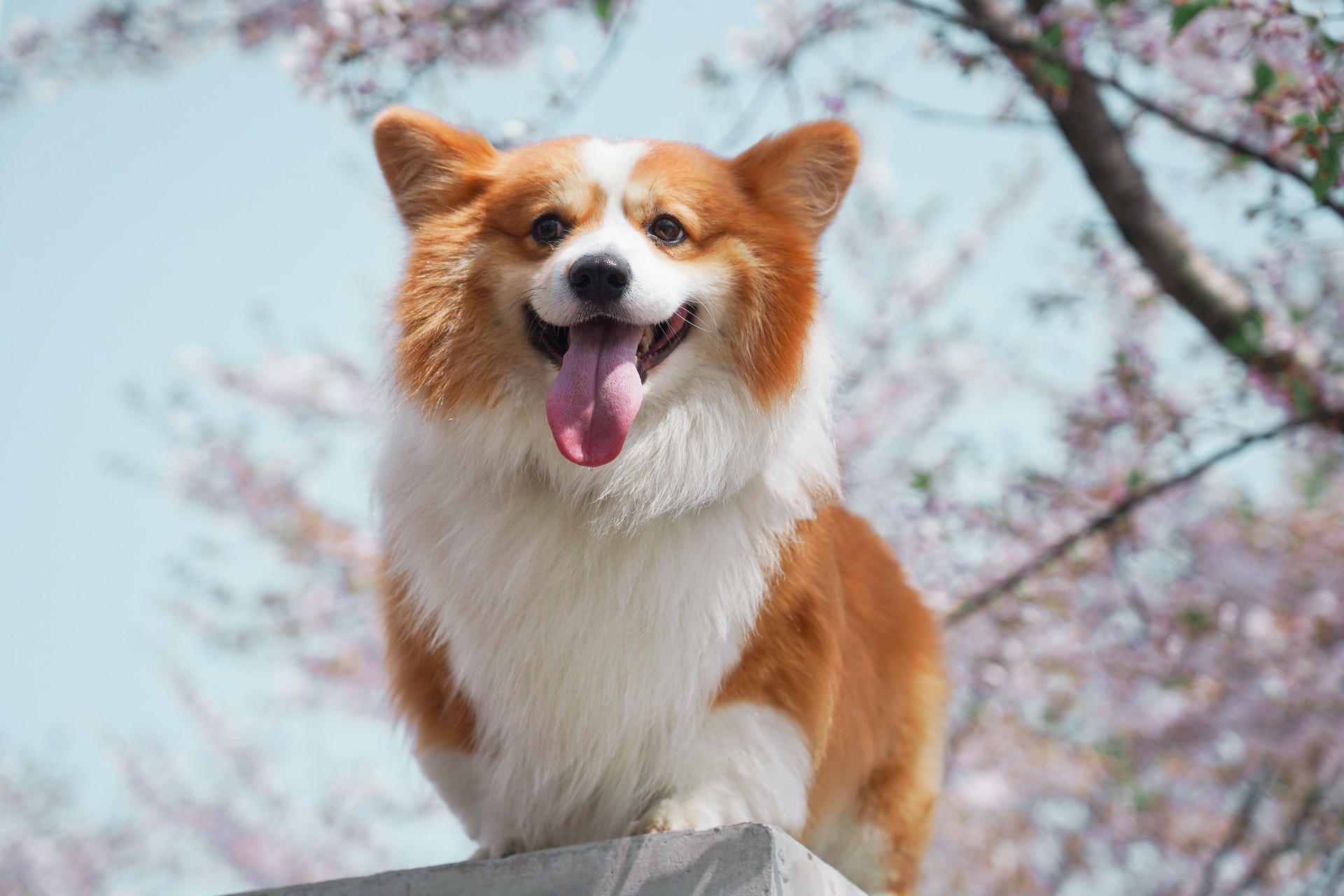
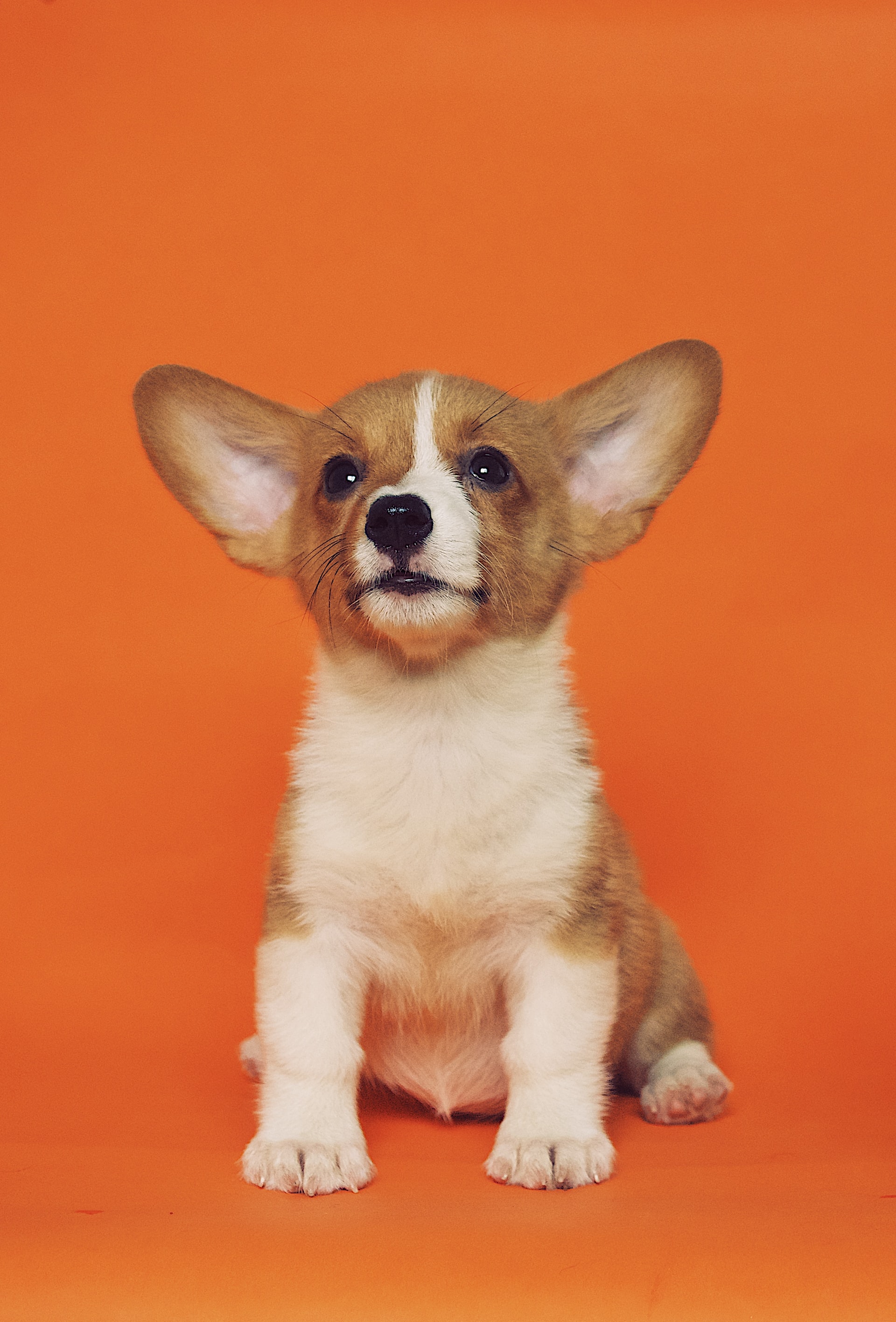
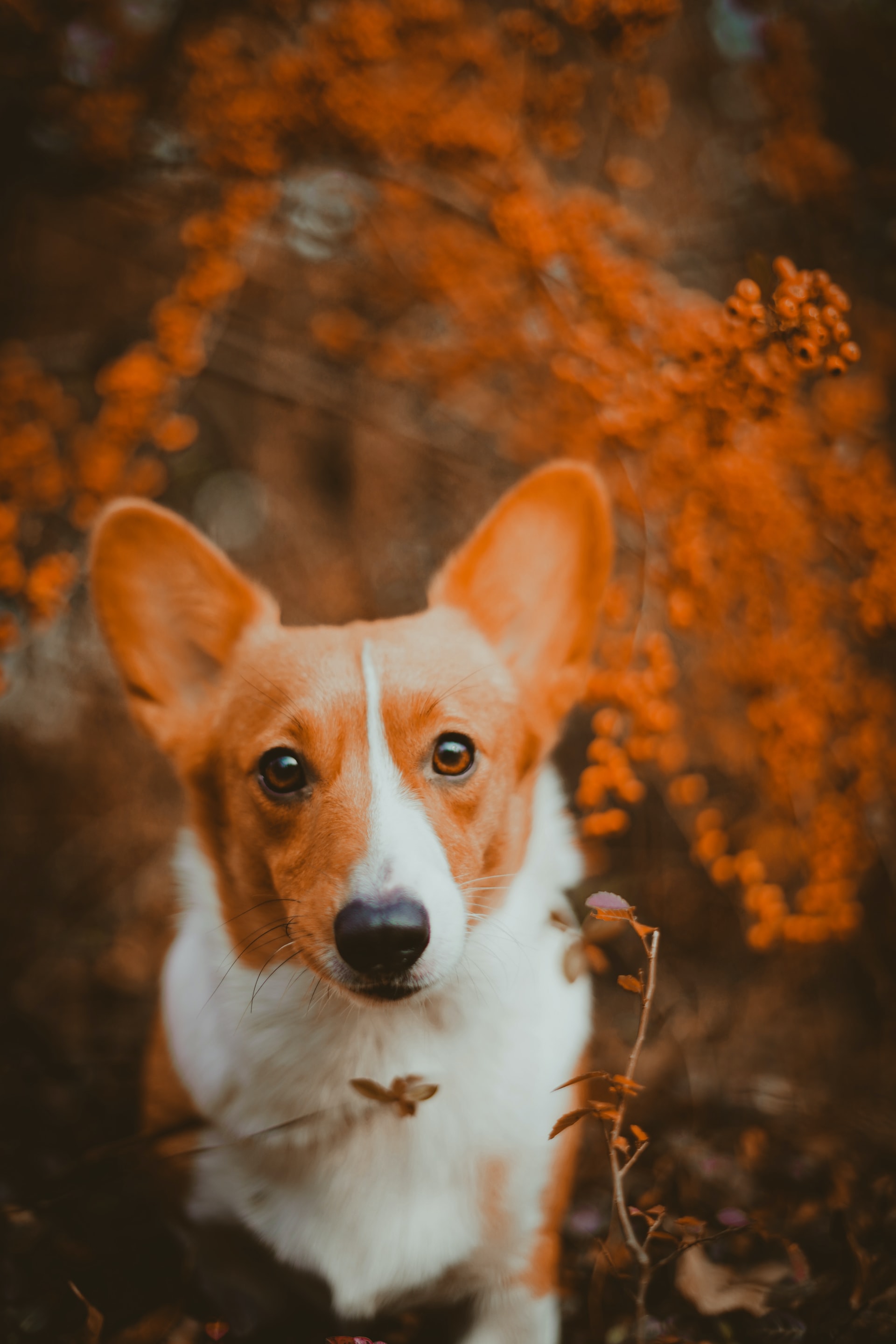
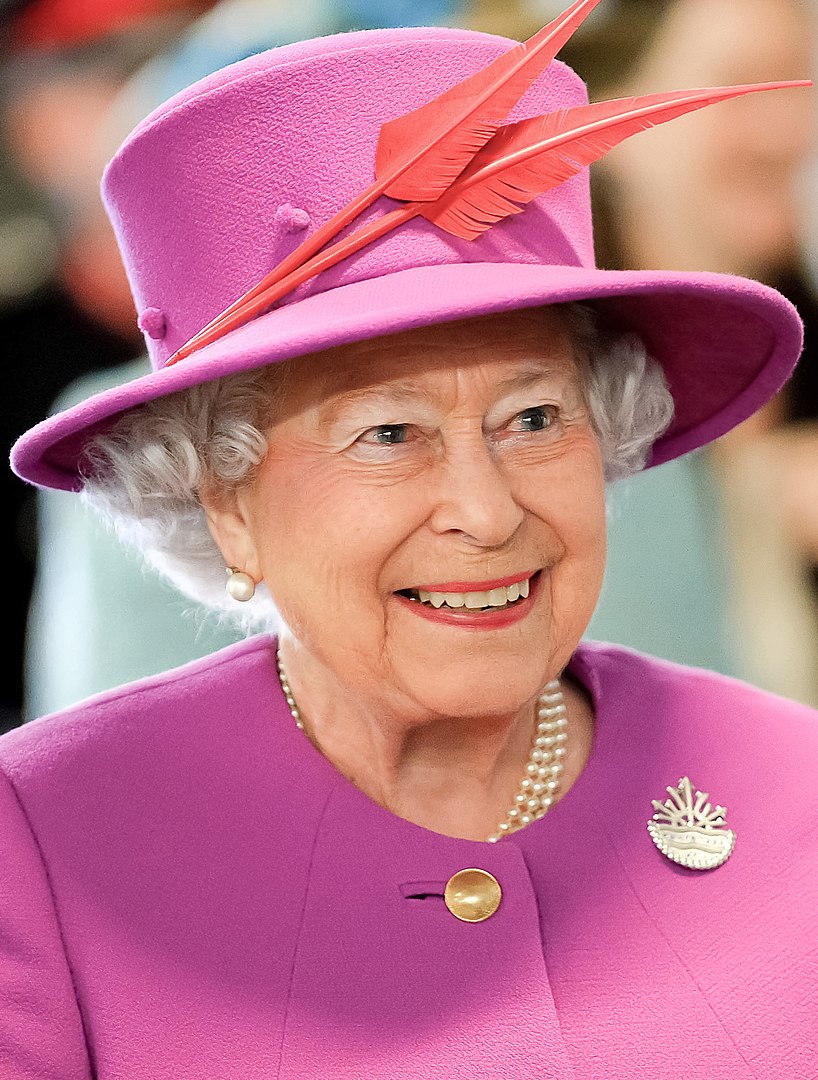
We wanted to recognise the Queen’s Platinum Jubilee.
So I thought that I would find some photos of the Queen’s corgis that I could share with you. Unfortunately all the photographs were copyrighted.
It is a well-known fact that Her Majesty Queen Elizabeth II is a dog lover and has been all her long life. There is a delightful story about the Queen and her corgis on the BBC at this moment and you may like to read it. Meanwhile today’s picture parade is all Corgis!
oooo
oooo
oooo
oooo
oooo
oooo
oooo
That’s it folks for another week.
I will close by thanking Her Majesty for all that she done over the years. Her Majesty gave her promise when she was 21 to devote her life to the Crown and all that flows from that commitment. Whatever her private thoughts have been over the years she has remained loyal to the Nation and the Commonwealth and it is an unparalleled record that will never be surpassed!
A final photograph of Queen Elizabeth II that is attributed to the author, see below, and I hope it is alright to show it.
Getting old is a fact of life. It applies to all living things. But the life expectancy is increasing, I’m pleased to say. There are some interesting facts on the Our World in Data website. But that is for humans. I don’t know if it applies also to dogs but I suspect that it does.
Bully is such a dog and his story was recently written up on The Dodo site. I have pleasure in sharing that with you.
ooOOoo
Oldest Dog At Rescue Is So Surprised To Get A 23rd Birthday Party
Since his birth in 1999, Bully has lived through five presidencies, the launch of the first iPhone, the rise of social media and many more historical events — but the Chihuahua probably can’t tell you about any of them.
But when the little dog recently turned 23 years old, his owners celebrated the milestone by throwing a party he’ll remember for years to come.
Bully spent the first 21 years of his life with a loving family, enjoying the companionship of his humans, playing outside and going for runs in the local park. When his elderly owner could no longer care for him, the super senior found his way to The Mr. Mo Project, a senior dog rescue run by Chris Hughes and his wife.
His former owner described Bully as a “big dog in a little dog’s body,” and Hughes quickly found that despite Bully’s advanced age, he hadn’t changed one bit.
“Bully is feisty, naughty, sweet, independent, gentle, calm and he has an old man bark,” Hughes told The Dodo. “Even at his age, he likes to try to push around another one of our Chihuahuas.”
Now that Bully is older, he needs more rest than the average pup. “Bully loves to sleep and he has earned that right,” Hughes said. “He will fall asleep absolutely anywhere, sometimes on the middle of the floor in the kitchen, on a potty pad or on the biggest, most comfortable bed in the corner.”
For Bully’s birthday party, the Hughes family decorated their house in honor of the little dog and gave him the two things he loves most in the world — treats and a nap. “He doesn’t have too many teeth, so we got a soft biscuit and crumbled it up for him to enjoy,” Hughes said. “He really enjoys sleeping, so that’s the best gift to give him.”
Hughes makes sure all the senior dogs in their care feel special by throwing parties to commemorate every possible event with them.
“We try to celebrate all the great things that happen in our home because so often there are not-so-great things that happen,” Hughes said. “We celebrate when dogs finish chemo treatments, birthdays, adoptions and have been known to have Christmas in July if we think someone won’t make it until Christmas.”
Thanks to the Hughes family, Bully will have many more celebrations to look forward to. And at the age of 23, he’s earned it.
Not only do dogs come in a myriad of sizes and shapes, witness our own Brandy and Pedi, but they are also conscious creatures, as in they remember and grieve; albeit in a dog fashion.
The Dodo presented this story back on the 4th March about just a dog. Read it and be swept away in the world of dogs.
ooOOoo
Woman At The Beach Meets A Dog Who Won’t Stop Staring Out To Sea
The other day, Jolie Mejía and her family decided to visit Punta Negra, a small seaside community near their home in Peru.
It was there, along a rocky shore overlooking the sea, that they came to learn a story of love in its purest form.
After Mejía and her family settled down along the shore, they were approached by a random dog who appeared to be all by himself.
“He didn’t seem abandoned. He wore a ribbon around his neck and his fur was clean,” Mejía told The Dodo. “I pet him, waiting for his owner, but minutes passed and no one came.”
The dog enjoyed Mejía’s pets, but all the while his gaze remained fixed upon the ocean.
And Mejía soon came to learn the touching reason why.
Mejía and her family considered adopting the dog themselves, assuming he had indeed been abandoned. So, when a man local to the area walked by, Mejía asked him if he knew the dog’s status.
“He explained that practically everyone in the area knows the dog and is very fond of him,” Mejía said. “He told us that the dog’s owner was a fisherman who passed away some time ago, and that the dog comes to the beach every day and stares out to sea.”
The dog, it seems, has been holding vigil — awaiting the return of his friend who will never come home.
“We were very moved,” said Mejía.
Mejía believes the dog’s owner died at sea about a year ago, and that the dog has been watching out for him daily ever since.
But though the dog’s owner may never return, the dog isn’t without friends who care for him.
The dog’s sad story is evidently well-known by people in the community, who feed him, shelter him and provide him with health care when he needs it.
A local veterinarian in Punta Negra confirmed to The Dodo that the dog’s name is Vaguito, and that he’s currently in the care of a woman who lives nearby.
By day’s end, Mejía and her family eventually parted ways with Vaguito, his eyes still cast out to sea. But his bittersweet story — one of loyalty to a love he lost, and the loyalty and love he found in the community — is one she won’t soon forget.
“I have a dog at home,” Mejía said. “I love dogs in general. His story really touched my heart.”
(Photos by Jolie Mejía)
ooOOoo
This is the perfect story. But it is more! It is the perfect story of how special a dog is. For this particular dog, Vaguito, clearly was loved by his fisherman and even after a year Vaguito still holds a vigil for him. It is a very lovely article, but that is the unconditional love shown by dogs to humans who care and love them back.
Some weeks ago we heard animals, probably squirrels, in the crawl space underneath our singe-storey home. After some thinking about the problem we got a company to come out and take a look. They said that the original insulation was poorly installed, that would have been around 1977, and that it had to be removed and a more modern type installed.
The area, some 2,400 square feet, apparently is larger than the team usually work in and it may be five of more days before they are finished.
oooo
oooo
oooo
I do not envy the crew who spend long hours in the crawl space. The firm that was selected were TerraFirma.
In a comment to a recent post on this blog, John said: “Just sent you an email.“
I went to that email and read:
Hi Paul — just a personal note to let you know Bela died yesterday at 3.30pm. Her old beaten up body couldn’t do it any longer. A week after the last of her two operations she started going downhill. Her walks were more laboured. Last Tuesday I stopped walking her because (although she wanted to keep going) she was failing. She deteriorated over the weekend… Monday was spent racing her between vets, diagnostic clinics, and finally to the emergency care hospital. She made it through the night. She made it to us going there to see her. She was in a terrible state, her kidneys dissolving, her heart giving up. She was thankfully without pain, and although barely conscious (she was on heavy, heavy opioids), she managed to lift her head one last time. The vet there later said it was like she was waiting for you to say goodbye. She died thirty minutes later. Her heart gave out, and they could not revive her.
John subsequently emailed me the details of when he found Bela.
I caught sight of something out of the corner of my eye driving home one day. I *thought* it looked like a dog. I turned around, and that’s how we found her… skin and bones, leg broken, paw smashed. And as we’d later discover, megaesophagus. We scooped her up and raced her to the vet. First time in my life after a rescue I actually asked the vet that day if we should just end her misery right then and there. Four years is what she gave us, and our lives are richer for it. Four short years.
Since then Bela has had four or five major operations, the last two to remove cancers were in January and March of this year. As John puts it: “In my mind we were setting her up for many more years of health.“
Finally, here is a video of Bela. It is rather poor quality because the original is far too large. But it doesn’t matter at all because it just shows Bela alive and well!
Last Saturday, we went to the local Freethinkers meeting in Grants Pass. It was a fascinating presentation by fellow member, Chas Rogers. Chas teaches Earth Science courses for the Rogue Community College and elsewhere.
Here is a taste of what we saw:
The Rare Earth Hypothesis argues that the development of complex life on Earth, not to mention intelligence, was an incredibly improbable thing in terms of the geological and astronomical variables involved, suggesting that the galaxy is not filled with other intelligent life forms waiting to be found.
One important factor is the Drake Equation. Here it is explained on the SETI website:
How many alien societies exist, and are detectable? This famous formula gives us an idea. The Drake Equation, which was the agenda for a meeting of experts held in West Virginia in 1961, estimates N, the number of transmitting societies in the Milky Way galaxy.
Here is that Drake Equation.
N : The number of civilizations in the Milky Way galaxy whose electromagnetic emissions are detectable.
R* : The rate of formation of stars suitable for the development of intelligent life (number per year).
fp : The fraction of those stars with planetary systems.
ne : The number of planets, per solar system, with an environment suitable for life.
fl : The fraction of suitable planets on which life actually appears.
fi : The fraction of life bearing planets on which intelligent life emerges.
fc : The fraction of civilizations that develop a technology that produces detectable signs of their existence.
L : The average length of time such civilizations produce such signs (years).
There is a great deal of information online for those that want to look into the question in much more detail. But I rather like this YouTube video by Carl Sagan.
(Sorry about the funny ending to that video.)
Carl was speaking of the Milky Way. There are plenty of astronomers who believe that the universe holds many galaxies. Plus, the universe is expanding drawn ever outwards by something that is completely unknown!
The first was the closing paragraph in that guest post by Indiana Lee last Thursday. Let me quote him:
It’s already been said, but it’s worth saying again. A happy dog leads to a happy owner. That isn’t just a cute saying, either. People are literally known to live longer and have good mental health if they have a dog in their lives.
The second was a talk at our local (Grants Pass) Freethinker’s meeting, held on Saturday. Jerry had sent out an introduction a few days before and included in that were three videos that we were encouraged to watch.
One, in particular, was excellent. It is a talk by Robert Waldinger, and it is reproduced below.
What keeps us happy and healthy as we go through life? If you think it’s fame and money, you’re not alone – but, according to psychiatrist Robert Waldinger, you’re mistaken. As the director of 75-year-old study on adult development, Waldinger has unprecedented access to data on true happiness and satisfaction. In this talk, he shares three important lessons learned from the study as well as some practical, old-as-the-hills wisdom on how to build a fulfilling, long life.
YouTube
It is just under thirteen minutes long; please watch it!
LRVC is so busy these days that a scheduled appointment would be impossible. So Jean and I waited at the front desk; the staff were fantastic. We were told to bring Sweeny early this morning (Wednesday) and leave him there. Dr Russel Codd is well-known to us and he would try and find time during the day to diagnose Sweeny.
We were back home, minus Sweeny, by 8am. At 9:15am there was a call. It was Dr. Russ! Both Jeannie and I took the call.
Sweeny had advanced diabetes. His liver and kidneys were going and he was in pain. He had lost the will to live.
Very reluctantly Jeannie said that Sweeny should be allowed to die at the clinic. I agreed. Dr. Russ then said that that was the best decision and one that he would have taken if he had Sweeny as his own.
Sweeny kissing Jeannie. The year 2018!
But it was a shock to hear of Sweeny’s issues. We had no idea and, as was said, just two days ago Sweeny appeared happy and content.
This is a story about one of the islands in the Inner Hebrides of Scotland. But more than that it is an opportunity to share with you all a video that my son, Alex, and his partner, Lisa, took on a recent trip to that part of the world.
The Isle of Mull is the second largest island of the Inner Hebrides, off the west coast of Scotland in the council area of Argyll and Bute. Mull is the fourth largest Scottish island and has an area of 338 square miles. The coastline of Mull is almost 300 miles long. The population of Mull, Iona and Ulva is around 1,800 people which is probably doubled in the summer because of the many tourists that visit Mull each year. Much of the population lives in Tobermory, the only burgh on Mull until 1973, and its capital. Mull is surrounded by the Sound of Mull in the north, the Firth of Lorn in the south and east and the Atlantic Ocean in the west.
History of Mull
Mull has been inhabited since around 6000 BC. Bronze Age inhabitants built menhirs, brochs and a stone circle. In the 14th century Mull became part of the Lordship of the Isles. After the collapse of the Lordship in 1493 the island was taken over by the clan MacLean, and in 1681 by the clan Campbell. During the Highland Clearances in the 18th and 19th centuries, the population fell from 10,000 to less than 4000.
Wildlife on Mull
The island is home to over 250 different bird species including the White-tailed Eagle, which was reintroduced in the nearby Island of Rùm and migrated to Mull, where they now have a stronghold. Minke whales, porpoises and dolphins are among the sea life that can be seen on boat tours from Mull.
Now here is the video.
It is a beautiful review of what must be a magical place!