Category: Health

There’s no end to the things dogs do.

This is about a dog that lives near a golf course.

This was a story that appeared on The Dodo website in September. Unfortunately I can’t seem to republish the video nor the entry in Instagram but it is still a cute story and worth sharing with you all.

ooOOoo

Friendly Dog Who Lives Near Golf Course Loves Begging For Pets

She even has her own little window ❤️️

BY
PUBLISHED ON 09/27/2019

Loni Gaisford was out golfing with her family last Sunday at the Mick Riley Golf Course in Murray, Utah, when she saw something unusual by the fourth hole.

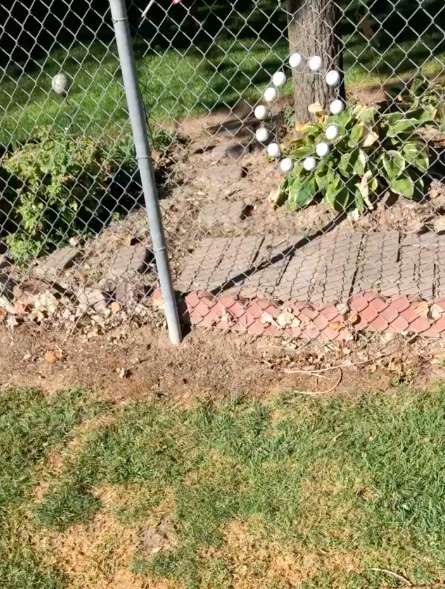
Golf balls were attached in a ring to the metal fence separating the green from a neighboring house. Gaisford decided to investigate, curious why someone would make such a strange display.

Loni Gaisford

“When we pulled up to the tee box … we noticed the golf ball ring in the fence with a sign next to it,” Gaisford told The Dodo. “I walked over to read the sign thinking it was a memorial for someone.”
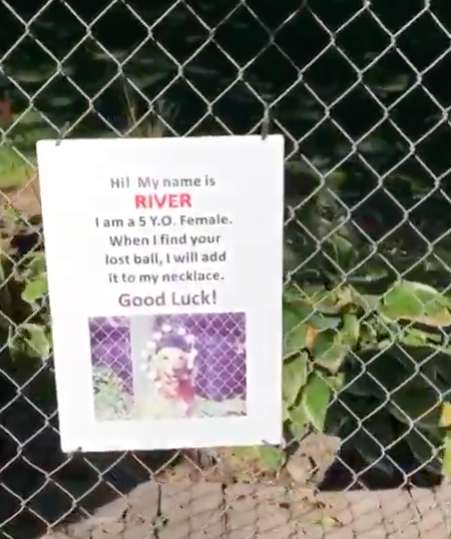
The sign read: “Hi! My name is River. I’m a 5 Y.O. female. When I find your lost ball, I will add it to my necklace. Good luck!”

Loni Gaisford

Gaisford finally understood the hilarious meaning behind the golf ball ring — and then she spotted the dog from the photo, playing nearby.
“We noticed River was in the backyard with a toy,” Gaisford said. “[She] walked over to the hole in the fence but the toy was too big to stick her head through the window so she just let us rub her back.”

After Gaisford teed off, she returned to say goodbye to River. The dog suddenly dropped the toy and stuck her head through the “necklace” to receive a few head scratches
Gaisford posted the video to her Instagram later that night, and as the comments came in, she realized that River was something of a local celebrity. “Every time I play that course she never does that … Jealous,” one commenter wrote.
Another commenter couldn’t resist making a few golf puns: “What’s the best type of fence for a dog who lives next to a golf course!? A fence with a hole in one!”
When the video made it to Reddit, more golf lovers shared stories of their own special experiences with the pup: ”One day, I was at McRiley and the owner of that dog was walking her (no leash) and she jumped right into our cart and sat down,” la_fern72 wrote on Reddit. “She was super friendly.”

Gaisford couldn’t be happier that her video has reached so many people — including those who will never set foot on a golf course. “Meeting River brightened my day,” Gaisford said, “and I knew the internet would love meeting River as much as I did.”

ooOOoo

Well I tried ever so hard to find a way of showing you the video, and unfortunately it is not on YouTube, so you are going to have to go across to the website to watch it. Sorry!

The treasure that is a pit bull

This is the true nature of this breed.

Pit Bulls have such a bad reputation. But in our experience if they are cared for and loved and not used for fighting then they are great dogs.

No better illustrated than by this story that appeared on The Dodo website.

ooOOoo

Dog Refuses To Leave Mom’s Hospital Room After Saving Her Life

SUCH a good girl 👏🐕💕
BY

PUBLISHED ON 10/10/2019

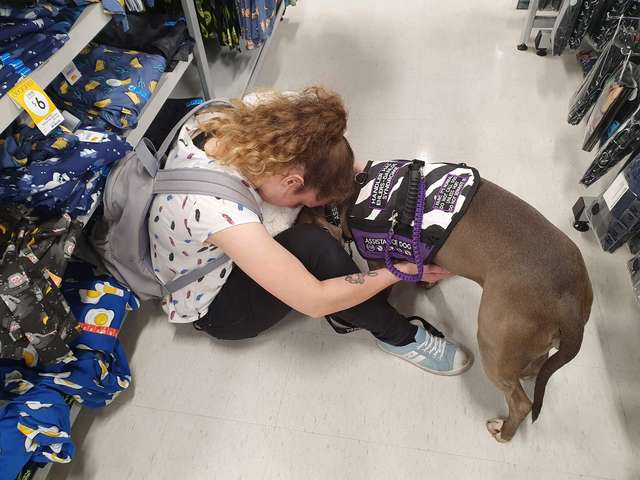
When Shauna Darcy first brought Ruby home, the plan was to have Ruby act as a service dog to help her with anxiety, depression and agoraphobia. Ruby was an incredible service dog and companion from the very beginning — and quickly showed Darcy just how far she would go to help her.

Shauna Darcy

“While she was training to be a service dog I noticed that she started picking up on changes in my heart rate and would act funny — for example, paw at me, try to get my attention, get on top of me, etc.,” Darcy told The Dodo.

Picking up on Ruby’s cues, Darcy went to the doctor and discovered she had health issues she hadn’t known about, including a rare heart condition called vascular Ehlers-Danlos syndrome. Ruby had known something was wrong even before Darcy did, and her main focus as a service dog quickly switched to Darcy’s cardiac issues.


Shauna Darcy

Every day, Ruby helps her mom with things like monitoring her heart rate and blood pressure, helping her during panic attacks and retrieving emergency medications. She also carries groceries, picks up dropped items and gets things her mom can’t reach, and is trained in deep pressure therapy.

“When I pass out she gets on top of me and applies all her pressure on me and licks my hands and face until I come around,” Darcy said.

Shauna Darcy

Ruby is there for her mom every single day — even when she doesn’t realize she needs her.

Last week, when Ruby started alerting her mom that something was wrong, she had no idea why. At that point, Darcy was feeling fine, but decided to trust Ruby and call an ambulance anyway, just in case.

“It turns out my heart was going into atrial fibrillation,” Darcy said. “By the time the paramedics came, I was in pain and barely conscious.”

Shauna Darcy

As the paramedics rushed Darcy to the hospital, she realized that Ruby had saved her life that day.

While Darcy was in the hospital and the doctors worked to get her stable again, Ruby refused to leave her mom’s side. Even while Darcy was unconscious, Ruby lay in her hospital bed, pressed up against her, hoping her mom could sense she was there and that her presence would make her feel safe.

Shauna Darcy

During their stay at the hospital, so many people stopped by to meet Ruby. She’s always very popular whenever she and her mom are at the hospital and loves saying hi to everyone — but also makes sure that she’s never too far away from her mom. She loves her so much, and her mom loves her just as much right back.

Shauna Darcy

Without Ruby, Darcy’s life would be very different. Ruby helps her mom stay healthy and safe every single day, and her mom is so grateful for everything she’s done for her.

“I wouldn’t be alive without her,” Darcy said.

ooOOoo

“I wouldn’t be alive without her,”

I’m emboldening that last statement.

This is a wonderful story.

For Darcy has articulated what millions of other dog lovers know in their hearts. That the relationship between a dog and a human is extra special!

Being alone!

We have had a taste of this a week-and-a-half ago.

We were truly alone when we went to Utah.

But then again, one of the privileges of being on 13 acres, 13 very rural acres, here in Southern Oregon is that being alone is not that far away!

I don’t want to underplay the importance of this posting, republished from The Conversation website (with permission), because we live in so busy times.

Written by three professors, it’s a very wise and profound article.

ooOOoo

Spending time alone in nature is good for your mental and emotional health

June 4th, 2018

By

Professor of Outdoor Education, Montreat College

Associate Professor and Program Director of Parks and Recreation Management, Western Carolina Universit

Associate Professor of Outdoor Education, Montreat College

Today Americans live in a world that thrives on being busy, productive and overscheduled. Further, they have developed the technological means to be constantly connected to others and to vast options for information and entertainment through social media. For many, smartphones demand their attention day and night with constant notifications.

As a result, naturally occurring periods of solitude and silence that were once commonplace have been squeezed out of their lives. Music, reality TV shows, YouTube, video games, tweeting and texting are displacing quiet and solitary spaces. Silence and solitude are increasingly viewed as “dead” or “unproductive” time, and being alone makes many Americans uncomfortable and anxious.

But while some equate solitude with loneliness, there is a big difference between being lonely and being alone. The latter is essential for mental health and effective leadership.

We study and teach outdoor education and related fields at several colleges and organizations in North Carolina, through and with other scholars at 2nd Nature TREC, LLC, a training, research, education and consulting firm. We became interested in the broader implications of alone time after studying intentionally designed solitude experiences during wilderness programs, such as those run by Outward Bound. Our findings reveal that time alone in nature is beneficial for many participants in a variety of ways, and is something they wish they had more of in their daily life.

On an average day in 2015, individuals aged 15 and over spent more than half of their leisure time watching TV. Bureau of Labor Statistics, Americans Time Use Survey

Reflection and challenge

We have conducted research for almost two decades on Outward Bound and undergraduate wilderness programs at Montreat College in North Carolina and Wheaton College in Illinois. For each program, we studied participants’ experiences using multiple methods, including written surveys, focus group interviews, one-on-one interviews and field notes. In some cases, we asked subjects years later to look back and reflect on how the programs had affected them. Among other questions, our research looked at participant perceptions of the value of solo time outdoors.

Our studies showed that people who took part in these programs benefited both from the outdoor settings and from the experience of being alone. These findings build on previous research that has clearly demonstrated the value of spending time in nature.

Scholars in fields including wilderness therapy and environmental psychology have shown that time outdoors benefits our lives in many ways. It has a therapeutic effect, relieves stress and restores attention. Alone time in nature can have a calming effect on the mind because it occurs in beautiful, natural and inspirational settings.

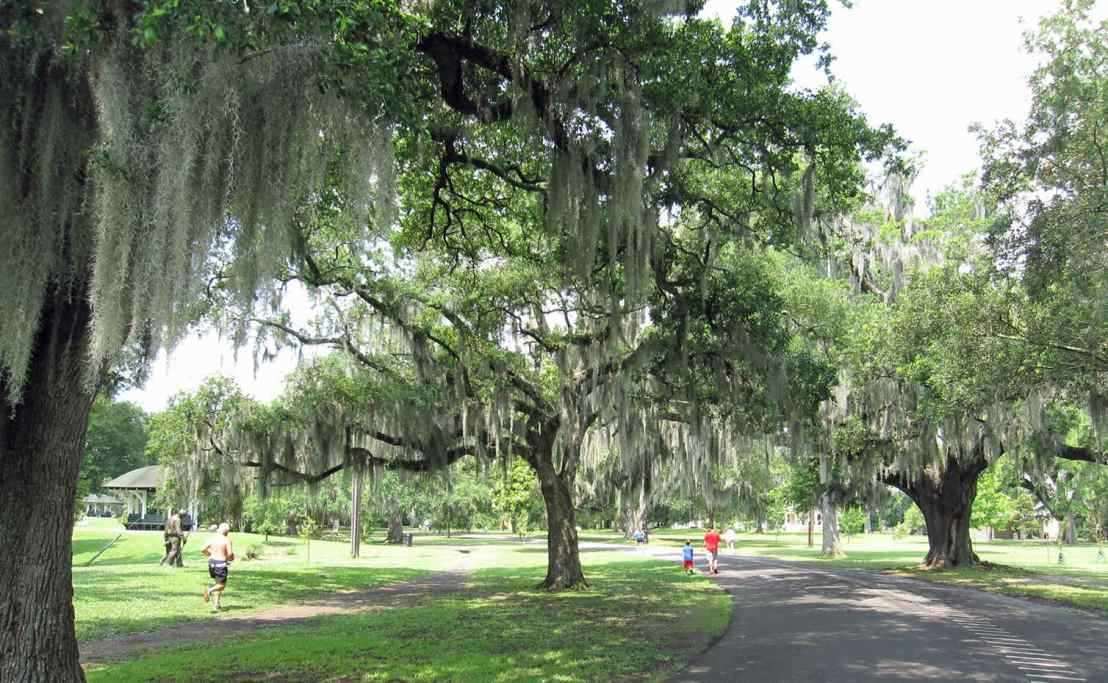
Spending time in city parks like Audubon Park in New Orleans provides some of the same benefits as time in wilderness areas, including reduced stress levels and increased energy levels. InSapphoWeTrust, CC BY-SA

Nature also provides challenges that spur individuals to creative problem-solving and increased self-confidence. For example, some find that being alone in the outdoors, particularly at night, is a challenging situation. Mental, physical and emotional challenges in moderation encourage personal growth that is manifested in an increased comfort with one’s self in the absence of others.

Being alone also can have great value. It can allow issues to surface that people spend energy holding at bay, and offer an opportunity to clarify thoughts, hopes, dreams and desires. It provides time and space for people to step back, evaluate their lives and learn from their experiences. Spending time this way prepares them to re-engage with their community relationships and full work schedules.

Putting it together: The outdoor solo

Participants in programmed wilderness expeditions often experience a component known as “Solo,” a time of intentional solitude lasting approximately 24-72 hours. Extensive research has been conducted on solitude in the outdoors because many wilderness education programs have embraced the educational value of solitude and silence.

Solo often emerges as one of the most significant parts of wilderness programs, for a variety of reasons. Alone time creates a contrasting experience to normal living that enriches people mentally, physically and emotionally. As they examine themselves in relation to nature, others, and in some cases, God, people become more attuned to the important matters in their lives and in the world of which they are part.

Solo, an integral part of Outward Bound wilderness trips, can last from a few hours to 72 hours. The experience is designed to give participants an opportunity to reflect on their own thoughts and critically analyze their actions and decisions.

Solitary reflection enhances recognition and appreciation of key personal relationships, encourages reorganization of life priorities, and increases appreciation for alone time, silence, and reflection. People learn lessons they want to transfer to their daily living, because they have had the opportunity to clarify, evaluate and redirect themselves by setting goals for the future.

For some participants, time alone outdoors provides opportunity to consider the spiritual and/or religious dimension of life. Reflective time, especially in nature, often enhances spiritual awareness and makes people feel closer to God. Further, it encourages their increased faith and trust in God. This often occurs through providing ample opportunities for prayer, meditation, fasting, Scripture-reading, journaling and reflection time.

Retreating to lead

As Thomas Carlyle has written, “In (solitary) silence, great things fashion themselves together.” Whether these escapes are called alone time, solitude or Solo, it seems clear that humans experience many benefits when they retreat from the “rat race” to a place apart and gather their thoughts in quietness.

In order to live and lead effectively, it is important to be intentional about taking the time for solitary reflection. Otherwise, gaps in schedules will always fill up, and even people with the best intentions may never fully realize the life-giving value of being alone.

ooOOoo

I would modify that advice from Thomas Carlyle and that is to include a dog.

For in my experience when one is in the mood for a bit of solitary reflection your dog seems to sense it as well.

Our trip to Utah, part three

We are very close to the point of this trip.

Friday, September 27th.

As soon as we were on our way, first thing was to find a bed for the night in the area of the Capitol Reef NP. This was a popular time of the year and so many places were full. Our ‘fall-back’ position was to sleep in the truck but I really hoped it wouldn’t come to that.

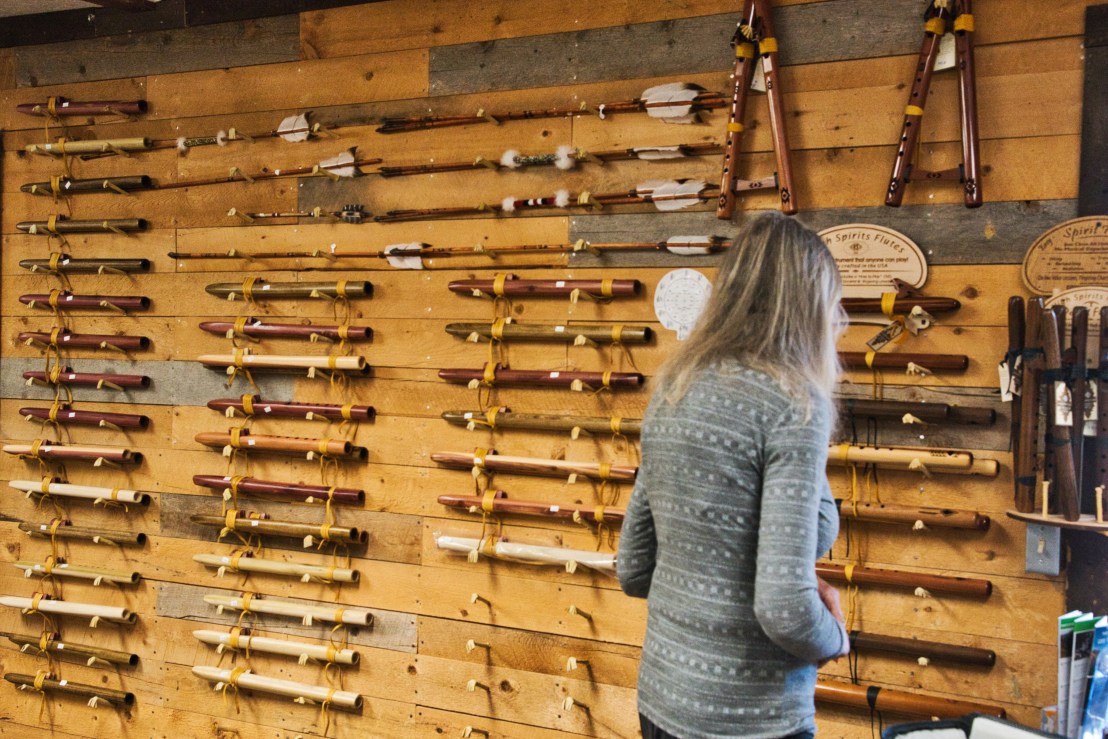
Eventually we found a room for just tonight in The Flute Shop and Motel in Torrey, just 10 miles from the National Park. Run by Vance and Elaine Morrill it was more than just a motel, it was a scene of much fascination. For Vance made flutes the American Indian way.

But more of that later.

Oh, and there’s a dog story as well. Again, I’m writing that up as a separate post.

On to the Capitol Reef Park.

Or rather a pause before we descended off the heights that surrounded this part of Utah down to the park.

The pause was to take a photograph of an intense rain storm that had a spot quite close where the remnants of a rainbow could just be made out. It’s hardly visible in the above picture.

It was simply stunning.

Beyond words.

I promised you a little more about Vance Morrill and his flutes. But apart from the photograph I will delay that for a while (until the draft of the post has been approved by Vance).

Here is Jean looking at them.

Finally, Vance promised to draw some routes in the morning to some of the lesser known spots in Capitol Reef.

Two more dog food recalls

These are both from late September.

I have been catching up on my emails and saw that two had come in; one from the 24th September and one from the 25th September.

Here they are.

ooOOoo

September 25th, 2019

Hill’s Pet Nutrition confirms the company has discontinued production and sale of its Hill’s Ideal Balance dry and wet dog foods. No reason for this action has been given.

oooo

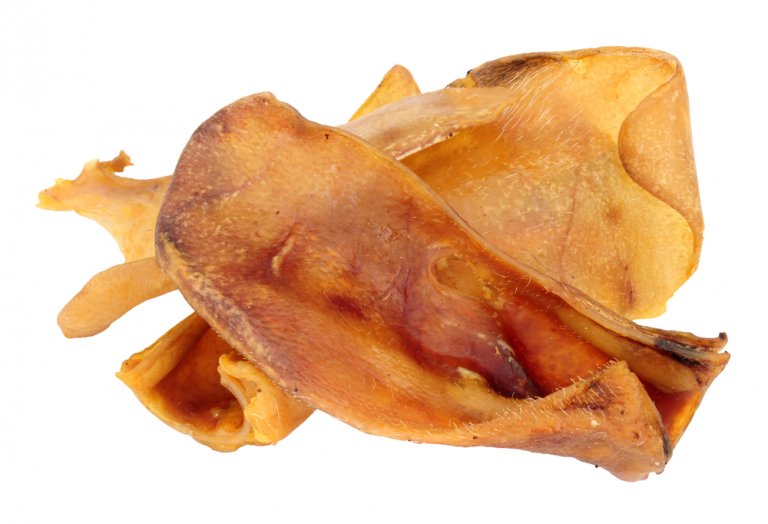
TDBBS Recalls USA-Made Pig Ear Pet Treats

September 24, 2019 — TDBBS of Richmond, VA, is recalling a limited distribution of 2 pig ear pet treat products sold via Amazon.com due to possible contaminationwith Salmonella bacteria.

What’s Recalled?

The affected products were shipped to customers between April 22, 2019, and August 13, 2019.

Customers are advised to dispose of any USA Thick Pig Ear 8 Pack and USA Thick Pig Ear 20 Pack from the following shipments.

All UPCs, Best By Dates and Lot Codes are located on the package back.

A sample image of one of the product labels is posted below. See above table for specific lot numbers and Best By dates.

Why the Recall?

This recall is the result of routine sampling conducted by the Michigan Department of Agriculture and Rural Development.

The sample package tested positive for Salmonella. No illnesses have been reported. And according to the company, “the amount of affected product is minimal”.

About Salmonella

Salmonella can affect animals eating the products, and there is risk to humans from handling contaminated pet products, especially if they have not thoroughly washed their hands after having contact with the products or surfaces exposed to these products.

Healthy people infected with Salmonella should monitor themselves for some or all the following symptoms: nausea, vomiting, diarrhea or bloody diarrhea, abdominal cramping and fever.

Rarely, Salmonella can result in more serious ailments, including arterial infections, endocarditis, arthritis, muscle pain, eye irritation, and urinary tract symptoms.

Consumers exhibiting these signs after having contact with this product or a pet that has eaten the product should contact their healthcare providers.

Pets with Salmonella infections may be lethargic and have diarrhea or bloody diarrhea, fever, and vomiting.

Some pets will have only decreased appetite, fever and abdominal pain.

Infected but otherwise healthy pets can be carriers and infect other animals or humans.

Company Statement

TDBBS included the following text within the FDA recall announcement:

“TDBBS treats and chews are produced to robust safety and quality standards, using the most advanced food safety protocols. Our team is committed to doing its part to caring for the pets who enjoy our products. We regret the concern and inconvenience this recall creates for our customers.

“Our company has ceased the production and distribution of this product as we, in cooperation with the FDA, continue to investigate the situation further. TDBBS’s product safety team is conducting its own stringent review to identify what measures can be established to prevent this situation from recurring.

“Our safety teams have been rigorously testing our products and raw materials, working with independent testing firms and conducting an internal investigation within our supply chain to determine how this situation occurred. Nevertheless, we believe it is appropriate out of an abundance of caution to conduct this voluntary recall in cooperation with our customer.”

What to Do?

If your pet has consumed the recalled product and has these symptoms, please contact your veterinarian.

Consumers may contact customer service at 877-483-5853, Monday to Friday 9 to 5 PM or email TDBBS at customerservice@tdbbsllc.com.

U.S. citizens can report complaints about FDA-regulated pet food products by calling the consumer complaint coordinator in your area.

Or go to https://www.fda.gov/petfoodcomplaints.

Canadians can report any health or safety incidents related to the use of this product by filling out the Consumer Product Incident Report Form.

ooOOoo

As usual, please share these wherever you can.

Well, we’re back!

And a dog food alert to be starting off with!

We got home at 11:30 yesterday morning and it’s going to be a while before I get back into the swing of things. Not taking into account the nearly 200 high-definition photographs each of one has to be looked at carefully and post-processed where necessary.

However, this was released on September 26th and I didn’t want to delay it any longer.

ooOOo

FDA: Do Not Feed Performance Dog Raw Pet Food

September 26, 2019 — The U.S. Food and Drug Administration is cautioning pet owners not to feed their pets any Performance Dog frozen raw pet food after a sample tested positive for Salmonella and Listeria monocytogenes (L. mono).

What Caused the Recall?

Two samples of different finished products collected during an inspection of Bravo Packing, Inc., the manufacturer of Performance Dog raw pet food, tested positive for Salmonella and/or Listeria monocytogenes.

One of the products sampled had not yet been distributed.

The product that entered the marketplace is Performance Dog raw pet food, lot code 072219, sold to customers frozen in two-pound pouches.

Lot codes are printed on the outside of the boxes used to distribute the product, but the lot codes are not printed on the individual sealed plastic pouches, also known as chubs.

Therefore, there are no unique identification numbers on the individual chubs that would allow customers to verify whether their product belongs to the affected lot.

The FDA is cautioning about all Performance Dog frozen raw pet food produced on or after July 22, 2019 because the products do not have lot codes printed on retail packaging.

If you have any Performance Dog product that you purchased after July 22, 2019, throw it away.

Why Is FDA Concerned?

FDA is issuing this alert because Performance Dog raw pet food represents a serious threat to human and animal health.

Because these products are sold and stored frozen, FDA is concerned that people may still have them in their possession.

This is the second time Bravo Packing, Inc. product has tested positive for pathogen contamination. In September 2018, Bravo Packing, Inc. recalled all Performance Dog frozen raw pet food due to Salmonella.

Also, during a 2016 inspection, the FDA collected samples of Bravo Packing, Inc. horse meat chunk animal food that tested positive for the drugs pentobarbital and phenytoin.

Pet foods and treats contaminated with Salmonella and Listeria mono are of particular public health importance because they can affect both human and animal health.

Pets can get sick from these pathogens and may also be carriers of the bacteria and pass it on to their human companions without appearing to be ill.

People can get sick from handling contaminated pet foods and treats or touching surfaces that have had contact with the contaminated pet foods and treats.

Additionally, if a person gets Salmonella or L. mono on their hands, they can spread the bacteria to other people, objects, and surfaces.

Additionally, if a person gets Salmonella or L. mono on their hands, they can spread the bacteria to other people, objects, and surfaces.

The Federal Food, Drug, and Cosmetic Act requires that all animal food, like human food, be safe to eat, produced under sanitary conditions, contain no harmful substances, and be truthfully labeled.

Without an effective control for pathogens, such as cooking, animal food is more likely to contain pathogens such as Salmonella and L. mono.

Refrigeration or freezing does not kill the bacteria.

About Salmonella

Salmonella is a bacterium that can cause illness and death in humans and animals, especially those who are very young, very old, or have weak immune systems.

According to CDC, people infected with Salmonella can develop diarrhea, fever and abdominal cramps.

Most people recover without treatment, but in some people, the diarrhea may be so severe that they need to be hospitalized.

In some patients, the Salmonella infection may spread from the intestines to the blood stream and then to other body sites unless the person is treated promptly with antibiotics.

Consult your health care provider if you have symptoms of Salmonella infection.

Salmonella in Pets

Pets do not always display symptoms when infected with Salmonella, but signs can include vomiting, diarrhea (which may be bloody), fever, loss of appetite and/or decreased activity level.

If your pet has these symptoms, consult a veterinarian promptly.

You should also be aware that infected pets can shed the bacteria in their feces and saliva without showing signs of being sick, further contaminating the household environment.

About Listeria Monocytogenes

Listeria monocytogenes is a bacterium that can cause illness and death in humans and animals, especially those who are pregnant, very young, very old, or have weak immune systems.

According to CDC, listeriosis in humans can cause a variety of symptoms, depending on the person and the part of the body affected.

Symptoms can include headache, stiff neck, confusion, loss of balance, and convulsions in addition to fever and muscle aches.

Pregnant women typically experience only fever and other flu-like symptoms, such as fatigue and muscle aches.

However, infections during pregnancy can lead to miscarriage, stillbirth, premature delivery, or life-threatening infection of the newborn.

Pregnant women and their newborns, adults age 65 and older, and people with weakened immune systems are more likely to get sick with listeriosis.

Anyone with symptoms of listeriosis should contact a health care provider.

Listeria in Pets

L. mono infections are uncommon in pets, but they are possible.

Symptoms may include mild to severe diarrhea; anorexia; fever; nervous, muscular and respiratory signs; abortion; depression; shock; and death.

Pets do not need to display symptoms to be able to pass L. mono on to their human companions.

As with Salmonella, infected pets can shed L. mono in their feces and saliva without showing signs of being sick, further contaminating the household environment.

What to Do?

If you have any of the affected product, stop feeding it to your pets and throw it away in a secure container where other animals, including wildlife, cannot access it.

Consumers who have had this product in their homes should clean refrigerators/freezers where the product was stored and clean and disinfect all bowls, utensils, food prep surfaces, pet bedding, toys, floors, and any other surfaces that the food or pet may have had contact with.

Because animals can shed the bacteria in the feces when they have bowel movements, it’s particularly important to clean up the animal’s feces in yards or parks where people or other animals may become exposed, in addition to cleaning items in the home.

Consumers should thoroughly wash their hands after handling the affected product or cleaning up potentially contaminated items and surfaces.

U.S. citizens can report complaints about FDA-regulated pet food products by calling the consumer complaint coordinator in your area.

Or go to https://www.fda.gov/petfoodcomplaints.

Canadians can report any health or safety incidents related to the use of this product by filling out the Consumer Product Incident Report Form.

ooOOoo

Hopefully no follower of this place has had any problems with Listeria but, please, share this as widely as you can.
TED Talk

This is good

This doesn’t really have a link to dogs. However, I sense that dog lovers across the world have less of a problem with depression.

ooOOoo

In a moving talk, journalist Johann Hari shares fresh insights on the causes of depression and anxiety from experts around the world — as well as some exciting emerging solutions. “If you’re depressed or anxious, you’re not weak and you’re not crazy — you’re a human being with unmet needs,” Hari says.

Why you should listen

Johann Hari’s first book, Lost Connections: Why You’re Depressed and How to Find Hope, is being translated into 27 languages and has been praised by a broad range of people — from Elton John (who said it “will change your life”) to the British Journal of General Practice, who called it “one of the most important texts in recent years.” His second book, Chasing the Scream: The First and Last Days of the War on Drugs, has been translated into 15 languages and is currently being adapted into a major Hollywood film by Oscar-winning director Lee Daniels, and into a non-fiction documentary series.

Hari graduated from Cambridge University with the highest degree grade, a Double First, in social and political sciences. He grew up in London, with a Swiss father who was a bus driver and a Scottish mother who worked in a shelter for victims of domestic violence. Today, he lives half the year in London, and he spends the other half of the year traveling to research his books.

Hari has written over the past eight years for some of the world’s leading newspapers and magazines, including the New York Times, the Los Angeles Times, the Guardian, the Spectator, Le Monde Diplomatique, the Melbourne Age and Politico. He has also appeared on leading TV shows, including HBO’s Realtime With Bill Maher. He was twice named “National Newspaper Journalist of the Year” by Amnesty International. He has also been named “Cultural Commentator of the Year” and “Environmental Commentator of the Year” at the Comment Awards, and “Gay Journalist of the Year” at the Stonewall Awards. Read about what Johann is working on now.

About Johann Hari

I’m indebted to Wikipedia from which I have drawn some of the following:

Early Career

Hari was born in Glasgow, Scotland, to a Scottish mother and Swiss father, before his family relocated to London when he was an infant. Hari was physically abused in his childhood while his father was away and his mother was ill.

According to Hari, he attended the John Lyon School, an independent school affiliated with Harrow School, and then Woodhouse College, a state sixth-form in Finchley. Hari graduated from King’s College, Cambridge in 2001 with a double first in social and political sciences.

Later Career

In January 2012, after leaving The Independent, Hari announced that he was writing a book on the war on drugs, which was subsequently published as Chasing the Scream: The First and Last Days of the War on Drugs.

His 2015 T.E.D. talk entitled “Everything you think you know about addiction is wrong” has been viewed over 9.4 million times (as of July 12, 2018), and lays out the idea that most addictions are functional responses to experiences and a lack of healthy supportive relationships, rather than a simple biological need for a particular substance.

In January 2018, Hari’s book Lost Connections on depression and anxiety was published, with Hari citing his childhood issues, career crisis, and experiences with antidepressants and psychotherapy as fuelling his curiosity in the subject. Kirkus Reviews praised the book. Material from the book was criticised by neuroscientist and Guardian writer Dean Burnett, who pointed out that Hari appeared to be reporting as his own discoveries material — such as the biopsychosocial model – that has been common knowledge for decades, and for misrepresenting the medical, psychiatric and scientific establishments as “some shadowy monolithic organisation, in thrall to the drug industry”.

His website

Johann Hari

ooOOoo

Now as far as I can see Johann is not without some criticism but, for me, that doesn’t remove the validity of the talk on depression.

Picture Parade Three Hundred and Seven

These are really gorgeous!

And republished with full permission!

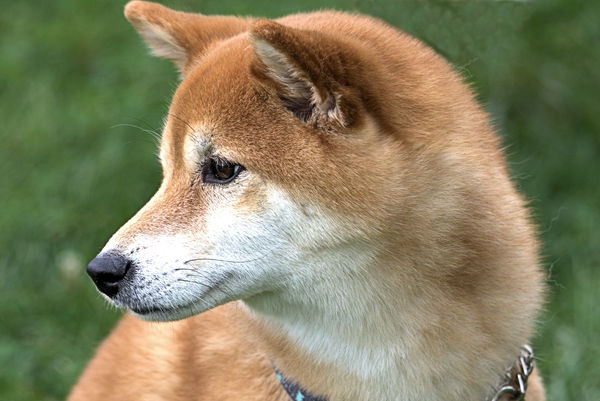
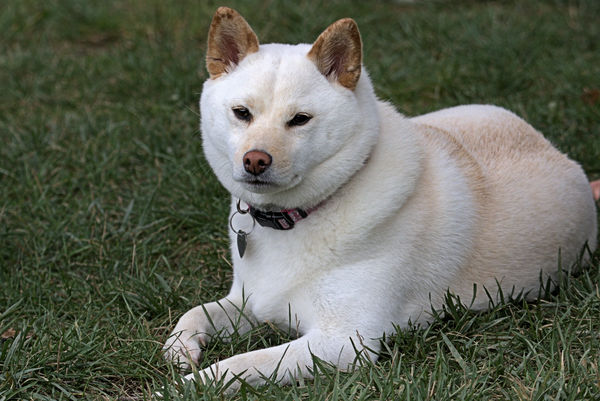
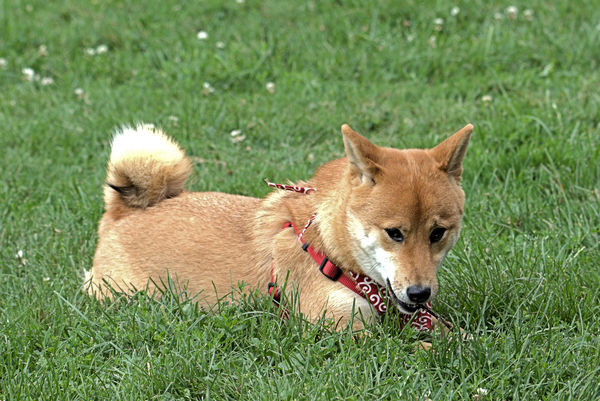
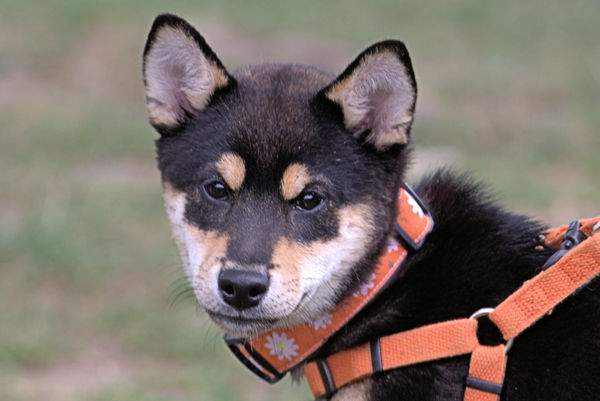
My wife & I do volunteer work for a breed specific dog rescue, the Shiba Inu Rescue Association. Actually my wife does the work & I drive the car, offer words of encouragement and take photos. Yesterday we met up with Several Shibas & their owners. For those not familiar with this breed, they are a small Japanese dog, averaging 18 to 20 lbs although some are as small as 10 lbs & others 30 lbs or more. They are, genetically, still very close to wolves. Their coat color varies a bit but primarily, as seen below, either red, black & tan or creamy. We have over the years fostered and placed in new “forever homes” approx. 25 dogs. They are extremely intelligent and very “cat like” in their temperament.

oooo

Chillin

oooo

I loves me a gooood stick

oooo

Treats? Did someone say treats?

oooo

Take that camer, and shove it….

oooo

Little dog, big dreams.

All taken from here.

Prostate drug may slow Parkinson’s disease – BBC News

A very interesting development.

I was chatting to my very old friend, as in the number of years, Richard Maugham yesterday and shortly after the call he sent me an email with a link to a recent item on the BBC News website.

Most of you regulars know that Jeannie was diagnosed with Parkinson’s disease (PD) in December, 2015 and coincidentally at the same time Richard was also diagnosed with PD.

I’m sure there are a few who read this blog that either have PD of know or someone who has it.

ooOOoo

Prostate drug may slow Parkinson’s disease

By Michelle Roberts,
Health editor, BBC News online

17th September, 2019

A drug used to treat enlarged prostates may be a powerful medicine against Parkinson’s disease, according to an international team of scientists.

Terazosin helps ease benign prostatic hyperplasia (BPH) by relaxing the muscles of the bladder and prostate.

But researchers believe it has another beneficial action, on brain cells damaged by Parkinson’s.

They say the drug might slow Parkinson’s progression – something that is not possible currently.

Cell death

They studied thousands of patients with both BPH and Parkinson’s.

Their findings, published in the Journal of Clinical Investigation, suggest the alpha-blocker drug protects brain cells from destruction.

Parkinson’s is a progressive condition affecting the brain, for which there is currently no cure.

Existing Parkinson’s treatments can help with some of the symptoms but can’t slow or reverse the loss of neurons that occurs with the disease.

Terazosin may help by activating an enzyme called PGK1 to prevent this brain cell death, the researchers, from the University of Iowa, in the US and the Beijing Institute for Brain Disorders, China, say.

Clinical trials

When they tested the drug in rodents it appeared to slow or stop the loss of nerve cells.

To begin assessing if the drug might have the same effect in people, they searched the medical records of millions of US patients to identify men with BPH and Parkinson’s.

They studied 2,880 Parkinson’s patients taking terazosin or similar drugs that target PGK1 and a comparison group of 15,409 Parkinson’s patients taking a different treatment for BPH that had no action on PGK1.

Patients on the drugs targeting PGK1 appeared to fare better in terms of Parkinson’s disease symptoms and progression, which the researchers say warrants more study in clinical trials, which they plan to begin this year.

‘Exciting area’

Lead researcher Dr Michael Welsh says while it is premature to talk about a cure, the findings have the potential to change the lives of people with Parkinson’s.

“Today, we have zero treatments that change the progressive course of this neurodegenerative disease,” she says.

“That’s a terrible state, because as our population ages Parkinson’s disease is going to become increasingly common.

“So, this is really an exciting area of research.”

‘Disease modifying’

Given that terazosin has a proven track record for treating BPH, he says, getting it approved and “repurposed” as a Parkinson’s drug should be achievable if the clinical trials go well.

The trials, which will take a few years, will compare the drug with a placebo to make sure it is safe and effective in Parkinson’s.

Co-researcher Dr Nandakumar Narayanan, who treats patients with Parkinson’s disease said: “We need these randomised controlled trials to prove that these drugs really are disease modifying.

“If they are, that would be a great thing.”

Prof David Dexter from Parkinson’s UK said: “These exciting results show that terazosin may have hidden potential for slowing the progression of Parkinson’s, something that is desperately needed to help people live well for longer.

“While it is early days, both animal models and studies looking at people who already take the drug show promising signs that need to be investigated further.”

ooOOoo

I have now written to the Journal of Clinical Investigation, (JCI).

Interestingly, if one goes to the website of the JCI then one reads the following on the ‘About’ page:

The Journal of Clinical Investigation is a premier venue for discoveries in basic and clinical biomedical science that will advance the practice of medicine.

The JCI was founded in 1924 and is published by the ASCI, a nonprofit honor organization of physician-scientists incorporated in 1908. See the JCI’s Wikipedia entry for detailed information.

It’s a small step forward!

Picture Parade Three Hundred and Five

This is a cross between a post and a Picture Parade.

I was so attracted to this post that I was going to publish it during the week.

But then the photographs were so superb that I decided to make it a Picture Parade.

It was a post published by Bring Fido.

ooOOoo


A Peck of Places to Take Your Dog Apple Picking

Posted by Brandi Bangle

Your pooch may be the apple of your eye, but did you know you can take her to pick apples with you, too? Many farms and orchards around the country welcome four-legged guests. Not only can you use apples to make delicious apple pies, apple cider and apple butter, but your pup can enjoy the fruit as well! According to the American Kennel Club, apples are safe for dogs to eat, in moderation of course. However, dogs should not consume the seeds because they contain a plant compound that converts into cyanide when chewed. The core should also be kept away from pups, as it could be a choking hazard.

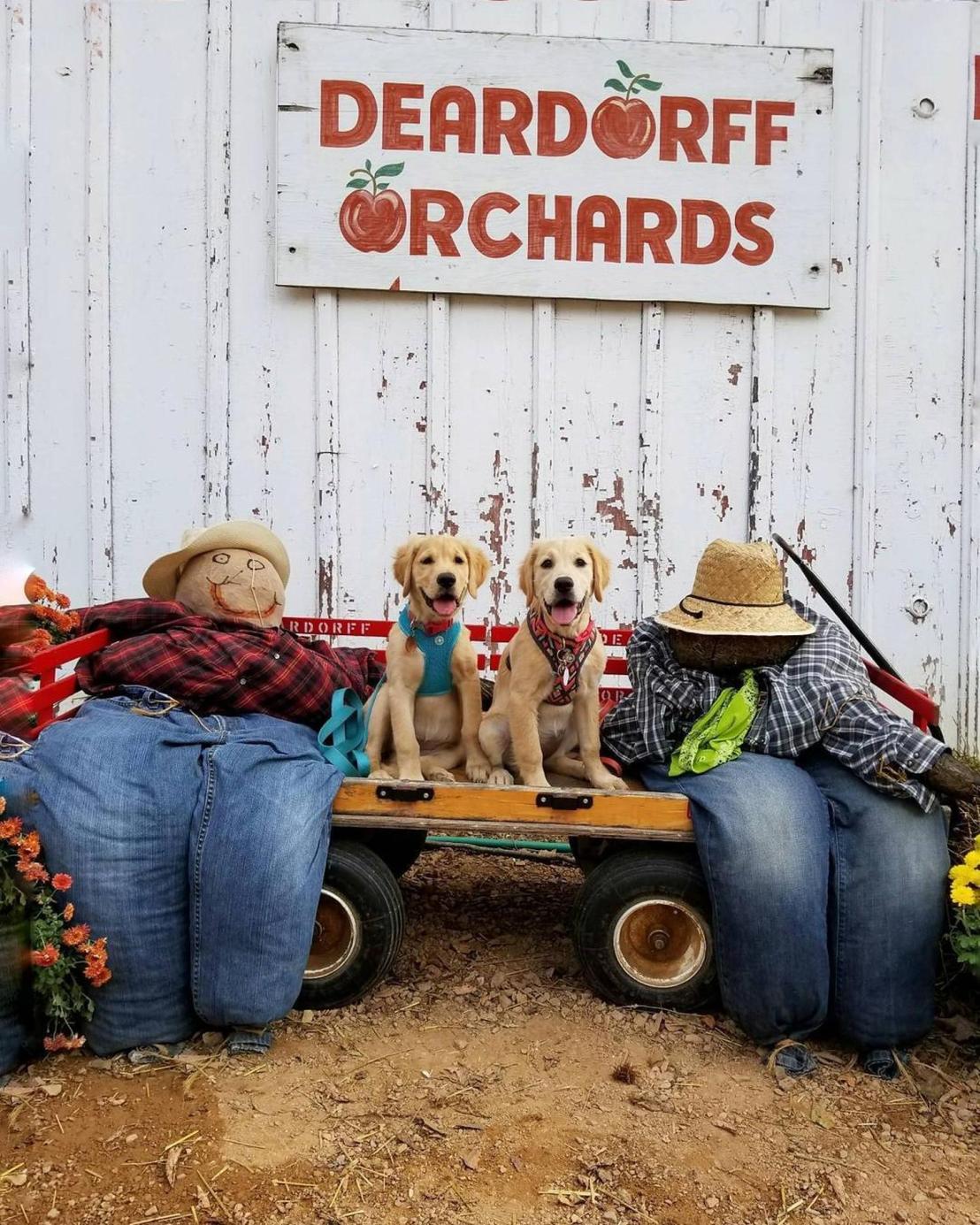
Deardorff Orchards

Waconia, MN

“Give us apples … and then maybe we’ll tell you who’s who.”
Photo by @ellogoldengirls

Deardorff Orchards loves dogs, which is why they have two separate pet water stations on the premises as well as waste bags available for guests with pups. Dogs are welcome on their 125 acres of grounds if they’re leashed and friendly. You and your pup will be able to pick from their 10 varieties of apples, and their 3,000 trees ensure you can have your pick of the litter. Deardorff Orchards also has pumpkins, red wagons if you want to tow along your kids or your exceptionally lazy dog, and farm animals for Fido to meet. Guests are welcome to enjoy the barn, listen to live music, sample their wines, and take a tractor ride on the weekends. If your furry travel companion still isn’t ready to go home after a trip to the farm, visit dog-friendly Minneapolis, which is only about an hour away.

Pick-Your-Own apples is available at Deardorff Orchards Fridays to Sundays from September 5 through late October. Depending on the weather, apple picking is open from noon until 5 p.m. Customers must purchase at minimum a half-peck bag (roughly six pounds) before heading to the orchard. The cost varies depending on the apple variety and availability.

Grandad’s Apples

Hendersonville, NC

“Beep beep! Tired pup coming through!”
Photo by Julie Leaver

Just a short drive from Asheville (and about two hours from Charlotte), Grandad’s Apples has been family-owned and operated since 1994. Pups and people alike can enjoy the 100 acres of the farm. Leashed dogs can join you while picking apples from the orchard but are not allowed in the pumpkin and playground areas. Fido is welcome inside the Barn and Country Store (where you can shop for apple turnovers, hot cider donuts, caramel apples and other goodies), near the barnyard corral where he can hang out with the resident farmyard animals, and in their 5-acre corn maze. Weekends at Grandad’s are full of fun events like cow trains, jump pillows, and even an apple cannon!

Grandad’s Apples is open for apple picking from late July through the third week of October from 8 a.m. to 6 p.m. daily. Pick-Your-Own is $11 for a peck and $18 for a half bushel. The corn maze is $4 per person and free for dogs. They recommend calling ahead to learn what’s available for picking before visiting.

Wrights Farm

Gardiner, NY


My fur coat really makes the apples pop.”
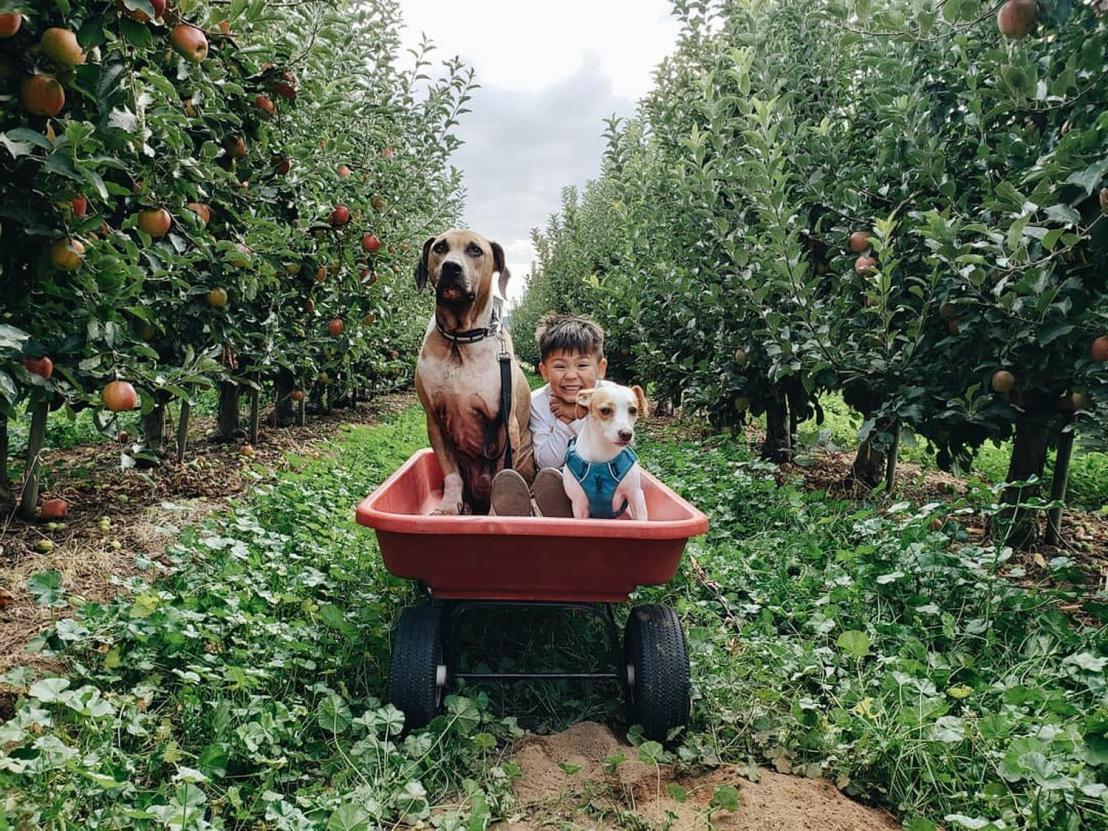
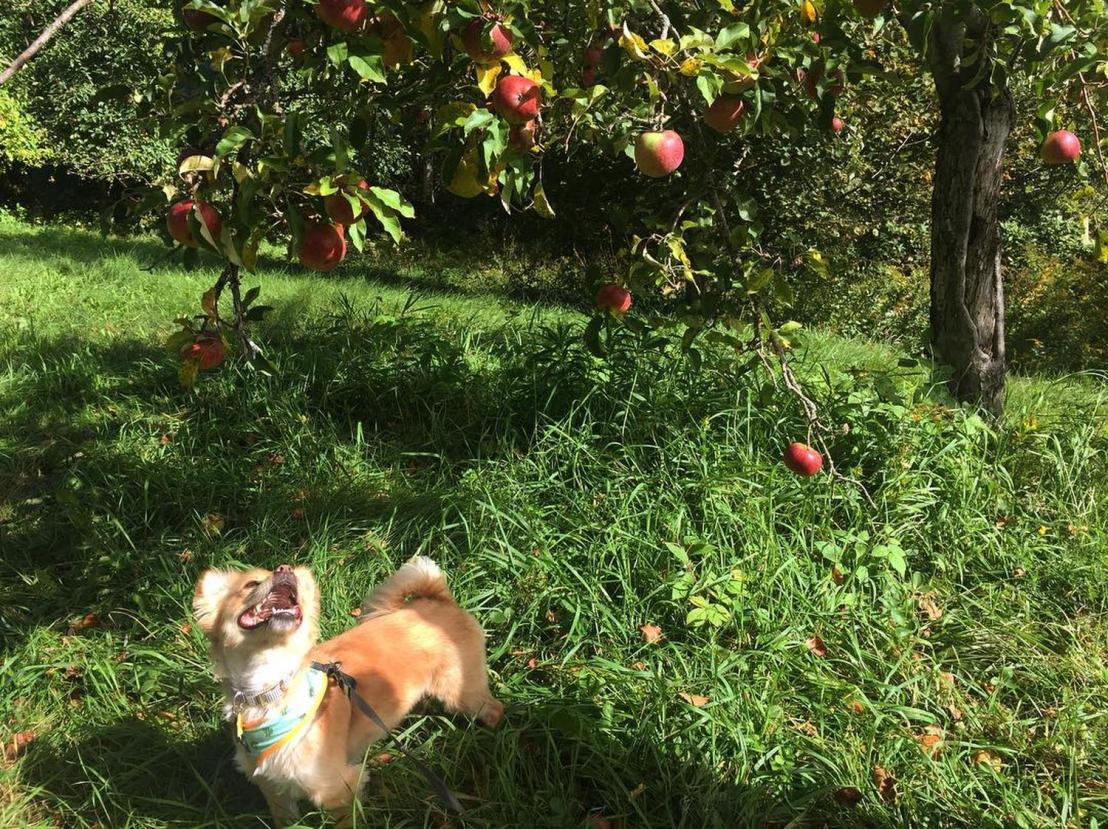
Photo by Facebook.com/WrightsFarm

Your pooch will love exploring Wrights Farm’s vast 453 acres. In addition to picking from the 100,000 bushels of apples they grow every year, you and Fido can hike, bike, picnic or tailgate here. They even welcome you to bring gas grills, kites and frisbees. The farm, which has been family-run for five generations, also offers Pick-Your-Own pumpkins and sells a variety of fruits, vegetables, baked goods, jams, jellies, pickles and apple sauces.

You can pick apples at Wrights Farm from September 8 to November 3, 2019. Pick-Your-Own hours are from 8 a.m. to 4:30 p.m every day. Admission is $12 and includes a one-peck bag. Children 5 to 9 years old pay $6 and receive a ½-peck bag. Children under 5 and dogs are free. Additional bags are available for purchase.

Kiyokawa Family Orchards

Parkdale, OR

“It’s been apple-asure to share the wagon with you.”
Photo by @itsokayklar

Dogs are part of the family, which is why leashed pups are invited to create fall memories along with everyone else at Kiyokawa Family Orchards. The family-owned and operated business has been growing produce (more than 120 varieties of apples and pears today!) since 1911. Dogs can lend a helping paw in the orchards. However, they may not enter the fruit stand. There is a water bowl for your pup to cool off and waste bags are available for easy cleanup. After you get your selection from the largest U-Pick orchard in the valley, don’t forget to snap some photos of Fido with the gorgeous backdrop of Mt. Hood.

Kiyokawa Family Orchards is open Saturdays and Sundays from July 13 to August 30 from 9 a.m. to 6 p.m. From August 30 to November 4, operating hours are Monday to Friday from 10 a.m. to 6 p.m. and weekends from 9 a.m. to 6 p.m. There is no admission fee and fruit prices vary.

Terison Apple Orchard

Cumberland Foreside, ME

“Please fall! C’mon, just one! Please!”
Photo by @mchemelski

Terison Apple Orchard gets it. One of their owners has her own pet-sitting service, so they understand how much people love their pooches. Leashed dogs can help you pick apples in their low-spray orchard. It’s the first Pick-Your-Own orchard in Maine, and you and your pup can bond together while savoring the sweet fruits of your labor.

While exact dates and hours vary due to the weather, Terison Apple Orchard is generally open from early September through October, from 9 a.m. to 5 p.m. daily. The orchard is self-service and uses the honor system. Bags cost $10 and $20, payable by cash only.

Cider Hill Family Orchard

Kansas City, KS

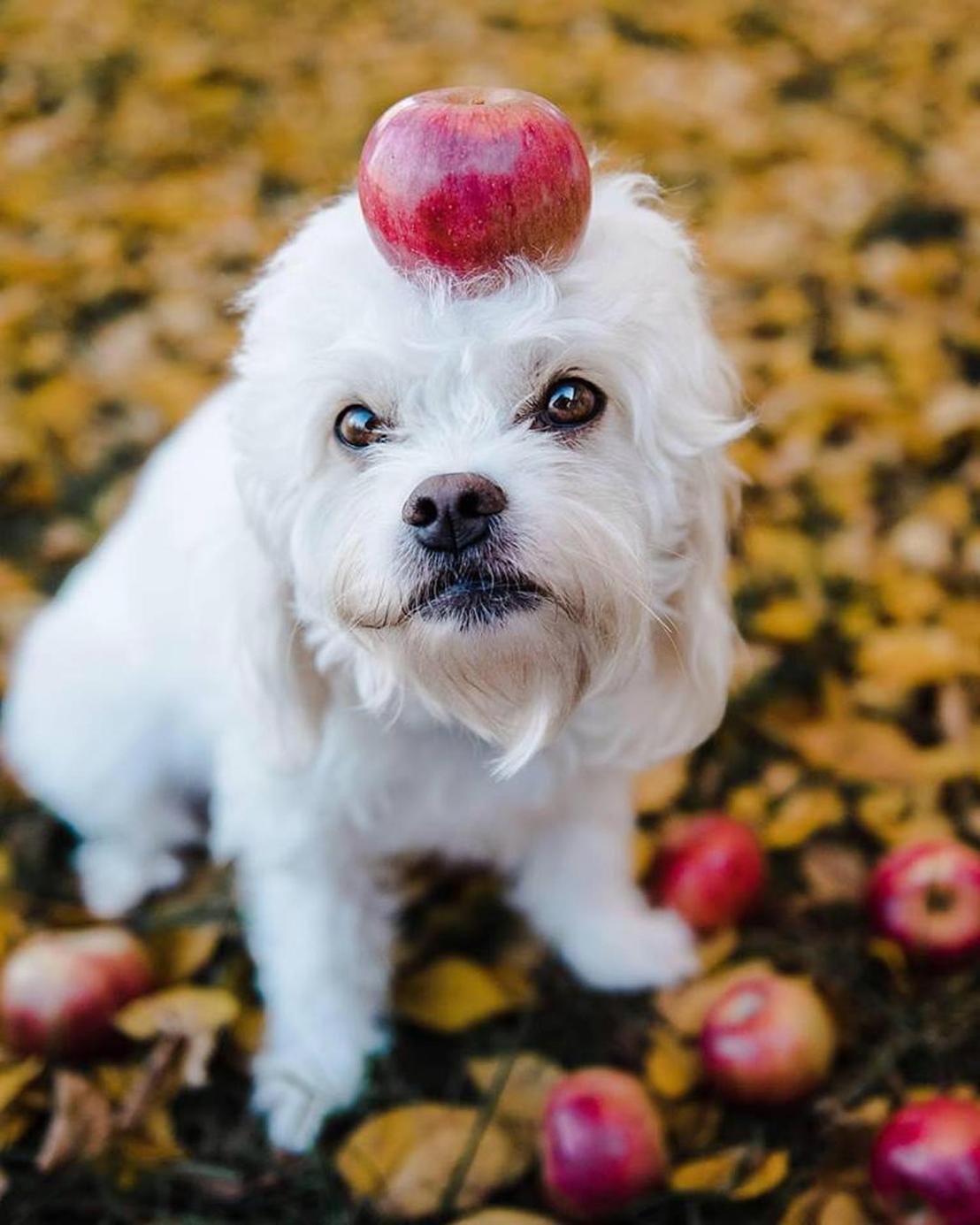
Apple picking with your pup can be a real balancing act.
Photo by Facebook.com/ciderhillfamilyorchardLeashed furry family members can help you pick from 18 different types of apples at Cider Hill Family Orchard’s 1,500 apple trees. Dogs are welcome on the 38 acres of farmland, but they may not enter buildings including the gift shop. Cider Hill also has a pumpkin patch, a fishing pond, a fire pit, hayrides and kid’s train rides. While you’re here, don’t forget to sample delicious treats made on site like cinnamon-cider doughnuts, apple crisp, kettle corn and apple butter.

Apple picking at Cider Hill begins in August. However, the end of the season varies due to the weather. In August, operating hours are 9 a.m. to 5 p.m. Tuesday through Saturday. In September and October, operating hours are 9 a.m. to 5 p.m Tuesday through Saturday and noon to 5 p.m. on Sunday. There is no admission fee. A peck of apples is $11, a half bushel is $21, and a bushel is $40. Aggressive dogs are not permitted.

Applecrest Farm

Hampton Falls, NH

Don’t sit under the apple tree with anyone else but me.
Photo by @thesecretworldofjensendean

Applecrest Farm is not only the oldest continuously operated apple orchard in America, and the oldest and largest in New Hampshire, it’s also dog friendly! Pups are welcome if they’re leashed, under control and picked up after. The farm boasts 220 acres and more than 40 types of apples. While dogs are not permitted in buildings or in the blueberry fields, you and Fido may enjoy the free tractor rides offered to and from the orchard on weekends in September and October. If your pup is itching for a road trip, the farm is conveniently located an hour from Boston and about 15 miles from historic Portsmouth and Newburyport.

Customers can pick apples from mid-August to late October from 8 a.m. to 5:30 p.m. daily. Admission is free. Pick-Your-Own apples are sold by the peck for $20 and by the half bushel for $30, payable by cash only.

Hilltop Orchards

Richmond, MA

“Now, how do I get out?”
Photo by @rogerdawgHilltop Orchards uses eco-farming methods to grow no-residue apples, which you and your leashed pup can pick together. The family-run property sits on 200 acres and grows 26 varieties of apples, most of which are available for Pick-Your-Own. On weekends during peak season, they offer free hayrides for two-legged and four-legged guests alike from 11 a.m. to 5 p.m. Hilltop Orchards also allows visitors with pets to use their land for hiking, skiing and snowshoeing. In addition, furry visitors can join you for wine and/or hard cider tastings at their on-site Furnace Brook Winery.

Apple season at Hilltop Orchards runs from Labor Day through Columbus Day, although they often have limited availability before and after these dates. The orchards are open daily from 9 a.m. to 5 p.m. A half peck costs $7, a peck costs $10, and a half bushel costs $20.

Minnetonka Orchards

Minnetrista, MN

“Just one small one while they’re not looking …”
Photo by @remisayshi

Minnetonka Orchards is very dog friendly. Dogs are welcome in all 12 acres of apple orchards and even on hayrides. They only ask that dogs are leashed and picked up after. The orchards, which have been around since 1976, feature 12 types of apples. The grounds also include Cinderella pumpkin patches and fields of gourds and squash. Other activities include a petting zoo, a tree deck, a corn maze, nature trails and several kids’ play areas. Tasty snacks like apple donuts and brats are also available for purchase. Their sister company, Painter Creek Winery & Cidery, allows dogs as well.

Minnetonka Orchards is open daily from late August through October. Hours of operation are from 10 a.m. to 7 p.m. The admission fee varies based on the crop but includes access to all the attractions on the premises.

Alldredge Orchards

Platte City, MO


“One apple picked and I’m already dog-tired.”
Photo by @kyandthetriguy

Alldredge Orchards welcomes dogs to pick apples with their owners as long as they’re leashed and cleaned up after (and you let them pet your pooch!). They grow several varieties which vary year to year depending on the weather. The property also has a pumpkin patch, barn store, cafe, playground and farm animals, so there’s plenty of fun for the whole family.

Alldredge Orchards is open from Labor Day Weekend through October. Guests can pick apples during the weekends from 10 a.m. to 5 p.m. Admission is $3 for ages 2 and up. Prices for apples are based on the crop and availability, and they recommend calling ahead before visiting.

Doe Orchards

Harvard, MA

“You see the fruits of my labor?”
Photo by sherryontherock/BringFido

Doe Orchards has offered Pick-Your-Own apples since the 1960s and has no plans of stopping now. Leashed four-legged guests are allowed during the fall as long as their two-legged companions clean up after them. Doe Orchards also has pumpkins, gourds, honey and cider. There are plenty of areas for picnicking after a long day of fruit-filled fun.

Apple picking usually begins Labor Day weekend (but may be a little later this season due to weather) and ends in mid-October. Hours of operation are 10 a.m. to 5 p.m. daily. Prices in 2018 were $17 for a peck and $30 for a half bushel.

West Valley U-Pick

Yakima, WA

I pick, U pick, we all pick apples!
Photo by @ikellih

West Valley U-Pick offers a great pesticide-free option for you and your pup, not to mention it was named one of Washington’s top 10 apple picking spots. Leashed dogs are welcome anywhere on the property to help you sniff out your perfect pick of apples or other seasonal fruits and veggies. If your pooch really wants to feel accomplished, you can even use one of the orchard’s old-fashioned hand-cranked cider presses to make your own cider.

Fido can pick apples Monday through Saturday 8 a.m. to 7 p.m. and Sunday 8 a.m. to 5 p.m. from late August until the end of September. There is no admission fee for two- or four-legged pickers. Apples are $0.85 per pound and cider presses may be used for free with the purchase of U-Pick apples–simply bring your own container or purchase one of theirs.

DeMeritt Hill Farm

Lee, NH

“Didn’t I do good? Aren’t I a good boy? Shouldn’t I get … treats?”
Photo by Nicolle/BringFido

Dogs are welcome to join you at DeMeritt Hill Farm as long as they are leashed at all times. Don’t worry if you forget one! Leashes are available for rent or purchase at their store. There are trash bins throughout the property for easy cleanup after your pup. Dogs are allowed on the orchard grounds (with 25 apple varieties) and trails, just not in the buildings or on the hayrides.

The farm gives back to animals as well. Every October, it hosts Haunted Overload, a Halloween attraction that benefits the Pope Memorial Humane Society. Dogs are allowed during day haunts but are not permitted at night. The annual “spooktacle” has been voted one of the top haunted attractions in the country multiple times, and even won “The Great Halloween Fright Fight’” on ABC. The $50,000 grand prize from the show was donated to the Humane Society.

DeMeritt Farms is open for apple picking from late August through October. Pick-Your-Own is available Wednesday through Sunday from 10 a.m. to 5 p.m. There is no admission fee, but customers must purchase a one-peck bag before entering the orchard. The price depends on the type of apple but is typically around $16 per peck.

ooOOoo

Yes, I know they are selling apples but nonetheless the photographs are so good that as far as I am concerned the post is a big plus!

I hope you all agree!