Category: Health

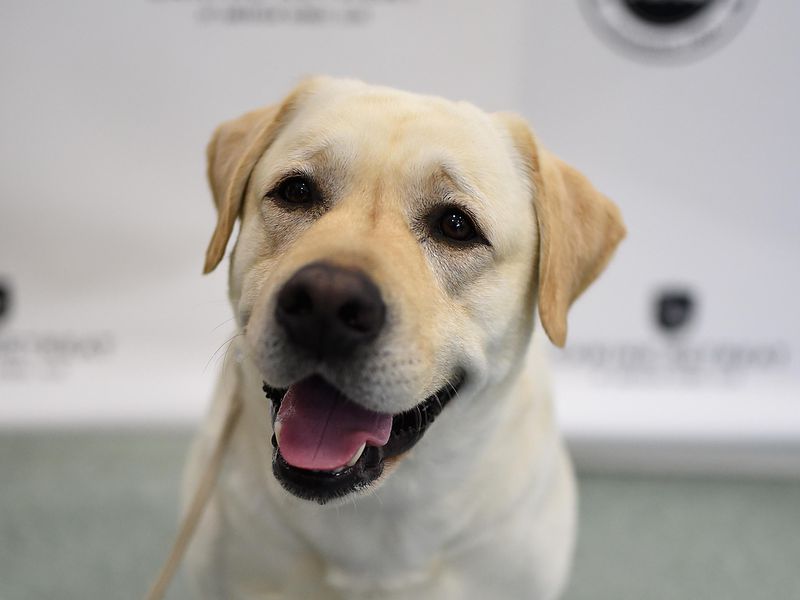
The making of a scent dog.

A repeat of the guest post from Bryony Ravate.

Once again, I am having a struggle to come up with something original. Once again it is at these times of life that I am very grateful for the offer of a guest post. Take Bryony for example. This is not the first time that I have presented her work but I am grateful to her.

This is her article on scent dogs.

ooOOoo

The making of a scent dog.

By Bryony Ravate, January 2nd, 2020

If you’ve been lucky enough to be around dogs, you will have probably noticed how their noses are always moving. By possessing a nose up to 15x times more sensitive than our own, with 600,00 neurones, they can sniff out different components in every room. When you’re cooking a meal, you will be able to recognise the smell of a dish. But when your dog smells the meal, he can smell each individual spice and seasoning, the oils, the crockery and even any water.
You can use your dogs’ keen sense of smell for play – laying out different scents for them to explore. But their noses can also be used for working environments– such as in airports, with the police and in search and rescue missions. They can track down suitcases hiding illegal substances, follow the suspect of a crime and sniff out the victims of a snowstorm. To become scent dogs, the canines go through vigorous training. However, although all dogs have an exceptional sense of smell, not all dogs make it through training.

It makes sense to analyse what leads to success and failure in scent dog training. So, a keen researcher at University College Cork, Ireland performed a literature review in which factors behind success and failure in scent dog training were analysed. A literature review is the process whereby you search a database full of information (usually research articles published in reputable journals) and you extrapolate the information to create your own source. Here, I’m going to pull together some of the points I found the most interesting, points you may not think would affect the making of a scent dog.

Personality

Dogs with strong motivation to play or search, dogs which were bold rather than shy, and dogs which can adapt and cope with stressful stimuli are more likely to become scent dogs. High motivation to play or search, makes a dog easier to train. Play can be used as a reward, by allowing the dog to pull on a chew toy after being successful in a trial. Finding scents may be perceived as a game to the dog, increasing his motivation to engage. Bold dogs are less unnerved by new surroundings and situations. A nervous dog may be hesitant about pursuing an unknown scent – but a bold dog will take little hesitation. Adaptable dogs may be able to apply their knowledge to different situations and they will be unphased by commotions and will keep working when faced with distractions.

Housing Standards

Dogs that live in enriched environments throughout their training have increased ability in trials. Like children, the more opportunities you offer your dogs to learn, explore and interact with their environment, the more it allows them to develop and grow. Dogs should feel secure in their home environment when not working; keeping them with other dogs and in bright rooms without using loud cleaning equipment (such as hoovers) will make them less anxious, leading to better accuracy in scent trials.

The Human Partner

Dogs emotions are often intertwined with their handlers. When a dog’s owner gets angry, the stress hormones in the dog increase as a result. If a dog handler is happy, the dogs will perform better. The bond between dogs and their handlers can affect the accuracy of scent trials. If the dog lives at the owners’ home when he’s not working, obedience and accuracy are increased. Although the bond between scent dog and handler is important, they must be independent thinkers. When faced with a problem- solving task, they must be able to manipulate the environment themselves to find a solution, rather than looking at their handler for cues about the answer.
These are some factors which can alter the likelihood of a dog being a successful, as reviewed by Camille A Trosi and her team. What we must keep in mind is that all dogs are individuals. We cannot use this information to ensure all dogs in the future will pass scent dog training. However, we can use this knowledge to give potential scent dogs the best possible start to life; providing enrichment, an affectionate bond with their handler, and a suitable home environment. Canine personalities are not always determined by genetics, and a suitable environment can give a dog a metaphorical push in the right direction to ensure he is the best he can be, whether that be as a scent dog, a guide dog or even a lap dog.

Original Source : Troisi, C. A., Mills, D. S., Wilkinson, A. and Zulch, H. E. 2019. Behavioral and Cognitive Factors That Affect the Success of Scent Detection Dogs. Comparative Cognition & Behavior Reviews, 14, pp. 51-76. doi: 10.3819/ccbr.2019.140007

ooOOoo

Now what I haven’t done before but intend to do straightaway is to reproduce an extract from Bryony’s CV.

I currently hold a Pass with Distinction in MSc Animal Behaviour and Welfare from Queen’s University Belfast. I also have a BSc in Animal Behaviour and Welfare from Plymouth University. As well as holding two degrees relevant to the field, I currently have 2+ years of work experience. I possess the core attributes required when pursuing a career in the scientific industry; dedication, independence and initiative. I am highly passionate and believe that with my unique skillset I can have a valuable impact in the field of Science Communication.

Plus Bryony has her own blog, BrynsteinScience, and is also on Instagram, of the same name.

We wish Bryony much success in her work life and in her caring and interest for animals in general and dogs in particular!

There is an extensive article on Wikipedia in the UK on scent dog and the link to that article is here.

Finally to close with this wonderful photograph of a scent dog.

By Taz80 / SEDIRI Eddy – Personal picture, CC BY-SA 3.0, https://commons.wikimedia.org/w/index.php?curid=15094727

That’s perfect!

Hats off to this savior!

Yet another article I want to share from Mother Nature Network.

I really don’t know how Mother Nature Network (MNN) do it! For they have a great deal of stories about dogs and a great many of them deserve sharing with you all.

Take this one. A nine-year-old Pit Bull had about as much chance of being given a loving home as I have of winning the lottery (and I don’t even enter for it!).

But that wasn’t to reckon on Michael Levitt of California. Absolutely wonderful Mr. Levitt. You are a savior!

Christian Cotroneo has the full story.

ooOOoo

Removed because of an alleged copyright infringement.

ooOOoo

I can do no better than to close this post with a repeat of Michael Levitt’s words: “We’re helping Toretto, but Toretto is helping us. Having this beautiful, sentient being in our home — and having to think about somebody besides ourselves — has really helped us get through the scariness of what we’re all dealing with.

Beautiful, sentient beings – our dogs!

Perfect!

It is a very beautiful story.

Questions; questions; questions!

About the position of our pet dogs and cats in this current pandemic.

So many of us are spending time at home. Lots of time!

And so many are asking questions about CORVID-19 and out pets.

Therefore I think it’s worthwhile to republish this article that appeared on Mother Nature Network yesterday.

ooOOoo

Removed because of an alleged copyright infringement.

ooOOoo

Now it is quite a long article but then again you probably have much more time to read this post! And, frankly, there is a lot of good information contained within it!

So, be safe and look after your pets!

Being alone!

A repeat of an essay from the 12th October, 2019.

We were truly alone when we went to Utah. (September, 2019.)

But then again, one of the privileges of being on 13 acres, 13 very rural acres, here in Southern Oregon is that being alone is not that far away!

I don’t want to underplay the importance of this posting, republished from The Conversation website (with permission), because we live in so busy times.

Written by three professors, it’s a very wise and profound article.

ooOOoo

Spending time alone in nature is good for your mental and emotional health

June 4th, 2018

By , Professor of Outdoor Education, Montreat College
, Associate Professor and Program Director of Parks and Recreation Management, Western Carolina University

, Associate Professor of Outdoor Education, Montreat College
Today Americans live in a world that thrives on being busy, productive and overscheduled. Further, they have developed the technological means to be constantly connected to others and to vast options for information and entertainment through social media. For many, smartphones demand their attention day and night with constant notifications.

As a result, naturally occurring periods of solitude and silence that were once commonplace have been squeezed out of their lives. Music, reality TV shows, YouTube, video games, tweeting and texting are displacing quiet and solitary spaces. Silence and solitude are increasingly viewed as “dead” or “unproductive” time, and being alone makes many Americans uncomfortable and anxious.

But while some equate solitude with loneliness, there is a big difference between being lonely and being alone. The latter is essential for mental health and effective leadership.

We study and teach outdoor education and related fields at several colleges and organizations in North Carolina, through and with other scholars at 2nd Nature TREC, LLC, a training, research, education and consulting firm. We became interested in the broader implications of alone time after studying intentionally designed solitude experiences during wilderness programs, such as those run by Outward Bound. Our findings reveal that time alone in nature is beneficial for many participants in a variety of ways, and is something they wish they had more of in their daily life.

On an average day in 2015, individuals aged 15 and over spent more than half of their leisure time watching TV. Bureau of Labor Statistics, Americans Time Use Survey

Reflection and challenge

We have conducted research for almost two decades on Outward Bound and undergraduate wilderness programs at Montreat College in North Carolina and Wheaton College in Illinois. For each program, we studied participants’ experiences using multiple methods, including written surveys, focus group interviews, one-on-one interviews and field notes. In some cases, we asked subjects years later to look back and reflect on how the programs had affected them. Among other questions, our research looked at participant perceptions of the value of solo time outdoors.

Our studies showed that people who took part in these programs benefited both from the outdoor settings and from the experience of being alone. These findings build on previous research that has clearly demonstrated the value of spending time in nature.

Scholars in fields including wilderness therapy and environmental psychology have shown that time outdoors benefits our lives in many ways. It has a therapeutic effect, relieves stress and restores attention. Alone time in nature can have a calming effect on the mind because it occurs in beautiful, natural and inspirational settings.

Spending time in city parks like Audubon Park in New Orleans provides some of the same benefits as time in wilderness areas, including reduced stress levels and increased energy levels. InSapphoWeTrust, CC BY-SA

Nature also provides challenges that spur individuals to creative problem-solving and increased self-confidence. For example, some find that being alone in the outdoors, particularly at night, is a challenging situation. Mental, physical and emotional challenges in moderation encourage personal growth that is manifested in an increased comfort with one’s self in the absence of others.

Being alone also can have great value. It can allow issues to surface that people spend energy holding at bay, and offer an opportunity to clarify thoughts, hopes, dreams and desires. It provides time and space for people to step back, evaluate their lives and learn from their experiences. Spending time this way prepares them to re-engage with their community relationships and full work schedules.

Putting it together: The outdoor solo

Participants in programmed wilderness expeditions often experience a component known as “Solo,” a time of intentional solitude lasting approximately 24-72 hours. Extensive research has been conducted on solitude in the outdoors because many wilderness education programs have embraced the educational value of solitude and silence.

Solo often emerges as one of the most significant parts of wilderness programs, for a variety of reasons. Alone time creates a contrasting experience to normal living that enriches people mentally, physically and emotionally. As they examine themselves in relation to nature, others, and in some cases, God, people become more attuned to the important matters in their lives and in the world of which they are part.

Solo, an integral part of Outward Bound wilderness trips, can last from a few hours to 72 hours. The experience is designed to give participants an opportunity to reflect on their own thoughts and critically analyze their actions and decisions.

Solitary reflection enhances recognition and appreciation of key personal relationships, encourages reorganization of life priorities, and increases appreciation for alone time, silence, and reflection. People learn lessons they want to transfer to their daily living, because they have had the opportunity to clarify, evaluate and redirect themselves by setting goals for the future.

For some participants, time alone outdoors provides opportunity to consider the spiritual and/or religious dimension of life. Reflective time, especially in nature, often enhances spiritual awareness and makes people feel closer to God. Further, it encourages their increased faith and trust in God. This often occurs through providing ample opportunities for prayer, meditation, fasting, Scripture-reading, journaling and reflection time.

Retreating to lead

As Thomas Carlyle has written, “In (solitary) silence, great things fashion themselves together.” Whether these escapes are called alone time, solitude or Solo, it seems clear that humans experience many benefits when they retreat from the “rat race” to a place apart and gather their thoughts in quietness.

In order to live and lead effectively, it is important to be intentional about taking the time for solitary reflection. Otherwise, gaps in schedules will always fill up, and even people with the best intentions may never fully realize the life-giving value of being alone.

ooOOoo

I would modify that advice from Thomas Carlyle and that is to include a dog.

For in my experience when one is in the mood for a bit of solitary reflection your dog seems to sense it as well.

Treasure this dog!

The world of service dogs.

There was a post on The Dodo the last day of March. It was about a service dog that went the extra mile, so to speak.

The dog’s name is Wynn and she is one special dog. I mean special within the fine dogs that make up service dogs in general.

Have a read! It was taken from here.

ooOOoo

Service Dog Comforts The Hospital Workers Who Need Her The Most

Photo Credit: Susan Ryan

Wynn is only a year old, but when she’s old enough, she’ll be trained by Canine Companions for Independence to be an assistance dog for someone with a disability. Until then, she’s being trained and socialized by her puppy handler Susan Ryan — but she still has a very important job to do.

From the moment Ryan met Wynn, she knew she was a special dog. She’s so sweet and playful, and has never met a challenge she couldn’t find a way to tackle.

“I have two of my own Labs at home and she always does surprise attacks on them,” Ryan told The Dodo. “Once her vest is on, though, she is all business.”

Photo Credit: Susan Ryan

Ryan works as an emergency physician at Rose Medical Center in Denver, Colorado, and to help with Wynn’s training and socializing, she started taking the puppy with her to the hospital sometimes. Wynn always loves visiting the hospital — but when the coronavirus epidemic started to become an issue in the U.S., it became clear that Wynn could fill an important role at the hospital.

As the coronavirus outbreak continues, doctors, nurses and all hospital staffers are working around the clock to provide the best care they can. They’re working so hard and could definitely use some support, and Wynn is there for them, acting as a therapy dog specifically for everyone on staff who could use a moment to decompress amid all the chaos.

Ryan works hard at the hospital too, and even though she gets to see Wynn at home, she still took a moment on her shift recently to let Wynn comfort her. The pair sat on the floor of the hospital together and Wynn leaned into her foster mom, as if to thank her for taking such good care of both her and all of the patients in the hospital.

“She comforts us for sure,” Ryan said.

Photo Credit: Susan Ryan

Eventually, Wynn will move on and become an assistance dog for someone else who needs her, but for now, she’ll continue to help out at the hospital with her mom, and everyone is so grateful to have her there.

“When I walk into a shift the staff light up,” Ryan said. “But it’s for Wynn, not me.”

ooOOoo

What a delightful story. Just look at those photographs; the second and last ones in particular!

You heard me say this many times before and, I assume, it will be many other times ahead: Dogs are the most comforting animal bar none. They are so, so precious!

How are these present times affecting pet owners?

A timely post on pets and COVID-19

I have chosen up to now to leave the topic of the COVID-19 pandemic to others to write about.

However, the following article published by Mother Nature Network on April 1st seemed relevant to the many hundreds who read this blog and have pets.

ooOOoo

Removed because of an alleged copyright infringement.

ooOOoo

Mother Nature Network are pretty good in terms of the accuracy of their work so, on balance, you can regard this information as legitimate .

These are very strange times for millions of us spread all over the place.

It will eventually be behind us and I, for one, can’t see it come too soon!

Day Twenty-Five of Tom and Chica’s walk

The third episode this week.

Tom’s walk continues!

He is in Granada and his stop was at Arenas del Rey. He now continues along GR7 to Jayena.

As always, taken from here with the permission of Tom and Gilliwolfe.

Read on!

ooOOoo

Day 25: Arenas del Rey (Rio Anales) to Jayena (El Bacal) 16k

By Tom and Chica, 2nd March, 2020.

Written by Tom’s wife.

As I woke in the morning, I was greeted by a couple of squirrels who ran by the tent, up a little tree and gawked at me. Clearly, not convinced about what they saw, they did another circuit and came back for second look. No doubt, this wouldn’t have happened if Chica had been with me.

I was surprised and pleased to find that this spot I had chosen in the dark was right by a ford over the river and actually on the GR7 route. Worked my way steadily uphill through scrub until I reached the pines. The conditions were ideal: cool, fresh and pine fragrant air. Great views down into the river valley below.

The rest of the day was similar – lots of ups and downs and more pines, though in one area there was evidence of these being cleared for cultivation, probably olives or almonds. I also found an old lime kiln and more information about resin extraction.

By now, the shop had opened and I bought tuna, chocolate and a strawberry milkshake. Not a particularly healthy or satisfying meal so I grumpily headed out of town and found a sign to the El Bacal camping area so made for that. Lit a fire, made a brew and settled down at around 9.30pm.

Beautiful morning – wonderful smell of pine.
Pines being felled and ground being prepared, probably for more olives
A few lonesome pines left.
More about resin extraction – a way of life.
An old lime kiln site.
The limewash was use on the houses – hence the Pueblos Blancos (white villages) of Andalucia
Jayena – today’s destination.

ooOOoo

Wall to wall interest.

Come back next week for another trio of daily walks by Tom, Chica and Merlin!

Day Twenty-Four of Tom and Chica’s walk.

The walk with Chica and Merlin continues.

I must say that this walk along GR7 takes in a great deal of fabulous countryside.

Just look at the opening photograph of the almond blossom and the snow caps in the distance. All credit to the team!

Taken from here with Tom and Gilliwolfe’s permission.

ooOOoo

Day 24: Camp site* to Arenas del Rey and beyond 17k

By Tom and Chica, 26th February, 2020

Written by Tom’s wife.

Woke this morning to find hoar frost on inner and outer of the tent fly sheet. Porridge made for a warming breakfast along with strong coffee and parrots (sic. He means paracetamol. Ed).

As I was packing up, I was joined by marauding dogs, two of which decided to follow me all day to the next village whereupon they promptly disappeared. Bit of a relief as I was rather taken with the cute young Jack Russell bitch, a very endearing dog.

Arenas del Rey was apparently closed for the day so I spent a bit of quality time in the town square brewing coffee, drying my tent and washing my feet at the fuente directly beneath the holy shrine at the front of the church. Fortunately, there was no-one around to witness this disrespectful behaviour!

After foot repairs and a light lunch I set off on route to Jayena. Once it got dark, route finding became trying so at 8pm I pitched the tent by a river. I went to sleep to the ever-present chorus of distant barking dogs.

Ice on the tent.
Bee hives.
Beware! Bees at work.
Stone threshing circle.
Almond Blossom for the bees.
Snow caps getting closer.
Finally wearing that hat. Does the job!

ooOOoo

I have just about muttered all the ooh’s and aah’s I can about this walk and the stupendous photographs.

Just loving it as much as everyone else!

Day Twenty-Three of Tom and Chica’s Walk

Tom travels on his own.

As you will read below, Tom took the opportunity to travel without Chica and Merlin today.

It was going to be too hot for the dogs.

Taken from here and republished with Tom and Gilliwolfe’s permission.

ooOOoo

Day 23: Alhama de Granada to camp position* 10k

By Tom and Chica, 26th February, 2020

Written by Tom’s wife.

Although Chica is much better and Merlin a very willing substitute, the forecast suggested quite high daytime temperatures so we decided it was best that I do a stretch on my own to try and make up lost time.

I caught the early train from Jimera to Granada where I got a tram to the bus station. The bus to the coast via Alhama de Granada didn’t leave until 3:30 so I had lunch at a pavement restaurant opposite. Later, I sat on a park bench in the sun to read but it wasn’t long before an ancient bucolic type decided to join me and make loud incomprehensible conversation. Eventually, I gave up and went for coffee. Returning to the bus station, I found him fast asleep presumably waiting for a bus. Not mine, fortunately, so a peaceful ride to Alhama but that was shattered as I found myself in the midst of a carnival with everyone in mad fancy dress!

After wandering around taking it all in, I headed to the top of town and filled my water bottles at a fuente then headed off at 6 pm. An hour later I was walking through poplar plantations on a pitch black lane trying to find a suitable camping spot. It was another hour before I picked up a GR7 sign in my torchlight which pointed uphill, too steep to try in the dark.

Luckily, I found a perfect spot above a stream which was only marred by the broken bottles left by previous visitors. By now, it was very chilly so I went straight to bed, glad to have put in at least a couple of hours walking.

Carnival fancy dress – strange!
The theme isn’t evident!
Leaving the party.

ooOOoo

Day Twenty-Four tomorrow!

I must say these are fabulous posts and I shall miss them when they eventually come to an end!

Start your day with music – a guest post!

More on mindfulness!

I opened my email box a couple of days ago and there was an email from Sarah.

It said:

Hi there!
I would be honored to be a guest writer for your blog and of course would reciprocate.  I hope you don’t mind that I shared your link in my last post.  I am not totally sure if blogging etiquette.  😀
Sarah Kinneavy
MyAmazing2ndChapter.com

Of course I said yes!

Sarah’s background is sociology and she has a degree in the subject. Just as important she owns a dog walking business. I will let her finish her background:

I believe in living life to the fullest.

My daughter is a Cancer survivor- and as a result of that journey- It put my life into perspective. I learned to never take anything for granted- you never know what’s around the next corner. I am continuing to work on becoming the best version of me, while making the most of each and everyday.

Frankly, I do not really know what it is like to have a daughter, or a son come to it, go down with cancer. The nearest I have come to the disease was when I had just turned 12 and my father died of lung cancer.

So here’s her guest post.

ooOOoo

Start your day with music- not the News! Surviving the Coronavirus with mindfulness Day 2

By Sarah Kinneavy, March 28th, 2020

As I continue to try to stay calm with mass panic happening across the globe 🌎 with this pandemic. As I mentioned in yesterday’s post:

https://myamazing2ndchapter.com/2020/03/27/surviving-the-coronavirus-with-mindfulness/

I am using mindfulness to train my brain in how it reacts to stress. The more we do these exercises the better we get at them.

Start your day with music rather than the news! Borrowed from https://musicoomph.com

Yesterday one of my friends posted on Facebook to start the day off with music – rather than the news! What a great idea!!! So, yesterday, as I got ready for a job interview and I waited until it was late enough in Hawaii to do my daily well check on my daughter there (she is in isolation in a dorm room – I am not sure if she has the dreaded virus or not). I used music as the focal point of this mindfulness exercise. This 15 minutes of focusing on the music- listening to the rhythm helped keep me present. I wasn’t worrying about getting the job or how my daughter was doing. I was just in that moment of getting ready with the accompaniment of music. It was honestly 15 minutes of pure happiness. What a great way to start my day! One thing I have to add – I try to not let myself think about what the words of the songs mean to me, or when I first heard the song. I just listen and enjoy. Okay- I may have danced around my apartment a bit too!

I can tell you – I did not feel anxious going to my interview like I normally would. I didn’t panic about my daughter’s health – I was able to wait until after my interview to check in on her. Mindfulness does not keep me from ever worrying about my kiddo or the world around me. No – I still worry – but It isn’t swallowing me up whole. And this is key!

Heading to my job interview.

I can’t wait to talk to you again tomorrow . How are you coping with all the stress and anxiety?

ooOOoo

That’s a lovely guest post!
And the message is clear and powerful: “No – I still worry – but It isn’t swallowing me up whole. And this is key!