Yesterday morning while sitting up in bed I was browsing the internet on my iPad. I looked up TED Talks and fancied watching the story of Mark Pollock and Simone George. It turned out to be 19 minutes of incredible viewing and it is reproduced below as a YouTube video.
Towards the end Mark refers to his guide dog Larry. More of that later.
Then I came across a comprehensive entry on WikiPedia. From which the following is taken:
Pollock enrolled in a course to help come to terms with his disability. He left for Dublin with his guide dog Larry and began putting himself forward for job interviews. Prospective employers were uncertain as to how to approach him. Eventually the father of one of his college friends assigned him to organising corporate entertainment. He returned to rowing and won bronze and silver medals for Northern Ireland in the 2002 Commonwealth Rowing Championships. He engaged in other athletic pursuits, including running six marathons in seven days with a sighted partner across the Gobi Desert, China in 2003 when he raised tens of thousands of euro for the charity Sightsavers International. On 10 April 2004, he competed in the North Pole Marathon on the sixth anniversary of his blindness.
Then I discovered that Larry had died: “My great mate Larry The Guide Dog died on Sunday night. An amazing Guide Dog and amazing friend.”.
He died on the 2nd May, 2010 just a couple of months before Mark’s terrible accident.
Finally a photograph of Mark and Larry!
“Who do you rely on most? When I was just blind, it was my guide dog Larry who empowered me to live life independently.”
Zola’s always known she was a big dog in a small dog’s body. The 2-year-old corgi refuses to let her short legs hold her back from getting what she wants.
And what Zola really wants is to play with her neighbor, Rocky.
Haley Smith
About three weeks ago, Haley Smith noticed that whenever Zola went out in the yard, she’d make a beeline for the fence.
“She started really going crazy and barking at the fence, and we weren’t sure why,” Smith told The Dodo. “She would sit by the door and we would let her out, and she would sprint to the fence and start jumping. We thought it was odd.”
Haley Smith
Smith didn’t understand what was so attractive about the cinder block barrier until she caught a glimpse of a sweet black and white spotted face looking over. But no matter how high Zola jumped, she couldn’t reach the dog on the other side.
“We peeked outside and lo and behold, she was just trying to talk to the big paws and head that were peering over at her,” Smith said. “She really wants to get to Rocky. She will take a running leap at the fence and try to jump to his height.”
Haley Smith
Rocky and Zola’s meetings have since become a nightly affair. The two have yet to meet without the barrier, but that just makes the pups even more interested in each other.
“Rocky is very gentle,” Smith said. “At first he barked back at her. Now, he jumps up and just watches her quietly. He seems very curious about her.”
But Zola doesn’t seem to like that their meetings are a little one-sided. “One theory I have is that she’s a little jealous that Rocky can see into her yard but she can’t see into his,” Smith said. “She probably wants to know how to get to him so they can sniff and play.”
Zola loves other dogs and always pulls to sniff each one she sees on her walks. The fact that she hasn’t been able to reach Rocky is the ultimate challenge, and she’s constantly trying to figure out how to get to his level.
Haley Smith
Smith has no doubt that Zola will soon reach him, and the two will finally be together.
“Zola is too smart for her own good,” Smith said. “She’s pretty sure she will figure out a way to get to the top of the fence.”
ooOOoo
In a way dogs are so human but then again dogs are a very different species. We know from years of personal experience that dogs have pure unconditional love for their doggy friends and for us humans. That is what makes them so special!
A more informative way to do something most of us don’t think about!
The Dodo recently had an article about petting a dog. I was about to ignore it and then decided to read the article. I am glad I did because The Dodo went to a veterinarian in New York City for the answers.
Here’s the article.
ooOOoo
These Are The Best Places To Pet A Dog, According To A Dog
Some dogs love all the pets from all the people, while others can definitely be more finicky.
When it comes to where she’s petted (and who’s petting her), your dog probably has some personal preferences —so it’s important that you learn her boundaries.
Typically, most dogs share safe zones that are OK to pet — as well as areas on their bodies that are totally off-limits.
To help, The Dodo reached out to Dr. Stephanie Austin, a veterinarian at Bond Vet in New York City, who explained the best places to pet a dog — and where to avoid.
Where do dogs love to be petted?
As a general rule of thumb, the neck, chest and shoulders are places that many dogs like to be petted.
But it’s important to keep in mind that not all dogs are created equal when it comes to where they like to be touched. “For example, some pups love belly scratches or petting on the rump area, while others may be more guarded about those parts of their body,” Dr. Austin told The Dodo.
How to pet a dog the right way
If you’re not sure what a dog likes or doesn’t like when you first meet her, your best strategy is to let her come to you and sniff your hand.
“If the dog is friendly and relaxed, try gently petting the neck, chest or shoulders. Don’t reach for their head from above, as this could appear threatening to a dog,” Dr. Austin suggested.
You can usually tell if a dog is enjoying being petted because she’ll get closer to you, act relaxed and happy and even lean into your hand where you are petting.
“If a dog becomes tense or standoffish, this may be a warning that they aren’t comfortable with the petting,” Dr. Austin said.
Where to not pet a dog
According to Dr. Austin, there are some places — in general — where dogs might be uncomfortable with someone touching.
Questionable spots include:
Paws
Legs
Tail
Face
“And even though many pups appreciate a good belly rub, they may also be protective of their belly and the underside of their body,” Dr. Austin said.
And be wary of any areas on the body that might be particularly sensitive.
“Some dogs may have areas of the body that are sensitive due to underlying health conditions — for example, if a dog’s hips are painful due to arthritis, they might not like someone pressing on or near their hips,” Dr. Austin said.
It’s also important to keep in mind that some dogs just don’t like to be touched by strangers. So if your dog prefers to warm up to people, advocate for her and let others know that she just needs time. Don’t force her to be uncomfortable by accepting unwanted interactions from other pets!
Of course, the best thing you can do when getting to know a dog is to start off slow and check in with her body language. She’ll usually tell you exactly what she’s comfortable with.
And once you figure it out together, your bond will be even stronger!
ooOOoo
Now Jeannie and I are biased because our six dogs love being fondled in so many ways including much of what is cautioned by Dr. Austin. But we certainly agree with the last few word about the bond being even stronger!
This is still good advice because there are so many different personalities with our six dogs and many just have a single dog.
But Dr. Austin’s advice applies to Jeannie and me and we would never be as relaxed when we have visitors. Then the strong advice is to let the dogs chose in their own time when and how to approach the guests.
One of the many stories from Paws Give Me Purpose.
I said yesterday that I would republish a story from Paws GMP. This is about Ginger and here’s her story.
ooOOoo
Welcome Ginger
By Lea, April 7th, 2021
This past weekend, Paws Give Me Purpose welcomed Ginger into Sanctuary. Ginger is our newest, tiny, senior Sanctuary resident. Ginger weighs a whopping 3.6 pounds and is estimated to be around 13 years old.
Since being found as a stray on the streets of Baltimore, Ginger’s history is a real mystery. Tossed out like yesterday’s newspaper by those she thought would love her forever, this little girl presents with many medical issues that required immediate care.
We are working closely with our Veterinary team to help make Ginger as healthy and comfortable as possible. Ginger has sadly been severely neglected; a complete medical workup has revealed that while there is no evidence that she was used for breeding, she is not spayed. She barely has any teeth, and those that she does have in the back of her mouth are extreme decayed and literally black.
Her jaw is infected due to lack of proper care and she has severe parrot jaw (only half of her bottom jaw) and underbite. She may or may not have been born that way, but regardless her mouth is extremely damaged due to lack of proper care.
Ginger has limited vision, as described to us by our Veterinarians, it’s as if she is looking at things through the spaces between your fingers. She has some weakness in her back legs which was originally thought to be luxating patella issues, but as it turns out it is actually a neurological issue. Ginger has been diagnosed with acquired hydrocephalus (her slightly domed head appearance is what first alerted us to this possibility).
For those not familiar, Hydrocephalus literally translates as water on the brain. But the fluid is not actually water—it refers to cerebro-spinal fluid (CSF), which coats the spinal cord and parts of the brain. In hydrocephalus, this fluid is unable to drain away properly and increases pressure on the brain.
This secondary type of hydrocephalus in older animals is when inflammation, infections, or tumors grow and block the outflow of the CSF. The most common cause of acquired hydrocephalus is a brain tumor, which usually affects older dogs like Ginger.
Medications have been started and we are hoping for the best outcome possible. Quality of life is above all else to us here at Paws Give Me Purpose, and due to Ginger’s advanced age invasive procedures are not advised. While early treatment is best in a case like this, there is no way for us to know how long she has been this way.
There is a special light in her eyes, a clear will to live and enjoy her golden years to the fullest and for as long as she is with us, we will make it happen! Ginger is extremely sweet, enjoys being held/carried around or sitting in a lap and we have begun spoiling her. She has the cutest little snorts when she breathes and will do a little dance for us when she wants to be picked up for cuddles.
With you by our side, we can give Ginger the chance to have the opportunity to live out her golden years to the fullest – she deserves this second chance to be happy, loved and cherished. Our promise to Ginger is to give her the best life daily with unconditional love for the rest of her life.
We ask that you please consider making a donation to help us with Ginger’s ongoing care. If anyone is interested in sponsoring Ginger’s lifetime care in Sanctuary, please reach out to us directly.
If I were to mention the name of Lea Brandspiegel I suspect that many of you wouldn’t have a clue as to whom I was referring to.
But if I were to add that Lea is the CEO and Founder of Paws Give Me Purpose Inc. and to include a little from the About page on the website then that would make you sit up!
Here it is:
ooOOoo
Welcome to Paws Give Me Purpose! We look forward to sharing our purpose, knowledge, laughter and tears with all of you. We hope you enjoy the time you spend here with us.
Paws Gives Me Purpose Incorporated is dedicated to rescuing, rehabilitating, caring for and providing sanctuary to difficult to adopt dogs. We believe that all dogs deserve a second chance at life – especially seniors, those with physical disabilities, terminal illness, behavioral issues, have been abused and need someone to care for, love, and understand them.
Located in Southern New Jersey, we provide for our pups dependent upon the donations of generous friends, family, businesses, individuals and out of our own pockets. We are limited on both space and funding, as well as physical ability. We are able to take in and provide for only a limited number of dogs at any given time.
We also feature, network and sponsor shelter and rescue dogs looking for their forever homes. All of the dogs we feature here on Paws Give Me Purpose have been waiting far too long for their chance; oftentimes, these dogs do not get the exposure they need, and we want to change that! For us, education is key; this is why one of our ultimate goals is to change the way that humans think of, and treat, dogs with special needs.
Paws Gives Me Purpose exists on the kindness of strangers, dedicated supporters who follow our efforts, the loyalty of friends, veterinarians, hospitals, rescues, shelters, and private individuals who view us as a staple in the rescue community. We are strictly a volunteer-run organization and all donations go directly towards the care of the sanctuary animals. Know that you are helping to make a difference in dogs’ lives and that you are the driving force behind us.
ooOOoo
So there is the introduction and I will have great pleasure in sharing more stories about the dogs that Lea has rescued and found homes for.
Oh, a postscript! If you fancy making a donation then that page is here. (And it really doesn’t need me to say that I have no relationship at all with Paws Give Me Purpose Inc.)
Yet another article about a sweet dog! Keep them coming!
I know Jeannie and I are very biased but so are millions, literally, of other good folk around the world. I am speaking of people who love dogs. And thank goodness that is the case because The Dodo is just one of a number of doggie websites and in the absence of such websites Learning from Dogs would have never got started!
So I am pleased to present another story from The Dodo about Levi. Read on:
ooOOoo
Very Sweet Dog Always Welcomes Mom Home With A Gift
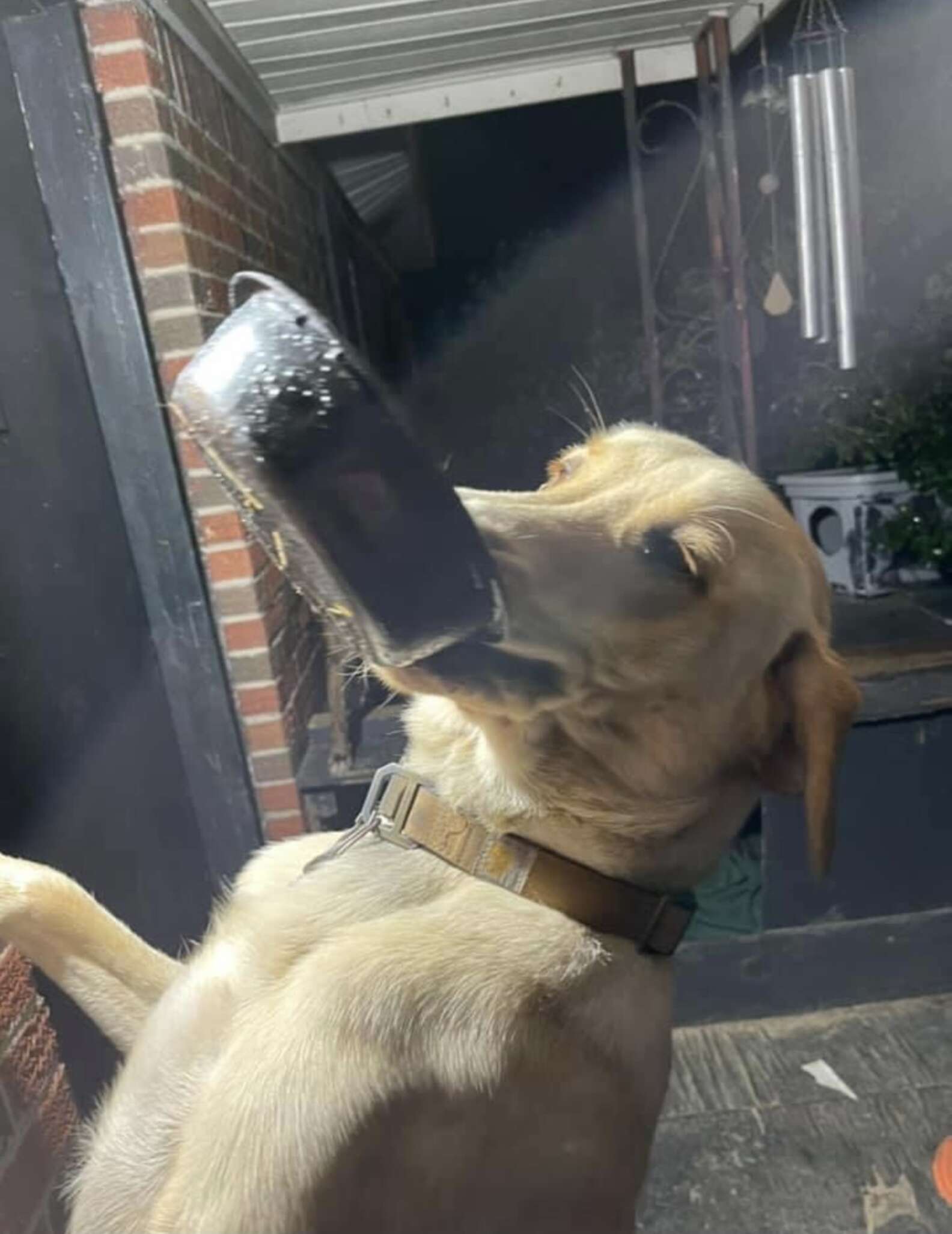
Levi knows to never greet someone empty-handed. The Lab mix gets so excited every time his mom comes home that he immediately has to find the perfect gift to show his love.
However, when it comes to Levi’s presents, his mom knows it’s the thought that counts.
LORI EDDINS
“The very first thing that stands out was when he brought me an open, half-chewed box of screws,” Lori Eddins, Levi’s mom, told The Dodo. “So I took him to the vet for X-rays.”
Thankfully, Levi hadn’t snacked on any of the hardware and got a clean bill of health, but Eddins’ reaction to the “gift” encouraged Levi to start an adorable routine.
“I think my begging and baby-talking for him to surrender the box of screws might be what inspired his deliveries,” Eddins said. “He thought it was great!”
LORI EDDINS
Now, the rescue dog always gives his mom something special when she comes home after a hard day’s work.
LORI EDDINS
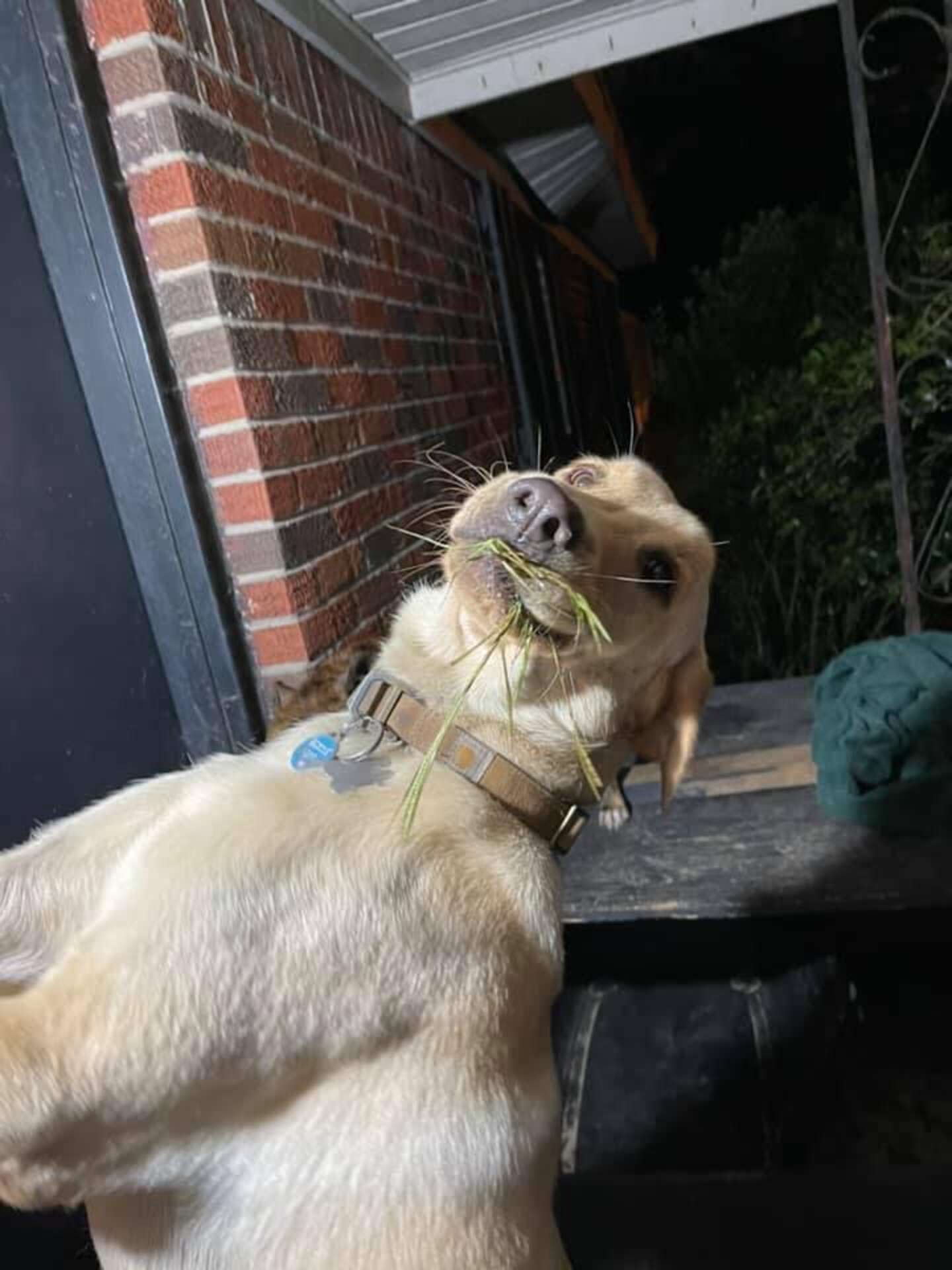
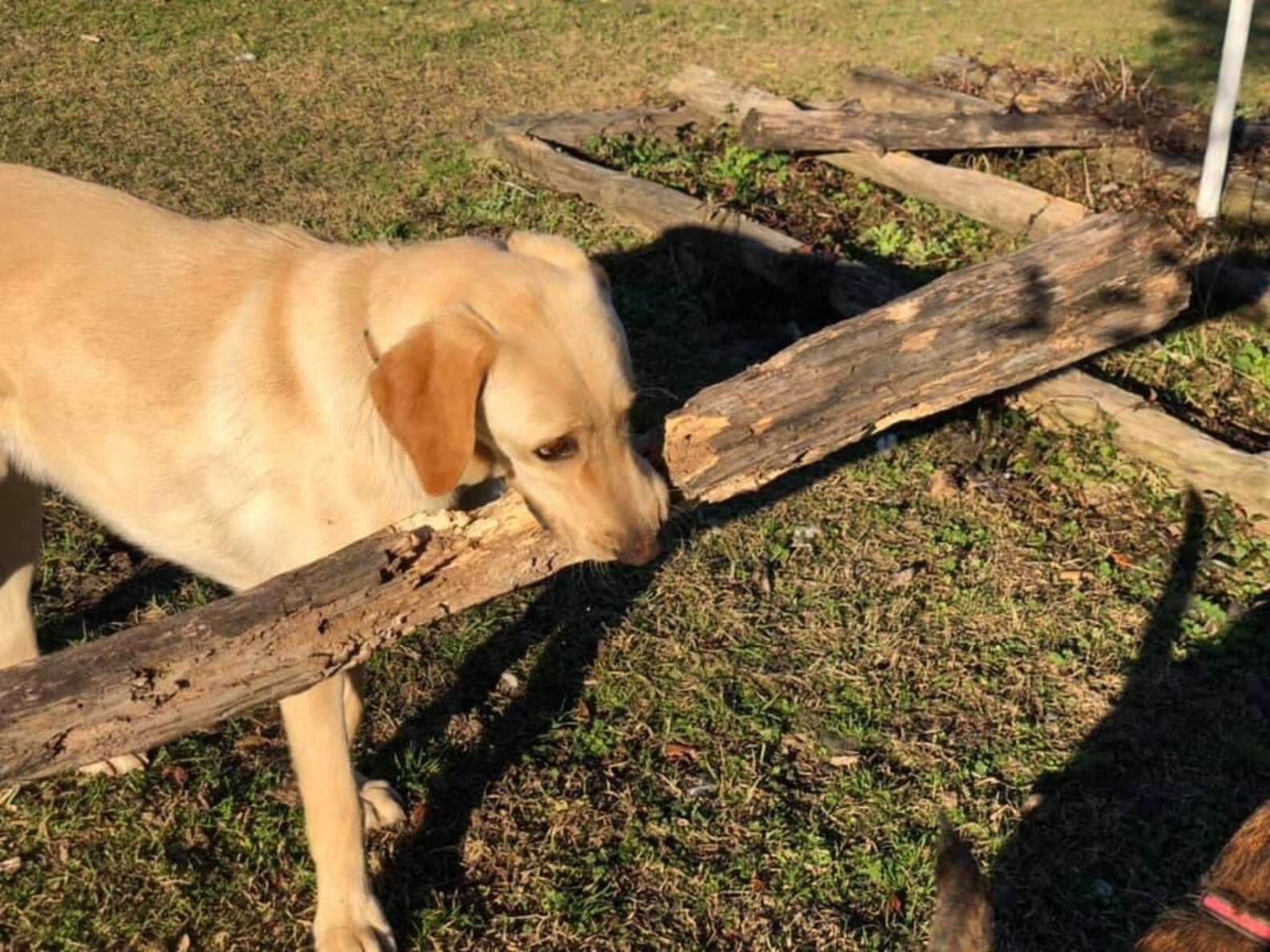
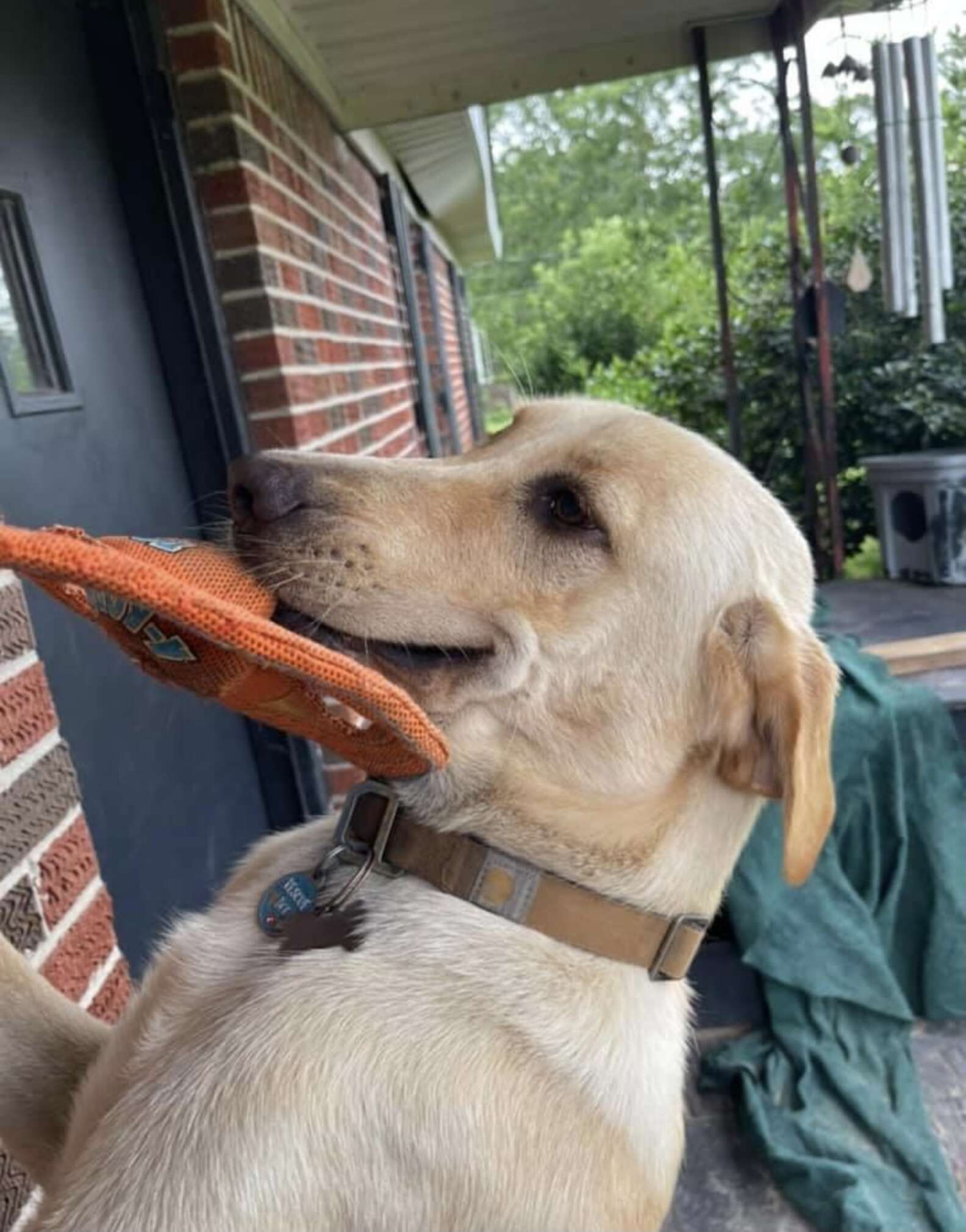
“He has brought everything from his toys, to bones and blankets, to clumps of grass, pieces of cardboard or paper (I call them ‘cards’) and landscape timber,” Eddins said. “My favorite was when he found where the flower bed had been cleaned out and he brought me flowers.”
“If he meets me at the gate empty-handed, I let him carry my keys to the door, and he is so proud,” she added.
LORI EDDINS
Some of Levi’s gifts are not necessarily what Eddins would pick out for herself. Occasionally, he’ll bring her clumps of horse manure or try to pick up one of the chickens on the property to deliver to his mom.
LORI EDDINS
Though Eddins’ chickens aren’t so fond of this gift-giving, Eddins is so grateful to have such a generous, happy-go-lucky dog bringing joy to her life — and she makes sure Levi knows it.
“I give him huge hugs and thank him as if he brought me the winning lottery ticket,” Eddins said. “Most things I give back to him, some end up in the trash. I did keep the flowers!”
ooOOoo
It is a delightful story and one that rings true for so many people. Lori knows the golden rule in the way that she praises Levi.
Always make a dog feel as though he or she is such a special animal that life wouldn’t work without that dog. Always praise them and when a dog does something negative do not punish them. Just don’t praise them.
Time and time again stories surface about the very special bond between humans and dogs.
I would like to say that this is very unusual but it isn’t. Maybe Lorenzo did something for his dog that many would not but that is not to say that Lorenzo’s love for Myles is unique or even close to unique. There is something very special about the bond between us humans and our dogs. We all have mystical moments with our dogs!
Have a read of this story recently published by The Dodo.
ooOOoo
Guy Buys A Cabin In The Woods As A Retirement Home For His Dog
Lorenzo met his dog, Myles, 13 years ago completely by accident, and that’s how he knows they were meant to be together. A local shelter used to take their dogs to the park on Fridays, and Lorenzo would always watch from afar, his heart breaking knowing that none of the dogs had loving homes. One afternoon, though, Lorenzo locked eyes with one of the dogs — and he knew he had to take him home.
“I saw him and he saw me, and his ears went straight up,” Lorenzo (who asked that his last name not be included) told The Dodo. “I knew he chose me!”
Lorenzo
Ever since then, Lorenzo and Myles have been best friends. They love doing everything together, from hiking and swimming to napping together and playing with toys. Myles has always been such a happy dog and just loves being able to enjoy life with his dad by his side.
Lorenzo
As Myles has gotten older, it’s become a lot harder for him to get around. Slowly, the diagnoses started to come in. Cataracts, arthritis, heart failure. Through it all, though, Myles was still enjoying life, just at a much slower pace. Lorenzo wanted to make Myles’ life as easy and comfortable as possible — so he decided to find the perfect “retirement home.”
Lorenzo
“I had always told him I would give him land and retire him to the woods,” Lorenzo said. “I always figured by my mid-30s, I would have left the city. The pandemic really showed me what I value and that both he and I need to move towards a simpler life.”
Lorenzo
Lorenzo found and bought the perfect cabin in the woods, named it “Camp Myles” and set about renovating it to make it into the perfect home for him, Myles and his two cats, Tofu and Mama. Now the whole little family is all settled in, and so far, everyone is absolutely loving cabin life — especially Myles.
“I think [his favorite part is] both being lazy on the deck or porch and relaxing in nature, as well as roaming the property and going on walks,” Lorenzo said. “So much to smell, no cars, no sirens — it’s perfect for both of us!”
Lorenzo
Since moving, Myles has been responding incredibly well to his meds, new foods and all the fresh air that cabin life provides. He’s been there for his dad for 13 years now, and Lorenzo has vowed that in return, he’ll be with him until the very end.
“We are both so happy,” Lorenzo said.
oooOOoo
It is a beautiful tale and many of us know what Lorenzo is feeling. Indeed what Myles is also feeling albeit in the special way that dogs feel.
Last Sunday the following details of another dog food recall were promulgated including to me. It has been slightly modified by me, namely removing the click to unsubscribe entry.
ooOOoo
Dear Fellow Dog Lover,
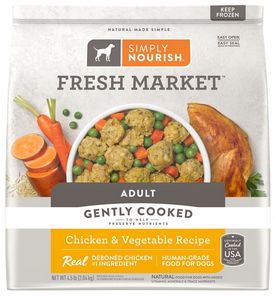
Approximately 51,000 packages of Simply Nourish Dog Food sold at PetSmart are being recalled due to elevated levels of vitamin D.
Excessive amounts of vitamin D in a dog’s diet can lead to kidney failureand death.
August 13, 2021 — Wet Noses Natural Dog Treat Company of Monroe, Washington, is recalling approximately 51,000 packages of Simply Nourish frozen dog food due to it elevated levels of Vitamin D.
What’s Being Recalled?
Recalled products are marketed in 2-pound and 4.5-pound packages across specific “Best By” dates.
A full list of affected products is included below:
Affected Simply Nourish frozen food products were distributed at select PetSmart stores nationwide.
No illnesses have been reported to date. No other products have been affected.
About Vitamin D Toxicity in Dogs
Dogs ingesting elevated levels of Vitamin D may exhibit symptoms such as vomiting, loss of appetite, increased thirst, increased urination, excessive drooling, and weight loss.
Vitamin D when consumed at very high levels or over a long period of time can lead to serious health issues in dogs… including kidney failure and death.
Consumers who have dogs that have consumed any of the products listed above and are exhibiting these symptoms, should contact their veterinarian.
What Caused the Recall?
The recall was initiated after a routine nutrition test confirmed elevated Vitamin D levels on certain Simply Nourish frozen food products.
Subsequent investigation indicates the problem arose as a result of the vitamin mix dosage being significantly reduced by the vitamin mix manufacturer, and this change was not detected or properly communicated.
As a result, the dosage was not reduced.
Company Message
We care deeply about our customers and their pets, and have put corrective actions into place to ensure this issue does not reoccur.
This recall is being made with the knowledge of the U.S. Food and Drug Administration.
What to Do?
Consumers should immediately stop feeding the above products to their dogs.
Consumers who have purchased Simply Nourish Frozen Food are urged to return it to the place of purchase for a full refund.
Consumers with questions may contact the company at 800-938-6673 Monday to Friday, 8 am to 4:30 pm PST.
U.S. citizens can report complaints about FDA-regulated pet food products by calling the consumer complaint coordinator in your area.
Once more I do not know what to say. Except, of course, to be careful and if the slightest doubt crosses your mind in terms of what you are feeding your dog(s) then please check the Dog Food Reviews and Ratings by Brand list.










 Learning from Dogs