Category: Health

Food miles!

It is more complicated than it first appears.
I saw this article on the Sustainability at Harvard website and read it with great interest. I wanted to republish it to share with you but couldn’t readily see a copyright statement or an instruction regarding republishing. I sent an email but I was warned that Harvard receive a great deal of emails every day and a reply might not be forthcoming.

So ….. I have made a decision. I will publish the article and hope that it doesn’t infringe the copyright.

Before I do that let me ‘promote’ Sustainability at Harvard by giving you a little from their About page.

Together we are building a healthier, more sustainable community

Harvard University is devoted to excellence in teaching, learning, and research, and to developing leaders in many disciplines making differences globally. While Harvard’s primary role is to address global challenges, such as climate change and sustainability, through research and teaching, the University is also focused on translating research into action. Harvard is using its campus as a living laboratory for piloting and implementing solutions that create a sustainable and resilient community focused on health and well-being.

ooOOoo

Do food miles really matter?

March 7, 2017

By Molly Leavens, College ’19

Leavens breaks down the nuances of how a food’s carbon footprint relates to the distance it travels from farm to plate.

The local food movement, with the goal of consuming food produced and grown within a close geographic region, has been gaining traction in recent years as a way of eating fresh and high quality foods and reducing one’s environmental impact. However, public messaging about the outcomes of this movement is divided and often leads to confusion and misunderstanding among consumers. This short article will attempt to break down some of the nuances of how a food’s carbon footprint relates to the distance it travels from farm to plate (commonly referred to as food miles).

So, do food miles really matter? Yes and no. 

For most American diets, the carbon cost of transportation is slight compared to the carbon costs of production (running the tractors, producing chemical fertilizer, pumping irrigation…). Therefore, the most effective way for most Americans to reduce their diet’s carbon footprint is not by buying local, but rather eliminating or reducing their consumption of animal products.

the most effective way for most Americans to reduce their diet’s carbon footprint is not by buying local, but rather eliminating or reducing their consumption of animal products. 

Cartoon by Harvard staff member, Mitra Farmand. www.mitrafarmand.com.

For a vegan, food miles contribute to a larger portion of their food’s carbon footprint. Plant-based foods have lower production footprints, so transportation is comparatively more significant. Even then, the raw mileage is hardly informative for determining carbon footprints; the mode of transportation is the key variable. Cargo ships are the most efficient, followed by trains, then trucks, and lastly planes.

That means a product flown from Chicago to Boston has a significantly larger carbon footprint than one shipped 11,000 miles from Asia to California.

Although exact numbers vary across analyses, flying one ton of food is close to 70 times more carbon intensive than transporting that same weight via a large cargo ship (source). That means a product flown from Chicago to Boston has a significantly larger carbon footprint than one shipped 11,000 miles from Asia to California. As a result, locality is more important for perishable foods that are often flown like raw fish, asparagus, and berries. Foods such as tomatoes, bananas, pears, and apples can all be harvested before ripening, stored for long periods of time, then inoculated with ethylene gas (the naturally occurring hormone produced by fruits that causes the change in color and flavor profile associated with ripening) before entering a supermarket. In many cases, these shelf-stable foods have lower carbon footprints when produced internationally because the carbon cost of production far outweighs that of transportation.

Another frequently cited comparison is that of lamb produced in England verses lamb produced in New Zealand. For a consumer in England, the New Zealand lamb actually has a lower carbon footprint. Our intuition failed us. Why? Sheep in New Zealand are generally raised on farms run by hydroelectric power. This energy saving is so immense that it overrides the fuel output of the 11,000 mile cruise to England (source).

A similar story unfolds here in Boston. Local meat production could be more carbon intensive because the animals must be housed in heated facilities during the cold winter months. For a large portion of the year, we are better off shipping in a tomato from South America than growing one in a local greenhouse.

A similar story unfolds here in Boston. Local meat production could be more carbon intensive because the animals must be housed in heated facilities during the cold winter months.   

Looking exclusively at carbon footprints neglects other important issues like water usage and farmer rights but it is none the less a valuable metric. Purchasing local food has many social benefits like boosting local economies, and increasing community cohesion and self-reliance. In conclusion, local food is not ‘good’ or ‘bad’, but it is important for consumers to define the values they hope to support through their purchasing decisions and think critically about when and where local foods support those values.


Looking exclusively at carbon footprints neglects other important issues like water usage and farmer rights but it is none the less a valuable metric.

ooOOoo

Like so many things in life they are frequently more complicated than they first appear.

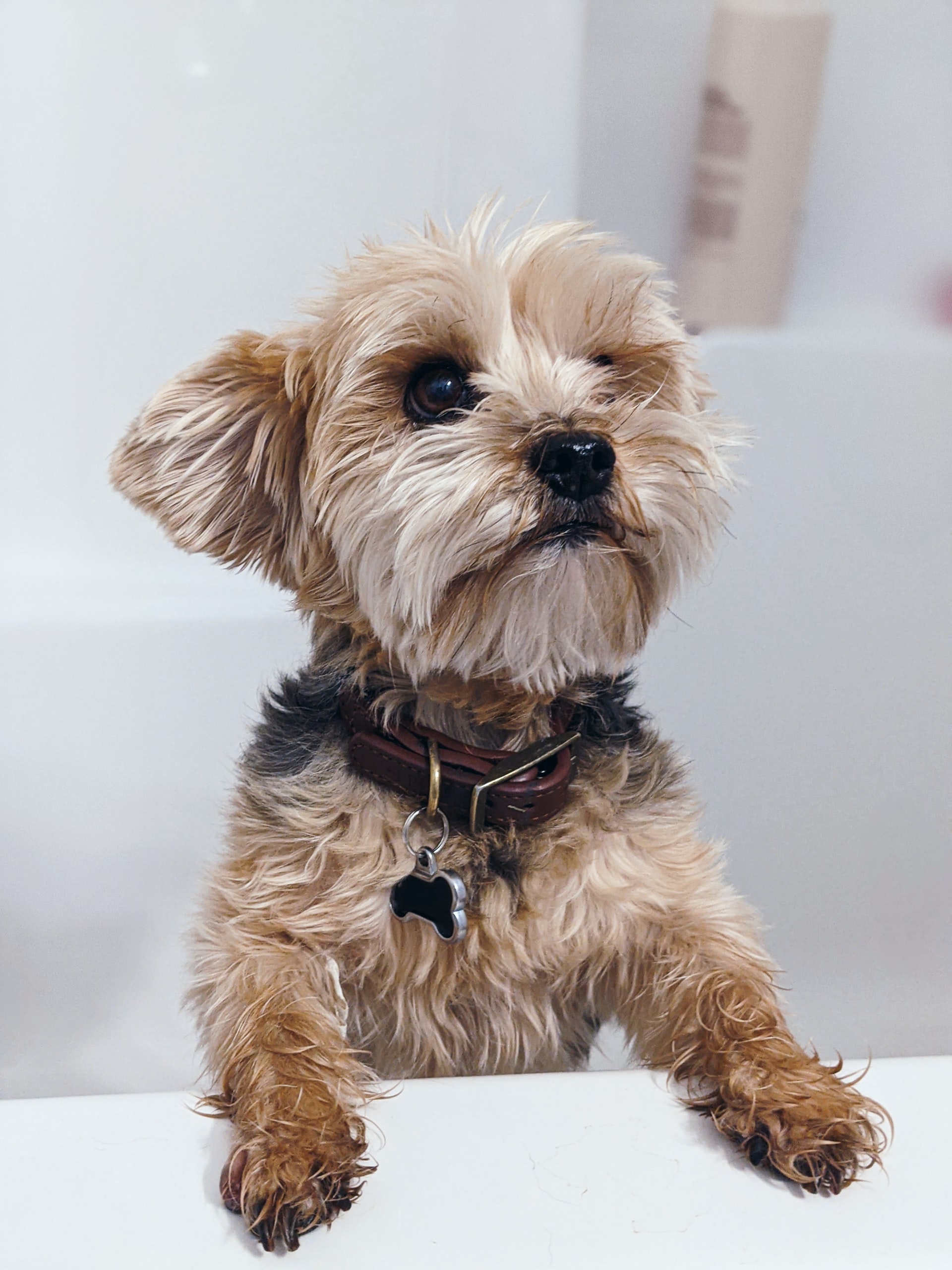
Manny, a rescue terrier.

A recent new item in the Daily Courier caught our eye.

Like many who live in this corner of the world we read the Grants Pass Daily Courier. On Wednesday, November 3rd at the bottom of the front page was an article entitled: “A shelter dog for 22 months now, Manny continues on comeback trail

It was a story of a wheaten terrier found in January 2020 abandoned, suffering from wounds both old and new, and the Rogue Valley Humane Society (RVHS) took him in.

Margaret Varner, executive director of RVHS, who helped Manny said that he: “He came in with so many wounds”.

Manny eventually went to an animal trainer near Eugene, Roman Gottfried.

I have chosen to republish an article that appeared on the RVHS website about Roman Gottfried and Manny. Here it is.

ooOOoo

Training Sessions Can Make A Big Difference

Roman Gottfried, our trainer from Holistic Dog Traning, recently hosted another training session with Manny and Noodles. Manny is about 4 years old, loves people, likes to keep busy and is crazy about water! He has had an incredibly difficult past but that hasn’t stopped his zest for life. He’s been moving forward throughout his healing process both physically and emotionally. Our team works daily to provide the stimulation he needs and love he craves.

Manny is still waiting for his forever family

Noodle has since been adopted, but during his stay we learned he had some separation anxiety. His owner named him Noodle because of how he just melts when he is shown affection. When Roman worked with him he helped us determine that Noodle was able to get along well with young children, other dogs and farm animals. Noodle hadn’t had interactions with cats so we couldn’t say how he felt about them, but during his work with Roman we saw he had a lot of energy and absolutely loved his people. Noodle’s previous owners wanted to make sure we knew his perfect home would be with someone who could be with him most of the day, and that is the kind of forever family he found. Soon after getting adopted he began enjoying hikes with his new family and loving it.

Noodles has found his forever family!

During his Q and A that same afternoon, Roman answered common questions from dog owners such as what to do if your dog has separation anxiety, resource guarding or excessive barking issues. Owners wrote in their dog’s behaviors in the live session comments and Roman was able to respond with helpful advice.

ooOOoo

Back to the Courier.

The last two paragraphs of the story are as follows:

And watching him last week, one could see that “calm” is now part of Manny’s behavioural menu. This is an exceptional dog,” Gottfried said, “I’ve worked with a lot of weirdos. This one is a keeper.”

Please can someone soon be Manny’s forever family home. Anyone interested in having Manny please call RVHS on 541-479-5154.

Rogue Valley Humane Society

429 NW Scenic Drive
Grants Pass, OR 97526

Business Hours:
Monday – Saturday
12 pm – 4 pm

Science on the business of loving our dogs (and cats).

A fascinating article!

I have long subscribed to The Conversation and shared quite a few stories with you good people. But this recent one was a terrific report.

Read it yourself and I am sure you will agree with me.

ooOOoo

New research suggests cat and dog ‘moms’ and ‘dads’ really are parenting their pets – here’s the evolutionary explanation why.

Pet parenting can provide love and companionship to both human and animal. Willie B. Thomas/DigitalVision via Getty Images

Shelly Volsche, Boise State University

old pug dog in a stroller and harness
A pup out for a stroll, without paws touching the ground. Shelly Volsche, CC BY-ND

Have you noticed more cats riding in strollers lately? Or bumper stickers that read, “I love my granddogs”? You’re not imagining it. More people are investing serious time, money and attention in their pets.

It looks an awful lot like parenting, but of pets, not people.

Can this kind of caregiving toward animals really be considered parenting? Or is something else going on here?

I’m an anthropologist who studies human-animal interactions, a field known as anthrozoology. I want to better understand the behavior of pet parenting by people from the perspective of evolutionary science. After all, cultural norms and evolutionary biology both suggest people should focus on raising their own children, not animals of a completely different species.

More child-free people, more pet parents

The current moment is unique in human history. Many societies, including the U.S., are experiencing major changes in how people live, work and socialize. Fertility rates are low, and people have more flexibility in how they choose to live their lives. These factors can lead people to further their education and value defining oneself as an individual over family obligations. With basics taken care of, people can focus on higher order psychological needs like feelings of achievement and a sense of purpose.

The scene is set for people to actively choose to focus on pets instead of children.

In earlier research, I interviewed 28 self-identified child-free pet owners to better understand how they relate to their animals. These individuals pointedly shared that they had actively chosen cats and dogs instead of children. In many cases, their use of parent-child relational terms – calling themselves a pet’s “mom” for instance – was simply shorthand.

They emphasized fulfilling the species-specific needs of their dogs and cats. For example, they might fulfill the animal’s need to forage by feeding meals using a food puzzle, while most children are fed at the table. These pet owners acknowledged differences in the nutrition, socialization and learning needs of animals versus children. They were not unthinkingly replacing human children with “fur babies” by treating them like small, furry humans.

woman with party hat with dog
Pet parents might celebrate their dog’s big day – but with a doggy treat and not chocolate cake. fotostorm/E+ via Getty Images

Other researchers find similar connections, showing that child-free pet owners perceive their companions as emotional, thinking individuals. This way of understanding the mind of the animal helps lead to the development of a parent identity toward companion animals. In other cases, uncertain individuals find their need to nurture sufficiently fulfilled by caring for pets, cementing their fertility decisions to remain child-free.

Nurturing others is part of being human

Yet, these findings still do not answer this question: Are people who choose pets over children truly parenting their pets? To answer, I turned to the evolution of parenting and caregiving.

Evolutionary anthropologist Sarah Hardy wrote in 2009 that humans are cooperative breeders. This means it is literally in our DNA and our ancestral history to help care for offspring who are not our own. Anthropologists and biologists call this trait alloparenting. It is an evolutionary adaptation that helped human beings who cooperatively raised children survive. For early humans, this ancient environment was likely made up of small, foraging societies in which some people exchanged child care for food and other resources.

I propose that it is this evolutionary history that explains pet parenting. If people evolved to alloparent, and our environment is now making caring for children more difficult or less appealing to some, it makes sense for people to alloparent other species entering their homes. Alloparenting companion animals can offer a way to fulfill the evolved need to nurture while reducing the investment of time, money and emotional energy compared to raising children.

two kids and dog bathing in tub
Do people relate to animals differently in families with children? Mayte Torres/Moment via Getty Images

Untangling differences in caring for pets

To further understand this phenomenon of child-free adults parenting pets, I launched an online survey via social media, seeking responses from U.S.-based dog and cat owners over the age of 18. The survey included questions about attachment and caregiving behaviors using the Lexington Attachment to Pets Scale. It also asked a series of questions I developed to probe specific human caretaking behaviors oriented toward pets – things like feeding, bathing and training – as well as how much autonomy companion animals had in the home.

The final sample of 917 respondents included 620 parents, 254 nonparents and 43 people who were undecided or did not answer. Most of the respondents were also married or in a domestic partnership for over one year (57%), between the ages of 25 and 60 (72%) and had at least a bachelor’s degree (77%). They were also mostly women (85%) and heterosexual (85%), a common situation in human-animal interactions research.

Both parents and nonparents reported high amounts of training and play with their pets. This finding makes sense given that all pet owners need to help their dogs and cats learn how to navigate a human world. Survey respondents reported socializing, training and enrichment, including play, for their animals.

Nonparents were more likely to be the one providing general care for the animal. This finding also makes sense since parents often adopt or purchase companion animals as a way to help their children learn responsibility and to care for others. Child-free animal owners invest time, money and emotional energy directly in their pets.

Nonparents reported higher rates of general attachment to their animals. They more frequently viewed their pets as individuals. Nonparents were also more likely to use family terms such as “parent,” “child,” “kids” and “guardians” when referring to their relationships with their pet.

woman on couch petting cat
Caring for another being can be fulfilling and rewarding. Delmaine Donson/E+ via Getty Images

It is this difference, combined with the evidence from my earlier research that these individuals address the species-specific needs of the dogs and cats in their care, that suggests pet parenting is, truly, parenting pets. Though the details may look quite different – attending training classes instead of school functions, or providing smell walks for dogs instead of coloring books for children – both practices fulfill the same evolved function. Whether child or pet, people are meeting the same evolved need to care for, teach and love a sentient other.

My colleagues and I continue to collect data from all over the world about how people live with animals. For now, this study provides evidence that, perhaps rather than being evolved to parent, humans are evolved to nurture. And as a result, who and when we parent is much more flexible than you might initially believe.

[Get our best science, health and technology stories. Sign up for The Conversation’s science newsletter.]

Shelly Volsche, Clinical Assistant Professor of Anthropology, Boise State University

This article is republished from The Conversation under a Creative Commons license. Read the original article.

ooOOoo

Shelly does a fabulous job of looking more closely at the science and it is a science that has a very wide appeal. For in the UK, according to the RSPCA, “In the UK, it’s estimated that 12 million (44 percent of) households have pets with around 51 million pets owned.

Here in America The Washington Post reported that: “Google the U.S. pet population, and you’re quickly confronted with two oft-cited, and contradictory, sources. The American Pet Products Association (APPA) found that 68 percent of U.S. households owned some sort of pet in 2016 — “equal to the highest level ever reported,” it gushed in the executive summary. Among those pets were about 90 million dogs and 94 million cats, the group said.

That is just two countries. The worldwide population of dogs and cats must be gigantic.

Let the train take the strain!

A Turkish dog travels frequently by train!

Time and time again dogs do things which cause me to wonder about the way that dogs think and behave. One would think that with so many dogs here at home my days of wondering would be over but the truth is that the more I stay engaged with dog blogs, such as The Dodo, the more I realise that I am only skimming the surface of dogs.

That is my introduction to this post about a Turkish dog.

ooOOoo

Stray Dog Takes The Train All By Himself Every Day

He knows where to go and has a purpose.

By Lily Feinn, Published on the 8th October, 2021.

Meet Boji — a stray dog who’s bringing joy to commuters every day.

A few months ago, Istanbul’s public transportation department noticed a large, brown dog riding the buses, trams, subways and ferries. The dog, whom they dubbed Boji, seems to know exactly where he’s going any time he steps on or off the train.

INSTAGRAM/BOJI_IST

“Two months ago, we noticed a dog trying to use our trams, metros and our trains and he knows where to go and he knows where to get out,” Aylin Erol, head of customer relations at Metro Istanbul, told CNN. “It was quite interesting and we have started to follow him. And it was really an interesting pattern. It’s something like that he knows where to go and has a purpose.”

In mid-August, public transit officials picked Boji up and brought him to a vet for a health check. Boji also received a microchip which is connected to a mobile application, allowing the Metro Istanbul customer relations department to keep tabs on his whereabouts and wellbeing.

Boji’s frequent travels have made him a celebrity on public transit. When he’s not napping on a tram seat, rushing to catch a train, or enjoying the breeze on the ferry, he’s always happy to pose for selfies with commuters and receive lots of pets and treats.

INSTAGRAM/BOJI_IST

The good boy has proven himself to be the most polite passenger you’ll ever encounter.

“Boji knows all the rules of travel, gives way to the disembarking passengers, waits, enters the train, and calmly finds a place for himself,” wrote Cumhuriyet. “When he misses the subway, he runs after the subway.”

INSTAGRAM/BOJI_IST

Boji visits at least 29 stations and travels approximately 18 miles a day around the city, saying hi to his adoring fans along the way. While most commuters can’t wait to get off the subway or bus, for Boji, it’s where he’s most comfortable.

“I think it’s very beautiful,” passenger Abdulkadir Yalçın told Cumhuriyet. “It adds joy to the subway. It makes us smile. It’s the first time I’ve encountered such a thing.”

INSTAGRAM/BOJI_IST

Luckily, the good boy doesn’t have to pay a fare to hop on his preferred bus or train. For Boji, it’s just home.

ooOOoo

Isn’t that amazing! I wonder, however, how he stays fit and healthy? But whatever, it is a delightful story.

There must be a person who wants Beaker?

A powerful article about a dog rescue!

Rescuing dogs is both a wonderful and heart-breaking thing to do. When I met Jeannie in 2007 she had been rescuing dogs from the streets of Guaymas in Mexico for years, attending to their immediate needs, and finding homes for them mainly in Arizona. The stories she had to tell were incredible. A year later I moved from Devon, England, out to Mexico with Pharaoh to be with Jean and then in 2009 started writing this blog. In 2010 when we came North to the USA to be married we brought with us 16 dogs much to the amusement of the US Border officer as we entered the USA.

So this story in The Dodo naturally jumped out at me.

ooOOoo

Dog Chained In Abandoned Backyard Can’t Believe He’s Finally Being Rescued

“He ‘meeped’ like a muppet, he was so excited, so he got the name Beaker!” 

By Caitlin Jill Anders, Published on the 1st October, 2021.

When a man living in Detroit returned home one day and noticed that someone had dumped a chained dog in a neighboring backyard, he frantically began calling around for someone to help. Luckily, Rebel Dogs Detroit took the call and sent a volunteer, Tiffany Perkins, out to investigate. She had no idea what to expect when she first arrived — but as soon as she saw Beaker, her heart just melted.

REBEL DOGS DETROIT


“Beaker was timid and cowered behind the garage to hide,” Perkins told The Dodo. “He peeked out the side as I started calling for him. As I got closer, his tail started wagging. Then he pushed his weight against us for petting him — and seemed to be visibly relieved. He ‘meeped’ like a muppet, he was so excited, so he got the name Beaker!”

After being chained up and abandoned, Beaker was understandably a little nervous at first, but as soon as he realized Perkins was there to help him, he completely relaxed and was so excited to meet his new best friend.

REBEL DOGS DETROIT

“When the chain was untethered from the garage, he dropped to the ground for belly rubs and kisses and playful chaos,” Perkins said.

Unfortunately, the chain that Beaker had around him was stuck on his neck, so Perkins quickly rushed him to the vet to get him checked out. While they waited for Beaker’s surgery to remove the chain, Perkins took advantage of the extra time to give Beaker all the love he’d never had before, and the sweet dog appreciated it so much.

REBEL DOGS DETROIT

“We had lots of bonding time in the car waiting for his surgery for 5+ hours,” Perkins said. “He was napping with his head in my lap after a while.”

Even after everything Beaker had been through, all he wanted was to be loved — and finally, his wish had come true.

REBEL DOGS DETROIT

Beaker is now healing from his surgery in his foster home and is just the happiest dog anyone has ever met. For Beaker, it doesn’t seem to matter what happened to him in the past. What matters is where he is now and all the new friends he’s made who care about him and are making sure he’s happy and safe.

“He’s learning how to be an indoor dog with unconditional love in his foster home,” Perkins said.

REBEL DOGS DETROIT

Beaker is currently looking for his forever home and would love a home with another playful, energetic dog who can continue to show him the ropes and become his best buddy. As soon as Beaker laid eyes on his rescuers, he knew he was finally safe, and he’s so excited to find the forever family he deserves.

If you’re interested in adopting Beaker, you can contact Rebel Dogs Detroit for more information.

ooOOoo

Please, please let someone adopt sweet Beaker soon.

This is too wonderful!

A Doberman pinscher shows off her caring attitude.

It strikes me dogs are loving animals. Certainly for the vast majority of animals that I write about and that we see in our daily lives. For example, on Thursday we had to take Cleo and Oliver for their annual check-ups at Lincoln Road Veterinary Clinic. They inevitably came into contact with a few other dogs and there was no friction whatsoever; just a lot of bum sniffing!

That is why I chose this article from The Dodo to share with you.

ooOOoo

Big Mama Dog Adopts Newborn Kitten And Carries Her Around In Her Mouth

“She’s just obsessed with this kitten” ❤️️

By Lily Feinn, Published on the 27th September, 2021

Three weeks ago, Brittany Callan wasn’t planning on adding more animals to her life. Then she heard meowing coming from the back of her aunt’s garage.

There, in the grass, was a newborn kitten. Callan placed the little animal on a soft blanket in the shade nearby, hoping the mom would return. But hours later, the kitten was still alone. She knew the little animal wouldn’t make it through the night, so she decided to take the little blind baby home.

BRITTANY CALLAN

Callan’s Doberman pinscher, Ruby, had just had puppies, and she hoped that the dog’s mothering instincts would kick in when she saw the helpless kitten.

“We’ve had baby bunnies and guinea pigs, and she just licks them like she’s their mom,” Callan told The Dodo. “She was carrying around the baby bunnies in her mouth and hiding them in the couch like they were hers — she even tried to nurse them when she was younger.”

BRITTANY CALLAN

Ruby and the kitten couldn’t look more different, but none of that mattered when they met. Callan held the kitten out to her dog, and Ruby immediately accepted the new baby into her pack.

“She just started cleaning it and nudging it out of my hand,” Callan said. “Then I just opened up the kitten’s mouth and put it on Ruby’s smallest nipple, and it started eating right away. Ruby looked at it and laid her head down.”

BRITTANY CALLAN

Rubys’ puppies were already three times her size, but that didn’t stop the kitten from crawling in to snuggle with her dog brothers and sisters.

And her new mom always makes sure the kitten is clean and safe. “She looks like the scruffiest kitten ever because she’s always wet from Ruby licking her or carrying her around in her mouth,” Callan said. “Her back end is either sopping wet or matted down from Ruby cleaning her so much.”

Ruby is now weaning her puppies, but refuses to be separated from her tiniest baby for more than a few minutes.

“She’s just obsessed with this kitten,” Callan said. “She doesn’t want to be outside — she’ll go to every door and whine and scratch until you let her in, and then she’ll just pick up the kitten and carry it around in her mouth.”

BRITTANY CALLAN

Under Ruby’s care, the little orphaned kitten is thriving, and when she’s old enough, she will travel to her forever home with Callan’s cousin.

But for now, the only mom the kitten needs is Ruby. It just goes to show when it comes to family, size doesn’t matter — it’s the love that counts.

ooOOoo

it’s the love that counts.

Lily Feinn has gone to the heart of Ruby’s care for this kitten: Love!

It is a great example to us humans as well. Nothing is ever gained from hate and war.

Is there more to licking paws?

I am speaking of dogs!

Speaking for myself I haven’t ever given any notice to a dog licking its paws. Jeannie, however, would spot if a dog was over-licking, (you know what I mean), and would find out the cause.

This comes to the fore because The Dodo published a post in May, 2020, that I reckoned was worth republishing.

ooOOoo

Why Does My Dog Always Lick Her Paws?

Here’s how to tell when it’s a problem.

By DANIELLE ESPOSITO , Published on May 5th, 2020

You’ve seen your dog do it a thousand times — that cute paw licking that can quickly turn to “Hey! Stop that!” once it becomes a total obsession.

In general, paw licking is normal behavior for many dogs. They do it after they eat; they do it after they’ve been playing outside; they even sometimes do it before taking a nap. While all these are expected, you should start to take it more seriously if you’re noticing a sudden increase in licking, raw or irritated spots between their toes, or even loss of fur.

When it crosses the line between normal grooming and excessive paw licking, it’s probably time to try to figure out the root of the problem — so we chatted with one of our favorite veterinarians to get some expert advice.

Allergies

“There are a number of reasons why dogs lick their paws, but one of the most common reasons is allergies,” Dr. Alex Blutinger, a veterinarian from BluePearl Pet Hospital in New York City, told The Dodo.

“This behavior can be caused by environmental allergies, food allergies and even fleas or ticks,” he said. 

Dr. Blutinger said many everyday substances can also cause an allergic reaction, including things like pollen, grass that’s been treated with insecticide, certain plastics or rubber materials on food bowls, and even certain medications or shampoos.

“There are other caustic chemicals that dogs encounter in their environment,” he said, “[like] deicing salts to melt ice.”

This means that if you’ve noticed your dog is licking her paws more than usual, she’s likely experiencing allergies. If that’s what you suspect, it’s a good idea to chat with your vet about how to help her feel better.

Trauma to the Paws

Aside from allergies, excessive paw licking — which includes paw chewing — can also be caused by various types of injuries.

According to Dr. Blutinger, some of these types of trauma can include burns from walking on hot surfaces like cement or blacktop, splinters, broken nails, injured bones or ligaments, or even insect bites.

It’s a good idea to inspect your dog’s paws to see if you can find any physical trauma, and consult your vet if you think it’s something that may need extra attention.

Gastrointestinal Issues

“Interestingly, dogs that have gastrointestinal disorders (like pancreatitis) have also been shown to lick their paws,” Dr. Blutinger said.

He added that certain hormonal imbalances like hypothyroidism and Cushing’s disease can also cause dogs to lick their paws — which means a trip to the vet is definitely in order to sort out your pup’s health!

Anxiety

Finally, sensitive dogs can also display anxiety by licking their paws, in the same way some people bite their nails as a sign of nervousness. If you think this is the case, it might be a good idea to figure out why your dog is feeling anxious and find ways to help her feel better.

So while paw licking is generally normal for most dogs, if you worry it’s becoming obsessive, and you can’t figure out an obvious cause, it’s a good idea to check with your vet to make sure your dog doesn’t need extra care.

ooOOoo

I call that very sound advice.

Out of interest have any readers of this post had a case of excessive licking with their dogs?

Furry life saver!

The story of Rhys the dog!

I have known Keith Edmunds from a long time ago and we chat from time to time. Keith has his own company Tiger Computing, Linux specialists, (We provide managed cloud services and Linux support services for high-tech businesses), and we had a business connection many moons ago. But in an effort to stay connected with friends in the old country I have subscribed for quite some time to Keith’s newsletter. Although Keith clearly is speaking to potential clients his newsletter is quite readable for non-technical peeps such as myself.

At the end of September this year Keith’s newsletter was a little different. Here it is:

ooOOoo

Rhys the dog saved my wife’s life last week.

She was alone in the house. She put some flatbread in a pan on the hob, then went to check something on her PC. And forgot about the flatbread.

The flatbread got hotter, started smoking, and then the smoke alarm went off. That would be a clue for most of us that something may be amiss.

But my wife is deaf. She can’t hear the smoke alarm.

That’s when Rhys, the Hearing Dog, leapt into action. He found her and butted her hard with his nose. “What is it?”, she asked him. He squatted down on all fours, the signal that the smoke alarm is going off. He only makes that move for the smoke alarm so it’s clear what the problem is.

My wife ran to the kitchen, turned off the hob and opened windows to disperse the smoke. Without Rhys alerting her there would have been a fire. The consequences of that can only (fortunately) be imagined.

So here’s how it works. Rhys is trained to notify my wife when he hears certain sounds. He notified her when he heard one, and corrective action was taken.

Here at Tiger Computing we have sophisticated monitoring systems that keep an eye on our clients’ Linux systems. They’re configured to alert our support staff if things start going wrong, and the support staff can take corrective action.

Our monitoring probably won’t save your life. But it might save your bacon.

Until next week –
Keith

ooOOoo

It is a delightful account of yet another aspect of dogs. Dogs can undertake many things and some of our dogs are really clever. Rhys is an example of how highly trained dogs can be.

I spoke to Keith and asked permission to republish this, gladly and readily given, and whether Keith had any photographs of Rhys.

Rhys and Mrs. Edmunds

Beautiful!

Who wants to kiss a dog!

Well Jeannie does for sure.

All our six dogs are beautifully friendly but there’s one dog that just loves to be kissed and returns the favour just as much. That is Oliver!

Oliver

I don’t have a photograph of Oliver and Jean kissing and that’s me being lazy rather than anything else.

Now for whatever deep-seated reason I won’t give Oliver or any of the other dogs a tongue-to-tongue kiss but I am envious of Jean and Oliver; they both love it!

All of which serves as a preamble to an article from The Dodo on dogs’ mouths! Here it is, and it is quite a lengthy one, so settle yourself down and quietly read it completely:

ooOOoo

Are Dogs’ Mouths Cleaner Than Humans’?

For everyone who kisses their pup on the mouth 😘

By LAUREN TAYLOR, Published on the 24th September, 2021

If anyone has ever shamed you for letting your dog give you a kiss, you might have told them that dogs’ mouths are cleaner than humans’ mouths. But is that actually true, or is it just something obsessed dog parents made up to justify letting their dogs lick them?

The truth is that dogs’ mouths actually aren’t cleaner than human mouths — but they’re not really dirtier either. We just have different germs.

The Dodo spoke to Dr. Jonathan Roberts, a remote veterinarian with DoggieDesigner.com, to find out everything you need to know about dog saliva.

Why dogs’ mouths aren’t cleaner than human mouths.

Your dog’s mouth isn’t exactly clean. Just like people have bacteria living in our mouths, dogs do too.

“Multiple studies have discovered that dogs have many unique and potentially dangerous bacteria and other parasites lurking in their mouths,” Dr. Roberts told The Dodo. “Around 600 different species of bacteria have been discovered in both canine and human mouths.”

The type and amount of bacteria living in a dog’s mouth depends on the level of periodontal (dental) disease present, which is determined by a number of factors, including:

  • Diet
  • Breed (smaller dogs tend to be at greater risk because they have smaller teeth and mouths, leading to more food getting stuck, and they have less bone mass, leading to tooth loss)
  • Frequency of teeth brushing
  • Frequency of professional dental cleaning by a vet

What diseases can you get from dog saliva?

There are lots of bacteria in a dog’s mouth that are different from what humans have in our mouths. Some of these are harmless, but some could make you sick.

Some of the bacteria found in dogs’ mouths that can be dangerous to people include:

  • E. coli, Clostridia, Salmonella and Campylobacter — “[These are] bacteria that can cause severe gastrointestinal illness in people,” Dr. Roberts said. “Dogs are often carriers of these bacteria, yet they do not become ill from them. They usually get these bacteria in their mouths through licking their anuses or ingesting other animals’ feces. Another common source of these illness-causing bacteria is from ingesting raw food.”
  • Pasteurella — This can cause skin infections that can travel to your lymph nodes and cause severe disease, such as cellulitis or meningitis.
  • Capnocytophaga canimorsus — “[This] enters the wounds in skin after being licked by a dog’s tongue,” Dr. Roberts said. “Mostly only immune-compromised people are susceptible to this disease that develops into septicemia [blood poisoning].”
  • Giardia and Cryptosporidium — These are actually protozoa, not bacteria, but they can still make you sick by your dog licking your face and can cause gastrointestinal illnesses.
  • Parasites — If your dog has parasites, such as worms, and licks his anus and then your face, you could contract the parasite.

So what is the risk of getting sick from your dog licking you? Even with all those germs, if you’re healthy and don’t have a compromised immune system, the risk is luckily pretty low.

“Most human immune systems will neutralize these parasites before they can cause illness,” Dr. Roberts said. “Those with weakened immune systems, such as persons going through chemotherapy, persons with HIV, very young and very old people should be more careful around pets.”

Ultimately, it’s up to you to determine if it’s a risk you want to take.

But to be safe, you can follow these steps to avoid getting sick from dog saliva:

  • Keep your dog up to date on his deworming medications and flea and tick medications.
  • Get checked out by a doctor if you get bitten or scratched by a dog.
  • Don’t let a dog lick your wounds.
  • Frequently wash items that your dog’s mouth touches, like toys and food and water bowls.
  • Don’t let your dog lick you if you’re immunocompromised, and don’t let him lick others who are immunocompromised.

Does dog saliva heal wounds?

It’s an old belief that dog saliva heals wounds. But is it actually true?

“There may be some truth to this after all,” Dr. Roberts said. “The action of licking helps to remove debris and necrotic tissue from the wound.”

Dog saliva also contains proteins that can be beneficial in healing.

“Mammal saliva contains a protein called histatin,” Dr. Roberts said. “This protein is able to kill bacteria before they can cause infection.”

Histatins have antimicrobial and antifungal properties and are part of the immune system. They have been found to play a role in wound closure.

But while it’s possible that dog saliva could help to heal a paper cut, you shouldn’t let your dog lick all of your cuts and scrapes — there are much better ways to take care of your injuries, and you always run the risk of infecting your wound instead of making it better.

“I would still not allow my dog to lick my wounds,” Dr. Roberts said. “We have excellent wound care products on the market these days that not only do a better job of keeping wounds clean but also come without the risk of introducing nasty infections or potential parasites.”

How to keep your dog’s mouth clean

If you do let your dog give you occasional kisses (and even if you don’t), you should try to keep his mouth as clean as possible since it’s also important for his health.

You can do this by regularly brushing his teeth and by providing toys that help clean his teeth.

Try this dog toothpaste from Chewy for $4.99.

“The most important way to keep your dog’s mouth clean and healthy is (just like humans) through regular teeth brushing and dental cleaning by a professional,” Dr. Roberts said. “Start introducing your dog to teeth brushing from a young age and aim to brush at least twice a week.”

You can also let your dog chew on dental treats to clean his teeth in between brushing. (These treats received The Dodo’s Paw of Approval, and you can get them from Amazon for $4.98.)

So dogs’ mouths aren’t actually cleaner than people’s, and you shouldn’t let your dog lick your wounds. But if you keep your dog’s mouth and teeth clean, a kiss from your pup every now and then should be fine (if it’s something you’re comfortable with).

We independently pick all the products we recommend because we love them and think you will too. If you buy a product from a link on our site, we may earn a commission.

ooOOoo

I suggest that if you want to purchase any of the products described above then you go directly to The Dodo website and place your order via The Dodo.

Overall I find this a very useful article and I am grateful to The Dodo for allowing me to republish it.

Another example of a dog’s love

This time between a dog and a parrot.

Again, Jess and Cheryl sent me this YouTube link. It has the subtitles coming up because I won’t subscribe to whatever service is being promoted. But it doesn’t detract from the pleasure of this video.

A smile for the weekend!